20 Victorian Updo Techniques with Intricate Details
Imagine a world where a woman’s hairstyle was a meticulous map of her social standing, her marital availability, and her artistic sensibility. This was the reality of the Victorian era, a period spanning from 1837 to 1901, where hair was not merely worn but architecturally constructed. Gone are the simple ringlets of the Regency; in their place rose magnificent edifices of braids, twists, and curls—each with a language and a logic of its own. These updos were more than beauty trends; they were wearable art, demanding hours of work and a wealth of accessories.
The Foundation: Tools and Preparations of the Victorian Lady
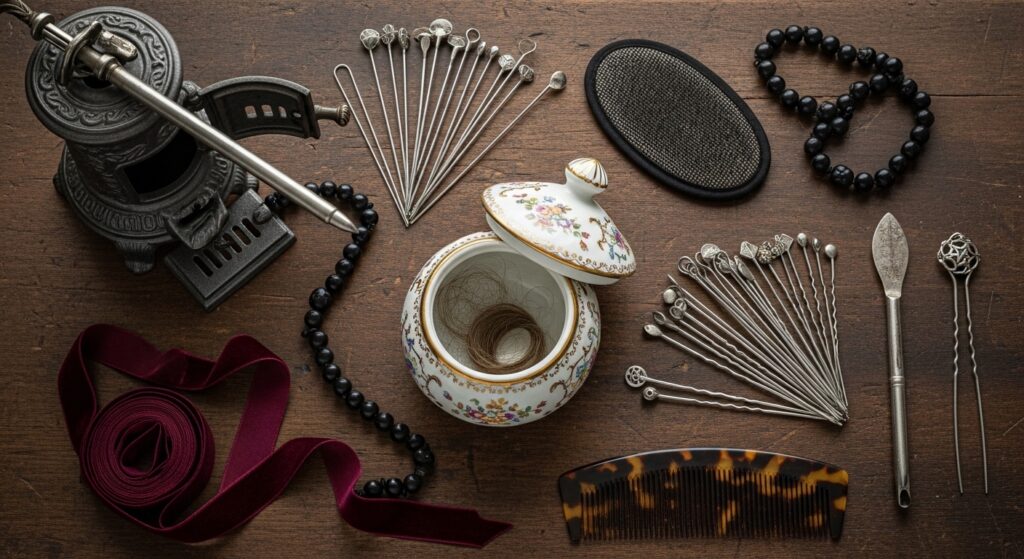
Before a single pin was placed, Victorian hair required rigorous preparation. The ideal was an abundance of hair, often supplemented with hairpieces, rats, and pads made from netting or one’s own harvested shed hair. These created the essential volume and structure. Hair was frequently “marcelled” with hot irons to create deep, lasting waves, or set overnight in rag curls for a softer effect. The arsenal included fine-tooth combs for sectioning, boar bristle brushes for smoothing, and an array of hairpins—the longer and sturdier, the better. No Victorian updo was complete without its finishing touches: jet bead hairnets, velvet ribbons, fresh flowers, or ornate combs made of tortoiseshell or silver.
20 Intricate Victorian Updo Techniques & Styles
Here we explore the defining updos of the period, from the modest to the magnificent. Each technique showcases the ingenuity and aesthetic principles of Victorian hairdressing.
1. The Classic Gibson Tuck
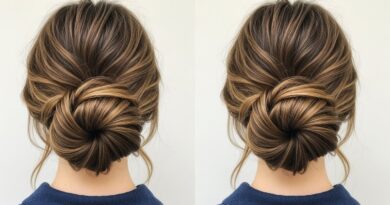
Not all Victorian updos were towering. The Gibson Tuck, popularized in the 1890s, was a sleek, low style focused on perfect smoothness. Hair was brushed tightly back, twisted into a simple coil at the nape, and tucked under itself, secured invisibly. Its intricacy lay in its utter lack of flyaways and the subtle use of a fine hairnet or pomade to achieve a glass-like shine.
2. The Apollo Knot
A dominant style of the 1870s-80s, the Apollo Knot was a high, vertical pile of curls and braids arranged atop the head. The technique involved creating a large, padded base, then artfully arranging multiple twisted ropes of hair and cascading curls over it. The detail was in the asymmetrical drape of the curls and the strategic placement of a decorative comb at the summit.
3. The Waterfall Cascade
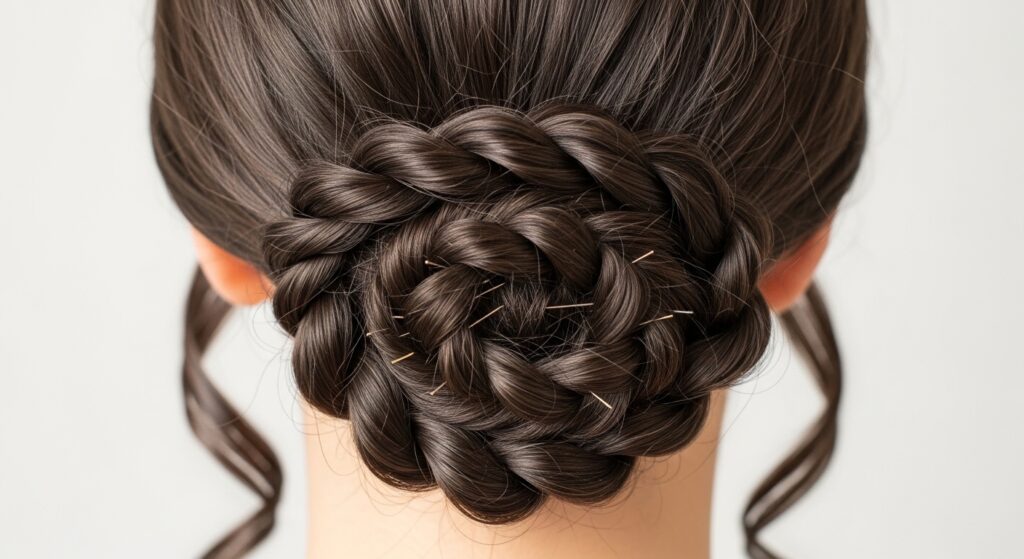
This style focused on the back, featuring a controlled tumble of curls that resembled a cascading waterfall. The top hair was pinned up smoothly, while the back hair was separated into distinct, fat curls that were pinned at intervals to create a stepped, flowing effect. The intricacy was in the uniform size and spring of each curl and the seamless integration of hairpieces for extra volume.
4. The Braided Coronet
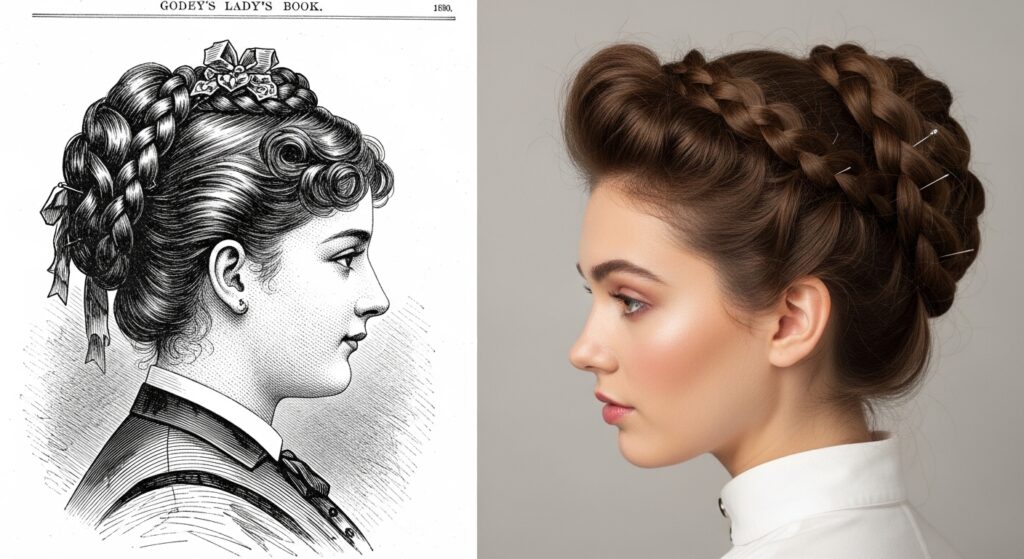
A symbol of maidenly purity and often seen on brides, this technique used one or multiple braids—typically a French or Dutch braid—circling the head like a crown. The ends were tucked and hidden. The detail work involved braiding in ribbons or pearls, and ensuring the coronet sat perfectly level, framing the face with soft, face-framing tendrils.
5. The Pompadour Roll
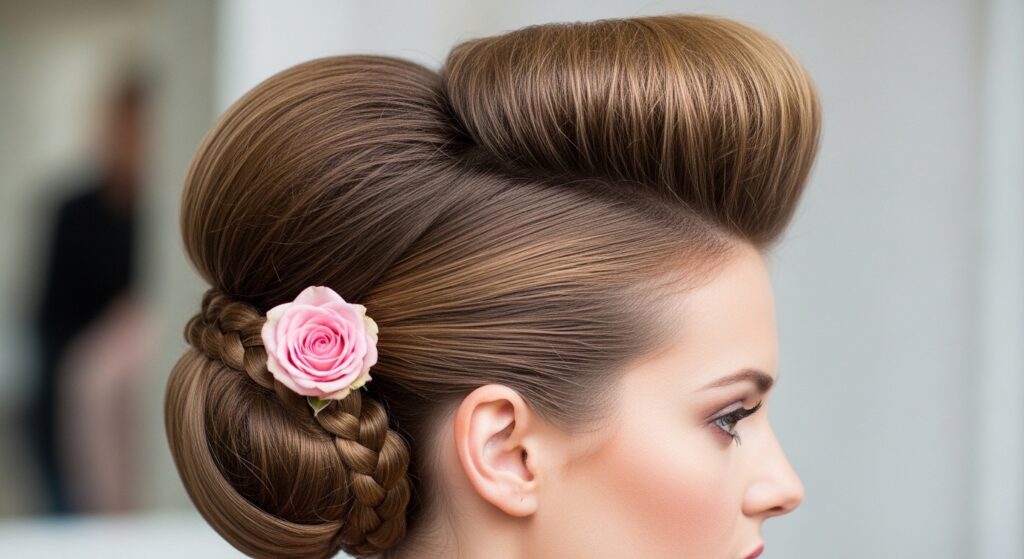
Victorian interpretation of the 18th-century style. The front hair was brushed high over a “pompadour” pad or rat, creating a wide, rounded front, then swept back into a larger updo. The intricacy was in the smooth, steep incline from forehead to crown and the seamless blending of the roll into the chignon or knot behind.
6. The Langtry Twist (The “Alexandra”)
Named for the actress Lillie Langtry, this involved a complex, interwoven twist that ran from the temple around the head. The technique required dividing hair into two main sections that were twisted around each other, incorporating smaller strands along the path. The result was a rope-like detail that framed the hairline with geometric precision.
7. The Fringe (Bangs) and Curl Cluster
In later decades, frizzed or curled bangs became a bold statement. The technique involved tightly curling or crimping the front hair, then arranging these curls into a deliberately artful cluster above the forehead. The updo behind was often simpler, making the detailed fringe the focal point.
8. The Triple-Bun Cluster
A playful yet intricate style featuring three buns arranged in a triangle—often two at the sides above the ears and one at the crown. Each bun could be a different type: a braided bun, a twisted knot, or a simple coil. The detail was in the symmetrical placement and the connecting braids or twists that linked the buns together.
9. The Crespine
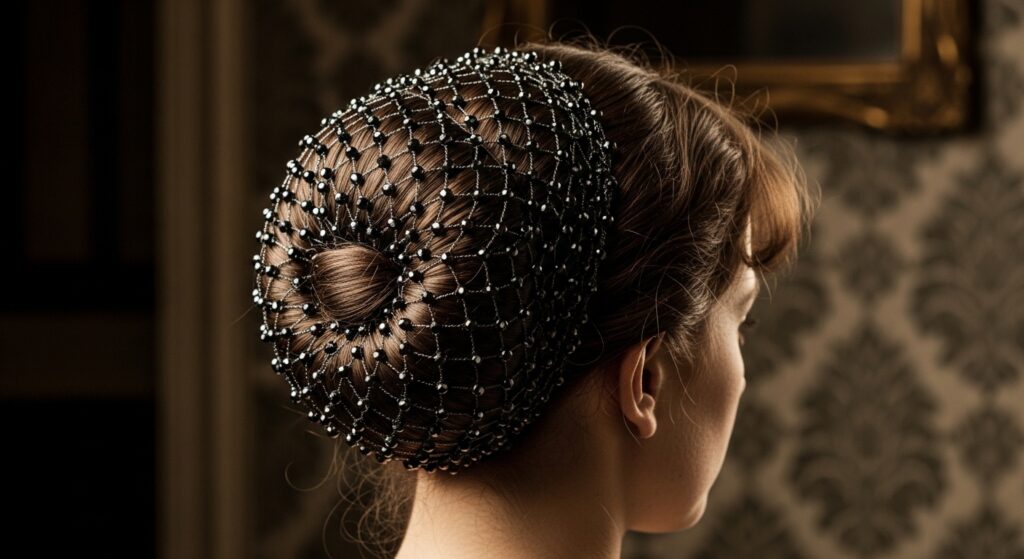
This was a netted snood, but the technique of filling it was key. Hair was first gathered loosely, then a decorative crespine (often of silk net with beadwork) was drawn over it, creating a bag-like effect at the nape. Intricacy came from how the hair was poufed within the net and the quality of the netting itself, which could be threaded with ribbon or jewels.
10. The Diagonal Plait Mound
A sophisticated style where a large, single plait (braid) was created from the hairline, angled diagonally across the back of the head, and then coiled into a mound at the opposite side. The intricacy was in the clean, sharp angle of the braid and the seamless tucking of the end to create a unified, sculptural form.
11. The Ringlet Chignon
This combined the structured base of a chignon with a halo of defined, separate ringlets. The technique required setting the entire head in rag curls, then pinning the bulk up into a knot, while carefully selecting and arranging individual ringlets to fall around the face, neck, and from the chignon itself. Each ringlet was a deliberate detail.
12. The Laced Braid Updo
Here, a ribbon was literally woven or “laced” through a central braid that formed the spine of the updo. The technique involved braiding with the ribbon as one strand, or threading it through the finished braid in a shoelace pattern before coiling it into a bun. The contrasting color of the ribbon provided the intricate, patterned detail.
13. The Grecian Knot
Inspired by Neoclassical revival, this low knot at the nape was deceptively simple. The intricacy was in the method of twisting and knotting the hair upon itself without pins (in its ideal form), creating a self-supporting knot that echoed ancient statues. In practice, hidden pins and a hairpiece called a “cache-peigne” were often used for stability.
14. The Multi-Row French Twist
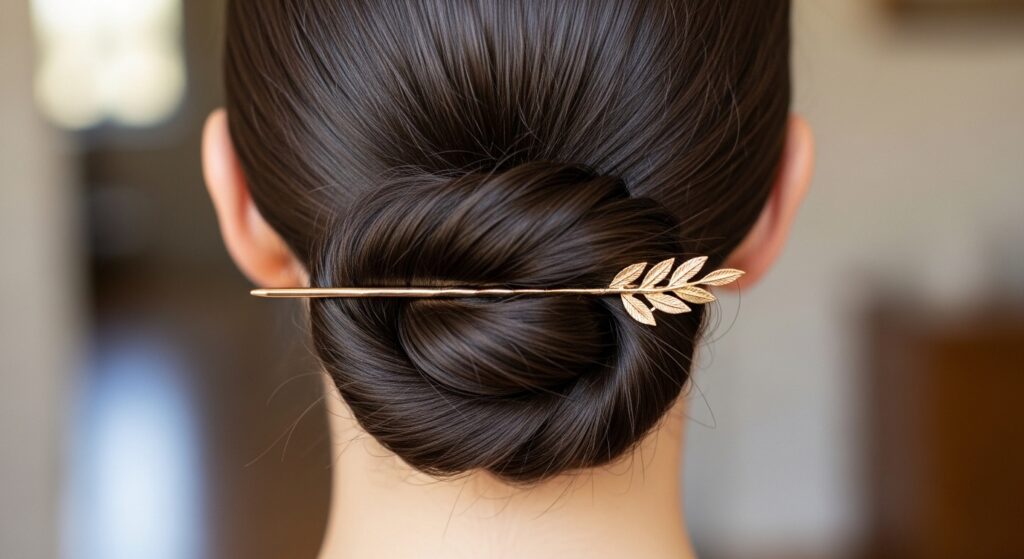
A Victorian predecessor to the modern French twist, but often executed in multiple, parallel rows. Hair was sectioned horizontally, and each section was twisted inward and pinned sequentially upward, creating a stacked, layered effect from nape to crown. The lines between each twisted row were a key detail.
15. The Fan Chignon
A chignon that was spread and pinned to resemble an open fan. This required backcombing and careful pinning to create a wide, semi-circular shape, often reinforced with a wire or stiffened lace form. The edges were sometimes finished with a line of small, uniform curls or a braided border.
16. The Inverted Plait Crown
This technique used inside-out (Dutch) braids to create a raised, three-dimensional crown around the head. One or two braids started at each temple and traveled over the crown, meeting at the back. The raised, rope-like texture of the Dutch braid was the star detail, often accented with tiny flowers tucked into the “valleys” of the braid.
17. The Twisted Rope Coronet
Similar to the braided coronet but created with twisted ropes of hair instead of braids. Two large sections were twisted tightly in the same direction, then wrapped around each other in the opposite direction to create a fat, secure rope. This was then coiled around the head. The detail was in the perfect tension and uniformity of the twist.
18. The Bustle Pad Updo
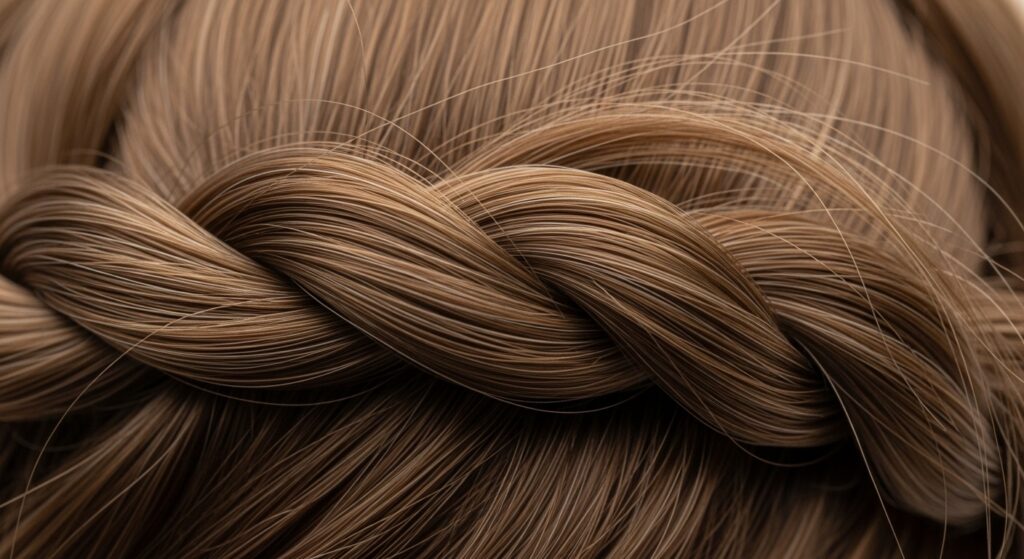
Mirroring the fashionable silhouette of the dress, this style used a large, padded “bustle” at the back of the head. Hair was swept up and over the pad, creating a pronounced, rounded protrusion. Intricacy came from the smooth draping over the pad and the elaborate arrangement of curls and falls of hair below the pad itself.
19. The Interlaced Twist Bun
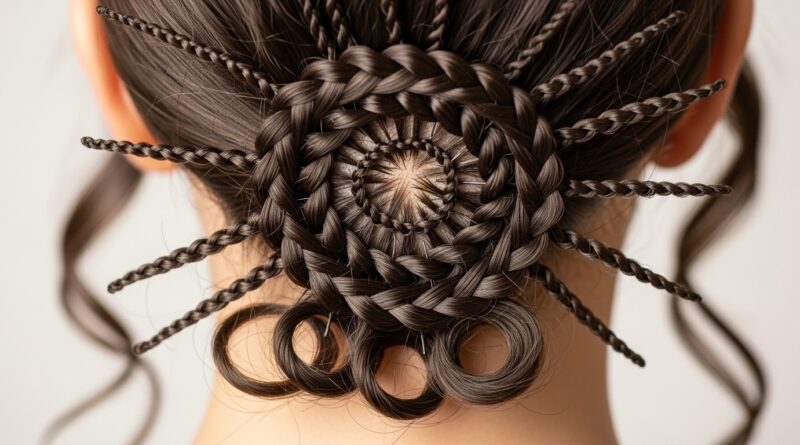
A bun formed by two separate strands of hair that were twisted independently and then interlaced or woven together before being coiled and pinned. This created a stunning basket-weave or lattice pattern visible on the surface of the bun, a true testament to the stylist’s patience and skill.
20. The Mourning Updo
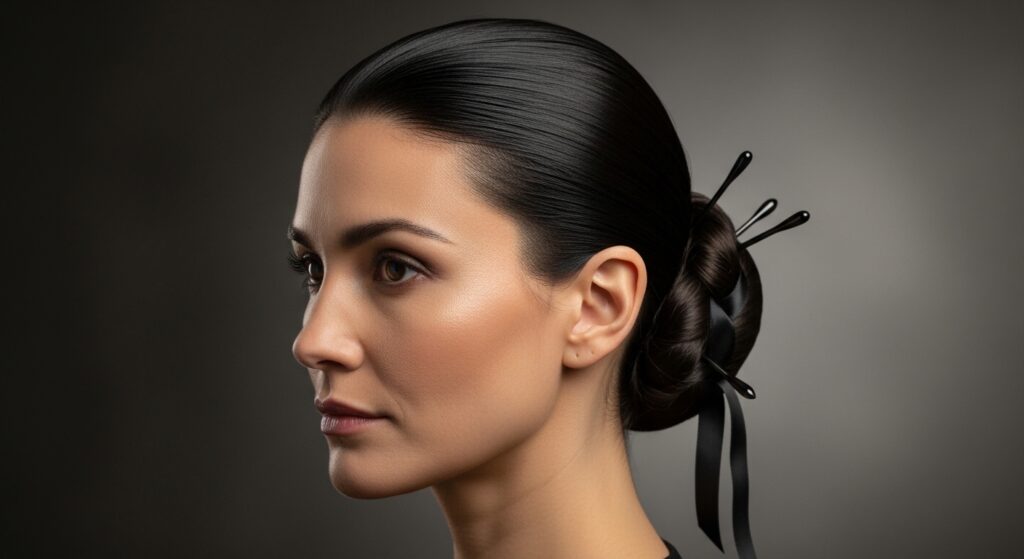
Strictly regulated by etiquette, mourning hairstyles were subdued but still detailed. Jet-black hair accessories were mandatory. A common technique was a severe, center-parted style with tight, smooth bands of hair drawn into a simple but impeccably neat chignon, adorned only with jet pins or a black crape band. The intricacy was in the stark, polished perfection, conveying dignity and grief.
Bringing Victorian Intricacy to Modern Hair
You don’t need a lady’s maid to capture the Victorian spirit. Start by mastering a single technique, like a braided coronet or a Gibson tuck, using modern tools like texturizing spray for hold and bobby pins for security. Incorporate Victorian details: weave a velvet ribbon into a braid, or use a decorative hair comb as a focal point. For modern brides, a softened Apollo Knot with loose tendrils is breathtaking. Remember, the Victorian aesthetic prized abundance, control, and adornment—focus on one of these elements to create a contemporary homage.
The legacy of Victorian updo techniques is a testament to hair as a medium for artistry and expression. These 20 styles reveal a world where patience and precision created beauty that was both personal and public, intimate and imposing. By understanding their intricate details, we not only appreciate the past but also unlock a treasure trove of inspiration for unique, elegant hairstyles today. So, take a pin, a braid, and a curl, and begin your own historical hair journey.