21 Wet Brush Methods That Prevent Breakage
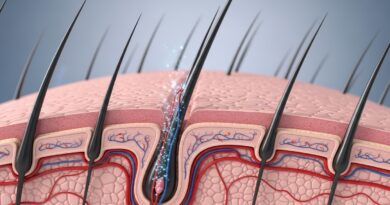
We’ve all been there: stepping out of the shower, hair dripping wet, only to face the daunting task of detangling a knotty mess. Reaching for the nearest brush and yanking it through can feel like a necessary evil, but the sound of snapping strands is a heartbreaking reminder of the damage we might be causing. Wet hair is at its most vulnerable—the shaft swells with water, making it more elastic but also far more prone to stretching and breaking.
The Golden Rules: Prep Before You Brush
Successfully brushing wet hair begins long before the brush touches your strands. These pre-brush methods are your non-negotiable first line of defense against breakage.
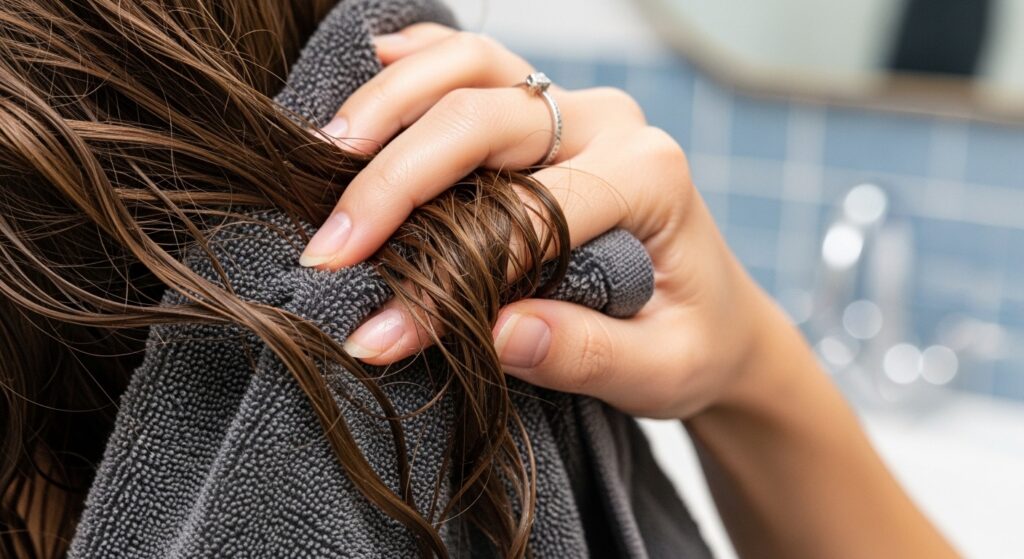
1. The Gentle Squeeze-Out: Never brush sopping wet hair. After rinsing, gently squeeze excess water from your hair with your hands or a soft microfiber towel. Avoid the harsh twisting and rubbing of a regular terry cloth towel, which roughs up the hair cuticle.
2. Detangler is Your Best Friend: Apply a leave-in conditioner or a dedicated detangling spray from mid-lengths to ends. This provides crucial slip, allowing the brush to glide through knots with minimal resistance.
3. Finger-Comb First: Before any brush makes contact, use your fingers to gently work through the largest tangles. Start at the ends and slowly work your way up. This breaks apart major knots without the aggression of tools.
4. Sectioning for Success: For thick, curly, or very long hair, clip your hair into 2-4 manageable sections. Brushing smaller sections ensures you don’t miss tangles and reduces the strain on each strand.
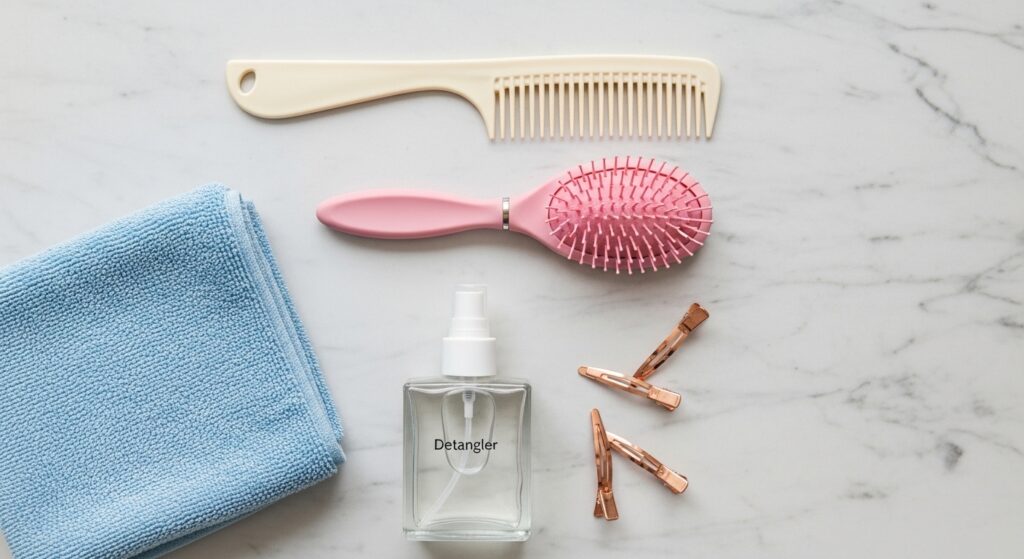
Tool Time: Choosing and Using the Right Brush
Not all brushes are created equal, especially for wet hair. Using the wrong tool is a primary culprit for breakage.
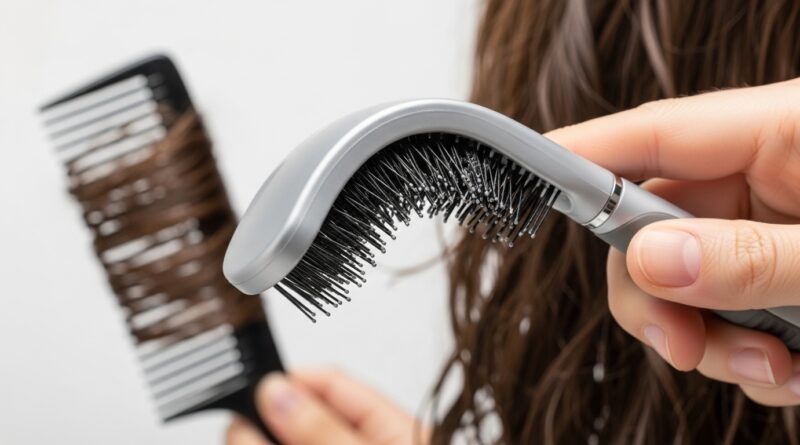
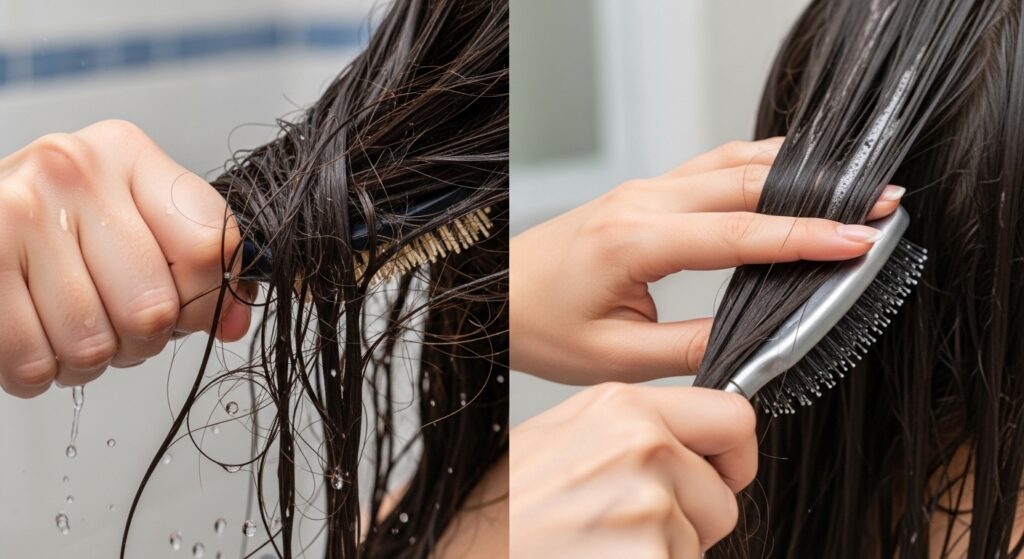
5. Invest in a True “Wet Brush”: Specifically designed for damp hair, these brushes have flexible, soft bristles that bend to navigate tangles without pulling. The cushioned base also helps absorb pressure.
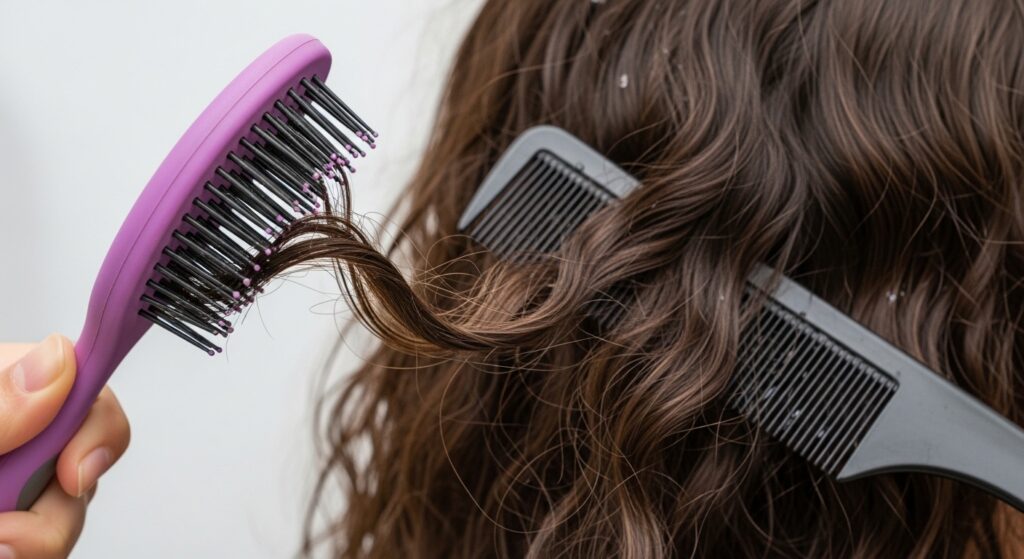
6. The Wide-Tooth Comb Alternative: For extremely curly or coily hair textures, a seamless wide-tooth comb is often the gentlest first step after finger-combing. It helps define curls without disrupting their natural pattern.
7. Brush Cleanliness Matters: A brush clogged with old hair, product, and oils won’t glide effectively. Regularly remove trapped hair and wash your brushes with warm water and shampoo to keep them functioning perfectly.
8. The Tension-Free Hold: When brushing, hold the section of hair you’re working on firmly between the brush and your scalp. This prevents the tugging sensation from traveling directly to the fragile roots.
The Art of the Stroke: Brushing Technique is Everything
This is where the magic happens. Perfecting your brushing motion is the single most effective way to prevent breakage.
9. The Unbreakable “Ends-Up” Rule: Always, always start brushing at the very ends of your hair. Work out the small tangles there first, then move up an inch or two, brush through, and repeat. Gradually work your way up to the roots. This prevents pushing large knots into a tight, unbreakable mass.
10. Short, Gentle Strokes: Use slow, deliberate, and short strokes. Long, aggressive pulls are a recipe for snapage. Think of it as gentle persuasion, not forceful detangling.
11. The Two-Brush Strategy (For Thick Hair): Use a wide-tooth comb to do the initial heavy lifting on a section, then follow immediately with your wet brush to smooth and distribute product. This two-step process minimizes stress.
12. Listen to Your Hair: If you feel a snag, stop immediately. Don’t force it. Apply more detangler to that specific spot and use your fingers to carefully loosen the knot before continuing with the brush.
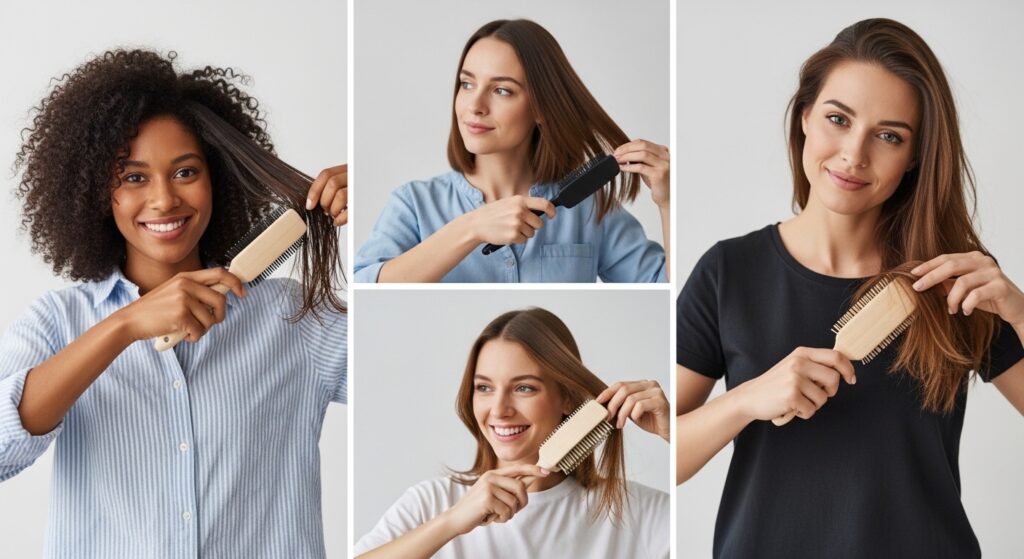
Hair Type-Specific Strategies
Different textures require nuanced approaches. One size does not fit all when it comes to wet brushing.
13. For Straight & Fine Hair: Focus on speed to prevent re-tangling as hair dries. Use a lightweight detangler and brush in smooth, continuous strokes once tangles are gone to distribute natural oils from root to tip.
14. For Wavy & Textured Hair: Brush in the shower with conditioner still in. The slip is maximal. Rinse after detangling to reveal clumped, defined waves with minimal frizz.
15. For Curly & Coily Hair: Detangling under a stream of water or in a basin of water (the “shingling” method) can provide incredible slip. Use your fingers or a wide-tooth comb first, following with a detangling brush only if needed, always in small, vertical sections.
16. For Color-Treated or Chemically Processed Hair: Your hair’s porosity is altered, making it more fragile. Use a brush specifically designed for fragile hair and a protein-rich leave-in conditioner for extra strength and protection during brushing.
Post-Brush Care & Styling
What you do after brushing sets the stage for hair health until your next wash.
17. The Perfect Pat-Dry: After brushing, use a microfiber towel or an old cotton t-shirt to gently scrunch or “plop” your hair. This absorbs water without causing friction-based frizz and breakage.
18. Heat Protectant is Non-Negotiable: If you plan to use any heat styling tools, apply a heat protectant spray or cream to your detangled, damp hair before you blow-dry. This creates a protective barrier.
19. Brush During Blow-Drying: When using a blow dryer with a concentrator nozzle, use a round brush made for heat styling on mostly dry sections. The hair is less vulnerable when it’s 80% dry, but the heat protectant is still crucial.
20. Nighttime Preservation: For next-day manageability, loosely braid or pineapple your hair (on top of your head) after it’s fully dry and brushed. This prevents nighttime tangling, meaning less brushing tomorrow.
The 21st Method: Consistency & Patience
21. Make It a Ritual, Not a Rush: The most important method of all is your mindset. Rushing through wet hair care is the root of most breakage. Dedicate time to be gentle and patient. Your hair is not an obstacle to conquer; it’s a fiber to care for. Consistent, gentle handling will yield stronger, longer, and more resilient hair over time.
[A serene, well-lit bathroom scene with a person in a cozy robe calmly brushing their hair, looking relaxed and content. The focus is on the calm, ritualistic atmosphere.]
Transforming your wet hair routine from a damaging ordeal to a nurturing practice is entirely within your reach. By adopting these 21 wet brush methods, you’re not just preventing breakage—you’re actively investing in the strength, shine, and length of your hair. Start with one or two new techniques, like the “ends-up” rule and applying a detangler, and gradually build from there. Your hair, and your future selfie with that incredible, healthy mane, will thank you.