Smart Heat Styling Precautions Preventing Thermal Damage And Split Ends
Why Heat Damage Sneaks Up On You
Heat damage doesn’t happen overnight. It builds in tiny increments. One extra pass here, a setting that was a little too hot there.
Your hair’s outer layer, the cuticle, lifts slightly each time high heat touches it. Eventually it can’t lie flat anymore, moisture escapes, and your strands start feeling rough.
Split ends show up last, and they’re the loudest signal. By then the damage has been forming for weeks.
The good news is this is fixable and mostly preventable. You just need a few guardrails.
Know Your Hair Type Before You Crank The Heat

Your ideal setting isn’t universal. It depends on texture and porosity.
- Fine or thin hair: burns fast. Stay between 250 and 300 F.
- Medium hair: 300 to 350 F is plenty.
- Thick or coarse hair: 350 to 400 F, and only when you truly need it.
- High porosity hair: soaks up heat quickly, so go lower than you think.
Always test on a hidden section first. If it sizzles or smells, stop and dial it down.
The Golden Rule: Never Skip Heat Protectant
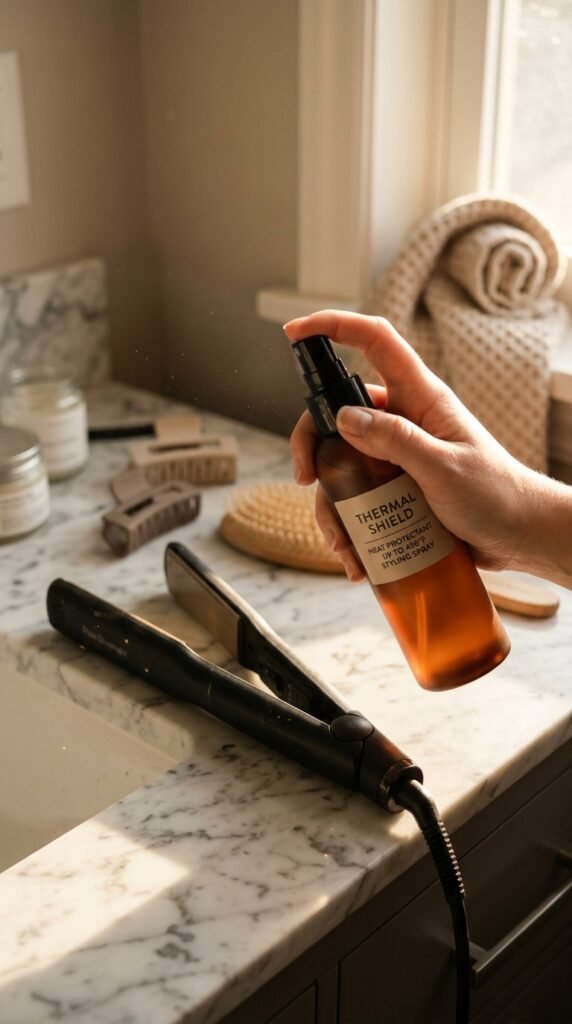
If you only take one thing from this post, take this. Heat protectant is not optional.
It creates a barrier between your strands and the tool, helps heat distribute evenly, and adds slip so the iron glides instead of dragging.
Here’s how I use it:
- Spray or cream on damp hair before blow drying.
- Light cream or serum on dry hair before flat ironing or curling.
- Never soak your roots. A little goes a long way.
Pick The Right Tool For The Job
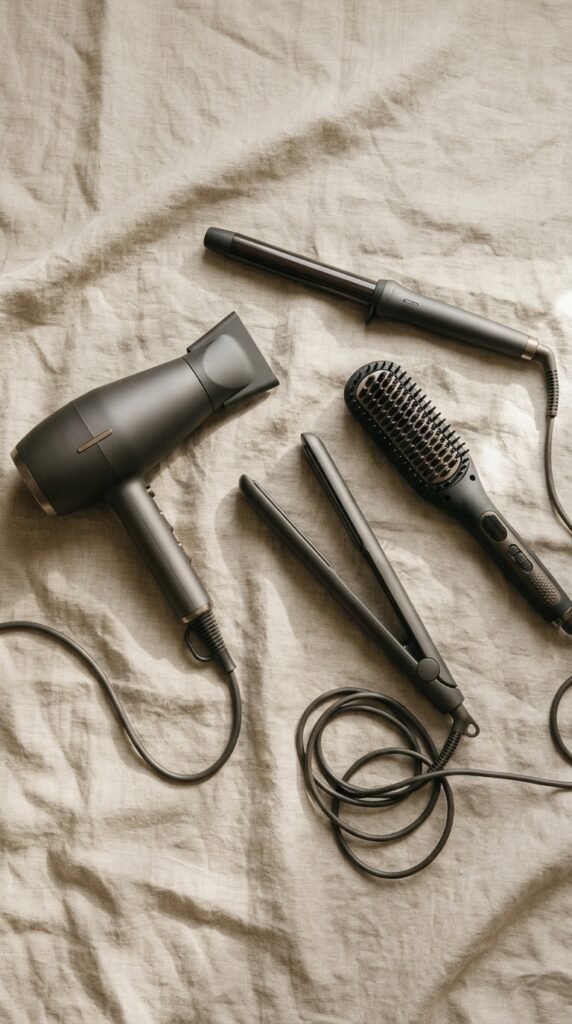
Cheap tools with no temperature control are the fastest route to fried ends.
Look for adjustable heat, ceramic or tourmaline plates, and a cord that isn’t fighting you. A good flat iron does more with 320 F than a cheap one does with 450 F.
- Blow dryer: for volume and smoothness.
- Flat iron: for sleek styles, waves, and old money hair.
- Curling wand: for texture and romantic goth hairstyles.
- Hot brush: gentle everyday smoothing.
Always Start With Completely Dry Hair

Flat ironing damp hair is like boiling it. The water inside the strand turns to steam and blows the cuticle open from the inside.
You’ll hear a sizzle. That’s not product. That’s your hair losing moisture it can’t easily get back.
Let your hair air dry or blow dry it fully first. If you’re in a rush, rough dry with the dryer on medium until you can’t feel any cool spots.
Patience here saves you months of split ends later.
Sectioning Is Your Best Friend
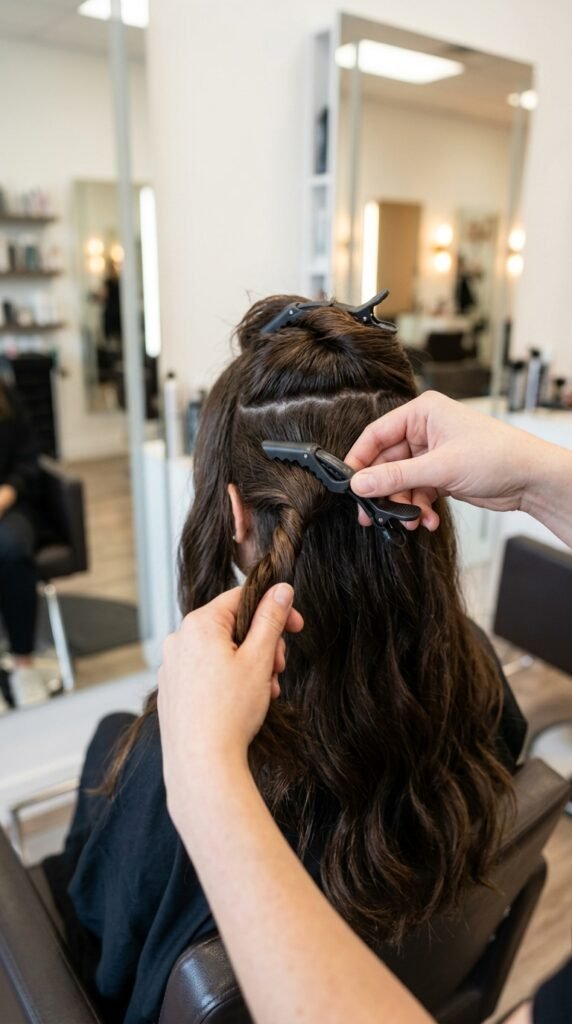
Pulling one giant chunk of hair through an iron means you go over it three or four times. That is triple the damage.
Instead:
- Clip up everything above your ears.
- Work from the bottom up in sections about one inch thick.
- Clip each finished section out of the way.
Small sections mean one clean pass and you’re done. Faster overall, and way gentler on your ends.
The One-Pass Rule
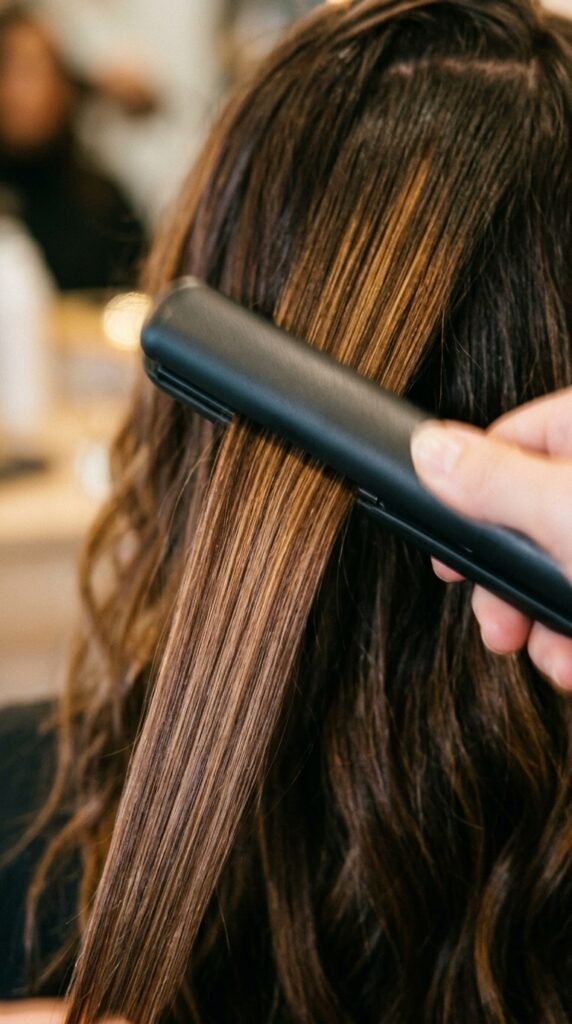
One section, one pass. That’s the goal.
If you need a second pass, you either had too much hair in the iron, the heat was too low, or the section wasn’t fully dry.
Going over the same spot again and again is how you get that dry, crunchy feeling on the ends. Sometimes we call it “heat training” but it’s really just damage stacking up.
Fix the reason for the second pass instead of doing the second pass.
Keep The Tool Moving
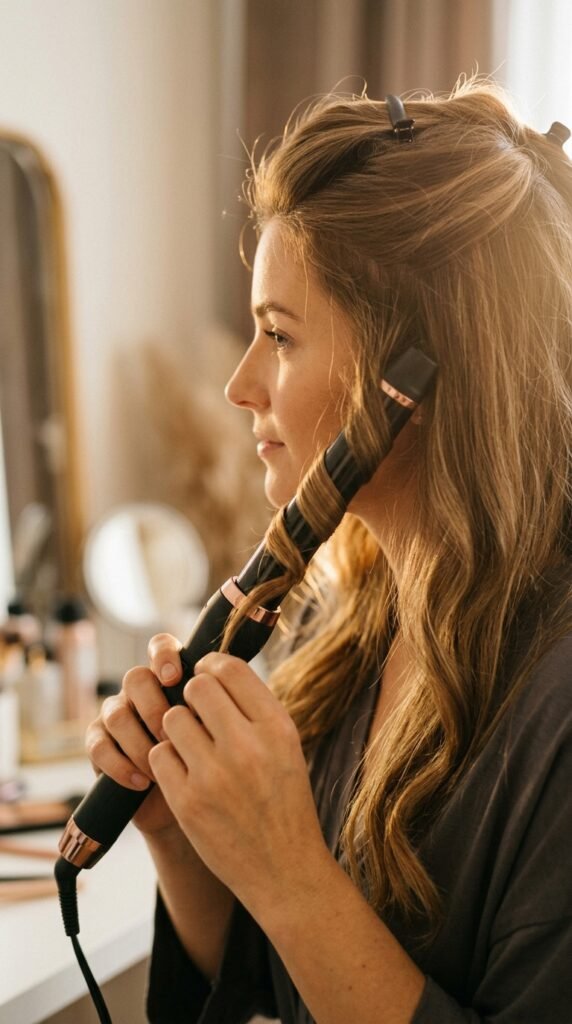
Parking a hot iron on one spot for more than a few seconds is asking for a dent or a burn mark.
Keep a steady, gentle glide. Slow enough to smooth, fast enough to never sit still.
- Flat iron: about one to two seconds per pass.
- Curling wand: five to eight seconds, then release.
- Never clamp at the very ends. Stop an inch before.
Those last inches are the oldest, driest part of your hair. Give them the least heat, not the most.
Skip The Daily Touch-Up
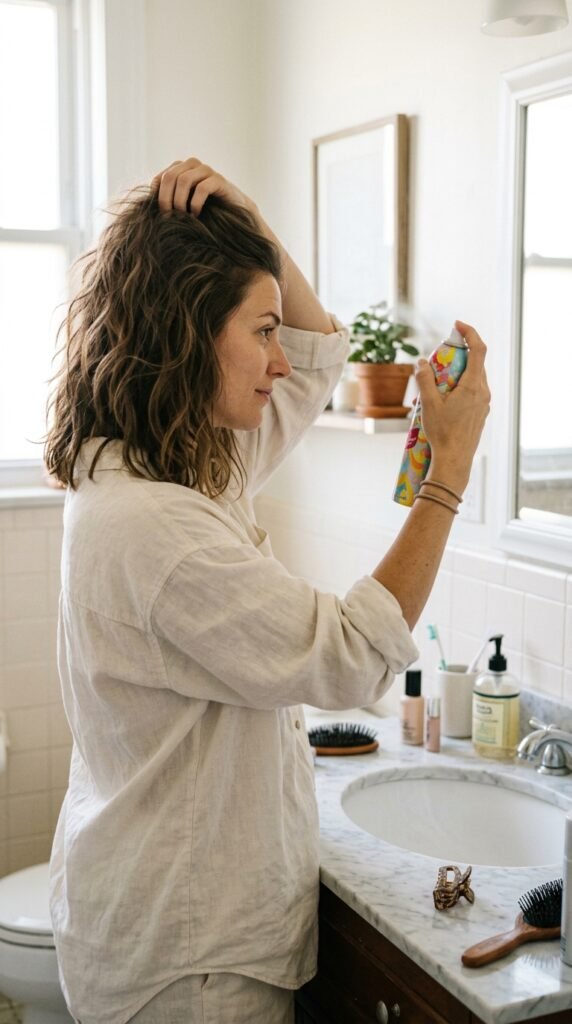
Most damage isn’t from wash day. It’s from the ten-minute touch-up every single morning.
If you’re flat ironing your ends daily, that’s roughly 30 extra heat sessions a month on your most fragile hair.
Try this instead:
- Refresh with dry shampoo at the roots.
- Mist with water and scrunch to wake up waves.
- Use a round brush and low blow dryer heat only where needed.
Save the iron for events and photos. Your ends will thank you.
Deep Condition Once A Week

Heat styling strips moisture. You have to put it back.
Once a week, swap your regular conditioner for a deep mask. Leave it on for 15 to 20 minutes, ideally with a little warmth from a towel or shower steam.
Look for ingredients like glycerin, shea, argan oil, or hydrolyzed protein. Protein is great, but don’t use it every wash or hair can feel stiff.
Alternate: moisture mask one week, protein mask the next. Simple and effective.
Trim Every 8 To 12 Weeks
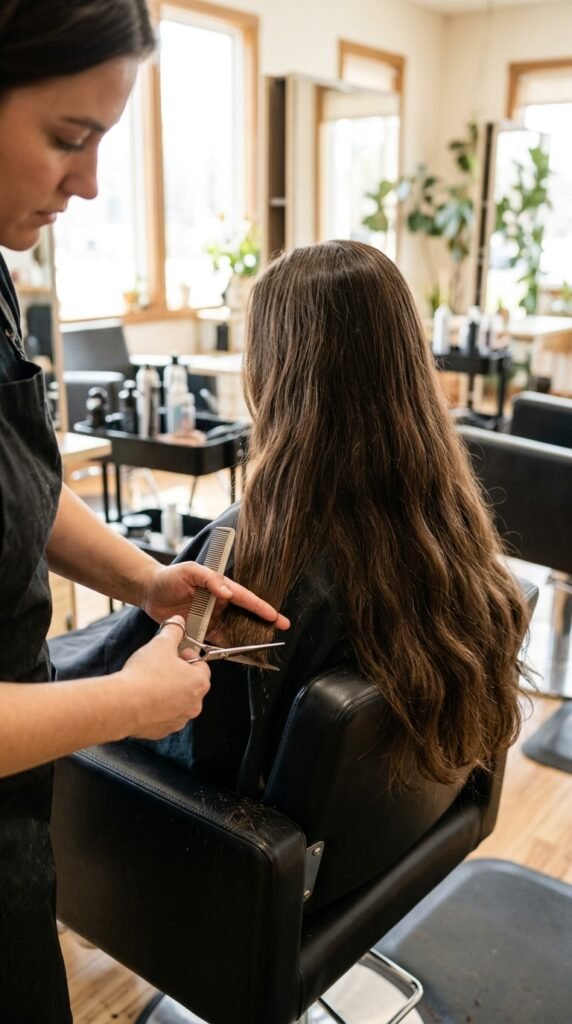
Split ends don’t heal. They travel up the strand until the hair breaks.
A tiny trim every 8 to 12 weeks keeps them from spreading and actually helps your hair look longer over time.
You don’t need a big chop. Ask for a dusting, where only the very ends get trimmed.
If you’re growing out a quiet luxury bob or an asymmetrical lob, regular trims keep the shape sharp instead of stringy.
The Truth About Split End Repair Products
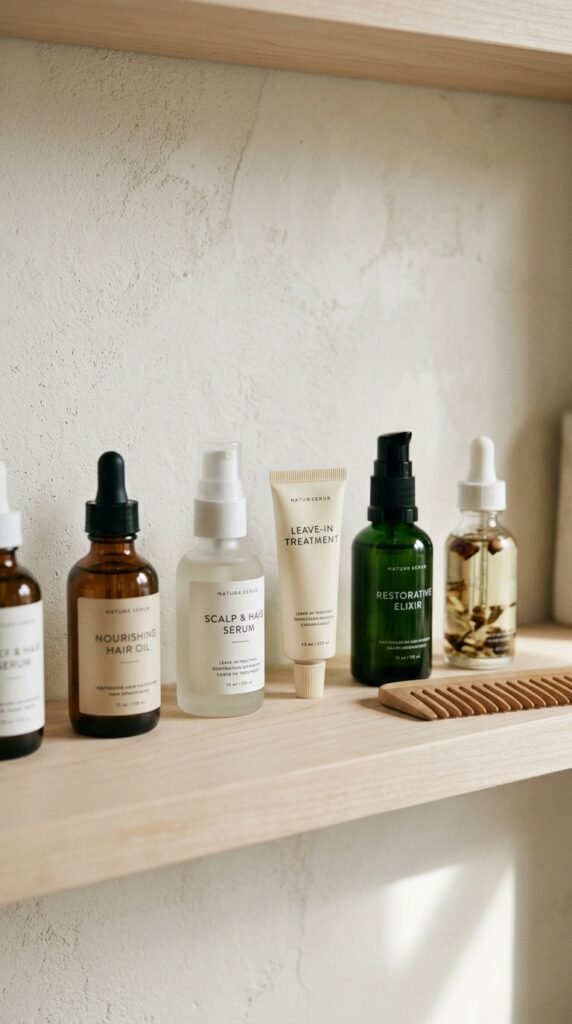
Here’s the honest answer. No product can permanently fuse a split end back together.
Some oils and bond builders can temporarily seal the split so it looks and feels smoother. That’s genuinely helpful for photos and events.
But it’s cosmetic. The split is still there and will keep traveling.
Use the serum. Then book the trim. Both, not one or the other.
Heatless Styling Ideas That Actually Look Good

You don’t need heat for beautiful hair. You really don’t.
- Overnight heatless curls: wrap damp hair around a soft rod or robe belt.
- Braids: two loose braids give you soft waves by morning.
- Bantu knots: great for defined curls and volume.
- Silk rollers: gentle, old-school, and surprisingly effective.
- Twist and pin: perfect for a soft, undone blowout look.
Do these on damp hair with a little leave-in and you’ll wake up with texture for free.
Protect Your Hair While You Sleep

Cotton pillowcases pull moisture from your hair and create friction that roughs up the cuticle.
Switch to silk or satin. It sounds fancy but it’s one of the cheapest long-term wins for your hair.
- Loose braid or a top bun with a satin scrunchie.
- Never a tight elastic at the same spot every night.
- A few drops of lightweight oil on the ends before bed.
You’ll wake up with less frizz and fewer tangles, which means less tugging and less breakage.
Watch For These Damage Warning Signs

Your hair tells you when it’s had enough. Learn the language.
- White dots along the strand: heat damage forming.
- Ends splitting into a Y or tree shape: time to trim.
- Sizzling or steam when you style: hair wasn’t dry.
- Straw texture that won’t soften with conditioner.
- Breakage when you brush, even gently.
Two or more of these means it’s time for a heat break.
Give Your Hair A Heat Vacation

Two to four weeks with no hot tools. That’s it. That’s the reset.
It feels dramatic, but your hair genuinely recovers when you stop reheating it. You’ll notice softer ends and less breakage within the first week.
Use the time to play with heatless styles. Braid waves, silk rollers, air-dried texture. You might find a look you like even more than your usual one.
Then when you go back to the iron, you’ll be starting from a much better place.
Do Bond Builders Actually Work?
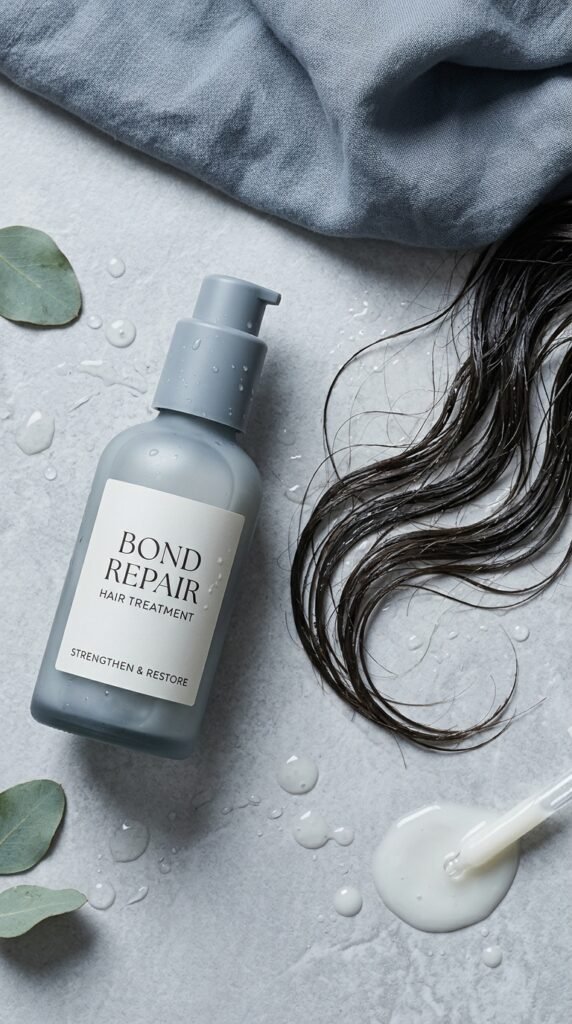
Yes, but with realistic expectations. Bond builders help reconnect some of the internal structure that heat and color break down.
They’re not a magic fix for split ends, and they won’t undo years of 450 F styling.
What they do well:
- Improve strength and elasticity over a few weeks.
- Reduce breakage during brushing.
- Make hair feel smoother and less brittle.
Use them as a support system, not a substitute for good habits. Consistency matters more than price.
Make 2026 Hairstyles Work With Less Heat
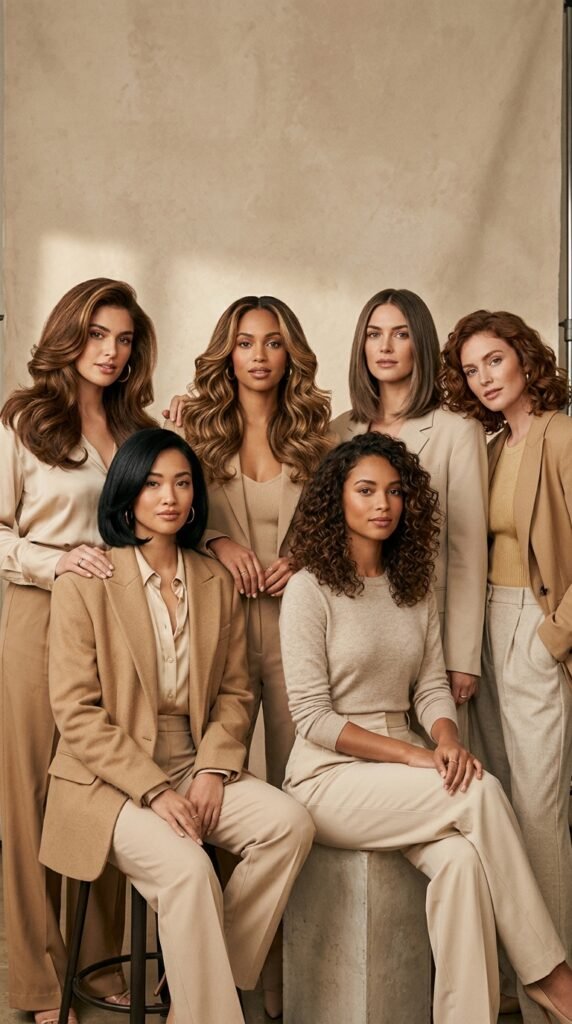
Good news. The 2026 hairstyles trending right now are actually heat-friendly.
Old money hair is about shine and smoothness, which you can get with a good blow dry and a cool shot instead of a flat iron marathon.
A quiet luxury bob looks best with natural movement and a soft finish, not pin-straight ends.
Romantic goth hairstyles lean into texture and volume, which heatless curls handle beautifully.
Even glitchy glam hair, with all its sharp edges, only needs a few precise passes rather than full-head heat.
Heat Rules For Specific 2026 Cuts

Different cuts need different handling.
- Quiet luxury bob: blow dry with a round brush, no iron needed.
- Asymmetrical lob: smooth only the longer side, let the rest air dry.
- Hime cut: keep the straight side sections crisp, but skip heat on the blunt fringe daily.
- Vampire haircut: blow dry with a diffuser for that soft, moody volume.
Focus heat where it matters. Not everywhere.
Blow Dryer Tricks That Cut Ironing Time

Great blow drying means less ironing later. Here’s how I do it.
- Rough dry until hair is 80 percent dry.
- Point the nozzle down the hair shaft to smooth the cuticle.
- Use a round brush on the top layer for shine.
- Finish each section with a blast of cool air.
Keep the dryer moving and at least six inches from your hair. That downward airflow is what gives you glassy, old money hair without a single pass of a flat iron.
Never Skip The Cool Shot
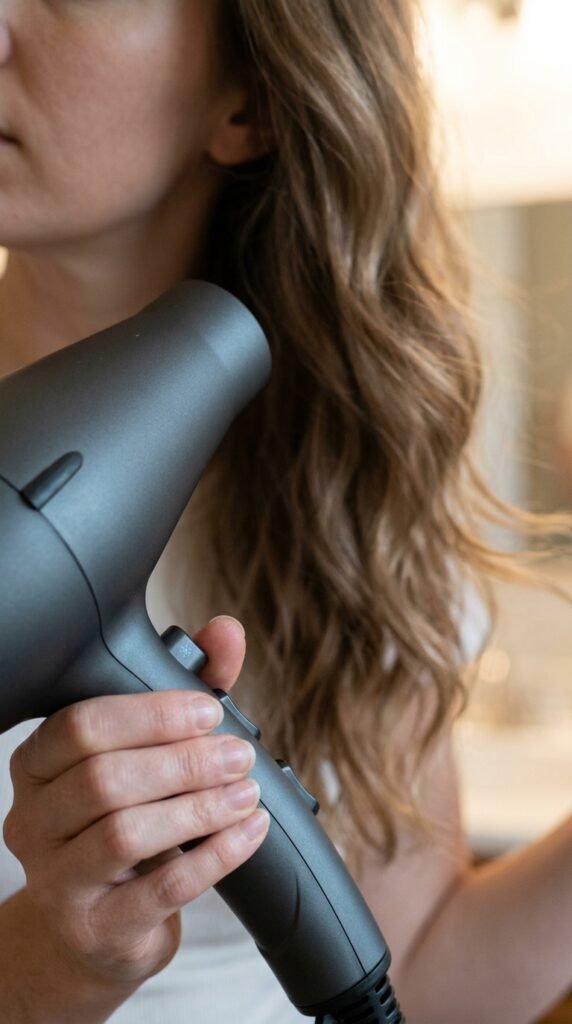
That cold button on your dryer does more than you think.
Heat opens the cuticle and makes hair pliable. Cold closes it and locks the shape in place.
So after each section, hit it with cool air for a few seconds. Your curls hold longer, your blowout stays smooth, and your hair looks shinier.
It costs you nothing but ten extra seconds. Best free upgrade in hair styling.
Products That Help And Products That Hype
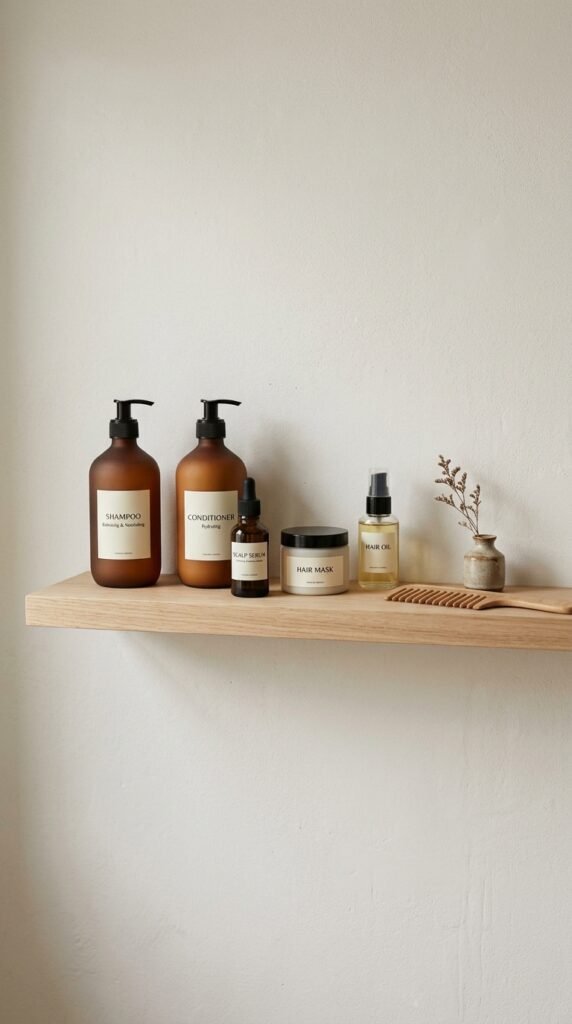
You don’t need twenty products. You need four or five good ones.
- Worth it: heat protectant, deep conditioner, lightweight leave-in, silk pillowcase, wide-tooth comb.
- Skip it: anything promising permanent split end repair, alcohol-heavy sprays, and heavy silicone serums used daily.
Read labels. If alcohol is one of the first few ingredients, it’ll dry your hair out over time.
Your Simple Weekly Heat Schedule
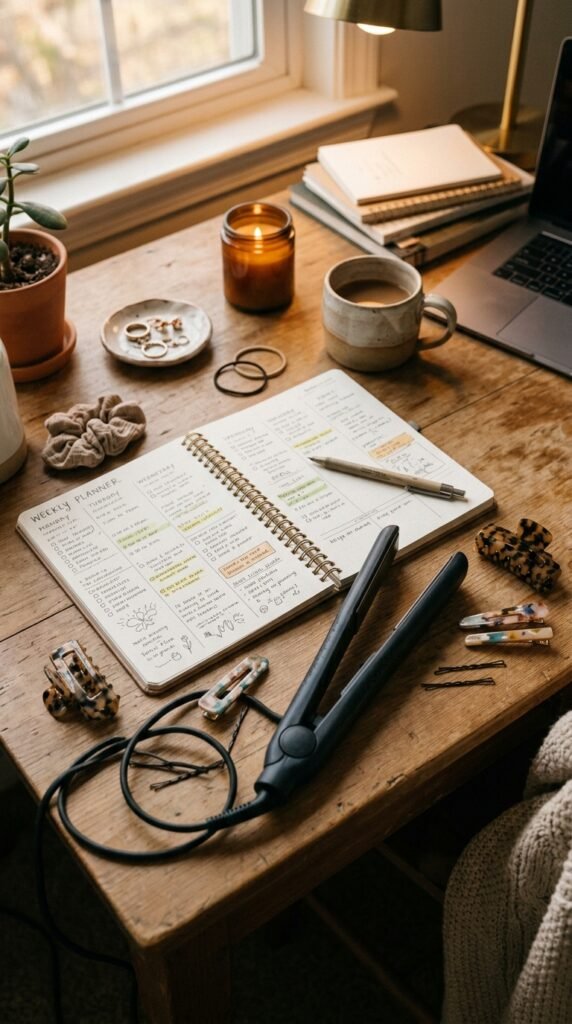
Here’s a rhythm that actually works long term.
- Monday: wash, deep condition, blow dry only.
- Tuesday and Wednesday: no heat. Refresh with dry shampoo.
- Thursday: one light styling session with an iron.
- Friday and Saturday: heatless styles or a simple updo.
- Sunday: hair mask and rest.
Two heat days a week. That’s it. You’ll still get your looks, and your ends will stay intact.
The 60-Second Preheat Checklist

Before you plug anything in, run this list in your head.
- Is my hair 100 percent dry?
- Did I apply heat protectant?
- Is my tool set to the right temperature for my hair type?
- Is my hair sectioned?
- Is my iron clean? Product buildup burns and drags.
One minute of prep saves you a year of split ends. I promise it’s worth it.
A Little Love Note For Your Hair
Your hair isn’t fragile. It’s just doing the best it can with what you give it. A little less heat, a little more moisture, and a few smarter habits can change everything in just a couple of months.
You don’t have to give up styling. You don’t have to choose between trendy and healthy. The 2026 hairstyles, from the quiet luxury bob to the vampire haircut, all look better on hair that’s actually thriving.
Start with one change this week. Then add another. That’s how it sticks.
Save this post to Pinterest so you have it handy before your next styling session.
And tell me in the comments: what’s the one heat habit you’re breaking this month? I read every single one, and I love hearing what’s working for you.