35 Best Hairstyles for Straight Hair That Add Movement and Volume
Looking for hairstyles for straight hair? You are in the right place. Straight hair is sleek, shiny and easy to smooth, but it can also fall flat, slip out of styles, and look like one heavy sheet. The best hairstyles for straight hair fix exactly that: they add movement, volume and texture, without fighting your natural texture.
In this guide, you will find 35 hairstyles for straight hair, organised by what actually helps: layers that create swing, bangs that add front shape, bobs that look fuller, waves and blowouts that add body, and braids and buns that stay put. Each style is easy to read and easy to try, with why it suits straight hair, who it suits best, how to style it at home, and what to ask your stylist.
Key Takeaways
- Layers create movement: Long, face-framing and shaggy layers break a flat sheet into pieces that swing.
- Root lift beats length: A side part, root mousse and crown lift fix flat roots faster than any cut alone.
- Texture needs grip: Straight hair slips, so texture spray, mousse and braids help waves and updos last.
- Blunt edges look fuller: A blunt lob or bob makes fine straight hair look dense and thick.
- Heat-free options exist: Overnight braids and twists add movement without daily heat damage.
Why These Hairstyles Suit Straight Hair
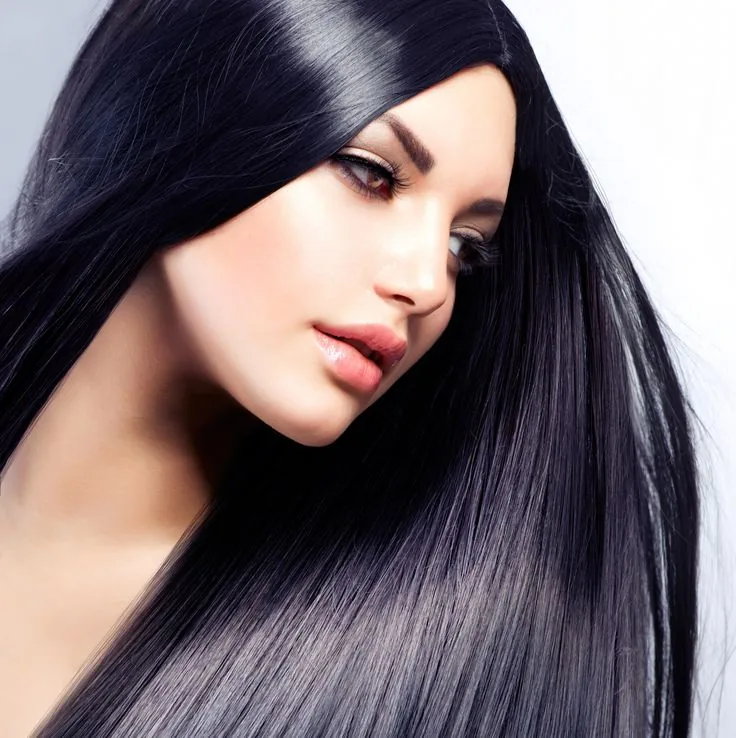
Straight hair reflects light beautifully, so shine and smooth cuts are its strengths. Its weaknesses are flatness at the roots, a lack of natural bend, and styles that slip out. The styles in this guide work with the shine and fix the flatness.
That is the whole idea. You are not fighting straight hair or pretending it is curly. You are choosing layers, lift and texture that give it swing, while keeping the sleek finish that makes straight hair so polished.
The Golden Rule for Straight Hair
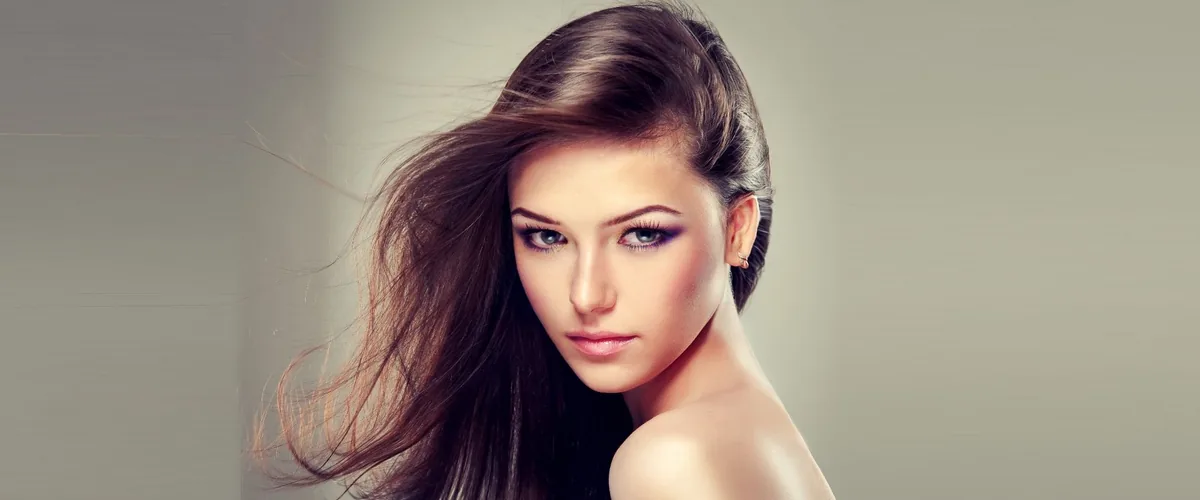
Add movement, add lift, or add grip. Pick at least one, and the style will usually work. Layers give movement. Root lift gives height. Texture spray gives grip. Two of the three is even better.
Two habits break the rule. First, one-length hair with a flat centre part and no lift, which can look like a curtain. Second, heavy products that weigh straight hair down. Use light mousse and spray, lift the roots, and let the ends move.
Quick Picks by Hair Type and by Goal
- Long hair: Long layers for movement, V-cut, U-cut, sleek long straight cut.
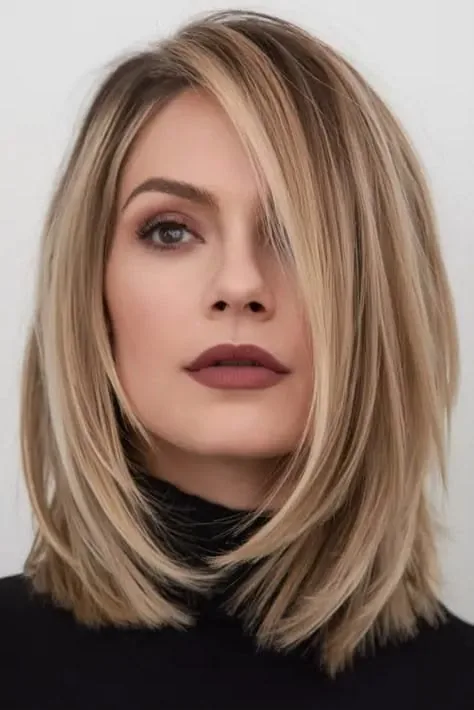
- Medium hair: Blunt lob, textured lob, layered midi cut, A-line bob.
- Short hair: Chin-length blunt bob, A-line bob, shaggy layers.
- Fine hair: Blunt lob, chin-length blunt bob, side-part long layers.
- Thick hair: Feathered cut, shaggy layers, long layers for movement.
- Bangs: Curtain bangs, side-swept bangs, curtain blowout.
- Waves and volume: Loose waves, beach waves, voluminous blowout, bouncy layered blowout.
- Updos: Sleek high ponytail, low polished ponytail, sleek low bun, messy bun with volume.
- Braids: French braid, side Dutch braid, fishtail braid, headband braid.
1. Long Layers for Soft Movement
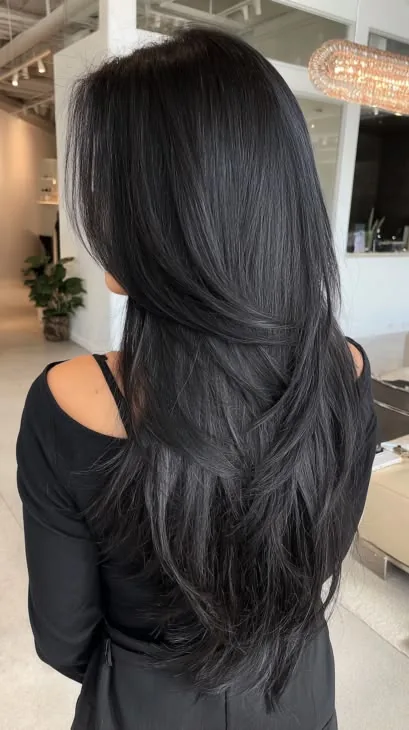
Straight hair can hang flat in one heavy sheet, and long layers break that sheet into pieces that move. Layers cut from the collarbone down let the ends swing when you walk, while the top stays smooth and polished. It is the easiest way to keep long straight hair without it looking limp.
Best for: Long straight hair that falls flat, and anyone who wants movement without losing length.
How to style:
- Apply a light volumising mousse to damp roots.
- Blow-dry with a round brush, lifting at the crown.
- Flick the ends out or under in alternate sections.
- Finish with a flexible spray.
What to ask your stylist: Ask for long layers starting at the collarbone, with the shortest layer no higher than the chin.
2. Face-Framing Layers
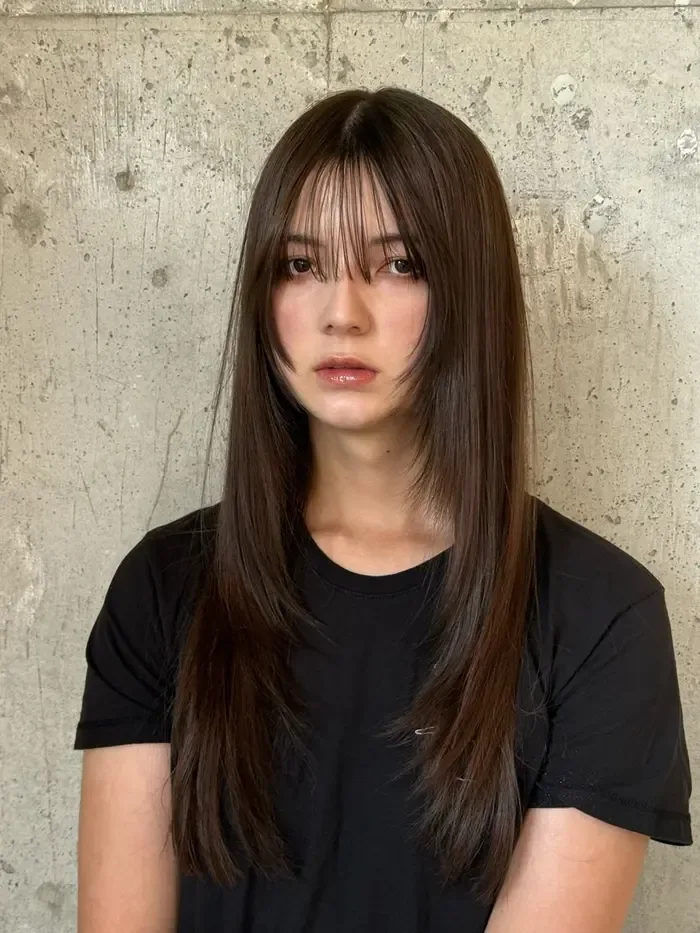
Face-framing layers are shorter pieces around the cheeks and jaw that stop straight hair looking like a curtain. They add shape near the face, soften a strong jaw or long forehead, and give a ponytail or bun instant softness. Because the rest stays long, the cut still feels sleek.
Best for: Straight hair of any length, especially if the face needs softening around the cheeks.
How to style:
- Blow-dry the face pieces forward and away from the face.
- Curl them loosely outward for movement.
- Smooth the lengths down.
- Shake the front pieces out.
What to ask your stylist: Ask for face-framing layers from the cheekbone down, blended into the lengths.
3. Curtain Bangs on Straight Hair
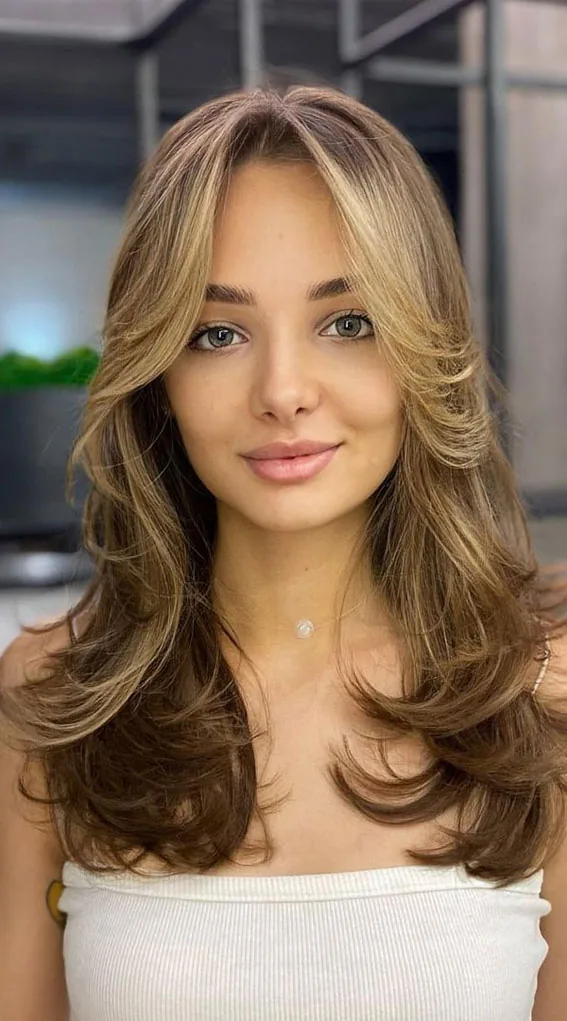
Curtain bangs are made for straight hair: they part cleanly in the middle and fall in two smooth curves. They add instant shape to the front without a full fringe commitment, and they grow out into face-framing layers. Keep them long enough to tuck behind the ears on lazy days.
Best for: Straight hair that needs front shape, and anyone trying bangs for the first time.
How to style:
- Blow-dry bangs forward with a round brush.
- Sweep each side outward.
- Smooth flyaways with a little cream.
- Keep the centre part soft, not severe.
What to ask your stylist: Ask for long curtain bangs starting at the cheekbone, cut to blend into layers.
4. Side-Swept Bangs
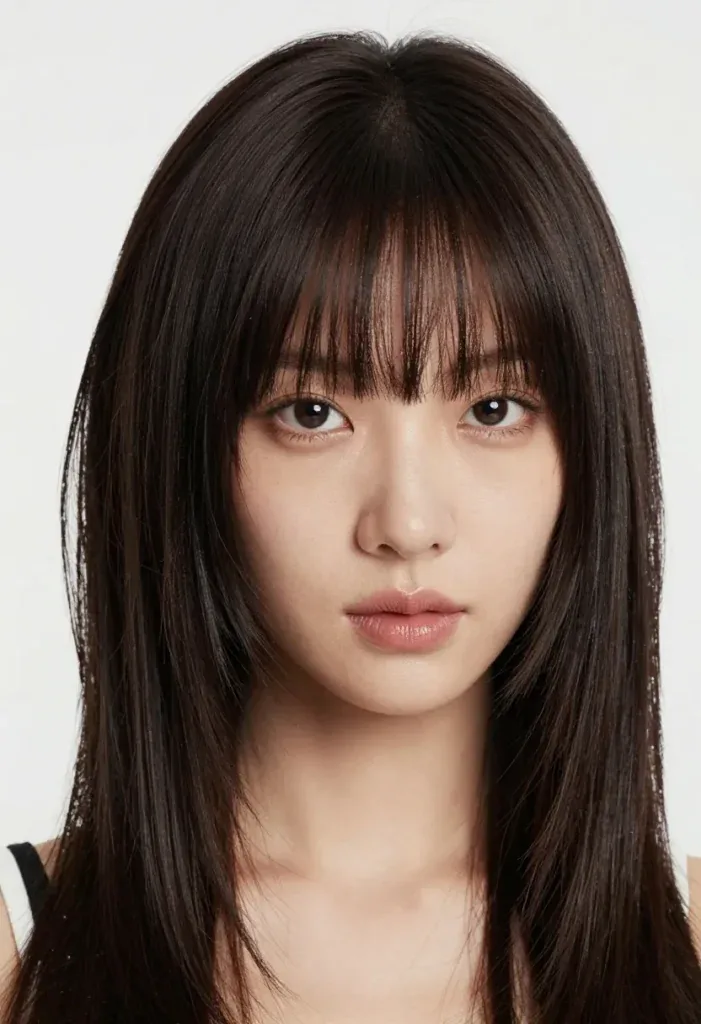
A side-swept fringe gives straight hair a diagonal line, which breaks up flatness at the forehead at once. It sweeps neatly to one side, adds asymmetry, and works with bobs, lobs and long cuts alike. On fine straight hair it also makes the front look thicker.
Best for: Straight hair with a high forehead, or anyone who wants a fringe that is easy to push aside.
How to style:
- Blow-dry the fringe to one side with a round brush.
- Smooth the rest down.
- Add a little root spray for lift.
- Set lightly so it still moves.
What to ask your stylist: Ask for a long side-swept fringe that blends into the side layers, not a thick block.
5. Blunt Lob
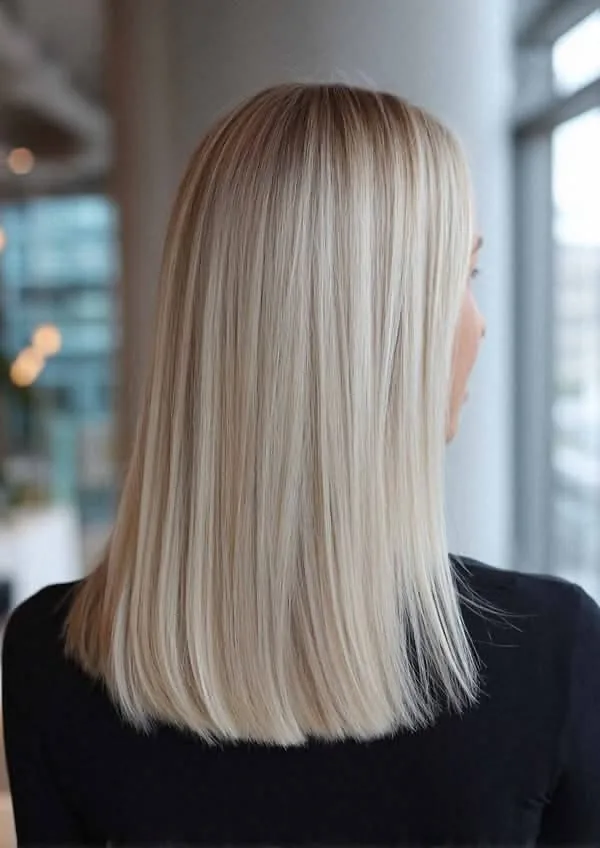
A blunt lob is the classic straight-hair cut: one clean, thick-looking edge at collarbone length. Straight hair shows a blunt edge beautifully, so fine hair looks instantly fuller. The trick is to keep the ends slightly softened so it does not look stiff or helmet-like.
Best for: Fine or medium straight hair that wants to look thicker, at a practical medium length.
How to style:
- Apply smoothing cream to damp hair.
- Blow-dry straight with a paddle brush.
- Turn the ends slightly under.
- Finish with shine serum.
What to ask your stylist: Ask for a blunt lob at the collarbone with point-cut ends, not a razor-sharp line.
6. Textured Lob
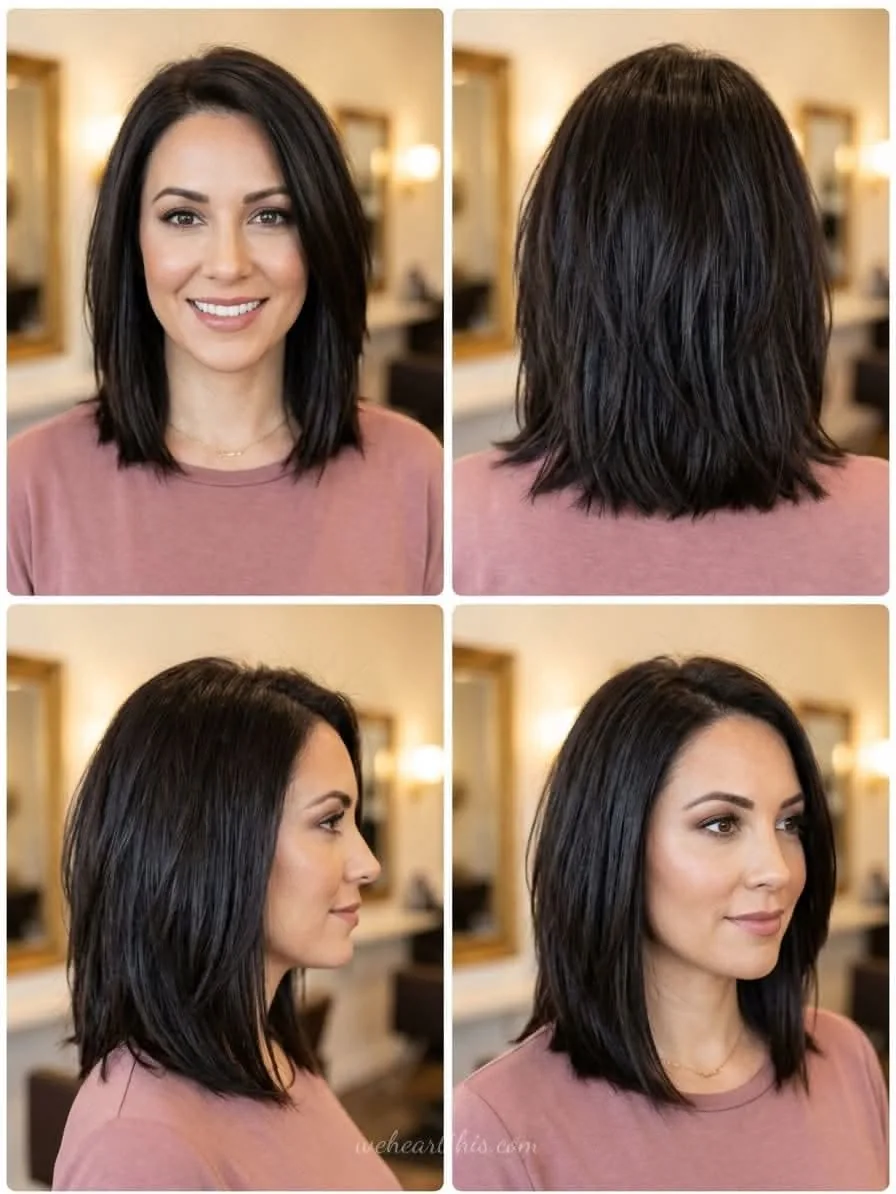
A textured lob takes the blunt lob and roughs up the ends, so straight hair gains piecey movement instead of a solid wall. Light internal texture lets the ends flick in different directions. It is a good middle ground if a blunt cut feels too severe but layers feel too much.
Best for: Straight hair that wants a modern, undone medium cut with movement at the ends.
How to style:
- Apply texturising cream to damp ends.
- Blow-dry mostly straight, then scrunch the ends.
- Twist a few pieces outward.
- Set with a light spray.
What to ask your stylist: Ask for a lob with textured, piecey ends and only light layers on top.
7. A-Line Bob
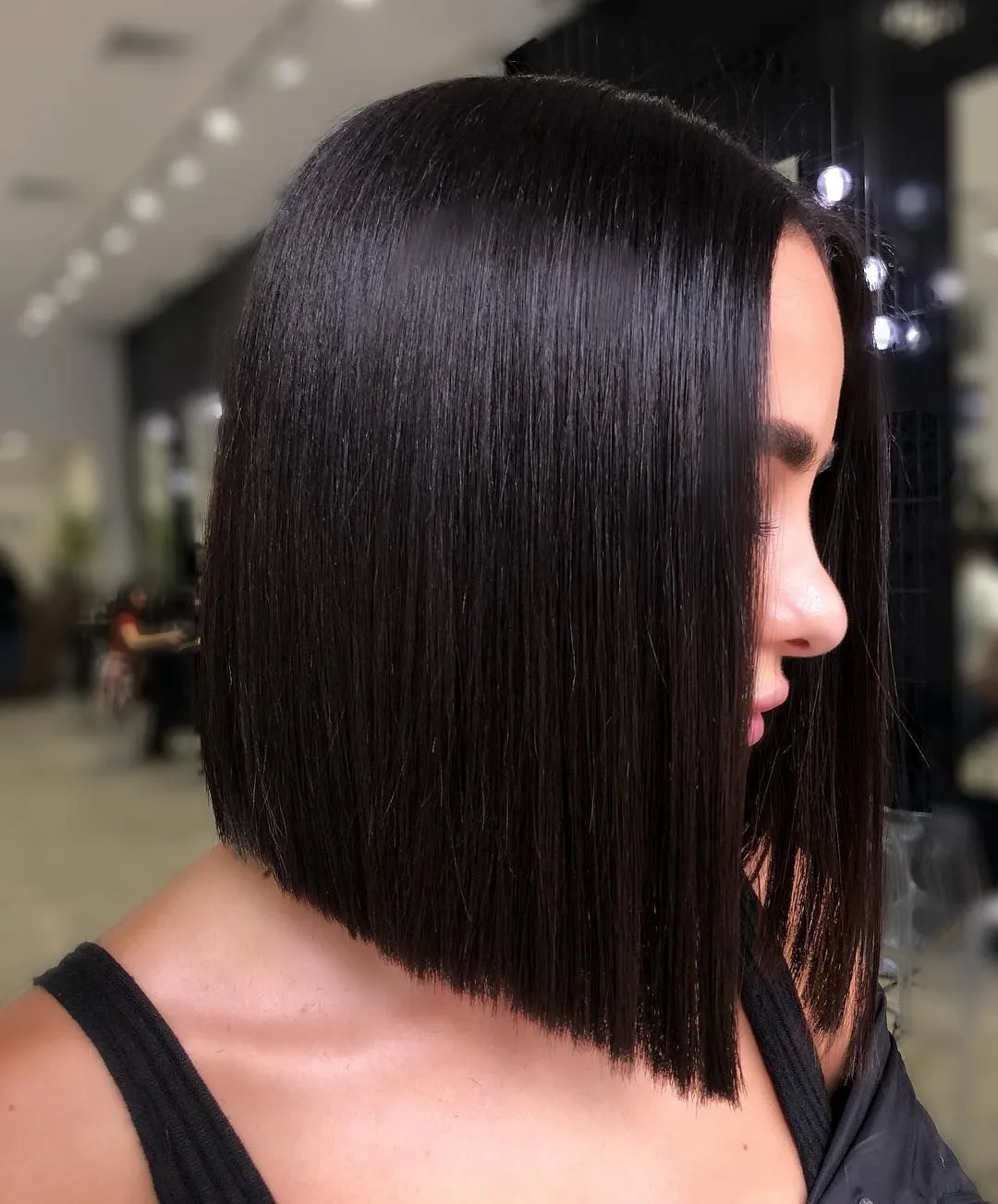
An A-line bob is shorter at the back and longer at the front, and straight hair shows that angle crisply. The diagonal edge adds shape and swing, while the longer front pieces frame the jaw. It looks sharp and polished, yet it grows out gracefully.
Best for: Straight hair that wants a sharp, defined bob with a longer front.
How to style:
- Blow-dry smooth with a paddle brush.
- Smooth the front pieces down and forward.
- Bend the ends slightly inward.
- Finish with shine serum.
What to ask your stylist: Ask for an A-line bob with the front at chin length or longer and softened ends.
8. Chin-Length Blunt Bob
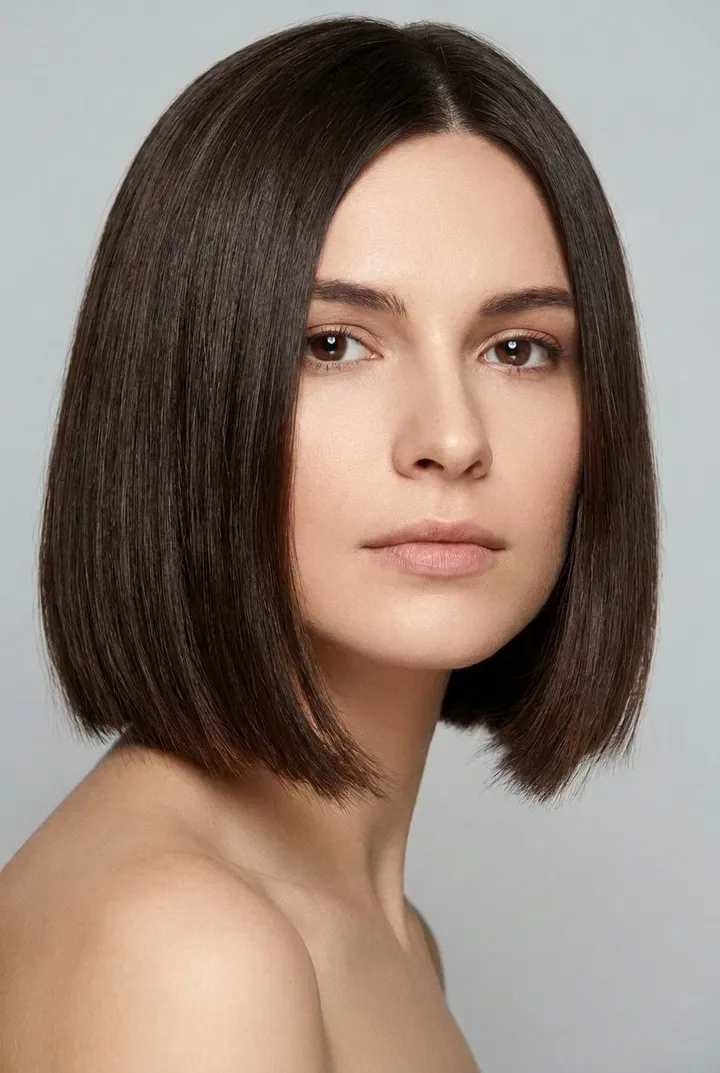
A chin-length blunt bob is bold on straight hair because the line is so clean. It makes fine hair look dense, frames the jaw, and needs little styling beyond a smooth blow-dry. Keep it just below the chin if you worry about it flipping out at the jaw.
Best for: Fine straight hair, and anyone who wants a chic, low-effort short cut.
How to style:
- Blow-dry smooth, turning the ends under.
- Flat-iron only if needed, on low heat.
- Smooth flyaways with serum.
- Tuck one side behind the ear for shape.
What to ask your stylist: Ask for a blunt bob just below the chin, with a full, even perimeter.
9. Shaggy Layers
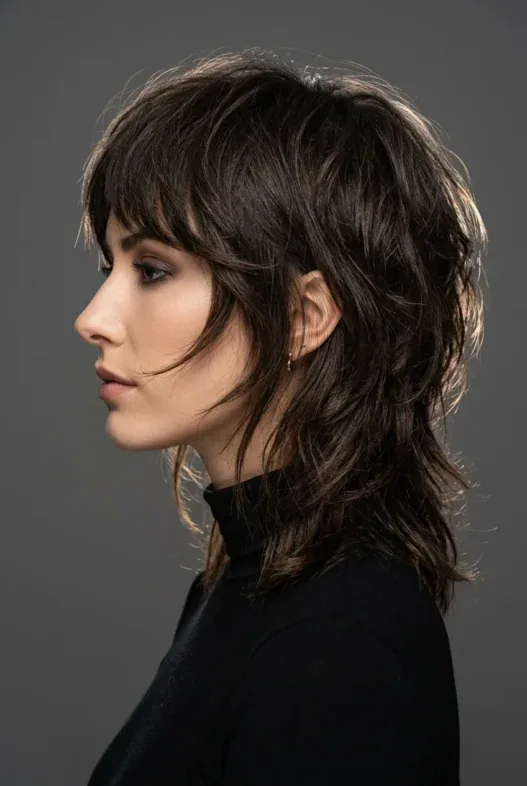
A shag uses choppy, disconnected layers to force movement into straight hair. The shorter crown layers give lift, while longer lengths keep the cut wearable. With a little texturising spray, straight hair that usually lies flat suddenly has texture and edge.
Best for: Straight hair that wants an edgy, textured cut and does not mind a tousled finish.
How to style:
- Apply texturising spray to dry hair.
- Scrunch and twist small sections.
- Shake out for a tousled finish.
- Piece the ends with a little wax.
What to ask your stylist: Ask for a shag with crown lift and long, choppy layers, not a uniform chop.
10. Feathered Cut
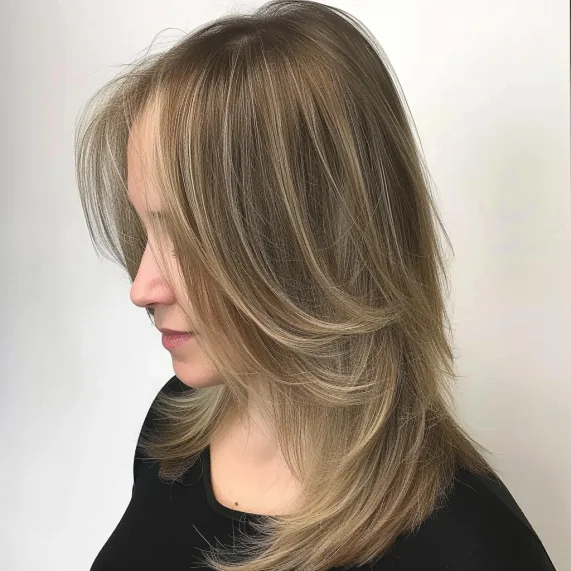
Feathering tapers the ends of straight hair so they flick softly instead of ending in a heavy line. The result is light, airy and full of movement, and it is very forgiving as it grows out. It suits long and medium straight hair that feels heavy at the ends.
Best for: Straight hair that feels heavy or flat at the ends and wants a softer finish.
How to style:
- Apply light cream to damp hair.
- Blow-dry, flicking sections outward.
- Wrap a few ends around a wand for soft flicks.
- Brush out lightly.
What to ask your stylist: Ask for a feathered cut with a soft, tapered perimeter and long layers.
11. V-Cut Long Hair
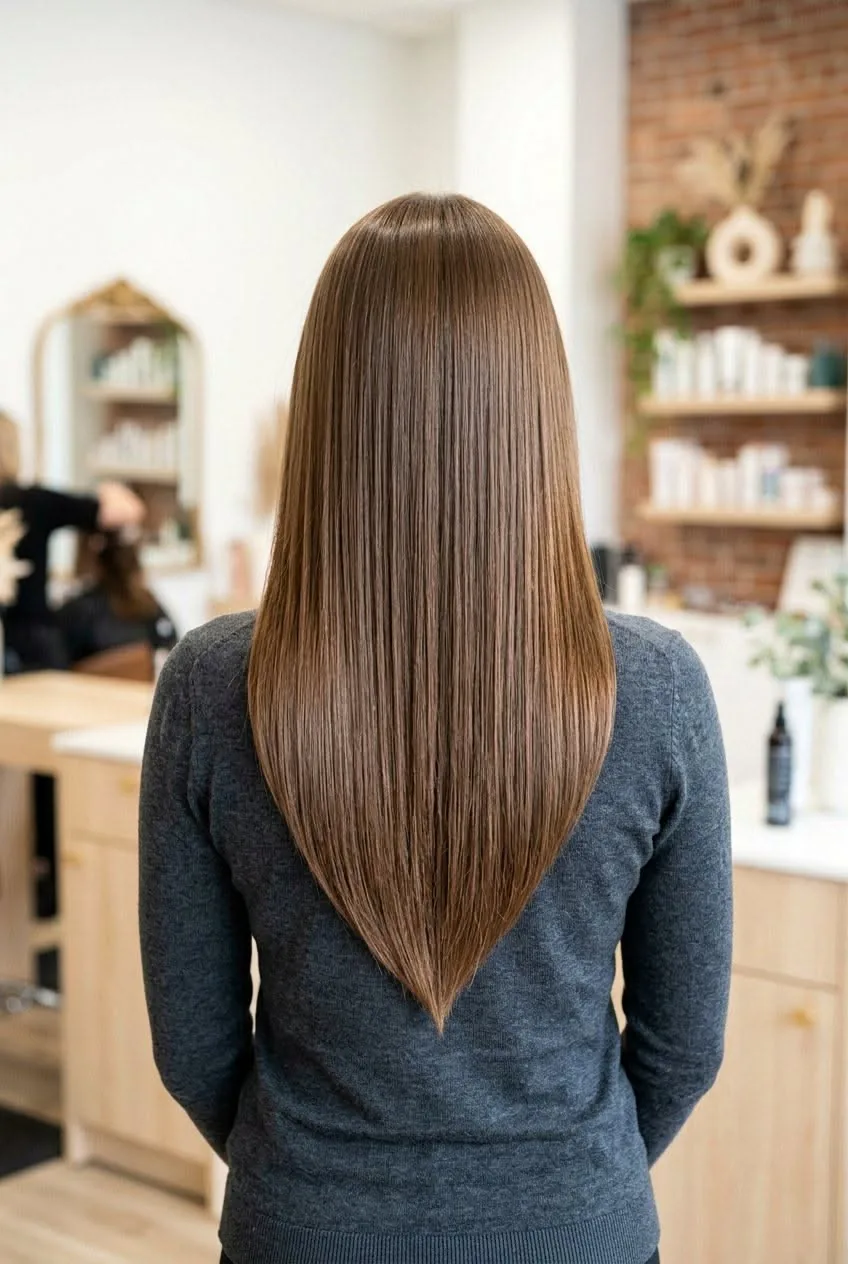
A V-cut keeps the centre back longest and angles the sides up, so long straight hair has a clear shape from behind. It stops long hair looking like one uncut length, and it makes braids and ponytails fall in a neat point. The front can stay long and simple.
Best for: Long straight hair that wants a defined back shape without short layers.
How to style:
- Blow-dry smooth in sections.
- Smooth the centre lengths down.
- Flick the side ends slightly.
- Finish with shine oil on the ends.
What to ask your stylist: Ask for a V-cut with the point at the longest length you want to keep.
12. U-Cut Long Hair
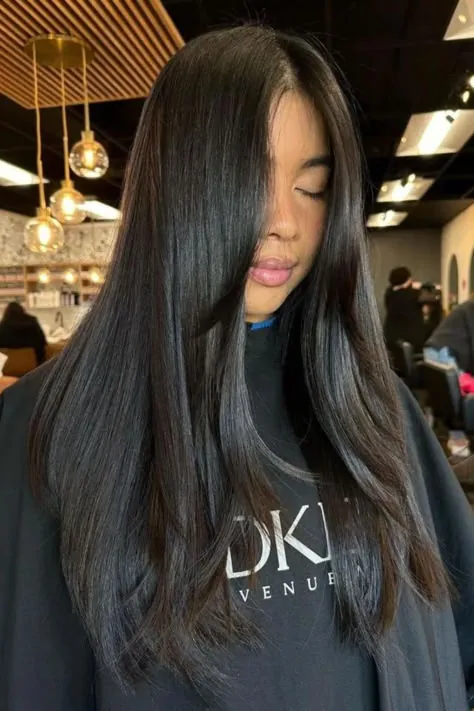
A U-cut rounds the back edge into a soft curve, which makes long straight hair look thick and healthy at the bottom. Unlike a V-cut, it keeps the sides fairly long, so the perimeter looks full. It is the safest long cut if you only want a tidy-up, not a restyle.
Best for: Long straight hair that wants a full, healthy-looking edge with minimal layering.
How to style:
- Blow-dry smooth with a round brush.
- Turn the ends under evenly.
- Smooth flyaways with serum.
- Check the back curve in a mirror.
What to ask your stylist: Ask for a U-cut with a gently rounded back edge and no short layers.
13. Sleek Long Straight Cut
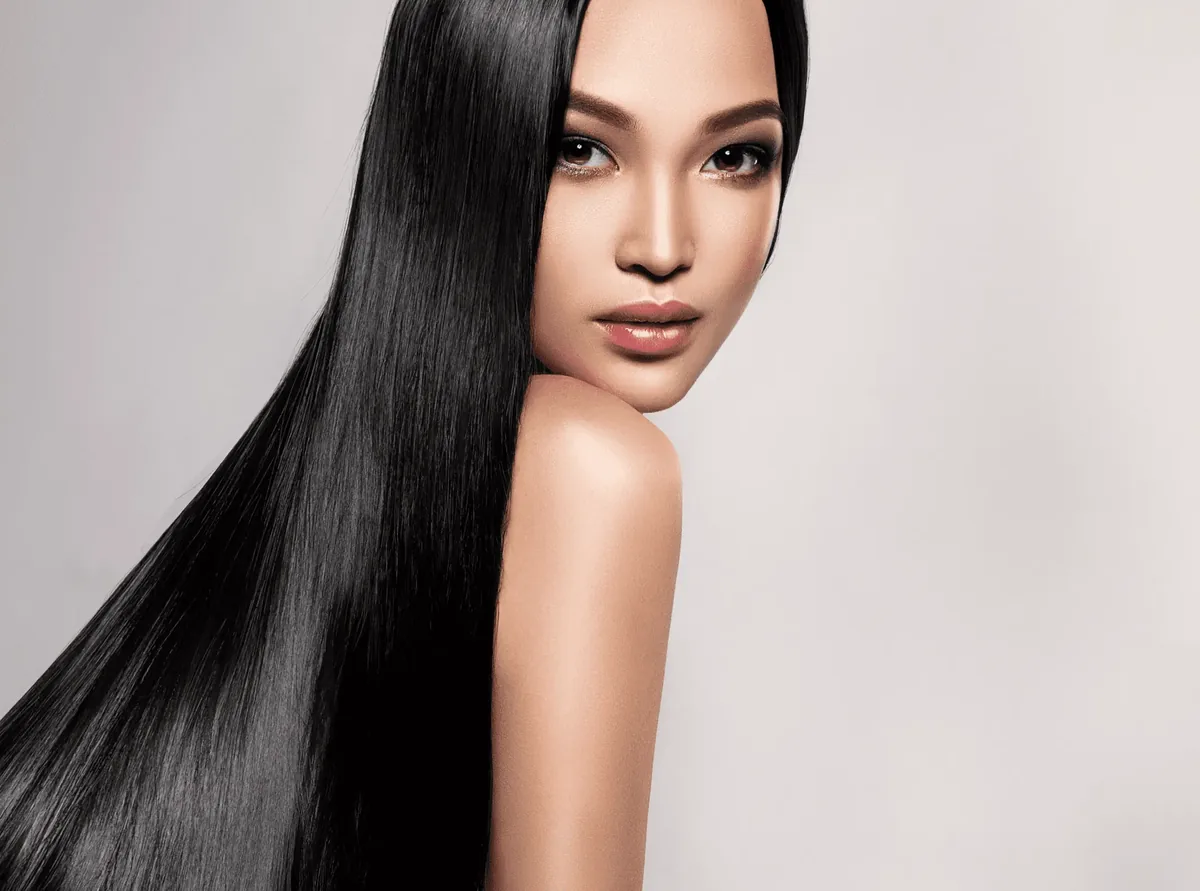
Sometimes the best straight-hair style is simply excellent straight hair: glossy, smooth, one length, with healthy ends. A sleek long cut shows off shine and colour, and it is the base for every braid, bun and ponytail in this guide. Regular trims keep the ends from looking thin.
Best for: Healthy straight hair that wants a polished, classic long look.
How to style:
- Apply heat protectant and smoothing cream.
- Blow-dry in sections with a paddle brush.
- Flat-iron lightly if needed.
- Finish with shine serum.
What to ask your stylist: Ask for a one-length long cut with a clean edge, trimmed every 8 to 10 weeks.
14. Side-Part Long Layers
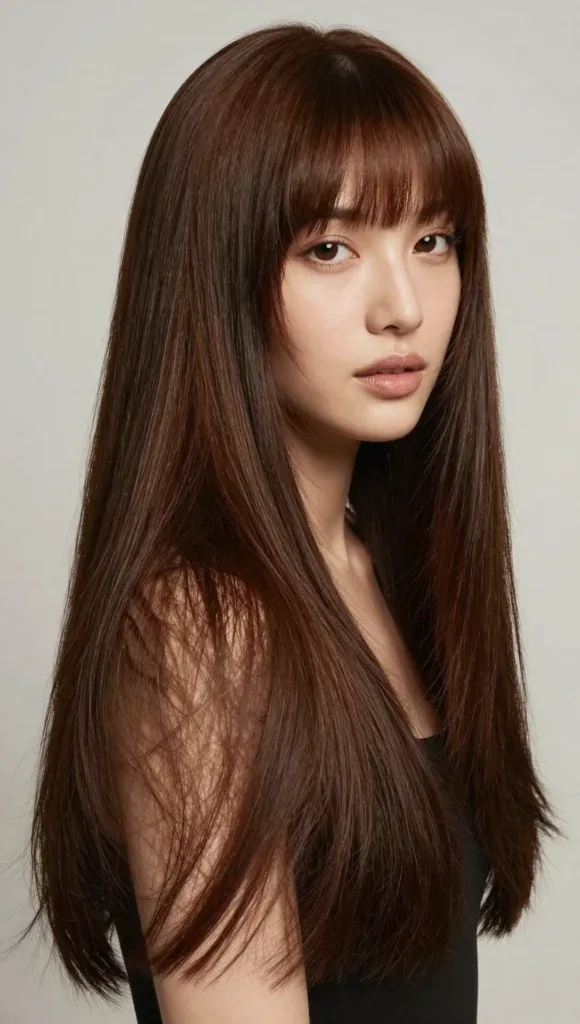
A side part is the fastest volume trick for straight hair: it lifts the roots on one side and sweeps hair across the forehead. With long layers underneath, the sweep has somewhere to go instead of falling flat. It changes a long cut without cutting it shorter.
Best for: Long straight hair that falls flat at the roots, especially with a centre part habit.
How to style:
- Part to one side while damp.
- Apply root mousse to the lifted side.
- Blow-dry, lifting the roots.
- Smooth the lengths down.
What to ask your stylist: Ask for long layers that work with a side part, with front pieces long enough to sweep.
15. Middle-Part Glass Hair
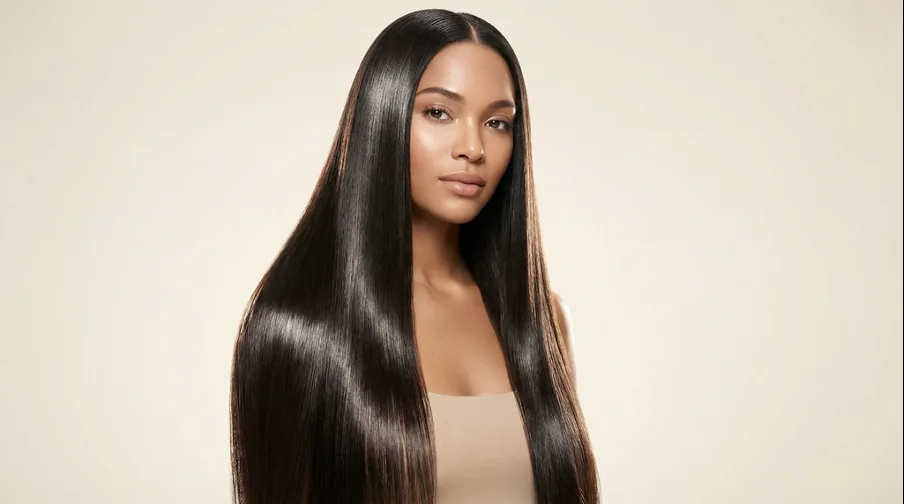
Glass hair is ultra-smooth, ultra-shiny straight hair with a sharp middle part and a blunt edge. Straight hair is the only texture that can truly achieve it, and the mirror shine is the point. It needs smoothing products and healthy ends, but almost no layering.
Best for: Healthy, fine to medium straight hair that wants a high-shine, editorial look.
How to style:
- Apply smoothing serum and heat protectant.
- Blow-dry dead straight.
- Flat-iron in small sections.
- Finish with a shine spray, not oil overload.
What to ask your stylist: Ask for a blunt, one-length cut with a centre part, and a gloss if your hair is dull.
16. Layered Midi Cut
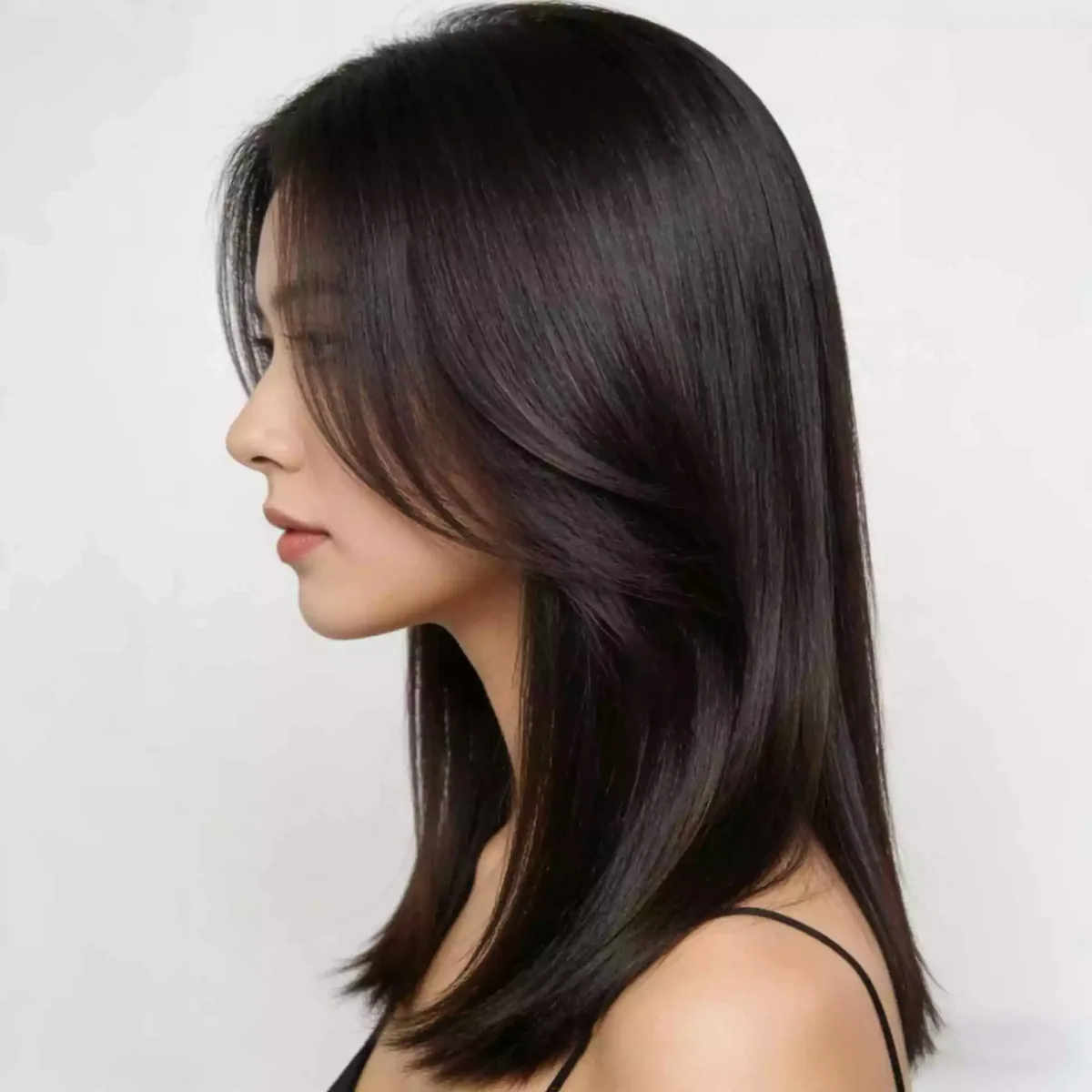
A midi cut sits between the shoulders and the chest, and layers stop it collapsing into a flat sheet. It is long enough to tie up, short enough to dry quickly, and the layers give straight hair swing. It is the most practical length in this guide for busy mornings.
Best for: Straight hair that wants a practical, tie-up-able length with movement.
How to style:
- Apply mousse to damp roots.
- Blow-dry with a round brush, bending ends under.
- Flick a few ends out for movement.
- Set lightly.
What to ask your stylist: Ask for a midi cut with layers from the chin down and a soft, full edge.
17. Loose Waves with a Wand
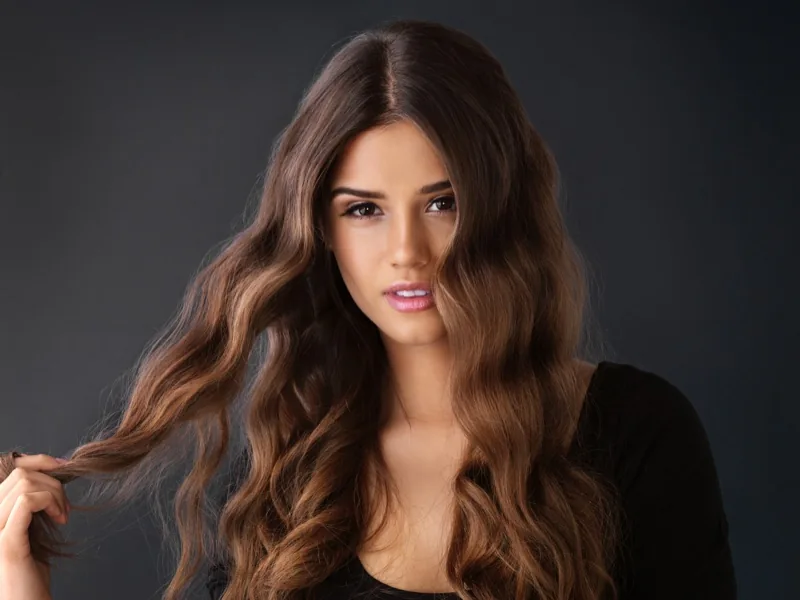
Loose waves are the classic way to add movement to straight hair for a night out. Large-barrel waves, brushed out, look soft rather than curly, and they hold better if you curl in alternate directions. A heat protectant and a flexible spray keep the wave without stiffness.
Best for: Straight hair that wants soft movement for occasions, without a permanent change.
How to style:
- Apply heat protectant to dry hair.
- Curl large sections away from the face.
- Brush out gently into soft waves.
- Set with flexible spray.
What to ask your stylist: Ask for long layers cut for loose waves, with the shortest layer below the chin.
18. Beach Waves with Texture Spray
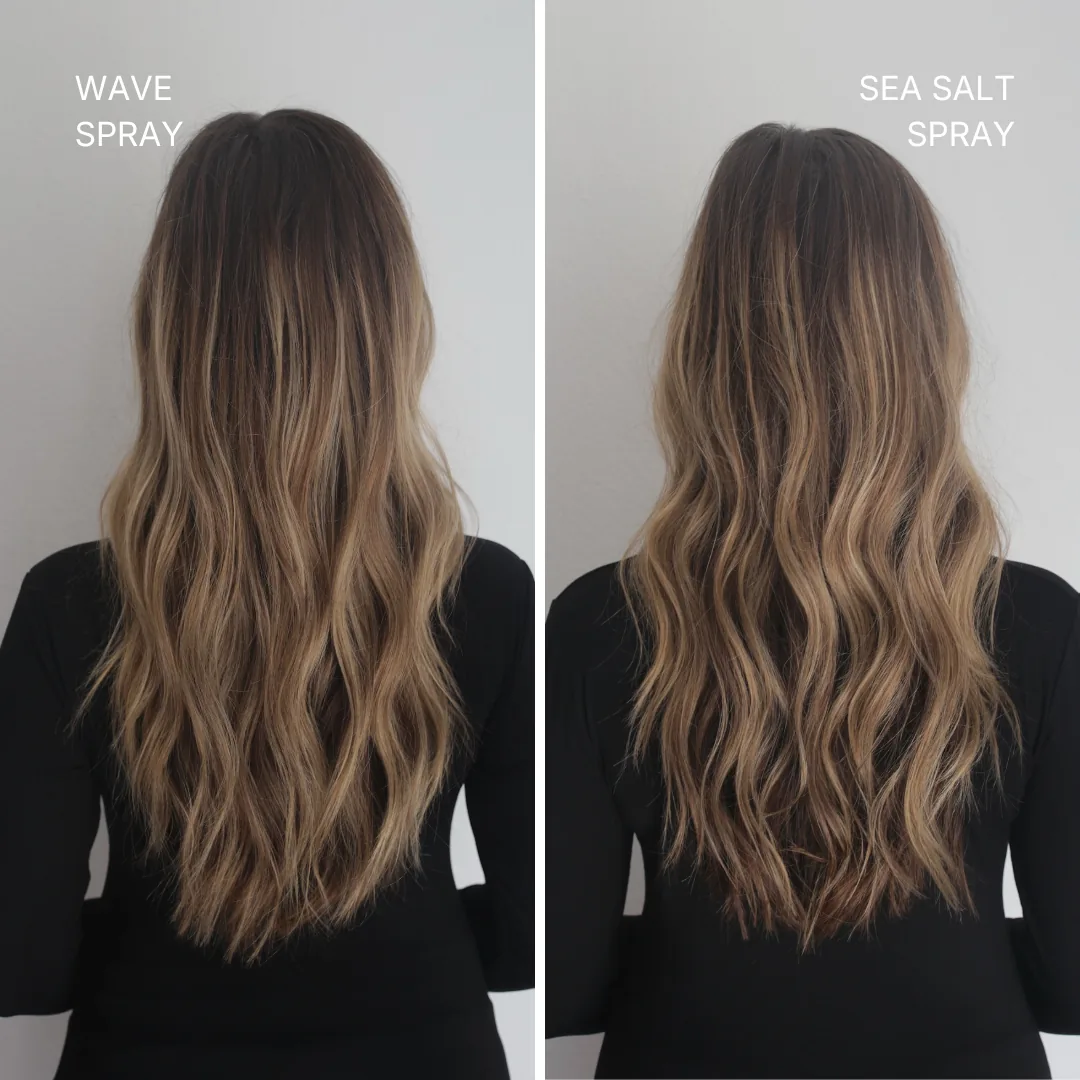
Beach waves on straight hair need texture spray, not just a wand: straight hair slips out of waves easily. A salt or texture spray gives grip, and braiding damp hair overnight gives a heat-free version. Keep the waves starting below the chin so volume sits in the lengths, not at the roots.
Best for: Straight hair that wants a relaxed, holiday texture without tight curls.
How to style:
- Apply texture spray to damp hair.
- Braid loosely overnight, or twist sections around a wand.
- Shake out gently.
- Scrunch with a little cream.
What to ask your stylist: Ask for long layers that hold beach waves starting below the chin.
19. Voluminous Blowout
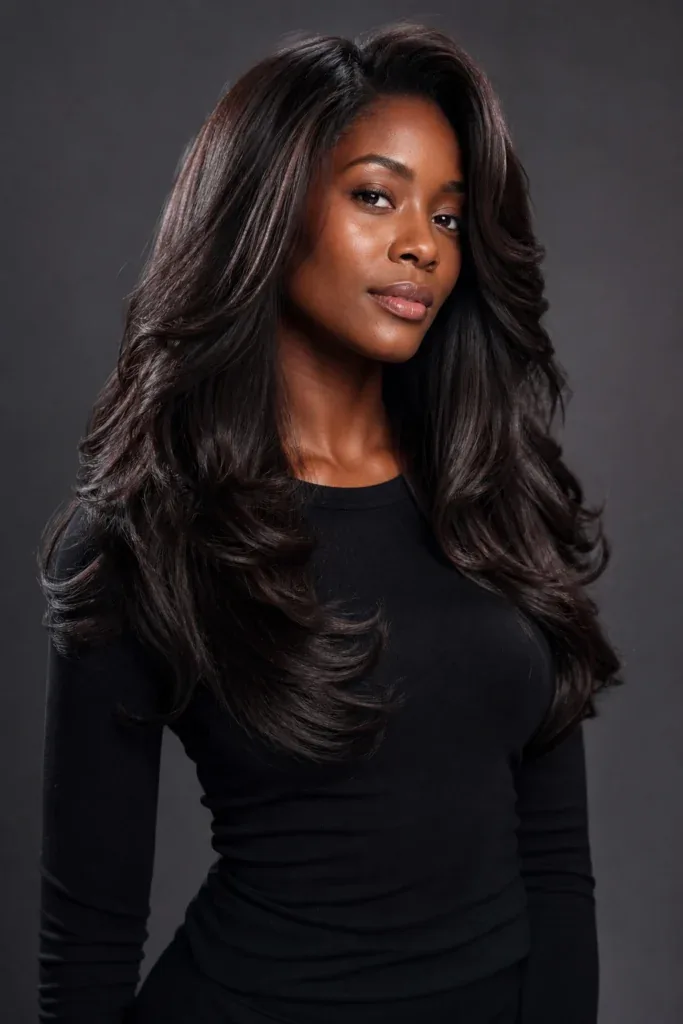
A blowout is straight hair with volume: roots lifted, lengths smooth, ends turned. It fixes the main straight-hair complaint, flat roots, for a day or two. A round brush and root mousse do most of the work; a velcro roller set at the crown holds the lift longer.
Best for: Straight hair that wants big, bouncy volume for a day out or an event.
How to style:
- Apply root mousse to damp hair.
- Blow-dry with a large round brush, lifting roots.
- Set the crown in rollers while cooling.
- Brush out and spray.
What to ask your stylist: Ask for layers that support a blowout, with crown layers long enough to hold lift.
20. Bouncy Layered Blowout
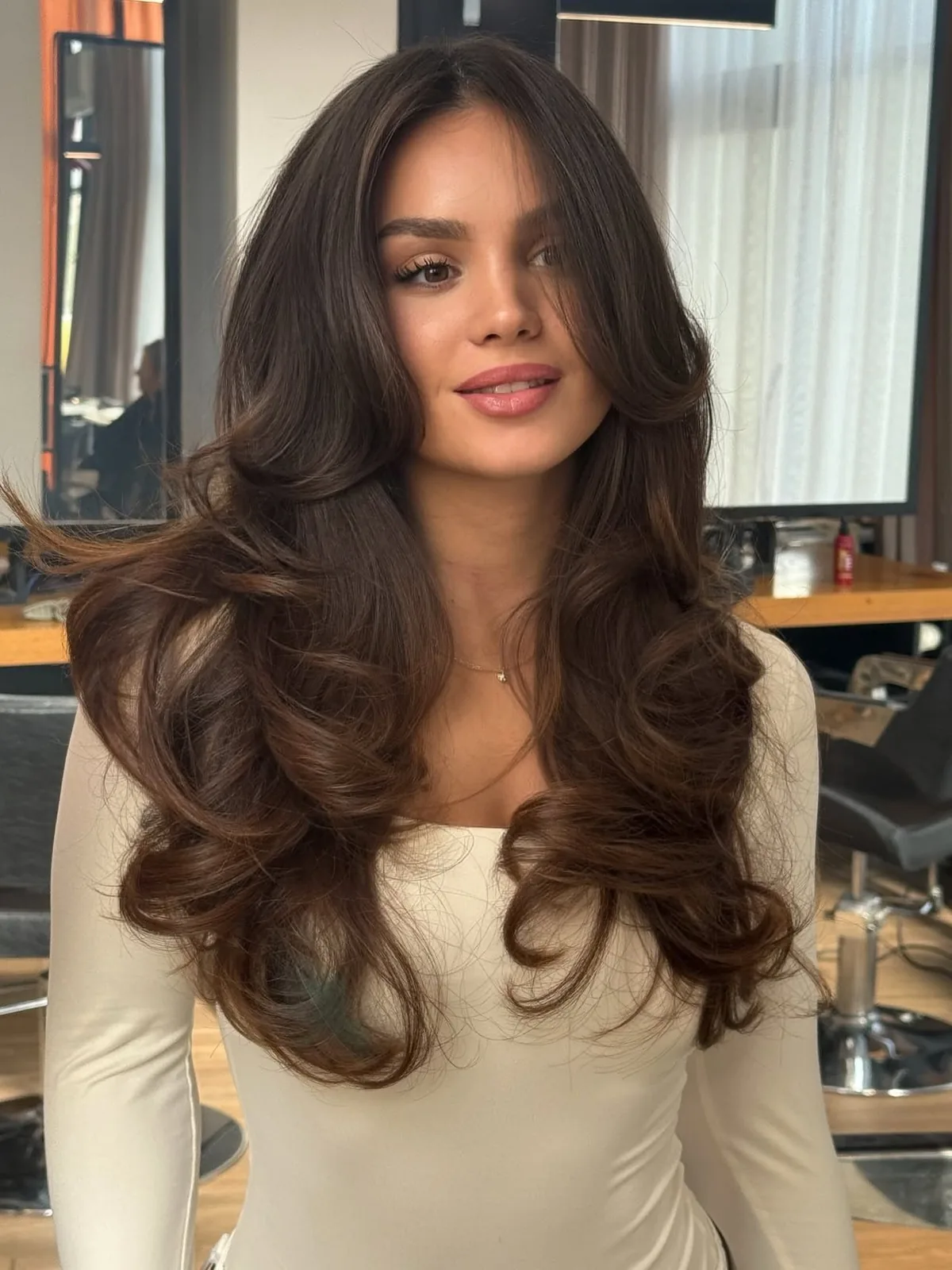
A bouncy blowout adds flicked, turned-under ends to a layered cut, so straight hair moves like it has a curl pattern. Each layer is dried with a flick, which builds bounce layer by layer. It looks like a salon blow-dry, and it lasts better on freshly layered hair.
Best for: Layered straight hair that wants a salon-bouncy finish at home.
How to style:
- Apply mousse to damp hair.
- Blow-dry each layer with a round brush, flicking ends.
- Alternate flicks in and out.
- Shake out and spray lightly.
What to ask your stylist: Ask for layers that flick easily, with ends cut to turn under or out cleanly.
21. Curtain Blowout
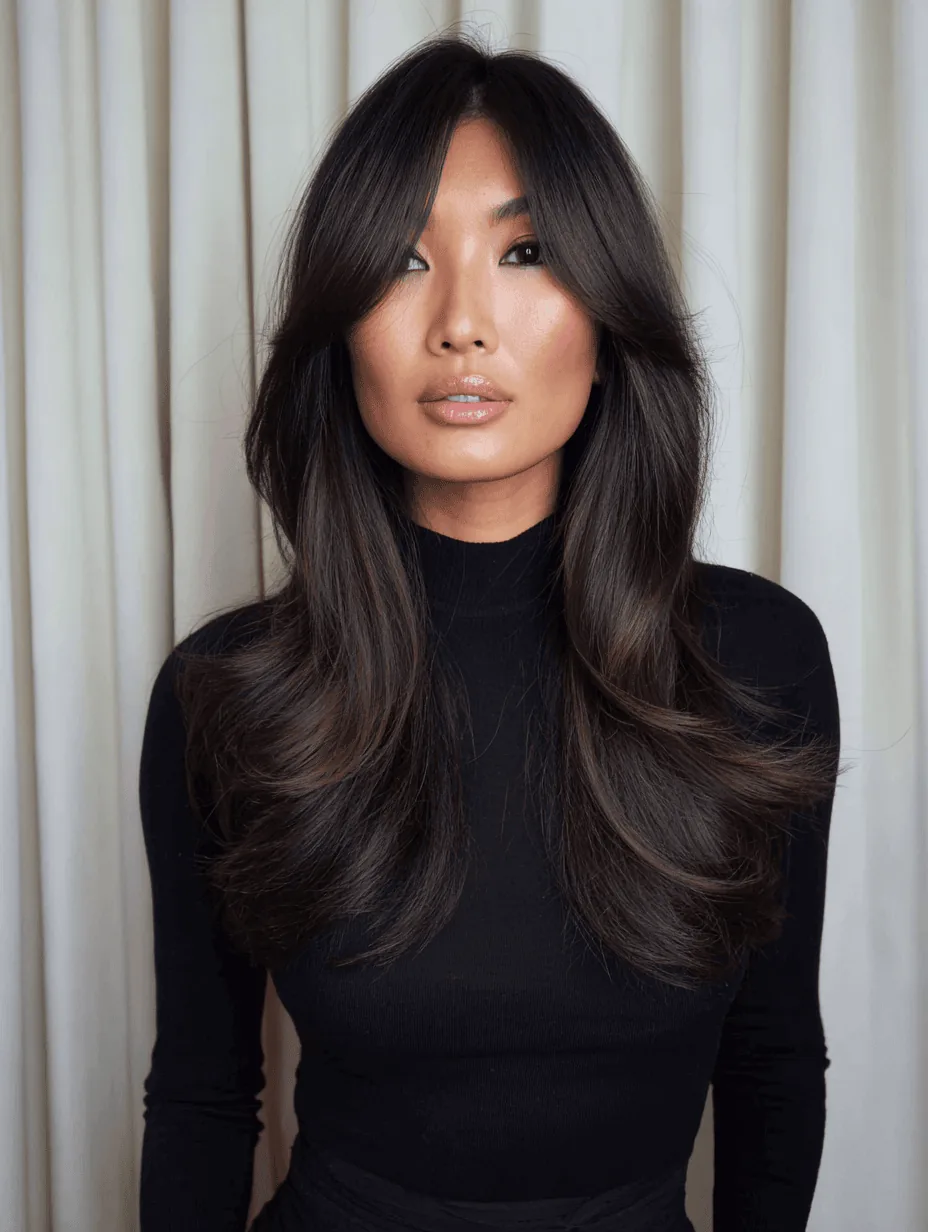
A curtain blowout pairs curtain bangs with a full, bouncy blow-dry, so the front frames the face in soft curves. It is the blowout version of curtain bangs, and it suits straight hair because the front pieces fall smoothly. It is glamorous without being stiff.
Best for: Straight hair with curtain bangs, or anyone who wants a face-framing blowout.
How to style:
- Blow-dry bangs forward, then sweep each side out.
- Blow-dry lengths with a round brush.
- Add crown rollers for lift.
- Brush out softly.
What to ask your stylist: Ask for curtain bangs and layers that blow out into soft outward curves.
22. Half-Up Claw Clip
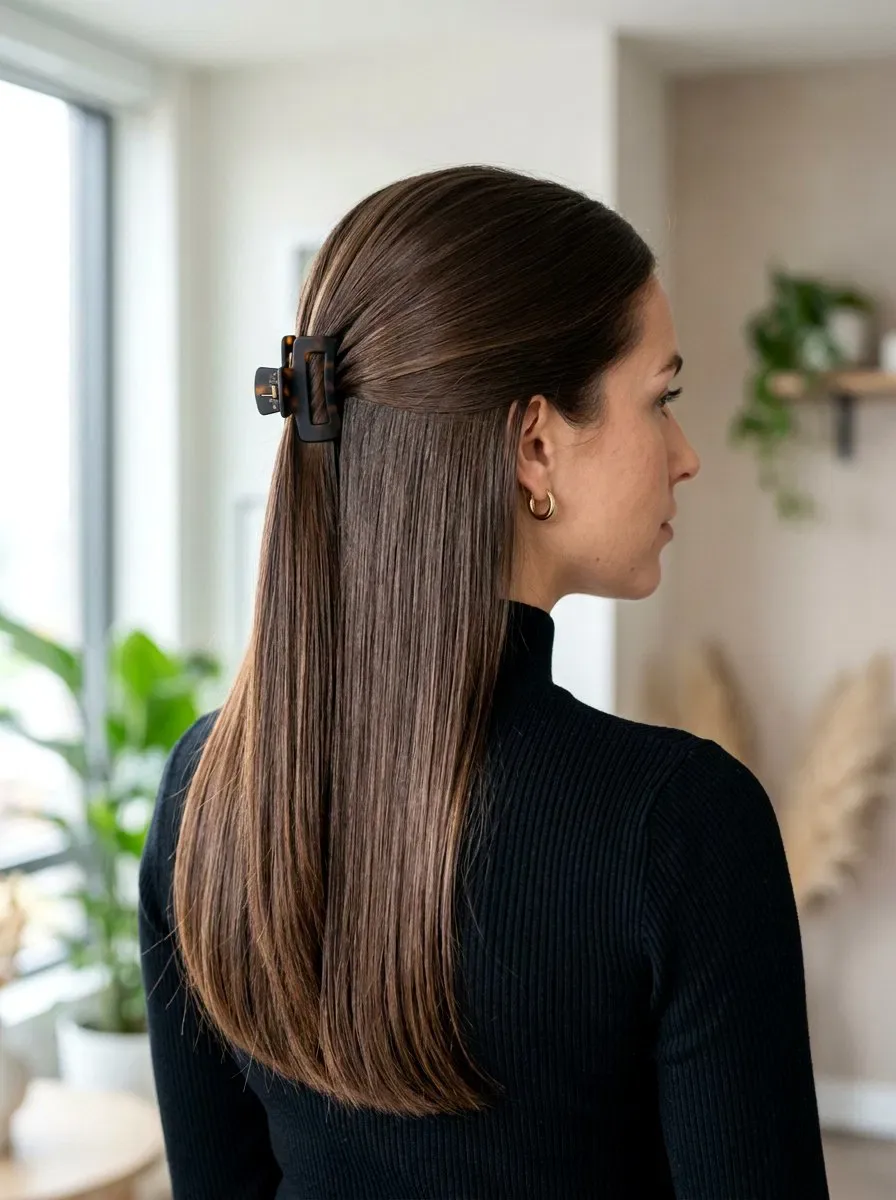
A half-up claw clip lifts the top half of straight hair and leaves the rest sleek, which adds height without a full updo. Because straight hair is slippery, a clip with grip and a little texture spray keep it in place. It is a five-minute style that looks intentional.
Best for: Straight hair that slips out of clips, for a quick everyday lift.
How to style:
- Apply a little texture spray.
- Gather the top half loosely.
- Twist once and clip.
- Pull out soft face pieces.
What to ask your stylist: Ask for layers with long face pieces, so a half-up clip still has softness at the face.
23. Sleek High Ponytail
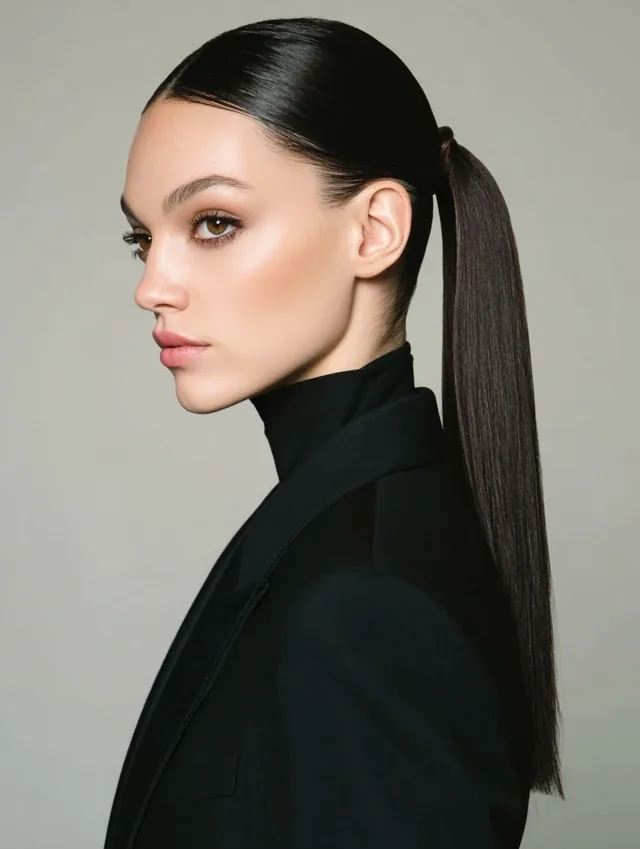
A sleek high ponytail is made for straight hair: no frizz to fight, just a smooth, high, swinging tail. Height at the crown stops it looking flat, and wrapping a strand around the tie hides the elastic. Tease the crown lightly first if your hair is very fine.
Best for: Straight hair that wants a polished, sporty-chic ponytail.
How to style:
- Tease the crown lightly.
- Brush hair high and smooth.
- Secure tightly.
- Wrap a strand around the tie and pin.
What to ask your stylist: Ask for layers with long face pieces, so a high ponytail still has soft tendrils if wanted.
24. Low Polished Ponytail
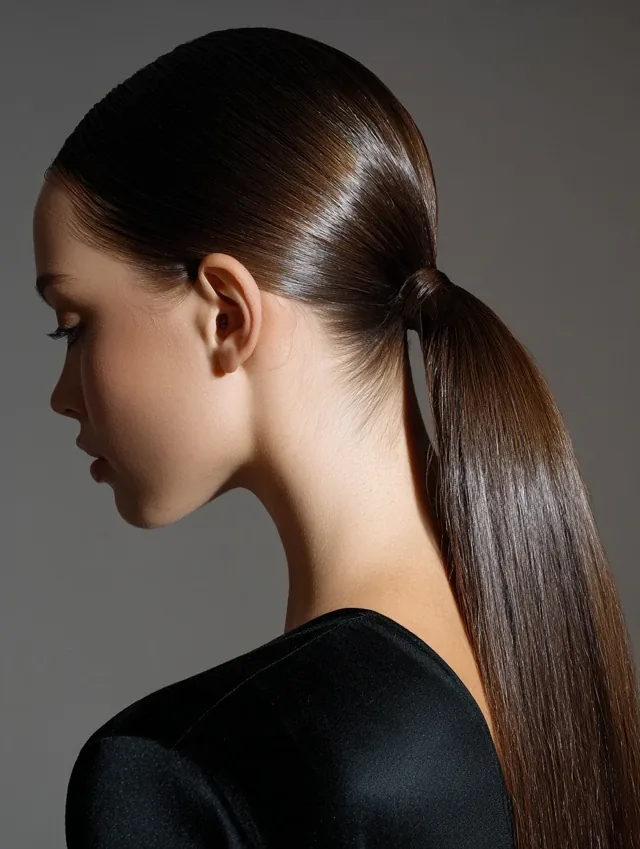
A low ponytail at the nape is the office version of sleek straight hair: neat, glossy, and grown-up. A centre or side part, smooth sides, and a wrapped tie make it look deliberate rather than lazy. It works best on freshly smoothed hair with a little serum.
Best for: Straight hair for work, formal days, or a clean everyday look.
How to style:
- Smooth hair back with serum.
- Gather low at the nape.
- Secure and wrap a strand around the tie.
- Smooth flyaways lightly.
What to ask your stylist: Ask for a cut with a clean nape line, so a low ponytail sits neatly.
25. Bubble Ponytail
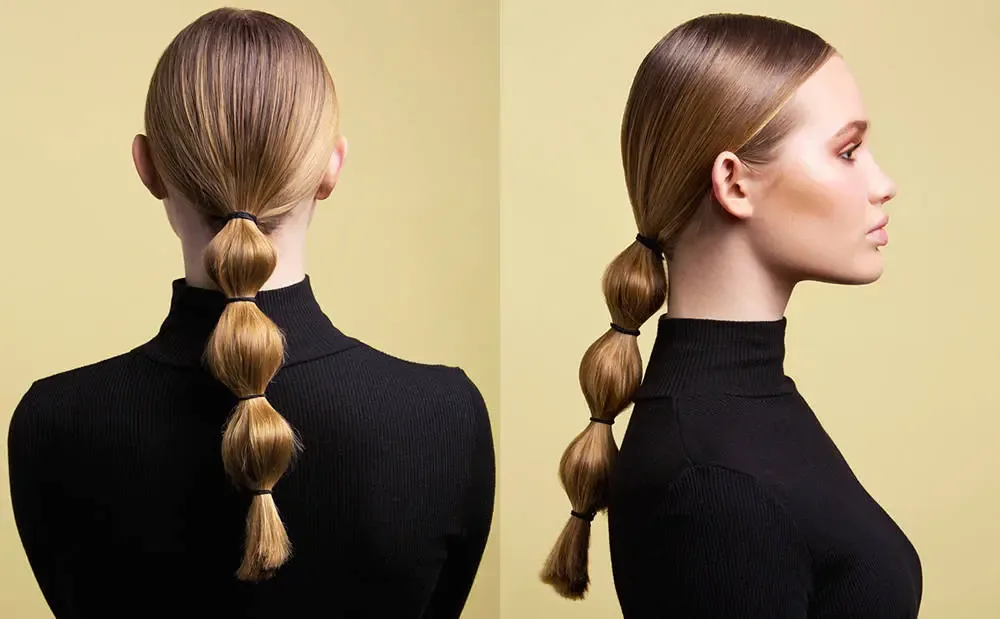
A bubble ponytail turns a plain straight ponytail into a playful style: ties spaced down the tail, with each section puffed out. Straight hair shows the bubbles cleanly, and fine hair can be teased inside each bubble for fullness. It is fun, fast, and very photogenic.
Best for: Straight hair that wants a fun twist on a ponytail, for casual days or parties.
How to style:
- Make a high or low ponytail.
- Add ties every few inches down.
- Gently pull each section out to puff it.
- Set lightly with spray.
What to ask your stylist: Ask for a long, even cut, so bubbles fall evenly down the tail.
26. Sleek Low Bun

A sleek low bun is straight hair at its most elegant: smooth sides, a neat twist, and a polished finish. It suits work, weddings and formal events, and it stays put because straight hair wraps cleanly. A little gel at the hairline keeps flyaways down all day.
Best for: Straight hair for formal occasions or a neat everyday updo.
How to style:
- Smooth hair back with gel or cream.
- Gather low and twist.
- Coil into a bun and pin.
- Smooth the hairline and spray.
What to ask your stylist: Ask for layers that tuck into a bun, with face pieces long enough to pin or leave out.
27. Messy Bun with Volume
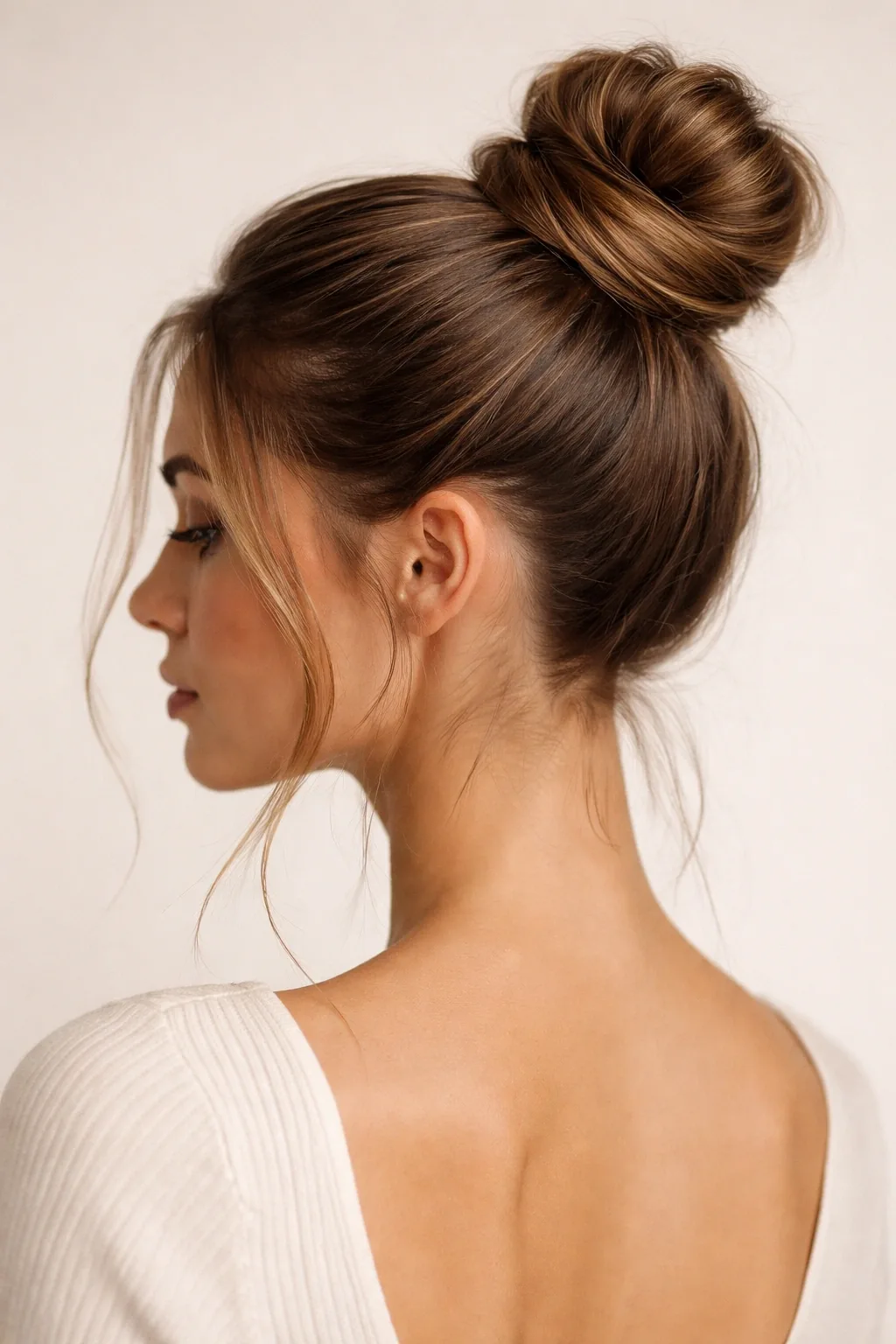
A messy bun on straight hair needs volume first, or it looks small and flat. Tease the crown, pull the bun loosely, and tug pieces out for texture. Texture spray gives straight hair the grip a messy bun needs to stay messy on purpose, not collapse.
Best for: Straight hair that wants a relaxed bun with real volume.
How to style:
- Apply texture spray and tease the crown.
- Gather loosely and twist.
- Pin the bun, leaving texture.
- Pull out soft pieces and spray.
What to ask your stylist: Ask for layers with long face pieces, so a messy bun keeps softness around the face.
28. French Braid
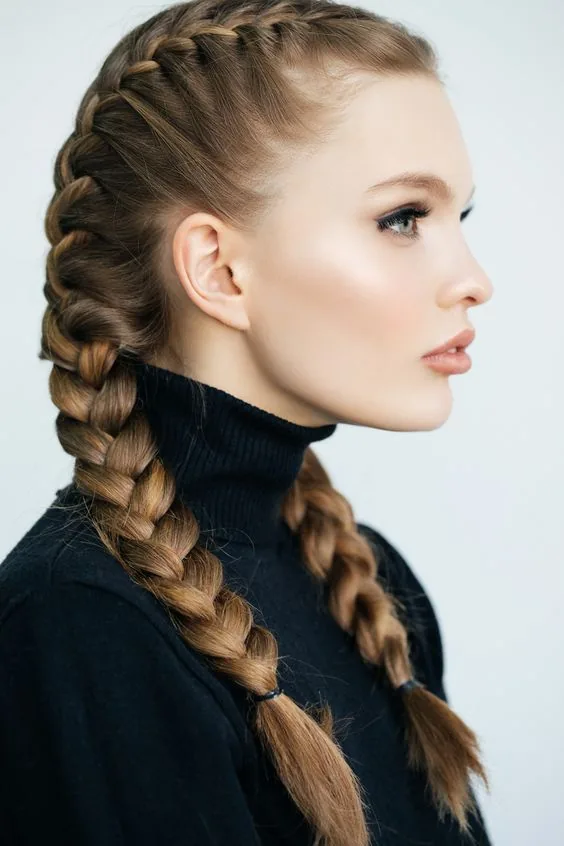
A French braid is neat and secure on straight hair because there is no frizz to escape. It keeps hair off the face, shows off length, and works for workouts, work and school. Straight hair braids cleanly, so the plait pattern itself becomes the detail.
Best for: Straight hair that needs a secure, neat braid for active or long days.
How to style:
- Brush smooth and start at the crown.
- Add sections evenly as you braid down.
- Keep tension even, not tight.
- Secure and smooth flyaways.
What to ask your stylist: Ask for a cut with fairly even lengths, so braid sections stay even.
29. Side Dutch Braid
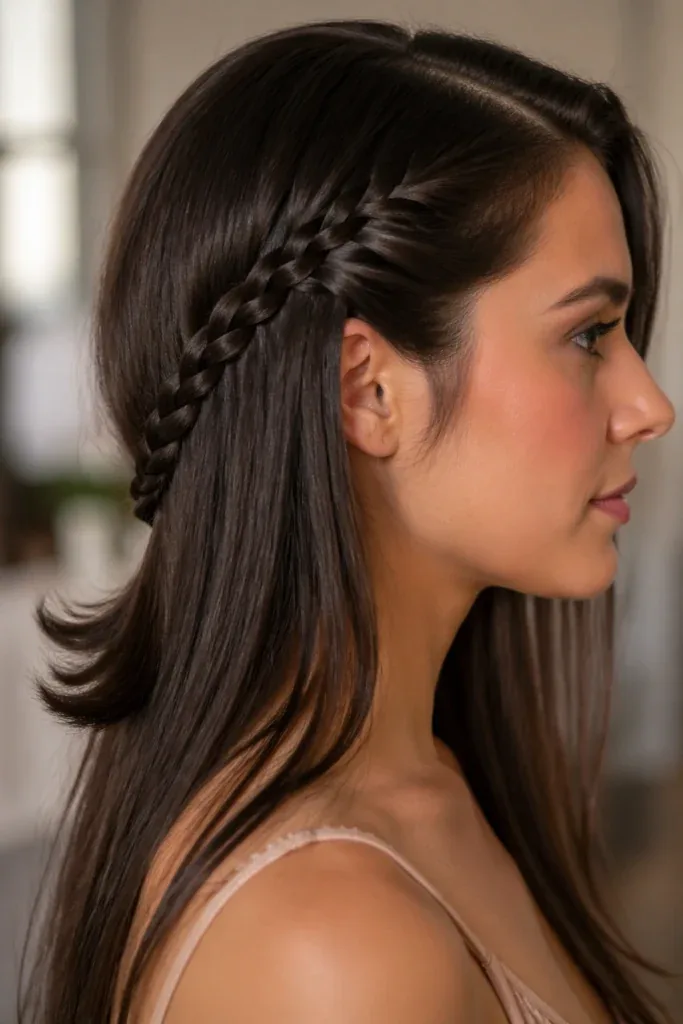
A Dutch braid sits on top of the hair instead of inside it, so the plait stands out boldly on straight hair. Swept to one side, it adds a diagonal detail and keeps hair off the face. Pull the braid edges out gently for a fuller, softer look.
Best for: Straight hair that wants a bold, visible braid detail.
How to style:
- Sweep hair to one side.
- Braid under, not over, adding sections.
- Pull the edges out gently for fullness.
- Secure and spray lightly.
What to ask your stylist: Ask for layers that braid to one side without short pieces escaping.
30. Fishtail Braid
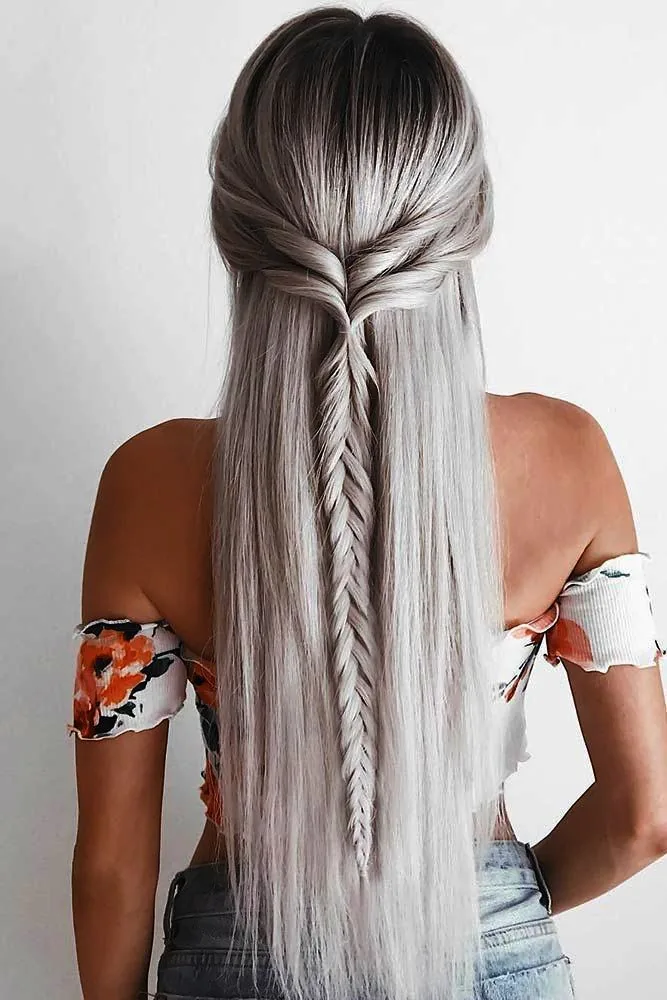
A fishtail braid uses two sections instead of three, and straight hair shows its fine, woven pattern beautifully. It looks intricate but is simple once you learn the rhythm. On straight hair it stays neat for hours, and it is a lovely way to show off long length.
Best for: Long straight hair that wants an intricate-looking braid.
How to style:
- Gather hair to one side.
- Split into two sections.
- Cross small pieces from outside to inside, alternating sides.
- Secure and gently loosen.
What to ask your stylist: Ask for a long, even cut, so the fishtail pattern stays consistent to the ends.
31. Headband Braid
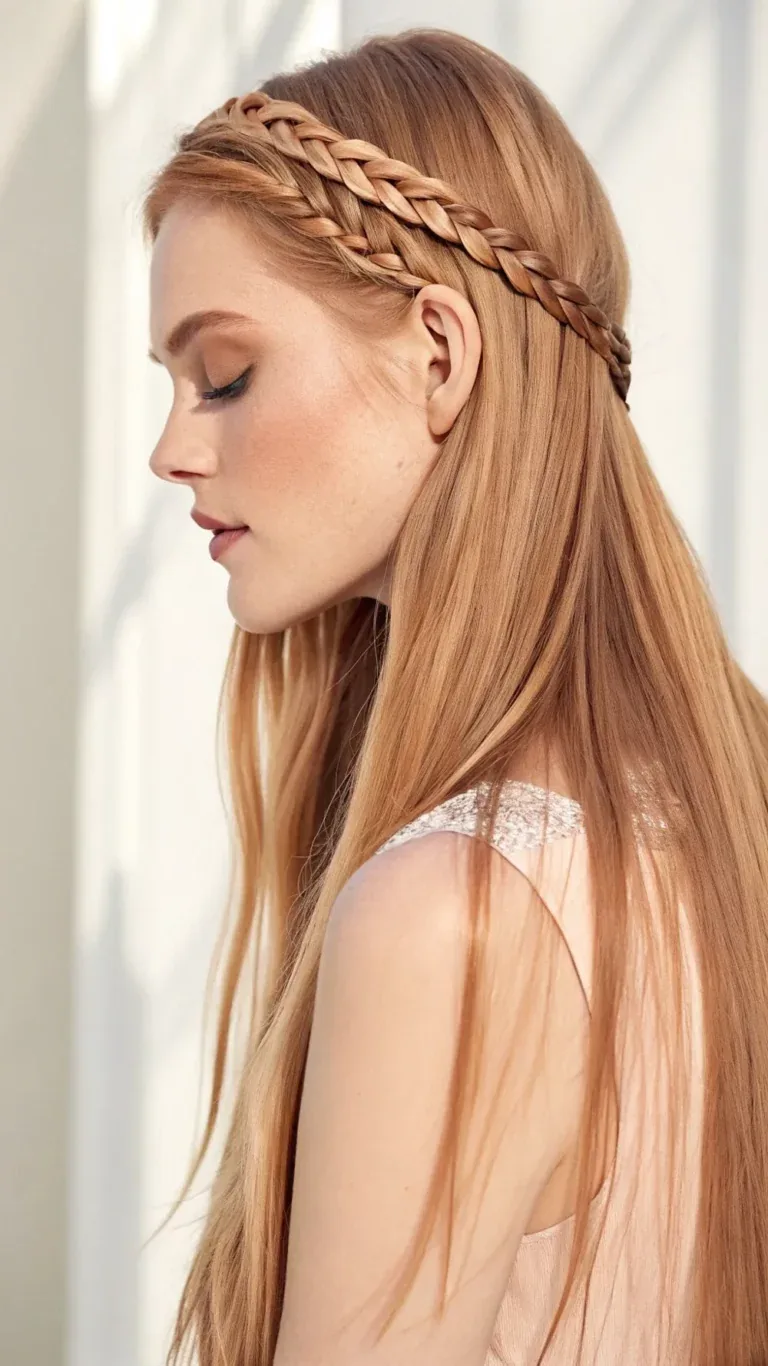
A headband braid braids a front section across the forehead like a headband, keeping straight hair off the face in a pretty way. It adds detail without tying all the hair up, and the rest can stay sleek or wavy. It is ideal for growing out bangs.
Best for: Straight hair, especially while growing out a fringe, that wants hair off the face.
How to style:
- Part to one side.
- Braid a front section across the forehead.
- Pin it behind the ear.
- Smooth the rest down.
What to ask your stylist: Ask for front layers long enough to braid across as a headband.
32. Twisted Half-Up Style
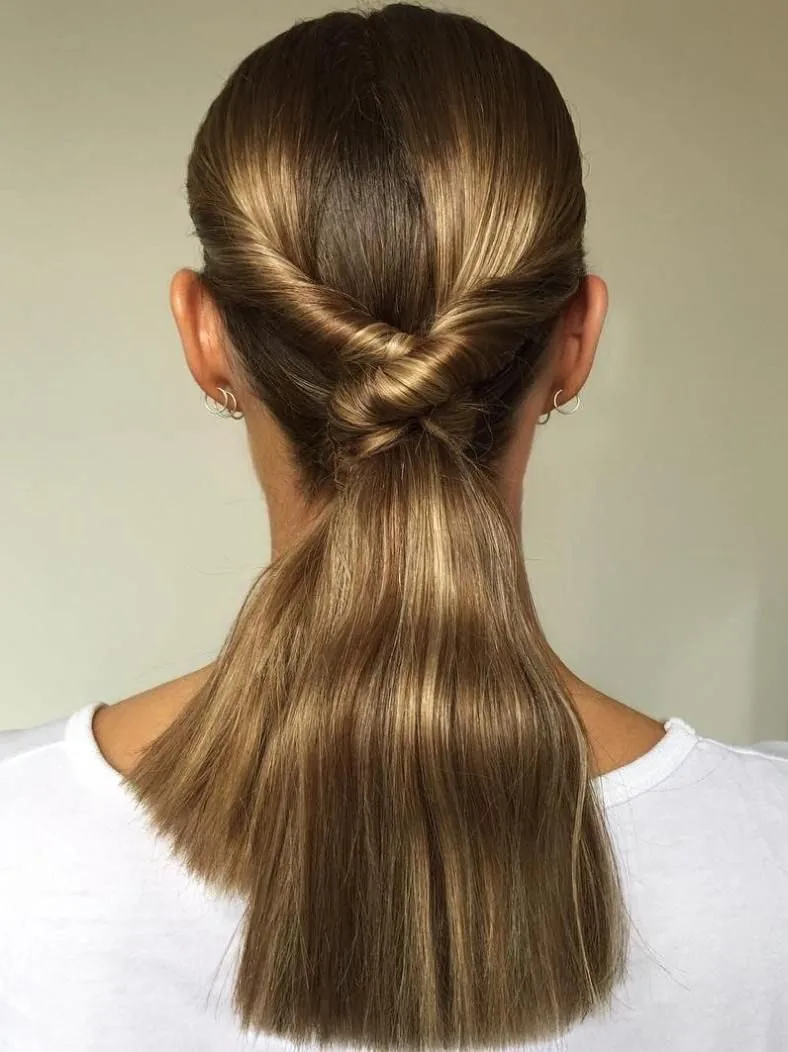
A twisted half-up style twists two front sections back and pins them, which adds detail and lift to straight hair in minutes. It keeps hair off the face while leaving the lengths sleek. Because straight hair twists cleanly, the twists look neat and intentional.
Best for: Straight hair that wants a quick, pretty half-up detail.
How to style:
- Part in the middle or to one side.
- Twist each front section back.
- Pin them together at the back.
- Pull out soft face pieces.
What to ask your stylist: Ask for front layers that twist back neatly without escaping.
33. Sleek Chignon for Occasions
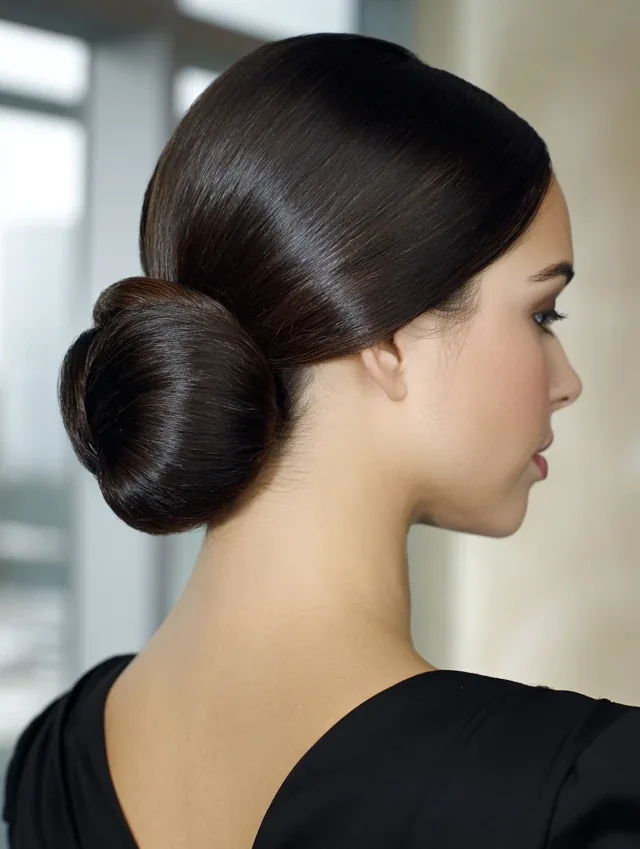
A chignon is a low, twisted bun at the nape, and straight hair makes it look impeccably smooth. It is the occasion version of the low bun: more structured, more polished, and very photogenic. A side part and a wrapped finish complete the look.
Best for: Straight hair for weddings, formal events, or elegant evenings.
How to style:
- Smooth hair with serum.
- Gather low and twist.
- Coil and pin into a neat chignon.
- Spray for hold and shine.
What to ask your stylist: Ask for a cut that coils neatly at the nape, with a clean perimeter.
34. Hollywood Waves on Straight Hair
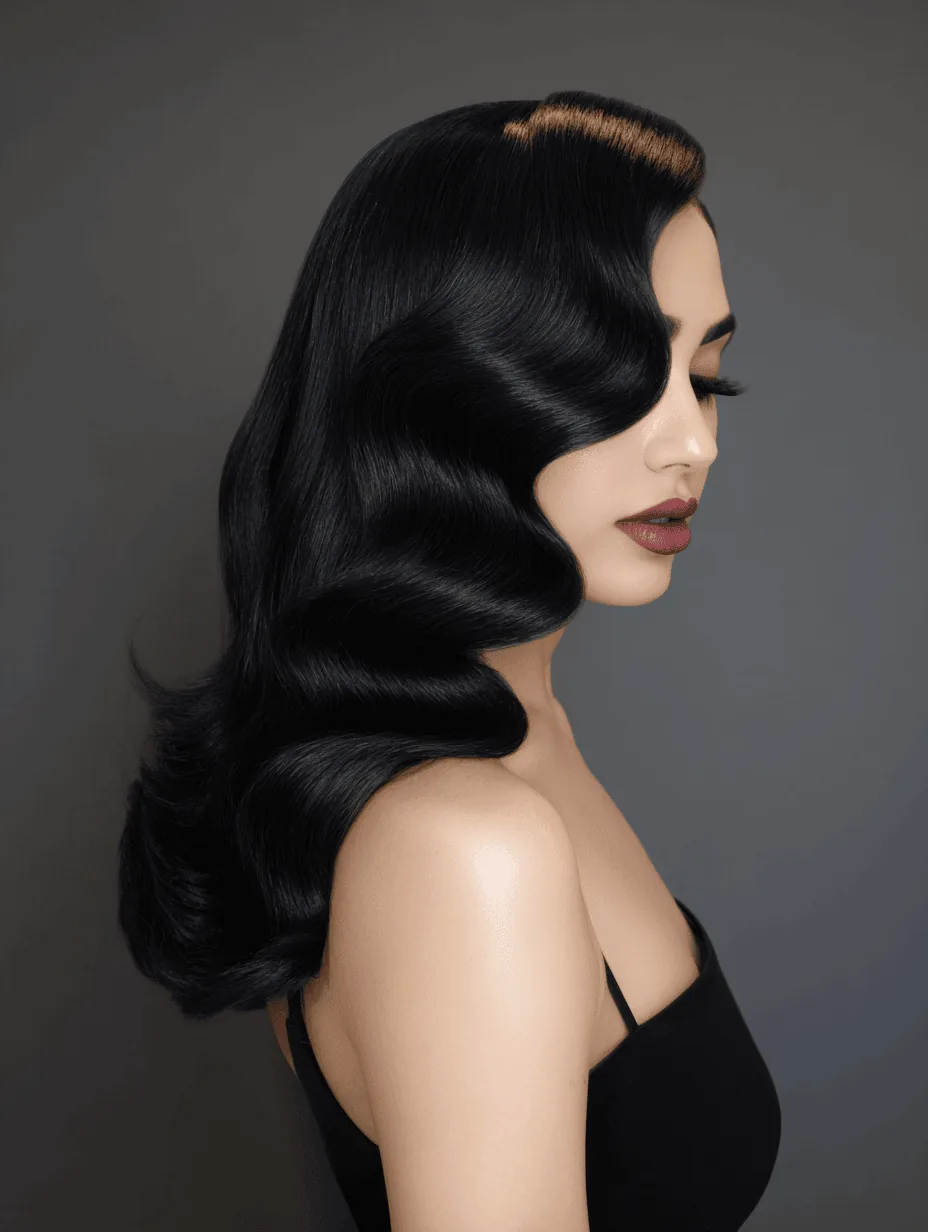
Hollywood waves are smooth, sculpted S-waves, and straight hair holds their polished shape well. Unlike beach waves, they are brushed out into one flowing wave pattern, with a deep side part. They are glamorous, vintage, and perfect for formal nights.
Best for: Straight hair for formal occasions that wants old-Hollywood glamour.
How to style:
- Apply setting cream to damp hair.
- Curl sections in the same direction.
- Brush out gently into S-waves.
- Set with strong-hold spray.
What to ask your stylist: Ask for even layers that hold a vintage wave, at shoulder length or longer.
35. Heat-Free Overnight Waves
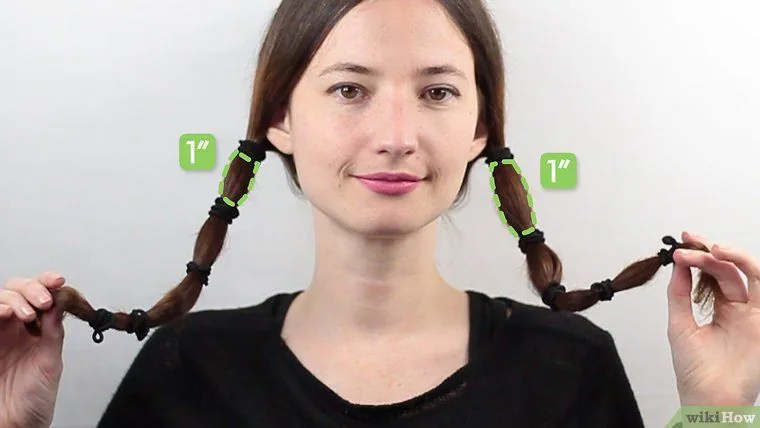
Overnight waves protect straight hair from daily heat: braid or twist damp hair before bed, and wake up to soft movement. It is the healthiest way to add texture to straight hair regularly. The waves are softer than wand waves, but they are free, easy, and damage-free.
Best for: Straight hair that wants regular movement without daily heat styling.
How to style:
- Apply leave-in cream to damp hair.
- Braid loosely in two or four braids.
- Sleep on a silk pillowcase if possible.
- Undo, shake out, and spray lightly.
What to ask your stylist: Ask for long layers that wave well from braids, with ends that do not kink sharply.
Hairstyles to Be Careful With (and How to Soften Them)
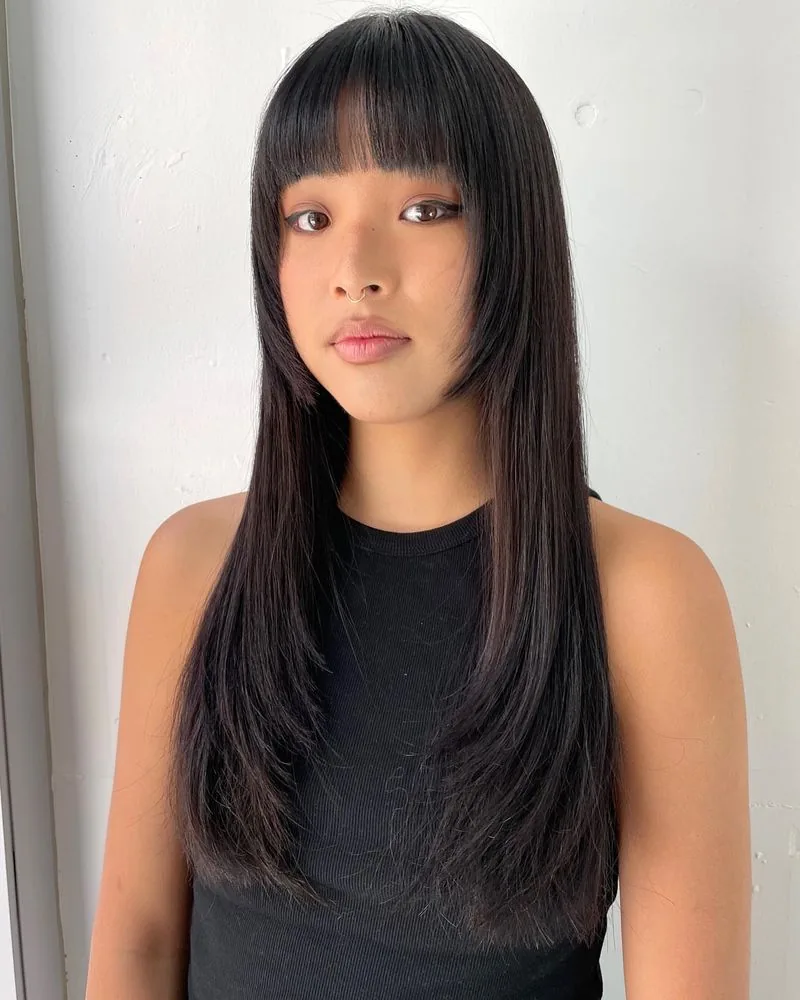
There are no banned hairstyles for straight hair, only versions that need softening. If you love one of these, the tweak usually makes it work.
- One-length hair with a flat centre part: No layers and no lift can look like a curtain. Tweak: add long layers and a side part or root lift.
- Very short, blunt layers all over: Short layers can stick out on straight hair. Tweak: keep layers long and blended, or choose a blunt bob instead.
- Tight curls from a small barrel: Tight curls can drop out quickly on straight hair and look mismatched. Tweak: use a large barrel for loose waves, and set with spray.
- Heavy oils and creams: Rich products weigh straight hair down fast. Tweak: use light mousse, a pea-sized serum, and spray, not heavy butter.
- Very tight, scraped-back styles with no height: No lift can flatten the whole look. Tweak: tease the crown lightly and pull out soft face pieces.
Best Picks by Goal
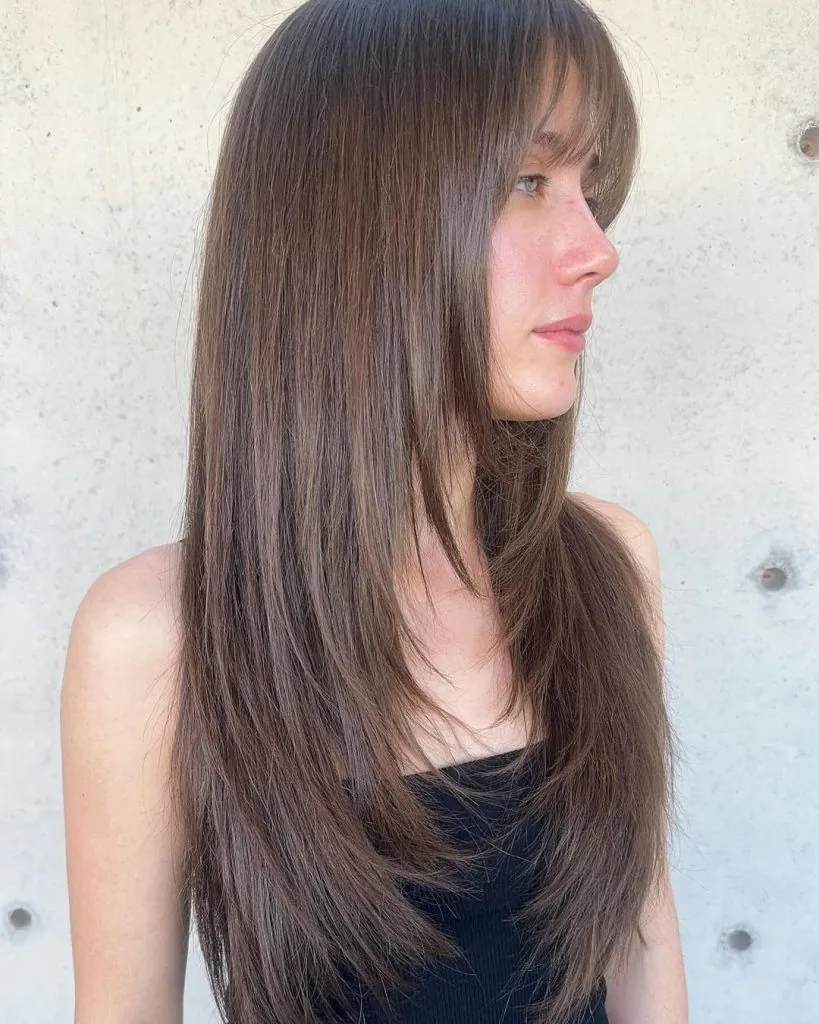
- Most versatile: Long layers for movement, layered midi cut, face-framing layers.
- Most glamorous: Voluminous blowout, Hollywood waves, sleek chignon.
- Short and chic: Chin-length blunt bob, A-line bob, textured lob.
- Low maintenance: Sleek long straight cut, U-cut, heat-free overnight waves.
- Fine hair: Blunt lob, chin-length blunt bob, side-part long layers.
- Everyday updos: Sleek high ponytail, half-up claw clip, messy bun with volume.
- Occasions: Sleek chignon, Hollywood waves, loose waves with a wand.
Styling Routine
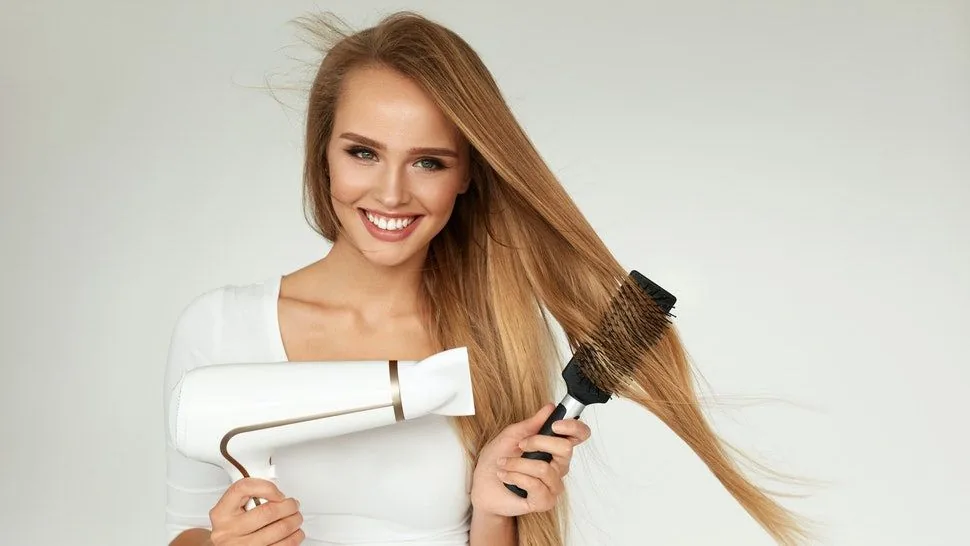
Start with light volume at the roots: Apply mousse to damp roots before drying. Straight hair needs lift built in while damp, not added later as an afterthought.
Dry with direction: Blow-dry with a round or paddle brush, lifting at the crown and shaping the ends. Direction while drying decides whether straight hair falls flat or swings.
Add texture only where needed: Use texture spray on the lengths or ends for waves and updos, but keep the roots light. Too much product is the fastest way to flatten straight hair.
Check the movement: Before you leave, shake your head gently. The ends should move, the crown should have a little lift, and the face should not be hidden behind a flat sheet.
What to Ask Your Stylist: Checklist
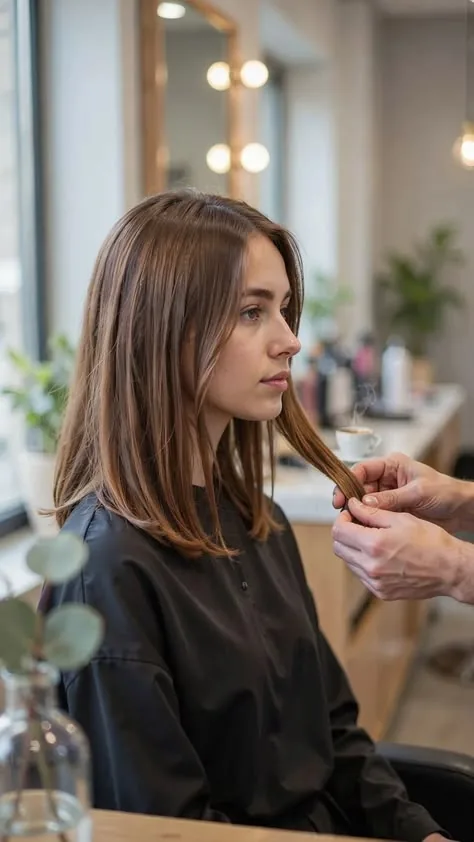
- Show 2 to 3 photos of the exact length and texture you want, on straight hair if possible.
- Say: I have straight hair, so I want movement, lift, or texture, not just a shorter length.
- Say what hair type you have, fine, medium or thick, and how much time you style each morning.
- Ask about layers for your hair type, especially if it is fine and needs a blunt edge, or thick and needs feathering.
- Ask about bangs: curtain or side-swept, rather than a heavy blunt fringe, unless you want that look.
- Ask how the cut will look tied up, half-up, and air-dried, not just blow-dried.
- Ask how often to trim to keep the shape, usually every 6 to 8 weeks for medium cuts, and 4 to 6 weeks for bobs.
- Ask what light product gives your cut movement without weighing it down.
Frequently Asked Questions (FAQs)
What is the best hairstyle for straight hair?
Long layers for soft movement are the safest best choice for straight hair. They break a flat sheet into swinging pieces while keeping length. If you prefer medium length, a blunt lob gives the same polished look with a fuller-looking edge.
How can I add volume to straight hair?
Start with root mousse on damp hair, blow-dry lifting the roots, and use a side part. A layered cut and a velcro roller set at the crown also help. Avoid heavy oils and creams, which weigh straight hair down.
Are layers good for straight hair?
Yes, layers are very good for straight hair, as long as they are long and blended. Long layers add swing without making the ends look thin. Very short, choppy layers all over can stick out on straight hair, so keep them longer.
What is the best haircut for fine straight hair?
A blunt lob or a chin-length blunt bob suits fine straight hair best. A solid edge makes the hair look dense, while light layers on top add movement without thinning the ends.
Can straight hair hold waves?
Yes, but straight hair needs grip to hold waves. Use heat protectant, a large-barrel wand, and flexible spray, and curl in alternate directions for a natural fall. Texture spray and overnight braids are good heat-free options.
Should straight hair have bangs?
Curtain bangs and side-swept bangs suit straight hair very well, because they fall smoothly and frame the face. A heavy blunt fringe can also work, but it needs regular trims and a smooth blow-dry to stay neat.
What is the best everyday hairstyle for straight hair?
A layered midi cut, a sleek high ponytail, or a half-up claw clip are the best everyday options. They are fast, they keep hair off the face, and they still show the sleek finish straight hair does well.
How often should I trim straight hair?
Every 6 to 8 weeks is a good rhythm for most medium and long straight cuts, because split ends show clearly on straight hair. Bobs need a trim every 4 to 6 weeks to keep their edge.
Does straight hair need heat protectant?
Yes, always use heat protectant before blow-drying, flat-ironing or curling straight hair. Straight hair shows heat damage as dry, split ends quickly, and protectant keeps it glossy.
What products suit straight hair best?
Light mousse for volume, a pea-sized smoothing serum for shine, and a flexible spray for hold suit straight hair best. Texture spray helps waves and updos grip. Avoid heavy butters and thick creams.
Conclusion
A hairstyle for straight hair is not about fighting your texture. It is about choosing layers, lift and grip that give sleek hair swing, volume and staying power.
Pick the style from this list that fits your hair type, your daily routine, and how much styling time you have each morning. Save a photo, take the what-to-ask line for that style to your stylist, and enjoy a cut that feels like you every day, not just on salon day.
Which of these 35 hairstyles for straight hair will you try next? Tell us in the comments, and share this guide with a friend who has straight hair and is thinking about a new cut.