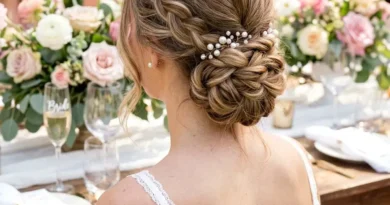
New Mum, New Hair: 33 Low-Maintenance Hairstyles for New Moms That Take Five Minutes Flat
There is a special kind of tired that only a new mom knows — the 3 a.m. feed, the 5 a.m. feed, the baby who finally sleeps at 7 a.m. just as you have to get up. In that life, hair cannot be a project. It has to be something you can do one-handed, half-asleep, in under five minutes, and still feel like yourself when you catch your reflection in the hallway mirror. The good news is that new-mom hair does not have to mean a sad ponytail every single day. It just has to mean hair that works with your real life: postpartum shedding, greasy roots, a baby who grabs everything, and a schedule that belongs to someone very small.
This guide gathers 33 hairstyles for new moms that are genuinely quick, genuinely low-maintenance, and genuinely kind to postpartum hair. Eight guides first walk you through what is actually happening to your hair after birth, how to build a five-minute routine around a newborn’s schedule, which styles you can do one-handed, and how to hide shedding and regrowth without a salon appointment. Then come the styles themselves — from the 30-second low ponytail and the claw clip twist to the textured lob and the wash-and-go shag — each one timed, tested for real life, and honest about who it suits and who should skip it. Start with the guides, pick the styles that fit your hair length, and keep two or three in rotation. That is all a new-mom hair routine needs to be.
Postpartum Hair 101: What’s Happening to Your Hair — and What Actually Helps
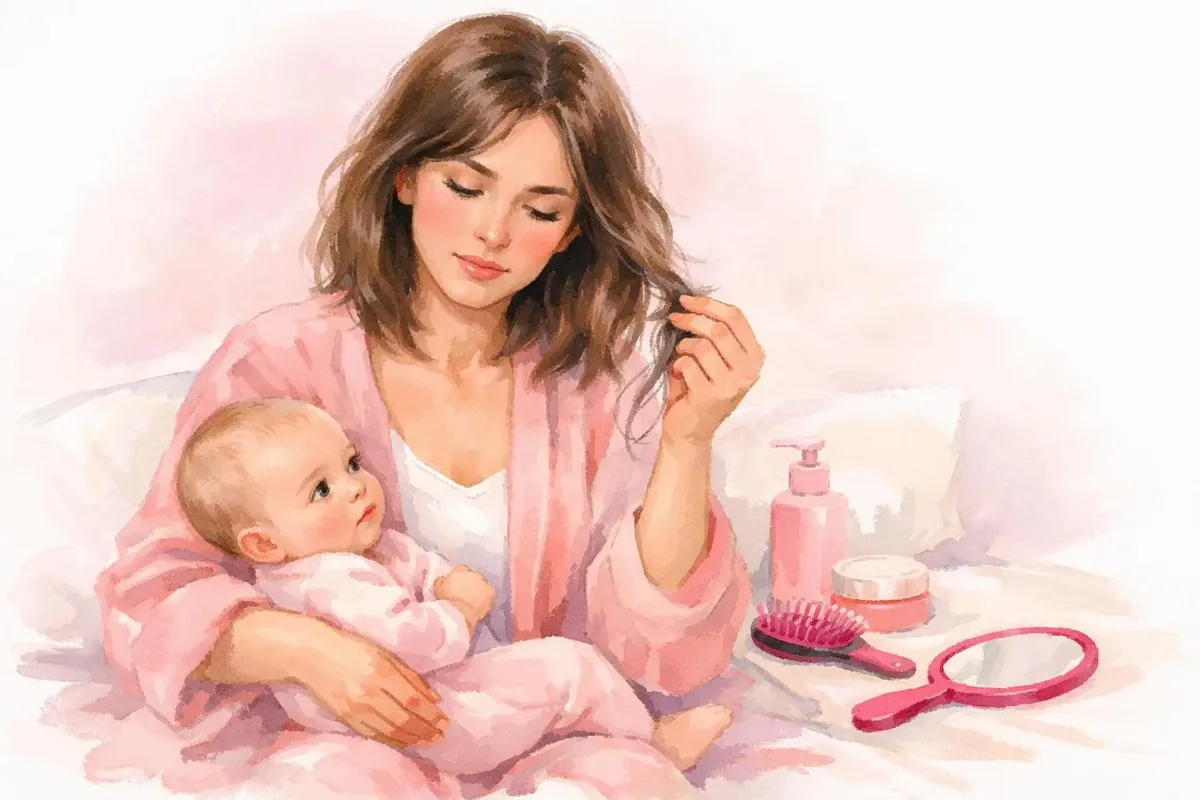
During pregnancy, high oestrogen levels keep hair in its growth phase far longer than usual, which is why so many women love their pregnancy hair — thicker, shinier, barely shedding at all. After birth, oestrogen drops sharply, and all that hair that stayed put for nine months starts shedding at once, usually peaking around three to four months postpartum. It is called postpartum telogen effluvium, it is completely normal, and it is not your fault — but it can still be alarming to see handfuls of hair in the shower drain. At the same time, many new moms notice fine, fuzzy regrowth around the hairline — the famous postpartum baby hairs — that stick up in every direction and refuse to lie flat.
What actually helps is gentler than most people expect. A wide-tooth comb instead of a brush on wet hair, a silk or satin pillowcase, looser styles that do not pull at the hairline, and a little patience will do more than any expensive supplement. Most shedding slows by six to twelve months, and the regrowth fills in on its own. Quick verdict: treat postpartum hair like recovering hair, not problem hair. Be gentle with it, stop pulling it tight, and choose styles that hide the awkward phases instead of fighting them — that is what the next seven guides are for.
The Five-Minute Rule: Building a Hair Routine Around a Newborn’s Schedule
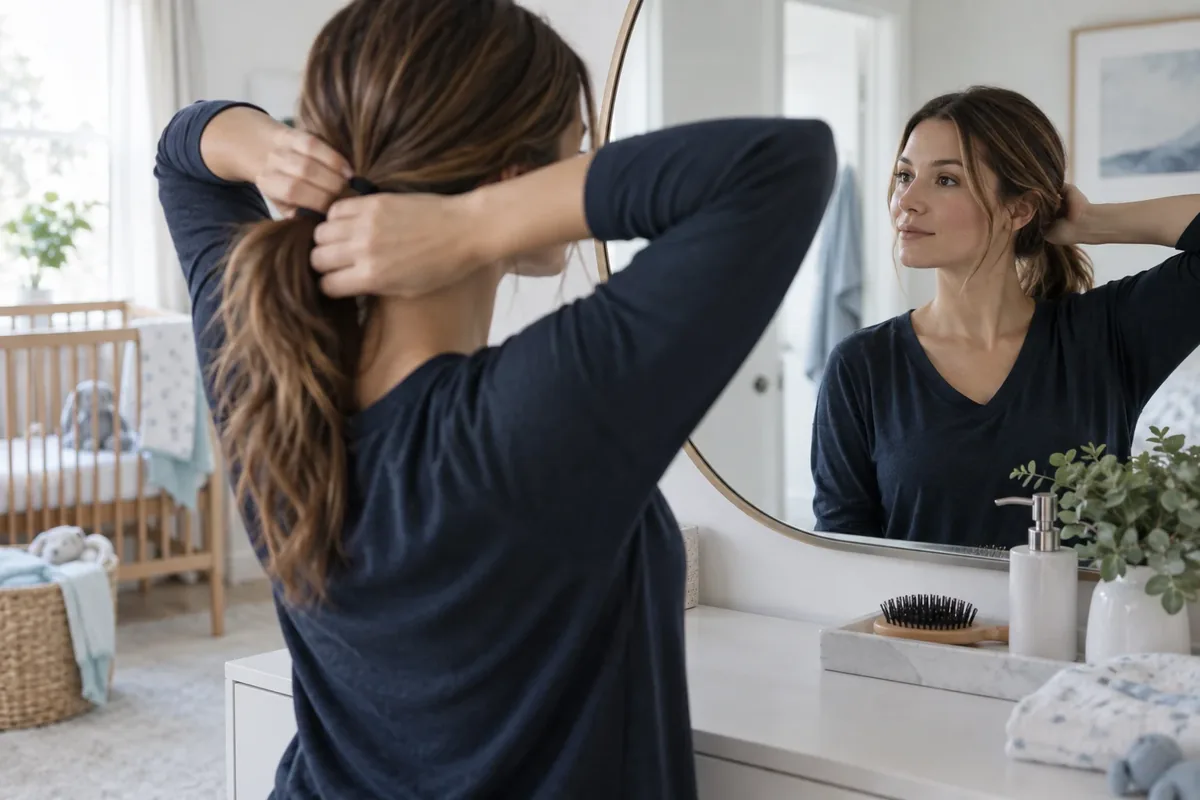
A newborn does not care about your hair routine, and your hair routine has to accept that. The five-minute rule is simple: no style in this guide should take longer than five minutes, and your whole morning hair routine — wash, style, done — should fit into the gap between one feed and the next. That means choosing styles you can do without a mirror, without heat, and without both hands free. If a style needs a curling iron and a YouTube tutorial, it does not belong in a new mom’s life, and it is not in this guide.
The trick is to stop thinking of hair as a daily event and start thinking of it as a weekly rhythm. Wash every two or three days instead of daily, lean on dry shampoo on the in-between days, and keep a small basket of elastics, claw clips and bobby pins where you actually get dressed — not buried in a bathroom drawer. Pros and cons: a five-minute routine will never give you salon-perfect hair, but it will give you hair that looks intentional every single day, and that is the whole point. Maintenance: re-do the style once, mid-day, if the baby has undone it. Common mistake: trying to keep a pre-baby routine that needed forty minutes and a blow-dryer — let it go, and your mornings will get dramatically easier.
One-Handed Styles: Hair You Can Do While Holding the Baby

There will be days when the baby will not be put down, and on those days your hair has to be doable with one hand and a sleeping baby balanced on your hip. The good one-handed styles share three things: they start from a low ponytail, they use one tool at most, and they do not need a mirror. A low ponytail, a claw clip twist, a messy bun and a simple braid all qualify. Anything that needs two hands to section hair, or a mirror to check the back, does not — save those for the rare afternoon when someone else is holding the baby.
Practice matters more than talent here. Try each one-handed style once when you actually have both hands free, so your muscle memory knows the moves when you only have one. Keep a claw clip in the pocket of whatever you are wearing at home, and keep a soft scrunchie on your wrist like a bracelet — you will reach for them a dozen times a day. Best for: every new mom, every day, but especially the first six weeks when the baby is attached to you around the clock. Quick verdict: if you cannot do it while holding a baby, it is not a new-mom style. Test every style in this guide one-handed before you trust it.
Postpartum Hair Loss: Styles That Hide Shedding and Baby Hairs
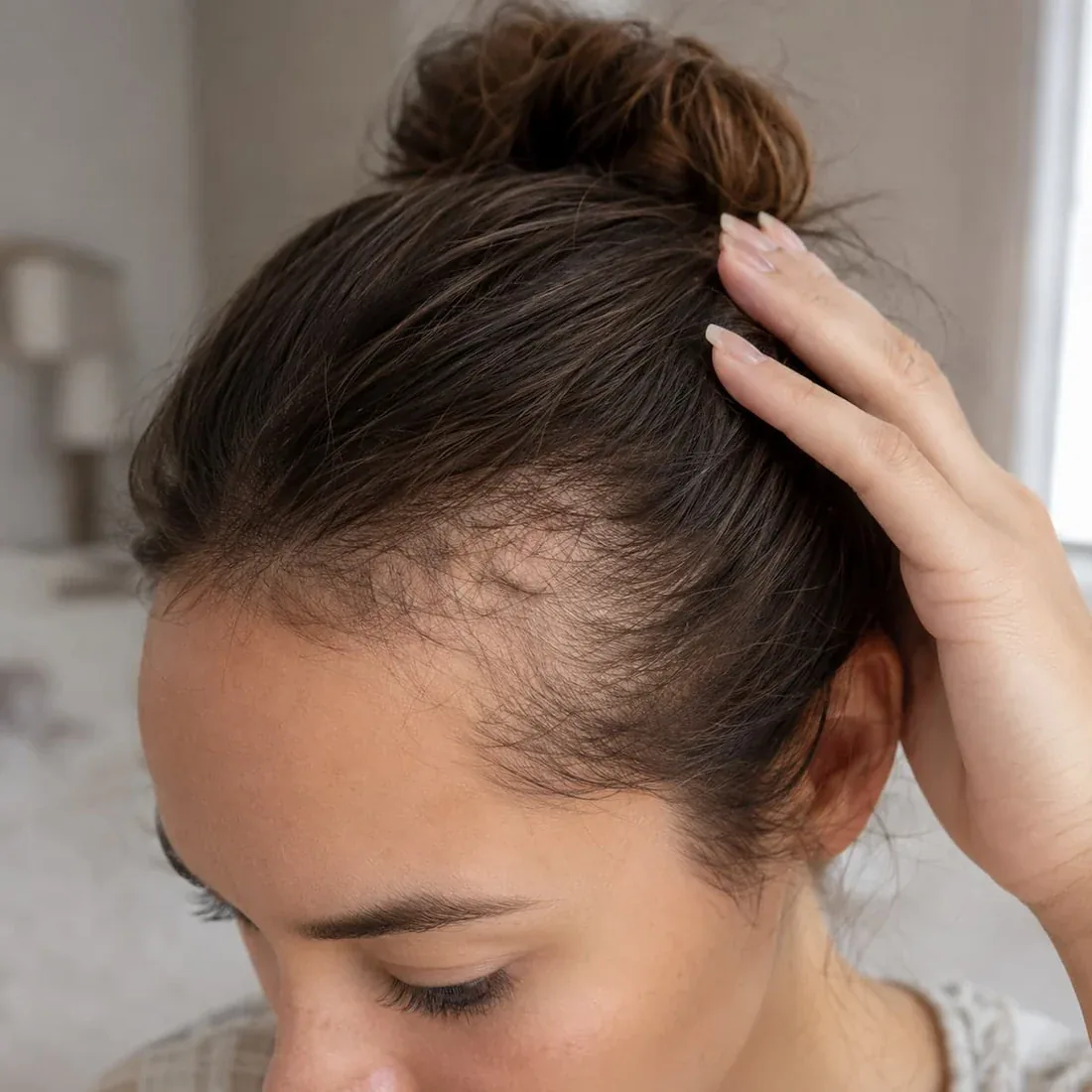
Postpartum shedding shows up most around the temples and the hairline, where the hair is finest — and that is exactly where it is most visible. The styles that hide it best are the ones that add volume or texture at the front: a deep side part that sweeps hair across the temples, a headband that covers the hairline entirely, curtain bangs that blend the regrowth into the style, or a textured, tousled finish that makes thin patches disappear into movement. Tight, slicked-back styles do the opposite — they pull the hair flat against the scalp and put the thin spots on full display.
The baby hairs need a different trick: a pea-sized amount of clear brow gel, edge-control gel or even a clean spoolie brushed with hairspray will lay them down for hours, and a headband or scarf does the same job with zero product. Who should avoid tight styles right now: anyone in the thick of shedding, because tension at the hairline can make the thinning worse and can even cause traction alopecia if the hair is pulled tight every day. Cost and time: a headband costs a few dollars and takes two seconds. Quick verdict: volume at the front, softness at the hairline, and nothing pulled tight — that is the whole hiding strategy, and it works.
The New-Mom Cut: Choosing a Length That Works With Your Life
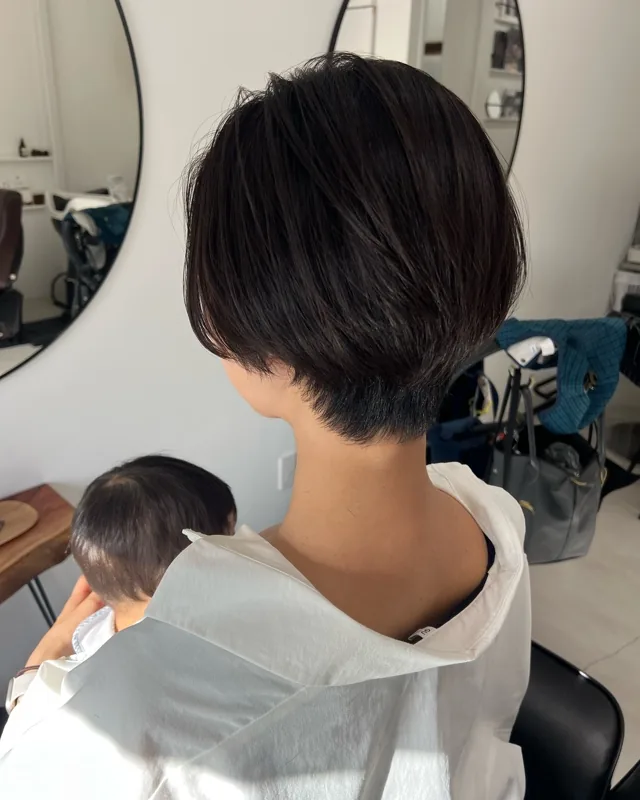
The most common new-mom haircut question is whether to chop it all off, and the honest answer is: it depends on what you will actually do with it at 6 a.m. A textured lob — shoulder length, with soft layers — is the sweet spot for most new moms, because it is short enough to wash and dry in minutes, long enough to pull back into a ponytail, and it grows out gracefully when salon visits are rare. A pixie is even lower maintenance, but it needs a trim every four to six weeks to keep its shape, which is a lot of appointments for a new mom. Long hair is fine too, as long as you are happy wearing it up most of the time.
Before you book the cut, ask yourself three questions. Can I wash and dry this in under ten minutes? Can I tie it back when the baby grabs it? And will it still look decent in six weeks without a trim? If the answer to all three is yes, you have found your length. What to ask your stylist: ask for soft, lived-in layers rather than a blunt, precise cut, and tell them you will not be back for six to eight weeks — they will cut it to grow out well. Common mistake: getting a high-maintenance cut that needs weekly styling, like a sleek bob that only looks right when blow-dried straight. Quick verdict: the best new-mom cut is the one that looks good on day one and day forty.
Your New-Mom Hair Kit: The 8 Tools Worth Keeping Within Reach
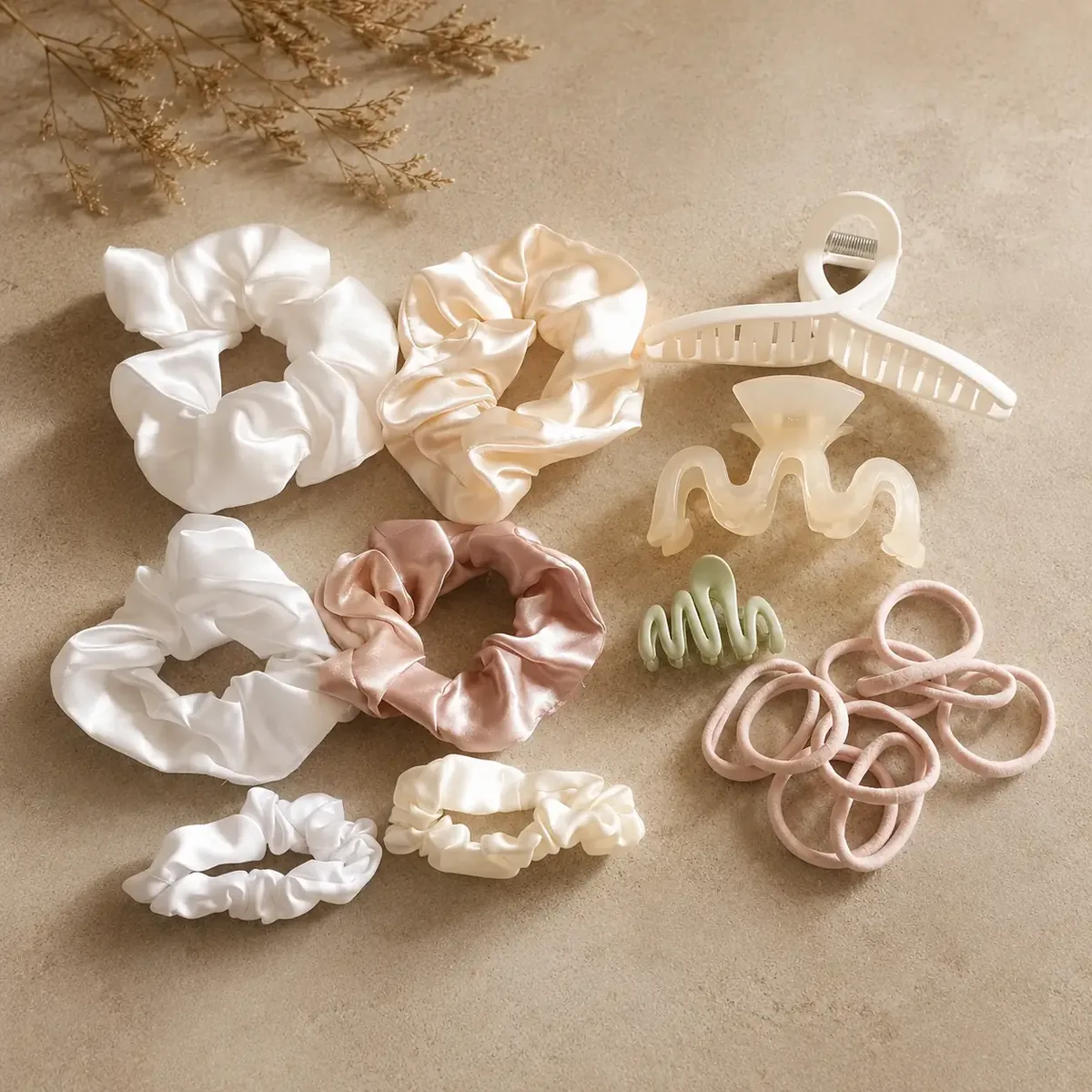
A new mom does not need a drawer full of styling tools — she needs eight things, kept where she can reach them one-handed. A pack of soft, snag-free elastics. Two large claw clips. A silk scrunchie for sleeping. A wide-tooth comb. A travel-size dry shampoo. A small bottle of lightweight hair oil. A pack of bobby pins. And one wide headband. That is the whole kit, and it fits in a single basket by the mirror or in the nappy bag.
Each tool earns its place. The claw clip is the fastest way to get hair off your neck. The dry shampoo buys you a second and third day between washes. The silk scrunchie prevents the crease and breakage that tight elastics cause. The hair oil tames frizz and flyaways in ten seconds. Pros and cons: a small kit is cheap and portable, but it means you have to be honest about what you will actually use — a curling iron that stays in a drawer is not part of a new-mom kit. Cost: the whole kit costs less than one salon blow-dry. Quick verdict: if a tool needs two hands, a plug socket and ten minutes, it does not belong in the basket. Keep the kit small, keep it visible, and your hair will thank you.
From Hospital to Home: Hairstyles for the First Six Weeks
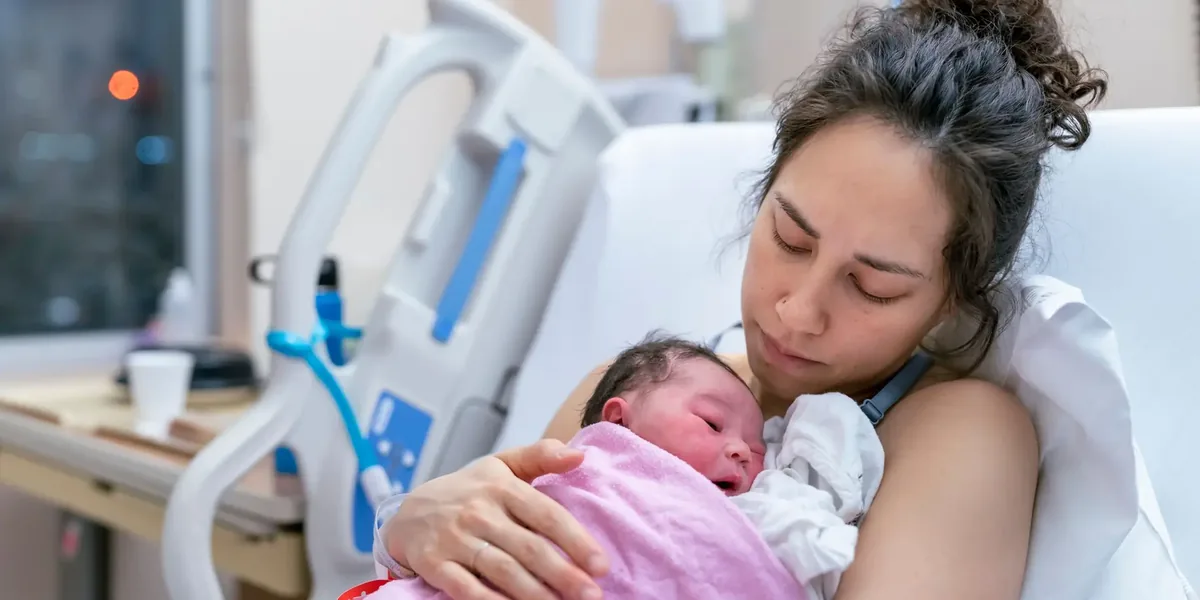
The first six weeks are the hardest for hair, and the simplest styles win. In the hospital, a low loose braid or a soft low bun is the best choice: it keeps hair out of your face during labour and recovery, it does not pull at a sore scalp, and it survives lying down, which is where you will spend most of your time. A braid is especially good because it will not tangle while you sleep, and it gives you soft waves when you take it out — two styles for the price of one, with zero effort.
Once you are home, the routine is wash less, tie it up more, and stop worrying about it. A low ponytail with a silk scrunchie, a claw clip twist, or a loose braid are the three styles that will carry you through the first month. Best for: the recovery period, when you are healing, sleep-deprived, and the baby is feeding every two hours. Maintenance: wash every two to three days, use dry shampoo in between, and re-braid before bed so you wake up without tangles. Who should avoid anything tight right now: everyone — your scalp is sensitive, your hair is shedding, and tight styles will only make both worse. Quick verdict: in the first six weeks, hair is not a beauty project. It is a comfort project. Keep it soft, loose, and out of the way.
Common New-Mom Hair Mistakes — And Quick Fixes That Work
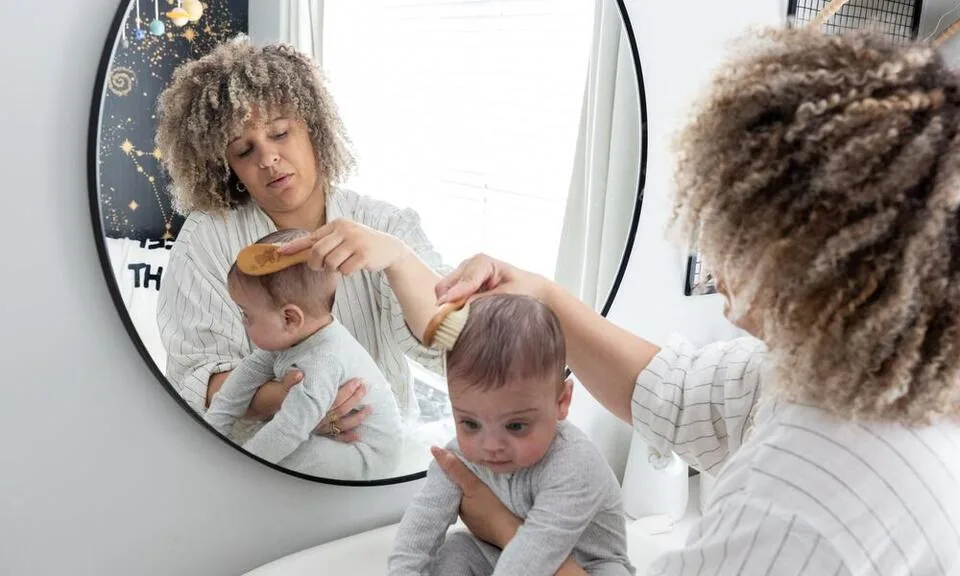
The most common new-mom hair mistake is pulling the hair into the same tight, high ponytail every single day. It is fast and it feels tidy, but day after day of the same tight elastic in the same spot causes breakage exactly where the elastic sits, and pulls at the hairline where postpartum shedding is already happening. The fix costs nothing: vary the position — low one day, high the next, a braid the day after — and switch to soft scrunchies or claw clips instead of thin elastics.
Other mistakes are just as easy to fix. Washing every day strips the scalp and makes the greasy cycle worse — stretch it to every two or three days with dry shampoo. Brushing wet hair with a fine brush snaps it — use a wide-tooth comb. And skipping conditioner to save time leaves the ends dry and tangled — a leave-in conditioner sprayed on in five seconds does the job. Last-minute fixes: if the roots are greasy and you have no dry shampoo, a little baby powder at the roots works in a pinch. If a bun is falling apart, a claw clip saves it in three seconds. If the baby hairs are sticking up, a spoolie and a dab of hairspray lay them flat. Quick verdict: almost every new-mom hair emergency has a ten-second fix — and once you know the fixes, the bad hair days stop feeling like emergencies at all.
1. The 30-Second Low Ponytail — Your Everyday Default
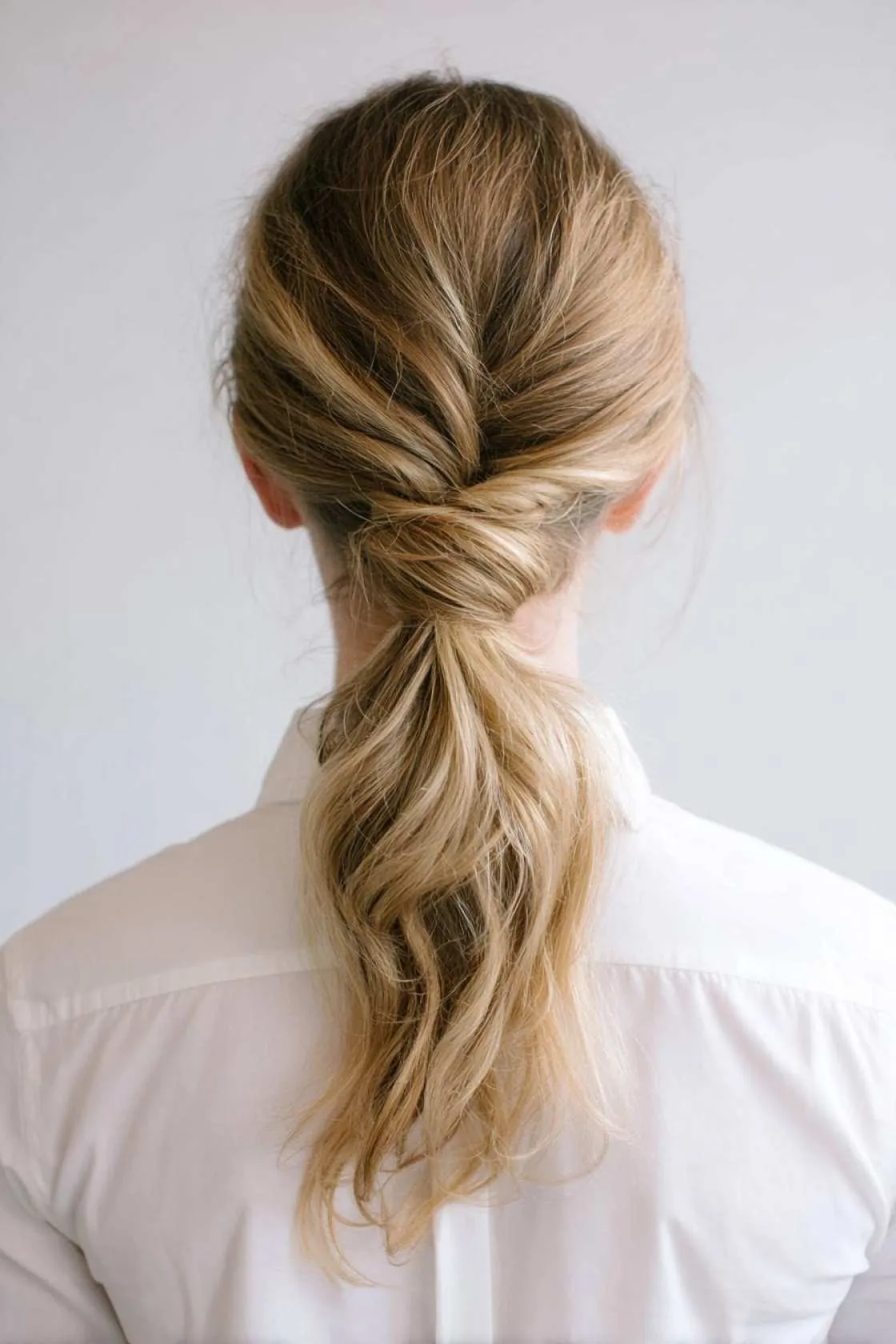
The low ponytail is the new mom’s default for a reason: it takes thirty seconds, it needs one elastic, and it works on every hair length past the chin. Gather the hair at the nape, secure it loosely with a soft scrunchie, and pull out two small face-framing pieces — that is the whole style. The loose, low position is kind to a shedding hairline, and the soft scrunchie will not leave a crease or snap the hair the way a thin elastic does.
Best for: every day, every hair type, and every stage of postpartum. How to style it: brush the hair back with your fingers, not a brush, for a softer finish, and wrap a strand of hair around the elastic if you have thirty seconds to spare. Pros and cons: it is the fastest style in this guide and it keeps the baby’s hands out of your hair, but on its own it can look unfinished — the face-framing pieces are what make it look intentional. Quick verdict: the ponytail you will wear most. Make it a good one by keeping it low, loose, and soft.
2. The Messy Bun, But Make It Intentional
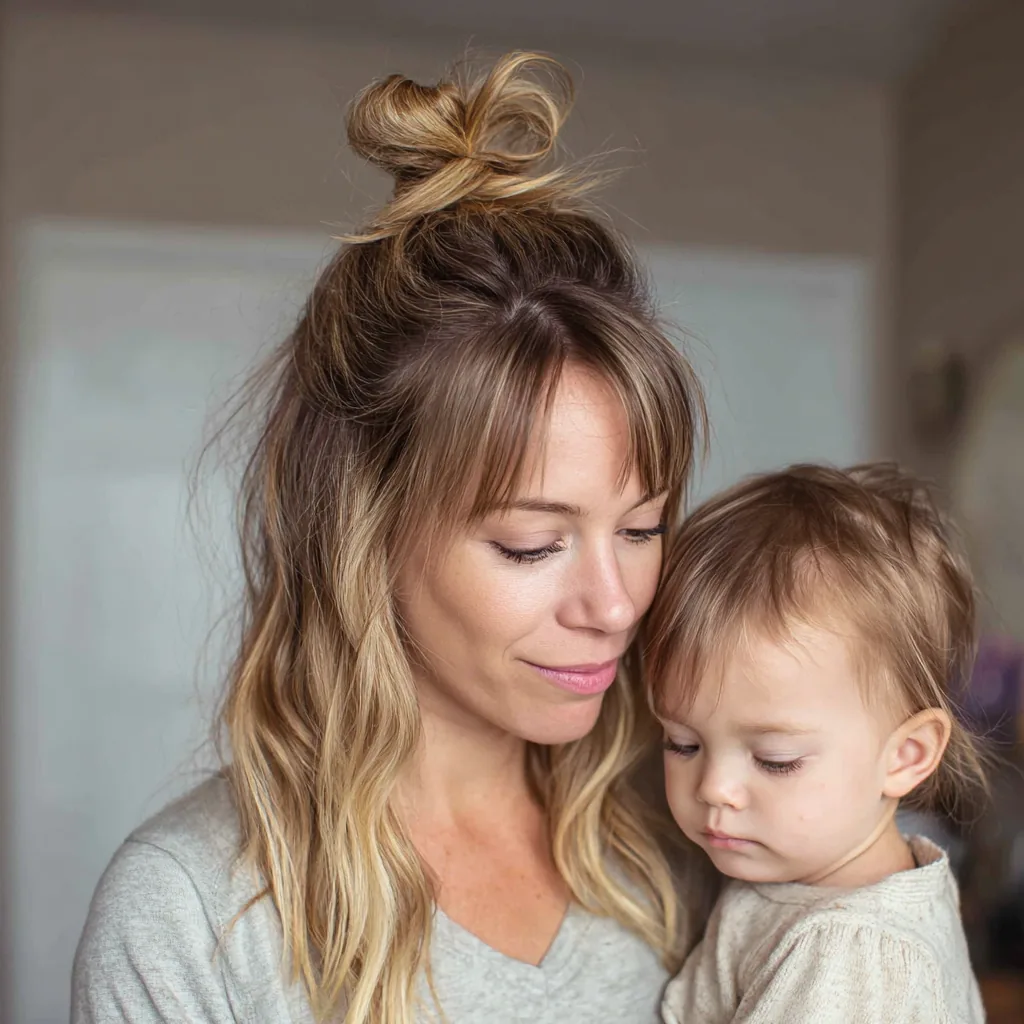
Every new mom does a messy bun, but there is a difference between a bun that says I gave up and a bun that says I meant to do this. The intentional messy bun is gathered loosely at the crown or the nape, twisted once, secured with a claw clip or a scrunchie, and finished by pulling out a few soft pieces around the face. The looseness is the point — a tight, perfect bun on a tired mom looks severe, while a soft, textured bun looks relaxed and put-together at the same time.
Best for: second- and third-day hair, school runs, and days when washing is not happening. How to style it: flip the head upside down, gather the hair, twist it loosely, and pin it — the whole thing takes under a minute. Common mistake: wrapping the elastic three times and pulling it tight, which gives you a headache and a crease. One loose wrap is enough. Maintenance: if it loosens, re-twist it and clip it — never take it down and start again. Quick verdict: the messy bun is not a failure of styling. Done loosely, with face-framing pieces, it is the most flattering five-minute style a new mom owns.
3. The Claw Clip Twist — The Two-Second Hair Rescue
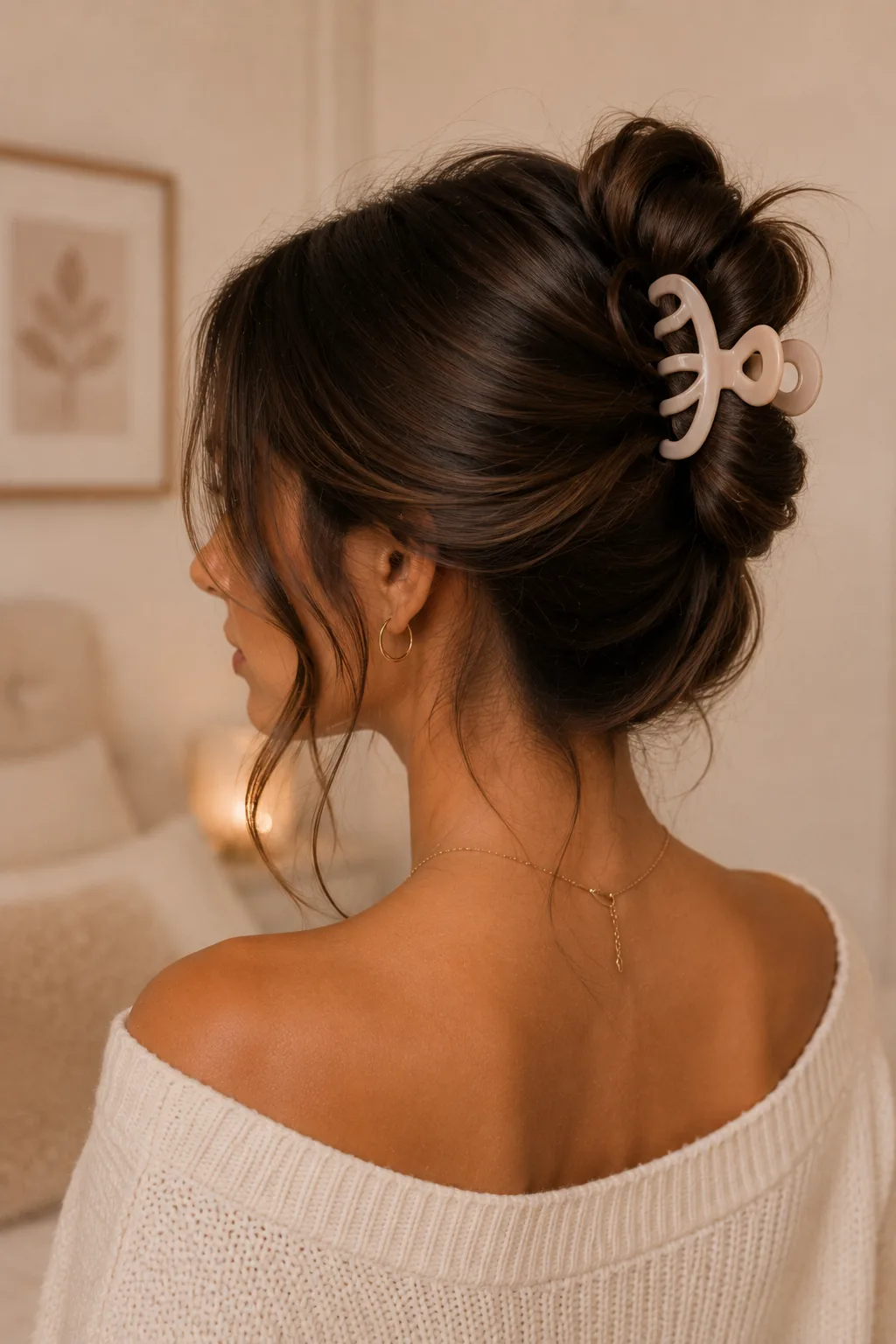
The claw clip twist is the single most useful hairstyle a new mom can learn: gather the hair, twist it up, clip it, done. Two seconds, one tool, no mirror required. It works on medium to long hair, it holds through a whole day of bending, lifting and carrying, and it is gentler than an elastic because it does not pull at any one point. It is also the style that survives the baby grabbing it — a clip holds where an elastic slips.
Best for: hot days, cooking, cleaning, and any moment when the hair needs to be up and out of the way right now. How to style it: twist the hair upwards against the head and clip it so the ends fan out at the top — that fan is what makes it look styled rather than stuffed. Cost and time: one large claw clip, about two seconds. Who should avoid it: very short hair, which will not twist, and very fine hair, which may need two smaller clips instead of one large one. Quick verdict: buy three claw clips and keep one in every room. This is the style that will save your hair a hundred times a month.
4. The High Ponytail That Hides Greasy Roots
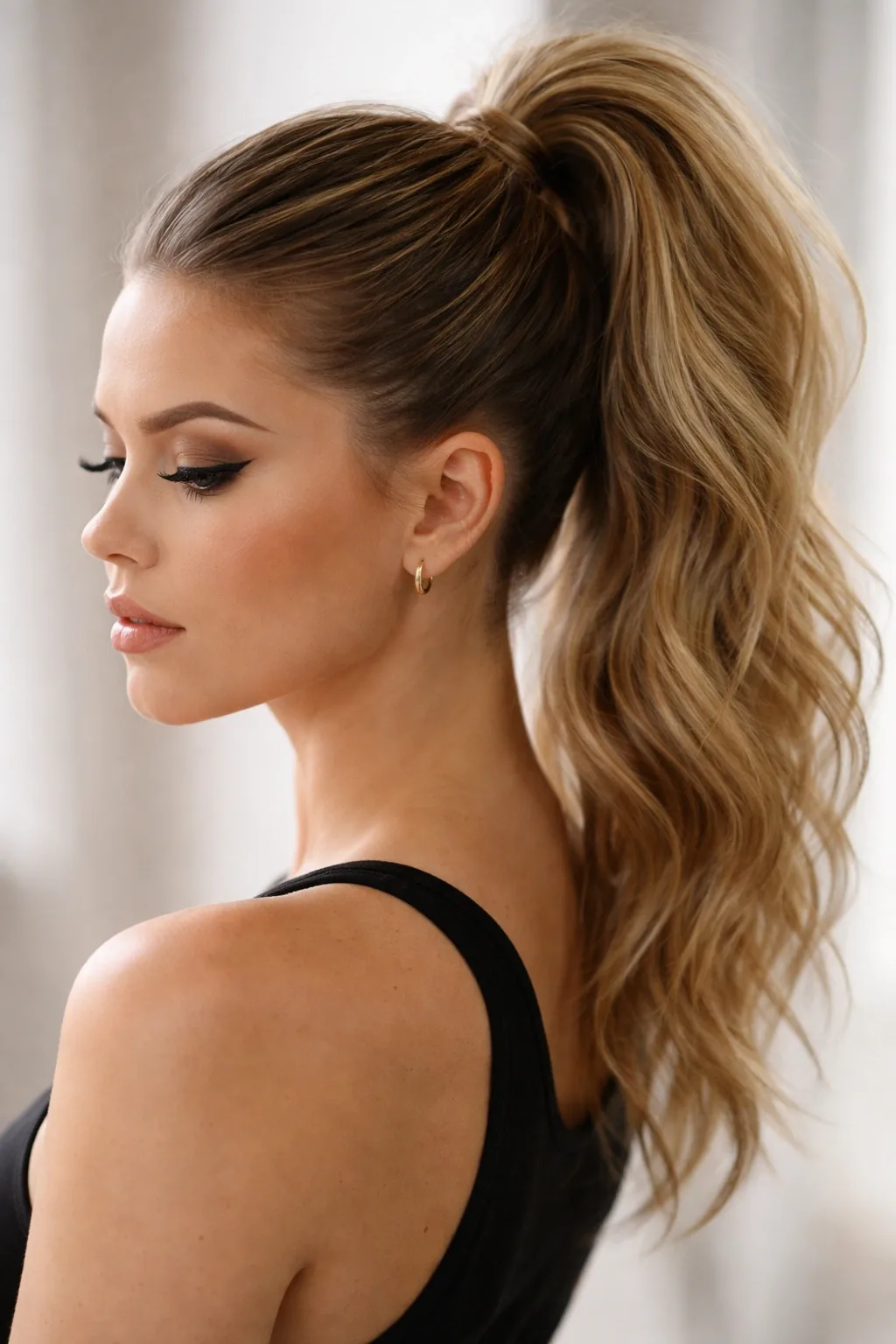
Greasy roots are a fact of new-mom life, and the high ponytail is the best way to hide them. Pulling the hair up high and tight smooths the roots flat, so the grease reads as shine instead of oil, and a quick spray of dry shampoo at the crown before you gather it absorbs the rest. Add a little volume at the crown by gently pulling the hair up after securing it, and the whole style looks deliberate and polished — nobody will know you have not washed your hair in three days.
Best for: day-three hair, video calls, and leaving the house when you look like you have not slept. How to style it: flip the head upside down, gather the hair high, secure it with a strong elastic, and wrap a strand around the base. Pros and cons: it hides greasy roots brilliantly and lifts the face, but a high, tight ponytail pulls at the hairline — so do not wear it tight every day, and never sleep in it. Maintenance: re-spray the dry shampoo once, mid-day, if the roots start to look oily again. Quick verdict: the greasy-hair emergency style. Fast, flattering, and honest about what it is for.
5. The Side Braid for Second-Day Hair
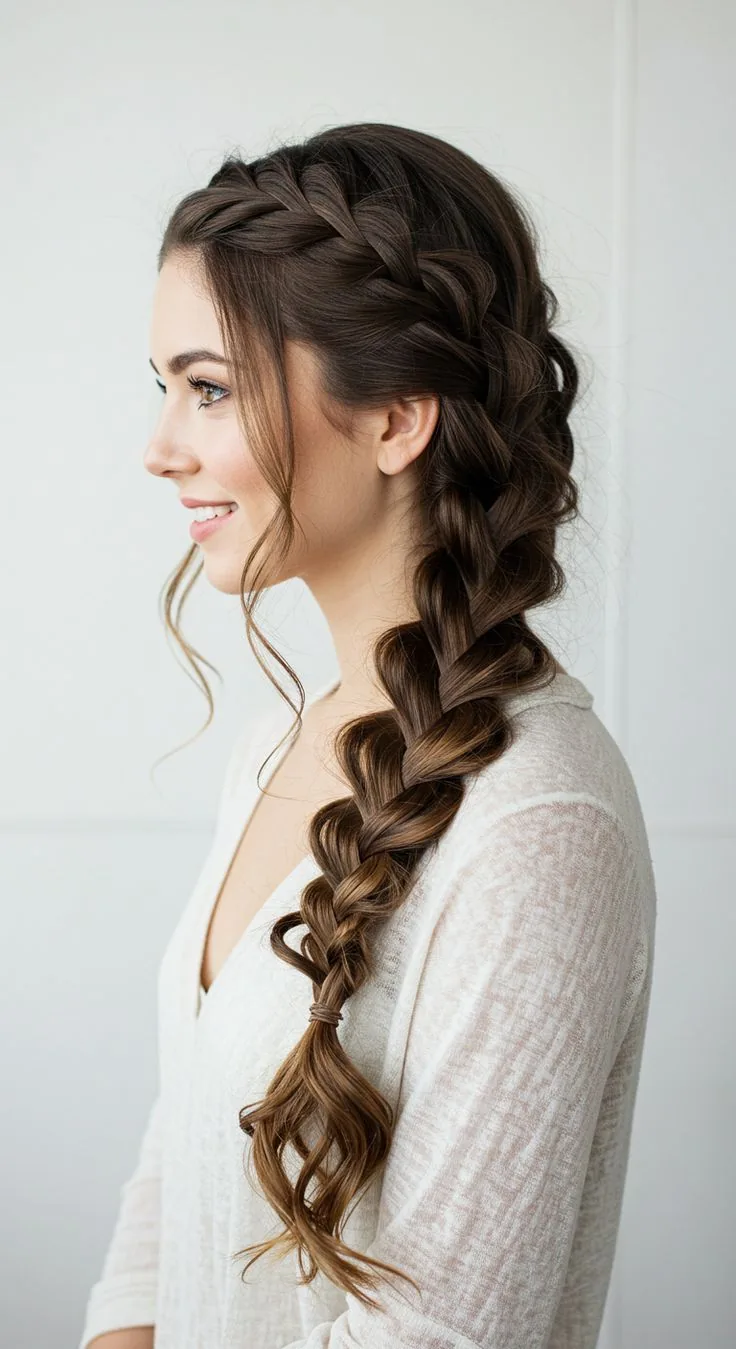
Second-day hair is actually the best hair for braiding — it has grip and texture that freshly washed hair does not, so the braid holds without slipping. A side braid swept over one shoulder is the easiest version: gather the hair to one side, braid it loosely down, and secure it with a soft elastic. Pull the braid out gently at the edges to make it look fuller, and you have a style that looks romantic and intentional in about two minutes.
Best for: medium to long hair, second-day hair, and days when you want to look like you tried. How to style it: braid loosely, not tightly — a tight braid looks severe and shows thin patches, while a loose braid hides them. What to ask: nothing — this is a do-it-yourself style, no salon needed. Common mistake: starting the braid too high, which pulls at the hairline; start it behind the ear instead. Quick verdict: the braid that makes second-day hair look better than first-day hair. Keep it loose, keep it to one side, and let it do the work.
6. The Half-Up Top Knot — Hair Out of Your Face, Length Still Showing

The half-up top knot is the compromise every new mom needs: the top half of the hair is pulled up and out of your face, and the bottom half stays down, so you still feel like you have your hair down. It takes about a minute, it needs one elastic, and it is the best style for the awkward in-between phase when the baby hairs are sticking up — the top knot gathers them all in and hides them completely.
Best for: medium to long hair, the postpartum regrowth phase, and days when a full updo feels too severe. How to style it: gather the top section from temple to temple, twist it into a small bun, and secure it loosely. Pros and cons: it hides baby hairs and keeps hair out of your eyes, but it can look messy if the top section is too small — take a generous section, about a third of your hair. Maintenance: if it loosens, just re-twist it. Quick verdict: the style for moms who are not ready to commit to an updo but need their hair out of their face. One minute, one elastic, problem solved.
7. The French Braid Crown — A Braid That Holds All Day
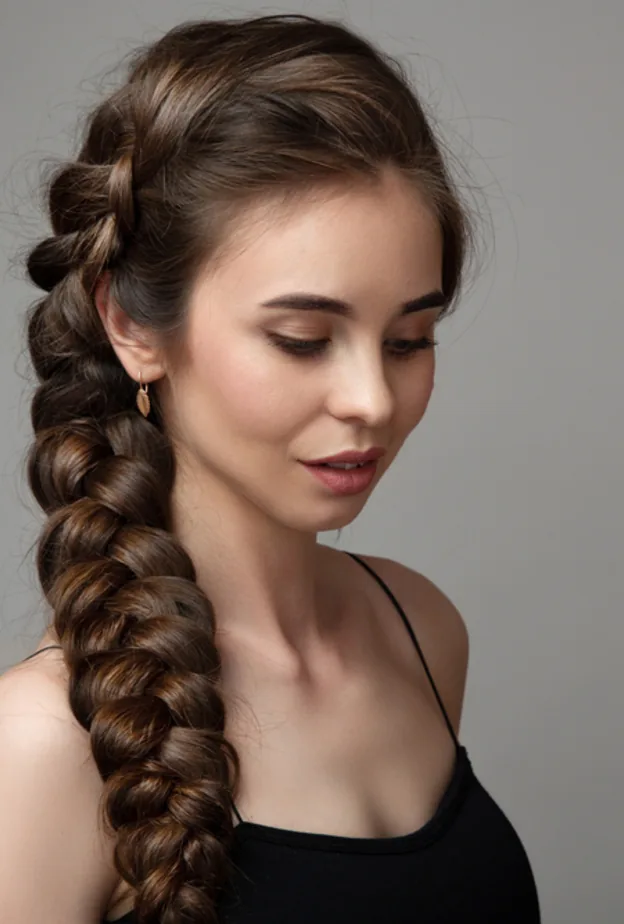
A French braid crown circles the head and pins the hair away from the face for an entire day, which makes it one of the most practical new-mom styles — once it is in, you do not have to think about your hair again. It is also one of the best styles for hiding postpartum shedding, because the braid adds volume and texture across the hairline and the temples, exactly where the thinning shows. Add a few soft pieces pulled out around the face and it looks romantic, not severe.
Best for: long hair, all-day outings, and the shedding phase. How to style it: start a French braid behind one ear, work it around the head, and pin the end under the start — or do two braids that meet at the back if a full crown feels too ambitious. Cost and time: about five minutes once you know the technique, and it holds for twelve hours or more. Who should avoid it: very short hair, which cannot reach around the head. Quick verdict: the most secure, most forgiving braided style in this guide. Learn it once, and it will carry you through the hardest shedding months.
8. The Textured Lob — The New-Mom Chop That Grows Out Well
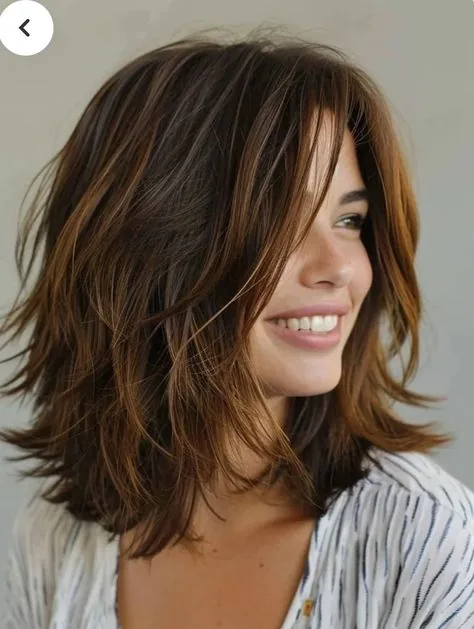
The textured lob is the haircut most new moms end up loving: shoulder-length, with soft, choppy layers that give it movement without needing any styling. It dries in minutes, it can be tied back into a small ponytail when the baby grabs it, and the layers mean it still looks good six weeks later when you have not had time for a trim. It is the cut that makes wash-and-go actually work, because the layers do the styling for you.
Best for: moms ready for a change, wavy or straight hair, and anyone whose long hair has become a chore. How to style it: wash it, add a little texture spray, and let it air dry — that is the whole routine. What to ask your stylist: ask for soft, invisible layers and a length that can still be tied back, and tell them you will not be back for eight weeks. Pros and cons: it is fast, flattering, and low-maintenance, but it is a commitment — growing a lob back out takes months. Quick verdict: if you are going to get one new-mom haircut, get this one. It is the cut that gives you your time back.
9. The Pixie That Grows Out Gracefully
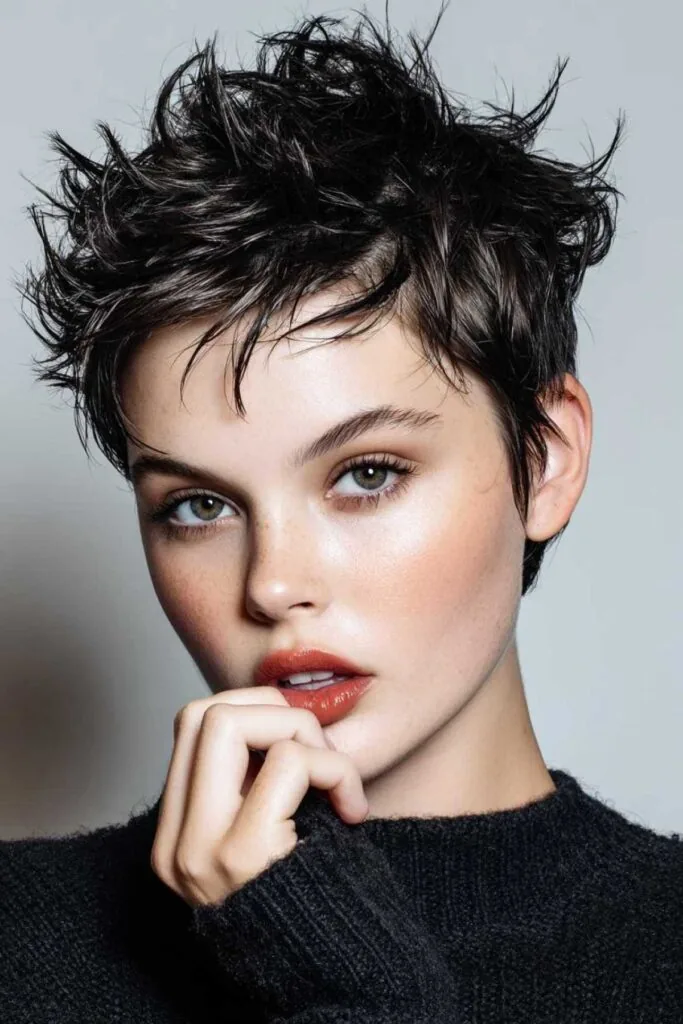
A pixie is the boldest new-mom cut, and also the most liberating: wash it, towel it, add a dab of styling cream, and you are done in under two minutes. No ponytail, no clips, no tangles, nothing for the baby to grab. The trick is to ask for a pixie with longer pieces on top and softer edges, so it grows out into a cute short bob instead of turning into an awkward in-between stage after four weeks.
Best for: moms who are ready for a real change, and anyone whose postpartum shedding has made long hair feel thin and lifeless. How to style it: a pea-sized amount of texture cream, worked through with your fingers, is all it needs. Cost and time: two minutes a day, but a trim every four to six weeks to keep the shape — which is the one real cost. Who should avoid it: anyone who is not sure, because a pixie takes months to grow out. Quick verdict: the lowest-maintenance style in this guide, if you can commit to the trims. It is also the cut that makes the most new moms say, I should have done this years ago.
10. The Low Chignon for Video Calls and Appointments
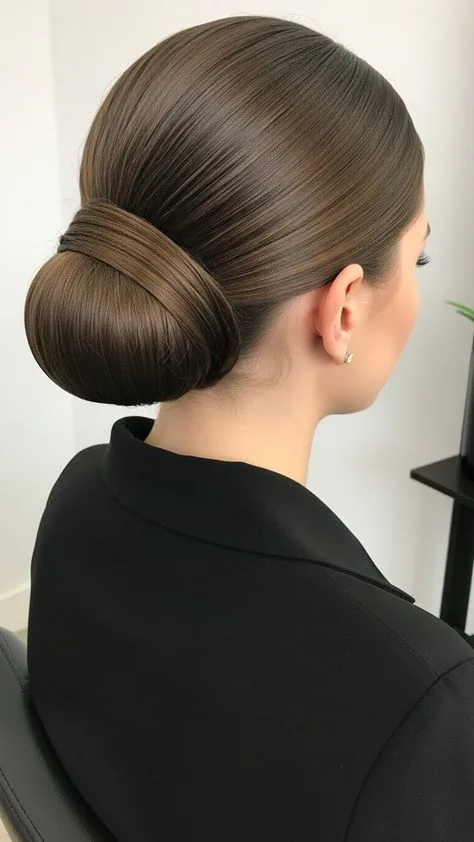
The low chignon is the style that makes a new mom look like she has her life together, even when she does not. It is a smooth, low bun at the nape — polished, quiet, and professional — and it takes about two minutes with a brush and two pins. It is the best style for video calls, doctor’s appointments, and any moment when you need to look put-together without spending more than a few minutes on it.
Best for: video calls, appointments, and the first outing where you want to feel like yourself again. How to style it: smooth the hair back with a brush, twist it into a low roll, and pin it in two places — a little hair oil on the surface gives it the polished finish. Pros and cons: it is elegant and holds all day, but it is a grown-up, serious look, so save it for the moments that need it rather than wearing it every day. Maintenance: none, beyond one spare pin. Quick verdict: your polished emergency style. Two minutes, two pins, and you look like you slept eight hours.
11. The Two-Minute Dutch Braid
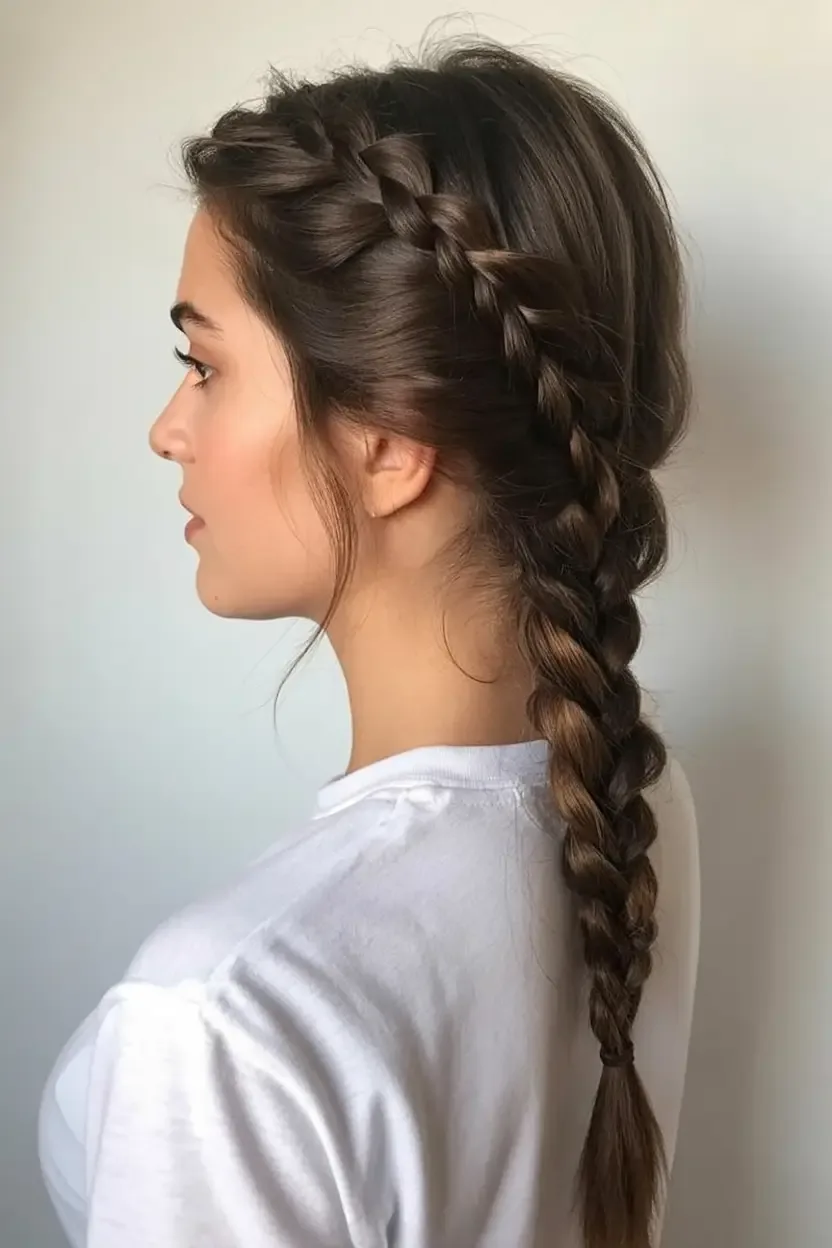
A Dutch braid — the inside-out braid that sits on top of the hair — is the sturdiest braid a new mom can do, because it holds its shape all day and keeps every strand contained. One Dutch braid down the back takes about two minutes once you know it, and it survives bending, lifting, carrying, and a baby pulling at it. It is also the braid that hides shedding best, because the raised braid adds volume across the whole head.
Best for: long hair, active days, and the shedding phase. How to style it: braid under, not over, crossing the sections underneath each other so the braid sits on top — and keep it loose at the hairline to avoid pulling. Common mistake: braiding too tightly, which hurts by midday and pulls at the hairline. A loose Dutch braid holds just as well and feels comfortable. Maintenance: none — this style is built to last until bedtime. Quick verdict: the workhorse braid. Learn it once, wear it for months, and your hair will stay out of the way and out of the baby’s hands.
12. The Silk Scrunchie Bun — No Crease, No Breakage
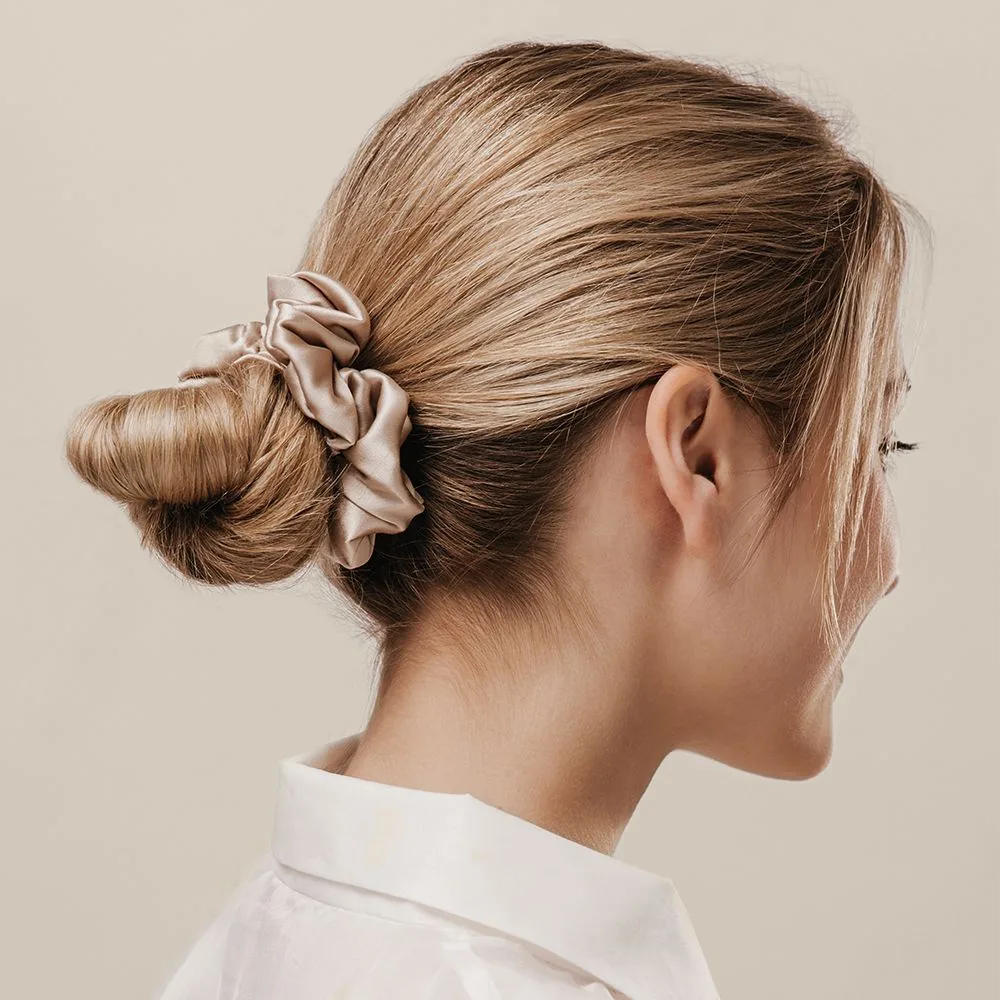
The silk scrunchie bun is the gentlest updo in this guide, and gentle is what postpartum hair needs. A silk scrunchie holds the bun without creasing the hair or snapping it, which means you can wear it all day and take it down at night without a dent. The bun itself is loose and soft — gathered at the nape or the crown, twisted once, and secured with the scrunchie — and it looks deliberately relaxed rather than undone.
Best for: sleeping, lounging, and days when the hair is fragile. How to style it: gather the hair loosely, twist it once, wrap the scrunchie around it twice at most, and pull out a few pieces around the face. Cost and time: one silk scrunchie, about thirty seconds. Who should avoid it: nobody — this is the safest bun in the guide. Quick verdict: the bun that protects your hair while it looks good. If you wear your hair up every day, switch to silk scrunchies and your hair will notice the difference within weeks.
13. Headband Hairstyles That Hide Regrowth in Seconds
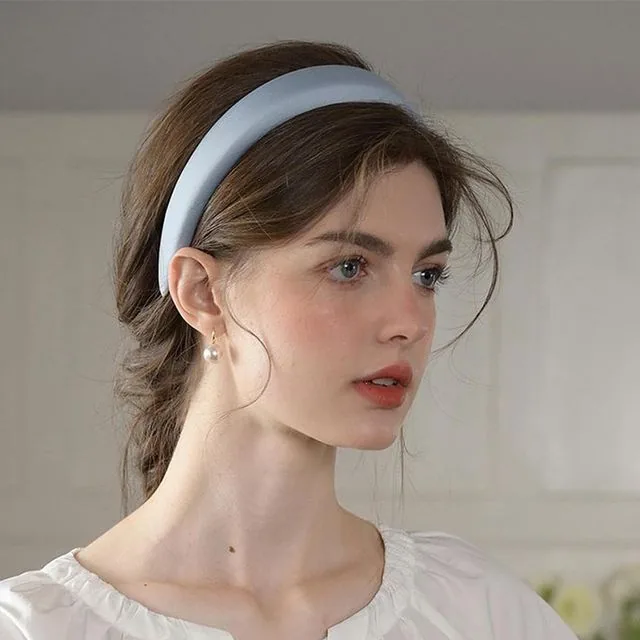
A wide headband is the fastest cover-up a new mom owns: it hides greasy roots, covers the baby hairs at the hairline, and makes any style underneath it look deliberate. Wear it with the hair down for a soft, casual look, with a low ponytail for a put-together one, or with a bun when you want everything out of the way. A padded headband adds volume at the crown, which is useful when postpartum shedding has made the hair look flat.
Best for: bad hair days, the regrowth phase, and days when you have literally no time. How to style it: place the headband about two centimetres back from the hairline, and pull a few pieces out in front of it to soften the look. Pros and cons: it is instant, cheap, and it hides everything, but a tight headband can leave a dent and cause a headache — choose a soft, fabric-covered one. Maintenance: none. Quick verdict: the two-second fix that makes every other style in this guide look better. Keep one in the nappy bag and one by the front door.
14. The Bubble Ponytail — Playful and Surprisingly Practical
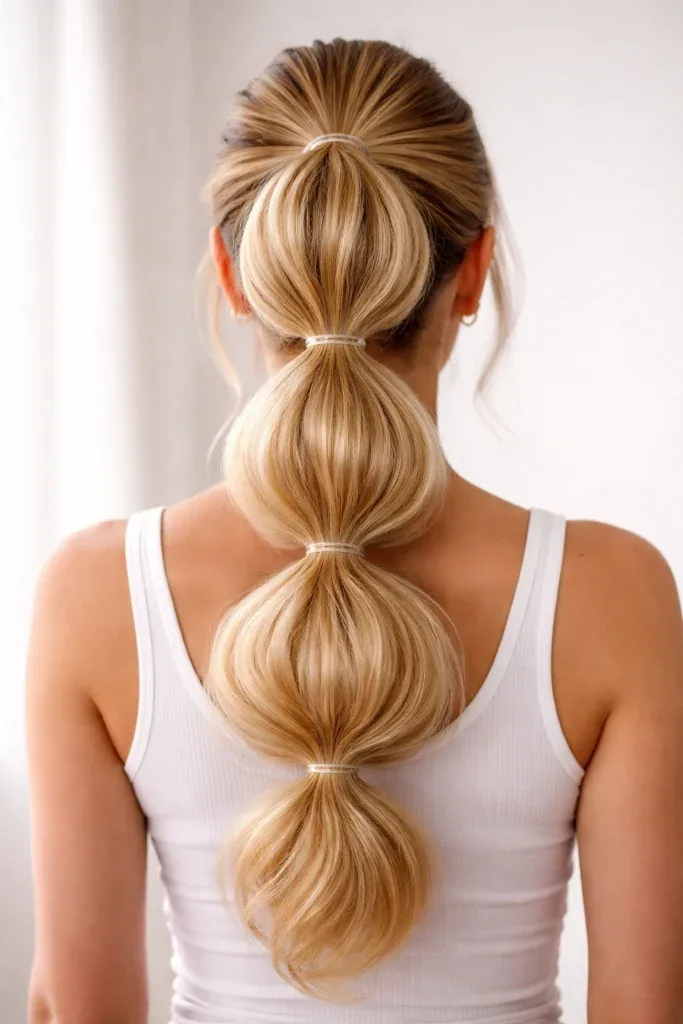
The bubble ponytail is the fun surprise of this guide: a ponytail divided into puffed sections with elastics, so the hair forms a row of soft bubbles down the back. It looks playful and modern, it photographs beautifully, and it is also genuinely practical — the hair is divided and secured at every bubble, so it stays put all day and the baby cannot pull the whole thing out in one grab. It is the style for the mom who wants to feel like herself again, not just like a caretaker.
Best for: long hair, playdates, and days when you want to feel fun. How to style it: make a ponytail, add elastics every few centimetres, and gently pull each section out to make the bubbles full and even. Cost and time: about three minutes and a handful of elastics. Common mistake: spacing the elastics unevenly, which makes the bubbles look lopsided — measure by finger-widths. Maintenance: if a bubble flattens, just pull it out again. Quick verdict: the most joyful style here. It takes three minutes, it holds all day, and it makes you smile every time you catch your reflection.
15. The Slicked-Back Low Bun — Clean, Polished, Five Minutes
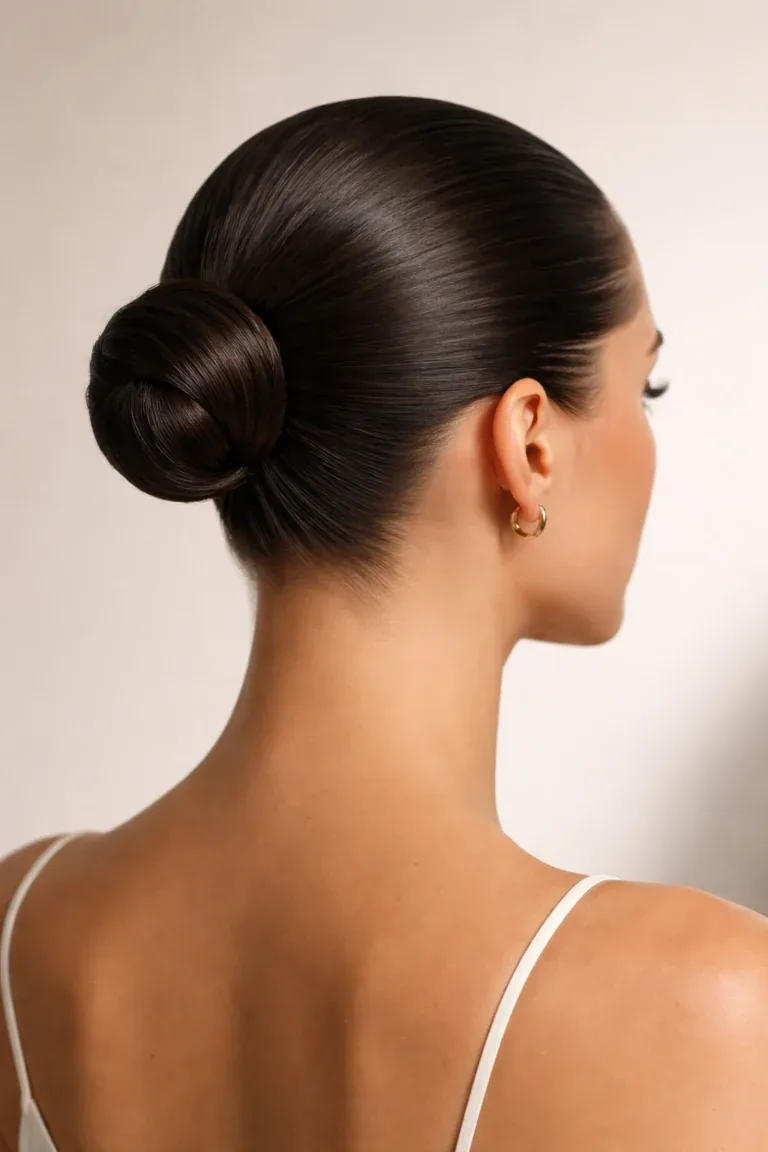
The slicked-back low bun is the style that turns greasy, unwashed hair into a deliberate, polished look. A little gel or hair oil smoothed over the roots, the hair gathered low and tight, and a neat bun at the nape — suddenly the grease reads as shine, and the whole look reads as intentional. It is the best style for the day you have an appointment and the hair has not been washed in three days.
Best for: day-three hair, appointments, and anyone who likes a clean, polished finish. How to style it: apply gel to the roots, brush the hair back smoothly, secure it low, and twist it into a small bun — a toothbrush and a little gel will tame any flyaways. Pros and cons: it looks expensive and holds all day, but it is a tight style, so do not wear it every day while the hairline is shedding. Who should avoid it: anyone in the thick of postpartum hair loss — save this one for the days when the shedding has eased. Quick verdict: the greasy-hair style that actually looks like a choice. Five minutes, one bun, total transformation.
16. The Curtain-Bang Grow-Out — Bangs That Hide the Hairline

Curtain bangs are the new mom’s secret weapon against postpartum shedding, because they sit exactly where the thinning shows — across the forehead and the temples — and they blend the regrowth into the style so it looks like a choice, not a phase. The bangs are parted in the middle and swept to either side, framing the face softly, and they grow out gracefully, which matters when salon visits are rare.
Best for: the shedding and regrowth phase, round and square faces, and anyone who wants a change without a big chop. How to style it: blow-dry the bangs forward with a round brush, or just tuck them behind your ears on lazy days — they work either way. What to ask your stylist: ask for long, soft curtain bangs that start at the cheekbone, not short, blunt ones, so they grow out without an awkward stage. Common mistake: cutting them too short, which makes them hard to manage. Quick verdict: the bangs that solve a problem while looking like a fashion choice. If the hairline is bothering you, this is the cut to ask for.
17. The No-Heat Air-Dry Waves — Wash, Scrunch, Done
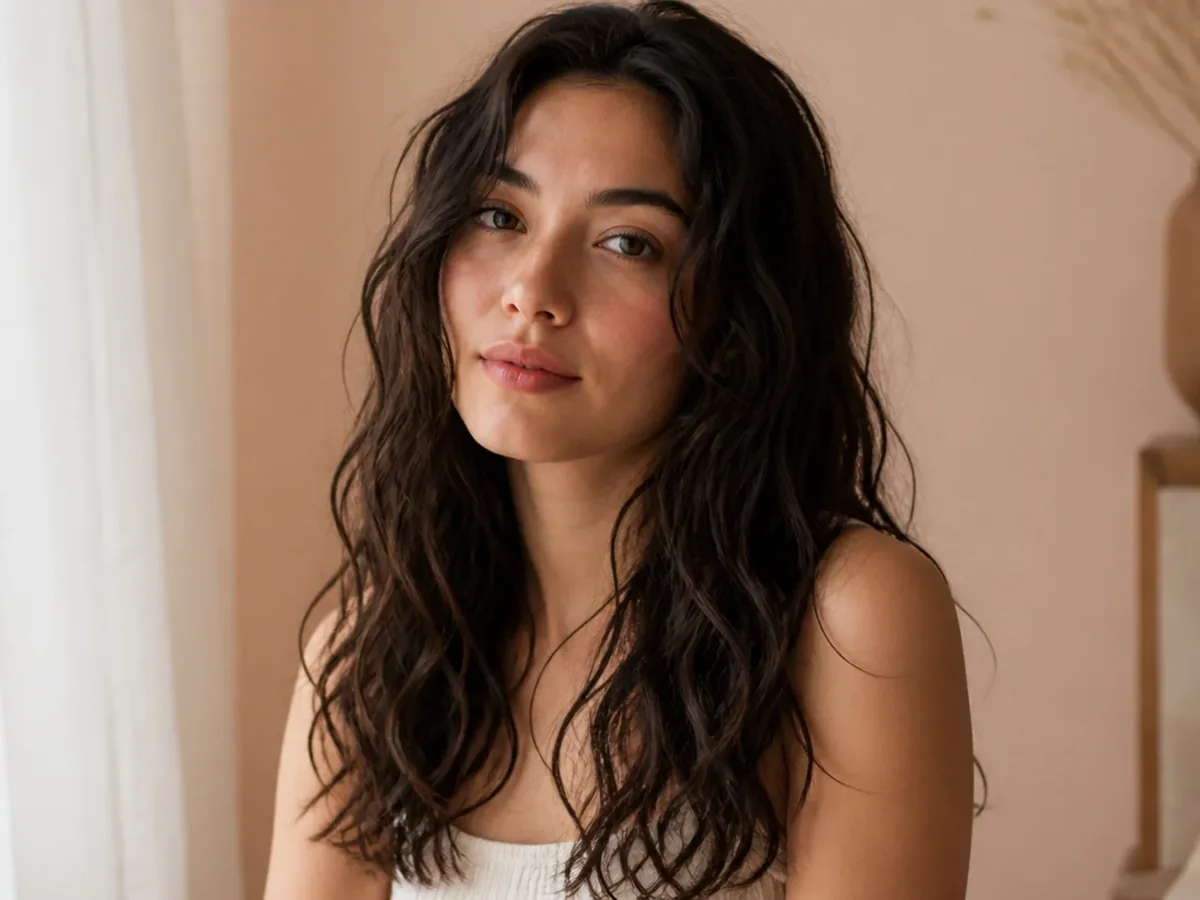
Air-dry waves are the new mom’s answer to heat styling: wash the hair, scrunch in a little mousse or curl cream, and let it dry on its own while you get on with your day. No blow-dryer, no curling iron, no ten minutes standing in front of a mirror — and the result is soft, natural waves that look better the more lived-in they get. It is also the kindest style for postpartum hair, because it skips the heat damage entirely.
Best for: wavy or curly hair, warm weather, and days when the baby is napping and you have things to do. How to style it: apply the product to damp hair, scrunch it upwards, and do not touch it while it dries — touching it creates frizz. Pros and cons: it is free, fast, and damage-free, but it takes time to dry, so wash your hair early in the day. Maintenance: refresh the waves the next day with a spray of water. Quick verdict: the style that asks nothing of you except patience. Wash, scrunch, walk away, and let your hair do the work.
18. The Mom Bob With Soft Layers — Short, Swingy and Easy
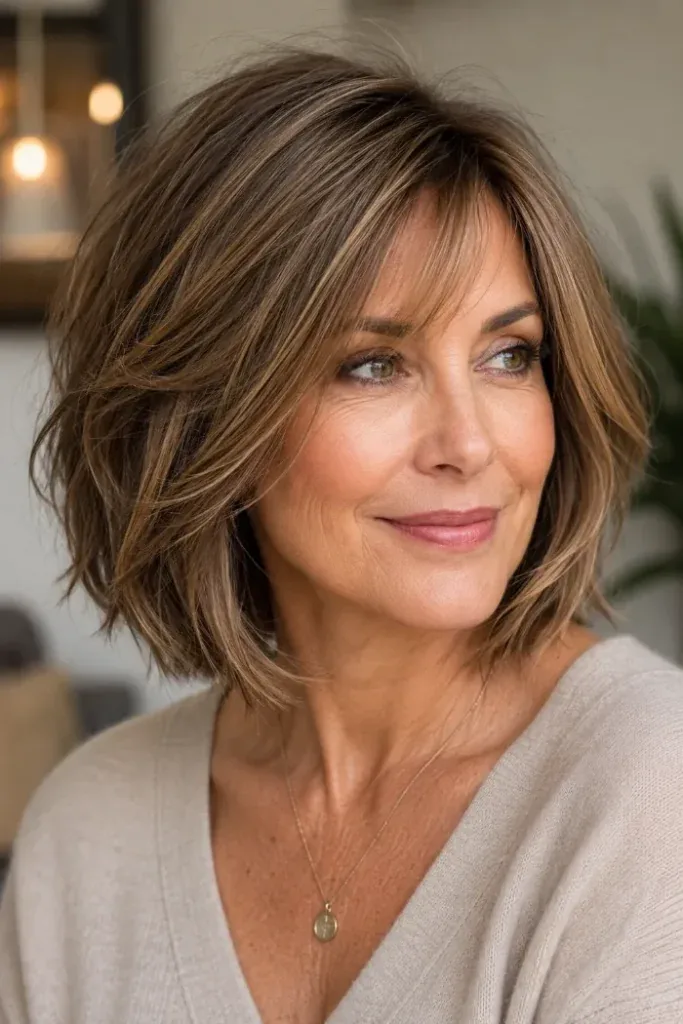
The mom bob is a chin-to-shoulder-length cut with soft layers that give it movement and swing, and it is called a mom bob for a reason — it is the cut that works when you have no time. It dries in minutes, it does not need heat styling, and the layers mean it looks finished even when you have done nothing to it. Tuck one side behind your ear and it looks polished; leave it loose and it looks relaxed. It is two styles in one cut.
Best for: straight or wavy hair, moms who want short hair without a pixie commitment. How to style it: wash, add a little texture spray, and let it air dry — or blow-dry it for five minutes with a round brush if you want more polish. Cost and time: a trim every six to eight weeks keeps the shape. Common mistake: getting a blunt, one-length bob, which needs daily straightening to look right — the soft layers are what make this cut low-maintenance. Quick verdict: the short cut that still feels feminine and easy. If the lob feels too long and the pixie feels too short, the mom bob is your cut.
19. Space Buns for Playdates — Fun, Fast and Baby-Approved

Space buns are two small buns, one on each side of the head, and they are the most fun style in this guide — the one that makes a mom look like she is ready to play, not just to watch. They take about two minutes, they keep all the hair out of the way, and they are the style the baby will love most, because there are two buns to grab instead of one. Wear them high for play, low for a softer, more grown-up version.
Best for: playdates, park days, and moms who refuse to be boring. How to style it: part the hair down the middle, gather each side into a bun, and secure them with soft elastics — pull out a few face-framing pieces to keep it from looking too young. Pros and cons: they are fast, fun, and completely practical, but they are a playful look, so save them for casual days. Who should avoid it: nobody, really — the low version works for almost any occasion. Quick verdict: the style that says you are still you. Two minutes, two buns, and a whole lot of joy.
20. The Fishtail Braid You Can Do Half-Asleep

A fishtail braid looks intricate and impressive, but it is actually one of the easiest braids to do half-asleep: it only uses two sections of hair, and you just keep crossing small pieces from one side to the other. It is also one of the most forgiving braids, because a messy fishtail looks even better than a neat one — the texture is the point. Wear it over one shoulder and it keeps the hair out of the way while still looking romantic.
Best for: long hair, lazy days, and the mom who wants to look like she tried when she did not. How to style it: gather the hair to one side, divide it into two sections, and cross small pieces from each side to the other, working down to the ends — then pull the braid out gently for fullness. Cost and time: about three minutes, one elastic. Common mistake: making the pieces too big, which turns a fishtail into a regular braid — take small pieces, about the width of a finger. Maintenance: none. Quick verdict: the braid that looks like it took twenty minutes and actually took three. Learn it once, wear it forever.
21. The Braided Headband — Your Own Hair as the Accessory
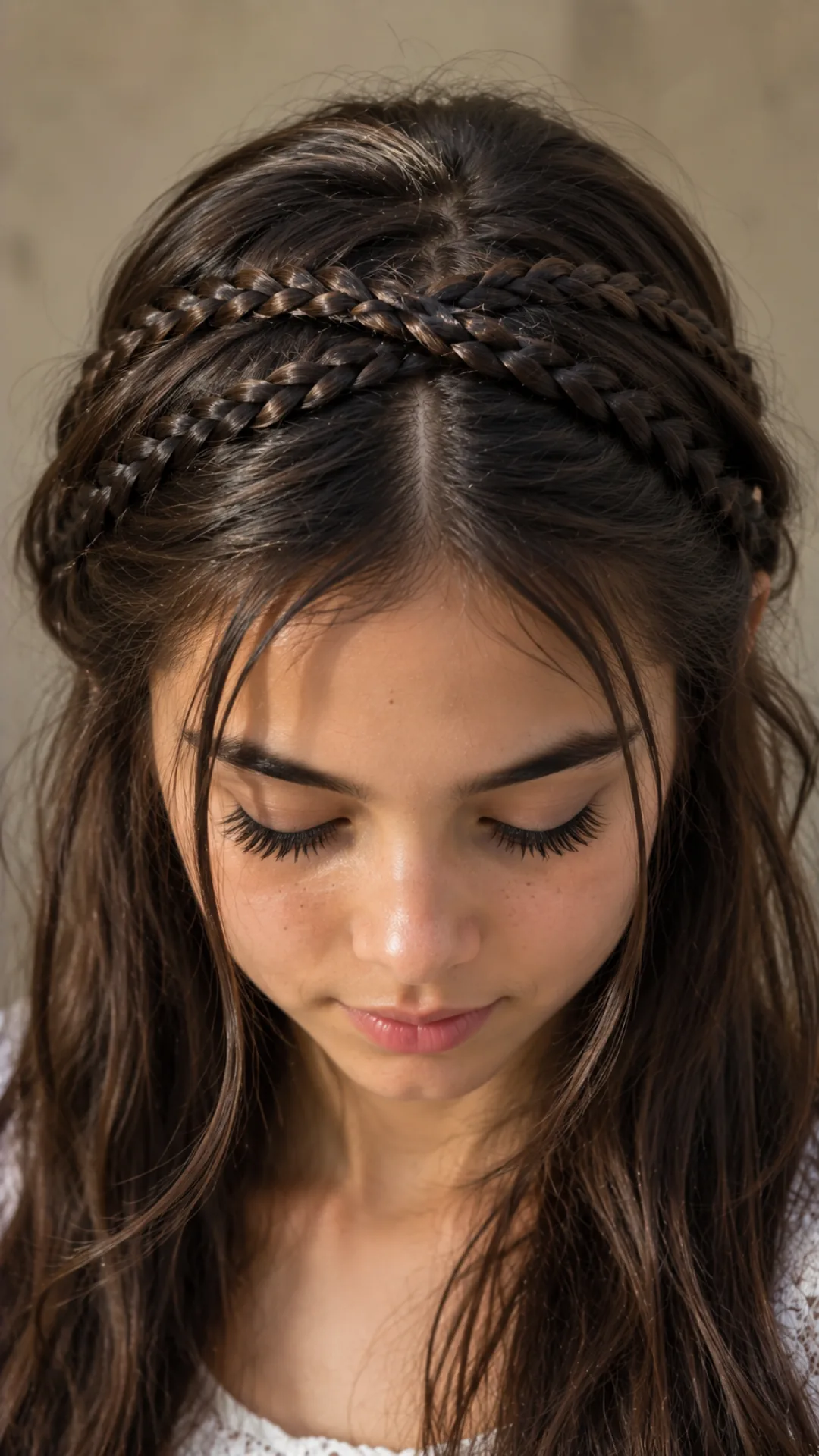
The braided headband uses your own hair as the accessory: a small braid worked across the front of the head, from one temple to the other, that holds the hair back from your face like a headband. It is the perfect style for the regrowth phase, because it gathers the baby hairs into the braid and hides them completely, and it looks delicate and intentional — like you spent time on your hair when you spent two minutes.
Best for: medium to long hair, the regrowth phase, and days when you want the hair off your face without a ponytail. How to style it: take a section from behind one ear, braid it across the front, and pin it behind the other ear — pull the braid out gently for fullness. Pros and cons: it hides baby hairs beautifully and looks lovely, but it needs hair long enough to reach across the head. Who should avoid it: very short hair. Quick verdict: the accessory you grow yourself. Two minutes, one braid, and the hairline problem disappears.
22. The Low Twisted Knot — Elegant Without Effort
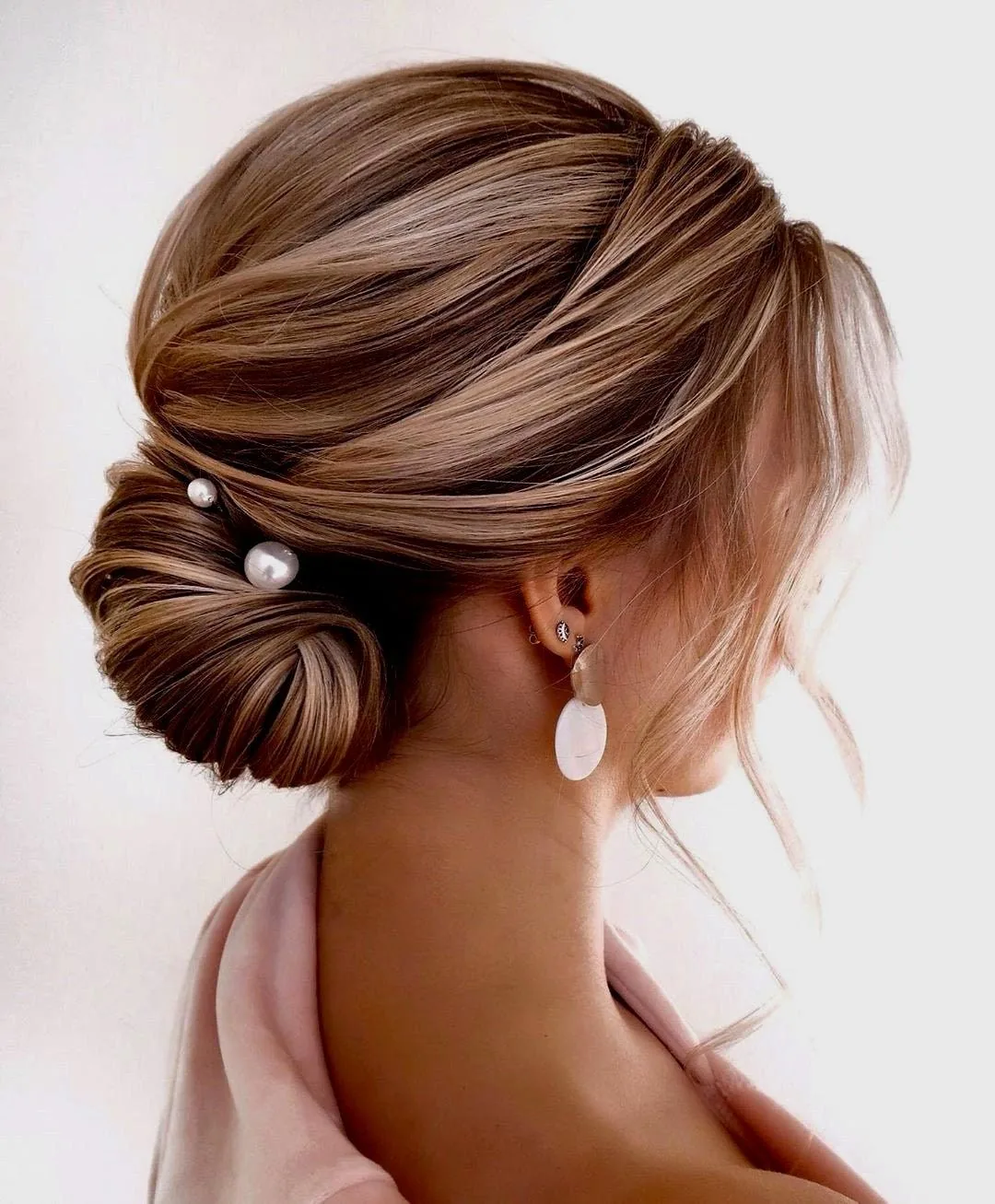
The low twisted knot is a chignon with a twist — literally. The hair is divided into two sections, each one twisted, and the twists are coiled together into a low knot at the nape. It looks sculpted and elegant, like a style from a salon, but it takes about two minutes and needs no heat, no brush, and no mirror. It is the style for the mom who has a dinner out and twenty minutes to get ready — two of them for her hair.
Best for: date nights, dinners out, and the first evening when you feel like dressing up again. How to style it: divide the hair into two, twist each section, coil them together, and pin the knot in two places. What to ask: nothing — this is a do-it-yourself style. Common mistake: twisting too tightly, which makes the knot look severe — keep the twists loose and soft. Maintenance: none. Quick verdict: the two-minute updo that looks like a forty-minute updo. Keep it in your back pocket for every evening out.
23. The Wash-and-Go Shag — The Cut That Styles Itself

The wash-and-go shag is a layered, textured cut with lots of movement, and it is the cut that genuinely styles itself. Wash it, scrunch in a little texture cream, let it dry, and the layers fall into soft, tousled pieces — no brush, no heat, no effort. It is the best cut for wavy and curly hair, because the layers let the natural texture show, and it grows out beautifully, which matters when you cannot get to the salon.
Best for: wavy, curly or thick hair, and moms who want to wash and forget. How to style it: wash, add texture cream, and walk away. Pros and cons: it is the lowest-effort cut in this guide, but it needs the right layers — a shag cut badly looks messy rather than tousled, so find a stylist who knows the cut. Cost and time: a trim every eight to ten weeks. Who should avoid it: very fine, straight hair, which can look thin in a shag. Quick verdict: the haircut for moms who have given up on styling — in the best possible way. Wash it, wear it, done.
24. The Side-Swept Low Ponytail — Soft, Romantic, One Minute
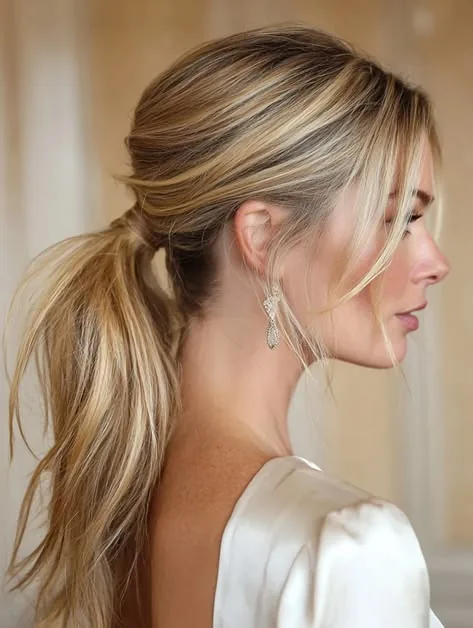
The side-swept low ponytail is the romantic version of the everyday ponytail: the hair is gathered low and to one side, swept over one shoulder, and secured loosely, so it falls softly instead of hanging straight down the back. It is flattering on almost every face, it hides a multitude of sins — greasy roots, flat crown, thin patches — and it takes about one minute. Add a soft wave to the ends and it looks like a date-night style, not a stay-at-home one.
Best for: medium to long hair, second-day hair, and evenings out. How to style it: part the hair to one side, gather it low behind the opposite ear, and secure it loosely — pull out a few pieces around the face for softness. Pros and cons: it is fast, flattering, and hides everything, but it does not hold as well as a centred ponytail, so it suits calmer days better than active ones. Maintenance: re-secure it once during the day if it slips. Quick verdict: the ponytail that looks like you tried. One minute, one elastic, and suddenly it is not a ponytail — it is a style.
25. The Top Knot With a Scarf — Instant Polish, Zero Effort

A top knot with a scarf is the fastest way to look polished on a day when your hair is not cooperating. Gather the hair into a high top knot, wrap a silk scarf around the base, and tie it in a bow or a knot — the scarf hides the elastic, covers any messy bits, and adds a pop of colour that makes the whole look feel deliberate. It is the style for the day when the hair is greasy, the baby is crying, and you still have to leave the house.
Best for: bad hair days, hot weather, and anyone who owns a silk scarf. How to style it: make the top knot first, then wrap the scarf around the base and tie it — the scarf should sit at the base, not cover the knot. Cost and time: one silk scarf, about one minute. Common mistake: wrapping the scarf too tightly, which gives you a headache — keep it loose. Maintenance: none. Quick verdict: the scarf does the styling for you. One accessory, one minute, and the worst hair day of the week looks like a fashion choice.
26. The Two-Strand Twist — The Easiest Protective Style
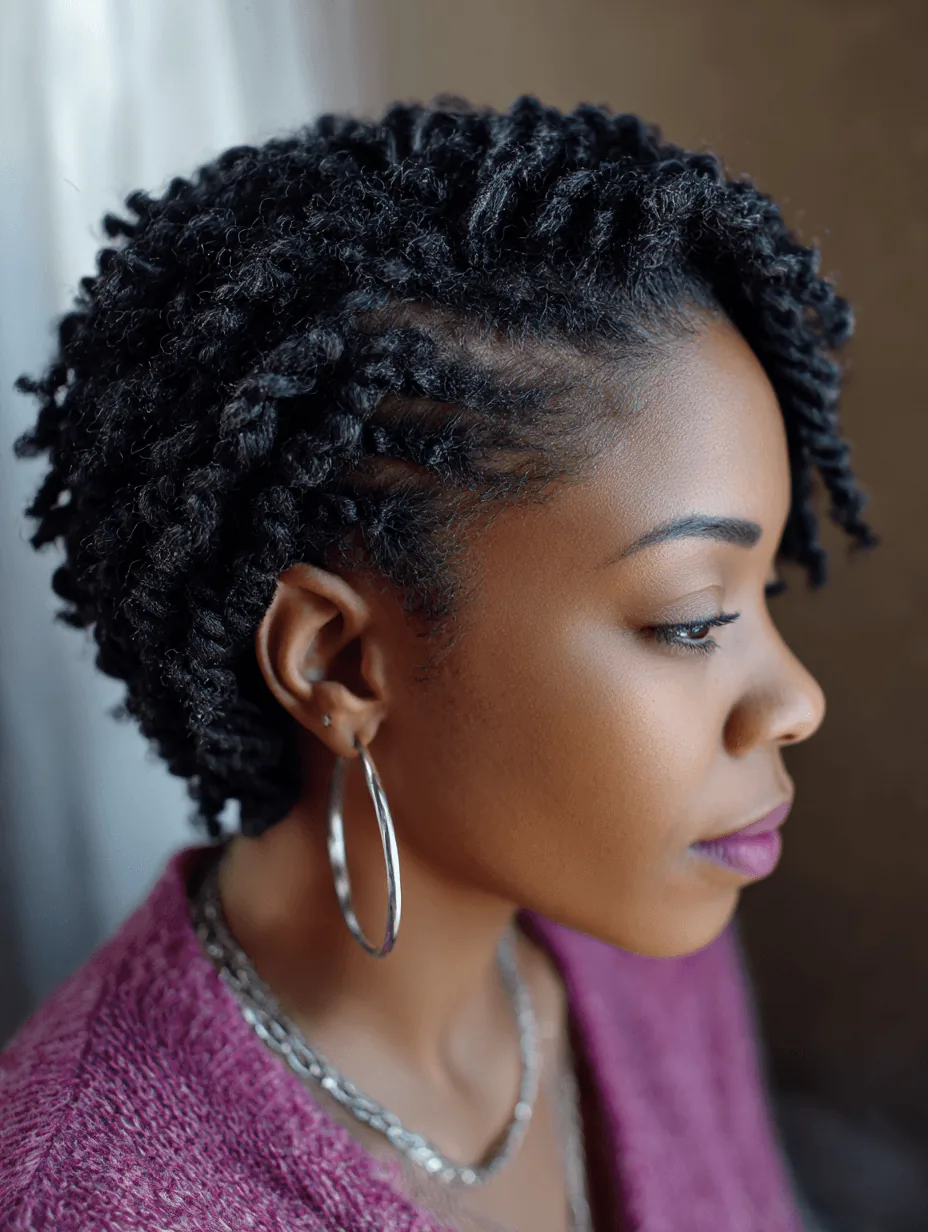
The two-strand twist is the simplest protective style there is: divide the hair into sections, twist two strands around each other, and repeat. It protects the ends, it keeps the hair contained for days, and it gives you beautiful twist-out waves when you take it down. For moms with curly, coily or textured hair, it is the style that does the most work with the least effort — you can do it while the baby naps and wear it for a week.
Best for: curly, coily and textured hair, and the mom who wants a style that lasts. How to style it: work on damp hair with a little leave-in conditioner, twist each section from root to tip, and secure the ends with a small elastic or by tucking them under. Pros and cons: it lasts for days and protects the hair, but it takes longer to put in — about twenty to thirty minutes for a full head, so do it during a long nap. Maintenance: cover it with a satin scarf at night. Quick verdict: the style that pays you back. Twenty minutes once, and you do not have to think about your hair for days.
27. The French Twist for Date Night — Your First Night Out Again
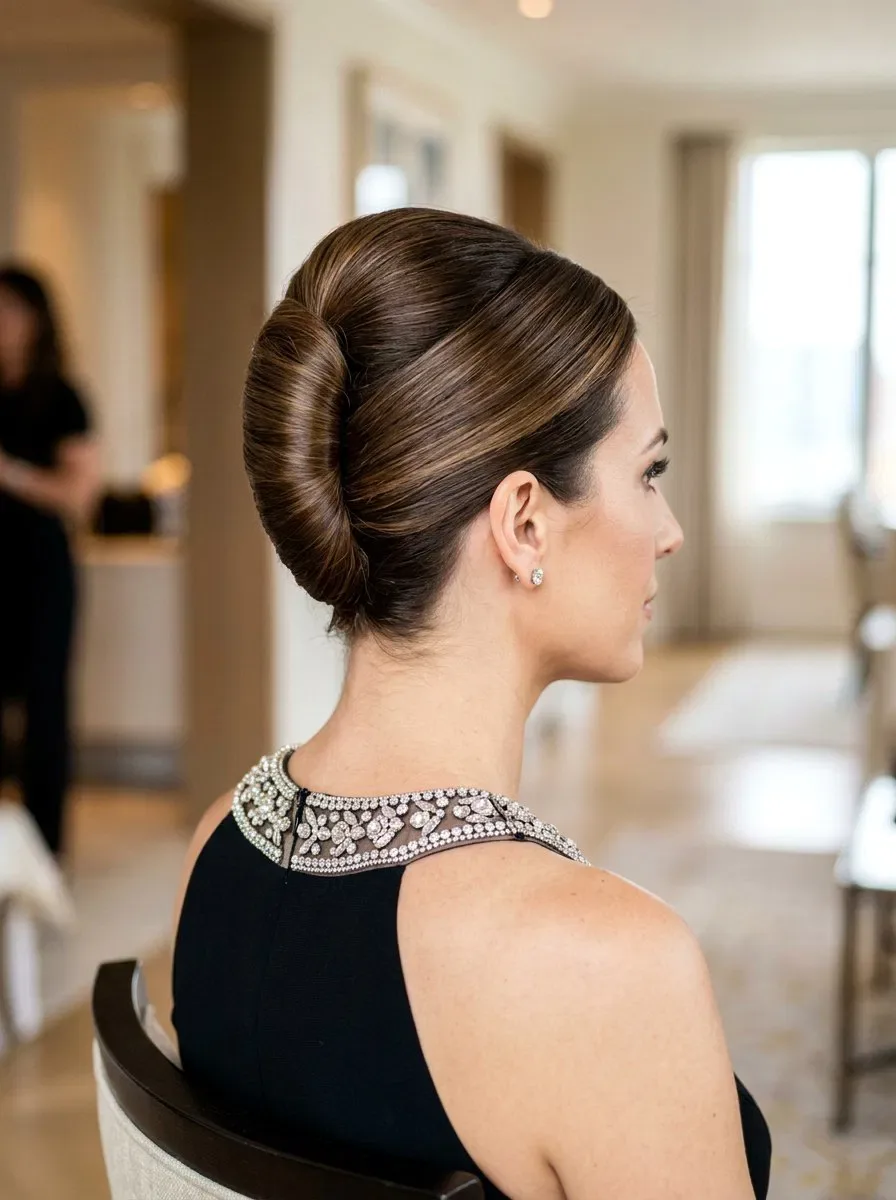
The French twist is the most elegant style in this guide, and it is saved for the night you finally get out — the first date night, the first dinner with friends, the first evening when you feel like yourself again. The hair is swept to one side, twisted upwards, and pinned into a sleek vertical roll, and the result is timeless, sophisticated, and unmistakably grown-up. It suits a dress, it suits earrings, and it suits a mom who is ready to feel glamorous again.
Best for: date nights, evenings out, and medium to long hair. How to style it: gather the hair to one side, twist it upwards against the head, and pin it in a vertical line with large bobby pins, tucking the ends in at the top. Cost and time: about five minutes once you know it, and it holds all evening. Who should avoid it: very short or very layered hair, which will escape the twist. Quick verdict: the style for your first night out. It takes five minutes, it looks like an hour, and it will make you feel like you again.
28. Loose Low Pigtails — The Grown-Up Version
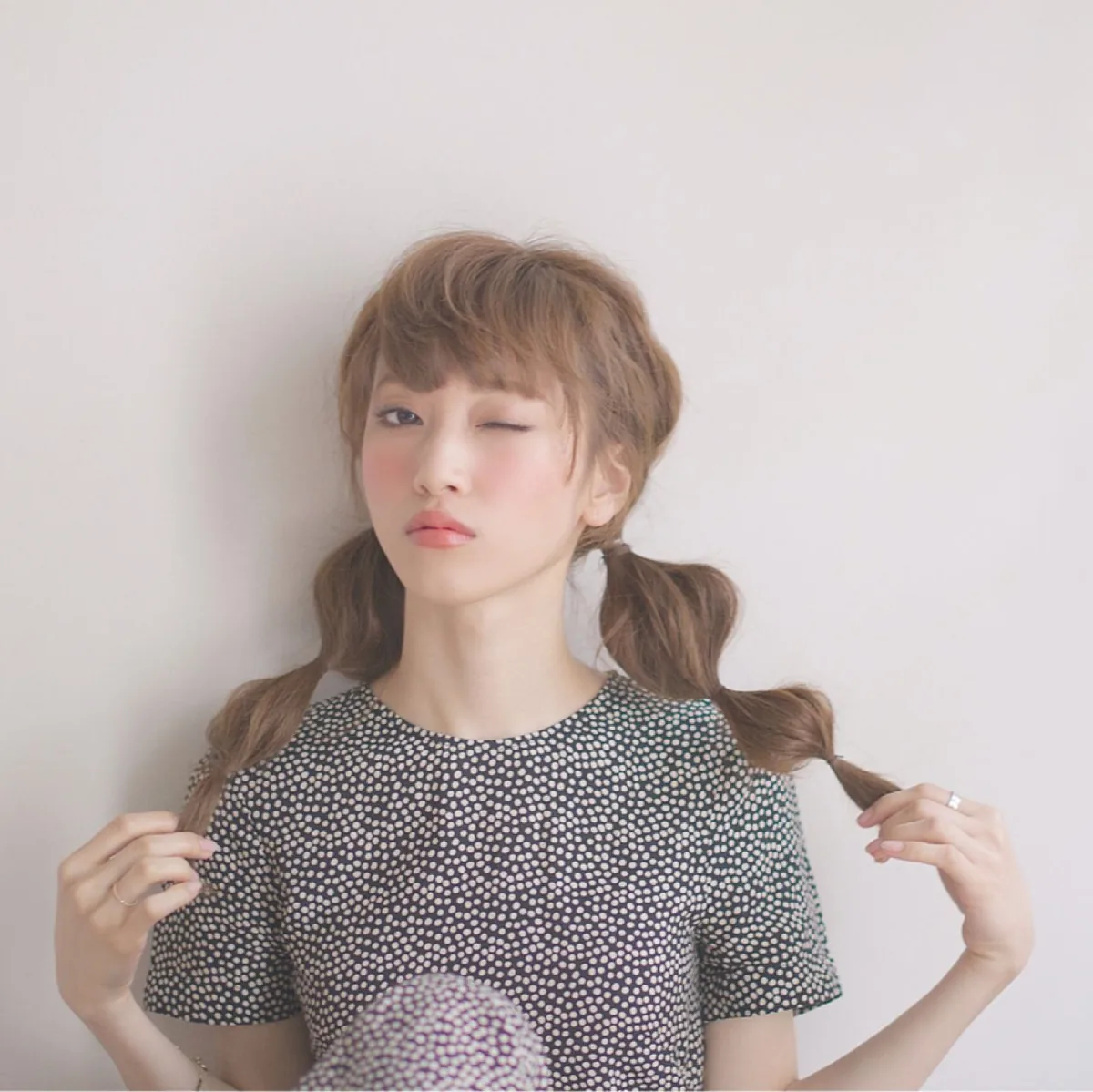
Low pigtails get a bad reputation, but the grown-up version — loose, low, and a little undone — is one of the most charming styles a new mom can wear. Part the hair down the middle, gather each side into a low, loose ponytail behind the ears, and pull out a few face-framing pieces. It is young without being childish, it keeps the hair completely out of the way, and it is the style that survives a whole day of bending, lifting and playing on the floor.
Best for: casual days, park trips, and moms who want something different from the usual ponytail. How to style it: keep the pigtails low and loose — high, tight pigtails look like a costume, while low, soft ones look effortless. Pros and cons: they are fast, practical, and unexpectedly flattering, but they are a casual look, so save them for daytime. Maintenance: none. Quick verdict: the style you think you are too old for, and you are not. Two minutes, two elastics, and you look like you are having fun — because you are.
29. The Clip-Back Front Sections — Two Clips, Instant Face-Lift
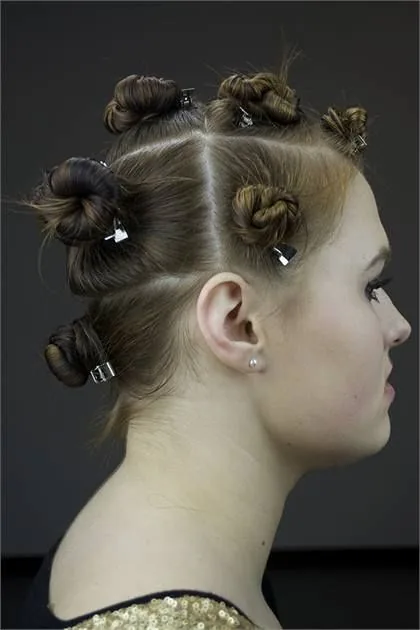
Clipping back the front sections is the smallest style in this guide, and one of the most useful: two small clips, one on each side, pull the hair away from your face, show off your features, and hide the baby hairs at the temples in one move. It works with the hair down, with a ponytail, or with a bun — it is less a style than a finishing touch that makes every other style look better. Keep two clips in the nappy bag and you will use them every day.
Best for: every hair length, every day, and the regrowth phase. How to style it: take a small section from each temple, twist it once, and clip it back — a pearl clip or a gold barrette turns it from practical to pretty. Cost and time: two clips, about ten seconds. Who should avoid it: nobody. Quick verdict: the ten-second style. It is the smallest thing in this guide, and the one you will use most often. Two clips, and your face is free.
30. The Bouncy Blow-Dry With a Hot Brush — Five Minutes, Salon Finish
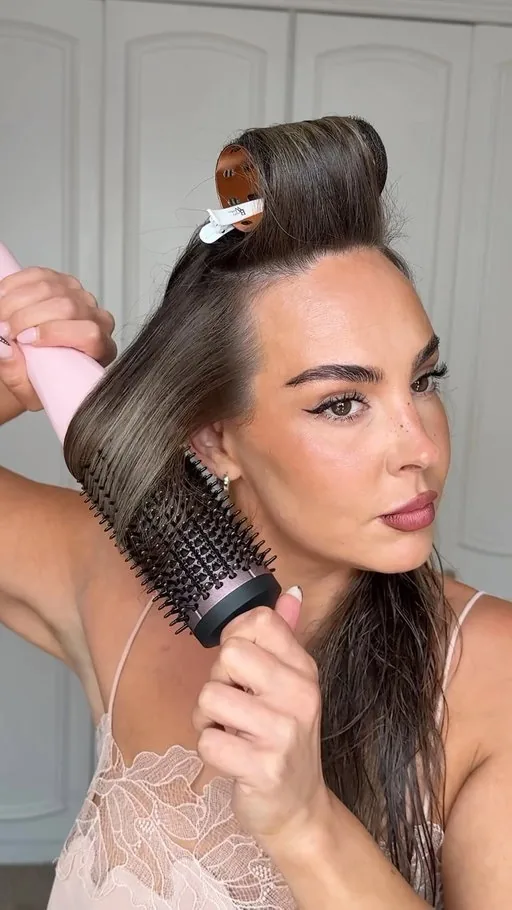
A hot brush is the one heat tool worth owning as a new mom, because it blow-dries and styles in a single step. Rough-dry the hair until it is almost dry, then run the hot brush through in sections, rolling it under at the ends, and in about five minutes you have a bouncy, salon-style blow-dry — no round brush, no separate dryer, no juggling two tools with a baby on your hip. It is the closest thing to a salon blow-dry that fits into a new mom’s morning.
Best for: medium to long hair, special days, and the mom who misses her blow-dry. How to style it: work in four sections, roll the brush under at the ends, and finish with a light spray of flexible-hold hairspray. Cost and time: one hot brush, about five minutes. Common mistake: using it on soaking wet hair, which takes forever and damages the hair — rough-dry first, always. Maintenance: the blow-dry lasts two days with a little dry shampoo. Quick verdict: the only heat tool that earns its place in a new-mom kit. Five minutes, one tool, and you look like you just left the salon.
31. The Braided Low Bun — Secure, Soft and All-Day Strong
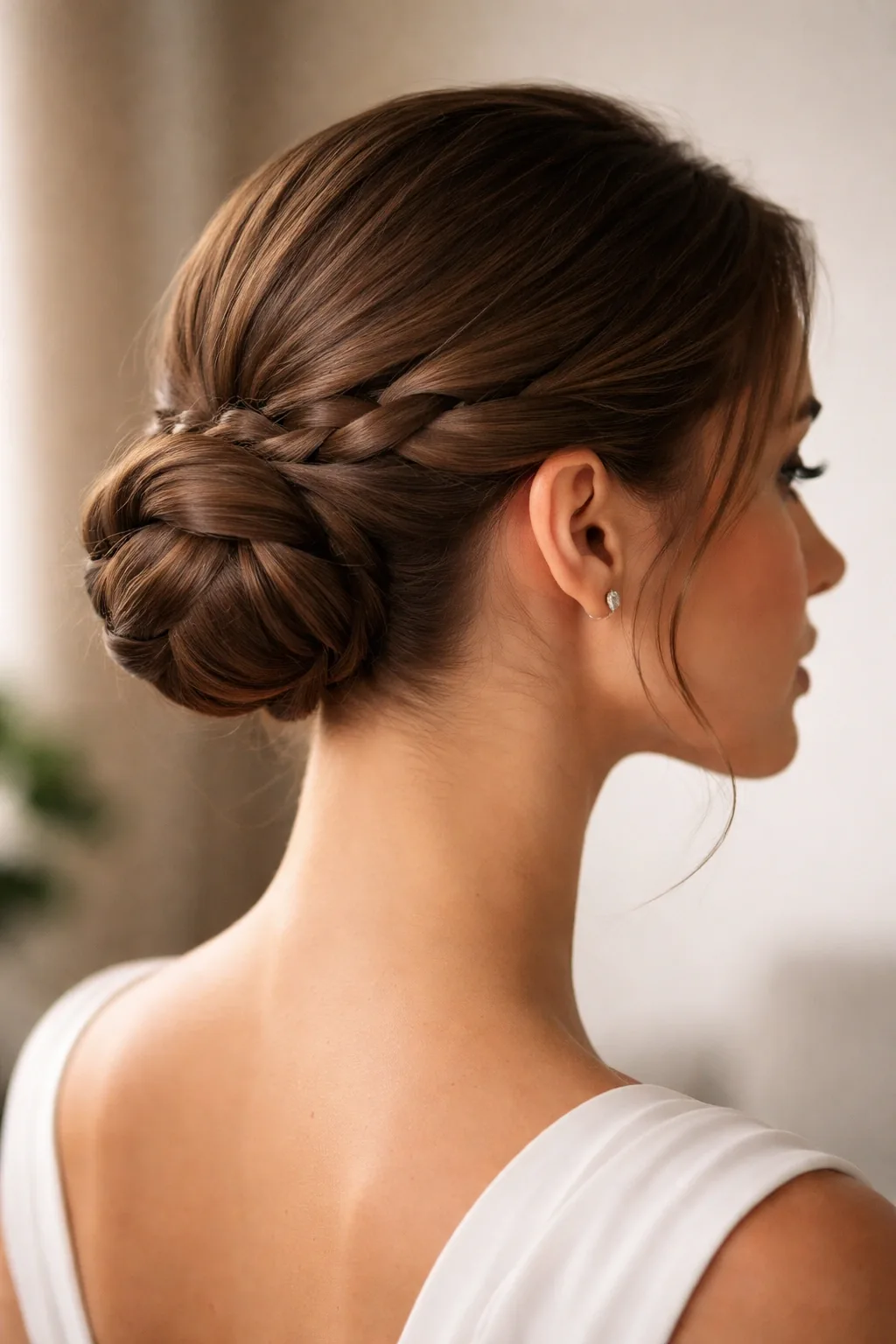
The braided low bun combines two of the most reliable new-mom styles into one: braid the hair first, then coil the braid into a low bun at the nape. The braid gives the bun texture and grip, so it holds all day without slipping, and the bun keeps the hair completely contained — nothing for the baby to grab, nothing to fall in your face. It looks intricate and polished, but it is really just a braid and a twist, done in about three minutes.
Best for: long hair, all-day outings, and the shedding phase. How to style it: braid the hair loosely, coil the braid into a bun, and pin it in three places — pull out a few pieces around the face for softness. Pros and cons: it holds all day and looks beautiful, but it needs long hair to coil properly. Who should avoid it: short hair, which will not reach around into a bun. Quick verdict: the most secure bun in this guide. Three minutes, one braid, and your hair is done until bedtime.
32. The Wet-Look Slick Back — Greasy Hair, But Make It Fashion
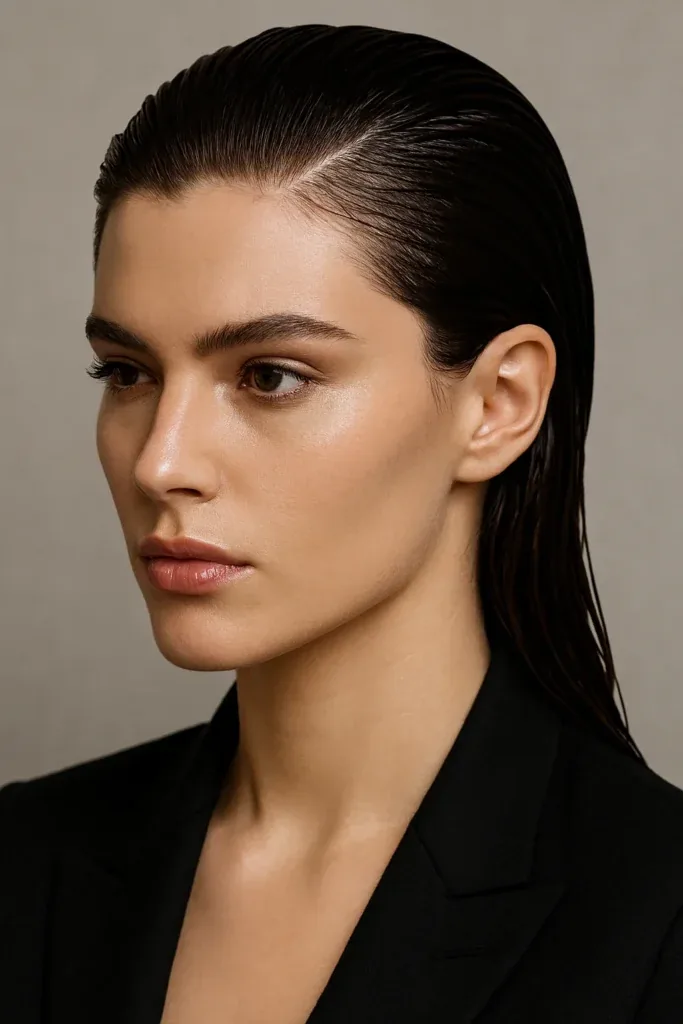
The wet-look slick back is the style that turns the greasiest hair day into a fashion statement: a little hair gel or oil combed through the roots, the hair swept straight back, and the lengths left loose or gathered into a low ponytail. The shine reads as deliberate, not dirty, and the whole look reads as editorial, not exhausted. It is the best style for the day when you have no time to wash your hair and no desire to pretend otherwise.
Best for: day-three hair, evenings out, and straight or wavy hair. How to style it: apply gel to the roots and comb the hair straight back — a little oil on the lengths gives the wet finish. Cost and time: one bottle of gel, about two minutes. Common mistake: using too much product, which makes the hair look heavy instead of glossy — a coin-sized amount is enough. Maintenance: none. Quick verdict: the style that stops apologising for unwashed hair. Two minutes, one product, and the greasy roots become the look.
33. The Lazy-Day Hair Wrap — The Softest Style of All
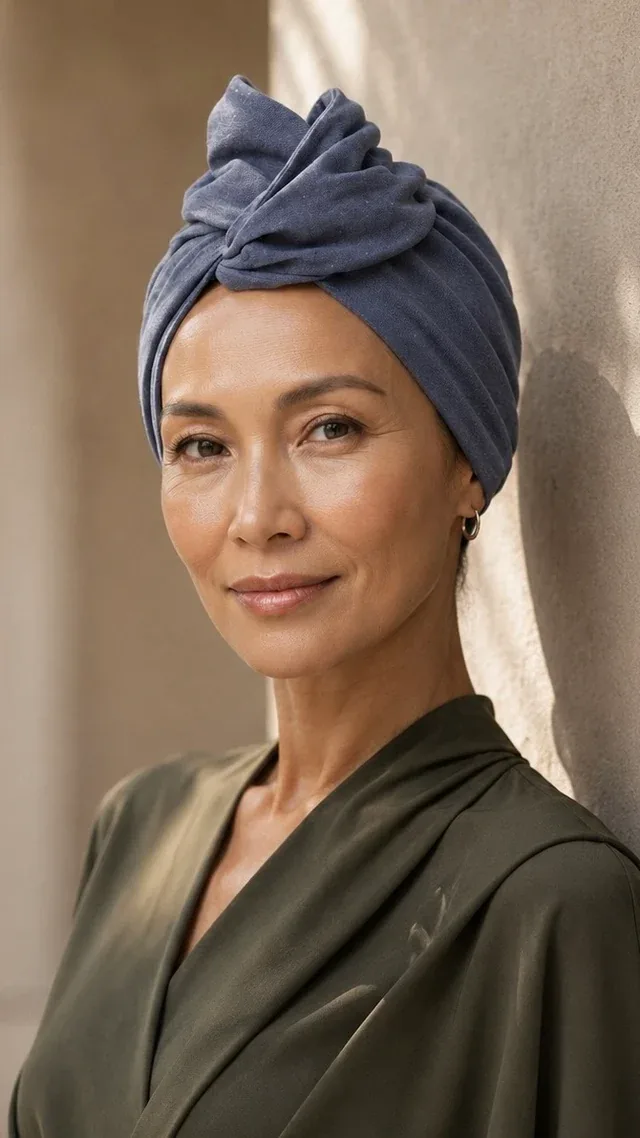
The hair wrap is the softest, easiest style in this guide: a silk or cotton scarf wrapped around the head, covering the hair completely, tied at the top or the nape. It hides everything — greasy roots, shedding, baby hairs, a bad hair day — and it protects the hair underneath from friction and breakage. It is also comfortable, beautiful, and the style that requires absolutely nothing of you except a scarf and ten seconds.
Best for: lazy days, bad hair days, and moms with textured or curly hair who want to protect their style. How to style it: fold the scarf into a triangle, place it over the head, and tie it at the nape or on top — tuck the ends in for a clean finish. Pros and cons: it is instant, protective, and pretty, but it covers the hair entirely, so save it for the days when that is what you want. Cost and time: one scarf, ten seconds. Quick verdict: the ultimate lazy-day style. When nothing else works, wrap it up, tie it off, and get on with your day. Your hair will still be there tomorrow.
What is the best hairstyle for a new mom?
The best hairstyle for a new mom is the one that takes under five minutes, can be done one-handed, and does not pull at the hairline. For most new moms that means a low ponytail, a claw clip twist, a messy bun, or a textured lob haircut. The right choice depends on your hair length and how much shedding you are dealing with — loose, low styles are kindest to postpartum hair, while tight, high styles should be worn sparingly.
Why does my hair fall out after having a baby?
Postpartum hair loss happens because oestrogen levels drop sharply after birth, and all the hair that stayed in its growth phase during pregnancy starts shedding at once. It usually starts around three months postpartum, peaks at four to five months, and slows down by six to twelve months. It is completely normal, it is not caused by anything you did, and it is not permanent — the hair grows back, though the regrowth can look like fuzzy baby hairs around the hairline for a while.
How can I hide postpartum hair loss and baby hairs?
Hide postpartum shedding with styles that add volume or texture at the front — a deep side part, curtain bangs, a headband, or a loose, tousled finish. Avoid tight, slicked-back styles, which put thin patches on display. For baby hairs, a pea-sized amount of clear brow gel or edge-control gel, applied with a clean spoolie brush, lays them flat for hours. A wide headband or a silk scarf does the same job with no product at all.
What is the best haircut for a new mom?
The best haircut for most new moms is a textured lob — shoulder length, with soft layers. It dries in minutes, it can still be tied back into a ponytail, and it grows out gracefully when salon visits are rare. A pixie is even lower maintenance day to day, but it needs a trim every four to six weeks. Before any cut, check it against three questions: can I wash and dry it in under ten minutes, can I tie it back, and will it still look decent in six weeks without a trim?
How do I style my hair with one hand while holding the baby?
Choose styles that start from a low ponytail and need one tool at most — a low ponytail, a claw clip twist, a messy bun, or a simple braid. Practise each style once when you actually have both hands free, so your muscle memory knows the moves when you only have one. Keep a claw clip in your pocket and a soft scrunchie on your wrist, and avoid any style that needs two hands to section hair or a mirror to check the back.
Can I dye or colour my hair while breastfeeding?
Most experts consider hair dye safe while breastfeeding, because very little of the chemicals is absorbed through the scalp, and what is absorbed is unlikely to reach breast milk in meaningful amounts. That said, many moms wait until after the first few weeks, choose ammonia-free or semi-permanent colour, and make sure the room is well ventilated. If you are unsure, ask your doctor — and avoid colouring your hair on the same day as a long, hot, unventilated salon session.
How often should a new mom wash her hair?
Most new moms do best washing their hair every two to three days, not every day. Daily washing strips the scalp, makes the roots greasier faster, and costs time you do not have. On the in-between days, dry shampoo at the roots absorbs the oil, and a low ponytail, a braid or a claw clip hides the rest. If your scalp feels itchy or irritated, wash more often — the right frequency is the one that keeps your scalp comfortable, not the one in a magazine.
What hairstyles work for short postpartum hair?
Short postpartum hair has plenty of options: a textured pixie with a dab of styling cream, a wavy bob with a side part, a half-up top knot if the hair is long enough, or a headband or scarf style that covers the regrowth. Curtain bangs work well on short hair too, because they blend the baby hairs into the style. The key is to choose styles made for short hair, not to force a long-hair ponytail onto a bob that is not long enough yet.
How do I make my hair look less greasy between washes?
Dry shampoo is the fastest fix — spray it at the roots, wait a minute, and brush it through. A little baby powder at the roots works in a pinch. Beyond that, choose styles that make grease look intentional: a slicked-back low bun, a wet-look finish, or a high ponytail that smooths the roots flat. Avoid brushing the roots repeatedly, which spreads the oil, and avoid touching your hair during the day, which adds more.
When does postpartum hair loss stop?
For most women, postpartum shedding slows noticeably by six months and returns to normal by twelve months after birth. The regrowth that follows can take a few more months to blend in, which is why the fuzzy baby hairs around the hairline are so common at six to nine months. If shedding is still heavy after a year, or if you notice bald patches, thinning at the crown, or shedding that started suddenly, talk to your doctor — occasionally, thyroid changes or low iron after birth need checking.
Conclusion
New-mom hair is not about looking perfect. It is about looking like yourself, in five minutes, with one hand, on three hours of sleep — and the 33 styles in this guide are built for exactly that life. The low ponytail and the claw clip twist will carry you through most days. The textured lob and the wash-and-go shag will give you a cut that works as hard as you do. And the headband, the scarf and the dry shampoo will save you on the days when nothing else will.
Start small. Pick two or three styles from this guide and practise them once, when you have both hands free, so they are ready when you do not. Keep your kit — elastics, claw clips, dry shampoo, bobby pins — where you can reach it one-handed, and stop pulling your hair tight every day. The shedding will slow, the baby hairs will grow in, and one day you will look in the mirror and realise your hair looks good again. Until then, five minutes is enough. You are doing enough. And your hair, like the rest of you, is doing just fine.