From the Slopes to Après-Ski: 32 Ski Trip Hairstyles That Stay Put Under a Helmet
A ski trip asks more of your hair than almost any other holiday. One morning can include a tight helmet, a woollen beanie, a neck gaiter pulled up to your nose, mountain wind, dry cold air, and then — an hour later — a warm lodge, a hot chocolate, and dinner with everyone you travelled with. Most hairstyles give up somewhere between the first chairlift and the last run: the helmet flattens the crown, the beanie leaves a dent across the forehead, static makes the ends fly everywhere, and by après-ski the whole thing looks tired. The problem is never the mountain. It is the hairstyle you chose for it.
This guide gathers 32 hairstyles for a ski trip, chosen for one reason above all: they stay put. Low braids and buns that sit flat under a helmet, waves that survive cold dry air, sleek styles that slide under a beanie without a fight, and clever little tricks — a silk scarf under a helmet, dry shampoo at the roots, a braid that doubles as your evening look — that carry you from the slopes to après-ski without a second thought. Eight guides first walk you through what matters: which styles fit under a helmet, how to beat static and helmet hair, cold-weather hair care, braids that survive a full day on the slopes, and what to pack in a tiny ski-trip hair kit. Whether you ski, snowboard, or mostly sit by the fire in the lodge, there is a style here that holds up — and still looks good when the helmet comes off.
Helmet-Friendly Hairstyles: What Actually Fits Under a Ski Helmet
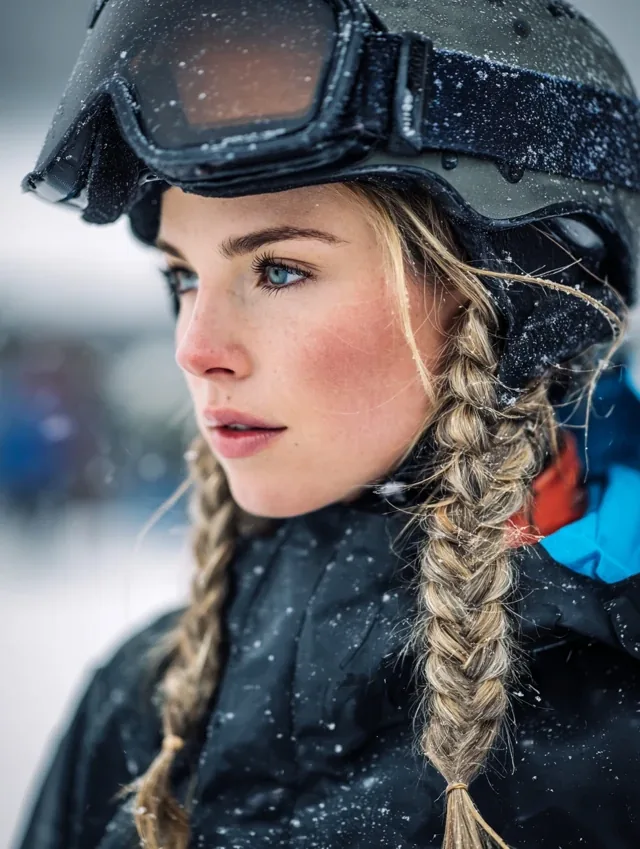
A ski helmet is not like a beanie — it is hard, it fits snugly, and it does not forgive bulk in the wrong place. Anything high on the head, a top knot, a high ponytail, a tall bun, will push the helmet up, leave a gap at the forehead, and make the helmet less safe and less comfortable. The rule for helmet hair is the same as the rule for the slopes themselves: keep everything low and smooth. Low braids, low buns, low ponytails and loose hair tucked into a gaiter all sit below the helmet’s shell, so the helmet fits the way it was designed to fit.
The second rule is about the crown: the helmet presses the hair flat exactly where volume usually lives, so build your volume somewhere the helmet never touches — at the ends. Loose waves, a flicked-out lob, the tail of a braid, all keep their shape because the helmet never reaches them. And leave the front soft: two face-framing pieces pulled out before the helmet goes on are the first thing that recovers when it comes off, and they make the difference between helmet hair and a hairstyle. Quick verdict: low, smooth at the crown, full at the ends — that is the helmet formula.
Beating Static, Hat Hair and Helmet Hair
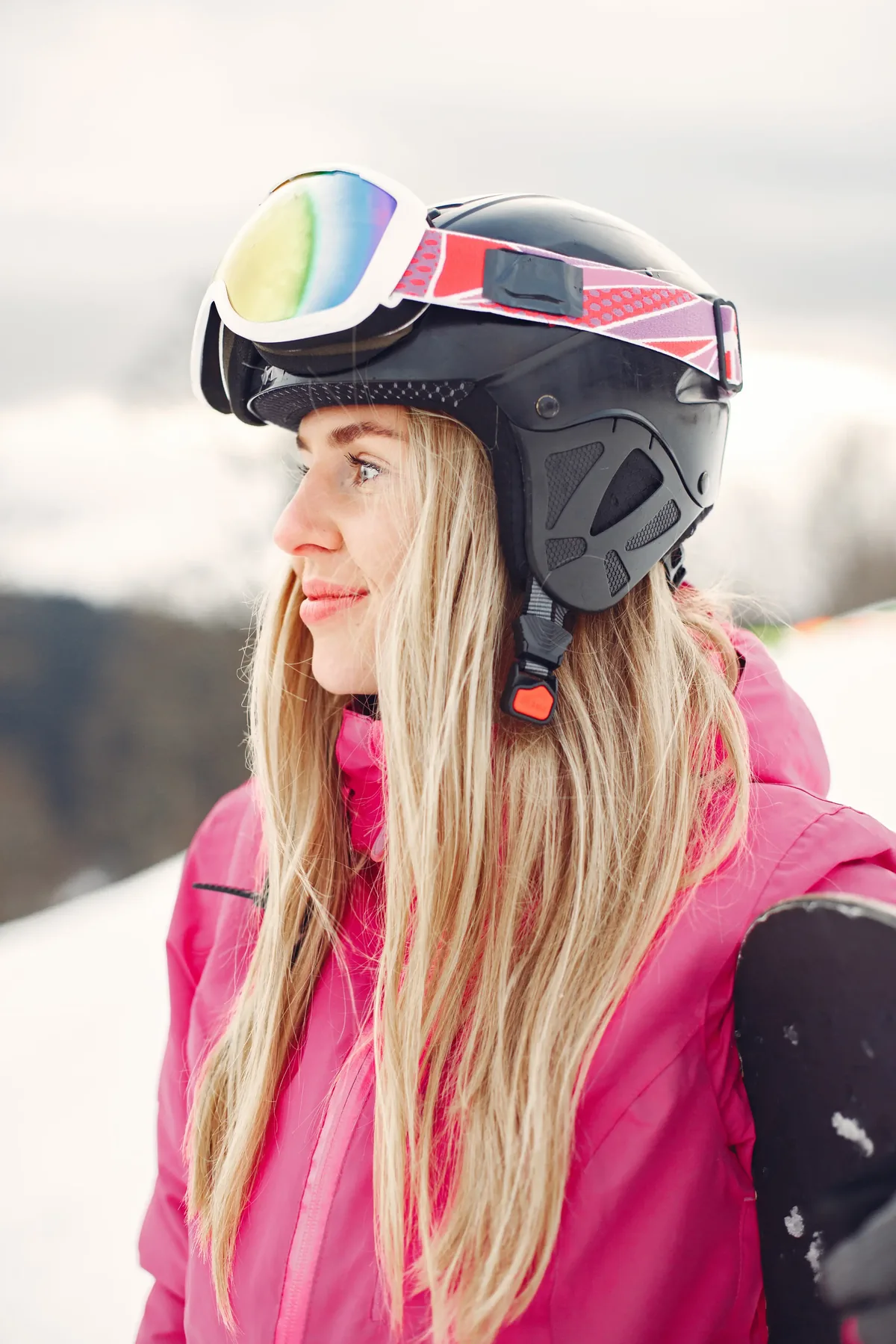
Cold mountain air is dry, and dry air plus wool plus a helmet lining equals static — the flyaway halo that appears the moment the helmet comes off. Helmet hair has three causes, and knowing them is half the cure. The first is pressure: the helmet presses the hair flat for hours, and hair takes the shape it is held in. The second is friction: wool beanies and helmet linings catch fine hair and create static. The third is dryness: cold air strips moisture from the hair, and dry hair flies away instead of lying smooth.
Prevention starts before the helmet goes on. A drop of hair oil or leave-in conditioner smoothed over the lengths before you dress seals in moisture and cuts static before it starts. A silk or satin scarf worn under the helmet — a thin one, folded into a band — stops the lining from catching the hair and keeps the crown smooth. A light dusting of dry shampoo at the roots before the helmet goes on absorbs sweat before it can set the hair flat. Common mistake: putting a helmet on damp hair and letting it dry underneath — that is a guaranteed dent, and in cold air it is also uncomfortably cold. Quick verdict: oil the ends, silk under the helmet, dry shampoo at the roots.
Cold-Weather Hair Care on the Mountain
Ski-trip hair is not just a styling problem, it is a care problem. Cold air, wind and altitude dry the hair out fast, and the ends — the part that sticks out below the helmet and the gaiter — take the worst of it. The week before your trip, switch to a richer conditioner and add a weekly hair mask, so the hair goes into the cold already moisturised. On the mountain, a leave-in conditioner or a few drops of oil on the ends every morning is the cheapest insurance there is: it seals the cuticle, keeps the wind from roughing it up, and stops the ends from splitting by the end of the week.
Washing matters too. Wash less often on a ski trip — every second or third day, with dry shampoo in between — because hot showers and frequent washing strip the oils that protect the hair from the cold. When you do wash, use lukewarm water, never very hot, and always finish with conditioner on the lengths. And never go outside with wet hair in freezing weather: it is miserable, it freezes the ends, and it sets the hair in whatever dented shape the beanie presses into it. Pros and cons: a little extra care takes five minutes a morning, but it is the difference between hair that survives the trip and hair that needs a rescue cut when you get home. Quick verdict: moisturise before, oil every morning, wash less, never go out with wet hair.
Braids That Survive a Full Day on the Slopes
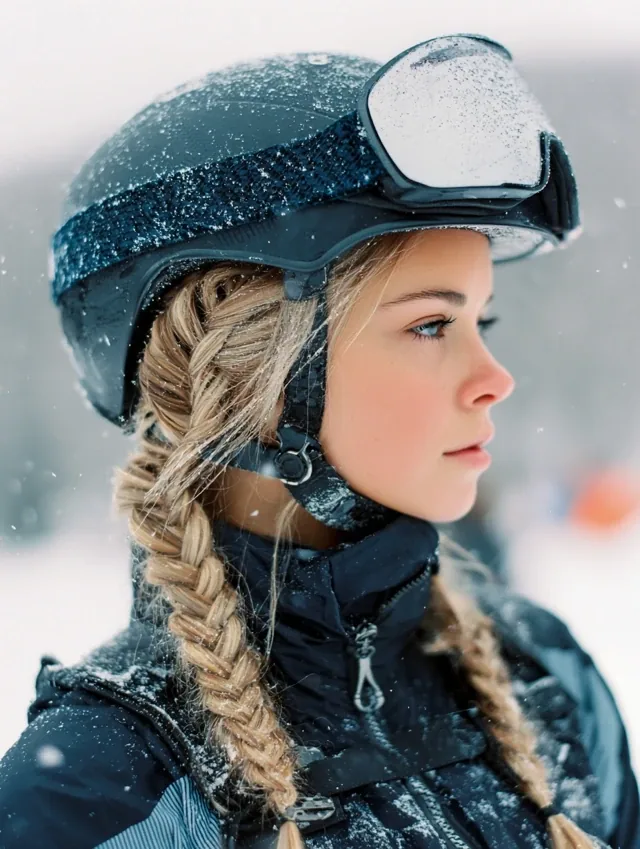
If there is one family of hairstyles made for a ski trip, it is the braid. A braid keeps every strand contained, so wind is no problem at all. It sits flat under a helmet, it does not tangle in a gaiter, it survives the chairlift, the fall, the lunch queue and the walk back to the lodge — and when you take it out in the evening, you get soft waves for free. A French braid is the most secure, because it is anchored to the head from the hairline down. A fishtail looks the most delicate, and a Dutch braid holds best on fine hair that slips out of other styles.
The details matter on the mountain. Braid the hair while it is slightly damp with a little leave-in conditioner, and it will hold better and tangle less. Tie the end with a snag-free elastic, never a rubber band, which catches and breaks cold, dry hair. Keep the braid low and loose — pull the edges out gently so it looks full rather than tight and thin — and if you wear a helmet, a single braid down the back or two braids over the shoulders both work; two braids distribute the bulk better under a snug helmet. What to ask your stylist before the trip: if you wear a helmet often, ask for long layers that start at the cheekbones, so the front pieces fall nicely under a beanie. Quick verdict: one braid, low, loose, tied with a snag-free elastic — the slope-proof formula.
Après-Ski Looks: From the Slopes to Dinner in Ten Minutes
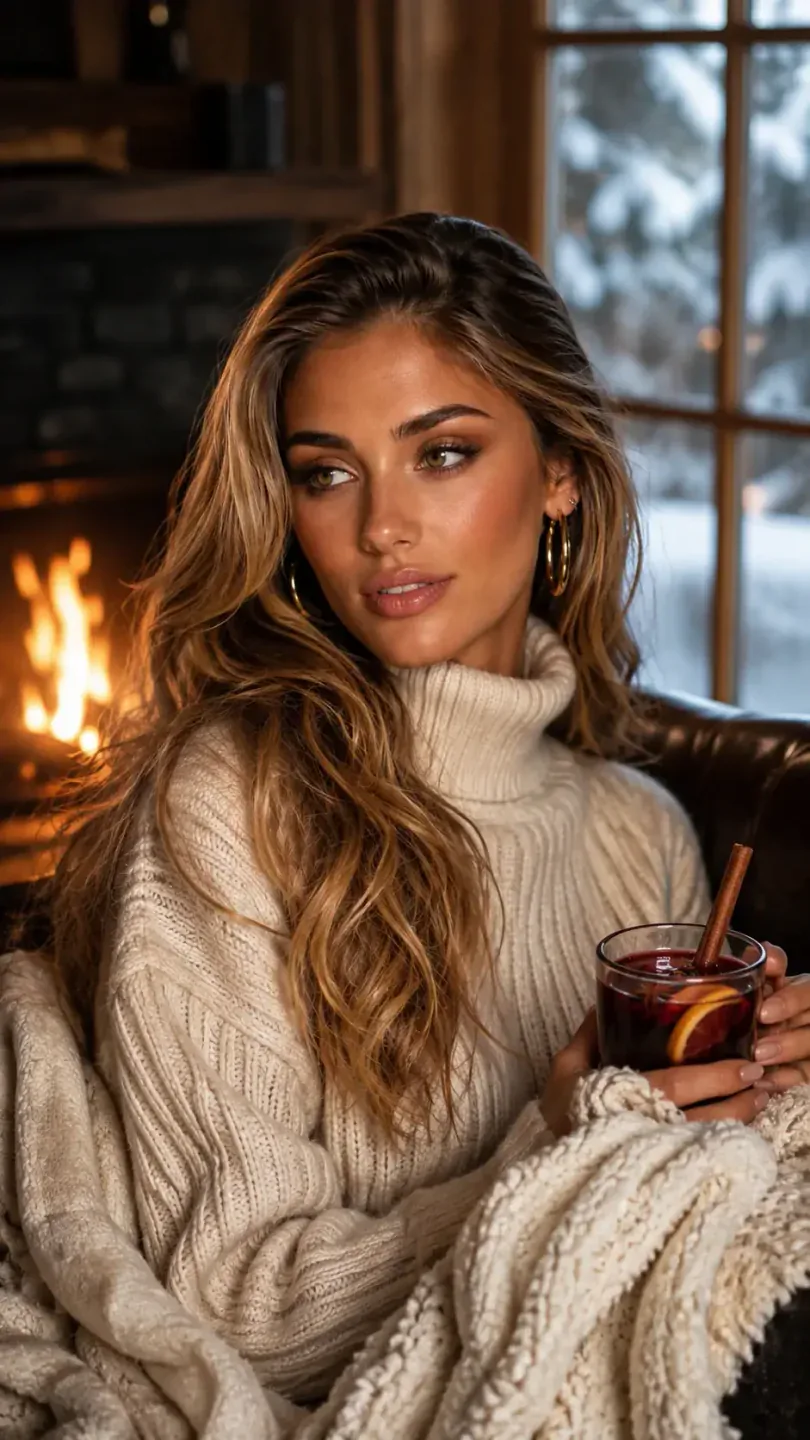
Après-ski is the best part of a ski trip and the hardest moment for your hair: the helmet comes off, the beanie comes off, and what is underneath has spent eight hours being pressed flat. The good news is that the styles that survive the slopes are also the styles that transform fastest in the evening. Take out a braid and you have waves. Take down a low bun and you have volume at the roots. Shake out a low ponytail, add a little dry shampoo, and you have a style that looks deliberate rather than defeated.
The ten-minute après-ski routine is simple: dry shampoo at the roots, massaged in with the fingertips to lift them; a quick brush through the lengths to smooth the wind tangles; and one deliberate change — move the part, pull out two face-framing pieces, twist the front sections back and pin them, or swap the daytime braid for a low chignon. A silk scarf tied at the base of a bun, a pair of statement earrings, or a swipe of lipstick does the rest — nobody at dinner is looking at your roots, they are looking at the whole picture. Common mistake: re-curling the whole head after a day on the slopes — it takes too long and the cold, dry hair will not hold it. Quick verdict: dry shampoo, a flipped part, one deliberate change — dinner-ready in ten minutes.
Braids and Buns Under a Beanie
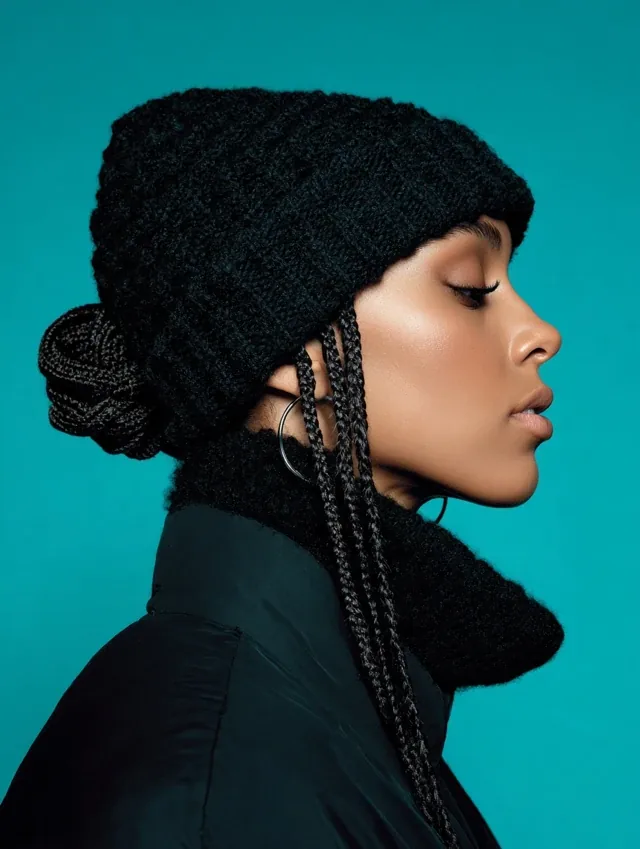
The beanie is the ski trip’s second helmet — softer, warmer, and just as flattening. A beanie hugs the head and presses everything at the crown flat, so it loves low, textured styles and hates tall volume and high ponytails. A low messy bun sits at the nape, well below where the beanie rests, so the hat never pushes it up. Two low braids fall on either side of the face and look pretty peeking out from under the brim. A textured lob ends right where the beanie ends, at the shoulders, so the hat never crushes the length.
The trick with a beanie is the same as with a helmet: keep the bulk low and the crown smooth, and put the texture where the beanie is not. Push the beanie back a centimetre from the hairline so the pressure falls on the hair, not on the roots at the very front, and the front pieces will recover when the beanie comes off. A silk lining inside the beanie, or a silk scarf worn underneath, cuts the friction that causes static and flyaways. Pros and cons: a beanie is the warmest, easiest ski-trip hat, but it is also the most flattening — so the hairstyle underneath has to do the work. Quick verdict: low bun, two braids, or a textured lob — the beanie’s best friends.
Wind-Proof Hair: Keeping It Neat in Mountain Wind
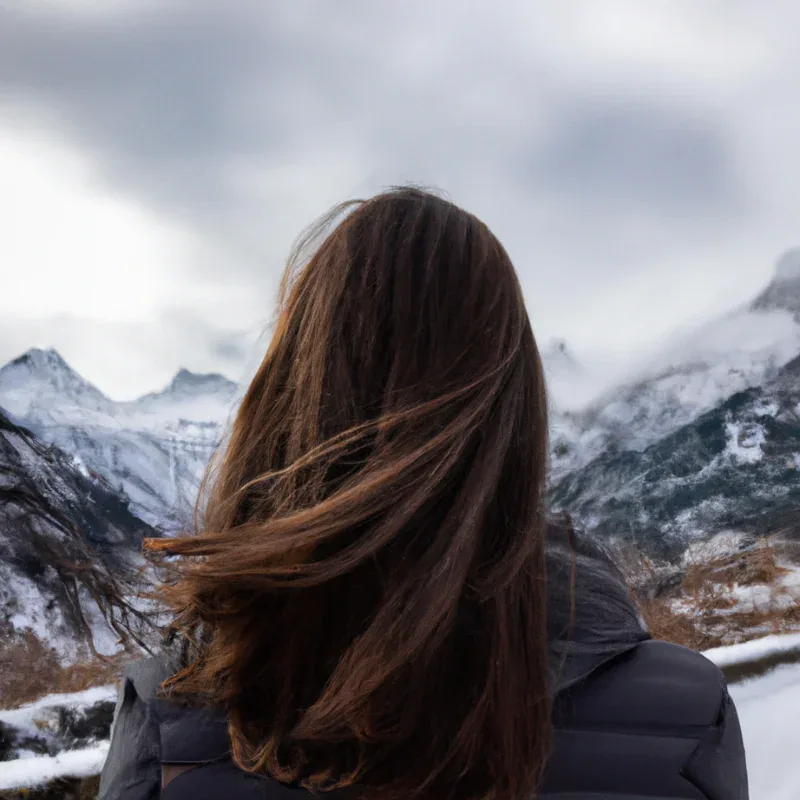
Mountain wind is the one thing on a ski trip you cannot control, and loose hair in mountain wind becomes a tangle in about thirty seconds. The styles that survive wind are the styles that contain the hair: braids, buns, twists, and anything pinned or tied at more than one point. A single elastic at the nape is not enough on a windy ridge — the hair above it whips around and tangles. Two elastics, a braid plus a tie, or a bun pinned in three places will hold when one elastic will not.
If you love wearing your hair down, the wind-proof version is a half-up style: the top half is twisted or braided back and pinned, which keeps the hair out of your face, while the bottom half is contained inside your jacket collar or a gaiter. A little hair oil on the lengths before you go out stops the wind from roughing up the cuticle, and a gaiter pulled up over the ends protects them completely on the coldest, windiest days. Maintenance on the mountain: carry two spare elastics and three bobby pins in your jacket pocket — they weigh nothing and they turn a wind disaster into a two-minute fix. Quick verdict: contain it twice, oil the ends, and keep spares in your pocket.
What to Pack: A Tiny Ski-Trip Hair Kit
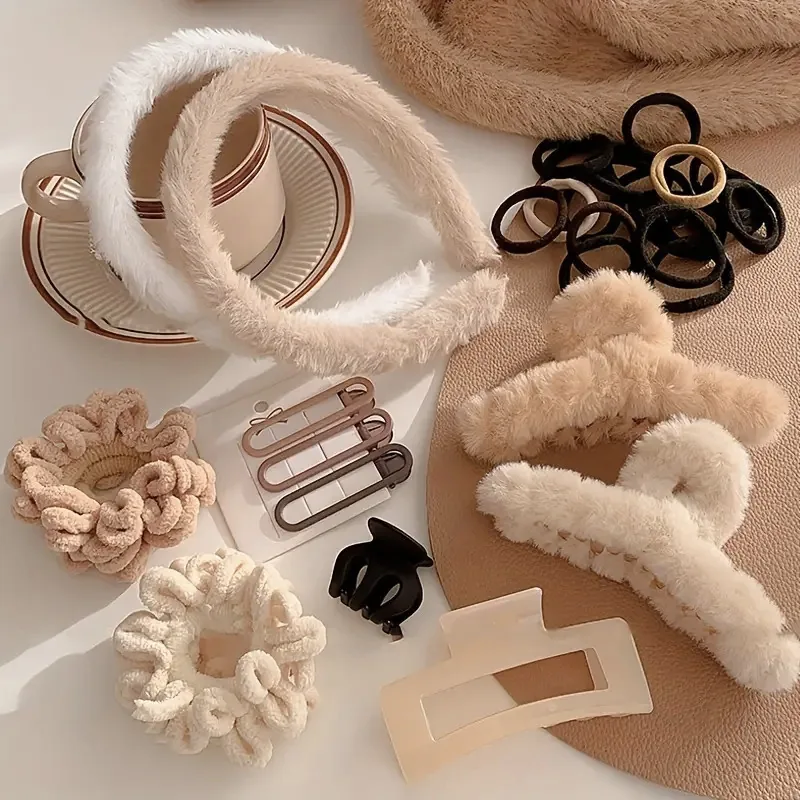
You do not need a full vanity on a ski trip — you need a tiny kit that fits in a jacket pocket or a small pouch in your ski bag. The essentials are: five snag-free elastics, a handful of bobby pins, a travel-size dry shampoo, a small bottle of hair oil or leave-in conditioner, a folding brush or a wide-tooth comb, and one silk scarf, which does triple duty as a helmet lining, a bun wrap, and an evening accessory. That is the whole kit, and it weighs less than your phone.
Pack it the night before the first ski day, not the morning of — mornings on a ski trip are rushed, and a forgotten kit means a week of bad hair days. Keep the dry shampoo and the oil in the lodge, not in a freezing car, because cold makes dry shampoo spray unevenly and oil go thick. And keep two elastics and three pins in your jacket pocket every day, not just in the kit: the pocket spares are the ones that save a style on the chairlift. Cost and time: the whole kit costs less than one lodge lunch, and packing it takes five minutes. Quick verdict: elastics, pins, dry shampoo, oil, a brush and a silk scarf — pack it the night before.
1. The Low Messy Bun Under a Beanie
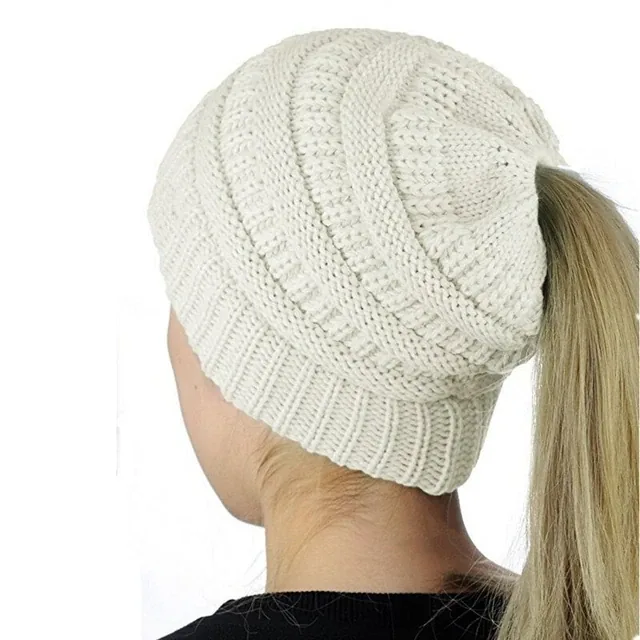
A low messy bun under a beanie is the ski-trip hairstyle that everything else is measured against, and it earns that place honestly. The bun sits at the nape, well below where the beanie rests, so the hat never pushes it up or flattens it, and the looseness of the bun means the beanie can press on it all day without leaving a dent. Pull out two soft pieces at the front and the style looks deliberate rather than accidental — pretty, warm and completely practical for a day that starts on the slopes and ends in the lodge.
Best for: cold mornings, long hair, and anyone who wears a beanie between runs. How to style it: add a little texture spray, gather the hair loosely at the nape, twist it into a bun, pin it in two or three places, and pull out two pieces at the front. What to ask your stylist: nothing special — this is a styling choice, not a cut. Quick verdict: the beanie’s best friend, on and off the mountain.
2. Two French Braids for the Slopes
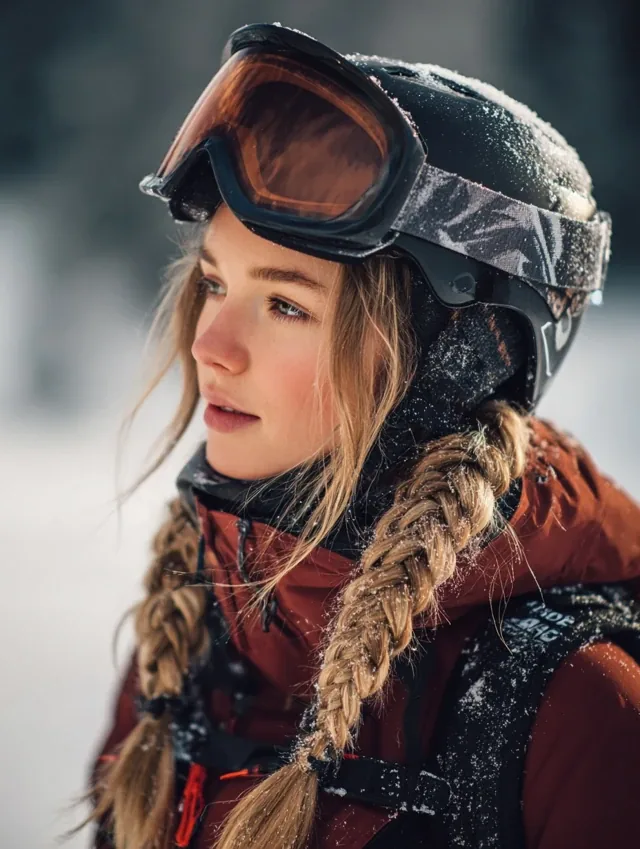
Two French braids are the most secure hairstyle you can take onto a ski slope, and they look the part too. Each braid is anchored to the head from the hairline down, so nothing slips, nothing tangles in the wind, and nothing catches in a helmet strap. They sit flat under a helmet, they fall neatly over the shoulders, and when you take them out in the evening you get soft, even waves for après-ski without touching a curling iron.
Best for: long hair, full ski days, and anyone who falls over a lot — the braids stay put no matter what. How to style it: part the hair in the middle, French-braid each side from the hairline to the nape, then finish as ordinary braids and tie with snag-free elastics. Pros and cons: they hold all day and survive wind, snow and helmets, but they take about ten minutes and need enough length to braid. Who should avoid them: very short hair. Quick verdict: the slope-proof classic.
3. The Low Bubble Braid for the Chairlift
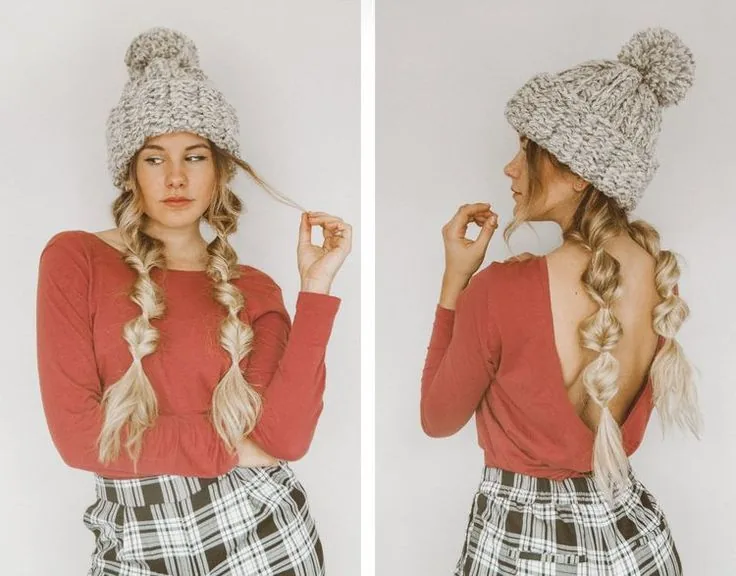
A low bubble braid is a playful twist on the classic ski braid, and it looks surprisingly put-together under a beanie. The hair is gathered low at the nape, tied at intervals down its length, and each section is gently pulled out to form soft bubbles — and because the bubbles start below the helmet and the beanie, nothing gets crushed. It is fun, it is secure, and it keeps long hair neatly contained on a windy chairlift.
Best for: long hair and women who want a braid with a little more personality. How to style it: gather the hair low, secure it, then add small elastics every few inches down the ponytail, pulling each section out gently for fullness. Pros and cons: it is secure, pretty and fun, but it needs a few elastics and a little patience. Common mistake: tying the bubbles too tightly, which makes them look like knots instead of soft puffs. Quick verdict: the braid, dressed up for the mountain.
4. The Sleek Low Ponytail Under a Helmet
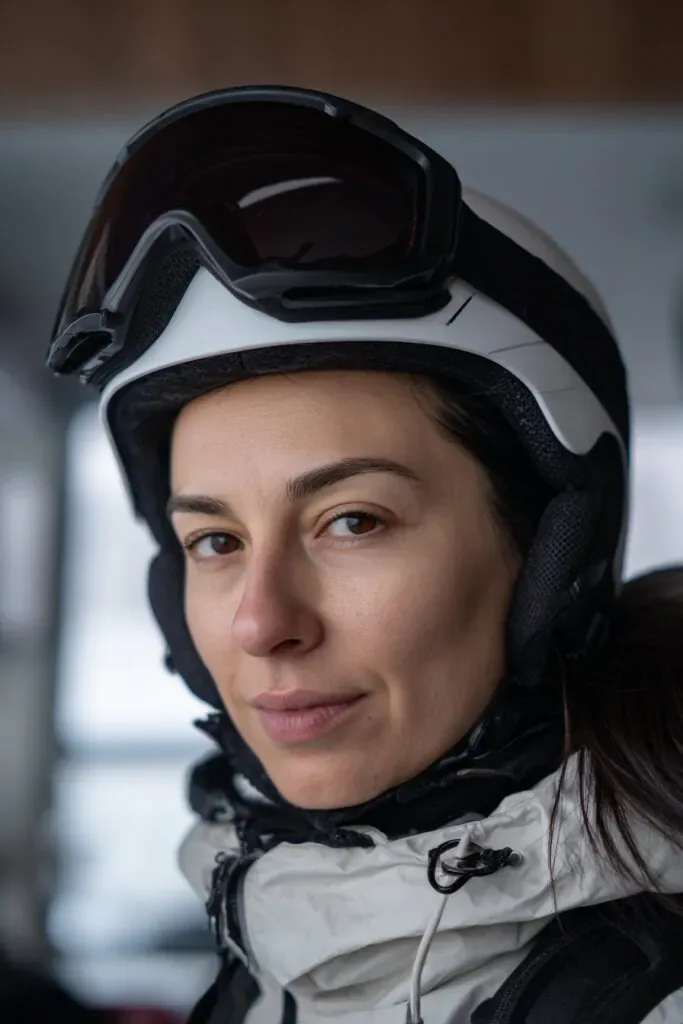
A sleek low ponytail is the simplest helmet-friendly style there is, because it works on every hair type, takes two minutes, and looks good on a good hair day or a bad one. The ponytail sits low at the nape, below the helmet’s shell, so the helmet sits flat and the ponytail falls neatly down the back — no bunching, no bulge, no helmet pushed up at an angle. Wrap a strand around the elastic and the whole thing looks intentional rather than thrown together.
How to style it: smooth the hair with a brush and a little serum, gather it low, secure it, and wrap a strand around the base, pinning it underneath. Common mistake: a high ponytail with a helmet, which pushes the helmet up and makes it fit badly. Cost and time: free, and two minutes. Quick verdict: the everyday hero of ski-trip hairstyles.
5. The Fishtail Braid Over One Shoulder
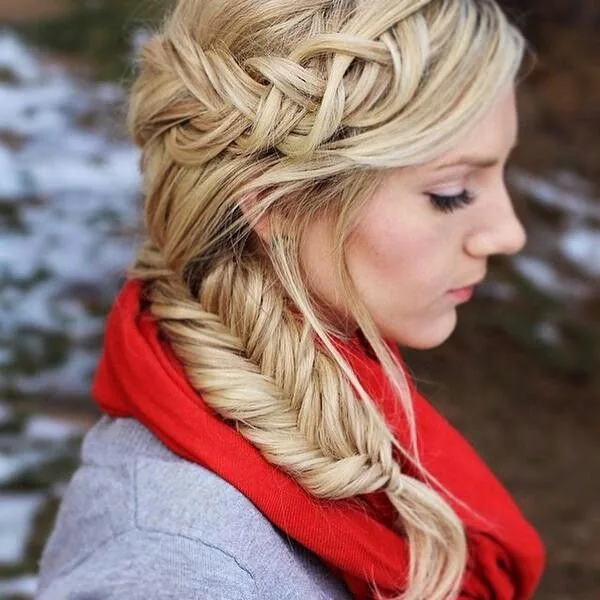
A fishtail braid over one shoulder works beautifully on a ski trip, because the braid is the star and the helmet and beanie are just the frame. The fishtail weave creates a delicate, almost lace-like pattern, and when it is pulled out gently it looks full and romantic rather than tight and severe. Worn low and over one shoulder, it is pretty, it is secure, and it keeps long hair out of the way in the wind — which is exactly what you want on a day outdoors in the snow.
How to style it: gather the hair low to one side, split it in two, and fishtail-braid by taking small pieces from the outside of each half to the inside of the other, then pull the braid out gently for fullness. Pros and cons: it looks intricate and holds well, but it takes a little longer than an ordinary braid — about ten minutes. Who should avoid it: very short hair, which cannot fishtail. Quick verdict: the braid for women who like a little detail on the slopes.
6. The Dutch Braid Crown Under a Beanie
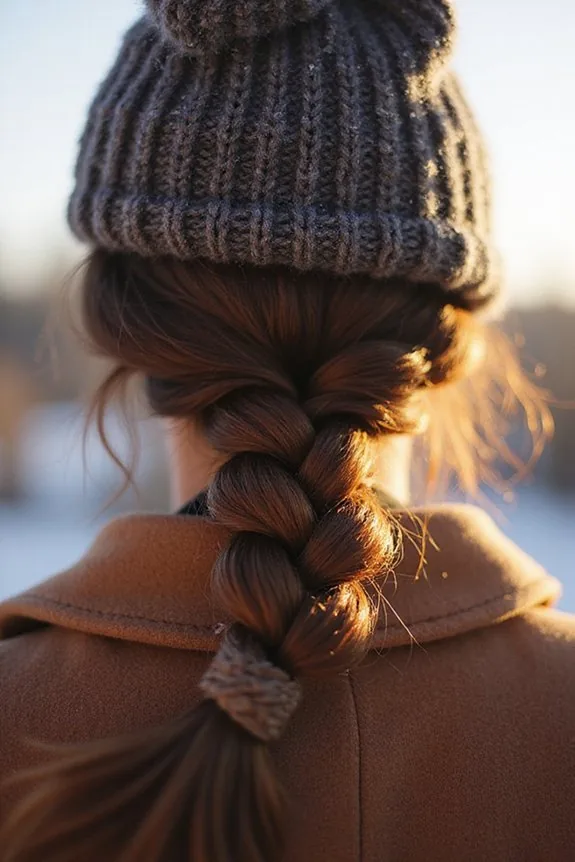
A Dutch braid crown under a beanie is a beautiful combination because the braid runs around the head like a halo, keeping every strand off the face and neck, while the beanie sits happily on top of the flat, pinned braid. The crown sits flat where the hat rests, so the beanie sits level, and the braid itself is completely secure — it will not move in wind, in snow, or through a long day on the mountain. It has a gentle, storybook quality that looks lovely with a ski jacket and a scarf.
What to ask your stylist: nothing — this is a styling skill, not a cut, but it does need enough length to wrap around the head. How to style it: part the hair in the middle, Dutch-braid each side toward the back, and pin the ends underneath each other. Pros and cons: it holds all day and looks stunning, but it takes practice — do a trial run the night before your trip. Quick verdict: the prettiest secure ski style in this guide.
7. The Low Twisted Chignon for Après-Ski
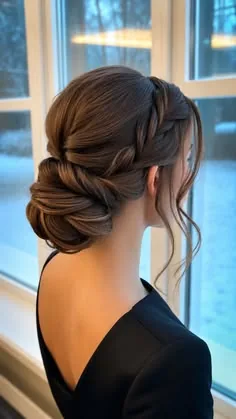
A low twisted chignon is the après-ski hairstyle for the woman who skied all day and still wants to look elegant at dinner. The hair is gathered low, twisted and pinned at the nape, and because every twist is pinned separately, it holds its shape for hours — even after a helmet has been on and off it all day. It is a beautiful choice for a lodge dinner, a fireside drink, or a winter evening out, and it takes five minutes with a mirror and a few pins.
Best for: medium to long hair, and ski-trip evenings. How to style it: divide the hair into three low sections, twist each one toward the centre, and pin the twists together at the nape, tucking the ends underneath. Pros and cons: it looks intricate and holds wonderfully, but it needs a mirror and a little patience the first time. Maintenance: none on the evening. Quick verdict: the updo that looks like a salon visit but is really just three twists.
8. The Half-Up Top Knot With Face-Framing Pieces
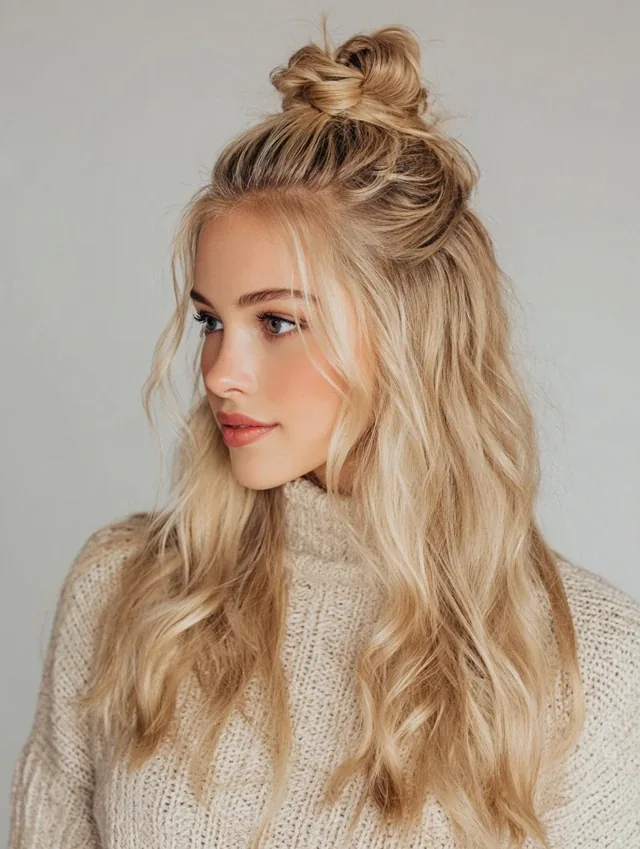
A half-up top knot with face-framing pieces is the best of both worlds on a ski trip: the top half is lifted and pinned, which shows off your face and keeps the hair out of your eyes and goggles, while the bottom half falls in soft waves that add gentle width below the beanie. The knot sits low enough that a beanie can sit over it without flattening it, and the whole look is relaxed and youthful — perfect for a lodge afternoon or a casual dinner.
Best for: medium to long hair, and women who like wearing their hair down but want it out of their face on the slopes. How to style it: curl the lengths first, then gather the top section from temple to temple, twist it once and secure it with crossed bobby pins or a small clip. Common mistake: pulling the top section too tight, which looks severe and gives you a headache under a helmet. Quick verdict: five minutes to a style that looks like you tried much harder.
9. Loose Cold-Air Waves
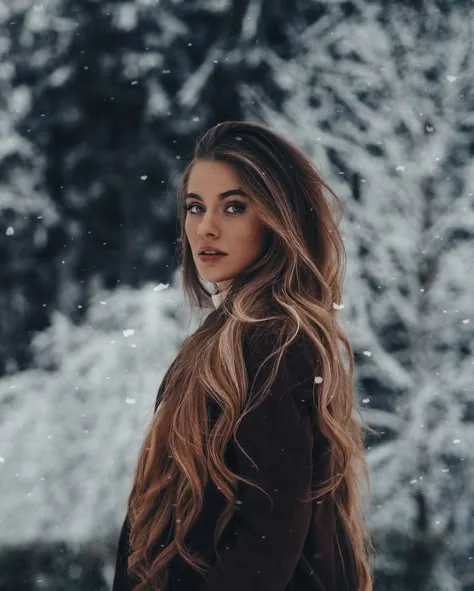
Loose waves are the ski-trip version of wearing your hair down — soft, pretty, and surprisingly hardy in cold air. Cold air holds a wave better than humid summer air does, because there is no moisture to drop the curl, and the waves fall past the beanie and the gaiter, so the hat never touches them. The combination is effortlessly glamorous: it looks like a holiday even on an ordinary ski day, and the beanie shades the hair from the wind, which keeps the ends from drying out.
How to style it: curl in large sections with a wide-barrel iron the night before, let the curls cool, brush them out gently into soft waves, and finish with a light-hold spray. Pros and cons: it is beautiful and low-effort on the day, but the waves will tangle in strong wind, so keep a small brush in your jacket pocket. Maintenance: a curl cream on damp hair keeps the shape between washes. Quick verdict: the holiday look that works on a Tuesday on the slopes.
10. Boxer Braids for a Full Ski Day
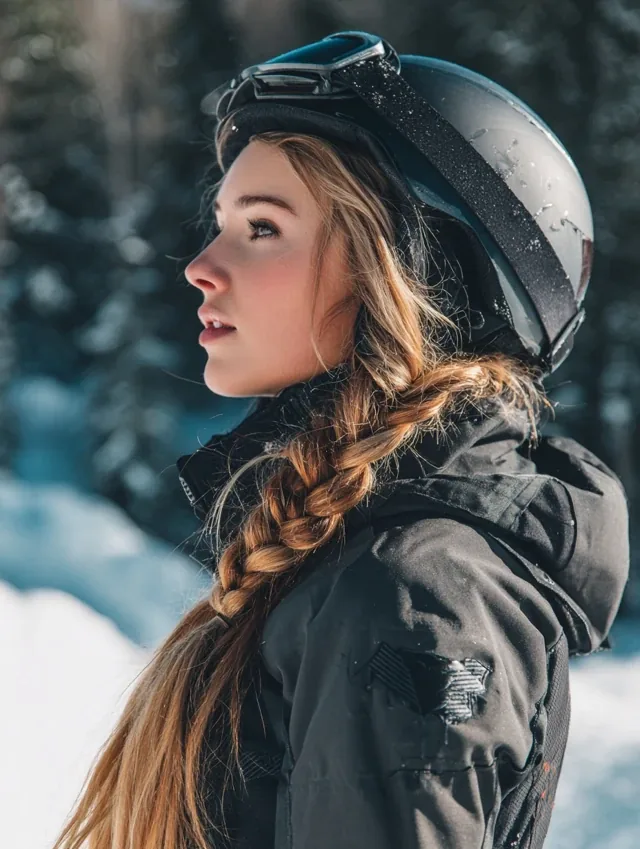
Boxer braids — two tight Dutch braids running from the hairline to the nape — are the sportiest style in this guide, and the most secure. They are anchored to the head at every step, so they do not move when you fall, they do not tangle in the wind, and they sit perfectly flat under a helmet. They are the style for the woman who skis hard all day and does not want to think about her hair once, from the first lift to the last run.
Best for: full ski days, snowboarders, and anyone who falls over a lot. How to style it: part the hair in the middle, Dutch-braid each side tightly from the hairline down, and tie with snag-free elastics. Pros and cons: they hold all day through anything, but tight braids can give you a headache if you pull them too hard — keep them firm, not painful. Who should avoid them: nobody, though very short hair cannot boxer-braid. Quick verdict: the toughest braid on the mountain.
11. The Low Side Braid With a Knit Headband
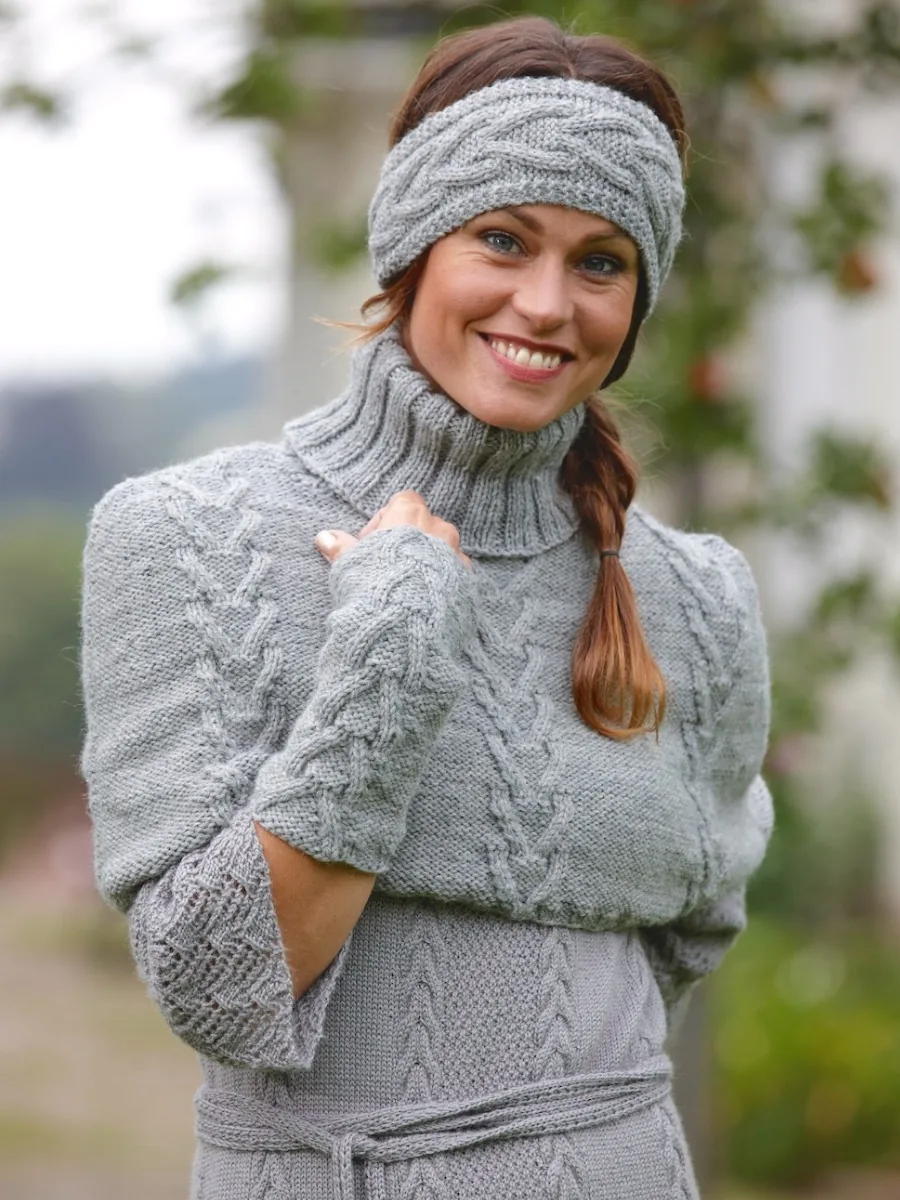
A low side braid with a knit headband is a sweet, practical ski-trip style: the braid is swept over one shoulder, so it is visible and pretty, it keeps the hair out of the way in the wind, and the knitted headband keeps the ears warm while holding the front hair back from the face and the goggles. It is romantic, it is warm, and it holds its shape through a long afternoon outdoors without a single pin.
How to style it: sweep the hair to one side, braid loosely, and gently pull the edges of the braid out to make it fuller, then tie with a soft elastic and slide the headband on over the crown. Maintenance: almost none — if it loosens, just pull it out a little more. Common mistake: braiding too tightly, which looks severe rather than relaxed. Who should avoid it: very short hair, which cannot reach over the shoulder. Quick verdict: bring the hair forward, not back — that is the whole trick.
12. The Braided Low Bun With a Silk Scarf
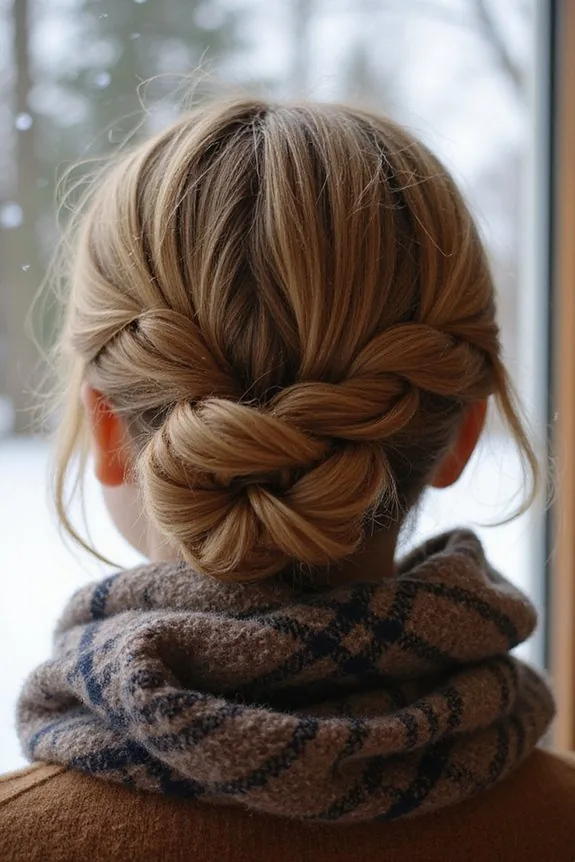
A braided low bun wrapped with a silk scarf is one of the most elegant ski-trip hairstyles, and one of the most practical. The hair is braided first, then coiled into a low bun and pinned, which gives the bun beautiful texture and makes it far more secure than an ordinary bun, because the braid itself holds the shape. The silk scarf wrapped around the base adds colour and polish, keeps flyaways in place, and protects the hair from the helmet’s lining — silk on silk never catches or frizzes.
Best for: medium to long hair, and ski-trip evenings when you want to look dressed up. How to style it: braid the hair low, coil the braid into a bun at the nape, pin it in three places, then fold a silk scarf into a band and wrap it around the base of the bun. Pros and cons: it is quick, pretty and practical, but the scarf needs to be silk or satin — cotton slips. Quick verdict: two reliable styles, better together, with a scarf on top.
13. The Textured Lob Under a Neck Gaiter
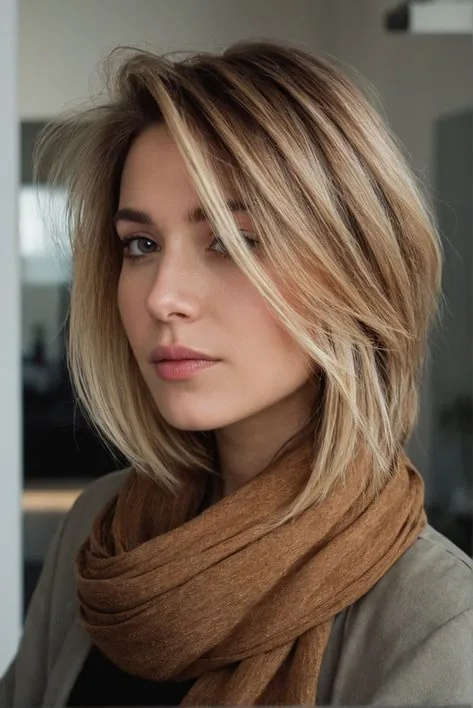
A textured lob with a neck gaiter is a winter combination that works because the lob ends right where the gaiter ends — at the shoulders — so nothing gets crushed or tangled, and the texture gives the style movement even after hours under wool and a helmet. The layers keep the lob from lying flat, and when the beanie comes off, a quick shake and a scrunch is all it takes to bring the texture back. It is low-maintenance, it is warm, and it looks good with a ski jacket and a scarf.
Pros and cons: it is versatile, easy to style and flattering on fine and thick hair alike, but the texture can look messy if the layers are cut too short, so ask for long, soft layers rather than choppy ones. How to style it: work a little texture cream through damp hair, scrunch the ends and let it dry naturally. Maintenance: a trim every eight weeks keeps the shape. Quick verdict: wash, scrunch, gaiter up, go.
14. Rope Braid Pigtails for the Piste
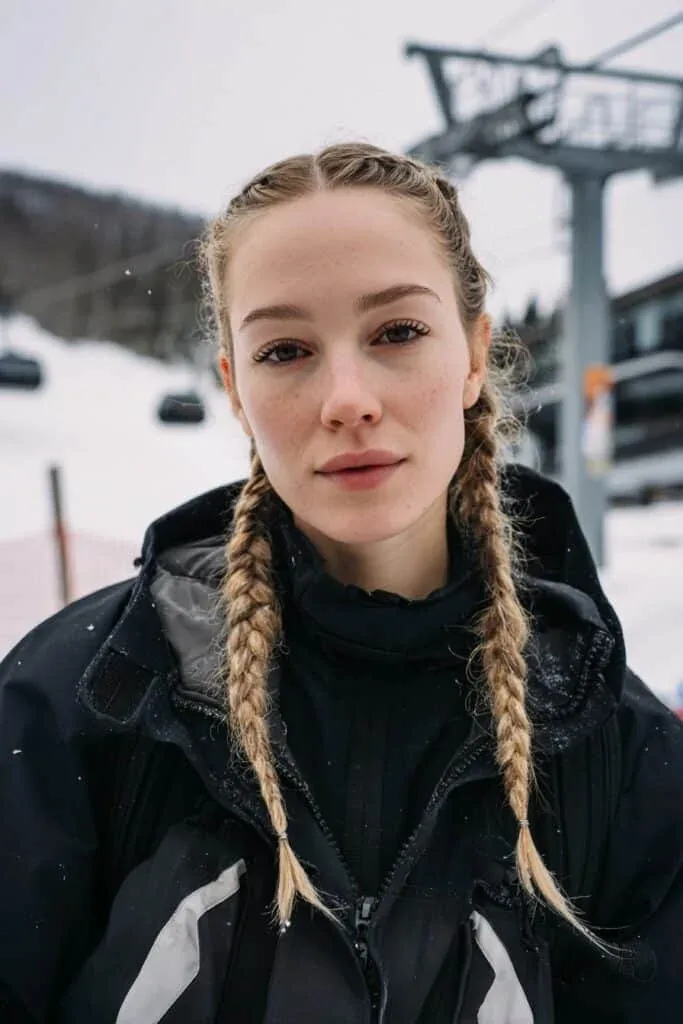
Rope braid pigtails are the fastest braided style in this guide — two twists, two elastics, done in three minutes — and they are surprisingly secure on the slopes. Each pigtail is made by twisting two strands around each other, which locks the hair in place better than an ordinary braid and looks neat and rope-like. They sit low and flat under a helmet, they keep the hair completely contained in the wind, and they have a playful, youthful energy that suits a fun day on the piste.
Best for: beginners, long hair, and mornings when you are running late for the first lift. How to style it: part the hair in the middle, divide each side into two strands, twist each strand in the same direction, then twist them around each other in the opposite direction and tie. Common mistake: twisting both steps in the same direction, which makes the rope unravel — twist the strands one way, and wrap them the other way. Quick verdict: three minutes to a style that holds all day.
15. The Low Knot Bun for the Gondola
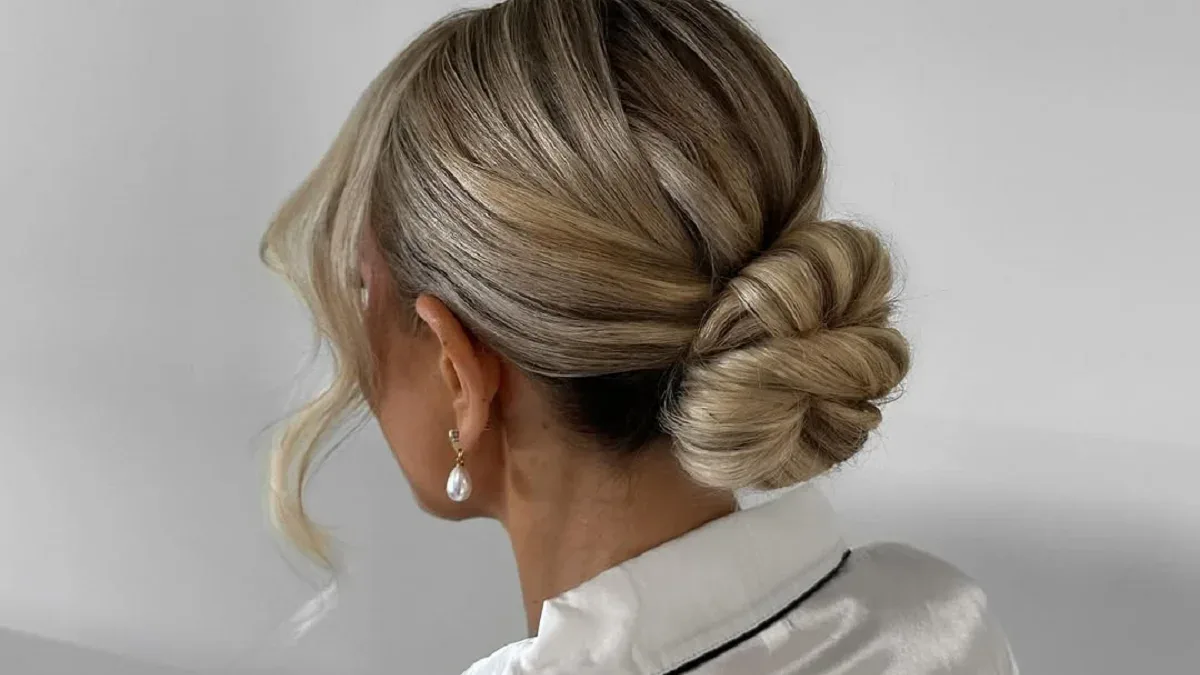
A low knot bun is the simplest updo in this guide, and one of the most useful on a ski trip: the hair is gathered low, twisted into a knot and pinned, and the beanie sits flat on a smooth crown while the knot keeps the hair off the neck in the cold. It takes three minutes, it needs nothing but a few pins, and it looks intentional rather than thrown together — especially with two soft pieces pulled out at the front for the gondola ride up.
How to style it: add texture spray, gather the hair loosely at the nape, twist it into a knot, pin it in two or three places, and pull out a few pieces at the front — do not smooth anything. Cost and time: three minutes, no tools beyond a few pins. Pros and cons: it is the fastest style in this guide and suits every hair type, but it will not hold through a very windy walk — save it for calm days and gondola rides. Common mistake: making it too neat, which turns a knot into a formal bun. Quick verdict: three minutes to a polished, pretty look.
16. Curtain Bangs Peeking From a Beanie

Curtain bangs peeking out from under a beanie are a small, charming detail that makes the whole ski look — the beanie sits low on the forehead, the bangs part in the middle and fall softly on either side of the face, and the combination is pretty without trying too hard. It works with long hair, a bob or a lob, and it is one of the few ski hairstyles where the front of the hair is the star, not the part hidden under the hat.
Best for: long and medium hair, and women trying bangs for the first time before a trip. How to style it: blow-dry the bangs with a round brush, curving them away from the face on each side, pull the beanie on low, and let the bangs frame the face. Pros and cons: the bangs are easy to style and easy to grow out, but they do need a trim every four to six weeks. Quick verdict: the prettiest front-facing ski look here.
17. Milkmaid Braids Under a Helmet
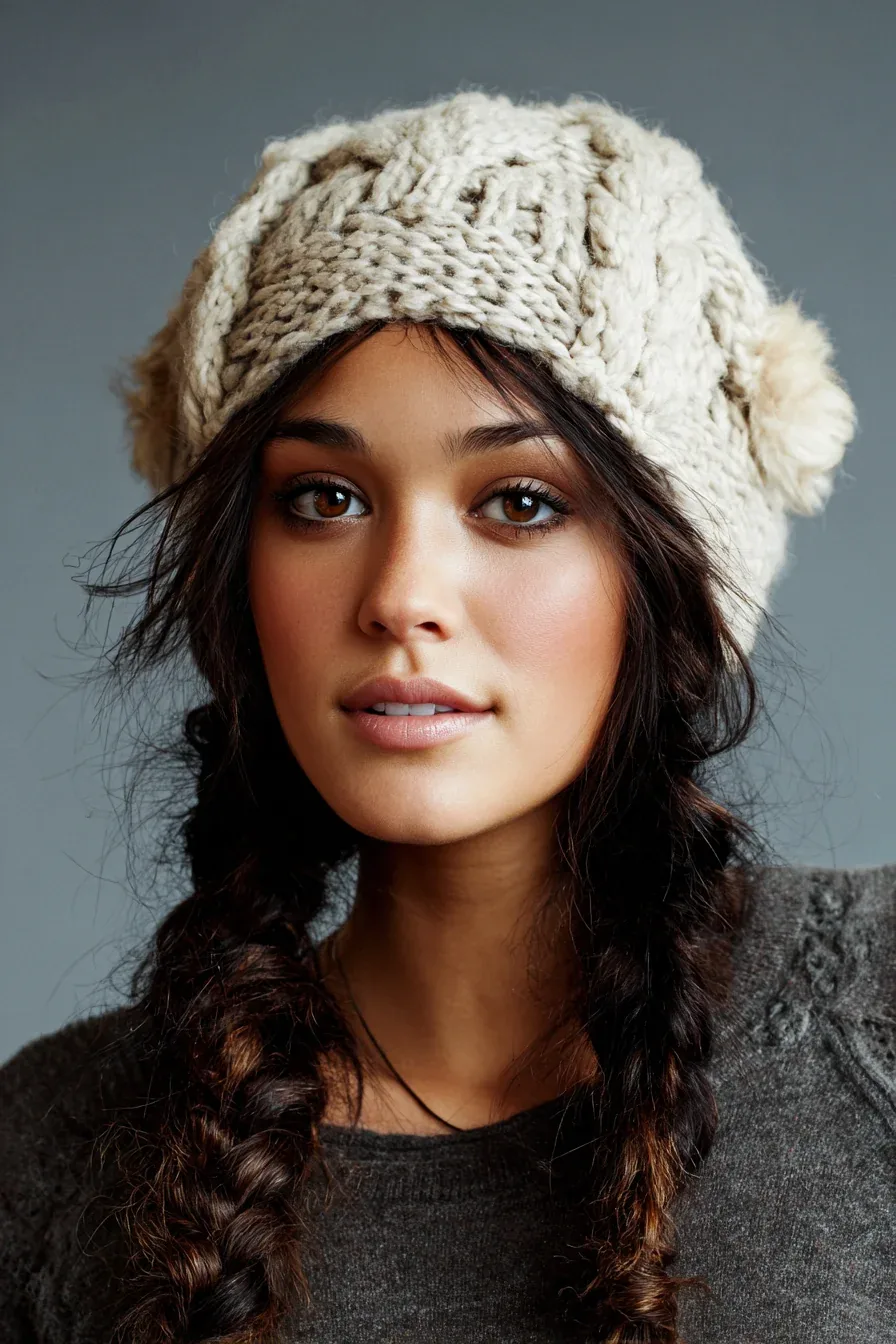
Milkmaid braids under a helmet are a sweet, old-fashioned winter style that is also one of the most secure you can wear on the slopes. Two braids are pinned up and across the crown, and once they are pinned, nothing moves — not the helmet, not the wind, not a long day in the cold. The helmet sits happily on top of the flat, pinned braids, and the style has a gentle, storybook quality that looks lovely with a ski jacket and a scarf.
Best for: long hair, cold days, and women who want a style that truly will not move. How to style it: part the hair in the middle, braid each side, bring the braids up and across the crown, and pin the ends underneath each other. Common mistake: braiding too tightly, which can give you a headache under a helmet — keep the braids loose and pull the edges out gently. Quick verdict: the most secure pretty ski style here — pinned, pretty, done.
18. The Slicked-Back Low Bun for Goggles
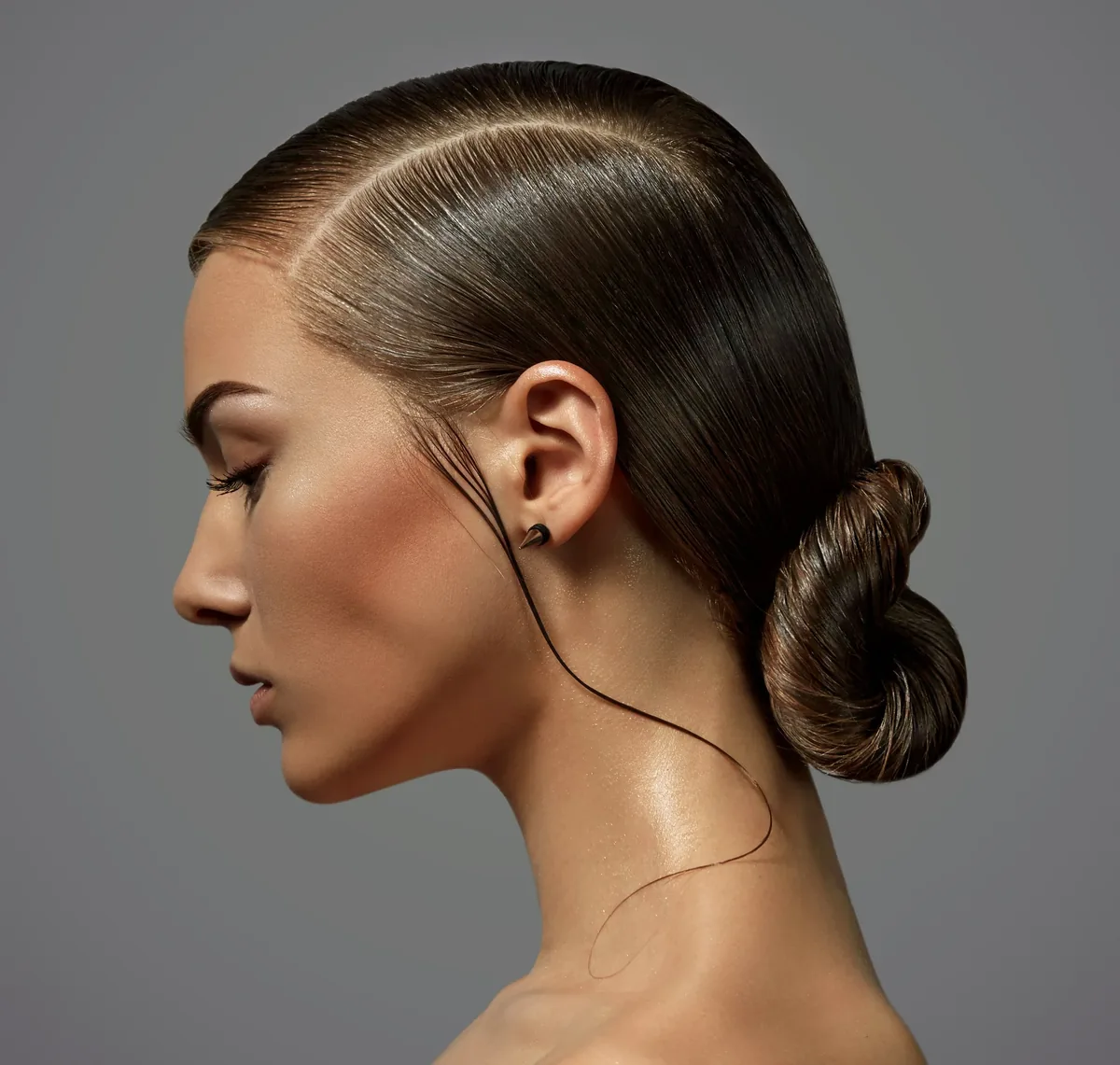
A slicked-back low bun is the ski-trip style for the woman who wears goggles all day and does not want a single strand in her face. The hair is smoothed back with a little gel, gathered low at the nape, and pinned into a neat bun — nothing at the front, nothing at the sides, nothing for the wind or the goggle strap to catch. It is clean, it is confident, and it is the style that looks just as good at the top of the mountain as it does at the bottom.
Best for: goggle wearers, fine hair that slips out of other styles, and very windy days. How to style it: brush the hair back with a little gel or pomade, gather it low, secure it, twist it into a bun and pin it in three places. Pros and cons: it is completely secure and keeps the hair out of the goggles, but it is a severe look — soften it in the evening by pulling out two pieces at the front. Who should avoid it: nobody, though it suits an oval or heart-shaped face best. Quick verdict: nothing in the face, nothing to fix, all day.
19. The Messy Side Ponytail for Après-Ski
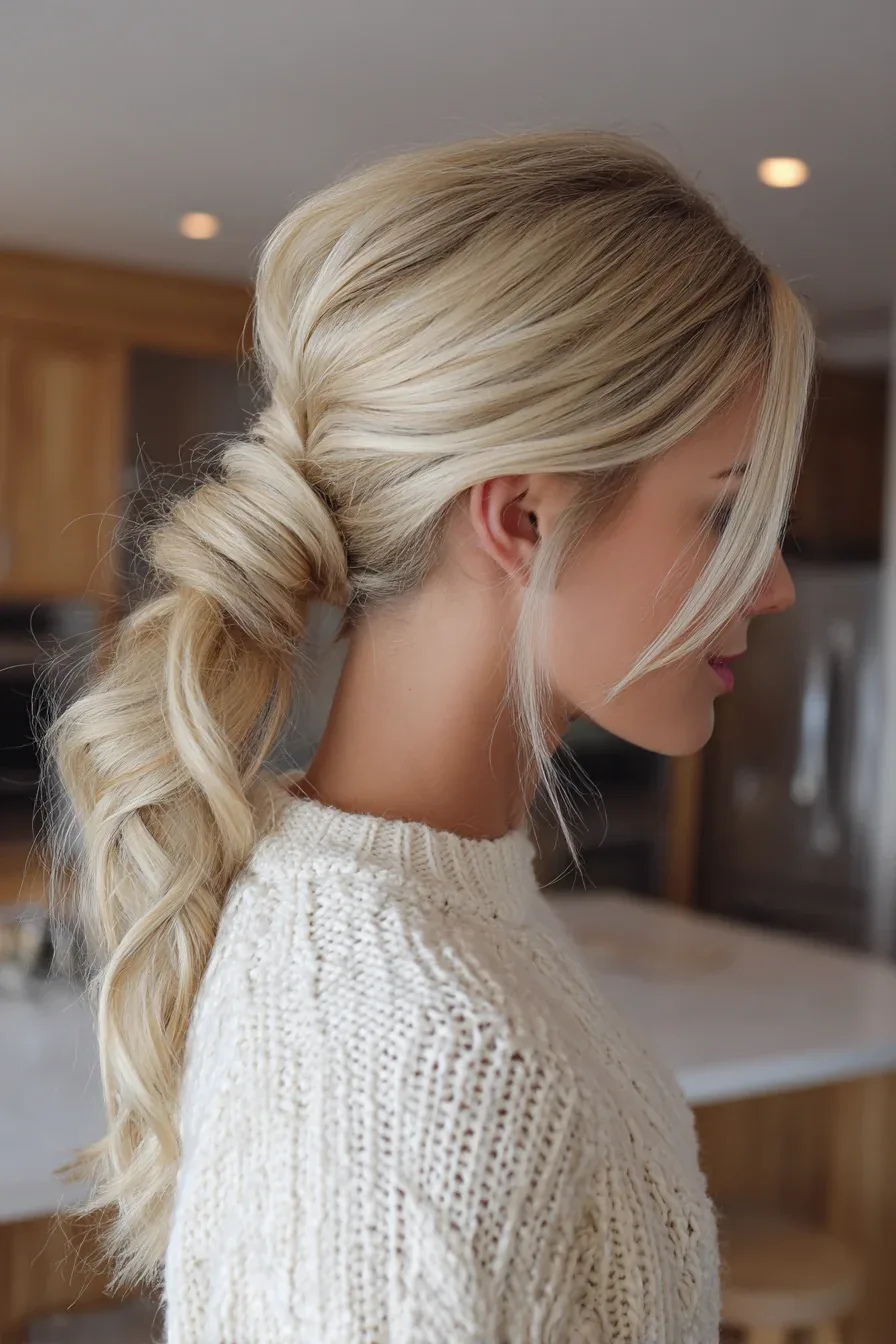
A messy side ponytail is the après-ski hairstyle for the woman who has just come off the slopes and wants to look relaxed, not reconstructed. The hair is swept to one side, gathered loosely over one shoulder, and tied with a soft elastic — the looseness is the point, and the pieces that fall out around the face are the prettiest part. It takes two minutes, it works with the texture a day on the mountain has already given the hair, and it looks lovely with a chunky sweater by the fire.
How to style it: sweep the hair to one side, gather it loosely over the shoulder, tie it with a soft elastic, and pull out a few pieces at the front. Maintenance: none — if it loosens, just pull it out a little more. Common mistake: making it too neat, which turns a relaxed après-ski style into a formal ponytail. Cost and time: free, and two minutes. Quick verdict: the easiest evening style on the trip.
20. The Waterfall Braid With a Pom-Pom Beanie
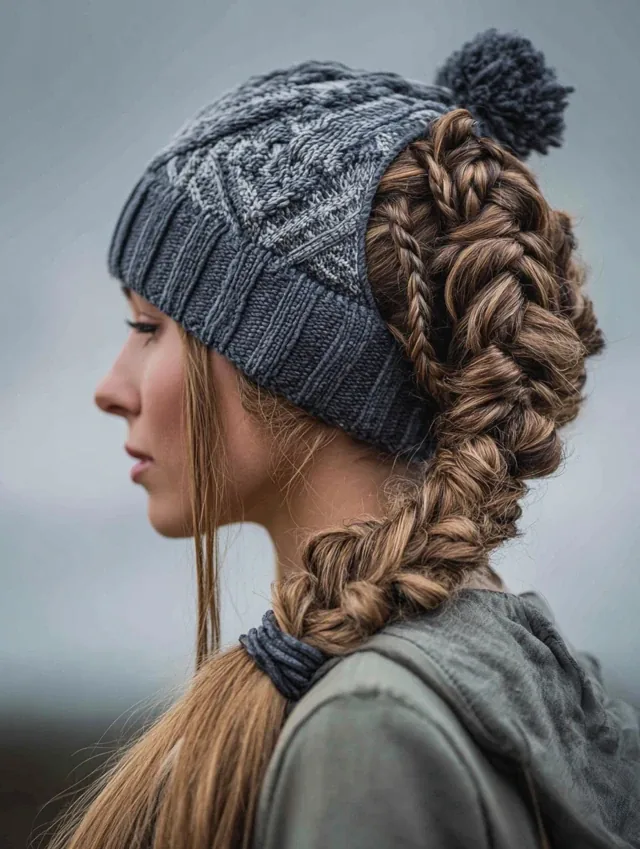
A waterfall braid with a pom-pom beanie is the prettiest braided style in this guide — the braid runs across the back of the head, dropping strands through it like a waterfall, while the loose hair falls in soft waves below the beanie. It is romantic, it is a little bit magical in the snow, and it works because the braid itself is anchored and flat, so the beanie sits level on top of it while the waves do the talking underneath.
How to style it: start a French braid at one temple, and with each stitch, drop the bottom strand and pick up a new one from below, so the dropped strands fall through the braid like water. Pros and cons: it looks stunning and photographs beautifully, but it takes practice — do a trial run the night before your trip. Who should avoid it: very short hair, which cannot waterfall. Quick verdict: the braid to wear when you want the photos to be beautiful.
21. Low Pigtail Braids for Beginners
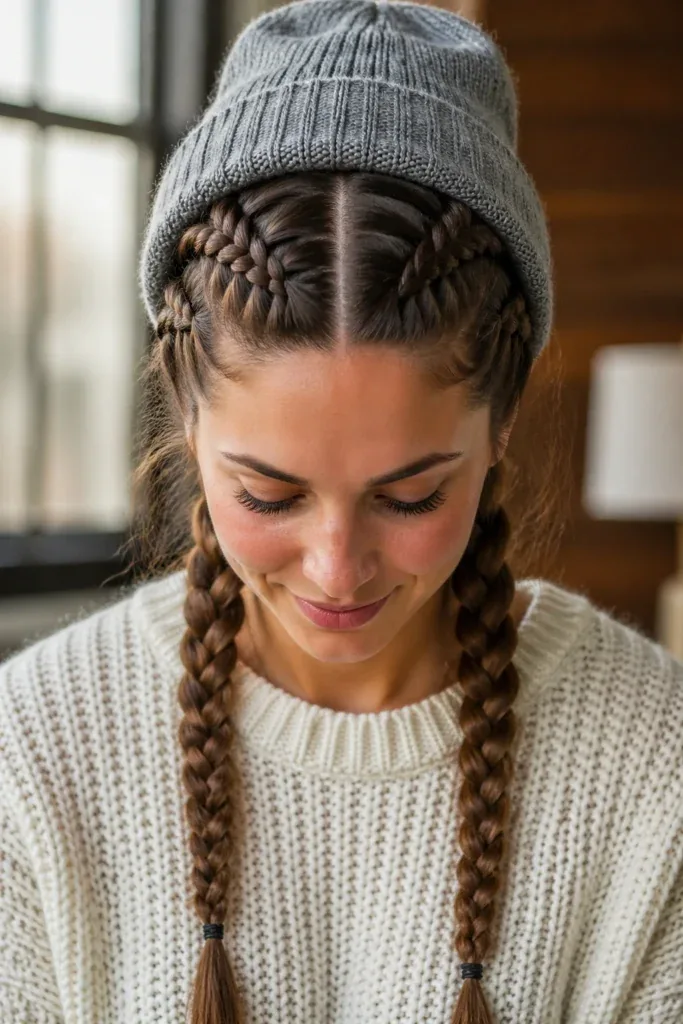
Low pigtail braids are the easiest braided style on a ski trip, and the friendliest for beginners — two ordinary braids, one on each side, tied low at the nape, and that is the whole technique. They sit flat under a helmet, they keep the hair completely contained in the wind, and they distribute the bulk evenly, so a snug helmet fits better than it does with one thick braid down the back. They are cute, they are practical, and they take five minutes.
Best for: beginners, long hair, and anyone learning to ski — the braids stay put no matter how many times you fall. How to style it: part the hair in the middle, braid each side loosely from behind the ear down, pull the edges out gently for fullness, and tie with soft elastics. Pros and cons: they hold all day and are the easiest braids here, but they can look young — dress them up with a silk scarf at the base for the evening. Quick verdict: the easiest braid on the mountain.
22. The Voluminous Blowout for Lodge Dinner
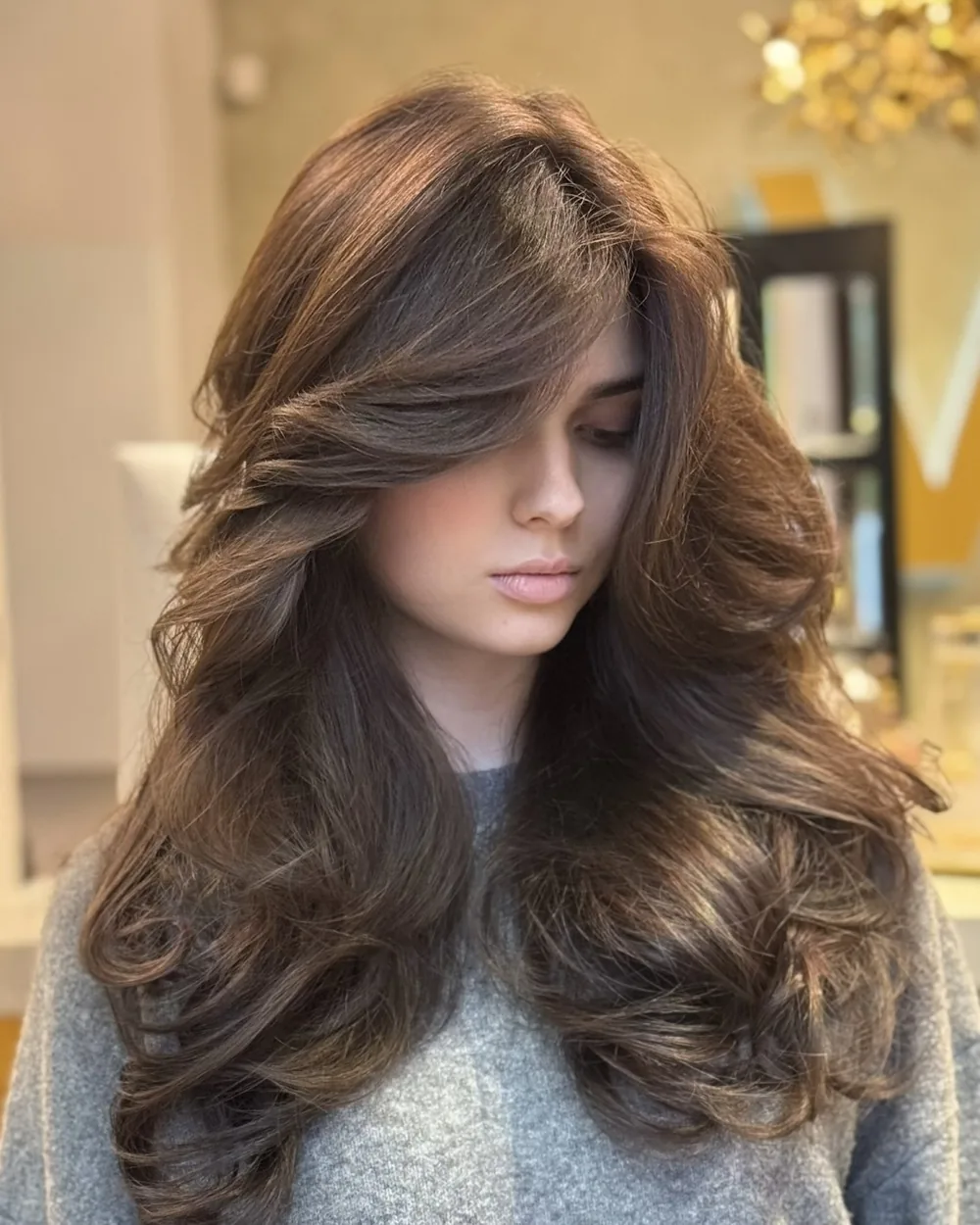
A voluminous blowout is the glamour option of this guide, and it works on a ski trip because the volume is at the ends, not at the crown. The blowout is smooth and full through the lengths, the beanie sits on a smooth crown in the daytime, and in the evening the brim comes off and the volume is the star — the result is a look that feels like a magazine shoot, even after a day on the slopes. The trick is to blow-dry the crown smooth and put the body in the lengths, so the hat never has to fight the hair.
Best for: medium to long hair, and ski-trip evenings when you want to look your best. How to style it: blow-dry in sections with a large round brush, turning the ends under and lifting the lengths, and finish with a light-hold spray. Pros and cons: it is gorgeous and photographs beautifully, but it takes twenty to thirty minutes and will drop in humidity — save it for the lodge, not the slopes. Maintenance: a volumising mousse on damp hair helps it last. Quick verdict: the glamour option — save it for dinner.
23. Face-Framing Layers Peeking From a Beanie
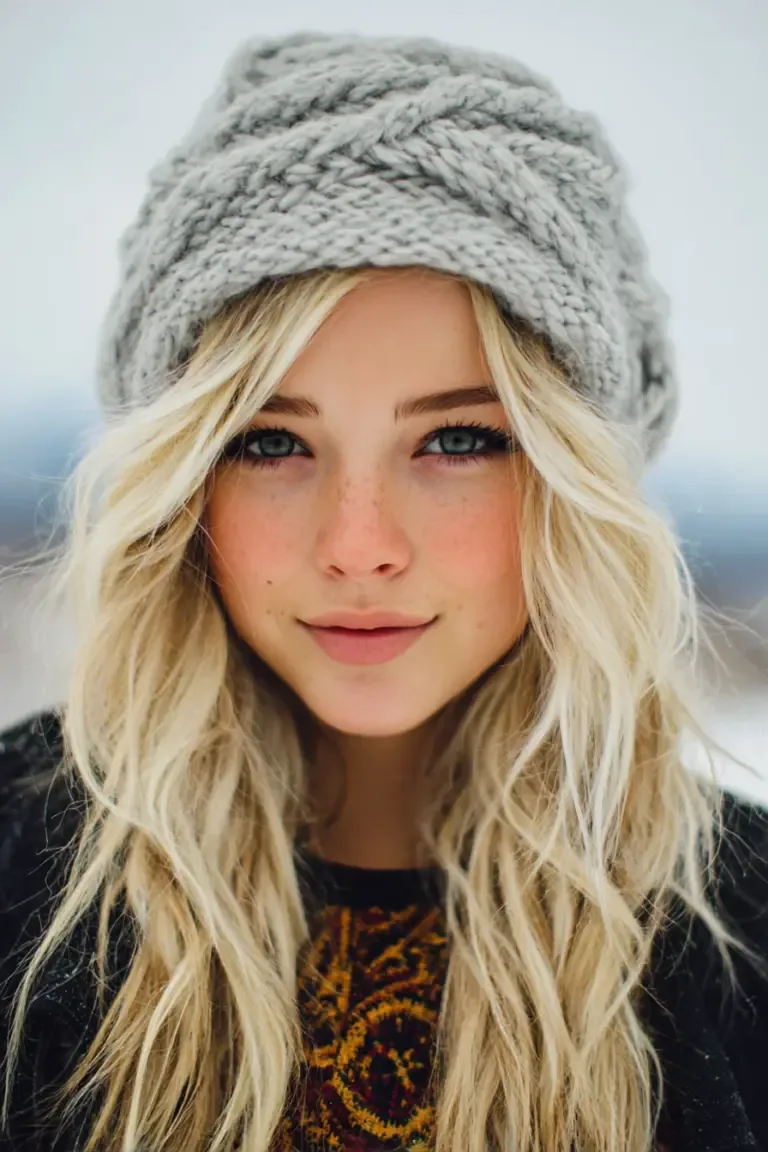
Face-framing layers with a beanie are a beautiful ski-trip style for women who love their long hair and do not want to pin it up. Two shorter pieces at the front — starting at the cheekbones and curving down past the chin — soften the face and keep the hair from falling in a flat curtain under the beanie, while the layers through the back keep it light and moving. The beanie pushes the layers back slightly, which only makes the face-framing pieces more visible.
Best for: long hair, all textures, and women who want to keep their length on the trip. How to style it: blow-dry the front pieces with a round brush, curving them away from the face, and add a loose wave through the lengths. Common mistake: layers that start at the chin or lower, which do almost nothing for the face — they need to start at the cheekbones to work. Cost and time: a standard salon cut, about an hour, done before the trip. Quick verdict: the best way to wear long hair down under a beanie.
24. The French Twist for Après-Ski Dinner
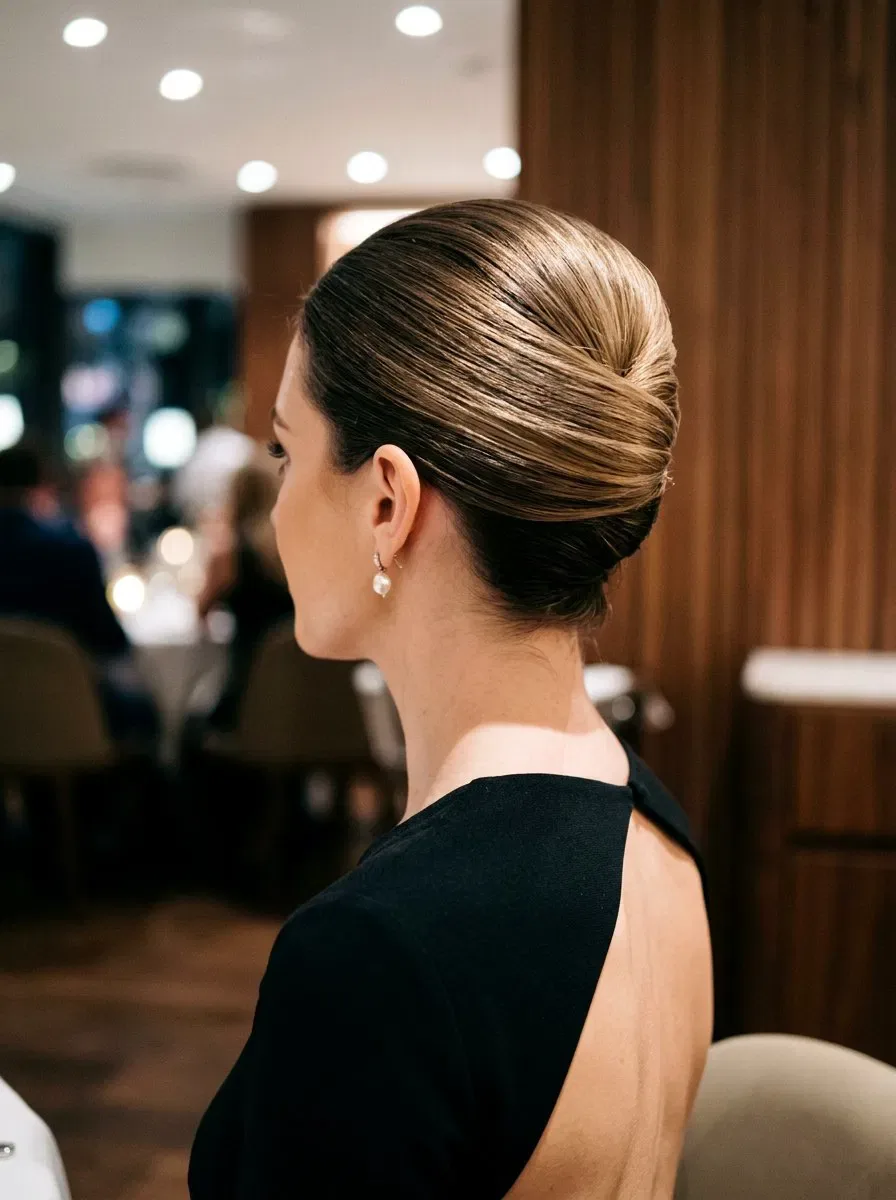
The French twist is the most timeless updo there is, and at an après-ski dinner it looks exactly as it should: grown-up, graceful and completely unhurried. The twist sits low and sleek, so it works with hair that has spent the day under a helmet, and the vertical roll keeps the back of the head neat and compact. A couple of soft pieces left out at the front keep it from looking severe, and the whole combination is the one to choose when dinner is the main event of the evening.
Best for: formal lodge dinners and women who love a classic look. How to style it: gather the hair to one side, twist it upwards against the head and pin it in a vertical line with large bobby pins. Cost and time: about ten minutes at home, or thirty minutes in the salon for a special occasion. Common mistake: making it too tight and too high, which looks severe rather than elegant. Quick verdict: timeless for a reason — and it never looks out of place at dinner.
25. The Claw-Clip Twist for the Lodge
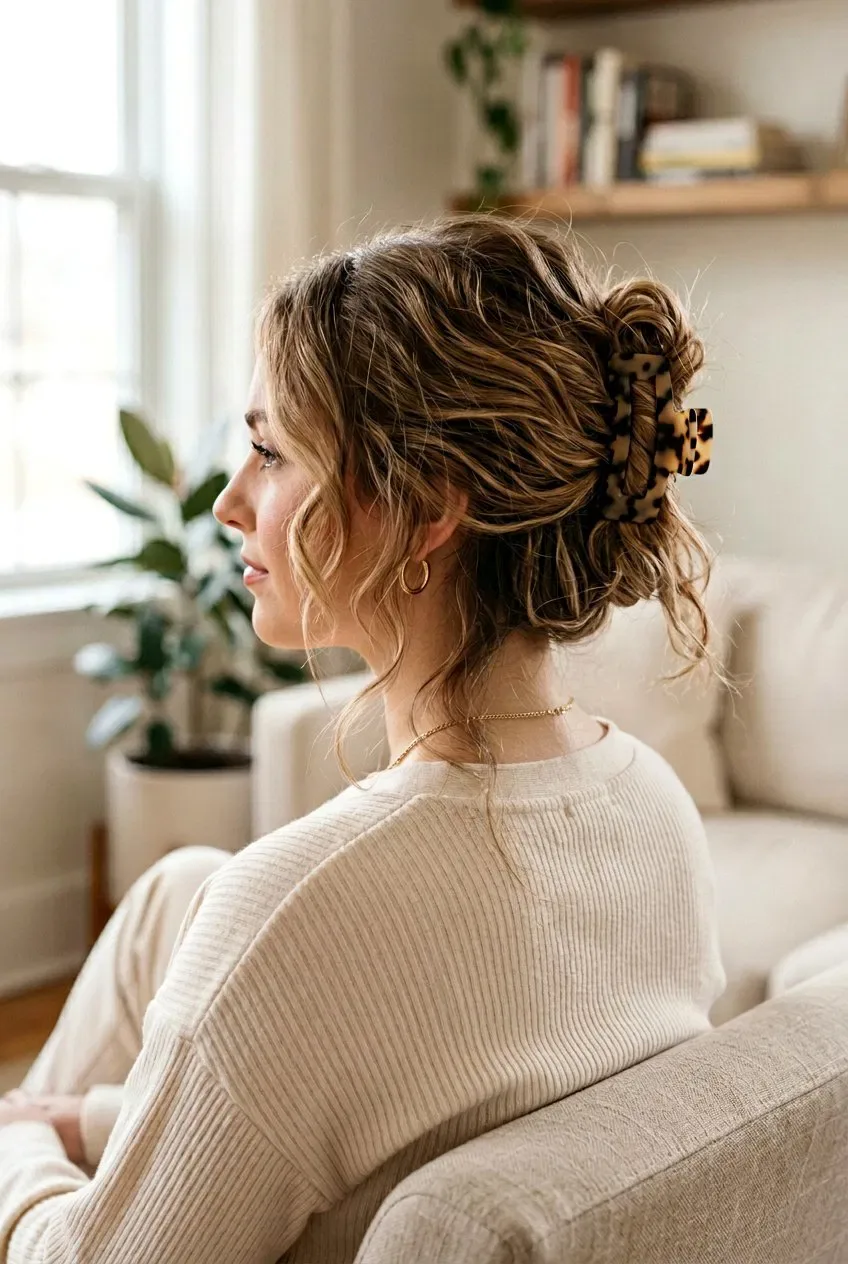
A claw-clip twist is the lodge hairstyle — the one you reach for when you come in from the cold, peel off the helmet and the beanie, and want your hair up and out of the way in ten seconds. The hair is gathered, twisted up the back of the head, and clipped, and the twist holds the warmth in while you thaw out by the fire. It is casual, it is comfortable, and it looks far more put-together than a ten-second style has any right to.
Best for: medium to long hair, and the hours between skiing and dinner. How to style it: gather the hair at the back, twist it upwards, fold the ends over, and clip it with a large claw clip. Pros and cons: it is the fastest updo in this guide and very comfortable, but it will not survive a helmet — save it for the lodge. Common mistake: a clip that is too small for your hair, which slips — use a large, strong clip. Quick verdict: ten seconds to a style that looks like you tried.
26. Sleek Straight Hair Under a Helmet
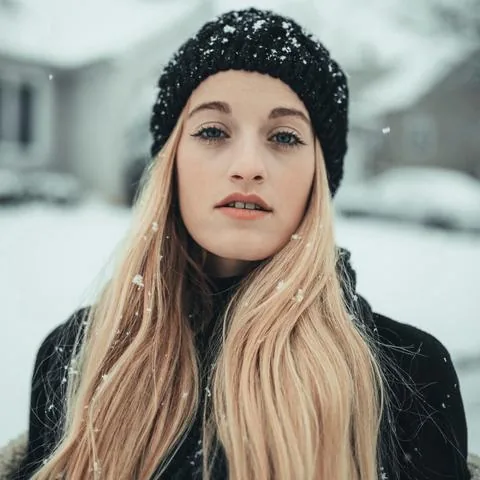
Sleek straight hair under a helmet is the modern, minimal ski look — the hair is smooth and straight, the helmet sits flat on a smooth crown, and the whole combination is clean, confident and completely effortless. It works on straight hair best, because the sleekness is the point, and a drop of hair oil on the lengths keeps the cold air and the wind from roughing it up. A middle part keeps it symmetrical; a deep side part adds a little drama for the evening.
Best for: straight hair, shoulder-length cuts, and women who like a clean, classic look. How to style it: blow-dry in sections with a large round brush, turning the ends under slightly, and finish with a drop of shine serum. Pros and cons: it is clean, polished and easy, but it will tangle in strong wind, so it is not the best choice for a stormy day — braid it on those days. Quick verdict: the salon-fresh look, under a helmet.
27. The Low Curly Ponytail for the Slopes
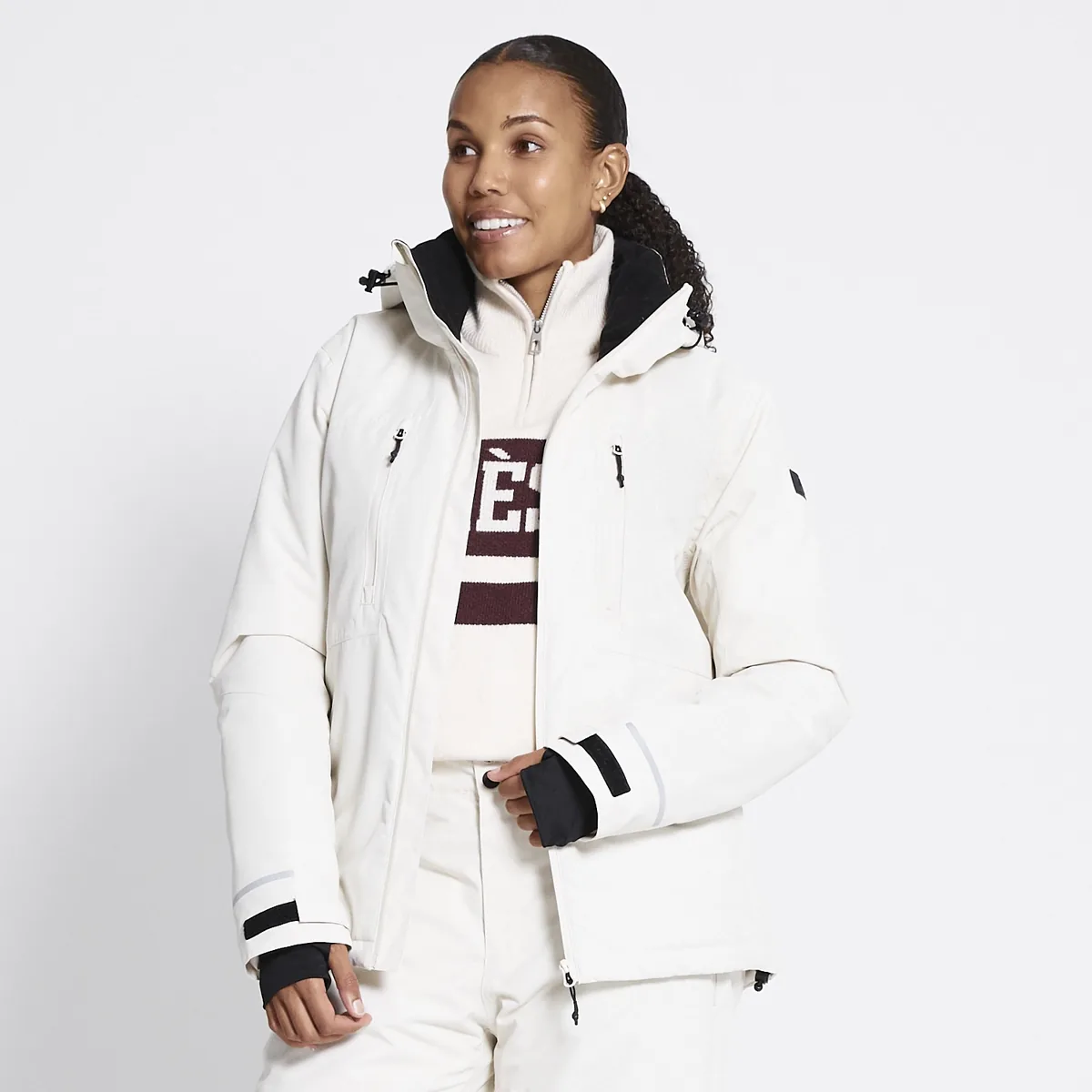
A low curly ponytail is the ski-trip style for curly hair, and it works with the curls instead of fighting them. The curls are gathered low at the nape, below the helmet’s shell, so the helmet sits flat and the curls fall in a soft, full ponytail down the back — no bunching, no flattened crown, no curls crushed under a beanie. A little curl cream on damp hair before you go out keeps the curls defined in the cold, dry air, and a silk scrunchie protects the hair from breakage.
Best for: curly and wavy hair, and full ski days. How to style it: work curl cream through damp hair, gather it low with a silk scrunchie, and let the curls fall naturally — do not brush them out. Common mistake: brushing curly hair dry before a ponytail, which turns defined curls into frizz. Maintenance: a leave-in conditioner on the ends every morning. Quick verdict: low, loose, and let the curls do the work.
28. The Braided Headband With Loose Waves
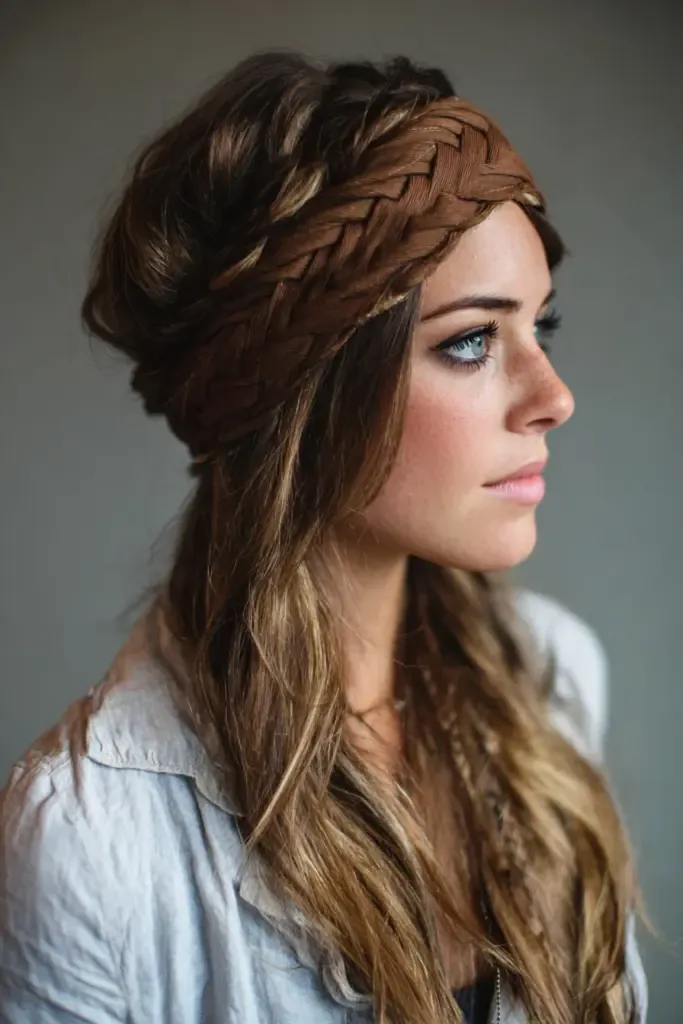
A braided headband with loose waves is a romantic ski-trip style that keeps the hair out of your face without putting it all up. A small braid runs across the hairline like a headband, holding the front hair back from the goggles, while the rest of the hair falls in loose waves below the beanie. It is pretty, it is practical, and the braid does the work while the waves do the pretty — and the beanie, sitting on top, frames the braided headband perfectly.
How to style it: take a section from behind one ear, braid it, bring it across the hairline and pin it behind the other ear, then curl the rest of the hair in large sections and brush them out into waves. Pros and cons: it is quick, pretty and secure at the front, but it needs enough length to braid across — very short hair will need a different option. Maintenance: none on the day. Who should avoid it: nobody — the braid can be as small or as large as you like. Quick verdict: down, but out of your face — the best of both on the slopes.
29. The Low Bun With a Braided Wrap
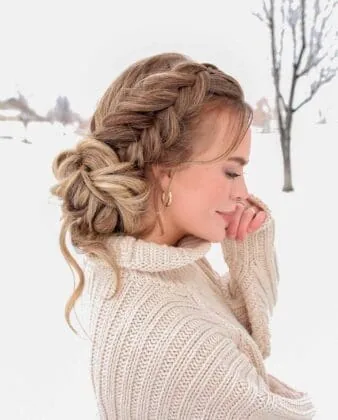
A low bun with a braided wrap combines the two most reliable ski styles — a bun and a braid — into one. The hair is gathered low and twisted into a bun, then a thin braid is wrapped around its base and pinned, which gives the bun beautiful texture and makes it far more secure than an ordinary bun, because the braid itself holds the shape. The beanie sits softly over the top, and the combination is pretty, practical and completely wind-proof.
Best for: medium to long hair, and days outdoors in the snow. How to style it: make a low bun first, then take a small section of hair, braid it, wrap it around the base of the bun and pin the end underneath. Maintenance: none on the day — the braid holds everything. Common mistake: wrapping the braid too tightly, which makes the bun stiff rather than soft. Cost and time: about ten minutes. Quick verdict: two reliable styles, better together under a beanie.
30. The Side-Swept Pixie Under a Beanie
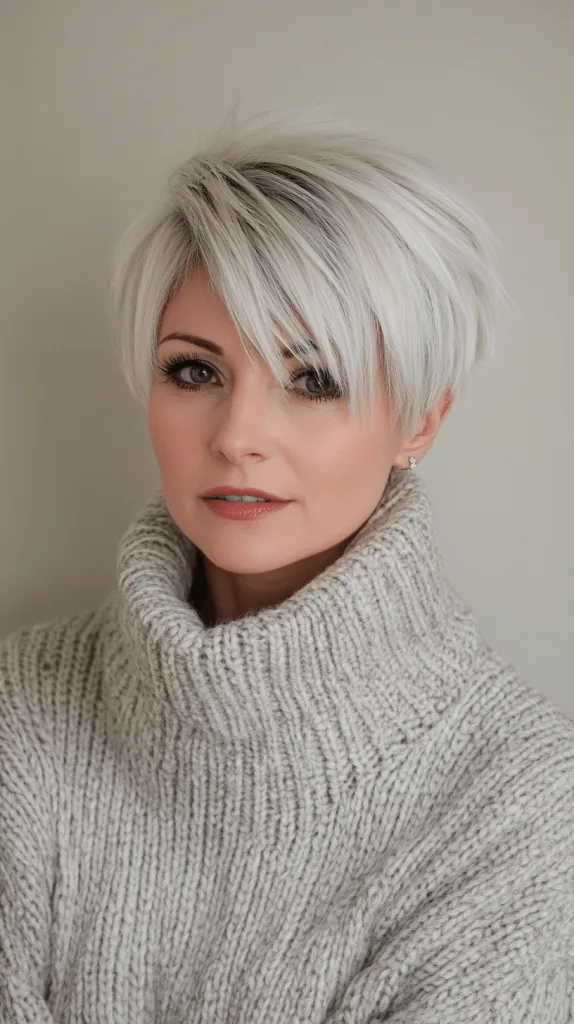
A side-swept pixie under a beanie is proof that short hair and ski trips are a perfect match — the pixie is light, it has no bulk for the beanie or the helmet to fight, and the side sweep gives the beanie something to frame. Tilt the beanie slightly to the opposite side from the sweep and the two balance each other beautifully, and when the beanie comes off, a quick run of the fingers through the pixie is all it takes to bring it back. It is chic, it is confident, and it needs no pinning at all.
Best for: short hair, and women who love a bold, graphic look. How to style it: blow-dry the pixie with a little texture paste, sweep the top to one side, and pull the beanie on low. Pros and cons: it is striking and very low maintenance once cut, but it is a commitment — growing a pixie out takes patience. Who should avoid it: nobody — the beanie suits a pixie at any age. Quick verdict: the chicest short ski hairstyle in this guide.
31. The Low Bubble Ponytail for the Slopes
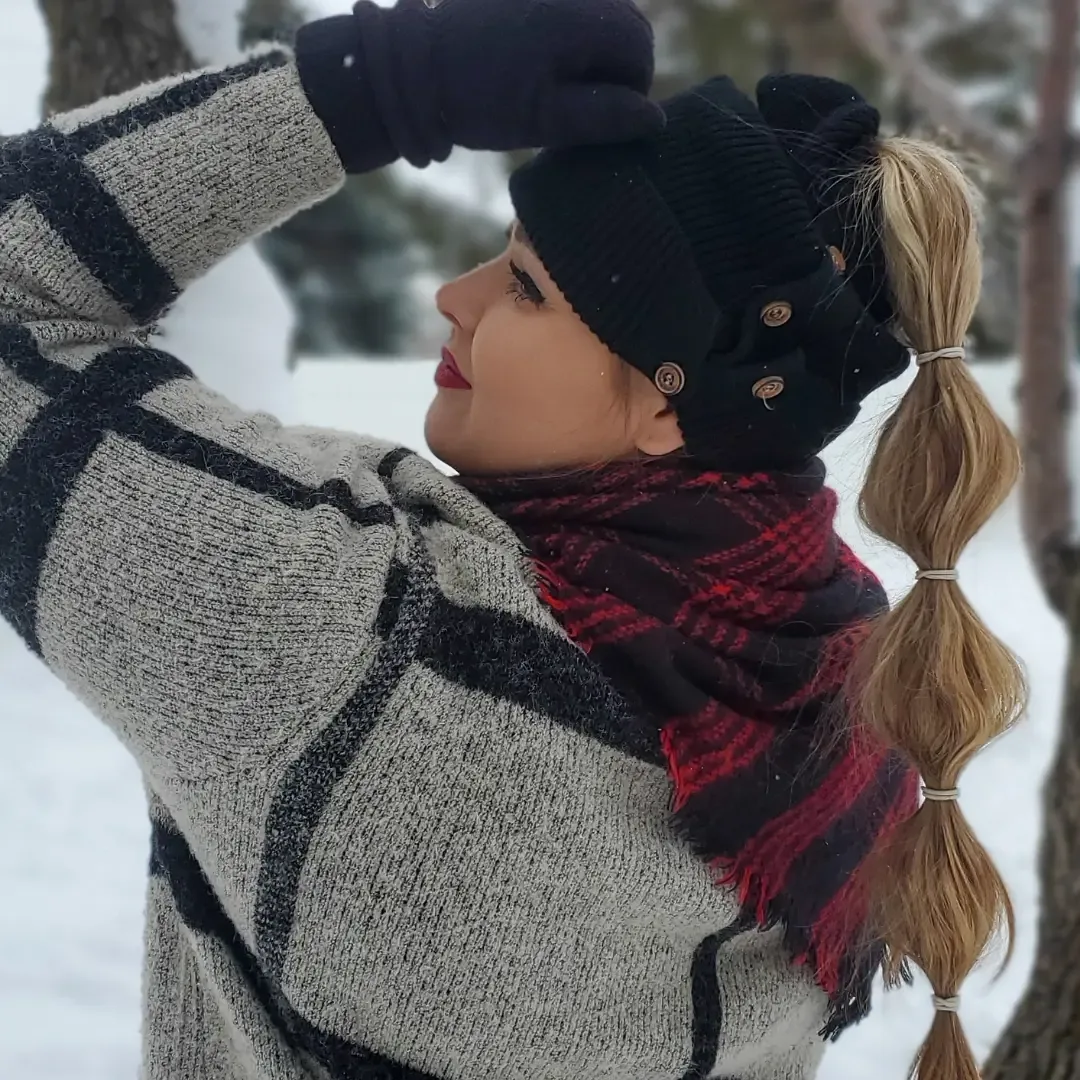
A low bubble ponytail for the slopes is a playful twist on the classic ski ponytail, and it looks surprisingly put-together under a beanie. The ponytail is secured low at the nape, then tied again at intervals down its length, with each section gently pulled out to form soft bubbles — and because the bubbles start below the helmet and the beanie, nothing gets crushed. It is fun, it is secure, and it keeps long hair neatly contained on a windy day on the mountain.
Best for: long hair and women who want a ponytail with a little more personality. How to style it: gather the hair low, secure it, then add small elastics every few inches down the ponytail, pulling each section out gently for fullness. Pros and cons: it is secure, pretty and fun, but it needs a few elastics and a little patience. Common mistake: pulling the bubbles out unevenly, which makes the ponytail look lopsided — step back and check in the mirror. Quick verdict: the ponytail, dressed up for the slopes.
32. The Romantic Loose Updo for Après-Ski Evening
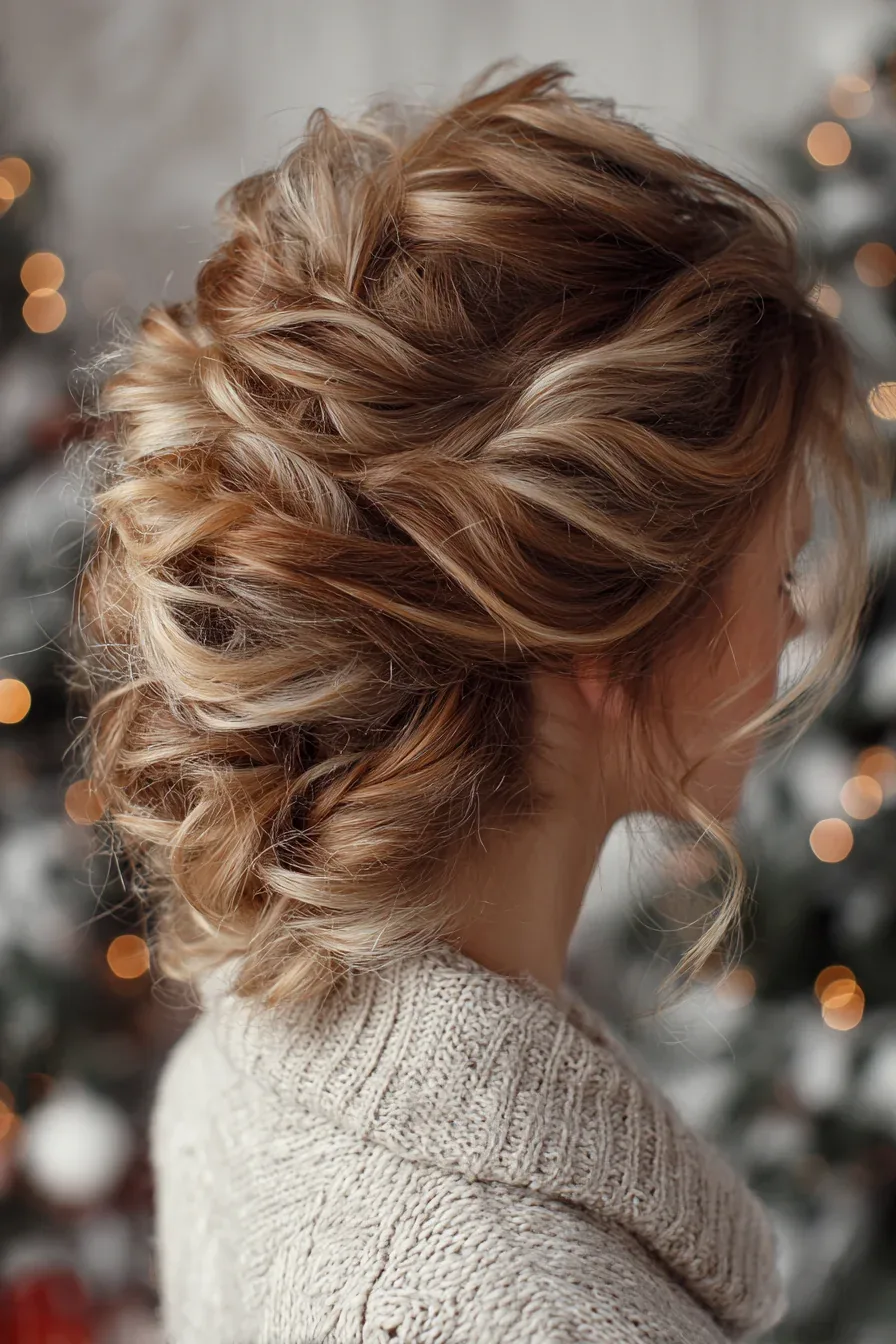
A romantic loose updo is the softer sister of the formal chignon and the finishing style of this guide: the hair is gathered up loosely, pinned with plenty of texture, and finished with soft pieces left out around the face and at the nape. After a day under a helmet it works beautifully, because the looseness adds warmth and the low placement keeps it modest, while the soft pieces frame the face in the firelight. It is dreamy, forgiving and wonderfully easy to wear — and as the evening goes on and a few more pieces fall loose, it only looks more romantic.
Best for: a lodge dinner, a fireside evening, and medium to long hair. How to style it: curl the hair first, gather it loosely at the back, pin it in soft sections, and pull out pieces around the face. What to ask your stylist: ask for the pieces to be curled, not left straight, so they frame the face instead of hanging limply. Maintenance: re-curl one piece if it drops. Quick verdict: the most forgiving updo here — it gets prettier as the evening goes on.
What is the best hairstyle for a ski trip?
The best hairstyle for a ski trip is one that keeps the bulk low and the crown smooth — a low braid, a low bun, a low ponytail, or a textured lob. These styles sit flat where the helmet rests and keep the fullness where the helmet ends, so the helmet fits properly and the hair still looks good when it comes off. Two French braids are the safest all-round choice, and a low messy bun is the easiest pretty option.
Can I wear my hair down on a ski trip?
You can wear your hair down on a ski trip, but it needs containing: loose hair tangles in mountain wind in about thirty seconds, and it catches in helmet straps and gaiters. The wind-proof way to wear it down is a half-up style, with the top section twisted or braided back and pinned, or a braided headband holding the front back while the rest falls in waves. If the wind is strong, braid it — you can always take the braid out in the lodge for instant waves.
How do I stop helmet hair on a ski trip?
Prevent helmet hair by styling volume into the roots while the hair is still damp, dusting dry shampoo at the roots before the helmet goes on, and wearing a thin silk scarf under the helmet to cut friction. Never put a helmet on soaking-wet hair and let it dry underneath — that guarantees a dent, and in freezing weather the hair can freeze. When the helmet comes off, flip the hair upside down, massage the roots, and mist the dented sections lightly with water to reset the shape.
What hairstyles fit under a ski helmet?
The hairstyles that fit under a ski helmet are low braids, low buns, low ponytails, and loose hair tucked into a gaiter — anything that keeps the bulk at the nape and the crown smooth. Two French braids, boxer braids, a low bubble braid, a sleek low ponytail, and a low messy bun all fit perfectly. High ponytails, top knots and tall buns do not fit: they push the helmet up, leave a gap at the forehead, and make the helmet less safe and less comfortable.
How do I stop static in my hair in cold weather?
Stop static by moisturising the hair before it dries out: smooth a few drops of hair oil or leave-in conditioner over the lengths every morning, and use a silk or satin scarf under your helmet or beanie instead of letting wool touch the hair directly. Cold mountain air is very dry, and dry hair flies away instead of lying smooth, so keeping the hair moisturised is the real fix. A drop of serum rubbed between the palms and smoothed over the surface tames any flyaways in seconds.
What should I do with my hair for après-ski?
For après-ski, take out your daytime braid or bun and let the texture do the work: a braid taken out gives you waves, a bun taken down gives you volume at the roots. Add dry shampoo at the roots, massage it in with your fingertips, flip your part to the opposite side, and make one deliberate change — twist the front sections back and pin them, or swap the braid for a low chignon. Ten minutes, and you are dinner-ready.
How do I keep my hair from tangling on the slopes?
Keep your hair from tangling by containing it: a braid, a bun, or a twist holds the hair in one place, while loose hair whips around in the wind and tangles. Braid the hair while it is slightly damp with a little leave-in conditioner, tie the end with a snag-free elastic, and tuck the ends into your jacket collar or gaiter on windy days. Carry two spare elastics and three bobby pins in your jacket pocket — they weigh nothing and they fix a tangle in two minutes.
Can I wear a beanie with a ski helmet?
You can wear a thin beanie or a balaclava under a ski helmet, but it must be thin — a thick, chunky beanie changes the way the helmet fits and can make it less safe. Most skiers wear a thin balaclava or a helmet liner instead, which keeps the ears warm without adding bulk. Whatever you wear underneath, keep the hairstyle low and smooth, and check that the helmet still sits level with no gap at the forehead before your first run.
What hair products should I pack for a ski trip?
Pack a travel-size dry shampoo, a small bottle of hair oil or leave-in conditioner, snag-free elastics, bobby pins, a folding brush or wide-tooth comb, and one silk scarf, which works as a helmet lining, a bun wrap, and an evening accessory. That is the whole kit, and it fits in a small pouch. Keep the dry shampoo and the oil in the lodge, not in a freezing car, and keep two elastics and three pins in your jacket pocket every day.
How do I protect my hair from cold and wind on a ski trip?
Protect your hair from cold and wind by moisturising it before the trip with a richer conditioner and a weekly hair mask, oiling the ends every morning on the mountain, and keeping the hair contained in a braid or a bun so the wind cannot tangle it. Wash less often — every second or third day, with dry shampoo in between — use lukewarm water, never very hot, and never go outside with wet hair in freezing weather.
Conclusion
A ski trip should be the finishing touch on a great holiday, not the enemy of a good hair day — and the 32 hairstyles in this guide are all chosen with that in mind. Low braids and buns that sit flat under a helmet, waves that survive cold dry air, sleek styles that slide under a beanie without a fight, and clever little tricks — a silk scarf under a helmet, dry shampoo at the roots, a braid that becomes your evening waves — that carry you from the slopes to après-ski without a second thought. The right ski-trip hairstyle does not demand your attention all day — it lets you forget about your hair and enjoy the mountain.
Start with the guides, not the gallery. Think about how you actually spend your ski days — helmet on for hours, beanie between runs, dinner in the lodge — and pick the style family that fits it. Try the helmet on with the hairstyle before your first run, pack the tiny hair kit the night before, and choose the version that feels like you on your best day. Your hair should be the least of your worries on a ski trip. Now it can be.