Saying ‘I Do’ in the Backyard: 37 Hairstyles for a Backyard Wedding That Feel Romantic, Not Rustic
A backyard wedding has a magic no ballroom can copy: string lights in the trees, grass underfoot, and the people you love most gathered steps from your own back door. But outdoor vows ask one extra question of your hair — how do you look romantic and polished when the wind, the sun and the humidity all have their own plans? The right hairstyle answers that question before it is ever asked.
These hairstyles for a backyard wedding are chosen for real outdoor conditions, not just for pretty photos. Every look below works with a breeze instead of fighting it, photographs beautifully in natural light, and still looks like you at the last dance. From loose romantic waves to wind-proof low buns, braided crowns to flower-pinned pixies, there is a style here for every hair length, texture and level of fuss.
Before you pick, think about your setting the way you would think about your dress. A garden ceremony under trees, a sunny lawn at noon and a golden-hour evening all ask for slightly different hair. The eight guides at the start of this post cover wind, humidity, photos and quick fixes, so read those first — then find the style that feels most like you.
Wind-Proofing Your Backyard Hair
Wind is the one guest you cannot uninvite from a backyard wedding. The trick is not to fight it with a helmet of hairspray, but to build a style that moves gracefully instead of falling apart. Anchored updos, braided sections and pinned-back fronts all let the breeze play with the ends while the structure stays put.
Ask your stylist to anchor every section with at least two pins crossing in an X, and to finish with a flexible-hold spray rather than a stiff one. Flexible hold lets hair sway and settle back into place; stiff hold cracks, flakes and leaves white marks in photos. A quick trial run on a breezy day is worth more than any product promise.
Pack a small wind kit for the day: four bobby pins that match your hair colour, a travel-size flexible spray, and one decorative pin you actually like. If a piece escapes during the ceremony, you can tuck it back in thirty seconds — and honestly, one soft strand blowing across your cheek in the photos usually looks romantic, not messy.
Humidity and Heat: Keeping Hair Fresh Outdoors
Humidity is the quiet enemy of backyard hair. It swells the hair shaft, loosens curls and turns a smooth blowout into frizz within an hour — especially in a garden after rain or near a pool. The defence starts the night before, not the morning of the wedding.
Wash with a smoothing or anti-humidity shampoo, blow-dry hair completely before styling, and ask for an anti-humidity serum worked through the lengths. Curls actually hold better in humidity than straight styles do, because a little extra texture reads as intentional. If your hair is fine and straight, a lightly textured updo will outlast a sleek blowout by hours.
On the day, keep a small blotting paper or tissue in your clutch for your hairline, and resist touching your hair — hands transfer warmth and moisture. A light mist of anti-humidity spray at the halfway point of the day does more than re-spraying hairspray ever will.
Grass and Garden Photos: Hair That Photographs Beautifully
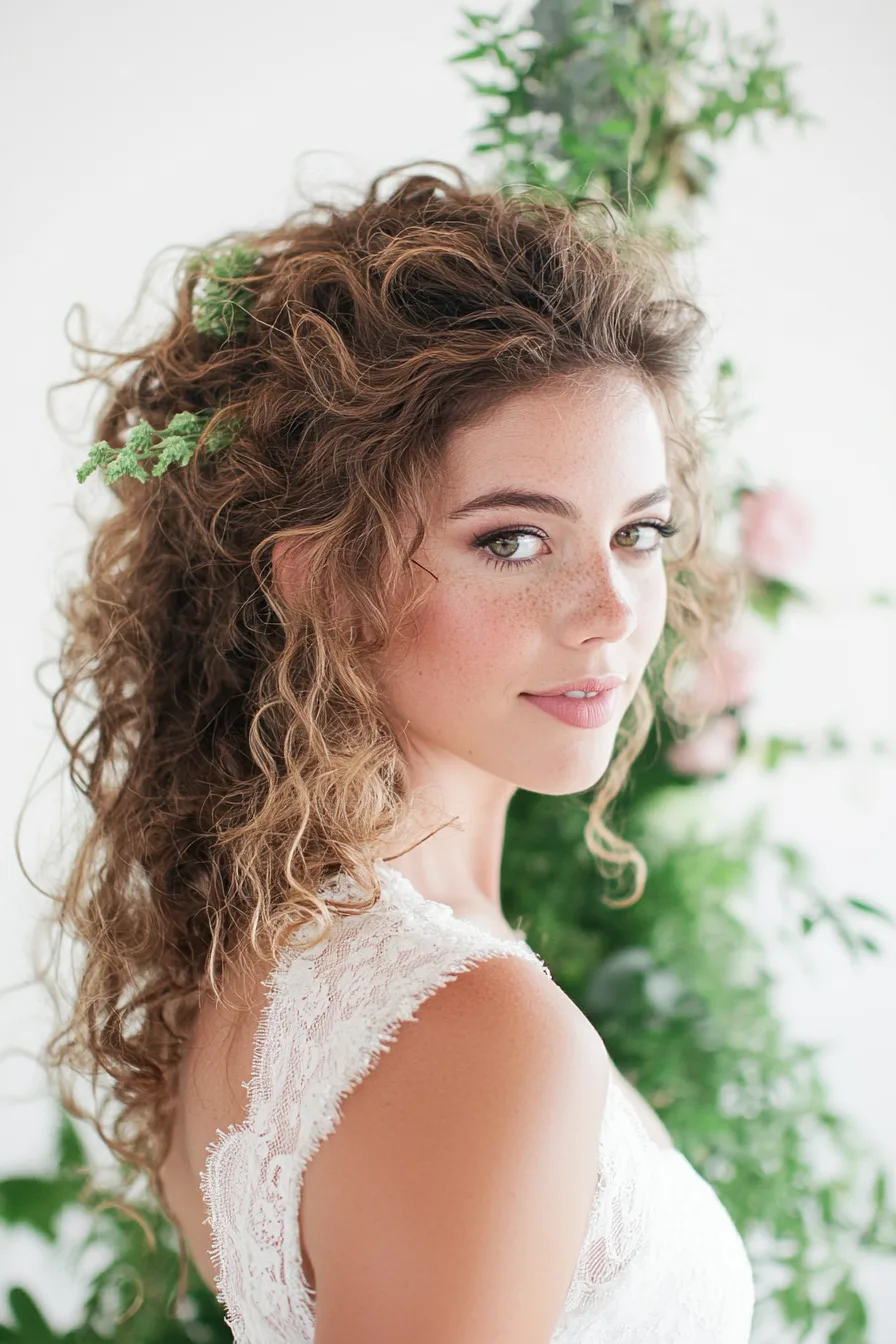
Garden light is flattering, but it is also honest — it shows every flyaway and every flat spot. Styles with movement photograph best outdoors: soft waves, loose braids and textured updos catch the light and give the camera something to love. Very sleek, flat styles can look severe against soft greenery.
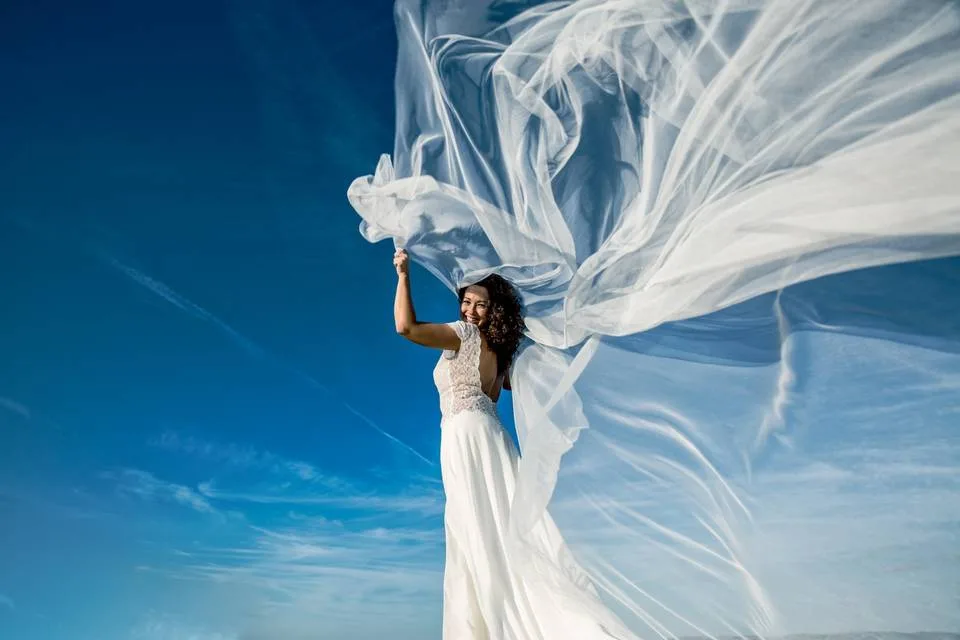
Ask your photographer where the light falls during your ceremony hour and tell your stylist. Backlit hair glows beautifully, so a few loose, face-framing pieces are worth their weight in gold at golden hour. If you wear a veil, a low attachment point under a bun or twist keeps it from catching the wind like a sail in photos.
One practical tip: do your first-look photos before the ceremony, while your hair is freshest. By the reception, the candid dancing shots will look joyful whatever your hair is doing — and that is exactly the point.
Updo vs Down: Choosing for an Outdoor Ceremony
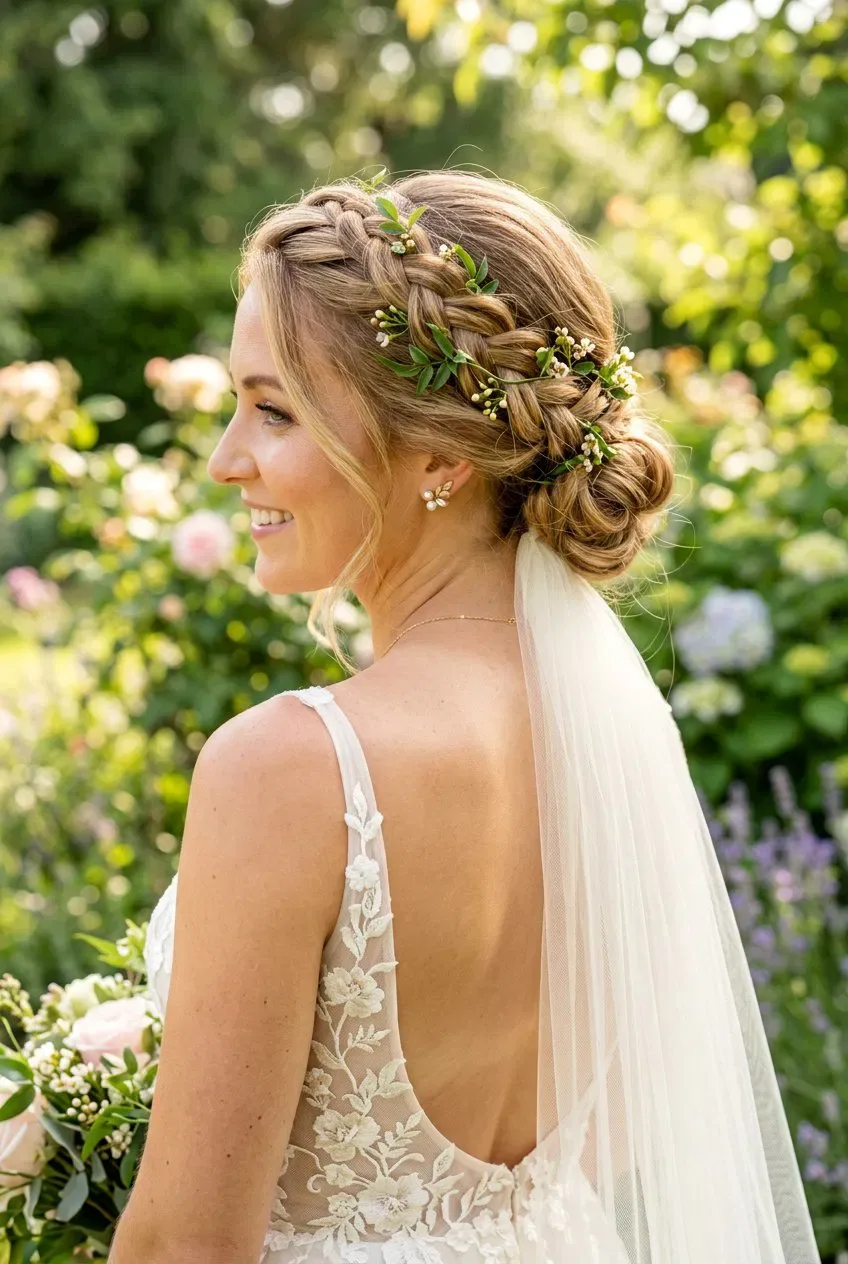
The updo-versus-down debate matters more outdoors than it does indoors. An updo keeps hair off your neck on a hot day, survives wind, and shows off the back of your dress. Hair worn down feels softer and more romantic, but it needs more maintenance once the breeze and the dancing start.
A good middle ground is the half-up style: the front and crown are secured, so nothing blows into your face during the vows, while the lengths stay loose and romantic down your back. It photographs like hair-down and behaves almost like an updo — the best of both worlds for a backyard setting.
Decide by your priorities. If your ceremony is at midday in summer, lean updo. If it is a cool evening under string lights, hair down is low-risk. And if you truly cannot choose, ask your stylist for a convertible style — an updo that can be released into waves for the reception with the removal of three pins.
Matching Your Hair to a Backyard Setting
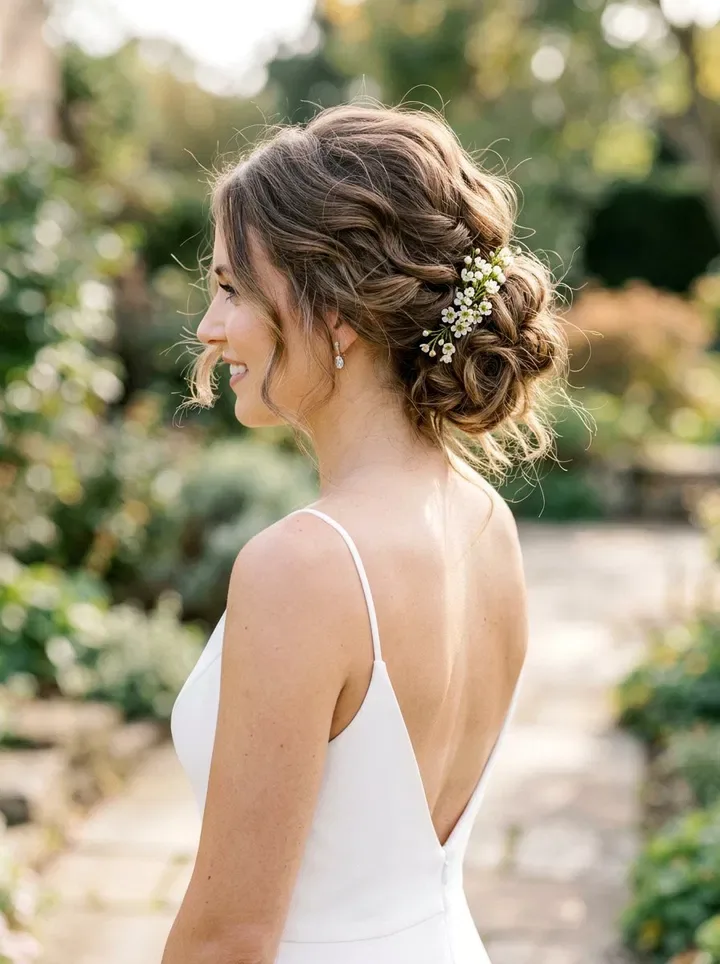
A backyard wedding is relaxed by nature, and your hair should match that feeling. A severe, sculpted updo can look out of place next to a wooden arch and wildflowers, while soft texture, loose braids and fresh flowers feel like they belong. The goal is polished, not formal.
Match your hair to your dress as well as your setting. A backless or low-back dress deserves an updo or a side-swept style that shows it off. A high-neckline or long-sleeve dress pairs beautifully with hair worn down or half-up, since there is nothing to compete with at the back.
Finally, match the scale of your style to the scale of your garden. A small, intimate backyard suits delicate, understated hair; a sprawling estate garden can carry something more dramatic, like a full braided crown or voluminous waves. When in doubt, go one step softer than you think — the garden will do the rest.
Accessories That Stay Put Outside
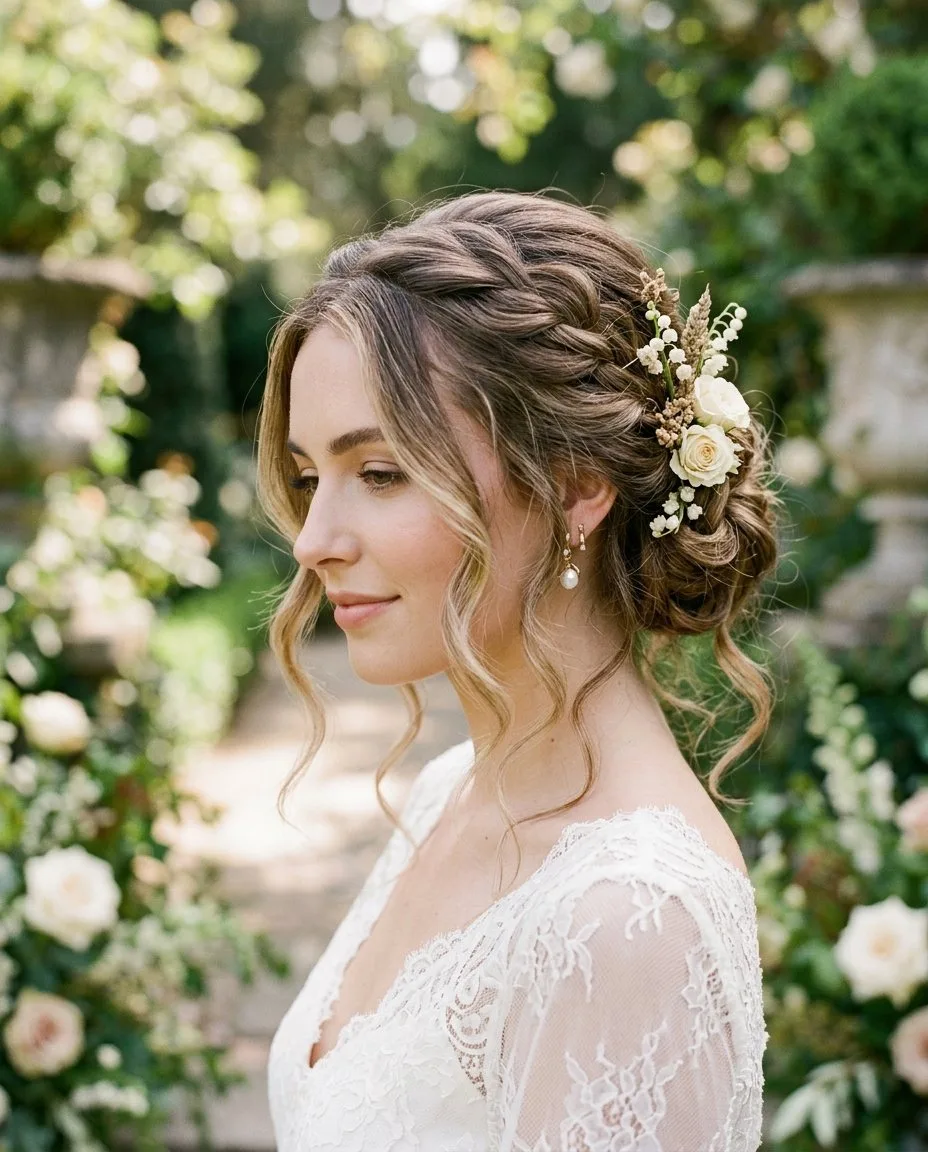
Outdoor accessories need grip, not just beauty. A heavy crystal comb that slides out in the first gust is worse than no accessory at all. Choose pieces with combs, claws or multiple pin points, and always test them on a windy day before the wedding.
Fresh flowers are the classic backyard choice, and they work best when wired onto a comb or pinned in small clusters rather than worn as one heavy crown. A flower crown looks dreamy, but anchor it with pins at the temples and the nape — and keep a few spare blooms in water for the reception.
Pearl pins, gold cuffs on a braid, and a simple silk ribbon all photograph beautifully and stay put. Avoid anything dangly near your face, which will swing in the wind and distract you during the vows. The best accessory is one you forget you are wearing.
Hair by Ceremony Time: Day vs Golden Hour
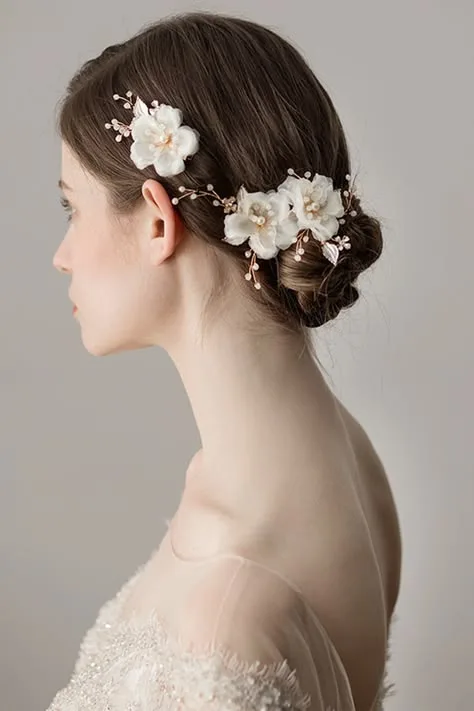
The time of your ceremony changes what your hair needs to do. A midday ceremony means strong sun, heat and sweat — hair should be off your neck and firmly anchored. A golden-hour ceremony, that last hour before sunset, is the most forgiving light of the day and the most romantic for loose, flowing styles.
If you marry at noon, plan for shine control and a style that survives heat: a low bun, a braided updo or a secured half-up. Keep a hand fan and blotting papers nearby. If you marry at golden hour, let the light do the work — soft waves, a low ponytail with movement, or a loose braid will glow.
One clever option is a two-look plan: a secure updo for a daytime ceremony, released into waves for a golden-hour reception. Tell your stylist in advance — it takes five minutes if planned, and it gives you two completely different photo sets.

Quick Fixes Between Ceremony and Reception
Between the ceremony and the reception, you usually have fifteen minutes and a hundred people who want a photo. A five-minute hair reset is all you need — if you planned for it. Pack a tiny kit and hand it to your maid of honour before the ceremony starts.
Your kit needs just five things: four bobby pins in your hair colour, a travel flexible-hold spray, a mini dry shampoo, one decorative pin, and a small mirror. Dry shampoo at the roots lifts flatness instantly, two fresh pins secure anything the wind loosened, and a spritz of spray resets the shape.
Do the reset somewhere with a mirror and decent light — a bathroom, a bedroom, even the kitchen. Shake your roots, re-pin the loosest section, and add one fresh flower or pin for the evening. Guests will swear you had a second hairstyle.
1. Loose Romantic Waves
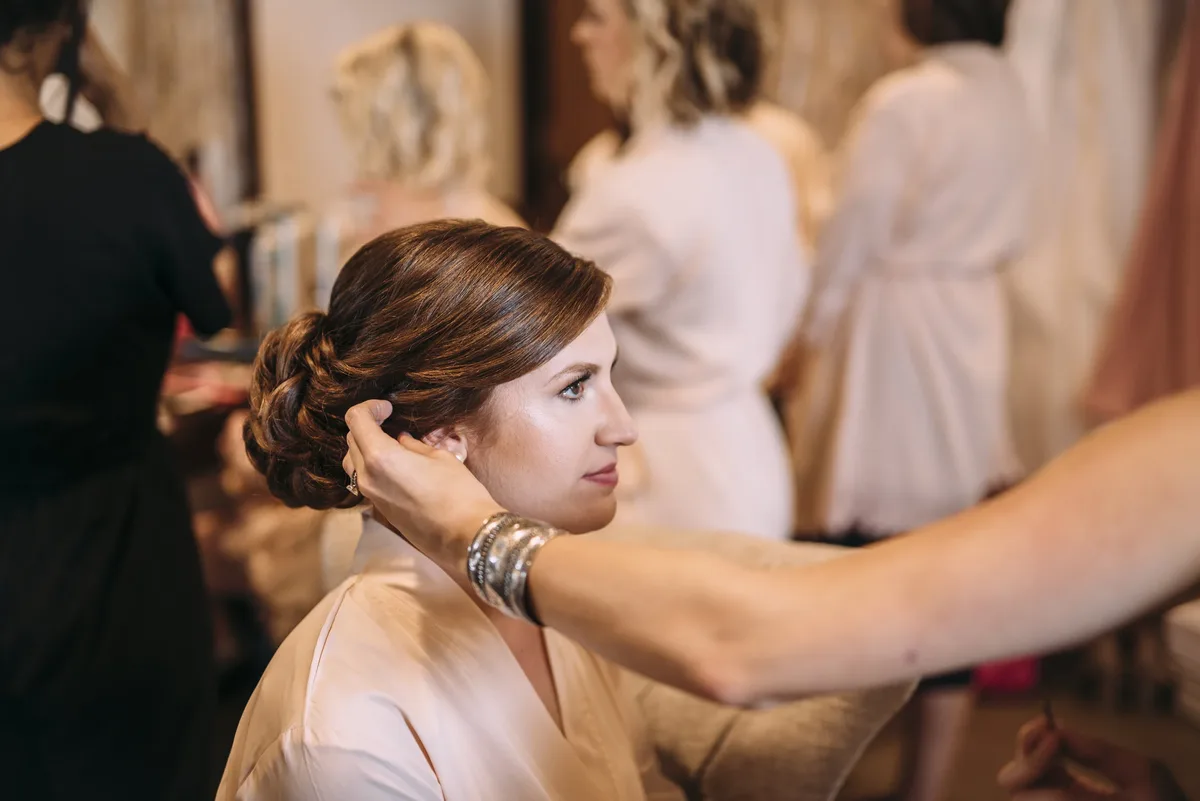
Best for: long and medium hair, garden ceremonies, brides who want to look like themselves — only softer. Loose romantic waves are the most requested backyard wedding style for a reason: they move with the breeze instead of fighting it, and they photograph like a dream in dappled garden light.
How to style: curl large sections away from the face with a 1.25-inch iron, then brush through gently with your fingers and a wide-tooth comb. Finish with a texturising spray rather than heavy hairspray, so the waves stay soft and touchable all afternoon.
What to ask your stylist: ask for the curls to be set slightly tighter than you want them, because outdoor air loosens them within an hour. A few face-framing pieces left out in front keep the look romantic even if the wind picks up.
2. Low Chignon
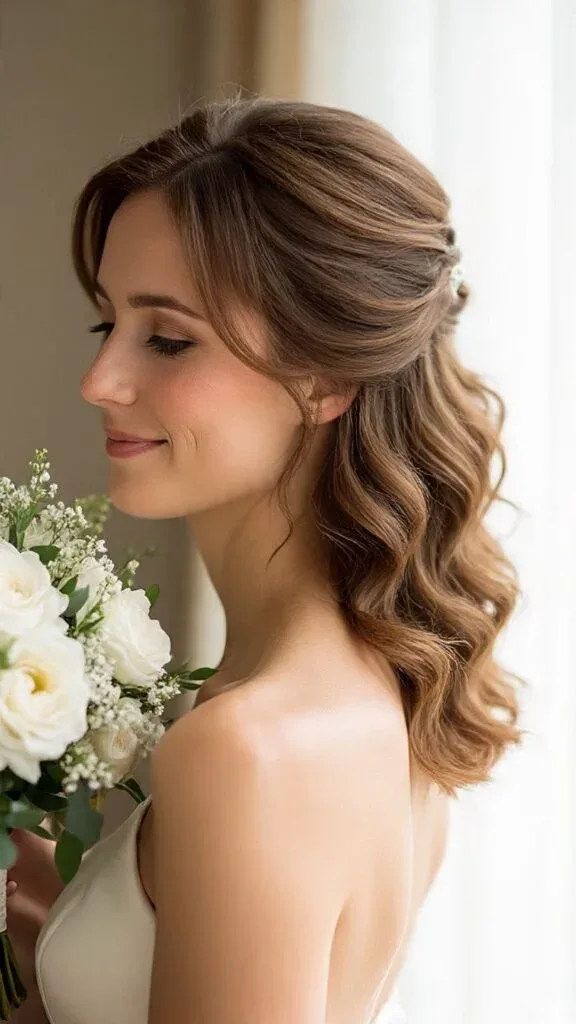
The low chignon is the quiet classic of outdoor weddings: elegant, wind-proof and kind to every dress neckline. It sits at the nape, so it never competes with a veil, a statement necklace or an open back.
Pros and cons: the pros are staying power and comfort — no hair on your neck in the heat, nothing blowing into your face during the vows. The only con is that a very tight chignon can read formal, so ask for softness: a few loose tendrils and a slightly undone texture keep it garden-appropriate.
Cost and time: a chignon typically takes 30 to 45 minutes in the chair and suits most budgets, since it needs no extensions or elaborate pinning. Add a sprig of fresh flowers or a pearl comb and it goes from simple to unforgettable.
3. Soft Half-Up Half-Down
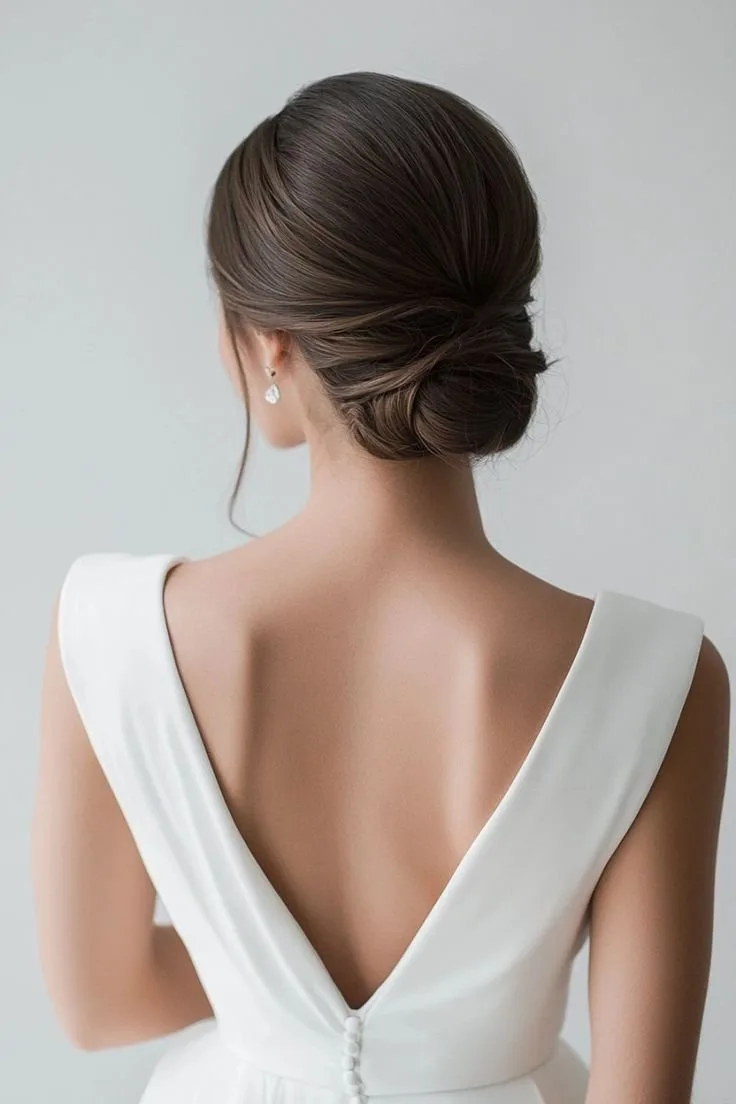
Half-up half-down is the great compromise of backyard weddings, and it earns its popularity. The top half is secured away from your face, so you can say your vows without batting hair out of your eyes, while the bottom half stays loose, romantic and full of movement.
Who should avoid it: very short hair, which may not have enough length to secure the top section and leave the rest flowing. On shoulder-length and longer hair, though, it is almost foolproof — and it holds up better in wind than fully-down styles.
Quick verdict: if you can only pick one style and you want romance with reliability, this is it. Pin the top section with a decorative comb, curl the lengths softly, and you are done.
4. Braided Crown
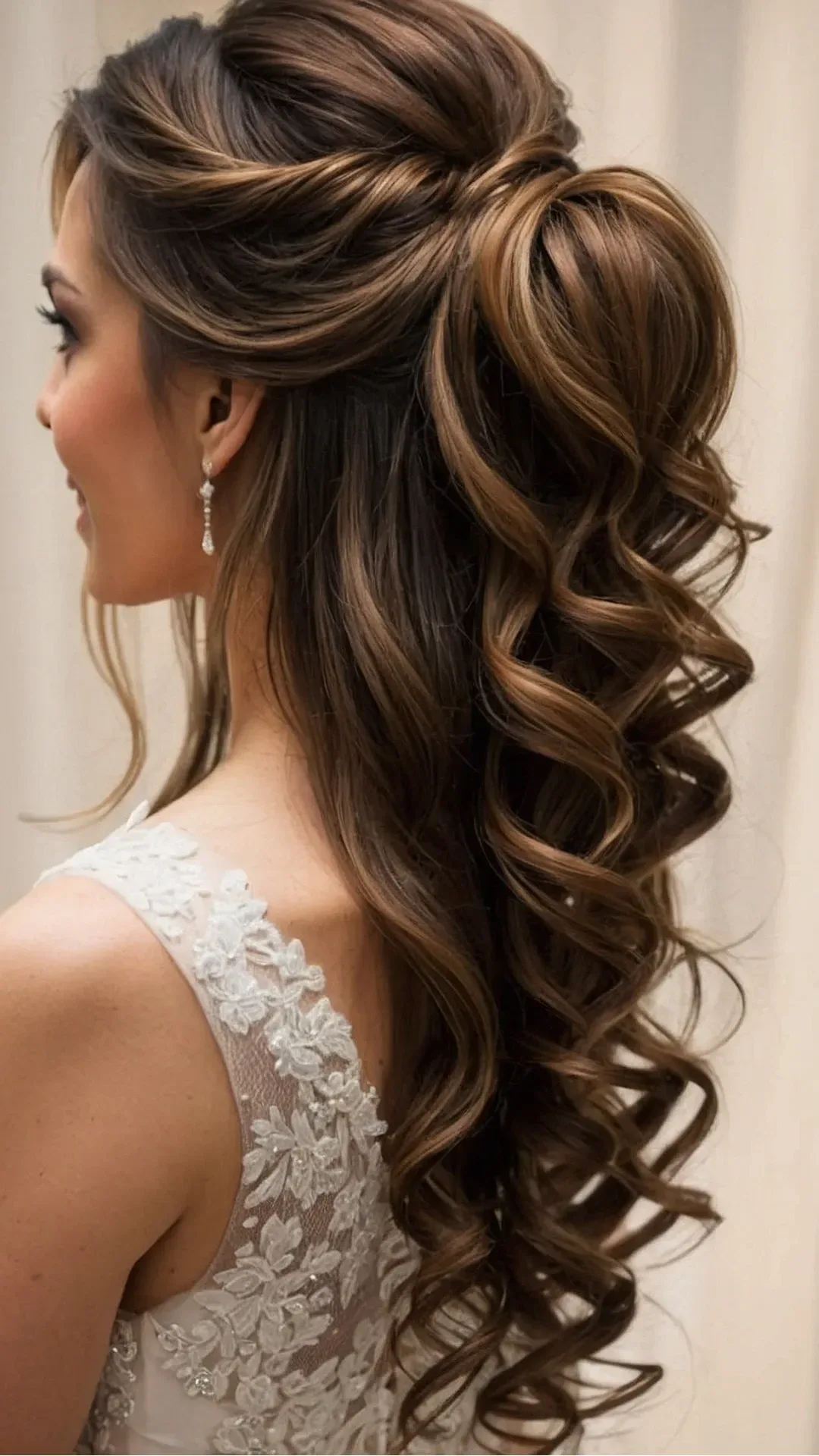
A braided crown wraps around the head like a halo, and outdoors it looks like it grew there. It is one of the most wind-proof styles on this list, because the braid itself is the anchor — there is nothing loose for the breeze to undo.
How to style: two Dutch braids are worked from behind each ear and pinned across the crown, then gently pulled apart for softness. Fresh baby’s breath or tiny wildflowers tucked into the braid make it unmistakably a garden wedding.
Common mistake: braiding too tightly. A crown braid should look soft and a little undone, not like a helmet. Ask your stylist to loosen the edges and leave two wispy pieces at the temples.
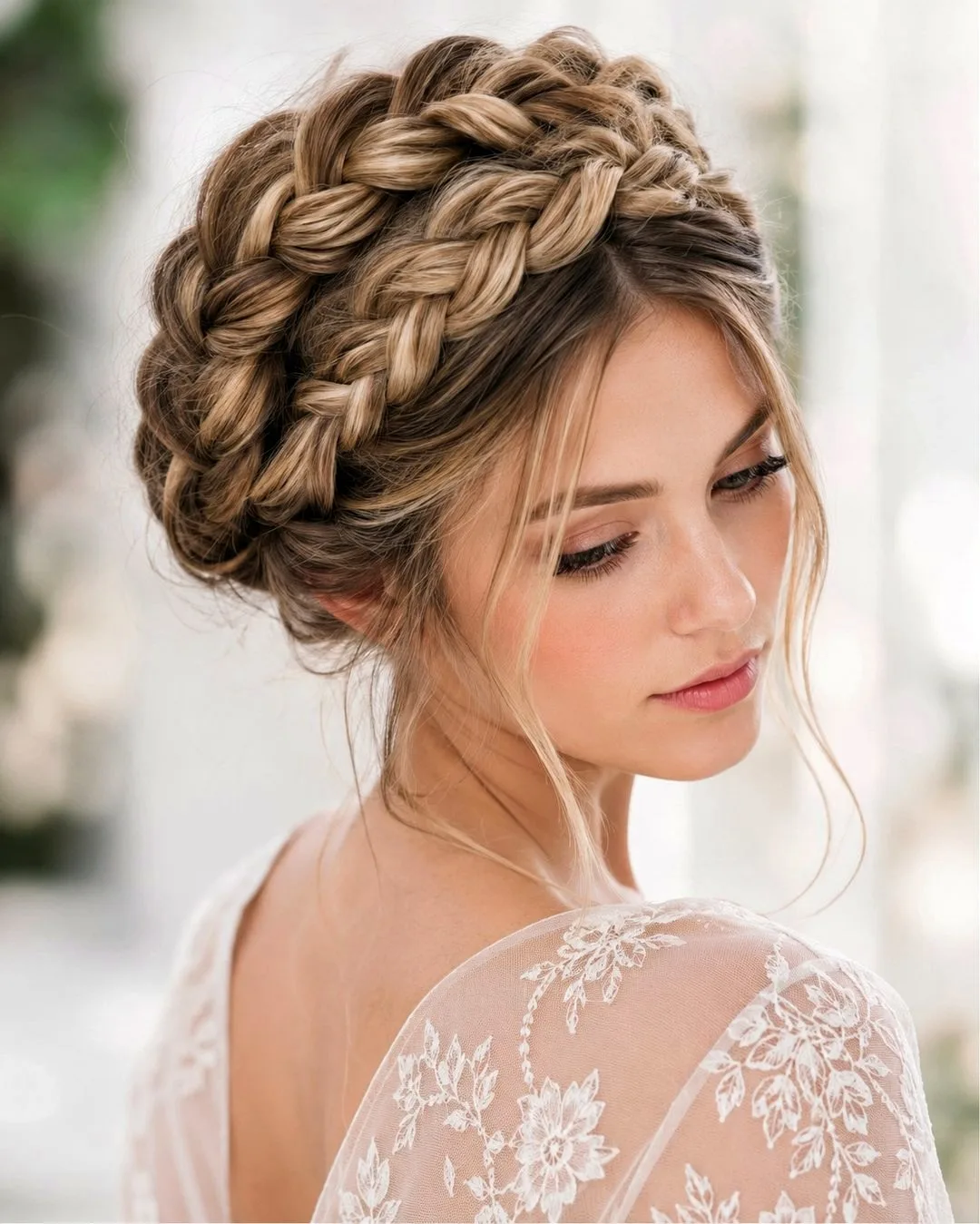
5. Textured Low Bun
A textured low bun is the relaxed cousin of the classic chignon — same staying power, half the formality. It is built from loosely twisted, softly pinned sections, so it looks effortless even though it is thoroughly secured.
Best for: hot days, long ceremonies and brides who dance. Because the hair is gathered low and pinned in sections, it survives hours of heat, hugs and dancing without sliding.
Maintenance: almost none. A quick spritz of flexible spray after the ceremony is all it needs. If a piece works loose, it reads as intentional texture — which is the whole point of this style.
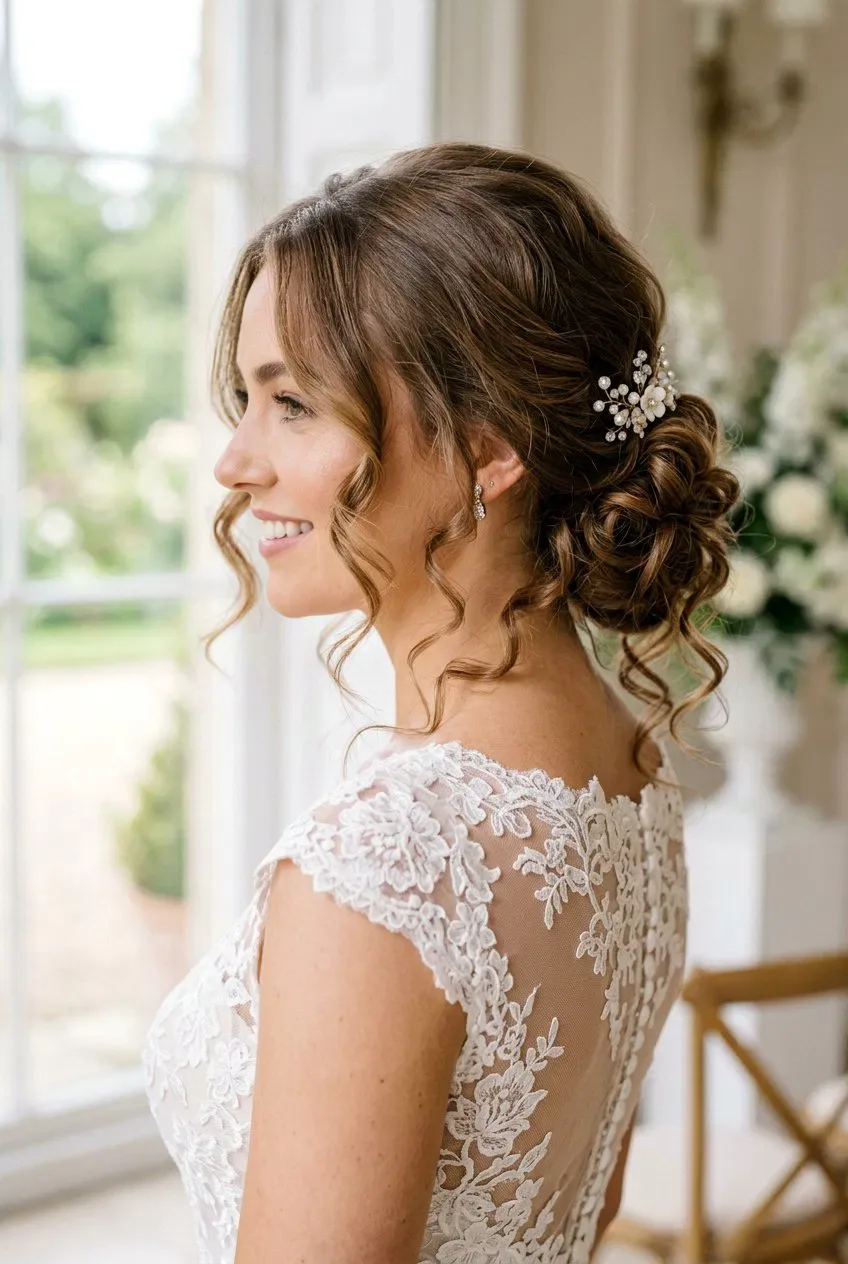
6. Garden Boho Braid
The garden boho braid is loose, textured and threaded with nature — the style that looks most at home under a tree arch. It is a single side braid, pulled apart for fullness, with small flowers or greenery woven in.
How to style: start with day-old hair or texturising spray for grip, braid loosely over one shoulder, then gently tug the edges of the braid outward. Tuck in two or three small fresh blooms and secure the end with a clear elastic hidden under a ribbon.
What to ask your stylist: ask for the braid to sit over the shoulder that will face the camera most during the ceremony. And bring your flowers to the trial — the stylist needs to know their size and weight.
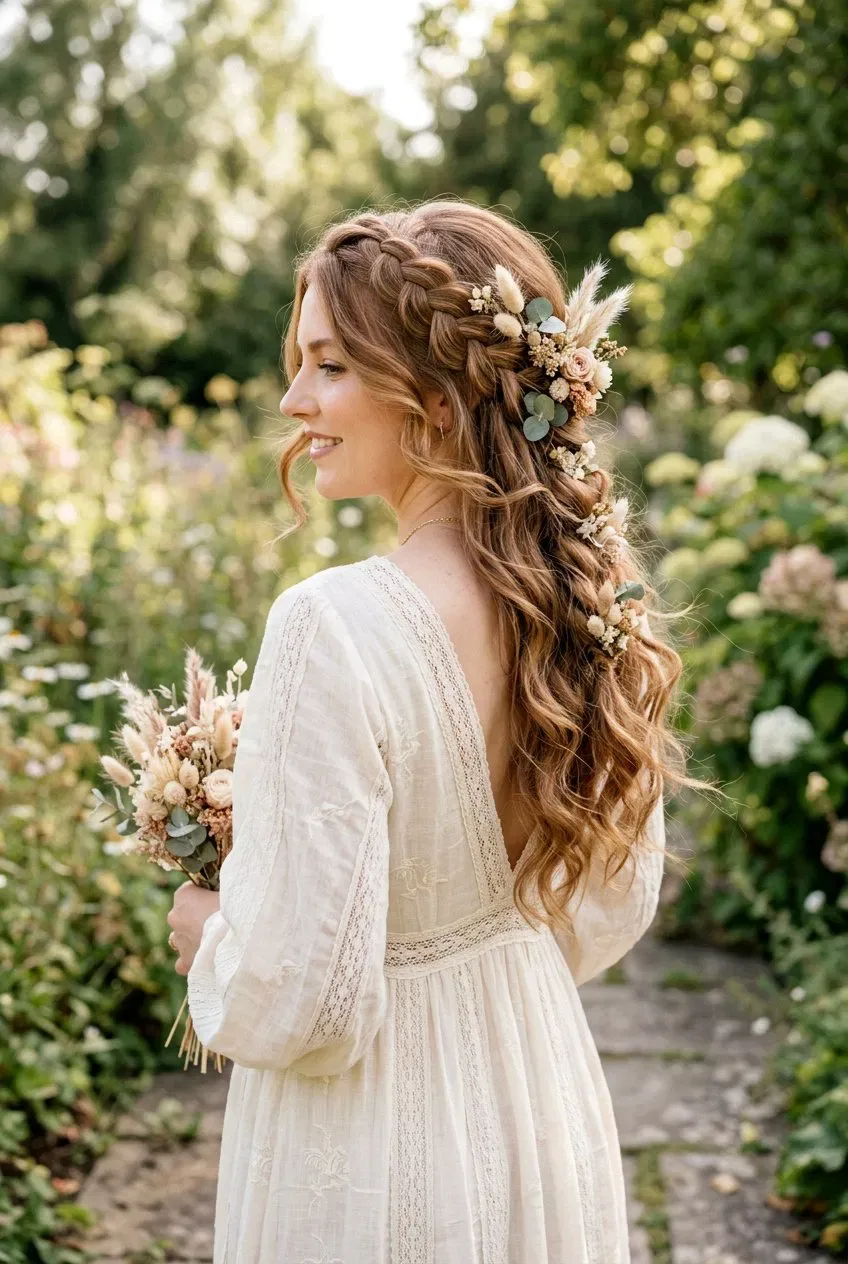
7. Romantic Low Ponytail
Do not underestimate the low ponytail. Done well — soft waves, a wrapped base, a few face-framing pieces — it is one of the most romantic and practical backyard wedding styles there is. It keeps hair off your neck, survives wind, and takes ten minutes to refresh.
Pros and cons: the pros are comfort, speed and reliability. The con is that a plain ponytail can look too casual, so dress it up: wrap a section of hair around the elastic, add a silk ribbon, or pin in a small floral comb.
Who should avoid it: brides with very fine hair may find a ponytail looks thin in photos. A few clip-in extensions or a gentle tease at the crown solves that instantly.
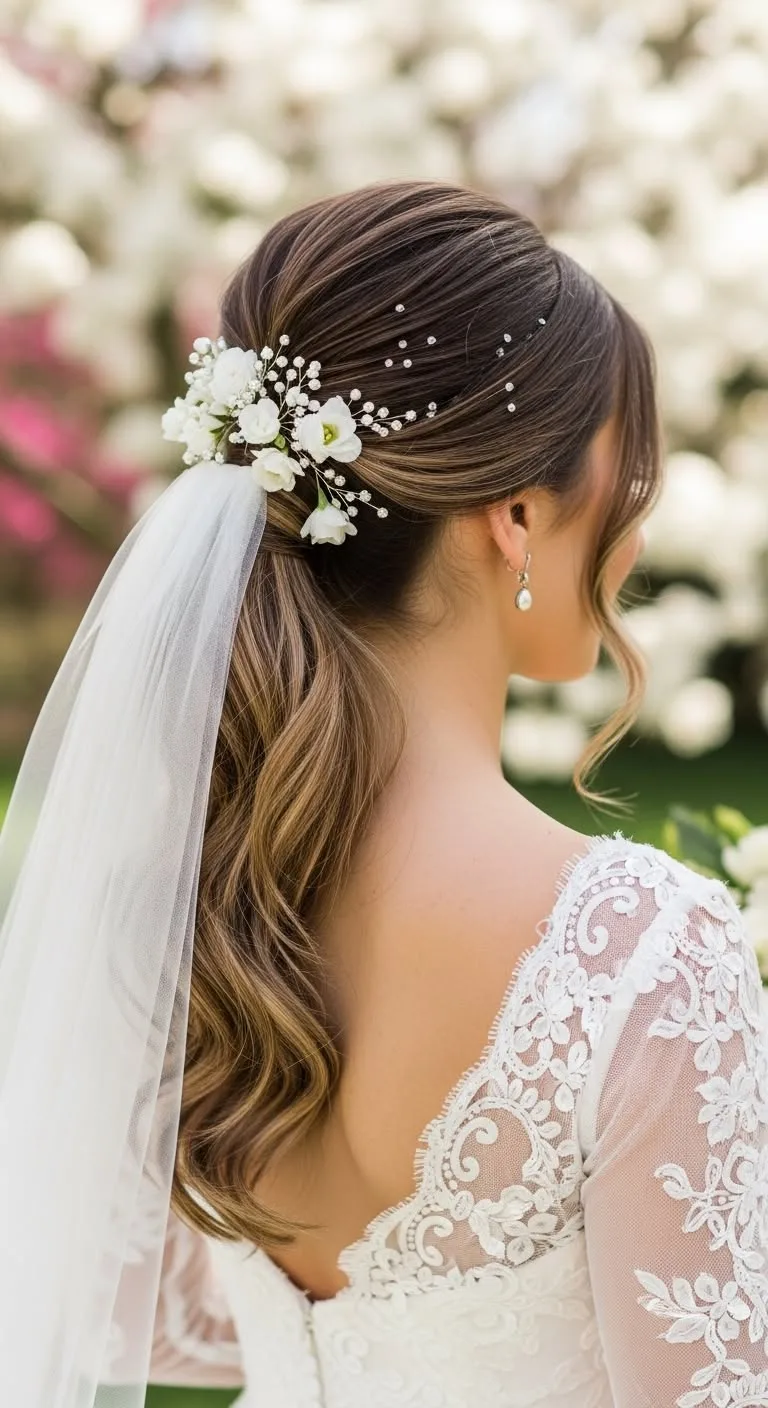
8. Vintage Hollywood Waves
Old Hollywood waves bring glamour to a backyard — polished, sculpted S-waves that catch the light like silk. They suit evening ceremonies best, when the low sun turns every wave into a highlight.
How to style: set the hair in large pin curls or with a Marcel iron, brush into uniform waves, and set with a strong-hold spray. This is a style that rewards a professional: the symmetry and shine are hard to achieve at home.
Maintenance: this is the one style on this list that dislikes wind. If your ceremony is exposed, wear the waves for the reception and choose something more anchored for the vows — or pick a sheltered spot under the trees.
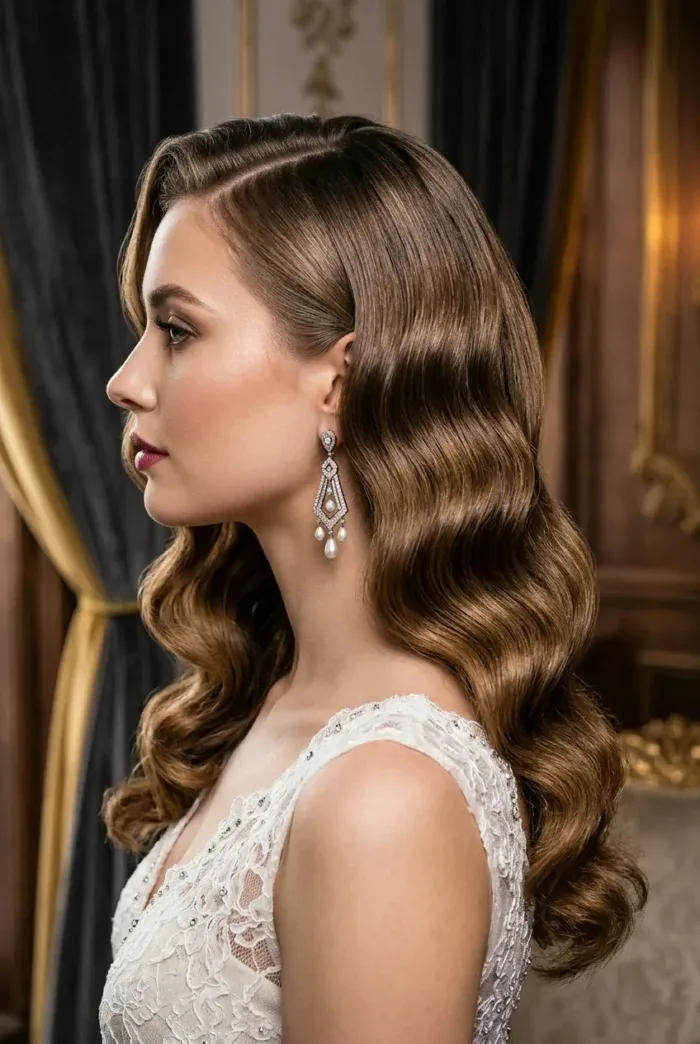
9. Messy Textured Updo
The messy textured updo looks like you pinned your hair up in five happy minutes — and that is its charm. Loose twists, soft volume and a few escaping pieces make it feel romantic and unfussy, which is exactly right for a backyard.
Best for: brides who hate the feeling of a tight updo. Because it is built loosely, it is comfortable for twelve hours and it actually improves as the day goes on — the gentle loosening just adds to the texture.
Common mistake: going too messy. There is a line between artfully undone and actually undone. A good stylist keeps the silhouette neat and lets only the edges go soft.
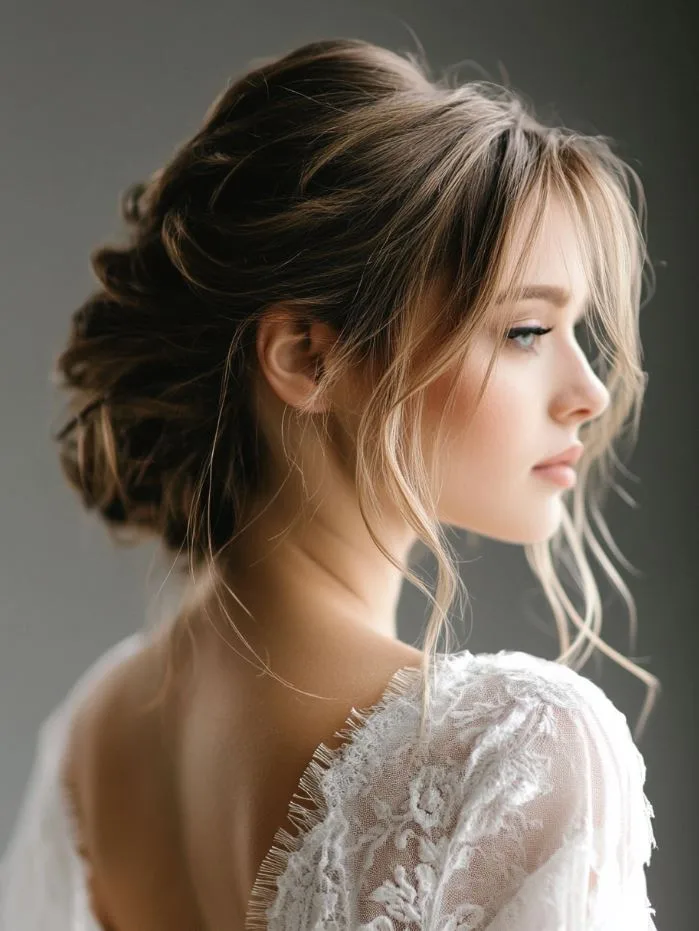
10. Fishtail Braid
A fishtail braid is intricate, bohemian and surprisingly sturdy — the fine, woven pattern holds its shape in a breeze far better than a regular three-strand braid. Worn over one shoulder, it is pure garden romance.
How to style: gather hair to one side, divide into two sections and cross small pieces from each side to the other. Pancake the braid gently by tugging the edges, and finish with a clear elastic wrapped in ribbon or a strand of hair.
Cost and time: expect 30 to 40 minutes. It looks far more complicated than it is, which is why it photographs so well for the effort involved.
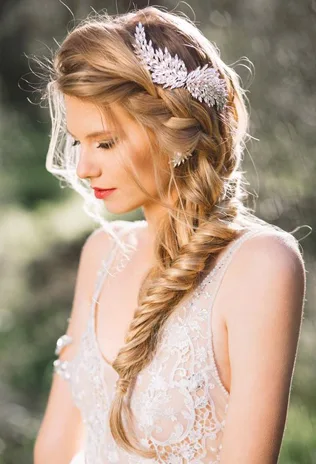
11. Waterfall Braid
The waterfall braid lets strands cascade through the braid like water — a fairytale detail that suits a garden setting perfectly. It works best on long hair with soft curls underneath, so the falling strands have something to do.
Best for: brides who want a braid without committing to a full updo. It keeps the front of your hair secured and out of your face while the rest flows free.
What to ask your stylist: ask them to curl the lengths first, then braid — the curls make the waterfall strands visible in photos. Add tiny flowers at the braid line for a finishing touch.
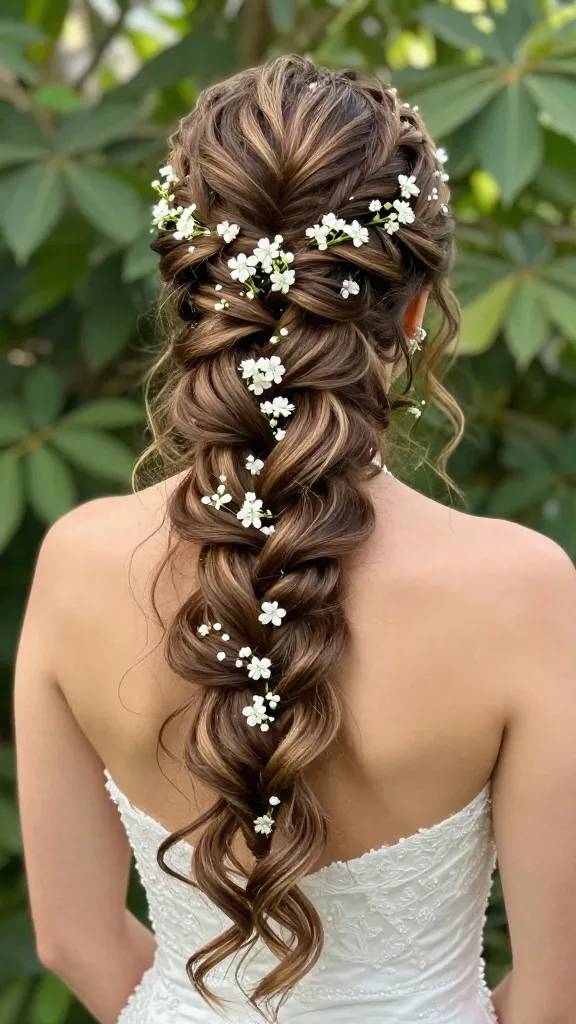
12. French Twist with Loose Tendrils
The French twist is timeless elegance, and the loose tendrils are what make it work outdoors. The twist itself is rock-solid — pinned vertically, it will not move in any wind — while the soft pieces around the face keep it from looking severe.
Pros and cons: the pros are security and sophistication; it suits backless dresses beautifully. The con is that it needs a skilled hand — a French twist is one of the hardest styles to do well, so book a stylist who has done many.
Quick verdict: choose this if your backyard wedding leans elegant rather than rustic. It is the most polished style on this list, and it earns its place.
13. Curly Half-Up
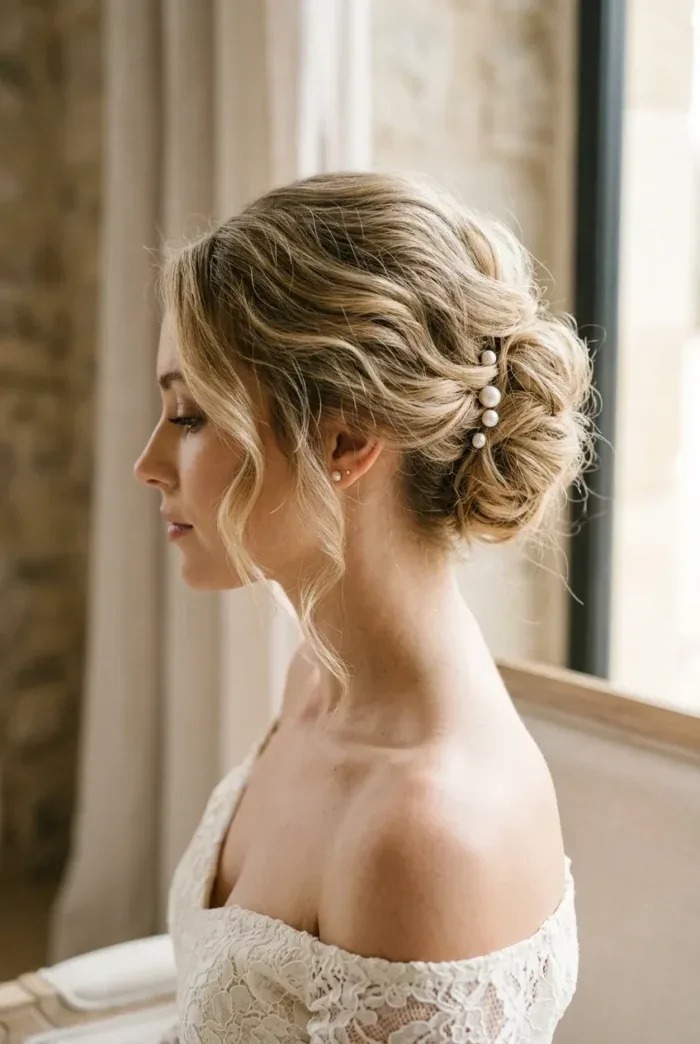
Natural curls were made for garden weddings. A curly half-up keeps your texture front and centre while securing the front sections, so curls frame your face instead of falling into it during the vows.
How to style: define curls with a curl cream while damp, diffuse on low heat, then gather the top half and pin it loosely at the crown. Leave the curls below untouched — the contrast between the secured top and the free curls is the whole look.
Maintenance: a little anti-frizz serum on your hands, smoothed over the surface, is all you need. Do not brush curls outdoors; it creates frizz instantly.
14. Sleek Low Bun
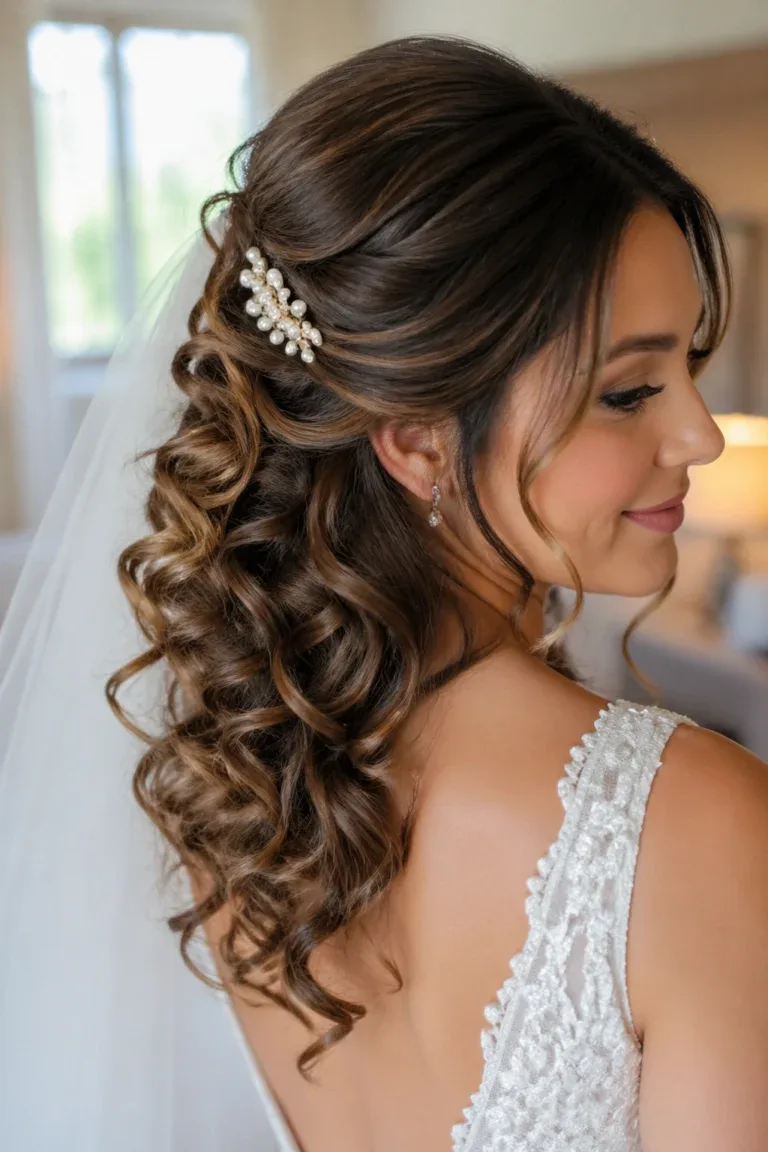
The sleek low bun is minimal, modern and completely unbothered by wind. Hair is smoothed back into a polished knot at the nape — no flyaways, no fuss, nothing for the breeze to catch.
Best for: modern brides, strong jawlines, statement earrings and minimalist dresses. It also suits humid days better than almost any other style, because there is no texture for the humidity to undo.
Common mistake: skipping the smoothing products. A sleek bun needs a strong gel or pomade and a fine-tooth comb, applied section by section. Ask your stylist to finish with a shine spray for that glass-like finish.
15. Side-Swept Curls
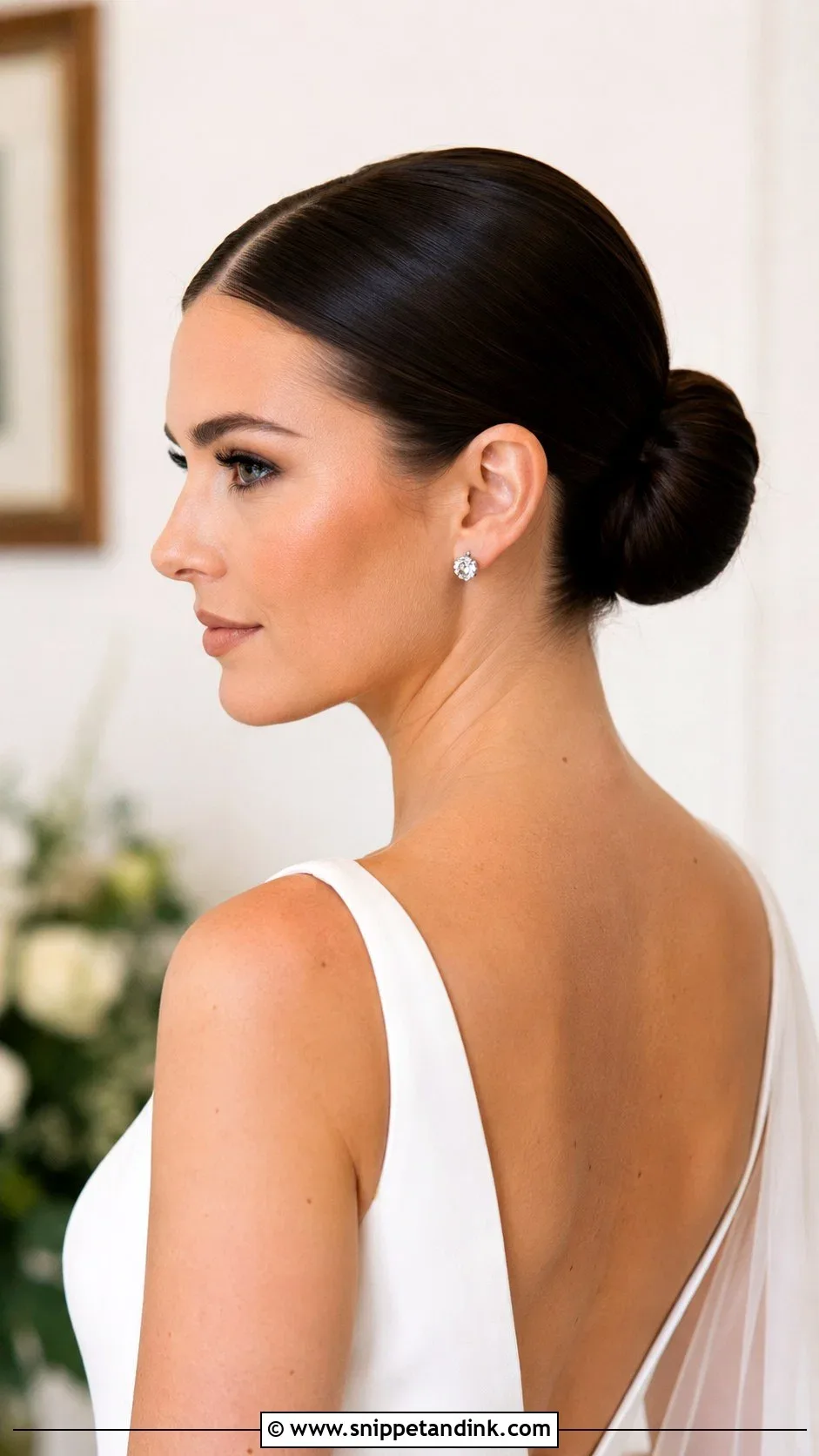
Side-swept curls are pure romance: all the hair swept over one shoulder in soft, cascading waves. They show off your neckline and earrings, and they look extraordinary in golden-hour photos.
How to style: curl the whole head away from the face, sweep everything to one side, and pin discreetly at the nape on the opposite side. A decorative comb at the pin point hides the mechanics and adds sparkle.
Who should avoid it: brides with very short hair, and anyone whose ceremony spot is very windy from one side — check the breeze direction at your trial.
16. Floral-Adorned Updo
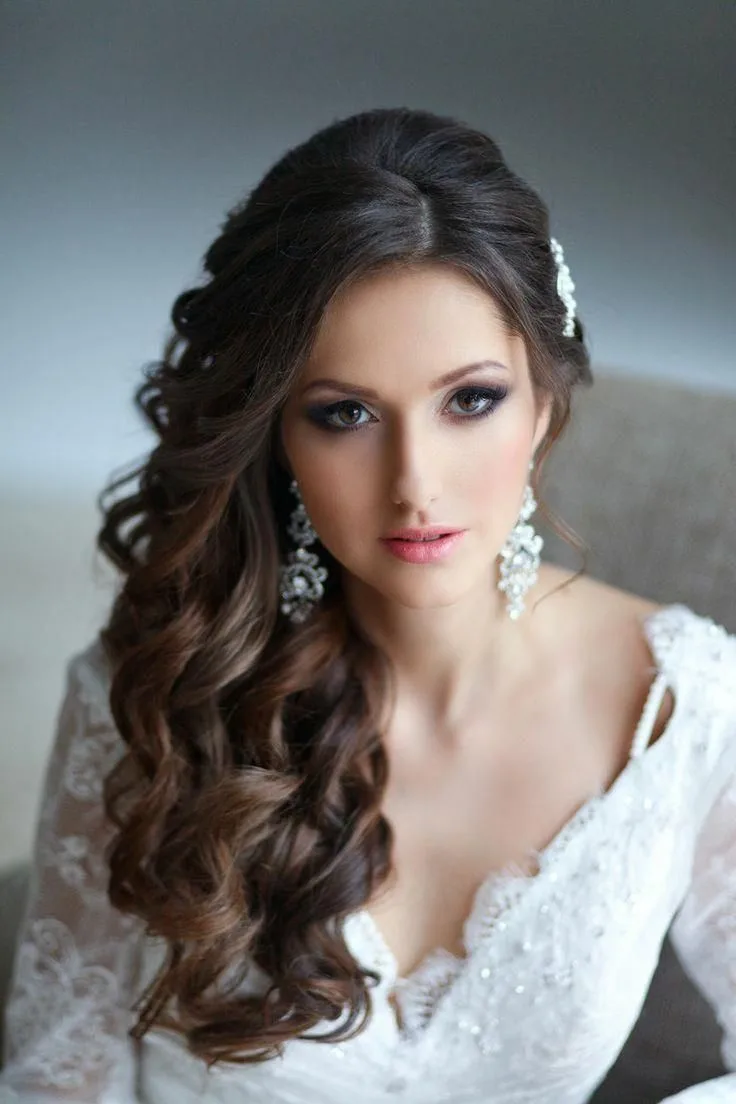
Fresh flowers in an updo are the most literal way to match your hair to your garden. Small blooms — spray roses, baby’s breath, jasmine — pinned into a soft bun or twist look like they grew there.
What to ask your stylist: bring your florist’s spare blooms to the hair trial. Flowers need to be wired or pinned in clusters, and heavy blooms like peonies will slide out — small, light flowers hold best.
Maintenance: keep the flowers in water until the last possible moment, and carry two spare stems. A wilted flower is worse than no flower, so swap in a fresh one before the reception.
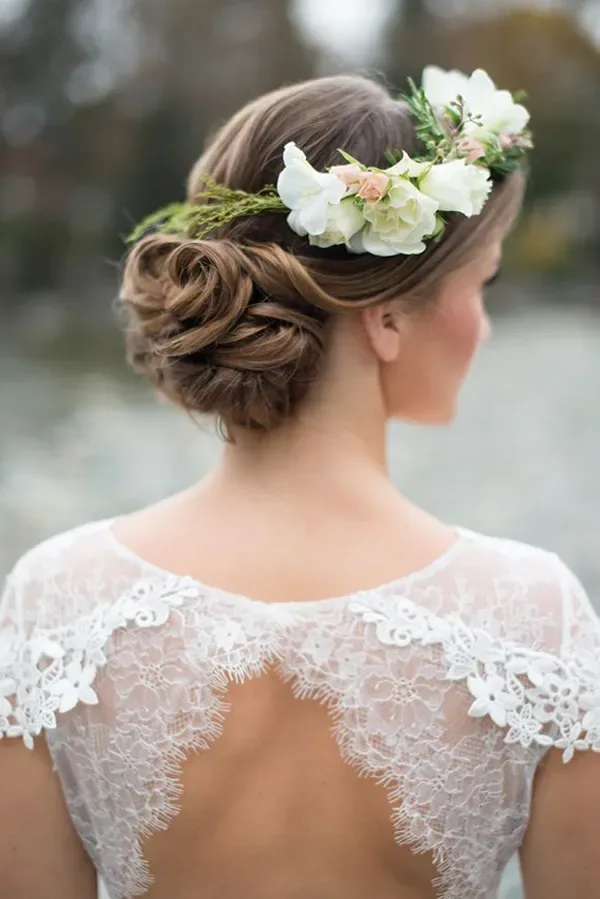
17. Twisted Low Knot
The twisted low knot is a soft, rope-like twist gathered into a knot at the nape. It is simpler than a chignon, more interesting than a bun, and it holds beautifully outdoors because the twist itself locks the hair in place.
Pros and cons: the pros are speed, comfort and a lovely textured silhouette. The con is that it suits medium to long hair best — very short hair will not have enough length to twist and knot.
Quick verdict: if you want an updo that looks effortless and takes twenty minutes, this is your style. Add a pearl pin and it is ceremony-ready.
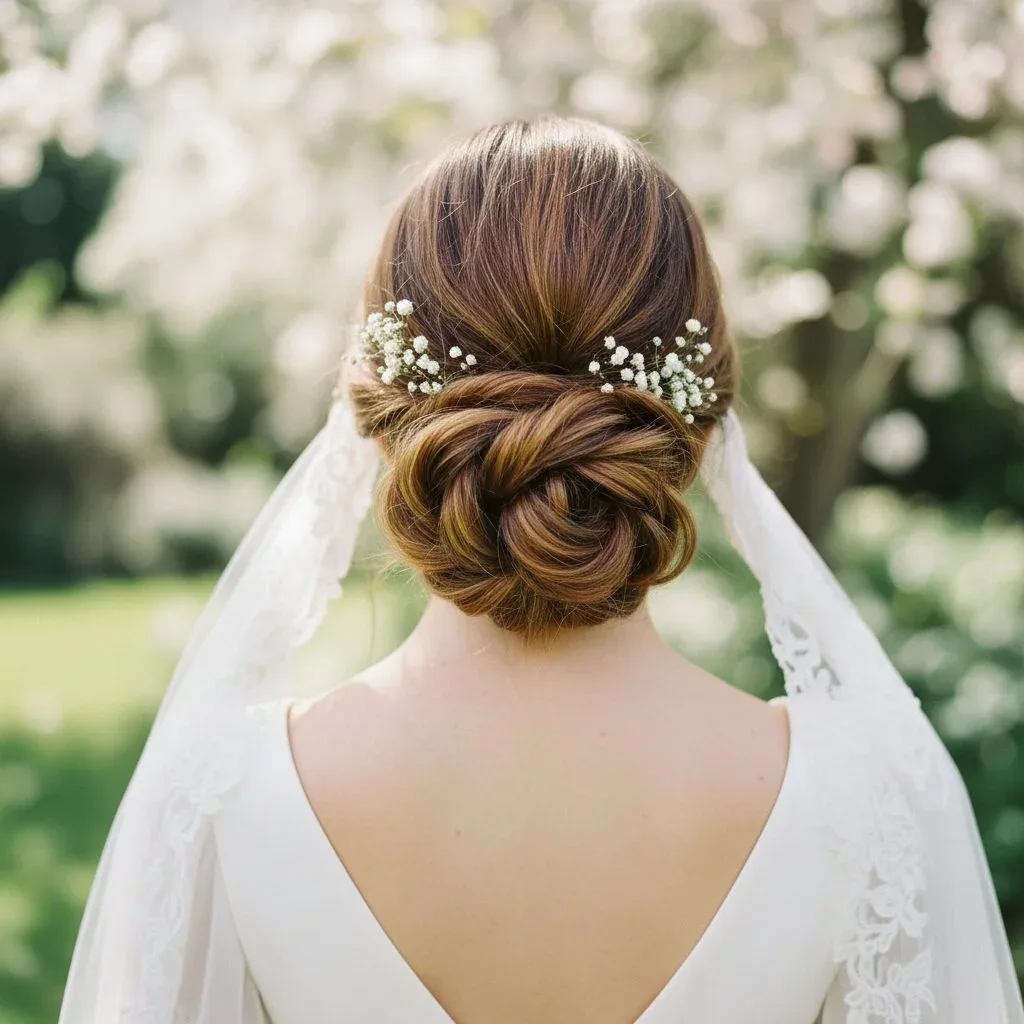
18. Beachy Waves
Beachy waves are loose, tousled and sun-kissed — the most relaxed style on this list, and a natural fit for a laid-back backyard celebration. They are also the most forgiving style in wind, because a little extra movement just looks like more texture.
How to style: curl alternate sections in opposite directions, then shake out and finish with sea-salt spray. The imperfection is the point: no two waves need to match.
Best for: daytime ceremonies, casual dress codes and brides who want to look like the best version of themselves, not a different person.
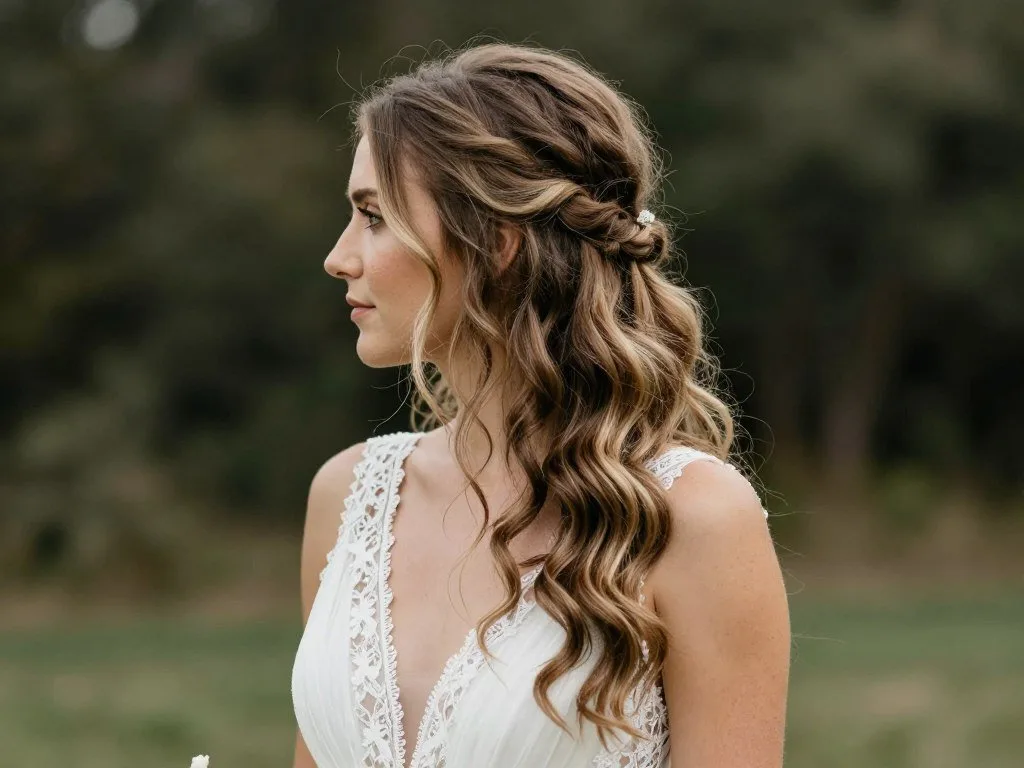
19. Bubble Braid Ponytail
The bubble braid ponytail is playful and modern: a ponytail divided into puffed sections with elastics, each bubble gently pulled full. It is fun, photogenic and surprisingly secure outdoors.
How to style: secure a ponytail at the nape or mid-head, add elastics every two inches down the length, and tug each section outward to form bubbles. Wrap a ribbon around each elastic for a polished finish.
Who should avoid it: brides wanting a strictly traditional look — this is a statement style. But for a relaxed backyard party, it is a delight, and it survives dancing better than almost anything.
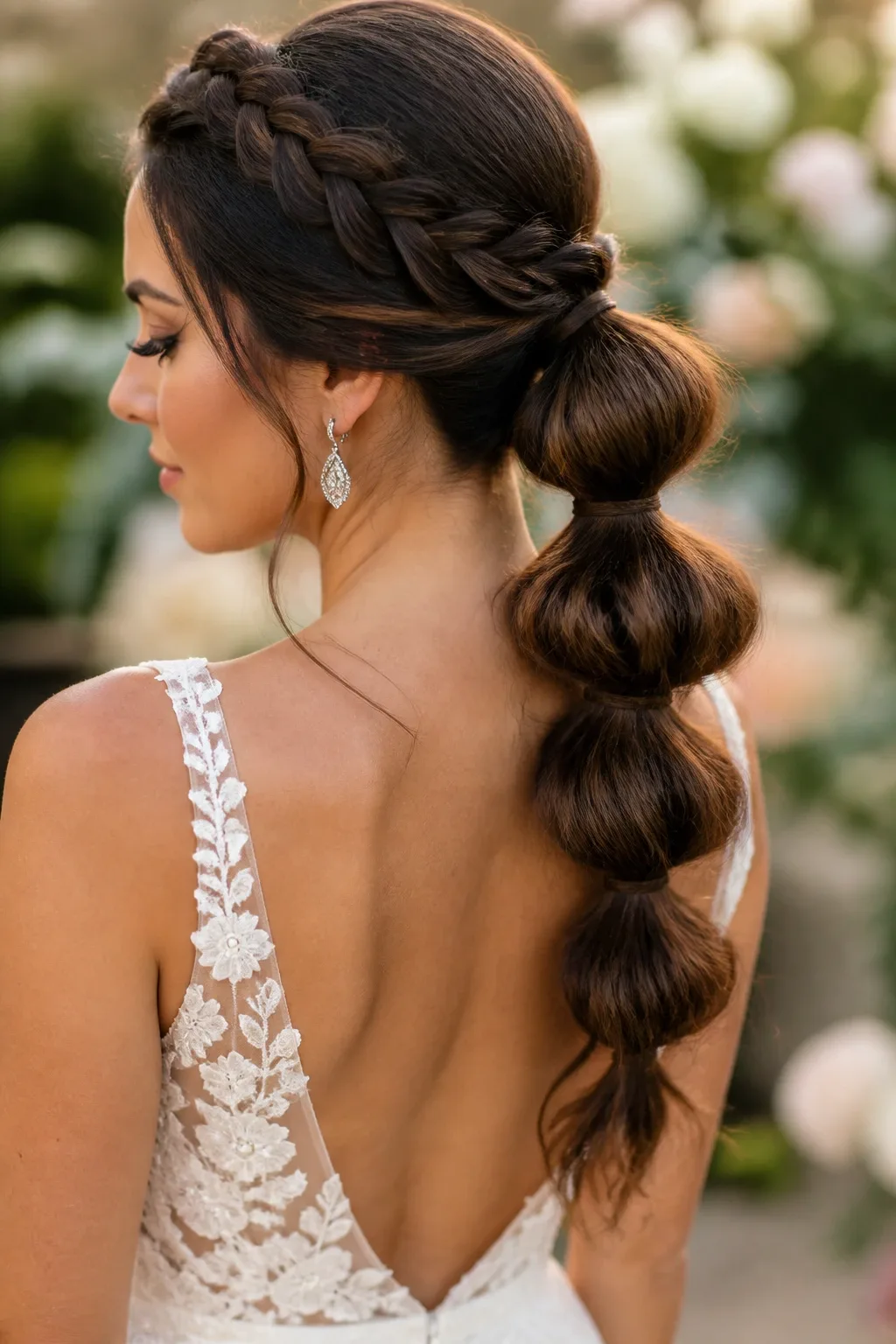
20. Elegant Soft Top Knot
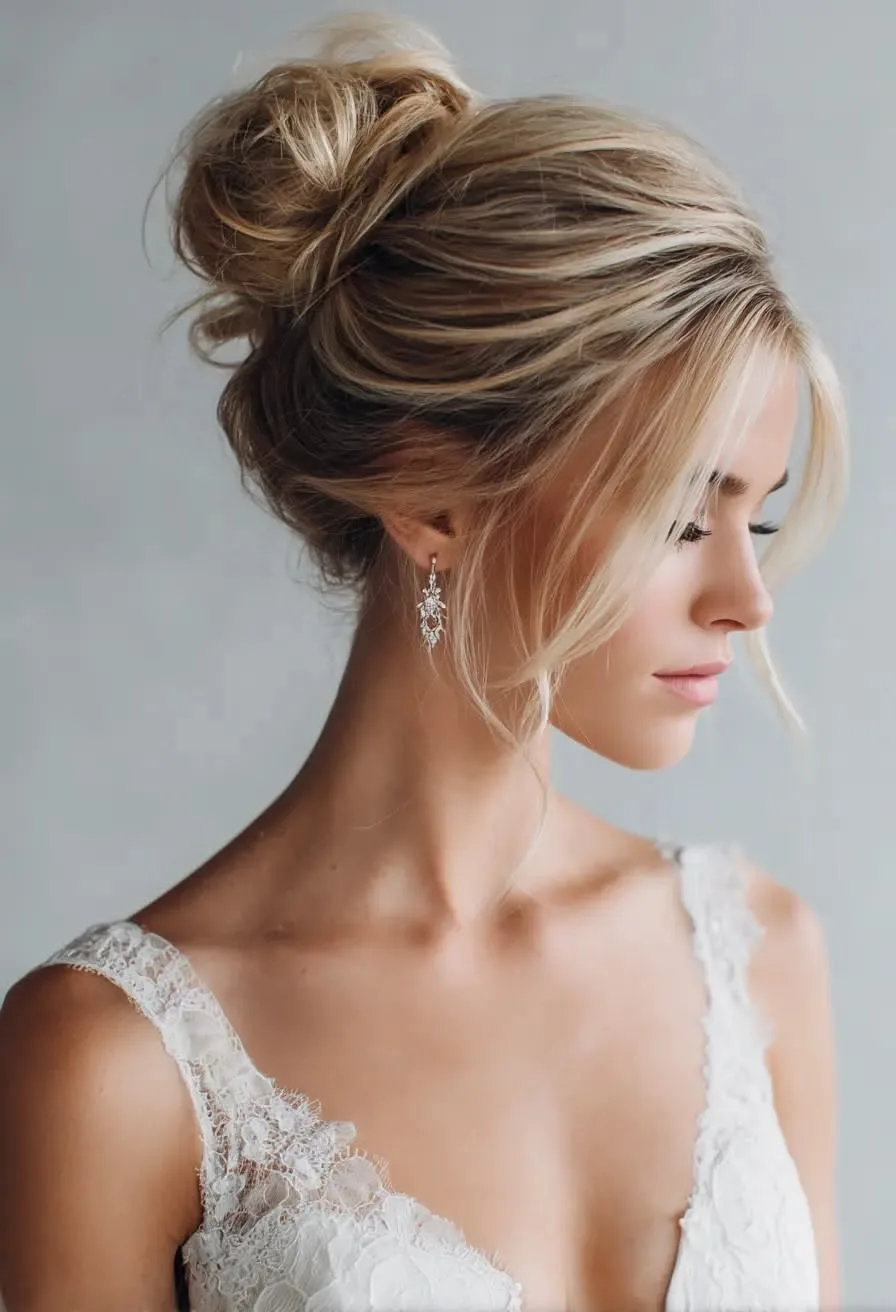
A soft top knot lifts everything up and away from your face and neck — ideal for a hot afternoon ceremony. The key word is soft: this is not a severe ballerina bun, but a loose, textured knot with gentle volume at the crown.
Best for: warm weather, high necklines and brides who want to show off their shoulders. It also makes a veil easy to attach low at the back.
Maintenance: almost none. A top knot is one of the most secure styles there is; a quick check in the mirror after the ceremony is usually all it needs.
21. Romantic French Braid
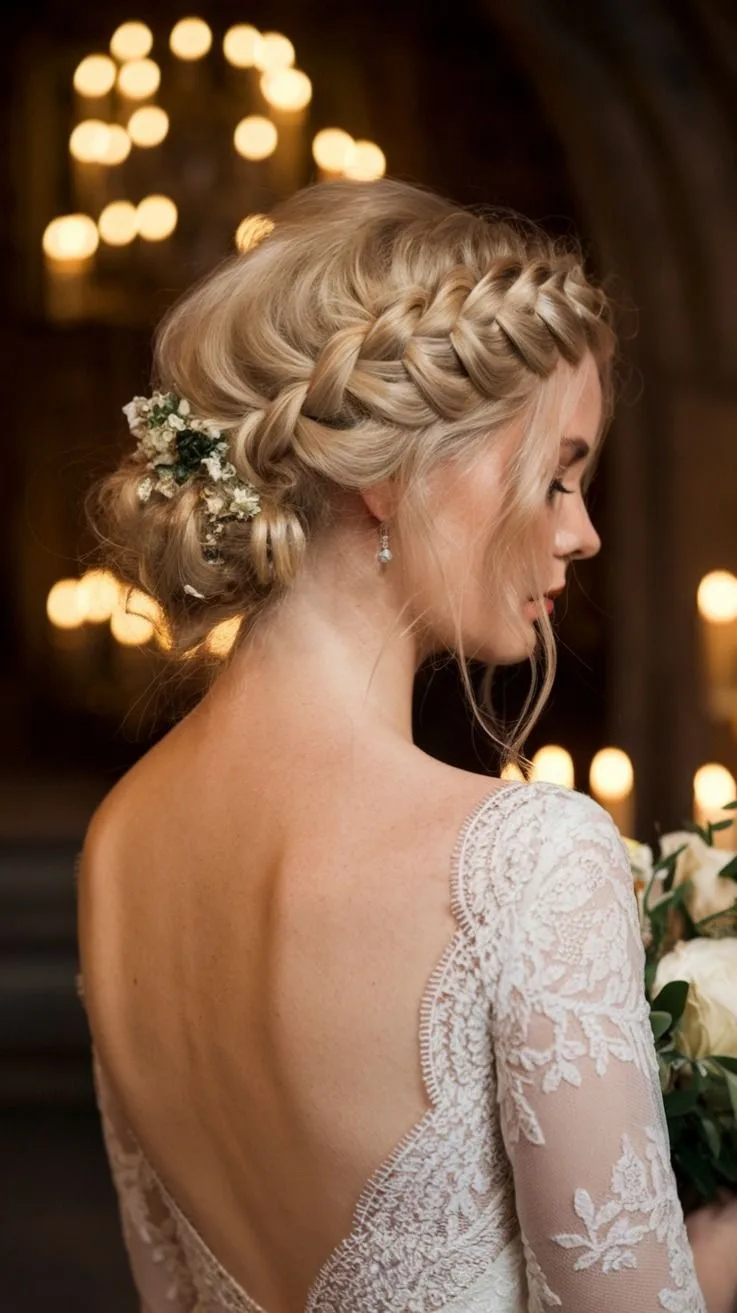
The romantic French braid starts at the crown and flows down the back in a soft, slightly loosened plait. It is classic, secure and endlessly photogenic from behind — which matters, because your guests will see the back of your hair throughout the ceremony.
How to style: braid from the hairline, adding sections as you go, and keep the tension gentle. Once finished, tug the edges of the braid outward for softness and weave in a few tiny flowers.
Cost and time: about 20 to 30 minutes — one of the quickest styles on this list, and one of the most reliable in a breeze.
22. Gibson Tuck
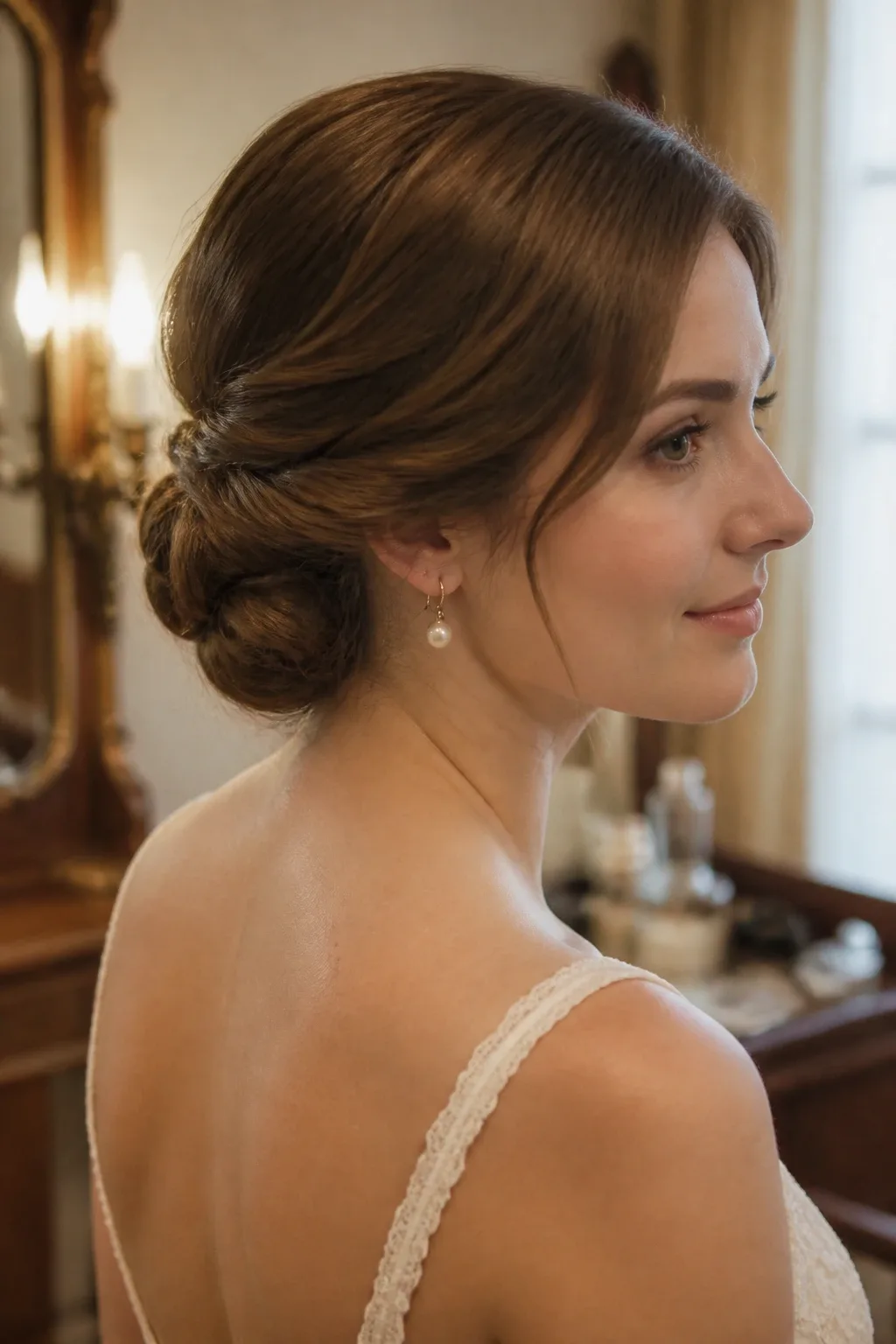
The Gibson tuck is a vintage gem: hair is rolled and tucked into itself at the nape, creating a soft, rounded silhouette that looks straight out of a garden party in 1910. It is romantic, unusual and very wind-proof.
Best for: vintage-themed weddings, lace dresses and brides who want something nobody else will have. It suits medium-length hair beautifully.
Common mistake: tucking too tightly. The roll should look soft and full, not flat against the head. A little teasing at the crown gives it the right shape.
23. Curly Low Ponytail
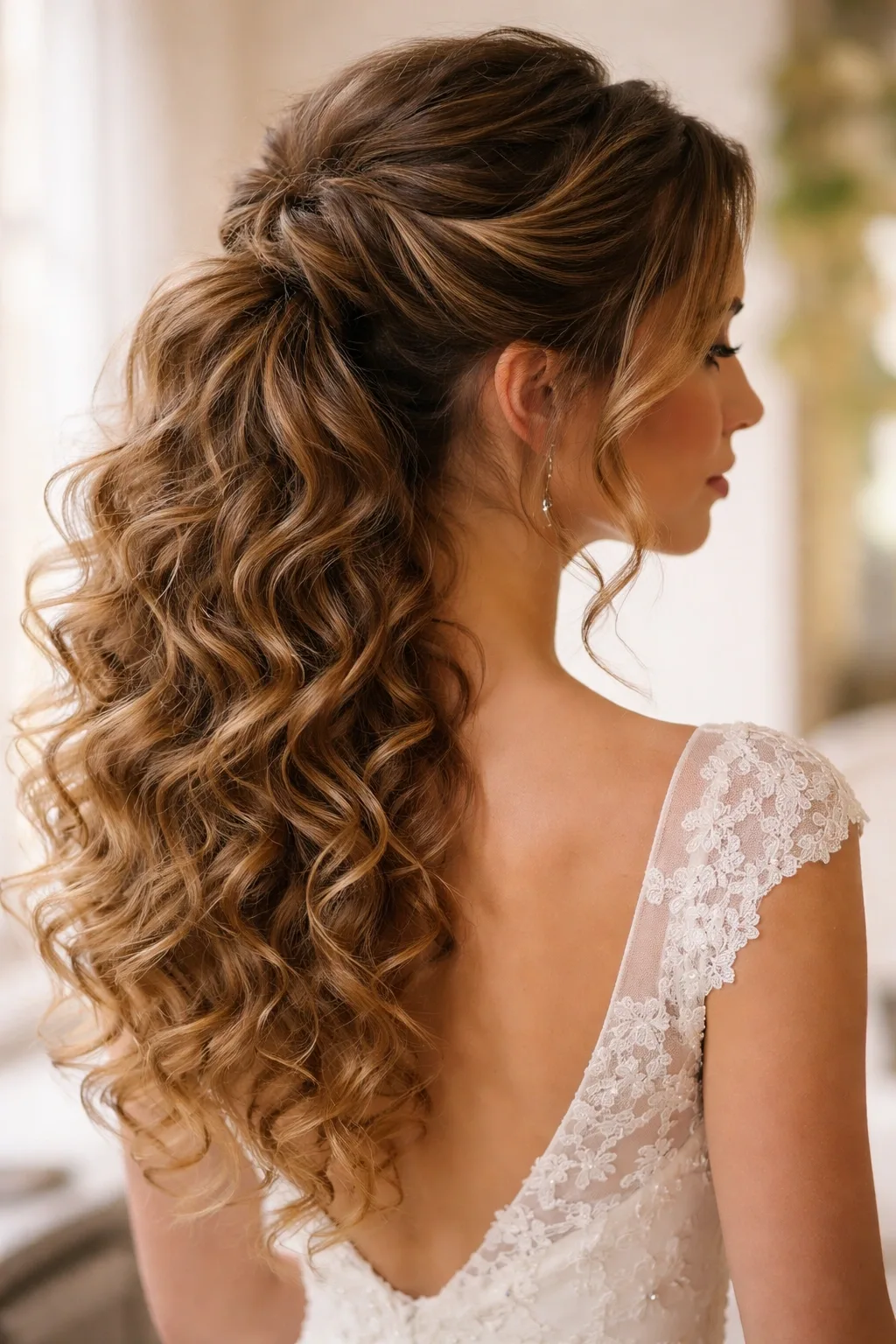
A curly low ponytail lets natural texture do the talking. Curls are gathered loosely at the nape, so they cascade down the back in a full, joyful cloud — no straightening, no fighting your hair’s nature.
How to style: define curls with cream and a diffuser, gather loosely with a fabric-covered elastic, and wrap a strand of hair around the base. Leave two curls free at the front to frame the face.
What to ask your stylist: ask them not to brush the curls out. The volume is the style — and in a garden, big soft curls photograph beautifully.
24. Dutch Braid Crown
The Dutch braid crown — sometimes called the reverse braid crown — sits raised on the head, giving a bold, sculptural halo effect. It is the sturdiest braided style on this list, and it looks spectacular with a veil attached underneath.
Pros and cons: the pros are unbeatable staying power and a striking silhouette. The con is that it needs length: shoulder-length hair or longer works best, and very thick hair makes a heavy crown.
Quick verdict: choose this if wind is your biggest worry. A Dutch crown will not move, whatever the weather does.
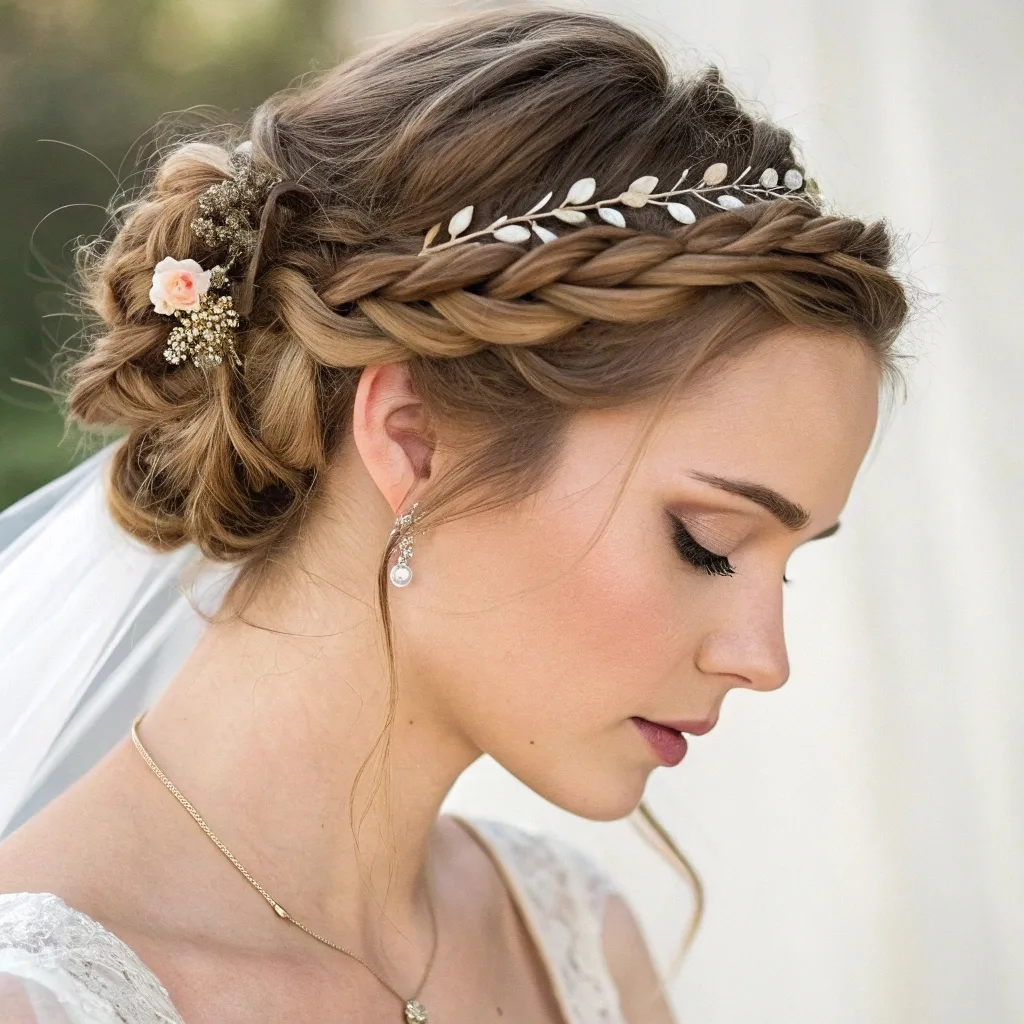
25. Soft Curls with a Headband
Soft curls with a headband are sweet, simple and practical: the headband keeps the front of your hair exactly where you want it, while the curls do the romantic work below. It is one of the easiest styles to maintain outdoors.
Best for: brides who love accessories, shorter hair, and anyone who wants a style they could almost do themselves. A pearl, gold or floral headband changes the whole feeling of the look.
Maintenance: carry one spare headband pin. If the headband slips, a single pin behind each ear fixes it in seconds.
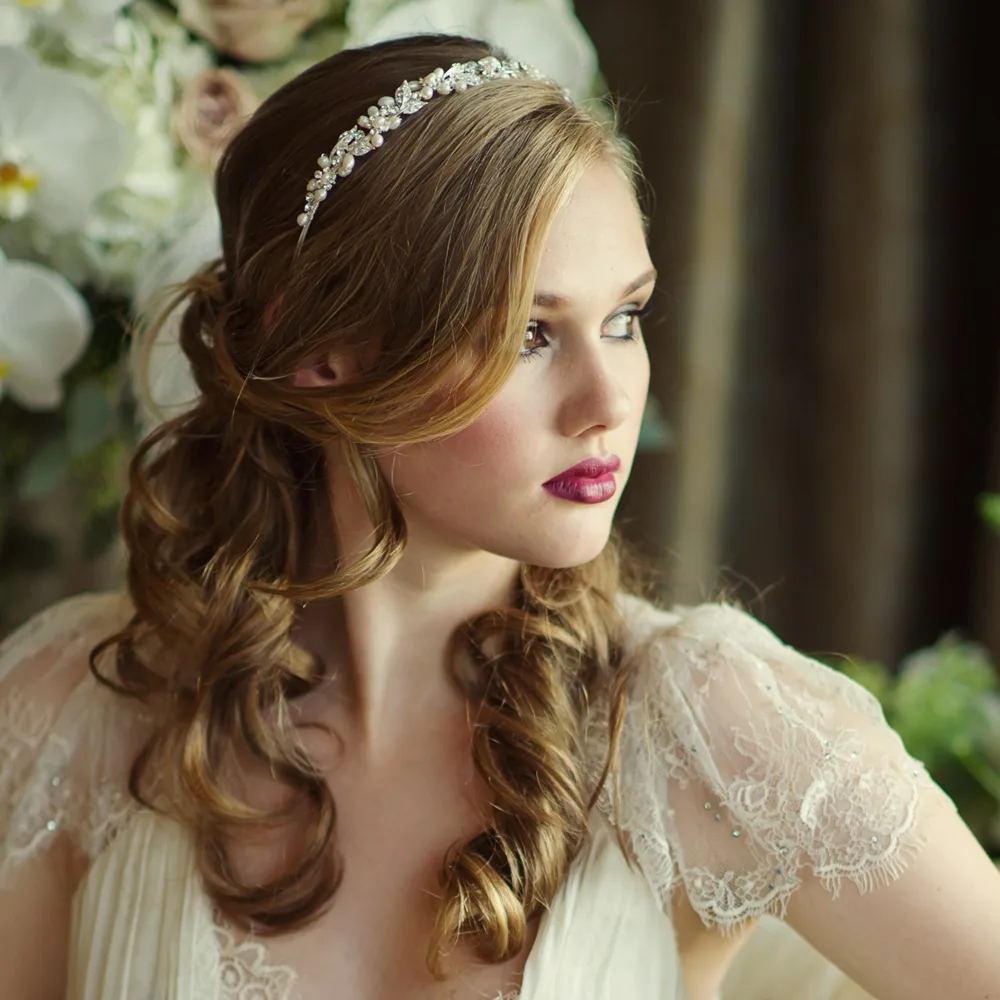
26. Low Side Bun
A low side bun sits just behind one ear, giving an asymmetrical, editorial feel that photographs beautifully from the front. It is soft, romantic and practical — the weight of the bun is anchored to one side, so it stays put.
How to style: sweep hair to one side, twist loosely and pin into a soft bun at the nape on that side. Leave a few face-framing pieces on the opposite side to balance the look.
Best for: one-shoulder dresses, statement earrings and brides who want their hair visible in front-facing photos.
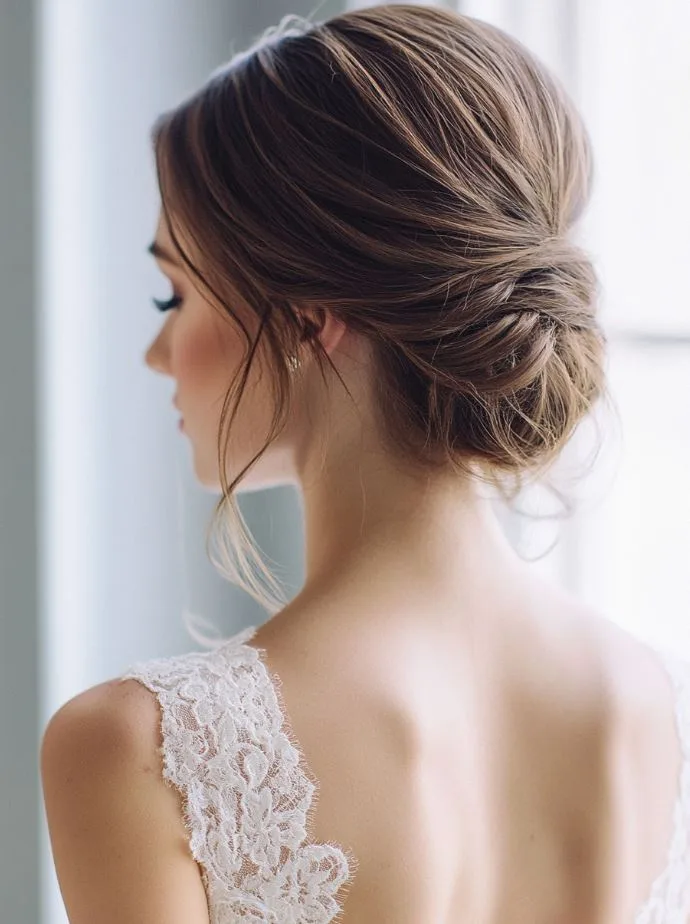
27. Wavy Bob
Short hair deserves a place at a backyard wedding, and the wavy bob is its star. Chin- or shoulder-length hair, waved softly and tucked behind one ear, looks chic, modern and completely at home outdoors.
Pros and cons: the pros are lightness, comfort and zero weight pulling at your scalp in the heat. The con is that short hair has fewer updo options — but a bob this good does not need one.
What to ask your stylist: ask for texture, not curls. A wave created with a flat iron looks more modern than a curling-iron wave on a bob, and it holds longer in humidity.
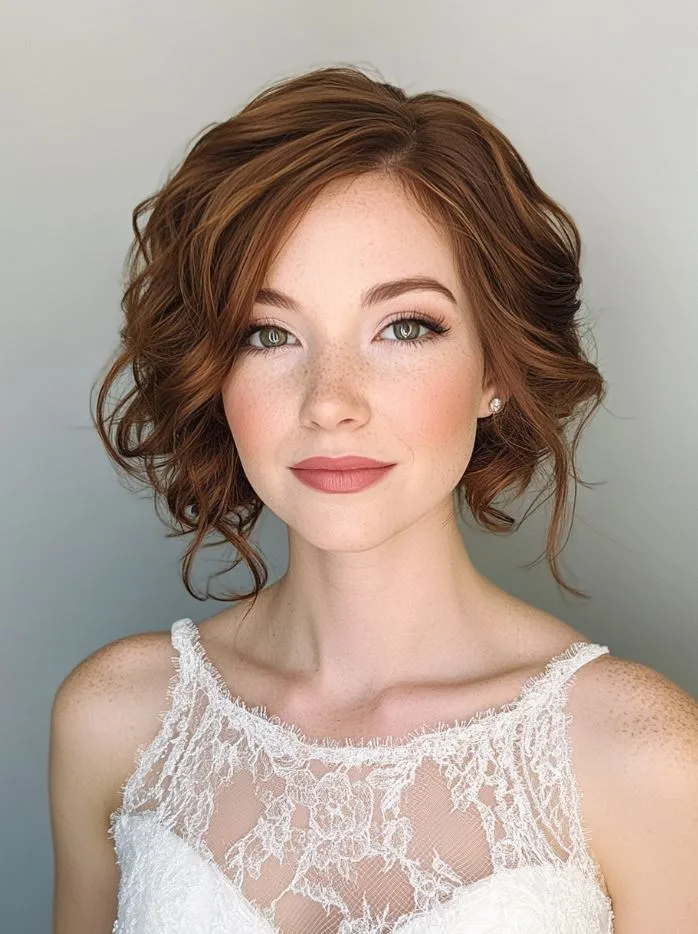
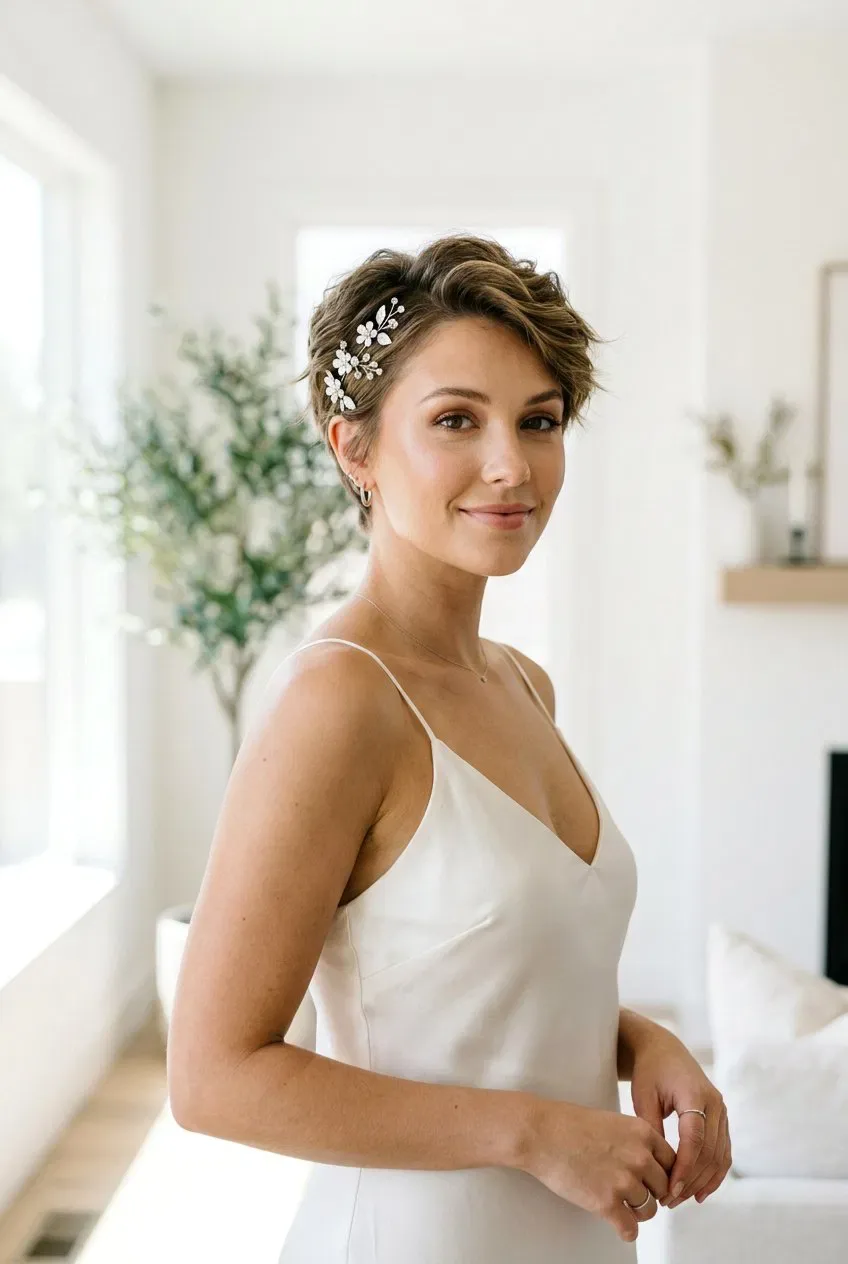
28. Pixie with a Floral Pin
A pixie cut at a wedding is a statement of confidence, and a single floral pin turns it into a bridal look. It is the most weather-proof style on this list — wind, humidity and heat simply have nothing to undo.
How to style: add texture with a matte paste, sweep the fringe softly to one side, and pin in one fresh bloom or a small pearl pin above the ear. That is the whole look, and it is enough.
Quick verdict: if you have a pixie, do not grow it out for the wedding. Own it. Your photos will look modern, joyful and unmistakably you.
29. Long Layers with Loose Curls
Long layers with loose curls are the classic romantic bridal look, and a garden is their natural home. The layers give the curls movement and keep very long hair from looking heavy or flat in photos.
Best for: brides with long, thick hair who want it down. The layers remove weight, so the curls hold longer and the style stays comfortable all day.
Maintenance: a mid-day spritz of texturising spray at the roots revives the shape. Avoid brushing — finger-comb only, or the curls will turn to frizz.
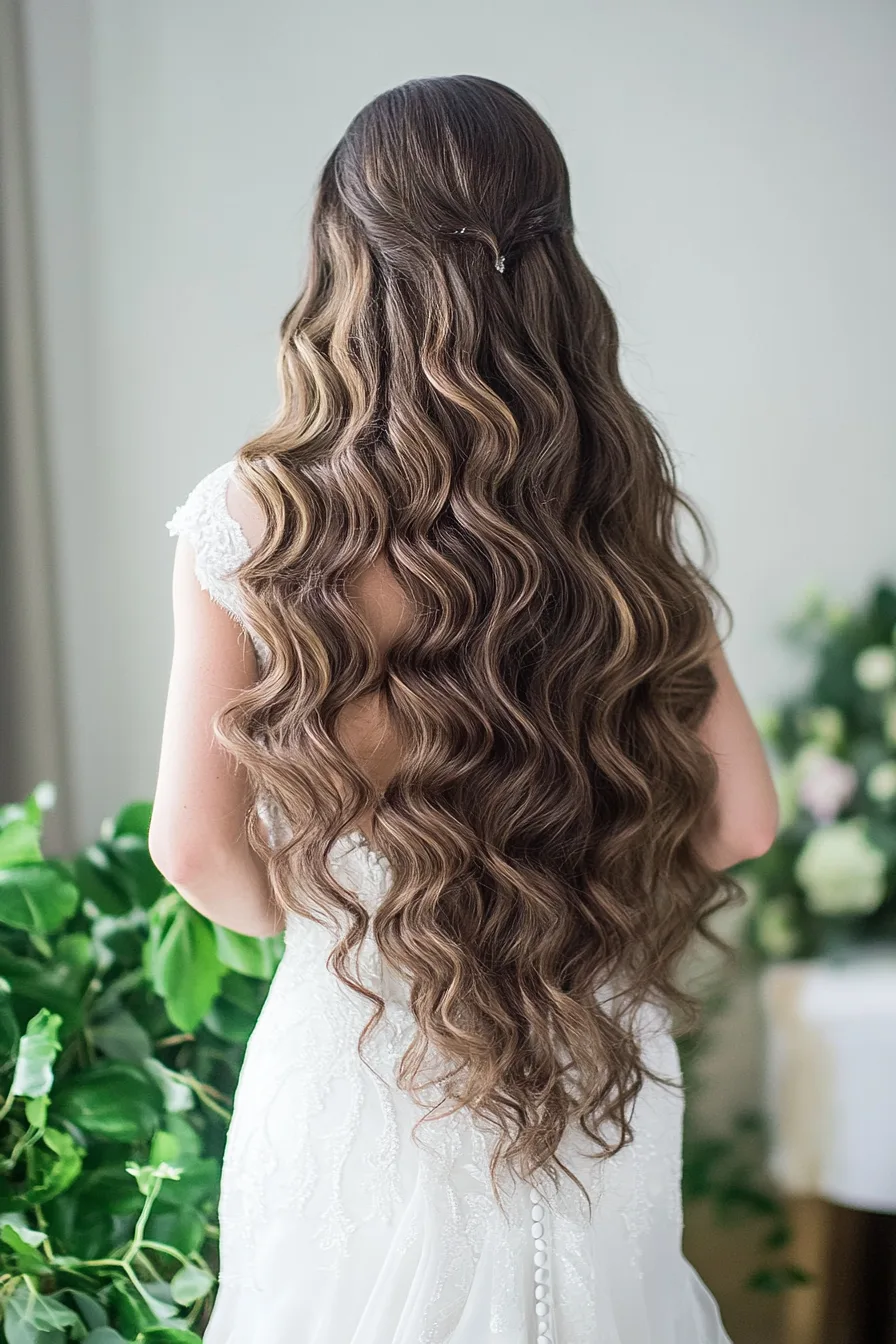
30. Braided Low Bun
The braided low bun combines two of the most reliable outdoor techniques — braiding and gathering low — into one style. A braid is worked into a low bun, giving texture, security and a beautiful detail visible from every angle.
How to style: braid a section from each side toward the nape, then gather everything into a soft low bun and pin. Loosen the braid edges slightly for a romantic, textured finish.
Cost and time: about 35 to 45 minutes. It looks intricate, but a good stylist builds it quickly, and it will not move until you take it down.
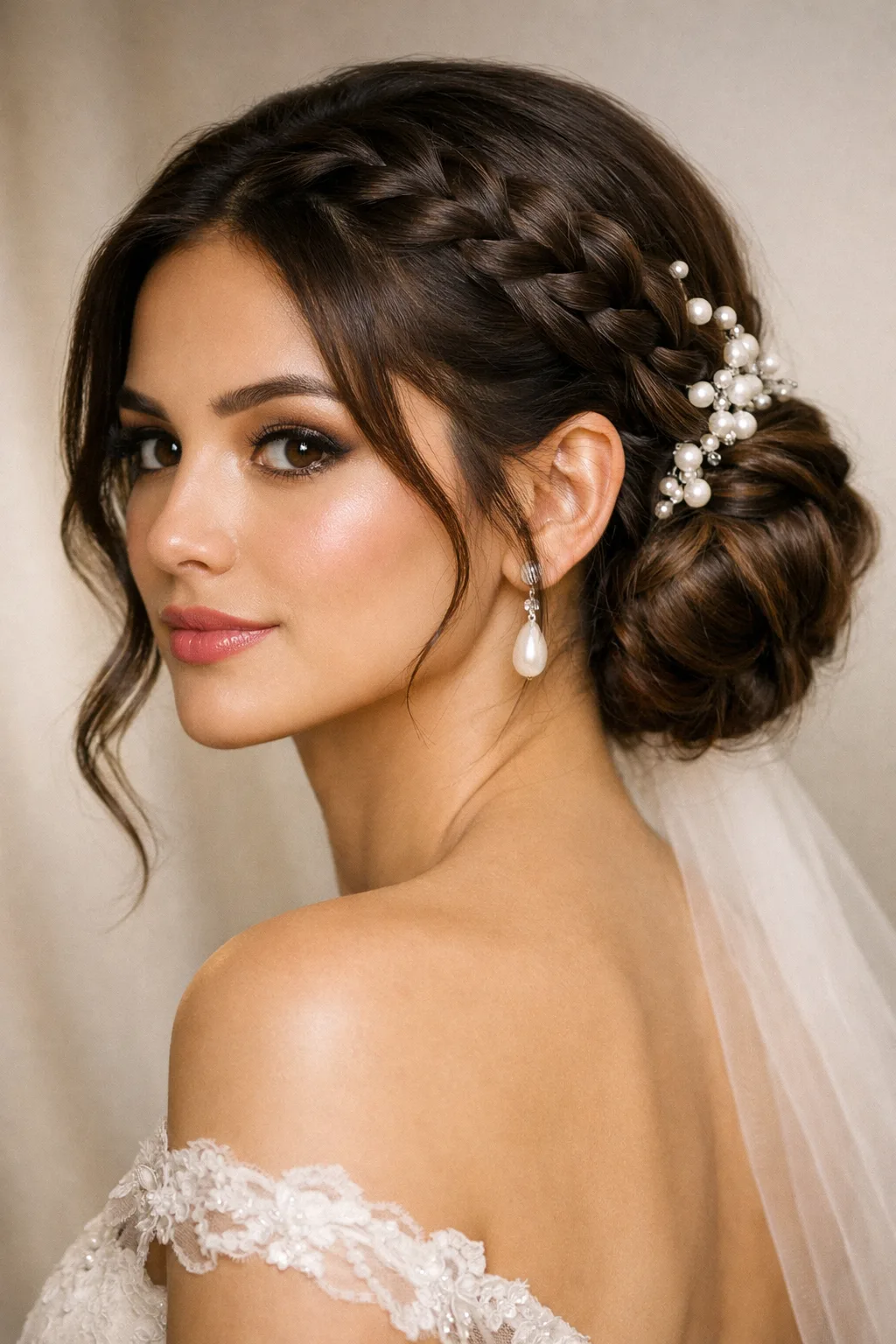
31. Half-Up Twist
The half-up twist is the quieter sibling of the half-up braid: two sections are twisted back from the temples and pinned at the crown, leaving the rest of the hair flowing. It is simple, elegant and very secure.
Best for: brides who want the half-up look without a braid, and for fine hair — twists add the illusion of fullness where a braid might look thin.
Common mistake: twisting too tightly, which pulls at the temples and looks severe. Keep the twists soft and let a few wisps escape at the front.
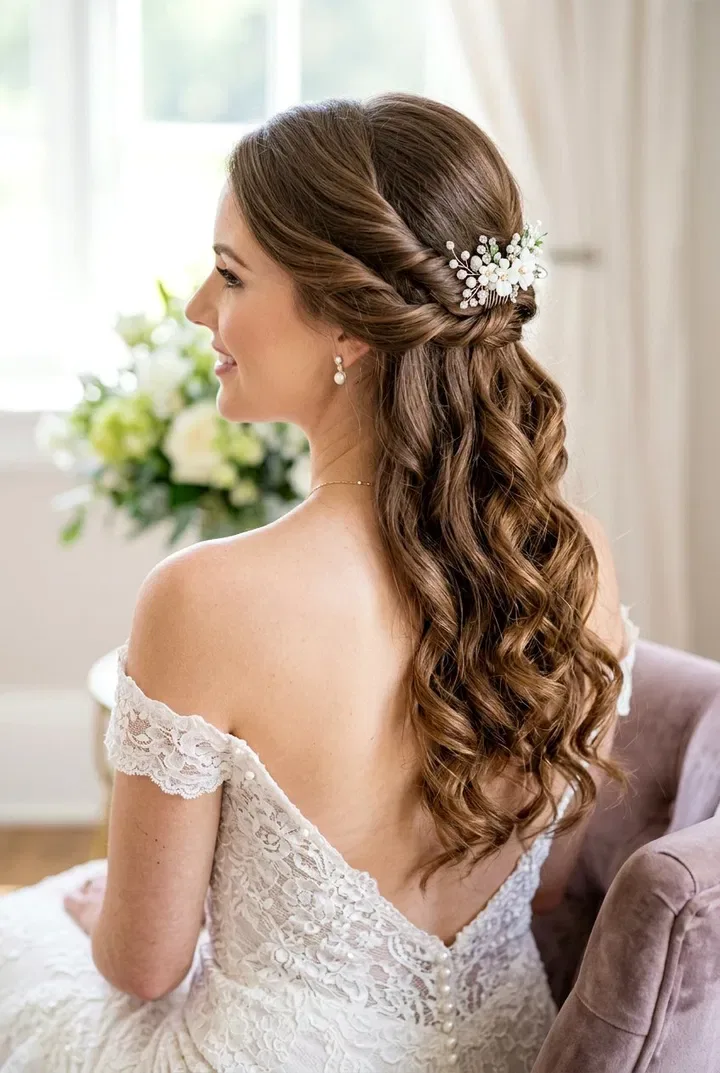
32. Voluminous Blowout
A voluminous blowout is glamour in its simplest form: big, bouncy, shiny hair with movement in every direction. In a garden, with the sun catching the shine, it looks like a shampoo commercial — in the best way.
Pros and cons: the pros are shine, volume and a universally flattering shape. The con is longevity: humidity is the enemy of a blowout, so this style suits dry days and evening ceremonies best.
What to ask your stylist: ask for a round-brush blowout with velcro rollers set while you do your makeup. The rollers lock in volume that survives the walk down the aisle.
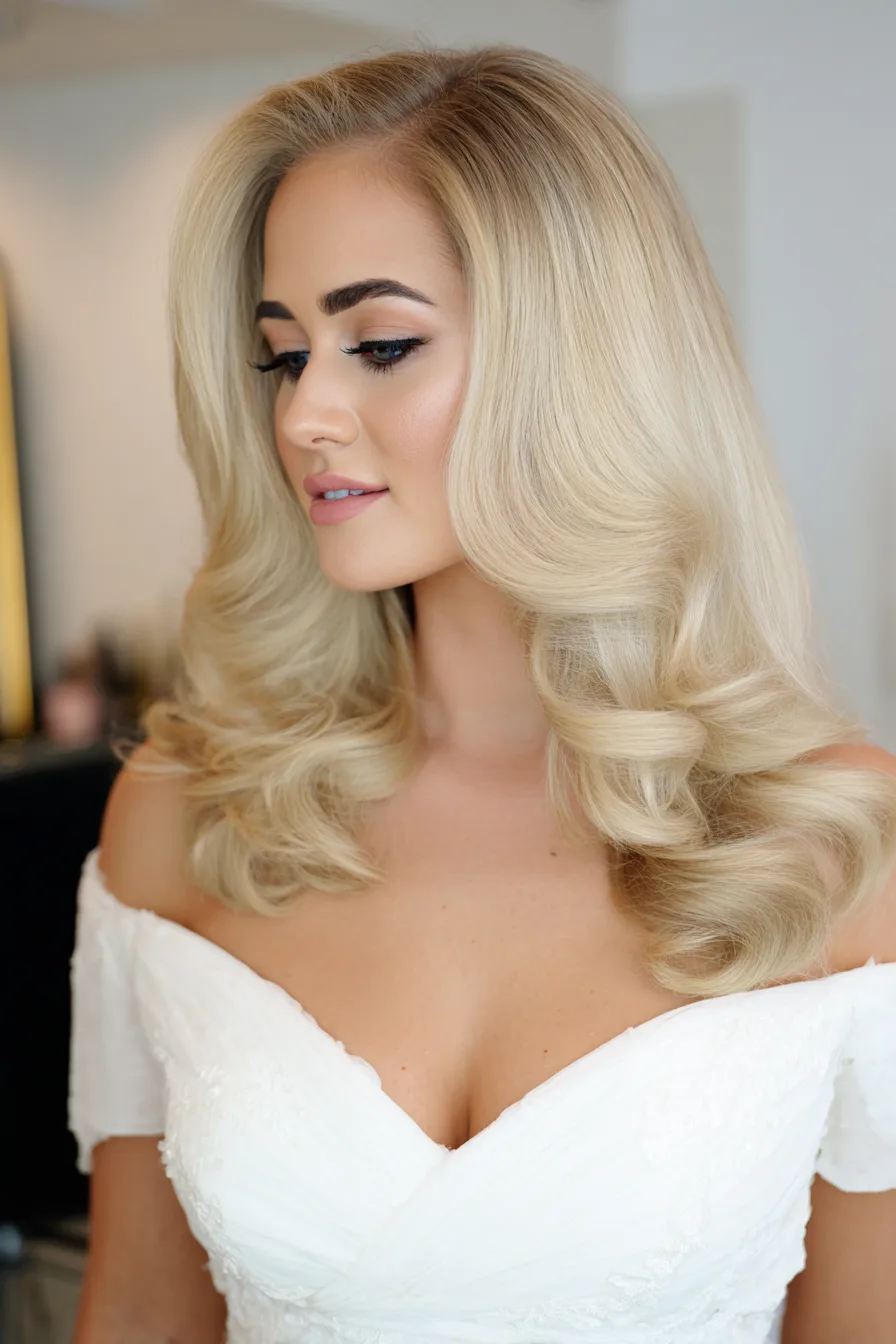
33. Romantic Milkmaid Braid
The milkmaid braid — two braids crossed over the crown — is storybook romance, and it belongs in a garden. It is fully pinned, fully secure, and it frames the face like a halo.
How to style: part hair down the middle, braid each side loosely, then cross the braids over the top of the head and pin. Pull a few pieces loose at the temples and weave in tiny flowers.
Who should avoid it: brides with very short hair, which may not reach across the crown. On medium and long hair, it is one of the most charming styles here.
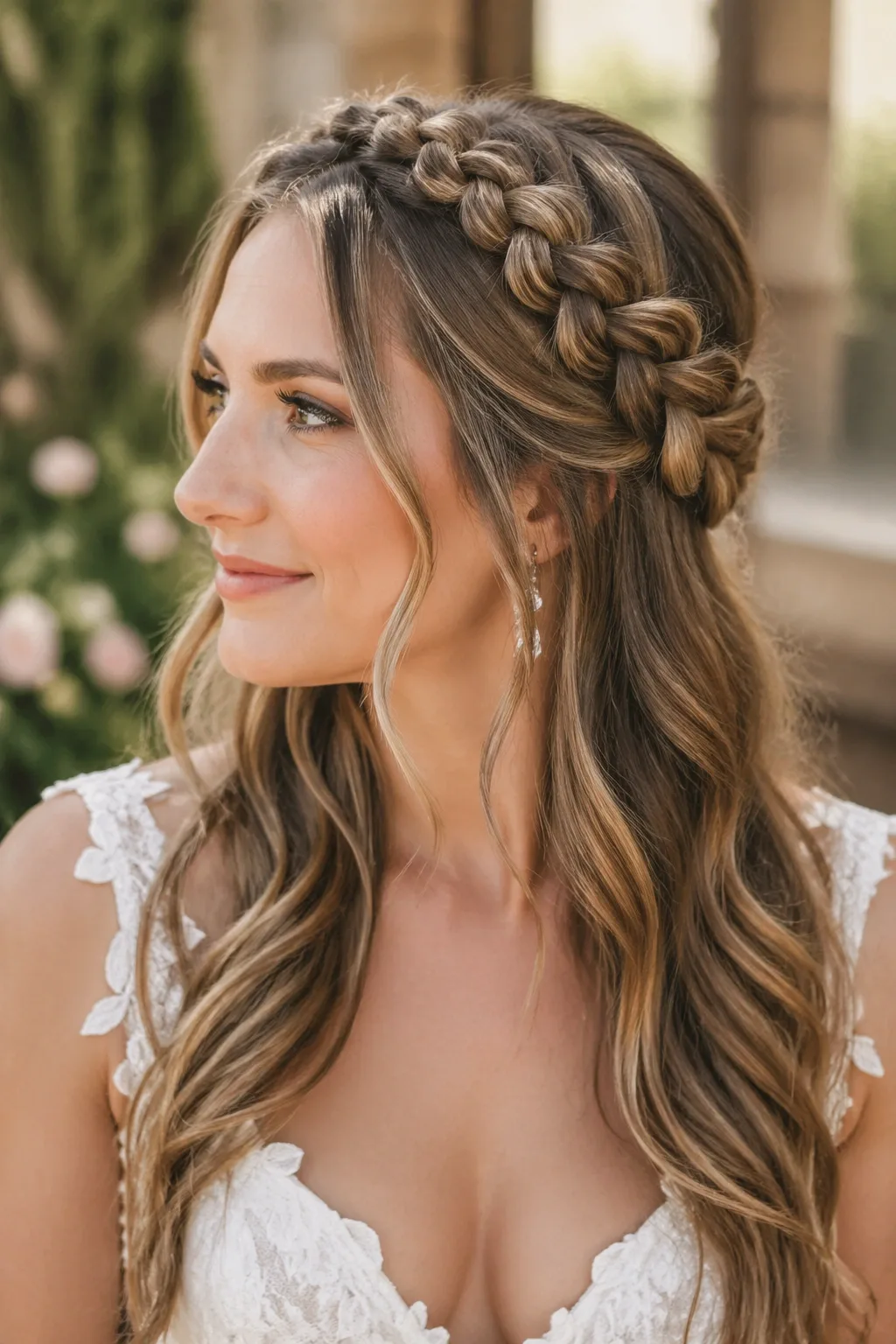
34. Tousled Updo with Face-Framing Pieces
The tousled updo is the art of looking undone on purpose: hair is gathered loosely, twisted and pinned with plenty of texture, while soft pieces are left free around the face. It is romantic, modern and forgiving.
Best for: brides who want an updo without the stiffness. Because it is built loosely, it is comfortable for a full day, and it only gets better as it softens.
Maintenance: none, really. If a piece falls, leave it — it is supposed to be there. A quick spray after the ceremony is the only touch-up needed.
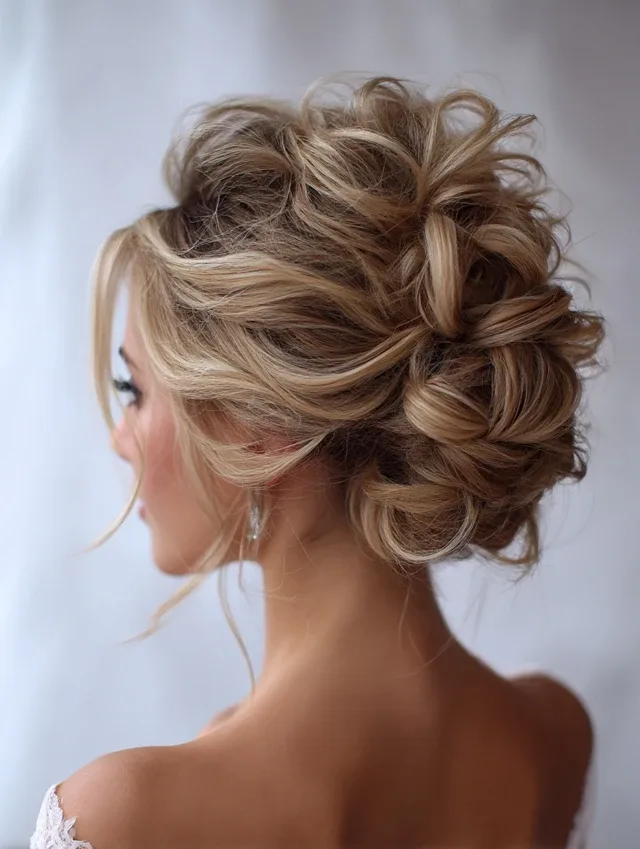
35. Low Ponytail with a Ribbon
A low ponytail tied with a ribbon is simple, sweet and unmistakably bridal. The ribbon — silk, velvet or organza in your wedding colours — turns an everyday style into a ceremony look, and it moves beautifully in a breeze.
How to style: gather hair low at the nape, secure with an elastic, wrap a strand of hair around the base, then tie a ribbon in a soft bow and let the ends hang. Curl the ponytail gently for movement.
Quick verdict: the easiest style on this list, and one of the prettiest. If you are doing your own hair, start here.
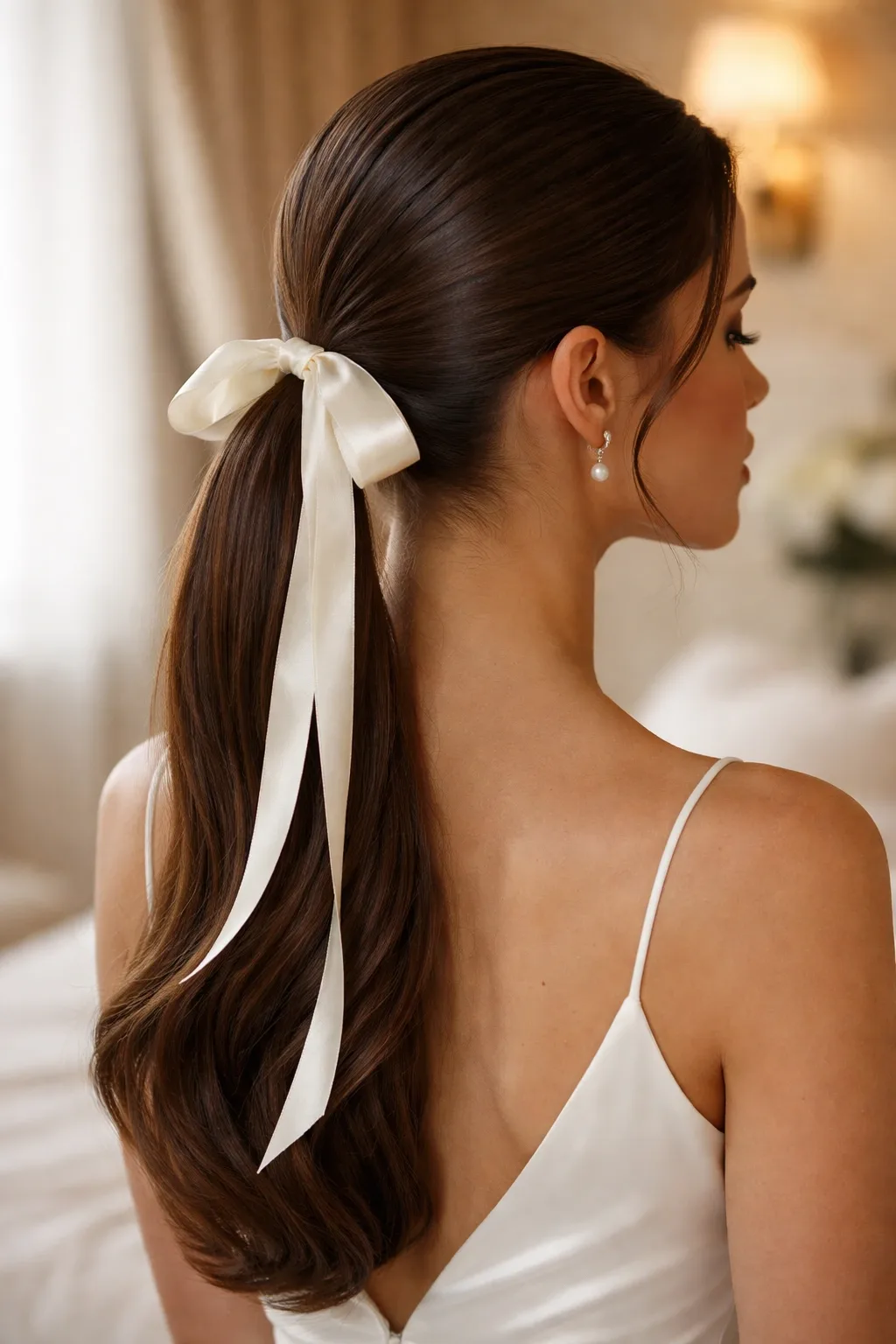
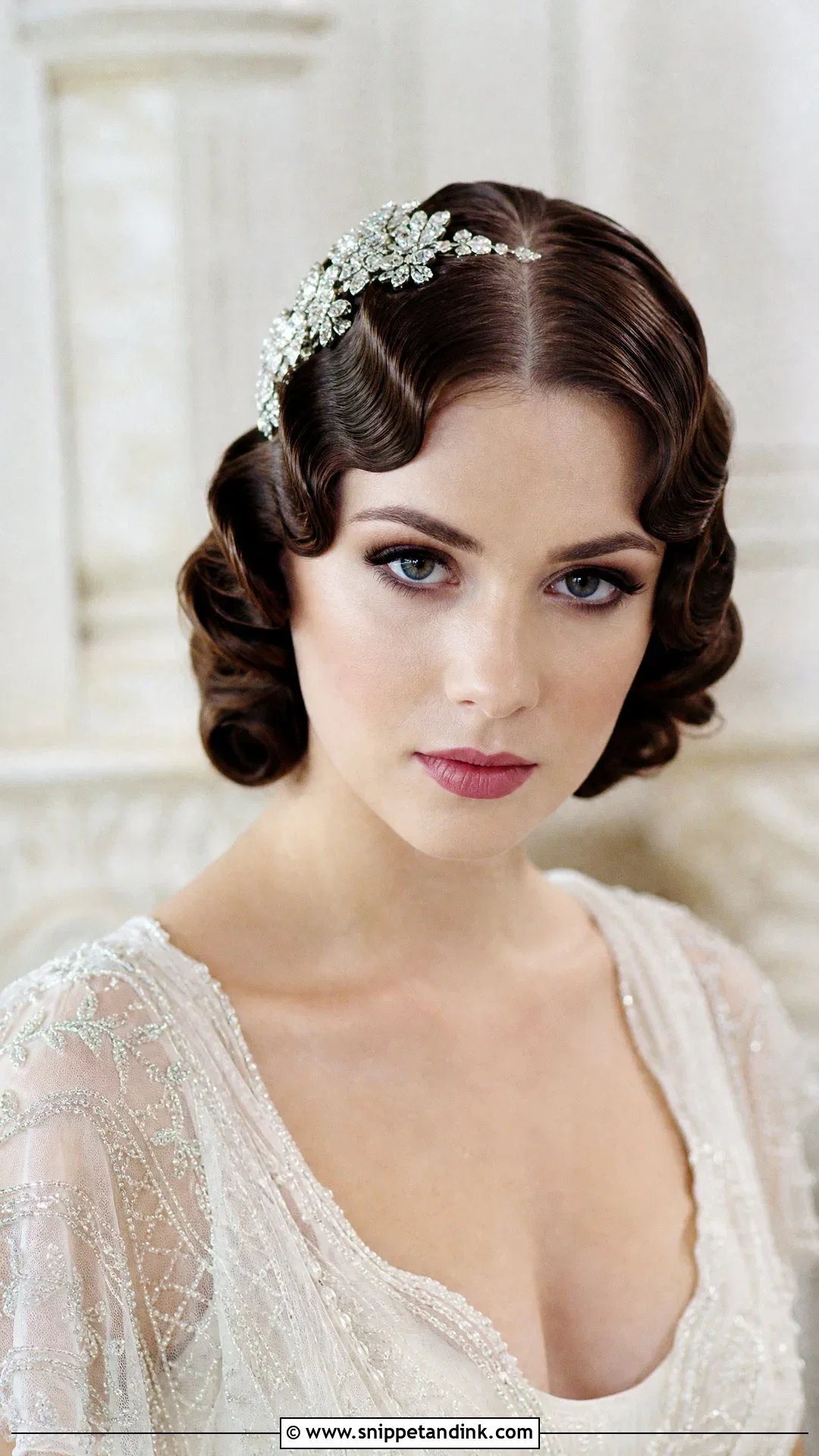
36. Vintage Finger Waves
Vintage finger waves are sculpted, glossy S-shaped waves that defined 1920s glamour. At a backyard wedding with a vintage theme, they are unforgettable — especially on short and medium hair.
How to style: this is a job for a professional. Waves are sculpted with gel and a fine comb, then set until dry. The result is a precise, shiny pattern that holds its shape remarkably well outdoors.
Pros and cons: the pros are uniqueness and staying power once set. The con is the time — allow up to an hour — and the fact that it suits vintage styling best. Pair it with a birdcage veil for the full effect.
37. Soft Glam Waves with Pearl Pins
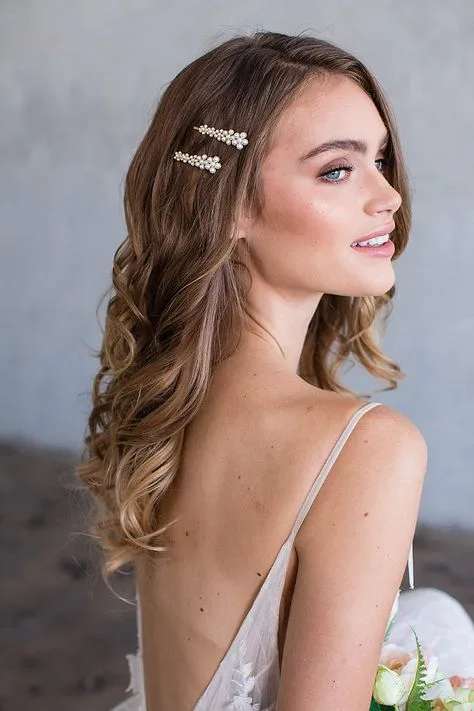
Soft glam waves with pearl pins are the finishing flourish of this list: polished, bouncy waves with a scattering of pearl pins catching the light. They are glamorous without being stiff, and the pearls tie the hair to the jewellery and the dress.
How to style: curl in large sections, brush into soft waves, then place pearl pins asymmetrically — three on one side, two on the other — so the arrangement looks organic rather than matched.
Best for: evening receptions, sparkly dresses and brides who want a touch of glamour in a garden setting. The pearls photograph beautifully at golden hour.
What is the best hairstyle for a backyard wedding?
A low bun, a braided crown or a half-up style is the best hairstyle for a backyard wedding, because all three survive wind and heat while still looking romantic. If you want your hair down, choose soft waves with the front sections pinned back so nothing blows into your face during the vows.
How do I keep my hair from frizzing at an outdoor wedding?
Start with an anti-humidity shampoo and serum, blow-dry hair completely before styling, and finish with an anti-humidity spray. Curls and textured updos resist frizz better than sleek straight styles, and a quick serum touch-up at the roots halfway through the day keeps everything smooth.
Should I wear my hair up or down for a backyard wedding?
Wear your hair up if your ceremony is at midday or in summer heat, and down if it is a cool evening ceremony. A half-up style is the best compromise — it keeps hair out of your face like an updo while keeping the romantic length of hair worn down.
How do I keep my hair in place in the wind at an outdoor wedding?
Anchor every section with crossed bobby pins, use a flexible-hold spray instead of a stiff one, and choose a style with built-in structure such as a braid, a low bun or a twist. A trial run on a breezy day will show you exactly which pieces need extra pins.
Can I do my own hair for a backyard wedding?
Yes — low ponytails with a ribbon, beachy waves, soft half-up twists and simple braids are all achievable at home with practice. Do at least two full trial runs, time yourself, and have a friend on standby for the back sections. Complex updos and finger waves are best left to a professional.
How do I keep a veil or flower crown in place outside?
Attach a veil low, under a bun or twist, with a sturdy comb plus two pins. Anchor a flower crown with pins at the temples and the nape, and choose small, light blooms rather than heavy ones. Carry two spare pins and a spare bloom for the reception.
What hairstyles work for short hair at a backyard wedding?
A wavy bob, a pixie with a floral pin, soft finger waves and a headband with curls all work beautifully on short hair. Add texture with a styling paste or spray, and let one accessory — a pearl pin, a flower or a headband — do the bridal work.
How long will my hairstyle last at an outdoor wedding?
A well-pinned updo or braid will last 10 to 12 hours outdoors. Hair worn down typically holds its shape for 4 to 6 hours before softening — which still looks lovely. Plan one five-minute touch-up between the ceremony and the reception to reset pins and revive volume.
What hair products should I use for an outdoor wedding?
Use an anti-humidity serum, a flexible-hold hairspray, a texturising spray for grip, and bobby pins that match your hair colour. Pack travel sizes of the spray and serum, plus dry shampoo for a mid-day root refresh, in your touch-up kit.
What is the best hairstyle for a humid backyard wedding?
A textured low bun, a braided crown or a curly half-up is the best hairstyle for a humid backyard wedding, because texture and braids hold their shape when humidity would flatten a smooth blowout. Avoid sleek straight styles in humidity — they are the first to frizz and fall flat.
Conclusion
Your backyard wedding is already the most personal setting you could choose — your hair should feel just as personal. Whether you pick the loose romantic waves that started this list, a wind-proof braided crown, or a simple low ponytail with a ribbon, the best of these hairstyles for a backyard wedding is the one that lets you forget about your hair and enjoy your day.
Do the trial, test it in the wind, pack the little touch-up kit, and then stop worrying. The breeze will move a strand or two, the sun will catch the curls, and your photos will look like a garden in full bloom — because that is exactly what they are. Congratulations, and happy styling.