Under the Stage Lights: 38 Pageant Hairstyles for Contestants Who Want to Be Remembered
There is a moment in every pageant when the music changes, the lights come up, and every eye in the room turns to the stage. In that moment, your hair is not a detail — it is part of your entrance, your silhouette, and the first impression the judges form before you say a single word. That is why choosing among hairstyles for a pageant matters so much: the right style does not just look beautiful up close, it reads clearly from the back row, holds its shape under hot lights, and still looks like you.
Pageant hair is different from everyday hair, and different from wedding hair too. It has to survive a long day of rehearsals, interviews, outfit changes and stage walks, often in a warm hall under bright lights. It has to photograph well from every angle, sit comfortably under a crown or tiara, and stay put through turns, waves and walks — without looking stiff, over-sprayed or like a helmet. The best pageant looks manage all of that at once, and they look effortless while doing it.
This guide starts with eight short guides on the things contestants most often get wrong: how stage lighting changes hair, what judges actually see from their seats, when to trial your style, how to beat heat and sweat, extensions, crown fitting, interview versus evening-gown hair, and backstage touch-ups. Then come 38 hairstyles for a pageant — Hollywood waves, polished updos, braids, buns, curls and bobs — each with who it suits best, how to style it, and what to ask your stylist.
Pick the style that fits your face, your hair and your gown, trial it exactly as you will wear it on the night, and pack a small touch-up kit. Your hair should be the last thing you worry about on stage — and the first thing people remember.
Stage Lighting Changes Everything: How Your Hair Reads Under Bright Lights
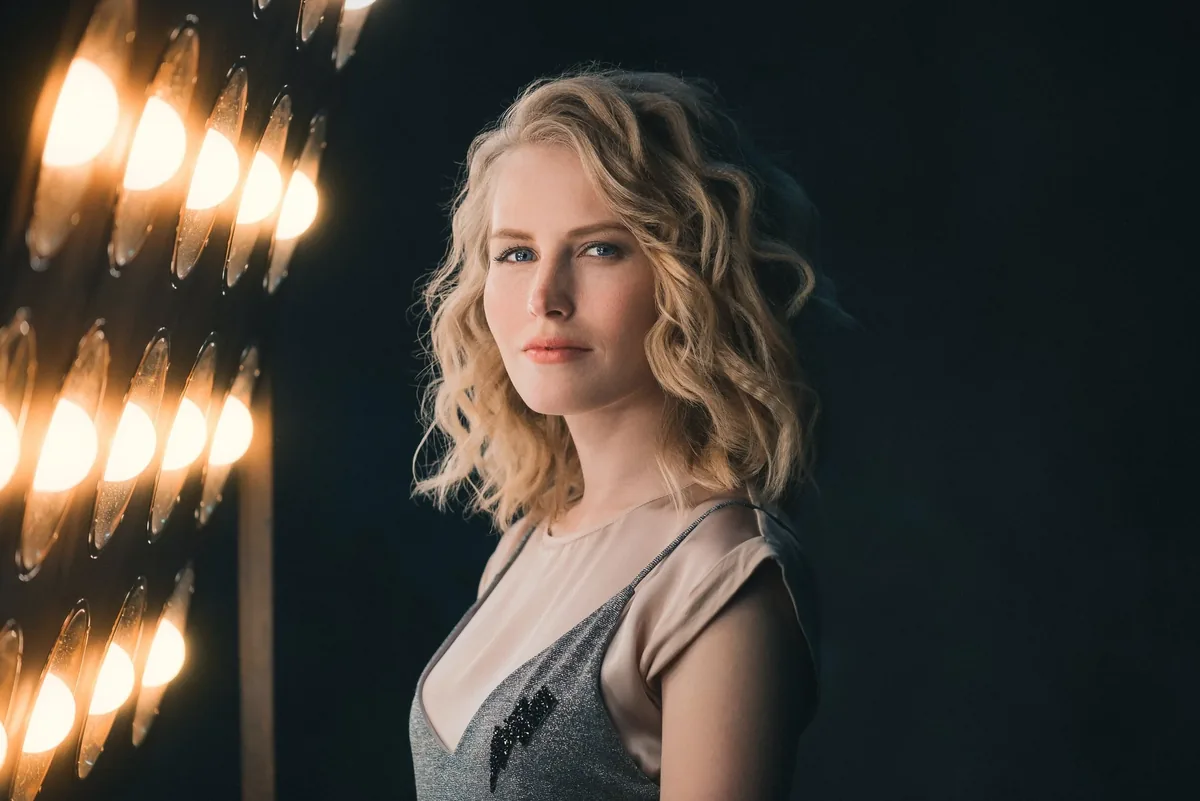
Stage lights are bright, warm and unforgiving, and they change hair in ways a bathroom mirror never shows. Dark hair can look almost black under a spotlight, blonde can wash out to white, and red can turn brassy. Shine becomes a spotlight of its own: a little gloss looks healthy and expensive, too much looks greasy from the judges’ seats. That is why a style should always be checked in bright, warm light — not just in soft daylight.
Shape matters even more than colour under lights. The judges sit several metres away, so fine detail disappears and only the outline, the volume and the movement read clearly. A style with a clear silhouette — a sweep of waves over one shoulder, a tall bun, a defined curl pattern — will register from the back row, while a style that relies on tiny, fiddly detail will simply blur.
Quick verdict: trial your hair under the brightest warm light you can find, and ask a friend to photograph you from ten feet away. If the shape and the shine still look good at that distance, the lights will be kind to you.
What the Judges Actually See: Hair from Ten Feet Away
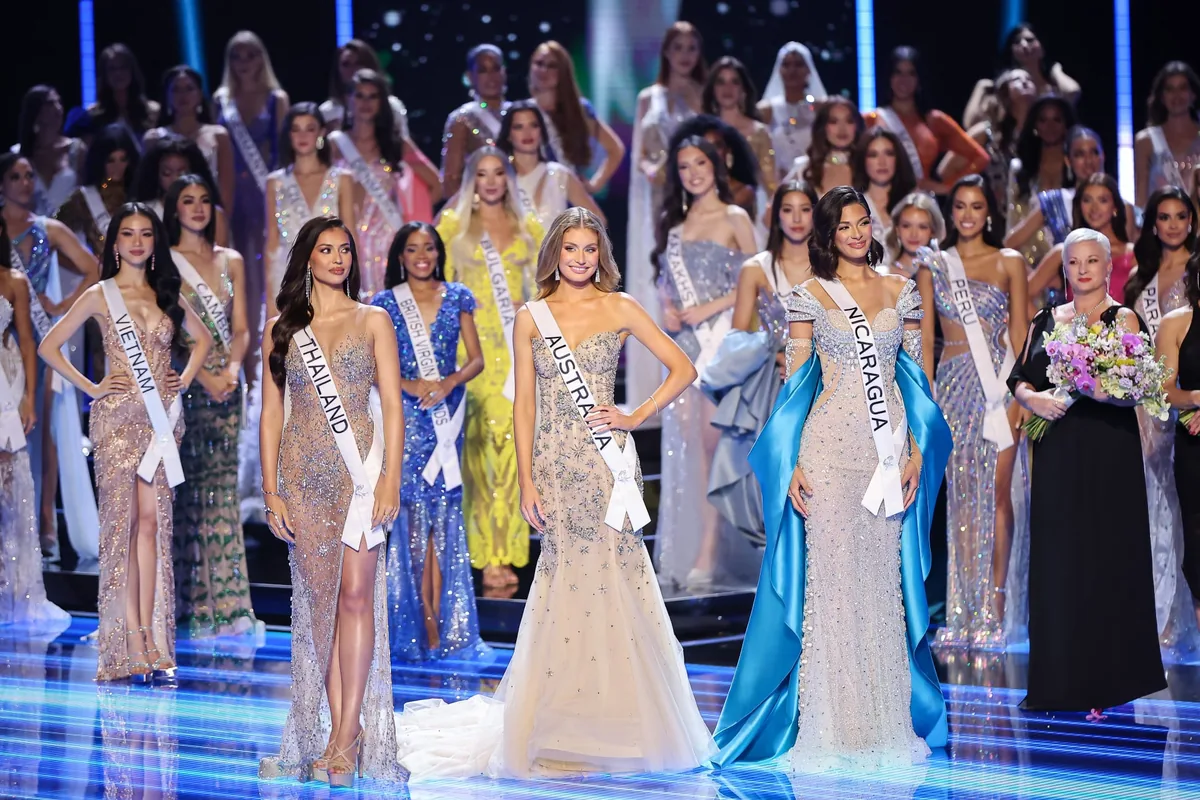
Judges do not study your hair the way a stylist does. They see you walking, turning and smiling, usually from ten feet away or more, and they form an impression in seconds: polished or messy, confident or uncomfortable, finished or forgotten. Hair that frames your face, moves when you move, and stays where it was put reads as polished. Hair that falls across your face, collapses at the crown or needs constant tucking reads as unfinished — even if it looked perfect in the mirror.
That is why the strongest pageant hair is simple at its core. One clear idea — a deep side part, a high ponytail, a low chignon, a crown braid — executed cleanly will always beat a complicated style with three ideas fighting each other. The judges should remember you, not your hairstyle’s engineering.
Quick verdict: choose one clear idea, make it clean, and make sure your face is visible from the front and from the side. If a friend can describe your hairstyle in one sentence from across the room, the judges will read it too.
Rehearsal Timing: When to Trial Your Pageant Hair
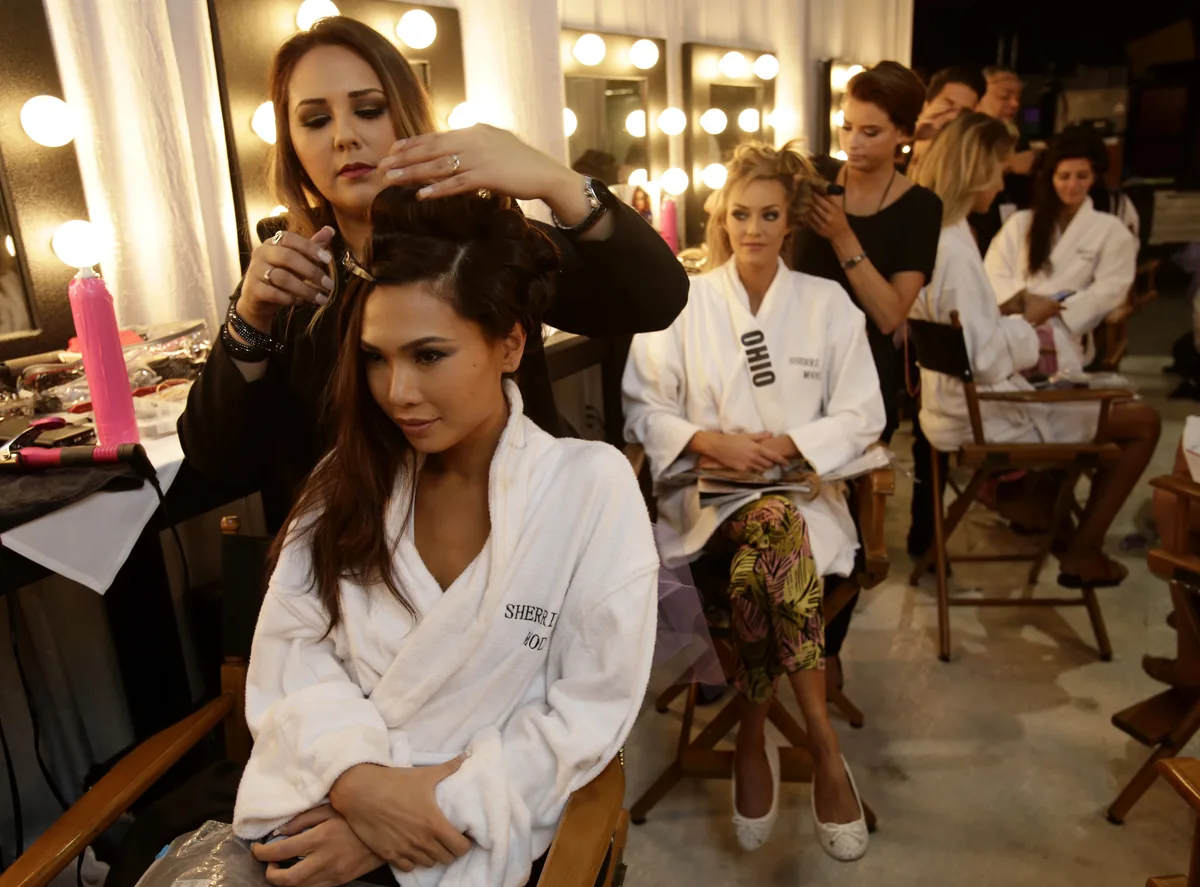
Never debut a hairstyle on pageant day. The trial run is where you learn whether the curls hold, whether the updo gives you a headache, whether the crown sits straight, and whether the style still looks good after three hours in a warm hall. Book the trial at least two weeks before the pageant, and do it at the same time of day as your event if you can, so the light and the temperature are similar.
Wear your trial exactly as you will wear it on the night: the same gown or a similar neckline, the same earrings, the same crown or tiara, and the same shoes. Walk in it, turn in it, sit in it, and have someone photograph you from the front, the side and the back. Then live in it for a few hours. A style that looks perfect for ten minutes and collapses after an hour is not a pageant style.
Quick verdict: trial two weeks ahead, photograph it from every angle, and leave time to change your mind. A trial that reveals a problem is a success — it is the dress rehearsal doing its job.
Hair That Survives Heat and Sweat Under the Lights
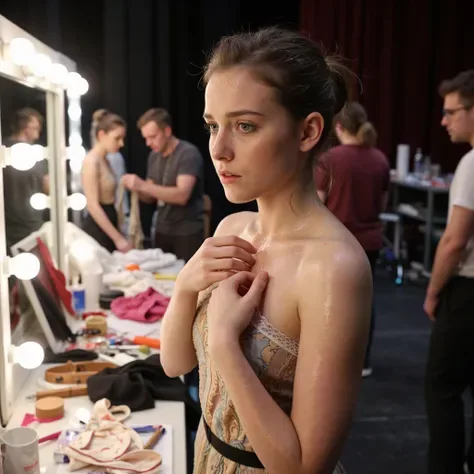
Stage lights are hot, and a pageant day is long. Sweat at the hairline, a damp nape and humidity in a crowded hall are the enemies of every smooth style, and they are the reason so many pageant looks fall flat halfway through the evening. The answer is not more hairspray — it is a style built to survive, and products chosen for heat.
Start with clean, fully dry hair and a heat protectant, and build volume at the roots so the style has somewhere to settle into as it relaxes. Anchor updos with pins that match your hair colour, set curls while they are still warm, and finish with a flexible-hold spray rather than a hard one, so the hair can move without breaking. Keep blotting paper and a small fan in your backstage kit for the hairline.
Quick verdict: build the style a little firmer than you think you need it, because heat and time will soften it. A style that starts at ten out of ten for hold and relaxes to eight is perfect; one that starts at eight will be at five by the evening gown round.
Extensions for Pageants: Length, Volume and a Natural Finish
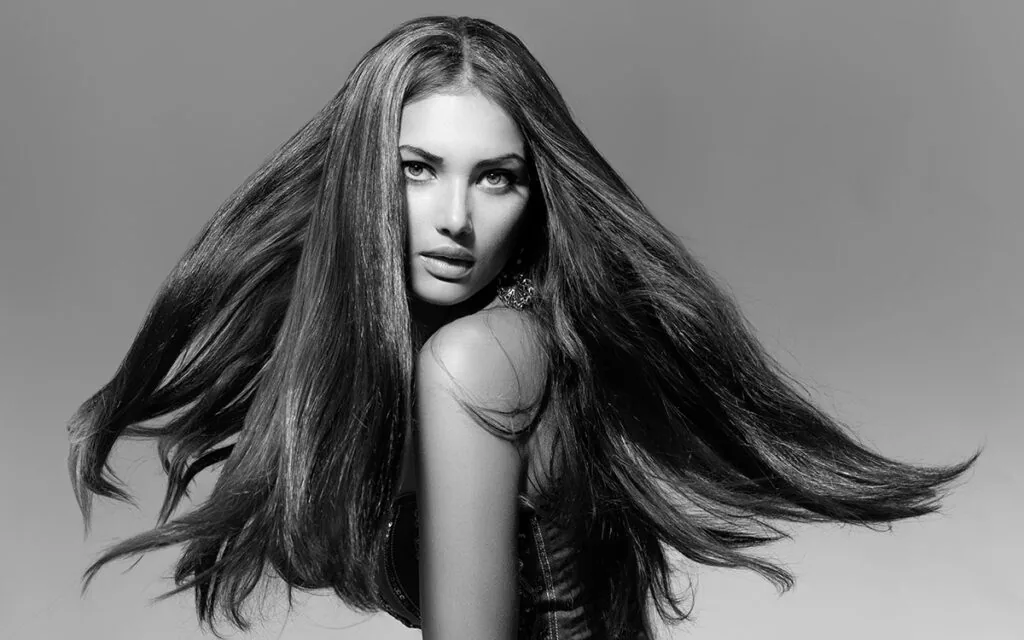
Extensions are common in pageants, and there is no reason to be shy about them — judges are looking at the finished look, not at how you got there. Used well, extensions add the length for a dramatic side sweep, the thickness for a full bun, or the volume that fine hair cannot manage on its own. Used badly, they show at the part, slip under lights, or swing like a separate piece of hair.
Match the colour and the texture exactly, not approximately, and have them fitted by a stylist who has done pageant hair before. Clip-ins are the most flexible choice for a one-night event: they can be placed exactly where the style needs fullness, removed for the interview round, and repositioned for the evening gown. Tape-ins and sewn-in extensions suit longer preparation, but they need a trial too.
Quick verdict: extensions should be invisible and comfortable. If you can feel them pulling, if they show when you turn, or if they move as a separate sheet, they need refitting — never hope the lights will hide them.
Fitting a Crown or Tiara Without Ruining Your Hairstyle
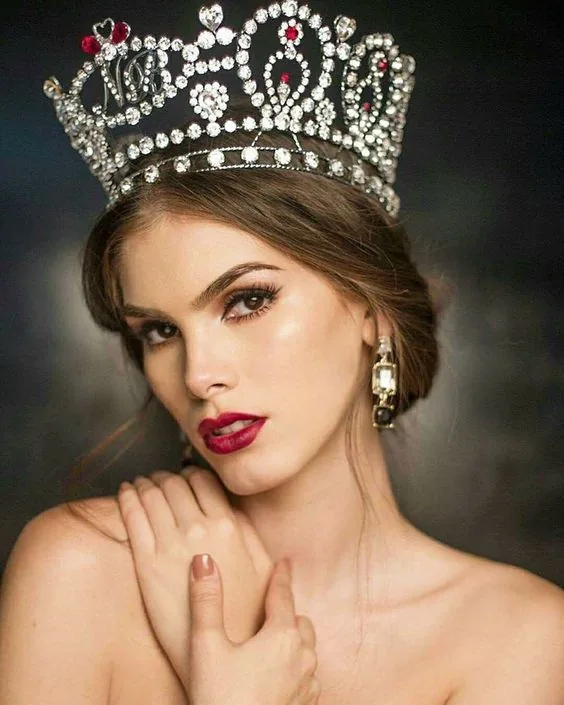
A crown or tiara is the heaviest accessory your hairstyle will ever carry, and it changes the engineering of the whole look. It needs a solid anchor — a bun, a twist, a braided crown, or a pinned section at the top of the head — and it needs to sit level, not slide forward onto your forehead or tip backwards as you walk. Trial the crown with the hairstyle, never separately.
Tell your stylist exactly which crown you will wear, and bring it to the trial. Some crowns sit best on an updo, others on half-up hair, and a heavy crown on loose, slippery hair will slide no matter how many pins you use. A small, discreet comb or a few crossed bobby pins under the crown’s base will hold it, and a little texture at the crown gives the pins something to grip.
Quick verdict: the crown is part of the hairstyle, not an afterthought. If it cannot sit level and stay put through a walk and a turn, change the hairstyle — not the crown.
Interview Hair vs Evening-Gown Hair: One Look or Two?
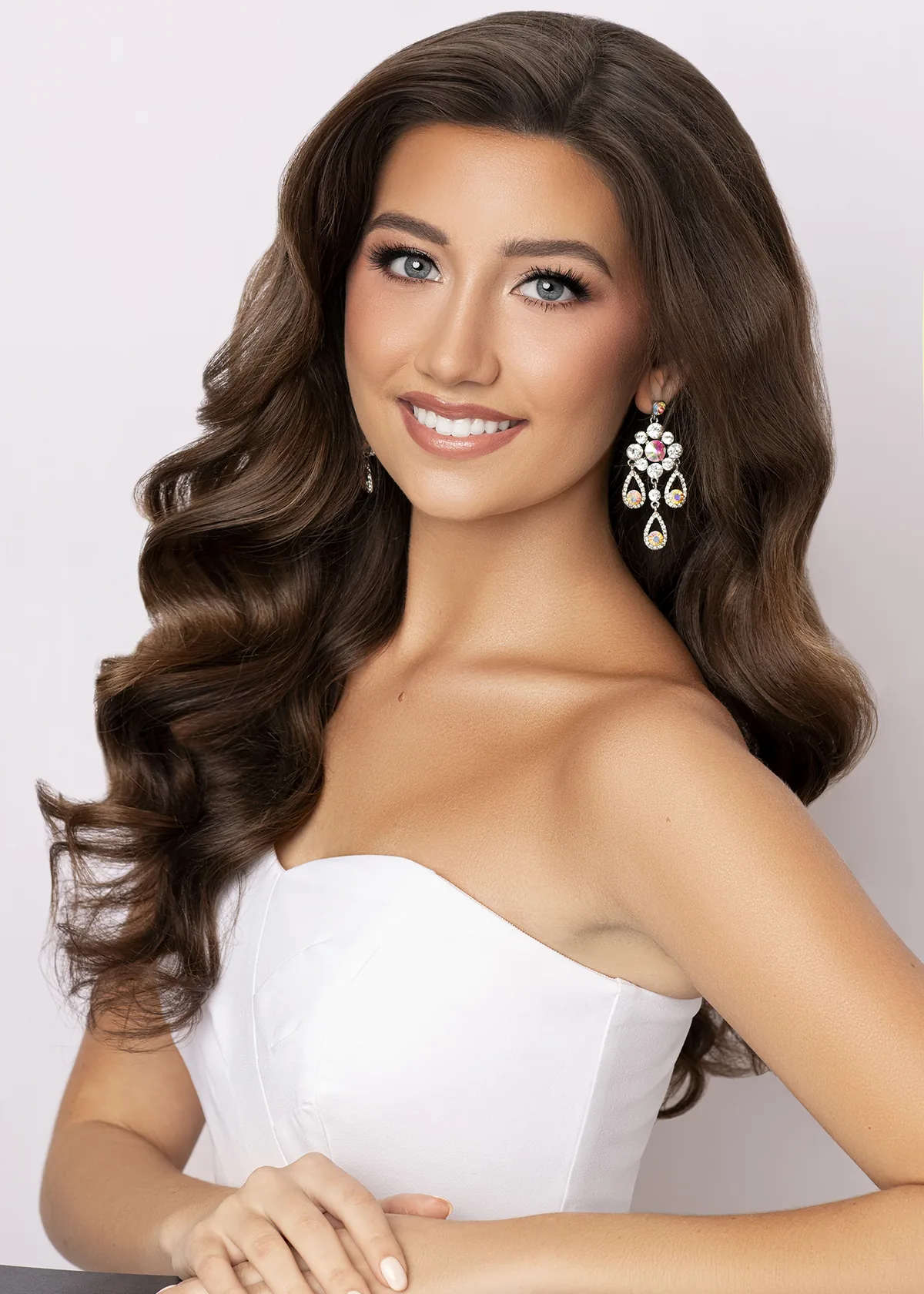
Interview and evening gown ask for different things from your hair. In interview, you are sitting close to the judges, talking, and they see your face, your expressions and the front of your hair in detail. The style should be neat, open and unfussy — nothing falling across your face, nothing you need to tuck behind your ear while you answer a question. In evening gown, you are moving, turning and being seen from a distance, and the style can be bigger, more dramatic and more glamorous.
You do not need two completely different hairstyles. Most contestants use one base with a small change between rounds: hair down and polished for interview, then swept up or to one side for evening gown; or a half-up style for interview, then a full updo for the gown. The change should take five minutes backstage, not a full restyle — and it should be rehearsed, with the pins and the spray already in your kit.
Quick verdict: plan one base, two gears. Interview hair is tidy and open; evening-gown hair is the same idea, turned up one notch. Rehearse the change, and time it.
Backstage Touch-Ups: The Five-Minute Kit That Saves the Night
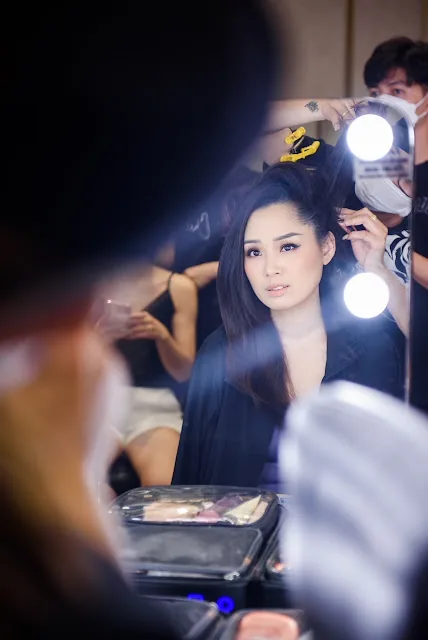
Backstage is where pageant hair is won or lost. Between rounds your hair will shift: a curl drops, a pin slips, the crown moves a millimetre, humidity softens the front. A five-minute touch-up between rounds is what keeps the last walk looking as good as the first — and it only works if the kit is packed before you leave home.
Pack a small, flat kit: a travel brush, bobby pins in your hair colour, a mini flexible-hold spray, blotting paper, a few tissues, and a small mirror. Brush through gently, re-pin anything that slipped, smooth flyaways with your palms, check the back of your hair, and check the crown is level. Ask a friend or your chaperone to be your second pair of eyes — they will spot a stray piece long before you feel it.
Quick verdict: never leave your touch-up kit in the car or the hotel room. Keep it backstage, keep it small, and use it between every round. Five calm minutes beats a frantic fix in front of a mirror.
Classic Hollywood Waves
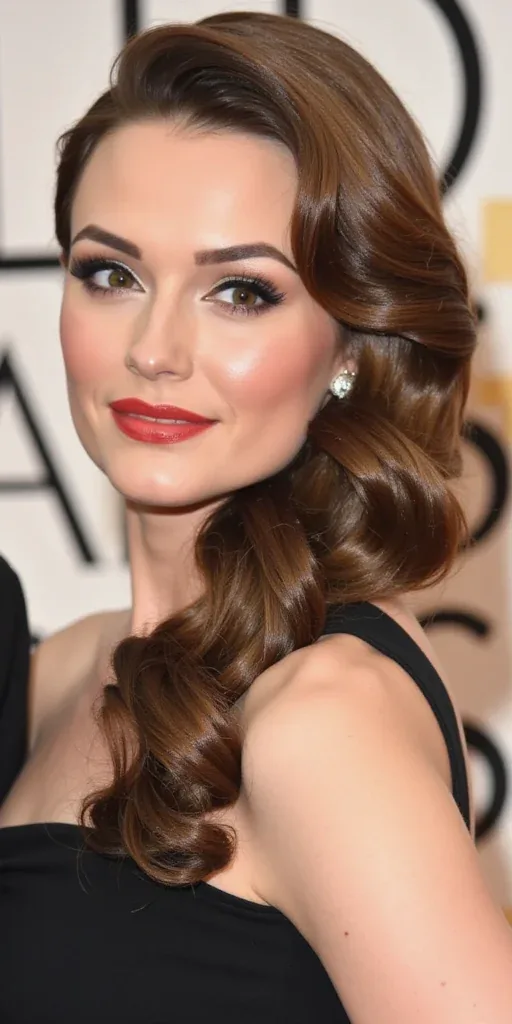
Best for: evening gown, long hair, and contestants who want instant glamour. Classic Hollywood waves are the most glamorous style in pageantry, and they earn it: deep, uniform waves all falling in the same direction, with a shine that catches every light in the hall. From the judges’ seats, the waves read as one clear, sweeping shape, which is exactly what stage lighting rewards.
How to style: curl all sections in the same direction with a large iron, brush through into one smooth wave, and set with a light, flexible spray. Start with a little more curl than you think you need, because the waves relax under the lights.
What to ask your stylist: how the waves will look after three hours, not just after twenty minutes, and whether a shine spray or a gloss will suit your hair colour under bright lights.
The High Glossy Ponytail
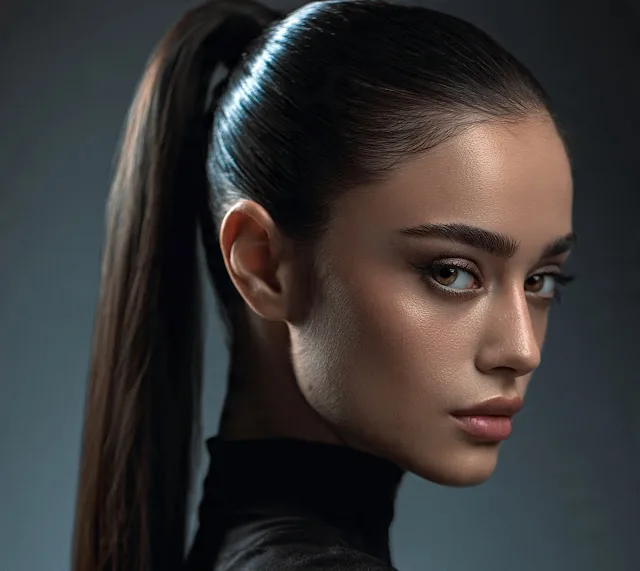
Best for: showing off your face, your earrings and a gown with an interesting neckline. A high ponytail is energy in a hairstyle — lifted, bright and full of movement — and the wrapped base is what makes it look polished instead of sporty. Wrapping a strand of hair around the elastic hides it completely, so the ponytail looks seamless and intentional.
How to style: gather the hair high at the crown, secure it firmly, and wrap a strand around the base, pinning it underneath. Smooth the crown with a brush and a drop of serum, and curl the ponytail itself so it swings as one piece.
What to ask your stylist: for extra anchoring pins at the base, and whether a little backcombing at the crown will keep the lift from dropping during the evening-gown walk.
The Elegant Low Chignon
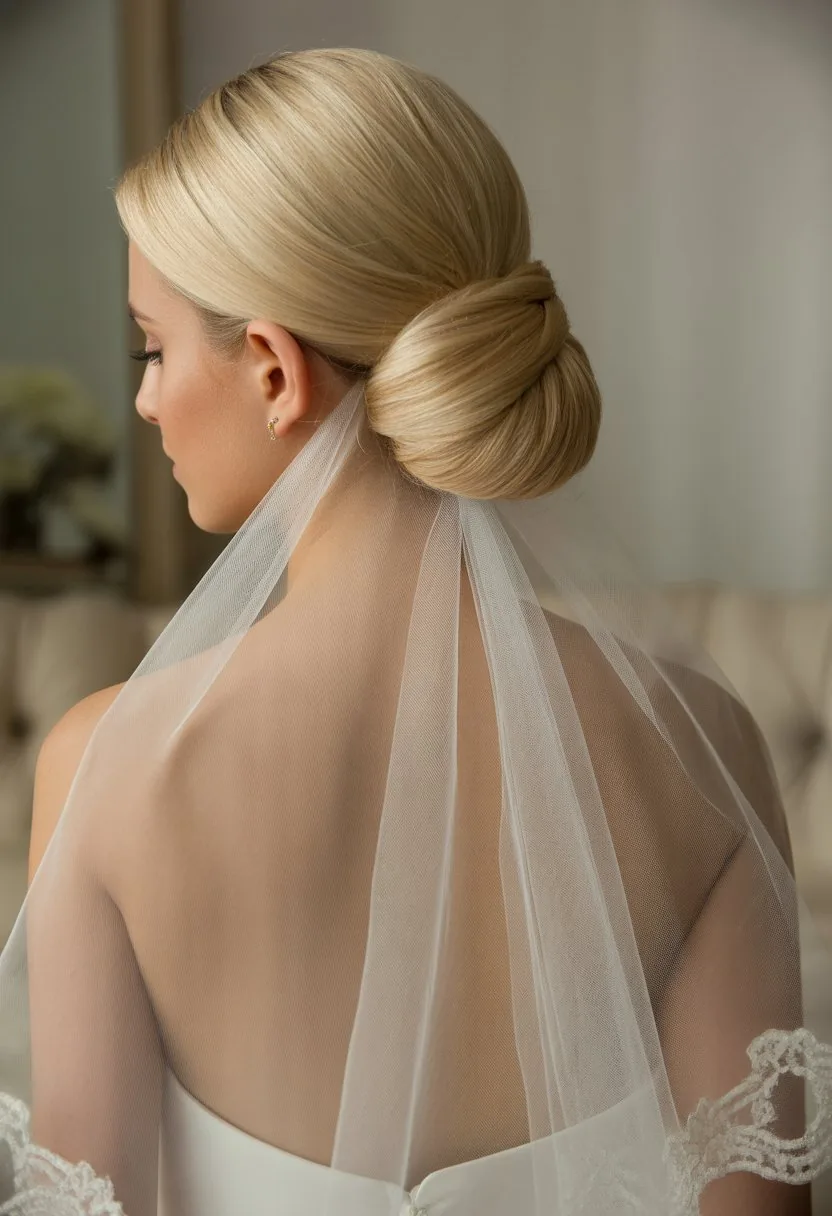
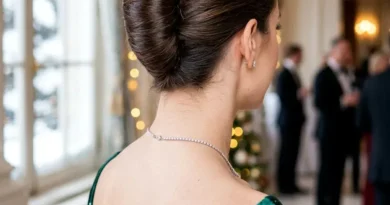
Best for: formal gowns, high necklines, and contestants who want a timeless, unhurried look. A low chignon gathers the hair at the nape, twists it softly and pins it into a neat, low shape that shows off the neck and shoulders. It photographs with a gentle, classic quality that suits both the stage and the official portraits.
How to style: gather the hair low, twist loosely and pin in soft loops, leaving a few fine pieces free around the face. Keep the surface smooth, and anchor the shape with pins that match your hair colour.
What to ask your stylist: whether the chignon will hold through a full evening of turns and walks, and how to refresh it backstage in under two minutes if a pin slips.
The Voluminous Curly Updo
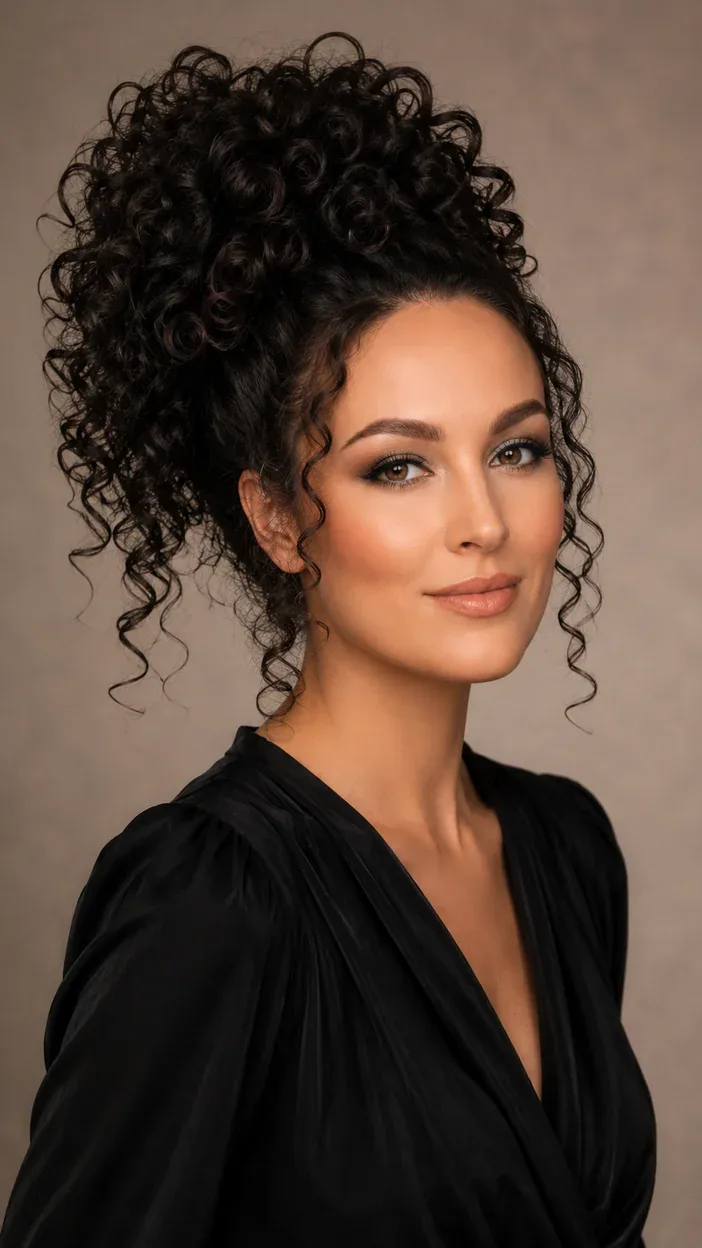
Best for: naturally curly hair, and contestants who want height, drama and texture on stage. A voluminous curly updo lifts the curls up and away from the face, keeps the shape big and clear from the judges’ seats, and lets the curls catch the light in a way no straight style can imitate.
How to style: define the curls with a curl cream on damp hair, diffuse gently, then gather the curls up loosely and pin them in place, leaving the front soft. Do not brush dry curls, which turns definition into frizz.
What to ask your stylist: for a product that defines curls without stiffness, and for hidden pins that hold the volume at the crown without flattening the curl pattern.
Sleek Straight Hair with a Centre Part
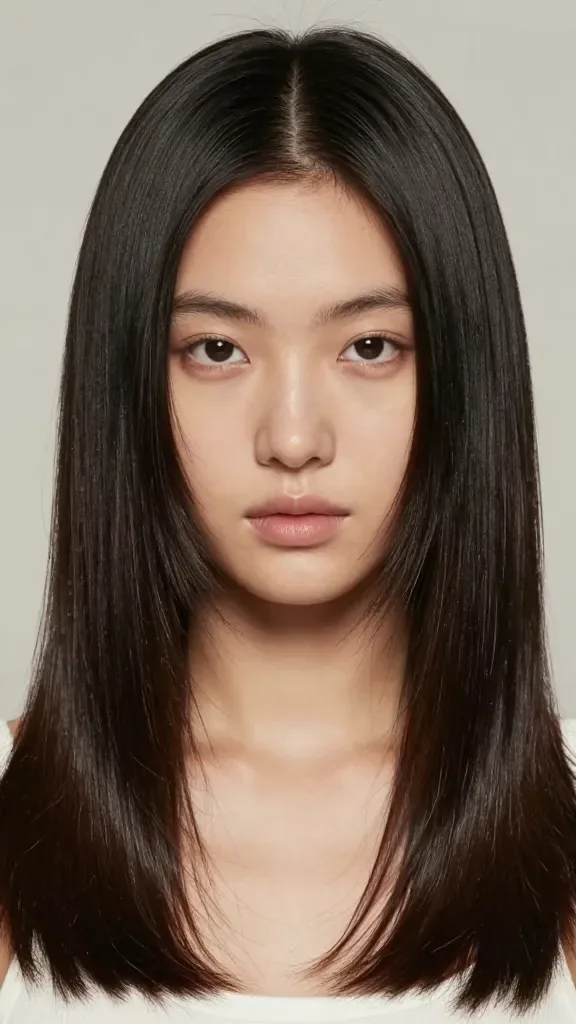
Best for: a modern, minimal look, and hair that is naturally straight or easily straightened. Sleek straight hair with a centre part is strikingly photogenic: the symmetry frames the face evenly, the straight lengths fall like a curtain, and the shine reads beautifully under stage lights. It is simple, but it is never boring from the judges’ seats.
How to style: flat-iron in small sections with heat protectant, keep the part clean, and finish with a shine serum on the lengths only. Smooth flyaways with a drop of serum on your palms.
What to ask your stylist: whether your hair needs a gloss treatment a week before the pageant, and how to keep the ends from flipping out under hot lights.
Side-Swept Hollywood Curls
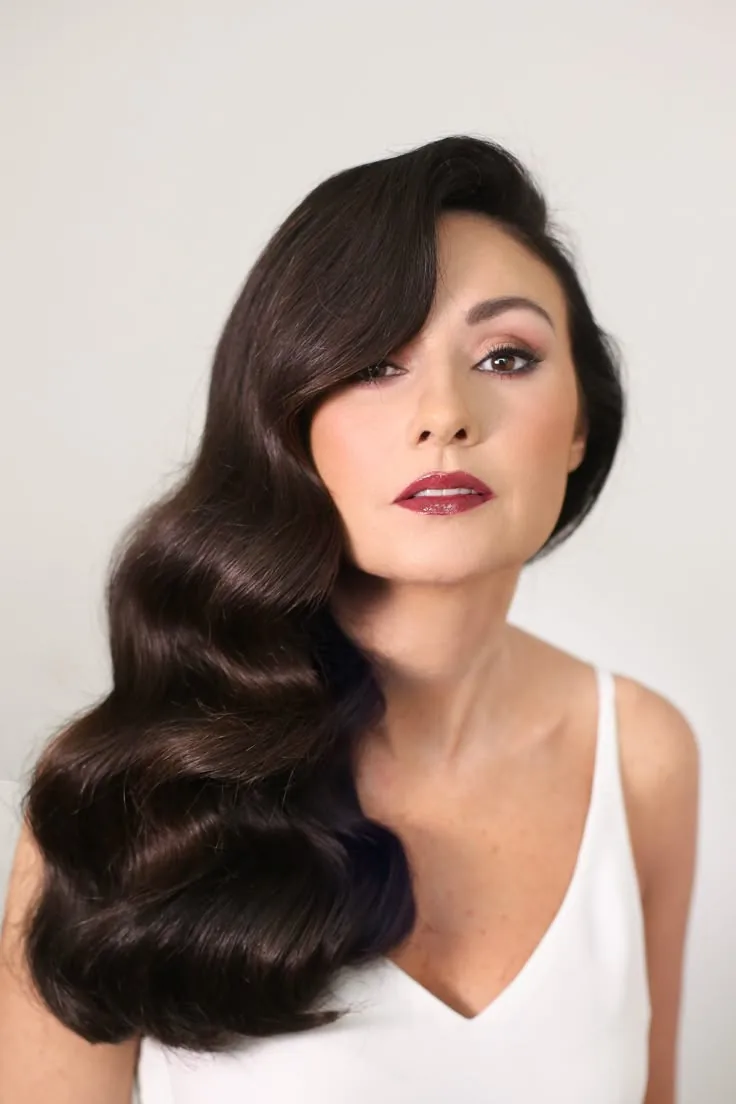
Best for: one-shoulder and off-shoulder gowns, and contestants with a favourite side. Side-swept curls create a beautiful diagonal line across the portrait, show off the length and shine of your hair, and leave one side of your neck and shoulder bare — which is wonderfully flattering on stage and in photographs.
How to style: curl loosely with a large iron, sweep everything to one side, and pin discreetly at the back of the neck. Use a flexible-hold spray rather than a hard one, so the curls keep their movement.
What to ask your stylist: for a hidden anchor pin at the nape, and to test the sweep with a walk and a turn, so it does not slide back to the middle mid-round.
The Half-Up Crown Braid
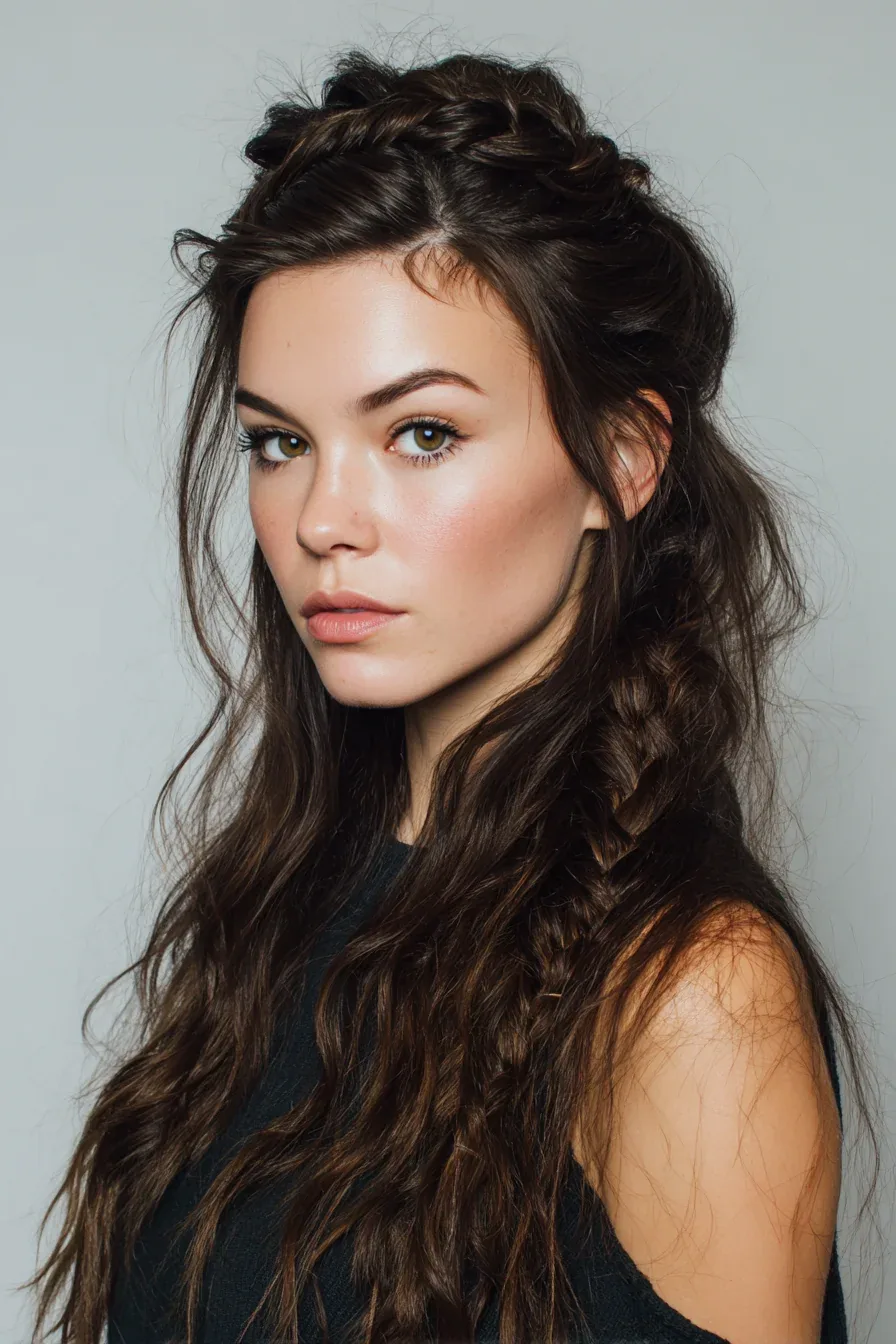
Best for: interview and evening gown alike, and hair that needs to stay out of your face. A half-up crown braid pulls the front back neatly while the rest falls loose, so your face is fully open to the judges and your hair still shows its length. The braid itself adds a detail the camera loves.
How to style: braid two front sections back and join them at the crown, loosening the braid gently for softness. Leave a few face-framing pieces free, and set the braid with pins that disappear into the hair.
What to ask your stylist: whether the braid will hold through a long day without tightening into a headache, and where to place a small clip or pin if you add one for the evening round.
Romantic Loose Curls
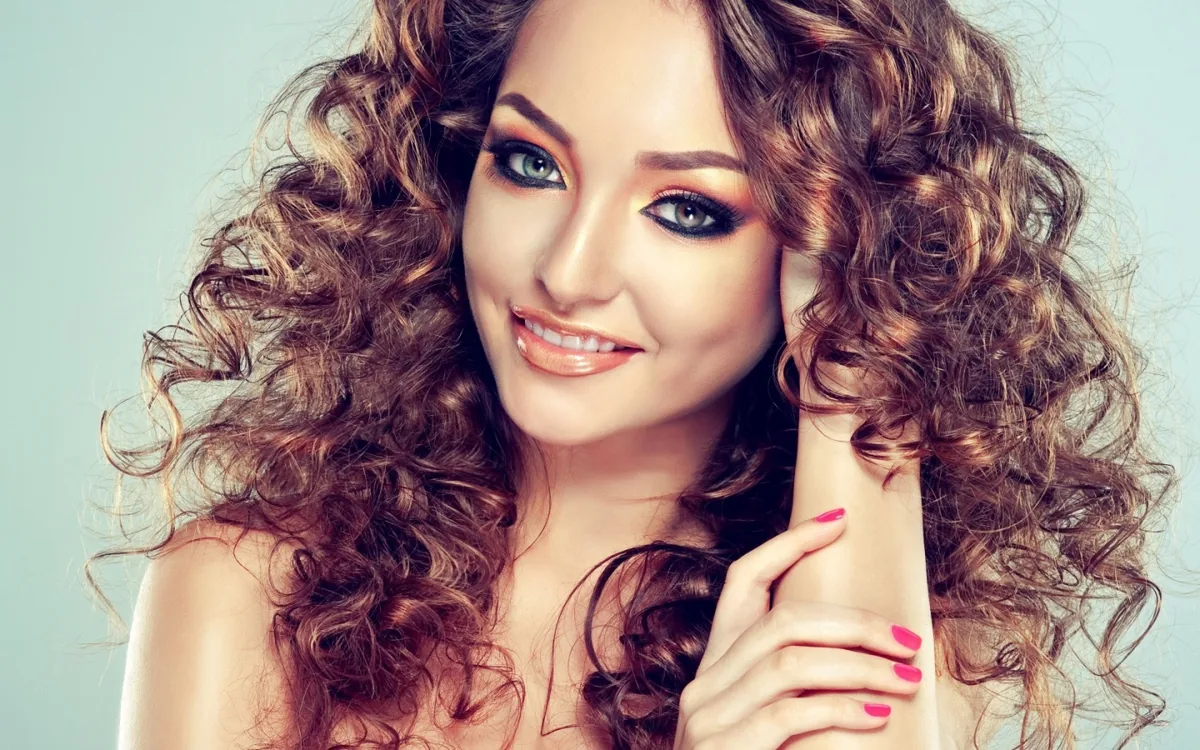
Best for: soft, feminine gowns and contestants who want warmth rather than sharp glamour. Romantic loose curls fall in soft spirals, with a few face-framing pieces left free to soften the whole look. They flatter almost everyone, because the curls add volume where you want it and the loose pieces keep the face from feeling hidden.
How to style: curl with a medium iron, let the curls cool, then brush through gently with your fingers for softness. Keep the curls loose rather than tight, so they read as romantic rather than formal.
What to ask your stylist: for a curl cream or light spray that suits your hair type, and how much the curls will drop under stage heat, so the trial matches the night.
The Polished French Twist
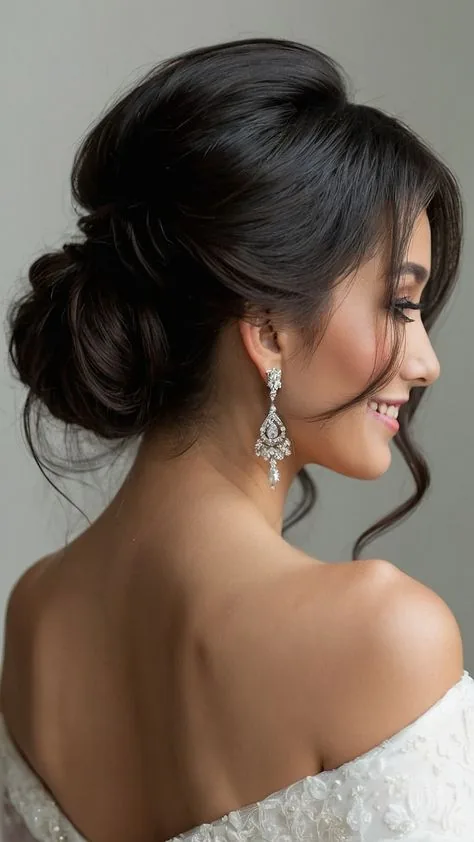
Best for: formal portraits, tall contestants, and gowns with a high or elegant neckline. A French twist sweeps the hair up into a smooth vertical roll, lengthens the neck, and gives the whole look a formal, timeless quality. It is the style for the portrait that goes on the wall — and for a crown, which anchors beautifully on it.
How to style: gather the hair low, twist upward and pin securely along the roll, smoothing the surface as you go. Keep the front soft with a few face-framing pieces, or go completely sleek for a sharper look.
What to ask your stylist: to build the twist with plenty of pins, and to trial it with your crown, since a twist is one of the most reliable anchors a tiara can have.
The Textured Top Knot
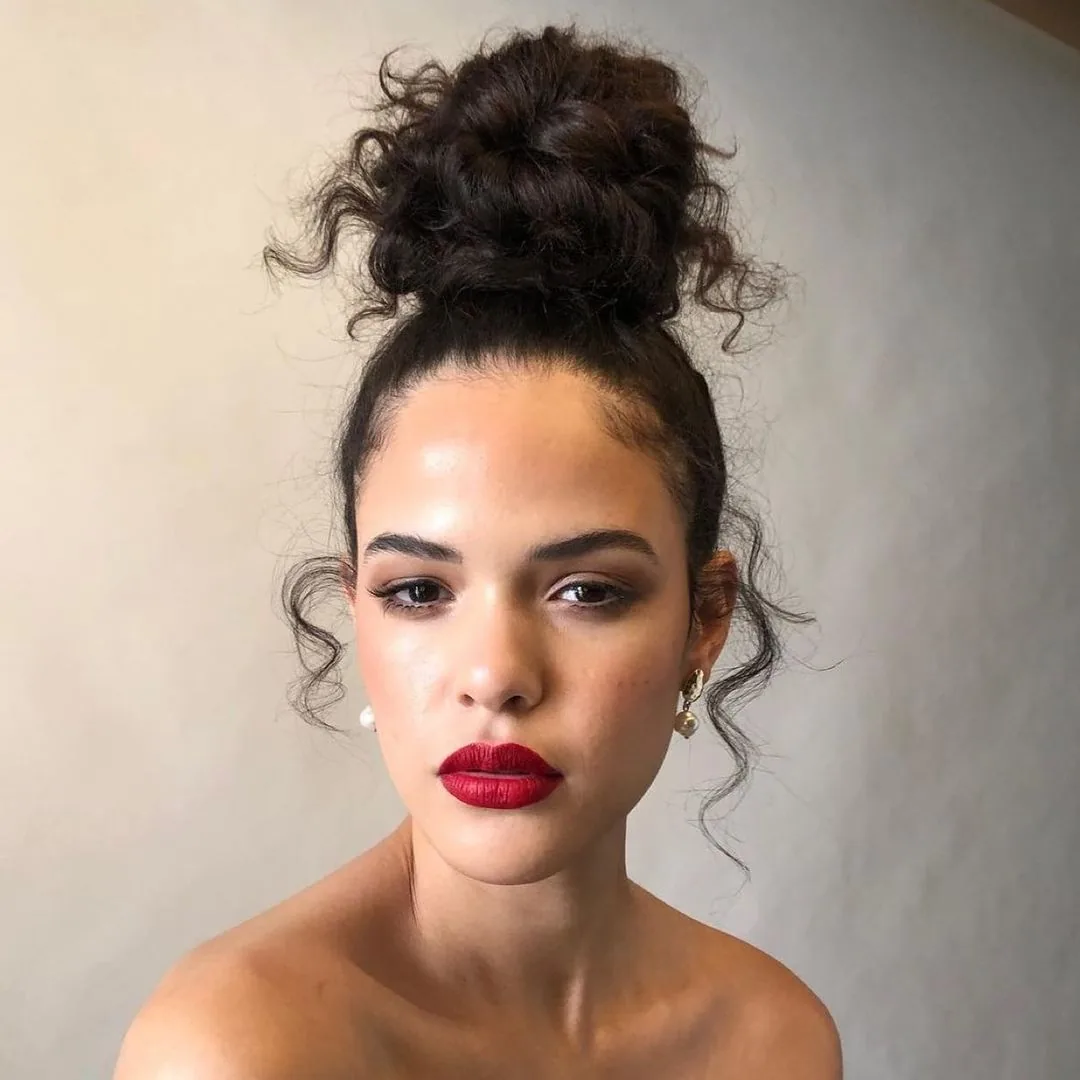
Best for: studio portraits, statement earrings and a clean, sculptural silhouette. A textured top knot sweeps the hair high and coils it into a knot with soft, piecey texture, which lengthens the neck, opens up the face, and photographs with a modern, editorial edge.
How to style: smooth the hair up high, twist into a knot, and pin securely, pulling a few pieces loose for texture. Smooth flyaways with serum, and keep the knot firm enough to survive a walk and a turn.
What to ask your stylist: whether a textured or a sleek knot suits your face better, and how to anchor it so it does not tilt or loosen as the evening goes on.
Deep Side-Part Waves
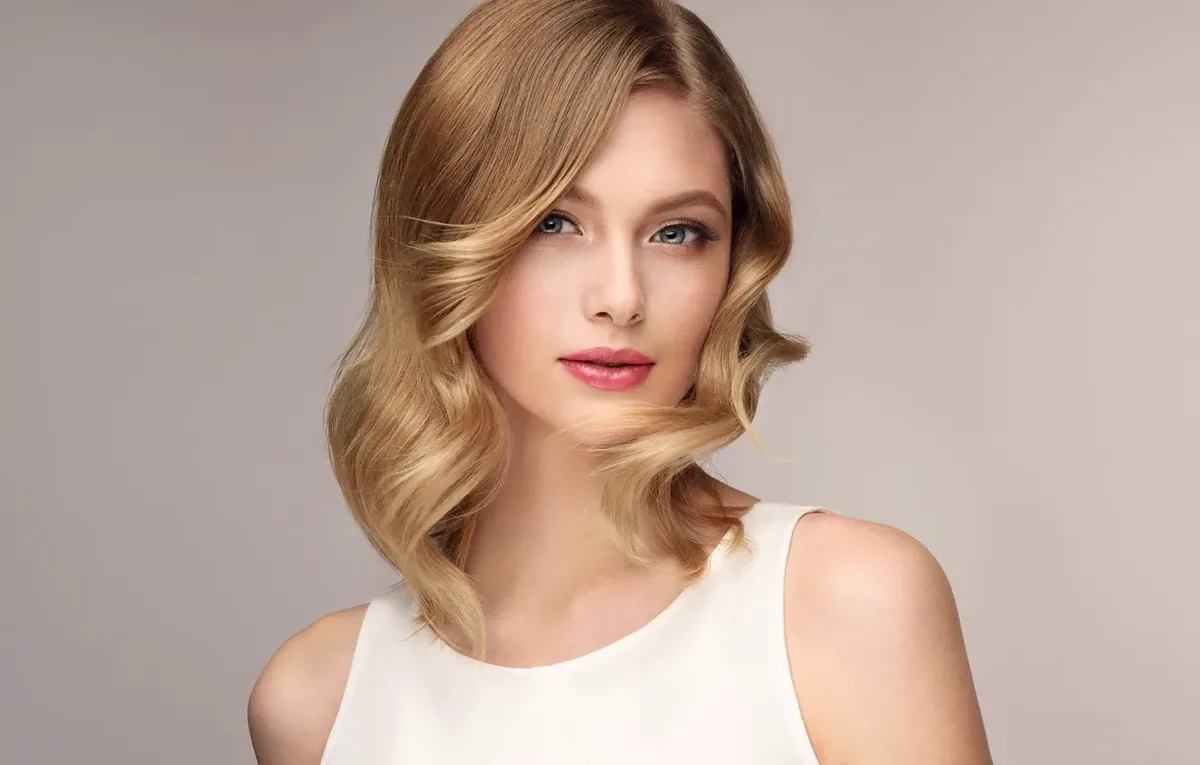
Best for: adding instant volume and drama to familiar waves. A deep side part sweeps most of the hair to one side, creating volume at the crown, a soft curtain across the forehead, and a sweeping line that photographs with real glamour. It is the simplest way to make everyday waves look like pageant hair.
How to style: part deeply on one side, curl loosely, and sweep the bulk of the hair over. Pin the lighter side back discreetly if it keeps falling forward.
What to ask your stylist: which side is your stronger side on camera, and for a root-lifting product so the deep part holds its volume under the lights.
The Braided Low Bun
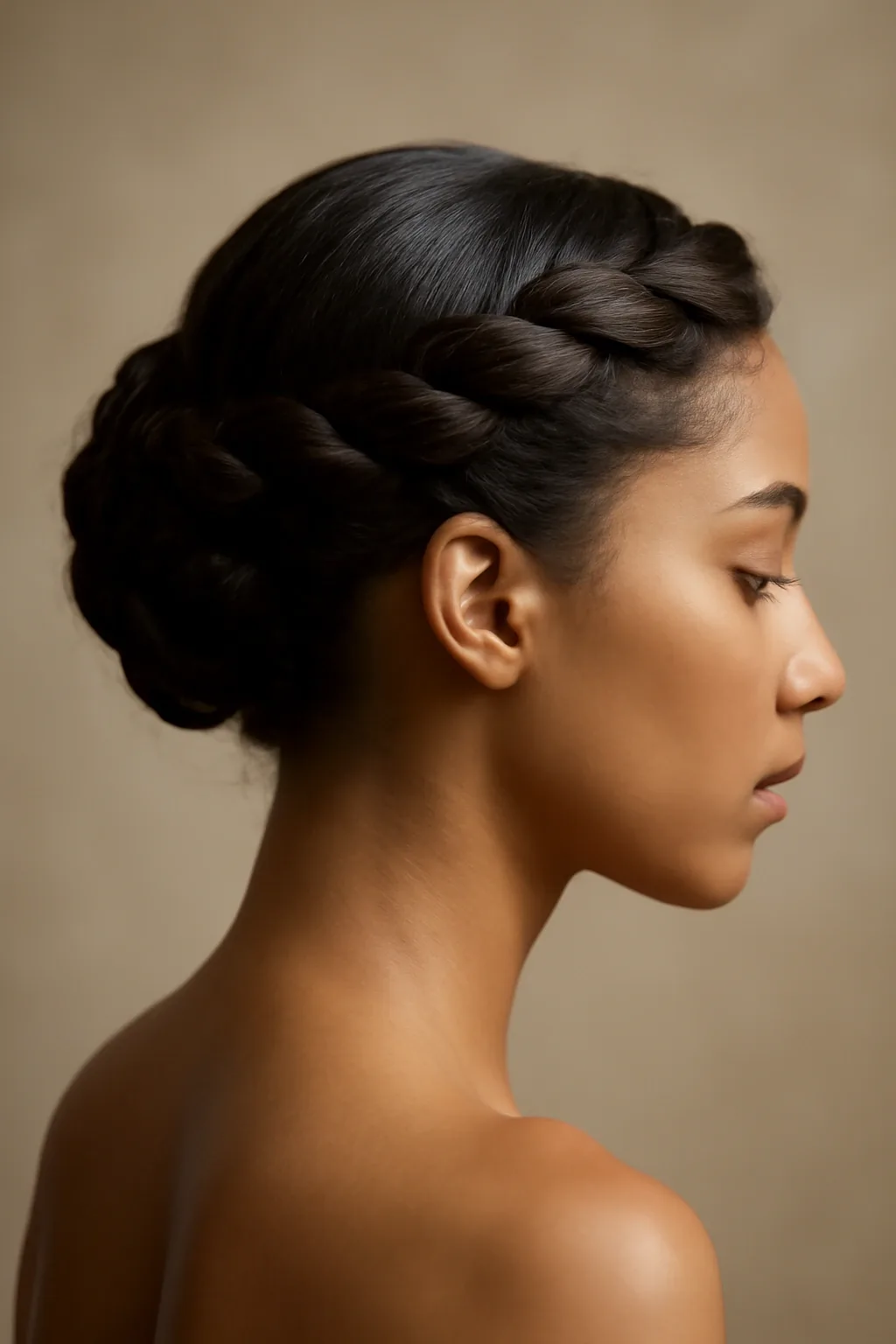
Best for: long days, warm halls and contestants who want detail from the back as well as the front. A braided low bun combines a braid with a neat bun at the nape, so the style looks polished from the front, detailed from the back, and holds perfectly through rehearsals, interviews and the evening walk.
How to style: braid the hair loosely from the crown or the sides, then coil the braid into a low bun and pin it securely. Pull the edges of the braid apart gently for fullness.
What to ask your stylist: for a braid that is loose enough to look soft but tight enough to hold, and to check the bun from behind, since the judges see your back as you turn.
The Glamorous Blowout
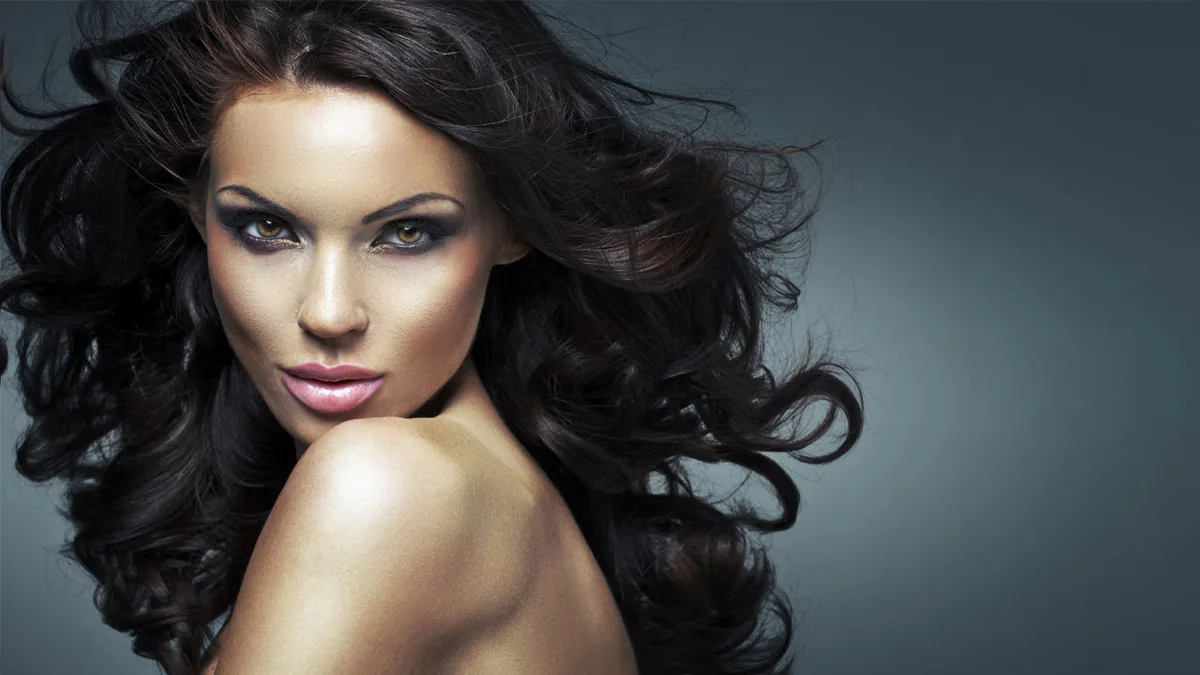
Best for: interview, and contestants who want their hair to look like confidence. A glamorous blowout lifts the roots, curves the ends softly under, and leaves the whole shape glossy and smooth from every angle. It is polished, timeless, and it reads clearly from the judges’ seats.
How to style: blow-dry with a round brush, lifting at the roots and curling the ends under, and let everything cool before you touch it. Finish with a light serum for shine.
What to ask your stylist: for a little extra root lift, since a blowout softens in warm air, and for a product that fights humidity without making the hair stiff.
The Fishtail Braid Crown
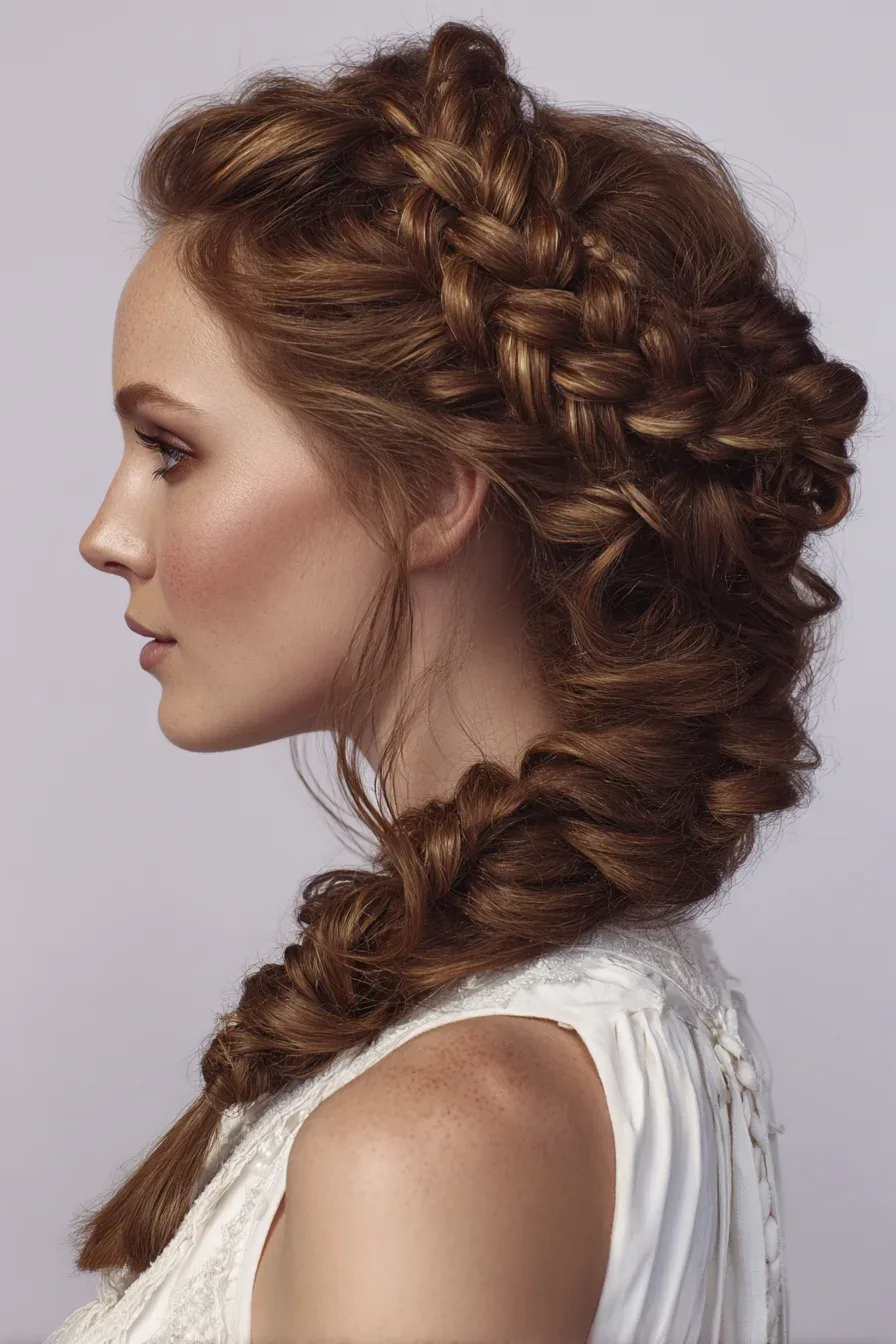
Best for: showing off long hair, and for outdoor or garden pageant settings. A fishtail braid crown wraps a fine, intricate braid around the head like a halo, with the rest of the hair falling loose beneath it. The fishtail pattern is finer than a regular braid, which makes it look delicate and detailed on stage.
How to style: fishtail-braid two sections from either side and pin them across the crown, loosening the braid gently for softness. Leave a few loose tendrils around the face.
What to ask your stylist: how long the fishtail will take backstage, and whether it can be built over your base style so you can move from interview to evening gown without starting over.
The Soft Ballerina Bun
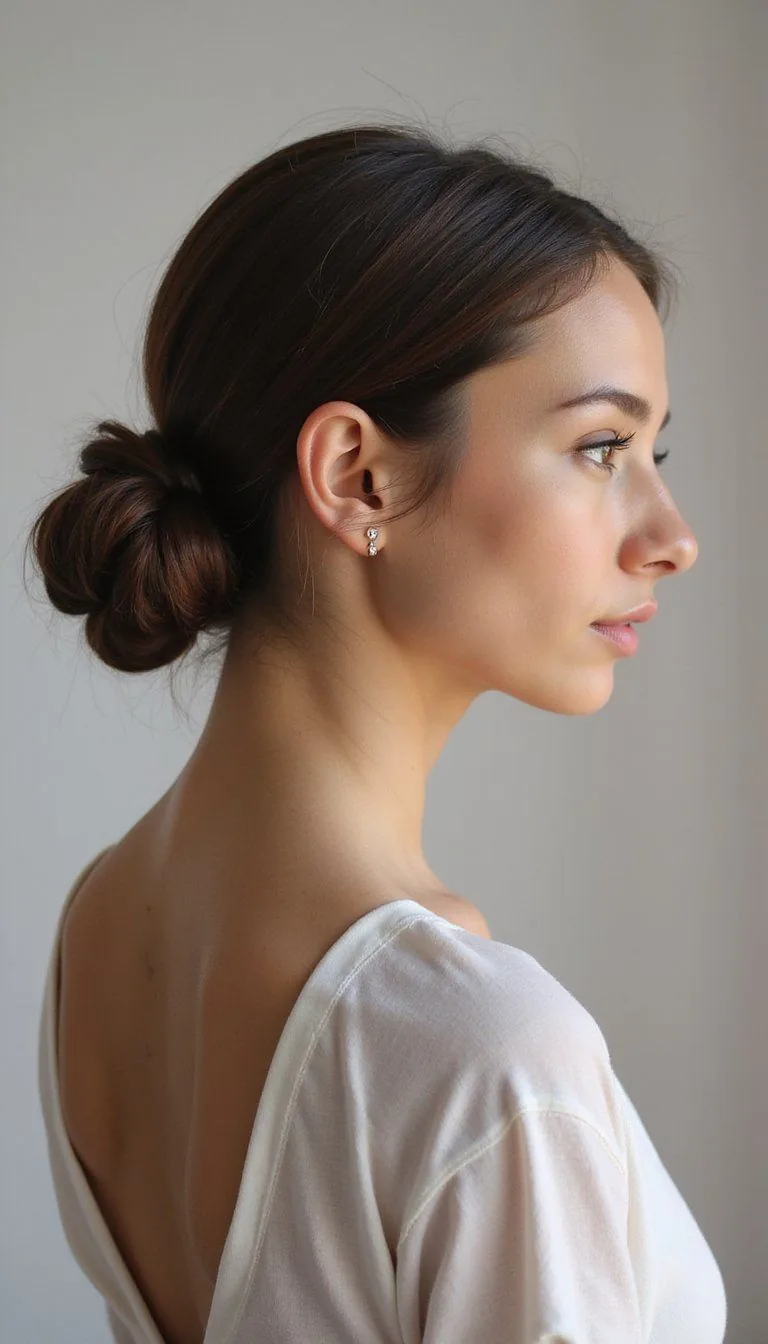
Best for: a graceful, unhurried look and gowns with an interesting neckline. A soft ballerina bun sits high and neat, shows off the neck and shoulders, and gives the portrait a clean, elegant line. Kept soft rather than scraped back, it looks romantic instead of severe.
How to style: gather the hair high, twist and pin it into a bun, then pull a few pieces free around the face and at the nape. Keep the front smooth but not tight.
What to ask your stylist: for a bun that sits at the height that flatters your face, and for pins that will hold it through a walk without giving you a headache.
Long Layers with Face-Framing Pieces
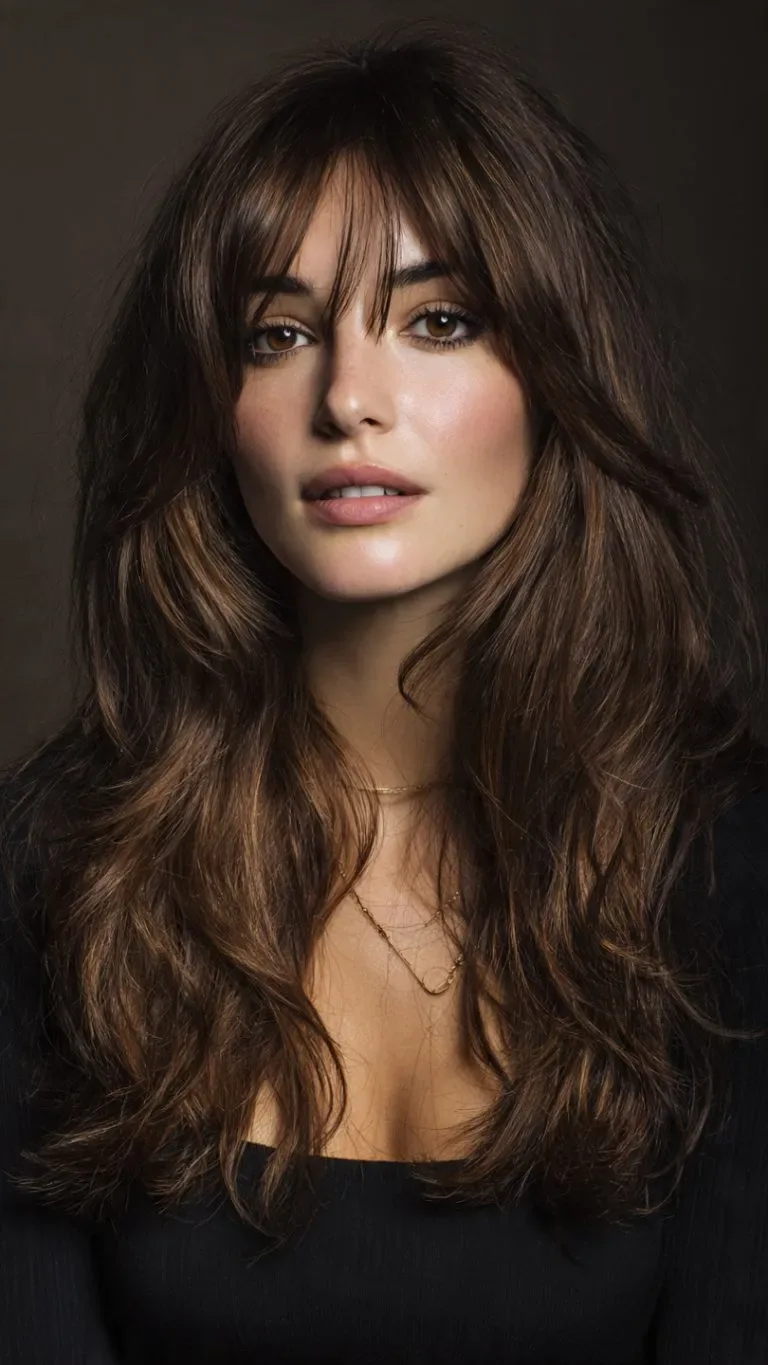
Best for: long hair that hangs heavy and flat, and contestants who want movement. Long layers stop the hair from falling as one solid curtain and instead let it bounce and swing with every step, catching the light as it moves. Face-framing pieces soften the jawline and keep the face open.
How to style: ask for long, face-framing layers and curl in large sections with a wide-barrel iron, always curling away from the face, then brush through with your fingers.
What to ask your stylist: where the shortest layer should start for your face shape, and whether the layers will still read from the judges’ seats or need extra volume at the crown.
Vintage Finger Waves
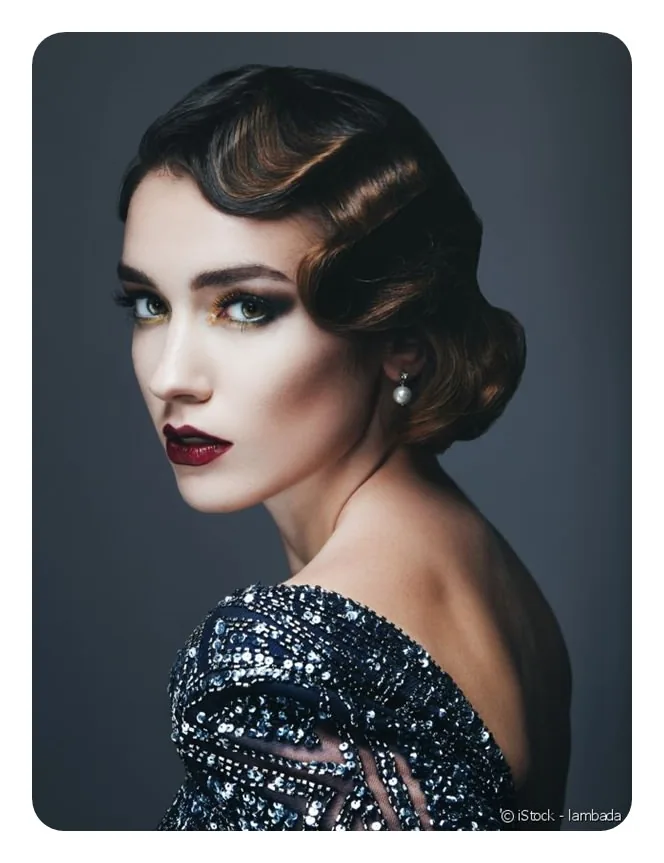
Best for: a classic, old-Hollywood moment and short to medium hair. Vintage finger waves are smooth, sculpted and deeply polished, with a deep side part and a shine that catches every light in the hall. In a formal portrait, they look absolutely stunning — and completely unforgettable.
How to style: set the hair in smooth, sculpted waves with a large iron or with pin curls, brush through into one shape, and set lightly with a shine spray. Keep the waves close to the head for the true vintage shape.
What to ask your stylist: whether finger waves suit your hair length and texture, and to book extra time, since this is one of the slowest styles to build well.
The Sculpted High Bun
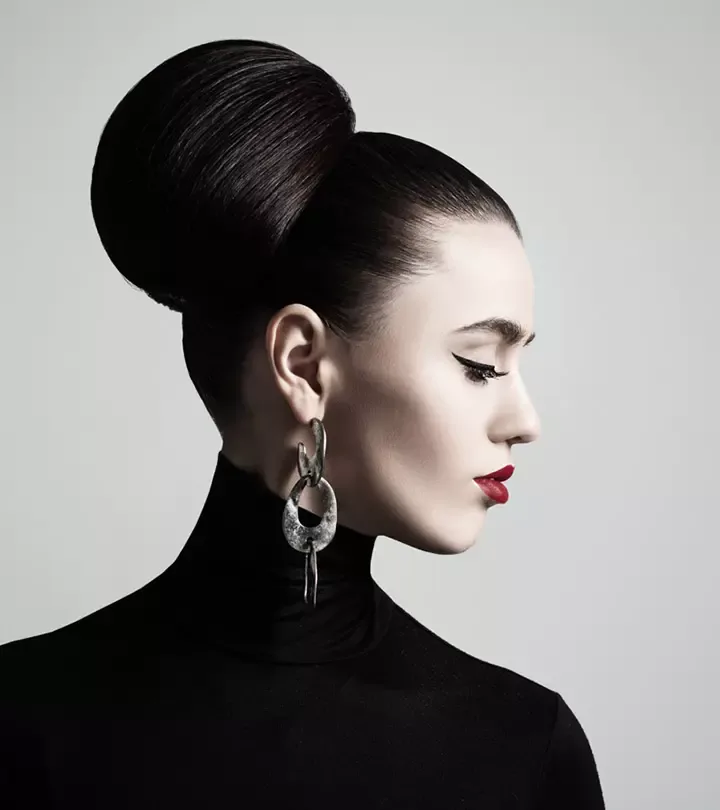
Best for: a crown, a tall silhouette, and contestants who want their hair completely out of the way. A sculpted high bun is smooth, intentional and striking: the hair is swept up high, coiled neatly, and finished so cleanly that it looks like a sculpture. It lengthens the neck and gives a tiara the perfect seat.
How to style: smooth the hair up high, twist into a bun, and pin securely, smoothing flyaways with serum. Use a hair donut or padding if your hair needs extra fullness for the shape.
What to ask your stylist: to trial the bun with your crown, since the bun’s height changes where the crown sits, and to check the profile, because a high bun is all about its outline.
The Waterfall Braid, Worn Half-Up
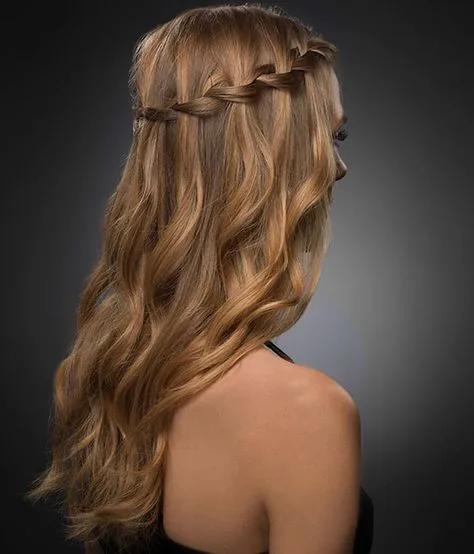
Best for: romantic gowns and contestants who want a braid without giving up loose hair. A waterfall braid lets strands fall through the braid like water, creating a soft, cascading detail across the back of the head while the rest of the hair flows free beneath it.
How to style: braid across the back of the head, dropping the lower strand each time and picking up a new one, then pin the braid at the side. Curl the loose lengths so the waterfall reads clearly.
What to ask your stylist: to show you the braid from the back before the pageant, since it is a back detail, and whether it will hold in your hair texture without slipping.
The Sleek Low Ponytail, Wrapped
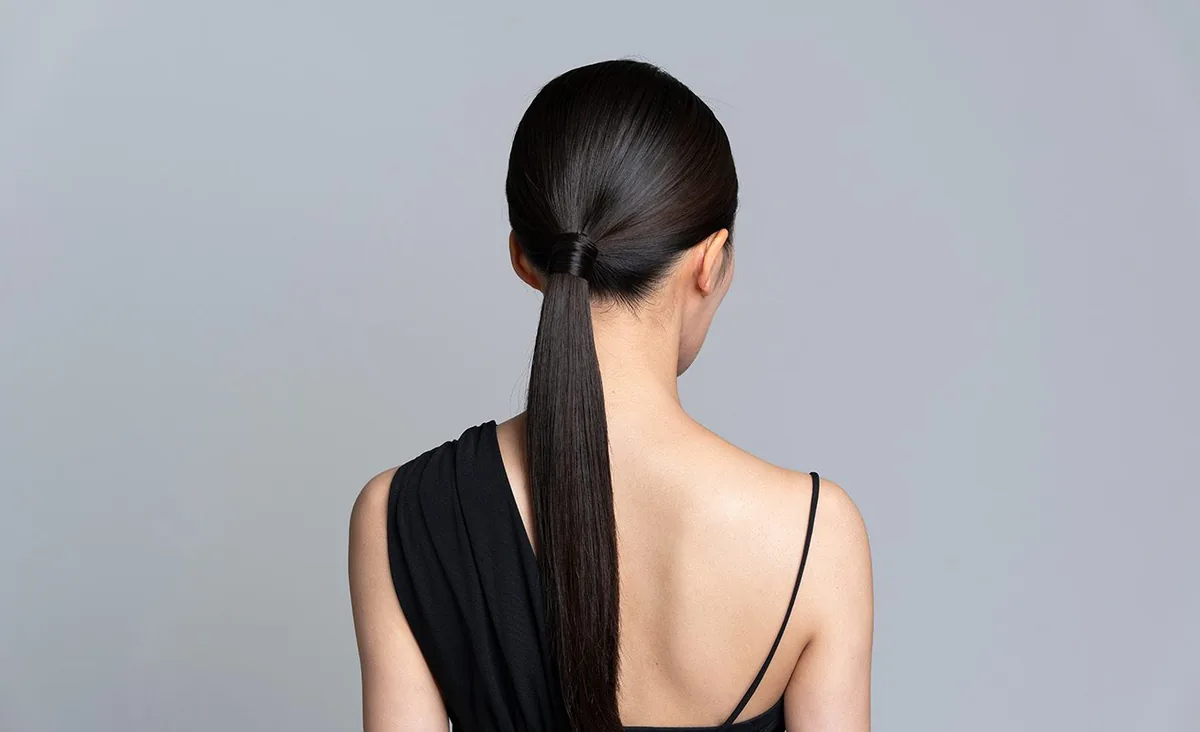
Best for: a clean, expensive look and gowns with a dramatic back. A low ponytail sounds simple, and that is the point: when it is done well, it looks polished and editorial. The hair is smooth at the crown, gathered low at the nape, and wrapped with a piece of your own hair so there is no elastic in sight.
How to style: smooth the crown with a brush and a little serum, secure low at the nape, and wrap a strand around the elastic, pinning it underneath. Curl the ponytail itself so it falls as one smooth piece.
What to ask your stylist: for a wrap that will not slip, and whether the ponytail should sit at the nape or slightly higher for your gown’s neckline.
Bouncy Barrel Curls
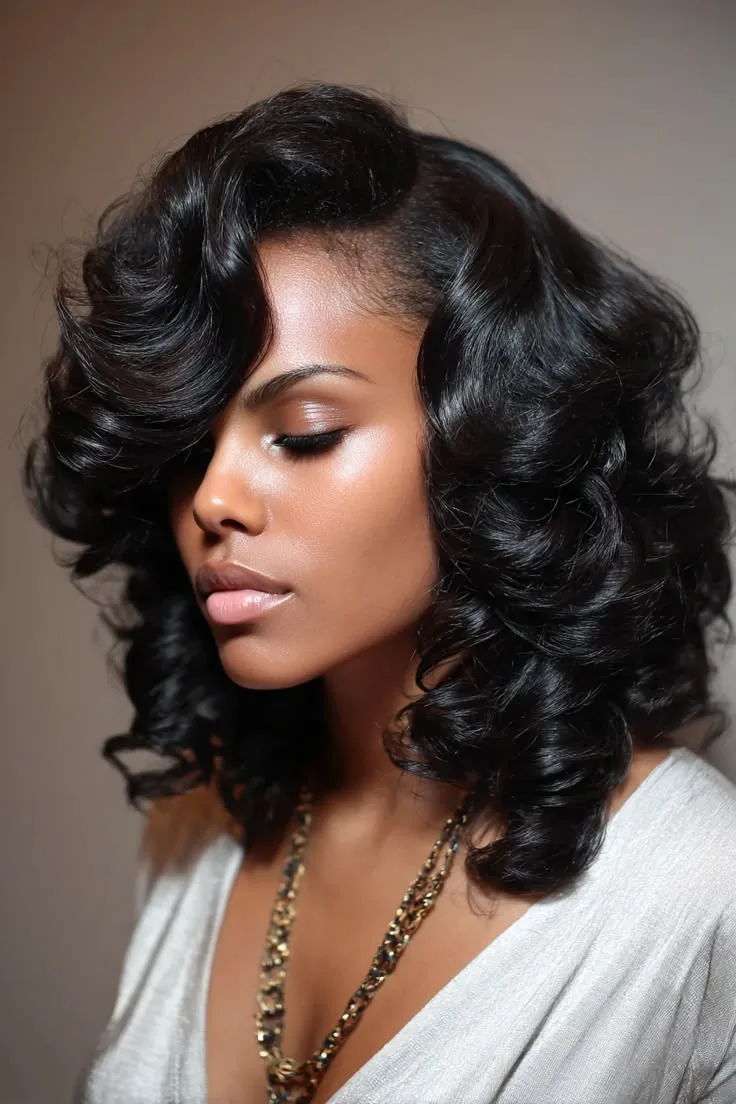
Best for: a joyful, celebratory stage presence and medium to long hair. Bouncy barrel curls are big, round and springy, with curls that bounce when you move and catch the light with every turn. They make a stage entrance feel like a celebration, and they photograph with wonderful volume.
How to style: curl in sections with a large barrel iron, let the curls cool completely, then shake them out gently for bounce. Use a light spray so the curls move instead of freezing.
What to ask your stylist: how much the curls will drop under stage heat, and to start with a little more curl than you think you need so they relax into the right shape by the evening round.
The Dutch Braid Updo
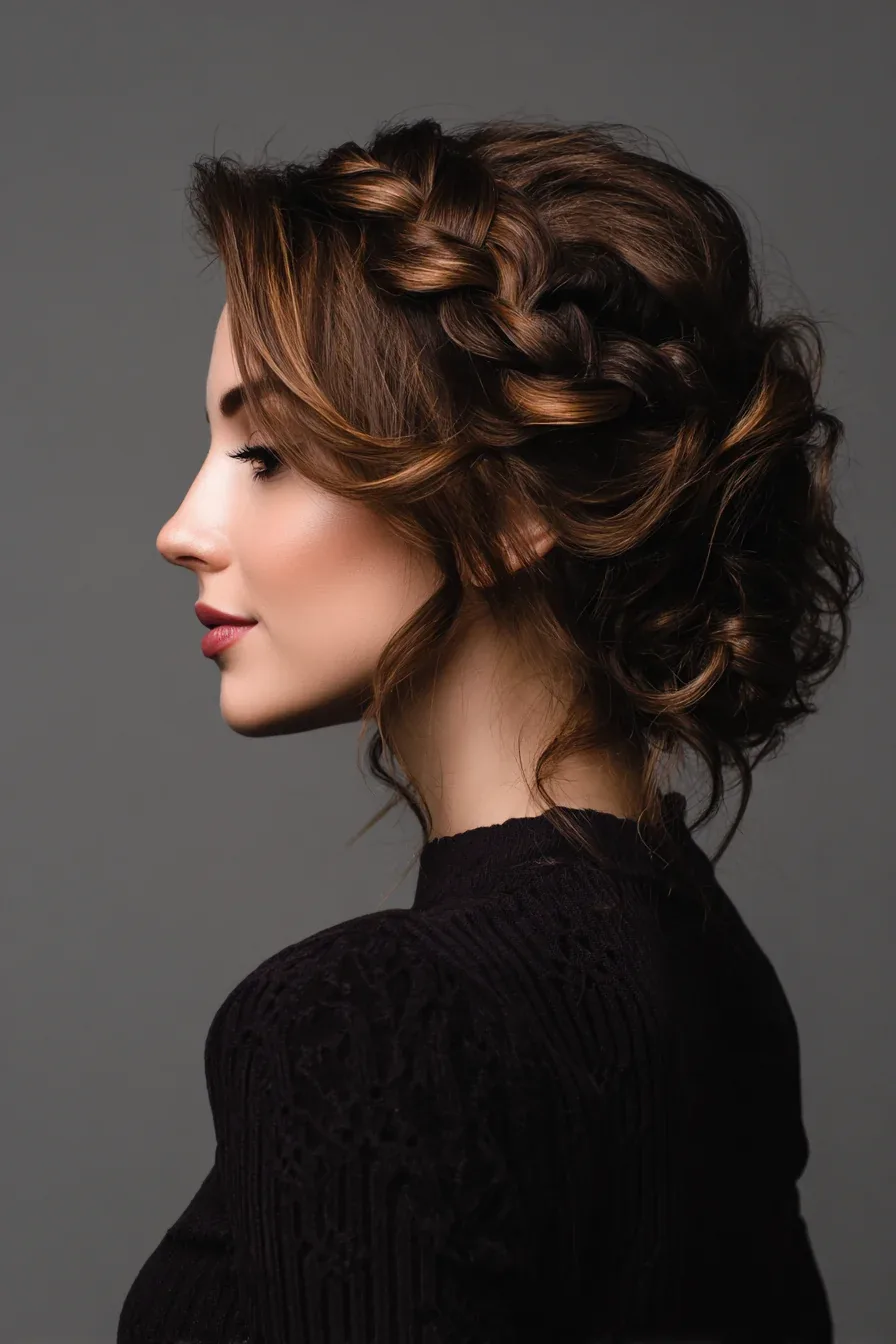
Best for: a detailed, secure updo that survives a long day. A Dutch braid updo braids the hair outward from the head, so the braid stands proud and reads clearly from a distance, then gathers it into a bun or twist at the back. It is one of the most reliable styles for a pageant that runs for hours.
How to style: Dutch-braid from the crown or the hairline, keeping the braid firm but not tight, then coil the ends into a bun and pin securely. Loosen the braid edges gently for softness.
What to ask your stylist: whether a single Dutch braid or two will suit your head shape better, and to check that the braid does not pull or give you a headache after an hour.
The Side Chignon
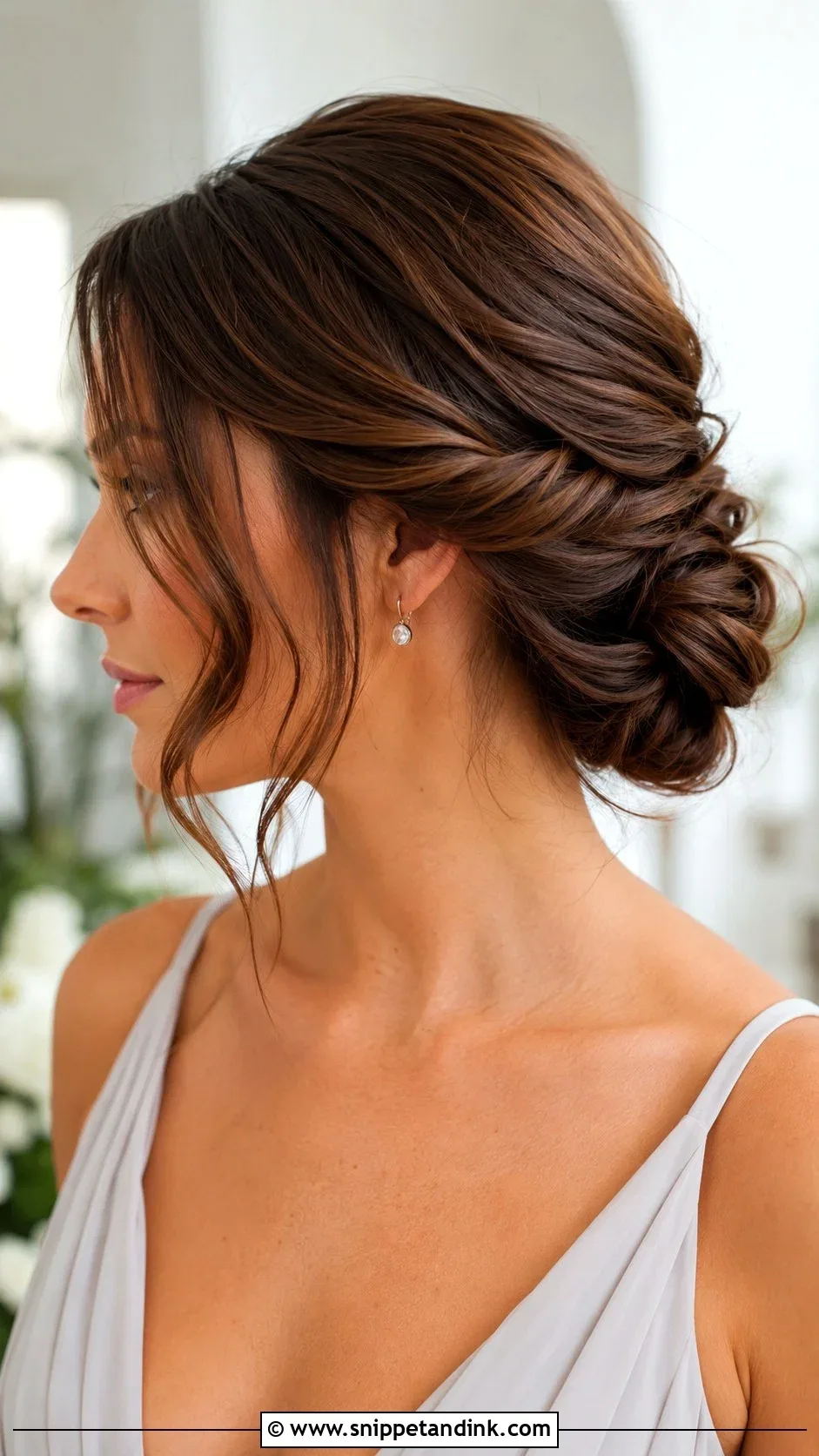
Best for: an asymmetric gown, a one-shoulder neckline, or a profile moment on stage. A side chignon gathers the hair low to one side, so the shape is visible from the front, the side and the back as you turn. It is elegant without being stiff, and it photographs with a gentle, romantic quality.
How to style: sweep the hair to one side, twist loosely and pin into a low chignon, leaving soft tendrils at the front. Anchor it with crossed pins so it cannot drift back to the middle.
What to ask your stylist: which side suits your face and your gown, and to trial the chignon with a walk and a turn, since a side style has to survive movement.
The Chic Pageant Bob
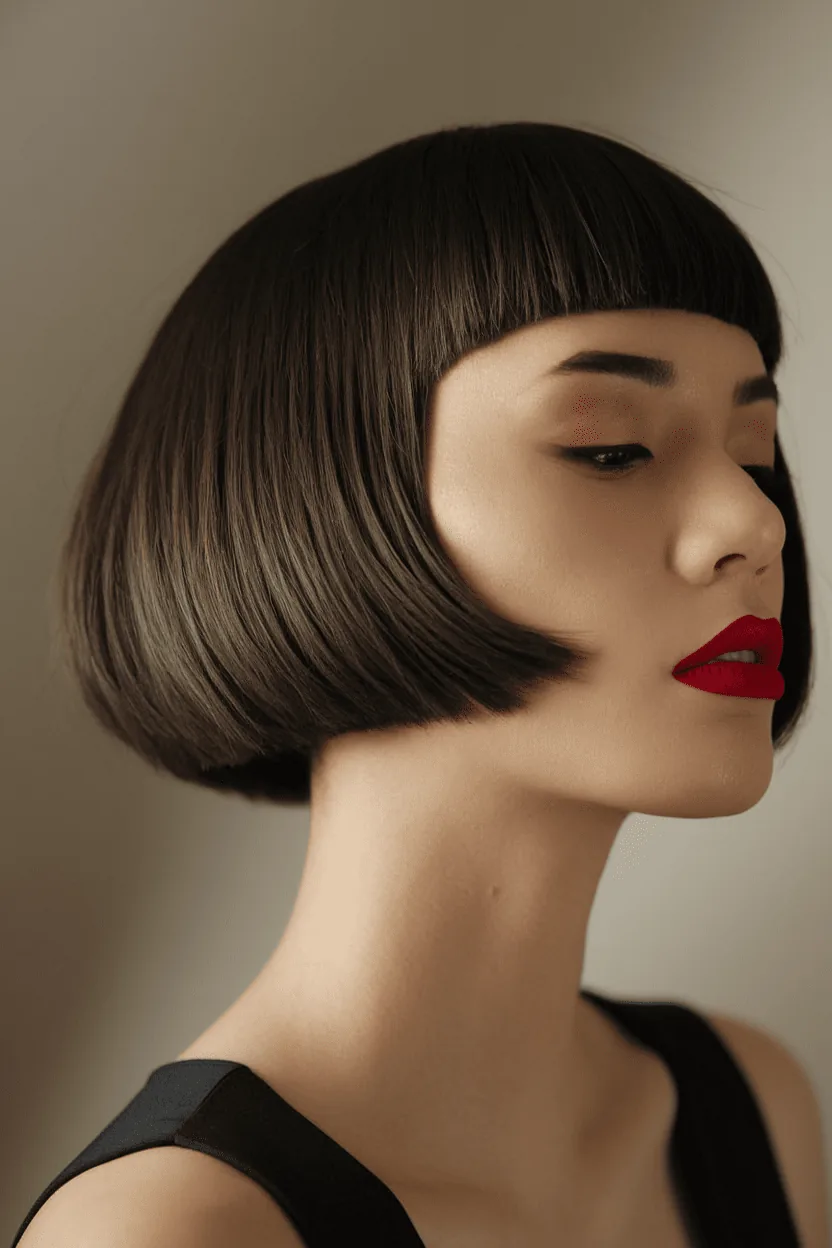
Best for: a modern, confident look and contestants who do not want to hide behind long hair. A chic bob is clean, glossy and graphic — a straight line at the jaw that frames the face with perfect symmetry. On stage, it looks like a fashion editorial, and it lets your face and your gown do the talking.
How to style: flat-iron in small sections, tuck one side behind the ear, and finish with shine serum on the ends. Keep the line even and the part clean.
What to ask your stylist: whether a bob with a slight under-curl or a dead-straight finish suits your face better, and for a trim a week before the pageant so the line is fresh.
Defined Natural Curls, Worn Proud
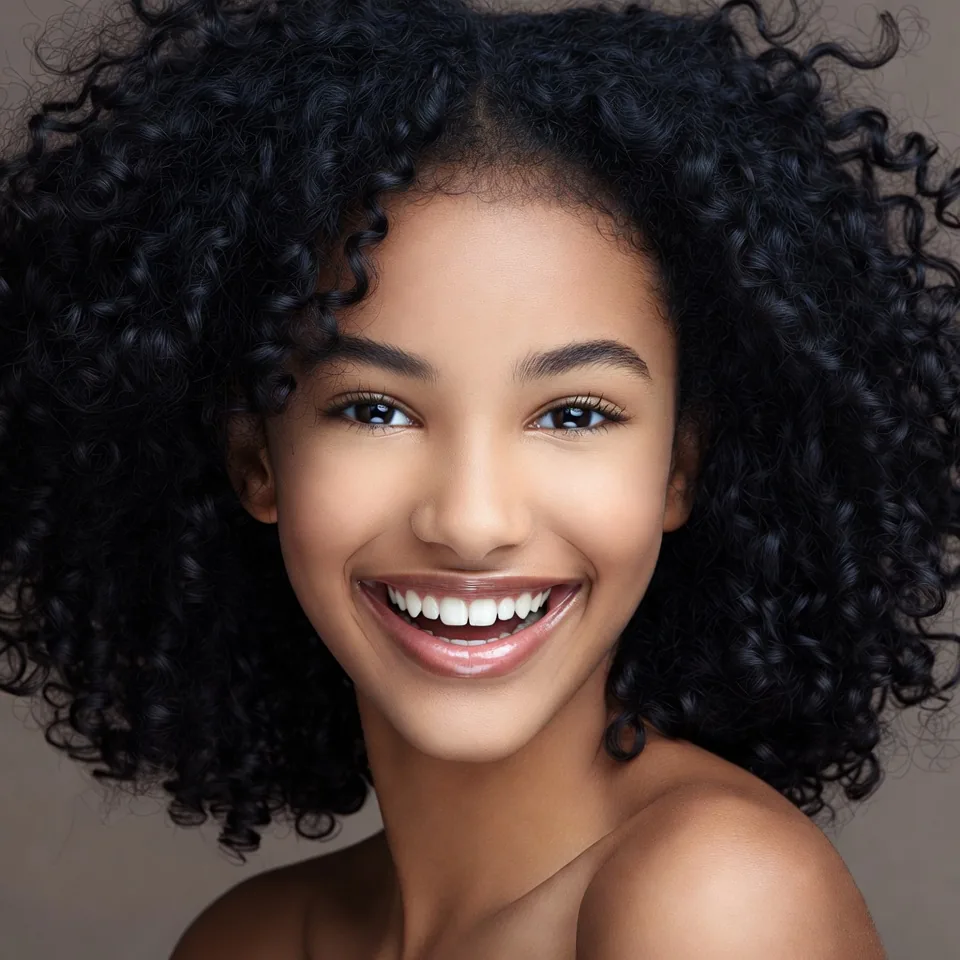
Best for: naturally curly hair and contestants who want their real texture on stage. Defined, free curls have shape, texture and volume that no iron can imitate, and under stage lights they glow — each curl catching the light a little differently. They are also unmistakably you.
How to style: apply curl cream to damp hair, scrunch, and diffuse on low heat or air-dry. Never brush dry curls, which turns definition into frizz, and pull a few curls forward around the face.
What to ask your stylist: for a curl-defining product that holds without stiffness, and for a shape cut that gives the curls a clear silhouette from the judges’ seats.
The Twisted Updo with Tendrils
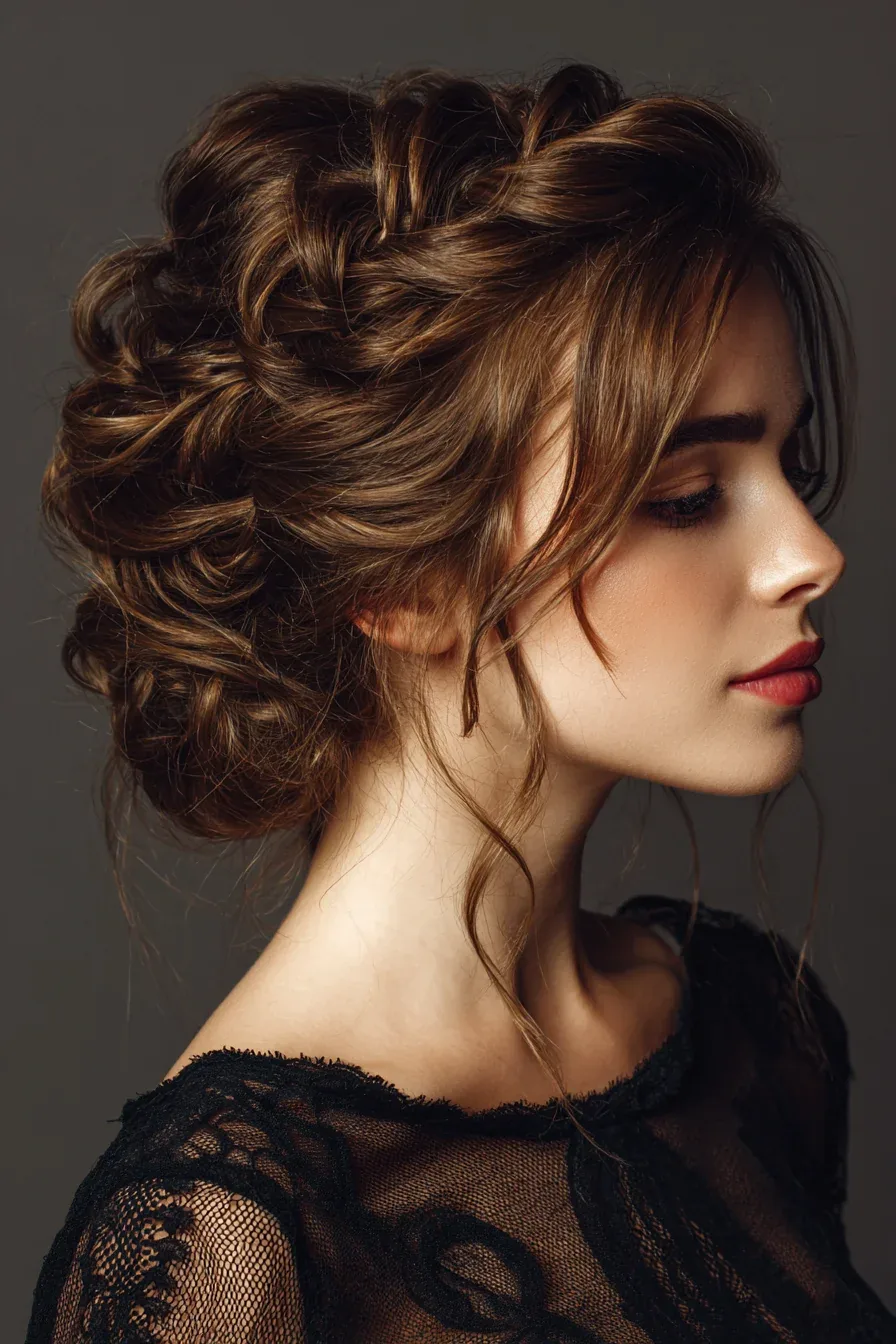
Best for: a romantic updo that does not feel severe. A twisted updo sweeps the hair up in soft twists, pinned loosely, with a few fine tendrils left free to frame the face and soften the neck. It looks effortless, but it is carefully built to hold — and the tendrils catch the light beautifully on stage.
How to style: gather the hair up loosely, twist in soft sections and pin, then pull a few fine pieces free around the face. Set with a flexible spray so the twists can move.
What to ask your stylist: how many tendrils to leave free for your face shape, and for a backstage plan to re-curl a tendril in thirty seconds if it drops.
Mermaid Waves
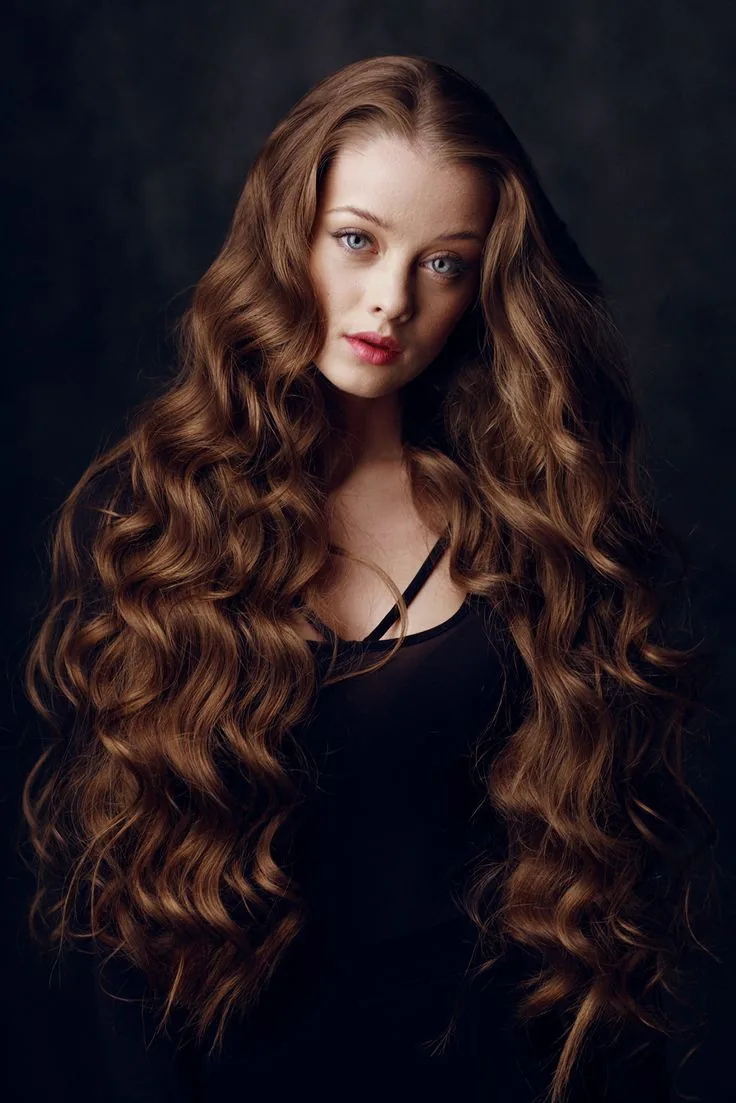
Best for: very long hair and a flowing, fairy-tale gown. Mermaid waves are long, loose and undone, falling past the shoulders in soft, even waves that move like water when you walk. They are the most romantic long-hair look in pageantry, and they photograph with a lovely, dreamy texture.
How to style: curl loosely with a large iron, leave the ends straight for a modern finish, and break the waves up with your fingers once they cool. A little texture spray helps the waves hold.
What to ask your stylist: whether your hair needs extensions for the full mermaid length, and how to keep the waves from tangling during outfit changes.
Soft Victory Rolls
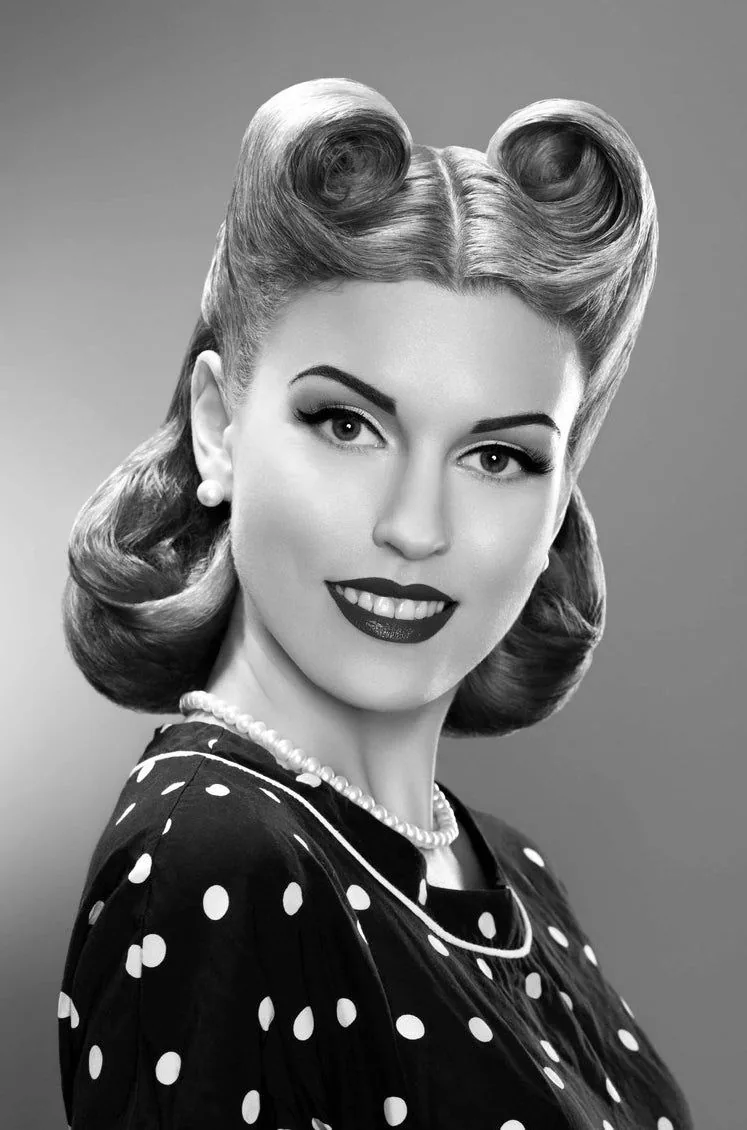
Best for: a vintage-inspired moment and contestants with a strong sense of personal style. Soft victory rolls are rolls of hair pinned up at the front, framing the face with a sculpted, retro shape. Kept soft rather than rigid, they look romantic and current instead of like a costume.
How to style: roll front sections up and inward, pin them securely at the base, and soften the edges with your fingers. Wear the rest of the hair in soft waves or a low bun.
What to ask your stylist: whether victory rolls suit your face shape and hair length, and to trial them with your crown, since rolls change where a tiara can sit.
The Halo Braid
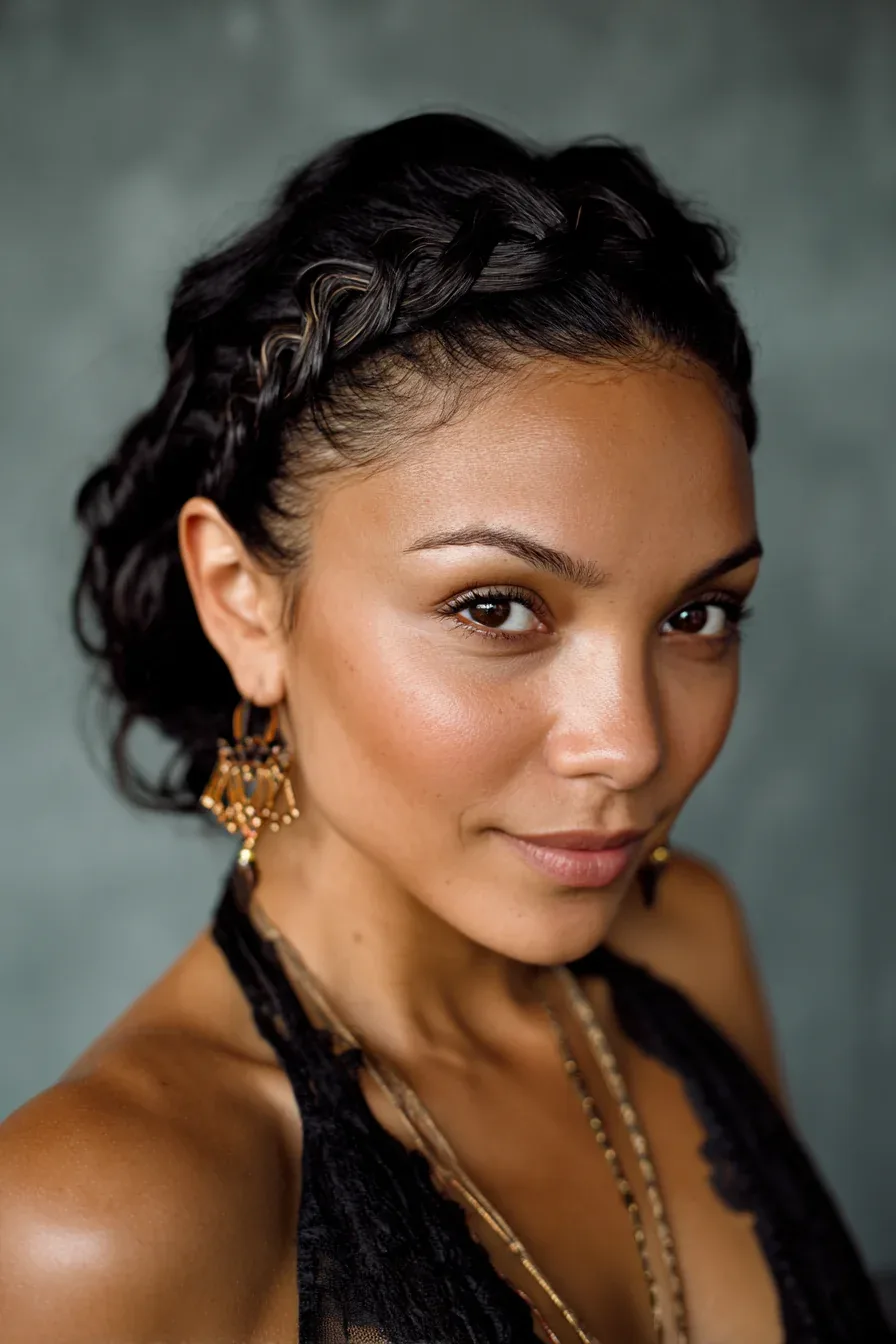
Best for: a romantic, storybook look and a crown that needs a solid anchor. A halo braid wraps around the head like a crown of its own, with the rest of the hair falling loose beneath it. It holds the front of your hair back in the heat, and it photographs beautifully in both stage and outdoor light.
How to style: braid two sections from either side and pin them across the crown, loosening the braid gently for softness. Leave a few loose tendrils around the face.
What to ask your stylist: for a halo braid that sits where your crown will sit, so the two do not compete, and whether the braid can be built over loose waves for the evening round.
The Textured Low Bun with Volume
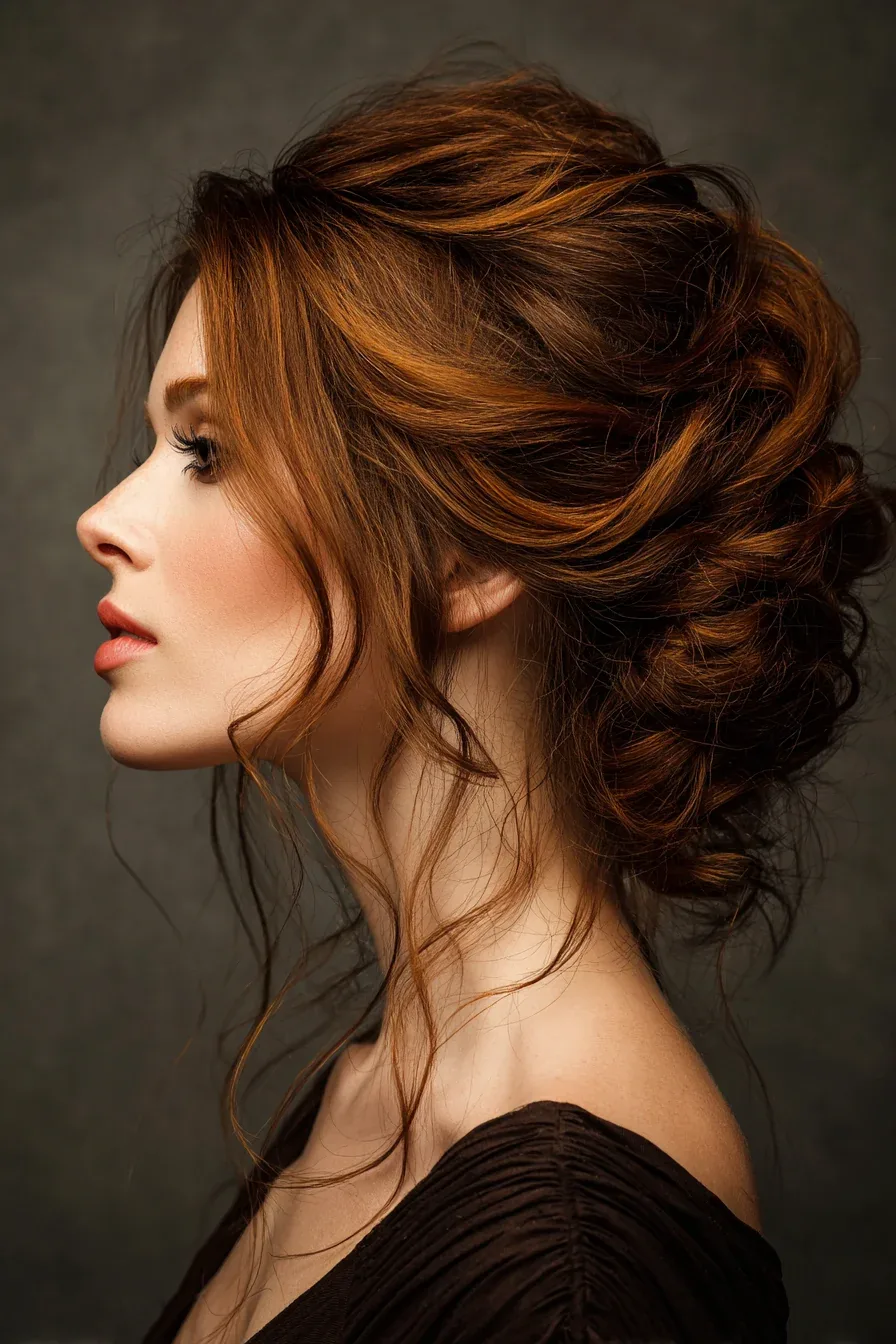
Best for: fine hair that needs fullness, and contestants who want an updo with softness. A textured low bun builds volume at the crown, then gathers the hair into a loose, piecey bun at the nape. It is polished without being severe, and the texture keeps it from looking flat from the judges’ seats.
How to style: backcomb gently at the crown for volume, gather the hair low, and twist into a bun, pulling pieces loose for texture. Pin securely and set with a flexible spray.
What to ask your stylist: for texture that reads from a distance, and to check the bun’s volume from the side, since a low bun can disappear in profile if it is too flat.
Vintage Pin Curls
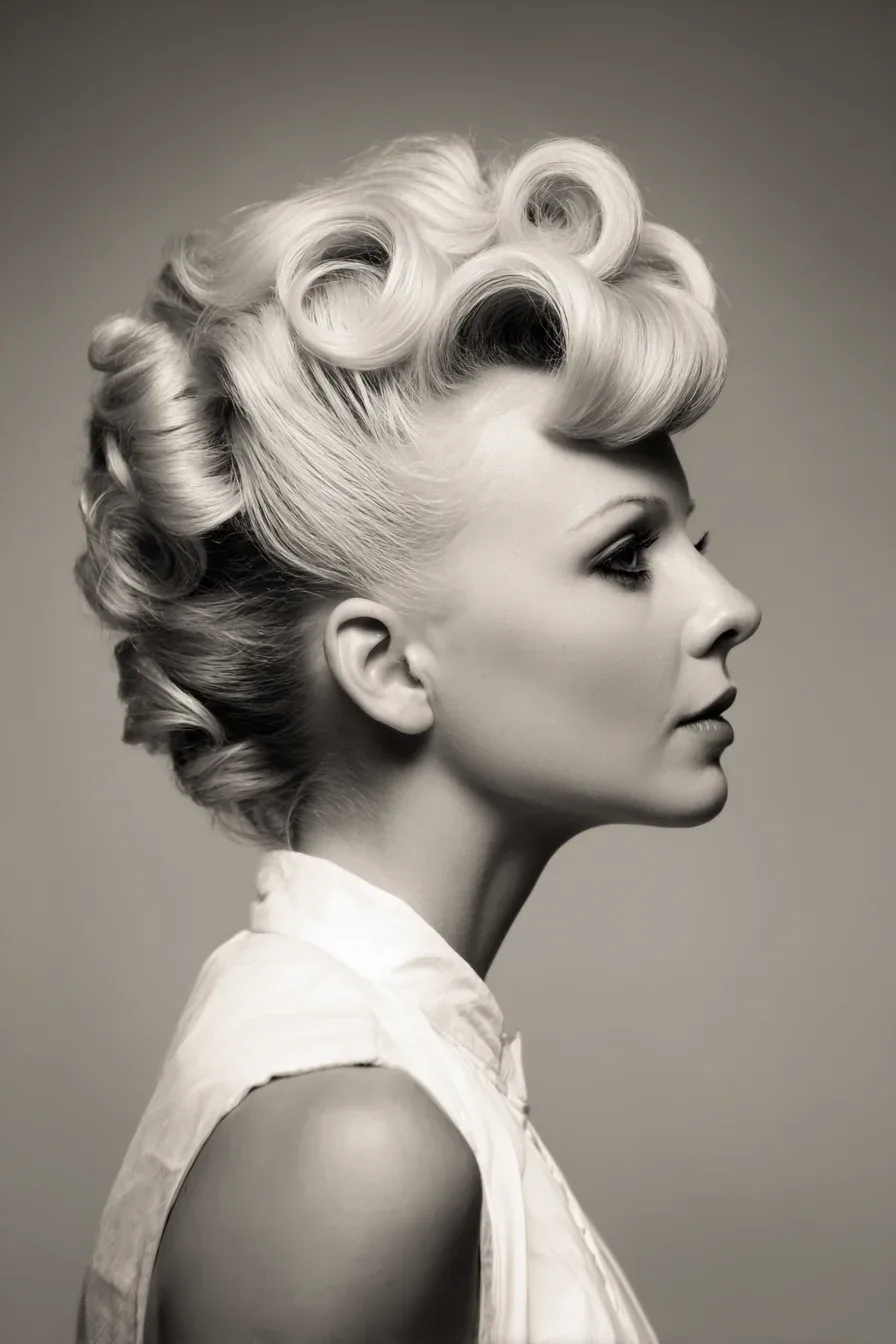
Best for: a classic, sculpted look and short to medium hair. Vintage pin curls are set in small, neat curls close to the head, then brushed out into soft, sculpted waves with a deep side part. The result is polished, glamorous and unmistakably vintage — without looking dated when the waves are kept soft.
How to style: set the hair in pin curls or with a small iron, let them cool completely, then brush through into one smooth wave and set lightly with shine spray.
What to ask your stylist: to allow extra time for the set, and whether pin curls will hold in your hair texture or need a setting product to survive the evening.
The Half-Up Bubble Ponytail
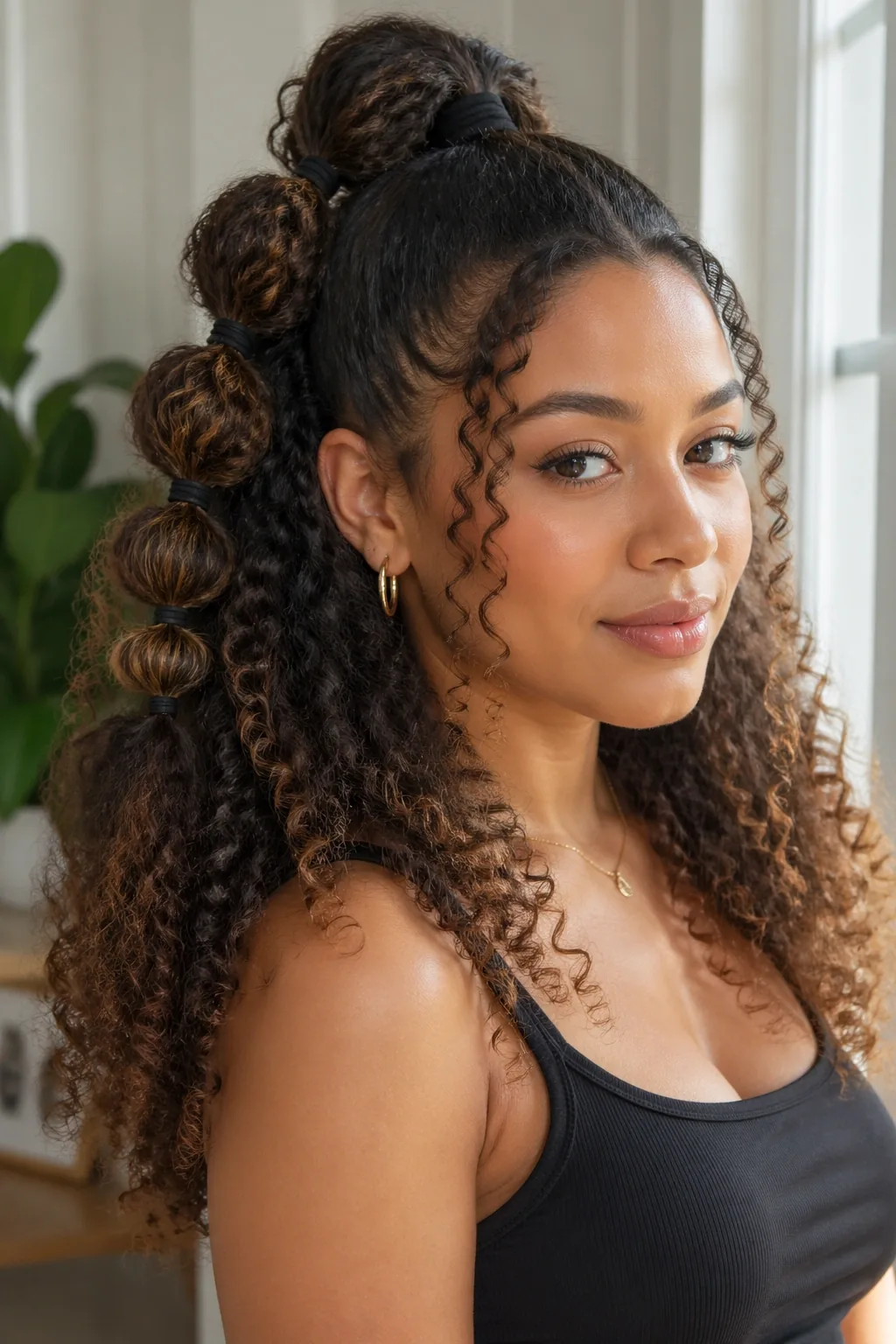
Best for: a playful, modern moment and contestants with long, thick hair. A half-up bubble ponytail sections the top half of the hair with small elastics and pulls each section apart into soft bubbles, while the rest falls loose. It photographs with real joy, and it is a lovely choice for a talent or fun-wear round.
How to style: gather the top section, add elastics every few inches, and gently pull each section apart. Smooth the crown, keep the bubbles even, and wrap the elastics with small strands of hair.
What to ask your stylist: whether the bubble style suits the formality of your pageant, and for elastics that match your hair colour so they disappear on stage.
The Sleek High Bun
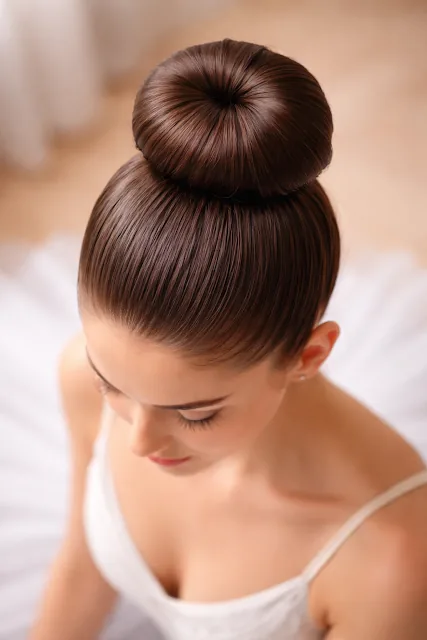
Best for: a sharp, editorial look and a gown with a high neckline. A sleek high bun is minimal, modern and incredibly photogenic: the part is clean, the hair is smooth to the head, and the bun sits high and neat. It puts your face completely on display, and it holds perfectly through heat and a long evening.
How to style: smooth the hair up high with a brush and serum, twist into a bun, and pin securely, smoothing flyaways as you go. Finish with a light spray, not a hard one.
What to ask your stylist: for a bun height that lengthens your neck without looking severe, and to check the bun from every angle, since a sleek style shows every unevenness.
Boho Waves with Delicate Pins
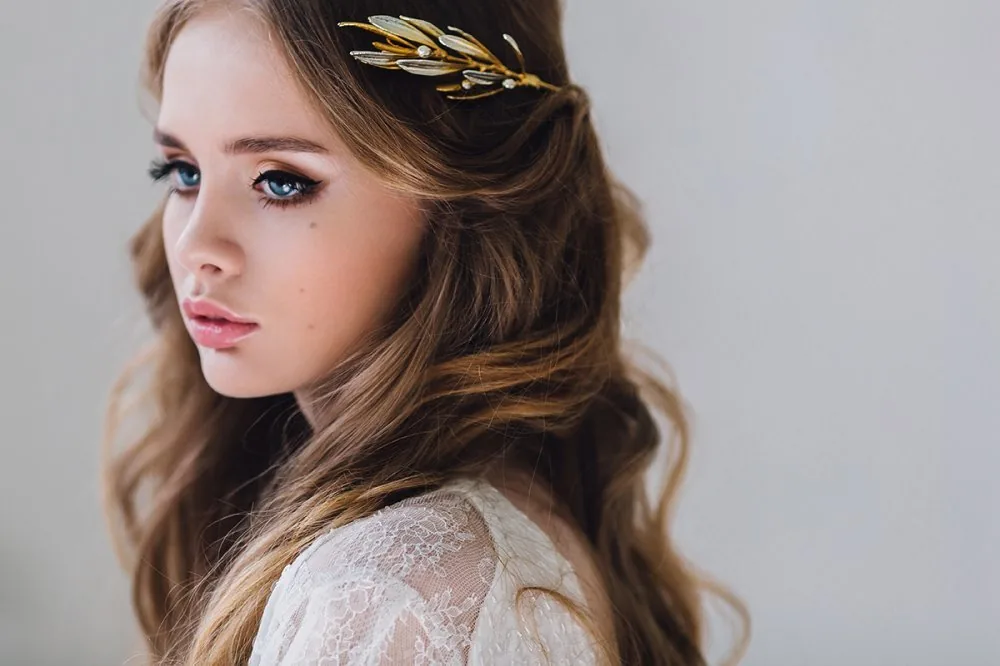
Best for: a relaxed, romantic gown and contestants who want one deliberate detail. Boho waves are loose, uneven and textured, with a small, delicate pin — a pearl, a crystal, a tiny floral clip — placed where the hair sweeps back from the face. The pin catches the light and gives the camera a focal point.
How to style: curl in alternating directions with a large iron, leave the last inch straight, and scrunch in texture spray. Sweep one side back and secure it with the pin, anchoring it with a bobby pin.
What to ask your stylist: to keep the pin in scale with your hair, and to test that it stays put when you turn your head, since a sliding pin is worse than no pin at all.
Cascading Curls, Worn Half-Up
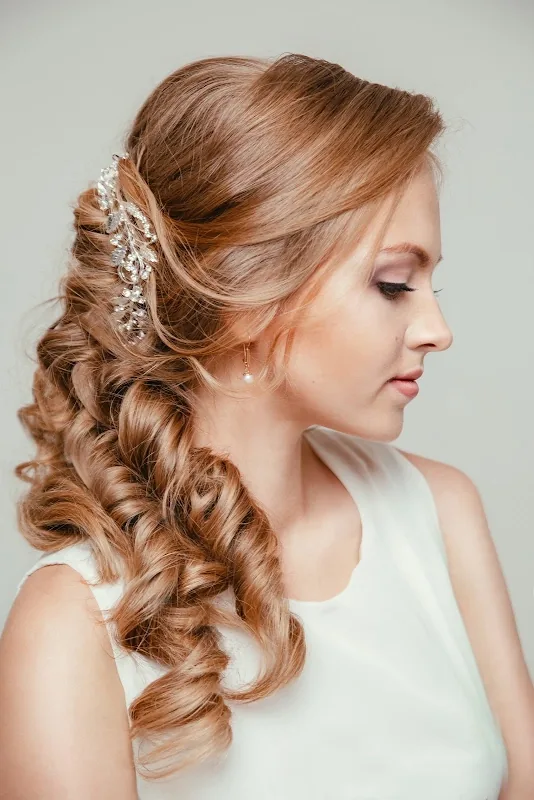
Best for: showing off curl length while keeping your face open. Cascading curls worn half-up gather the top half of the hair at the crown, while the curls fall down the back like a waterfall. It is romantic, dramatic and practical at once: the front is anchored, the back is free to move.
How to style: curl the lengths loosely, gather the top section and pin it at the crown, and let the curls fall over the pinned section so the join disappears. Leave soft pieces around the face.
What to ask your stylist: for a pin placement that hides under the curls, and whether a small clip at the crown will add a focal point for the evening round.
The Crown Braid with Loose Waves
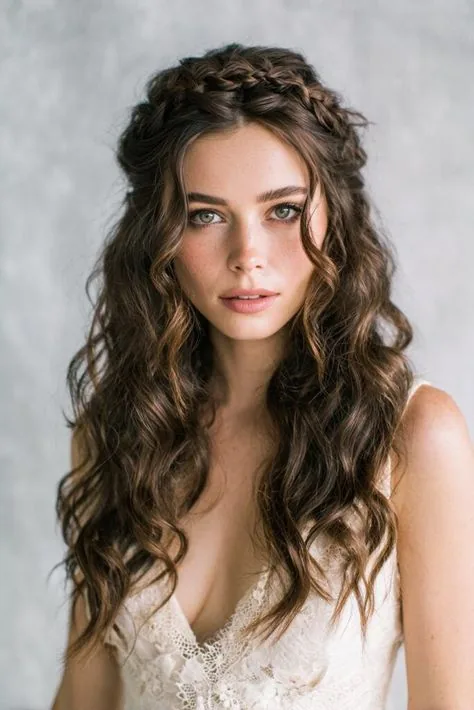
Best for: a crown-ready style and long, wavy hair. A crown braid wraps a braid around the head while loose waves fall beneath it, so the style looks romantic from the front and detailed from the back — and the braid itself gives a tiara a perfect, hidden anchor.
How to style: braid two sections from either side, pin them across the crown, and loosen the braid gently. Curl the loose lengths in large sections and brush through with your fingers.
What to ask your stylist: to place the braid exactly where your crown will sit, and to trial the two together, so the crown does not push the braid out of shape.
The Glamorous Side Ponytail
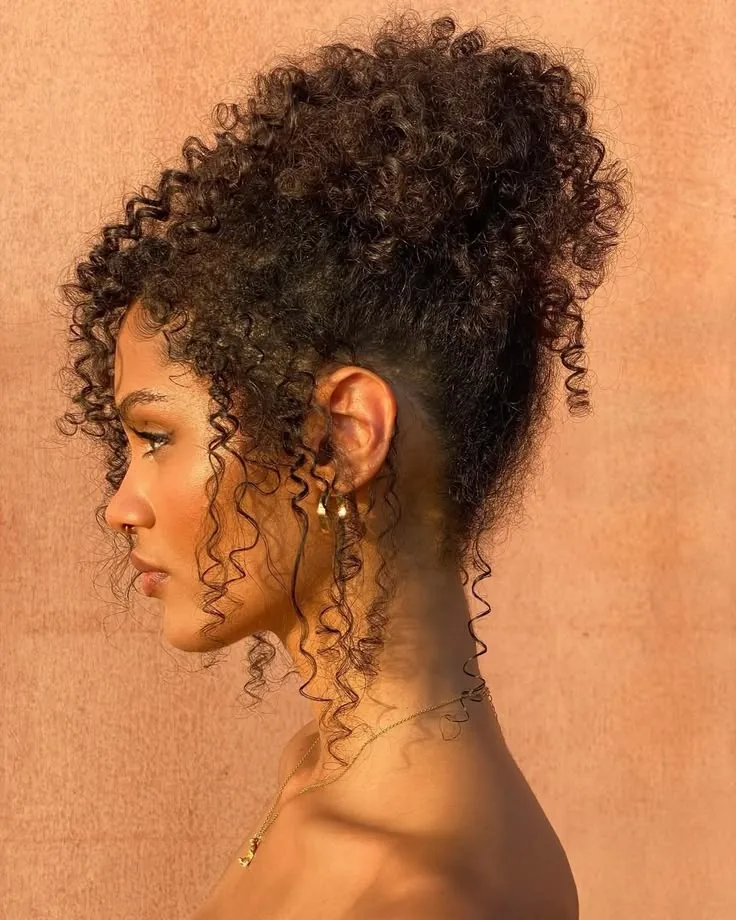
Best for: a red-carpet moment and a gown with a bare shoulder. A glamorous side ponytail sweeps all the hair over one shoulder in a cascade of curls, creating a dramatic diagonal line that photographs beautifully from the front and the side. It shows off length, shine and movement in one style.
How to style: curl the hair loosely, sweep everything to one side, and secure it low over the shoulder, wrapping the elastic with a strand of hair. Pin discreetly at the back of the neck.
What to ask your stylist: for an anchor that survives a walk and a turn, and to test the ponytail with your gown, since the sweep should fall over the bare shoulder, not the covered one.
The Signature Look: Your Hair, Your Way
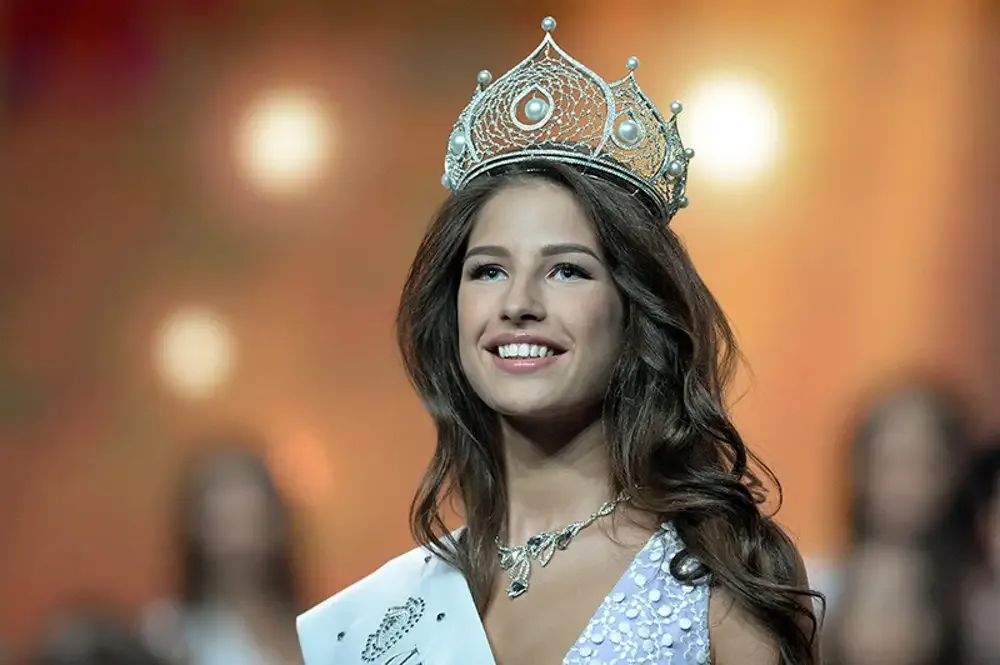
Best for: every contestant, because it is yours. The signature look is not a style from a list — it is your hair, on your best day: the part you always wear, the length you love, the wave or curl or straightness that is simply you, polished one careful step. Every other style in this guide is an idea; this one is the answer.
How to style: wear your everyday style, then add one polish — a smoother finish, a little more shine, a cleaner part, a little more volume at the crown. Keep it comfortable enough to forget about on stage.
What to ask your stylist: what one change would make your everyday hair read best from the judges’ seats, and to trial that change — just that one — so the style still feels like you.
How should I wear my hair for a pageant?
Wear your hair in a polished style with a clear silhouette that frames your face and holds up under hot stage lights. Choose the style that suits your face shape, your hair texture and your gown, trial it at least two weeks before the pageant, and make sure it still looks good from ten feet away.
Should my hair be up or down for a pageant?
Either can win — it depends on your gown, your face and your hair. Hair down suits flowing gowns and shows off length and shine, while hair up suits high necklines, shows off your neck and shoulders, and holds up better under lights. Many contestants wear it half-up or down for interview and up for evening gown.
What hairstyle looks best under stage lights?
Styles with a clear shape and a little shine look best under stage lights, such as Hollywood waves, a polished blowout, a sleek bun or a defined curl pattern. Avoid styles that rely on tiny detail, because the judges sit too far away to see it, and avoid too much shine, which can look greasy under a spotlight.
How do I keep my pageant hair from falling flat?
Build in a little more volume and curl than you think you need, because heat and time will soften both. Use a root-lifting product, set curls while they are warm, anchor updos with pins that match your hair colour, and carry a mini flexible-hold spray backstage for touch-ups between rounds.
Can I wear extensions in a pageant?
Yes, extensions are widely worn in pageants and are fine as long as they look natural. Match the colour and texture exactly, have them fitted by a stylist experienced with pageant hair, and trial them with your chosen style and crown so they stay hidden when you turn and walk.
How do I fit a crown or tiara into my hairstyle?
Trial the crown with your hairstyle, never separately, and bring it to your hair trial. Choose a style with a solid anchor at the crown, such as a bun, a twist or a braided section, and secure the crown with crossed bobby pins or a small comb so it sits level and stays put through a walk and a turn.
Should I get my hair cut or coloured before a pageant?
Book any real cut or colour change at least two weeks before the pageant, so the shape and the tone have time to settle. A small trim a week before is fine, but avoid a brand-new colour, a big lighten or a dramatic cut right before the day — a tone or shape you dislike cannot be fixed on stage.
What is the best hairstyle for a pageant interview?
A neat, open style that keeps your face fully visible is best for interview, such as a polished blowout, soft waves swept back, or a half-up style. Avoid hair falling across your face or anything you will need to tuck behind your ear while you answer questions, because the judges notice fidgeting.
How early should I trial my pageant hairstyle?
Trial your hairstyle at least two weeks before the pageant, wearing the same gown neckline, earrings and crown you will wear on the night. Photograph it from the front, side and back, live in it for a few hours, and leave time to change the style if anything slips, drops or feels uncomfortable.
What should I pack for backstage hair touch-ups?
Pack a travel brush, bobby pins in your hair colour, a mini flexible-hold spray, blotting paper, tissues and a small mirror. Keep the kit backstage, not in the car, and use it between every round to re-pin, smooth flyaways and check that your crown is still level.
Conclusion
The best hairstyles for a pageant are not the most complicated ones. They are the ones that let the judges see you — your face, your confidence, your walk — with hair that frames all of it and never gets in the way. Whether you choose Hollywood waves, a low chignon, a braided crown, a high ponytail or your own everyday style polished one careful step, the goal is the same: hair that holds up under the lights, photographs beautifully from every angle, and still feels like you when the crown goes on.
Start with a trial run, bring your crown and your gown to it, pack a small touch-up kit, and choose the style you would actually wear on your best night. Then forget about your hair completely and enjoy the stage. A pageant is one night — your photos, and the memory of how you felt walking out under those lights, should last far longer.