From the First Tee to the 19th Hole: 40 Hairstyles for a Golf Outing That Stay Put in Sun, Wind and a Visor
There is a particular kind of hair disaster that only a golf course can cause. You arrive at the first tee in the morning with your hair looking perfect, you play one hole in the wind, and by the second tee your hair is a tangled, windswept, sweat-dampened mess that no longer resembles the style you started with. Add four hours of sun, a cap or visor, and eighteen holes on your feet, and most hairstyles simply give up. That is why hairstyles for a golf outing need to be chosen differently from everyday hairstyles — they need to survive sun, wind, sweat and a hat, and still look good at the clubhouse lunch.
This guide gives you 40 hairstyles for a golf outing that actually hold up, for every hair length and texture, from a two-minute low ponytail to a halo crown braid that survives a charity tournament. Every style has been picked because it does three things: it keeps hair out of your face during your swing, it stays secure under a cap or visor through eighteen holes, and it still looks polished when you walk into the clubhouse. Alongside the styles, you will find eight short guides on the things that matter just as much as the style itself: sun and sweat, cap-friendly styles, wind, hair by length, the course-to-clubhouse transition, quick fixes between holes, heat and humidity, and what to pack in your golf bag.
Pick a style the night before, pack your golf bag hair kit, and test the style with the shake test — if nothing moves when you shake your head hard, it will survive the course. Your hair should be the last thing you think about on the fairway, not the first.
Sun and Sweat Protection on the Course
A golf outing means four or more hours under open sky, and your hair takes the same sun and sweat your skin does. Sweat loosens a style from the roots, turns smooth hair frizzy, and makes a neat ponytail slide by the back nine. The fix is not more product, it is the right base. Start with dry hair, add a little dry shampoo or texture spray at the roots for grip, and choose a style that lifts hair off your neck, where sweat pools first.
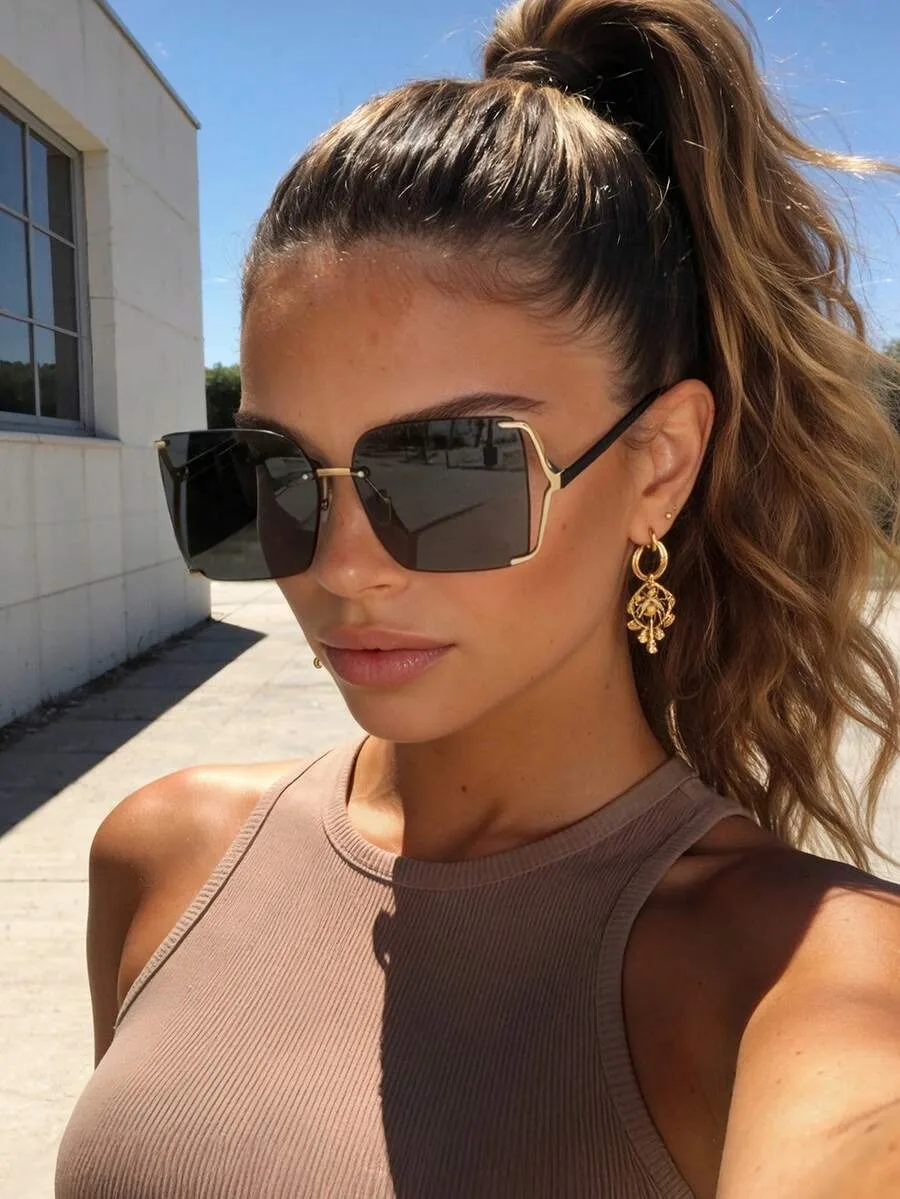
Sun matters too, especially along your parting, which is the one place most people forget to protect. Hours of direct sun dry hair out, fade colour and can burn the scalp along the part. A cap or visor helps enormously, but if you will not wear one, use a UV-protective spray in the morning and dab sunscreen along your parting and the tops of your ears. Coloured hair fades fastest, so a leave-in with UV protection is worth packing in your bag.
The other half of sweat management is what you carry. A small towel, a spare hair tie and a travel-size dry shampoo will rescue your style at the turn. Dab sweat away rather than rubbing it into your hair, and re-tighten your style after the hottest part of the day.
Cap and Visor-Friendly Styles
A golf outing almost always involves a cap or a visor, so the best hairstyles for a golf outing are the ones that work with headwear instead of fighting it. A high ponytail through the back of a cap, a low ponytail under a visor, or a braid that sits flat against the head all let the hat sit properly. What does not work is a bulky top knot or a high bun that pushes the cap up and leaves a gap at the forehead.
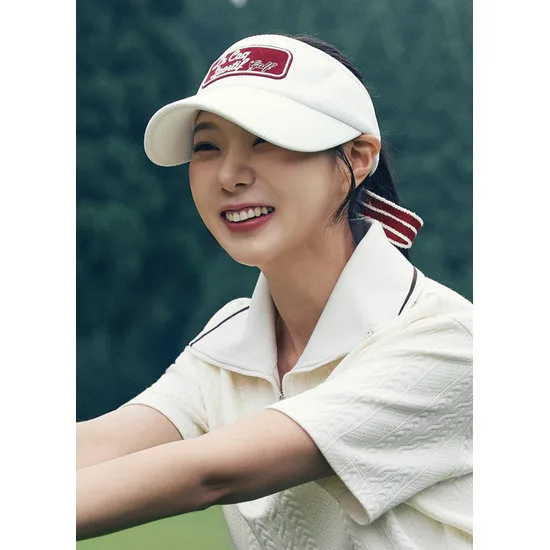
The trick is to style your hair after the cap goes on, not before. Put the cap or visor on first, then pull the ponytail or braid through the opening and adjust it. That way the style sits where the hat wants it to sit, and you will not spend the front nine tugging at a hat that keeps riding up. A low ponytail or a low braid is the safest choice with a visor, because it leaves the crown flat and the visor band sits neatly across the forehead.
Choose the right cap, too. A cap with an adjustable strap and a ponytail opening is worth the search, and a lightweight, breathable fabric keeps sweat down on a hot day.
Wind on the Course: Keeping Hair in Place
A golf course is wide open, and on a breezy day the wind comes at you from every direction. Loose hair becomes a blindfold at the worst possible moment, right in the middle of your backswing. The styles that survive a windy round are the ones with no loose ends: braids, low buns and ponytails tied in two places. If your hair is loose when you tee off, it will not be neat by the second hole.
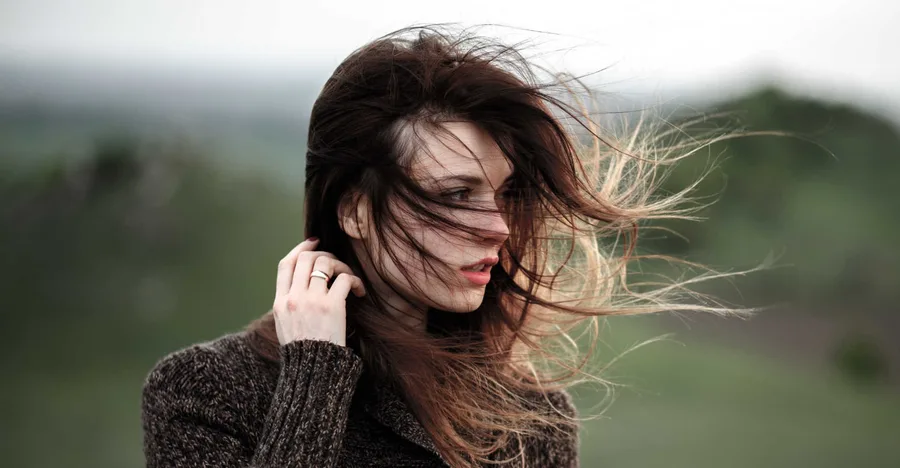
The single most useful habit is the two-point anchor: every style should be secured in at least two places, whether that is two ties, a tie plus pins, or a braid plus an elastic. A style held at one point will pivot and loosen in the wind; a style held at two points stays where you put it. Test it before you leave the car park: shake your head hard from side to side. If nothing moves, the style is course-ready.
For the windiest days, tuck the tail of a ponytail or braid inside your collar or under a light layer so it cannot whip across your face. Avoid long ribbons and loose scarves on the course: they catch the wind, come undone, and end up on the fairway.
Hair by Length Under a Hat
Golf hair is not one-size-fits-all, because length changes everything under a cap or visor. Short hair is the easiest on the course: it cannot tangle, it dries in minutes if you get caught in a shower, and a little product is all it needs. The challenge is keeping it out of your eyes, which a visor, a few clips or a slicked-back finish will do. If your hair is a pixie or a short bob, you are already ahead — spend your energy on sunscreen, not styling.
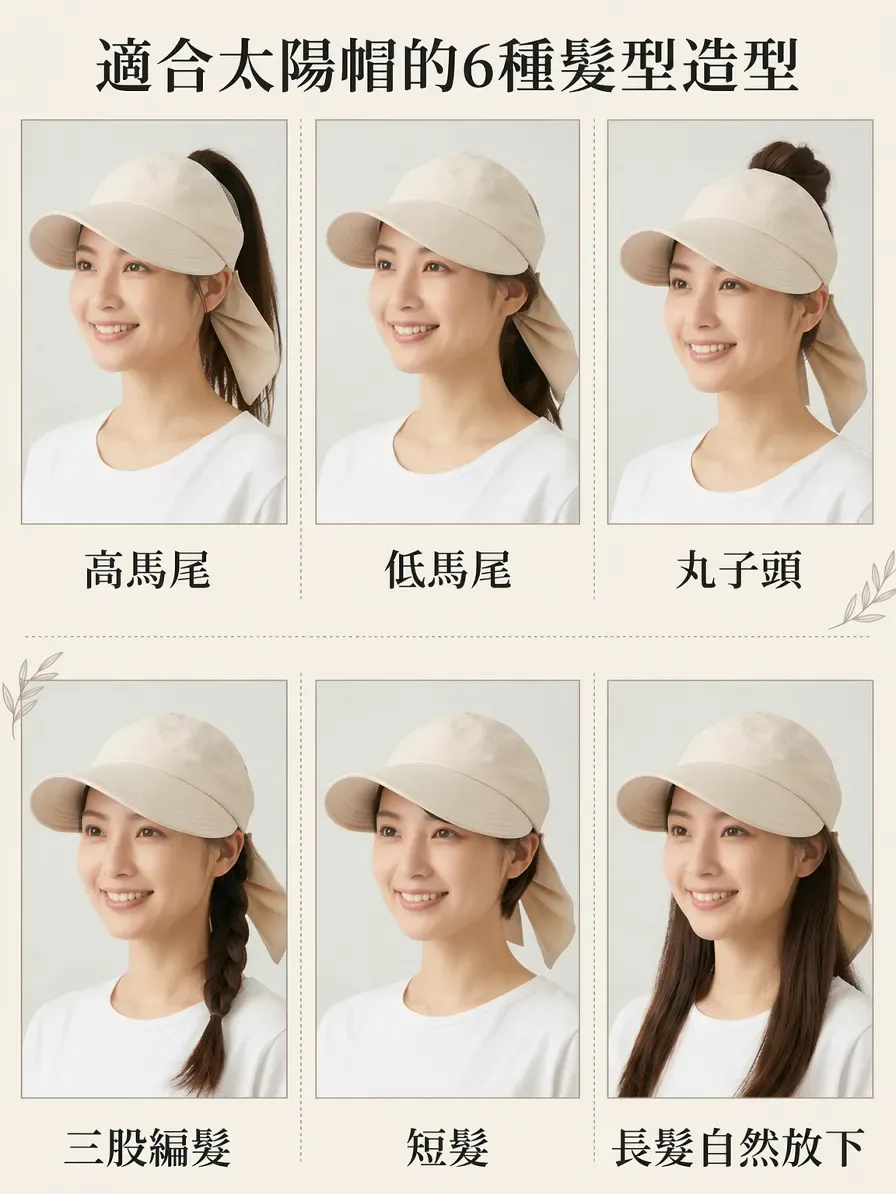
Medium hair is the most versatile length for a golf outing. It is long enough to braid, bun and ponytail, and short enough that none of those styles gets heavy over four hours. A French braid, a low bun or a bubble ponytail all work beautifully at this length. The main risk is the ends: medium layers can poke out of a braid, so a slightly tighter braid or a bun will hold them better under a cap.
Long hair needs the most planning, because it has the most to tangle and the most weight to pull. Braids are your best friend: they contain the length, stop the whipping in the wind, and keep the weight off your neck. A high ponytail works too, but tie it in two stages so it does not sag by the back nine.
From Course to Clubhouse: The Lunch Transition
The best hairstyles for a golf outing do double duty: they survive eighteen holes and still look polished when you walk into the clubhouse for lunch. The transition takes five minutes in the locker room, and it is the difference between looking windswept and looking put together. The trick is to choose a morning style that converts, rather than one you have to take down completely.
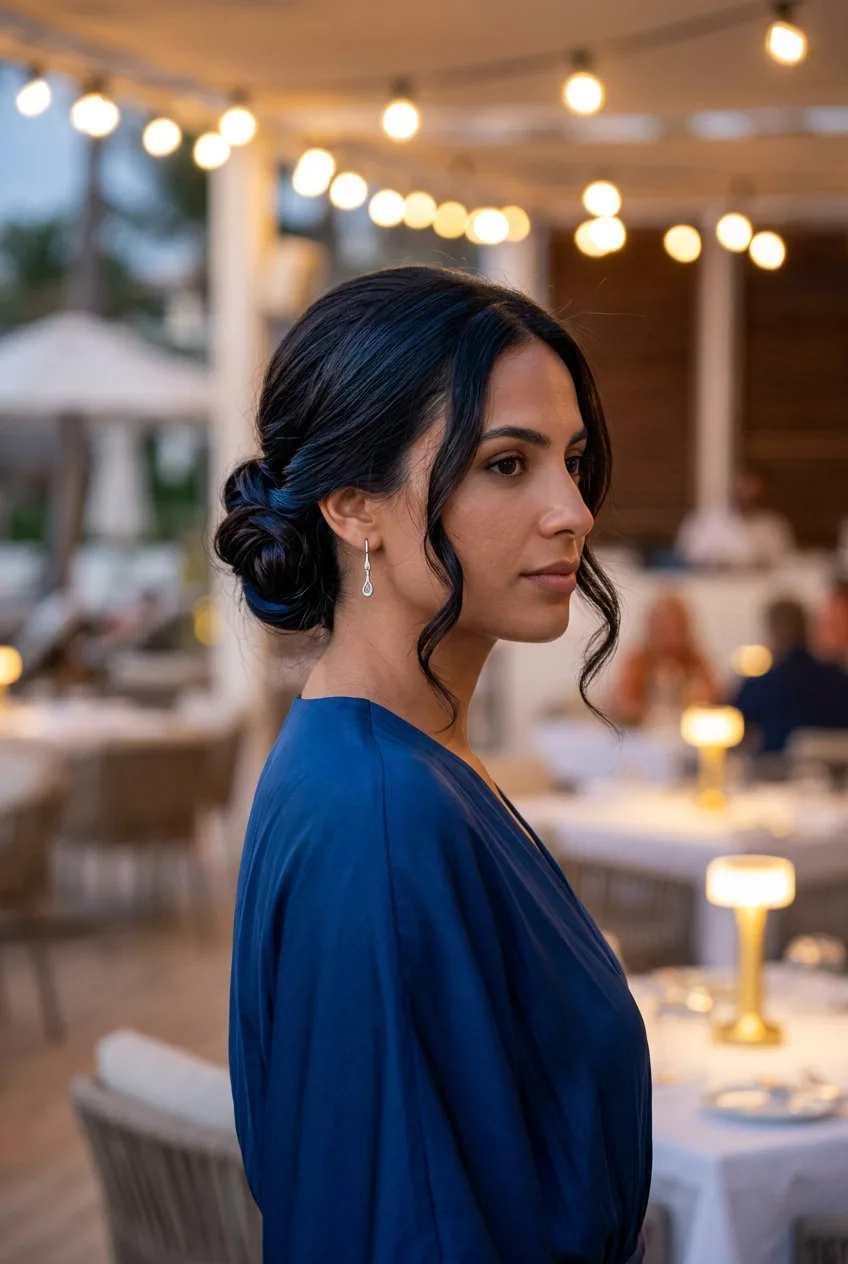
A low braid becomes a low chignon in under a minute: coil the braid, pin it, and smooth the front with your palms. A ponytail becomes a twisted low bun the same way. Keep a small brush, a few pins and a spritz of dry shampoo in your bag, and use the locker-room mirror for the front only — the back will take care of itself if the base was secure. A quick change of accessories helps too: swap the sporty cap for a silk scarf or a slim headband and the whole look softens.
Plan the outfit around the hair, not the other way round. A collared polo and a neat bun look smart at lunch without any extra effort, and a low, polished style suits the clubhouse far better than a high, sporty ponytail.
Quick Fixes Between Holes
No golf hairstyle survives four hours outdoors without a little help, and the difference between good hair at the eighteenth and a disaster is a few thirty-second fixes between holes. The best time to fix your hair is while you are waiting to tee off: you are standing still, you have a few minutes, and nobody is watching. Learn these four fixes and you will never need a mirror.
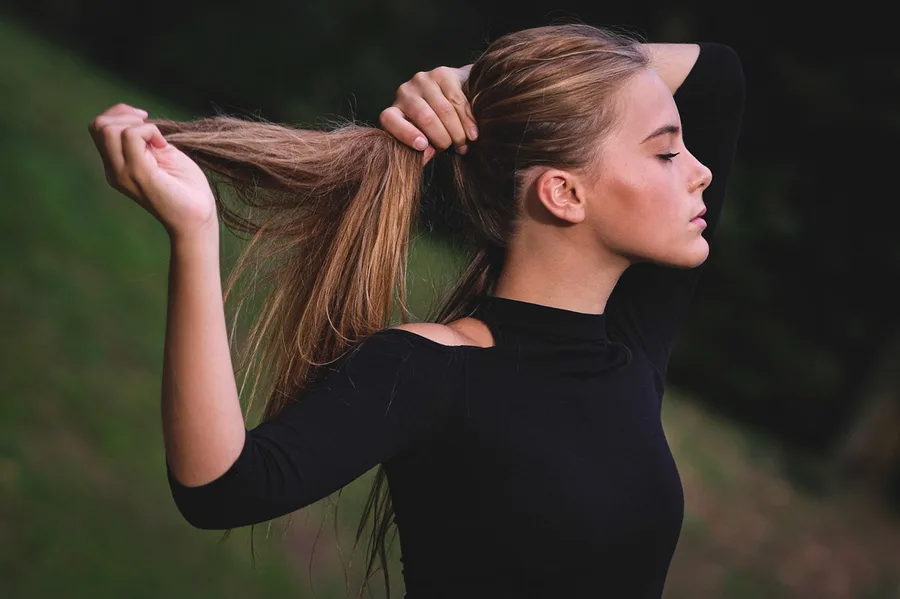
First, the ponytail re-tighten: split the tail in two, pull the halves apart, and the tie will tighten itself. Second, the braid rescue: if a braid has loosened, re-braid only the bottom few inches and secure it — the top will still be holding. Third, the bun twist: if a bun has sagged, twist it tighter and add a pin. Fourth, the fringe fix: smooth flyaways with a dab of styling cream, or pin them back with a bobby pin crossed over another one for grip.
The other quick fix is knowing when to switch styles. If your morning style has given up by the turn, do not fight it — change it. A loose half-up style becomes a full braid, a ponytail becomes a bun, and a bun becomes a braid.
Heat and Humidity on the Fairway
Heat and humidity are the quiet enemies of golf hair. Humidity makes straight hair go limp and curly hair go frizzy, and by the back nine a style that looked perfect at the first tee can look twice its size. The answer is to work with the weather instead of against it: choose styles that expect frizz and hide it, like braids, buns and textured ponytails, rather than sleek styles that show every stray hair.
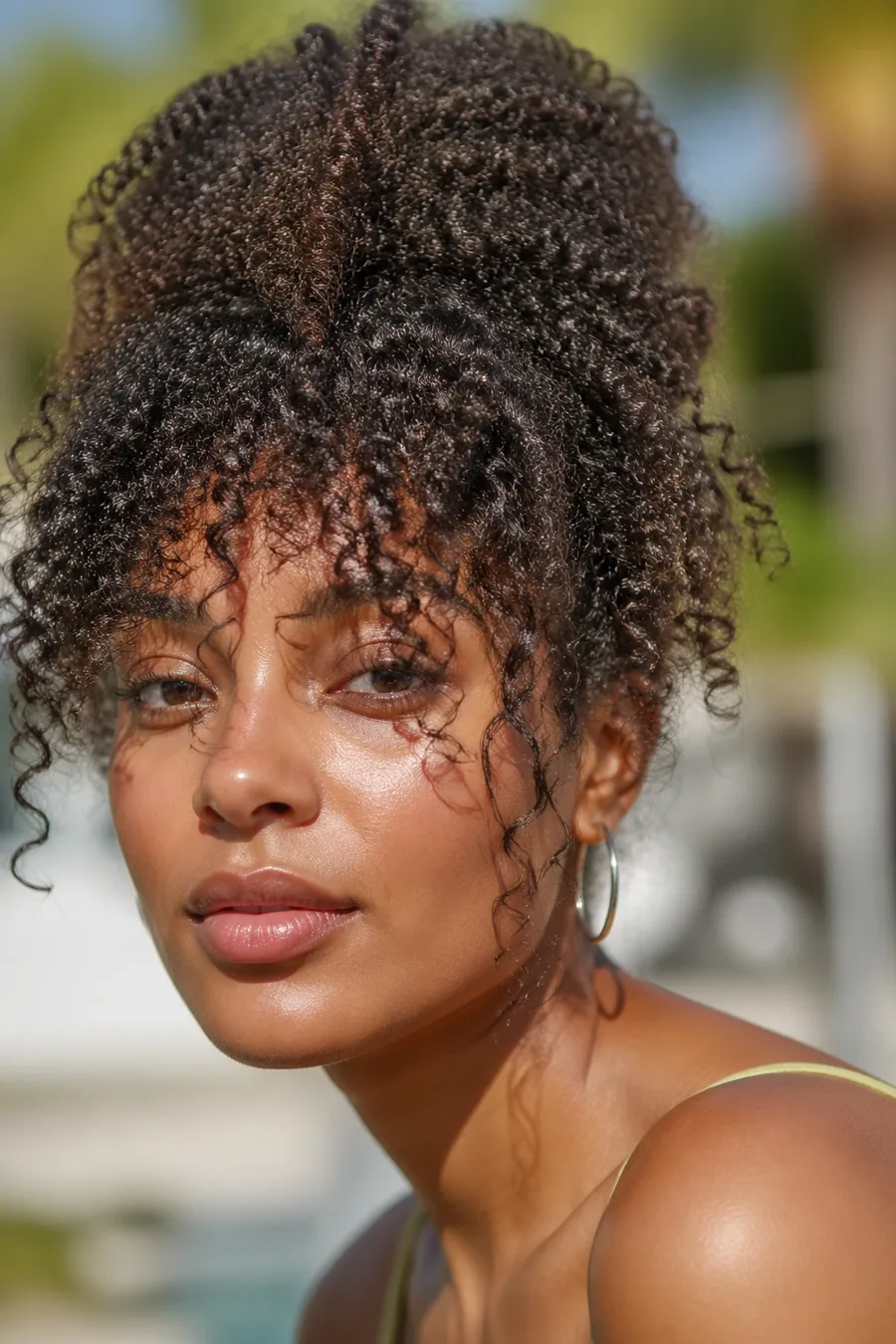
Product helps, but only the right kind. A light anti-frizz serum on the ends before you style will keep flyaways down without weighing hair flat, and a strong-hold hairspray on the finished style will hold through humidity far better than a light one. What does not help is piling on heavy creams or oils in the morning: they mix with sweat, slide, and leave hair looking greasy by lunchtime. Less product, applied to dry hair, lasts longer.
Timing matters too. If you can, style your hair in a cool room before you head out, and let the style set for ten minutes before you put the cap on. Hair that sets cool holds its shape far better in the heat.
What to Pack in Your Golf Bag
A golf bag hair kit is small, cheap and worth its weight in gold. It fits in a side pocket of your golf bag, and it will save your style at least twice during the round. The essentials are: two spare hair ties, four bobby pins, two small elastics, a wide fabric headband, a travel-size dry shampoo, a small tube of styling cream, a pocket comb, and a few blotting papers for sweat.
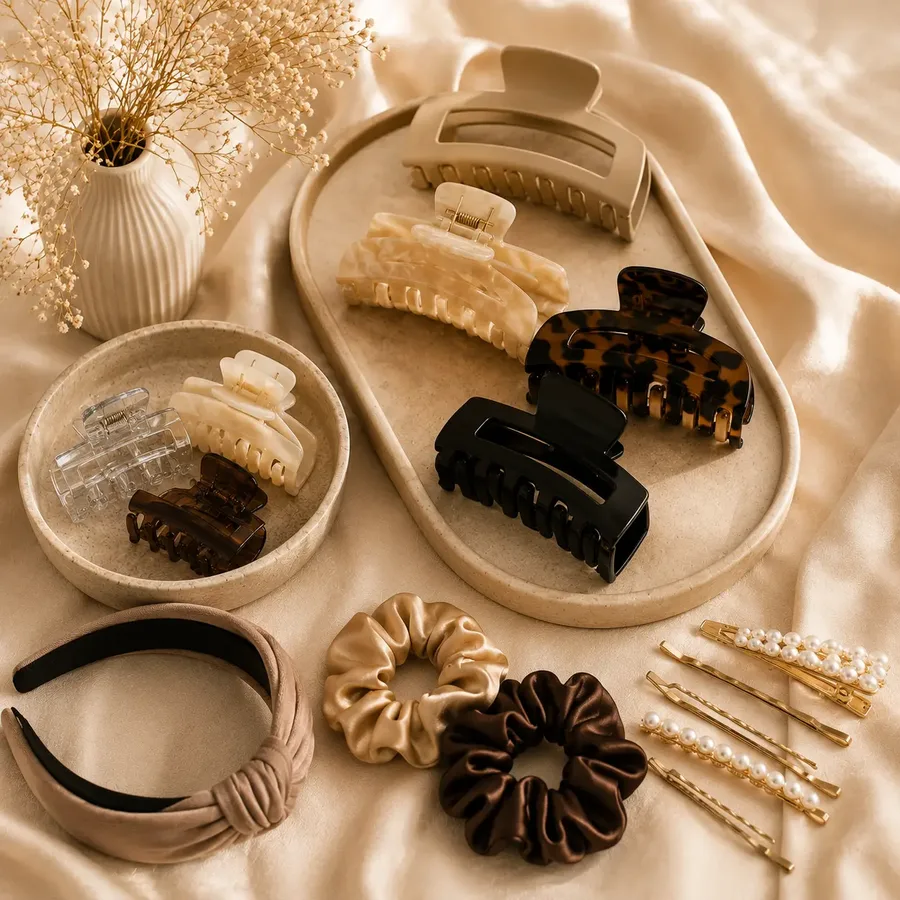
Add a few extras if you have the space: a silk scrunchie for curly hair, a couple of claw clips for a quick switch, a small bottle of leave-in conditioner for after a rain shower, a spare cap or visor, and sunscreen for your parting. Everything should be small and light — you will be carrying it for four hours, and a heavy bag ruins a round faster than bad hair.
Pack the kit the night before, and keep it in the same pocket of your bag every time so you can find it without thinking. The most common mistake is packing the kit and then leaving it in the car, so put it in the bag you actually take onto the course.
The Classic Low Ponytail Under a Cap
The classic low ponytail is the safest hairstyle you can wear to a golf outing, and it is popular for a reason. Tied at the nape, it sits flat under any cap or visor, keeps every strand off your face during your swing, and takes about two minutes to do. It works on almost every hair length past the shoulders, and it never looks out of place, from the first tee to the clubhouse lunch.
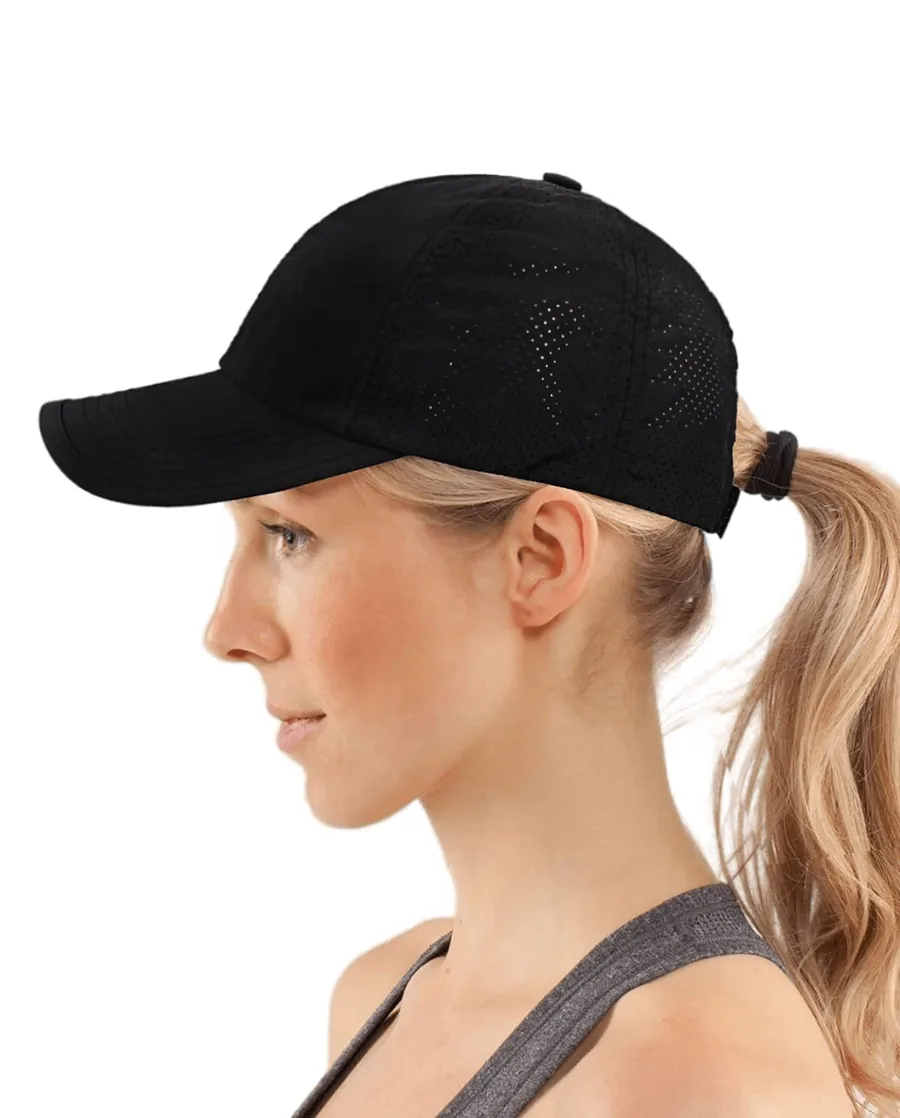
Pros: quick, comfortable under a cap, and keeps hair out of your swing. Cons: it can look plain on its own, and a single tie may loosen in wind or sweat.
Maintenance: use two ties, one at the base and one a few inches down, so the style holds through eighteen holes.
Who should avoid it: if your hair is very short, a low ponytail will slip out; a headband or clips will suit you better.
High Ponytail with a Wrapped Base
A high ponytail with a wrapped base takes the sportiest golf style and makes it look deliberate. The ponytail sits high enough to keep hair completely off your neck on a hot day, while a wrapped strand of hair around the elastic hides the tie and gives a polished finish that photographs well. It pairs perfectly with a cap worn backwards or a visor.
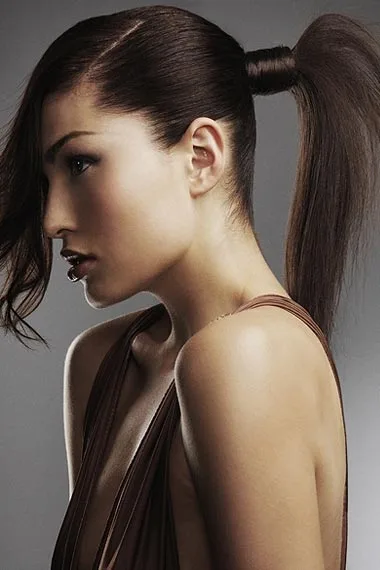
Pros: cool on hot days, keeps hair off the neck, and looks polished in photos. Cons: the weight can pull at the hairline over four hours, and it can bounce during a walk between holes.
Maintenance: tie the ponytail in two stages — a lower tie first, then the high one — so the weight is shared and it does not sag. Wrap a thin strand around the base and pin it underneath.
Who should avoid it: if you have a sensitive scalp or fine hair that pulls easily, a high ponytail can ache by the back nine; choose a low ponytail or a braid instead.
French Braid That Holds Through 18 Holes
A French braid is the gold standard for a golf outing because it does everything the course demands at once. It keeps hair flat against the head, so a cap sits properly; it contains every strand, so nothing falls into your face mid-swing; and it loosens gracefully, still looking neat at the eighteenth even after hours of wind. It is the style most golfers come back to, round after round.
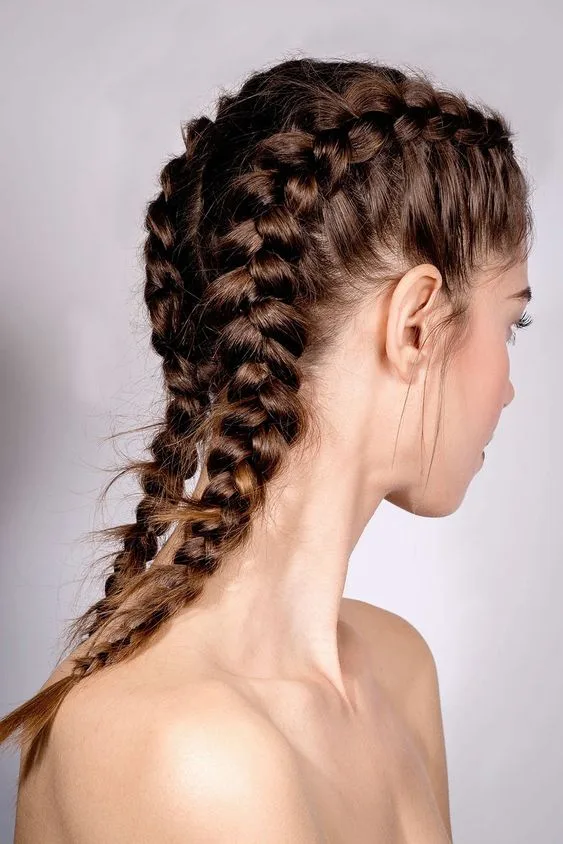
Pros: extremely secure, cap-friendly, and looks good even as it loosens. Cons: it takes practice to do on yourself, and it is hard to redo quickly between holes.
Maintenance: braid on slightly damp or textured hair for the best grip, and finish with a small elastic plus a pin at the tail. A light mist of hairspray along the parting keeps flyaways down.
Who should avoid it: if your hair is very short or heavily layered, a French braid may not hold the shorter pieces; a Dutch braid with a tighter weave or a low bun may work better.
Double Dutch Braids for Windy Fairways
Double Dutch braids are the answer to a windy day on the fairways. Two braids running from the hairline to the nape split the hair evenly, so the wind has nothing loose to grab, and the raised braid pattern sits flat enough under a cap to be comfortable for hours. They look sporty and youthful, and they survive a full round without a single strand escaping.
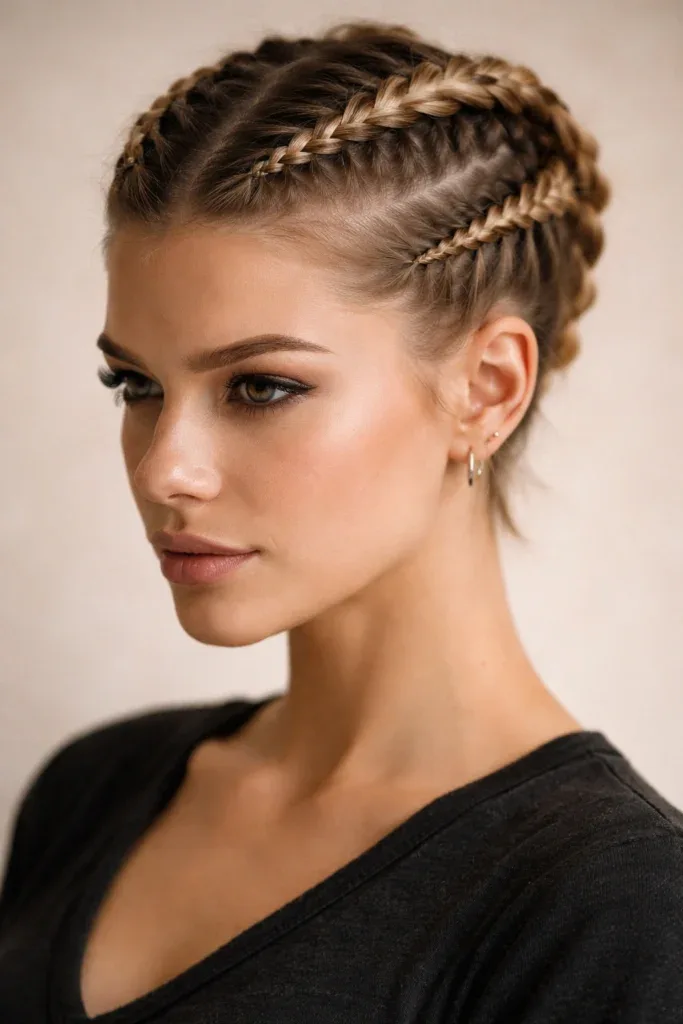
Pros: the most wind-proof style there is, symmetrical, and comfortable under a cap. Cons: they take time to do well, and uneven parts show clearly in photos.
Maintenance: part the hair cleanly down the middle with a comb before you start, and braid tightly at the hairline where wind hits first. Tie each braid with a small elastic and tuck the ends under the collar.
Who should avoid it: if you are short on time in the morning, two braids may be too slow; a single French braid gives most of the same hold in half the time.
Fishtail Braid for a Polished Finish
A fishtail braid brings a touch of polish to a golf outing without giving up any practicality. The fine, woven pattern looks intricate and expensive, yet it holds hair just as firmly as a regular braid and sits flat under a cap. It is a lovely choice for a charity tournament or a club event where you want to look a little more dressed up than a plain ponytail allows.
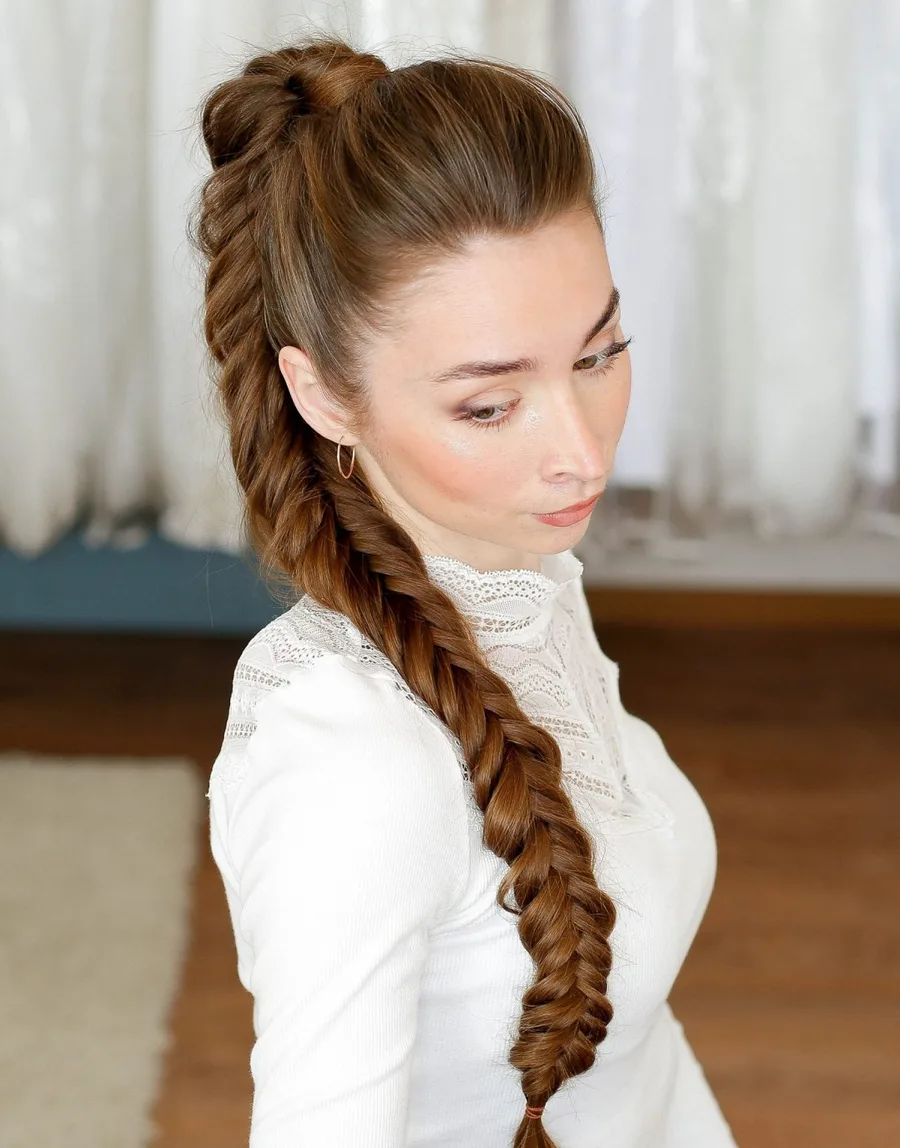
Pros: elegant, secure, and flatters most face shapes. Cons: it is slower to braid than a three-strand braid, and the fine pattern can blur if the hair is very thick.
Maintenance: start with a low ponytail as a base so the fishtail has something to grip, then braid in small sections. Gently pull the edges out a little for fullness once it is tied.
Who should avoid it: if your hair is very fine, a fishtail can look thin and wispy; a Dutch braid will give you more volume.
Low Braided Bun for the Clubhouse
A low braided bun is the style that does the course-to-clubhouse transition by itself. Braid your hair first, then coil the braid into a low bun at the nape and pin it. It stays secure under a cap all morning, and when you take the cap off at lunch, the bun already looks elegant — no restyle needed. It is the smartest single choice for a day that ends with a meal.
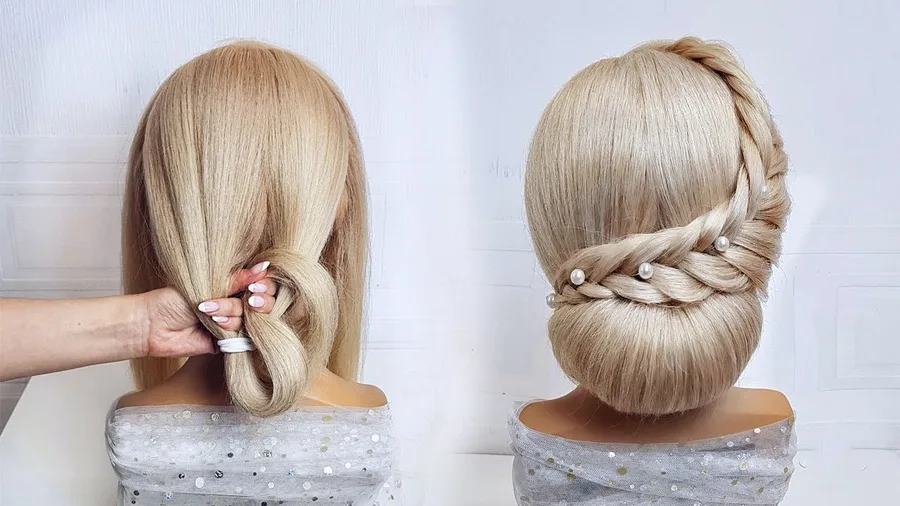
Pros: secure under a cap, instantly clubhouse-ready, and keeps hair off the neck. Cons: it can feel heavy on very thick hair, and it takes a few pins to hold properly.
Maintenance: braid the hair first so the bun has structure, then coil it flat against the head and pin in four places, like the points of a compass. A scrunchie under the coil gives it shape without bulk.
Who should avoid it: if you have very fine hair, a braided bun can look small and flat; add a little texture spray first.
Sleek Ballerina Bun Under a Visor
A sleek ballerina bun is the neatest style you can wear under a visor. Brushed smooth, twisted high and pinned tight, it keeps every hair in place, leaves the neck completely free, and never interferes with the visor band. It is a favourite for hot days and for formal club events, where a tidy, classic silhouette suits the setting perfectly.
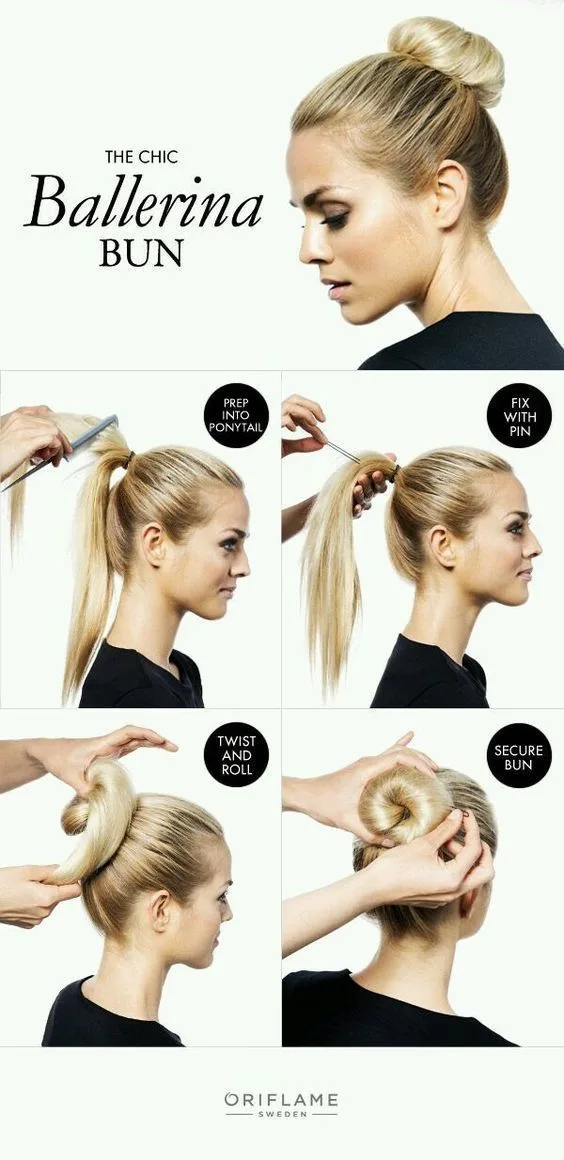
Pros: the neatest finish, excellent in heat, and suits formal club settings. Cons: it shows every bump and flyaway, and a tight bun can ache after four hours.
Maintenance: brush the hair smooth with a little gel, twist it into a coil and pin it in a circle. A hair net over the bun is invisible and adds serious staying power.
Who should avoid it: if you have a very round face, a high sleek bun can emphasise it; a lower bun with soft face-framing pieces will flatter you more.
Messy Top Knot for Hot Afternoons
A messy top knot is the relaxed, hot-afternoon answer to golf hair. Piled high and deliberately undone, it keeps hair off your neck when the temperature climbs, and because it is meant to look loose, a little wind or sweat only makes it look better. It is quick, forgiving and comfortable, and it suits a casual round with friends perfectly.
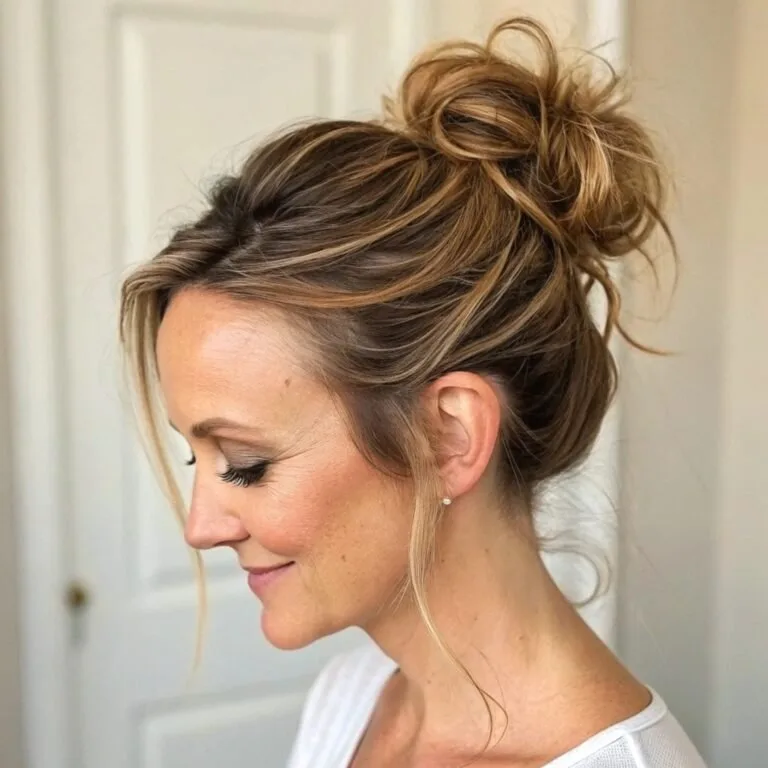
Pros: fast, cool, and forgiving — wind and sweat improve it rather than ruining it. Cons: it is the least secure knot here, and it can look too casual for a formal clubhouse.
Maintenance: gather the hair high, twist loosely and pin it with two crossed bobby pins rather than a single tie. A scrunchie underneath gives the knot shape and grip.
Who should avoid it: if your club lunch is formal, a messy knot may look underdone; a low chignon will be more appropriate.
Bubble Ponytail with a Sporty Edge
A bubble ponytail brings a playful, sporty energy to the course while staying completely practical. Elastics spaced down the length of the ponytail create soft bubbles that stop the tail whipping in the wind, and the extra anchor points mean the style holds far better than a single-tie ponytail. It looks fun in photos and suits a casual or charity round beautifully.
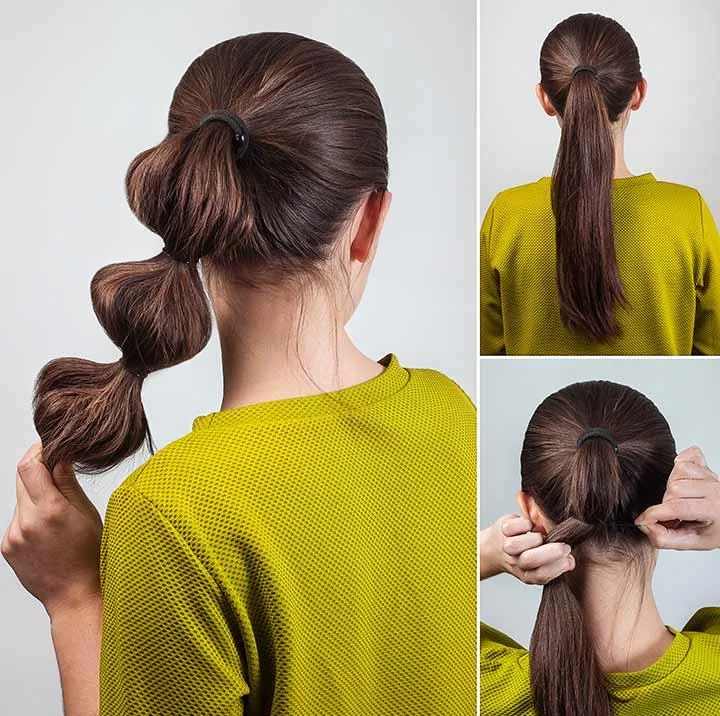
Pros: wind-resistant, fun to wear, and holds better than a plain ponytail. Cons: it needs several elastics, and the bubbles can flatten if you lean on them in the cart.
Maintenance: use small, strong elastics spaced evenly down the tail, and gently pull each section out to form the bubble. Match the elastics to your hair colour so they disappear.
Who should avoid it: if your hair is short, there is not enough length to form bubbles; a high ponytail will suit you better.
Half-Up Top Knot for Medium Hair
A half-up top knot is the perfect compromise for medium hair on the course: the top half is gathered into a small knot that keeps hair out of your face, while the rest falls free and moves naturally. It works beautifully under a visor, which holds the knot in place, and it takes less than three minutes — ideal when you are styling in the car park.
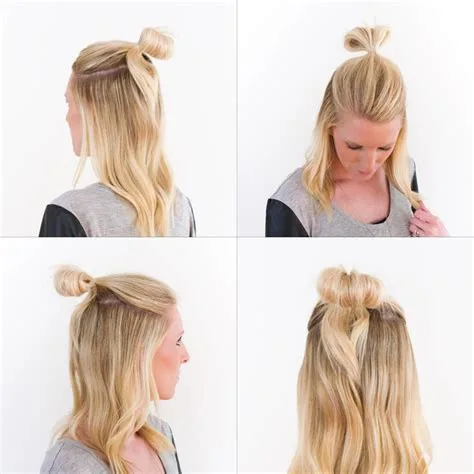
Pros: quick, flattering, and keeps the front out of your swing. Cons: the loose half can tangle in wind, and it is less secure than a full updo.
Maintenance: take only the top section, from temple to temple, and knot it high so the visor band sits below it. Pin the knot with two crossed pins and leave the rest smooth with a little serum.
Who should avoid it: if the forecast is very windy, a half-up style will tangle; choose a full braid instead.
Low Ponytail with a Silk Scarf Wrap
A low ponytail wrapped with a silk scarf is the easiest way to make a simple golf style look considered. The scarf covers the elastic, adds a soft sweep of colour, and — tucked in properly — stays put under a cap all round. It is a lovely choice for a ladies’ day or a club event, where a small, pretty detail lifts the whole outfit.
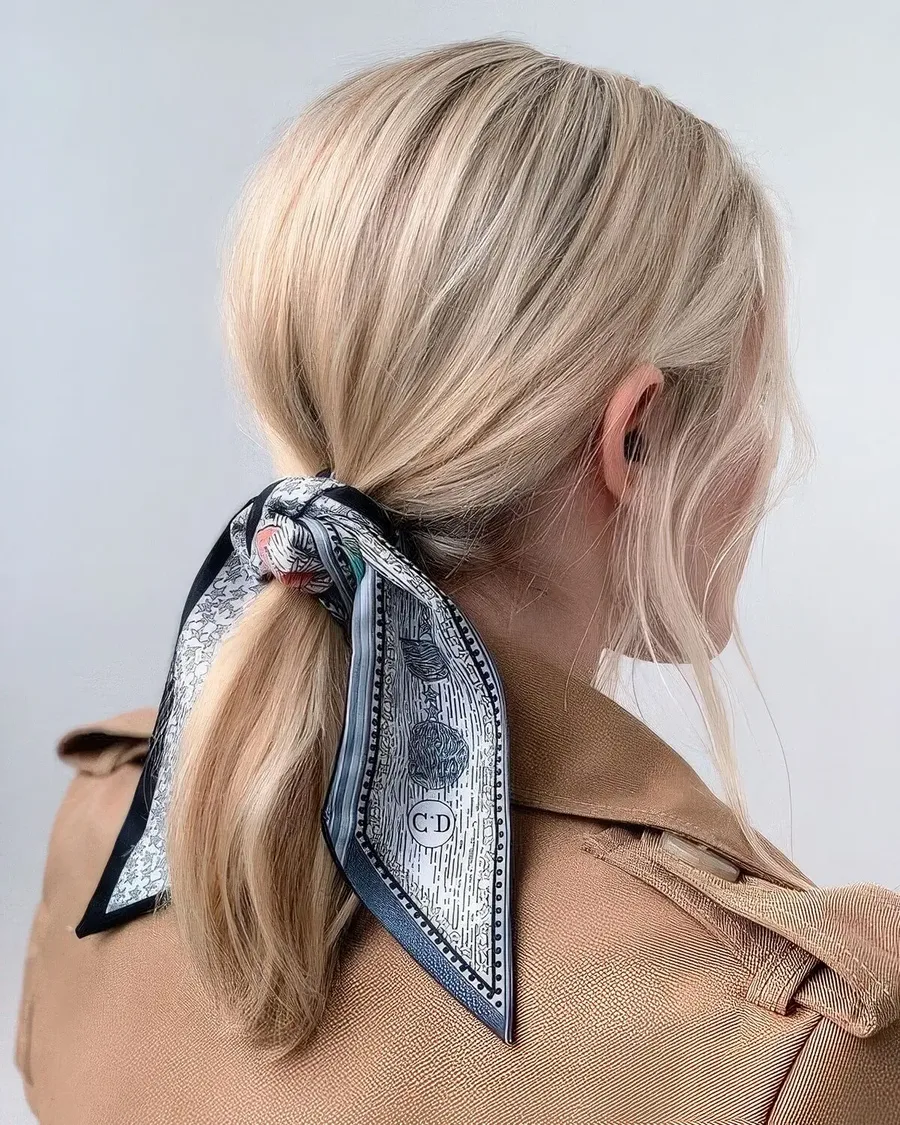
Pros: pretty, quick, and matches an outfit easily. Cons: a loose scarf can slip or catch the wind, and silk can slide on smooth hair.
Maintenance: tie the ponytail with a strong elastic first, then wrap the scarf over it and knot it underneath so the ends are short. Tuck the ends into the ponytail itself.
Who should avoid it: if the day is very windy, skip the scarf and use a ribbon tied tight instead.
Side Braid That Stays Off Your Face
A side braid is a gentle, flattering golf style that keeps hair over one shoulder and completely out of your swing. Draped to one side, it never falls forward when you bend to line up a putt, and it sits flat enough under a cap to be comfortable for hours. It suits almost every face shape and looks soft and relaxed in photos.
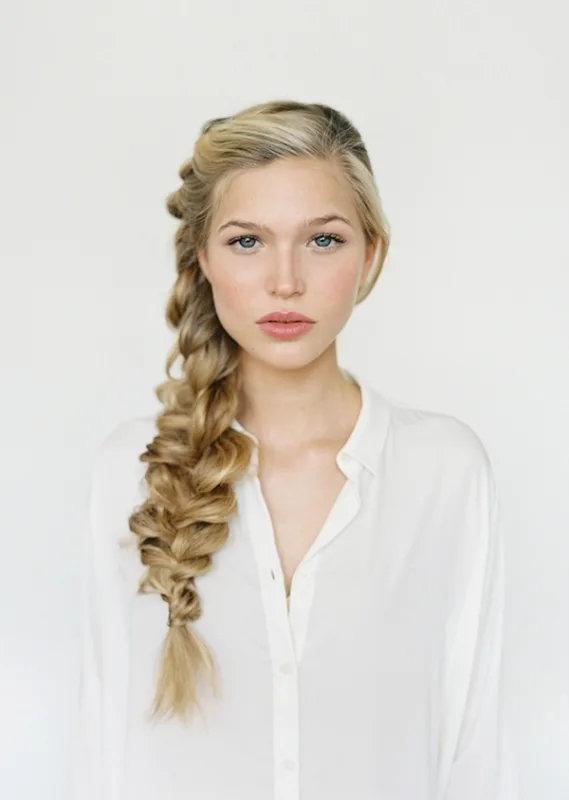
Pros: comfortable, flattering, and never falls into your face. Cons: the braid rests on one shoulder and can rub against a golf bag strap.
Maintenance: braid loosely over the shoulder opposite your dominant hand so it stays clear of your swing. A small elastic and a pin at the nape keep it from sliding forward.
Who should avoid it: if you carry your bag on the same shoulder as the braid, it will get crushed; switch shoulders or choose a low bun.
Rope Braid Ponytail for Thick Hair
A rope braid ponytail is made for thick hair. Two sections twisted around each other form a strong, rope-like tail that holds its shape for hours, and the twisting motion actually grips thick hair better than a regular braid does. It keeps heavy hair contained and comfortable, and it looks sleek and sporty from the first tee to the last.
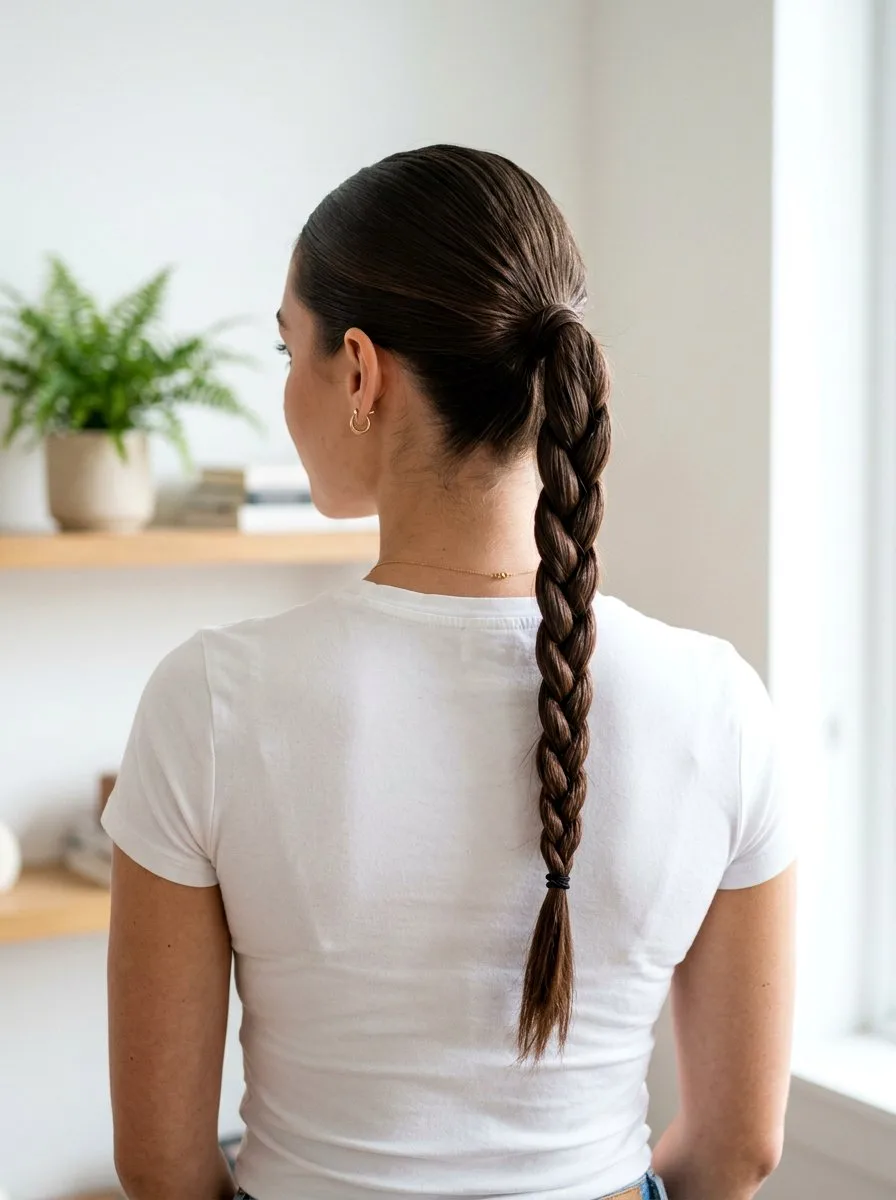
Pros: holds thick hair firmly, looks sleek, and resists loosening. Cons: it can unravel at the ends if not tied tightly, and it is tricky to do on fine hair.
Maintenance: split the ponytail into two equal halves, twist each half in the same direction, then twist them around each other in the opposite direction. Tie with a strong elastic and add a second tie an inch above the end.
Who should avoid it: if your hair is fine or slippery, a rope braid may unwind; a French braid will hold better.
Braided Headband Ponytail
A braided headband ponytail solves the two biggest golf hair problems at once: it keeps your fringe out of your eyes and the rest of your hair in a secure ponytail. A thin braid woven across the hairline acts as a living headband, so there is nothing to slide off or lose, and the ponytail behind it stays put through every hole.
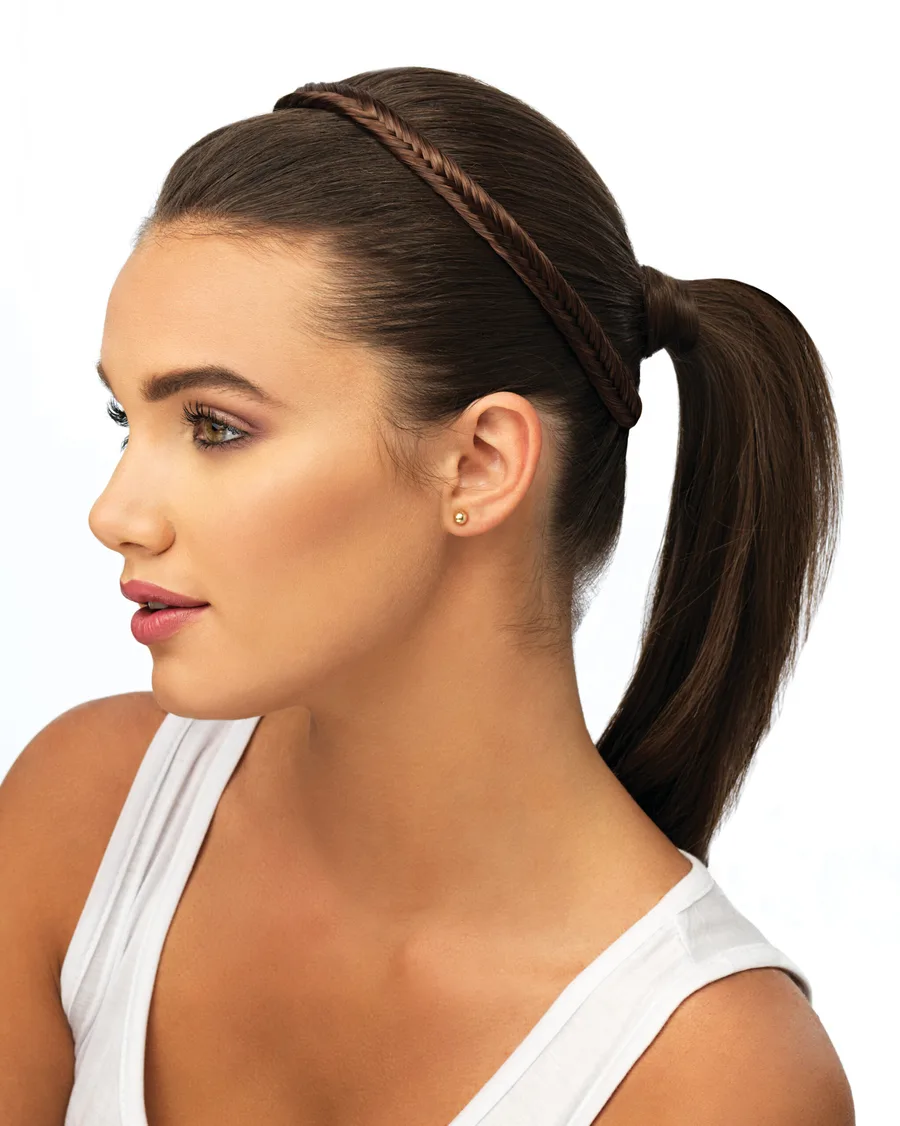
Pros: keeps the fringe back without accessories, secure, and looks intricate. Cons: the headband braid takes practice, and it can loosen if your hair is very smooth.
Maintenance: braid a small section from one ear across the hairline to the other, then gather the rest into a low or high ponytail and pin the braid end underneath it. A little texture spray on the braid section gives it grip.
Who should avoid it: if you have a very short fringe, there may not be enough length to braid; a fabric headband will do the same job.
Slicked-Back Low Ponytail
A slicked-back low ponytail is the cleanest, most minimal style for a golf outing. Brushed flat with a little gel, tied low at the nape, it has nothing loose for the wind to catch and nothing to fall into your face. It looks sharp with a cap, sharper still at the clubhouse, and it suits a hot day better than almost any other style.
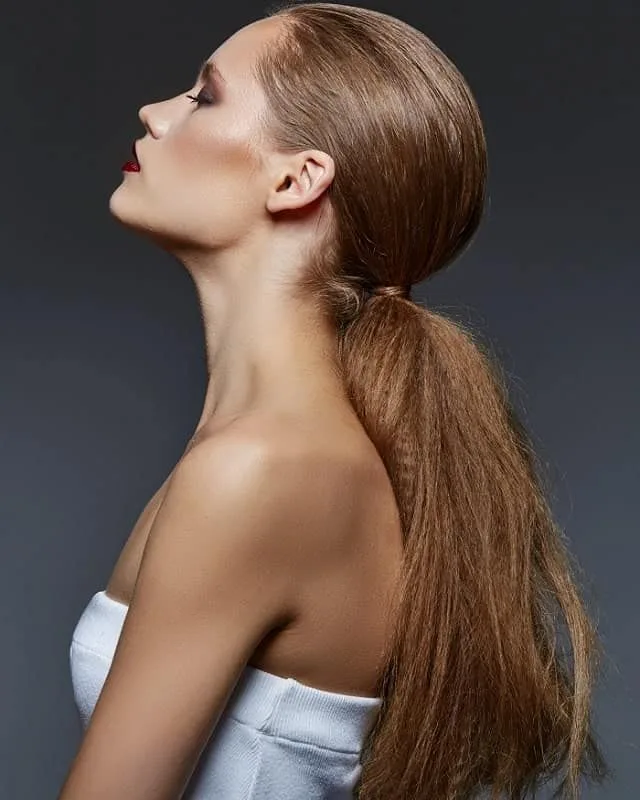
Pros: completely wind-proof, polished, and excellent in heat. Cons: it shows every bump, and the gelled finish can look severe on some face shapes.
Maintenance: brush the hair back with a fine-tooth comb and a small amount of strong-hold gel, then tie low and smooth the crown with your palms. A light mist of hairspray sets it.
Who should avoid it: if you prefer softness around the face, this style may feel too harsh; leave two thin pieces out at the front.
Curly High Puff Under a Cap
A curly high puff is the natural, joyful choice for curly hair on the course. Gathered high with a soft band, it keeps curls off the neck and out of the face, protects the curl pattern under a cap, and looks full and beautiful all day. It is quick, it needs no heat, and it celebrates the texture instead of fighting it.
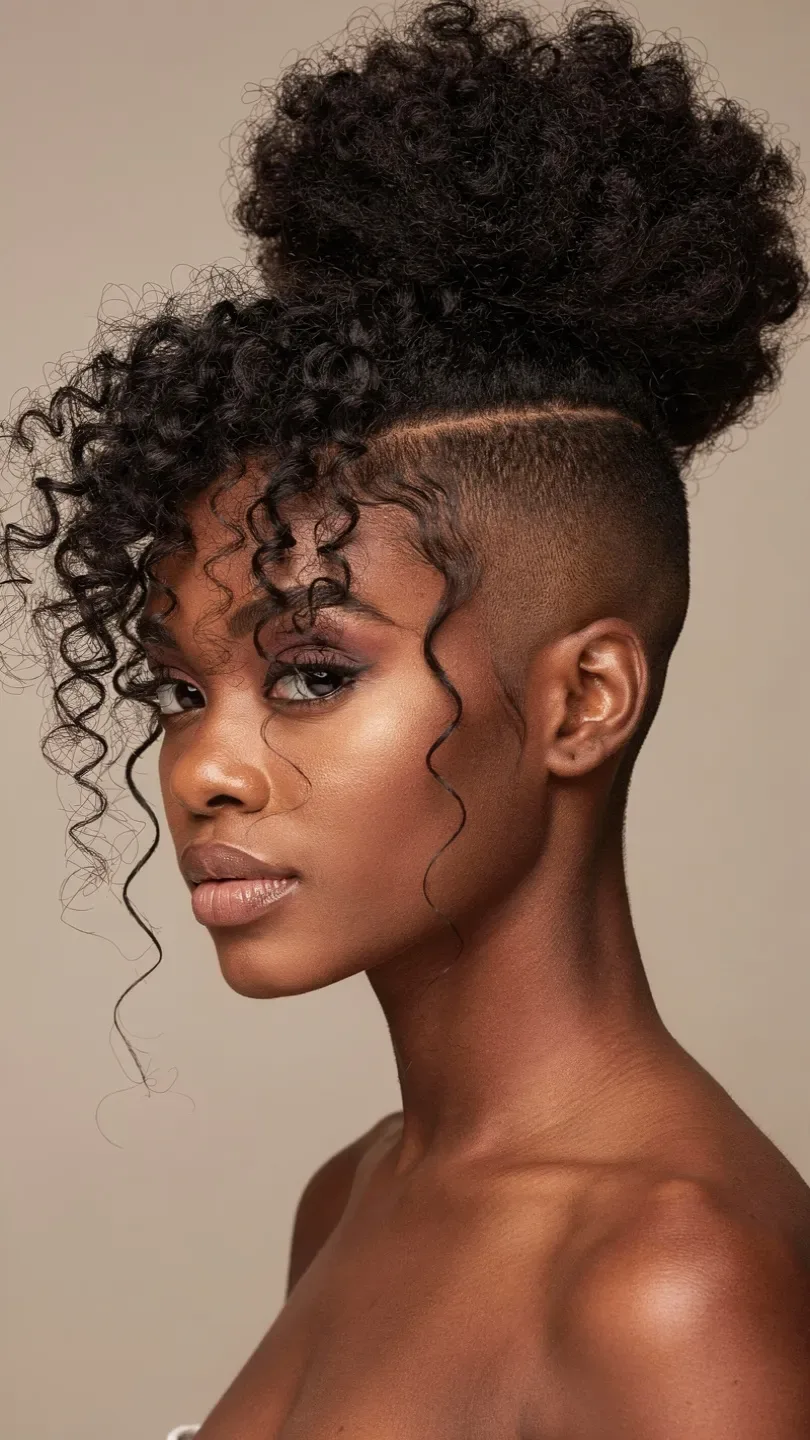
Pros: quick, protects curls, and keeps hair cool and off the neck. Cons: the puff can flatten under a tight cap, and humidity can expand it by the back nine.
Maintenance: gather the curls with a wide, soft band — never a thin elastic, which snaps curls. Fluff the puff gently with your fingers and set the edges with a little gel.
Who should avoid it: if your curls are very short, a puff may not hold; a headband and clips will work better.
Low Puff with a Wide Headband
A low puff with a wide headband is the calm, comfortable version of the curly golf style. The puff sits at the nape, the headband keeps the front smooth and the edges neat, and the whole look stays put under a cap without any pulling. It is flattering, practical and kind to curls, and it transitions to the clubhouse with nothing more than a fresh headband.
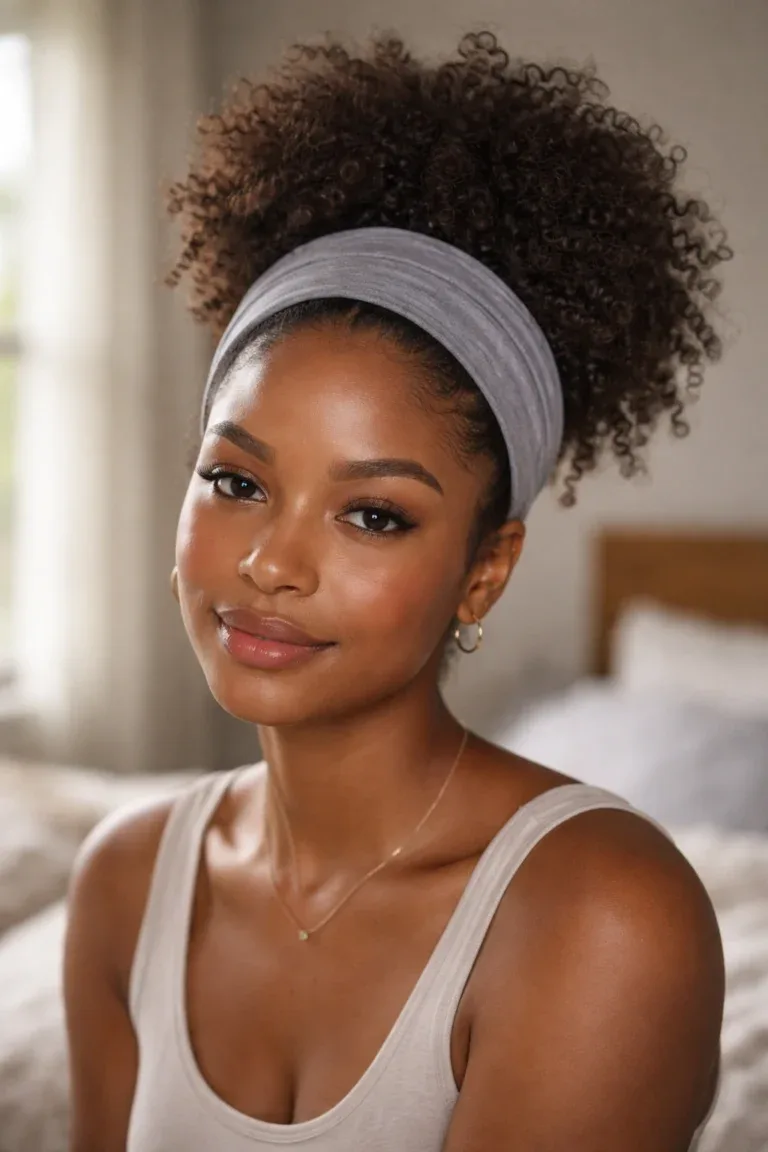
Pros: comfortable, kind to curls, and stays neat under a cap. Cons: the headband can slide when it gets damp with sweat, and the puff may need re-fluffing.
Maintenance: use a wide fabric headband with a silicone grip strip inside so it stays put. Gather the puff loosely at the nape with a soft scrunchie and fluff it with your fingers.
Who should avoid it: if you dislike headbands, a low puff on its own still works — just add two pins at the front.
Short Hair Slicked Back with a Visor
Short hair slicked back with a visor is the lowest-maintenance golf look there is. A little product, a quick comb back, and the visor does the rest: the hair stays out of your eyes, the style cannot tangle, and there is nothing to come undone over four hours. It is sharp, sporty and completely fuss-free, and it dries in minutes if you are caught in a shower.
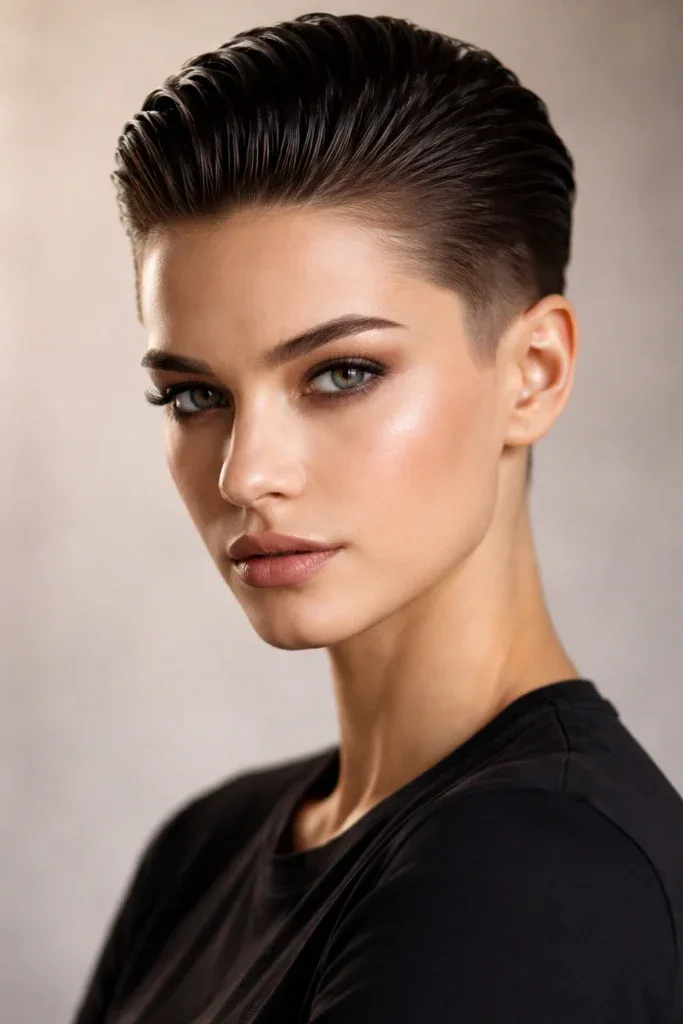
Pros: zero tangles, dries fast, and never comes undone. Cons: it needs product to hold, and it can look flat if the hair is very fine.
Maintenance: apply a pea-sized amount of pomade or gel to damp hair, comb it back, and let it set for a few minutes before the visor goes on. A matte product looks more natural in daylight than a shiny one.
Who should avoid it: if you prefer volume at the crown, slicking it all back may feel too flat; a textured finish with a little lift will suit you better.
Pixie Cut with a Sweatband Finish
A pixie cut with a sweatband is the sportiest short style for a golf outing, and it works brilliantly. The pixie itself needs almost no styling, and a slim sweatband keeps the fringe off your forehead, soaks up sweat, and adds a neat athletic finish. Together they are cool, practical and full of character — and there is nothing to fix between holes.
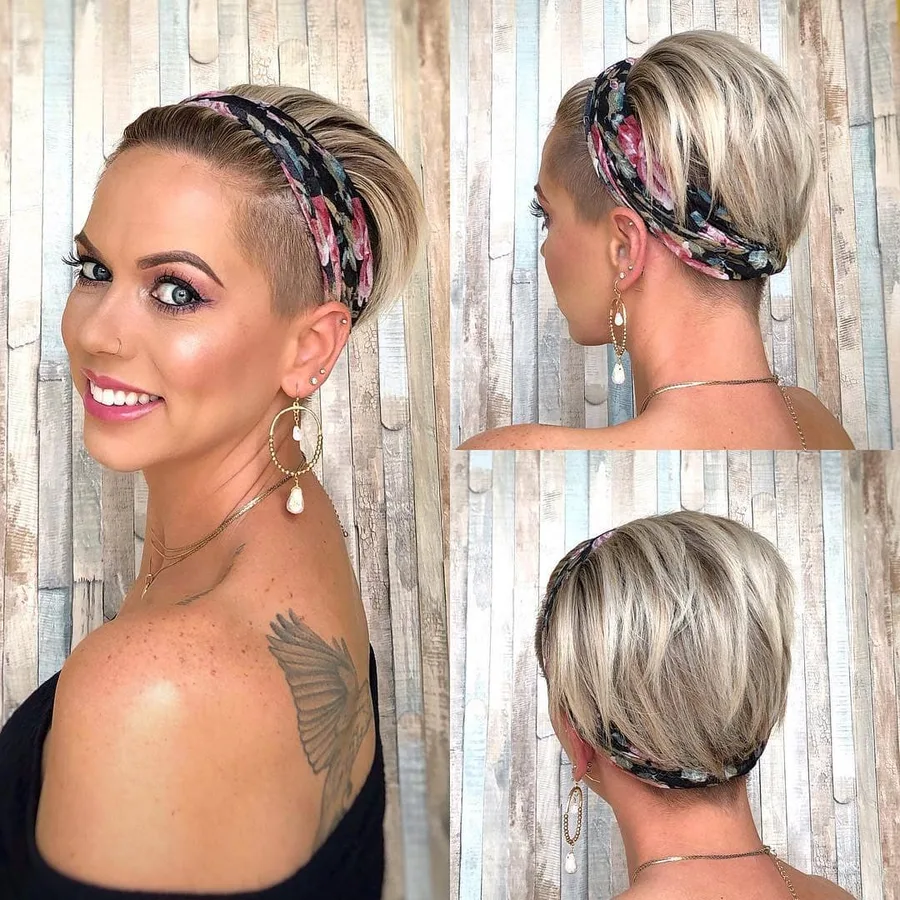
Pros: cool, sweat-absorbing, and needs almost no styling. Cons: the sweatband can leave a line on the forehead, and it is a very sporty look for a formal clubhouse.
Maintenance: style the pixie with a little texture paste, then place the sweatband just behind the hairline so it holds the fringe back without flattening it.
Who should avoid it: if your clubhouse lunch is formal, swap the sweatband for a slim fabric headband at the door.
Bob with a Headband for the Course
A bob with a headband is the classic, flattering golf style for medium-short hair. The headband keeps the front pieces out of your eyes during your swing, while the bob itself swings freely and looks fresh all day. It works under a cap or a visor, it needs no pins, and it moves gracefully from the course to the clubhouse.
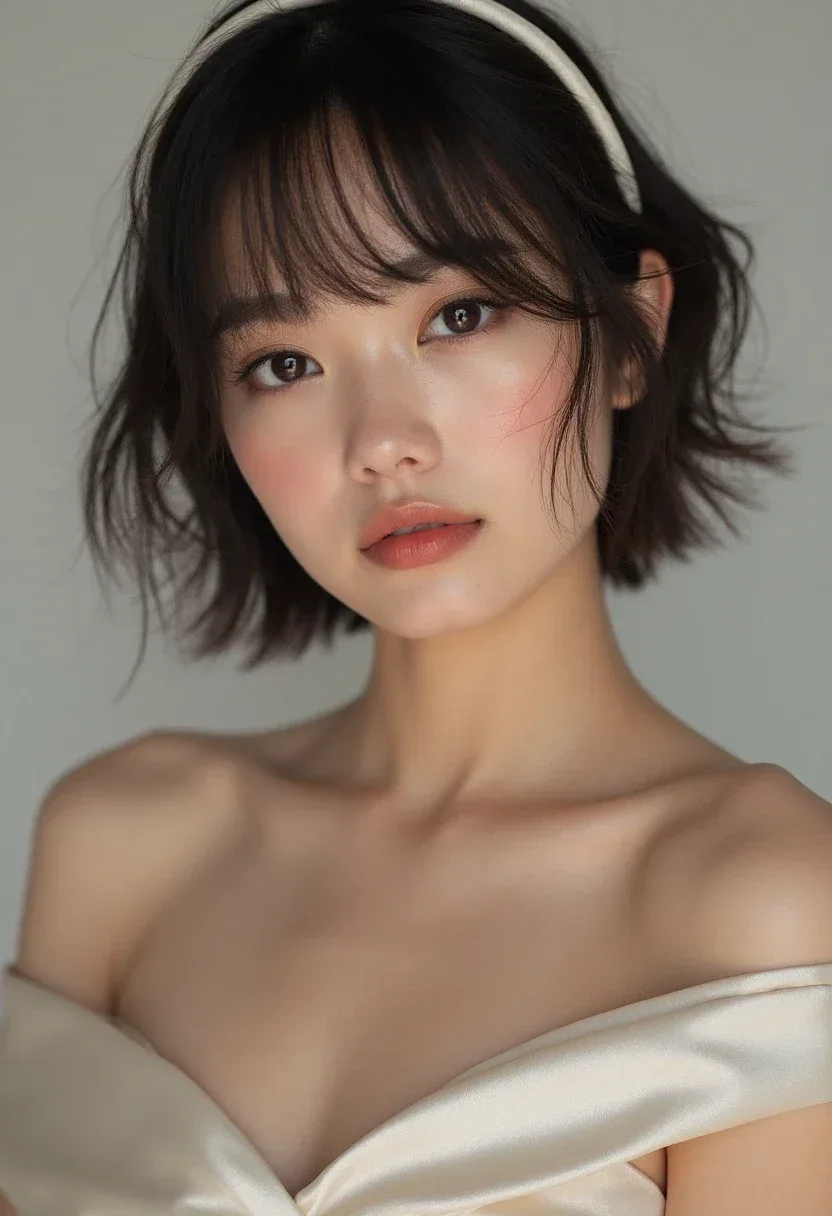
Pros: flattering, simple, and keeps the front out of your swing. Cons: the ends can flip out in wind, and a smooth headband may slide.
Maintenance: choose a wide fabric headband with grip, and place it a finger’s width behind the hairline. Smooth the bob with a little serum on the ends.
Who should avoid it: if your bob is very layered, the layers may escape the headband; a few clips at the sides will hold them.
French Twist Ponytail for Lunch
A French twist ponytail is the elegant surprise of this list: a ponytail with a twisted, rolled section at the back that looks far more formal than the effort it takes. It holds securely under a cap during the round, and when the cap comes off at lunch, the twist gives it a polished, almost evening feel. It is the style to choose when lunch matters as much as the golf.
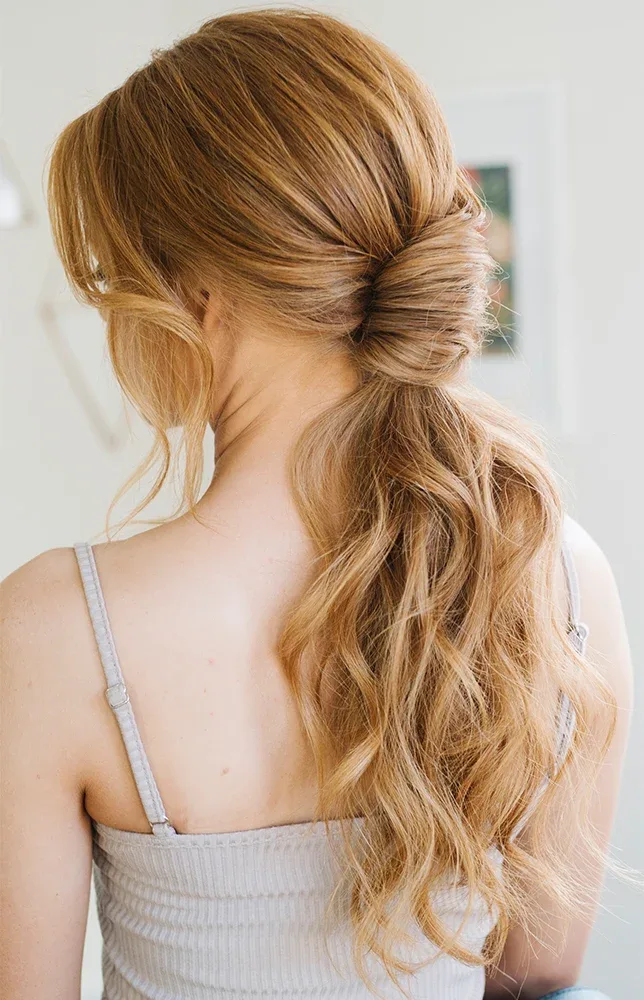
Pros: elegant, secure under a cap, and lunch-ready with no restyle. Cons: the twist takes practice, and it can loosen if not pinned well.
Maintenance: gather the hair low, twist the ponytail upwards and pin the roll flat against the head with two pins. Leave the tail free below the twist.
Who should avoid it: if your hair is very thick, the twist may be too bulky to sit flat; a low chignon will be more comfortable.
Pull-Through Braid for Long Hair
A pull-through braid is the full, dramatic braid for long hair, and it is easier than it looks. Made by looping ponytail sections through each other rather than weaving, it creates a thick, chunky braid that holds its shape for hours and looks wonderful in photos. It keeps long hair completely contained on a windy course, which is exactly what long hair needs.
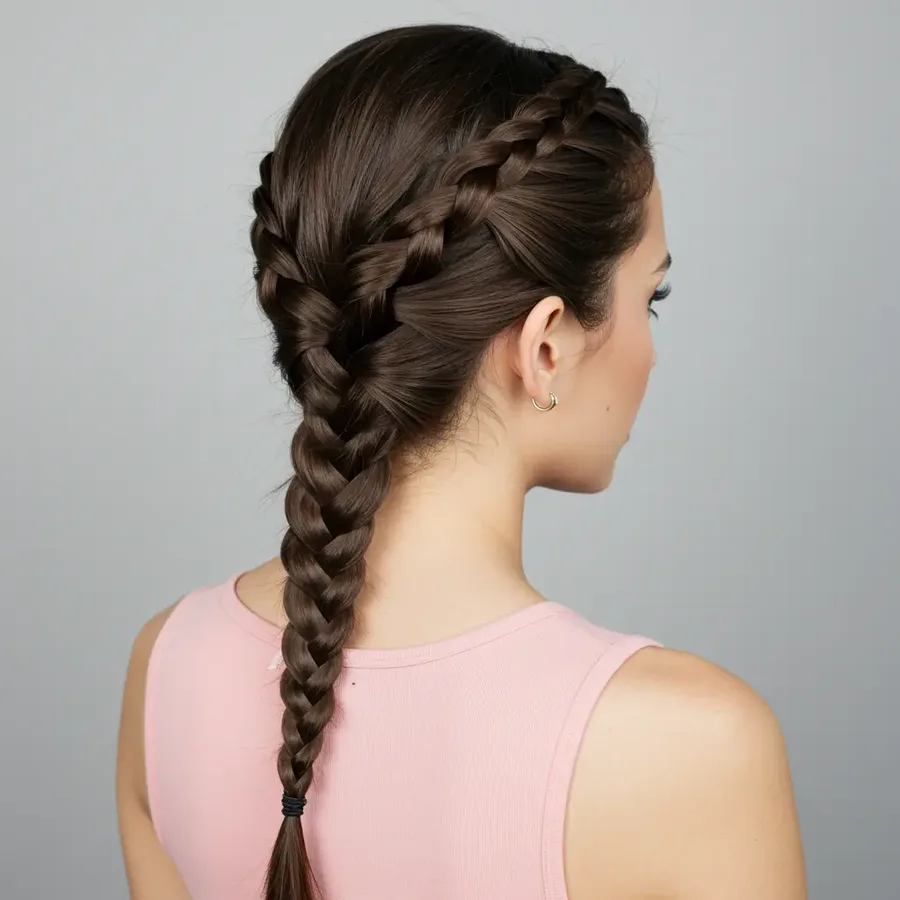
Pros: full and dramatic, holds long hair securely, and photographs beautifully. Cons: it uses several elastics, and it takes longer than a regular braid.
Maintenance: tie the hair into a series of small ponytails down the back, then pull each section through the one above it and puff it gently. Use clear elastics so they disappear into the braid.
Who should avoid it: if your hair is short or fine, a pull-through braid will look thin; a French braid will suit you better.
Braided Low Ponytail with a Ribbon
A braided low ponytail with a ribbon is a sweet, feminine golf style that still works hard. The braid keeps the hair secure and wind-proof, while a ribbon tied at the end adds a pretty finish that matches your outfit. It is a lovely choice for a ladies’ day, a charity event or any round where you want a little charm with your practicality.
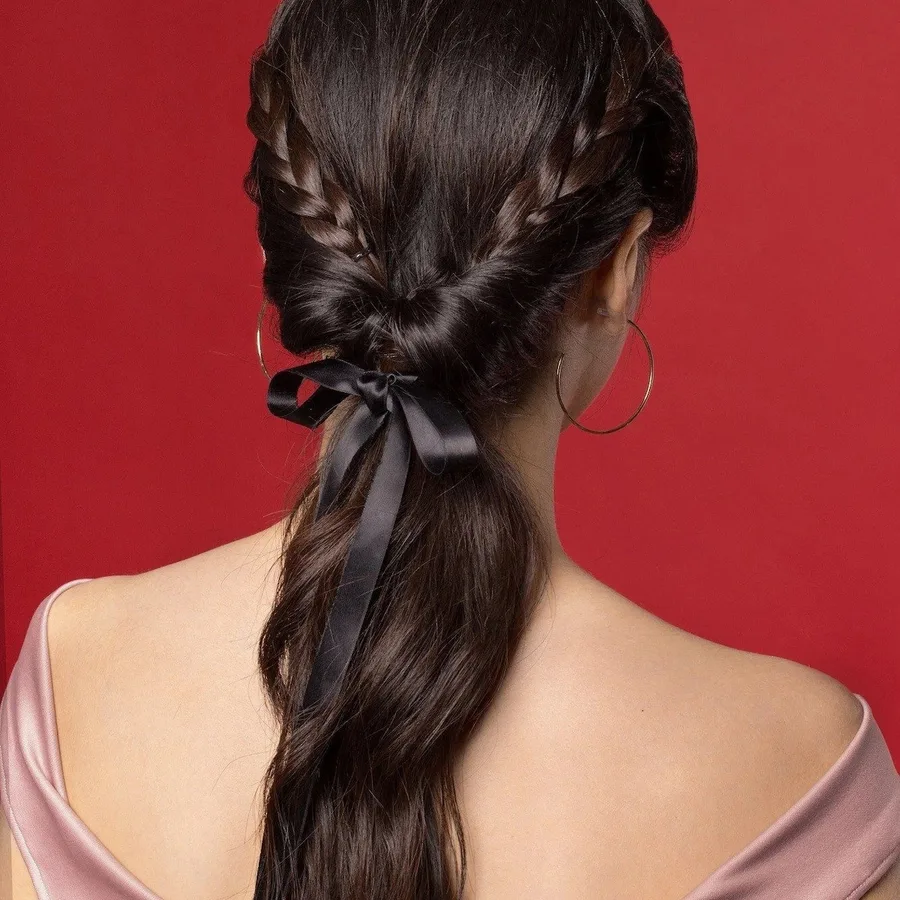
Pros: secure, pretty, and easy to match to an outfit. Cons: the ribbon can come undone in wind, and long ribbon tails can flap.
Maintenance: braid the ponytail tightly and tie it with a strong elastic first, then add the ribbon over the top with a short bow. Keep the ribbon tails short — no longer than a few inches — so they cannot flap.
Who should avoid it: if the day is very windy, skip the ribbon altogether and let the braid speak for itself.
Playful Space Buns for a Scramble
Space buns bring a burst of fun to a golf outing, and they are far more practical than they look. Two buns, one on each side of the crown, keep hair completely off the neck and face, sit neatly under a cap, and cannot come undone the way a single bun can. They are a great choice for a scramble, a fun round with friends, or a fancy-dress tournament day.
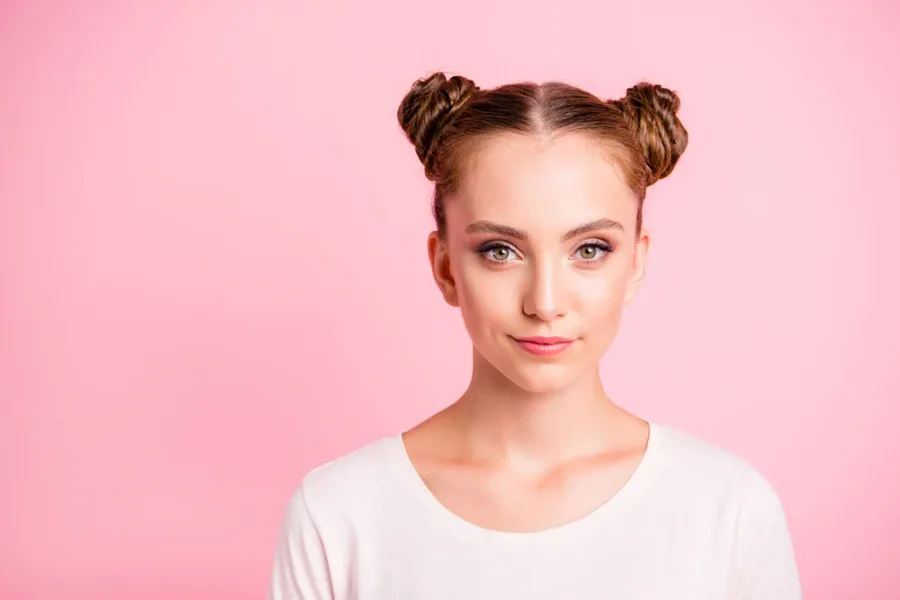
Pros: fun, very secure, and keeps hair off the neck. Cons: a playful look that may not suit a formal clubhouse, and the buns can feel heavy on thick hair.
Maintenance: part the hair down the middle, gather each side high, twist and pin. Use two ties per bun and pin each one in four places.
Who should avoid it: if your club lunch is formal, space buns may feel too casual; a low chignon will be more appropriate.
Halo Crown Braid for a Charity Tournament
A halo crown braid is the most elegant style on the course: a single braid that circles the whole head like a crown, holding every strand in place. It is completely wind-proof, it sits flat under a cap, and it looks so polished that it carries you straight from the fairway into a charity dinner without a restyle. It is worth the effort for a special event.
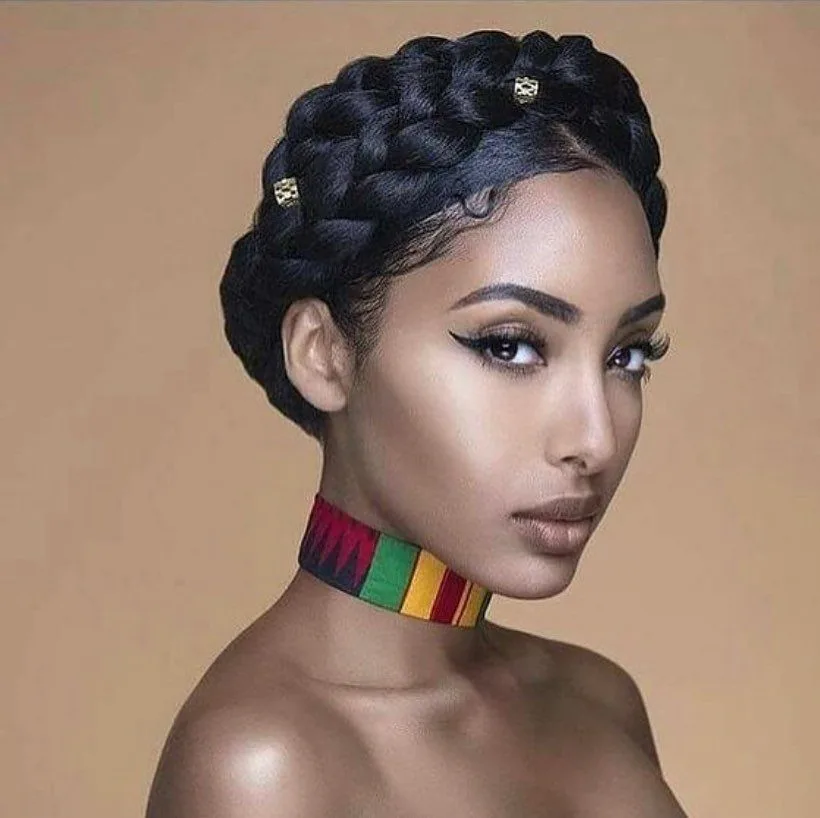
Pros: the most elegant golf style, completely secure, and event-ready. Cons: it takes time and skill to braid around the head, and it is hard to fix if it loosens.
Maintenance: braid around the hairline in a circle, pinning as you go, and tuck the end under the start. Use plenty of pins — at least six — spaced evenly.
Who should avoid it: if you are styling yourself in a hurry, a halo braid is too slow; a French braid gives most of the same hold.
Milkmaid Braids That Survive the Wind
Milkmaid braids are the romantic, old-fashioned answer to a windy golf course. Two braids crossed over the crown and pinned in place hold every strand flat against the head, so the wind has nothing to catch. They look soft and pretty, they suit a relaxed round, and they stay neat for hours without a single touch-up.
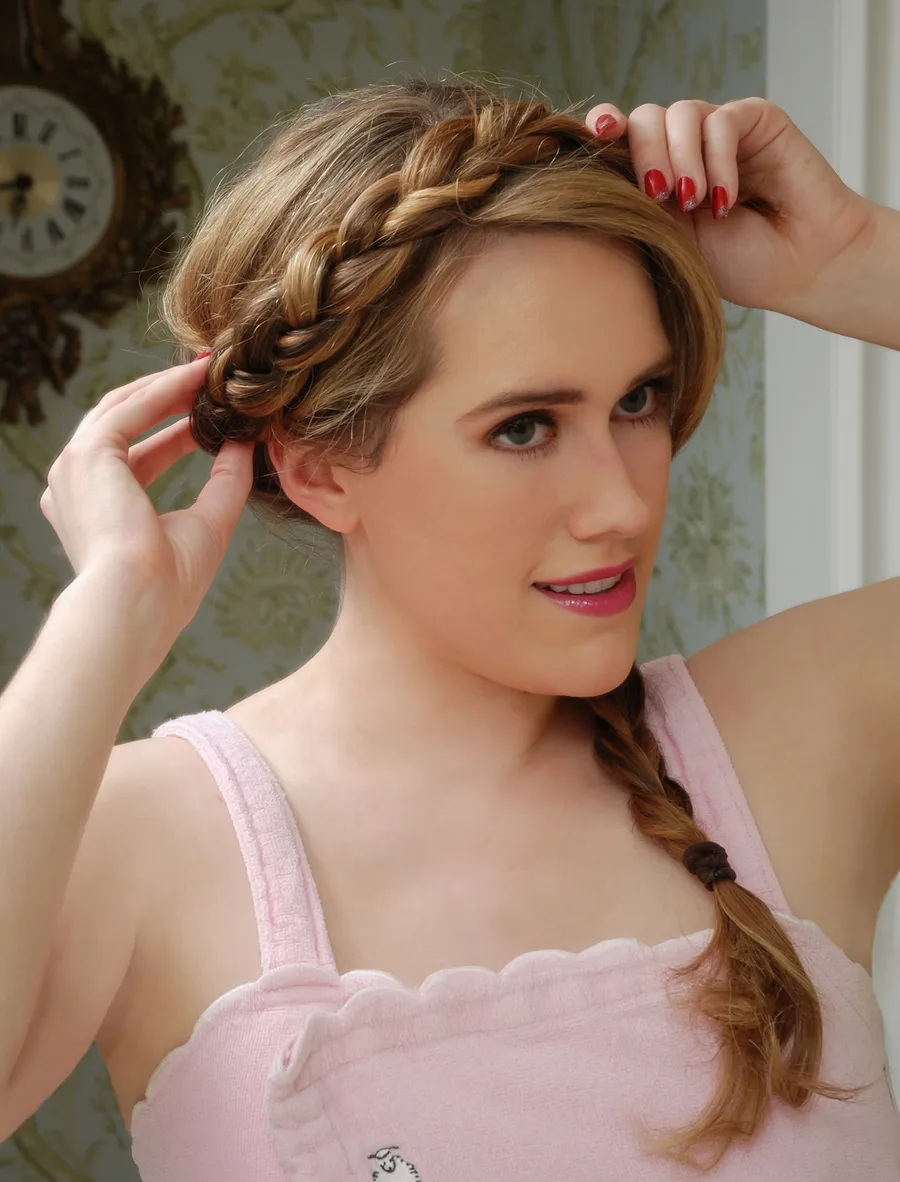
Pros: very wind-proof, romantic, and stays neat all day. Cons: it takes several pins, and the braids can feel tight across the crown.
Maintenance: braid two low pigtails, then cross them over the top of the head and pin each one to the opposite side. Pin generously — four pins per braid — and tuck the ends underneath.
Who should avoid it: if you dislike the feeling of pins on the crown, a halo braid may feel the same; choose a low bun instead.
Dutch Braid Pigtails for a Casual Round
Dutch braid pigtails are the sporty, youthful style for a casual round with friends. Two raised braids running from the hairline down past the shoulders keep hair completely contained, sit flat under a cap, and look energetic and fun. They are the most secure pigtail style there is, and they survive wind, sweat and eighteen holes without complaint.
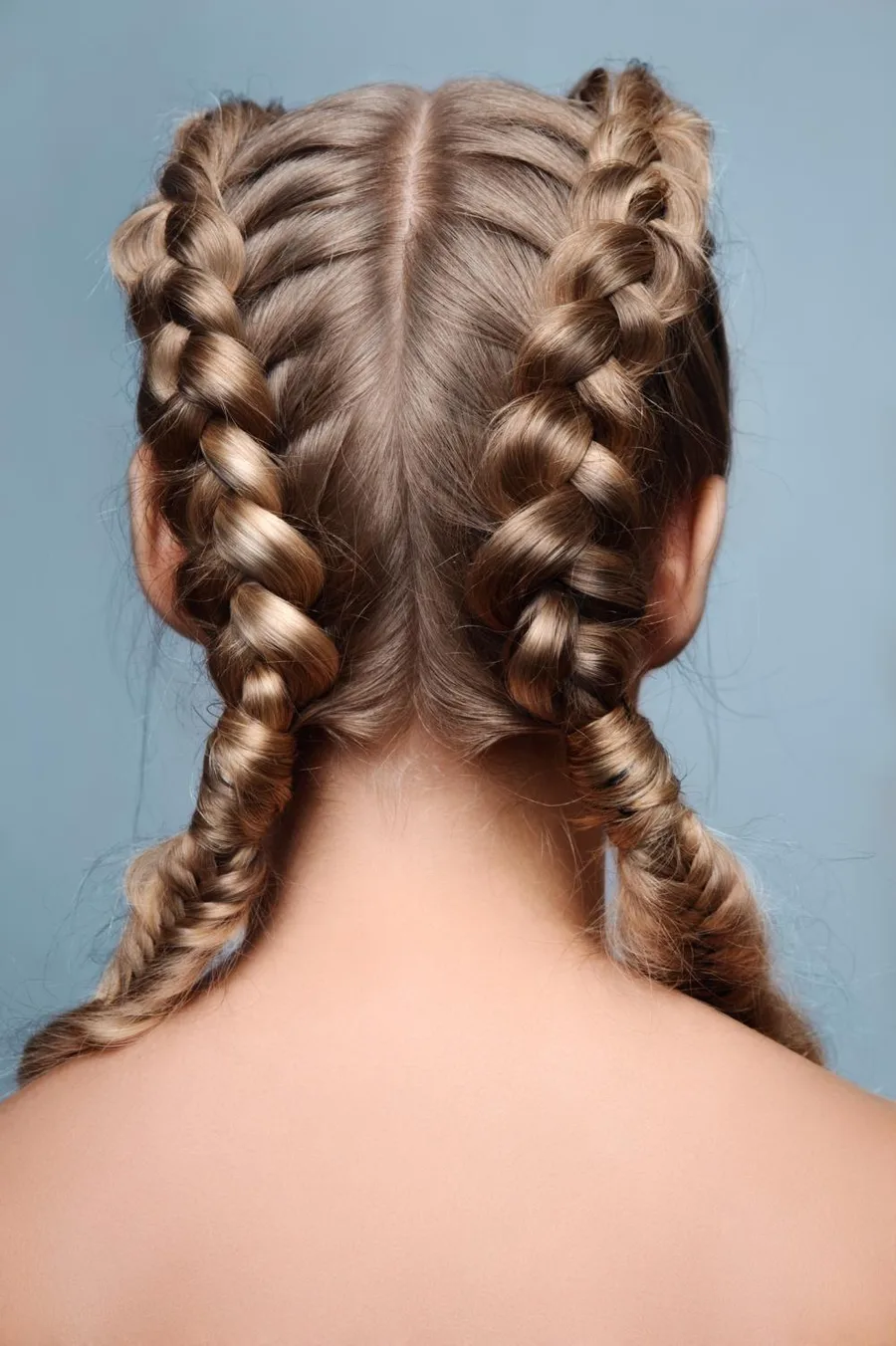
Pros: extremely secure, sporty, and comfortable under a cap. Cons: a young look that may not suit a formal clubhouse, and the braids take time to do evenly.
Maintenance: part the hair cleanly, braid each side tightly at the hairline, and tie with small elastics. Cross the tails under the collar to stop them swinging.
Who should avoid it: if your club lunch is formal, pigtails may feel too casual; a single Dutch braid will be more grown-up.
Scarf-Wrapped Low Bun
A scarf-wrapped low bun is the chic, sun-smart golf style. The bun itself is low, secure and cap-friendly, and a scarf wrapped around its base adds colour, covers the pins, and protects the hair from the sun. It looks polished enough for the clubhouse and practical enough for the course — a rare combination, and a favourite for ladies’ days.
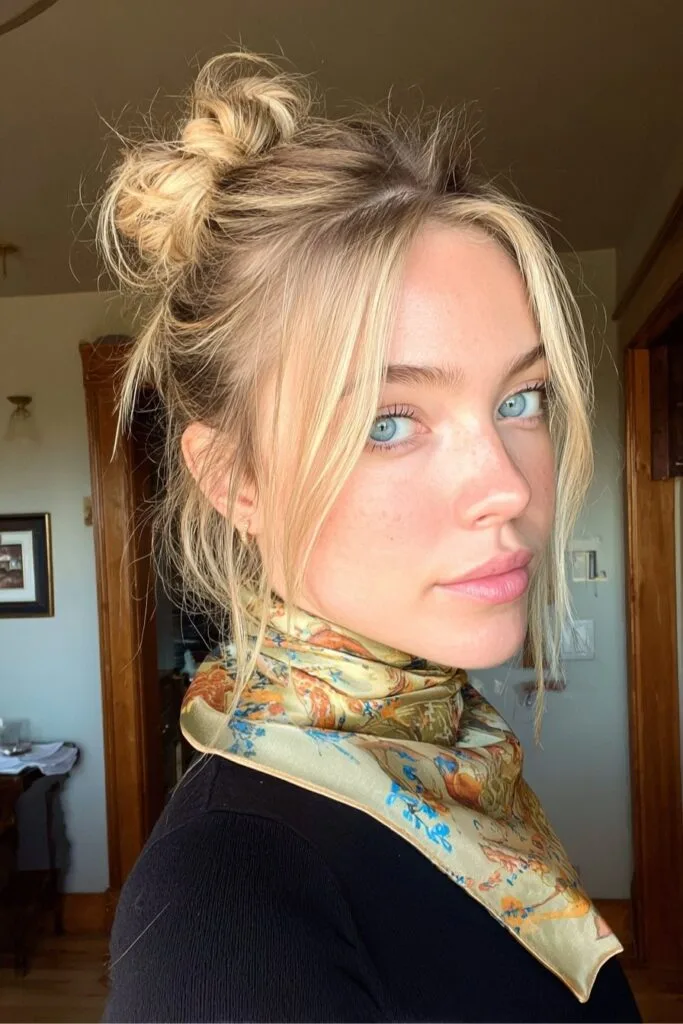
Pros: chic, sun-protective, and clubhouse-ready. Cons: the scarf can slip if not knotted well, and silk slides on smooth hair.
Maintenance: make a low bun first and pin it firmly, then wrap the scarf around the base and knot it underneath. Tuck the ends into the bun.
Who should avoid it: if the day is very windy, a scarf adds a loose layer the wind can catch; a plain low bun is safer.
Low Chignon with Pins
A low chignon is the quiet classic of golf hair: a small, neat roll at the nape that looks elegant without trying. It sits flat under any cap, it never interferes with your swing, and it walks into the clubhouse looking as if you styled it for lunch, not for sport. For a formal club or a special occasion, it is the most reliable choice on this list.
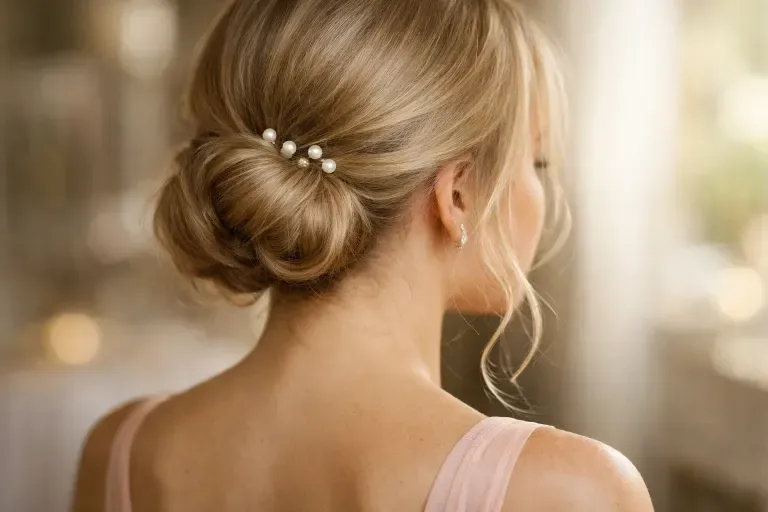
Pros: elegant, flat under a cap, and perfect for formal settings. Cons: it needs several pins, and it can look too neat for a casual round.
Maintenance: gather the hair low, twist it into a roll and pin it in a fan shape with at least four pins. A hair net over the chignon is invisible and adds staying power.
Who should avoid it: if you prefer a relaxed, casual look, a chignon may feel too formal; a low braided bun is the softer option.
Side-Swept Braided Ponytail
A side-swept braided ponytail is a soft, romantic golf style that keeps hair over one shoulder and out of the way. The braid starts at the nape and sweeps to the side, so it never falls forward when you bend to putt, and it looks lovely in photos from the side. It suits a relaxed round, a ladies’ day or a club event where you want something a little softer than a straight-back braid.
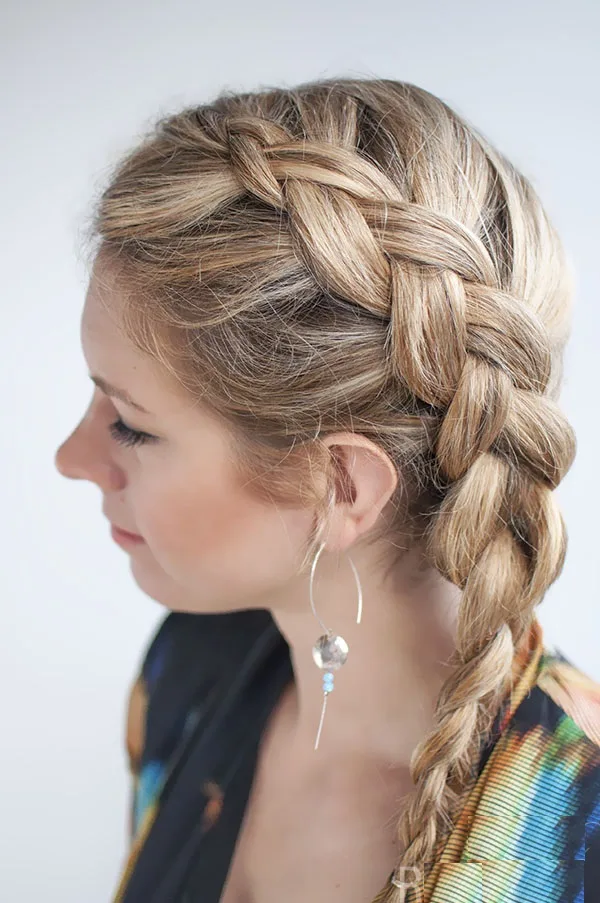
Pros: soft and flattering, keeps hair out of your swing, and photographs well. Cons: the braid can rub against a bag strap, and it may swing during a walk.
Maintenance: braid from the nape towards the shoulder opposite your dominant hand, and tie with a strong elastic. A pin at the nape stops the braid sliding forward.
Who should avoid it: if you carry your bag on the same shoulder, the braid will get crushed; switch shoulders or choose a low bun.
Double Bubble Braids
Double bubble braids are the fun, bouncy version of the classic double braid. Two bubble braids, one on each side, keep hair completely contained, sit flat under a cap, and look playful in photos. The bubbles stop the tails whipping in the wind, which makes them far more practical than ordinary pigtails on an open course.
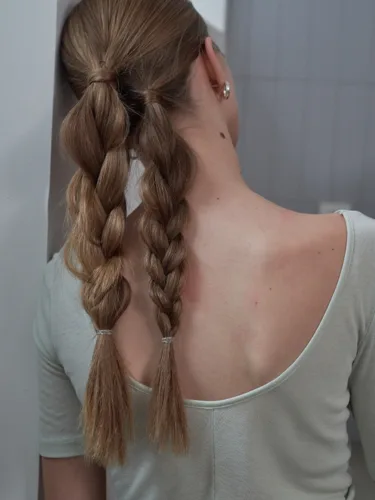
Pros: playful, wind-resistant, and very secure. Cons: they need a lot of elastics, and the bubbles can flatten in the cart.
Maintenance: part the hair down the middle and make a bubble ponytail on each side, spacing small elastics evenly and puffing each section gently. Match the elastics to your hair colour.
Who should avoid it: if your club lunch is formal, bubble braids may feel too playful; a double Dutch braid is the more grown-up twin.
Ribbon-Tied Low Ponytail
A ribbon-tied low ponytail is a simple style with a pretty finish: a low ponytail secured with a strong tie, then a ribbon tied over it in a bow. The ribbon looks lovely in photos, it matches a themed outfit beautifully, and the low ponytail underneath keeps everything secure and cap-friendly. It is a sweet choice for a charity round or a ladies’ day.
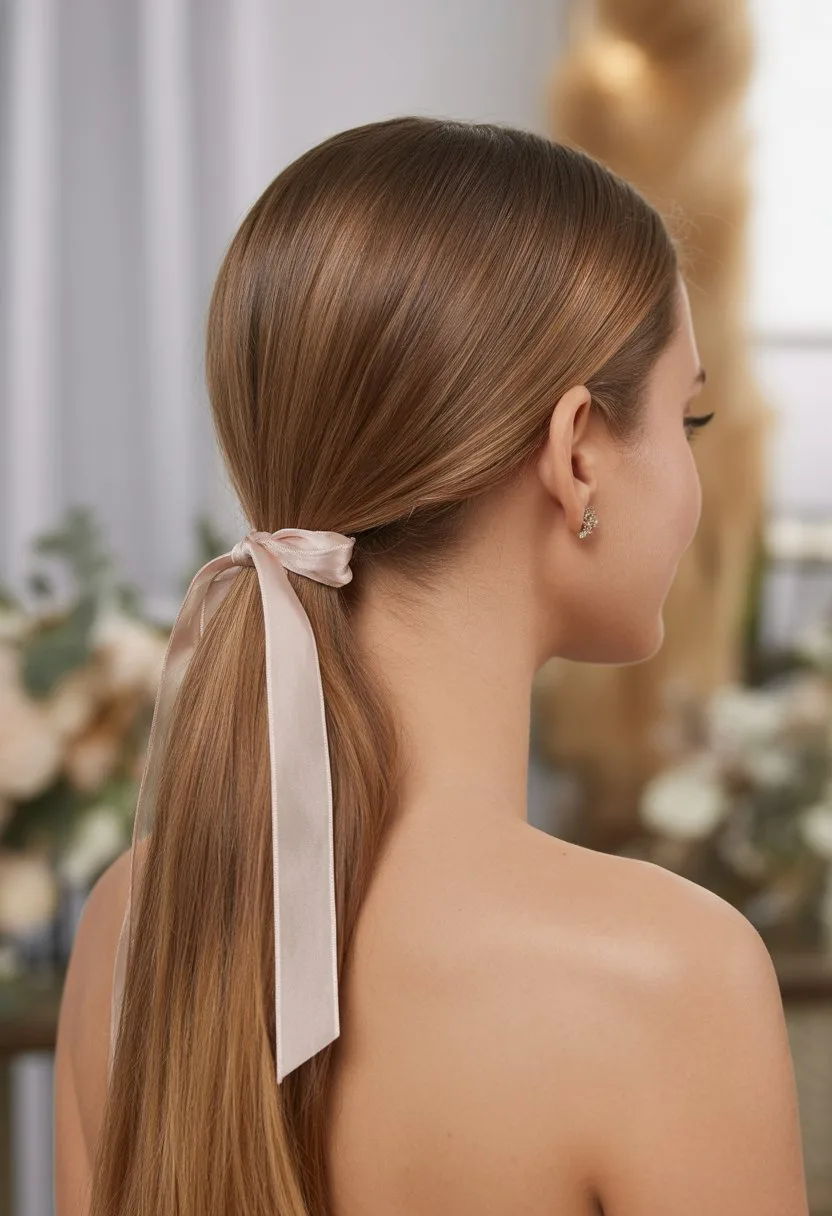
Pros: pretty, quick, and easy to match to an outfit. Cons: the ribbon can come undone, and it is not a secure style on its own.
Maintenance: tie the ponytail with a strong elastic first, then add the ribbon. Use a short ribbon rather than long tails, which can whip around in the wind.
Who should avoid it: if you are playing the windiest course in the area, a ribbon adds a loose layer; a wrapped-base ponytail gives the same polish with less fuss.
Top Knot with a Braided Base
A top knot with a braided base is the most secure top knot you can wear on a golf course. Braid a section of hair around the base first, then twist the rest into a knot on top of it. The braid anchors the knot so it cannot sag or slide, even after four hours in the sun, and the result looks polished enough for the clubhouse.
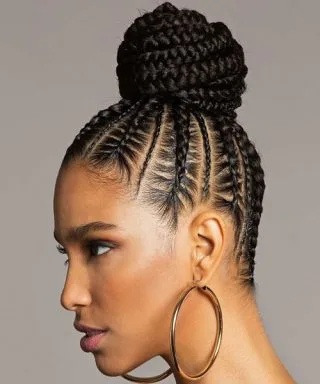
Pros: the most secure top knot, polished, and keeps hair off the neck. Cons: it takes longer than a plain knot, and the braid can feel tight at the base.
Maintenance: braid a ring of hair around the base of the ponytail, then twist the remaining hair into a knot and pin it in a circle. Two crossed pins at the base lock it in.
Who should avoid it: if you have a sensitive scalp, the braided base may pull; a loose messy knot will be kinder.
Waterfall Braid Half-Up
A waterfall braid half-up style is the prettiest way to keep the front of your hair back on the course while leaving the rest free. Strands fall through the braid like water, creating a soft, romantic pattern that frames the face and keeps the fringe out of your swing. It suits a relaxed round, a club social or a ladies’ day, and it photographs beautifully.
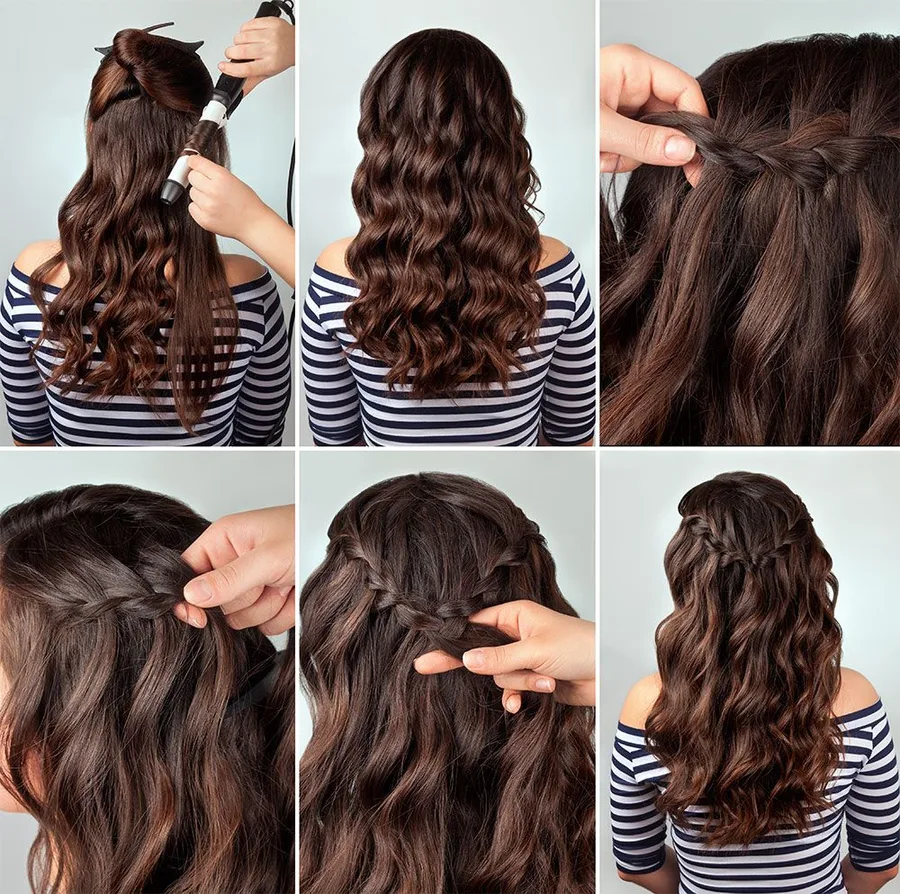
Pros: romantic, keeps the front back, and photographs beautifully. Cons: the loose half can tangle in wind, and the braid itself is delicate.
Maintenance: braid across the back of the head, dropping a strand with each stitch, and pin the end under the hair on the far side. Set it with hairspray before you put the cap on.
Who should avoid it: if the forecast is windy, a half-up style will tangle; choose a full braid instead.
Curly Half-Up Pineapple
A curly half-up pineapple gathers the top half of your curls into a high, loose puff while the rest falls free around the shoulders. It keeps the front curls out of your face during your swing, protects the curl pattern, and looks full and joyful. It is quick, it needs no heat, and it is one of the most flattering curly styles for a day outdoors.
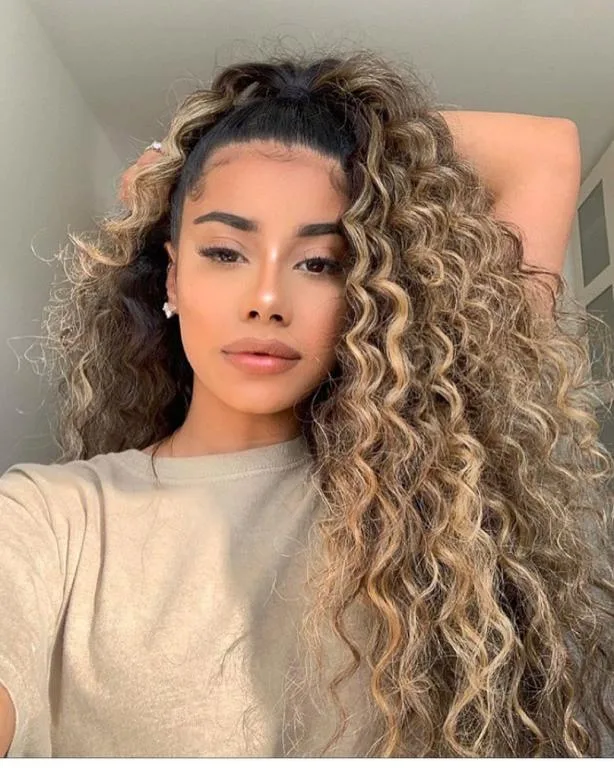
Pros: quick, protects curls, and keeps the front out of your swing. Cons: the loose curls can tangle in wind, and the puff can flatten under a tight cap.
Maintenance: gather the top half with a wide, soft band and fluff the puff gently with your fingers. Leave the lower curls smooth with a little leave-in conditioner.
Who should avoid it: if the day is very windy, the loose half will tangle; a full high puff is the safer curly choice.
Textured Low Ponytail with a Claw Clip
A textured low ponytail with a claw clip is the effortless, modern golf style. The ponytail is tied low and left soft and textured, and a claw clip at the base adds grip and a fashionable finish. It is quick to do, comfortable under a cap, and easy to redo between holes — just unclip, re-gather and clip again.
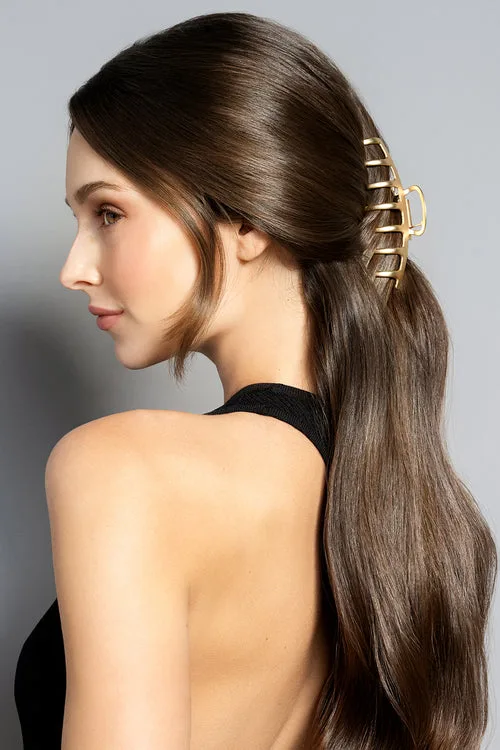
Pros: quick, comfortable, and very easy to redo. Cons: a claw clip can slide on smooth hair, and it is less secure than a braid in strong wind.
Maintenance: tie the ponytail with a small elastic first, then clip the claw over the base for extra hold. Choose a clip with teeth that grip, and match it to your hair colour so it blends in.
Who should avoid it: if your hair is very thick or heavy, a single clip may not hold it; use two clips or a braid instead.
Slicked-Back Wet-Look Ponytail
A slicked-back wet-look ponytail is the boldest, most modern style for a golf outing. Gelled smooth at the crown and tied low, it has a glossy, editorial finish that looks striking with a visor and even better at the clubhouse. It is completely wind-proof, it never falls into your face, and it holds its shine for hours.
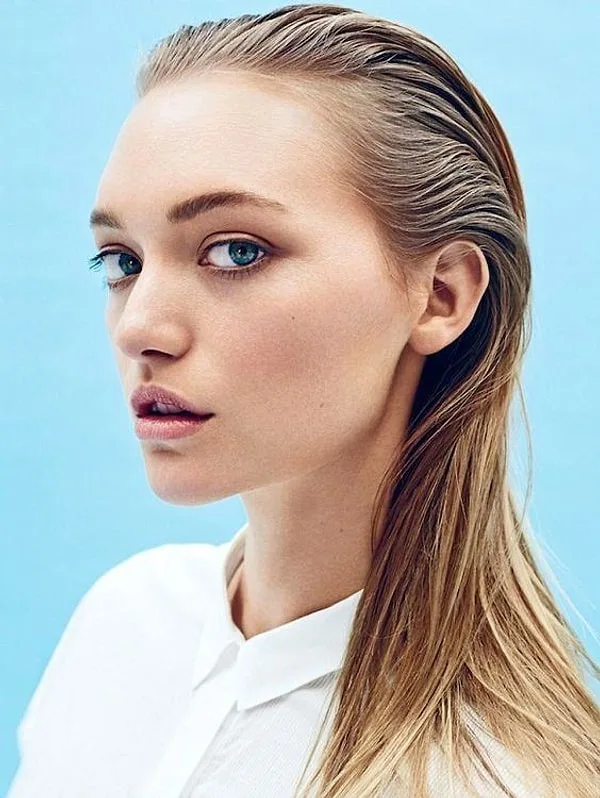
Pros: striking, completely wind-proof, and holds for hours. Cons: the wet look needs a lot of product, and it can feel heavy in hot weather.
Maintenance: apply gel to damp hair, comb it back smoothly and tie it low, then add a little more gel over the crown and let it set before the cap goes on. A shine spray at the turn refreshes the finish.
Who should avoid it: if you prefer a natural, matte finish, the wet look may feel too dramatic; a regular slicked-back ponytail is the quieter version.
Braided Space Buns for a Tournament
Braided space buns are the tournament-ready version of the playful classic: two braids coiled into buns, one on each side, that stay put through every hole and look neat from every angle. They keep hair completely off the neck and face, they sit under a cap without a bump, and they have a fun, team-spirit energy that suits a tournament day perfectly.
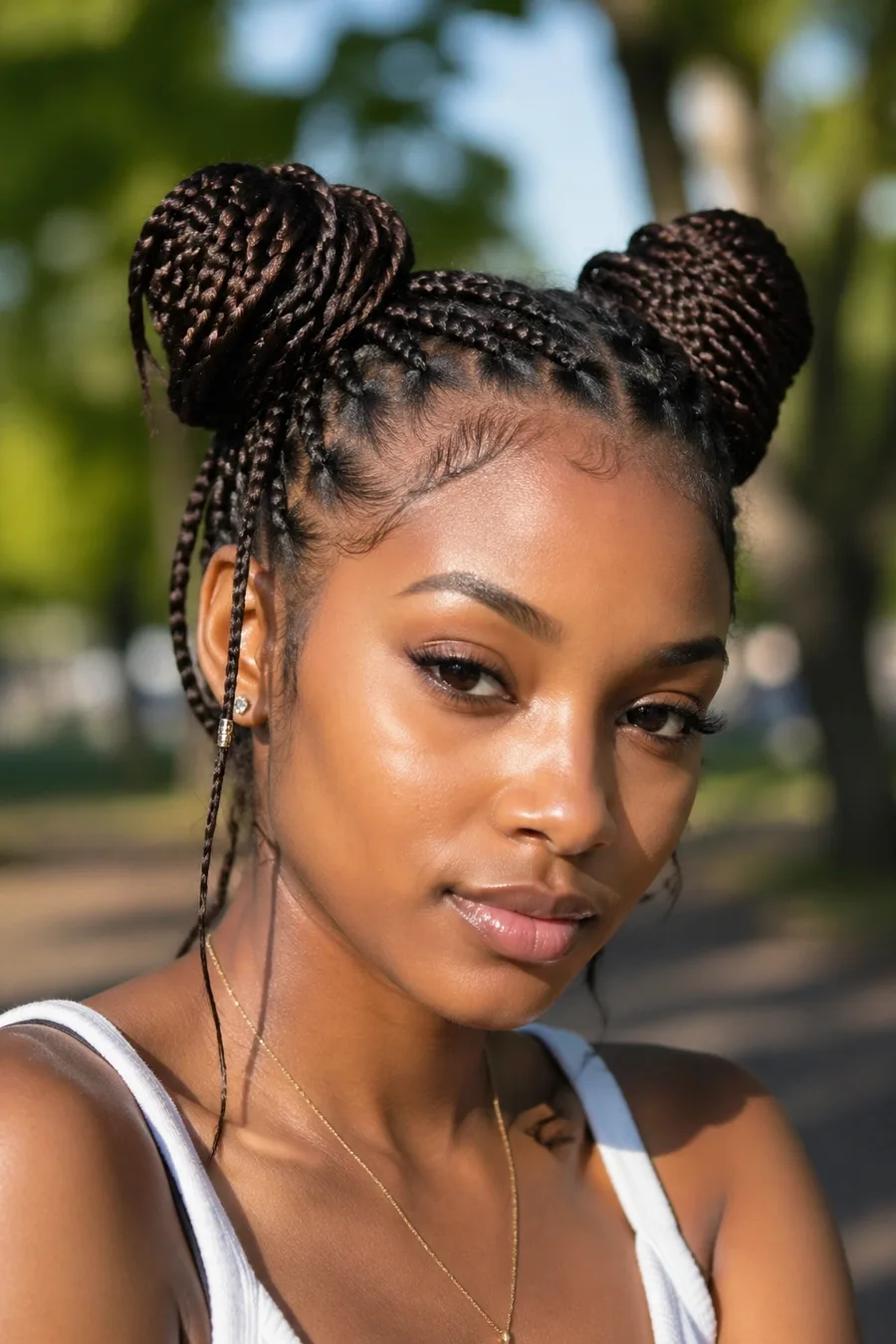
Pros: very secure, fun, and keeps hair off the neck. Cons: they take time to braid and coil, and the look is playful rather than formal.
Maintenance: braid each side from the hairline, then coil the braid into a bun and pin it in four places. Use two ties per bun — one at the braid, one at the coil.
Who should avoid it: if your clubhouse event is formal, braided space buns may feel too playful; a low chignon is the formal alternative.
Short Curly Puff with a Headband
A short curly puff with a headband is the sweet, practical style for short curly hair on the course. The puff gathers the curls up and off the neck, the headband keeps the front neat and the edges smooth, and the whole look stays put under a cap without any pulling or pins. It is comfortable, flattering and kind to curls.
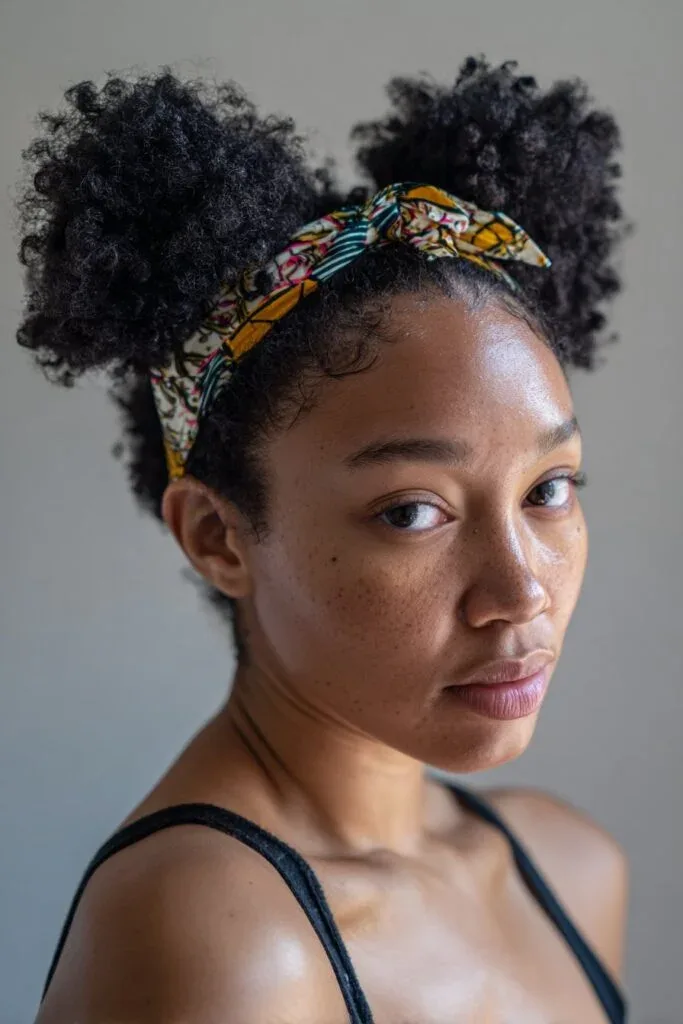
Pros: comfortable, kind to curls, and stays neat under a cap. Cons: the headband can slide when damp, and the puff may need re-fluffing by the back nine.
Maintenance: use a wide fabric headband with a grip strip, and gather the puff with a soft scrunchie rather than a thin elastic. Fluff the curls gently with your fingers and set the edges with a little gel.
Who should avoid it: if you dislike headbands, two pins at the front will hold the curls back just as well.
Twisted Low Bun for the 19th Hole
A twisted low bun is the perfect final style on this list, because it was made for the 19th hole. Two sections twisted together and coiled low at the nape, it holds securely under a cap all round, and when the cap comes off, the twist gives it a soft, elegant texture that looks as if you styled it for lunch. It is the style that ends the day as well as it started it.
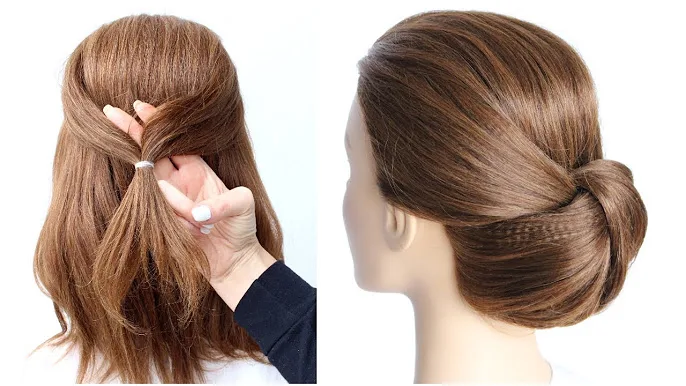
Pros: elegant, secure under a cap, and lunch-ready with no restyle. Cons: the twist can loosen if not pinned well, and it takes a few minutes to do neatly.
Maintenance: split the hair into two halves, twist each one, then twist them together and coil the rope into a low bun. Pin it in four places and smooth the front with cream.
Who should avoid it: if your hair is very fine, the twist may look thin; add texture spray first for grip.
What is the best hairstyle for a golf outing?
A low braid or a low ponytail is the best hairstyle for a golf outing for most people, because both stay secure under a cap, keep hair out of your swing, and survive wind and sweat for four hours. If you want one style that also looks polished at the clubhouse lunch, choose a low braided bun or a low chignon — both hold under a cap and need no restyle.
Can I wear my hair down for a golf outing?
You can, but it is not the best choice. Loose hair falls into your face during your swing, tangles in the wind, and gets damp with sweat by the back nine. If you love wearing your hair down, a half-up style is a better compromise: the front is secured and out of your face while the rest stays free.
How do I keep my hair in place under a golf cap?
Style your hair after the cap goes on, not before, so the ponytail or braid sits where the hat wants it. Choose a low ponytail, a low braid or a low bun, which all sit flat under a cap, and secure the style in two places — a tie plus pins, or two ties. A cap with a ponytail opening and an adjustable strap helps enormously.
What hairstyle works best with a visor?
A low ponytail or a low braid works best with a visor, because both leave the crown flat so the visor band sits neatly across the forehead. A high ponytail can also work if it is threaded through the back of the visor, but a low style is more comfortable and more secure over a long round.
How do I stop my hair getting frizzy on the golf course?
Start with a light anti-frizz serum on the ends before you style, choose a braid or a bun that hides frizz, and finish with a strong-hold hairspray. Avoid heavy creams and oils, which mix with sweat and slide. If frizz appears during the round, smooth it with a dab of styling cream rather than brushing it, which makes frizz worse.
What should I pack in my golf bag for my hair?
Pack two spare hair ties, four bobby pins, two small elastics, a wide fabric headband, a travel-size dry shampoo, a small tube of styling cream, a pocket comb and sunscreen for your parting. A spare cap or visor and a silk scrunchie for curly hair are useful extras. Keep the kit in the same pocket every time so you can find it without thinking.
Can I wear a bun to play golf?
Yes, a bun is one of the best golf hairstyles, especially a low bun. It keeps hair off your neck, sits flat under a cap, and survives wind and sweat. Avoid a high, bulky bun, which pushes the cap up and can ache after four hours — a low braided bun, a low chignon or a twisted low bun are all better choices.
How do I fix my hair between holes?
Use the waiting time at the tee: re-tighten a ponytail by splitting the tail and pulling the halves apart, re-braid only the bottom few inches of a loose braid, or twist a sagging bun tighter and add a pin. Smooth flyaways with a dab of styling cream. If a style has given up by the turn, switch it — a ponytail becomes a bun in under a minute.
What hairstyles suit curly hair for a golf outing?
A high puff, a low puff with a headband, or a pineapple half-up style all suit curly hair on the course, because they protect the curl pattern, keep curls off the neck, and hold under a cap. Use a wide, soft band rather than a thin elastic, which snaps curls, and carry a little leave-in conditioner to revive the curls at the turn.
How do I make my golf hairstyle look good at the clubhouse lunch?
Choose a style that converts: a low braid becomes a low chignon in under a minute, and a ponytail becomes a twisted low bun just as fast. In the locker room, brush the front smooth, add a spritz of dry shampoo at the roots, and swap the cap for a silk scarf or a slim headband. A low bun or a chignon worn for the whole round needs no conversion at all.
Conclusion
The best hairstyle for a golf outing is the one you forget about the moment you tee off. A low braid, a low bun or a low ponytail will do that for most people, on most courses, in most weather — and if you choose one that converts to a chignon or a twisted bun, it will carry you into the clubhouse lunch looking as polished as you did at the first tee.
So pick your style tonight, pack the kit, and put the cap on before you style, not after. Test it with the shake test, re-tighten it at the turn, and switch it without a second thought if it gives up. The golf will give you enough to think about. Your hair should not be one of those things.