From Princess Buns to Pirate Braids: Hairstyles for a School Play That Survive the Stage, the Lights and the Quick Changes
There is a special kind of chaos backstage at a school play: costumes half-zipped, lines whispered at top speed, and a queue of children waiting for someone to fix their hair before the curtain goes up. The right hairstyle has to do three jobs at once. It has to sell the character from the back row, survive hot stage lights and quick costume changes, and still feel comfortable enough that your child forgets about it and remembers their lines instead.
That is exactly what these hairstyles for a school play are built for. Below you will find 39 character looks — princesses and pirates, lions and snow queens, narrators and chorus lines — plus eight practical guides on hold, wigs, rehearsals and comfort. Every style is parent-friendly, uses tools you probably already own, and can be practised at home before show night so there are no surprises in the wings.
Start with the character, not the hair. A lion needs volume, a narrator needs neatness, and a pirate needs a braid that will not unravel mid-sword-fight. Pick the look, do one full trial run in costume, and take a photo from the back of the room: if the character reads from there, the hairstyle is doing its job.
Stage Lights and Staying Power: How to Make Hair Hold Under Hot Lights

Stage lights are hotter and brighter than any light at home, and they melt soft styling in minutes. Hair that looked perfect in the bathroom mirror can go limp, frizzy or shiny-sweaty by the second scene. The fix is not more product: it is the right product, applied in thin layers, and set properly before the curtain rises.
Pros: A layered hold survives heat, dancing and costume changes, and it photographs cleanly from the audience. Lightweight mousse gives volume without stiffness, and a flexible-hold spray lets the hair move while keeping its shape.
Cons: Heavy gel and strong spray can look wet and crunchy under lights, and they flake onto dark costumes. Over-spraying also makes restyling between scenes almost impossible.
Who it suits: Every child performing under real stage lights, especially dancers and children with fine hair that drops quickly.
Who should avoid it: Children with very sensitive scalps or allergies to fragrance should skip heavy styling products and test everything on the inside of the arm first.
Maintenance: Do the full style at home under the brightest light you have, then check it after an hour of running around. Carry a small brush and a travel spray backstage for a ten-second touch-up, and never re-spray a sweaty head: blot first, then spray.
Quick Changes: Hairstyles That Survive a Costume Swap in Sixty Seconds
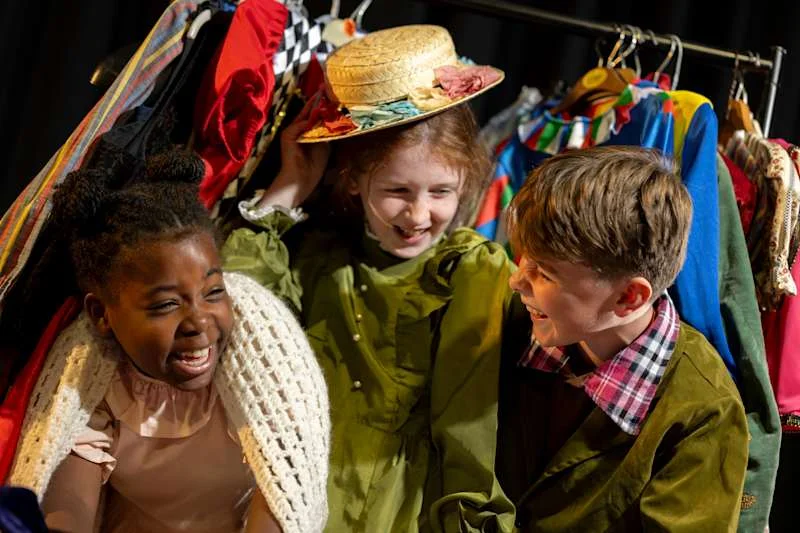
Some children play two or even three characters in one school play, and the costume change happens in a dark corner of the wings with about a minute to spare. A hairstyle that falls apart when a dress goes over the head is a disaster waiting for its cue. The secret is a base style that works for every character, with small swaps — a hat, a ribbon, a clip — doing the character work.
Pros: One solid base style saves the whole show: no full restyle in the wings, no panic, and no child missing their entrance because their hair is still being pinned.
Cons: A base style can feel like a compromise, and it may not be the most dramatic version of either character.
Who it suits: Children with two or more roles, and any child whose costume pulls over the head rather than zipping up the back.
Who should avoid it: A child whose two characters need wildly different hair — a long-haired princess and a short-haired soldier, for example — will be happier with a wig for one of the roles.
Maintenance: Practise the change at home with a timer, costume and all. Keep the swap accessories in a labelled bag in performance order, and teach your child to check their own hair in a small mirror before stepping on stage.
Wigs, Hats and Headpieces: Fitting Hair Under the Costume
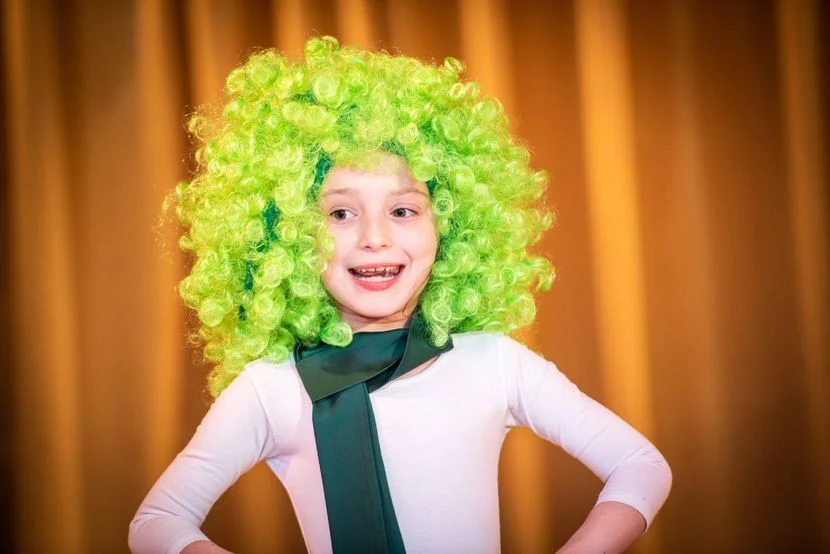
Wigs solve a lot of school-play problems: a lion needs a mane, a witch needs grey streaks, and a Victorian lady needs ringlets no child naturally has. But a wig that slips, itches or covers the ears will distract your child for the whole performance. The hair underneath matters just as much as the wig on top.
Pros: A well-fitted wig transforms a character instantly, hides a bad hair day completely, and lets one child play a character whose hair looks nothing like their own.
Cons: Cheap wigs are hot, itchy and shiny under stage lights, and they can slide forward over the eyes during dancing or bowing.
Who it suits: Any character whose hair is the costume — lions, witches, wizards, clowns and period characters — and children who want a dramatic change without dye or cutting.
Who should avoid it: Children who hate things on their head, who get hot easily, or who have a speaking role where a slipping wig could cover the mouth.
Maintenance: Braid the natural hair flat underneath, use a wig cap, and pin the wig at the temples and the nape. Let your child wear it at home for a full hour first. Pack spare pins and a small brush, and never glue a wig to a child’s skin.
The Rehearsal Trial Run: Test the Hairstyle Before Show Night
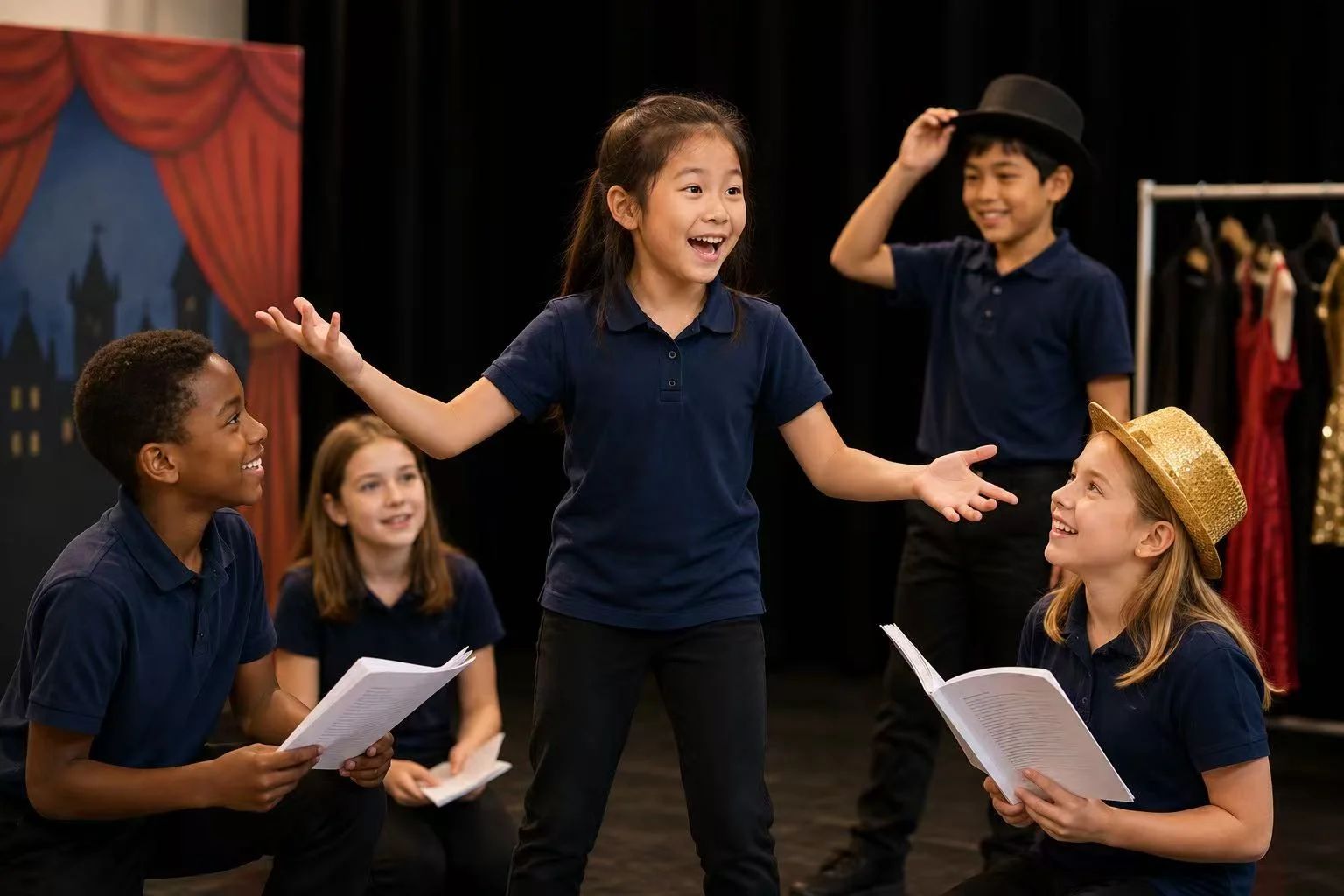
The dress rehearsal is the only safe place to find out that a bun unravels during the dance number or that a crown slides off when your child bows. A hairstyle that has never been tested in costume, under lights, with the actual movements of the scene is a guess — and guesses fail in front of an audience.
Pros: A trial run finds every problem while there is still time to fix it, and it gives your child the confidence of knowing exactly how the style feels when they perform.
Cons: It takes an extra evening, and a child who loved the style in the mirror may discover it hurts or slips when they actually move in it.
Who it suits: Every child in the play, without exception — but most of all the leads, the dancers and any child with a hat, wig or quick change.
Who should avoid it: Nobody should skip the trial run. If time is truly short, at least test the style while your child acts out their biggest scene at home.
Maintenance: Do the trial in full costume, including shoes, and photograph it from the back row of the room. Note what loosens first and fix that one thing. Repeat the trial once more the day before the show, and write down the exact pins, products and steps so any helper can recreate it.
Comfort and Safety First: Pins, Sprays and Sensitive Scalps

A child who is thinking about a pinching clip or an itchy scalp is not thinking about their lines. Stage hair should be comfortable for the full length of the show, including the waiting around backstage, and it should be safe for young skin and eyes. Comfort is not a luxury here: it is what lets a child perform well.
Pros: Comfortable hair means a relaxed, confident performer, fewer tears backstage, and no mid-scene scratching or fiddling that breaks the spell for the audience.
Cons: Soft, comfortable styles sometimes hold less firmly than a tightly pinned updo, so they need a little more checking between scenes.
Who it suits: Every child, but especially under-sevens, children with eczema or sensitive skin, and any child wearing a style for the first time.
Who should avoid it: Children with a known allergy to a styling product, and any child who says a style hurts — pain is never part of a good school-play hairstyle.
Maintenance: Use snag-free elastics, smooth pins with the ends tucked in, and hypoallergenic products. Test every product on the inner arm a day before. After the show, remove pins gently one by one and wash the hair with a mild shampoo before bed.
Character First: Let the Role Choose the Hairstyle
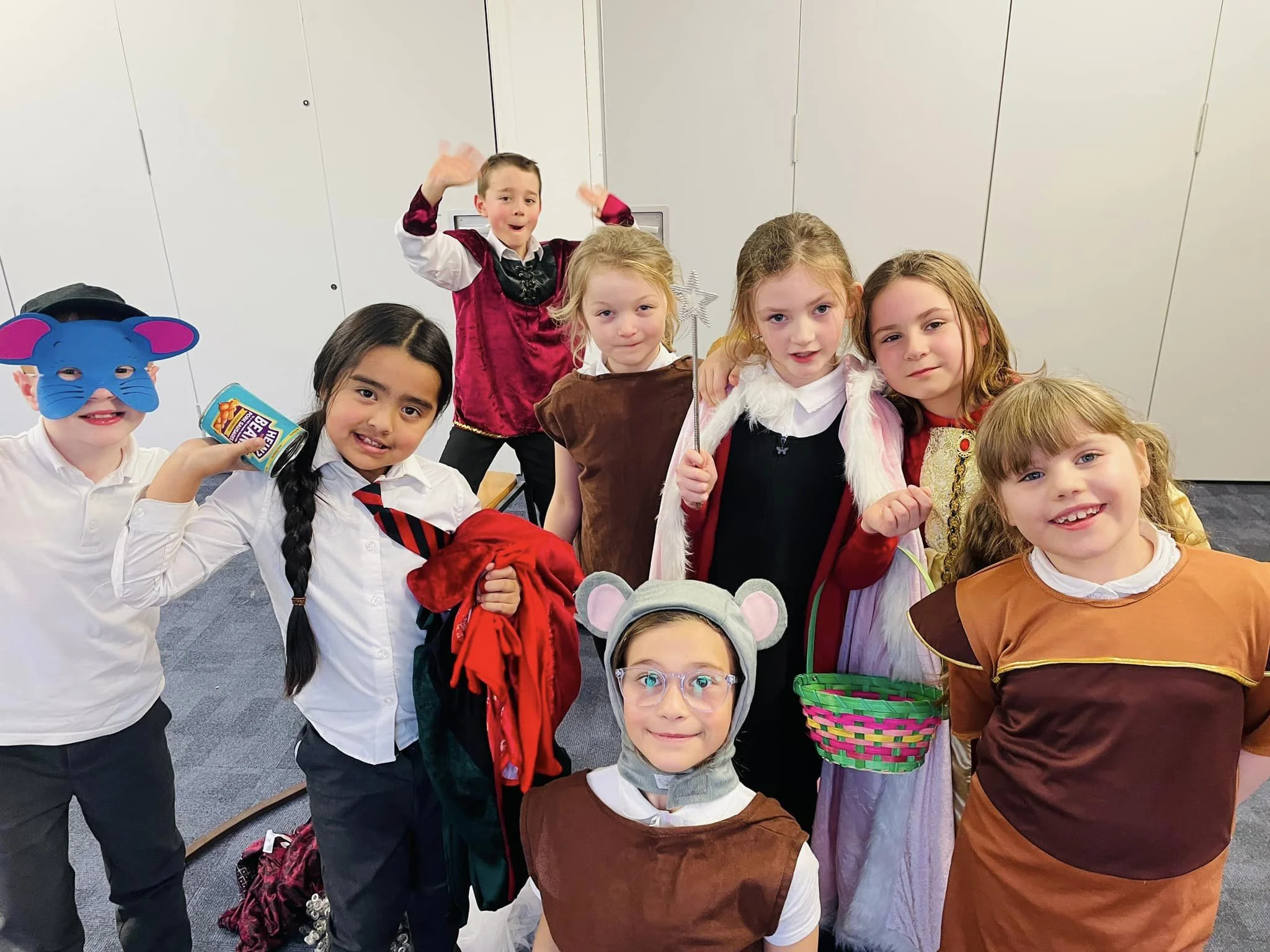
The easiest way to choose a school-play hairstyle is to forget about pretty hair and ask one question: what does this character look like? A pirate does not care about sleek shine, a queen does not wear a messy ponytail, and a farm boy does not have a salon blowout. When the hairstyle matches the character, the audience believes the story in seconds.
Pros: Character-first styling reads clearly from the back row, photographs beautifully, and makes costume decisions easier because the hair and the outfit finally agree with each other.
Cons: It can mean a style your child would never choose for school, and some character looks take more time or a wig to get right.
Who it suits: Every role in the play, from the smallest chorus member to the lead — a clear character look helps the audience follow the story.
Who should avoid it: A child who is deeply unhappy with a character look. Talk it through, keep the character readable, and compromise on one detail rather than forcing a style they hate.
Maintenance: Look at the character, not at hairstyle photos: a lion needs a mane shape, a queen needs height and shine, a sailor needs neatness. Sketch the silhouette first, then choose the braids, buns or curls that build it.
Stage Hair for Boys: Simple Styles That Read From the Back Row

Boys in school plays are often given five minutes of hair attention and a handful of gel, but their characters need the same clarity as the girls’. A knight, a prince, a sailor and a detective all look different — and the difference is mostly in the hair. The good news is that most boys’ stage styles are quick, simple and cheap.
Pros: Short, neat stage styles are fast to do, comfortable to wear, and easy to fix in the wings. A little product and a clear part or sweep changes the whole character.
Cons: Very short hair gives you less to work with, so wigs, hats and product have to do more of the character work.
Who it suits: Boys playing princes, knights, sailors, detectives, narrators, farmers and any character where neatness or a period look matters.
Who should avoid it: A boy who hates gel or anything sticky in his hair — use a light cream or a hat-based look instead, and never force a product he cannot stand.
Maintenance: Wash the hair the morning of the show so product grips properly. Use a pea-sized amount of gel or cream, style it, and let it set for ten minutes. Pack a comb backstage, and wash the product out the same evening so it never stays in overnight.
Curtain Call and Photos: Hair That Still Looks Good at the End

The curtain call is when the cameras come out. After an hour of dancing, bowing and quick changes, the hair that looked perfect at the start can look tired — but this is the photo grandparents will keep. The trick is a style with a strong base that can be revived in thirty seconds, not a style that needs rebuilding.
Pros: A revive-friendly style means great curtain-call photos, a confident bow, and a happy child who still looks like their character at the end.
Cons: Building in that extra staying power takes a few more pins and a little more time on show night.
Who it suits: Every performer, but most of all the leads and any child whose family will take photos after the show.
Who should avoid it: A child who is exhausted after the performance — keep the touch-up to thirty seconds and skip it entirely if they just want to go home.
Maintenance: Before the finale, do a fast backstage check: smooth the flyaways, re-pin anything loose, and add one fresh accessory if the character allows it. After the photos, take everything out gently and brush the hair before bed.
1. The Princess High Bun
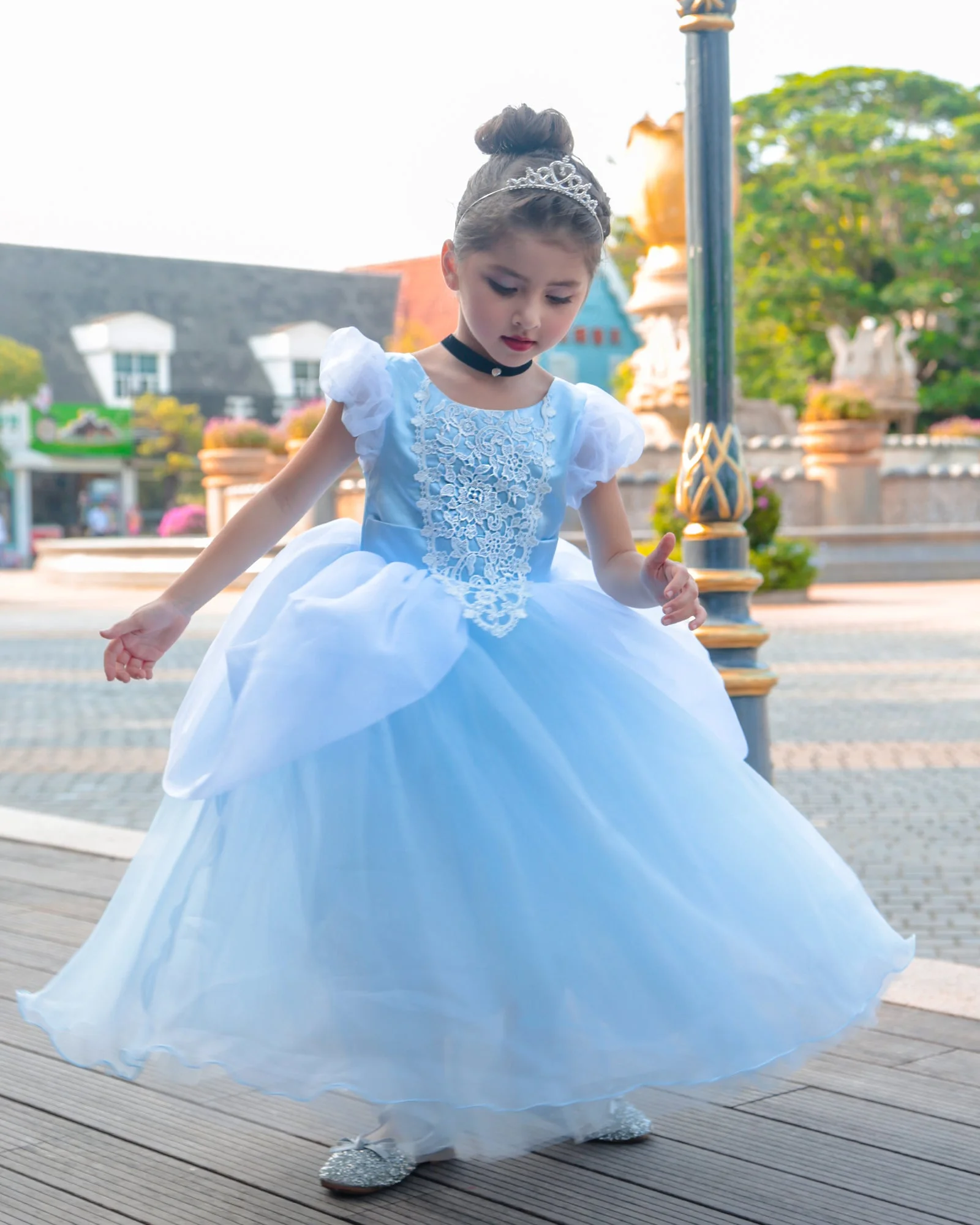
Every school play seems to have a princess, and the high bun is her signature. It lifts the hair off the neck, shows off a tiara or crown, and gives a little girl the posture of royalty the moment she puts it on. It is also one of the most practical styles on this list: once it is pinned, it stays put through dancing, bowing and curtain calls.
Pros: A high bun keeps hair completely out of the face, holds a crown securely, and looks regal from every seat in the hall.
Cons: It can pull at the hairline if it is done too tightly, and very fine hair may need a bun donut to look full enough.
Who it suits: Princesses, queens, fairies and any royal character, especially girls with medium to long hair.
Who should avoid it: Children with very short hair, a tender scalp, or a character whose crown sits low on the forehead.
Maintenance: Use a bun donut for fullness, pin in a criss-cross pattern, and mist with light spray. Check the bun after the dance scene, and carry two spare pins backstage.
2. The Pirate Braided Ponytail
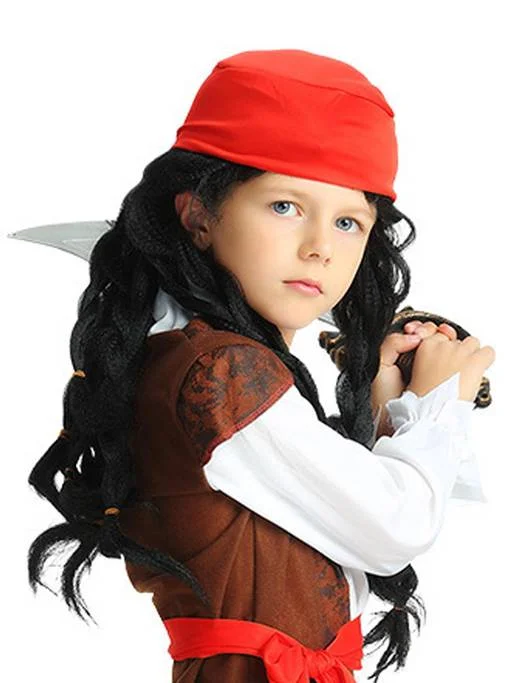
A pirate needs hair that looks ready for a storm at sea, and a braided ponytail does exactly that. It is tough, it swings when your child moves, and it survives sword fights, rope climbing and treasure hunts without coming undone. Add a red bandana or a black headscarf and the character is complete before a single line is spoken.
Pros: The braid holds through the wildest action scenes, keeps hair out of the eyes, and works with any pirate hat or bandana.
Cons: A tight braid can feel heavy by the end of a long show, and the ends can frizz under hot lights.
Who it suits: Pirates, sailors, adventurers and any swashbuckling character with medium to long hair.
Who should avoid it: Children with very short hair or a tender scalp — a looser braid or a bandana alone may suit them better.
Maintenance: Braid damp hair for a smoother finish, tie the end with a snag-free elastic, and tuck a small ribbon in the pirate’s colours at the base.
3. The Lion Mane Curls
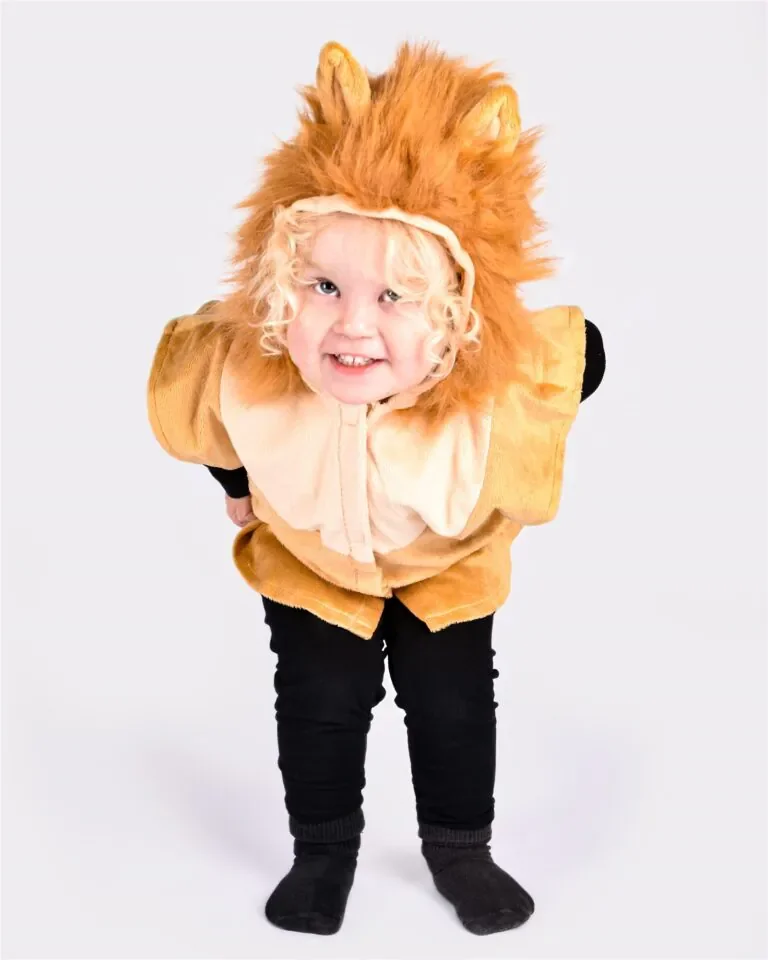
A lion’s mane is all about volume, and big soft curls around the face give a small child that instant lion shape. This style works beautifully with a lion costume’s hood or ears, and it photographs wonderfully because the curls frame the face from every angle. It is joyful, friendly and very forgiving to style.
Pros: Big curls create the mane shape without a heavy wig, they look adorable in photos, and they suit the friendliest lion in the story.
Cons: Curls drop under hot stage lights, so this style needs setting spray and a backstage check between scenes.
Who it suits: Lions, bears, cats and any animal character, especially children with naturally wavy or curly hair.
Who should avoid it: Children with very straight, fine hair that will not hold a curl without heat — use a mane wig instead.
Maintenance: Curl with large rollers or a low-heat wand the morning of the show, let the curls cool fully before touching them, and pin the front sections back so your lion can see the audience.
4. Victorian Ringlet Curls
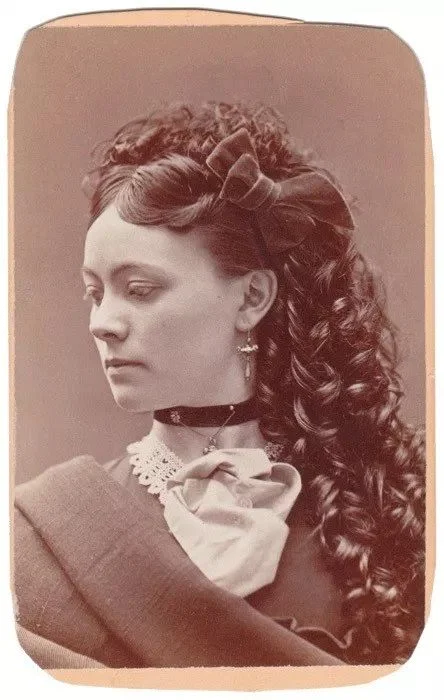
Period plays need period hair, and nothing says Victorian like neat, glossy ringlets. This is the style for the serious young lady in a long dress, the orphan in a Christmas story, or the prim schoolgirl in a historical scene. The ringlets should look deliberate and tidy, not wild, so the character reads as proper and old-fashioned.
Pros: Ringlets instantly place the character in another century, they hold well when set properly, and they look beautiful in photographs.
Cons: This is one of the slowest styles on the list, and it needs a trial run to get the size and the parting right.
Who it suits: Victorian girls, Christmas Carol characters, period heroines and any historical role with long hair.
Who should avoid it: Children who will not sit still for styling, or plays with quick changes that need the hair down and redone fast.
Maintenance: Set the ringlets the night before with rollers if the hair holds a curl, or use a small-barrel wand on show day. Brush them out gently with fingers only, never a brush, and pin one small section back on each side.
5. The Fairy Loose Waves
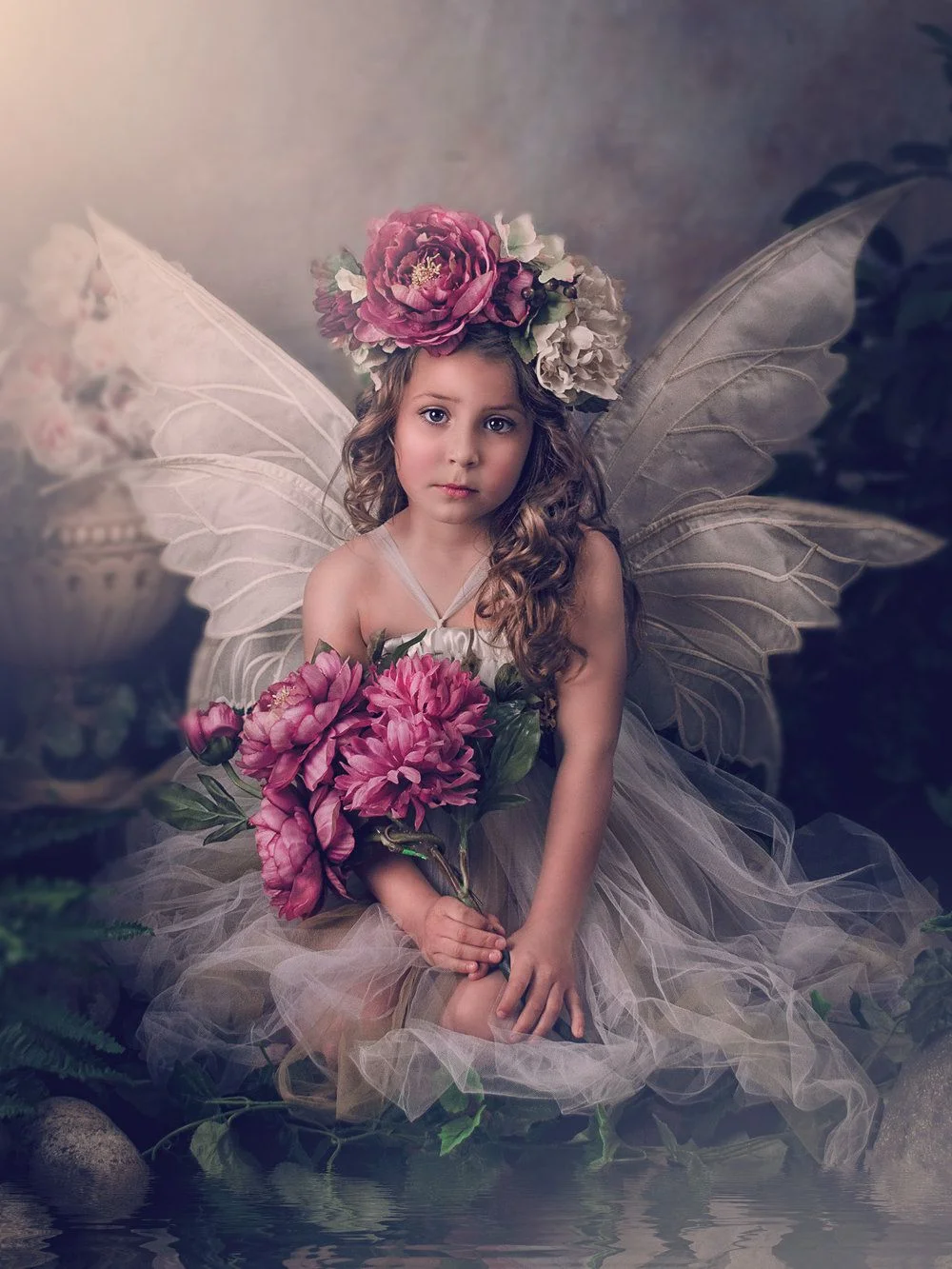
Fairies should look as if they have just floated in from a garden, and loose, soft waves with a few tiny flowers do that better than any stiff updo. The hair moves when your child dances, it catches the light, and it looks magical without a single pin digging into a small head. This is the gentlest style in the whole play.
Pros: Loose waves are comfortable, quick to do, and look enchanting under stage lights, especially with flower clips or a tiny wand.
Cons: Waves can fall flat in humidity or heat, and long loose hair can catch on wings or costume straps.
Who it suits: Fairies, woodland sprites, flower girls and any gentle magical character with medium to long hair.
Who should avoid it: Children playing fairies who also have to do quick costume changes — loose hair tangles in zips and Velcro.
Maintenance: Wave the hair with a large wand or braids left in overnight, add flower clips rather than a heavy crown, and carry a small brush backstage to smooth the ends before the finale.
6. The Superhero Spiky Top
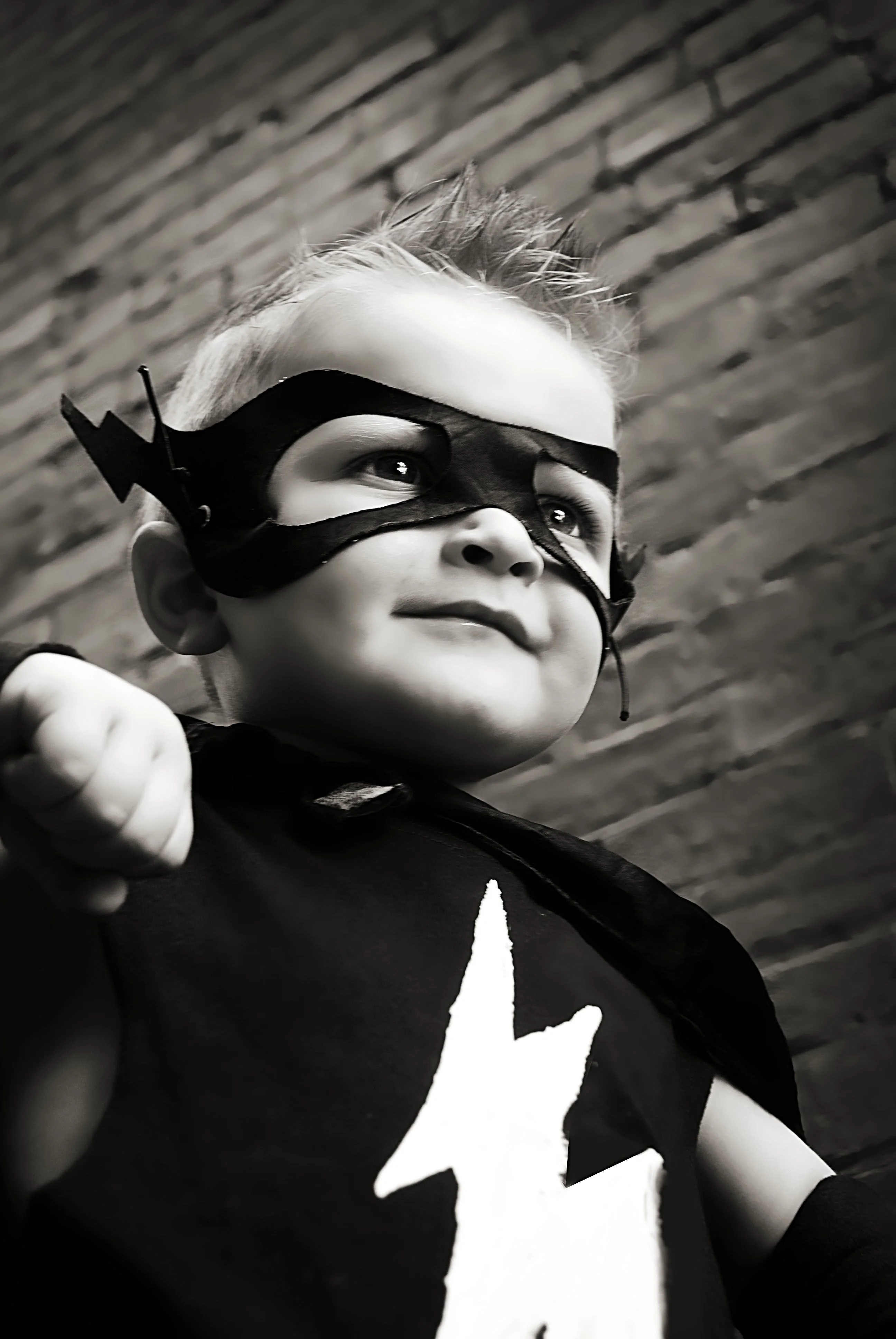
Superheroes need hair with attitude, and a spiky top gives a little boy instant confidence. It is fast, it is fun, and it photographs brilliantly because the spikes read clearly even from the back row. Best of all, it needs almost no skill: gel, fingers, and a child who is willing to stand still for two minutes.
Pros: Spiky hair is quick, bold and character-perfect, and it survives jumping, running and dramatic posing without falling apart.
Cons: Strong gel can feel sticky and look crunchy, and spikes can wilt if the child sweats under hot lights.
Who it suits: Superheroes, action characters and any bold, energetic role with short to medium hair.
Who should avoid it: Children who hate gel, and characters who need a neat or period look instead.
Maintenance: Use a small amount of strong-hold gel on damp hair, spike the front upward with your fingers, and let it set for five minutes before the costume goes on.
7. The Narrator Neat Side Part
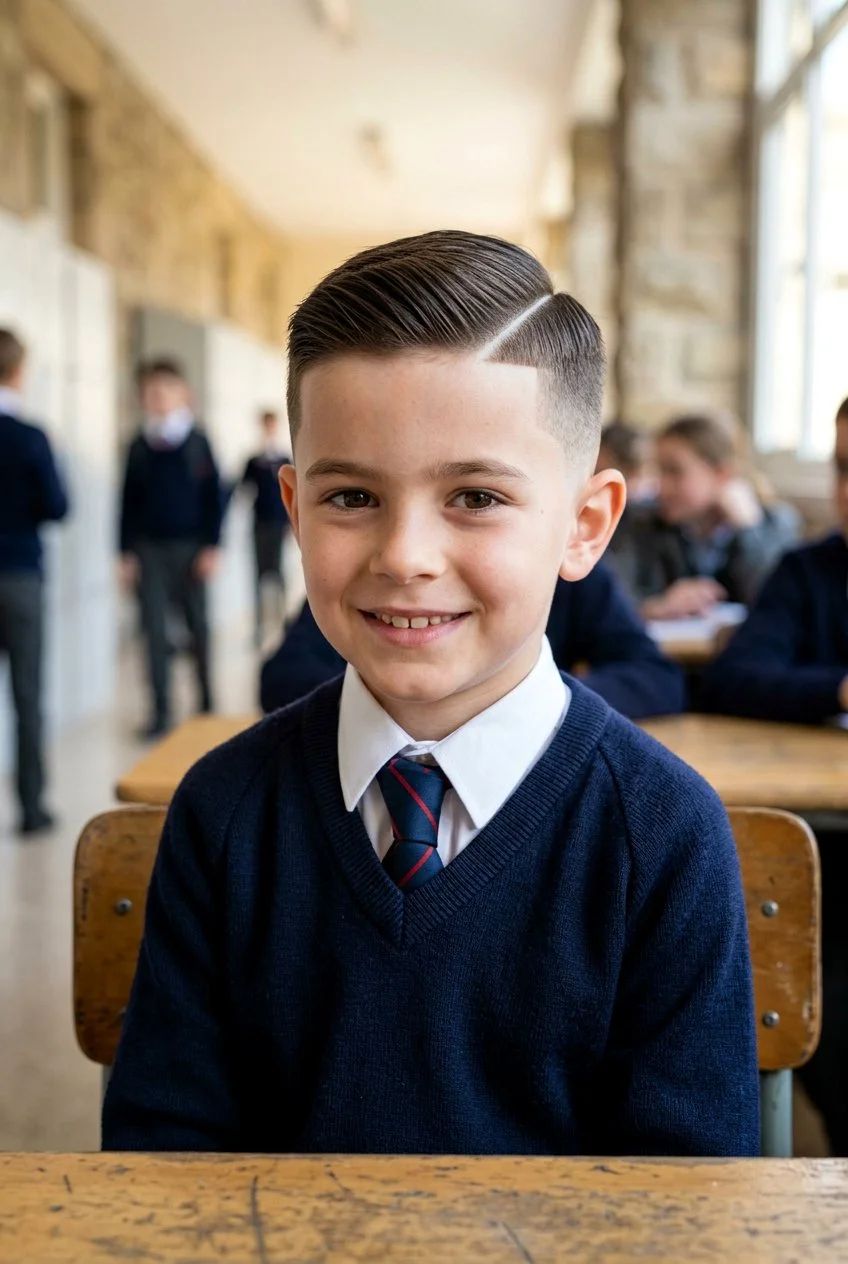
The narrator holds the whole story together, so their hair should look calm, tidy and trustworthy. A neat side part with the hair combed smoothly to one side is the classic choice: it says sensible, reliable and ready to tell you what happens next. It also suits almost every boy and works under any hat the narrator might wear.
Pros: A side part is neat, quick and comfortable, it works with glasses and hats, and it never distracts from the storytelling.
Cons: It can look plain in photographs next to the more dramatic costumes, so the narrator may need a costume detail to stand out.
Who it suits: Narrators, teachers, shopkeepers, fathers and any sensible adult character played by a child.
Who should avoid it: Wild, magical or animal characters — a narrator’s neatness would fight the costume.
Maintenance: Comb the hair damp with a little light cream, set a clean part with the tail of a comb, and smooth the sides. Carry the comb backstage for a ten-second fix before each entrance.
8. The Angel Soft Golden Curls
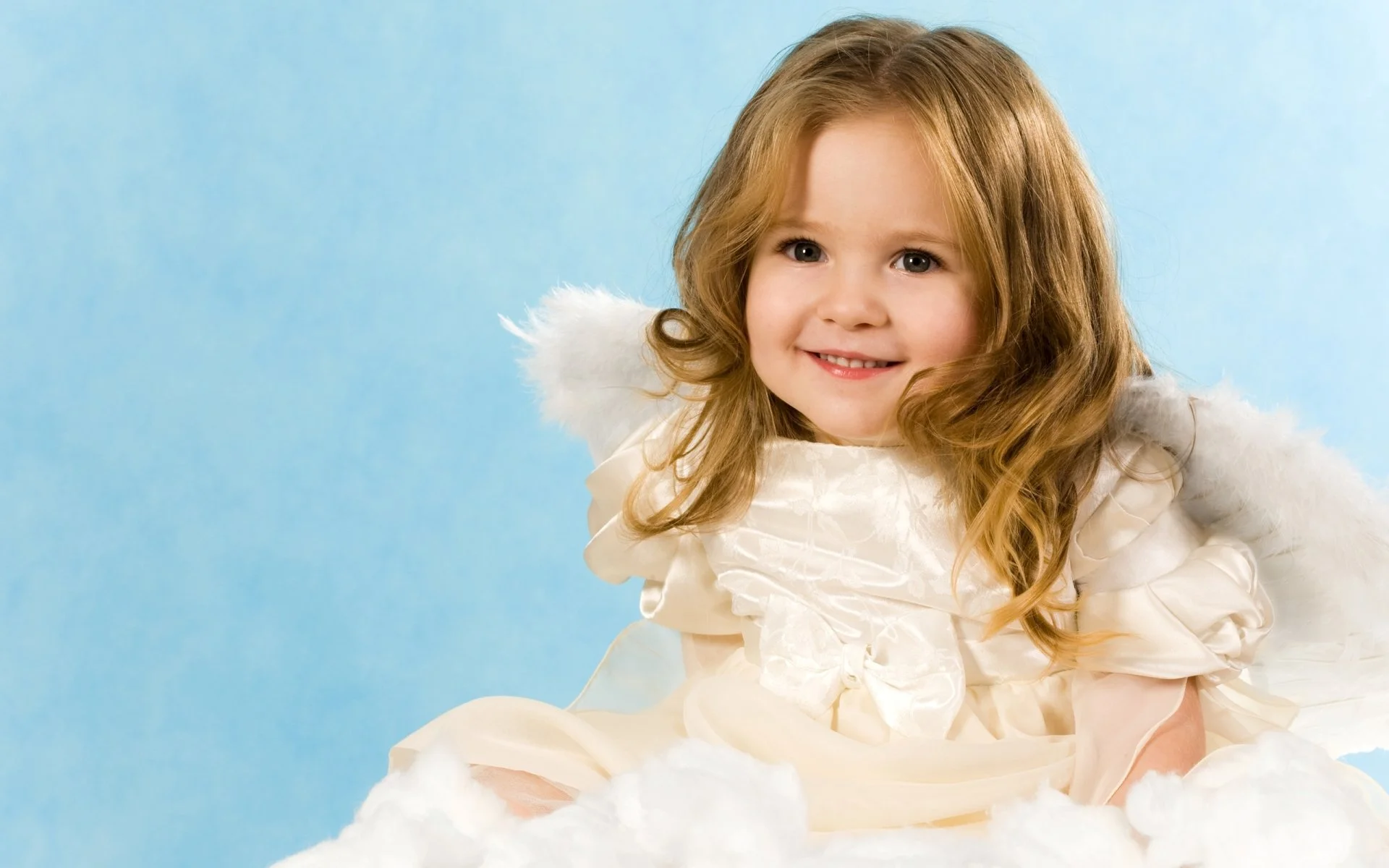
Angels need to glow, and soft golden curls around a small face do exactly that under warm stage lights. This is a gentle, sweet style that suits the youngest performers best: no tight pulling, no heavy pins, just soft curls and maybe a tiny halo. It is the look parents picture when they hear their child is an angel in the nativity play.
Pros: Soft curls are comfortable for little ones, they glow beautifully under lights, and they work perfectly with a halo or a white dress.
Cons: Curls can drop quickly on fine young hair, and a halo can slide if it is not pinned to the curls.
Who it suits: Angels, cherubs, nativity characters and any gentle, heavenly role with soft or wavy hair.
Who should avoid it: Children with very short hair, or angels who have to dance energetically — pin the front curls back so they can see.
Maintenance: Curl with soft rollers or a low-heat wand, let the curls cool, and pin the halo to the hair with two small clips hidden under the curls.
9. The Little Witch: Loose Curls Under a Pointy Hat
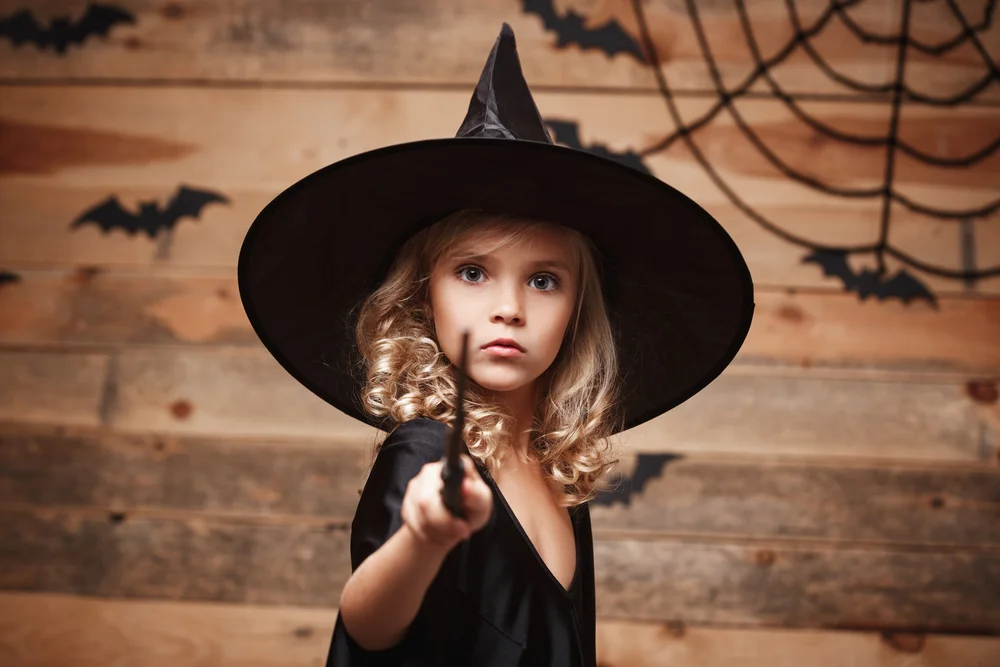
A little witch needs hair that looks magical but still lets the pointy hat sit properly, and loose curls falling from under the brim do the job perfectly. The curls peek out around the face, the hat does the character work, and nothing has to be pulled tight or pinned hard. It is a gentle style with a delightfully spooky result.
Pros: Loose curls under a hat are comfortable, quick to do, and instantly read as a witch from the audience.
Cons: The hat can flatten the curls at the crown, and long curls can catch on a cape or a broom.
Who it suits: Witches, wizards, Halloween characters and any magical role that wears a hat.
Who should avoid it: Children who refuse to wear a hat — the style on its own is just curls, so the character would be lost.
Maintenance: Curl the hair loosely, place the hat so it sits on the crown rather than squashing the curls, and pin the hat to the hair at two points so it survives the dance scene.
10. The Cowboy Side Braid
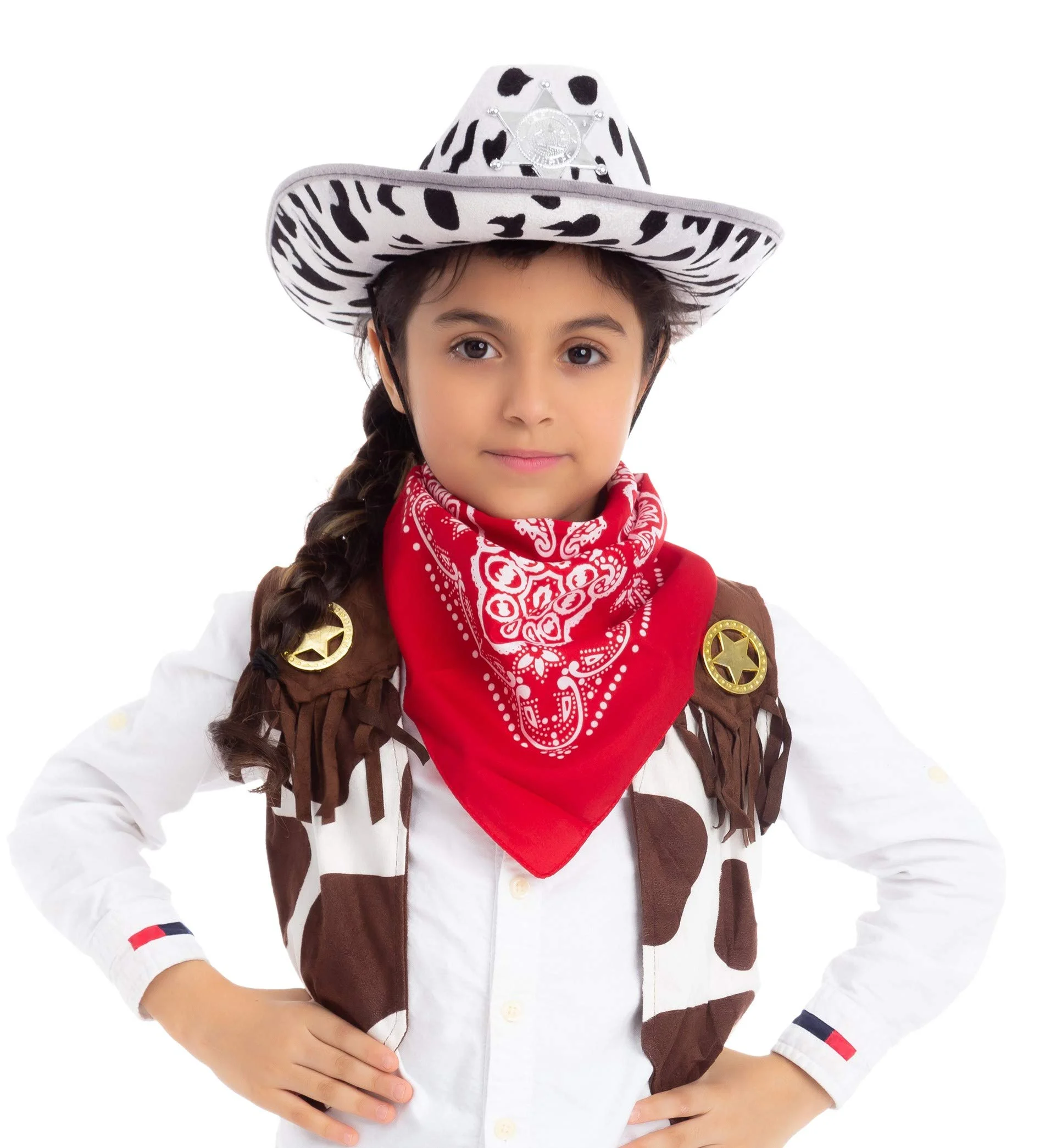
A cowboy hat changes everything about a hairstyle: it needs a braid that sits neatly underneath it and still looks good when the hat comes off for a bow. A side braid over one shoulder is the classic answer. It is practical, it looks Western in an instant, and it keeps long hair safely out of the way of ropes, horses and hat brims.
Pros: A side braid fits under any cowboy hat, survives riding and roping scenes, and looks charming when the hat comes off.
Cons: The braid can swing forward and cover the face during fast movement, so it needs to be pinned at the shoulder.
Who it suits: Cowboys, cowgirls, ranchers, pioneers and any Western character with medium to long hair.
Who should avoid it: Children with short hair, or cowboys whose hat sits so low that no braid is visible at all.
Maintenance: Braid the hair to one side over the shoulder, tie it with a bandana-coloured elastic, and pin the braid to the costume at the shoulder so it stays put.
11. The Knight Slicked-Back Hair

Knights need hair that looks brave and tidy under a helmet, and slicked-back hair is the answer. It keeps every strand out of the eyes during sword fights, it looks noble and serious, and it fits neatly under a helmet or a crown. A little gel and a comb is all it takes to turn a schoolboy into Sir Lancelot.
Pros: Slicked-back hair is neat, heroic and helmet-friendly, and it stays in place through the most energetic battle scenes.
Cons: It can look severe on very young children, and too much gel makes it look wet under the lights.
Who it suits: Knights, princes, soldiers and any brave, noble character with short to medium hair.
Who should avoid it: Characters who need soft, wild or romantic hair — a knight’s neatness would fight a wizard or a lion costume.
Maintenance: Comb damp hair straight back with a small amount of gel, smooth the sides with your palms, and let it set before the helmet goes on.
12. The Mermaid Long Waves
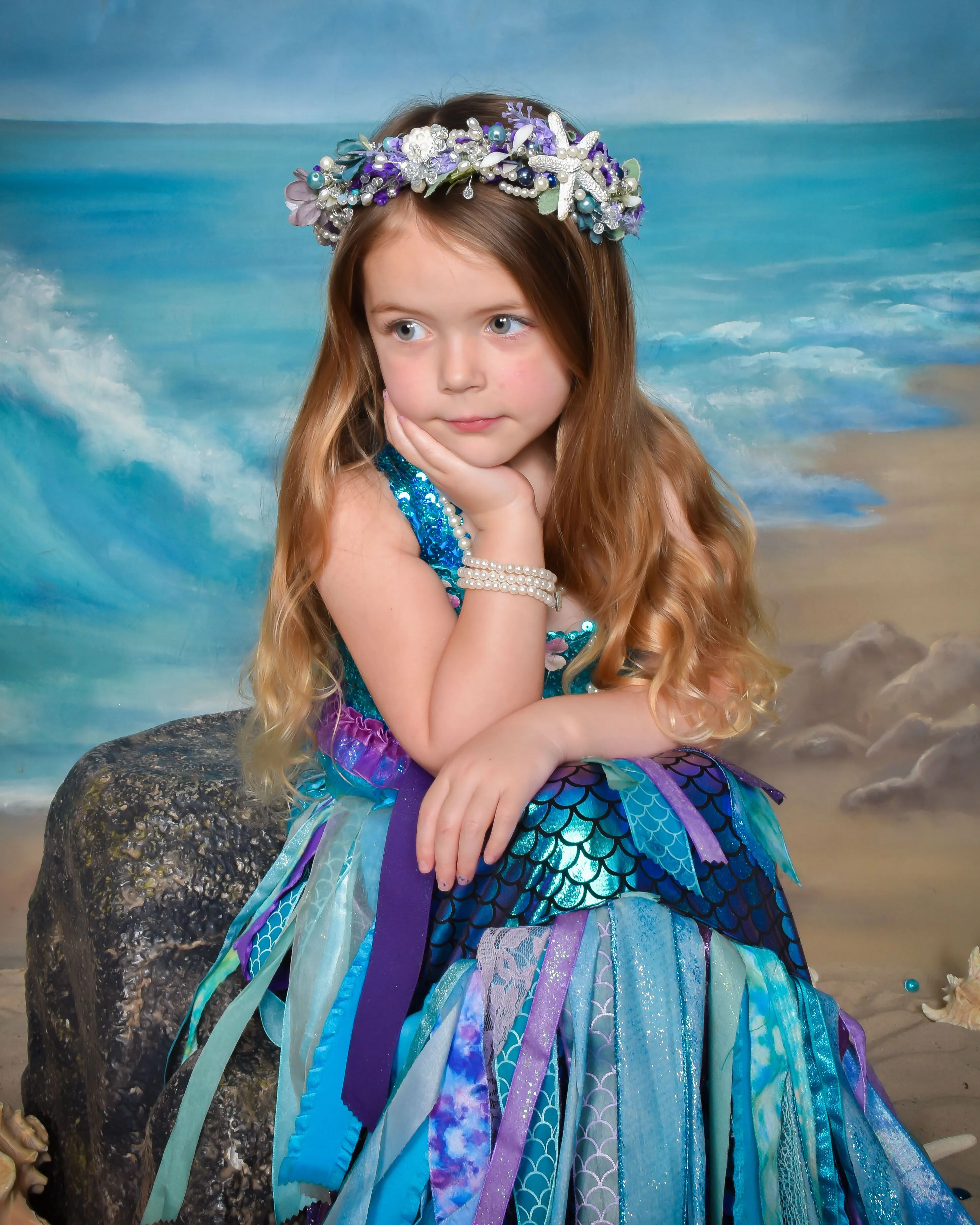
A mermaid’s hair is half her costume, and long flowing waves in soft, beachy curves give her that underwater magic. The waves should look loose and natural, as if the sea made them, and they move beautifully when your child glides across the stage. Add a shell clip or a starfish and the ocean comes with her.
Pros: Long waves look magical, move beautifully on stage, and photograph like a storybook illustration.
Cons: Very long loose hair tangles easily, catches on costumes, and can be stepped on during dance numbers.
Who it suits: Mermaids, sea princesses, water sprites and any ocean character with long hair.
Who should avoid it: Mermaids who have to dance fast or change costume quickly — pin the waves to one side or braid them loosely instead.
Maintenance: Create the waves with overnight braids or a large wand, brush them out softly with fingers, and add a shell clip above one ear.
13. The Wizard Messy Curls
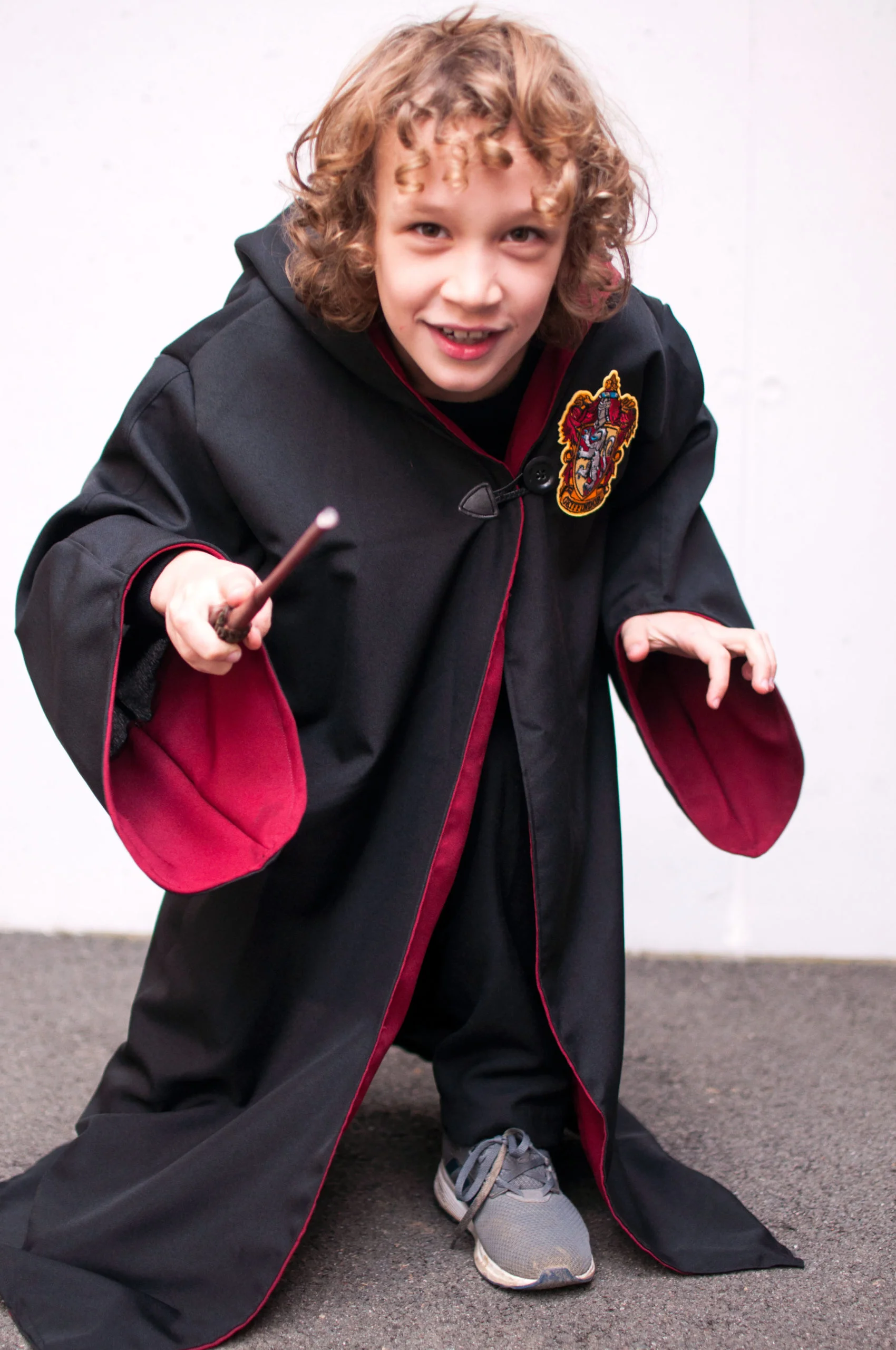
Wizards are not neat people, and their hair should not be either. Wild, messy curls sticking out from under a pointed hat tell the audience in one glance that this character is eccentric, powerful and probably about to cause trouble. It is also one of the easiest styles to do: the messier it looks, the better the character reads.
Pros: Messy curls are fast, fun and perfectly in character, and they hide a multitude of styling sins under a wizard hat.
Cons: The style can look untidy rather than wizardly if the curls are too small, and a hat can flatten the whole effect.
Who it suits: Wizards, mad professors, eccentric inventors and any wild magical character with curly or wavy hair.
Who should avoid it: Neat, royal or period characters, and any child whose curls need to stay tidy for a second role.
Maintenance: Scrunch the curls with a little mousse, let them dry naturally, and tease the crown gently for height before the hat goes on.
14. The Elf Half-Up Braid
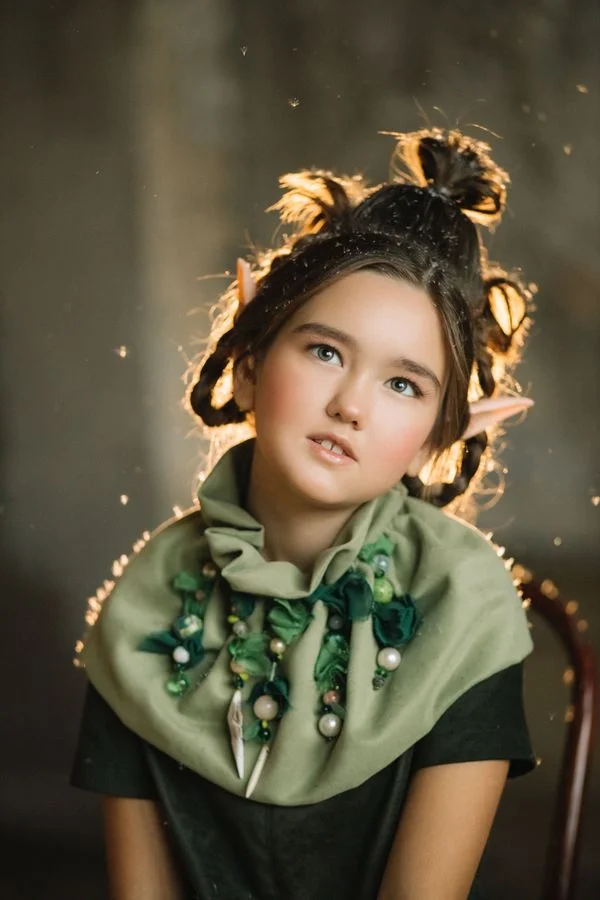
Elves live in forests and look graceful doing it, and a half-up braid gives a girl that woodland elegance without pulling all her hair back. The top section is braided and pinned, the rest falls loose and soft, and a leaf clip or a small flower finishes the look. It is pretty, practical and perfect for a child who has to run through an enchanted forest on stage.
Pros: A half-up braid is graceful, comfortable and holds the front hair back while the rest moves freely.
Cons: The loose lower half can tangle during energetic scenes, and the braid can loosen if it is not pinned at the end.
Who it suits: Elves, forest fairies, woodland princesses and any graceful nature character with medium to long hair.
Who should avoid it: Children with short hair, or elves who have to wear a hood — the braid would be hidden and the loose hair would bunch up.
Maintenance: Braid the top half loosely, pin it at the crown with two crossed pins, and leave the rest down with a little wave.
15. The Queen Crown Braid
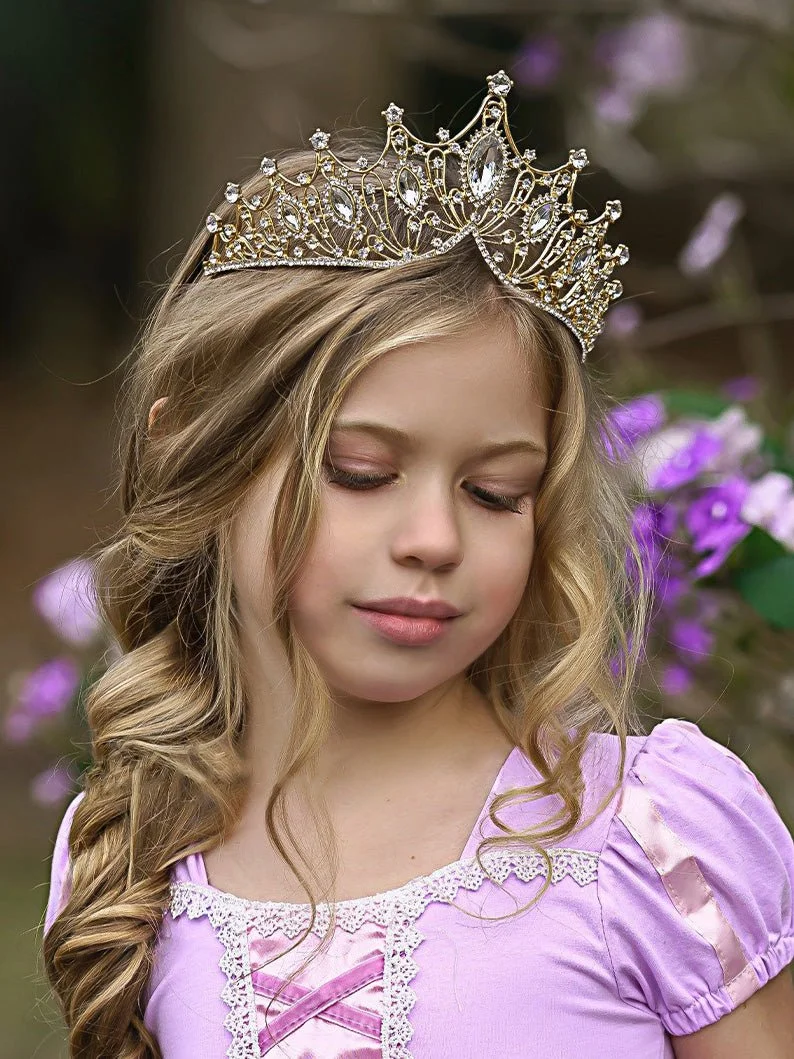
A queen’s braid should look like a crown all on its own, and a braid wrapped around the head does exactly that. It is regal, it is secure, and it holds a real crown in place better than any loose style. This is the hairstyle for the most important lady in the play, and it tells the audience who is in charge before she says a word.
Pros: A crown braid is regal, extremely secure, and holds a crown or tiara perfectly in place.
Cons: It is one of the trickiest braids to do well, and it needs long hair and a patient child.
Who it suits: Queens, princesses, royal mothers and any regal character with long hair.
Who should avoid it: Children with short or very fine hair, and any queen who has a quick change — this braid takes too long to redo.
Maintenance: Braid the hair around the head in sections, pin as you go, and tuck the ends underneath. Practise it twice before show night.
16. The Sailor Neat Crop
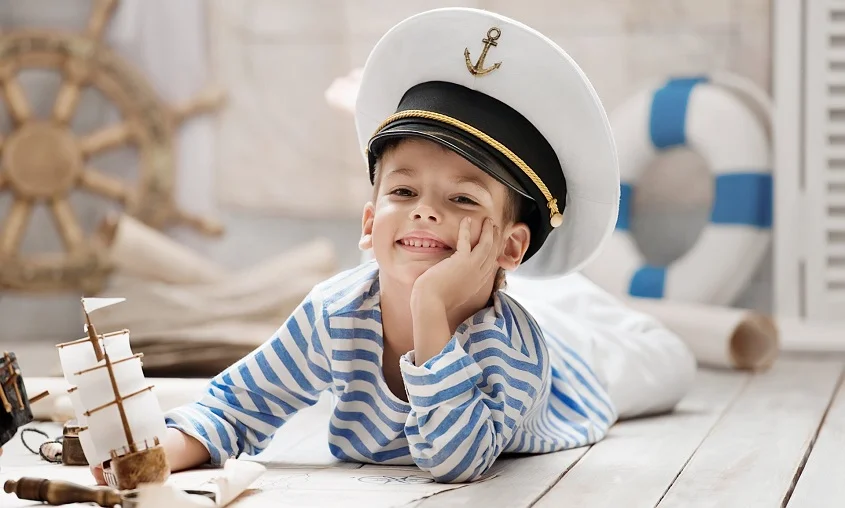
Sailors are neat, tidy and ready for inspection, and a short, clean crop with a side part says all of that in one look. It fits perfectly under a sailor’s cap, it never gets in the way of ropes or rigging, and it is the lowest-maintenance style in the entire play. For a boy with short hair, this is the easiest win on the list.
Pros: A neat crop is fast, comfortable, cap-friendly and completely fuss-free for the whole show.
Cons: There is not much hair to style, so the character depends heavily on the costume and the cap.
Who it suits: Sailors, navy officers, ship’s boys and any neat uniformed character with short hair.
Who should avoid it: Boys with longer hair who want a visible style change — a crop is a haircut, not a styling trick, so only choose it if the length already suits.
Maintenance: Trim the hair a week before the show, comb it damp with a little cream, and set the part. Carry a comb backstage for a quick tidy before each scene.
17. The Storyteller Long Loose Braid
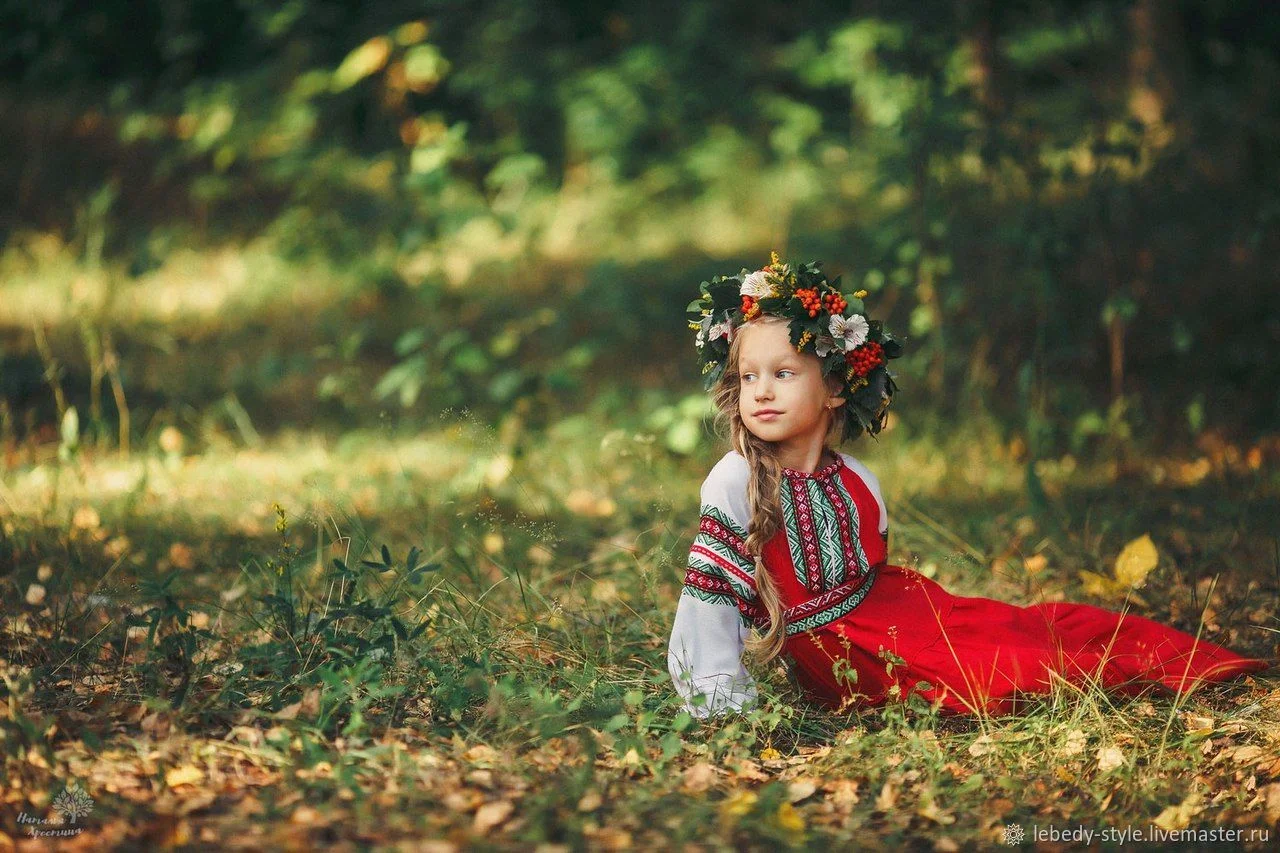
The storyteller sits by the fire and tells the tale, and a long, loose braid over one shoulder is the picture of a folk heroine. It looks traditional and warm, it keeps the hair tidy while she gestures and acts, and it suits the peasant dresses and shawls of a folk story perfectly. This is a style with history in it.
Pros: A long loose braid is traditional, comfortable and keeps hair tidy through a long storytelling scene.
Cons: A loose braid can unravel at the end if it is not tied well, and it can catch on shawls and baskets.
Who it suits: Storytellers, folk heroines, peasant girls and any traditional character with long hair.
Who should avoid it: Characters who need to look royal, magical or modern — the braid would feel too rustic.
Maintenance: Braid the hair loosely over one shoulder, tie it with a ribbon in the costume’s colours, and leave a few soft strands at the front to frame the face.
18. The Robot Sleek Gelled Hair
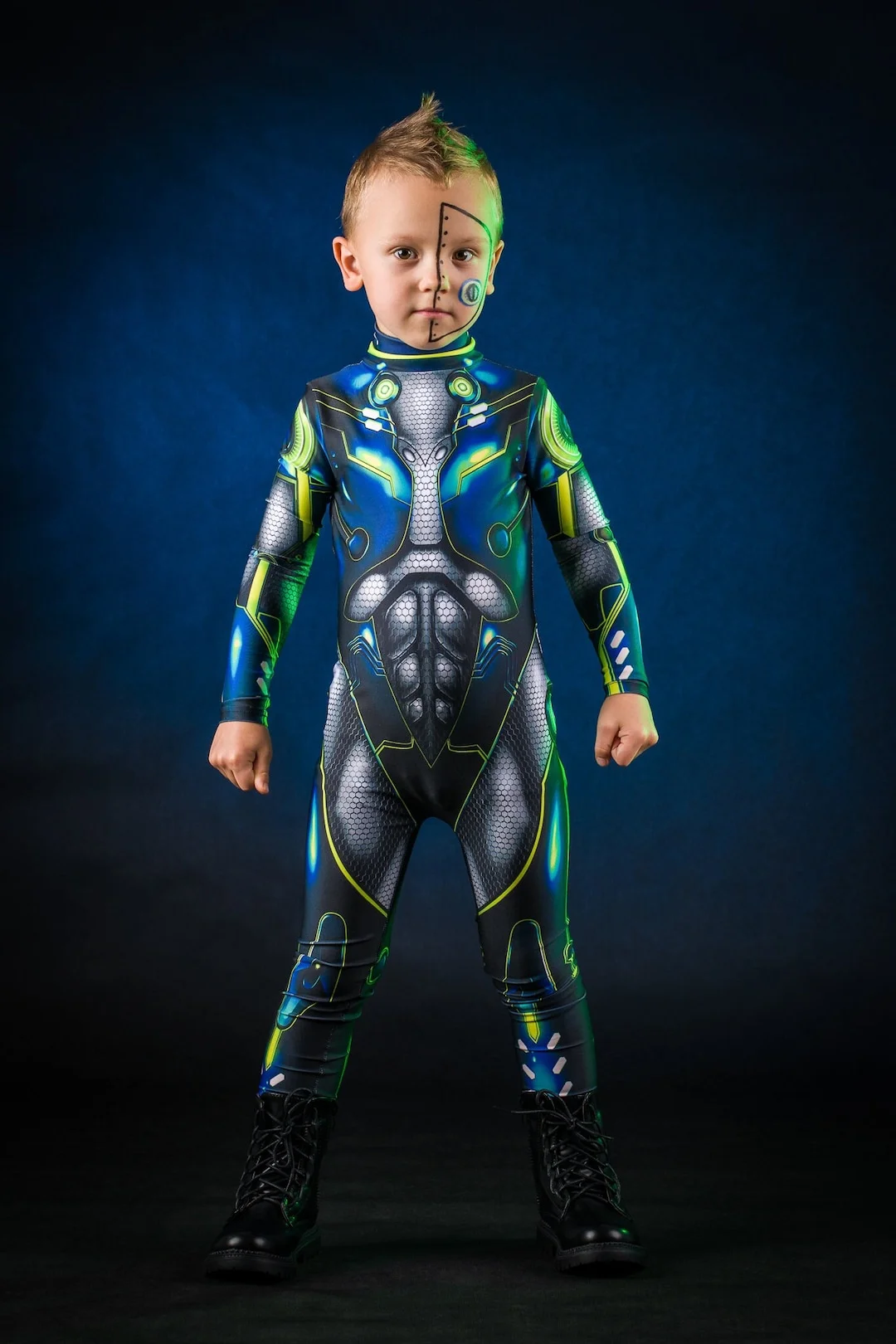
Robots do not have messy hair, and sleek, gelled hair with a sharp side part is the fastest way to look like a machine. Every strand lies flat, the part is crisp, and the whole head looks polished and precise — exactly like a robot fresh off the production line. Add a silver costume and the effect is complete.
Pros: Sleek gelled hair is sharp, futuristic and stays perfectly in place, even through robotic dance moves.
Cons: Too much gel looks wet and feels stiff, and the style shows every fingerprint if your child touches their head.
Who it suits: Robots, androids, futuristic characters and any precise, mechanical role with short hair.
Who should avoid it: Children who dislike gel, and soft, natural characters like fairies or farm children.
Maintenance: Apply gel to damp hair, comb it flat with a sharp side part, and smooth the crown with your palms. Let it set fully before the costume goes on.
19. Cat Ears Space Buns
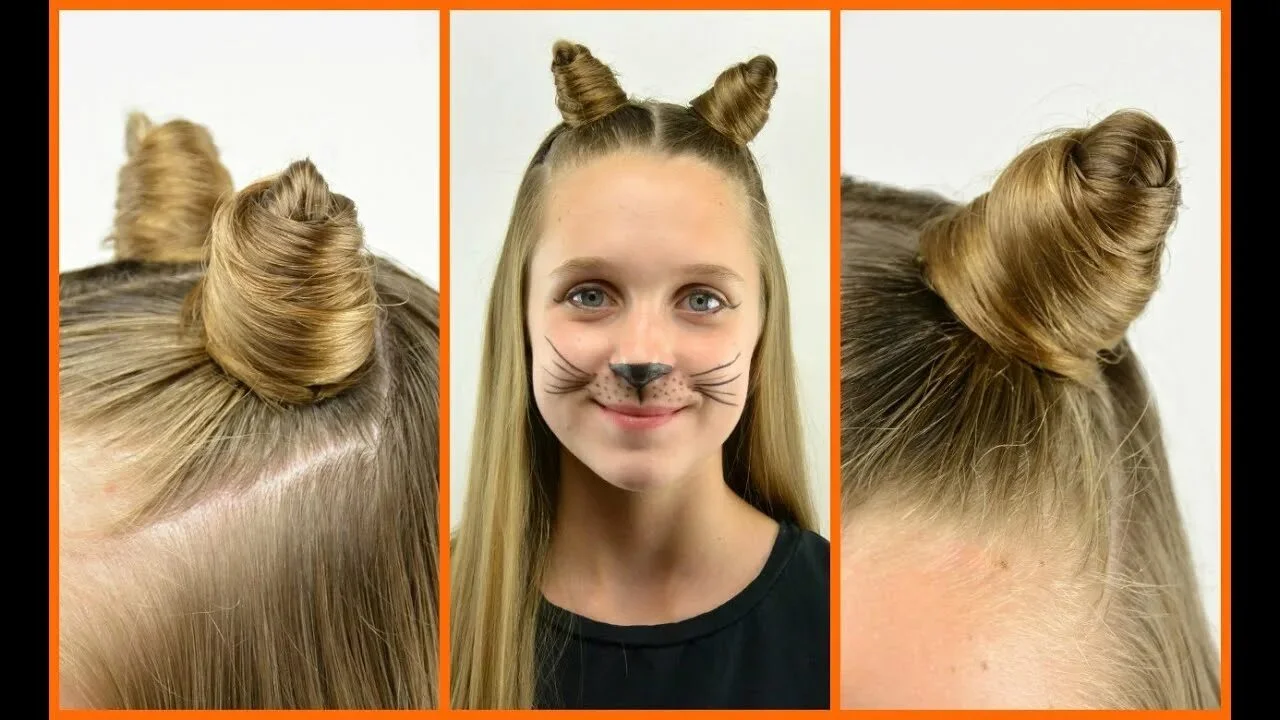
Cat ears need two little buns to sit on, and space buns are the cutest solution in the whole play. They are playful, they are symmetrical, and they turn any child into a kitten in about five minutes. The buns hold the ears in place, keep the hair out of the face, and survive pouncing, prowling and purring through the whole show.
Pros: Space buns are quick, adorable and hold cat ears securely while keeping hair completely out of the face.
Cons: They need fairly long hair to look full, and tight buns can hurt if they are pulled too high.
Who it suits: Cats, kittens, mice, bears and any animal character that wears ears, especially girls with medium to long hair.
Who should avoid it: Children with short hair, or animals whose ears sit on a headband rather than on buns.
Maintenance: Part the hair down the middle, make two high ponytails, twist each into a bun and pin it. Slip the ear headband behind the buns so it stays put.
20. The Farm Boy Messy Side Sweep
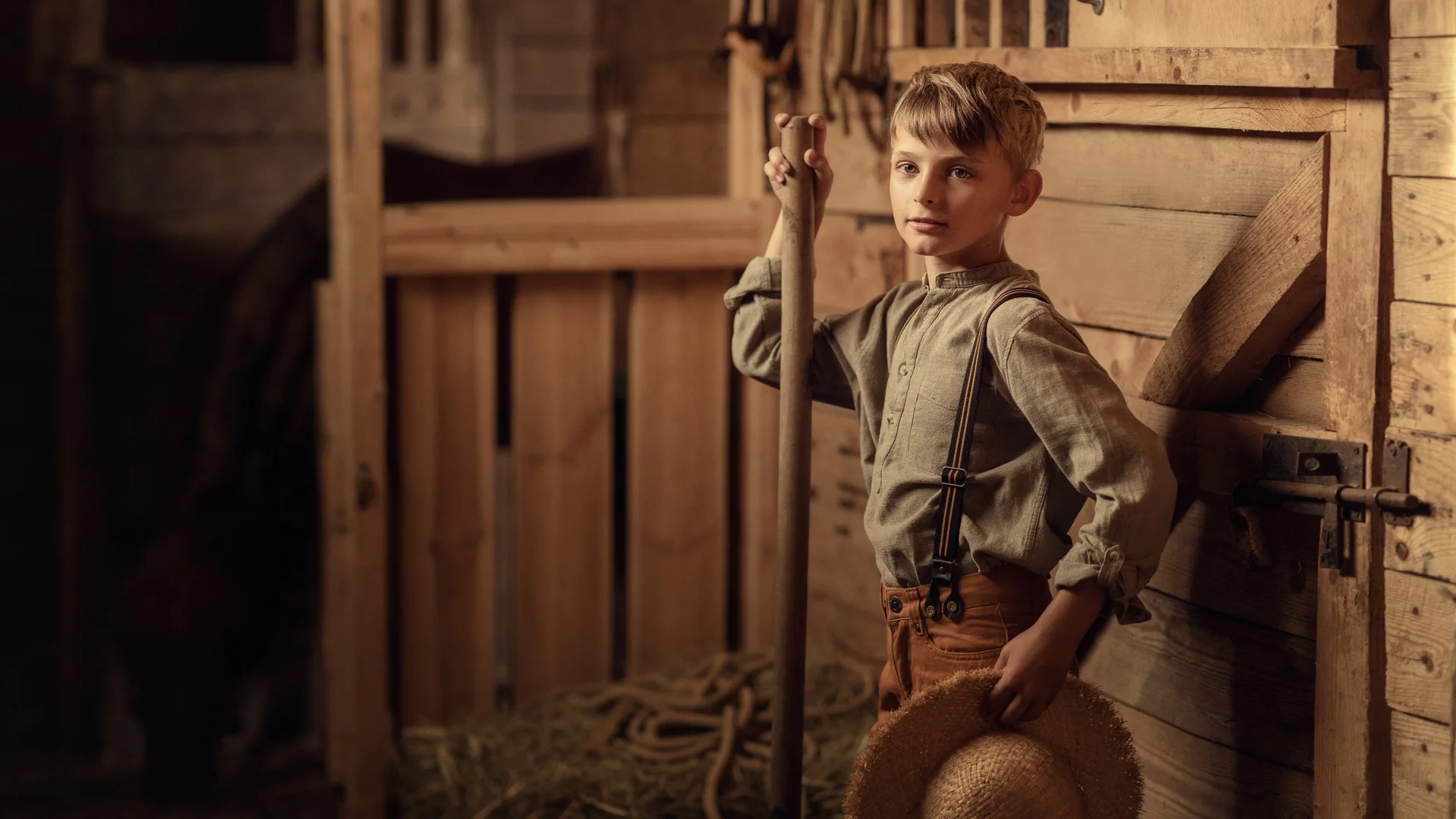
Farm boys are too busy for fussy hair, and a messy side sweep looks exactly like a boy who has been out in the fields all morning. It is relaxed, natural and charming, and it suits straw hats, checked shirts and dungarees perfectly. The trick is making the mess look deliberate rather than accidental.
Pros: A messy side sweep is natural, comfortable and perfectly in character for a country boy.
Cons: It can fall into the eyes during energetic scenes, and it needs a little product to hold its shape.
Who it suits: Farm boys, shepherds, country lads and any rustic character with short to medium hair.
Who should avoid it: Neat, royal or formal characters — a farm boy’s mess would fight a prince’s costume.
Maintenance: Work a little matte cream through damp hair, sweep it to one side with your fingers, and leave the ends natural. Check the fringe before each scene.
21. The Snow Queen Sleek Straight Hair
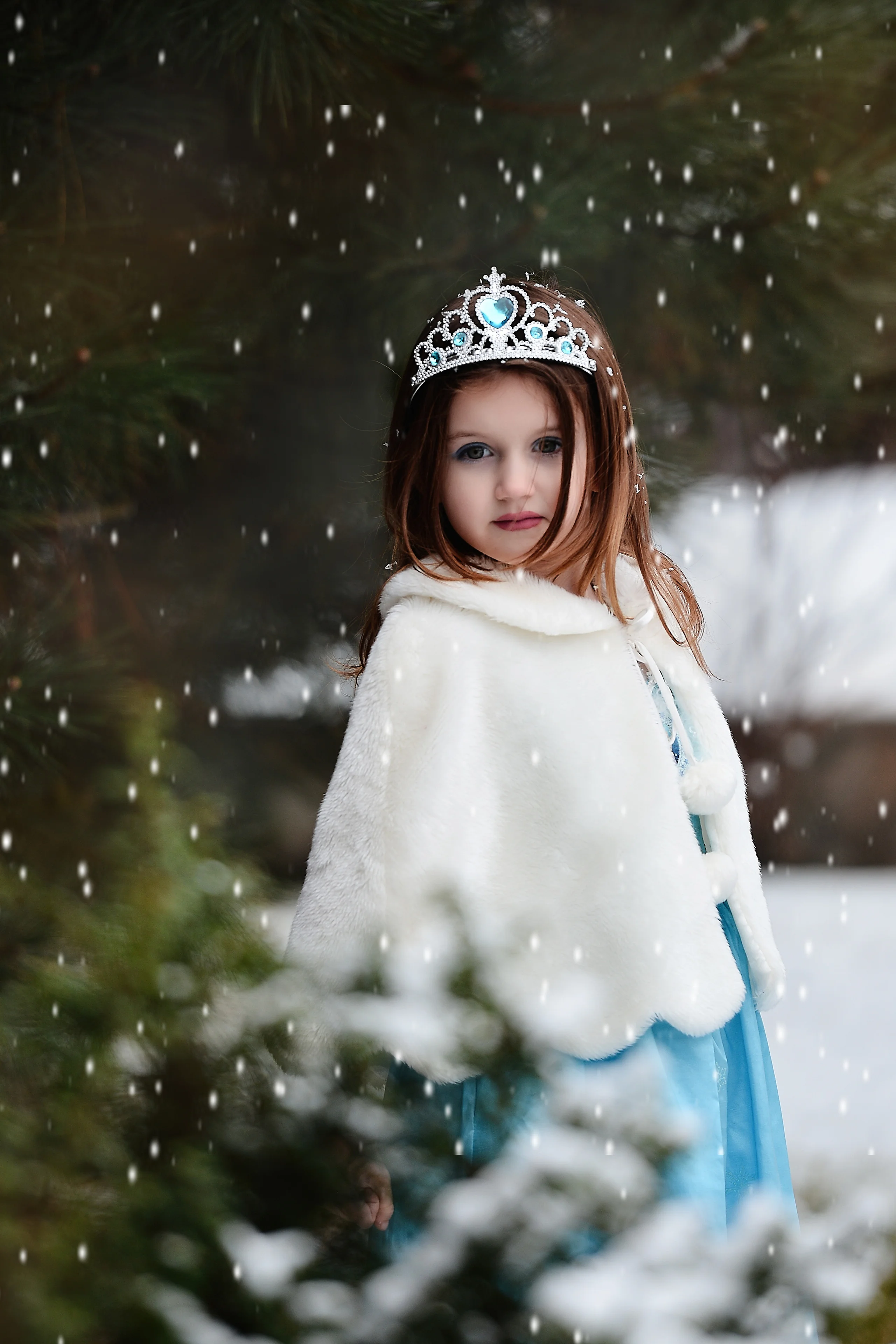
The Snow Queen is cold, elegant and untouchable, and sleek, straight hair down to the shoulders sells that character instantly. It should look like ice: smooth, shiny and perfect. A silver crown or a few snowflake clips finish the picture, and the simplicity of the hair makes the costume and the character shine.
Pros: Sleek straight hair is elegant, dramatic and instantly reads as icy and royal.
Cons: Straight hair can look flat under stage lights, and it shows every flyaway, so it needs smoothing spray and a backstage check.
Who it suits: Snow queens, ice princesses, winter fairies and any cold, elegant character with straight or straightened hair.
Who should avoid it: Characters who need volume, curls or wild hair — the Snow Queen’s sleekness would fight a lion or a witch costume.
Maintenance: Straighten the hair in sections, add a shine serum, and pin one side back with a snowflake clip so the face stays visible.
22. The Scarecrow Tousled Pigtails
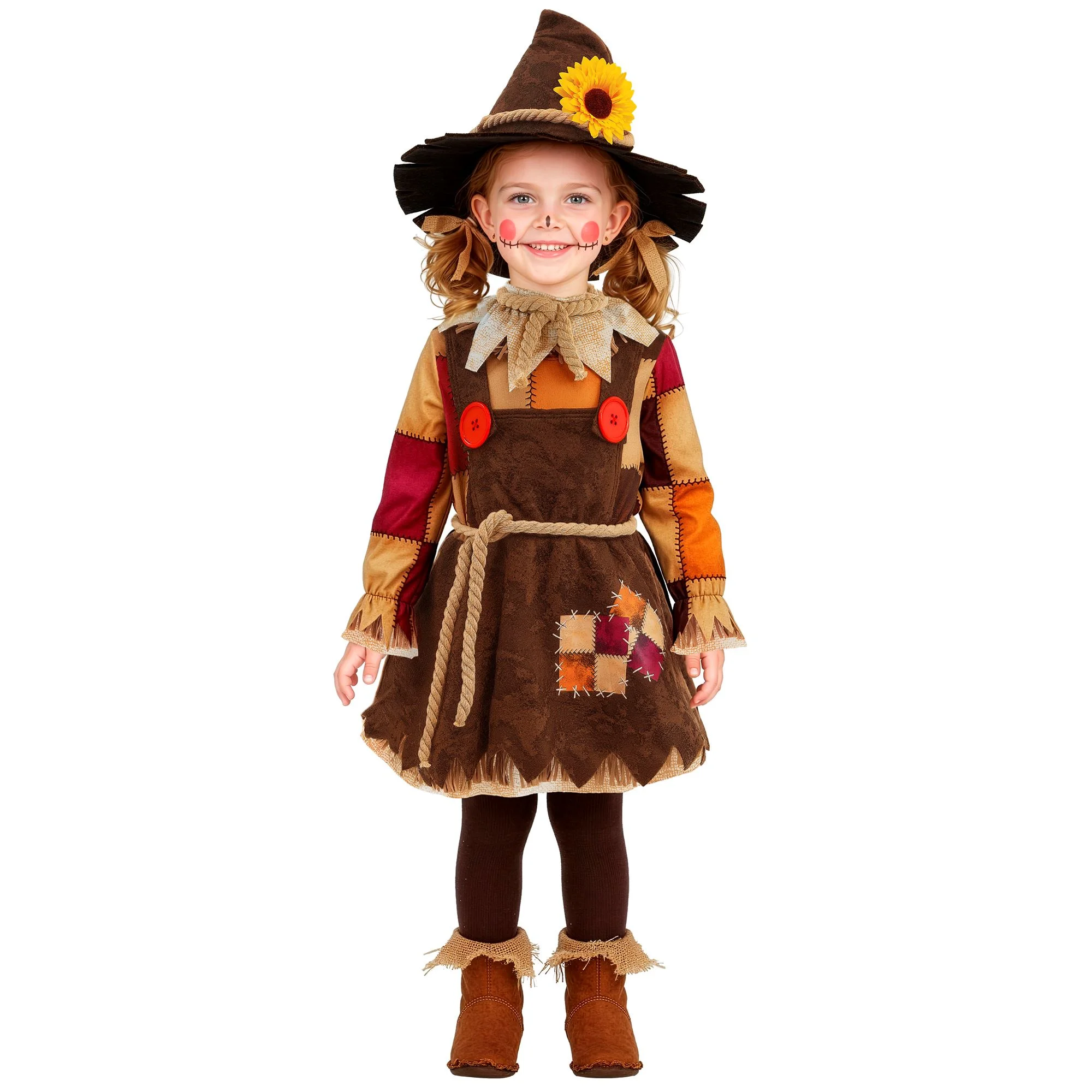
Scarecrows are supposed to look a little bit untidy, and tousled pigtails with straw-coloured ribbons are the friendliest version of that. The pigtails stick out at cheerful angles, the ribbons flutter when your child moves, and the whole look is funny and warm rather than frightening. It is a perfect part for a younger child.
Pros: Tousled pigtails are cheerful, easy and full of character, and they work beautifully with a straw hat.
Cons: Pigtails can come loose during dancing, and the ribbons need tying well or they will trail on the floor.
Who it suits: Scarecrows, farm girls, harvest characters and any cheerful country role with medium hair.
Who should avoid it: Children with very short hair, or scarecrows who need to look genuinely scary rather than friendly.
Maintenance: Part the hair in two, tie low pigtails with straw-coloured ribbons, and tease the ends gently for a tousled look.
23. Prince Charming Swept-Back Hair
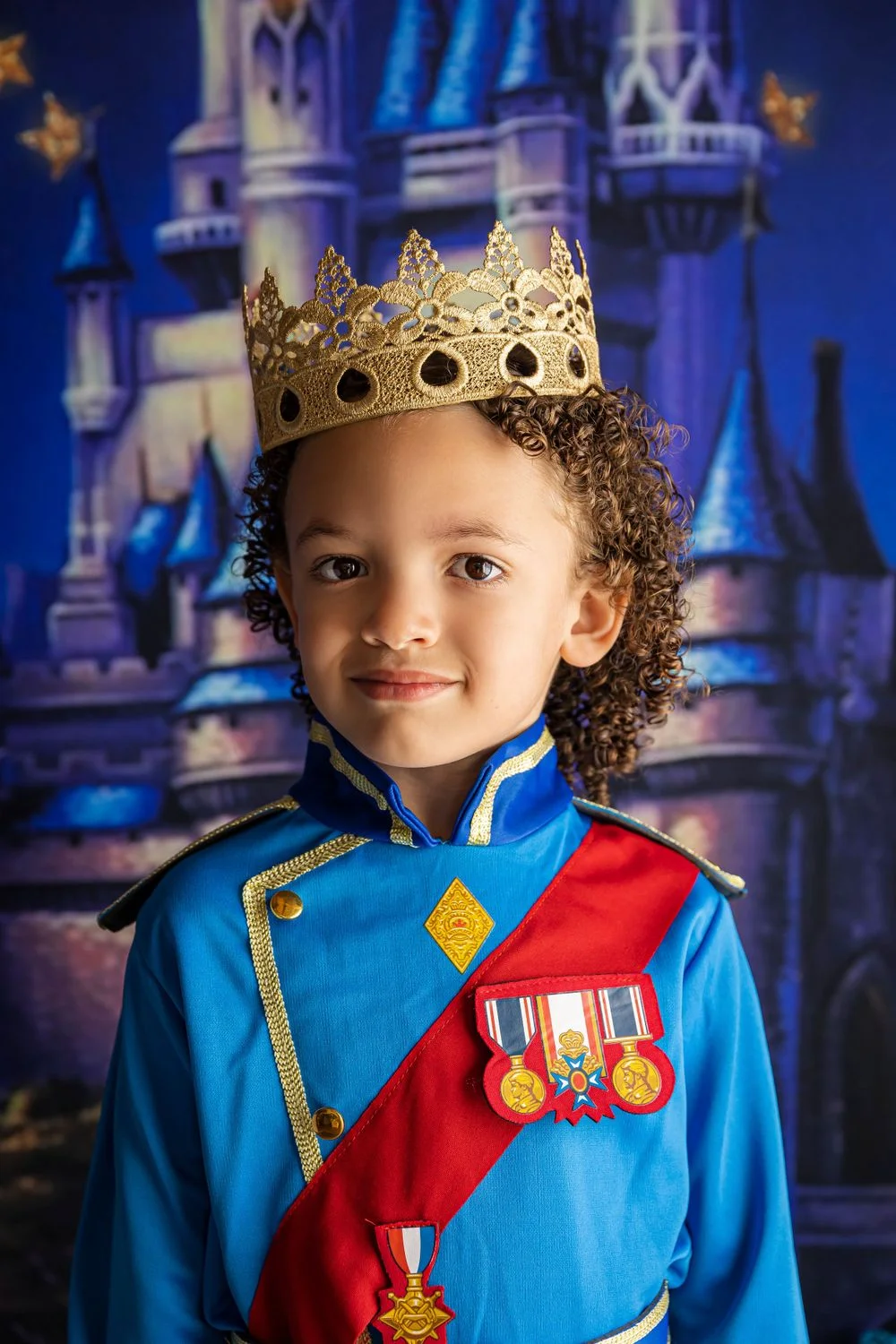
Prince Charming needs hair that looks like it belongs in a ballroom, and a smooth swept-back style is the classic choice. It is neat, it is handsome, and it shows off a crown beautifully. Best of all, it takes three minutes with a comb and a little cream, which leaves plenty of time for practising the bow.
Pros: Swept-back hair is handsome, quick and crown-friendly, and it looks polished in every photograph.
Cons: It can fall forward over the forehead during dancing, so it needs a little hold and a backstage comb.
Who it suits: Princes, kings, charming heroes and any royal boy character with short to medium hair.
Who should avoid it: Boys with very curly hair that will not sweep back smoothly — use a side part instead.
Maintenance: Comb damp hair back from the forehead with a little light cream, smooth the sides, and let it set for a few minutes before the crown goes on.
24. The Butterfly Twisted Pigtails
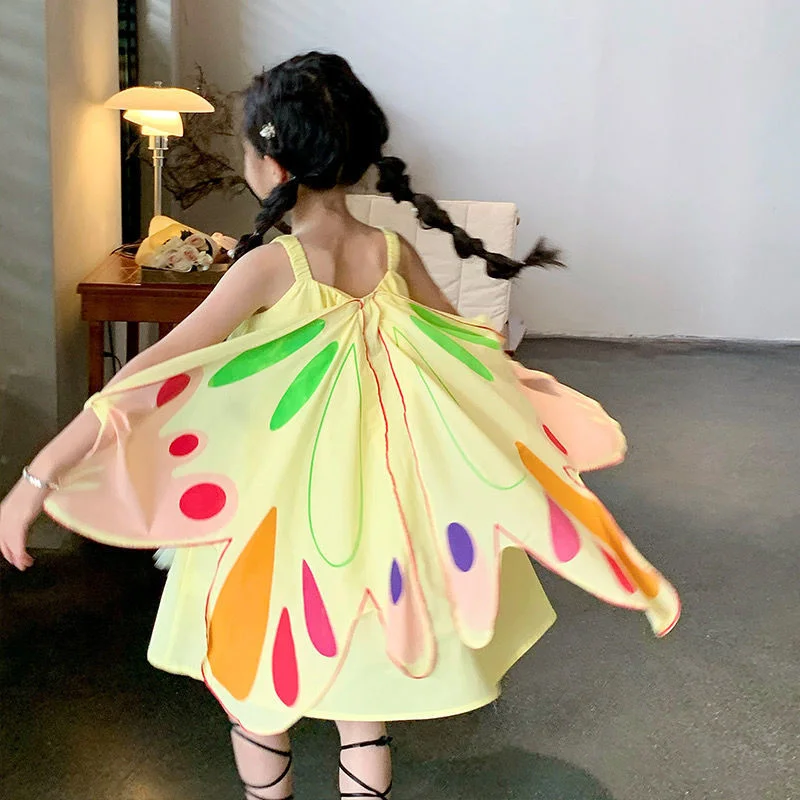
Butterflies need to look light and colourful, and twisted pigtails with bright ribbons do exactly that. The twists add texture that plain pigtails do not have, the ribbons match the wings, and the whole style floats and bounces when your child dances. It is a joyful look for a joyful character.
Pros: Twisted pigtails are bright, bouncy and full of movement, and they hold their shape better than plain pigtails.
Cons: Twists take a little longer than plain pigtails, and they can unravel at the ends if they are not tied tightly.
Who it suits: Butterflies, dragonflies, fairies and any bright, winged character with medium to long hair.
Who should avoid it: Children with short hair, or butterflies who have to wear a hat — the twists would be hidden.
Maintenance: Twist each side section before tying it into a pigtail, add a bright ribbon at each tie, and pin the twists at the crown so they stay neat.
25. Little Red Riding Hood Braided Pigtails
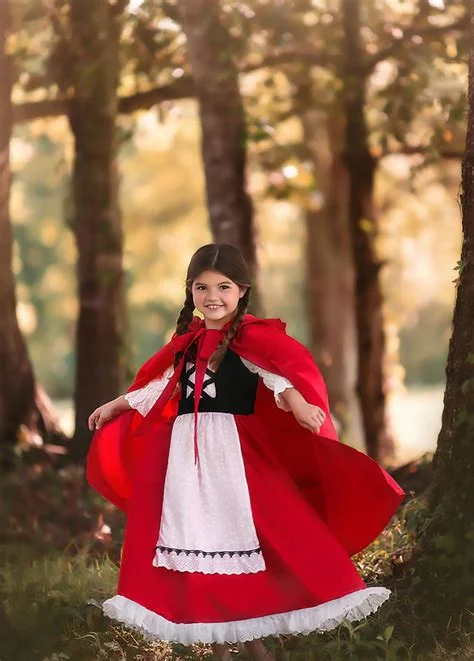
Little Red Riding Hood is one of the most recognised characters in any school play, and braided pigtails under a red hood are the look everyone expects. The braids keep the hair tidy on the walk through the forest, they peek out from under the hood in the most charming way, and they survive meeting the wolf without a single hair out of place.
Pros: Braided pigtails are instantly recognisable, tidy and hood-friendly, and they hold through the whole journey to grandmother’s house.
Cons: The hood can flatten the braids at the crown, and the plaits need tying well so they do not unravel.
Who it suits: Little Red Riding Hood, forest girls, peasant girls and any storybook character who wears a hood.
Who should avoid it: Characters who wear hats or crowns instead of hoods — the braids would be hidden and the style would lose its point.
Maintenance: Braid two low pigtails, tie them with red ribbons, and settle the hood so it frames the braids rather than squashing them.
26. The Dragon Spiky Mohawk
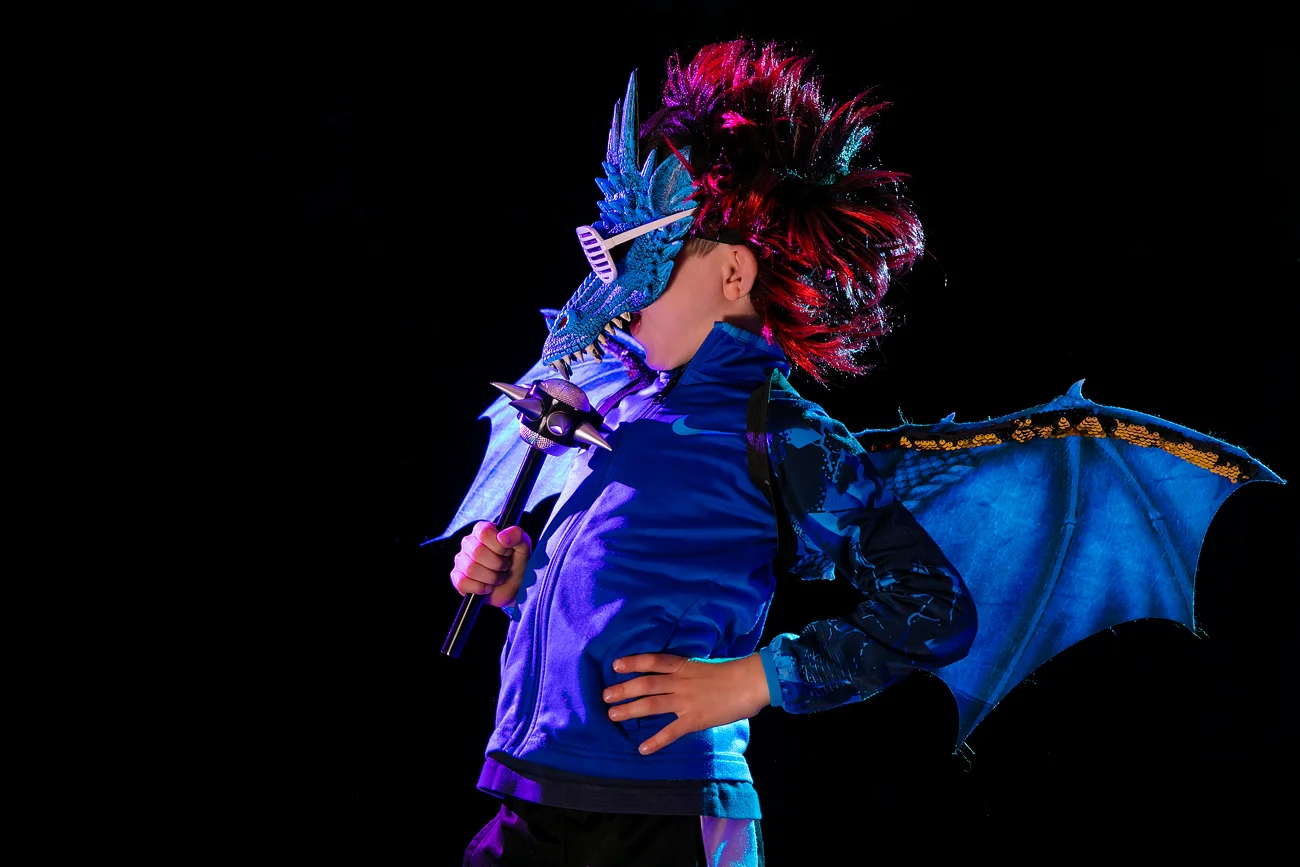
Dragons need to look fierce, and a spiky mohawk down the centre of the head is the boldest hairstyle in the entire play. It is dramatic, it is fun, and it makes a small child look ten feet tall from the audience. With a dragon costume and a roar, this is the style the audience will remember long after the show.
Pros: A spiky mohawk is dramatic, unforgettable and perfectly fierce for a dragon.
Cons: It needs strong gel and a lot of it, and it can feel stiff and uncomfortable for a child who is not used to product.
Who it suits: Dragons, dinosaurs, monsters and any fierce creature with short to medium hair.
Who should avoid it: Children who hate gel, and gentle characters like angels or fairies — a mohawk would terrify the audience for the wrong reasons.
Maintenance: Work strong gel through damp hair, spike the centre strip upward with your fingers, and use a little spray to set it. Wash it out the same evening.
27. The Baker Soft Waves
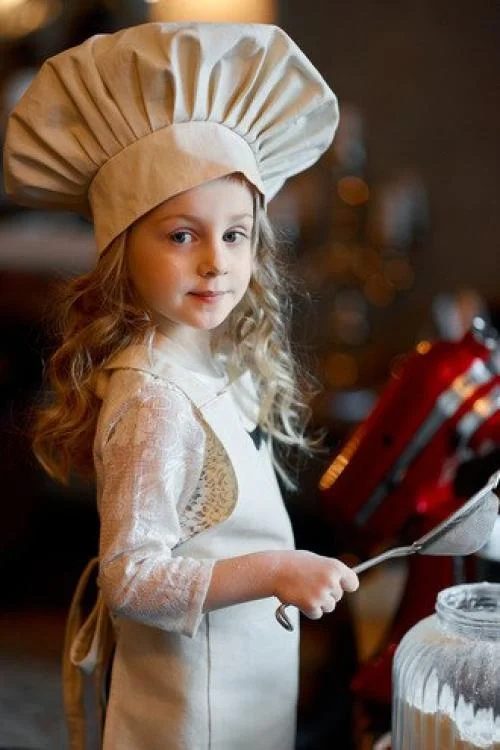
Bakers are warm, friendly and always busy, and soft waves under a baker’s hat give a child that cosy, kitchen feel. The waves peek out from under the hat, they frame the face, and they look homemade in the best possible way. It is a gentle style for a gentle character, and it suits the youngest performers beautifully.
Pros: Soft waves are warm, friendly and hat-friendly, and they suit the youngest bakers and cooks in the play.
Cons: A tall baker’s hat can squash the waves at the crown, so the hat needs to sit lightly.
Who it suits: Bakers, cooks, kitchen helpers and any warm, homely character with medium wavy hair.
Who should avoid it: Characters who need dramatic or neat hair — a baker’s softness would fight a queen or a knight costume.
Maintenance: Wave the hair with a large wand or overnight braids, brush it out softly, and perch the hat lightly so the waves still show at the sides.
28. The Flower Crown Braid
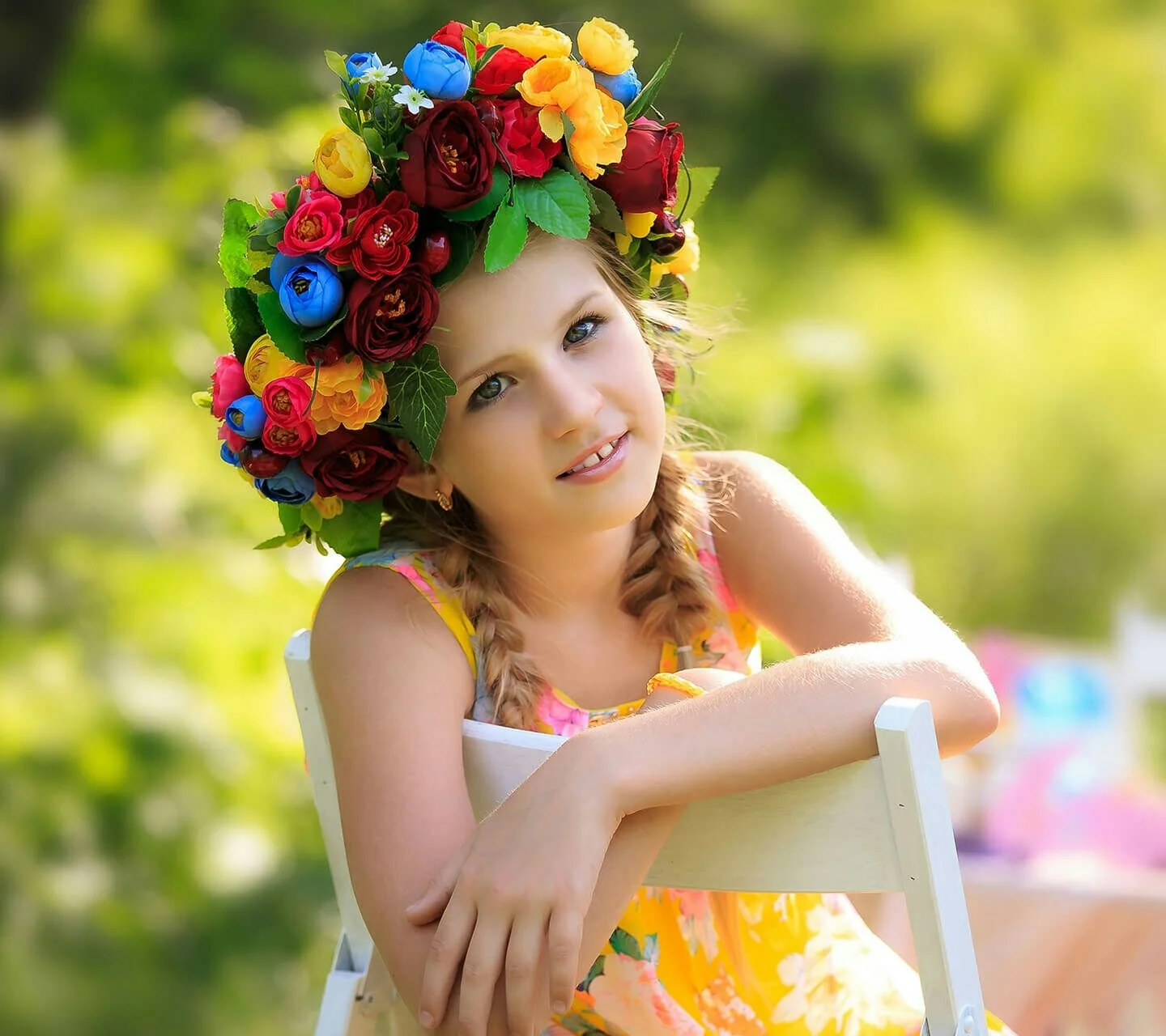
Flower girls and garden characters need hair that looks like it grew in a meadow, and a braid woven with tiny flowers is the prettiest way to do it. The braid keeps the hair tidy, the flowers add colour, and the whole style looks like springtime even in the middle of winter. It is the look that makes grandparents reach for their cameras.
Pros: A flower crown braid is beautiful, secure and photographs wonderfully, and it keeps hair tidy through dancing.
Cons: Real flowers wilt under hot lights, so use silk flowers or add them just before the performance.
Who it suits: Flower girls, garden fairies, spring characters and any floral role with medium to long hair.
Who should avoid it: Children with allergies to pollen — use silk flowers only — and characters who wear hats or hoods.
Maintenance: Braid the hair loosely to one side, weave small silk flowers into the braid as you go, and pin a final flower at the tie.
29. Mouse Ears Double Buns
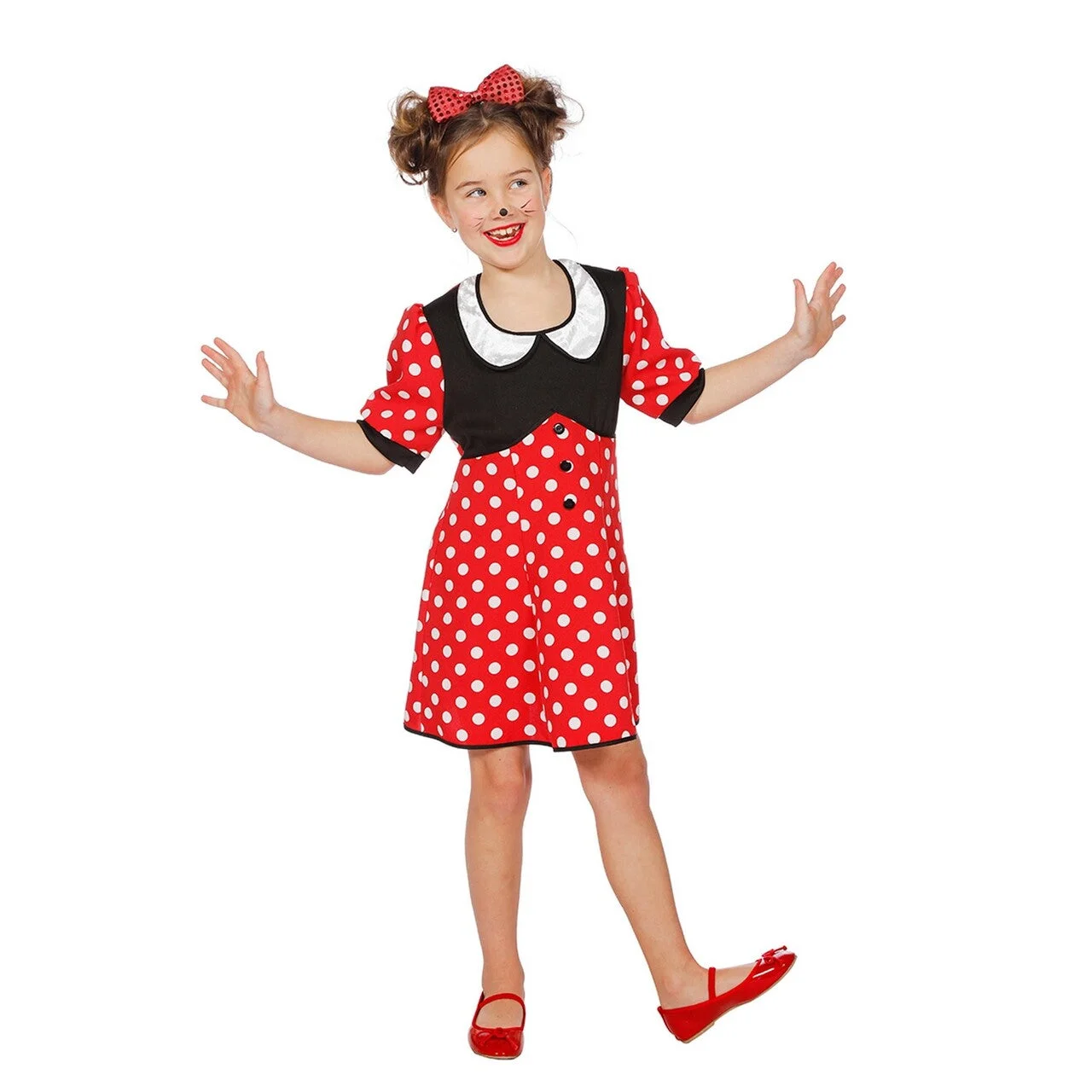
Mice are small, quick and adorable, and two neat little buns are the perfect ears for a mouse costume. They are tidy, they are symmetrical, and they keep the hair completely out of the way while your child scurries around the stage. Add a pink ribbon and a twitchy nose, and the smallest performer steals the show.
Pros: Double buns are neat, adorable and keep hair completely out of the face for the whole performance.
Cons: Small buns can look lost on very thick hair, and they need pinning well or they sag by the second scene.
Who it suits: Mice, bears, cats and any small animal character, especially girls with medium hair.
Who should avoid it: Children with very short hair, or animals whose ears are part of a hood — the buns would be hidden.
Maintenance: Part the hair down the middle, make two low ponytails, twist each into a small bun and pin it firmly. Add a ribbon to match the costume.
30. Roman Laurel Curls
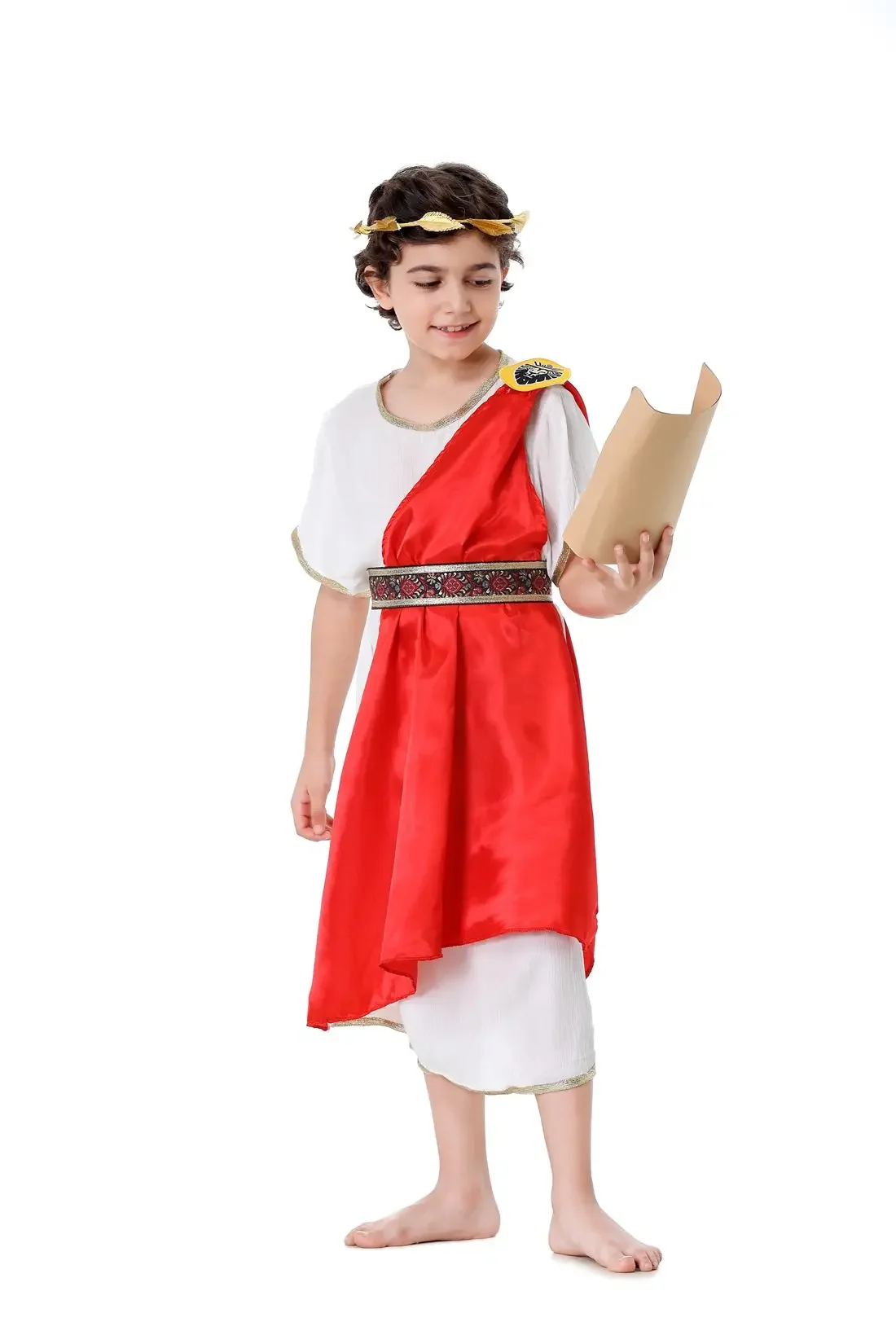
Roman plays need hair that looks like it belongs in a toga, and soft curls under a laurel wreath do exactly that. The curls should look natural and relaxed, as if the Mediterranean sun made them, and the laurel sits on top like a crown. It is a simple, elegant style that suits boys and girls alike.
Pros: Laurel curls are elegant, natural and suit both boys and girls playing Roman characters.
Cons: Curls can drop under the weight of a laurel wreath, so the wreath needs pinning to the hair.
Who it suits: Romans, Greeks, senators, goddesses and any classical character with wavy or curly hair.
Who should avoid it: Characters who need straight, sleek or braided hair — Roman curls would look out of place on a Viking or a knight.
Maintenance: Curl the hair loosely, let it cool, and pin the laurel wreath to the hair at two hidden points so it cannot slide.
31. The Detective Slick Side Sweep
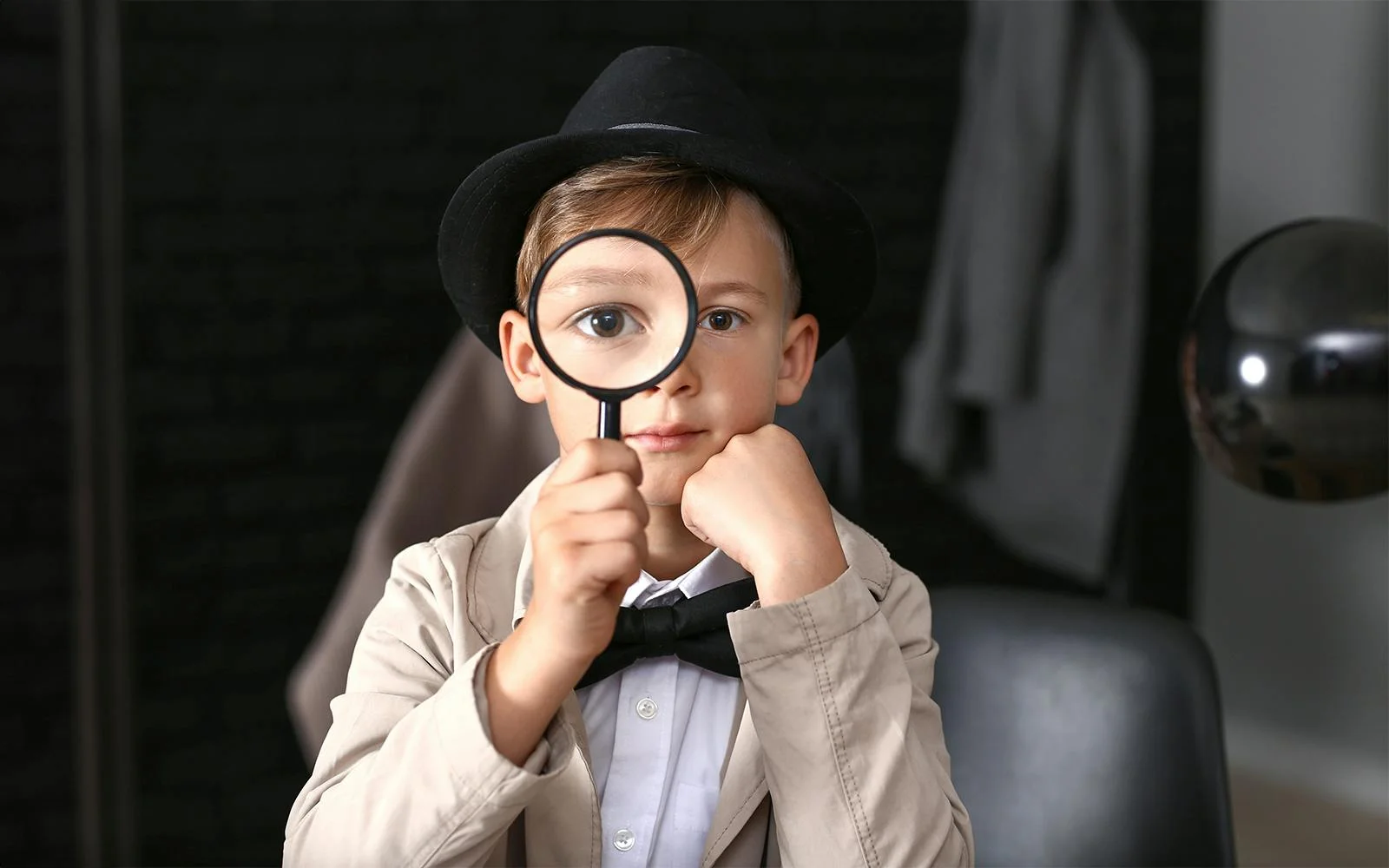
Detectives are clever, tidy and always watching, and a slick side sweep with a neat part gives a boy that sharp, observant look. It suits a trench coat and a magnifying glass perfectly, and it is the kind of hairstyle that makes a child stand a little taller. It is also one of the quickest styles in the play.
Pros: A slick side sweep is sharp, quick and perfectly in character, and it works with hats, coats and magnifying glasses.
Cons: It can look too neat and grown-up on very young children, so keep the product light.
Who it suits: Detectives, inspectors, reporters, spies and any clever character with short to medium hair.
Who should avoid it: Wild, magical or animal characters — a detective’s neatness would fight a lion or a wizard costume.
Maintenance: Comb damp hair to one side with a little light gel, set a clean part, and smooth the crown. Carry a comb backstage.
32. The Ballerina Classic Bun
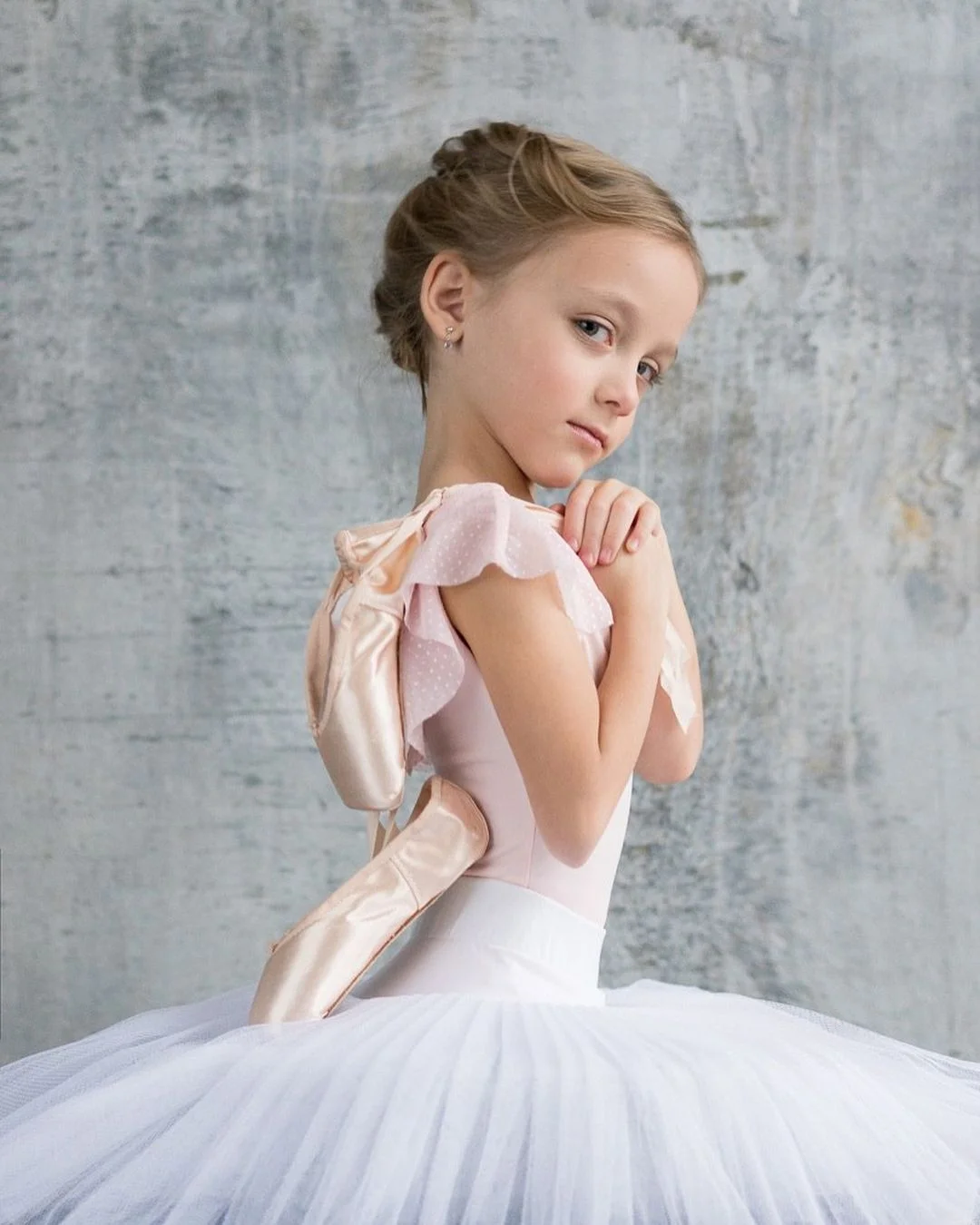
If the school play includes a dance, the ballerina bun is non-negotiable. It is the neatest, most secure hairstyle in the world of performance: not a single hair moves, the neck looks long and elegant, and the dancer can spin, leap and bow without ever thinking about her hair. It is the gold standard for a reason.
Pros: A ballerina bun is the most secure style on this list, it looks elegant from every angle, and it never distracts the dancer.
Cons: It can pull tightly and hurt if it is done too firmly, so it must be comfortable before the show starts.
Who it suits: Ballerinas, dancers, swans and any dancing character with medium to long hair.
Who should avoid it: Children with very short hair, or dancers who need their hair down for a second character.
Maintenance: Brush the hair back smoothly, secure it in a high ponytail, twist it into a bun and pin it in a circle. Finish with a hairnet and light spray.
33. The Clown Colourful Pigtails
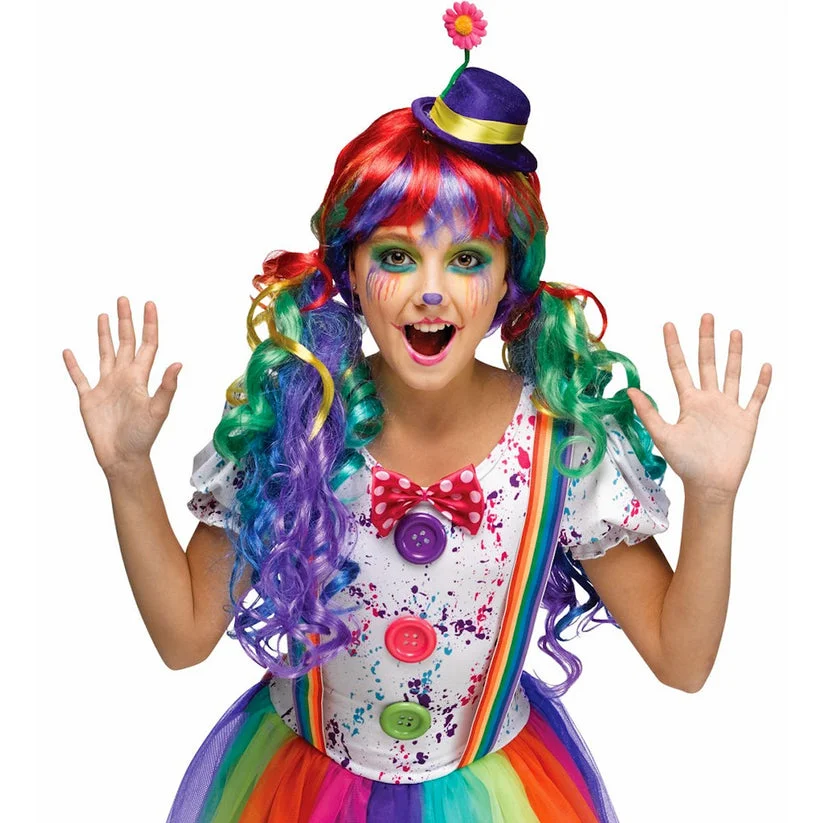
Clowns are allowed to break every hair rule, and colourful pigtails are the proof. Bright temporary colour spray, rainbow ribbons and pigtails sticking out at silly angles turn any child into the funniest person on stage. It is loud, it is joyful, and it is the one style where messier is genuinely better.
Pros: Colourful pigtails are joyful, unforgettable and perfectly in character for a clown.
Cons: Temporary colour spray can stain costumes and skin, so test it first and protect the costume with a towel.
Who it suits: Clowns, jesters, circus characters and any comic role with medium to long hair.
Who should avoid it: Children with sensitive skin or allergies to colour spray, and any serious or royal character.
Maintenance: Tie two high pigtails, add temporary colour spray to the ends, and finish with rainbow ribbons. Wash the colour out the same evening.
34. The Shepherdess Ribbon Braid
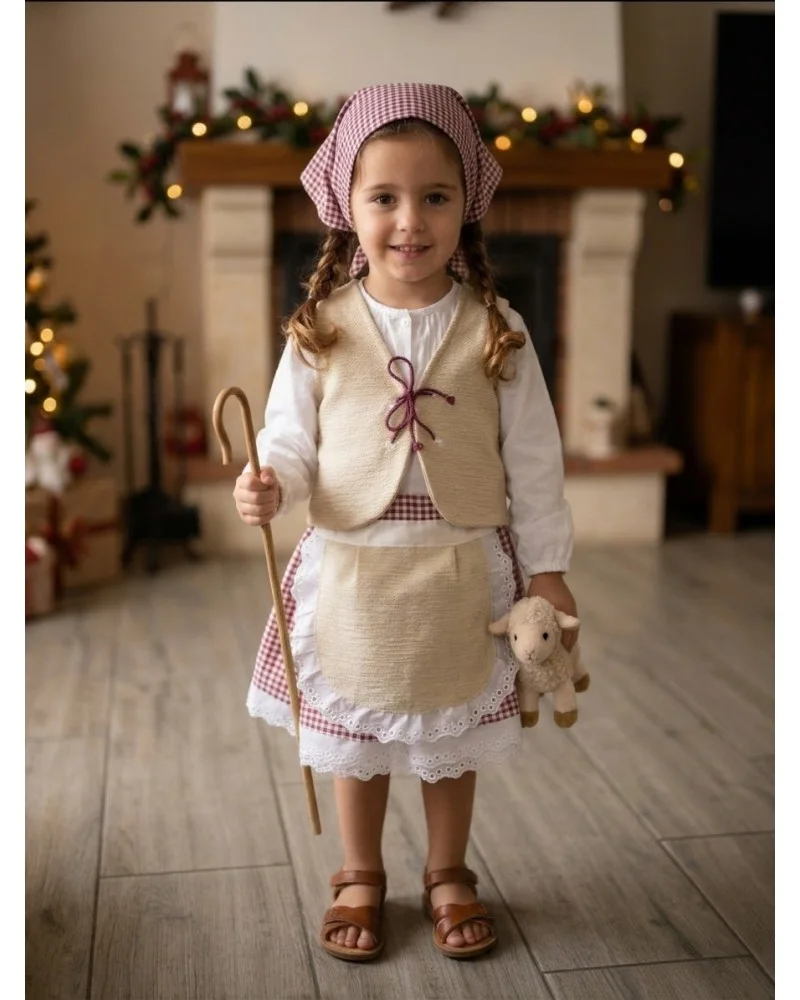
Shepherdesses are gentle, old-fashioned and sweet, and a braid woven with a ribbon is the prettiest way to show it. The ribbon matches the dress, the braid keeps the hair tidy while she tends her sheep, and the whole look is like a picture from a storybook. It is a quiet, lovely style for a quiet, lovely character.
Pros: A ribbon braid is sweet, tidy and storybook-perfect, and the ribbon ties the hair to the costume beautifully.
Cons: Weaving a ribbon takes a little practice, so do a trial run before show night.
Who it suits: Shepherdesses, milkmaids, country girls and any gentle pastoral character with long hair.
Who should avoid it: Characters who need wild, royal or modern hair — a shepherdess braid would feel too soft and old-fashioned.
Maintenance: Braid the hair with a ribbon woven through one strand, tie it at the end with a bow, and leave a few soft curls at the front.
35. The Time Traveller Victory Rolls

Older students playing a time traveller or a vintage character can wear the most glamorous style in the play: victory rolls. The rolls frame the face, they look straight out of the 1940s, and they photograph like a film still. This is the style for a confident teenager who wants to look like they stepped out of another decade.
Pros: Victory rolls are glamorous, dramatic and instantly place the character in the 1940s.
Cons: They are the hardest style on this list and need practice, pins and patience — allow plenty of time.
Who it suits: Time travellers, vintage characters, 1940s singers and any retro role played by a teenager.
Who should avoid it: Younger children, and any character who needs a quick change — victory rolls cannot be redone in the wings.
Maintenance: Roll each front section around your fingers, pin it underneath, and set it with spray. Practise the rolls at least twice before the show.
36. The Bear Cub Fluffy Curls
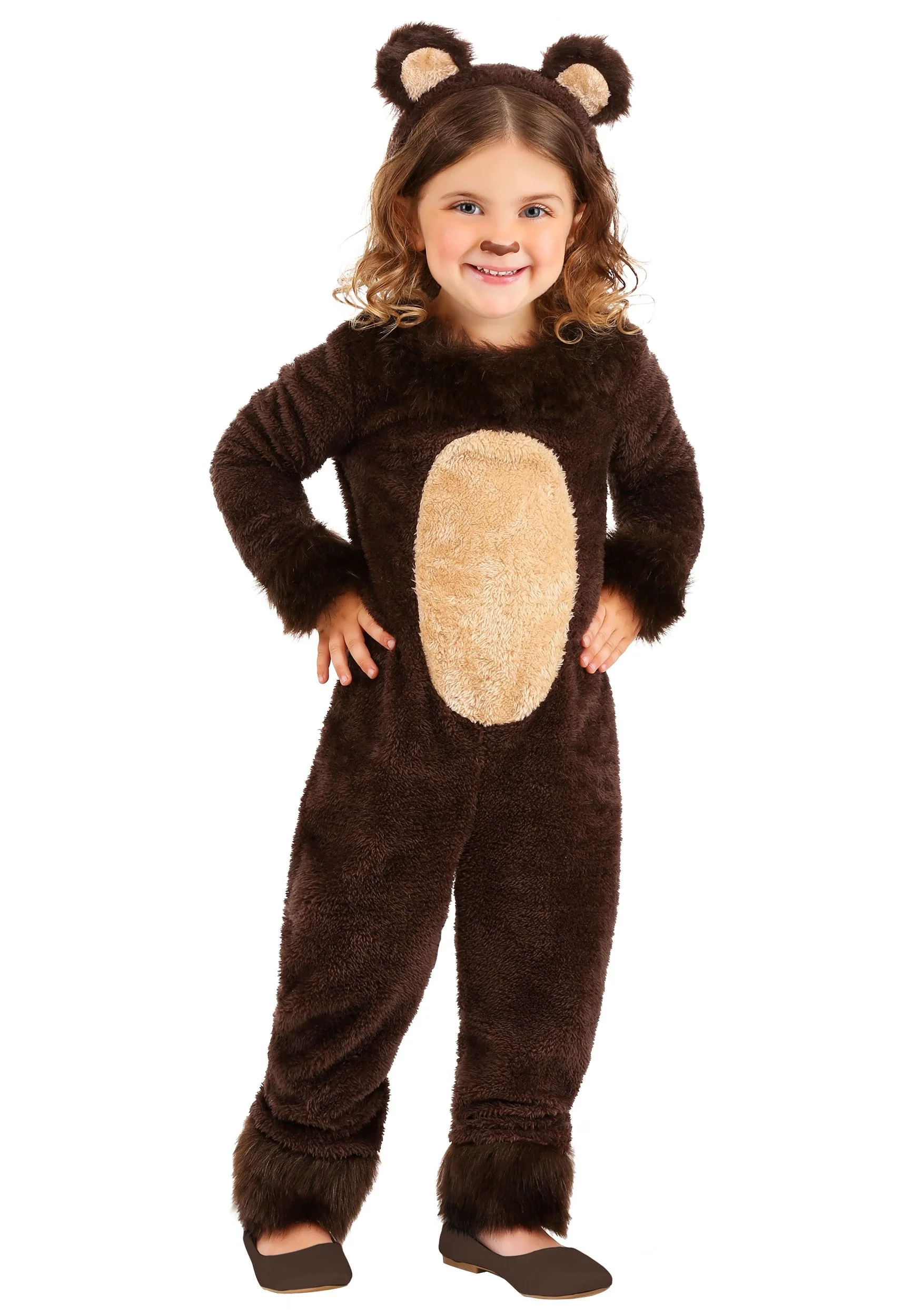
Bear cubs are supposed to be fluffy, and big soft curls around a small face give a child that cuddly bear shape in seconds. The curls work with a bear hood or ears, they frame the face, and they look adorable in every photograph. It is a warm, friendly style for the youngest animals in the play.
Pros: Fluffy curls are adorable, cuddly and perfectly bear-like, and they frame a small face beautifully.
Cons: Curls can drop under hot lights, and a bear hood can flatten the top of the style.
Who it suits: Bears, cubs, lions, cats and any fluffy animal character with naturally curly or wavy hair.
Who should avoid it: Children with very straight hair that will not hold a curl — use a bear hood with built-in ears instead.
Maintenance: Curl the hair with large rollers, let the curls cool, and fluff them gently with your fingers. Pin the front curls back so your bear can see.
37. Chorus Line Matching Ponytails
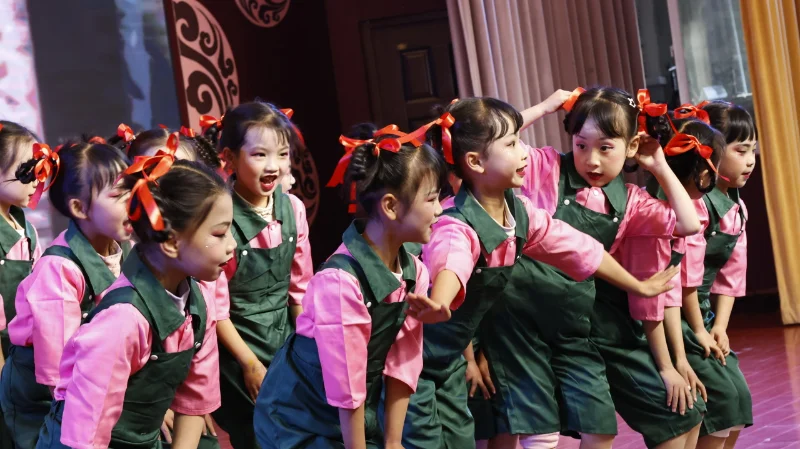
The chorus is a team, and matching ponytails make them look like one. When every child has the same high ponytail with the same ribbon, the group moves as a single picture on stage, and the audience sees a chorus instead of a crowd. It is simple, it is fair, and it means no child feels left out.
Pros: Matching ponytails look unified and professional, they are quick to do, and they keep every child’s hair out of the way.
Cons: Every child needs roughly the same hair length for the look to match, and the ribbons must be identical.
Who it suits: Chorus members, dancers, schoolgirls and any group number where the children should look like a team.
Who should avoid it: Solo characters and leads, who should stand out from the chorus rather than blend in.
Maintenance: Agree the ponytail height and the ribbon colour in advance, do every ponytail the same way, and check the group from the back row before the show.
38. Hollywood Waves for the Lead Role
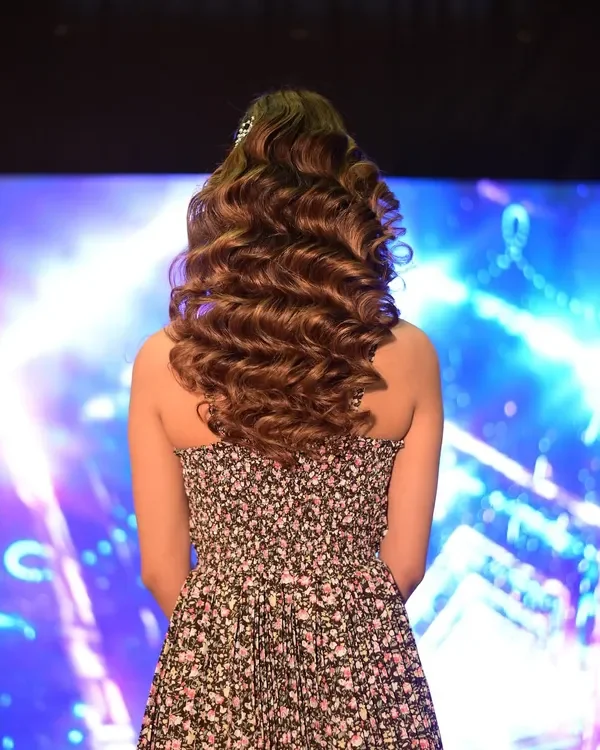
The lead role deserves the most glamorous hair in the play, and Hollywood waves are it. Big, glossy, side-parted waves that catch the light and move when she turns her head — this is the style for the star of the show, the leading lady, the girl whose entrance makes the audience gasp. It takes time, but it is worth every minute.
Pros: Hollywood waves are glamorous, photogenic and made for a leading lady’s entrance.
Cons: They take the longest of any style here, and they need setting spray and a backstage check to survive the show.
Who it suits: Leading ladies, stars, older students and any glamorous lead role with long hair.
Who should avoid it: Younger children, and leads with quick changes or energetic dance numbers — the waves would not survive.
Maintenance: Wave the hair in large sections all in the same direction, brush the waves out gently with a soft brush, and set them with flexible spray.
39. The Curtain Call Quick-Release Low Bun
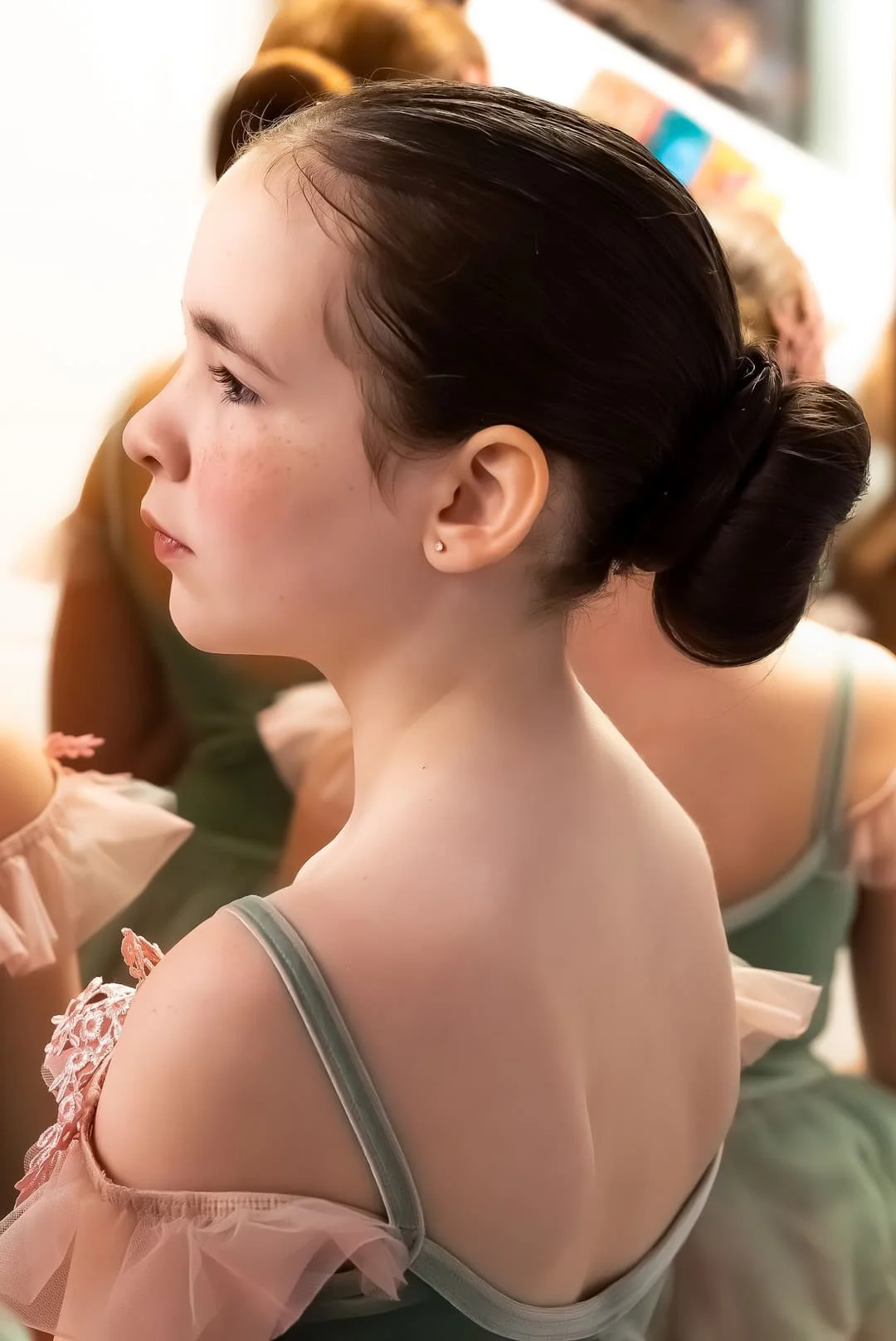
The last style in the play is for the child who has to look perfect at the end of a very long night. A low bun at the nape is elegant, comfortable and quick to release — and that is the point. After the final bow, the pins come out in seconds, the hair falls free, and your child can go home happy without a painful unpicking session backstage.
Pros: A low bun is elegant, comfortable and releases in seconds after the show, which children love.
Cons: It is less dramatic than a high bun or a crown braid, so it suits quieter characters best.
Who it suits: Narrators, mothers, teachers, angels and any graceful character with medium to long hair.
Who should avoid it: Characters who need height, drama or volume at the crown — a low bun sits too quietly for a queen or a lion.
Maintenance: Gather the hair low at the nape, twist it into a loose bun, and pin it with just four pins. Check it before the finale, and remove the pins one by one afterwards.
Can a child wear hairspray on stage?
Yes, a child can wear hairspray on stage, as long as you use a light, flexible-hold spray made for children or sensitive skin. Spray it from at least 20 centimetres away, keep it out of the eyes, and test it on the inner arm the day before to check for any reaction. Never use strong adult styling spray on a very young child.
How do I keep a hairstyle in place under hot stage lights?
Use thin layers of product rather than one heavy coat: mousse for volume, pins for structure, and a light spray to finish. Let each layer set before adding the next, and do a full trial run under the brightest light at home. Carry a small brush and a travel spray backstage for a quick touch-up between scenes.
What is the best hairstyle for a quick costume change?
A simple base style that works for every character is best, such as a low bun, a neat ponytail or a braided ponytail, with the character shown by a hat, ribbon or clip that swaps in seconds. Practise the change at home with a timer and keep the accessories in a labelled bag in performance order.
Can my child wear a wig for a school play?
Yes, wigs work very well for school plays, especially for lions, witches, wizards and period characters. Braid the natural hair flat underneath, use a wig cap, and pin the wig at the temples and the nape. Let your child wear the wig at home for a full hour first so you know it is comfortable and secure.
How do I remove stage hair gel and glitter afterwards?
Brush the hair gently first to remove loose glitter and pins, then wash with a mild shampoo and warm water, massaging the scalp softly. For stubborn gel, apply a little conditioner before shampooing and let it sit for a few minutes. Never pull pins out roughly, and never leave gel or glitter in overnight.
What hairstyle works best for a boy in a school play?
A neat side part, a swept-back style or a slicked-back look works for most boys’ characters, from princes and knights to narrators and detectives. Use a pea-sized amount of light cream or gel, keep the style simple, and carry a comb backstage. If your son hates gel, a hat-based character look is a good alternative.
How early should we practise the show-night hairstyle?
Practise the hairstyle at least once during the dress rehearsal, in full costume and under bright light, and once more the day before the show. That way you find out what loosens, what hurts and what takes too long while there is still time to fix it. Write down the exact steps, pins and products so any helper can recreate it.
Are bobby pins and hair accessories safe for young children?
Yes, bobby pins and accessories are safe when they are used properly. Use smooth pins with the ends tucked into the hair, snag-free elastics, and lightweight accessories that cannot fall into the eyes. Check that nothing pinches or scratches, and remove every pin gently one by one after the show.
What should I do if my child’s hair falls flat before curtain call?
Do a fast thirty-second backstage fix: lift the roots with your fingers, smooth the flyaways with a little water or spray on your hands, re-pin anything loose, and add one fresh accessory if the character allows it. Do not rebuild the whole style — a quick refresh is enough for the curtain call and the photos.
Can the same hairstyle work for rehearsals and the real show?
Yes, using the same hairstyle for rehearsals and the show is actually the best plan, because your child gets used to how it feels and you learn what loosens during the performance. Use the dress rehearsal as the full test, note what needs fixing, and repeat the exact same style on show night with those fixes in place.
Conclusion: Pick the Character, Practise Once, and Let Them Shine
The best hairstyles for a school play are not the fanciest ones. They are the ones that let a child forget about their hair and remember their lines, their cues and their big moment in the spotlight. Start with the character, choose a style that reads from the back row, and do one full trial run in costume before show night. That single rehearsal will save you more stress than any product ever could.
Keep it comfortable, keep it secure, and keep a few spare pins in your pocket. Then sit in the audience, watch your child step into the light, and enjoy the show — their hair is already doing its job.