A Snip to Remember: Hairstyles for a Baby’s First Haircut, From the Salon Chair to the Keepsake Curl
There is a moment in every parent’s camera roll that stops them mid-scroll: the first time a tiny pair of scissors meets their baby’s hair. The wisps that have been there since birth are suddenly a little too long, falling into curious eyes or curling over tiny ears, and the question arrives all at once. These hairstyles for a baby’s first haircut are about far more than looking neat. They are about marking a milestone, keeping a wriggly little one calm, and coming home with a photo and a keepsake curl you will treasure for years.
The first cut is different from every haircut that follows it, because the customer cannot sit still, cannot be reasoned with, and may decide at any second that the whole thing is a terrible idea. That is why the best first cuts are short, simple and gentle. A good stylist works fast, uses quiet tools where they can, and lets a parent hold the baby close. The style itself should be easy to live with, easy to grow out, and kind to fine baby hair that is still finding its texture.
This guide starts with eight short guides that cover when to book the first cut, how to choose a kid-friendly salon, saving the keepsake curl, photo tips, calming a nervous toddler, what to bring, aftercare, and first cuts by age and hair type. Then come 31 gentle styles, from the classic first trim to the keepsake long-locks trim, each with what it is, the pros and cons, the mistakes to avoid, how to maintain it, and a quick verdict.
When to Book the First Haircut
There is no magic age for a first haircut, and no baby is late if the scissors wait until eighteen months or even two years. Most babies are ready for a first trim somewhere between nine and eighteen months, when the hair starts falling into their eyes, curling over the ears, or growing unevenly at the back. If the hair is still a soft, even fuzz that stays out of the way, there is no rush at all. The right time is when the hair needs it, not when the calendar says so.
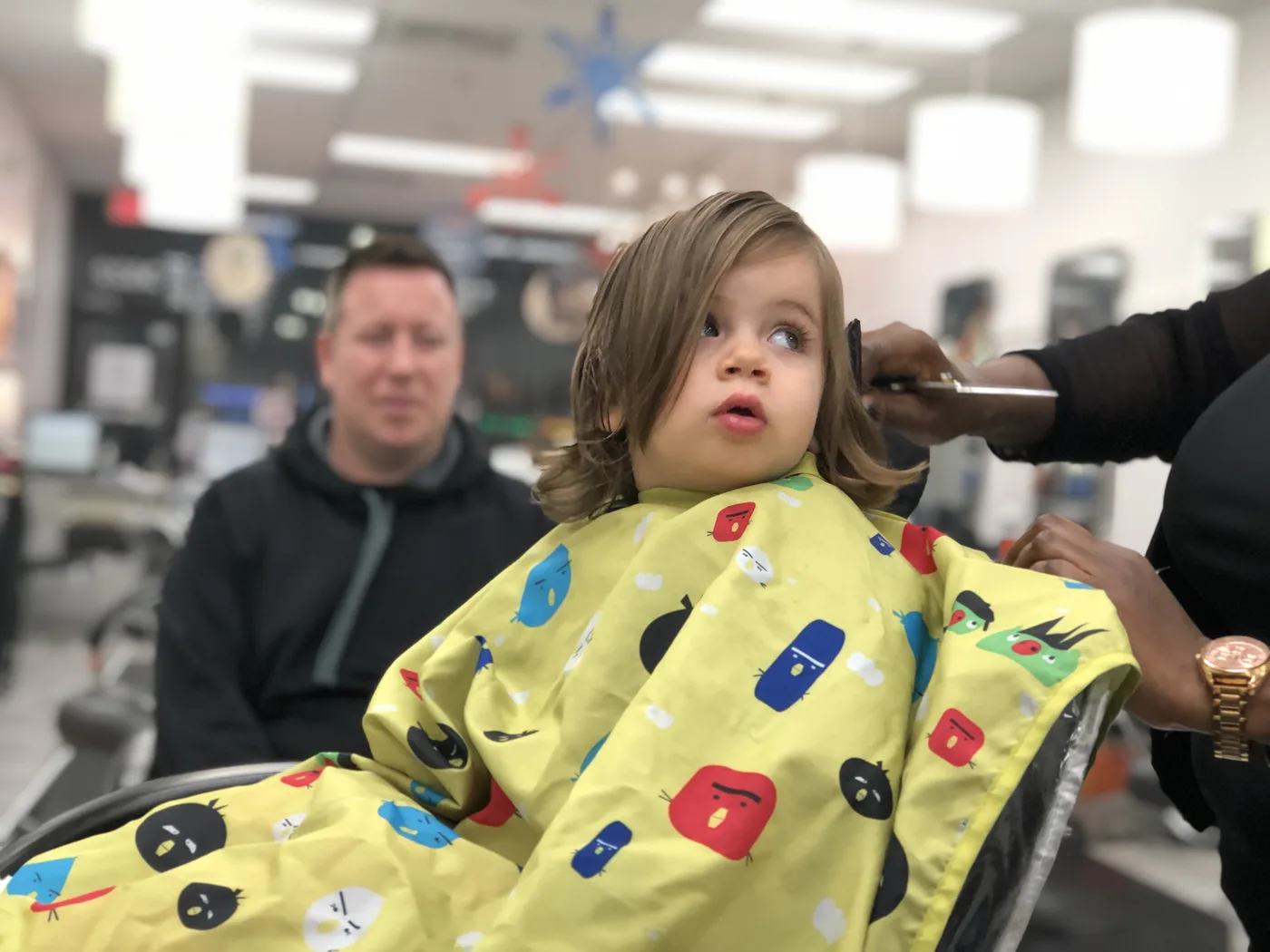
Watch for the practical signs rather than the birthday. Hair that constantly needs brushing out of the eyes, a fringe that makes your baby squint, or tangles that form at the nape during naps are all good reasons to book. Some parents book around a first birthday so the photos match the party, and that is a lovely reason too, as long as the baby is having a good day. Never book the first cut on a day when your baby is tired, teething badly, or due a nap in the middle of the appointment.
Book a morning slot if you can, when most toddlers are at their brightest, and ask the salon how long a first cut usually takes. Fifteen to twenty minutes is normal, and a good kids’ salon will not rush a nervous baby. If your baby is unwell on the day, reschedule without guilt. A first haircut should be a happy memory, and it will wait a week.
Choosing a Kid-Friendly Salon
A regular salon can cut a baby’s hair, but a kid-friendly salon makes the whole morning easier. Look for chairs shaped like cars or animals, a waiting area with toys, stylists who cut children’s hair every day, and a calm, noisy-tolerant atmosphere where a cry is not a crisis. Call ahead and ask whether the stylist has experience with babies under two, and whether a parent can hold the child on their lap during the cut.
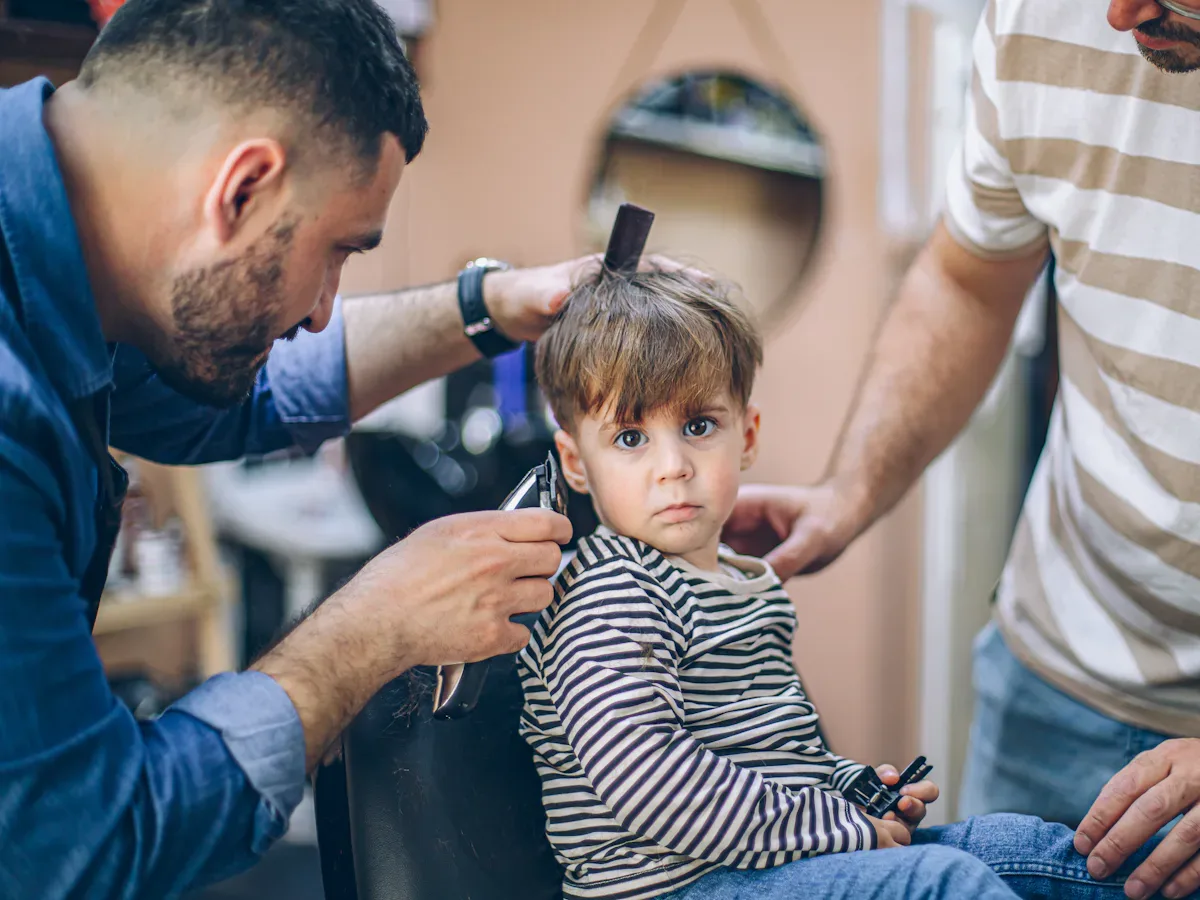
Visit first without the scissors if you can. A quick look around lets your baby see the chairs, hear the dryers, and meet the stylist while nothing is being asked of them. Watch how the stylist talks to children. The good ones get down to eye level, offer a toy or a mirror to hold, and explain what they are doing in a cheerful voice. If the salon feels rushed or the stylist seems impatient with a wriggling toddler, choose somewhere else.
Ask about the practical details before you book: the price of a first cut, whether a first-haircut certificate or keepsake envelope is included, and whether they use quiet clippers or scissors-only for babies. Some salons offer a special first-haircut package with a photo and a lock of hair in a little envelope, which saves you organising the keepsake yourself. A salon that has thought about these details has thought about your baby too.
Saving the Keepsake Curl
The keepsake curl is the part of the first haircut that parents remember longest, and it takes almost no effort to save well. Before the cut starts, tell the stylist you want to keep a lock, and ask them to cut one small curl from a spot that will not show, such as behind the ear or at the nape. A curl about the width of a finger is plenty. Ask them to hand it to you before they brush the hair, so it does not get lost in the sweepings.
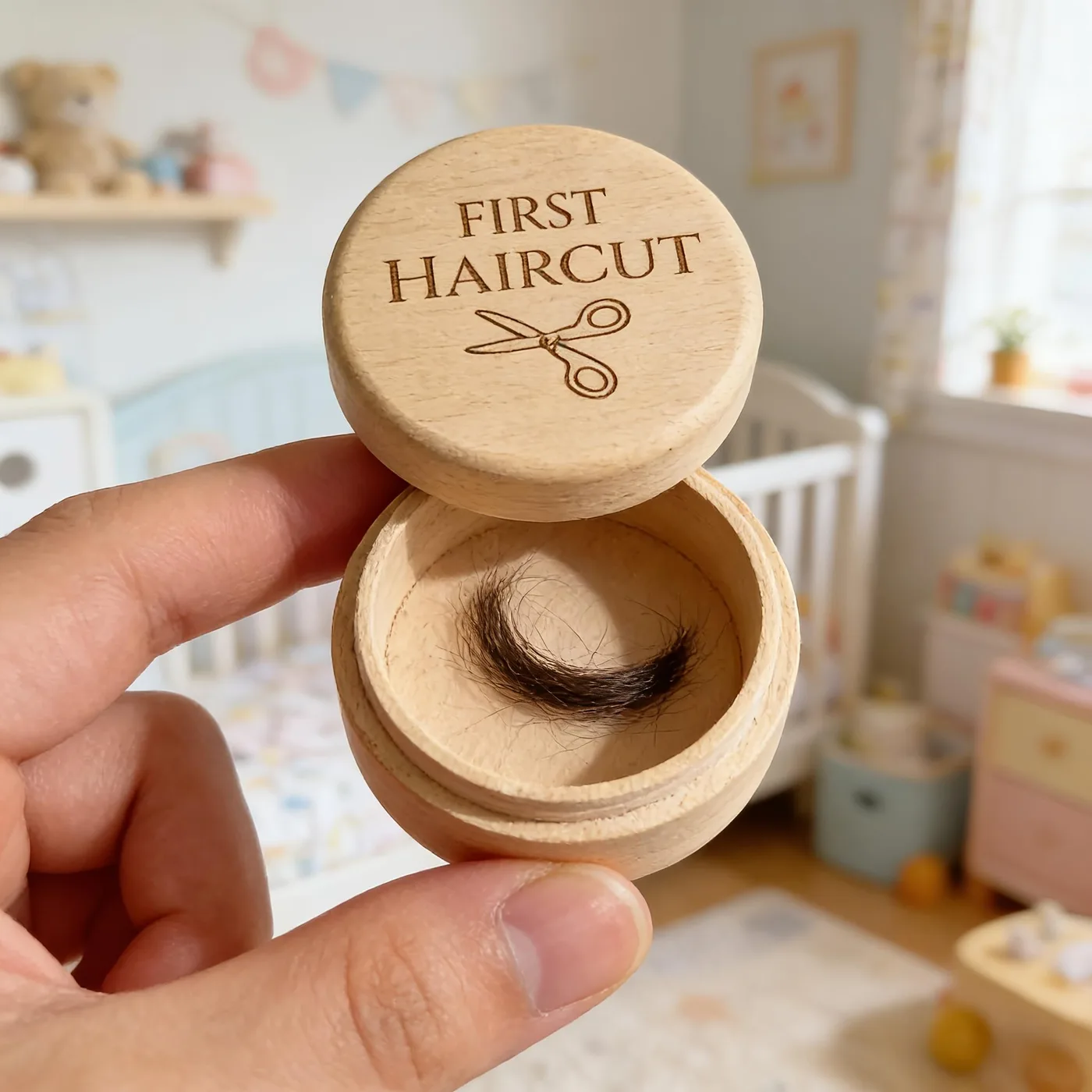
Take a small envelope or a tiny zip bag with you, and label it straight away with your baby’s name and the date. Hair looks the same in every envelope a year later, and the date is what makes it a keepsake rather than a mystery. If the salon gives you a first-haircut certificate, slip the envelope inside the same folder or baby book so the two stay together.
At home, you have plenty of pretty options: a small keepsake box, a locket, a scrapbook page next to the first-haircut photo, or a frame with the curl and the date written underneath. Keep the curl dry and out of direct sunlight, and do not glue it to paper while it is still damp from the cut. The curl will darken slightly as it dries, which is normal. What matters is that it is there, in one piece, ready to make you smile in ten years.
Photo Tips for the Big Day
The first-haircut photo works best when you plan it like a family snapshot, not a studio shoot. Sit where the light falls on your baby’s face, usually near a window or facing the salon door, and ask the stylist if you can take photos during the cut. Most kids’ salons expect it. Take a before photo at home in the morning, a during photo in the chair, and an after photo with the fresh cut and a big smile, so the three together tell the whole story.
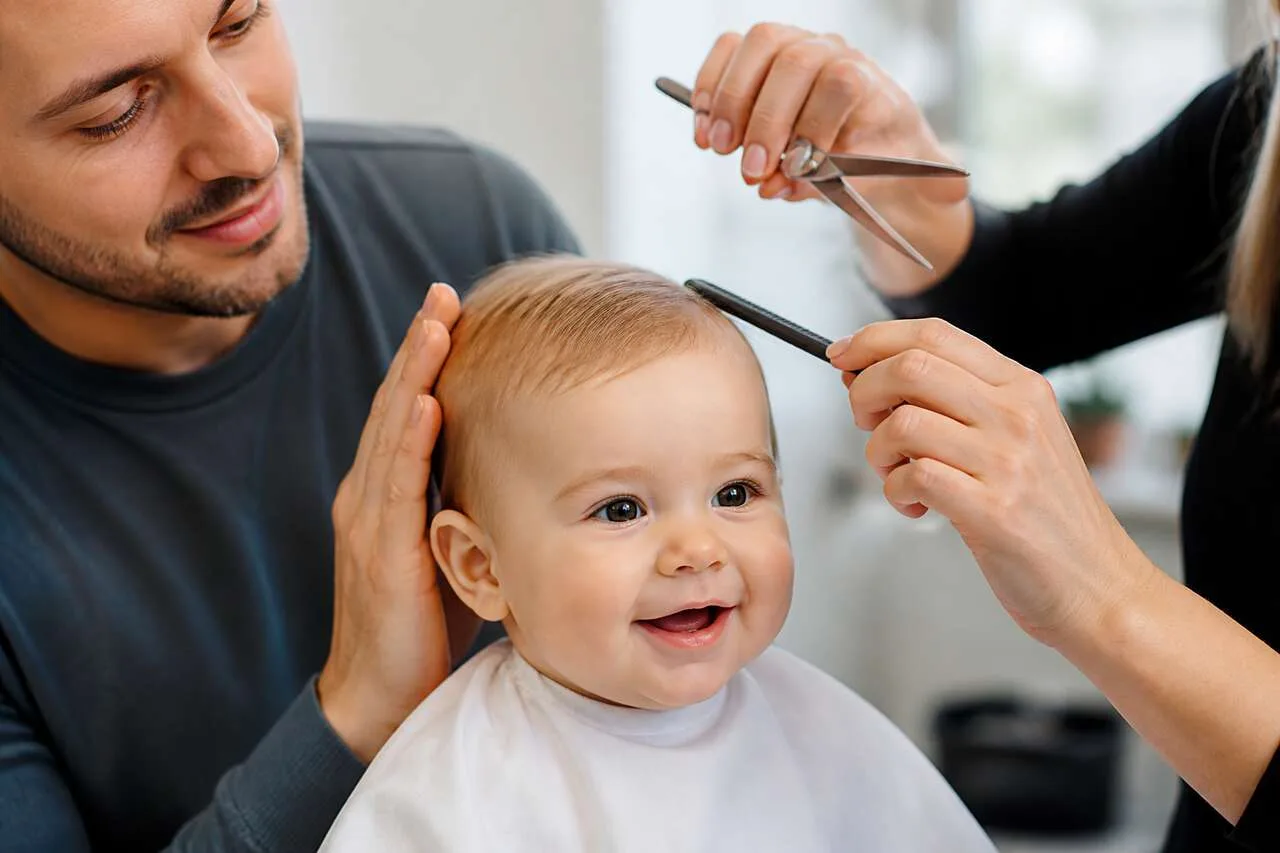
Get the small details in the frame: the tiny scissors, the cape, the curl in the stylist’s hand, and your baby’s expression. The face tells the story more than the hair does, so do not worry if the back of the head is not perfectly visible. Shoot in bursts rather than single shots, because a wriggling baby gives you one good frame in ten, and a burst catches the laugh you would otherwise miss.
Keep it simple and keep it quick. One parent photographs while the other holds, comforts, and distracts the baby. Put the phone away for the last minute of the cut and just watch, because the memory matters more than the photo. When you get home, pick three favourites, print at least one, and write the date on the back. A printed photo in a baby book will outlast every phone upgrade.
Calming a Nervous Toddler
Most toddlers are nervous about the first haircut because it is new, not because it hurts, and the calmest tool you have is your own mood. Talk about the haircut for a few days before, in a cheerful, matter-of-fact way. Read a picture book about haircuts, let your toddler watch an older sibling or parent get a trim, and let them hold the cape or play with a toy comb at home. Familiar is calm.
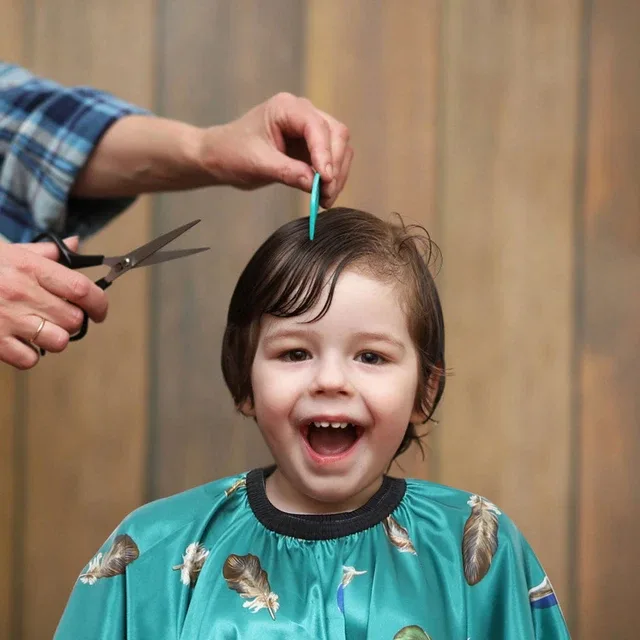
On the day, bring the comfort objects: the favourite toy, a snack, a drink, and a screen or a song if that is what works for your child. Sit where your toddler can see you, keep your voice light, and praise every brave second. A stylist who has cut a hundred first haircuts will know the tricks, like cutting while the baby watches a video, or doing the tricky fringe last when the child is most settled.
If the crying starts, do not panic and do not force it. A short pause, a cuddle, and a biscuit can reset the whole appointment. If your baby is truly distressed, stop and try another day. A half-finished first cut can be tidied up later, but a frightening first salon visit is remembered at the next appointment. The goal is a happy memory, not a perfect fringe.
What to Bring to the First Haircut
Pack the first-haircut bag the night before, because a calm parent makes a calm baby. The essentials are a snack and a drink, a favourite toy or comfort blanket, a change of top for the hairy aftermath, a small envelope or zip bag for the keepsake curl, and your phone, charged, for photos. A spare dummy or a bottle is worth bringing too, even if your baby has nearly outgrown it.
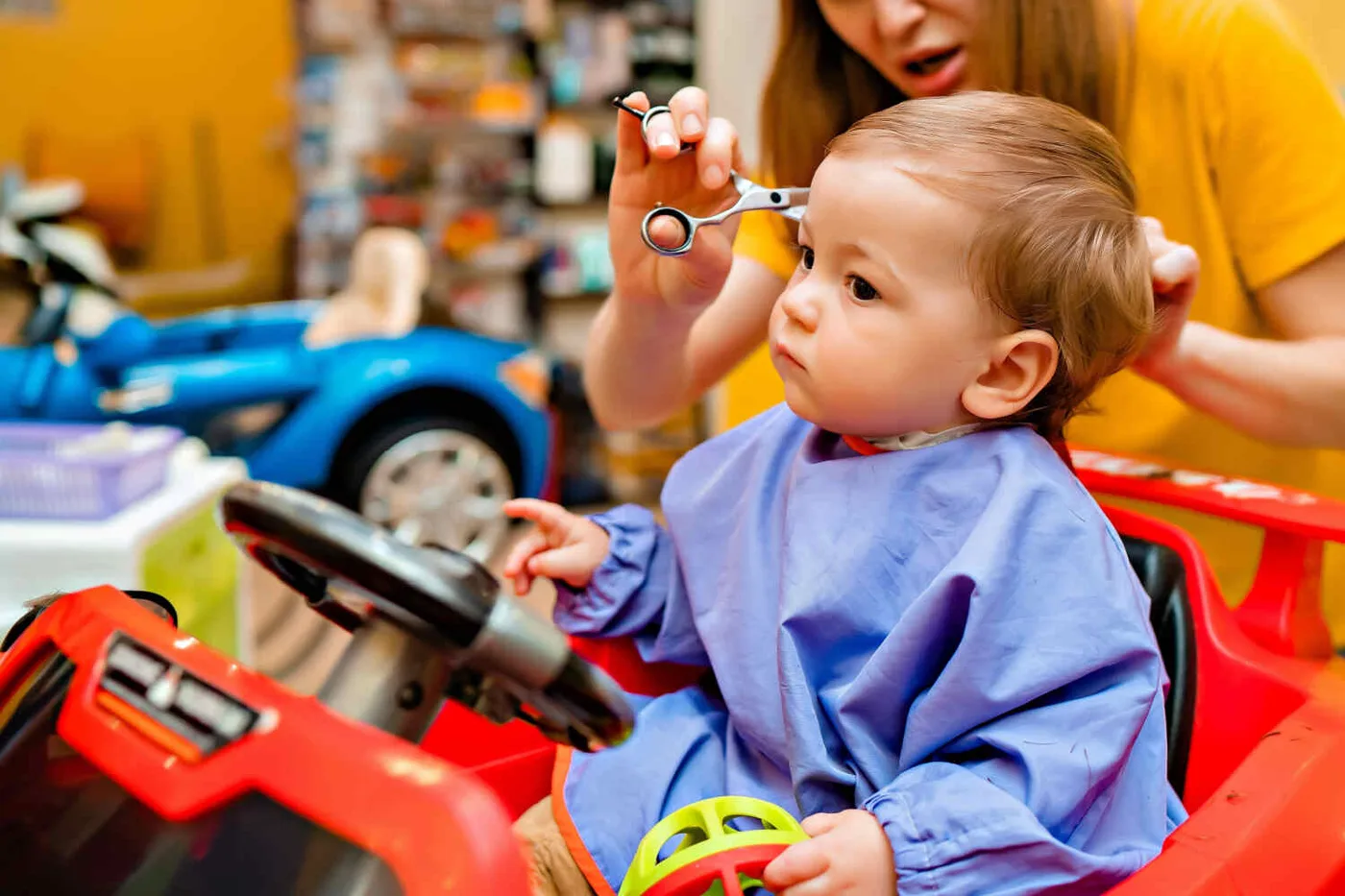
Dress your baby in something you do not mind getting hairy, or bring a change of clothes for afterwards. A light top with no hood is best, because hoods bunch up under the cape and collars get in the stylist’s way. Avoid white if you can, since tiny cut hairs show up on it and cling. Bring a baby wipe or a damp cloth for the neck and ears afterwards, because loose hairs itch and a quick wipe stops the scratching.
Bring one more thing that parents often forget: patience, and a second adult if you can manage it. One adult holds and comforts while the other takes photos, holds the snack, and chats to the stylist. If you are going alone, tell the salon when you book, so they can allow extra time and an extra pair of hands. The appointment will still be short, but it will feel much easier.
Aftercare for Baby’s First Cut
Aftercare for a first haircut is wonderfully simple, because baby hair needs very little. When you get home, brush or wipe away any loose hairs from the neck, ears and shoulders, and give the hair a gentle wash with your usual baby shampoo if it feels gritty. There is no need for styling products on a baby. A soft brush and a little water are all the styling a fresh first cut needs.
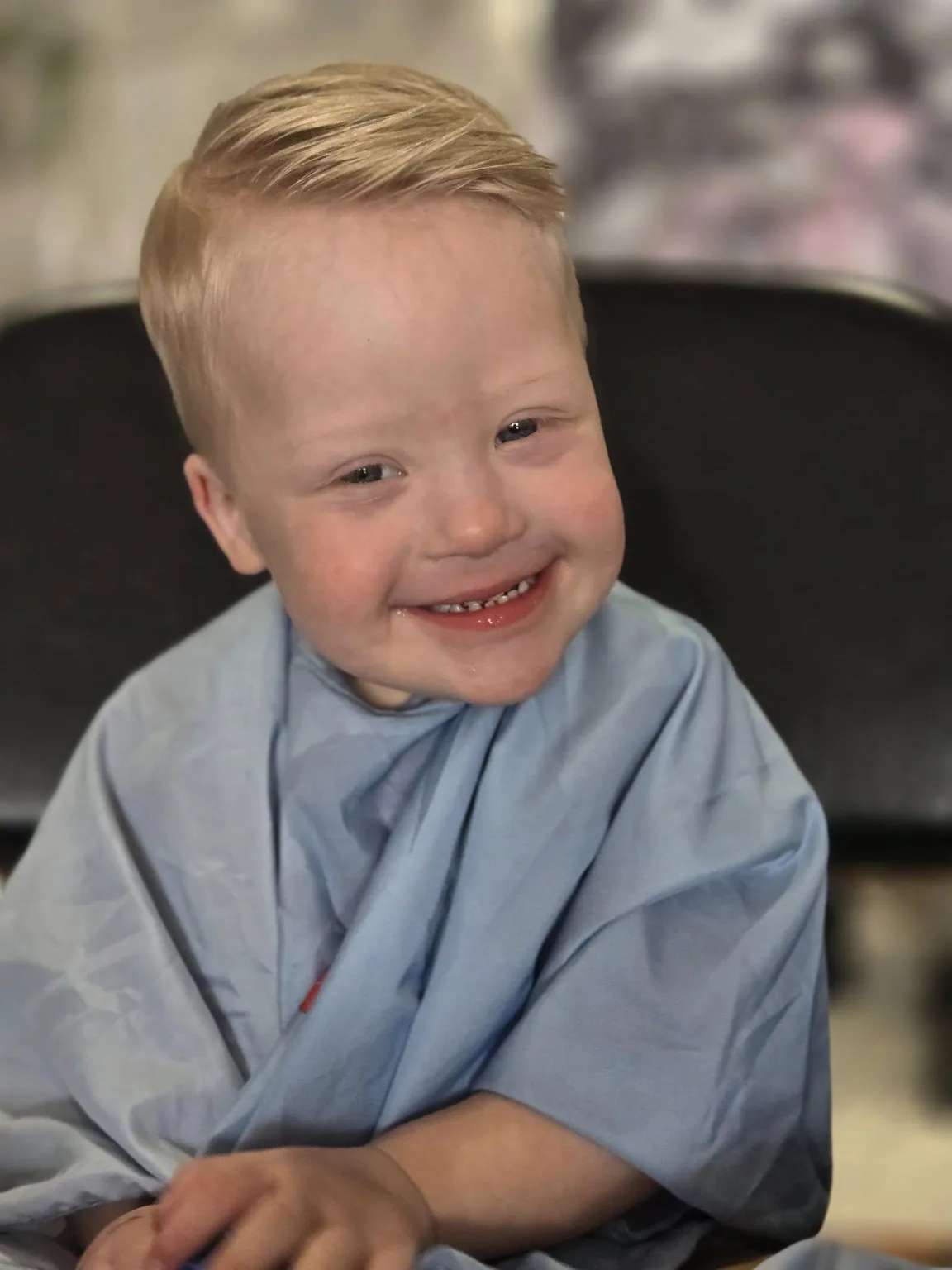
Expect the hair to look slightly different once it is washed and dried at home. Salon lighting and a damp cut can make the fringe look shorter or neater than it really is, and a day later the true shape settles in. If a little tuft sticks up or one side looks a touch longer, wait a week before deciding. Baby hair is fine and wispy, and it often sorts itself out as it dries naturally.
Keep the routine gentle for the next few days. No tight hats rubbing the fresh fringe, no scratching at the nape, and no worried re-cutting at home with kitchen scissors. If something genuinely needs fixing, most kids’ salons will tidy a first cut for free within a week, so call them rather than reaching for the scissors yourself. Book the next trim when the hair starts falling into the eyes again, usually in six to eight weeks.
First Haircuts by Age and Hair Type
A six-month-old with a wisp of fine hair needs almost nothing: a tiny tidy of the fringe and the nape, scissors only, and no clippers anywhere near a soft head. A one-year-old with a full head of curls needs a stylist who understands curly hair, because curls spring up shorter than they look when wet. A two-year-old with thick, straight hair can take a proper little style, like a side part or a soft bob, because there is enough hair to shape.
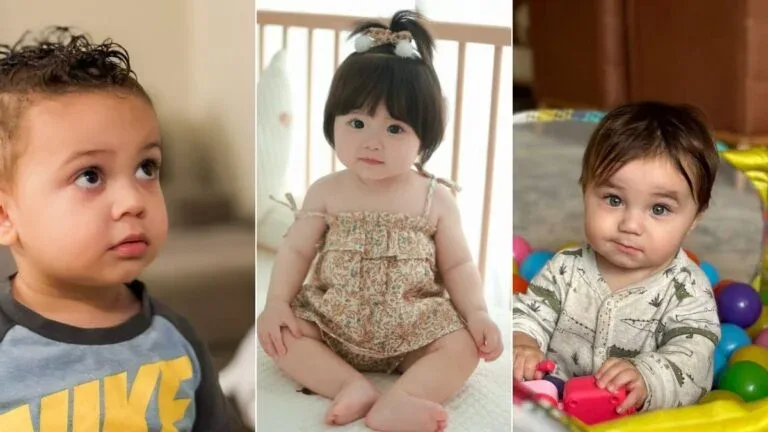
Hair type matters more than age when you choose the cut. Fine hair looks best in short, simple styles with a little length on top, because long fine hair goes stringy and tangles. Thick hair can take layers and a proper fringe, because there is enough weight to hold the shape. Curly hair should be cut dry or only just damp, curl by curl, so the stylist can see where each curl will sit. Straight hair is the most forgiving, and it shows off a neat fringe beautifully.
Whatever the age or the hair type, the rules stay the same: keep it short, keep it simple, and keep it kind to the scalp. Avoid clippers on babies under one, avoid very short cuts on fine hair that will look patchy as it grows, and avoid styles that need daily styling, because no toddler will sit still for that. The right first cut is the one that looks good with nothing more than a brush and a smile.
The Classic First Trim
What it is: the classic first trim is the simplest first haircut there is. The stylist takes a tiny amount off the ends all round, tidies the fringe out of the eyes, and neaten the hair over the ears and at the nape. Nothing dramatic changes, and your baby still looks like your baby, just a little tidier.
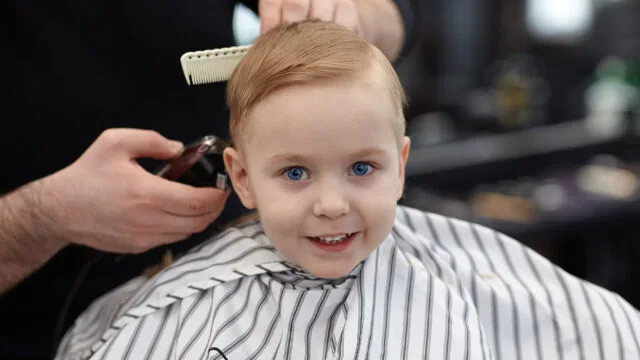
Pros and cons: the pros are that it is quick, usually finished in ten minutes, gentle on a nervous baby, and impossible to get badly wrong. The cons are that it is not a big transformation, so if you were hoping for a dramatic before-and-after photo, this will not give you one. Common mistakes: asking for too much off at once on a first visit, and cutting the fringe too short because it looks longer when it is wet.
Maintenance: almost none. A soft brush once a day and a normal wash is all it needs, and it grows out evenly without an awkward stage. Quick verdict: the safest, kindest first haircut, and the best choice if your baby is nervous or you are not sure what style you want yet.
The Wispy Baby Fringe Trim
What it is: a tiny trim of the front hair only, just enough to lift the wisps out of your baby’s eyes. The rest of the hair is left completely alone, so the cut is over in minutes and most babies barely notice it happened.
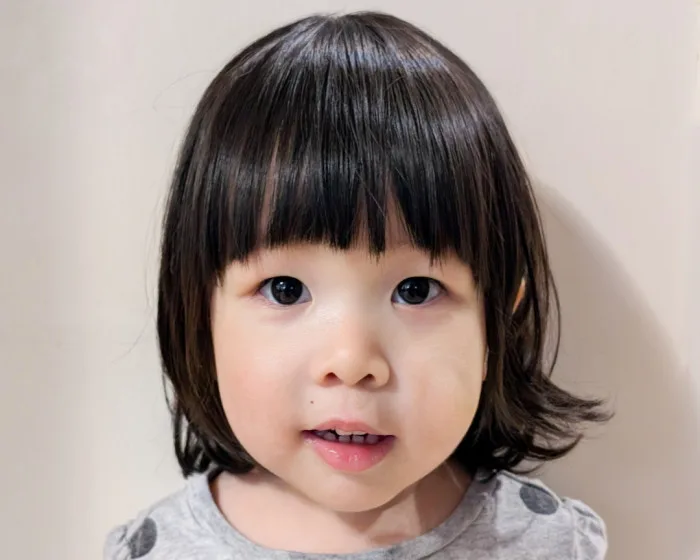
Pros and cons: the pros are speed, no clippers, and a baby who stays happy because the scissors never go near the ears. The cons are that the back and sides keep growing wild, so it is a half job rather than a full haircut. Common mistakes: cutting the fringe in a straight line across a wiggly forehead, which ends up wonky, and trimming it while the hair is wet, which makes it spring up too short when it dries.
Maintenance: brush the fringe to one side with your fingers each morning and it stays out of the eyes. Quick verdict: perfect for babies whose only problem is hair in the eyes, and a lovely gentle introduction to the salon.
The Tiny Side Part
What it is: a soft little side part combed into a toddler boy’s hair, with the sides kept short and the top left just long enough to sweep over. It is the classic smart little-boy cut, shrunk down to baby size.
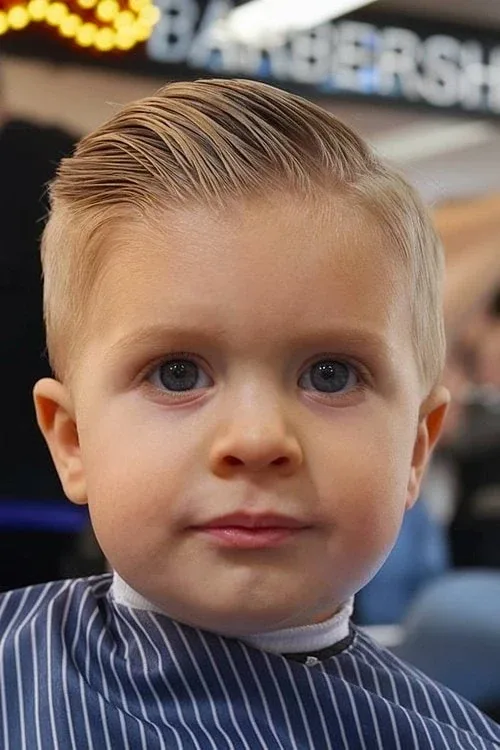
Pros and cons: the pros are that it looks instantly tidy, photographs beautifully, and works on straight and slightly wavy hair. The cons are that it needs a parting combed in each morning, and it does not suit very curly hair, which will not lie in a part. Common mistakes: parting the hair too far to the side, which looks severe on a baby, and using gel or product to force the part, which baby hair does not need.
Maintenance: a damp brush and a quick comb-through after a bath is all it takes, and the part will often fall into place on its own. Quick verdict: a charming, grown-up little cut for straight-haired toddlers, and a favourite for first-birthday photos.
The Soft Baby Bob
What it is: a chin-length bob with soft, rounded ends, cut to sit just below the ears. It is the classic first cut for baby girls with enough hair to shape, and it frames a little face beautifully without any fuss.
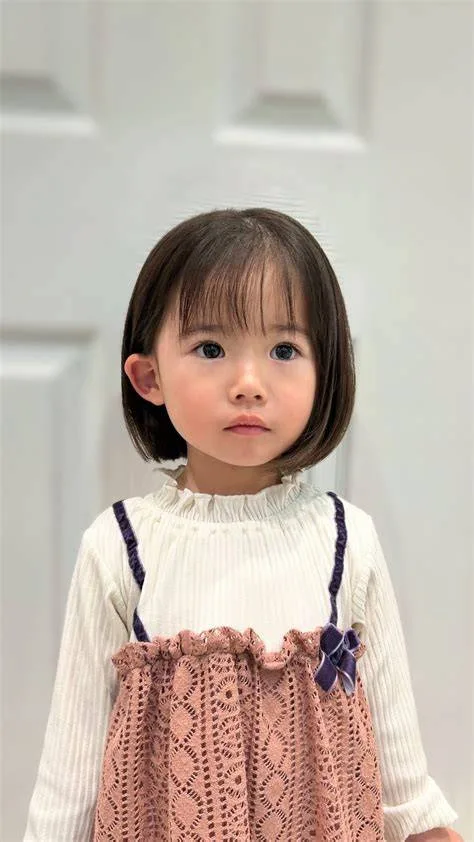
Pros and cons: the pros are that it is easy to wash, dries quickly, and looks neat with no styling at all. The cons are that it needs a trim every six weeks or it grows into a shaggy shape, and it can look uneven if your baby will not sit still for the back. Common mistakes: cutting it too short at the back, which makes the bob flip outwards, and cutting it dead straight, which looks harsh on a baby.
Maintenance: brush it after baths and let it dry naturally, and it will fall into its soft shape on its own. Quick verdict: the prettiest low-effort first cut for girls with straight or wavy hair, and it grows out gracefully.
The Curly Top With Short Sides
What it is: the curls on top are left long enough to bounce, while the sides and back are trimmed short and tidy. It keeps the gorgeous curls where they show and takes the bulk away where it does not.
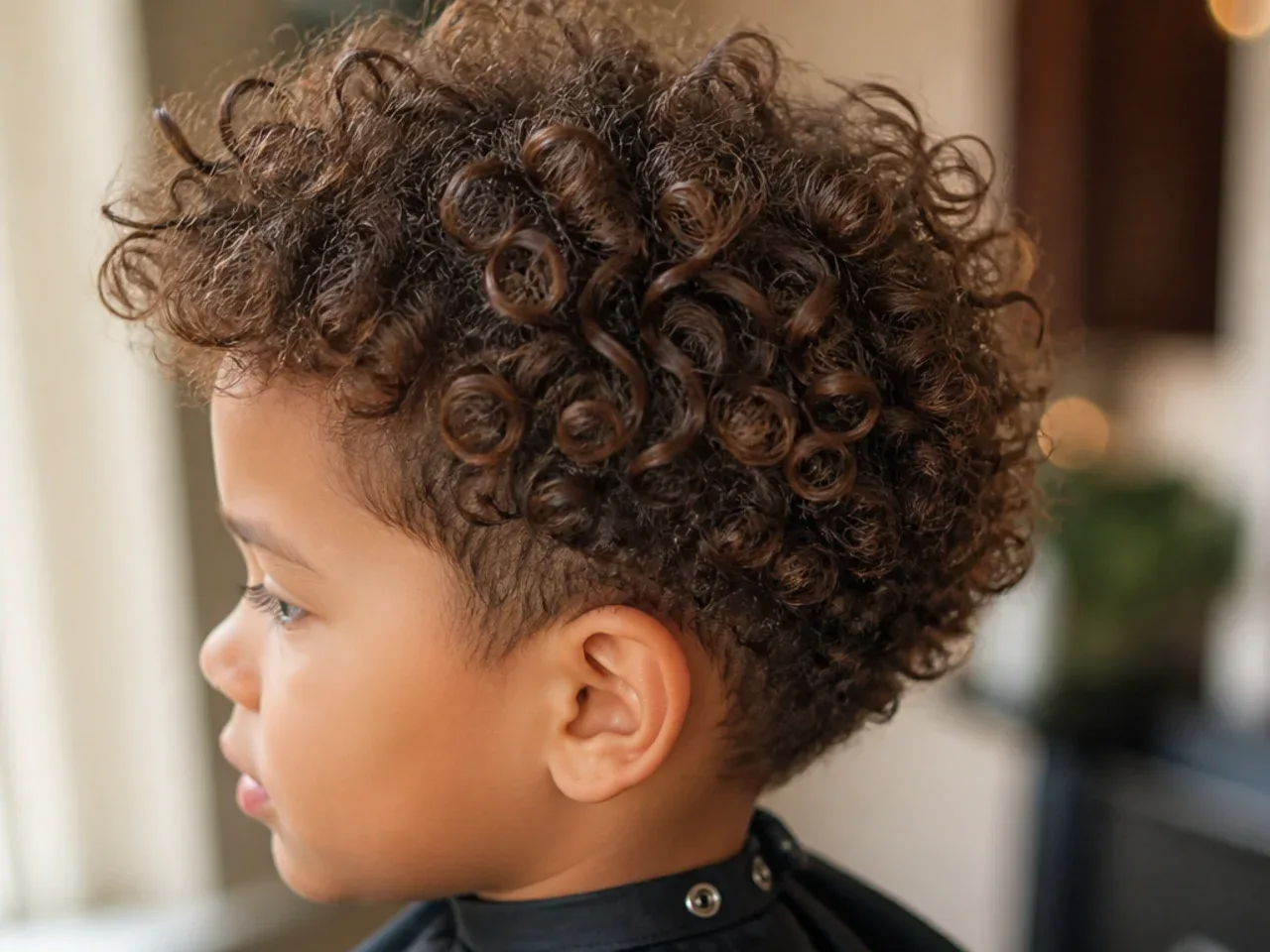
Pros and cons: the pros are that the curls stay the star of the show, the cut is cooler in warm weather, and it is much easier to wash than a full head of curls. The cons are that the sides grow out fast and need regular tidying, and a stylist who is not used to curls can cut the top too short. Common mistakes: cutting curly hair while it is soaking wet, so it springs up far shorter than planned, and thinning the curls, which makes them frizz.
Maintenance: wash with a gentle shampoo, scrunch the curls with your fingers, and let them air dry. Quick verdict: the best first cut for curly toddlers, because it celebrates the curls instead of fighting them.
The Gentle First Buzz Cut
What it is: a very short all-over cut done with quiet clippers on a longer guard, leaving a soft, even fuzz. It is often chosen after a hot summer, or when a baby’s hair has grown in patchy and uneven.
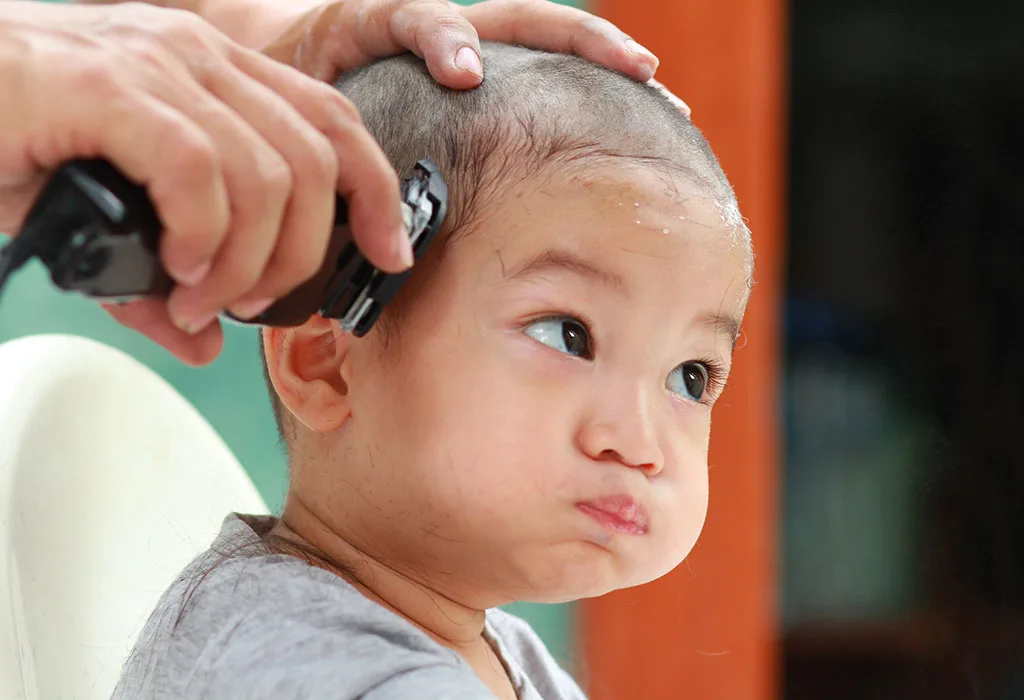
Pros and cons: the pros are that it is the quickest cut of all, it evens out patchy baby hair, and there is nothing to tangle or brush. The cons are that it is a big change, some parents find it a shock, and it offers no protection from the sun, so a hat becomes essential. Common mistakes: using clippers on a baby under one without a stylist’s advice, and going too short on the first pass, which cannot be undone.
Maintenance: none at all, beyond sun protection and a soft hat outdoors. Quick verdict: brave but brilliant for patchy hair and hot weather, as long as you are ready for how different your baby will look.
The Little Bowl Cut
What it is: a rounded cut that follows the shape of the head, with the fringe and the sides at the same soft length. The modern version is textured and gentle, nothing like the severe bowl cuts of old photos.
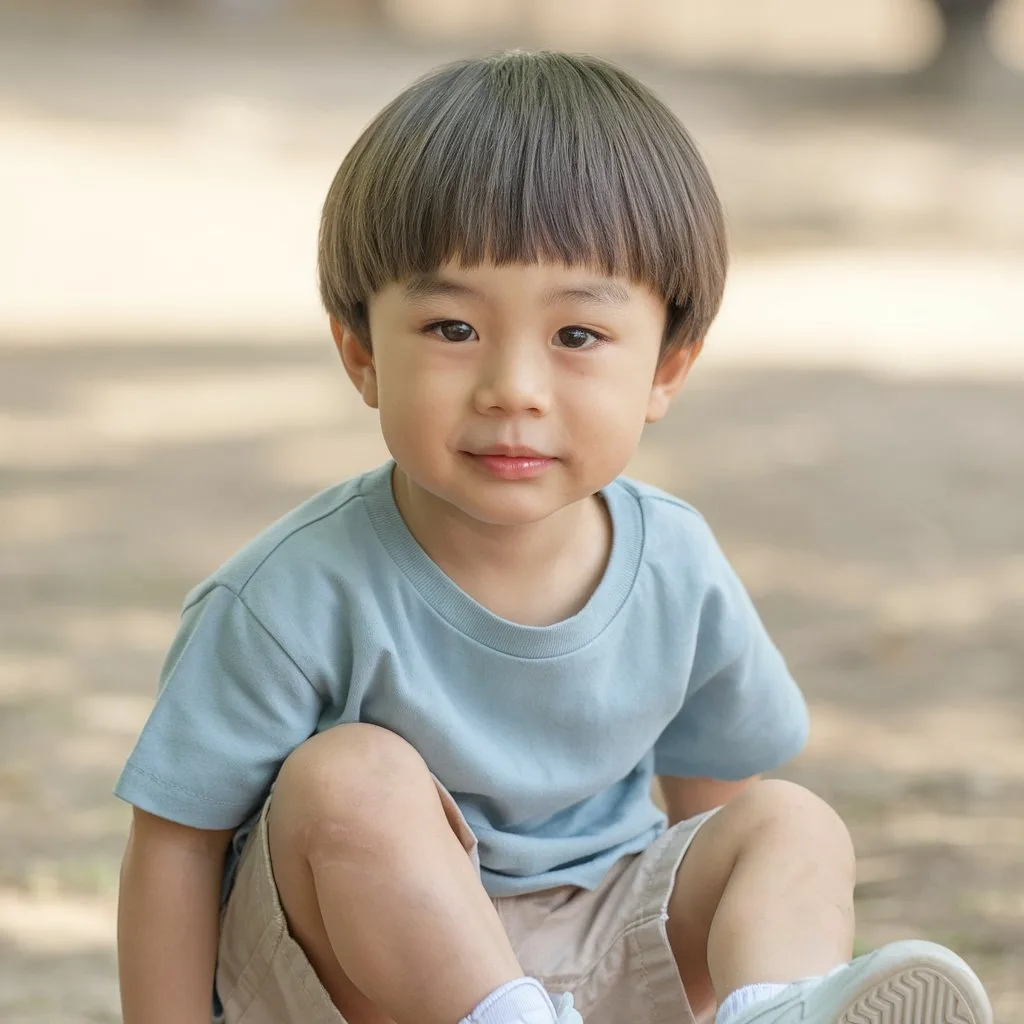
Pros and cons: the pros are that it is simple, it suits straight hair beautifully, and it grows out evenly. The cons are that it can look heavy on thick hair, and it needs regular trims to keep its round shape. Common mistakes: cutting the fringe in a hard straight line, which looks severe on a baby, and leaving the back too long, which ruins the round shape.
Maintenance: a brush after baths and a trim every six weeks keeps the shape. Quick verdict: a sweet, retro little cut that works best on straight-haired toddlers with fine to medium hair.
The Baby Pixie Cut
What it is: a short, soft pixie with a little length on top and neatly tapered sides, made for baby girls whose hair is fine and slow to grow. It looks delicate and neat, and it shows off a little face perfectly.
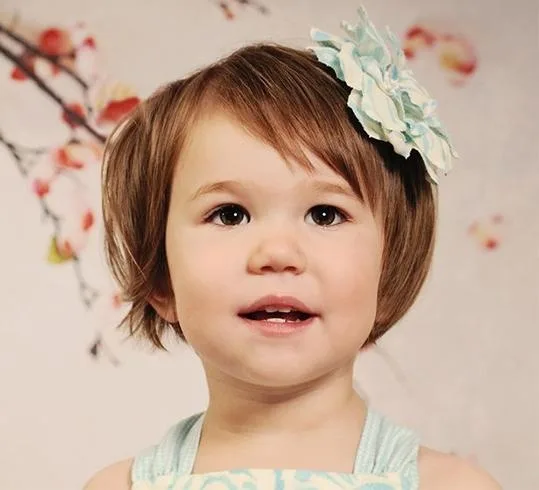
Pros and cons: the pros are that it is wonderfully easy to wash and dry, it never falls into the eyes, and it suits fine hair that would look stringy if left long. The cons are that it needs frequent trims to keep its shape, and some parents miss the longer baby hair. Common mistakes: cutting it too short around the ears, which can look severe, and adding layers that are too choppy for fine baby hair.
Maintenance: a soft brush and nothing else, and a trim every five to six weeks. Quick verdict: a lovely, practical first cut for fine-haired girls, and one of the easiest styles to live with.
The Toddler Topknot Trim
What it is: a tidy-up of the hair around a little topknot, keeping the knot itself and trimming the wispy ends and the fringe around it. It is a first cut for toddlers whose hair is already long enough to tie up.
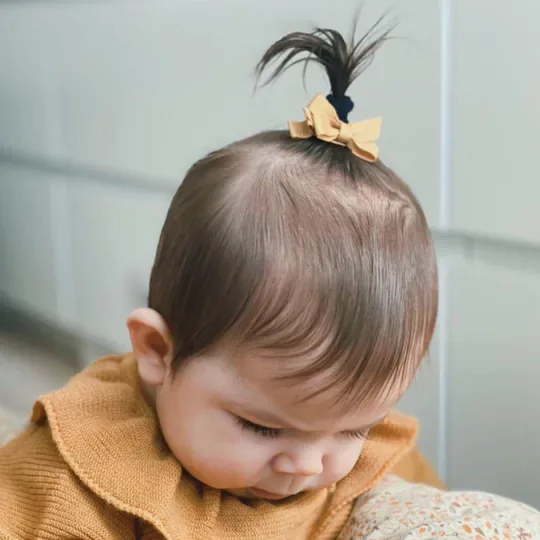
Pros and cons: the pros are that the topknot keeps hair out of the face all day, and the trim makes the whole style look intentional rather than accidental. The cons are that it only works once the hair is long enough to gather, and the knot needs retying during the day. Common mistakes: pulling the topknot too tight, which is uncomfortable and can damage fine hair, and trimming the fringe too short around the knot.
Maintenance: a soft elastic, never a tight one, and a quick brush before retying. Quick verdict: a sweet first cut for long-haired toddlers who already love a topknot, and it grows out beautifully.
The First Pigtails Trim
What it is: a gentle tidy of the ends so that two little pigtails sit evenly, with the fringe trimmed so it does not fall into the eyes. It is the first proper style for toddlers whose hair is finally long enough to tie up on both sides.
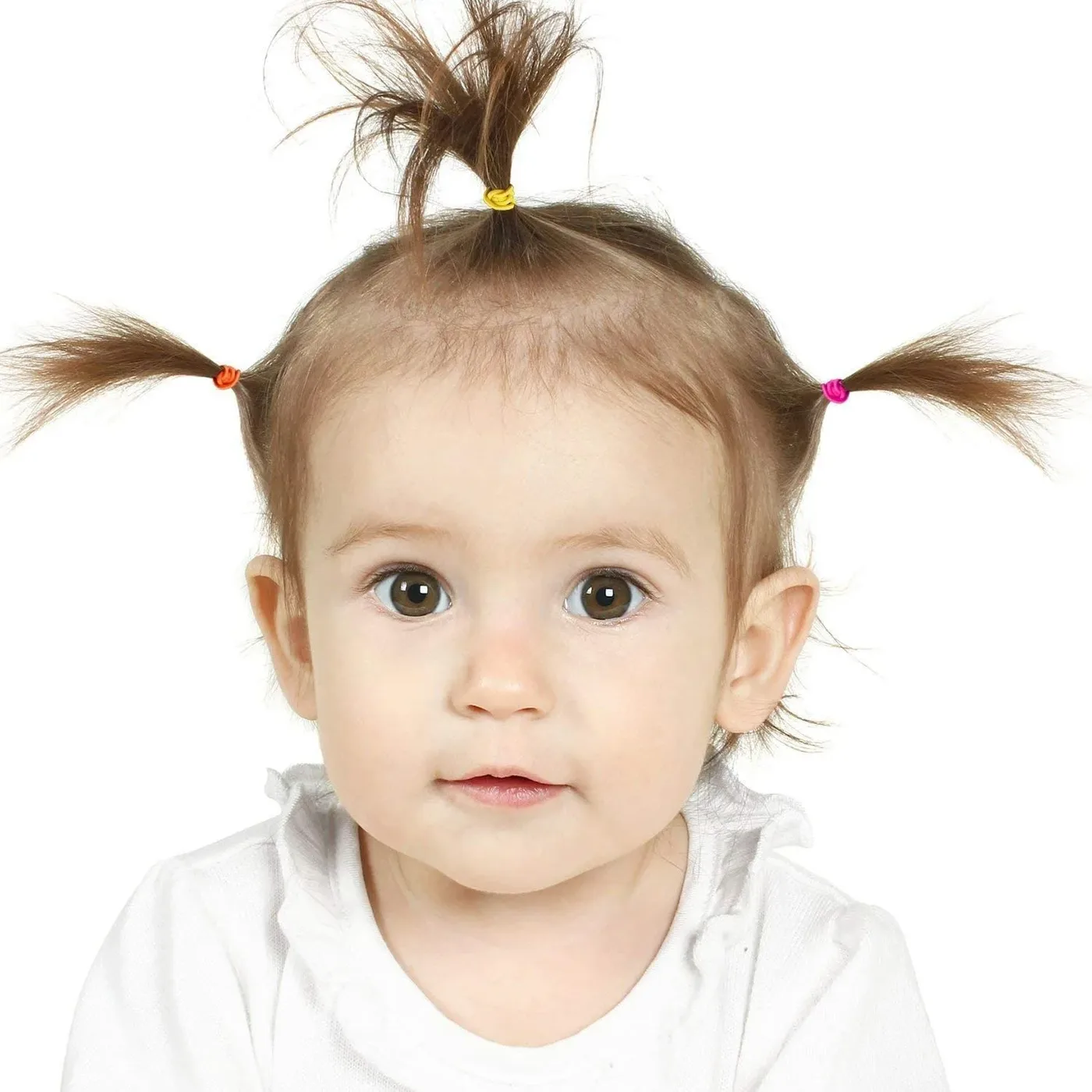
Pros and cons: the pros are that pigtails are adorable, practical, and keep hair out of the face while playing. The cons are that uneven growth makes one pigtail shorter than the other, and some toddlers pull the elastics out within minutes. Common mistakes: cutting the pigtails while they are tied up, which makes them uneven when they are let down, and using tight elastics that leave dents and pull.
Maintenance: soft fabric elastics, a quick brush in the morning, and a trim when the ends start to look straggly. Quick verdict: a joyful milestone cut for girls with enough hair for two little bunches, and a photo every grandparent will want.
The Little Mohawk
What it is: a soft, short mohawk with the strip on top left a little longer and the sides trimmed short. It is playful rather than punky, and on a toddler it reads as cheeky and fun.
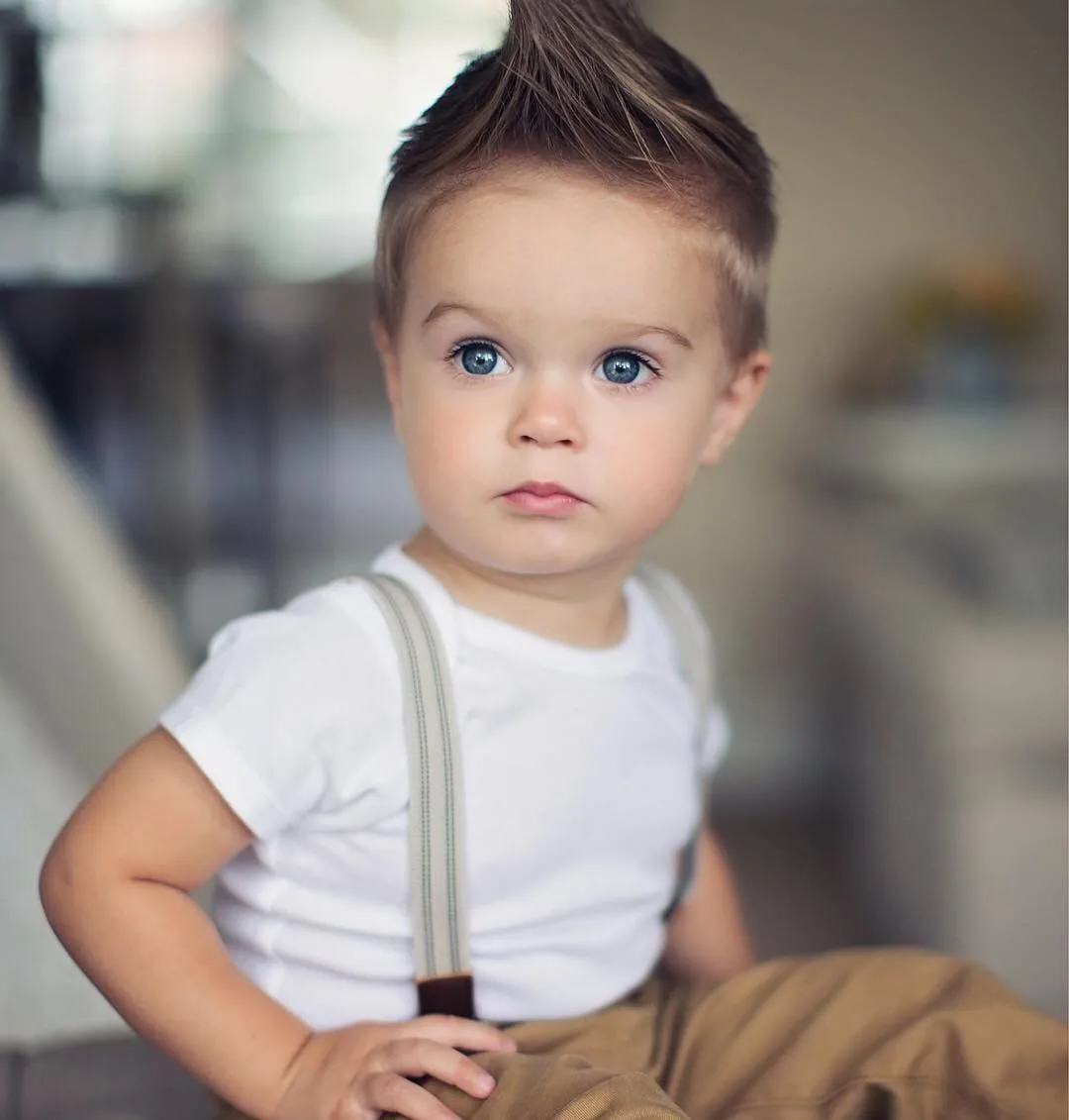
Pros and cons: the pros are that it is a big personality cut, it is cool in warm weather, and it photographs brilliantly. The cons are that it needs a little styling to stand up, and it grows out into an uneven shape if you leave it too long. Common mistakes: making the strip too narrow or too spiky, which looks harsh on a baby, and using strong gel or wax on baby hair.
Maintenance: a little water and a fingertip of light product, if any, and a trim every four weeks. Quick verdict: a fun, bold first cut for confident little boys, best saved for toddlers over eighteen months.
The Sweep-Over Fringe
What it is: a fringe that is left a little longer and swept to one side, with the rest of the hair kept short and neat. It is soft, natural, and one of the easiest first cuts to grow out.
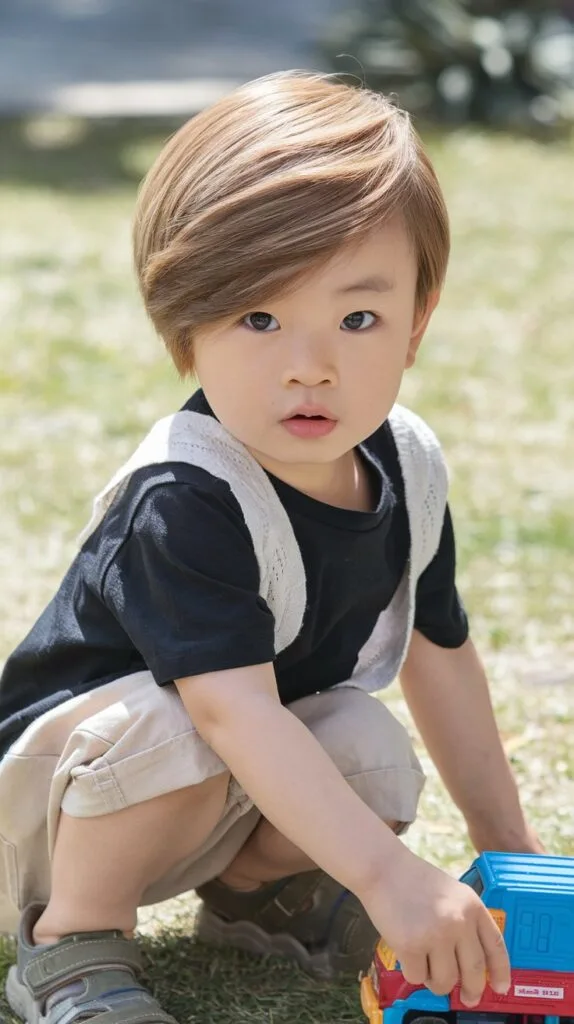
Pros and cons: the pros are that it suits almost every face shape, it hides a cowlick, and it needs no product. The cons are that the fringe can fall into the eyes if it grows too long, and it needs a regular trim to stay swept. Common mistakes: cutting the fringe straight across and then trying to sweep it, which does not work, and cutting it too short, which makes it stick up instead of sweeping.
Maintenance: brush it to the side while it is damp after a bath and it will learn to sit there. Quick verdict: a gentle, flattering first cut that works for boys and girls, and one of the easiest to maintain.
The Baby Shag
What it is: a soft, textured cut with gentle layers that lets baby hair do what it wants to do. It is deliberately a little messy, which suits toddlers whose hair has a mind of its own.
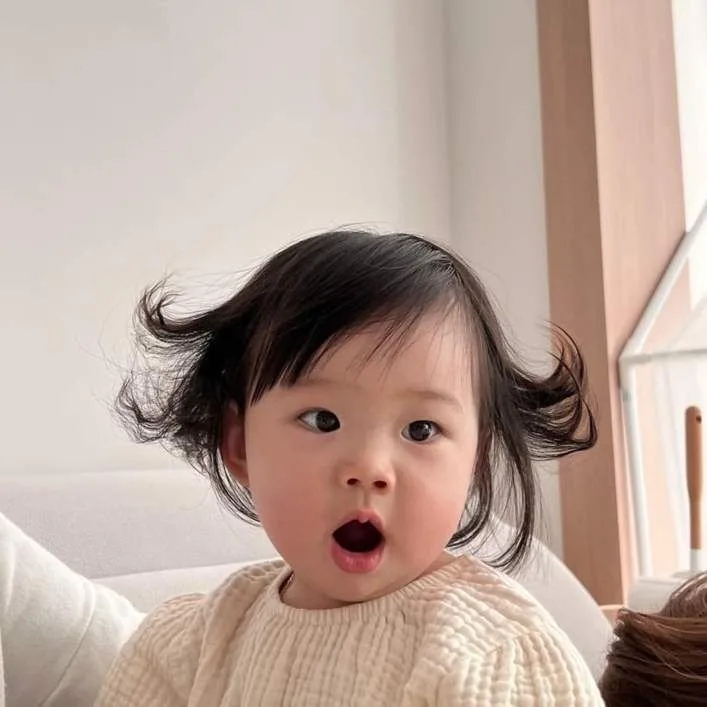
Pros and cons: the pros are that it is very forgiving of wriggling, it suits wavy and curly hair, and it looks good even when it is not brushed. The cons are that it can look untidy in photos if the layers are uneven, and it is hard to cut well on very fine, straight hair. Common mistakes: adding too many layers, which makes fine baby hair look thin, and cutting it when the hair is wet, which hides how the layers will really fall.
Maintenance: wash, tousle with your fingers, and let it dry naturally. Quick verdict: a relaxed, charming first cut for wavy-haired toddlers, and the best choice if your baby will not sit still for a precise cut.
The Tiny Undercut
What it is: the sides are trimmed very short while the top is left longer and swept to one side or forward. It is a miniature version of a popular older-boy cut, softened for a toddler.
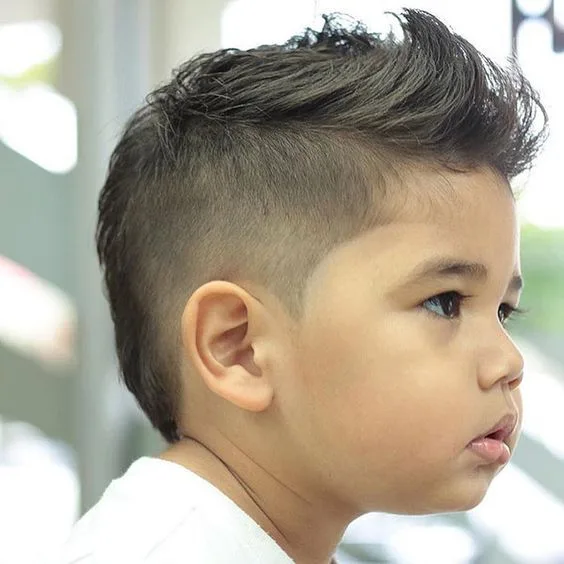
Pros and cons: the pros are that it looks smart and modern, it keeps the sides cool, and the long top can be styled in different ways. The cons are that the short sides grow out quickly and show the grow-out line, and it can look too grown-up for a very young baby. Common mistakes: taking the undercut too high or too short, which looks severe on a small head, and using clippers without a guard on baby-soft skin.
Maintenance: a trim of the sides every three to four weeks to keep the contrast. Quick verdict: a stylish first cut for toddlers over two with straight hair, but skip it for babies under eighteen months.
The First Fade for Toddlers
What it is: a gentle fade where the hair blends from very short at the sides into longer hair on top, done with quiet clippers and a steady hand. It is the smartest little-boy cut in this guide.
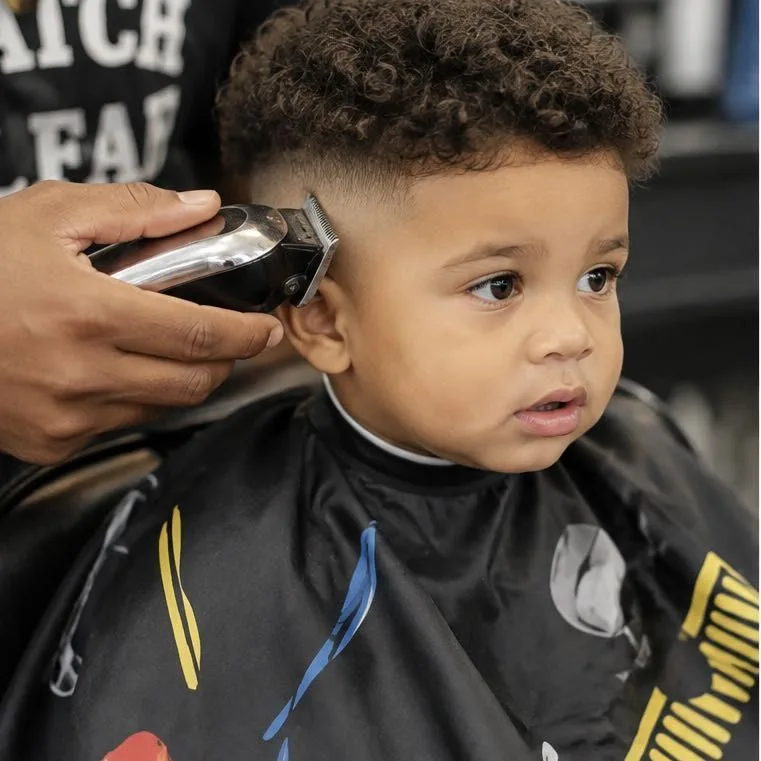
Pros and cons: the pros are that it looks polished, it lasts well between cuts, and it works beautifully on thick hair. The cons are that it needs a barber who is experienced with toddlers, and the clippers can be noisy and frightening for a first visit. Common mistakes: asking for a skin fade on a baby, which is far too severe, and letting the fade go too high, which makes the head look out of proportion.
Maintenance: a brush of the top each morning and a fade tidy every four weeks. Quick verdict: a sharp, handsome first cut for confident toddlers with thick hair, best done by a barber who cuts children every day.
The Curly Baby Afro Trim
What it is: a gentle shaping of a baby afro, trimming the ends curl by curl so the shape stays round and even. The curls are left long enough to spring, and the shape is kept soft all round.
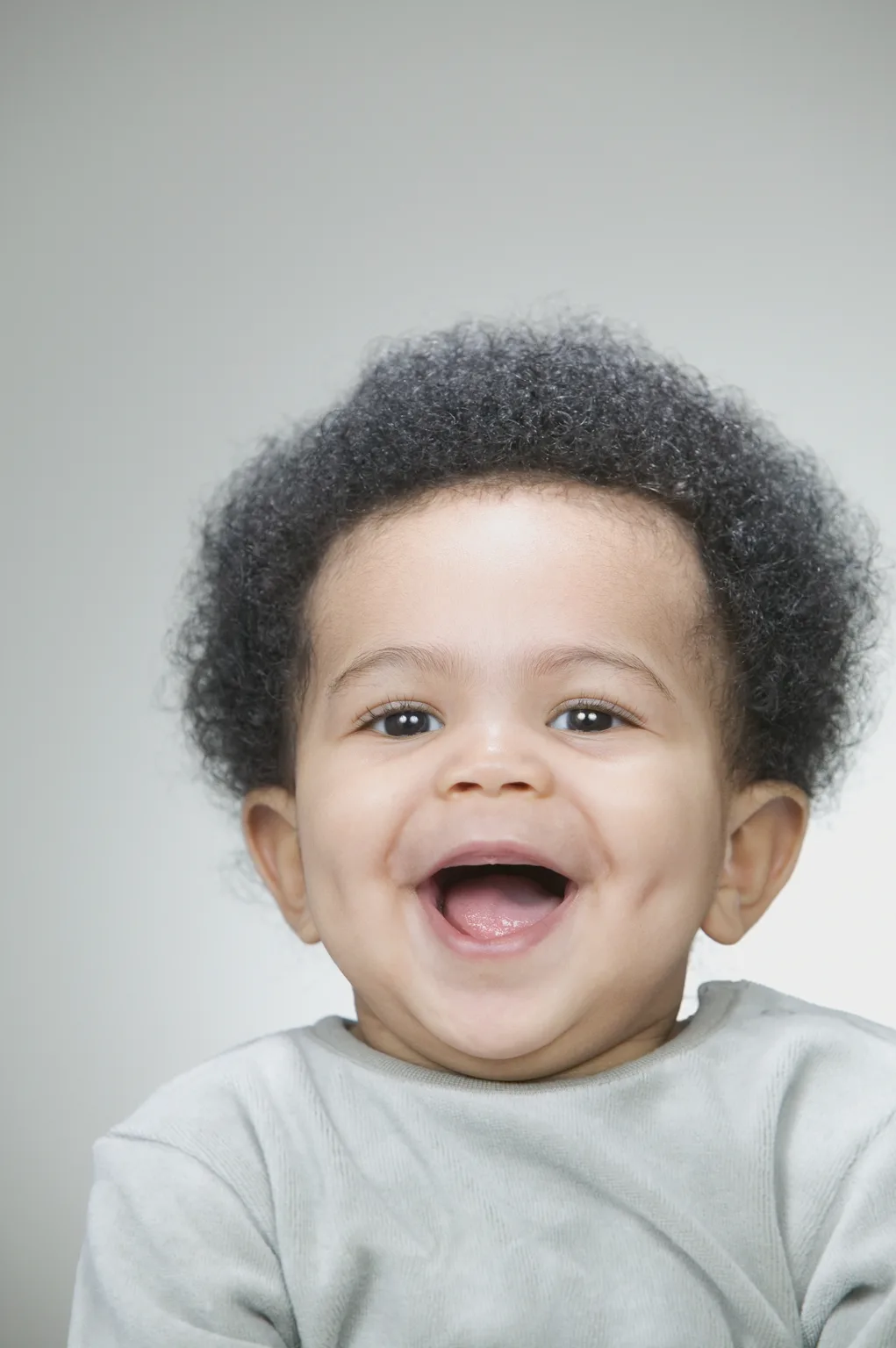
Pros and cons: the pros are that it celebrates gorgeous natural texture, it is cooler than a full head of long curls, and it is easy to wash. The cons are that it needs a stylist who truly understands afro hair, and cutting curls wet will make them spring up far shorter than expected. Common mistakes: cutting the afro while it is wet, using thinning scissors on curls, and brushing dry curls, which turns them into frizz.
Maintenance: moisturise with a gentle baby curl cream, detangle with fingers when damp, and never brush it dry. Quick verdict: a beautiful, proud first cut for Black and mixed-heritage babies, as long as the stylist knows curly hair.
The Little Pageboy
What it is: a straight, chin-length cut with a neat fringe, the ends curving gently under. It is a classic little-girl cut that looks neat, sweet, and a little bit vintage.
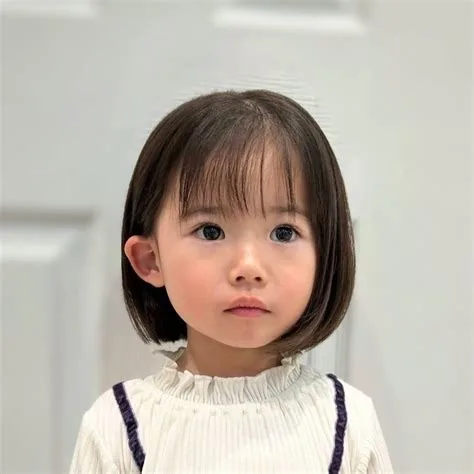
Pros and cons: the pros are that it is tidy, it frames the face, and it works beautifully on straight hair. The cons are that it needs regular trims to keep the line, and it can look heavy on very thick hair. Common mistakes: cutting the fringe too short, which makes the pageboy look severe, and cutting the ends dead straight without softening them, which looks harsh on a baby.
Maintenance: a brush after baths and a trim every six weeks to keep the line. Quick verdict: a timeless first cut for straight-haired girls, and one of the neatest styles in this guide.
The Side-Swept Toddler Cut
What it is: a soft cut where the hair on top is left long enough to sweep to one side, with the sides and back kept short and tidy. It is relaxed, natural, and very forgiving.
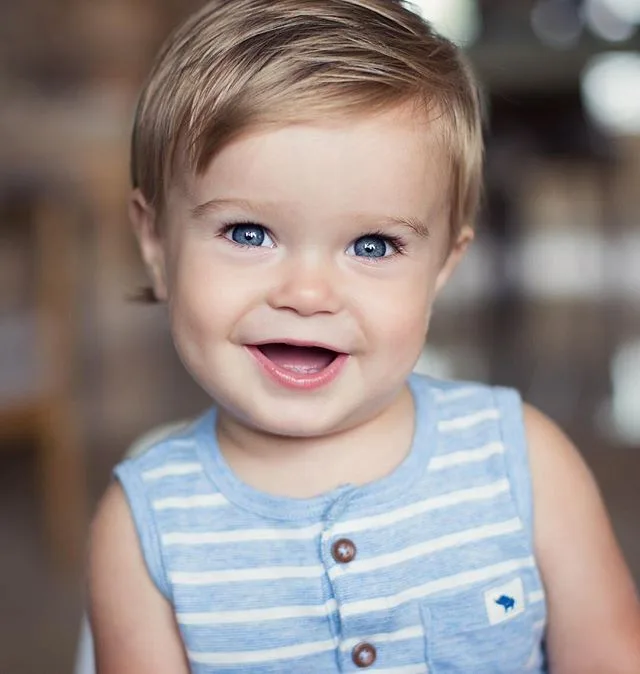
Pros and cons: the pros are that it suits almost every toddler, it hides a cowlick, and it grows out without an awkward stage. The cons are that the sweep needs a little encouragement each morning, and very curly hair will not sweep. Common mistakes: cutting the top too short to sweep, which defeats the whole style, and parting it too severely, which looks formal on a baby.
Maintenance: a damp brush and a sweep to the side after a bath is all it needs. Quick verdict: an easy, flattering first cut for boys and girls alike, and a great choice if you are not sure what you want.
The Baby Mullet Trim
What it is: a soft modern mullet, short at the front and sides with a little extra length and curl at the back. It is playful and trendy, and on a toddler it is more cute than rebellious.
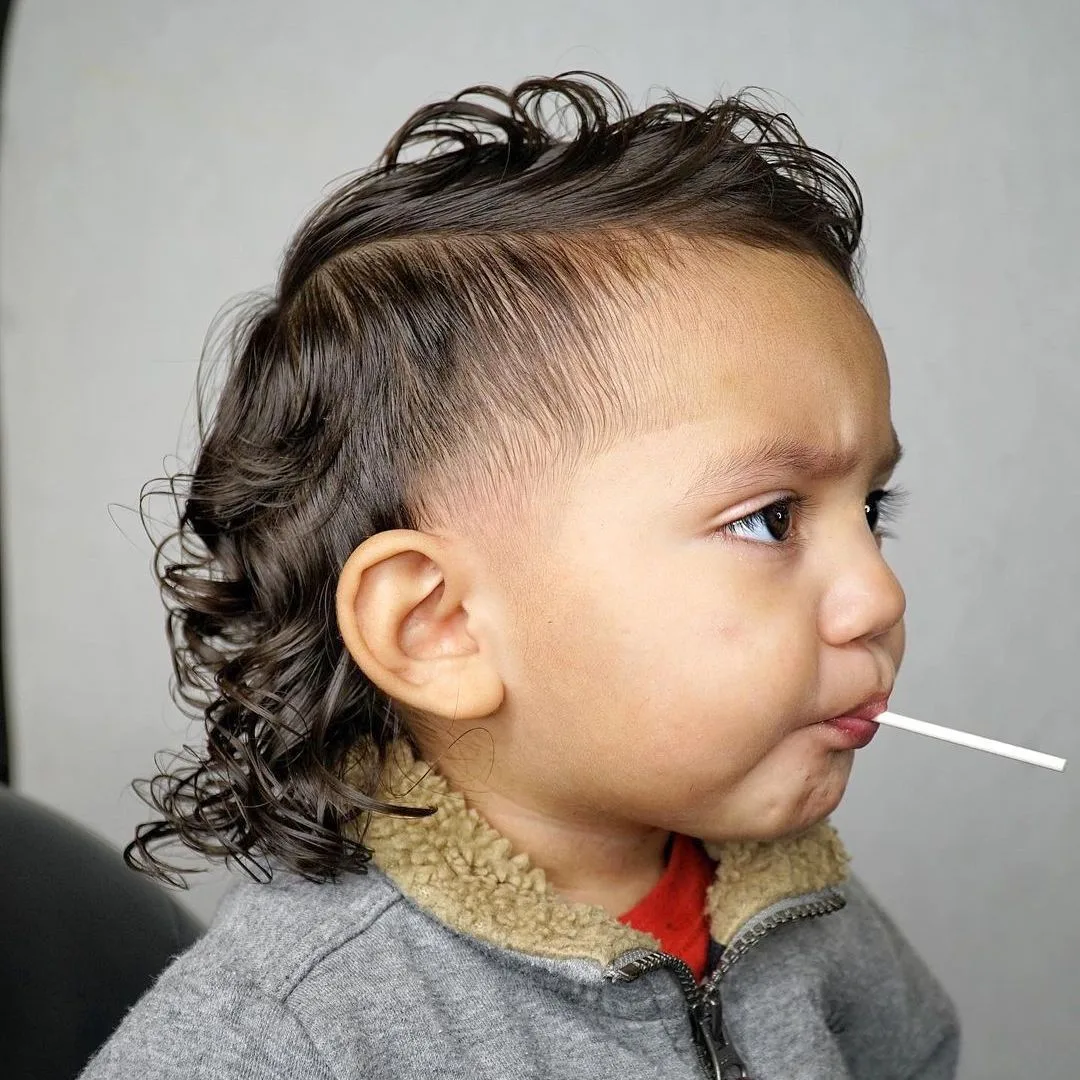
Pros and cons: the pros are that it is a fun, fashionable cut, it keeps the fringe out of the eyes, and the length at the back shows off curls beautifully. The cons are that it divides opinion, and it needs regular trims to stop the back from looking straggly. Common mistakes: leaving the back too long, which looks untidy rather than stylish, and cutting the front too short, which throws off the balance.
Maintenance: a trim of the back every five weeks and a brush of the curls with your fingers. Quick verdict: a cheeky, on-trend first cut for curly-haired toddlers, as long as both parents actually like it.
The First Haircut for Fine Hair
What it is: a first cut designed for fine, wispy hair, taking just a whisper off the ends and tidying the fringe. The goal is to make fine hair look thicker and neater, not thinner.
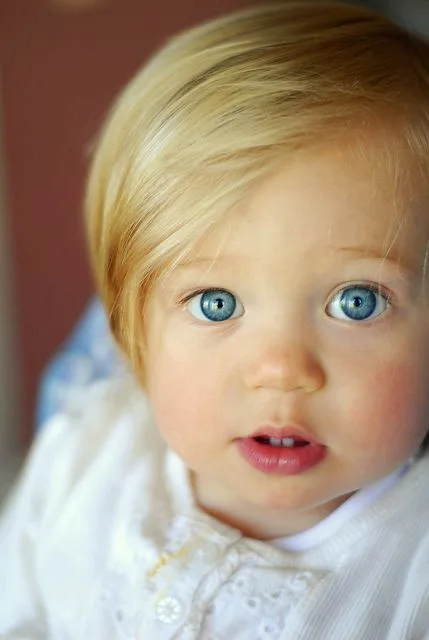
Pros and cons: the pros are that a tiny trim can make fine hair look much fuller, and the cut is over in minutes. The cons are that fine hair shows every uneven snip, and it can look patchy if the stylist takes too much off. Common mistakes: layering fine baby hair, which makes it look thinner, and cutting it very short in the hope it grows back thicker, which is a myth.
Maintenance: a soft brush, no product, and a trim every eight weeks. Quick verdict: the gentlest possible first cut, and the right one for babies whose hair is still a soft, fine fuzz.
The First Haircut for Thick Hair
What it is: a first cut that takes weight out of thick baby hair, with gentle layers and a tidy fringe, so the hair sits flatter and is easier to wash and brush.
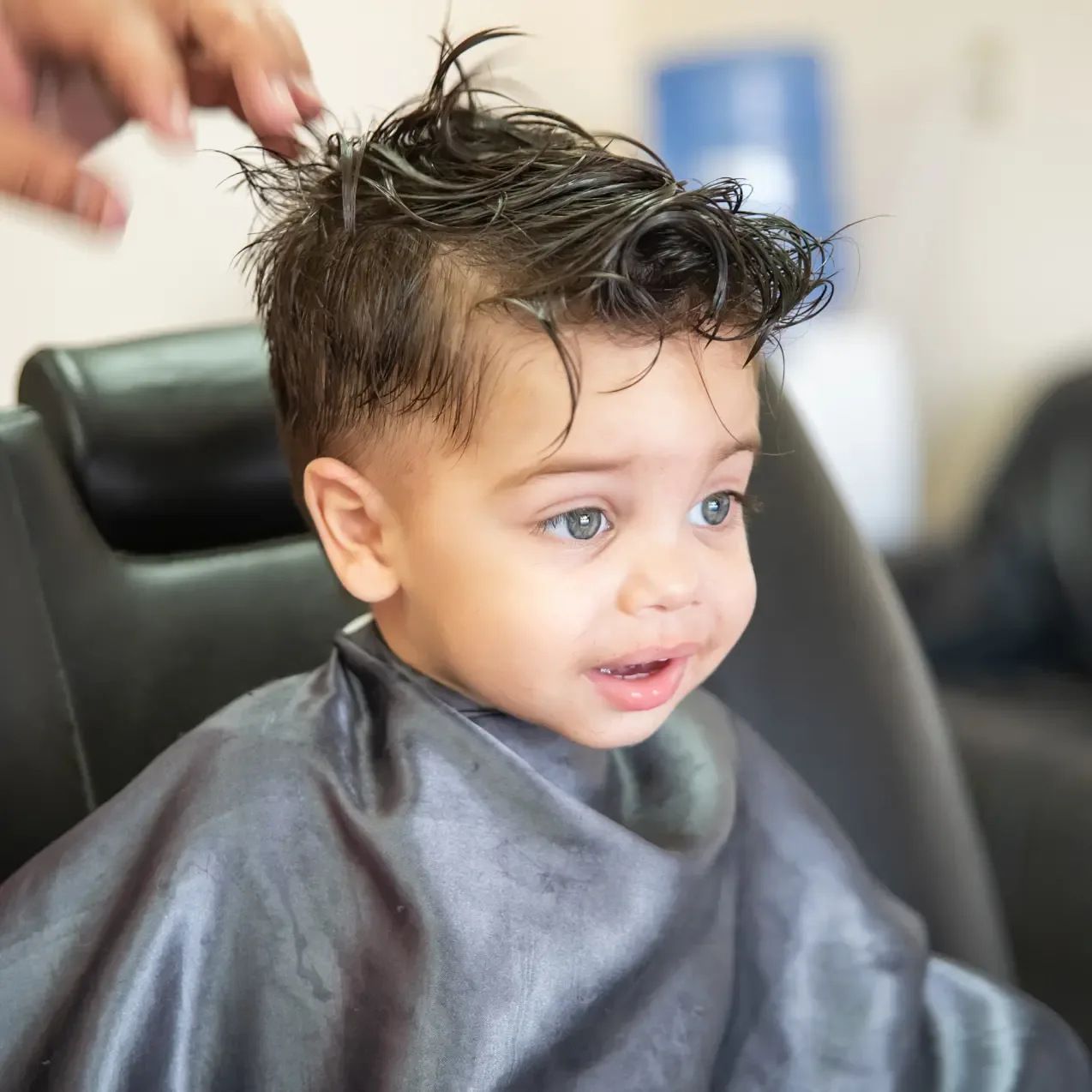
Pros and cons: the pros are that thick hair holds a style beautifully, it can take a proper fringe, and the cut makes washing and drying much quicker. The cons are that it takes longer in the chair, and a wriggly baby may not sit still long enough for the layers. Common mistakes: cutting thick hair blunt all round, which makes it puff out, and thinning it too aggressively, which leaves it wispy at the ends.
Maintenance: a brush after baths, a trim every six weeks, and a little detangling spray if the hair knots. Quick verdict: a practical, tidy first cut for thick-haired babies, and one that makes daily hair care much easier.
The First Haircut for Curly Hair
What it is: a curl-by-curl first cut, done on dry or just-damp hair, taking a tiny amount off the ends of each curl so the shape stays round and the curls keep their bounce.
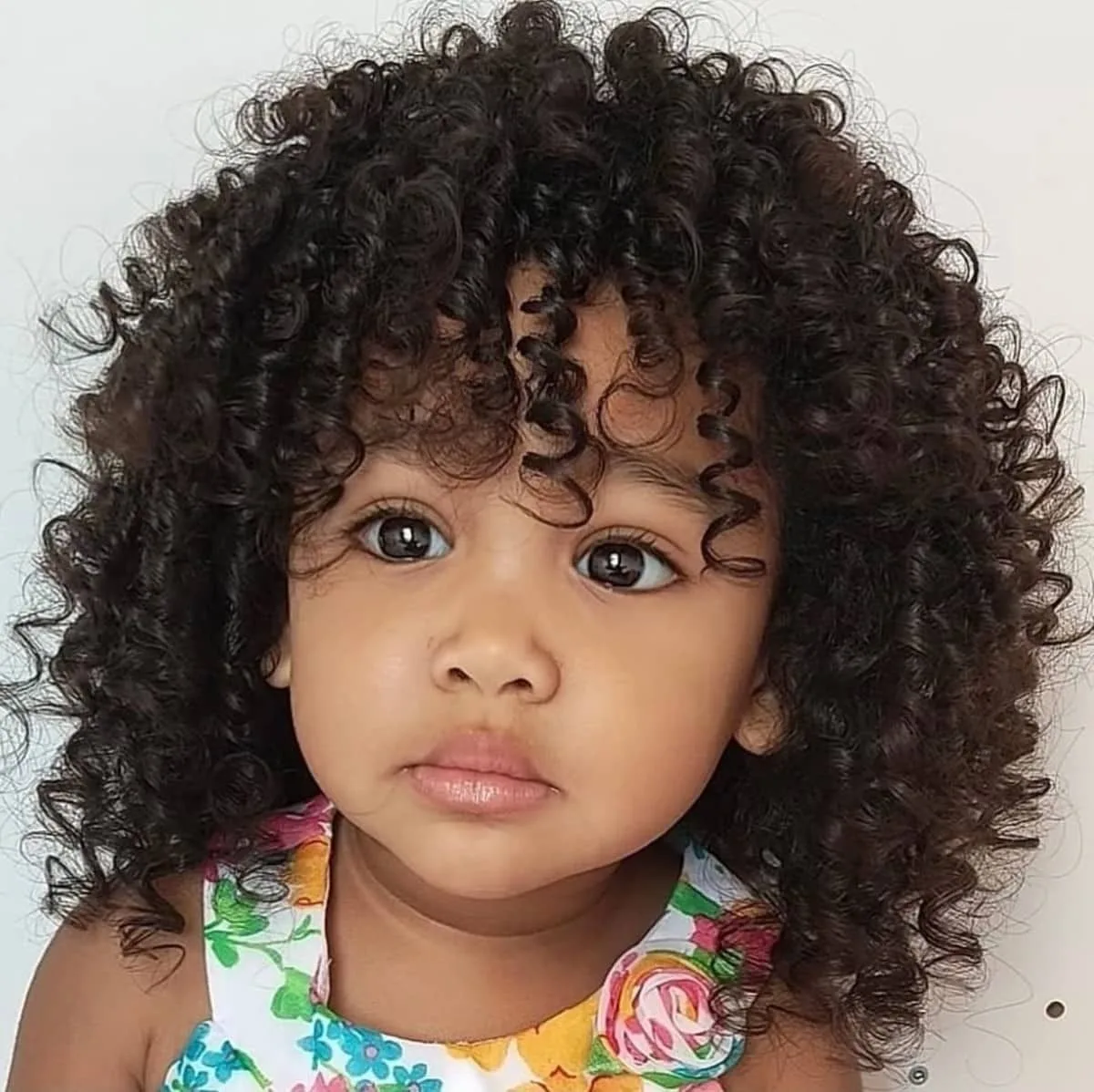
Pros and cons: the pros are that the curls look their best, the cut is gentle, and it is easy to maintain. The cons are that it takes a stylist who understands curls, and it costs a little more time in the chair. Common mistakes: cutting curls straight across while wet, which leaves them uneven when they dry, and brushing curls dry, which turns them into a halo of frizz.
Maintenance: wash gently, scrunch with your fingers, and let the curls air dry. Quick verdict: the only sensible first cut for curly babies, and worth finding a curl-aware stylist for.
The First Haircut for Straight Hair
What it is: a neat, straight first cut with a soft fringe, the ends trimmed evenly all round. Straight hair shows off a precise cut beautifully, and this is the classic tidy first style.
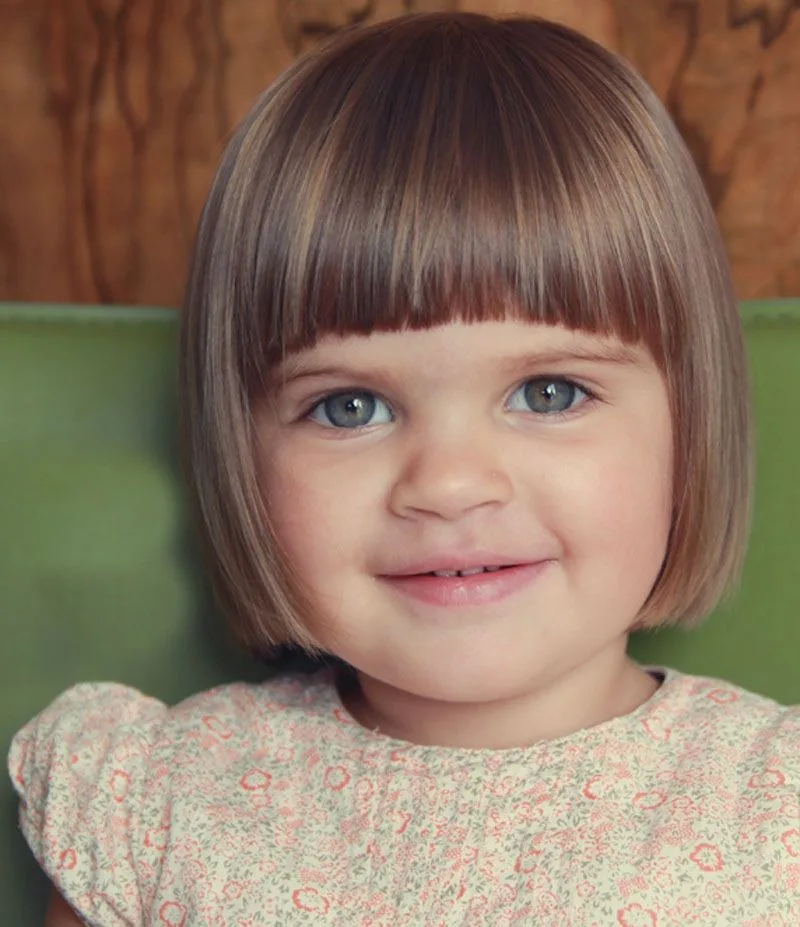
Pros and cons: the pros are that it looks polished with no effort, it is easy to wash and brush, and it grows out evenly. The cons are that straight hair shows every uneven snip, so a wriggle at the wrong moment is visible. Common mistakes: cutting the fringe too short, which is very obvious on straight hair, and cutting the back in a straight line that looks severe on a baby.
Maintenance: a brush each morning and a trim every six to eight weeks. Quick verdict: a clean, classic first cut for straight-haired babies, and the easiest style to keep looking neat.
The Wavy Toddler Cut
What it is: a soft cut that follows the natural wave, with the top left long enough to wave and the sides kept short and tidy. It is a relaxed style that lets wavy hair be wavy.
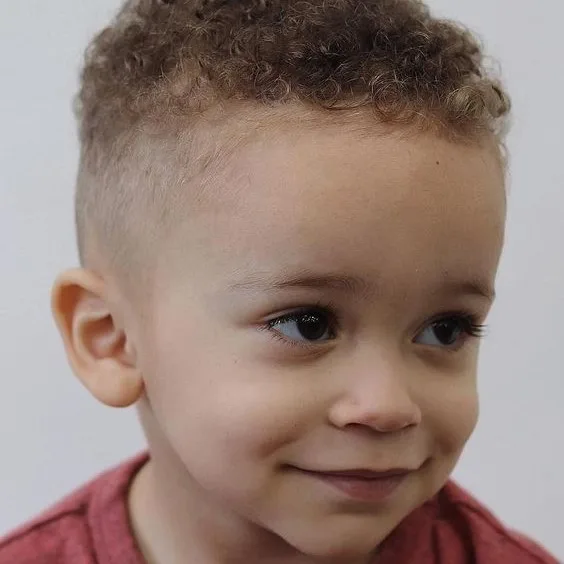
Pros and cons: the pros are that it is very forgiving, it looks good even when it is not brushed, and it suits most face shapes. The cons are that the waves can look messy in photos if they are not brushed, and it needs a trim to stop the sides from growing wild. Common mistakes: cutting wavy hair too short on top, which removes the wave entirely, and brushing it dry, which makes it puffy.
Maintenance: brush it while it is damp, then leave it alone to dry into its natural wave. Quick verdict: a lovely, low-effort first cut for wavy-haired toddlers, and one of the most forgiving styles in this guide.
The Little Man Bun Trim
What it is: a tidy-up for toddlers with long hair, trimming the ends and the fringe while keeping enough length on top to gather into a tiny bun. It is a first cut for boys whose hair has been growing for a long time.
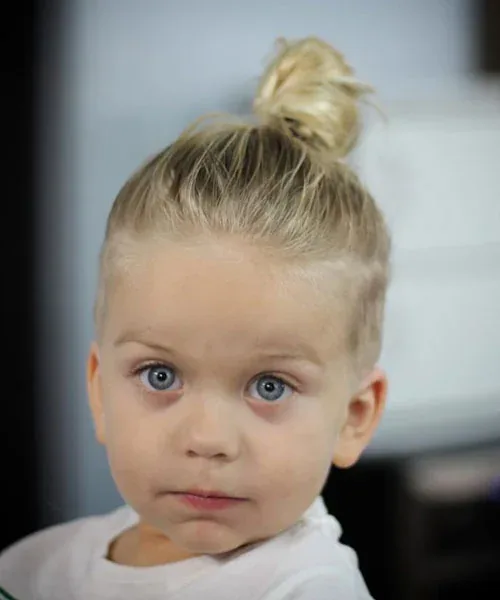
Pros and cons: the pros are that the bun keeps long hair out of the face, and the trim makes the long hair look cared for rather than forgotten. The cons are that it only works once the hair is long enough, and the bun needs retying during the day. Common mistakes: pulling the bun too tight, which hurts and can damage fine hair, and trimming the fringe too short around the bun.
Maintenance: a soft elastic, a gentle brush, and a trim of the ends every eight weeks. Quick verdict: a sweet first cut for long-haired little boys, and a lovely way to keep the length while making it manageable.
The Bangs and Curls Combo
What it is: a soft fringe paired with the natural curls left long around the sides and back. The bangs frame the face while the curls do the rest of the work.
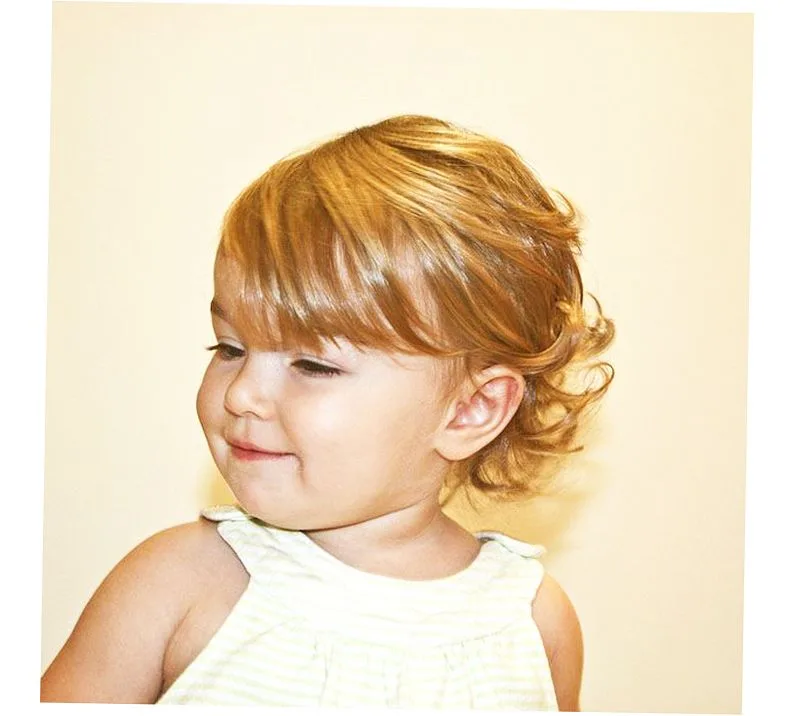
Pros and cons: the pros are that it is adorable, it frames the face beautifully, and it works with the hair’s natural texture. The cons are that the fringe needs regular trims to stay out of the eyes, and the curls and the fringe can grow at different speeds. Common mistakes: cutting the fringe while the curls are wet, so it springs up too short, and straightening the fringe with heat, which baby hair does not need.
Maintenance: trim the fringe every four weeks, and scrunch the curls with your fingers after washing. Quick verdict: a charming first cut for curly girls, and one of the prettiest combinations in this guide.
The Tidy Toddler Taper
What it is: a gentle taper where the hair gets gradually shorter towards the sides and back, with the top left neat and tidy. It is a smart, low-maintenance little cut.
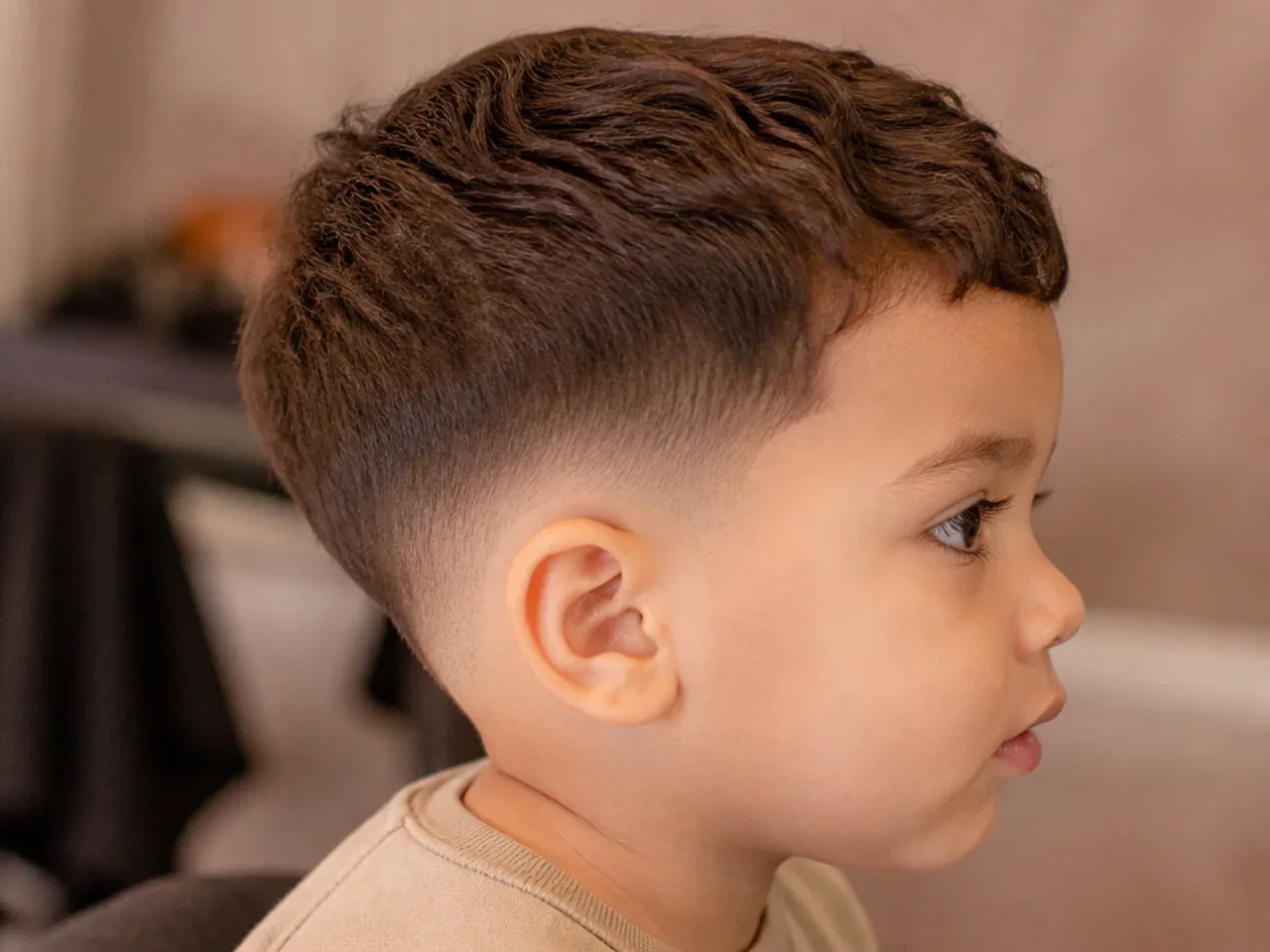
Pros and cons: the pros are that it looks neat for weeks, it grows out gracefully, and it suits straight and wavy hair. The cons are that it needs a barber who can blend a taper on a small head, and it is not the best choice for very curly hair. Common mistakes: making the taper too short or too high, which looks severe on a toddler, and leaving a hard line where the taper meets the top.
Maintenance: a brush of the top each morning and a taper tidy every five weeks. Quick verdict: a smart, practical first cut for toddlers who need to look tidy with no daily effort.
The First Cut With a Headband Finish
What it is: a gentle first trim finished with a soft headband, which holds the fine front hairs back and shows off the fresh cut. It is less a style and more a finishing touch that makes the whole first cut feel special.
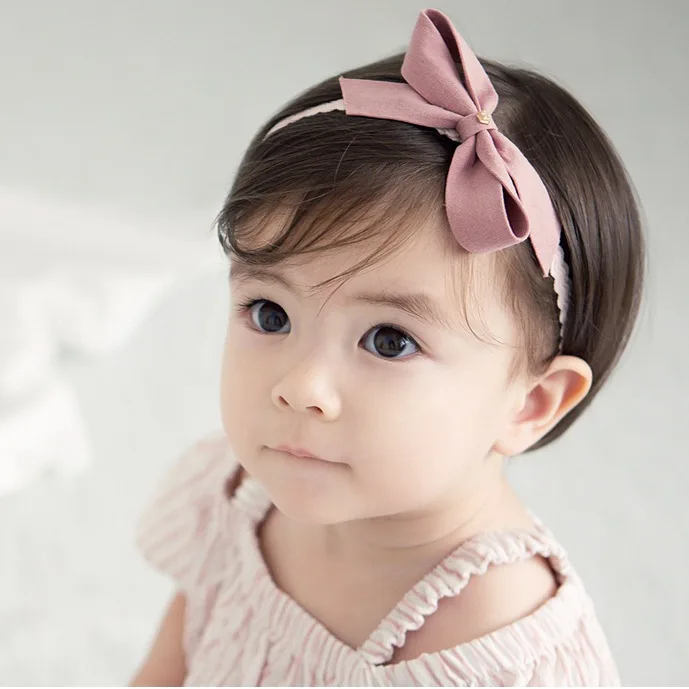
Pros and cons: the pros are that the headband keeps wispy hairs out of the eyes, it looks lovely in photos, and it is comfortable. The cons are that some babies pull headbands off immediately, and a tight band can leave a mark. Common mistakes: choosing a tight or hard headband, which is uncomfortable, and using the band to hide a cut that is actually uneven.
Maintenance: a soft fabric band, washed regularly, and a trim every six weeks. Quick verdict: a sweet, simple finish for a first cut, especially for girls with fine hair that will not stay put on its own.
The Soft Layered Baby Cut
What it is: a gentle layered cut for toddlers with longer hair, with soft layers that take weight out of the hair without taking the length away. It is the first proper long-hair cut.
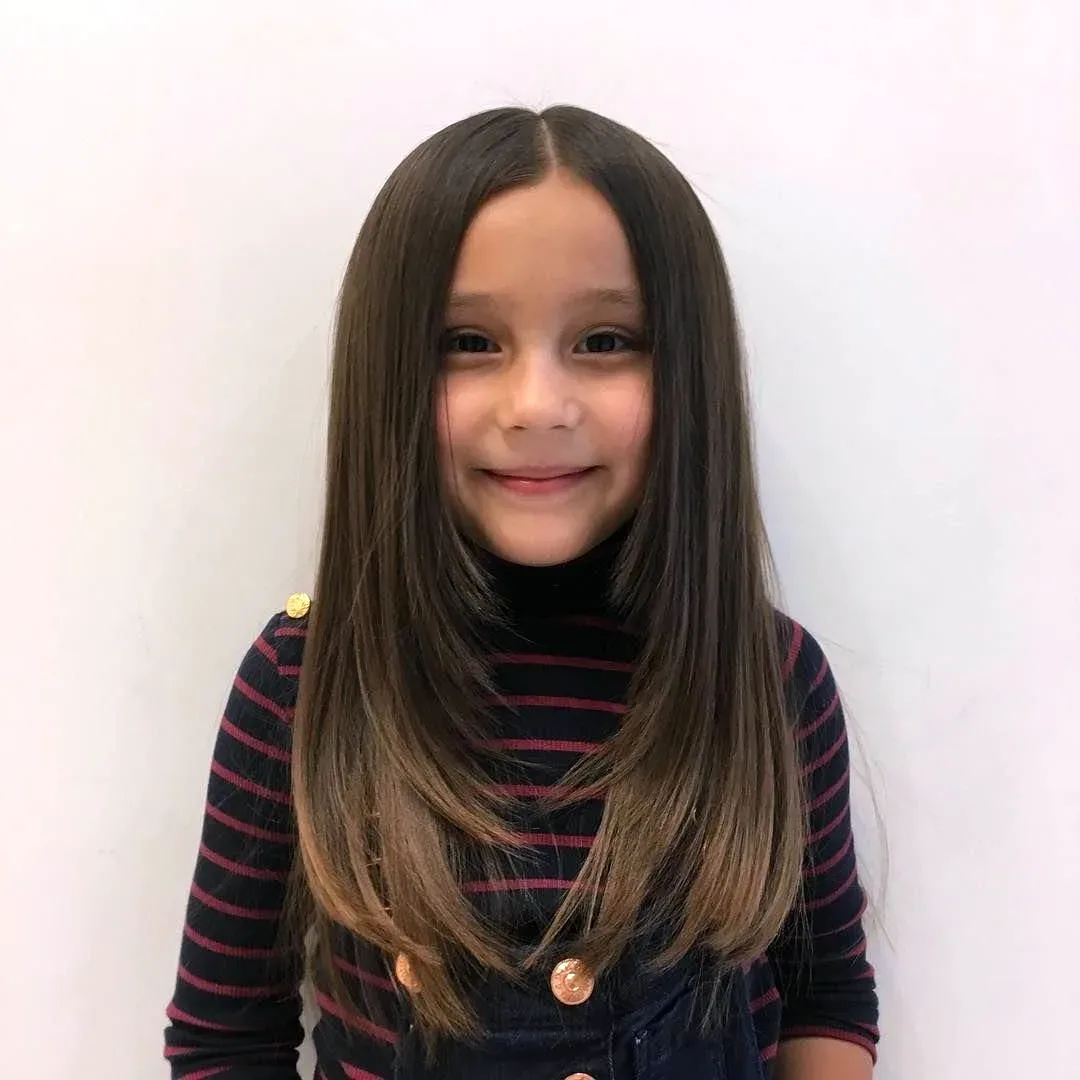
Pros and cons: the pros are that the hair keeps its length, it is easier to brush, and it moves beautifully. The cons are that it takes longer in the chair, and layers can look uneven if the baby wriggles. Common mistakes: adding too many layers, which makes the ends look thin, and cutting layers into fine hair, which makes it look stringy.
Maintenance: a gentle brush, a little detangling spray, and a trim every eight weeks. Quick verdict: a lovely first cut for long-haired toddlers, and the best way to keep the length while making it manageable.
The First Birthday Haircut
What it is: a special first cut timed for the first birthday, usually a gentle tidy of the fringe and the ends, done in the morning so the photos and the party both show off the fresh hair.
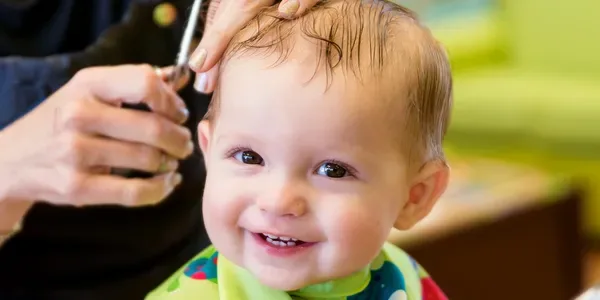
Pros and cons: the pros are that the birthday photos are wonderful, the keepsake curl has a date to remember, and the whole day feels like a celebration. The cons are that birthday week is busy, and a tired or overstimulated baby may not enjoy the salon. Common mistakes: booking the cut on the party day itself, which is too much for one day, and expecting a perfect cut from a baby who is already tired from party preparations.
Maintenance: a brush and a smile, and a photo printed for the baby book. Quick verdict: a milestone cut worth planning, as long as you book it a day or two before the party, not on the day itself.
The Keepsake Long Locks Trim
What it is: a tiny trim of just the ends of long toddler hair, keeping every bit of length while tidying split ends and evening out the shape. It is the first cut for parents who have been growing the hair for a year or more.
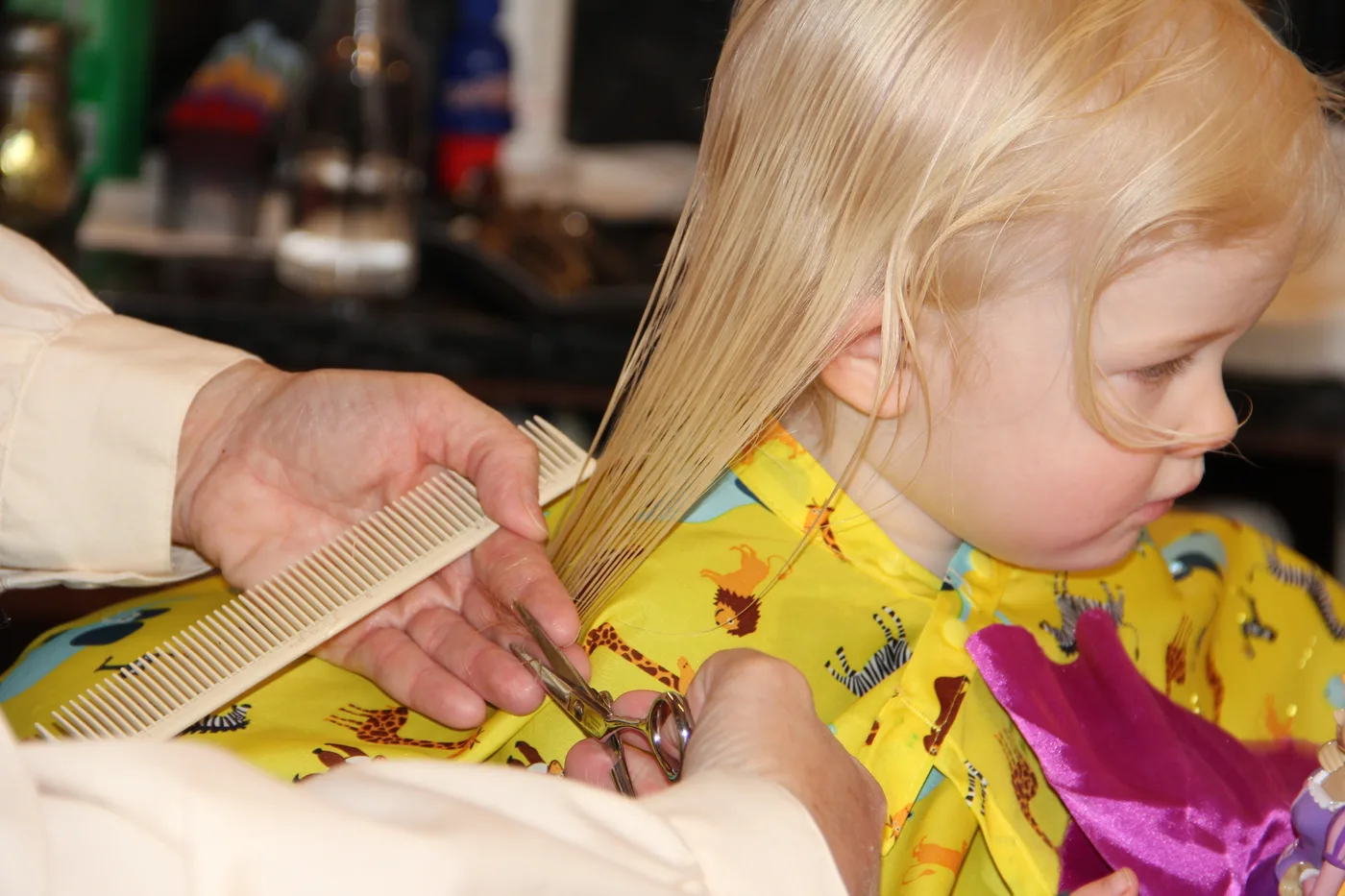
Pros and cons: the pros are that the length stays, the hair looks healthier, and the keepsake curl is a proper long lock. The cons are that it is a subtle change, and long hair still tangles and needs daily brushing. Common mistakes: taking too much off the ends in one go, which defeats the point of keeping the length, and trimming the hair while it is tied up, which makes the ends uneven.
Maintenance: a gentle brush from the ends upwards, a little detangling spray, and a trim every eight to ten weeks. Quick verdict: the perfect first cut for long-haired toddlers, because it protects the length you have worked so hard to grow.
How old should a baby be for their first haircut?
There is no set age, but most babies are ready for hairstyles for a baby’s first haircut between nine and eighteen months, when the hair starts falling into their eyes or growing unevenly. If the hair is still a soft, even fuzz that stays out of the way, you can wait. Book when the hair needs it, on a morning when your baby is rested and happy.
How much does a baby’s first haircut cost?
A first haircut at a kids’ salon usually costs about the same as a small children’s trim, and many salons offer a special first-haircut package that includes a certificate and a keepsake envelope for the curl. Prices vary by salon and city, so call ahead. A first cut is a short appointment, so it is usually one of the cheapest cuts a salon offers.
Should I cut my baby’s hair at home or at a salon?
A salon is the better choice for a first haircut, because a kids’ stylist has the right tools, the right chair, and experience with wriggling babies. A home trim is fine for a tiny fringe tidy between salon visits, but a full first cut at home is hard to do evenly on a moving baby, and kitchen scissors are not sharp enough for a clean cut.
What if my baby cries during the first haircut?
Crying is normal and it does not mean the haircut has failed. Stay calm, keep your voice light, offer a snack or a favourite toy, and let the stylist pause for a cuddle. If your baby is truly distressed, stop and try another day. A half-finished cut can be tidied up later, but a frightening first visit is remembered at the next appointment.
How do I save the keepsake curl from my baby’s first haircut?
Tell the stylist before the cut that you want to keep a lock, and ask for a small curl from behind the ear or at the nape, where it will not show. These hairstyles for a baby’s first haircut are made to be remembered, so put the curl in a labelled envelope with your baby’s name and the date, and keep it with the first-haircut photo in a baby book or keepsake box.
Will cutting my baby’s hair make it grow back thicker?
No, cutting does not change how thick your baby’s hair grows back. It can look thicker because the fine, tapered ends are cut away and the remaining hair has a blunt edge, but the number of hairs and their thickness are decided by genetics. A first cut tidies the hair, it does not change it.
How often will my toddler need a haircut after the first one?
Most toddlers need a trim every six to eight weeks after the first cut, when the fringe starts falling into the eyes again or the back starts looking shaggy. Fine hair can go a little longer, while thick hair and fades need attention every four to five weeks. Watch the fringe rather than the calendar.
What should my baby wear for their first haircut?
Dress your baby in something comfortable that you do not mind getting hairy, with no hood, because hoods bunch up under the cape. A light top is best, and avoid white if you can, since tiny cut hairs show up on it. Bring a change of top for afterwards, because loose hairs itch.
Can I bring a sibling or grandparent to the first haircut?
Yes, and it often helps. A familiar face to watch, a sibling to show off to, or a grandparent to hold the snack and take photos can make the whole appointment calmer. Just keep the group small, because a crowd around the chair can overwhelm a baby. One extra adult is usually perfect.
What if the first haircut comes out uneven?
Wait a week before you judge it, because baby hair settles as it dries and a cut that looks uneven on the day often evens out. If it is still uneven, call the salon rather than fixing it yourself. Most kids’ salons will tidy a first cut for free within a week, and a professional tidy-up takes five minutes.
Conclusion
A first haircut is a small event with a long memory, and the best hairstyles for a baby’s first haircut are the ones that keep it gentle. Choose a simple cut that suits your baby’s hair type, book a morning slot at a salon that loves children, bring the snacks and the comfort toy, and let the stylist work at your baby’s pace. The photo and the keepsake curl will do the rest.
Whether you choose the classic first trim, a soft bob, a curly top or a keepsake long-locks trim, the test is the same: did your baby stay happy, and does the cut look neat with nothing more than a brush? If the answer is yes, you have found your style. Put the curl in its envelope, write the date on the back of the photo, and enjoy the milestone. There will only ever be one first haircut.