Hairstyles for a First Communion: 33 Modest, Photo-Ready Looks for the Ceremony and the Celebration
A first communion is one of those mornings a family remembers for years: the white dress, the veil, the walk down the aisle, and the photographs that get framed and kept. The hairstyle has to do a lot of quiet work on that day. It has to look neat and modest in church, sit comfortably under a veil, and still look fresh hours later at the family celebration. The best hairstyles for a first communion are the ones that let a young girl feel like herself, only a little more polished.
That is why this guide keeps everything gentle and practical. There are no heavy updos, no stiff hairspray helmets, and nothing that pulls or pinches. Instead you will find soft buns, braids, curls and half-up styles that work with a veil, a headband or a few fresh flowers, and that survive kneeling, standing, singing and hugging relatives. Each style is shown with a real photo, so you can see exactly how it sits.
Start with the eight short guides at the top. They cover veil-friendly styles, hair by length, church photo tips, what to ask your stylist, keeping hair neat through Mass, choosing accessories, a calm morning timeline, and making the style last from the church to the party. Then come 33 styles, each with its pros and cons, who it suits, who should skip it, and how to keep it looking good. Pick one that matches your daughter’s hair and her personality, practise it once at home, and the morning itself will feel easy.
Veil-Friendly Hairstyles: What Works Under a Veil
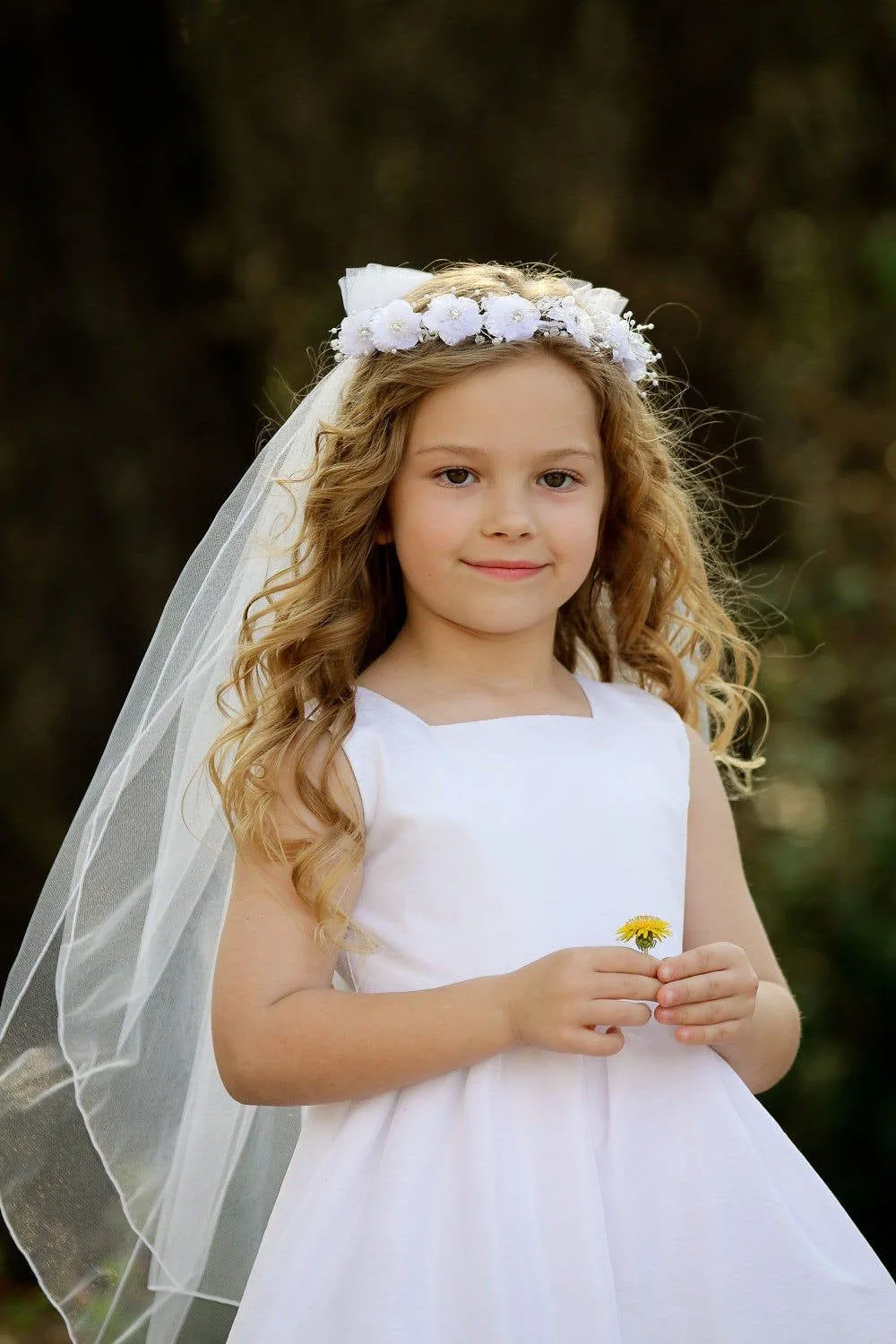
A veil changes everything about a hairstyle, so choose the hair first and the veil second, never the other way round. Low buns, low ponytails and half-up styles are the safest friends of a veil, because the comb or clip that holds the veil can slide into the hair just above the bun or the twist without fighting it. High buns and big crowns push a veil forward, so it sits oddly and slips. If your daughter has her heart set on a veil, build the style low and smooth at the crown, and the veil will sit flat and stay put.
Always try the veil and the hairstyle together at home, at least a week before the day. Put the veil on, walk around the house, sit down, stand up and bend to pick something up. If the veil pulls, the comb is in the wrong place, not the hairstyle. Move the comb a little higher or lower, add two bobby pins crossed over the comb, and try again. A veil that is secure at home will be secure in church.
Keep the front of the hair simple when a veil is involved. A centre part or a soft side part with the front pieces swept back lets the veil frame the face instead of competing with it. Heavy fringes and face-framing curls under a veil tend to get flattened and frizzy, so save the curls for the back and the sides, where the veil does not touch them.
Hairstyles for a First Communion by Hair Length
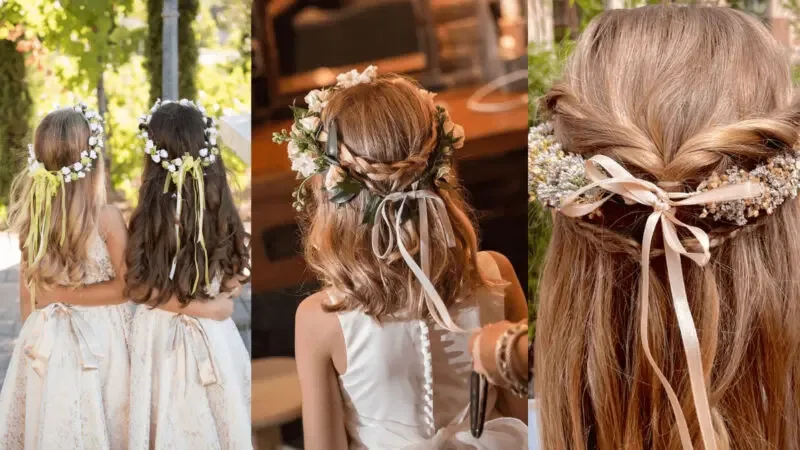
Short hair is the easiest length for a communion morning, because there is so little to go wrong. A bob or a pixie needs only a pretty headband, a small clip or a flower, and it is done. The trick is to keep the accessory light. A heavy headband slides on short hair, so choose a thin band with a comb edge, or a clip that grips. Short hair also photographs beautifully with a veil, because the veil becomes the feature instead of the hair.
Medium hair, around shoulder length, is the most flexible length of all. It is long enough for a low bun, a half-up twist or a side braid, and short enough that none of those styles gets heavy. If the hair is fine, a little gentle backcombing at the crown gives a bun something to hold onto. If it is thick, a braid will keep it tidy far better than loose curls, which can turn into a tangle by the time the photos are taken.
Long hair gives you the most choice, and the most to manage. A long braid, a low bun or a half-up style all work, but anything worn fully loose will need attention during the day. Long hair catches on dress buttons, veil combs and chair backs, so pin at least the front sections back, even in a mostly loose style. Whatever the length, the rule is the same: the style should be comfortable enough to forget about, because a child who is not thinking about her hair is a child who is enjoying her day.
Church Photo Tips: Hair That Photographs Well
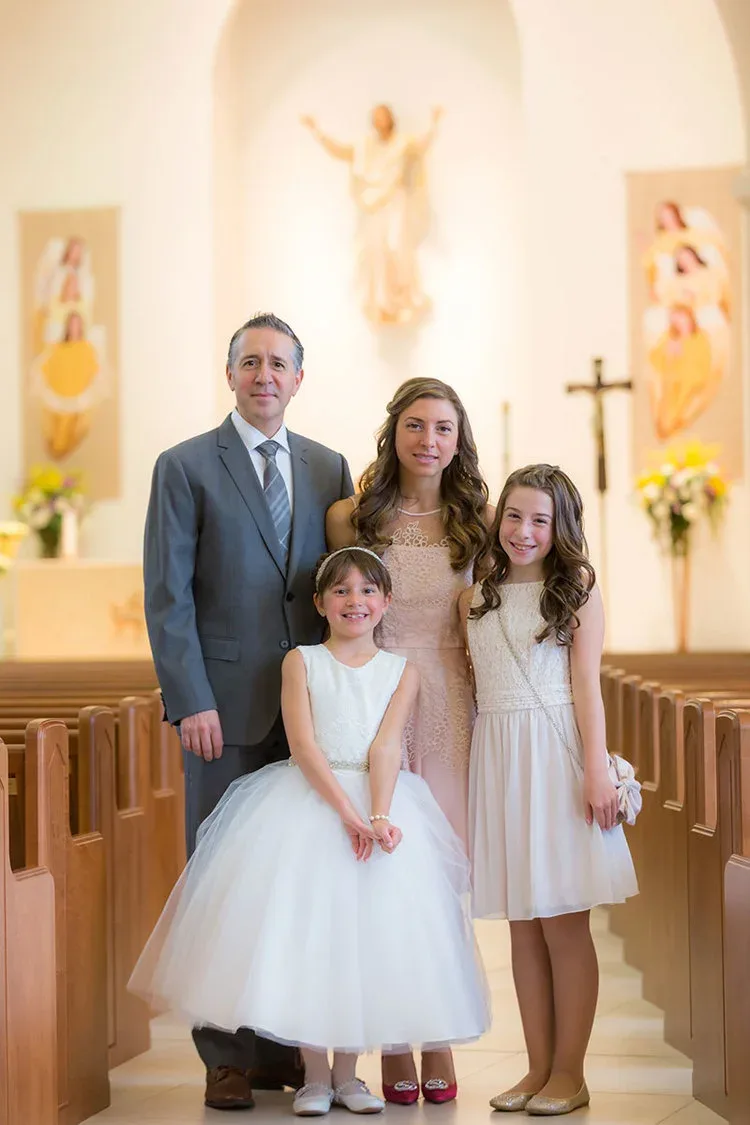
Church light is soft and warm, and it is kinder to smooth hair than to very shiny hair. Too much shine spray or gel turns into a bright glare in a photograph, especially under church lights. Use a light hand with products, and choose a matte finish where you can. A little shine at the ends of curls is lovely. A whole head of wet-look gel is not.
Think about the photographs before you choose the style. The formal portraits are usually taken from the front and from the side, so the front of the hair matters most. A neat parting, smooth front pieces and an accessory that sits straight will show up in every single picture. Ask the photographer to take one shot from behind as well, because the back of a braid or a bun is often the prettiest part, and it is the view the family sees as she walks down the aisle.
Take a few test photos at home in daylight and in a dim room. Hair that looks perfect in a bright bedroom can look flat in a dark church, and a style that looks soft at home can look messy on camera. A quick phone photo from the front, the side and the back will tell you more in thirty seconds than an hour of looking in the mirror. Fix anything that looks uneven now, not on the church steps.
What to Ask Your Stylist Before the Big Day
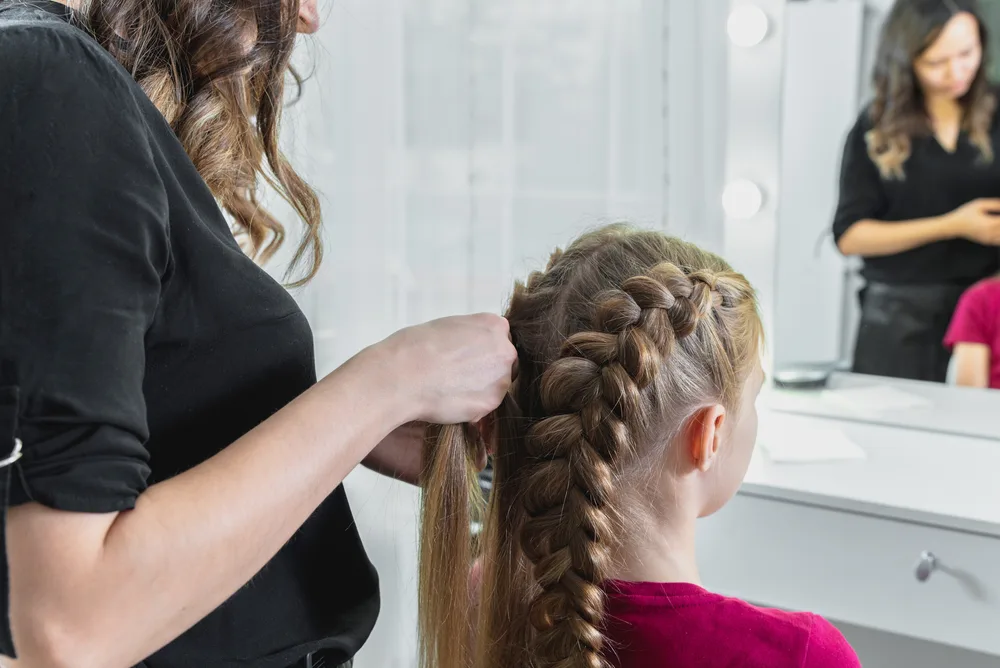
Book the stylist early, and book a trial run. First communion season is busy, and the best stylists fill up weeks ahead. A trial run a week or two before the day is worth every penny. Bring the veil, the headband or the flowers, and a photo of the dress, so the stylist can see the whole picture. A style that looks lovely on its own can clash with a big veil or a high dress collar, and it is much better to find that out at the trial.
At the trial, ask three simple questions. First, how long will the style take on the morning itself, so you can plan the timeline. Second, will it survive kneeling, sitting and two hours in a warm church, and what should you pack to fix it if it loosens. Third, how much product will be used, because a young girl’s scalp is sensitive, and too much hairspray can itch and make her want to scratch all through Mass.
Bring your daughter into the conversation. She is the one wearing the style for hours, so she should like it. Let her choose between two or three options the stylist suggests, and let her say no to anything that feels tight or scratchy. A style she loves is a style she will sit still for, and a style she hates will be pulled apart before the family photos are even taken.
Keeping Hair Neat Through Mass
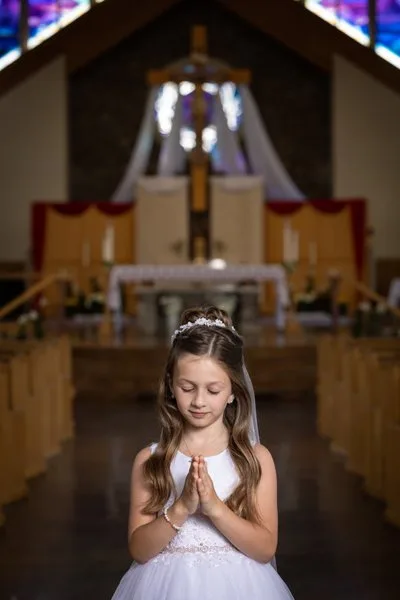
Mass is long, warm and full of standing, sitting and kneeling, and hair has to survive all of it. The secret is to build the style for movement, not just for the mirror. Pin the front sections back firmly, even in a loose style, because those are the strands that fall into the face when she kneels. Use bobby pins in her hair colour, crossed over each other, because a single pin slides out and two crossed pins hold.
Pack a tiny rescue kit and give it to mum, not to the child. Two bobby pins, one small elastic, a couple of kirby grips and a small comb are enough. Do not pack hairspray for the church bag, because spraying it in a pew is never a good idea, and the smell lingers. If a curl drops or a strand escapes, a quick smooth-back with a damp hand and one pin is all it takes, and nobody in the congregation will notice.
Do the hair last on the morning, after the dress is on and the shoes are done. Hair that is finished first gets flattened by the dress going over the head, squashed by the car seat, and frizzed by the walk from the car to the church. A style finished ten minutes before you leave the house will look ten times fresher than one done an hour earlier.
Veils, Headbands, Flowers and Bows: Choosing Accessories
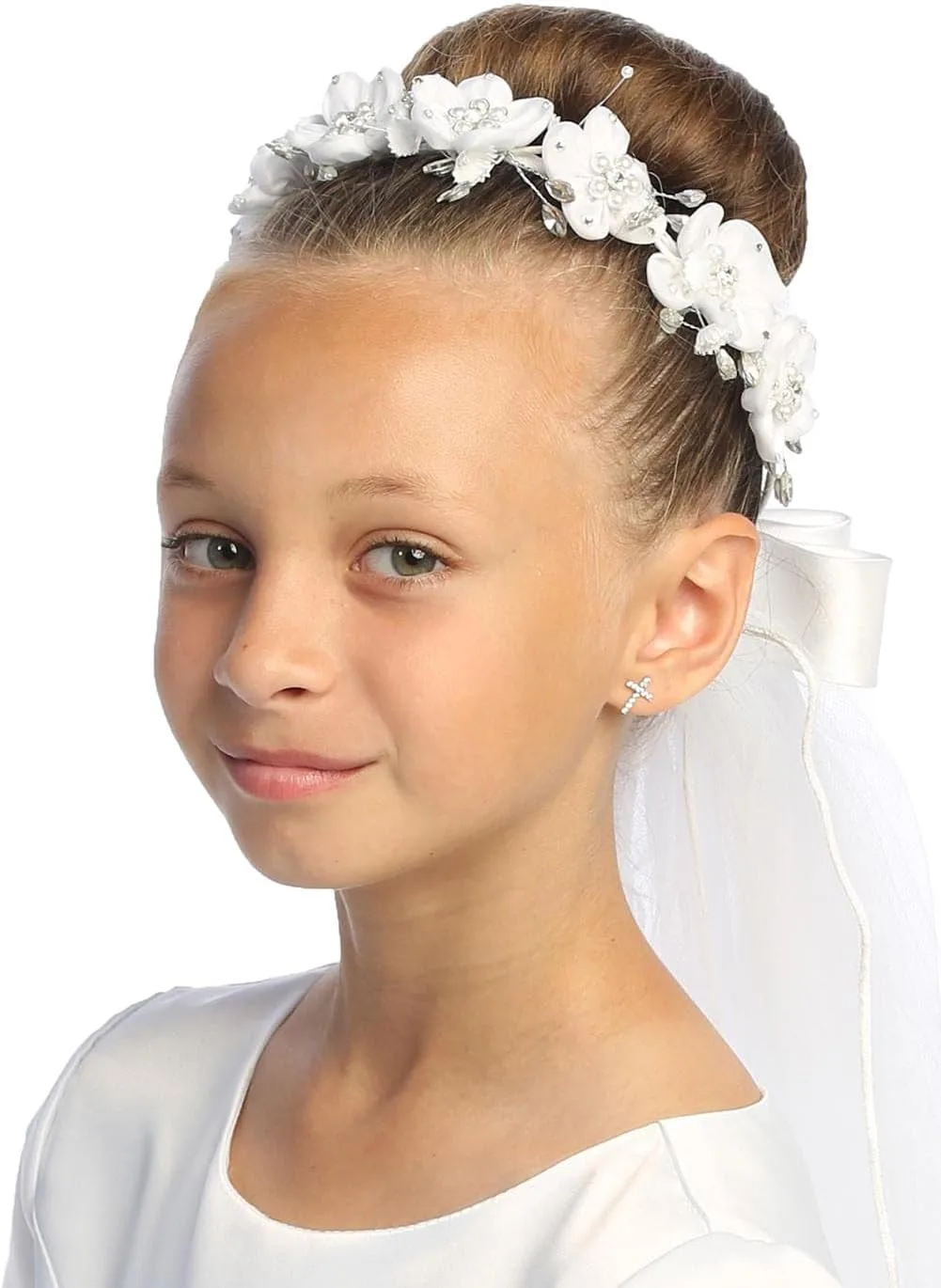
One accessory is enough. A veil plus a headband plus flowers plus a bow is too much, and the hair ends up carrying the weight of all of them. Pick the one piece your daughter loves most, and let it be the star. If she wears a veil, the veil is the accessory, and anything else should be small and flat. If she skips the veil, a flower crown or a pearl headband can take its place beautifully.
Match the accessory to the dress, not to the hairstyle. A dress with lace and pearls suits pearls and soft white flowers. A plainer dress can carry a bigger bow or a brighter flower. White, ivory and soft blush are the safest colours, and they photograph well against a white dress. Avoid anything heavy, sharp or noisy, because a metal comb that digs in will be pulled out before the end of Mass, and a jangling charm will distract everyone in the pew.
Test every accessory for comfort the way you would test shoes. Put it on, leave it for twenty minutes, and ask your daughter if it pinches, itches or slips. A headband that is too tight leaves a red mark on the forehead that shows in every photo. A flower crown that is too loose slides down over the eyes. Comfort first, looks second, because a comfortable accessory stays on all day and an uncomfortable one does not.
The Morning Timeline: Getting Ready Without the Rush
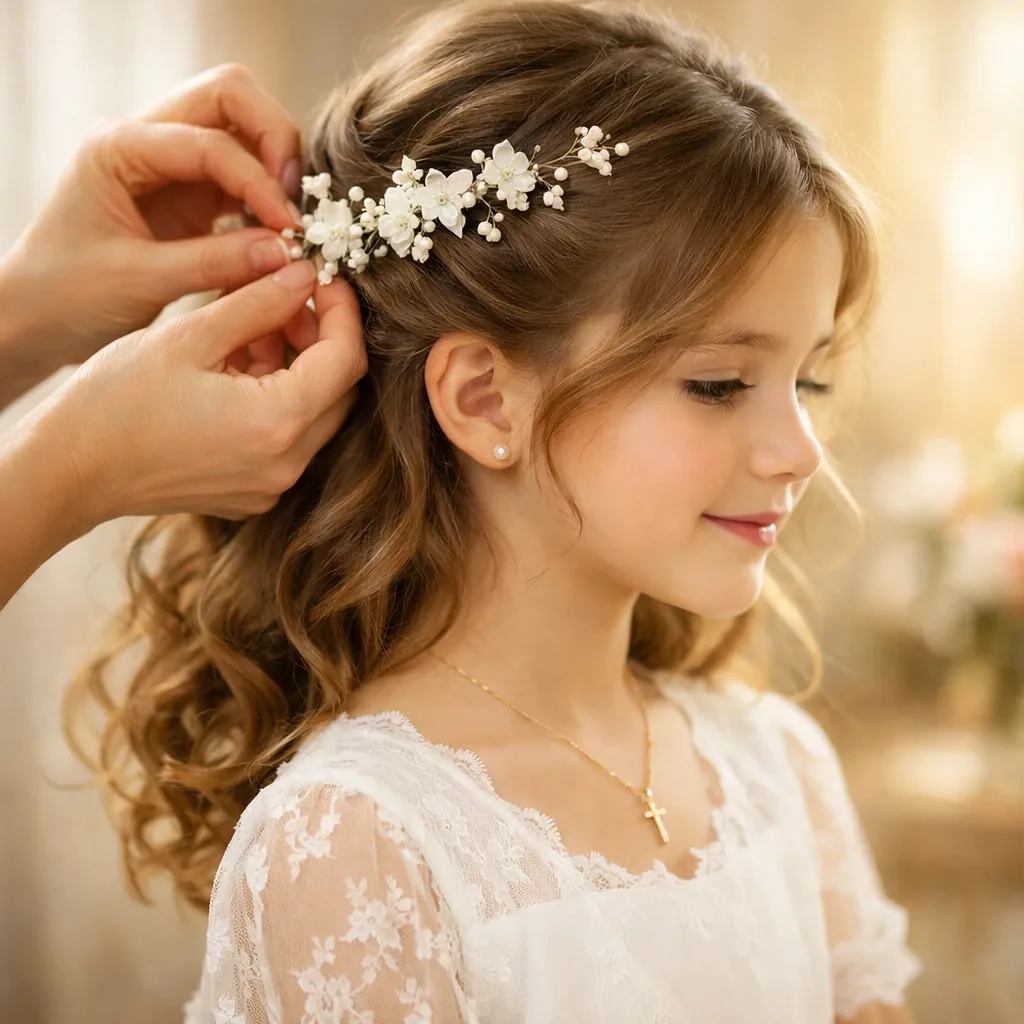
A calm communion morning starts the night before. Wash the hair the evening before, not the morning of the day, because day-old hair holds a style far better than freshly washed, slippery hair. Before bed, put it in a loose braid, which stops tangles and leaves a soft wave in the morning. Lay out the dress, the veil, the shoes and the hair accessories together, so nothing is hunted for in a panic.
On the morning itself, give the hair thirty minutes, not ten. Start with the dress and shoes, then do the hair last, as the final step before you leave. Work in a cool room, because a warm bathroom makes everyone sweaty and the hair frizzy before you even start. Keep a drink and a snack nearby, because a hungry, thirsty child will not sit still for a braid, however patient she is.
Build in ten spare minutes for something to go wrong, because something always does. A curl drops, a pin snaps, the veil sits crooked. Ten spare minutes turns a small problem into a quick fix. No spare minutes turns the same small problem into tears. And take one photo of the finished hair at home before you leave, so if anything comes loose later, you know exactly how it is supposed to look.
From the Church to the Celebration: Hair That Lasts All Day
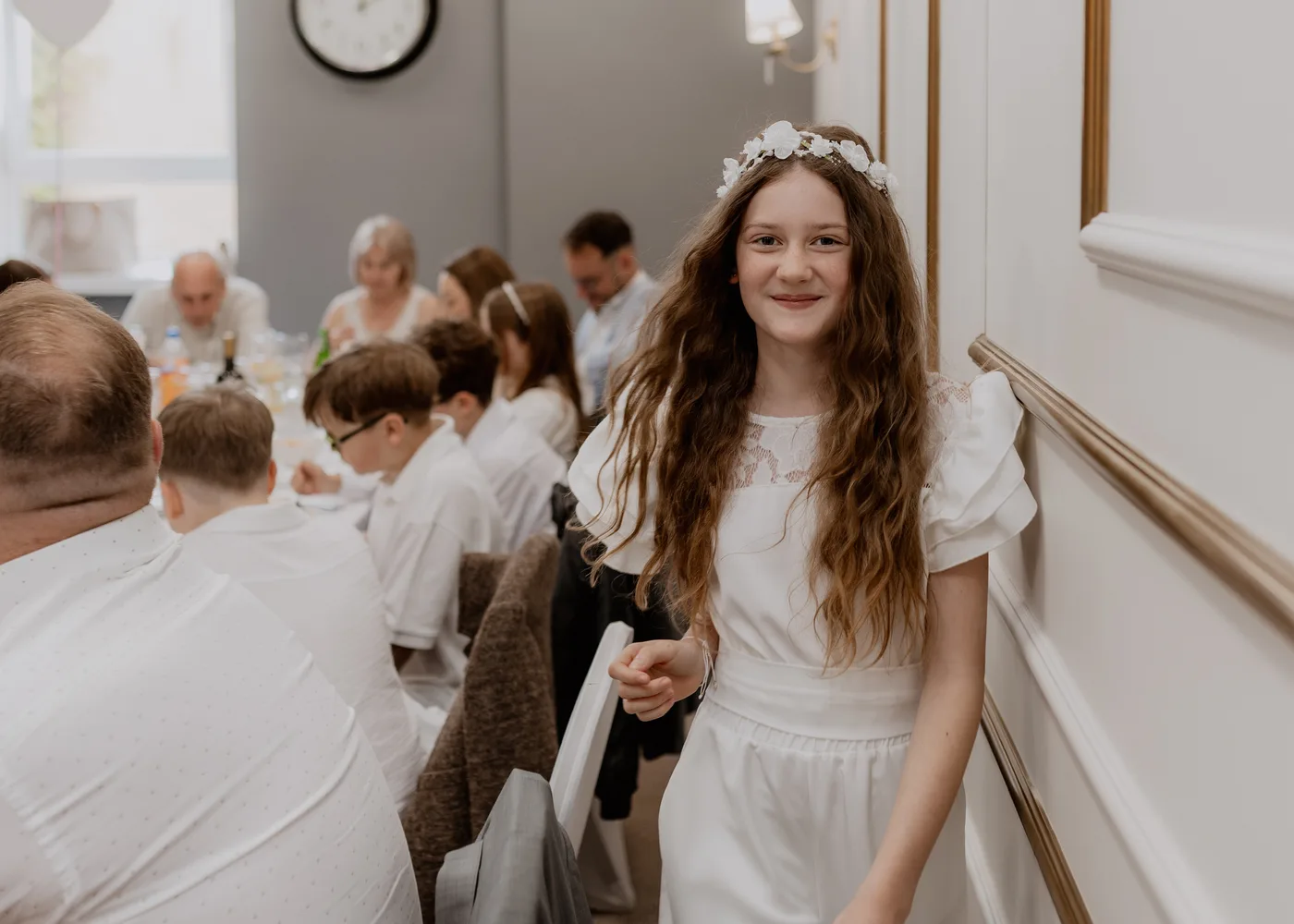
The celebration after the ceremony is where hairstyles are truly tested. There is hugging, dancing, running around with cousins, and a meal that lasts for hours. A style that only survives sitting still in a pew will not survive a party. Choose a style with a firm base, a bun, a braid or a pinned half-up, rather than loose hair held by hope alone.
Plan one small refresh between the church and the party. It takes two minutes: smooth the front pieces back, re-pin anything that has loosened, and add a fresh flower or a clean bow if the first one is squashed. Do it in the car or in the bathroom at the venue, and the party photos will look as fresh as the church ones. Pack the rescue kit for this moment, because this is when you will actually use it.
Let your daughter enjoy the party, hair included. If she wants to take the veil off for the dancing, let her. If a curl falls out while she is playing, let it fall. The photographs from the party are supposed to look joyful and a little bit lived in, not stiff. The church photos are the formal ones. The party photos are the happy ones, and a little bit of happy mess in the hair only makes them better.
The Classic Low Bun with a Veil
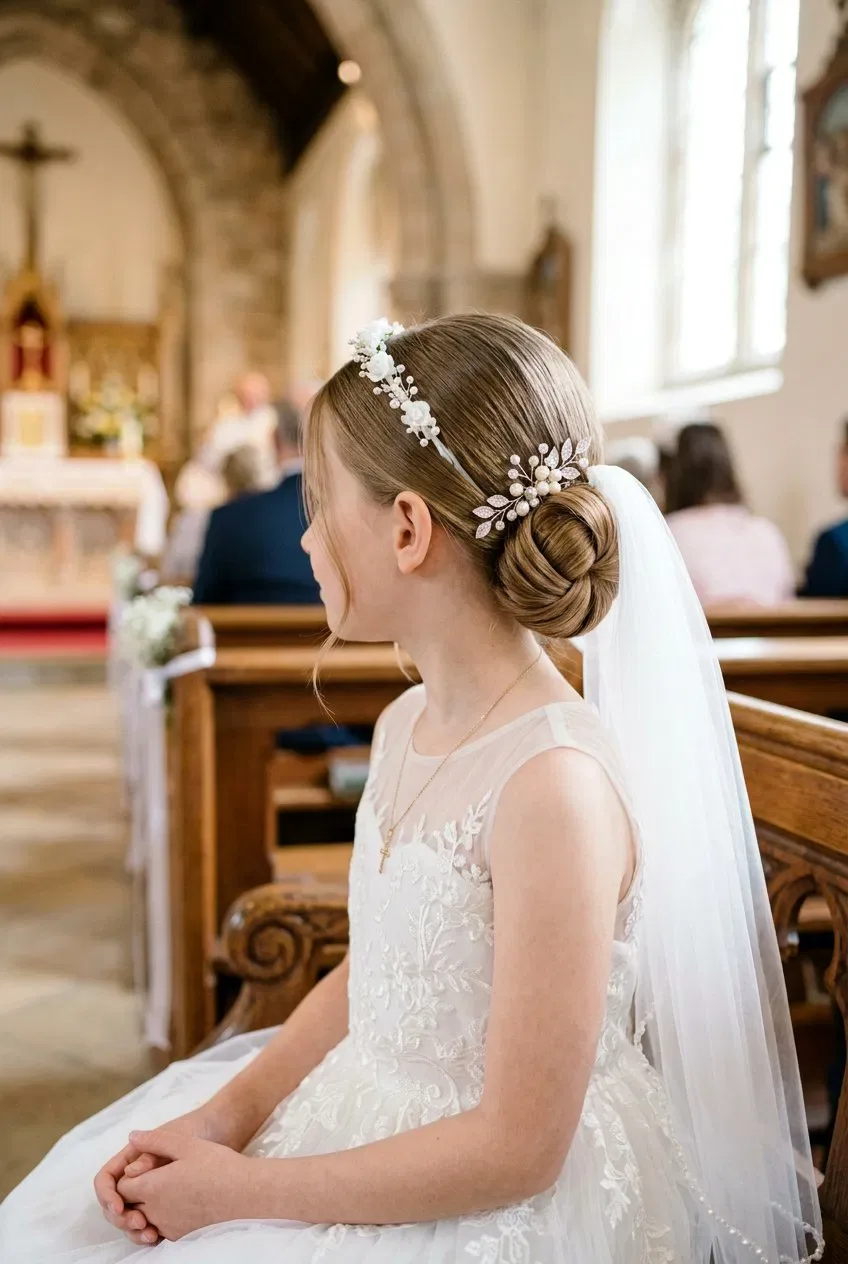
Pros: neat, modest and completely veil-friendly, with nothing to slip or fall into the face. Cons: it can look plain on its own, so it needs a pretty pin or a soft veil to feel special.
Who it suits: every hair length from shoulder length up, and every hair type, because a low bun works with straight, wavy and curly hair alike. Who should avoid it: girls with very short hair that will not reach into a bun, and anyone who finds a tight bun uncomfortable.
Maintenance: very low. Pin it firmly, add a hairnet in her hair colour if the hair is layered, and it will last from the church to the last dance. A quick smooth of the front pieces is the only fix it ever needs.
The Braided Crown with a White Ribbon
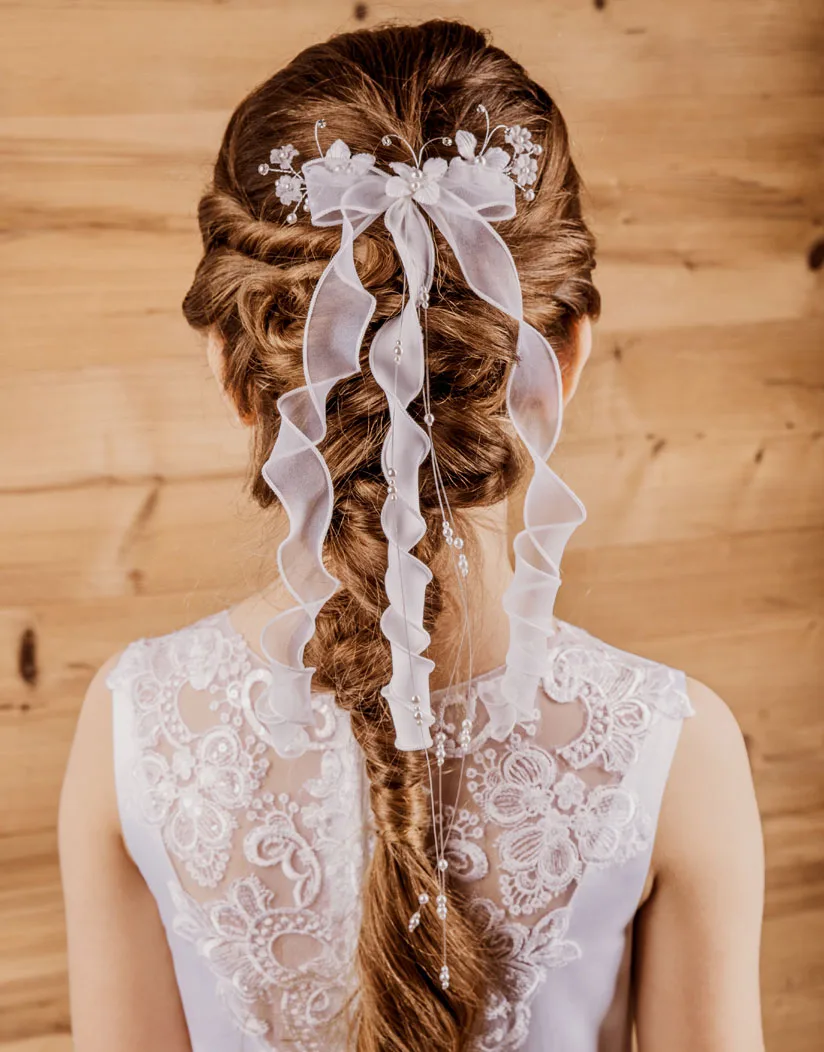
Pros: the braid keeps every strand off the face, and the white ribbon makes it feel festive without a veil. Cons: it takes time and a steady hand, so it is best done by a stylist or a practised parent.
Who it suits: girls with medium to long hair who love braids, and anyone whose veil is small or skipped altogether. Who should avoid it: girls with fine hair that slips out of braids, and anyone who dislikes having their hair pulled back tightly.
Maintenance: low once it is in. The braid locks itself in place, and the ribbon can be re-tied in seconds if it loosens. Keep a spare ribbon in the bag, because ribbons are the first thing to get lost.
Soft Curls with a Flower Headband
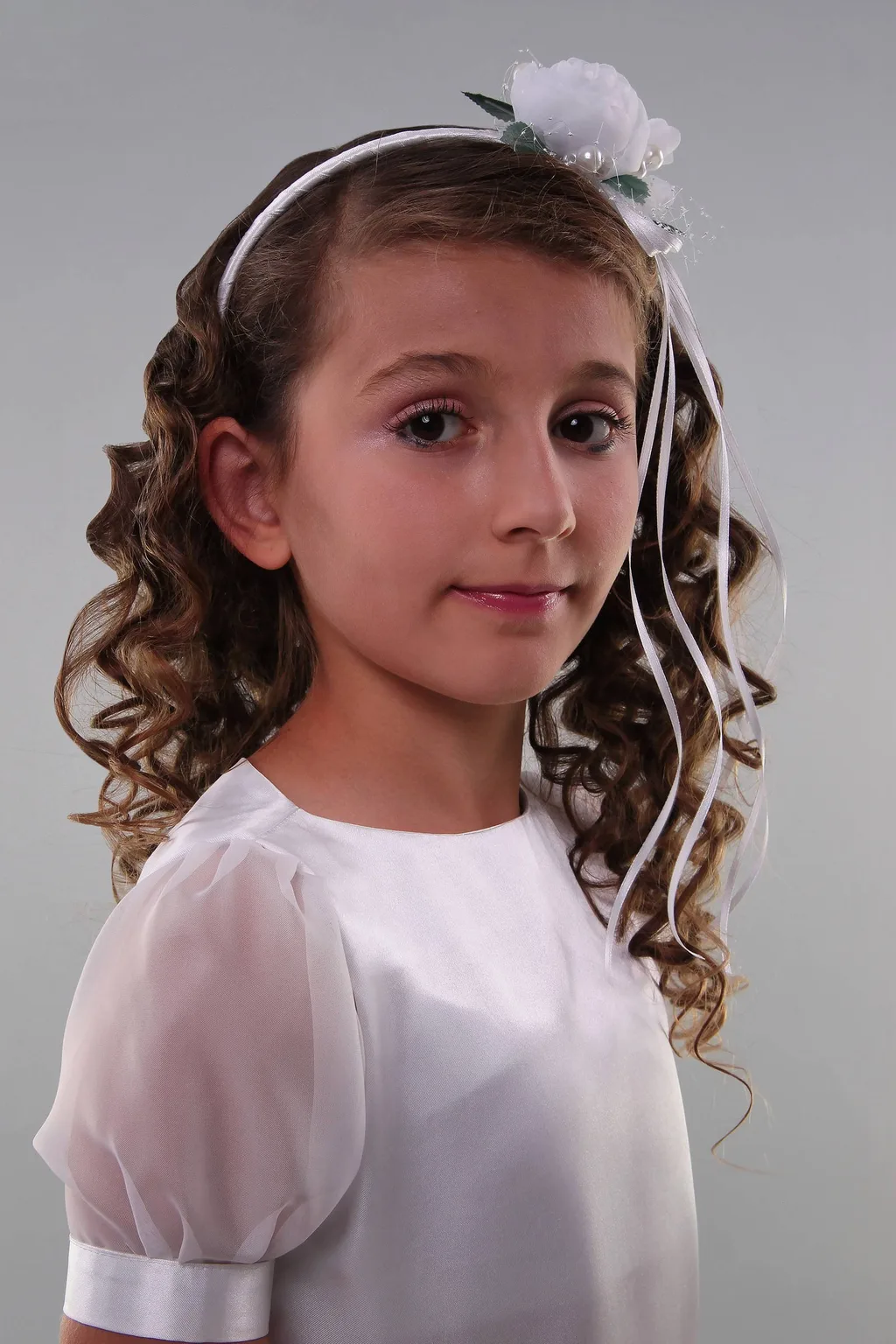
Pros: soft, romantic and very photogenic, with curls that frame the face gently. Cons: curls can drop in a warm church, and the headband can slide if it is not pinned in.
Who it suits: girls with naturally wavy or curly hair, and anyone who wants a gentle, natural look rather than a formal updo. Who should avoid it: girls with very straight, fine hair that will not hold a curl without a lot of heat and product.
Maintenance: medium. Curl the hair the morning of the day, pin the headband in with two crossed bobby pins, and carry a small comb for a quick refresh before the photos.
The Half-Up Twist with a Veil
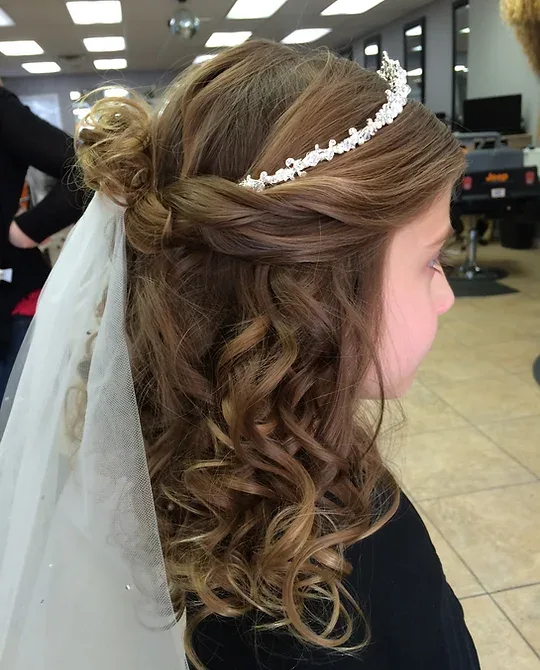
Pros: the best of both worlds, with the front pinned back neatly and the length left to fall in curls. The veil sits perfectly above the twist. Cons: the loose curls underneath can tangle during a long day.
Who it suits: girls with medium to long hair who want to wear their hair down but still look tidy in church. Who should avoid it: girls with very thick hair, where the twist can feel heavy, and anyone whose hair tangles easily.
Maintenance: low to medium. The twist itself holds well, and the curls only need a gentle finger-comb between the church and the party. A light mist of hairspray keeps the twist smooth.
The French Braid into a Low Bun
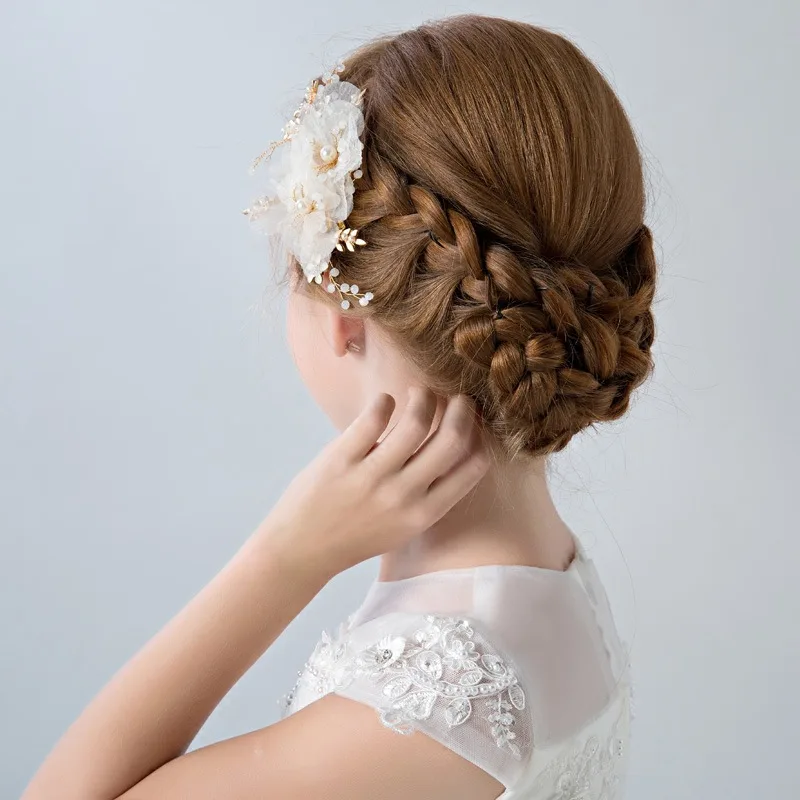
Pros: the braid gathers every layer from the hairline, so nothing escapes, and the bun at the end is flat, neat and secure. Cons: it needs a confident braider, and a French braid that is too tight can ache by the end of Mass.
Who it suits: girls with long hair and lots of layers, and anyone who needs a style that will not move for hours. Who should avoid it: girls with a sensitive scalp, and girls with short hair that cannot be gathered into a braid from the front.
Maintenance: very low. Once the braid is pinned into the bun, it stays. Check the nape once before the photos, because that is where a French braid loosens first.
Side-Swept Curls
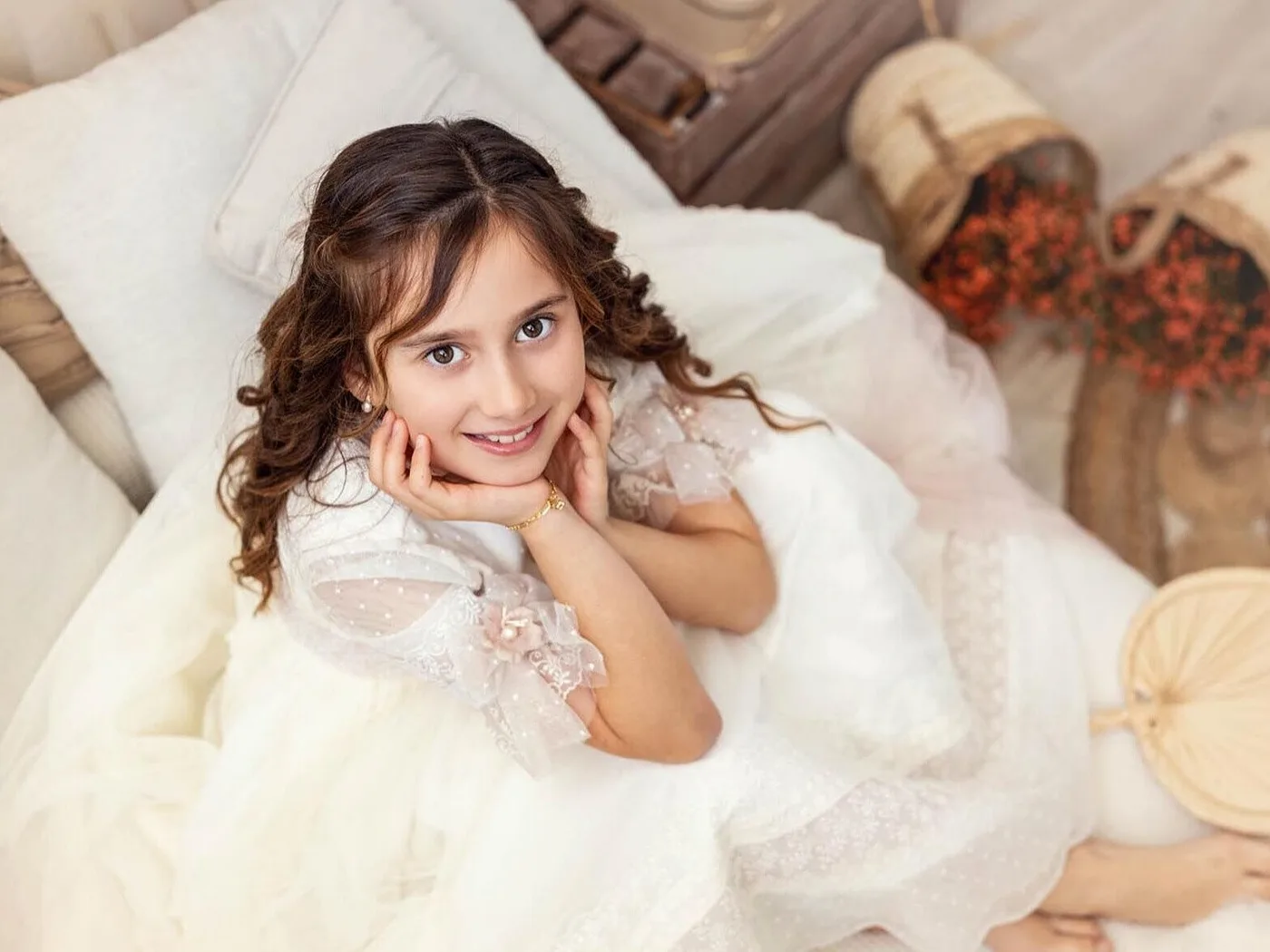
Pros: elegant and simple, with all the curls falling over one shoulder where they photograph beautifully. Cons: the curls can fall into the face when she kneels, so the front needs pinning.
Who it suits: girls with long, naturally wavy hair who want a grown-up, graceful look. Who should avoid it: girls who fidget with their hair, because side-swept curls invite touching, and girls with fine hair that will not hold a curl.
Maintenance: medium. Pin the front section on the swept side, and carry two bobby pins for the moment a curl escapes. A light hairspray mist holds the sweep without making it stiff.
The Sleek Low Ponytail with a Bow
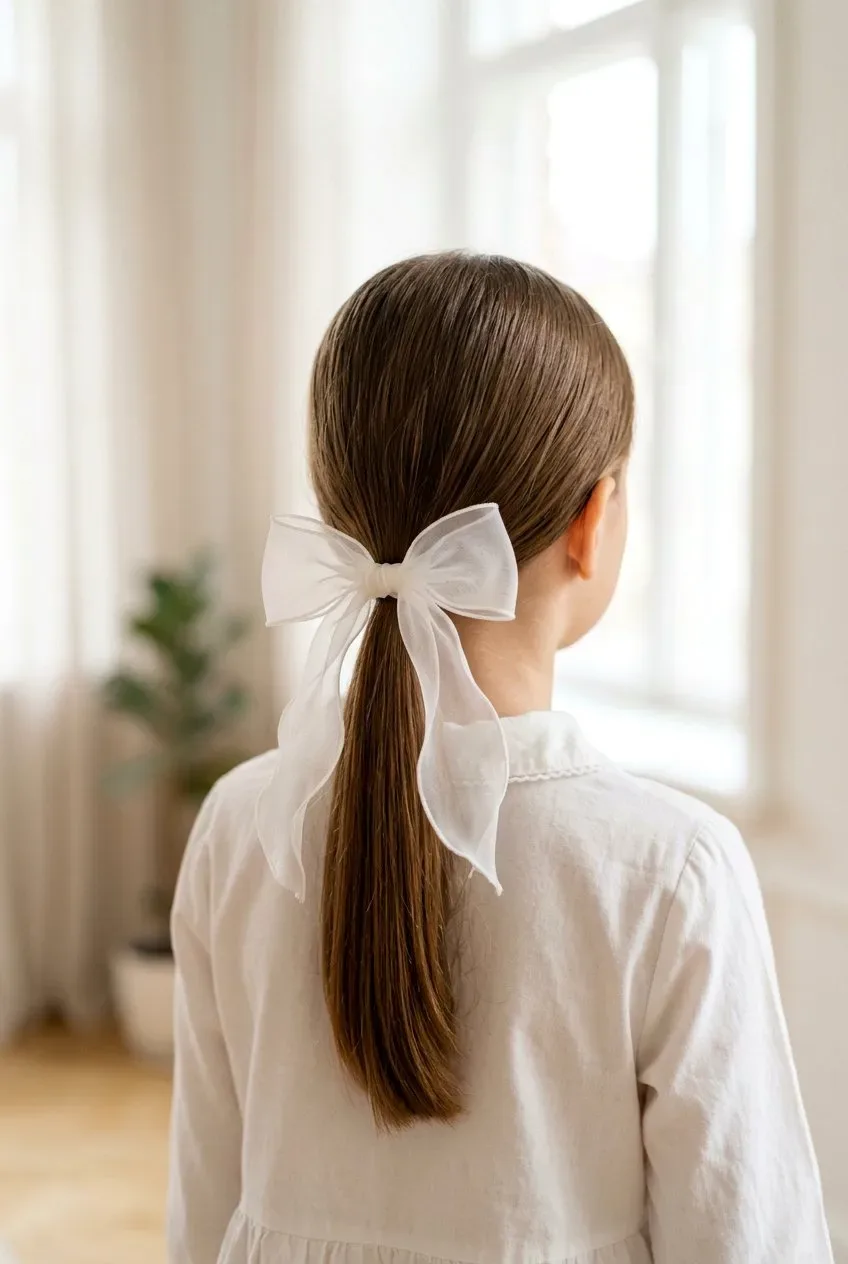
Pros: beautifully simple, quick to do, and the big white bow does all the decorating. It suits a veil perfectly, because the veil comb sits just above the ponytail. Cons: a sleek ponytail shows every bump, so the brushing has to be careful.
Who it suits: girls with straight or slightly wavy hair, and anyone who wants a clean, classic look with almost no fuss. Who should avoid it: girls with very curly hair that resists being brushed smooth, and anyone who finds a tight ponytail uncomfortable.
Maintenance: very low. Smooth the crown with a brush, tie the bow firmly, and the style will last all day. If the ponytail slips, one extra elastic underneath fixes it in seconds.
The Dutch Braid Crown
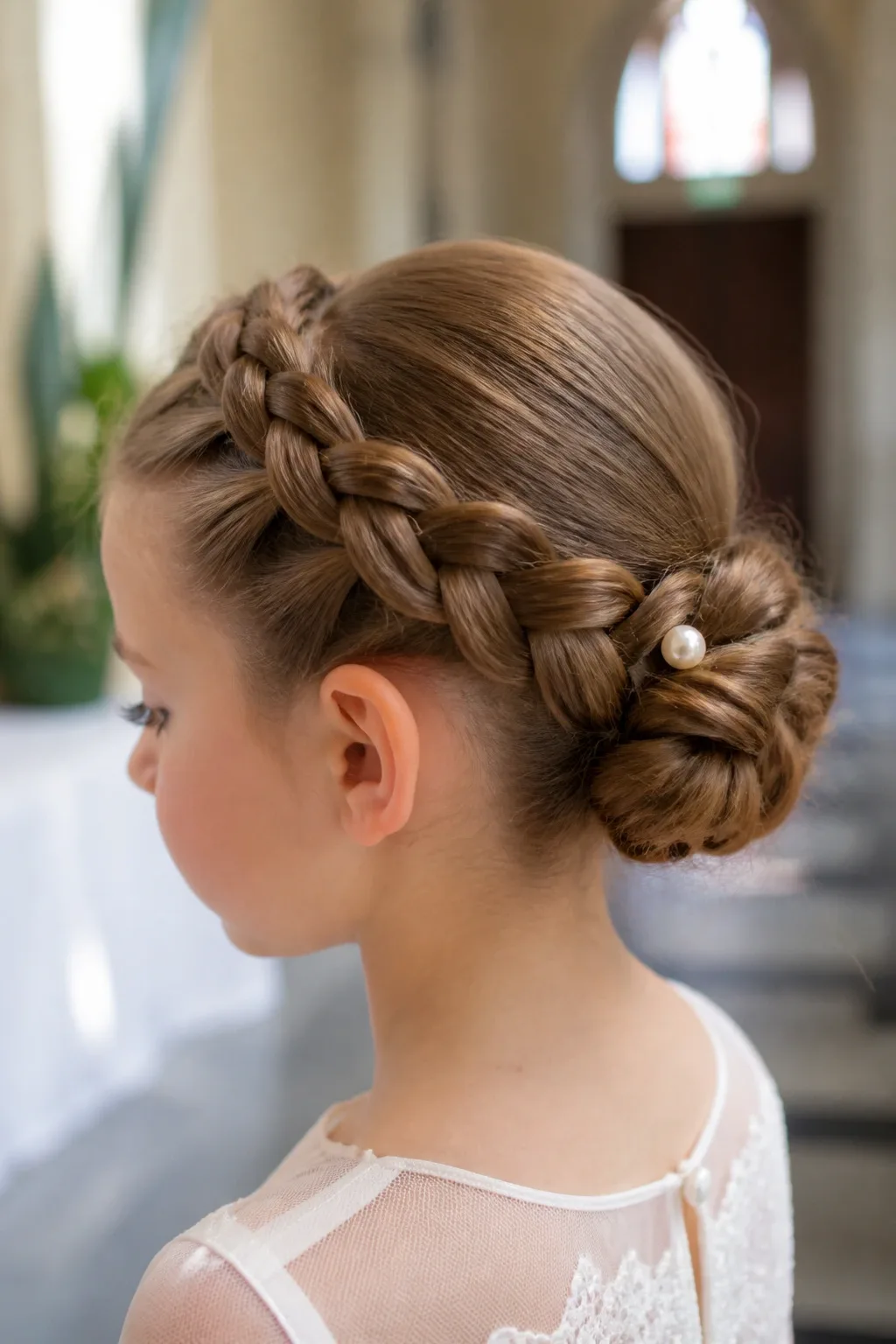
Pros: the braid stands out from the head, so it looks detailed and special, and it holds its shape for hours. Cons: a Dutch braid is harder to do than a French braid, so practise it first.
Who it suits: girls with medium to long, thick hair, and anyone who wants a braid that really shows in photographs. Who should avoid it: girls with fine, slippery hair, where the braid can loosen and look messy by lunchtime.
Maintenance: low. Pin the end of the braid into a small bun or tuck it under, and it will not move. A pearl pin at the end adds a pretty finish and hides the elastic.
Loose Waves with Pearl Pins
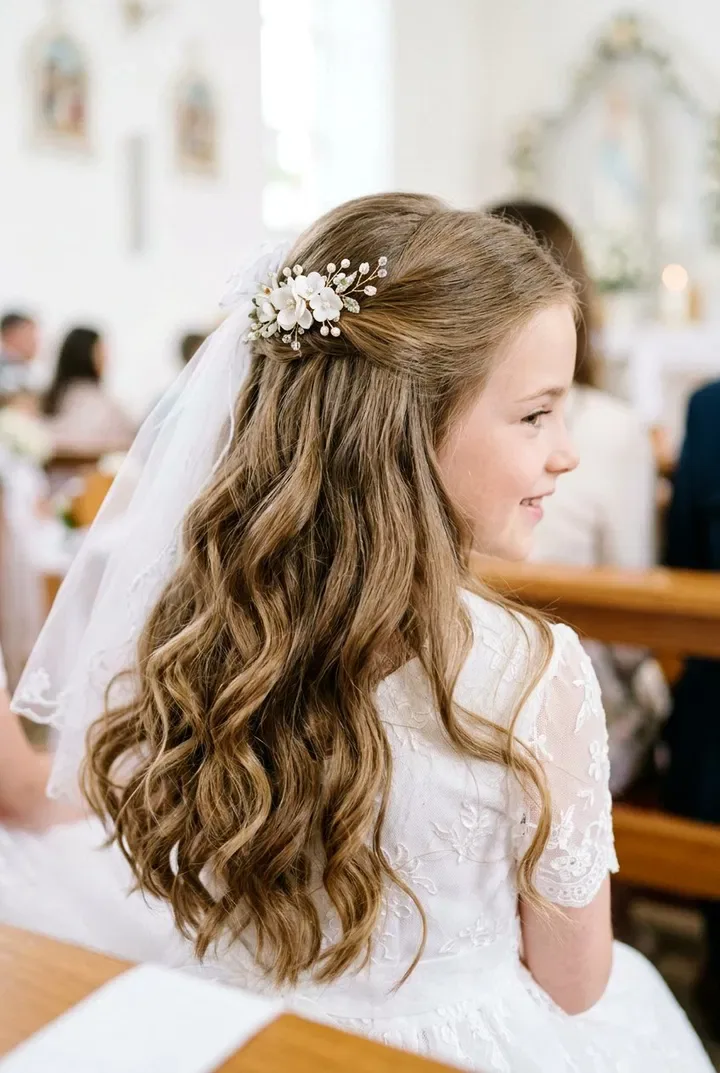
Pros: soft, natural and very pretty in photographs, with pearl pins that catch the light. Cons: loose waves are the least secure style here, and they need the most attention during the day.
Who it suits: girls with naturally wavy hair who dislike having their hair tied up, and anyone whose ceremony is short. Who should avoid it: girls with very long hair that tangles, and anyone who will be running around with cousins all afternoon.
Maintenance: medium to high. Pin the front sections back, keep the pearl pins spare in the bag, and expect to re-pin once or twice. A gentle brush-out before the party photos brings the waves back to life.
The Classic Chignon
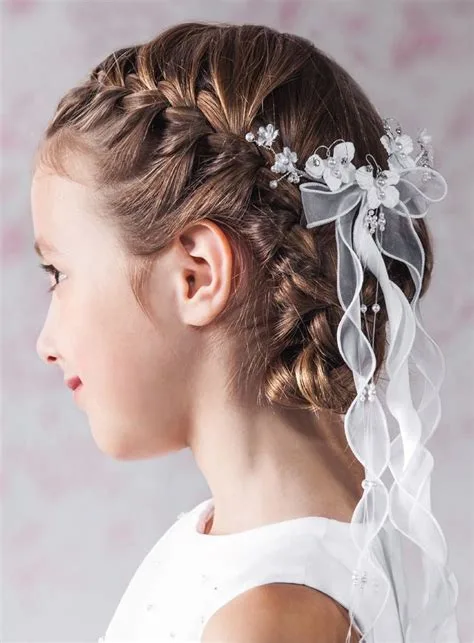
Pros: timeless, elegant and completely still, with the hair tucked neatly at the nape where it cannot fall anywhere. Cons: it can feel formal and grown-up, so younger girls may find it too serious.
Who it suits: older girls making their communion, and anyone with thick hair that needs a style with real hold. Who should avoid it: very young girls who want something playful, and girls with fine hair that slips out of a smooth bun.
Maintenance: very low. A chignon pinned at four points and finished with a hairnet will not move. Smooth the sides once before the family photos and it is done.
The High Bun with a White Headband
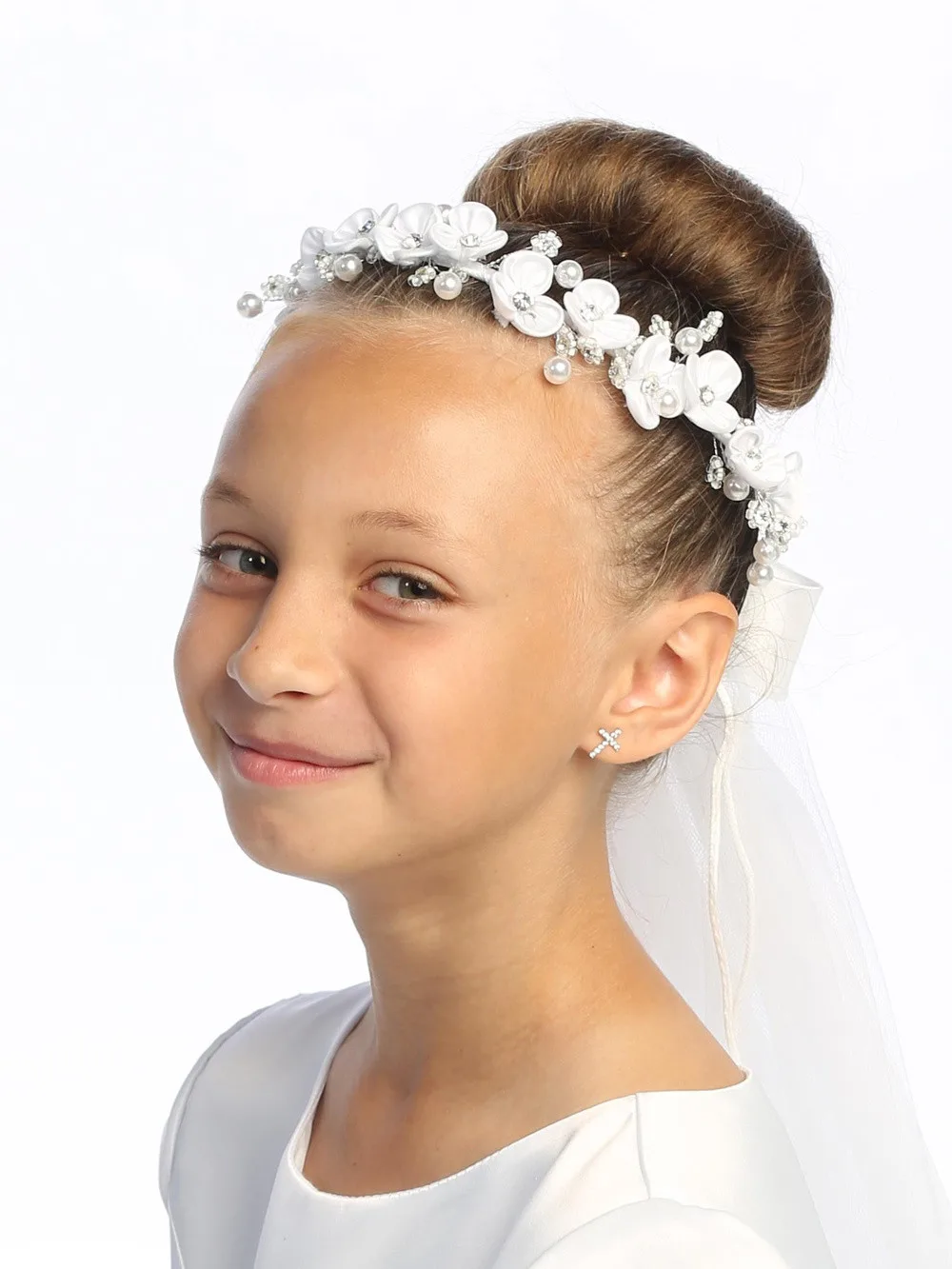
Pros: cheerful and tidy, with the bun up high where it shows off the neckline of the dress, and the headband adding a festive touch. Cons: a high bun can push a veil forward, so the veil needs careful placing.
Who it suits: girls with medium to long hair who like their hair completely out of the way, and anyone who loves headbands. Who should avoid it: girls wearing a long veil that needs to sit flat, and anyone with a tender scalp, because a high bun pulls more than a low one.
Maintenance: low. Wrap the bun tightly, pin it at four points, and the headband will stay in place all day. If the bun sags, two extra pins underneath lift it back up.
The Fishtail Braid
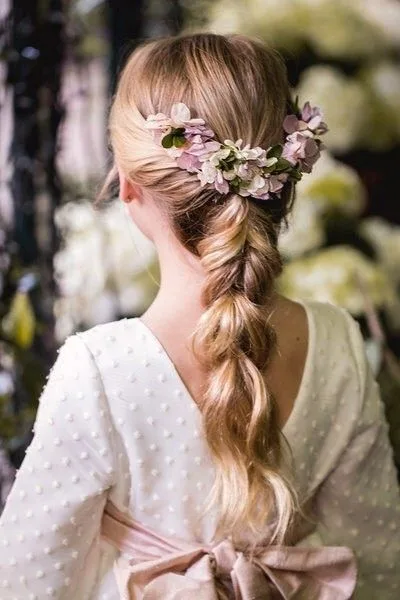
Pros: delicate and detailed, with a braid that looks far more complicated than it is, and that holds together beautifully. Cons: it takes longer than a regular braid, and it works best on longer hair.
Who it suits: girls with long hair who want a braid that photographs like a work of art. Who should avoid it: girls with short or layered hair, where the fishtail will fall apart, and anyone short on time in the morning.
Maintenance: low. A fishtail locks itself together once it is finished, so it rarely needs fixing. Add small flowers along the braid for the celebration, and it becomes a party style too.
The Curly Puff with a Ribbon
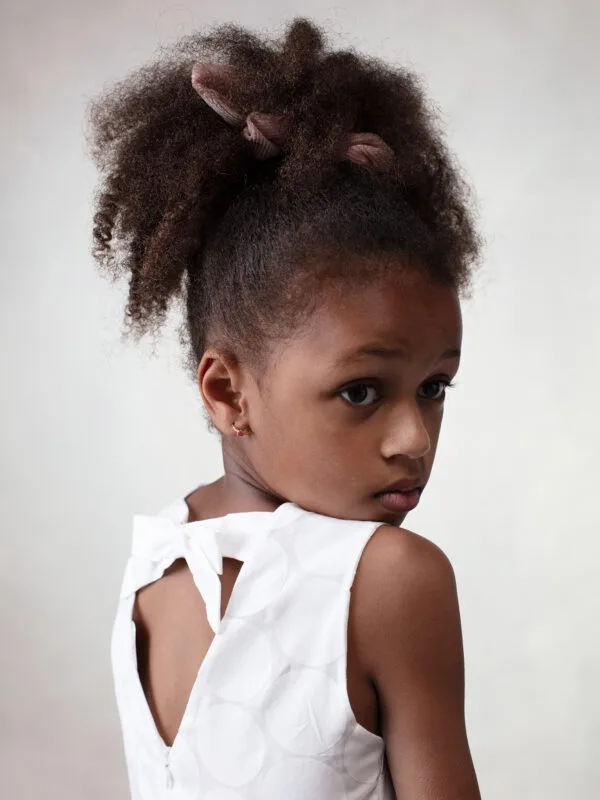
Pros: joyful, comfortable and perfect for curly hair, because it works with the curls instead of fighting them. Cons: a puff needs a soft band, not a tight elastic, or it can pull and hurt.
Who it suits: girls with naturally curly or coily hair who want a style that is quick, pretty and protective. Who should avoid it: girls with straight hair, where a puff simply will not form, and anyone who wants their hair fully pinned up.
Maintenance: very low. Smooth the edges with a little gel on a soft brush, tie the ribbon around the base, and the puff will hold its shape all day. A silk scarf at night keeps it fresh if the celebration runs late.
The Short Bob with a Pearl Headband
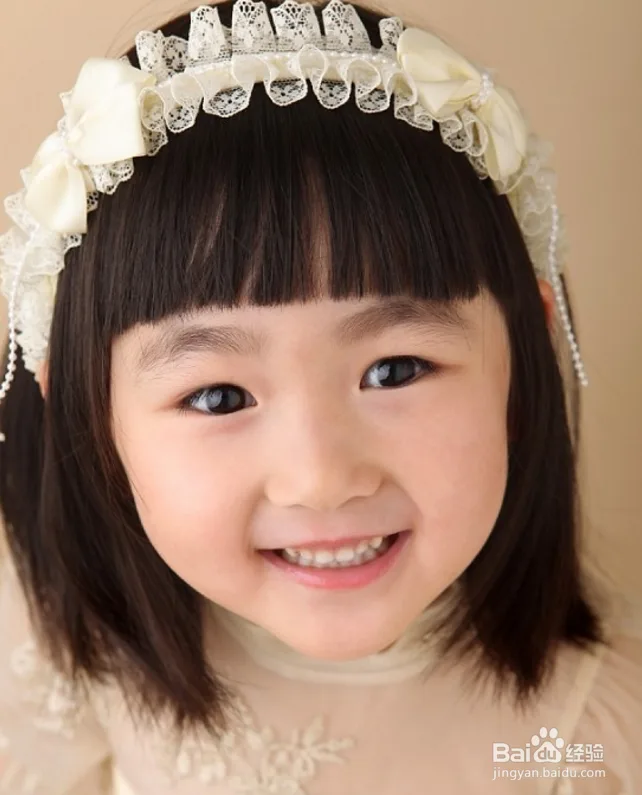
Pros: the easiest style in this whole guide, with the headband doing all the work and the bob framing the face sweetly. Cons: there is not much to vary, so the headband has to be the right one.
Who it suits: girls with short hair who want to look special without a long styling session. Who should avoid it: girls who want an updo, because a bob will not reach into one, and anyone whose headband slips, which is common on very straight, fine hair.
Maintenance: almost none. Brush the bob smooth, place the headband, and pin it behind the ears with two small clips. That is the whole style, and it will last all day.
The Pixie with a Delicate Clip
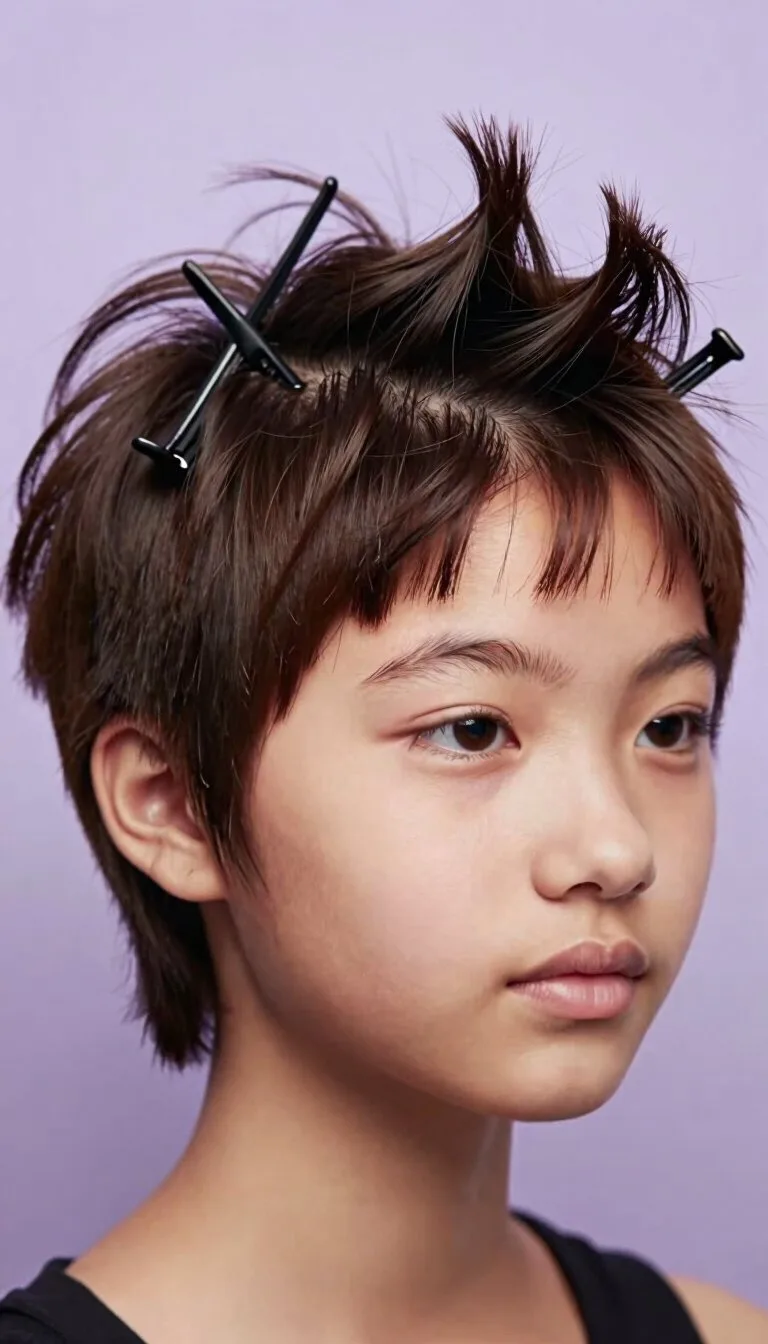
Pros: fresh, modern and completely fuss-free, with a pretty clip adding just enough sparkle for the day. Cons: a pixie shows the clip clearly, so the clip has to be genuinely pretty, not an afterthought.
Who it suits: girls with a pixie cut who want a simple, confident look. Who should avoid it: girls who want their hair to look long or fancy for the day, because a pixie cannot be dressed up into an updo.
Maintenance: none at all. A little texturising cream, one clip at the side, and the style is done. It cannot fall down, come loose or tangle, which is a blessing on a busy day.
Double Dutch Braids
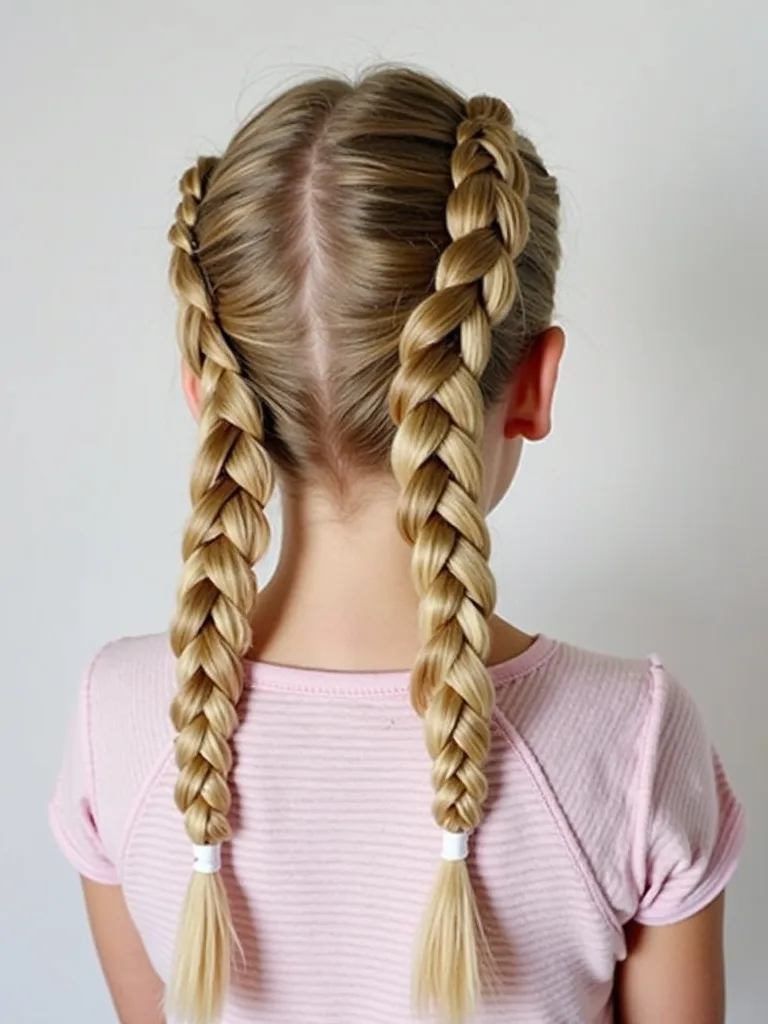
Pros: two braids share the weight, so the style feels light, and it stays put through kneeling, standing and dancing. Cons: the braids need to match each other, so they take a careful hand.
Who it suits: girls with long or very thick hair, and anyone whose single braid always flops to one side. Who should avoid it: girls with short hair that cannot be parted into two braids, and anyone who dislikes a centre parting.
Maintenance: very low. Tie the ends with small clear elastics, add a white ribbon to each end if you like, and the braids will last from the church to the end of the party.
The Milkmaid Braid
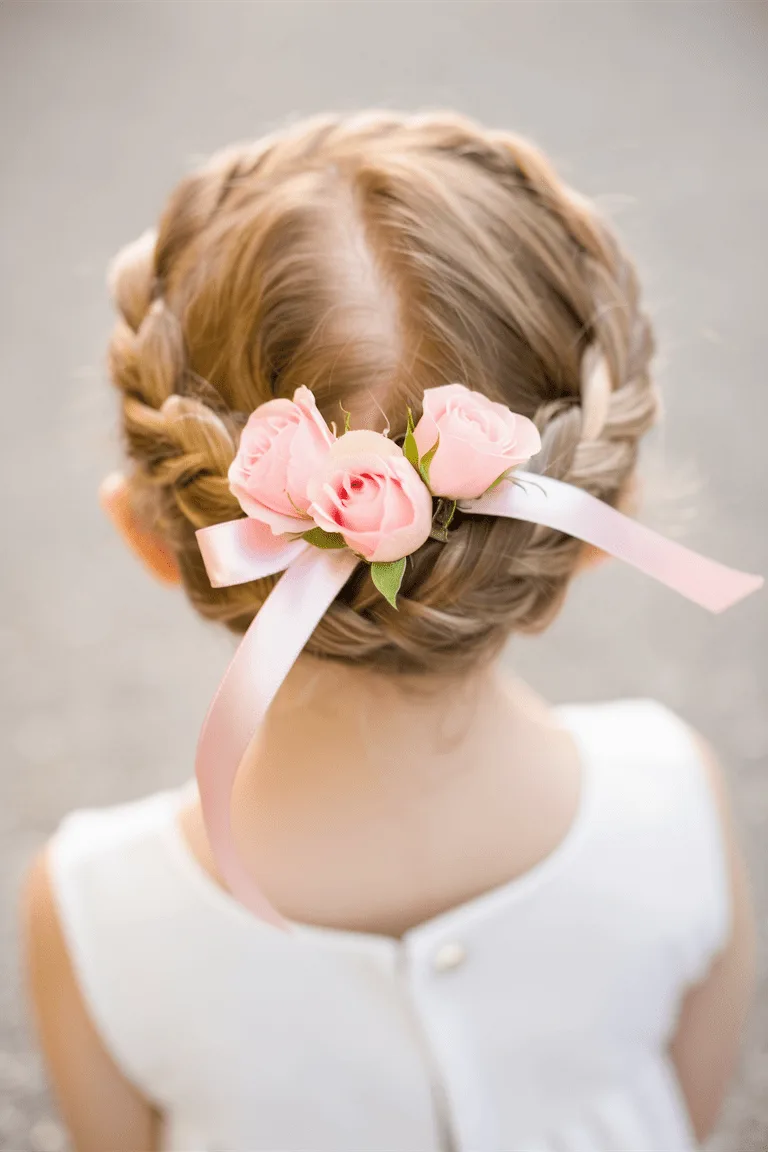
Pros: the braid wraps right around the head, so there is nothing to come loose, and the flowers make it look like a crown. Cons: it needs long hair and a patient braider, and it can feel heavy by the afternoon.
Who it suits: girls with long hair who want a style that will not move a millimetre all day. Who should avoid it: girls with short or fine hair, where the braids will not reach across the head, and anyone who dislikes the feeling of hair wrapped tightly around the crown.
Maintenance: low. Pin the braids where they cross, tuck the ends underneath, and the style holds itself. Loosen one or two strands at the front for a softer look in the party photos.
The Low Twisted Bun
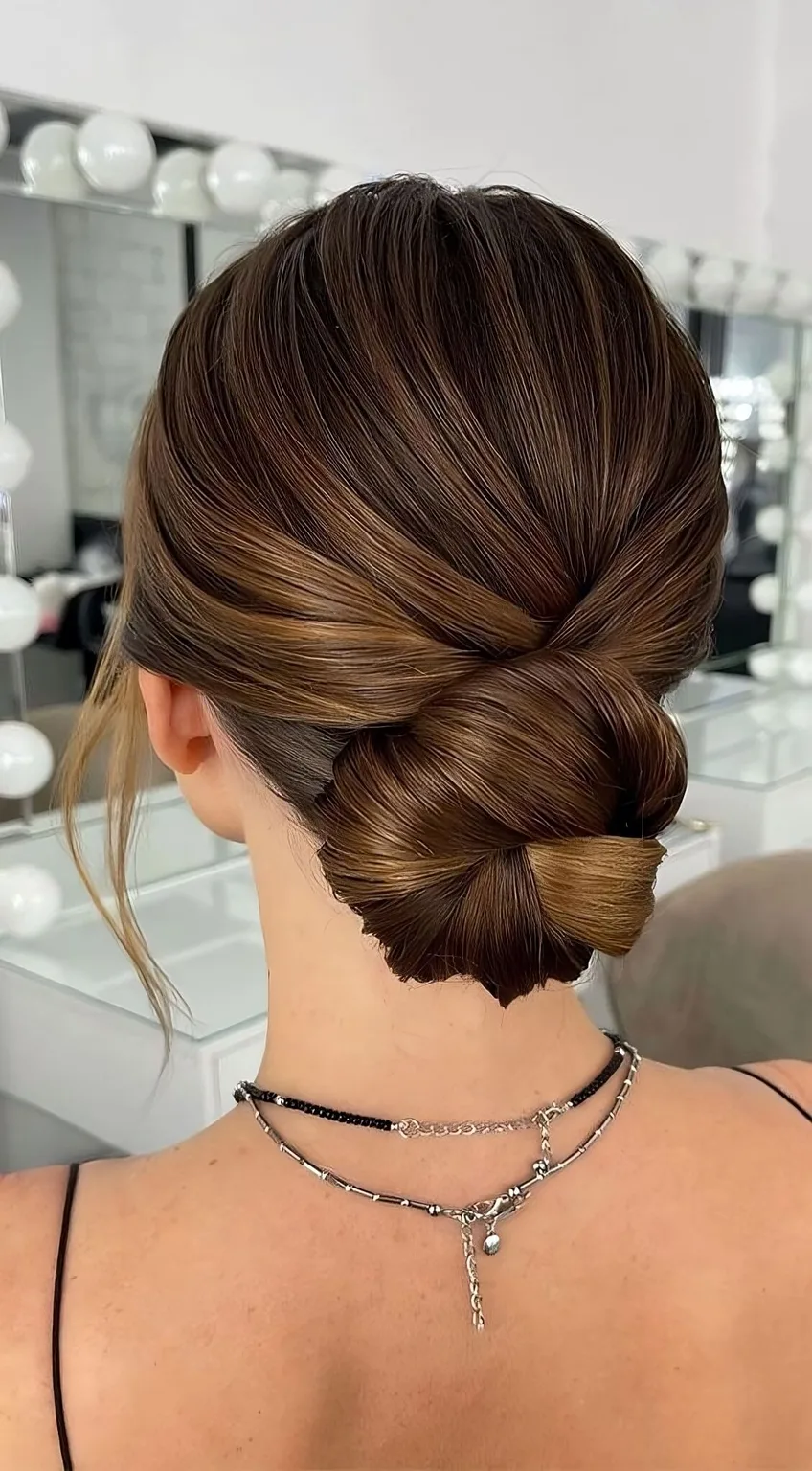
Pros: soft and elegant, with the twist giving the bun texture and interest without any braiding. Cons: a twisted bun can loosen faster than a braided one, so it needs enough pins.
Who it suits: girls with medium to long hair who want a bun that looks softer than a classic smooth bun. Who should avoid it: girls with very fine hair, where a twist can unravel, and anyone who will be very active at the celebration.
Maintenance: low to medium. Pin the twist at four points, add a hairnet if the hair is layered, and check it once after Mass. A single pin pushed back in is usually all it needs.
Half-Up Curls with a Bow
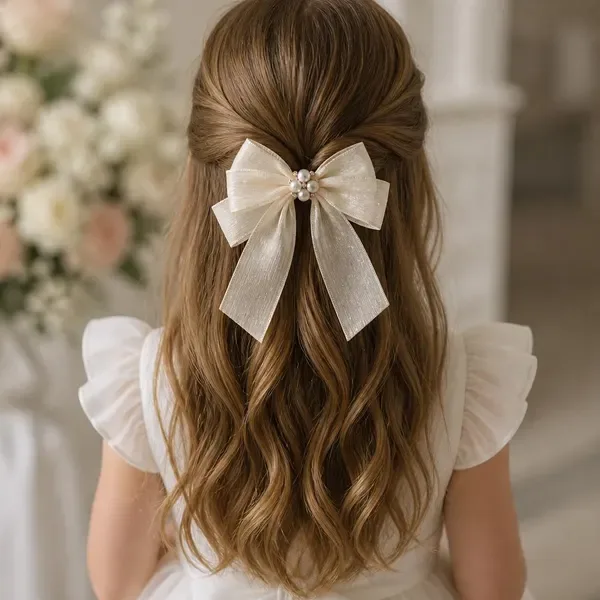
Pros: the bow is the star, the curls fall prettily, and the top half is pinned back so the face stays clear. Cons: the bow can slip if it is heavy, so it needs a firm clip or pins.
Who it suits: girls with medium to long wavy hair who love bows, and anyone who wants a sweet, classic communion look. Who should avoid it: girls with very straight hair that will not hold the curls, and anyone who finds a big bow uncomfortable.
Maintenance: low. Gather the top half, secure it with an elastic, tie the bow over the top, and pin the bow itself so it cannot slide. The curls underneath only need a gentle shake-out before the party.
The Rope Braid Bun
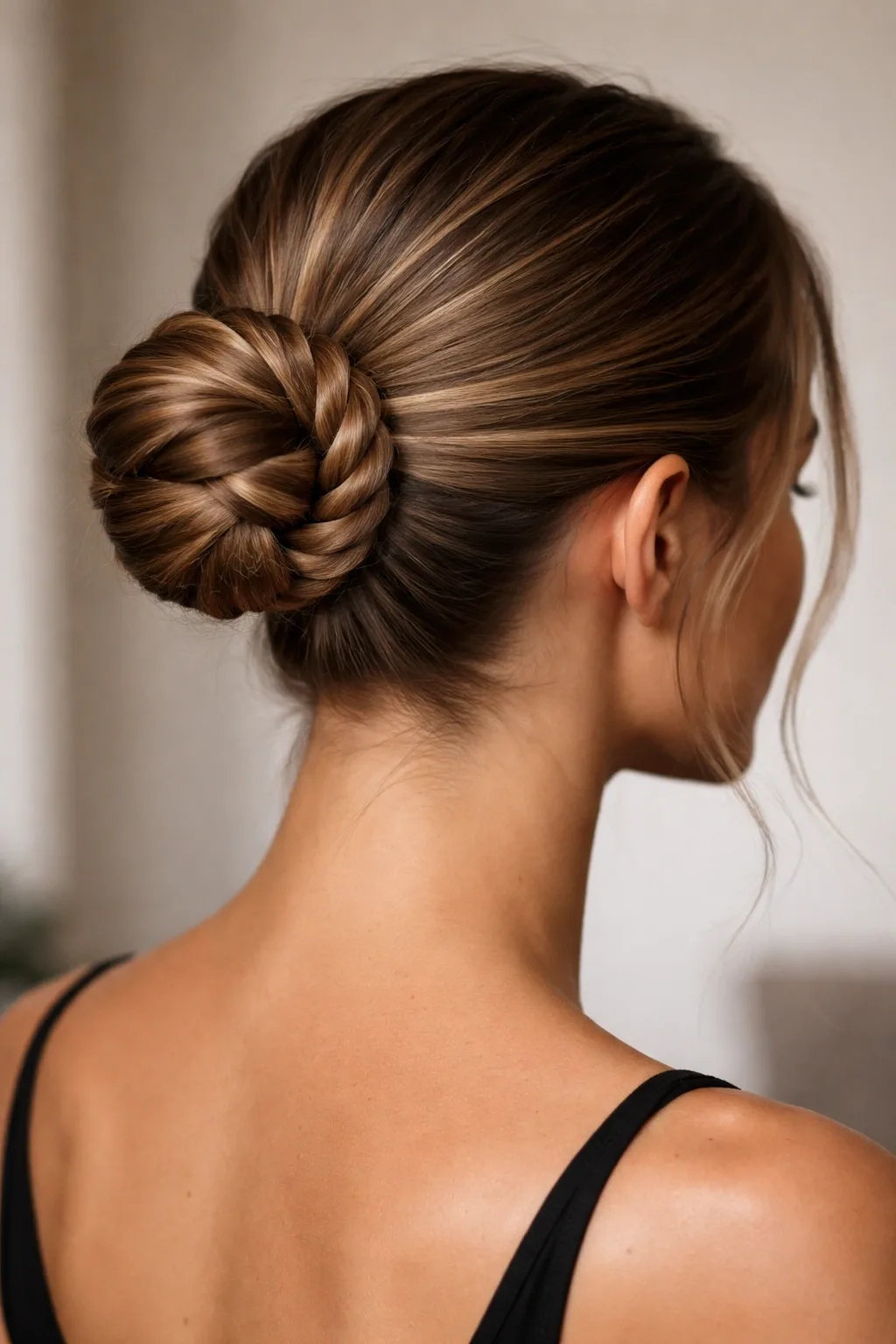
Pros: simpler to do than a plaited braid, just as secure, and the twisted texture looks lovely in photographs. Cons: a rope braid can untwist at the ends if it is not tied firmly.
Who it suits: girls with medium to long hair whose parents find regular braiding fiddly. Who should avoid it: girls with very short hair, where there is not enough length to twist, and anyone with layers that poke out of a twist.
Maintenance: very low. Twist, wrap into a bun, pin it, and it stays. Tie the end with a small elastic before you wrap, so the twist cannot unravel from the bottom.
The Side Bun with Flowers
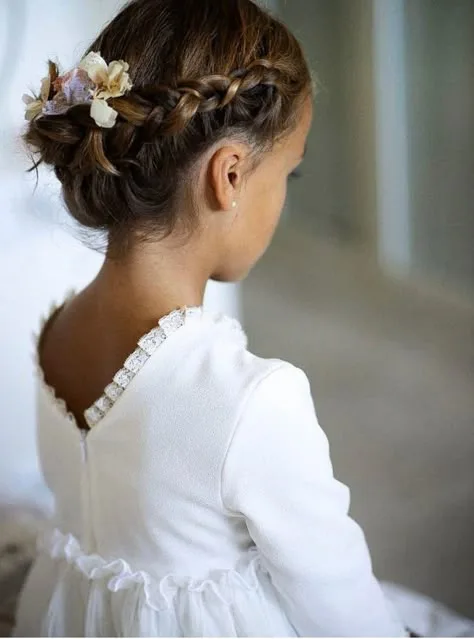
Pros: a side bun is softer and more romantic than a centred bun, and the flowers make it feel like a celebration. Cons: a bun that sits to one side can feel unbalanced, and it can catch on a veil comb.
Who it suits: girls with medium to long hair who want something a little different from the classic centred bun. Who should avoid it: girls wearing a veil that needs to sit centrally, and anyone who dislikes an off-centre feeling.
Maintenance: low. Pin the bun firmly against the head, tuck the flowers in last, and check that the flowers are secure before the photos. Fresh flowers wilt by the afternoon, so keep one spare bloom in water.
The Bubble Braid Ponytail
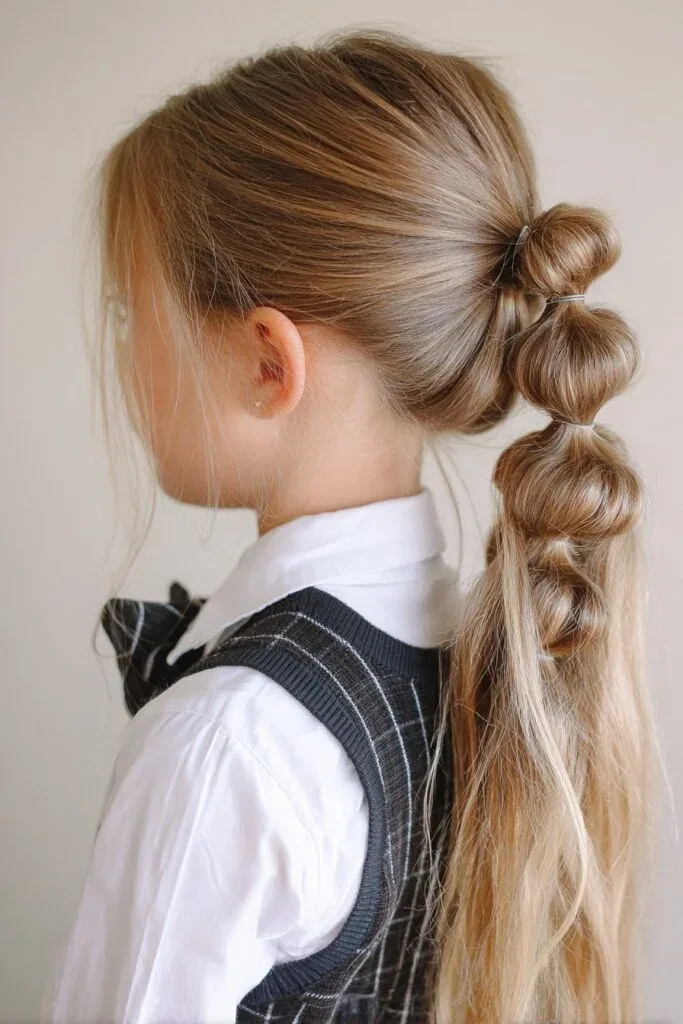
Pros: playful and secure, with the bubbles breaking the ponytail into sections that cannot tangle or whip around. Cons: it is a fun, casual style, so it suits the celebration more than the ceremony itself.
Who it suits: younger girls and anyone who wants a cheerful style that will survive hours of playing with cousins. Who should avoid it: girls who want a formal, traditional look for the church photographs.
Maintenance: very low. Place small clear elastics down the ponytail, puff each section gently, and the bubbles hold themselves. If one bubble flattens, a quick tug from the sides puffs it back up.
Straight and Smooth with a Veil
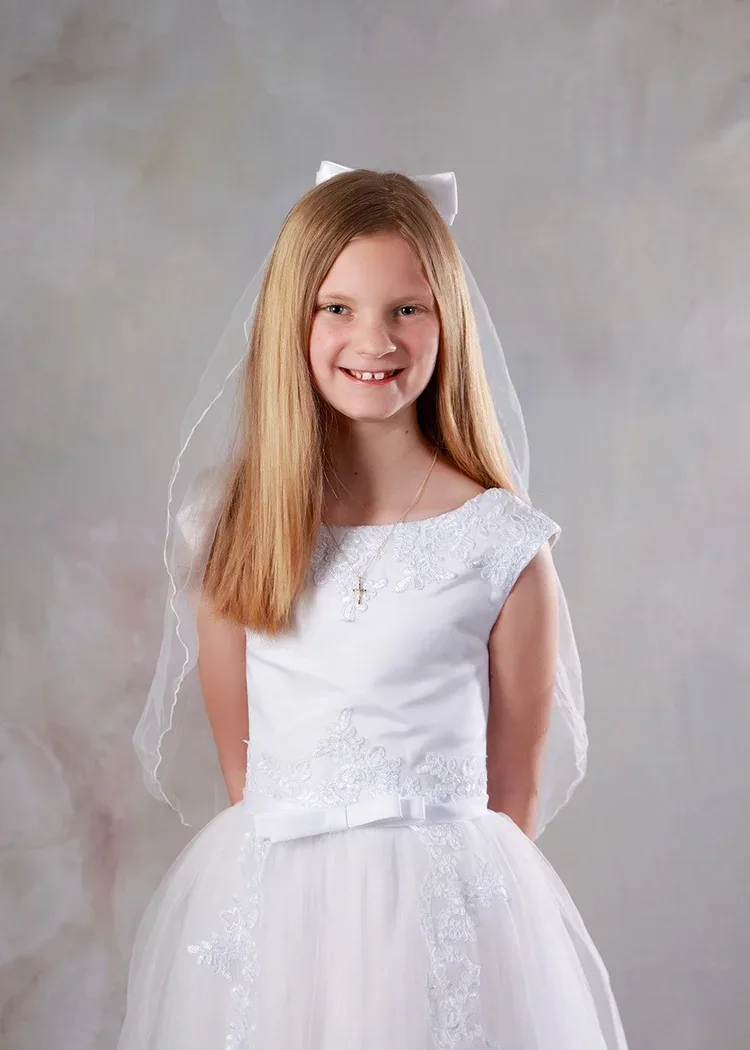
Pros: the simplest look of all, with the veil and the dress doing the work, and the smooth hair framing the face beautifully. Cons: straight hair shows every flyaway, so it needs careful brushing.
Who it suits: girls with naturally straight hair who want a clean, classic communion portrait. Who should avoid it: girls with wavy or curly hair that will not stay straight without heat, and anyone whose hair frizzes in humidity.
Maintenance: medium. Brush the hair smooth, add a light serum to the ends only, and pin the front pieces back behind the ears. A small brush in the bag tames flyaways before the photos.
The Wavy Lob with a Headband
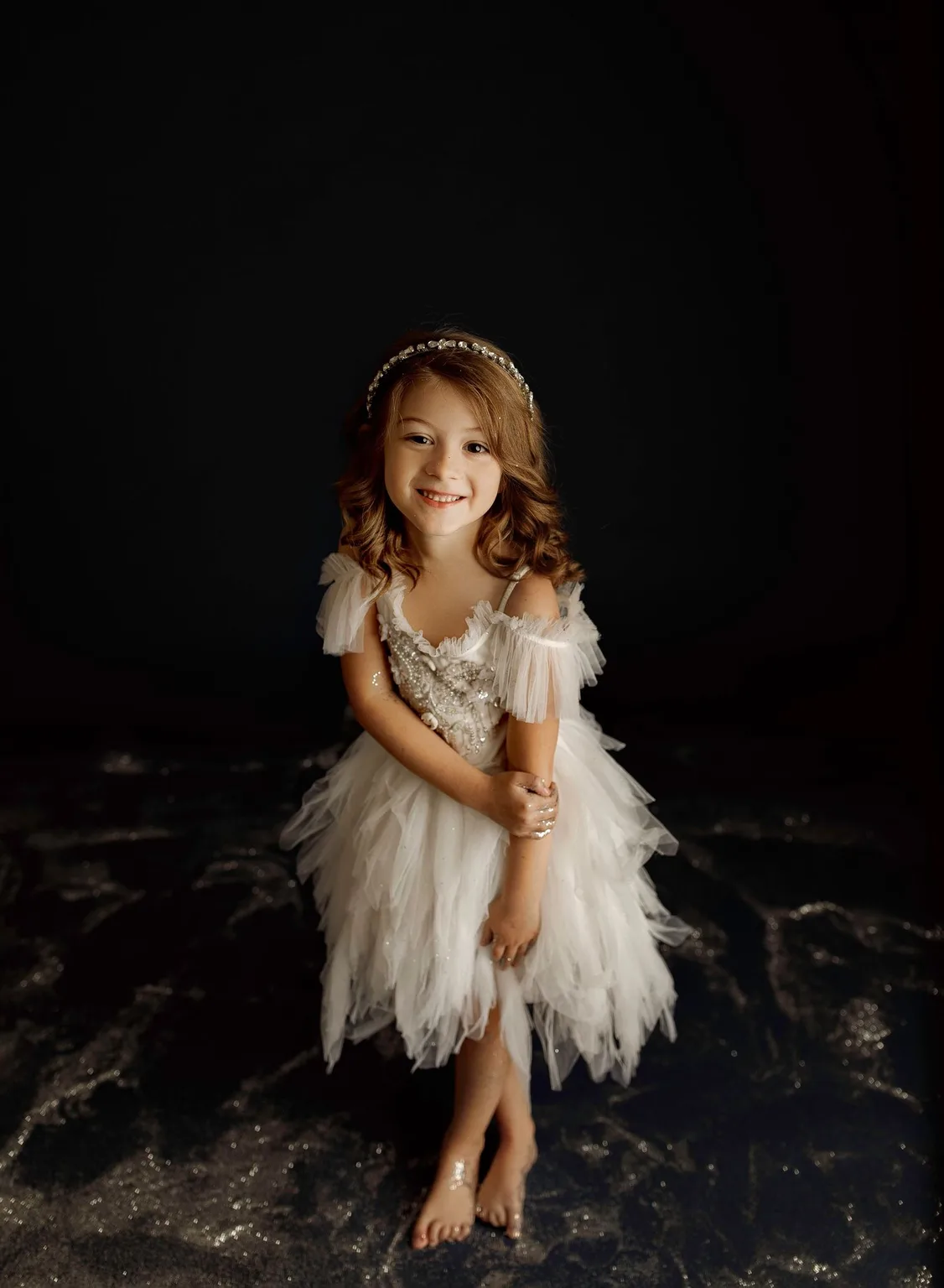
Pros: a shoulder-length cut with soft waves is light, comfortable and very photogenic, and the headband adds the festive touch. Cons: the waves can drop by the afternoon, leaving the hair looking plain.
Who it suits: girls with a lob or shoulder-length cut who want a style that is pretty without being fussy. Who should avoid it: girls with very short hair that cannot be waved, and anyone who wants their hair fully tied up for the day.
Maintenance: low to medium. Add the waves in the morning with a large-barrel iron or braids left in overnight, place the headband, and pin it behind the ears. A quick re-wave of the front pieces refreshes it for the party.
The Braided Ponytail
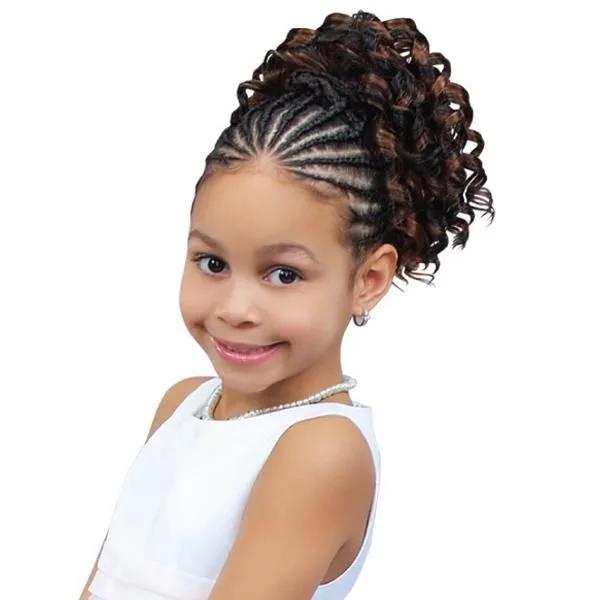
Pros: the braid stops the ponytail from tangling and whipping around, so it is one of the most practical styles here. Cons: a braided ponytail can look less formal than a bun in the church photographs.
Who it suits: girls with long hair who want to move freely all day, and anyone whose hair tangles easily. Who should avoid it: girls who want a fully pinned-up, traditional look for the ceremony.
Maintenance: very low. Braid the ponytail, tie the end, and it will not tangle, knot or come loose. Add a white ribbon at the base to dress it up for the church, and take the ribbon off for the party if you like.
The Soft Top Knot with a Ribbon
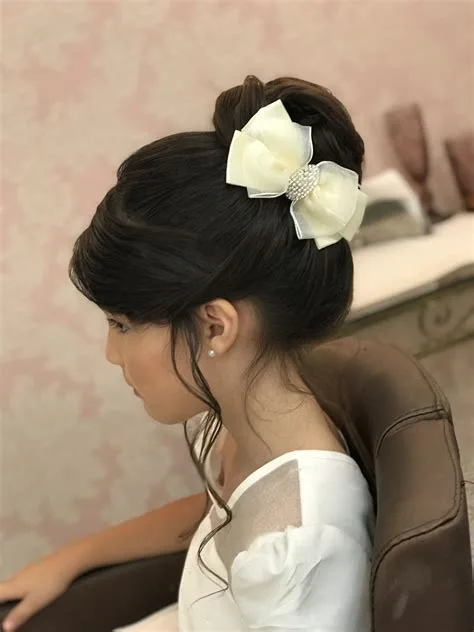
Pros: cheerful, tidy and comfortable, with the ribbon making a simple knot feel special. Cons: a top knot sits high, so it can push a veil forward, and it can feel tight if it is wrapped too firmly.
Who it suits: girls with medium to long hair who like their hair completely up and out of the way. Who should avoid it: girls wearing a long veil, and anyone with a sensitive scalp, because a top knot pulls more than a low bun.
Maintenance: low. Wrap the knot loosely rather than tightly, pin it at four points, and tie the ribbon around the base. If it sags, two pins underneath lift it straight back up.
The Waterfall Braid, Half Up
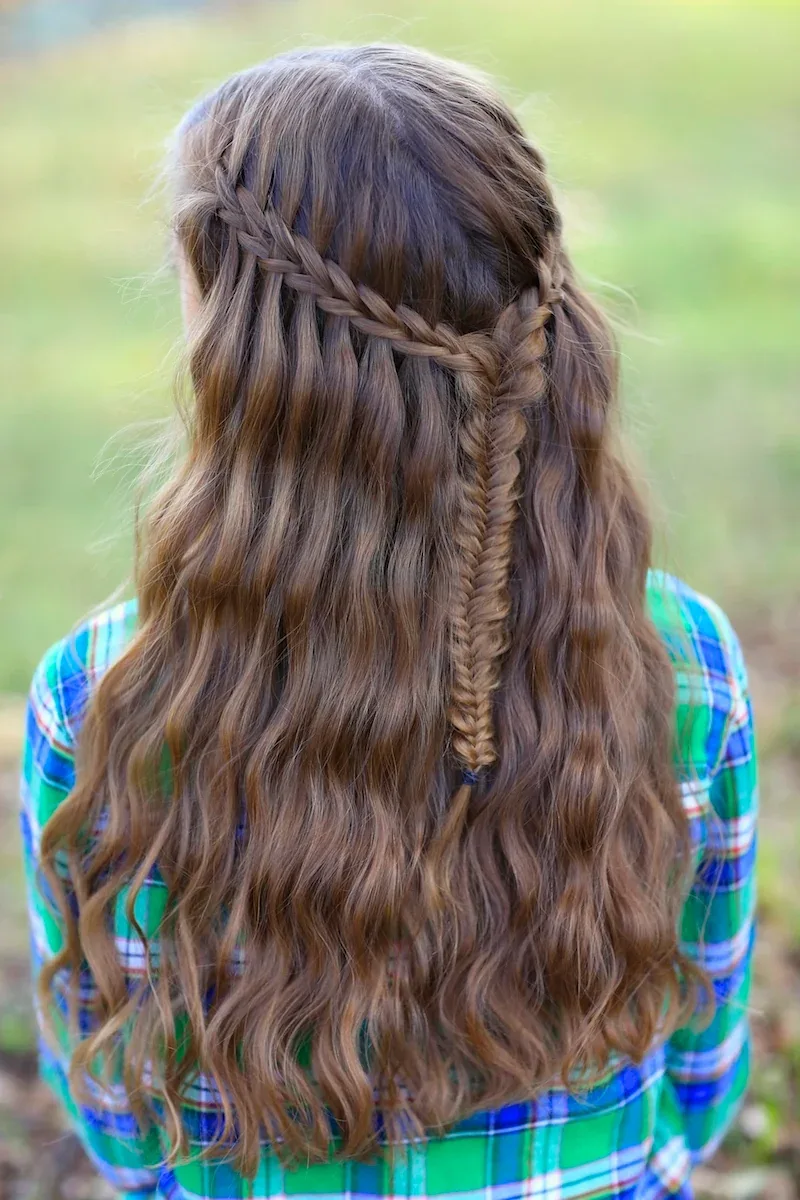
Pros: the waterfall effect is magical in photographs, with strands falling through the braid like a curtain. Cons: it is one of the trickiest braids here, and it loosens faster than a regular braid.
Who it suits: girls with long, wavy hair who want a show-stopping style for the photographs. Who should avoid it: girls with short or layered hair, where the falling strands will not stay in the braid, and anyone who needs a style that survives hours of play.
Maintenance: medium. Pin the braid at both ends, carry spare pins, and expect to re-pin the falling strands once during the day. It is best as a photo style, with a simpler style for the party.
The Low Ponytail with Curls
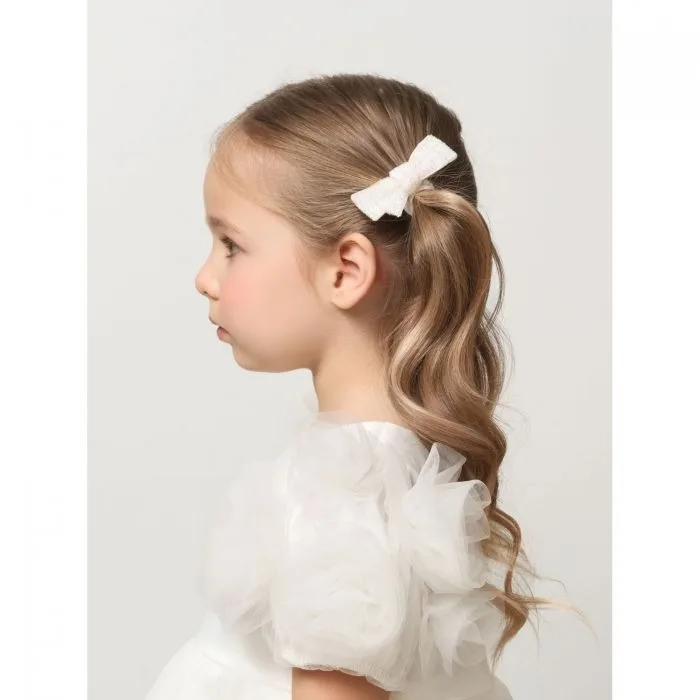
Pros: gentle, comfortable and easy, with the curls giving a simple ponytail a festive feel. Cons: the curls can drop and the ponytail can slide down during a long day.
Who it suits: girls with medium to long hair who want a relaxed, pretty style without a formal updo. Who should avoid it: girls with very fine hair, where a low ponytail slides, and anyone who wants the hair completely off the neck.
Maintenance: low. Tie the ponytail with a strong elastic, wrap a strand of hair around the base to hide it, and curl the ends. A second elastic hidden underneath stops the ponytail from sliding.
The Twisted Crown, Half Up
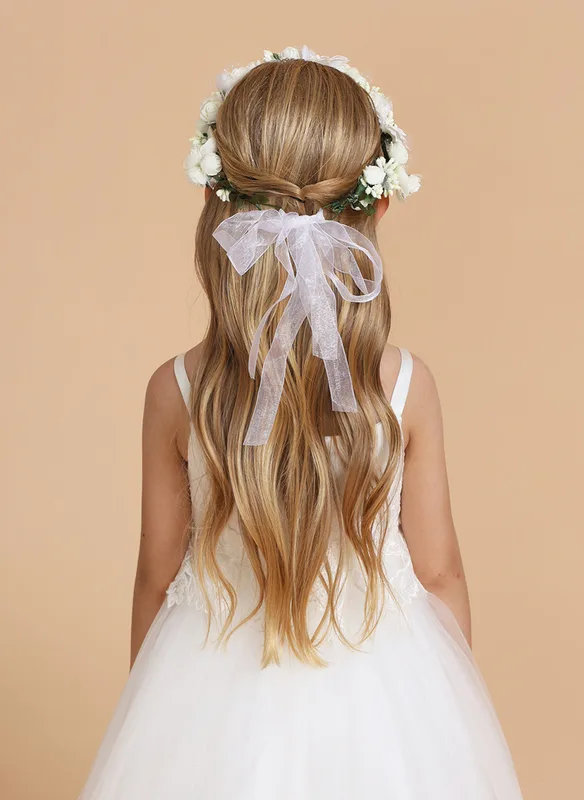
Pros: the twist across the crown keeps the front neat while the length falls free, and a flower crown or bow finishes it beautifully. Cons: the twist can loosen if it is not pinned well, especially on fine hair.
Who it suits: girls with medium to long hair who want a romantic, half-up look. Who should avoid it: girls with very short hair that cannot be twisted back, and anyone who will be very active, because the loose length can tangle.
Maintenance: low to medium. Twist both sides towards the back, pin them where they meet, and add the flower crown last. A gentle finger-comb through the loose length refreshes it before the party photos.
The Coily Braided Bun
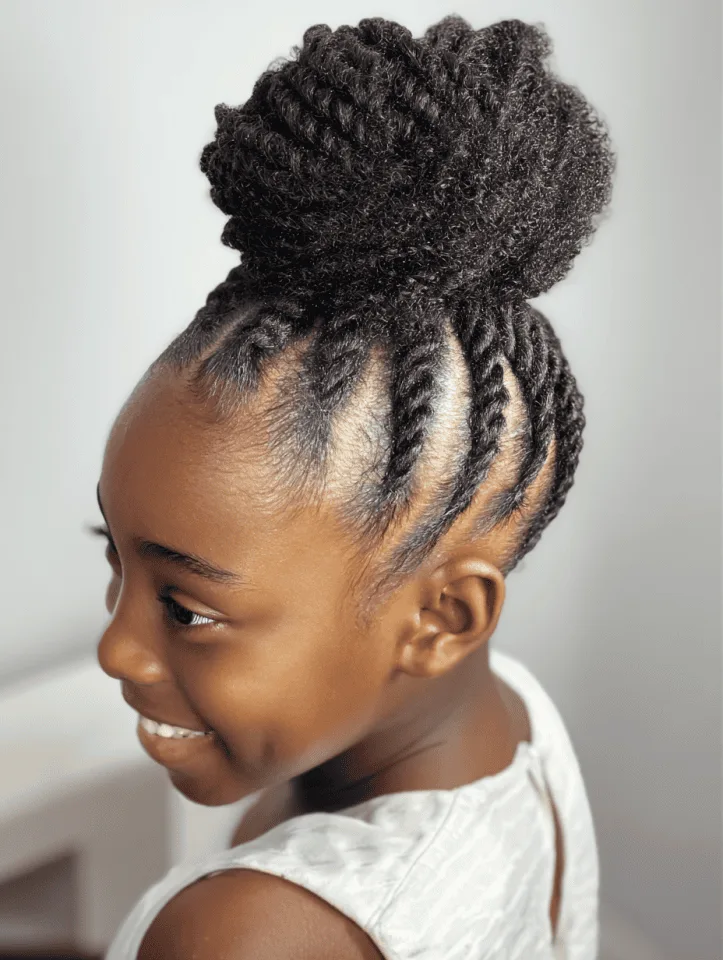
Pros: the cornrows keep every strand secure from the front, and the bun on top is neat, high and completely still. Cons: cornrows take time, so this style needs a braider who knows the technique.
Who it suits: girls with coily or tightly curled hair who want a protective, beautiful style that lasts all day. Who should avoid it: girls with straight hair, where cornrows will not hold, and anyone who dislikes a tight braided feeling.
Maintenance: very low. Once the cornrows are in, the style is set for the whole day and the whole weekend. Smooth the edges with a little gel, and add a white ribbon around the bun for the ceremony.
The Side French Braid
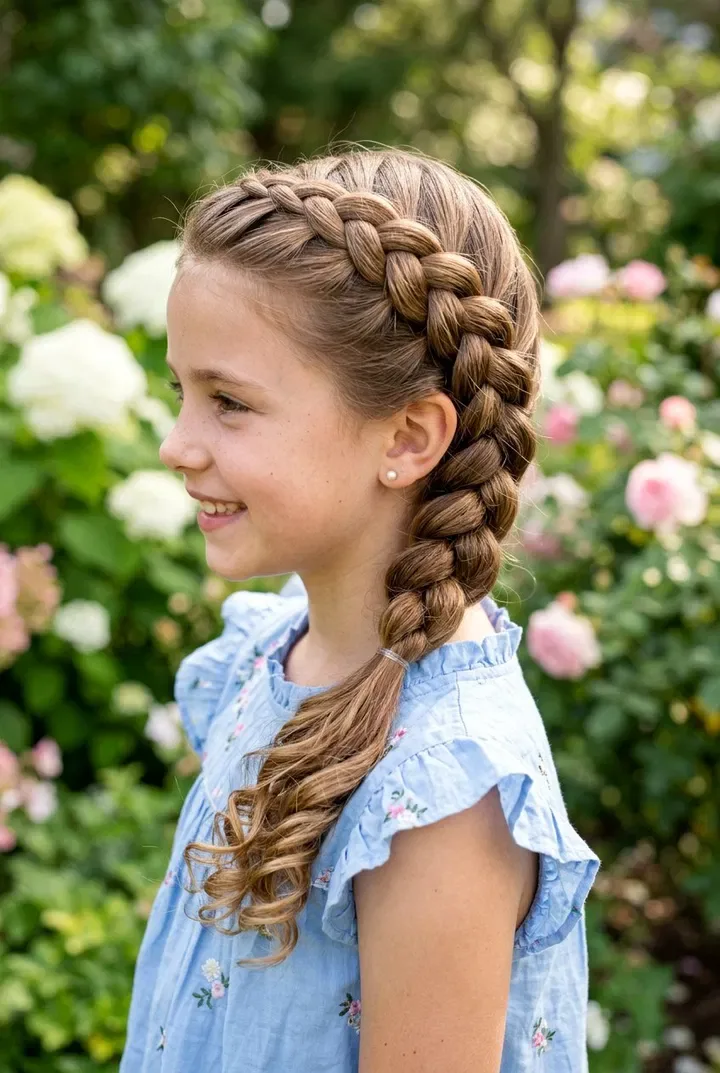
Pros: charming and practical, with the braid falling over one shoulder where it shows in photographs and stays out of the way. Cons: a side braid can swing forward when she kneels, so the top needs firm pinning.
Who it suits: girls with long hair who want a braid that is softer and less formal than a crown braid. Who should avoid it: girls with short hair that cannot reach over the shoulder in a braid, and anyone whose braid always slips to the front.
Maintenance: low. Start the braid high at the temple so it has a firm anchor, tie the end with a small elastic, and add a ribbon. If it swings forward, one pin at the shoulder holds it back.
The Classic French Twist
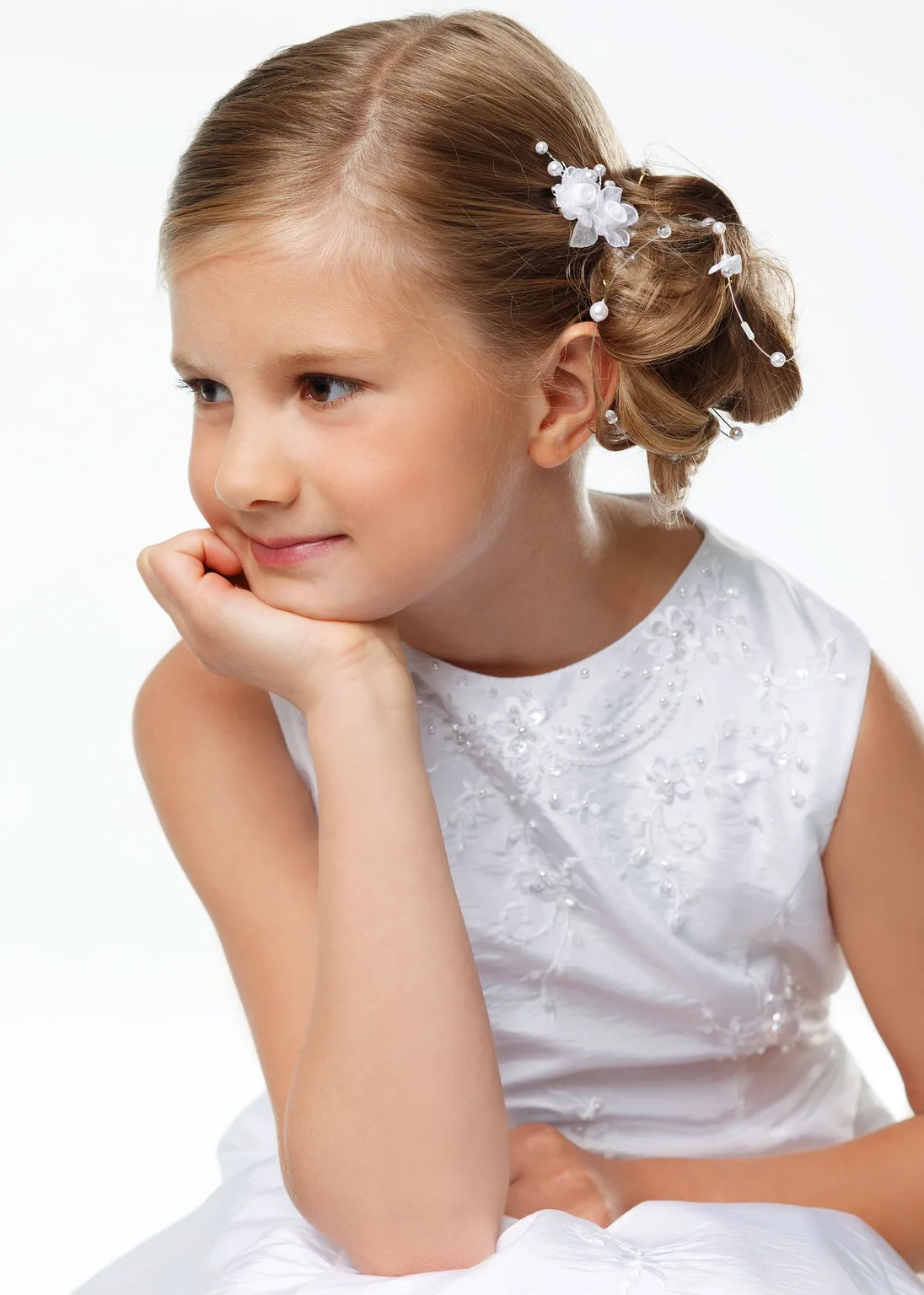
Pros: the most elegant style in this guide, with a smooth, sculpted shape that looks wonderful in formal portraits. Cons: it is a grown-up style, and it needs a skilled hand to get the twist even.
Who it suits: older girls making their communion who want a truly formal, classic look. Who should avoid it: younger girls who want something playful, and girls with short or layered hair that will not stay inside a twist.
Maintenance: low. Pin the twist from top to bottom, crossing the pins for grip, and finish with a light hairspray mist. It will hold its shape for hours without any attention.
The Loose Braid with Fresh Flowers
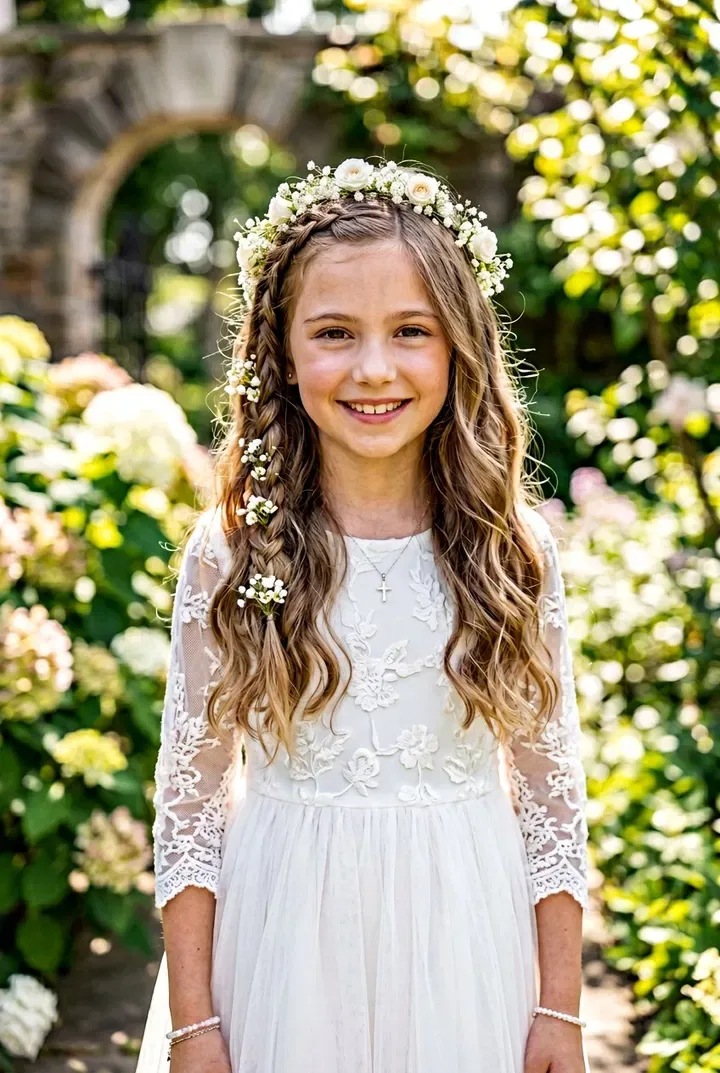
Pros: soft, romantic and perfect for the celebration, with fresh flowers that make a simple braid feel magical. Cons: fresh flowers wilt, and a loose braid can look messy by the end of a long day.
Who it suits: girls with long, wavy hair who want a gentle, bohemian finish for the party photographs. Who should avoid it: girls who need a formal, tidy style for the church ceremony itself.
Maintenance: medium. Keep the flowers in water until the last moment, tuck them in just before the photos, and carry a spare bloom. Gently pull the braid wider for a fuller look, and re-pin the top if it loosens.
What is the best hairstyle for a first communion?
The best hairstyles for a first communion are low buns, braided crowns and half-up twists, because they look neat and modest in church, sit well under a veil, and stay in place for hours. A low bun with a veil is the safest choice of all, while a braided crown is the prettiest choice for girls who skip the veil.
Should a girl wear a veil for her first communion?
A veil is traditional but not required, and many families now choose a flower crown, a pearl headband or a simple bow instead. If she does wear a veil, choose a low hairstyle like a low bun or a half-up twist, so the veil comb sits flat. Let your daughter try the veil on at home first, because she is the one who has to wear it for hours.
How do I keep my daughter’s hair neat through Mass?
Pin the front sections back firmly with crossed bobby pins in her hair colour, and build the style on day-old hair, which holds far better than freshly washed hair. Pack two bobby pins and a small elastic in your bag, and do the hair last on the morning, after the dress is on, so it stays fresh.
What hairstyle works best with a communion veil?
Low buns, low ponytails and half-up styles work best with a communion veil, because the veil comb can slide into the hair just above the style without pushing it forward. Avoid high buns and big crowns with a veil, because they lift the veil up and make it slip. Always try the veil and the hairstyle together at home a week before the day.
Can my daughter wear her hair down for her first communion?
Yes, she can wear her hair down for her first communion, as long as the front is pinned back so it stays out of her face during Mass. Loose waves with pearl pins or side-swept curls are lovely worn down, but they need more attention during the day than a bun or a braid, so pack extra pins.
What accessories are appropriate for a first communion?
A veil, a pearl headband, a flower crown, fresh flowers or a white bow are all appropriate for a first communion. Choose just one accessory, in white, ivory or soft blush, and make sure it is comfortable enough to wear for hours. Avoid anything heavy, sharp or noisy, and test it at home for twenty minutes before the day.
How early should we book the stylist?
Book the stylist at least three to four weeks before the first communion, and book a trial run a week or two before the day. First communion season is busy, and the best stylists fill up early. Bring the veil and the dress photo to the trial, so the stylist can match the hairstyle to the whole outfit.
What if my daughter has very short hair?
Very short hair is the easiest of all for a first communion. A bob or a pixie needs only a pretty headband, a delicate clip or a small flower, and it is done. Choose a light headband that will not slide, pin it behind the ears, and the style will last all day with no maintenance at all.
How do I stop curls from falling flat before the photos?
Curl the hair on the morning of the day, not the night before, and let each curl cool completely before you touch it. Use a light-hold hairspray rather than a heavy one, and pin the front sections back so the curls are not pulled down by their own weight. A quick re-curl of just the front pieces before the photos takes two minutes and makes a big difference.
Can the same hairstyle work for the church and the party?
Yes, most hairstyles for a first communion work for both the church and the party, especially buns and braids, which are built to last. Plan one small refresh between the two: smooth the front pieces back, re-pin anything loose, and add a fresh flower or a clean bow. If she wants to take the veil off for the dancing, let her, because the party photos are meant to look joyful, not stiff.
Conclusion
The best hairstyles for a first communion are the ones that let a young girl enjoy her day without thinking about her hair. Whether you choose a classic low bun, a braided crown, soft curls with a flower headband or a simple ponytail with a bow, the test is always the same: does it look neat in church, does it sit well with the veil, and does it still look lovely at the family celebration afterwards? If the answer is yes, you have found the right style.
Practise the style once at home, try the veil with it, pack two spare pins, and then stop worrying about the hair. The photographs will keep the memory of the white dress, the veil and the smile, and the hairstyle will simply be the quiet frame around it. That is exactly what it should be.