Protein vs Moisture: The Simple Test That Reveals What Your Hair Really Needs
You’ve tried the deep conditioners, the leave-in sprays, the hair masks that promise to transform your locks. Sometimes they work like a dream, leaving your hair soft and shiny. Other times, your hair feels worse—straw-like, stiff, or oddly limp. If this sounds familiar, you’re likely caught in the classic hair care conundrum: the protein-moisture balance.
Understanding the difference between these two fundamental elements is the secret key to unlocking your healthiest hair ever. It’s not about using more product; it’s about using the right product for what your hair is truly craving. Get ready to become your own hair detective, because we’re diving deep into how to tell if your hair needs protein, moisture, or a perfect blend of both.
The Foundation: What Are Protein and Moisture, Anyway?
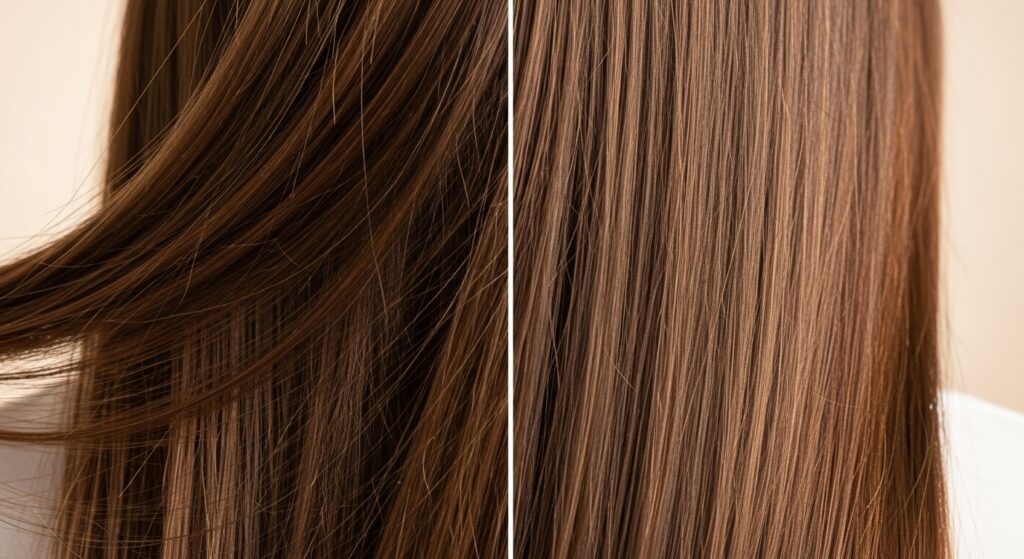
Before we can diagnose the problem, we need to understand the players. Think of your hair strand like a rope. The rope itself is made of fibers, and it needs to be both strong and flexible.
Protein is the structure. Your hair is primarily made of a protein called keratin. Over time, due to heat styling, coloring, chemical treatments, and even environmental factors, this protein structure gets damaged. Gaps and cracks appear in the hair shaft. Protein treatments, often containing ingredients like hydrolyzed wheat protein, keratin, or amino acids, work by filling in these gaps. They reinforce the hair, adding strength, reducing breakage, and improving elasticity. Protein gives your hair its body and resilience.
Moisture is the suppleness. Moisture refers to the water content within the hair shaft. Healthy hair has a well-hydrated cortex (the inner layer). Moisturizing products, which often contain humectants like glycerin, emollients like natural oils, and water itself, work to attract and retain this hydration. Moisture gives your hair its softness, flexibility, and shine.
In a perfect world, your hair has a sturdy protein structure that can hold onto ample moisture. When this balance is off, your hair sends you very clear signals.

The Telltale Signs: Is Your Hair Begging for Protein or Pleading for Moisture?
Your hair’s behavior and feel are the biggest clues. Here’s how to decode what it’s trying to tell you.
Signs Your Hair Needs PROTEIN:
If your hair has high porosity (meaning it absorbs water quickly but loses it just as fast), is chemically treated, or feels overly soft and weak, it’s likely protein-deficient.
Key Symptoms:
• Hair feels overly soft, mushy, or stretchy when wet.
• You experience a lot of breakage, especially when hair is wet.
• Lack of elasticity—you stretch a strand and it doesn’t bounce back.
• Hair lacks body and definition, falling flat easily.
• It tangles excessively because the cuticle is raised and rough.
Signs Your Hair Needs MOISTURE:
This is a very common issue, especially for those in dry climates or who use heat styling frequently. Moisture-deficient hair often feels dry and rough.
Key Symptoms:
• Hair feels dry, rough, and brittle to the touch.
• You experience frizz and a lack of shine.
• It feels stiff and straw-like.
• The ends are prone to splitting (split ends).
• It’s difficult to comb through, both wet and dry.
The Confusing Part: Notice that both imbalances can lead to breakage and tangles. That’s why the next step—the simple test—is so crucial for an accurate diagnosis.

The Simple Hair Strand Test: Your At-Home Diagnosis
This classic test is a fantastic way to physically see the state of your hair’s elasticity, which is directly tied to the protein-moisture balance. Here’s how to do it, step-by-step.
Step 1: Start with a clean, freshly washed strand of hair. Make sure it’s free of any heavy products. A strand that has naturally shed during washing is perfect.
Step 2: Take the single, wet hair strand and hold it firmly between your thumbs and index fingers at both ends.
Step 3: Gently and slowly stretch the strand.
Step 4: Observe what happens.
The Results:
Healthy Balance: The hair stretches about 30-50% of its original length and then smoothly returns to its original state when you release it. This indicates a perfect harmony of strong protein structure and good moisture content.
Needs Protein: The hair stretches easily and feels weak or “mushy.” It stretches a lot (sometimes almost to the point of not returning) and either breaks or doesn’t spring back fully. This shows the structure is compromised and can’t hold its form.
Needs Moisture: The hair barely stretches at all and breaks almost immediately with little to no elasticity. It feels dry and brittle. This indicates the hair is lacking the hydration needed to make it flexible and supple.
This test gives you a real-time, physical understanding of your hair’s needs. It’s a powerful tool to have in your arsenal.

Your Action Plan: How to Treat Protein and Moisture Imbalances
Now that you’ve diagnosed the issue, it’s time for the cure. Here’s how to strategically choose your products to restore balance.
If Your Hair Needs Protein:
Your goal is to rebuild and reinforce. Look for products labeled as “strengthening,” “fortifying,” or “reconstructing.”
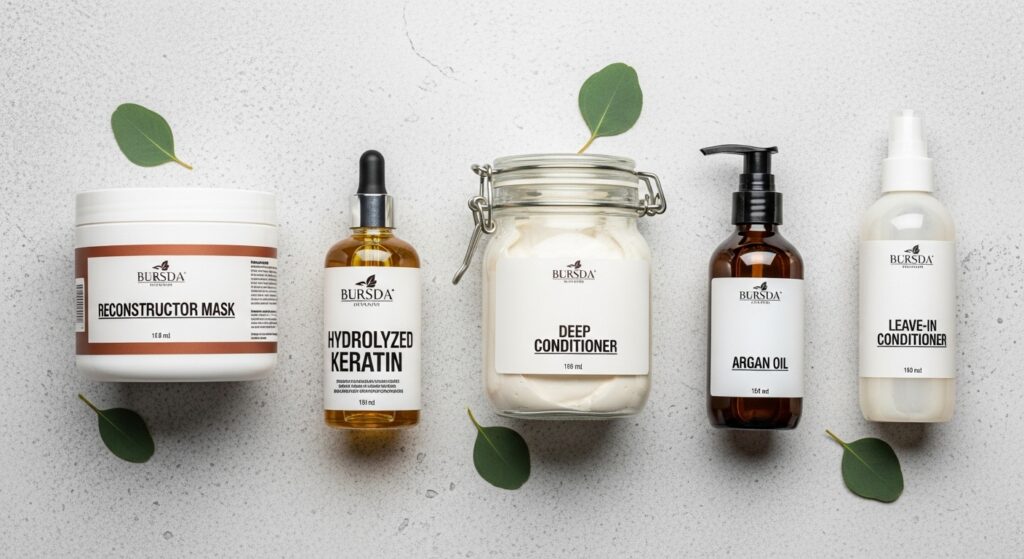
Key Ingredients to Look For: Hydrolyzed Wheat Protein, Hydrolyzed Keratin, Amino Acids, Silk Protein, Rice Protein, Quinoa Protein.
How to Use Them: Use a protein treatment every 4-6 weeks, or as needed. Be careful not to overdo it, as protein overload is a real thing (more on that next). Follow up with a good moisturizing conditioner to maintain balance. For daily maintenance, a protein-enriched leave-in conditioner or styler can be beneficial.
If Your Hair Needs Moisture:
Your goal is to hydrate, soften, and seal. Look for products labeled “hydrating,” “moisturizing,” or “nourishing.”
Key Ingredients to Look For: Glycerin, Aloe Vera Juice, Hyaluronic Acid, Shea Butter, Coconut Oil, Argan Oil, Jojoba Oil, Honey.
How to Use Them: Incorporate a deep conditioning mask weekly. Use a moisturizing leave-in conditioner daily or after every wash. The LOC (Liquid, Oil, Cream) or LCO method is excellent for locking in moisture, especially for curly and coily hair types.
The Delicate Balance: What Happens When You Get It Wrong?
Just as you can have a deficiency, you can also have too much of a good thing. The goal is always equilibrium.
Protein Overload: This occurs when you use too many protein-based products too frequently. Your hair will become stiff, brittle, and straw-like. It may feel rough and be extremely prone to breakage—the very problem you were trying to solve! The fix? Immediately switch to a regimen focused solely on intense moisture and lay off all protein products until balance is restored.
Moisture Overload: Also known as “hygral fatigue,” this happens when the hair shaft is constantly saturated with water, causing it to swell and contract repeatedly, which weakens the protein bonds over time. Hair will feel overly soft, limp, gummy when wet, and won’t hold a style. The fix? Introduce a protein treatment to add structure and strength back into the hair, and scale back on heavy, daily moisturizing treatments.
The Golden Rule: For most people, a routine that includes regular moisture with periodic protein treatments is the winning formula. Pay attention to how your hair responds after each treatment—it will tell you what it needs next.
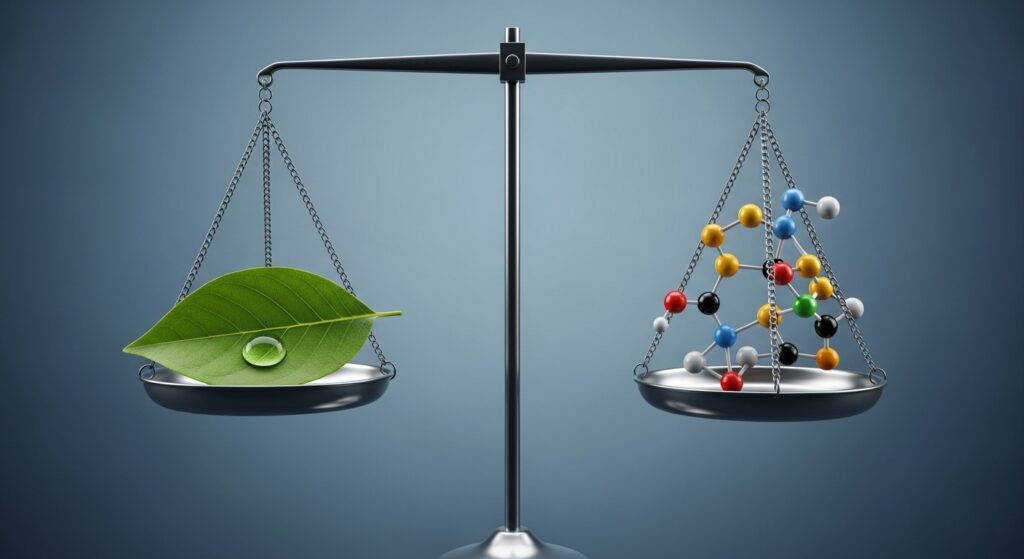
Conclusion: Listen to Your Hair, and It Will Thank You
Cracking the code on protein versus moisture is a transformative step in your hair care journey. It moves you from randomly trying products to strategically nurturing your hair based on its specific, ever-changing needs. That simple strand test is your best friend—a quick, free, and incredibly effective diagnostic tool.
Remember, your hair’s needs can change with the seasons, your diet, stress levels, and styling habits. Stay observant. When it feels brittle, reach for moisture. When it feels weak and limp, reinforce with protein. By learning this language, you empower yourself to achieve the strong, soft, and radiant hair that is always within reach.