Sun-Damaged Hair: Repair After Summer
The summer sun brings us glorious days, beach trips, and a healthy glow. But while our skin is often slathered in SPF, our hair is frequently left to fend for itself against the sun’s powerful rays. The result? As autumn approaches, you might be left with a mane that feels more like straw than silk—dry, brittle, frizzy, and lacking its usual luster. Sun-damaged hair is a common post-summer woe, but it is not a life sentence.
Just as you would nurse a sunburn back to health, your hair deserves a dedicated recovery plan. This comprehensive guide will walk you through everything you need to know: from understanding exactly how the sun wreaks havoc on your strands to a step-by-step repair routine that will bring your hair back from the brink. Get ready to restore the softness, strength, and shine that the summer stole.

How the Summer Sun Actually Damages Your Hair
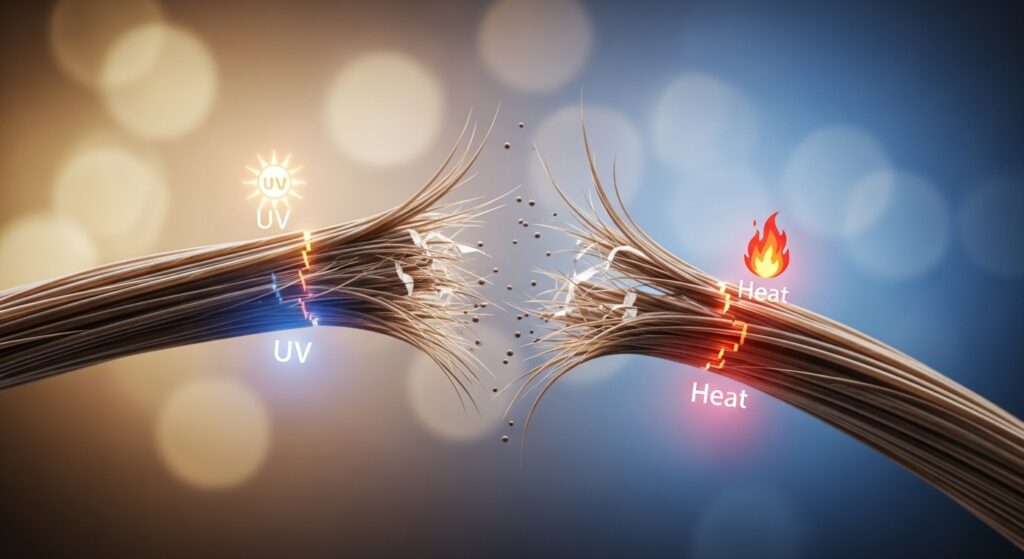
To effectively repair something, you first need to understand what broke it. Unlike our skin, hair is made of dead cells, primarily a protein called keratin. It has no natural healing mechanisms, so once damage occurs, our only recourse is to nurture the remaining healthy hair and prevent further harm. The sun damages your hair through two main culprits: UV radiation and heat.
UVB rays are the shorter waves that are notorious for causing sunburns on your skin. On your hair, they attack the melanin, the pigment that gives your hair its color. This leads to fading, brassiness in colored hair, and that characteristic “sun-bleached” look. More importantly, UVB rays break down the protein structure of the hair itself.
UVA rays have a longer wavelength and penetrate deeper. They target the lipids and fatty acids within the hair’s cortex and cuticle. These lipids act as a natural sealant and glue, holding the hair structure together. When they are depleted, the hair becomes weak, porous, and prone to breakage.
Combine this UV assault with the dehydrating effects of heat from the sun, saltwater, and chlorinated pools, and you have a perfect storm for hair disaster. Salt and chlorine strip away natural oils and moisture, leaving the hair shaft dry and the cuticle—the protective outer layer—wide open and ragged.
Spot the Signs: Is Your Hair Sun-Damaged?
Not sure if your hair is just a little dry or truly sun-damaged? Look for these tell-tale signs. You might be experiencing just one or a combination of several.
Dryness and Dehydration: This is the most common symptom. Your hair feels rough, sucks up conditioner instantly, and lacks its natural slip and softness.
Brittleness and Breakage: When you run your fingers through your hair or brush it, do you see more strands in the brush or on your shoulders than usual? These are often shorter, broken pieces, not just shed hairs from the root. This is a sign the protein structure has been compromised.
Frizz and Flyaways: A damaged hair cuticle is a raised and uneven cuticle. Instead of lying flat and reflecting light smoothly, it catches humidity from the air, causing frizz and a general lack of smoothness.
Loss of Elasticity: Healthy hair should stretch slightly when wet and then return to its original length. Sun-damaged hair often loses this elasticity, snapping easily when stretched or simply feeling limp and lifeless.
Dullness and Faded Color: A rough, raised cuticle doesn’t reflect light well, leading to a dull appearance. For colored hair, the UV rays oxidize and break down the dye molecules, leading to faded, brassy, or uneven color.
Difficulty Styling: Damaged hair often doesn’t hold a style well. Curls fall flat, blowouts get frizzy quickly, and hair can feel unmanageable.

Your Step-by-Step Plan to Repair Sun-Damaged Hair
Repairing sun-damaged hair requires a shift in your haircare philosophy—from simply cleaning to actively rehabilitating. This multi-step process focuses on replenishing moisture, reinforcing strength, and sealing the cuticle.
Step 1: The Reset – Clarify and Assess
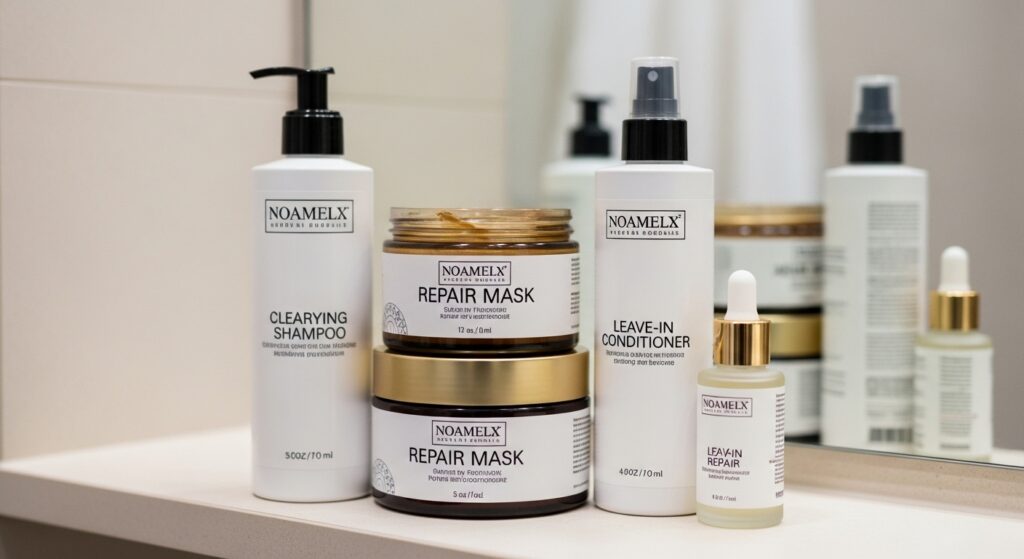
After a summer of sunscreen, salt, and chlorine buildup, your first step is a clean slate. Use a gentle clarifying shampoo to deeply cleanse the hair and scalp, removing all product and mineral residue. This will allow your subsequent treatments to penetrate effectively. Do this once a week until the buildup is gone.
Step 2: The Intensive Care – Deep Conditioning and Hair Masks
This is the cornerstone of your repair routine. Swap your regular conditioner for a deep conditioning mask or treatment at least once a week. Look for ingredients like:
Shea butter, argan oil, and avocado oil to replenish lipids and moisture.
Keratin, proteins, and amino acids to help rebuild the hair’s internal structure.
Panthenol (Pro-Vitamin B5) to attract and retain moisture.
For an extra boost, apply your mask to damp hair, cover with a shower cap, and apply gentle heat from a hairdryer for 10-15 minutes to help open the cuticle and drive the ingredients deep inside.
Step 3: The Targeted Treatment – Leave-In Conditioners and Serums
Your hair needs protection and hydration even after you leave the shower. A leave-in conditioner provides a constant layer of moisture and detangling benefits. Follow up with a few drops of a hair serum or oil focused on the mid-lengths and ends. These products seal the cuticle, lock in the moisture from your mask, and provide a protective barrier against environmental stressors, reducing frizz and adding incredible shine.
Step 4: The Protein Balance – Strength Without Brittleness
Protein treatments are crucial for filling in the gaps in the damaged hair shaft, but they must be used correctly. Too much protein can make hair stiff and brittle. If your hair feels gummy when wet or snaps easily, it needs protein. Use a dedicated protein treatment every 2-4 weeks, depending on the level of damage. If your hair is just dry and limp but still has some elasticity, stick to moisturizing masks and use protein-infused products sparingly.
Professional Treatments to Accelerate Repair
For severe damage, sometimes at-home care isn’t enough. Consider these professional options for a significant boost.
Olaplex or K18 Salon Treatments: These are bond-building treatments that work on a molecular level to reconnect the broken disulfide bonds within the hair shaft—the very bonds that UV radiation destroys. They can dramatically improve strength and reduce breakage after just one or two sessions.
Keratin Smoothing Treatments: These treatments infuse the hair with keratin to smooth the cuticle, reduce frizz, and add shine. They are excellent for managing unruliness caused by damage, but be sure to choose a formaldehyde-free option.
The Big Chop: Sometimes, the most effective solution for ends that are beyond repair is a haircut. Trimming away the most damaged portions instantly makes your hair look and feel healthier, removes the source of tangles and breakage, and allows your at-home treatments to focus on the healthier hair that remains.

Prevention: How to Shield Your Hair From Future Sun Assaults
Repair is essential, but prevention is even better. Make these habits part of your routine to protect your hair during your next sunny adventure.
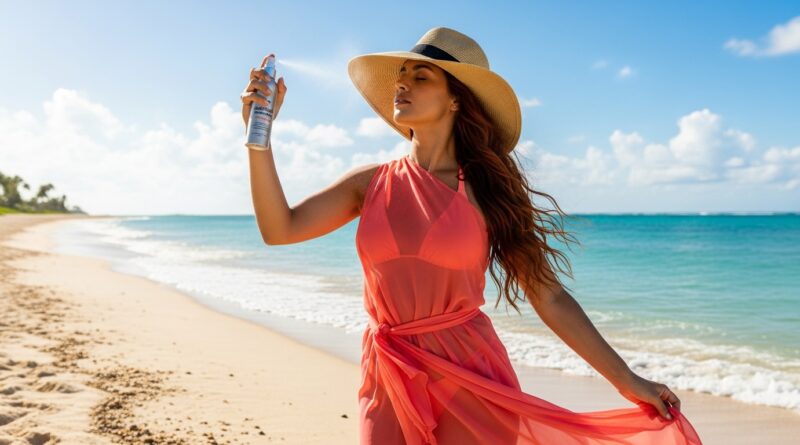
Wear a Hat: The simplest and most effective form of protection. A wide-brimmed hat made from a tightly woven fabric shields your hair and scalp directly from the sun.
Use UV-Protectant Hair Products: Just like skincare, haircare has its own SPF. Look for leave-in conditioners, sprays, and serums that contain UV filters. These create a protective film over the hair to deflect harmful rays.
Pre-Swim Preparation: Before diving into the pool or ocean, wet your hair thoroughly with fresh water and apply a leave-in conditioner or a small amount of regular conditioner. Hair is like a sponge; if it’s already saturated with clean water and beneficial ingredients, it will absorb less of the damaging salt and chlorine.
Rinse Immediately After Swimming: As soon as you’re done swimming, rinse your hair again with fresh water to wash away the harsh chemicals or salt.
Minimize Heat Styling: Your hair is already under stress from environmental heat. Give it a break by embracing air-drying, heatless curls, and low-heat styling tools whenever possible.

Nourishment from Within: Diet for Healthy Hair
Healthy hair starts from the inside out. The nutrients you consume provide the building blocks for new hair growth. Ensure your diet is rich in:
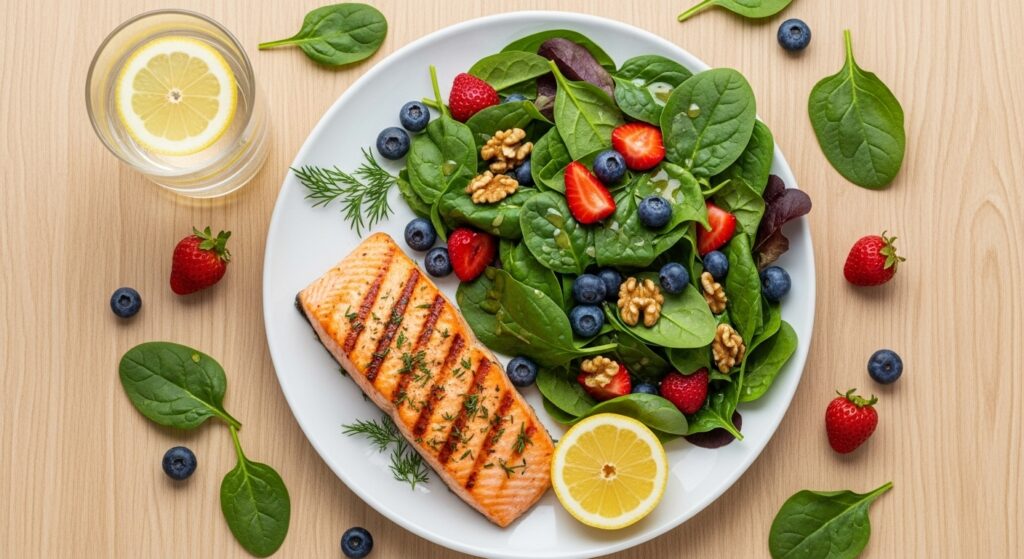
Proteins: Since hair is made of protein, a deficiency can lead to weak, slow-growing hair. Include lean meats, fish, eggs, beans, and lentils.
Omega-3 Fatty Acids: These healthy fats are crucial for keeping your scalp and hair hydrated. Find them in fatty fish (like salmon), walnuts, and chia seeds.
Antioxidants (Vitamins C & E): They help protect hair follicles from damage caused by free radicals—unstable molecules that are also generated by UV exposure. Load up on berries, citrus fruits, nuts, and spinach.
Biotin and Zinc: These micronutrients are essential for hair growth and strength. Eggs, nuts, and whole grains are excellent sources.
Embrace the Journey to Healthier Hair
Repairing sun-damaged hair won’t happen overnight. It requires consistency, patience, and a little bit of TLC. The hair that has grown out of your scalp is already “dead,” so the goal is to meticulously care for it until it is gradually replaced by new, healthy growth. By following this comprehensive guide—adopting a restorative routine, seeking professional help when needed, and committing to preventative measures—you can absolutely reverse the effects of a summer in the sun.
See this not as a chore, but as an act of self-care. Listen to what your hair is telling you, nourish it with the right products and foods, and protect it like the precious asset it is. Your journey to softer, stronger, and shinier hair starts today.