Internal Highlights: Color Hidden Inside Your Hair
When you think of hair highlights, your mind likely jumps to the skilled hands of a colorist, foils, and lightened strands that frame your face. But what if we told you the most important highlights aren’t applied on your hair, but are already living inside it? Beyond the color you see in the mirror lies a complex, layered world of hidden pigments. Understanding this internal landscape is the ultimate secret to achieving natural, radiant, and truly personalized hair color. This isn’t about a technique; it’s about a fundamental truth of hair science. Let’s embark on a journey beneath the surface to discover the internal highlights nature gave you, and how they hold the key to your most flawless color ever.

The Anatomy of a Hair Strand: Your Personal Canvas
To understand internal highlights, we must first become familiar with the structure of hair. Each strand is a marvel of biological engineering, composed of three distinct layers. The outermost layer is the cuticle, a translucent shield of overlapping scales like shingles on a roof. Its job is to protect what lies within. Beneath the cuticle resides the cortex, which makes up the bulk of the hair’s structure. This is where the magic happens. The cortex is packed with keratin proteins and, crucially, melanin granules—the tiny particles that give your hair its natural color. At the very center of some thicker hairs is the medulla, a soft core that doesn’t play a significant role in color.
Your natural hair color is determined solely by the type, density, and distribution of melanin within the cortex. There are two primary types: eumelanin, which creates brown and black hues, and pheomelanin, which is responsible for red and yellow tones. Every single natural hair color on earth is a unique recipe of these two pigments. A person with jet-black hair has a very high density of eumelanin. A natural redhead has a high proportion of pheomelanin. A blonde has a moderate to low amount of both. These pigments are your foundational internal highlights, waiting to be revealed.

Revealing the Hidden: How Lightening Works
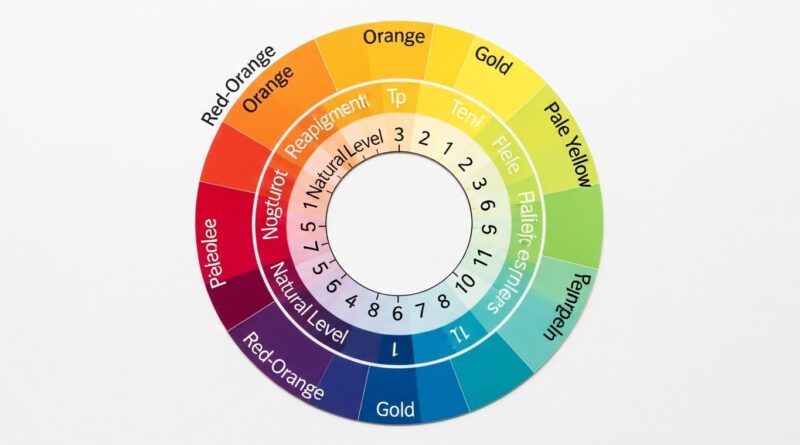
This is where the alchemy of hair coloring begins. When a colorist applies lightener (bleach) or a high-lift hair color, its primary job is to penetrate the cuticle and enter the cortex to dissolve these melanin granules. It doesn’t happen all at once. The process is a controlled demolition. Pheomelanin (the red/yellow) is smaller and less stable, so it breaks down first. Eumelanin (the brown/black) is more resilient and takes longer to dissolve.
As the lightener works, it strips away these pigments in stages, revealing the underlying warm tones that were always there. This is why a brunette’s hair goes through a spectrum of orange and gold stages before reaching a pale yellow or blonde. Those warm tones were not added; they were uncovered. They are the internal highlights coming to the surface. The final pale yellow stage is essentially the hair’s cortex almost entirely free of melanin, showing the natural underlying keratin, which has a pale, yellowish hue. A skilled colorist doesn’t fight these underlying tones; they anticipate and work with them to create the desired final shade.

The Role of Underlying Pigment in Your Color Result
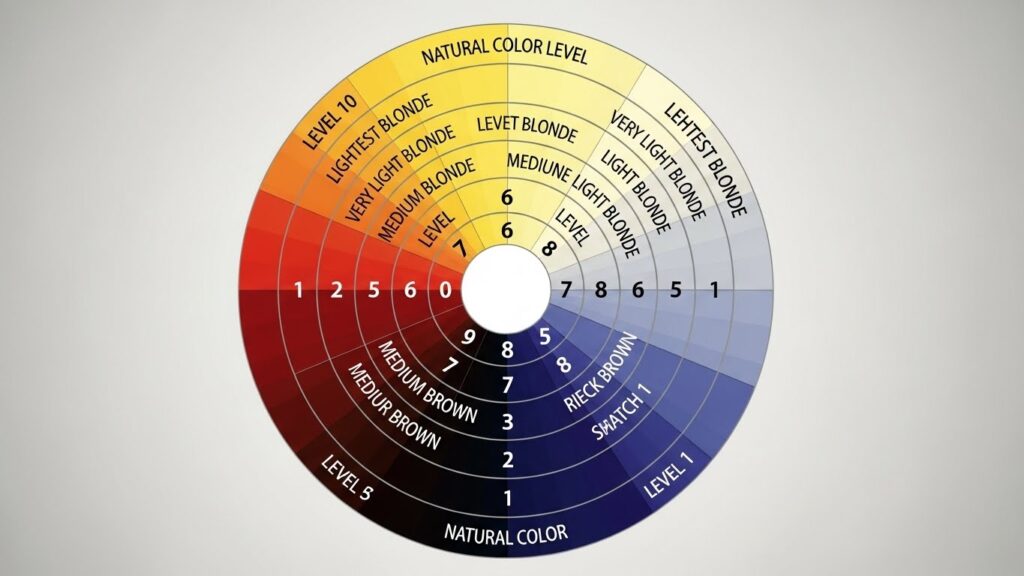
This scientific process has massive implications for every single color service, especially when going lighter. Your starting level (your natural color) and its underlying pigment act as the roadmap. This is why a colorist always asks about your natural color and history—they are calculating the internal highlights they will encounter.
For example, if you are a level 5 (light brown) with a neutral base, your underlying pigment will be a predictable orange-red. A colorist knows that to achieve a cool beige blonde, they must not only lift past this orange but also deposit a neutralizing tone (often a blue or violet) to counteract the warmth that will appear. Conversely, if the goal is a warm honey blonde, they might leverage that underlying warmth, lifting to a golden stage and then enhancing it. The internal highlight is the starting point of the formula. Ignoring it is why at-home color can often turn brassy or unexpected—the formula didn’t account for the color hidden within.
Internal Highlights vs. Traditional Techniques
Traditional foiling or balayage applies lightener to select sections of hair, creating contrast between the lightened strands and the natural base. The result is an external play of light and dark. The concept of internal highlights reframes this. It suggests that even within a single, solid-colored strand, there is depth and dimension because of the layered way pigment exists and is revealed.
Advanced techniques like glazing, toning, and dimensional coloring are all methods of working with internal highlights. A glaze doesn’t just sit on top; it interacts with the underlying pigment to modify the visible tone. A master colorist creating a multidimensional brunette will use different formulas on different sections based on how much natural warmth (internal highlight) each section possesses—the hair around the face is often finer and lighter, revealing warmth more easily than the thicker hair at the crown. They are painting on a canvas that is already textured with its own color.

Harnessing Your Internal Highlights for Healthier Color
Embracing your internal highlights leads to healthier hair. How? By requiring less aggressive correction and more strategic coloring. The goal becomes collaboration with your hair’s natural pigment, not a complete overthrow. This can mean:
Choosing a Color Within Your “Lift Range”: Opting for a shade that requires lifting only one or two levels above your natural color works with your underlying pigment, resulting in less damage and more stable, longer-lasting color that grows out gracefully.
The Power of Demi-Permanent Color: These gentle, deposit-only colors can be used to enhance or slightly modify your internal highlights—adding a sheer wash of warmth or coolness to enrich what’s already there without lifting (and damaging) the cuticle.
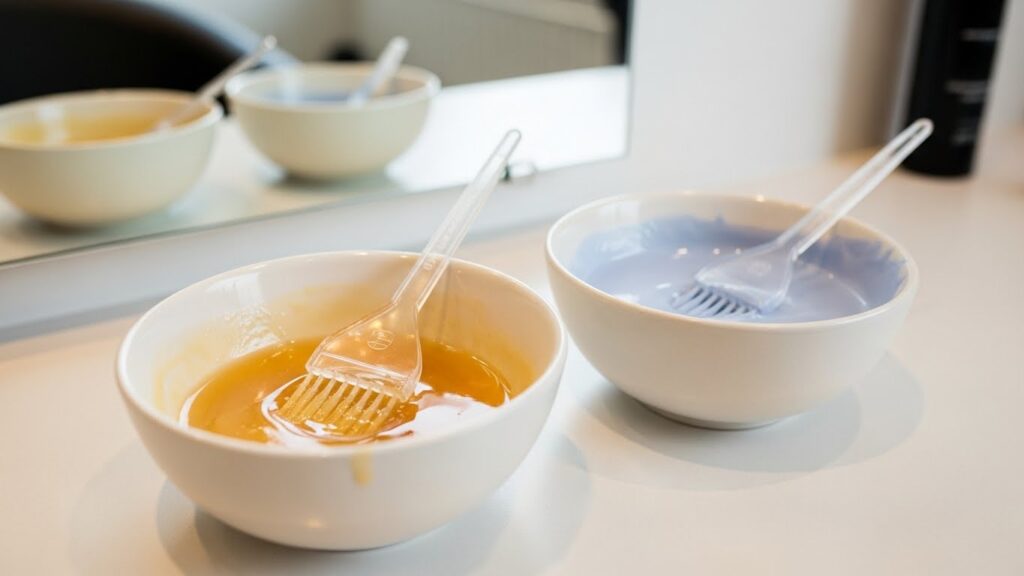
Smart Toning: Using a toner after lightening is the final step of managing internal highlights. It neutralizes or enhances the revealed warmth to achieve the perfect shade, whether it’s a cool platinum, a neutral sand, or a warm butter blonde.
A Conversation With Your Colorist: Asking the Right Questions
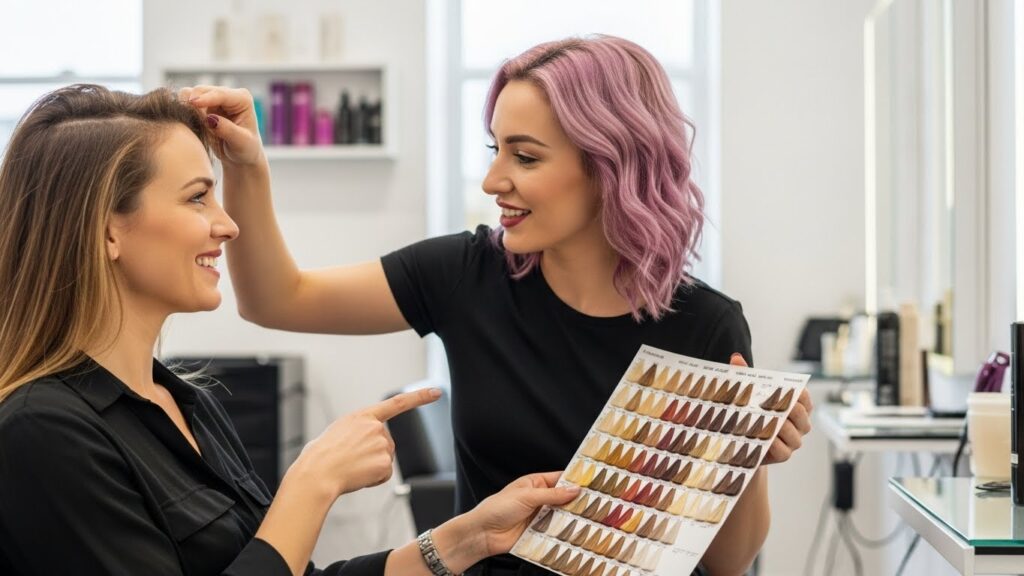
Armed with this knowledge, you can now have a more informed and collaborative conversation with your color professional. Instead of just showing a picture, you can discuss the science behind your desired look. Key questions to ask include:
“Based on my natural level, what underlying warmth should we expect to see when we lift?”
“How can we use my internal highlights to create dimension, rather than fighting against them?”
“Is there a way to achieve my goal color while staying closer to my natural underlying pigment for healthier results?”
“What toner will we use to manage the warmth that my hair will reveal?”
This dialogue shifts you from a passive client to an informed partner, ensuring you and your colorist are aligned on the process from the inside out.
Conclusion: Your Hair’s Secret Narrative
The quest for perfect hair color is not about imposing an external ideal, but about revealing and artfully directing the beauty that already exists. Your internal highlights are your hair’s secret narrative—a story written in melanin. By understanding and respecting this hidden landscape, you open the door to color that is not only more beautiful and dimensional but also more authentic and healthier. The most stunning highlights are those that look like they were born from within, because, in a very real sense, they were. The next time you sit in the salon chair, remember: the most brilliant colorist in the room is nature itself, and you are wearing its masterpiece.