Sliced Surface: Vertical Texture Sections
Imagine taking a knife to the world around you—not to destroy, but to reveal. Picture slicing cleanly through a layered cake of rusted metal, through the stratified history of a canyon wall, or through the meticulously applied coats of a Renaissance painting. What you are left with is a vertical texture section: a profound cross-sectional view that exposes the hidden heart of a material, an object, or a landscape. This is more than a cut; it is a portal into depth, history, and composition.
The Geology of Revelation: Nature’s Vertical Archives
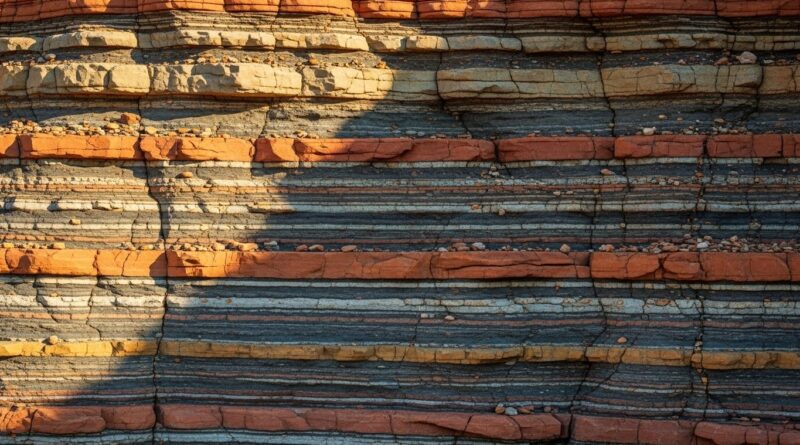
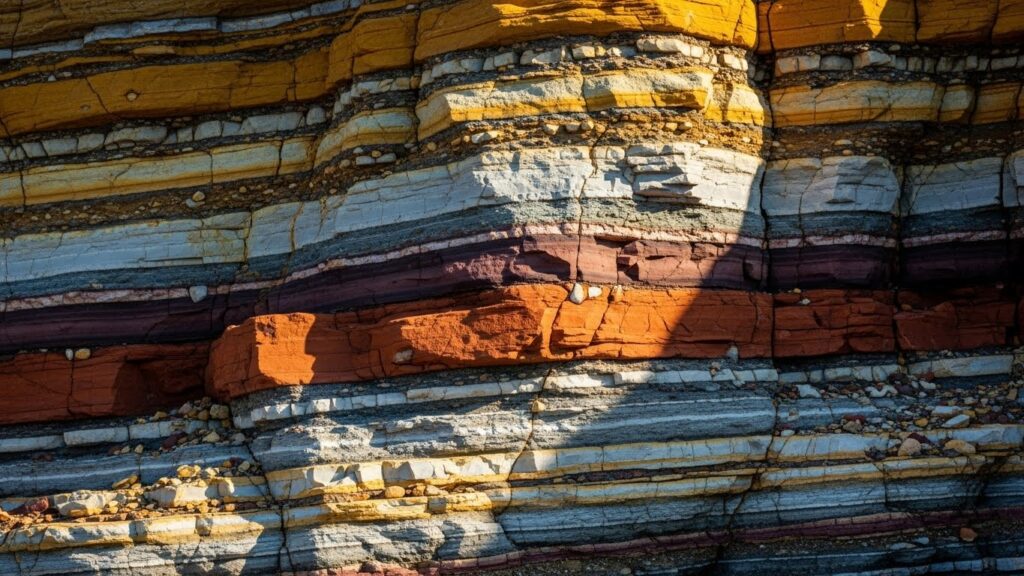
Nowhere is the power of the vertical section more literally grounded than in the field of geology. A cliff face, a riverbank erosion, or a carefully excavated archaeological trench presents a vertical texture section of time itself. Each stratum, each layer of sediment, volcanic ash, or fossil bed, is a page in Earth’s autobiography.
Geologists read these textures like a language. A sharp, clean line between layers might indicate a catastrophic event like a flood or an earthquake. Gradual shifts in grain size—from coarse sand to fine silt—tell tales of changing climates and water flows. The texture within each layer—rough, crystalline, porous, dense—speaks to the conditions of its formation. This natural slicing, often performed by millennia of elemental force, provides an unedited record. It teaches us that true understanding often requires looking at what is underneath, not just what is on top. The Grand Canyon is the planet’s most majestic example: a sliced surface on a monumental scale, revealing nearly two billion years of geological history in its vertical texture.
From Canvas to Cross-Section: The Art of Built History
Transitioning from nature to human creation, the concept of the vertical section becomes a tool for artistic and historical analysis. Consider a classic oil painting. To the viewer, it is a smooth, cohesive image. But a conservator might take a microscopic core sample—a tiny vertical slice—from the edge to the canvas. This section reveals a hidden universe: the tooth of the canvas, the chalky ground layer, the underpainting sketched in umber, and then the glorious build-up of glazes and impastos that create the final illusion.
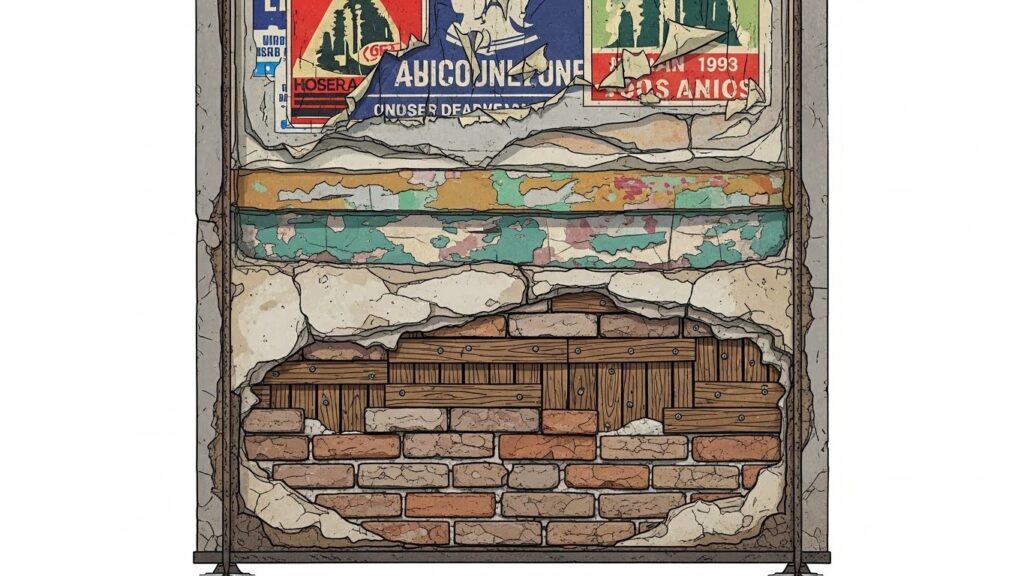
Each layer in this textural sandwich has a story. The artist’s change of mind is visible as a pentimento—a ghostly earlier form peeking through. The choice of materials, from expensive lapis lazuli to common ochre, speaks to patronage and intent. This forensic approach to art, made possible by viewing its vertical texture, connects us directly to the hand and mind of the maker. Similarly, in architecture, a section drawing is fundamental. It slices through walls and floors to show the textural relationship between brick, insulation, studs, and plaster. It reveals the anatomy of space, how materials come together to create shelter and experience, proving that beauty in design is as much about what is hidden structurally as what is seen aesthetically.
The Designer’s Dissection: Materiality in Section
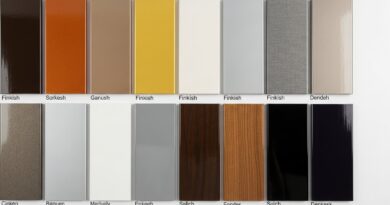
In modern design, the sliced surface has evolved from an analytical tool into an aesthetic and conceptual principle. Designers and material researchers actively create and showcase vertical sections to celebrate texture, process, and authenticity. A designer might pour different colored resins in layers, then sand and polish the cured block to reveal a stunning, smooth-faced cross-section of swirling color—a captured moment of liquid history.
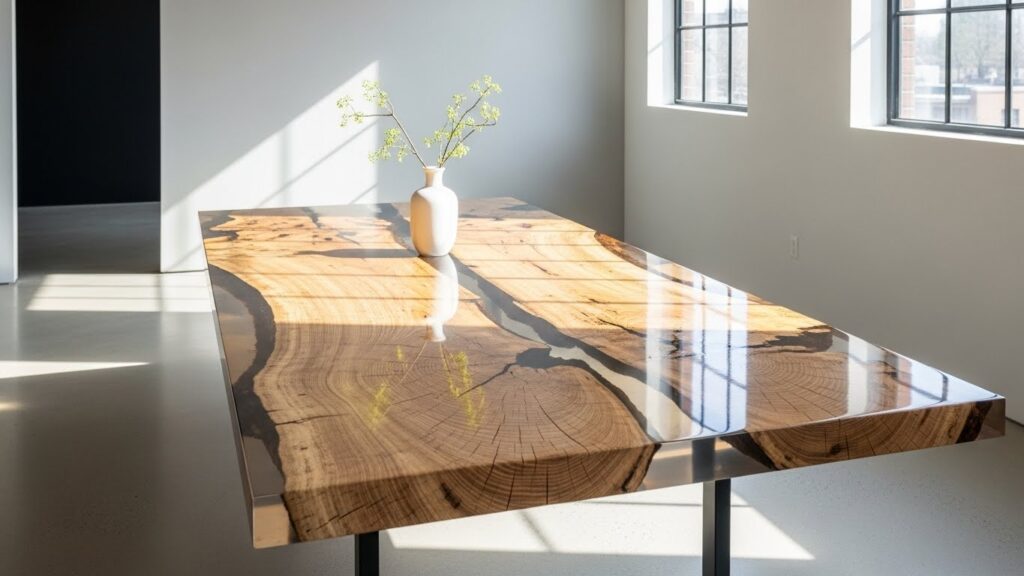
This approach champions honest materiality. A tabletop with a live edge that shows the tree’s growth rings is a celebration of its vertical section. Terrazzo, a composite material, embeds slices of stone and glass within a matrix, creating a textured surface that is essentially a collection of countless tiny vertical sections. By exposing the interior, designers invite touch and closer inspection. They ask the user to consider origin and making. The texture is no longer just a tactile surface but a narrative diagram, a map of the object’s creation. This transparency builds a deeper, more meaningful connection between the user and the artifact.
Digital Dimensions: Slicing in the Virtual Realm
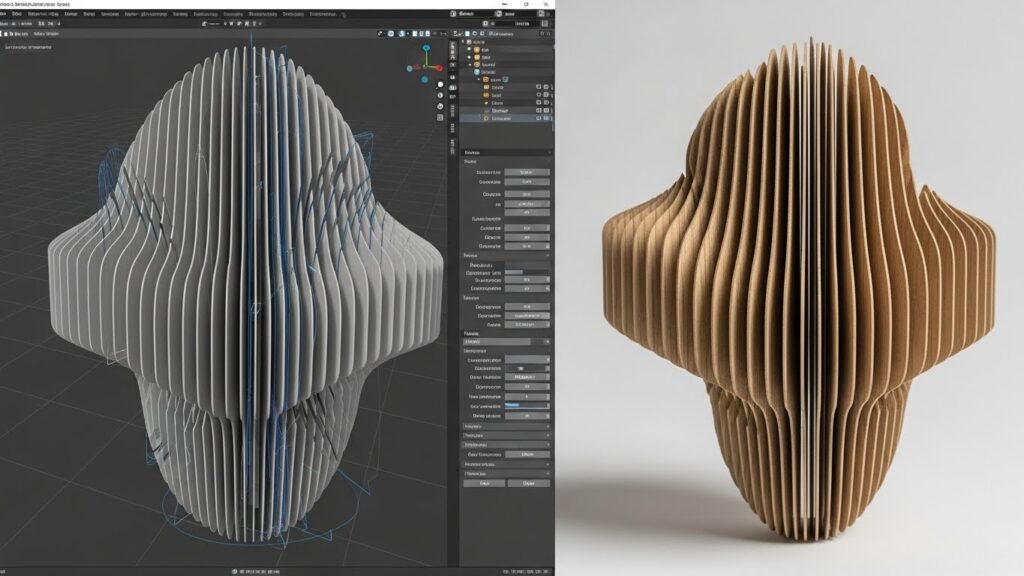
The advent of digital technology has exploded the possibilities of the vertical texture section. In 3D modeling and CGI, a “section view” is a routine tool to peer inside complex assemblies, from engine parts to virtual buildings. But more creatively, digital artists use algorithmic slicing to generate breathtaking forms and textures. Using software, they can take a solid digital form and algorithmically slice it into hundreds of layered sections, which can then be fabricated by a CNC router or 3D printer.
This process creates physical objects with incredibly complex internal textures that would be impossible to make by hand. Furthermore, in data visualization, slicing through a 3D scan of an object—a historical artifact, a human organ, a geological sample—allows scientists to examine internal textures without physical damage. The vertical section becomes a non-invasive exploratory tool, revealing density, composition, and hidden flaws. This digital slicing blurs the line between the material and the informational, treating texture as data that can be isolated, analyzed, and re-imagined.
Philosophical Cuts: Perception, Truth, and Depth
Beyond its practical applications, the metaphor of the vertical texture section holds profound philosophical weight. It challenges our default mode of perception, which is often satisfied with the horizontal, the superficial, the presented face. To slice vertically is an act of seeking deeper truth. It acknowledges that reality is layered, that history accumulates, and that the present moment is just the topmost stratum.
This perspective encourages critical thinking and curiosity. It asks: What lies beneath the surface of this idea, this institution, this emotion? Just as a geologist sees time in rock, we can learn to see the accumulated experiences that shape a person, the incremental decisions that define a culture, or the underlying assumptions that support a theory. The texture revealed in the section—whether rough, fractured, harmonious, or chaotic—becomes a mirror for complexity. It teaches us that understanding requires the willingness to cut through the obvious, to examine the layers of construction, and to appreciate the beauty and truth found in the depth of things.

Conclusion: The Endless Depth of a Single Cut
The journey through the concept of the sliced surface takes us from the ancient records of canyon walls to the cutting edge of digital fabrication, from the forensic analysis of art to the philosophical examination of truth. The vertical texture section is a powerful unifying lens. It demonstrates that whether we are scientists, artists, designers, or simply curious humans, there is immense value in changing our angle of inquiry—from a surface glance to a penetrating investigation.
By embracing this sectional thinking, we cultivate a deeper appreciation for the world’s material and immaterial richness. We begin to see every surface as a potential doorway, every texture as a story waiting to be read in depth. The next time you encounter a compelling texture—on a wall, in a photograph, in a piece of wood—pause. Imagine making that vertical slice. Imagine what narratives of force, time, decision, and craft you might find. The surface is just the beginning; the real story is in the section.