Internal Perimeter: Hidden Edge Texture
In the world of design, architecture, and even personal experience, we are naturally drawn to the obvious—the sweeping vista, the bold facade, the central feature. We focus on the core and the outer boundary. But what about the space between? The subtle, often overlooked transition zones that quietly shape our perception? This is the realm of the internal perimeter. It is not the main wall, but the shadow it casts; not the floor, but the seam where it meets the baseboard; not the statement piece, but the negative space that gives it breath. It is the hidden edge texture, a powerful yet understated force that defines depth, influences emotion, and creates coherence in our built and lived environments.

Defining the In-Between: What Exactly is an Internal Perimeter?
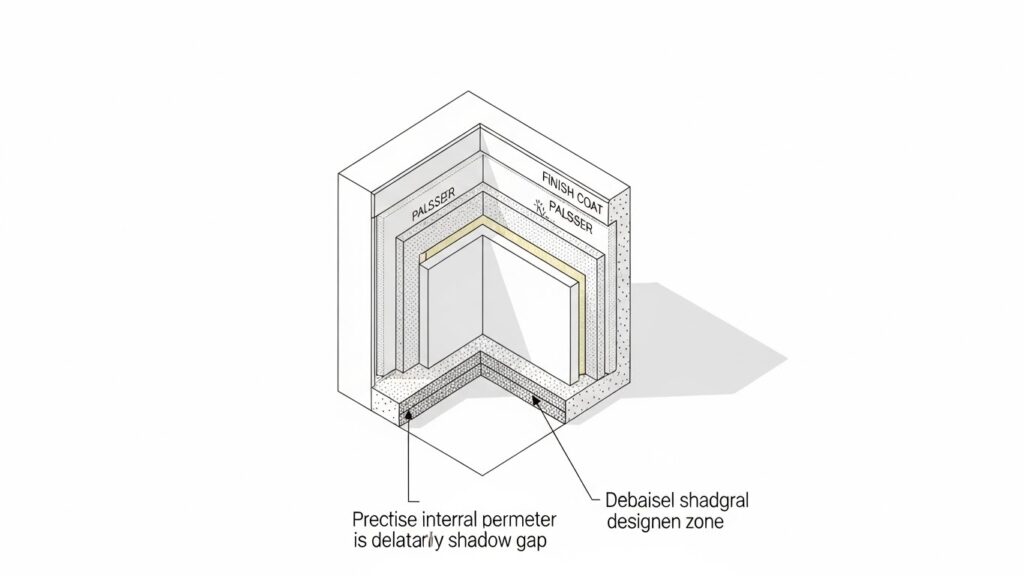
To understand the internal perimeter, we must first move beyond thinking of edges as simple lines. An edge can be a stark, two-dimensional border. An internal perimeter, however, is a three-dimensional zone of transition. It possesses texture, depth, and often, intentional complexity. Think of the reveal between two panels of cabinetry, the groove in a piece of millwork, the gap between a floating shelf and the wall, or the layered reveals around a window frame.
These are not mere functional gaps. They are designed absences. They are the pauses in a visual sentence, allowing the elements around them to resonate. The internal perimeter lives in the shallow depth of a shadow line, the gentle wash of light grazing a textured surface, or the deliberate step in a concrete plinth. It is the architecture of the detail, operating at the scale of the hand and the eye, crafting experience through nuance rather than declaration.
The Psychology of the Shadow Line: Why We Feel It
The power of the internal perimeter is deeply rooted in human perception. Our brains are pattern-seeking machines, but they also crave hierarchy and order. A flat, unbroken surface can feel monolithic or sterile. It offers no visual rest, no point of focus for the eye to settle on as it understands the scale and nature of the space.
Introducing a textured edge—a recess, a change in material, a shadow line—creates a cognitive landmark. It breaks down a large form into comprehensible parts. This subtle articulation provides rhythm. More importantly, it manipulates light and shadow, which are fundamental to how we perceive volume and emotion. A sharp, deep reveal creates drama and definition. A soft, shallow wash of light suggests delicacy and warmth. The internal perimeter becomes the instrument by which light is sculpted, giving mass its weight and void its meaning.
This is why spaces with considered detailing often feel “rich” or “resolved,” even if they are minimalist. The texture of the edge provides the sensory information that makes a space feel crafted, intentional, and human-scaled.

From Architecture to Everyday Objects: The Principle in Practice
The concept of the internal perimeter transcends scale. It is a universal principle of good design.
In architecture, it’s the reveal at the ceiling or floor that makes a wall appear to float. It’s the recessed joint in board-formed concrete that emphasizes the material’s tactile quality. It’s the deep window jamb that frames a view like a picture, creating a moment of threshold and focus. Japanese architecture masters this through concepts like engawa—the blurred perimeter between interior and exterior—a fully realized internal perimeter that is both physical and philosophical.
In product and furniture design, it’s the seam where two materials meet not perfectly flush, but with a deliberate step or gap. It’s the machined groove on the edge of a tablet, the satisfying click of a panel fitting into a recessed bay, or the lip on a ceramic mug that guides your touch. This edge texture provides functional feedback (your finger finds the groove) and visual hierarchy, telling the story of how the object was assembled and how it is meant to be used.
Even in digital design, the internal perimeter exists. It’s the subtle gradient on a button’s edge, the micro-shadow under a card, or the fine border that separates a menu from content. These are the hidden textures that create depth on a flat screen, guiding interaction and establishing visual order.

Crafting Your Own Hidden Edges: A Guide for Mindful Creation
Whether you’re designing a room, a website, or a piece of art, attending to the internal perimeter can elevate your work. Here’s how to think about it:
1. Look for the Joint: Where do two elements meet? The wall and ceiling, the counter and backsplash, a headline and body text. Don’t just let them collide. Design the collision. Could a small reveal, a change in color, or a different material texture articulate this junction?
2. Sculpt with Light and Shadow: Ask yourself: how will light interact with this edge? A rounded edge (a bullnose) will soften light, creating a gentle gradient. A sharp, 90-degree edge will create a hard, dramatic shadow. A recess will capture shadow, creating a strong defining line. Choose the emotional effect you want.
3. Celebrate Transitions: Treat transitions as destinations, not afterthoughts. The space between rooms, the shift from one material to another, the gap between icons on a screen—these are opportunities for texture and meaning. A threshold isn’t just a doorway; it can be a change in floor level, material, or light.
4. Prioritize Tactility: How does the edge feel? The internal perimeter is often discovered by the hand. The smooth chamfer on a table’s edge, the cool metal reveal on a drawer pull, the textured strip on a laptop keyboard—these tactile experiences build a profound, subconscious connection to the design.
The Unseen Framework of Experience
Ultimately, the internal perimeter is a philosophical stance on design. It argues that the true quality of a space or object is not found in its central spectacle or its outer shell, but in the care given to its transitions. It is the mark of a mindful creator who understands that our experience is cumulative, built from a thousand tiny impressions.
These hidden edge textures create a silent, rhythmic language. They guide our movement, focus our attention, and shape our emotional response without ever demanding it. They are the quiet grammar that makes the visual sentence comprehensible and beautiful. In a world that often shouts with bold forms and loud statements, the internal perimeter is a masterful whisper—a testament to the power of depth, subtlety, and the profound impact of the space between.
Start looking for them. Run your finger along the edge of your desk. Notice where the wall meets the floor in your favorite café. Observe the layered frames of a well-designed website. You will begin to see the hidden architecture within everything. And in doing so, you will not only become a more perceptive observer but also a more intentional creator, capable of weaving texture, light, and meaning into the very edges of your world.