The Fremont Bob: California Bay Area Suburb
Driving through the sprawling, sun-drenched suburbs of the San Francisco Bay Area, you expect certain sights: sleek tech campuses, rows of Eichler homes, hiking trails weaving into golden hills. But in the city of Fremont, there’s a different kind of landmark that has captured local imaginations for decades. It’s not a historic mission or a Silicon Valley headquarters. It’s a sculpture known, affectionately and simply, as “The Fremont Bob.” More than just public art, the Bob is a cultural touchstone, a neighborhood mascot, and a peculiar symbol of suburban identity in one of the most dynamic regions on earth. This is the story of the Bob, and through it, the story of a California suburb finding its character.
What (and Where) is the Fremont Bob?
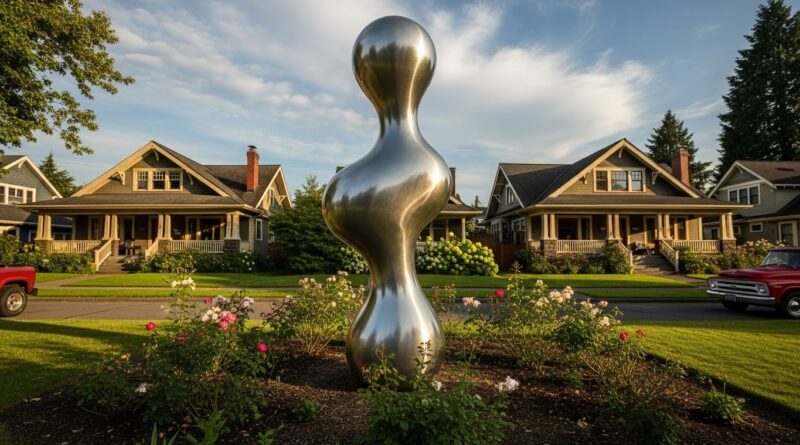
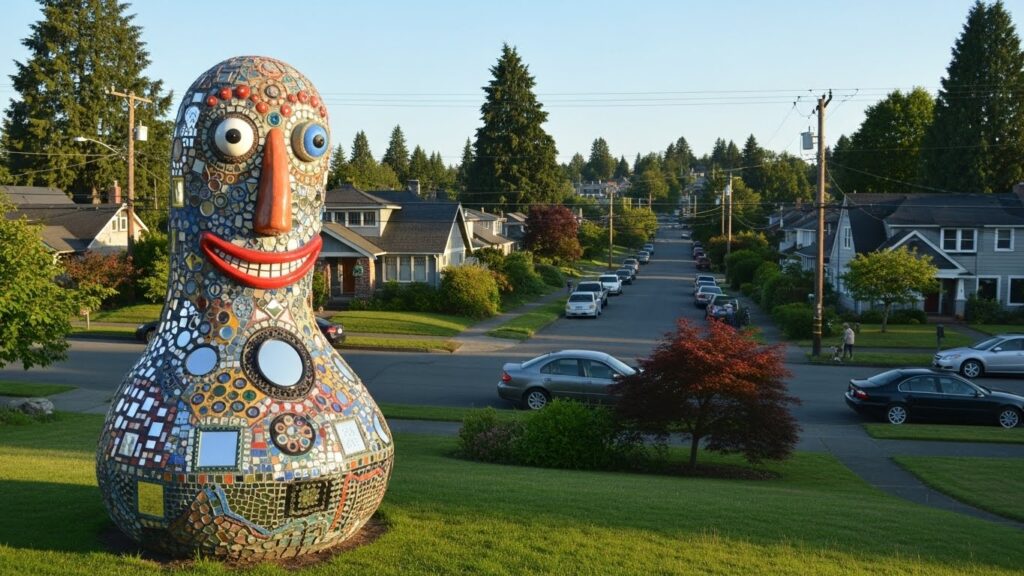
For the uninitiated, the Fremont Bob is a large, abstract, bronze-colored metal sculpture located in the Glenmoor Gardens neighborhood of Fremont. Its official name is “The Guardian,” but nobody calls it that. Created by artist Richard A. Beyer and installed in the early 1970s, the Bob is a rounded, smooth, almost organic form. Some see a seated figure, others a friendly monster, a giant seed, or a futuristic artifact. Its ambiguity is its charm. Perched on a low concrete platform at the intersection of several quiet residential streets, it feels less like a formal monument and more like a friendly neighbor who’s always sitting out on the corner.
The origin of the nickname “Bob” is delightfully mundane, the kind of folklore that springs from suburban neighborhoods. The most popular tale suggests that after its installation, residents, unsure what to call the enigmatic piece, began referring to it with the generic, everyman name “Bob.” It stuck. The name reflects a Bay Area blend of artistic pretense and down-to-earth practicality. Here is a work of art, and we’ve decided it’s just Bob.
A Brief History: Fremont’s Growth and the Birth of a Landmark
To understand the Bob, you need to understand Fremont. Incorporated in 1956 through the merger of five smaller communities, Fremont is a classic example of postwar suburban expansion. As the aerospace and tech industries boomed in the mid-20th century, families flocked to the area for affordable housing and a slice of the California dream. Neighborhoods like Glenmoor Gardens were built, complete with parks, curving streets, and a desire for community identity.
The Bob arrived in this atmosphere of growth. Funded through a community development grant, it was part of a movement to bring public art into everyday living spaces, not just museum courtyards. Artist Richard Beyer, known for his accessible, often narrative-driven sculptures in the Pacific Northwest, created a piece that was approachable and durable. It wasn’t meant to be revered from a distance; it was meant to be touched, climbed on by kids, and used as a meeting point. In many ways, the Bob became the unofficial town square for a neighborhood that lacked a traditional downtown.
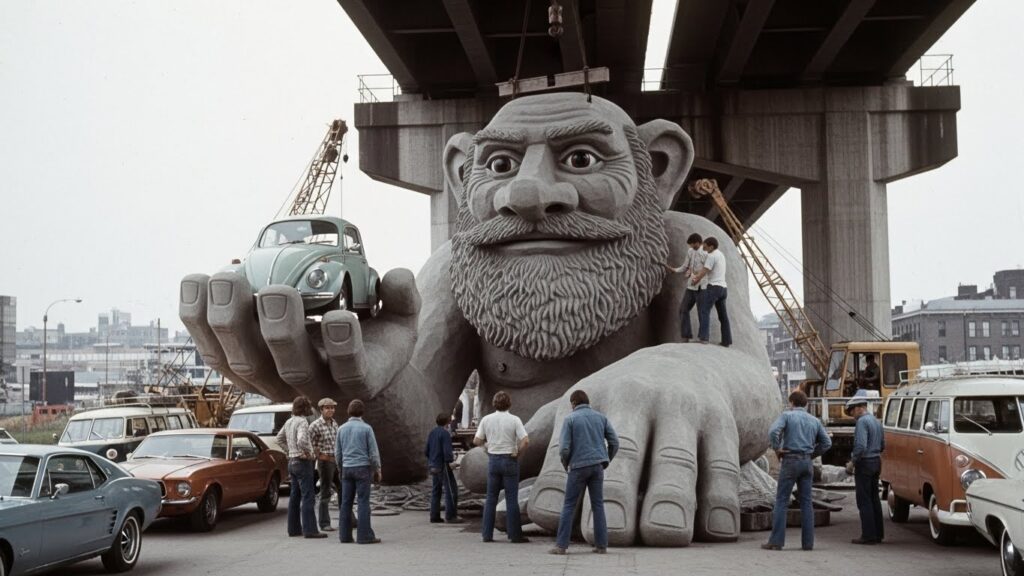
The Bob as a Cultural Phenomenon
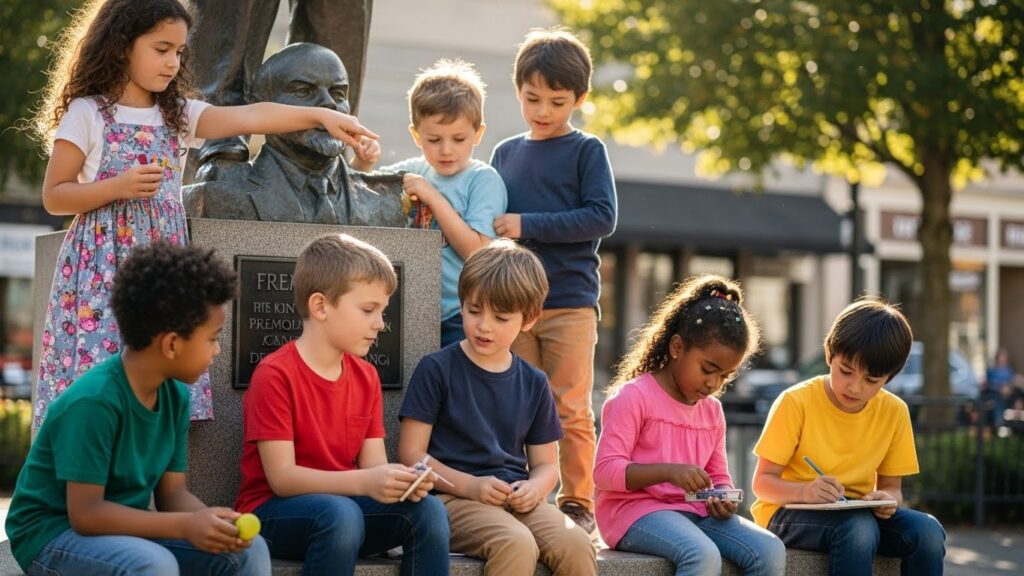
Over the decades, the Fremont Bob transcended its role as mere decoration. It became woven into the fabric of local life. It is a navigational landmark (“Turn left at the Bob, then right on Glenmoor”). It is a rite of passage for local children, who inevitably have their photo taken with it, climb on it, or use it as a backdrop for birthday parties. It is a canvas for gentle, seasonal decoration—donning a Santa hat in December or a few ribbons for the Fourth of July.
This community adoption is key. In a region changing at breakneck speed, where tech campuses rise overnight and housing prices soar, the Bob represents continuity. It’s a constant. Parents who grew up with the Bob now take their own children to see it. It has Facebook fan pages, appears in local news features, and is a point of pride for long-time residents. The Bob, in its silent, sturdy way, fosters a sense of place and belonging in a suburb that could otherwise feel anonymous.
Fremont and the Silicon Valley Identity
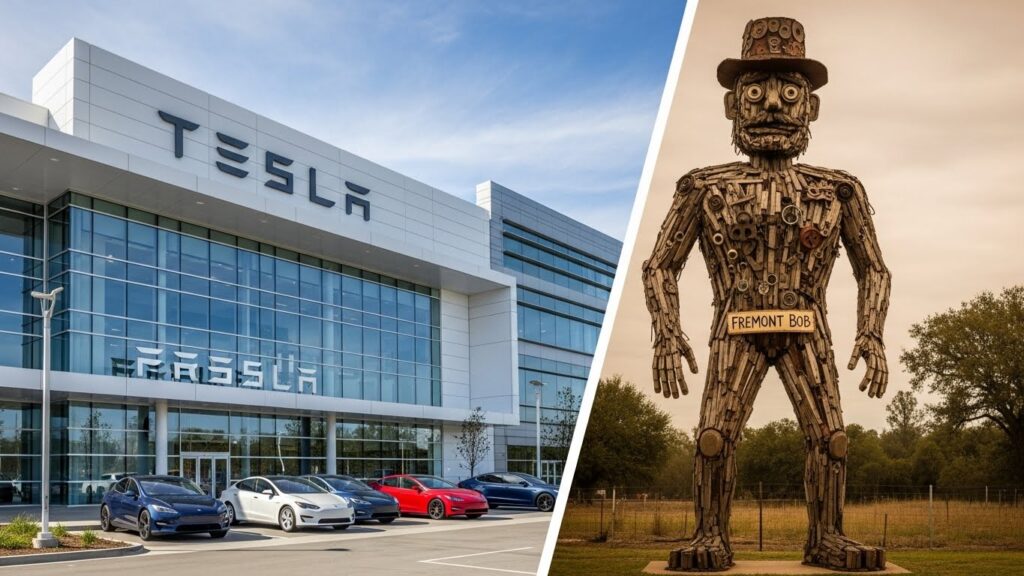
Fremont’s identity is complex. It’s a major hub for tech manufacturing (it’s home to Tesla’s first major factory), has a hugely diverse population, and serves as a bedroom community for Silicon Valley. Amidst this high-pressure, fast-forward culture, the Bob is an antithesis. It is slow, analog, and not optimized for anything. It doesn’t connect to Wi-Fi, it has no app, and it offers no productivity boost. Its value is purely in community and whimsy.
This contrast is perhaps why it’s so cherished. The Bob reminds residents that life exists outside the innovation bubble. It represents the suburban part of the “Bay Area suburb”—the need for quiet corners, inside jokes, and landmarks that have nothing to do with your job. It’s a testament to the human desire for quirky, personal touchstones in an increasingly homogenized and digital world.
Visiting the Fremont Bob: A Pilgrimage for the Quirky at Heart
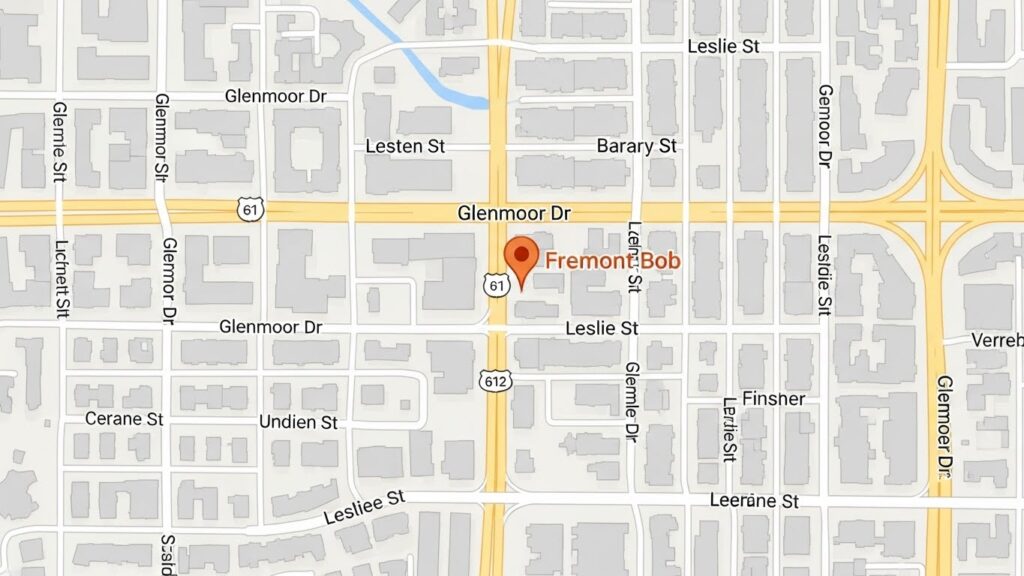
If you find yourself in the East Bay, a visit to the Bob is a worthwhile detour. It’s located at the intersection of Glenmoor Drive and Leslie Street in Fremont. There’s no parking lot, no gift shop, no admission fee. You simply park respectfully on a nearby residential street and walk up. Take a moment to appreciate its form. Touch its weathered metal. You’ll likely see evidence of its role in the community—a fresh coat of paint on its platform, a small toy left nearby.
While you’re there, explore the Glenmoor neighborhood. Notice the well-kept homes, the quiet streets, and the sense of calm. The Bob is the heart of this specific community, and experiencing that context is part of the visit. Afterwards, consider exploring Fremont’s other offerings: the historic Mission San José, the vibrant Centerville district, or the hiking trails of Mission Peak. The Bob is a perfect starting point to understand that Fremont, and suburbs like it, are more than just stops on a commuter rail line—they are places where people build lives and, occasionally, adopt a giant metal Bob as their friend.
Conclusion: More Than Just a Sculpture
The Fremont Bob is a lesson in how communities assign meaning. What began as a publicly funded art project became a living, breathing part of a neighborhood’s identity. It proves that landmarks aren’t always grand or ancient; they can be born from everyday interaction and affectionate naming. In the ever-evolving narrative of the California Bay Area, where talk is so often of disruption and the future, the Bob is a gentle, steadfast reminder of the importance of home, playfulness, and shared history. It’s a symbol of suburban soul. So here’s to Bob—guardian, landmark, neighbor, and an enduring piece of Bay Area weirdness and warmth.