Easy Guide to Detangling Curly Hair Without Losing Any Definition
If you have curly hair, you already know the struggle. You wash your hair, you add all the right products, and then one bad brush stroke ruins everything. All that definition just disappears. It is frustrating, but it is also totally fixable.
I have been there more times than I can count, standing in front of the mirror watching my curls turn into one giant puffball. That is exactly why I put together this simple guide. You are going to learn how to detangle curly hair the right way. No lost definition. No broken curl patterns. No extra stress.
This routine is easy to follow, it works for most curl types, and you can start using it today. Grab your favorite conditioner and meet me in the next section. Detangling is about to become your favorite part of wash day.
Why Detangling Curly Hair Feels Like a Battle

Most of us learned to brush hair the way people do on TV. Start at the top and pull straight down. That works fine for straight hair, but for curls, it is a disaster. Curly hair is naturally drier and more fragile than straight strands. It also loves to tangle into little nests, especially around the crown and nape.
Your curl pattern is delicate. One rough pass with the wrong brush can stretch out your coils and turn everything into frizz. Add in product buildup, dry weather, and a cotton pillowcase, and you basically have a recipe for tangles that feel personal. But there is good news. Once you understand why detangling is hard, the fix is actually pretty simple.
What to Grab Before You Start
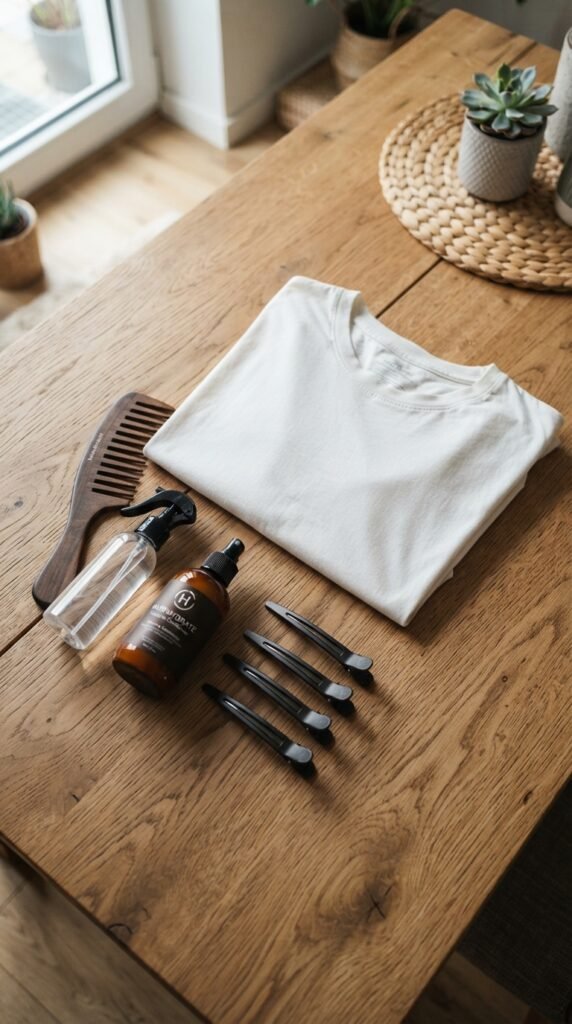
Before you touch a single curl, get your tools ready. Having everything close by makes the whole experience feel calmer.
- A wide-tooth comb or a detangling brush made for curls
- A spray bottle filled with warm water
- A slippery conditioner or detangling spray
- A few big clips to hold sections
- A soft cotton T-shirt or microfiber towel
You probably already have most of this in your bathroom. The real secret is not waiting until your hands are slippery and wet. Lay everything out first. When your hair is already partially dry and tangles are forming, pausing to look for products just makes it worse.
The Golden Rule: Wet or Dry?
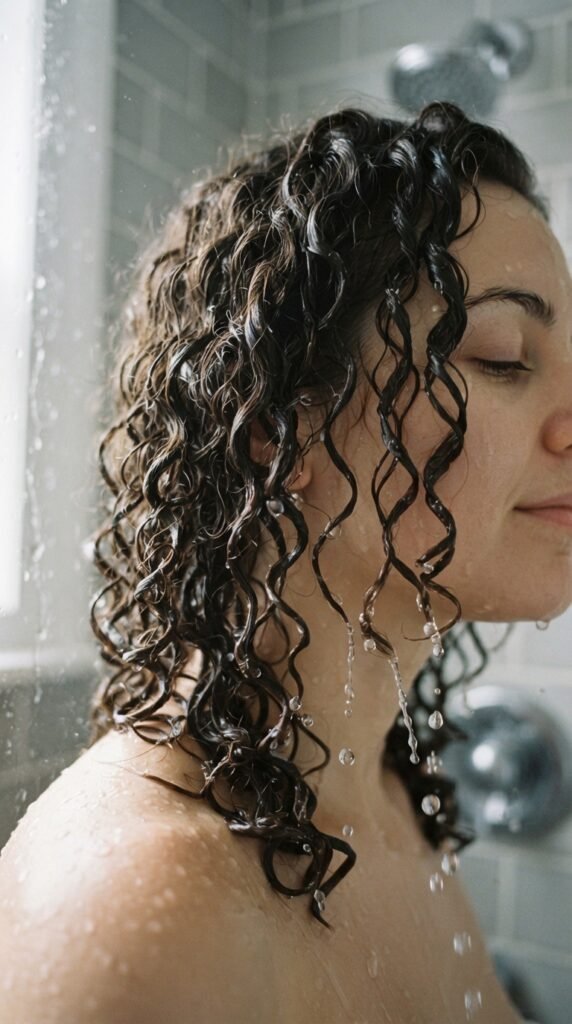
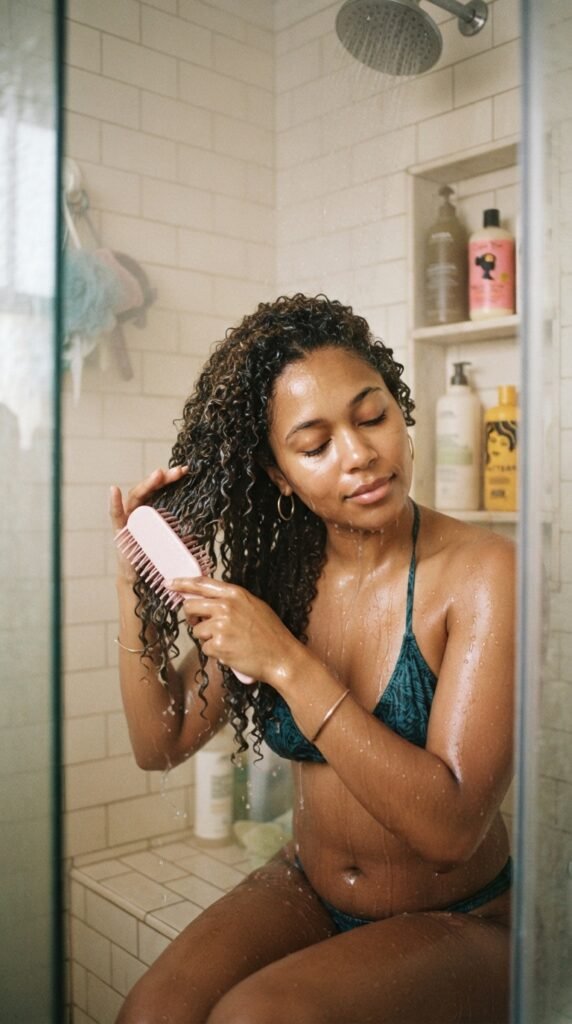
This is the biggest question in curly hair care. Should you detangle wet hair or dry hair? In almost every case, the answer is wet. When hair is fully saturated, it becomes more elastic and willing to stretch. Dry curls snap and break so easily.
But not damp hair. Damp is a trap. Your hair feels workable, but there is still just enough friction to cause tiny rips in the cuticle. You want your hair dripping wet. Whether that is in the shower or with a spray bottle, the water does half of the work for you.
If you must touch dry hair, keep it to finger separating alone. Pulling a brush through dry curls is the quickest way to lose definition and create frizz.
Picking the Right Brush Matters
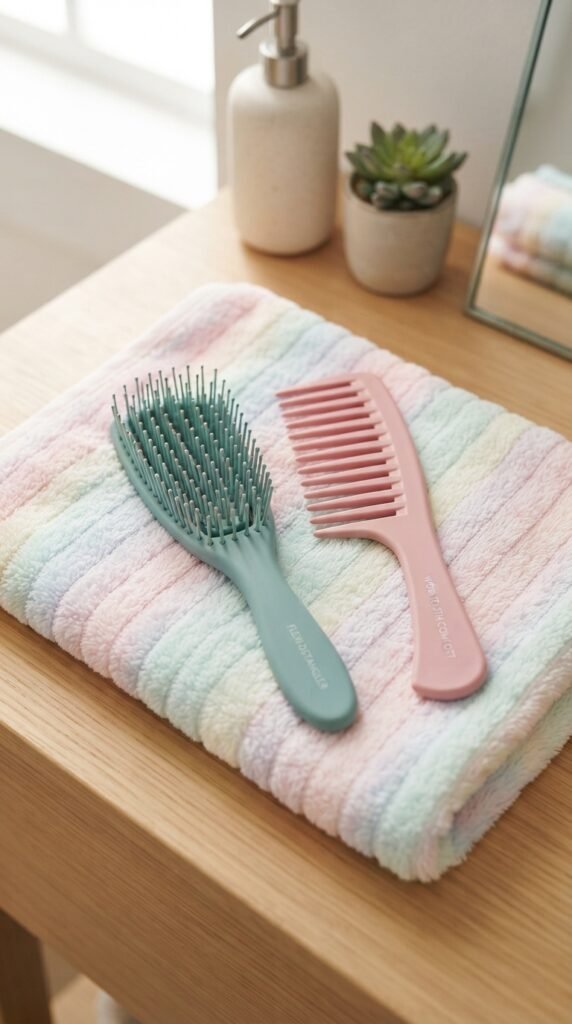
Not every brush was made for curly hair. Paddle brushes? I love them for blowouts, but they are not for curls. The tight rows of bristles pull through curls and stretch them out in all the wrong ways.
Your best options are a wide-tooth comb or a brush with flexible, widely spaced bristles. Look for something designed for wet hair. Those brushes slide through tangles with a lot less tugging. The teeth are long enough to actually reach through thick sections.
And one thing matters more than the tool, and that is how you use it. Always glide. Let the brush catch the tangle, pause, and slowly work it free. There should be no yanking at any point. If you feel resistance, stop and add more water or conditioner.
Section Your Hair Like a Pro

Do not try to detangle your whole head at once. That is the fastest way to turn one knot into fifty. Sectioning your hair keeps the process manageable.
I like to split my hair into four parts. Two across the front and two in the back. Clip three sections away and focus on just one at a time. When that section is tangle-free, move to the next.
Working in smaller sections means less pulling at your roots. It also means you actually see the tangle before you brush through it. Yes, sectioning takes an extra minute. But it saves a full twenty minutes of fighting with your hair later. I promise the math works in your favor.
The Way You Hold Your Curl Changes Everything
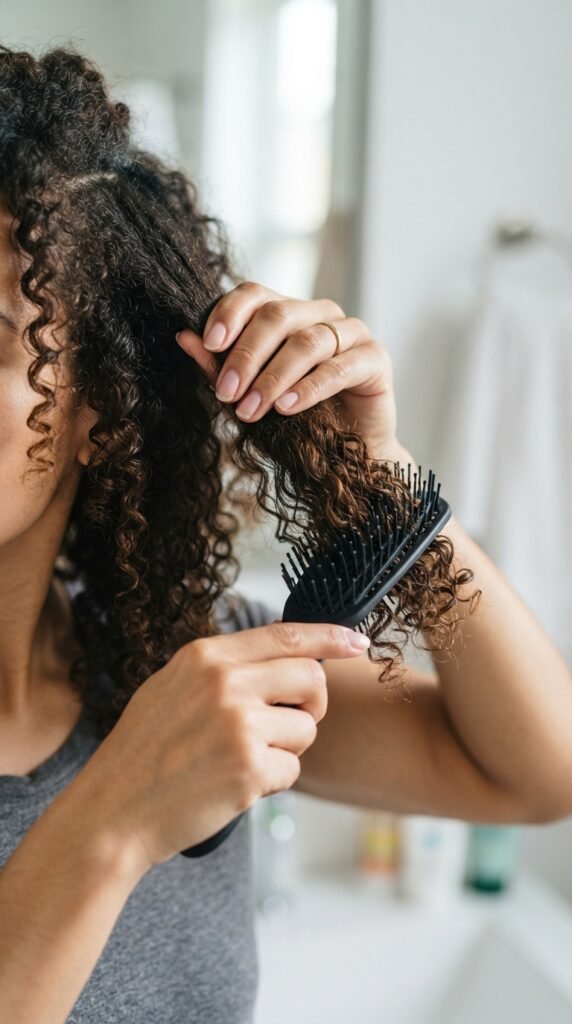
Here is a trick that completely changed my detangling game. Do not hold the middle of the curl while you brush. That creates tension on the strand and pulls the curl out of shape.
Instead, hold the section gently near your roots with one hand. Then brush from the ends upward with the other. This keeps the curl anchored and lets you work out knots without stretching out your pattern.
Your supporting hand can also feel where the tangles are hiding. It is almost like you are guiding each curl through the tangle safely. With a little practice, this becomes second nature. Your hair keeps its shape, and your scalp stops feeling sore after wash day.
Always Work From the Bottom Up
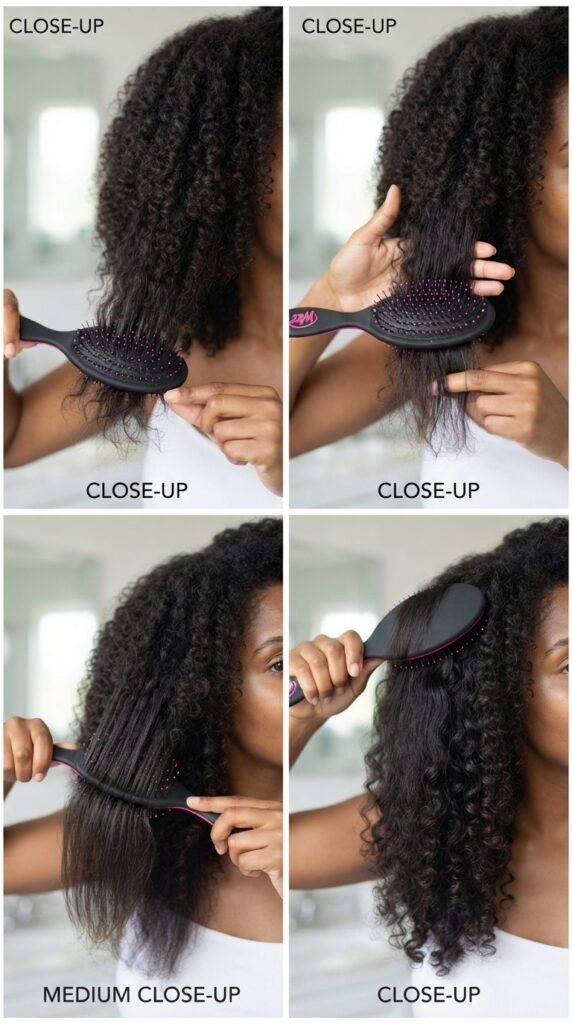
You have probably heard this before, but it is worth repeating. Always detangle from the ends and work up toward the roots. If you start at the top, you push every knot down into one giant mess. By the time you reach the bottom, it is too late. The whole section is one mat.
Bottom-up is much kinder. You start with the ends, get them smooth, then move up an inch and continue. This way, the tangles break apart slowly instead of piling up on each other.
It takes patience at first, especially if you are used to rushing through your hair. But once you try it a couple of times, the rhythm feels good. Hardly any hair is lost, and your curls actually stay bouncy and intact.
How to Keep Your Definition While Detangling
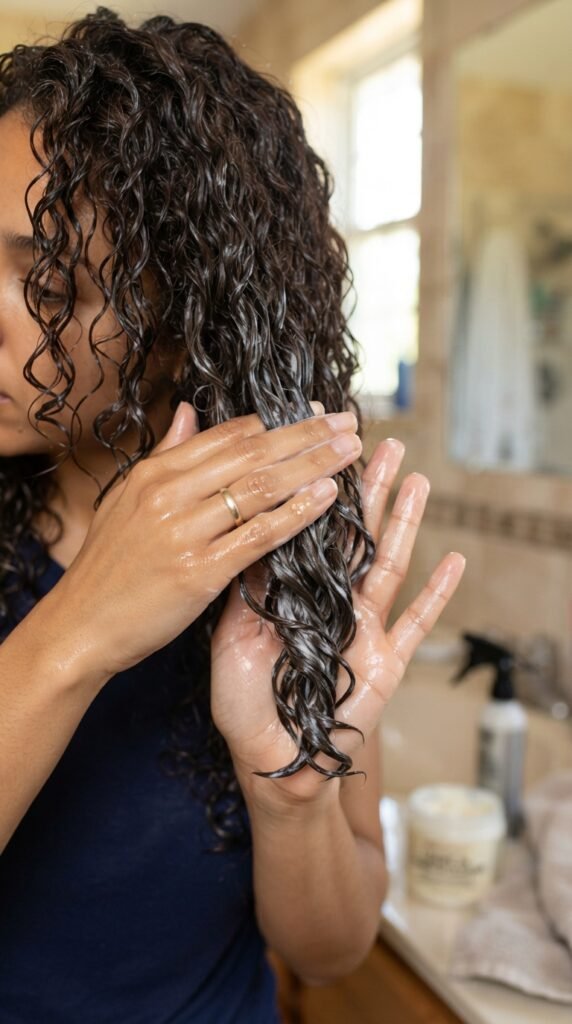
Definition is about keeping curl clumps together. When you brush too aggressively, you split apart the coil and create fluff. The trick is to use a gentle re-squeeze motion after you remove each tangle.
Once a knot is gone, press the hair back together between your fingers. This helps the curls remember their natural grouping. Add a little leave-in conditioner while your hair is still wet, and your coils will thank you.
Another small tip: work in vertical sections rather than horizontal ones. Vertical sections follow the curl pattern and get smoother results. You will notice the difference right away. Fewer stray hairs, better clumping, and a much more put-together finish.
Water Is the Ultimate Glide
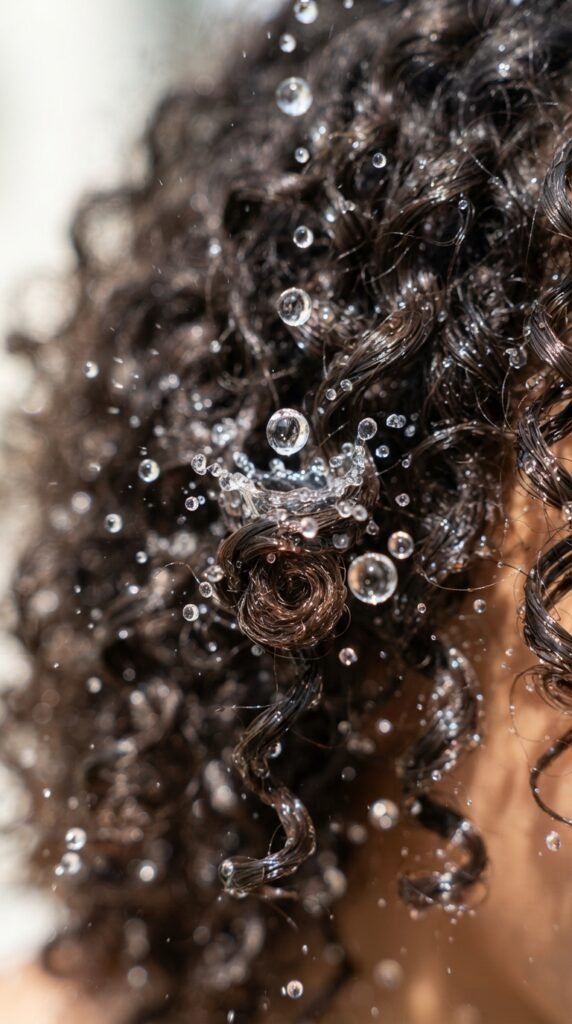
If you think you need a fancy spray to detangle, think again. Plain warm water is one of the best tools you already own. When your hair is completely soaked, the cuticle relaxes. The strands get a little more slip, and tangles loosen their grip.
Do not be shy with the water. Spray each section until water is literally dripping. If you are in the shower, let the stream run through your hair while you work. The more water, the smoother the process.
I know it feels wasteful to have water running everywhere, but it saves your hair from stress. Plus, your conditioner spreads better on fully soaked hair. You will notice your brush glides through with very little effort. Let the water carry some of the weight for you.
Conditioner Does the Heavy Lifting
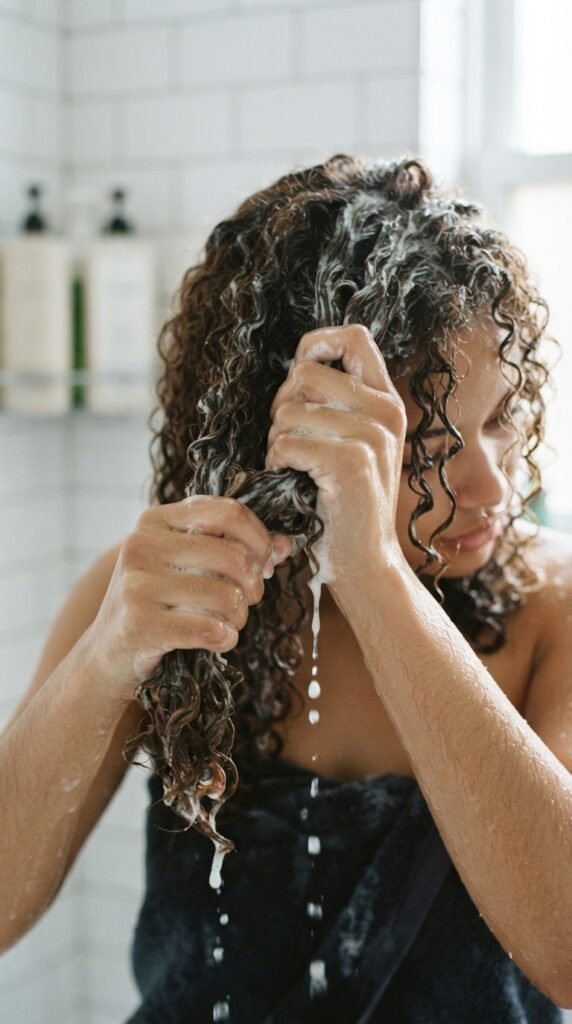
Conditioner is where slip comes from. Slip is that slippery, smooth feeling that allows strands to slide past each other without catching. Without enough slip, even wet detangling is rough on your curls.
Apply more conditioner than you think you need. Curly hair is thirsty and will soak it right up. Work it through with your fingers first, then follow with your brush or comb.
If you are dealing with a seriously tangled section, mix a little conditioner with warm water in a spray bottle. Spray it right on the knot and give it a minute to soak in. This little trick softens the tangle and makes it much easier to break apart without pulling.
Finger Detangling Is a Real Move
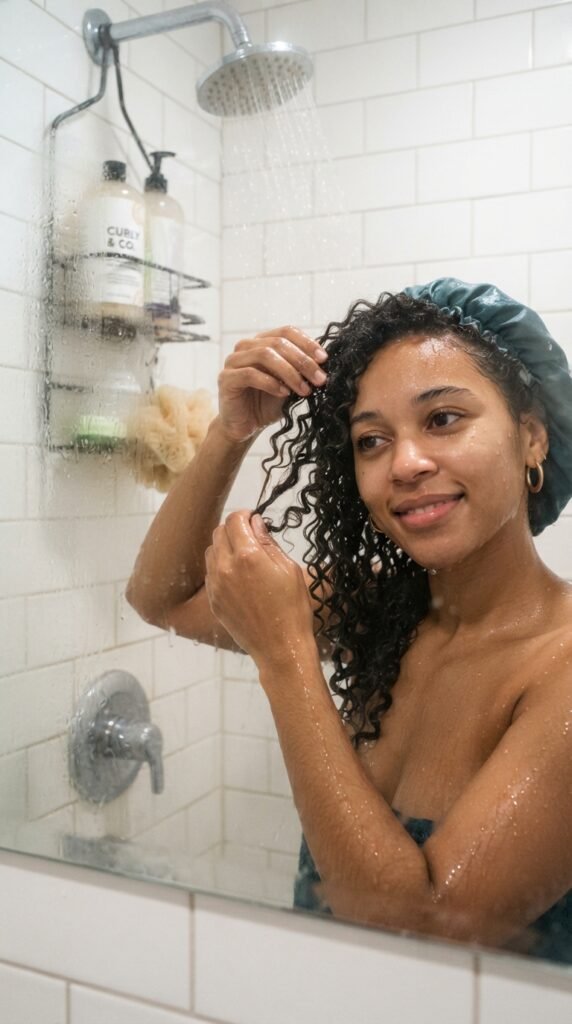
You do not always need a tool. Your fingers are actually perfect for detangling when you know how to use them. Finger detangling gives you the most control because you can feel every knot before you pull on it.
Start by pressing your fingers into the base of a section. Slide them down the length of the hair, stopping when you feel a tangle. Gently work the knot loose and then keep moving.
For tight coils, finger detangling is the gentlest option. It keeps the curl pattern fully intact. Some people skip the brush completely once they get the hang of this. If your hair is fine or fragile, this might be exactly what you need.
The Bowl Method, Step by Step
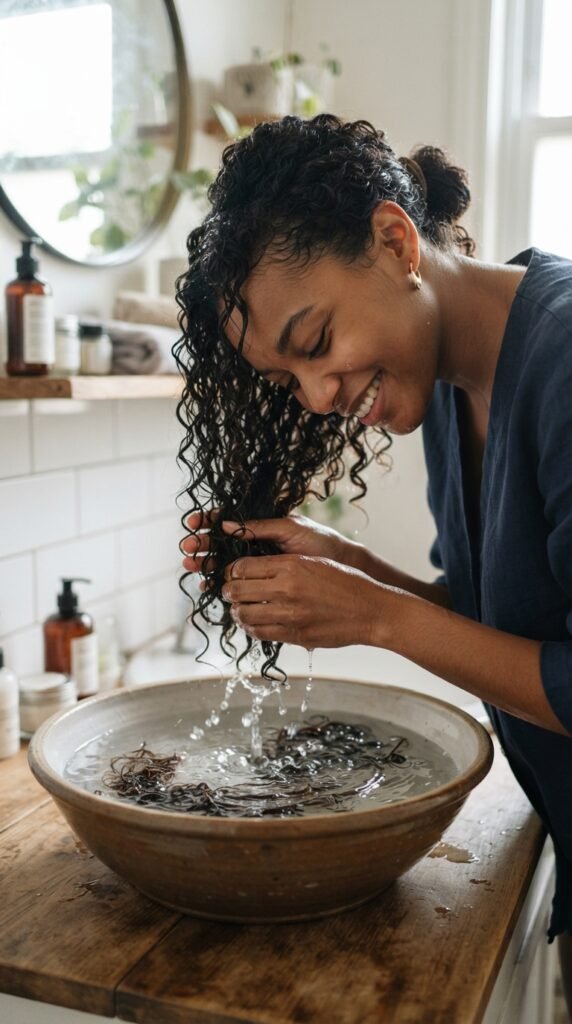
Do you want intense definition with very little effort? Try the bowl method. It sounds like a fancy salon ritual, but it is simple. You use a bowl of warm water to help your curls clump together.
- Fill a bowl with warm water.
- Apply your styling products.
- Dip your hair into the bowl and squeeze.
- Repeat until every section looks defined.
The water pushes product into your strands while the squeezing motion teaches curls to stay together. You will see definition forming before you dry. Let the hair air dry or use a diffuser. Glossy, soft, touchable curls are the result. Try it once. I think you will be hooked.
Mistakes That Quietly Destroy Your Curls
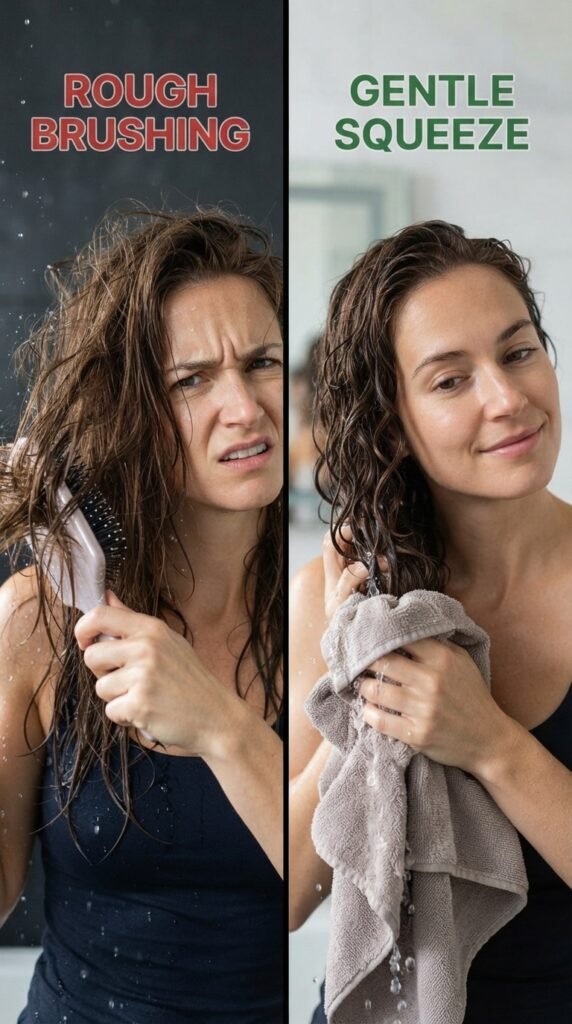
Sometimes the issues are not about what you do, but what you do without thinking. Let me list the most common detangling mistakes I see and have personally made.
- Brushing your hair while it is completely dry
- Starting from the roots instead of the ends
- Raking fingers through styled curls
- Skipping conditioner when you are in a rush
- Squeezing water out of hair like a sponge
Each of these might not feel like a big deal in the moment. Over time, it adds up. You start noticing extra frizz, stretched-out curls, and more breakage around the crown. The good news is every single one of these mistakes has an easy fix once you spot it.
How Often Should You Detangle?
There is no one answer for everyone, but some simple guidelines help. Deep detangle on wash day, about once or twice a week. Between washes, use only your fingers to separate curls and refresh. Do not run a brush through dry, styled hair unless you are starting over.
If you wear stretched styles or braids, you might need a little more attention. Pay attention to fairy knots at the ends. Those little tangles are your signal to spend some extra time on a deep condition.
At the same time, do not overdo it. Detangling too often can weaken the hair. Find a rhythm that works for your texture and your lifestyle. And always listen to your hair. It is the best guide you have.
The Overnight Trick That Saves Your Mornings

The way you sleep affects how tangled your curls feel in the morning. If you wake up to a mess every day, try a loose pineapple. Pull your curls up to the top of your head and secure them with a satin scrunchie.
Satin and silk pillowcases help too. They reduce friction while you toss and turn. Cotton pillowcases absorb your hair’s moisture and leave you with frizz.
When you wake up, spray your hair lightly with water and scrunch it upward with your hands. This refreshes your curl pattern and softens minor tangles. You will not need to do a full detangle, which means your definition stays intact. Mornings become a lot less dramatic.
Your Haircut Matters More Than You Think
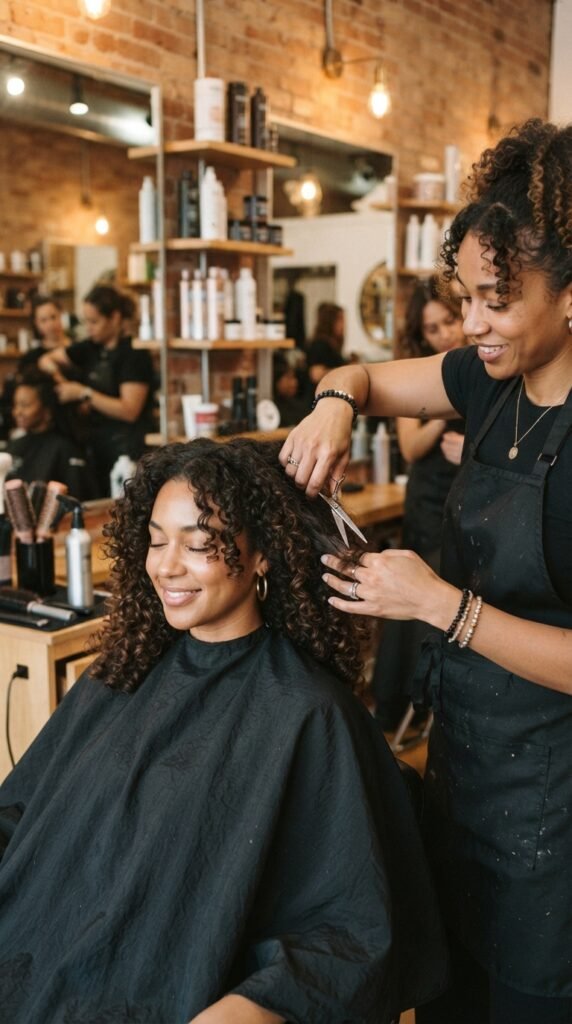
When tangles keep winning, sometimes the problem is not your routine. It is your haircut. Hair that has not been trimmed in a while develops rough, split ends. Those split ends grab onto everything and tangle themselves into knots.
Regular trims keep your ends looking full and feeling smooth. You do not need to chop all your curls off. Even taking off half an inch helps the whole head behave.
And with so many 2026 hairstyles trending, this is a fun time to change things up. A haircut that fits your curl pattern makes detangling easier every single time you wash. Ask your stylist for a shape that works with your texture. A good haircut lifts your whole confidence.
The Best Curly Cuts for Easy Detangling

Still thinking about a change? Some shapes are just easier to maintain than others. These are the curly cuts that cut down on tangles while keeping your personality.
- Curly shag with cascading layers
- Soft rounded cut with a defined shape
- Face-framing curly bob
- Long curly cut with a U-shape silhouette
- An asymmetrical lob for modern edge
Notice how most of these cuts have layers. Layers remove weight and prevent that heavy triangle shape that causes friction. Your stylist can adjust the details for your hair density. Bring inspiration pictures and let them know you want shape, movement, and fewer tangles.
Old Money Hair and the Quiet Luxury Bob

Old money hair and quiet luxury bobs are everywhere right now. And I get it. There is something so chic about polished, expensive-looking hair with zero visible effort. But these trends are usually shown on straight hair, which may make curly girls feel left out.
Here is the truth. Quiet luxury works on any texture. The trick is leaning into health and shine. Deep condition regularly, detangle with patience, and use a gloss or oil to finish. Defined, shiny curls honestly read as high-end and understated.
If you want short hair, ask for a refined curly bob. The style is less about the shape and more about the overall polish. Luxurious hair is healthy hair, and healthy hair is beautiful on every curl pattern.
Romantic Goth and Vampire Haircuts With Curls

Romantic goth hairstyles and the vampire haircut are having a massive moment online. The sharp bangs, dark dramatic colors, and that eerie romantic vibe are addictive to look at. I totally get it.
Can your curls pull it off? Absolutely, with a few adjustments. Ask for face-framing pieces that are shorter around your cheeks. This gives you that sharp vampire feel without forcing your coils into unnatural shapes.
Color also helps sell the vibe. A deep cherry cola or dark plum looks amazing with curly texture. Imagine your defined curls at a dimly lit party with that moody shine. Soft, dark, romantic, and still so easy to maintain.
Glitchy Glam and Asymmetrical Lob Energy

If you love a bold, futuristic look, glitchy glam hair is hard to ignore. It is all about movement, sharp angles, and a certain unexpected energy. On curly hair, you can totally nail that vibe with an asymmetrical lob.
The uneven lengths give you visual interest while still making detangling easier. With less bulk on the shorter side, you will notice fewer tangles around the nape. That side just feels lighter and simpler to handle.
Style it the way you already style your curls. Define, scrunch, and go. The cut does the talking. This is one of those 2026 hairstyles that works surprisingly well for curl lovers who want an edge.
The Hime Cut, but Make It Curly

The hime cut is famous for those blunt, doll-like face-framing strands. But if you have curly hair, a blunt hime cut will not sit the same way. And honestly, that is fine. The spirit of the cut can still work.
The curly version of a hime cut is all about intentional face-framing. Work with your stylist to position your shortest framing curls at the cheekbones or jawline. These shorter pieces will show off your eyes each time you move.
It is not the classic flat-ironed look, but it is even better. It reads as playful and romantic. Plus, because the front pieces are shorter, they tangle far less and take less time to style. Give it a try if you want a fresh new look.
Protect Your Definition After Detangling
You did the hard part. Now lock in all that work so it actually lasts. Begin with a leave-in conditioner while your hair is still wet. Then apply a curl cream or a lightweight gel to seal everything in.
Scrunch upward with a cotton T-shirt to remove some of the water. Avoid regular towels because the rough texture causes frizz. Then let your curls air dry or diffuse on low heat.
When your hair is fully dry, gently scrunch the roots once to break the cast. This leaves you with soft, defined curls that hold their shape for days. You just made your detangling and styling session completely worth it.
A little note before you go. At the end of the day, your curls are completely unique. They will not always behave the exact same way, and that is part of the fun. What matters is learning how to work with your hair, not against it. Once you find your rhythm, detangling stops feeling like a chore and starts feeling like a little act of self-care.
I hope this guide gave you some confidence and patience for your next wash day. Remember that definition comes from gentle hands, the right products, and knowing when to slow down. You are doing better than you think.
Save this post to Pinterest so you have these tips ready for your next wash day. And tell me below: what is the one part of detangling curly hair that trips you up the most? I read every comment and would love to know.