How to Protect Fine Hair From Winter Static and Breakage
Winter is rough on everyone’s hair, but if your hair is fine, it feels personal. One dry morning and suddenly you have static flying in every direction, tiny broken pieces around your part, and ends that snap if you look at them wrong.
I have fine hair. For years I just accepted that November through March meant frizz, flyaways, and a lot of tiny broken strands on my bathroom counter. Then I finally learned a few simple habits that changed everything.
In this post, I’m sharing exactly how I keep fine hair soft, shiny, and static-free all season. No expensive ten-step routine, no gimmicks. Just small changes that actually work, plus how to wear 2026 hairstyles like the quiet luxury bob without wrecking your strands.
Why Fine Hair Freaks Out Every Winter

Fine hair has fewer strands per square inch, and each strand is thinner. That means less natural weight to hold things down and less protection when the air turns dry.
Cold outdoor air holds almost no moisture. Then you walk into dry indoor heat, and your hair loses water fast. The result is static, rough texture, and split ends that seem to appear overnight.
- Dry air pulls moisture out of your strands
- Static makes hair lift, tangle, and cling
- Fine strands snap easier than thick ones
Good news: all of this is fixable with a few small habits.
Moisture Is the Whole Game

If you remember one thing from this post, make it this: static comes from dryness. So the entire plan is about putting moisture in and keeping it there.
That means hydrating products, gentler washing, and a little protection between washes. It does not mean piling on heavy oils that leave fine hair flat and greasy by noon.
Think of your strands like a sponge. A damp sponge bends. A dry sponge cracks. Your hair behaves the same way, which is why winter breakage sneaks up so fast.
Wash Less Often Than You Think

Every wash strips some of your natural oils. For fine hair, that oil is a gift, not a problem. Try stretching washes to every other day or every third day.
Between washes, use dry shampoo at the roots, not the ends. Spray it before bed so it absorbs oil overnight instead of sitting on top of your hair.
- Day one: wash and style
- Day two: dry shampoo at the roots
- Day three: light refresh with a water and leave-in mist
Your scalp will adjust within a week or two.
Turn Down Your Water Temperature

Hot showers feel amazing in January. They also strip moisture from your hair and scalp faster than anything else in your routine.
You do not need to suffer through cold showers. Just turn the temperature down to lukewarm when it is time to rinse your hair, and save the hot water for your shoulders.
- Wet your hair with lukewarm water
- Rinse conditioner with cool water to seal the cuticle
- Skip the steaming hot rinse entirely in winter
Cool water also adds shine, which fine hair always needs.
Condition From the Ears Down

Fine hair gets weighed down easily, so where you apply conditioner matters as much as which one you use.
Keep it off your roots. Start at your ears and work down to the ends, where hair is oldest and driest. Let it sit for two full minutes before rinsing.
If your hair is very fine, try a lightweight conditioner instead of a thick, buttery one. You want slip, not weight.
- Apply from ears to ends
- Comb through with a wide-tooth comb
- Rinse with cool water
Add a Weekly Deep Conditioner
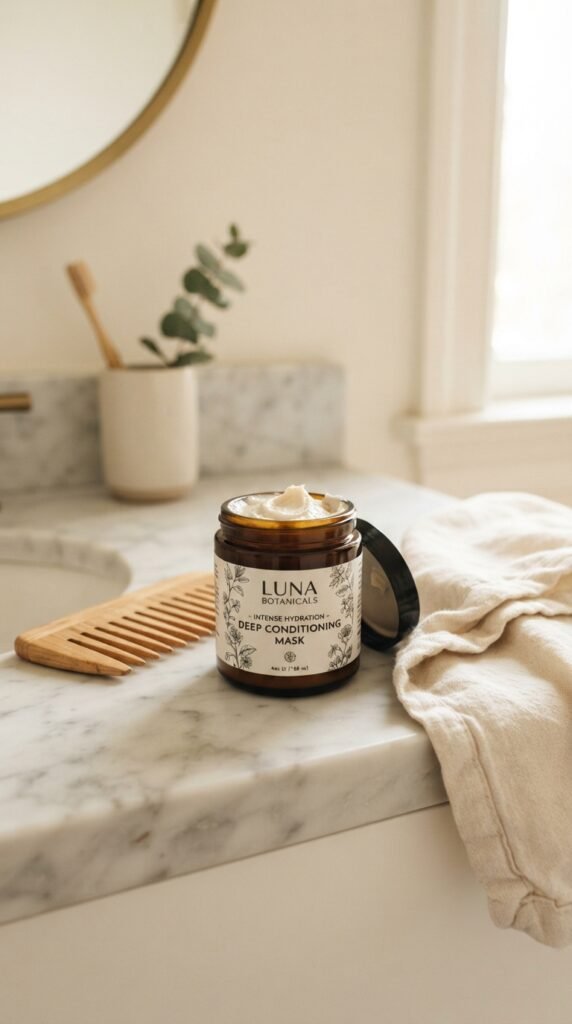
Once a week, give your hair a real drink. A deep conditioning mask repairs the rough spots that winter air creates and makes fine hair feel softer immediately.
Apply it to damp hair after shampooing, focus on your mid-lengths and ends, and leave it on for ten to twenty minutes. A warm towel over your head helps it sink in.
One warning: do not overdo it. Once a week is plenty. More than that can leave fine hair limp and stringy.
- Sunday is my deep condition day
- Ten minutes minimum, twenty is better
- Rinse thoroughly
Leave-In Conditioner Is Non-Negotiable

This is the single most important product for winter fine hair. A lightweight leave-in conditioner adds moisture and creates a barrier that keeps static from forming.
Apply it to damp hair right after your shower, before you brush or heat style. Two or three sprays is usually enough for fine hair, so start small.
Look for formulas with glycerin, panthenol, or aloe. Those pull moisture into the strand instead of just coating it.
- Always on damp hair, never dry
- Start with less, add more if needed
- Focus on the ends
How to Dry Fine Hair Without Snapping It

Wet hair stretches and breaks more easily than dry hair. So the way you dry it matters more than almost anything else.
Never rub your hair with a rough towel. That friction is what causes those little broken pieces around your hairline. Instead, squeeze the water out gently with a microfiber towel or a soft cotton t-shirt.
- Blot, do not rub
- Detangle with a wide-tooth comb while damp
- Air dry as much as possible before heat
If you blow dry, keep the dryer moving and use medium heat.
Always Use Heat Protectant

Fine hair damages faster than thick hair because each strand is thinner. One hot tool session without protection can cause weeks of breakage.
Spray heat protectant on damp hair before blow drying, and again lightly before using a flat iron or curling wand. Yes, twice. It makes a difference.
Keep your tools under 350 degrees. Fine hair simply does not need more heat than that, and lower temperatures mean better long-term results.
- Protectant before blow drying
- Light mist again before styling
- Never style hair that is still dripping wet
Static-Proof Your Brushes and Combs
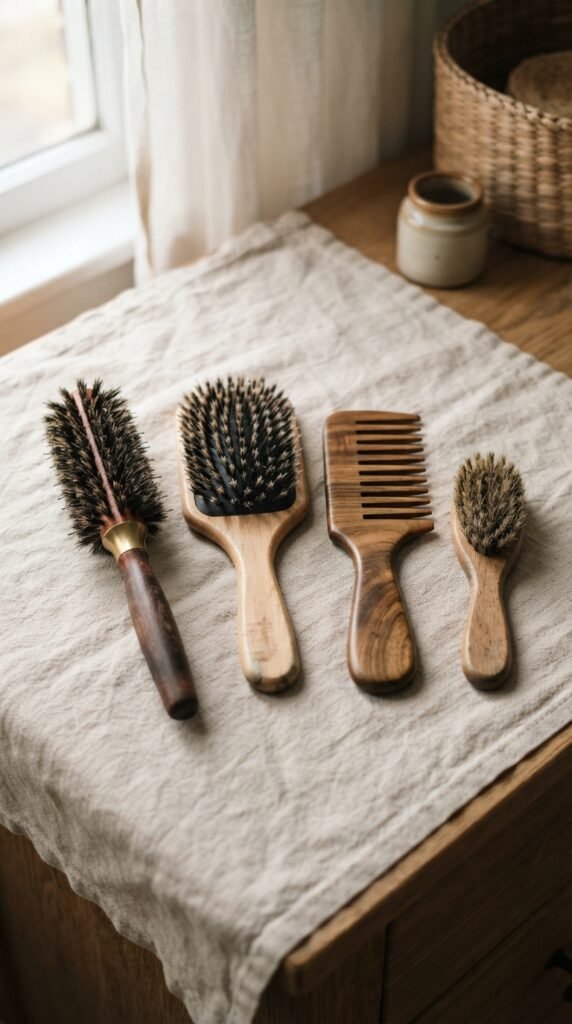
The wrong brush creates static and tears through fine hair. The right one smooths it down and distributes natural oils.
Swap plastic bristles for boar bristle or a wooden comb. Natural materials do not build up the same electrical charge that plastic does.
Also, clean your brushes every couple of weeks. Product buildup on bristles transfers straight back onto your hair and makes everything worse.
- Boar bristle brush for smoothing
- Wide-tooth comb for detangling
- Wooden comb for everyday use
Beanie Season Without the Breakage

Hats are the number one cause of winter breakage, mostly because of what they are made of. Wool and acrylic rub against hair and create friction every time you move.
Line your hats with silk or satin, or look for cashmere and soft cotton blends. It sounds small, but it makes a huge difference by February.
Also, do not pull your hat on and off all day. Constant friction is what causes damage at the hairline.
- Choose silk-lined hats
- Avoid rough wool directly on hair
- Loosen your hair before putting a hat on
Silk Pillowcases Changed My Nights

Cotton pillowcases grab your hair and pull while you sleep. If you have fine hair, you wake up with tangles and broken strands every single morning.
Silk and satin let your hair slide instead of catching. Within a week you will notice fewer knots, less frizz, and hair that actually holds its shape.
Pair it with a silk scrunchie and a loose braid for the best protection. This one change helps keep any hairstyle looking fresh on day two or three.
- Silk pillowcase
- Silk scrunchie, never a tight elastic
- Loose braid or a soft top knot
The Dryer Sheet Trick and What Actually Works
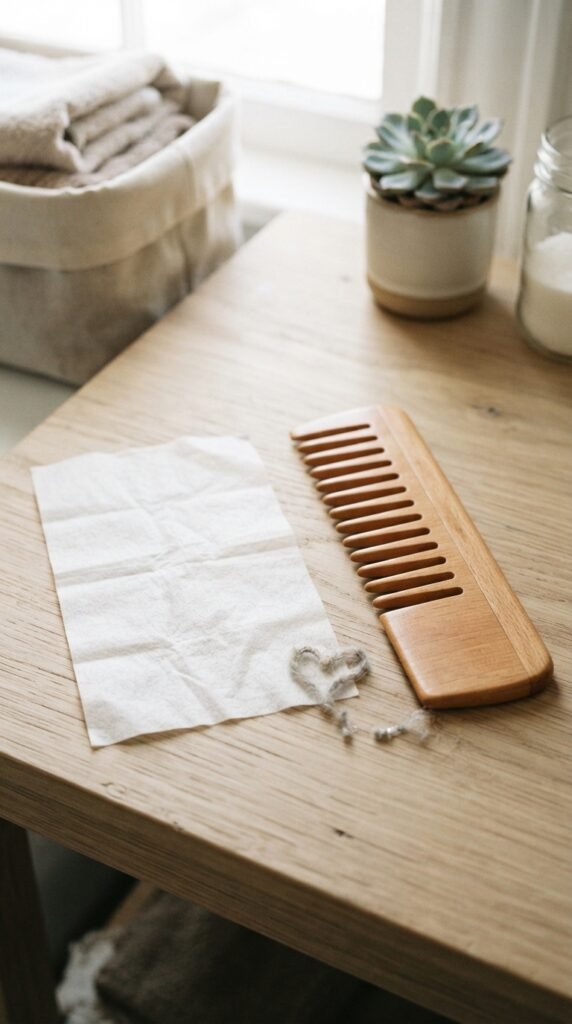
Yes, you can gently glide a dryer sheet over your hair to kill static in a pinch. It works because it neutralizes the charge. Just do not make it a daily habit.
For a real fix, carry a small leave-in spray or a tiny bit of lightweight oil in your bag. A drop rubbed between your palms and smoothed over the surface beats any quick trick.
One more option: a dryer sheet in your hat. Sounds odd, works surprisingly well.
- Dryer sheet for emergencies only
- Leave-in spray for a real fix
- One drop of oil for shine and calm
Add Moisture Back Into the Air

You cannot fix dry hair in a dry room. If your indoor heat is running all day, a humidifier is one of the smartest buys for winter.
Run it in your bedroom while you sleep. You will wake up with softer hair, better skin, and a less scratchy throat. It is a whole-house win.
Just keep it clean. A dirty humidifier can spread bacteria, so rinse it every couple of days.
- Humidifier in the bedroom overnight
- Target 40 to 50 percent humidity
- Clean it twice a week
Pick Lightweight Oils, Skip the Heavy Stuff
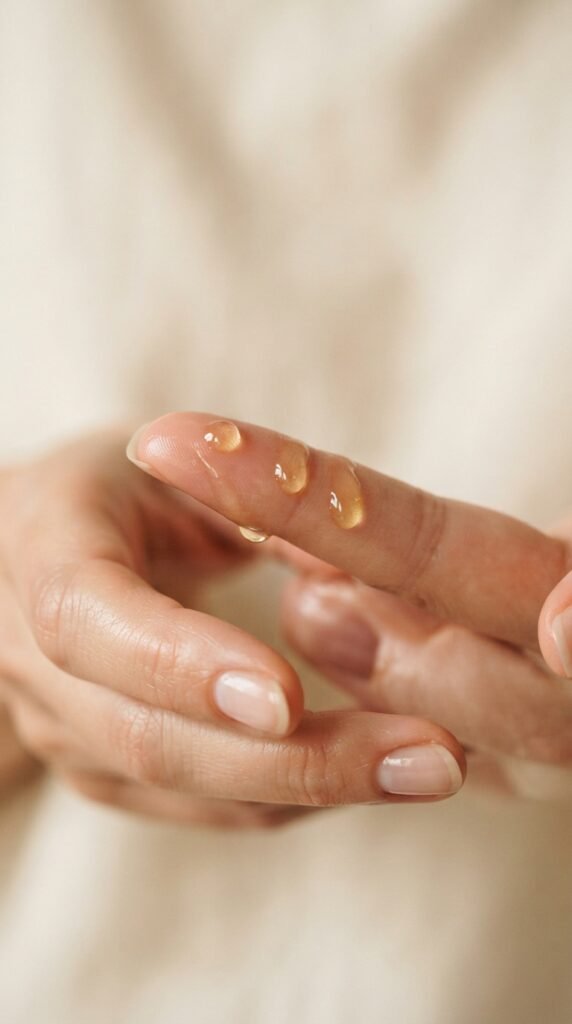
Heavy oils like coconut and castor make fine hair look greasy and flat. Your hair needs moisture, not a coating.
Reach for lightweight options instead: squalane, argan, jojoba, or a dry oil serum. Use two drops maximum, warmed between your palms, on the ends only.
The trick with fine hair is restraint. A little oil on the ends adds shine and stops static. Too much turns your whole look into a stringy mess.
- Squalane or argan oil
- Two drops, ends only
- Never on the scalp
Loosen Your Updos

Tight ponytails and slicked-back buns look sharp, but they put constant tension on fine hair. That tension causes breakage right where you can see it most.
Switch to looser styles. A low, soft bun or a claw clip gives you an elegant look without pulling. This is the heart of old money hair anyway: polished, effortless, and never tight.
If you do need a sleek style for an event, keep it loose at the scalp and save the tension for special occasions only.
- Claw clips over tight elastics
- Loose low buns
- Save tight styles for special days
Trims Are Not Optional in Winter

Split ends do not heal. They travel up the strand and make fine hair look thinner than it actually is.
Get a trim every eight to ten weeks through winter. You only need a quarter inch, but it makes a real difference in how thick and healthy your hair looks.
Bonus: regular trims keep a quiet luxury bob or asymmetrical lob looking sharp instead of stringy. Blunt ends on fine hair read as fuller and more expensive.
- Trim every 8 to 10 weeks
- A quarter inch is enough
- Blunt cuts make fine hair look thicker
Feed Your Hair From the Inside

Hair is one of the last things your body prioritizes when nutrients are low. If you are stressed, sleeping badly, and skipping protein, your hair will show it first.
Focus on protein, iron, and healthy fats. Eggs, salmon, nuts, and leafy greens do more for your hair than most expensive serums.
Also, drink water. Winter makes us forget, but dehydration shows up in your hair fast.
- Protein at every meal
- Iron and vitamin D
- Water all day, not just in summer
Stop Over-Washing and Over-Styling

More products do not equal better hair. With fine hair, the opposite is usually true.
Each layer of product adds weight, and each hot tool session adds damage. Give your hair rest days where you simply let it breathe.
When you do style, use one or two products max: a heat protectant and a light-hold mist. That is genuinely enough for most looks.
- Two products maximum
- One or two heat-free days per week
- Refresh with water and leave-in, not more spray
Winter-Proof Old Money Hair and the Quiet Luxury Bob

The quiet luxury bob is one of the biggest 2026 hairstyles, and it is actually perfect for fine hair. Blunt lines make strands look denser and shinier.
The catch is maintenance. Blunt ends lose their shape fast when winter dryness frays them. Regular trims plus a weekly mask keep that sharp line intact.
For old money hair, keep the finish soft and natural. Skip heavy pomades. A drop of lightweight oil on the ends gives that polished, expensive look without any stiffness.
- Blunt cut, no layers
- Weekly mask to protect the line
- One drop of oil for shine
Romantic Goth and Glitchy Glam Without the Frizz

Romantic goth hairstyles usually mean soft waves, face-framing strands, and a slightly undone finish. That texture is gorgeous, but it also loves to turn static in winter.
The fix is prep. Apply leave-in conditioner and heat protectant before styling, and set your ends with a cool shot of air to seal the cuticle.
For glitchy glam hair, the slept-in texture and flyaway look is basically built in, which works in your favor. Just keep the ends oiled so it reads intentional instead of dry.
- Prep with leave-in before curling
- Cool shot to seal each section
- Ends always get a drop of oil
Care for a Hime Cut, Vampire Haircut, or Asymmetrical Lob

These are some of the most searched cuts for 2026, and all three can work beautifully on fine hair. The key is keeping the lines clean and the strands strong.
The hime cut needs blunt side pieces, so any breakage shows immediately. The vampire haircut relies on soft layers, which need moisture to look smooth, not scraggly. The asymmetrical lob needs a crisp edge on both sides.
For all three: trims every eight weeks, a weekly deep conditioner, and minimal heat. Skip the heavy styling cream.
- Hime cut: protect blunt edges
- Vampire haircut: hydrate the layers
- Asymmetrical lob: keep both sides sharp
Build a Tiny Winter Hair Kit
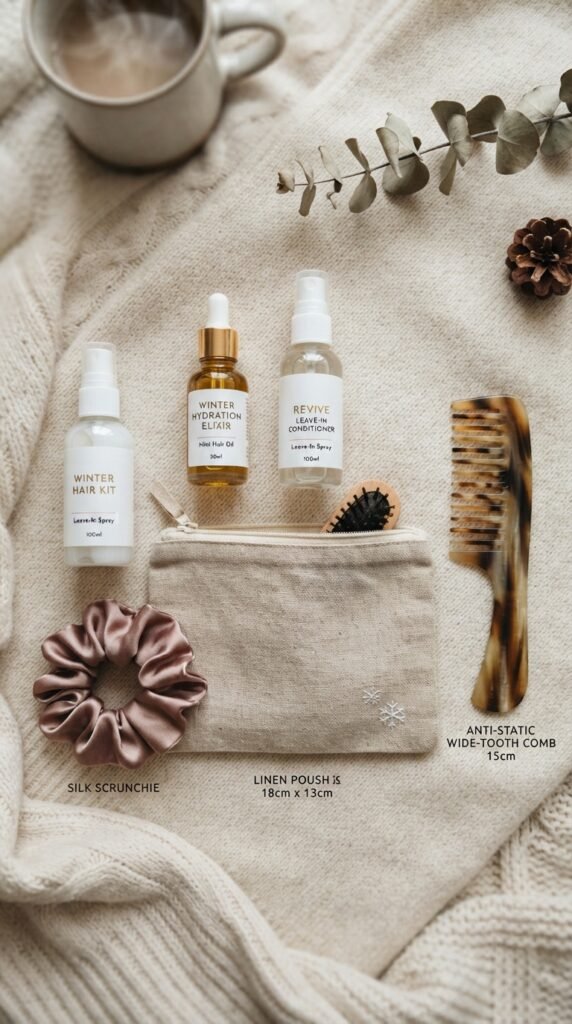
Keep a small kit in your bag and you will never fight static in a public bathroom again.
Here is exactly what is in mine:
- Travel-size leave-in spray
- Mini lightweight oil
- Silk scrunchie
- Small wide-tooth comb
- One spare dryer sheet
Everything fits in a pouch the size of your hand. It takes thirty seconds to use and saves you from a whole day of flyaways.
What to Do When Static Strikes Midday

Static always shows up at the worst time, usually five minutes before a meeting or dinner. Here is your quick fix list.
- Dampen your palms with a tiny bit of water
- Smooth from mid-length to ends, never the roots
- Follow with one drop of lightweight oil
- Fix your part with a wooden comb, not your fingers
If you have nothing on hand, a lightly dampened paper towel works surprisingly well. Just do not over-wet fine hair or it will fall flat.
When to Call a Pro
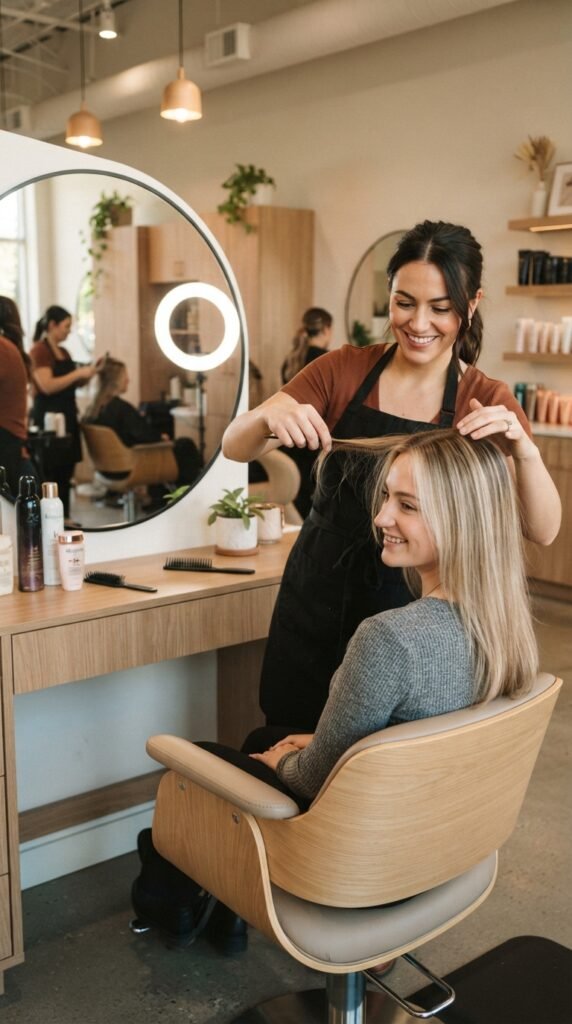
At-home care handles most winter static and breakage. But some things need a professional.
Book an appointment if you notice sudden thinning, a lot of breakage near the scalp, patchy dryness, or scalp irritation that does not go away. Those are signs worth checking out.
A stylist can also reshape your cut and recommend products matched to your exact hair density. Sometimes one good consultation saves months of guessing.
- Sudden thinning or patches
- Breakage close to the scalp
- Persistent scalp irritation
The Cozy Wrap-Up
Winter does not have to mean a season of flyaways and split ends. Fine hair is delicate, but it is also incredibly responsive. Treat it gently and it will show you the difference in about two weeks.
Start with the easy wins: a leave-in conditioner, a silk pillowcase, cooler showers, and looser hairstyles. Then layer in the rest as it fits your routine.
Your hair does not need ten products. It needs moisture, patience, and a little protection from the cold. That is the whole secret.
Save this post to Pinterest so you can come back to it the next time static shows up. And tell me in the comments: what is the one winter hair struggle you want to fix first? I read every single one and I will answer with what has worked for me.