AITAH for Refusing to Help My Friend Move Because I Have My Own Priorities?
Friendships often come with unspoken expectations—like helping each other out during big life events. But what if helping means sacrificing your own time, energy, or plans? Recently, a Reddit user posted on r/AITAH asking if they were the bad person for refusing to help their friend move houses because they felt overwhelmed with their own priorities.
This sparked a lot of debate about when it’s okay to say no, how to balance friendship with self-care, and whether turning down help requests makes you selfish. In this blog, we’ll explore the nuances of this scenario, how to manage boundaries, and why sometimes refusing is the healthiest choice.
The Situation: When Friendship Clashes with Personal Boundaries
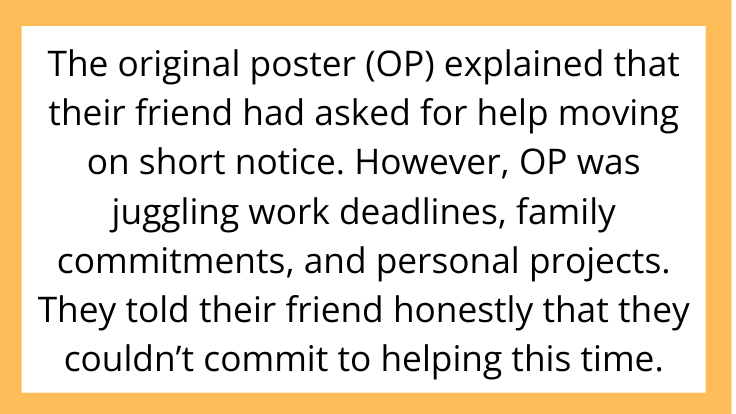
The original poster (OP) explained that their friend had asked for help moving on short notice. However, OP was juggling work deadlines, family commitments, and personal projects. They told their friend honestly that they couldn’t commit to helping this time.
The friend reacted negatively, accusing OP of being selfish and not supportive. Others in their social circle also took sides, leaving OP wondering: Are they really the bad person here?
In the r/AITAH discussion, most people sided with OP, emphasizing that true friends respect boundaries and understand that everyone can’t be available all the time. Others felt that friends should try harder to support each other during tough moments.
Ultimately, healthy friendships thrive on mutual respect and honest communication—not on obligations or guilt trips.
Final Thoughts: Balancing Friendship and Self-Care
Refusing to help a friend move doesn’t make you a bad person. It means you’re aware of your limits and choose to care for yourself responsibly. Setting boundaries like this actually strengthens relationships by building trust and respect.
If you’re struggling with similar situations, remember: