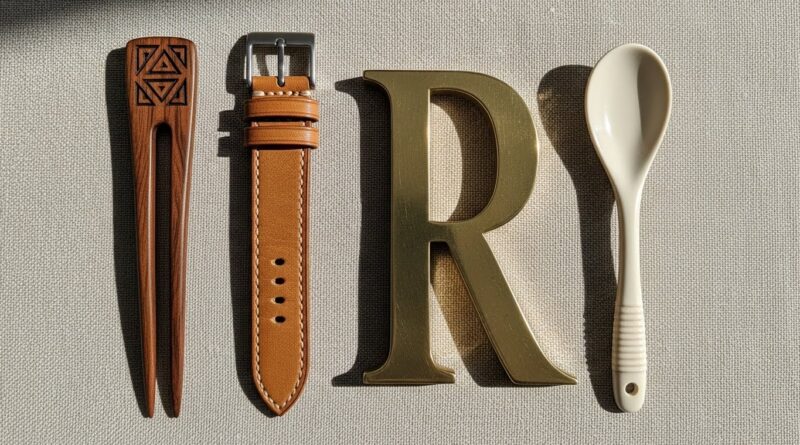
Carved Ends: Precision-Textured Tips
In a world saturated with mass-produced smoothness, there exists a quiet rebellion in the details. It’s found not in the broad strokes, but at the very terminus—the carved ends, the precision-textured tips. This is where an object stops being merely functional and starts communicating. It speaks of intention, of a hand (or a machine guided by a thoughtful mind) that cared enough to consider the conclusion. Whether it’s the tapered finial of a wooden chair leg, the meticulously textured tip of a leather belt, the serif of a carefully drawn letterform, or the bevelled edge of a smartphone, this final detail is a signature. It’s the period at the end of a beautifully crafted sentence.
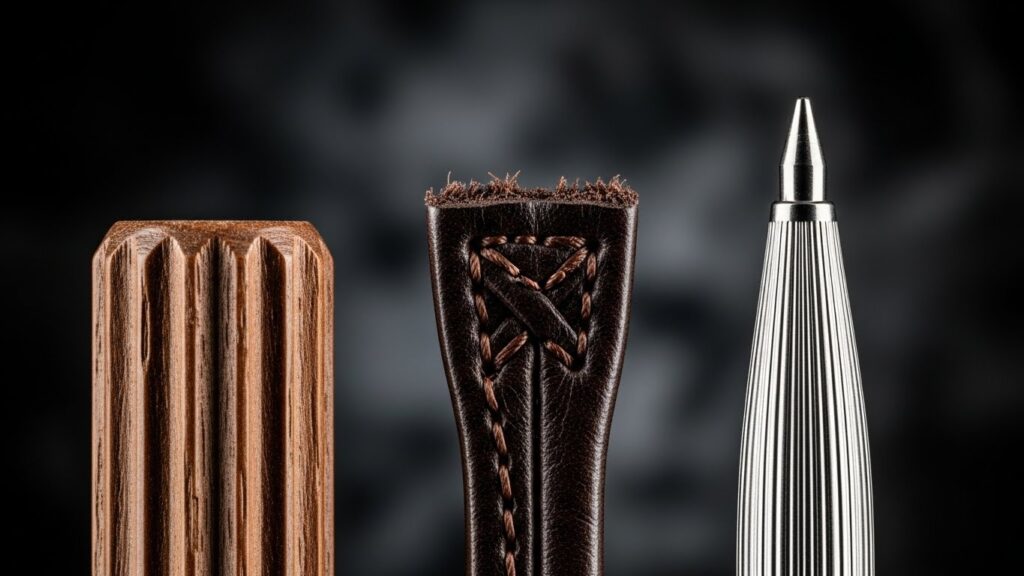
Beyond the Edge: The Philosophy of the Finished Tip
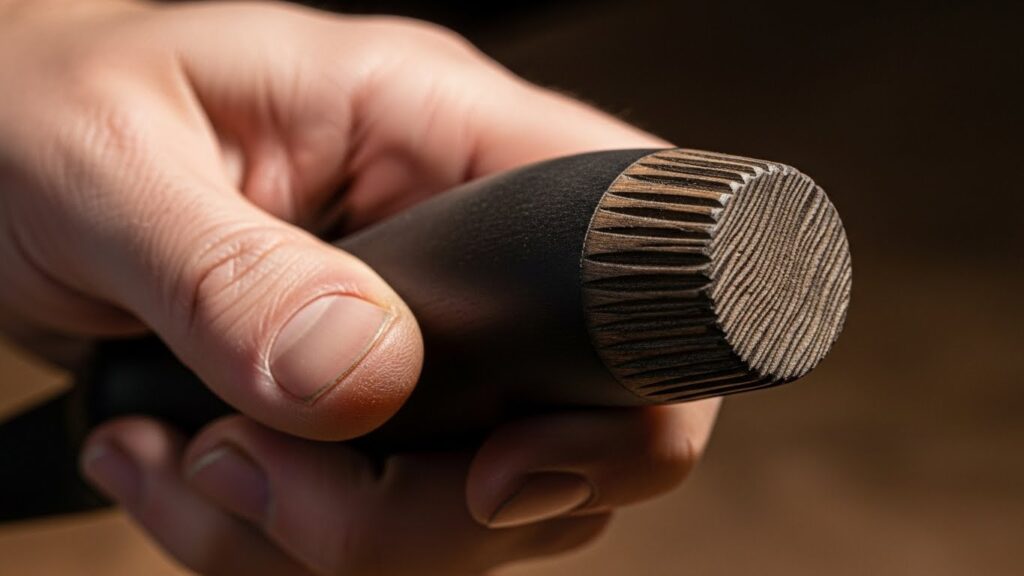
Why dedicate time and resources to an area so small? The answer lies in holistic design philosophy. A precision-textured tip is rarely an afterthought; it is an integral part of the object’s narrative. In traditional craftsmanship, a carved end on a tool handle wasn’t just decorative—it prevented splintering, provided a tactile marker for grip, and signified the maker’s pride. In contemporary design, it serves similar purposes: it resolves a form, enhances usability, and creates a memorable aesthetic hook.
This attention to the terminus signals respect for the user’s experience. It says the designer considered the entire journey of interaction, right down to the moment the user’s fingers leave the object. It’s a detail often discovered rather than immediately noticed, building a deeper bond between the person and the product. This subtle surprise is a hallmark of luxury and thoughtful design, setting apart the exceptional from the merely adequate.
A Material World: Carved Ends Across Different Mediums
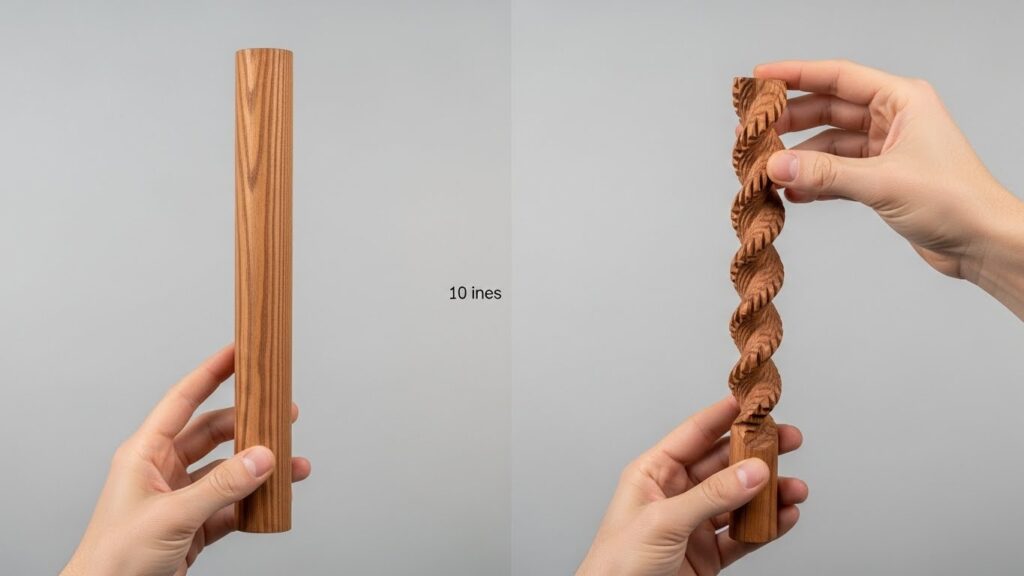
The manifestation of carved ends is beautifully diverse, adapting to the soul of the material itself. The technique and outcome vary wildly, yet the core principle of intentional termination remains constant.
In Woodworking: This is the classic realm of the carved end. From fluted table legs and chamfered beam ends to the knurled tips of custom pens, wood carving allows for both structural and ornamental finishes. A textured tip on a mallet handle prevents slippage, while a delicately carved finial on a staircase newel post captures light and shadow, turning structural necessity into art.
In Fashion & Leatherwork: Examine a high-quality belt, bag strap, or leather lace. The end is rarely a raw cut. It might be precision-burned, folded, stitched, or embossed with a pattern. This prevents fraying, adds durability, and provides a sleek, finished look. In jewelry, the ends of metal wires are meticulously textured—hammered, balled, or engraved—to secure clasps and add microscopic points of visual interest.
In Typography & Graphic Design: Look closely at the serifs and terminals of a well-crafted typeface. These are the carved ends of letterforms. A slab serif provides a solid, grounded finish; a bracketed serif offers a graceful transition; a tapered tip on a letter ‘c’ or ‘e’ gives it elegance. These precise textures guide the eye and define the typeface’s character, from robust to delicate.
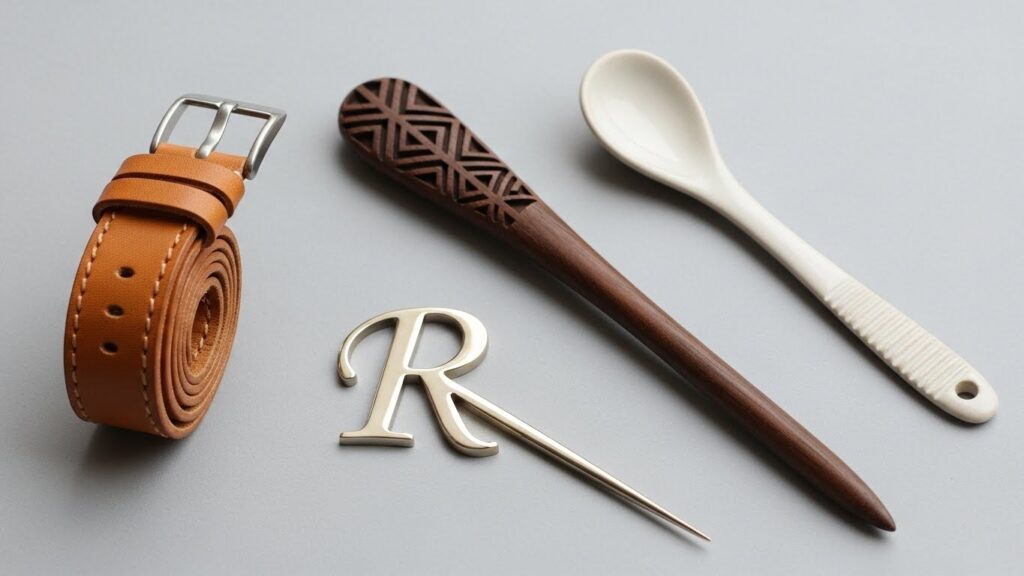
The Function of Form: Why Texture at the Tip Matters
The benefits of focusing on the tip extend far beyond aesthetics. This is where design meets ergonomics and practical utility in a powerful synergy.
Enhanced Grip & Usability: A textured or flared end acts as a tactile stop. Think of a chef’s knife where the handle ends with a textured bolster, preventing the hand from sliding onto the blade. Or a hiking pole with a grooved tip for the thumb. The texture provides friction and sensory feedback, improving control and safety.
Durability & Protection: In many materials, the end grain or edge is the most vulnerable point. A carved, folded, or sealed end protects the material’s integrity. Leather tips on shoelaces (aglets) are the perfect everyday example—they prevent unraveling and ease threading.
Visual Weight & Direction: A designer can use a textured tip to balance a composition or guide the viewer’s gaze. A heavy, carved end on a curtain rod anchors the design, while a finely tapered tip on a metal railing leads the eye upward. It’s a tool for controlling perception and flow.
The “Discovery” Factor: As mentioned, this detail often creates a moment of delight upon closer inspection. It’s a secret between the maker and the user, an unspoken quality that fosters brand loyalty and perceived value. It transforms an object from a commodity into a keepsake.
Crafting Precision: Techniques for Creating Textured Tips
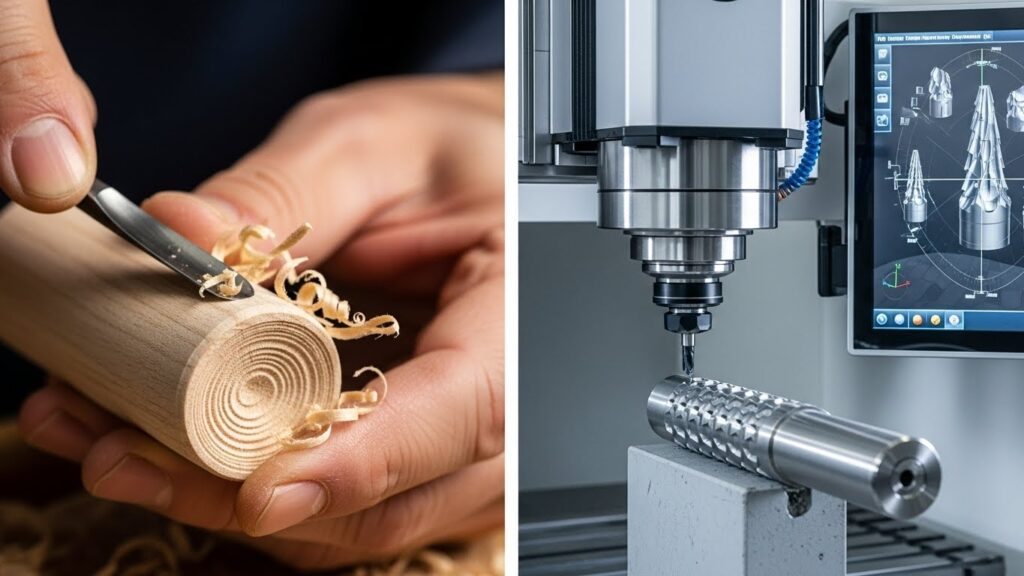
Creating these details requires a blend of traditional skill and modern technology. The method is chosen based on scale, material, and desired effect.
Hand Carving & Chiseling: The most artisanal approach. Using gouges, knives, and files, a craftsperson sculpts the end grain of wood, soft stone, or even certain metals. This allows for organic, unique textures and deep, tactile grooves that machines can’t easily replicate.
Machined Precision: CNC routers, lathes, and laser cutters bring incredible accuracy and repeatability. They can produce complex geometric patterns—helical flutes, perfect knurling, intricate perforations—with micron-level precision. This is ideal for industrial design and products requiring absolute consistency.
Molding & Casting: For mass-produced items, the textured tip is often designed into the mold. Plastic, ceramic, and metal components are cast or injected with the detail built-in. The design challenge shifts to creating a master mold that captures the texture perfectly.
Thermal & Chemical Finishing: Techniques like heat-sealing (for synthetics), tipping (for ropes), and electro-polishing (for metals) can create a refined, fused, or smoothed end that is durable and distinct from the main body of the object.
Digital Dimensions: Textured Tips in UI/UX and Virtual Design
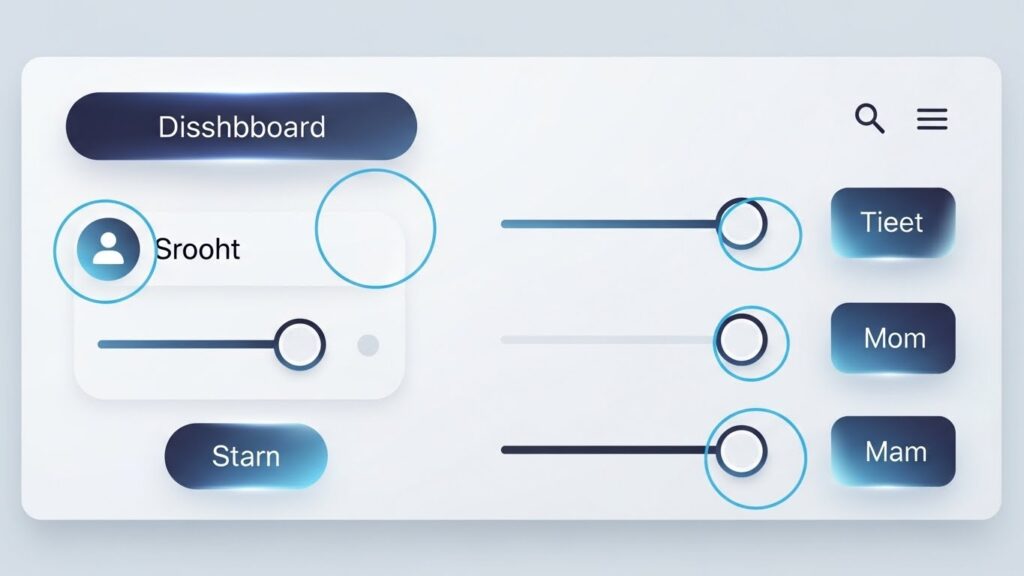
The concept of carved ends transcends the physical. In user interface (UI) and experience (UX) design, the “tip” or end point of a visual element is crucial. Buttons, sliders, and progress bars often feature subtle gradients, rounded corners (which are the digital equivalent of a chamfer), or micro-shadows that give them a tactile, “pressable” quality. This visual texture at the edges guides interaction, indicating where a user can click or swipe.
In 3D modeling and game design, texture mapping doesn’t stop at the edge of a polygon. How a virtual sword tip gleams, how the end of a magical staff glows, or how the corner of a futuristic console is bevelled—these are all precision-textured tips in a digital landscape. They define the object’s realism or stylistic intent, affecting how users perceive and interact with virtual environments.
Implementing the Detail: A Guide for Makers and Designers
Inspired to incorporate carved ends into your own work? Here’s a practical approach:
1. Start with Purpose: Ask why. Is it for grip, protection, visual balance, or pure decoration? The function will dictate the form.
2. Respect the Material: The texture should feel like a natural extension of the material. A delicate carved pattern on brittle wood may snap; a heavy texture on a slim metal rod might feel awkward.
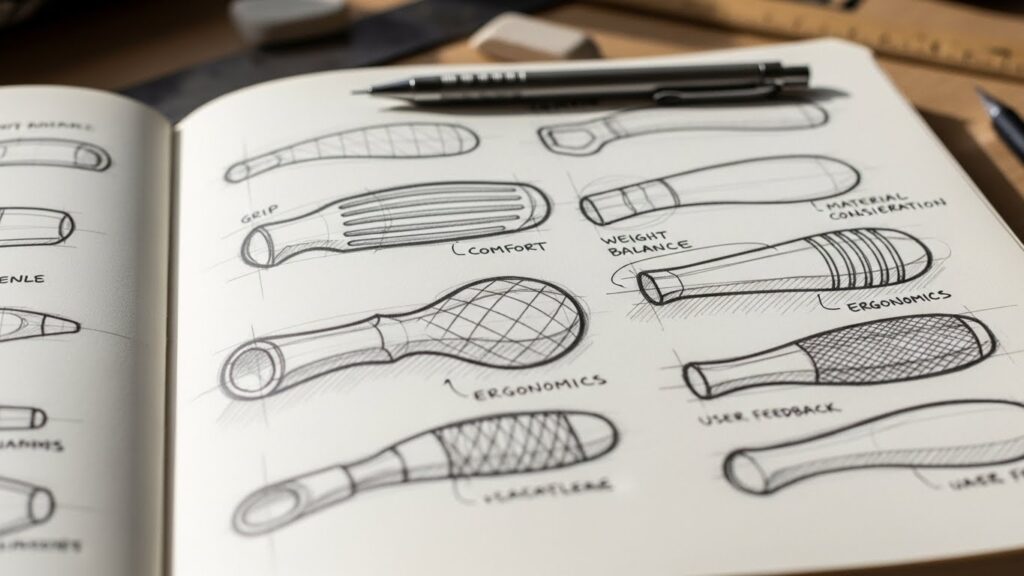
3. Prototype Relentlessly: Test the feel. A texture that looks good in a drawing might be uncomfortable in the hand. Create samples to evaluate ergonomics and aesthetic impact.
4. Mind the Scale: The texture should be proportionate to the object. Fine knurling gets lost on a large post, while a deep gouge overwhelms a delicate pin.
5. Finish Thoughtfully: The treatment of the texture itself matters. A sanded, oiled carved wood tip feels warm; a polished, machined metal tip feels cool and precise. The finish is the final layer of communication.
The Last Word: An Unforgettable Finale
In the symphony of design, carved ends and precision-textured tips are the final, resonant note that hangs in the air. They are a testament to the belief that true quality is comprehensive, leaving no point, no edge, no moment of interaction unconsidered. This philosophy bridges ancient woodshops and modern tech labs, connecting the carver’s chisel with the digital designer’s stylus.
So, the next time you pick up a tool, fasten a strap, or even swipe across your screen, pause for a second. Look at the end. Feel it. That small, intentional detail is a quiet manifesto—a declaration that someone cared deeply about the whole story, right down to its perfect, textured conclusion.