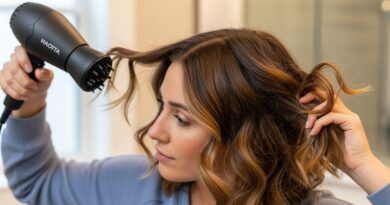
Keratin Treatment at Home: Is It Worth the Risk?
The siren song of silky, frizz-free hair for months on end is a powerful one. For those battling unruly curls or humidity-induced puff, professional keratin treatments have long been the gold standard. But with the rise of at-home keratin kits promising similar results for a fraction of the price, it’s tempting to bypass the salon and take matters into your own hands. The question is, should you?
Before you click “add to cart” on that enticing box, it’s crucial to look beyond the marketing and understand what you’re really signing up for. A DIY keratin treatment isn’t like applying a deep conditioner; it’s a complex chemical process with significant potential for error. This guide will walk you through everything you need to know, from the promised bliss to the potential hair horror stories, so you can make an informed decision.

What Exactly is a Keratin Treatment?
Let’s start with the basics. Your hair is primarily made of a protein called keratin. Over time, due to heat styling, coloring, and environmental factors, the keratin in your hair can become depleted, leading to frizz, breakage, and a lackluster appearance.
A keratin treatment is a semi-permanent hair smoothing service that infuses the hair shaft with liquid keratin and other conditioning agents. The process typically involves applying a cream to the hair, blow-drying it straight, and then using a flat iron at a very high temperature to seal the product in. The result? A protective protein layer that smooths the cuticle, banishes frizz, and makes hair more manageable. The effects can last anywhere from six weeks to six months, depending on the formula and your hair type.
While professional treatments are performed by trained stylists who can assess your hair’s health and adjust the formula accordingly, at-home kits provide a one-size-fits-all solution. This is where the first red flag appears.

The Allure: Why You’re Tempted by the DIY Route
It’s easy to see why at-home keratin kits are so appealing. The primary draw is, without a doubt, cost savings. A professional treatment can set you back hundreds of dollars, while a home kit can be purchased for anywhere from $30 to $100. For many, this price difference is the deciding factor.
Then there’s the convenience. The idea of doing a treatment on your own schedule, in the comfort of your bathroom, without having to make small talk with a stylist, is a major plus. You have control over the process from start to finish, and in a post-pandemic world, the appeal of DIY beauty has only grown stronger.
Finally, there’s the powerful lure of promised results. The before-and-after photos on the box are compelling, showing a transformation from a frizzy mess to a glossy, straight mane. It sells a dream that feels attainable with a single afternoon of effort.

The Hidden Dangers: What the Box Doesn’t Tell You
This is the most critical section. The risks associated with at-home keratin treatments are real and can have long-lasting consequences for your hair’s health.
The Formaldehyde Fiasco
Many keratin treatments, both professional and at-home, have historically relied on formaldehyde or chemicals that release formaldehyde gas when heated. Formaldehyde is a known carcinogen and can cause severe respiratory irritation, burning eyes, and allergic reactions. While many “formaldehyde-free” formulas now exist, they often use other aldehydes (like glyoxylic acid) that can have similar irritating effects. In a poorly ventilated bathroom, the concentration of these fumes can be dangerously high.
The High-Heat Hazard
The success of a keratin treatment hinges on sealing the product into the hair with a flat iron at extremely high temperatures—often upwards of 450°F (230°C). Using this level of heat on your hair, especially if you are inexperienced, can easily lead to severe heat damage. This manifests as dry, brittle, straw-like hair that snaps off, loses its elasticity, and becomes impossible to style. Once your hair is heat-damaged, the only solution is to cut it off.
The Application Minefield
Applying the treatment evenly is much harder than it looks. Miss a spot? You’ll have a patchy, uneven texture. Apply too much? Your hair can become overly processed, gummy, or heavy. The timing is also crucial; leaving the product on for too long can over-process your hair, while not leaving it on long enough will render it ineffective. Without a professional’s eye, you’re essentially flying blind.
Unpredictable Results on Different Hair Types
Your hair’s porosity, texture, and history (color-treated, bleached, etc.) dramatically affect how it will react to the treatment. A kit is not designed for this level of customization. What works for someone with wavy hair might completely fry someone with coarse, curly hair or do nothing for someone with resistant, virgin hair.

Salon vs. DIY: A Side-by-Side Comparison
To make the choice clearer, let’s break down the key differences.
Expertise: A licensed stylist is trained to analyze your hair’s condition and choose the right formula and application technique. At home, you are the expert, relying on a generic instruction sheet.
Safety & Ventilation: Salons are required to have proper ventilation systems to handle chemical fumes. Your bathroom likely does not. A stylist also uses professional tools and knows how to handle high heat safely.
Consistency & Results: A professional ensures even sectioning and application for a uniform result. DIY applications are notoriously uneven, often leading to some sections being bone-straight while others remain curly or frizzy.
Post-Treatment Care: A good stylist will give you detailed aftercare instructions, including sulfate-free and sodium chloride-free shampoos that are essential for making the treatment last. This crucial step is often overlooked in DIY attempts.

If You Decide to Proceed: A Risk-Mitigation Checklist
If, after weighing the risks, you still want to try an at-home treatment, you must take every possible precaution.
1. Do Your Ingredient Homework: Research the kit thoroughly. Look for truly formaldehyde-free formulas and read reviews from people with a similar hair type to yours.
2. Conduct a Strand Test: This is non-negotiable. Apply the treatment to a small, inconspicuous section of hair first. Process it and flat-iron it as directed. Wait a day or two to see how your hair reacts before committing your entire head.
3. Create a Safe Environment: Open all windows and turn on an exhaust fan. Consider doing it in a larger, well-ventilated room instead of a small bathroom. Keep pets and children away from the area.
4. Use the Right Tools: Wear gloves and protective clothing. Use a high-quality, professional-grade flat iron that can maintain a consistent temperature. A cheap iron can create hot spots that cause severe damage.
5. Follow Instructions to the Letter: Do not leave the product on for longer than recommended. Do not use a higher heat setting than advised. Set a timer for every step.
6. Invest in Aftercare: Purchase the correct sulfate-free and salt-free shampoo and conditioner beforehand. Your investment will be wasted if you use the wrong products and strip the treatment out immediately.

Safer At-Home Alternatives for Frizz Control
If the risks of a full keratin treatment feel too high, but you still crave smoother hair, there are excellent and safer alternatives you can try at home.
Keratin-Infused Hair Masks & Conditioners: These products contain hydrolyzed keratin that can temporarily fill in gaps in the hair shaft, smooth the cuticle, and reduce frizz without any chemical processing. They won’t last for months, but they provide a fantastic boost of smoothness and shine with regular use.
Brazilian Blowout Acai Anti-Frizz Products: While the professional Brazilian Blowout is a specific treatment, their at-home maintenance line is superb. The acai deep conditioning masque and smoothing serums can help control frizz and prolong the life of any natural smoothness.
At-Home Bond Builders: Products like Olaplex No.3 or K18 Leave-In Molecular Repair Mask are designed to repair the disulfide bonds in your hair—the same bonds that are altered in a keratin treatment, but for repair rather than restructuring. They can significantly improve hair health, strength, and manageability, which in turn reduces frizz.
Professional-Grade Blow-Dry Creams and Serums: A good blow-dry cream, used with a round brush and a high-quality dryer, can give you days of smooth, frizz-free hair. It’s a temporary solution, but it’s completely non-damaging when used with heat protectant.

The Final Verdict: Is It Worth the Risk?
So, is an at-home keratin treatment worth the risk? For the vast majority of people, the answer is a resounding no.
The potential for irreversible damage, coupled with the health risks from fumes and the high likelihood of unsatisfactory, patchy results, makes it a gamble with very poor odds. The money you save upfront could easily be spent later on corrective treatments or haircuts to fix the damage.
If you are determined to get the transformative results of a professional keratin treatment, saving up and having it done by a trusted, experienced stylist is the only truly safe and reliable path. They have the expertise, the controlled environment, and the professional-grade products to give you the beautiful, frizz-free hair you desire without sacrificing its health.
Your hair is your crown. While the DIY route is tempting, entrusting it to a professional, or opting for safer, nourishing alternatives, is an investment that will pay off in the long run with hair that is not just smooth, but also strong and healthy.