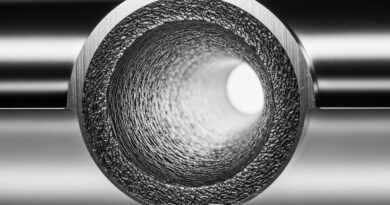
Micro Edge Texture: Subtle Perimeter Variation
In a world saturated with bold statements and glaring contrasts, true sophistication often whispers. It lives in the details so fine they are felt more than seen, in the nuances that engage our subconscious and elevate an object from merely functional to profoundly experiential. This is the realm of micro edge texture—the deliberate, often minute variation applied to the perimeter or boundary of a form. Far from a mere decorative afterthought, this subtle manipulation is a powerful design language. It is the slight bevel on a smartphone screen that catches the light just so, the feathered edge of a luxury business card, the gently rippled border on a ceramic plate. It’s a testament to the idea that the edge of something is not its end, but a crucial interface where design speaks directly to our senses.

Beyond the Hard Line: Defining Micro Edge Texture
At its core, micro edge texture is the intentional modification of a form’s outermost boundary. It is a departure from a perfectly sharp, hard, or uniform edge. This variation can be physical, visual, or both, and it operates on a scale that is often subtle—measured in millimeters or even microns—yet its perceptual impact is significant. Think of it as the typographic kerning of industrial and digital design; when done well, it is invisible, but when absent, the whole composition feels awkward and unresolved.
These textures manifest in countless ways: a softened chamfer that breaks a 90-degree angle, a frosted or etched border on glass that diffuses light, a rippled or undulating silhouette on a piece of fabric or paper, or a gradient fade at the edge of a digital button. The key is that the variation is contained primarily at the perimeter. It defines a transition zone, a bridge between the object and its environment, or between different user states in an interface. It’s not about altering the entire surface, but about masterfully framing it.

The Psychology of the Periphery: Why Our Brains Notice
Why does such a minute detail matter? The answer lies in human perception and psychology. Our senses are finely tuned to detect contrast and change—it’s a survival mechanism. A perfectly uniform edge can sometimes register as flat, sterile, or even sharp and unwelcoming on a subconscious level. A micro-textured edge, however, introduces a gentle complexity.
This subtle variation creates micro-shadows and highlights, which give the object a sense of depth and solidity. It breaks up reflections and makes surfaces appear less brittle. Tactilely, it can provide a more secure grip or a more pleasing feel under the thumb. Visually, it guides the eye along the form, emphasizing its contours and creating a more dynamic, engaging visual journey. In digital UI, a slightly softened or glowing edge on a button can make it appear more pressable, more tangible, bridging the gap between the pixel and the physical world. This is the essence of peripheral sophistication—detail that may not be the focal point, but fundamentally shapes our qualitative experience.
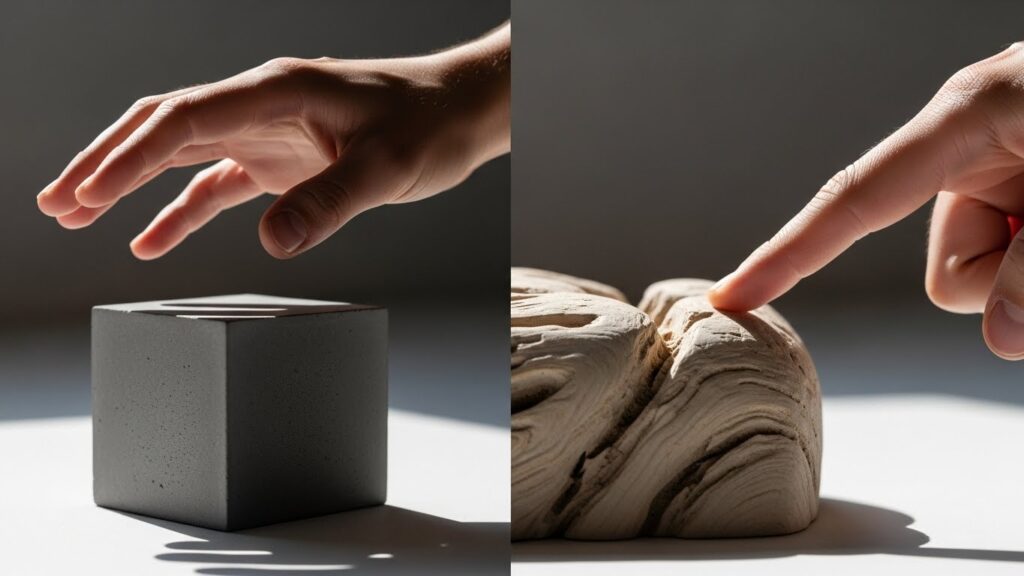
Material Poetry: Micro Textures in Physical Product Design
In the physical realm, micro edge texture is where material meets craftsmanship. It is a critical tool for designers to communicate quality, intention, and brand identity without a single logo in sight.
Consider consumer electronics. The evolution from the hard, plastic edges of early devices to the meticulously machined aluminum unibodies with polished contours is a story told through edge detailing. Apple’s iconic chamfers, now often replaced by subtle curved transitions, are textbook examples. In luxury packaging, a debossed or foil-stamped border on a box, or a paper stock with a finely deckled edge, immediately signals value and care. Jewelry and watchmaking are masters of this art, using bezel textures, crown knurling, and link edges that play with light to create brilliance and weight.
Even in architecture and interiors, the principle applies. The detail where a wall meets the floor—a shadow gap, a subtle baseboard profile, or a fluted panel edge—defines the space’s character. It’s the rejection of the generic joint in favor of a considered transition. These textures invite interaction; they make an object not just to be looked at, but to be felt and appreciated through prolonged, intimate use.

The Digital Frontier: Perimeter Variation in UI/UX Design
The concept of micro edge texture has seamlessly migrated into the digital world, where it plays a crucial role in usability and aesthetic appeal. In user interfaces, we lack physical tactility, so designers must create visual and cognitive texture to guide users.
This is seen in the subtle border-radius applied to buttons and cards. A perfectly square button feels harsh and less interactive; a slightly rounded one feels approachable. But go further: a micro gradient on the edge of a button, a thin inner shadow to suggest depth, or a feathered edge on a modal window are all digital micro textures. They soften the hard edges of the pixel grid, creating visual hierarchy and focus.
In icon design, a slight outline or a subtle highlight along one edge can make a glyph feel cohesive and legible at small sizes. Scrolling indicators, progress bars, and toggle switches all benefit from nuanced edge treatment that makes their state and function clear. This digital application of perimeter variation reduces cognitive load by making interfaces more intuitive and, in a sense, more human. It mimics the way light falls on real objects, creating a sense of familiarity in a virtual space.

Mastering the Subtlety: Principles for Effective Implementation
Success with micro edge texture lies in its restraint and intentionality. It is a spice, not the main ingredient. Here are key principles for its effective use:
Purpose Over Decoration: Every variation should have a reason. Is it to improve grip? To diffuse light? To visually separate elements? To suggest a material property? If it doesn’t serve a functional or experiential goal, it risks becoming gratuitous noise.
Consistency is Key: Establish a coherent visual language. The scale, style, and type of edge treatment should be consistent across a product family or interface. A sudden, discordant texture will feel like an error.
Context is Everything: The texture must suit the material and the brand. A rugged tool might have a more aggressive, grippy edge texture, while a meditation app’s UI would use the softest, most gradual fades.
Test at Scale: Always review textures at their actual size and in their intended environment. A beautiful macro detail can disappear or become visually muddy at normal viewing distance or on a small screen.
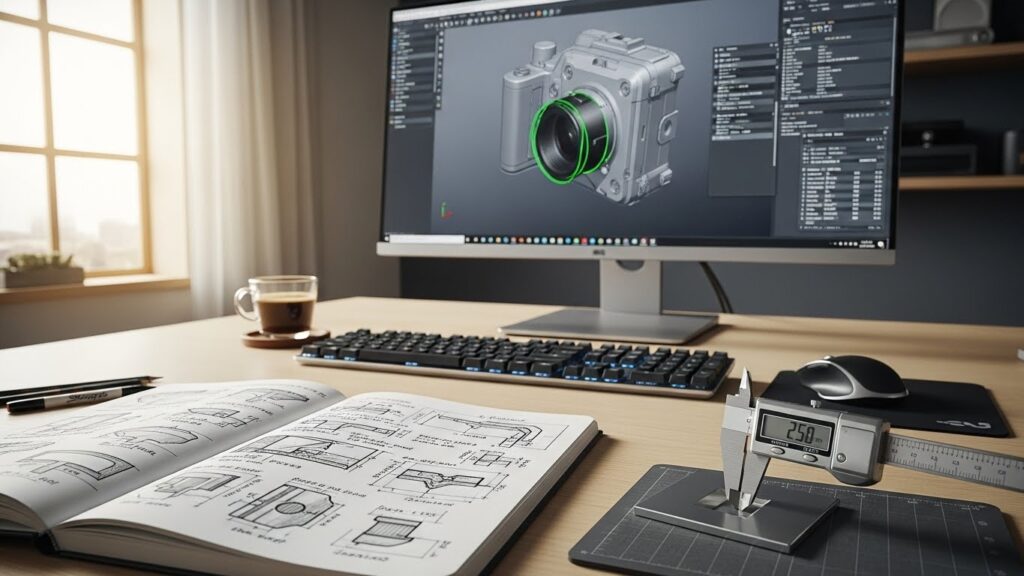
The Future of the Edge: Where Do We Go From Here?
As manufacturing and digital rendering technologies advance, so too will the possibilities for micro edge texture. Additive manufacturing (3D printing) allows for edges with impossible internal complexity or gradients of material. Advanced injection molding and CNC machining can create ever-more precise and delicate perimeter details at scale.
In the digital realm, with the rise of high-resolution displays, VR, and AR, the demand for more sophisticated, tangible-feeling interfaces will grow. We can expect micro edge details that react dynamically to user interaction, environment lighting, or context. The edge may become an active component of communication, not just a passive boundary.
Furthermore, as sustainability becomes paramount, texture can play a role in material perception—a subtle edge detail on recycled plastic or bio-composite material can enhance its perceived quality and durability, promoting longevity and emotional attachment to products.

Conclusion: The Silent Language of Quality
Micro edge texture is a powerful demonstration that in design, God—and the devil—truly are in the details. It represents a commitment to the complete experience, an understanding that how something ends is as important as how it begins. This subtle perimeter variation is a silent language of quality, craftsmanship, and consideration. It speaks directly to our subconscious, inviting touch, rewarding closer inspection, and building an intangible sense of value.
Whether you are designing a physical product, a digital interface, or a physical space, consider the edge. Ask yourself: Is it merely a boundary, or can it be an interface? Can it carry a texture, a light, a story? By mastering the subtle art of micro edge texture, you move beyond creating objects and start crafting experiences—one nuanced, thoughtful perimeter at a time.