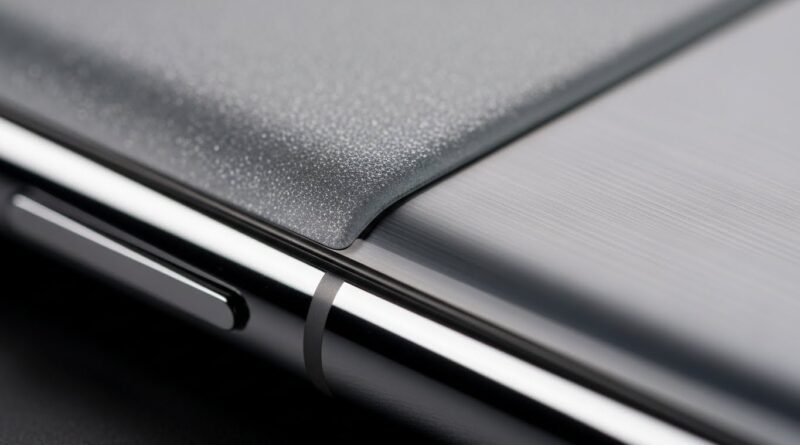
Micro-Textured Ends: Subtle Surface Variation
In a world saturated with bold graphics and loud finishes, there exists a quieter, more sophisticated language of design. It’s a language spoken not through color or shape alone, but through the very feel of a surface, the way light catches an edge, and the subconscious signal of quality sent through your fingertips. This is the realm of micro-textured ends—the deliberate, often minute, variation in a material’s finish that marks a boundary, signifies completion, or simply adds a layer of depth so subtle you feel it more than you see it. It’s the antithesis of the sharp, sterile cut; it’s the whispered detail that transforms an object from manufactured to crafted.
Beyond the Smooth: The Psychology of Tactile Detail
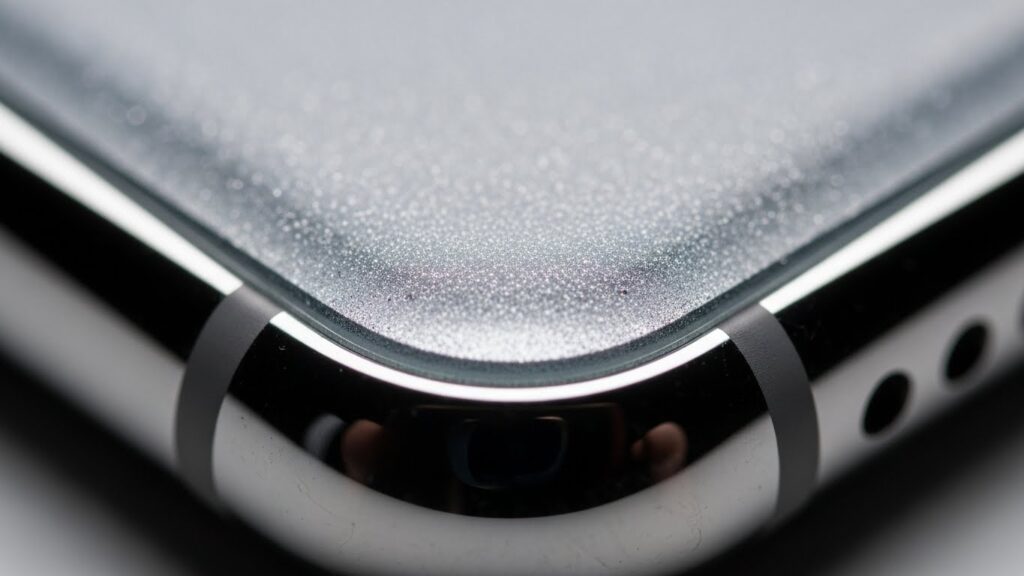
Human perception is inherently multi-sensory. While we are visually dominant creatures, our sense of touch—haptics—plays a crucial role in forming judgments about quality, safety, and authenticity. A perfectly smooth, uniform surface can feel cold, impersonal, and even fragile. It signals machine perfection, which can lack character.
Introducing a micro-texture at an end point or transition breaks this monotony. It provides a tactile cue that orients the user, indicating where to hold, where a part concludes, or how different materials converse. Psychologically, this variation creates interest and satisfies our innate desire to explore and understand texture. It makes an object more engaging to interact with, fostering a deeper connection. The subtle resistance or change in temperature conductivity of a textured edge can make a product feel more substantial, more durable, and more real. In essence, it adds a soul to the shell.

The Functional Poetry of Micro-Textures
While the aesthetic appeal is profound, micro-textured ends are far from merely decorative. They serve a host of practical, often ingenious, functions that enhance the user experience.
Grip and Usability: A polished metal tool handle can become slippery. A micro-blasted or knurled section at its ends provides critical grip without compromising the tool’s visual elegance. Similarly, the textured rim on a glass prevents slips.
Masking Imperfections: The meeting point of two materials or the cut edge of a laminate is often a hotspot for minor imperfections like seam lines, glue residue, or tiny chips. A carefully applied texture at this terminus beautifully conceals these inevitable manufacturing realities, ensuring a consistently premium look.
Visual Guidance: In user interface design on physical products, a different texture can guide the hand or finger to a button, port, or opening without needing a label. The textured end of a volume rocker on a speaker, for instance, is findable in the dark.
Durability: In some cases, a textured finish can be more resistant to fine scratches and fingerprints than a high-gloss polish, making it a smart choice for high-touch areas that see wear.

Crafting the Imperceptible: Methods for Creating Surface Variation
Creating these subtle finishes requires precision and a choice of technique tailored to the material and desired effect. It’s a finishing touch in the truest sense, often one of the last steps in manufacturing.
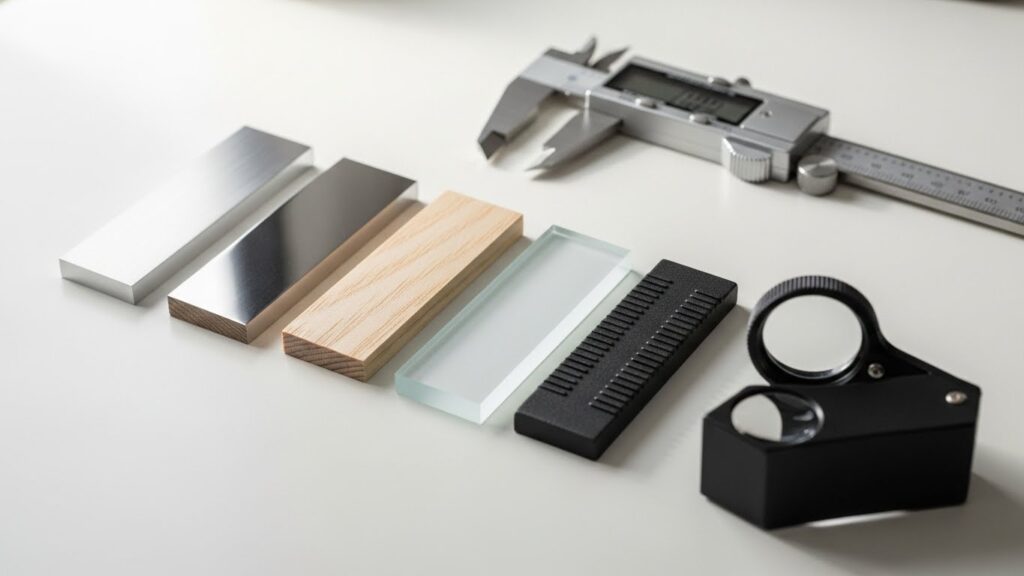
Abrasive Blasting: Using fine media like glass beads or aluminum oxide in a controlled blast creates a uniform matte or satin finish. This is common for metal and glass, producing the classic frosted look.
Brushing and Linear Finishing: Abrasive brushes or belts are passed over the surface in one direction, creating fine, parallel lines. This directional texture is elegant on metal and can be used to highlight edges or create contrast with a polished face.
Tumbling: Parts are placed in a vibrating or rotating drum with abrasive media. This process gently rounds edges and creates a consistent, weathered-soft texture over the entire part, often used on jewelry and metal hardware.
Chemical Etching: For metals and some glasses, controlled chemical baths can eat away at the surface to create a texture. This allows for intricate patterns and a high degree of control over the depth and feel.
Molding and Casting: The texture can be designed directly into the mold or die, making it an integral part of plastic, ceramic, or cast metal components. This is efficient for high-volume production.

Micro-Textures in the Wild: Applications Across Industries
The use of micro-textured ends is a universal signature of quality. Let’s explore its presence in various fields.
Consumer Electronics: This is perhaps the most visible arena. From the aforementioned smartphone edges to the textured speaker grilles, tactile keyboard keys, and the matte-finish rim around a laptop touchpad, these details define the premium hand-feel brands strive for.
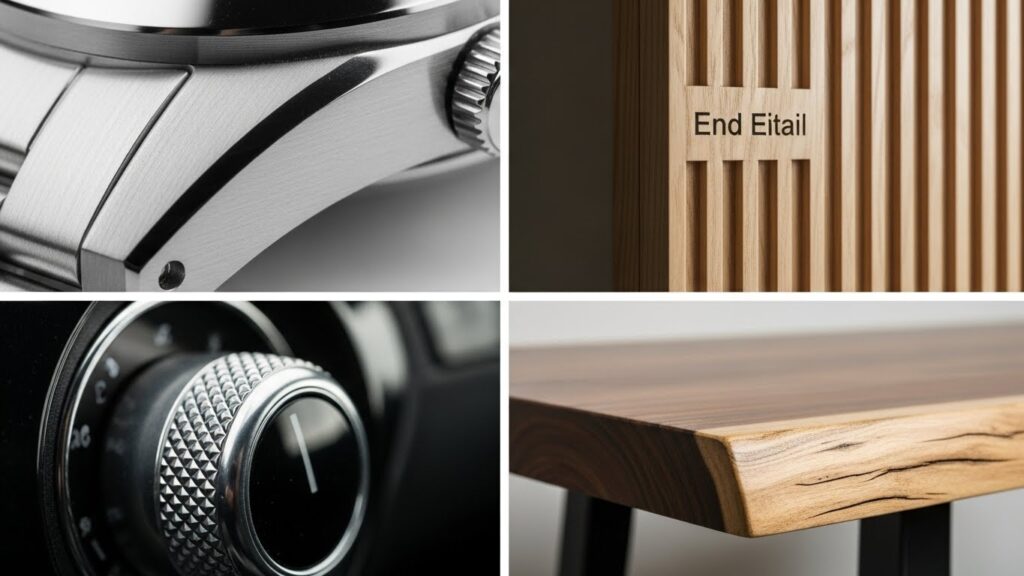
Architecture and Interiors: Here, texture defines space. The fluted end of a wooden panel, the rough-cast finish at the end of a concrete countertop, or the ribbed detail on the edge of a tiled backsplash are all macro-versions of this principle. They create shadow lines, break up large planes, and invite touch.
Automotive Design: The knurled end of a volume knob, the textured grip on a gear shift, the soft-touch plastic on the tip of a turn-signal stalk—these are all micro-textured ends designed for usability in a moving vehicle, often without the driver ever consciously noticing.
Jewelry and Watches: High-end watches are masters of this art. The brushed finish on the case back, the polished bevel on a textured lug, or the granular finish on the crown all create a play of light and a hierarchy of details that signify craftsmanship.
Furniture and Housewares: The sanded, slightly rounded edge of a solid wood table (the “eased edge”), the textured base of a ceramic vase, or the ribbed handle of a chef’s knife all utilize this concept for comfort, durability, and visual quietness.
The Designer’s Dilemma: Balancing Subtlety and Impact
Implementing micro-textured ends is an exercise in restraint. The goal is nuance, not noise. The key challenge is ensuring the texture is perceptible to the senses but not dominant to the eye. It must feel intentional, not like a manufacturing flaw or an afterthought.
This requires careful consideration of the scale of the texture relative to the object, the contrast with adjacent surfaces, and the overall design language. A highly geometric, minimalist product might use a very fine, uniform bead blast. A more organic, craft-oriented design might employ a gentler, tumbled finish. The texture should feel like a natural conclusion to the form, a period at the end of a sentence, not an exclamation mark.
Embracing the Detail: Why Micro-Texture Matters Now
In an age of digital abstraction and mass production, physical tactility has become a rare and valued commodity. Micro-textured ends represent a commitment to the holistic experience of a product or space. They signal that the designer considered not just how something looks from afar, but how it feels in the hand, how it ages, and how it communicates quality on an instinctual level.
This attention to the “ends” is, metaphorically, about caring for the entirety of the journey. It’s about honoring transitions and boundaries. By incorporating these subtle surface variations, we create objects and environments that are more humane, more engaging, and ultimately, more enduring. They may be micro in scale, but their impact on our perception and enjoyment is undeniably macro.
So, the next time you pick up a well-made object, pause. Run your thumb along its edges. Notice where the light dances and where it is absorbed. In those subtle variations, you’re reading the silent, sophisticated language of thoughtful design—the eloquent speech of micro-textured ends.