Shattered Bob: Fragmented Texture Throughout
In the ever-evolving lexicon of visual design, new terms emerge that perfectly capture a zeitgeist. Enter “Shattered Bob.” It’s not a person, but a pervasive aesthetic—a feeling of deliberate, beautiful disintegration. Imagine a once-pristine surface, a “Bob” if you will, now fascinatingly fractured. This is the essence of fragmented texture throughout: a conscious design choice where continuity is broken, patterns are interrupted, and a sense of controlled chaos reigns. From digital art and architecture to fashion and user interfaces, the Shattered Bob aesthetic speaks to our contemporary fascination with imperfection, complexity, and the beauty found in broken wholes.

Deconstructing the “Bob”: What Are We Shattering?
To understand the “shattered” part, we must first define the “Bob.” In design parlance, “Bob” can be thought of as any foundational, cohesive surface or form. It’s the blank canvas, the smooth wall, the solid block of color, the predictable pattern, the uninterrupted flow of data. It represents order, expectation, and uniformity. The “Shattered Bob” aesthetic is the intentional disruption of this state. It’s not about random destruction, but rather a methodical introduction of fragmentation to create a new, more dynamic whole.
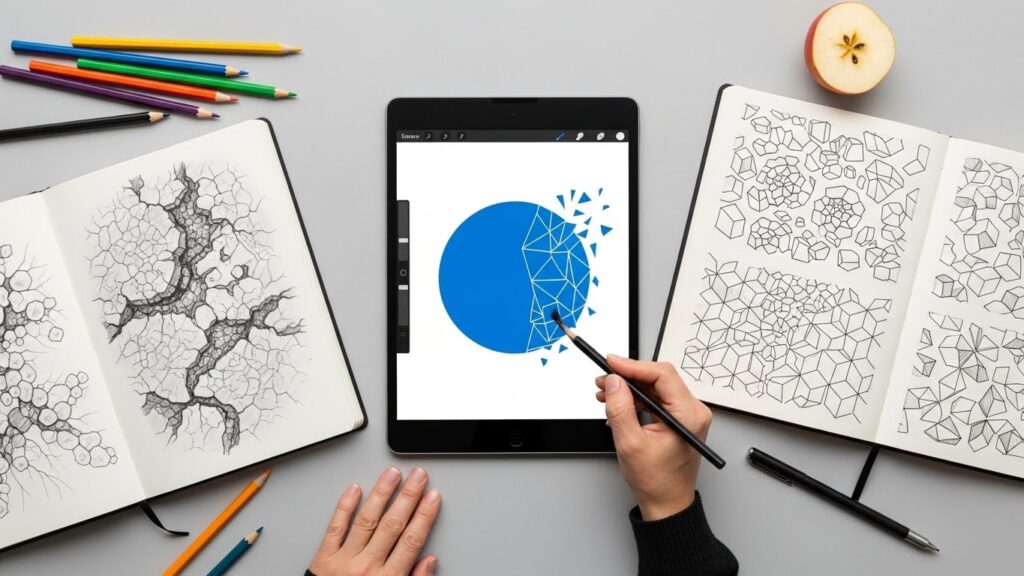
This fragmentation can manifest in countless ways: a geometric pattern that suddenly splinters like broken glass, a photographic portrait overlaid with a mosaic of digital noise, a music track where a clean melody is interspersed with glitchy, bit-crushed echoes, or a concrete wall where sections have been removed to reveal a ragged brick substrate. The key is that the fragmentation is throughout—it’s not a single crack in the corner, but a pervasive texture that redefines the entire object or space.

The Origins: From Dada Glitches to Digital Decay
The philosophical roots of fragmentation in art run deep. One can trace lines back to the collages of the Dadaists, who assembled disparate elements to challenge bourgeois norms, or the Cubist paintings of Picasso and Braque, which presented subjects from multiple fractured perspectives simultaneously. In the late 20th century, the deconstructivist architecture of figures like Frank Gehry and Zaha Hadid physically shattered conventional building forms.
However, the “Shattered Bob” as we know it today is undeniably a child of the digital age. The glitch art movement, which embraces hardware malfunctions, software errors, and data corruption as aesthetic tools, is a direct precursor. It taught us to find beauty in the “broken.” Furthermore, the overwhelming flow of information in our daily lives—multiple screens, fragmented attention, overlapping notifications—creates a lived experience that feels inherently shattered. This aesthetic is a visual metaphor for that reality, making the intangible feeling of digital overload tangibly beautiful.

Applications: Where Fragmented Texture Thrives
The Shattered Bob aesthetic is remarkably versatile, finding a home across creative disciplines. Its application always serves to add depth, narrative, and visceral engagement.
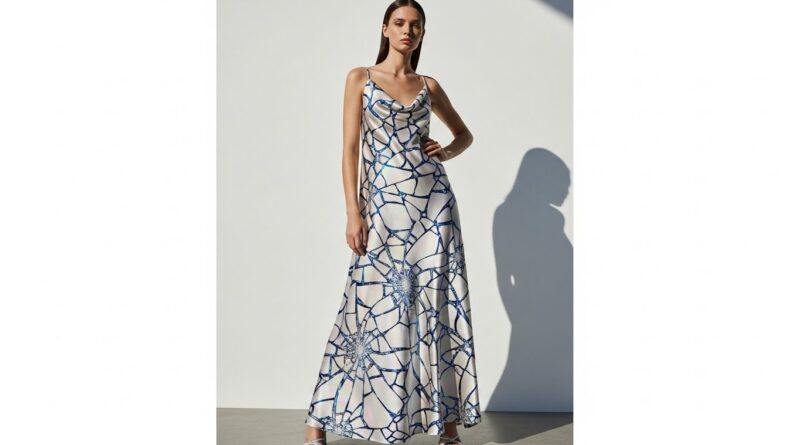
In interior design, it appears as cracked plaster finishes, terrazzo with chaotic aggregate, or textiles with splintered geometric prints. It breaks the monotony of minimalism without resorting to ornamentation. In fashion, look for garments with asymmetrical seams, deliberately frayed edges, prints that look digitally corrupted, or jewelry that mimics shattered glass held together.
The digital realm is its natural habitat. Website designers use fragmented scrolling, where content breaks apart and reassembles as the user moves. UI/UX designers might incorporate subtle texture noise over solid buttons or use transitional animations that shatter one screen into the next. In music production, the use of granular synthesis—where sound is broken into microscopic grains and rearranged—is the auditory equivalent of a Shattered Bob.

The Psychology of the Fracture: Why It Resonates
Why does this aesthetic of breakage captivate us? Psychologically, it operates on several levels. First, it creates instant visual tension and intrigue. A fragmented surface asks questions: What happened here? What was it before? This engages the viewer’s curiosity and narrative imagination far more than a perfect surface.
Second, in an era of mass-produced perfection, fragmentation signals authenticity, uniqueness, and handcraft. A Shattered Bob texture cannot be easily replicated identically; it carries the weight of process and chance. It aligns with the Japanese philosophy of wabi-sabi, which finds beauty in imperfection, impermanence, and incompleteness. It tells a story of time, pressure, and resilience.
Finally, it is a powerful metaphor for the contemporary human experience. We often feel pulled in multiple directions, our attention fragmented, our identities multifaceted. Seeing this state reflected and aestheticized in our surroundings can be paradoxically comforting. It validates complexity and finds harmony not in seamless unity, but in artful reassembly.

Implementing “Shattered Bob” in Your Own Work
Interested in incorporating this textured aesthetic? The key is intentionality and balance. Start by choosing your “Bob”—a clean logo, a solid background, a smooth 3D model, a simple melody. Then, choose your method of fragmentation. Will it be geometric (splitting into sharp polygons)? Organic (crackle textures like mud or glaze)? Digital (glitch effects, pixel sorting)? Or physical (layering, breaking, collaging)?
Use fragmentation to guide the viewer’s eye or to highlight a core element by breaking everything else around it. Remember that negative space is crucial; the fragments need room to breathe. In digital design, ensure the fragmentation doesn’t compromise usability. The goal is not to create a confusing mess, but to use controlled disintegration to generate a more compelling and emotionally resonant whole than the original “Bob” could achieve on its own.
Beyond the Trend: The Lasting Appeal of Broken Beauty
While “Shattered Bob” might sound like a passing trend, the core principle—finding beauty and meaning in fragmentation—is a timeless artistic pursuit. As long as we experience life as a complex, sometimes disjointed tapestry, visual representations of that feeling will resonate. The aesthetic moves beyond mere decoration to become a commentary on resilience, transformation, and the redefinition of wholeness.
It reminds us that something can be broken and still be breathtakingly beautiful, perhaps even more so because of its fractures. It challenges the tyranny of the pristine and offers a more nuanced, honest, and interesting visual language. So, the next time you see a glitch in a video, a crackled wall finish, or a deconstructed garment, you’ll recognize it: another Bob has been shattered, and throughout its texture, a new story is being told.