Shattered Layers: Fragmented Length for Edge
In a world saturated with smooth, seamless, and predictable design, where does the eye find its anchor? It often finds it in the rupture, the deliberate break, the moment of calculated dissonance. Welcome to the aesthetic of Shattered Layers—a philosophy that embraces fragmentation, disjointed length, and asymmetrical composition not as flaws, but as the primary tools for creating compelling, edge-driven work. This isn’t about chaos for chaos’s sake. It’s a strategic dismantling of the whole to create something more provocative, more memorable, and ultimately, more engaging than perfection ever could be.

The Anatomy of a Shattered Layer
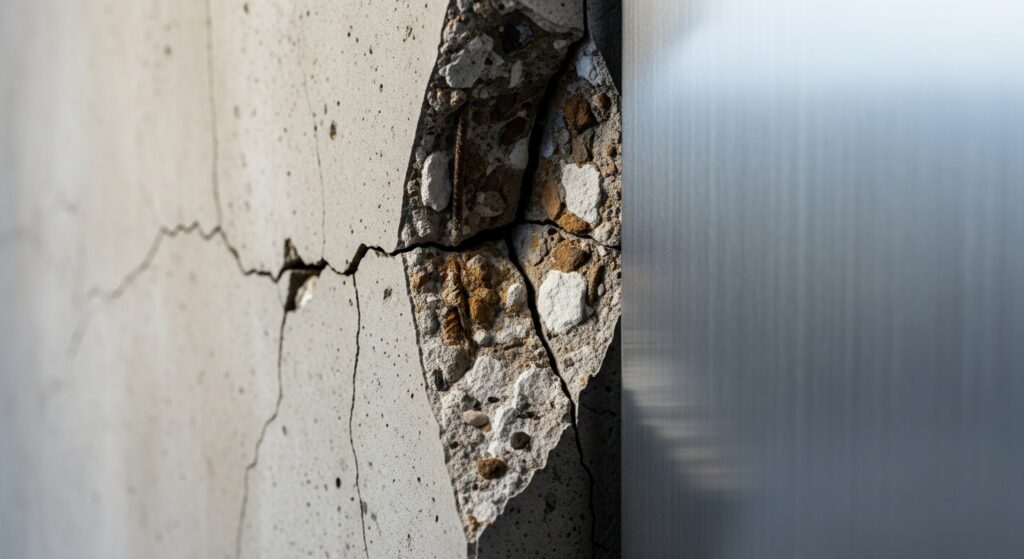
At its core, the idea of Shattered Layers is about interrupted continuity. Imagine a horizontal line—a classic symbol of stability and calm. Now, imagine that line fractured into five unequal segments, each slightly offset from the original axis. The static line becomes dynamic; it implies motion, force, and history. What happened here? This simple act of fragmentation injects story and tension.
This philosophy operates on several key principles. First is Intentional Asymmetry. Balance is achieved not through mirroring, but through a careful, weighted distribution of irregular parts. A large fragment might be counterbalanced by a cluster of smaller, denser ones. Second is Varied Length and Scale. Fragments are not uniform. Their differing sizes and proportions create a rhythm—a visual cadence that feels more human and less machine-made. Finally, there is the Celebration of the Seam. The point of fracture is not hidden; it is emphasized. The raw edge, the abrupt stop, the visible gap become features themselves, asking the viewer to mentally bridge the distance.
Fragmented Length in the Digital Realm
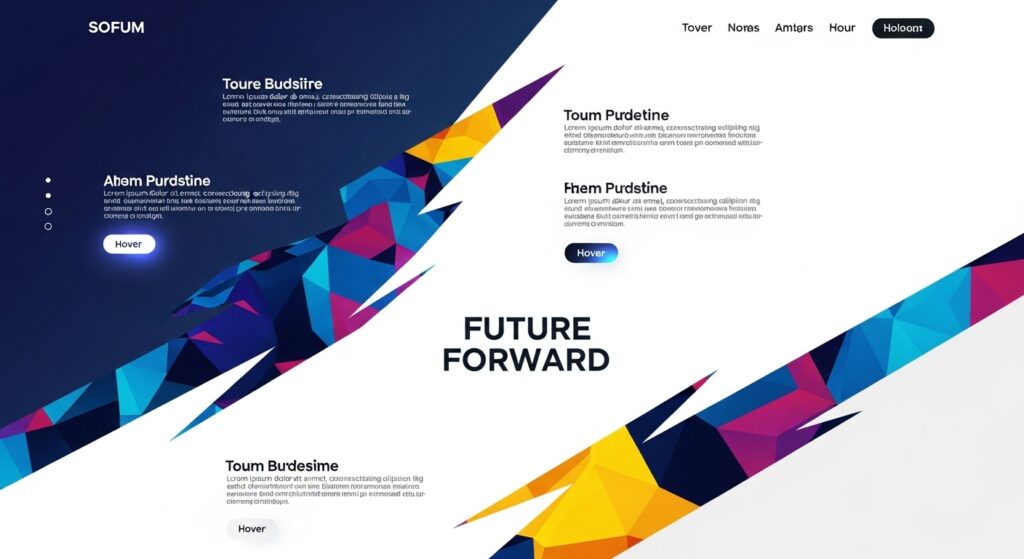
Nowhere is the application of shattered layers more immediately impactful than in digital design. We’ve moved beyond the skeuomorphic era of perfect replicas and into an age where the interface can be an experience in itself. Think of a portfolio website where scrolling doesn’t move the page smoothly, but snaps content blocks into place like shifting tectonic plates. Consider hero sections where text is deliberately broken across disparate, overlapping layers, or where image galleries present photos as polaroids scattered at odd angles.
This use of fragmented length for edge serves a crucial UX purpose beyond aesthetics: it controls pace and focus. A seamless, endless scroll can be hypnotic and passive. A fragmented, sectioned scroll, with varying lengths of content, creates moments of pause and emphasis. It tells the user, “This segment is complete. Now, prepare for the next idea.” It’s a visual and interactive metaphor for compartmentalized thought, perfect for projects that want to showcase distinct phases, varied skills, or a non-linear narrative.
Physical Spaces: Architecture and Interiors
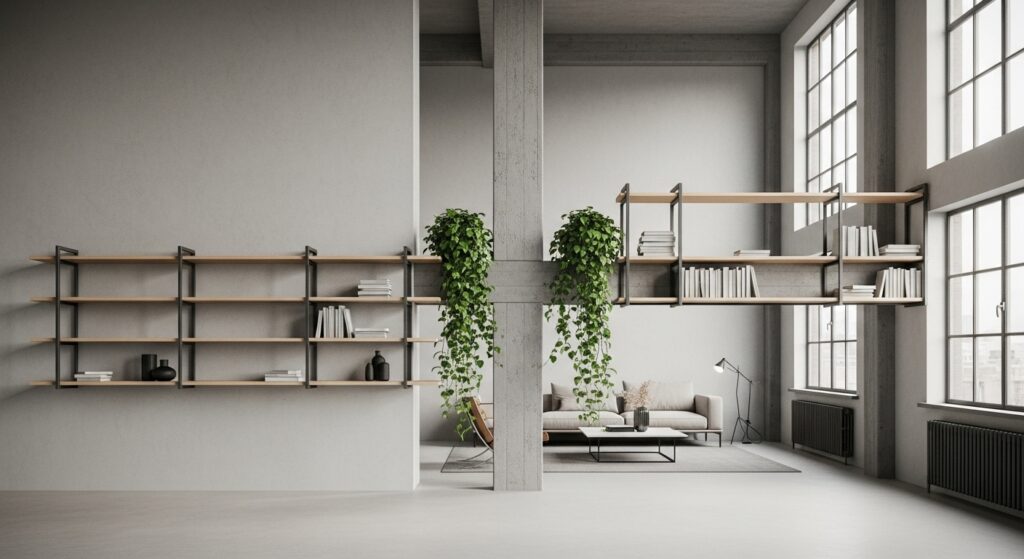
The philosophy escapes the screen and manifests powerfully in our physical environments. Modern architecture has long flirted with deconstructivism—think of Frank Gehry’s disjointed forms. But the principle of shattered layers is also at home in more accessible interiors. It’s seen in a feature wall composed of mismatched tile lengths arranged in a broken pattern. It’s in shelving units where compartments are not aligned, creating an dynamic, rhythmic storage display.
In retail and hospitality, this approach creates experiential depth. A restaurant might use a series of partial walls, suspended panels, or lighting fixtures of varying lengths to break up a large space into intimate, undefined pockets. The journey through the space becomes a discovery, as views are partially obscured and then revealed. The fragmentation guides movement and curiosity, making the environment itself a participant in the narrative of the visit. It rejects the open-plan monotony in favor of curated complexity.
The Psychological Edge: Why Fragmentation Captivates
Why does this broken aesthetic resonate so deeply? Psychologically, our brains are pattern-recognition machines. When presented with a perfect, seamless whole, the brain acknowledges it and quickly moves on. But when presented with intentional fragmentation, the brain is forced to engage. It must work to reassemble the implied whole, to find the underlying logic, to connect the dots.
This cognitive participation creates a stronger bond between the viewer and the object or space. The work becomes a puzzle, not just a presentation. It feels more honest, perhaps—acknowledging that nothing in life or thought is perfectly continuous. It mirrors our own fragmented attention, our nonlinear memories, and the pieced-together nature of modern identity. In a sense, shattered layers feel more authentically human than flawless, sterile perfection ever could.
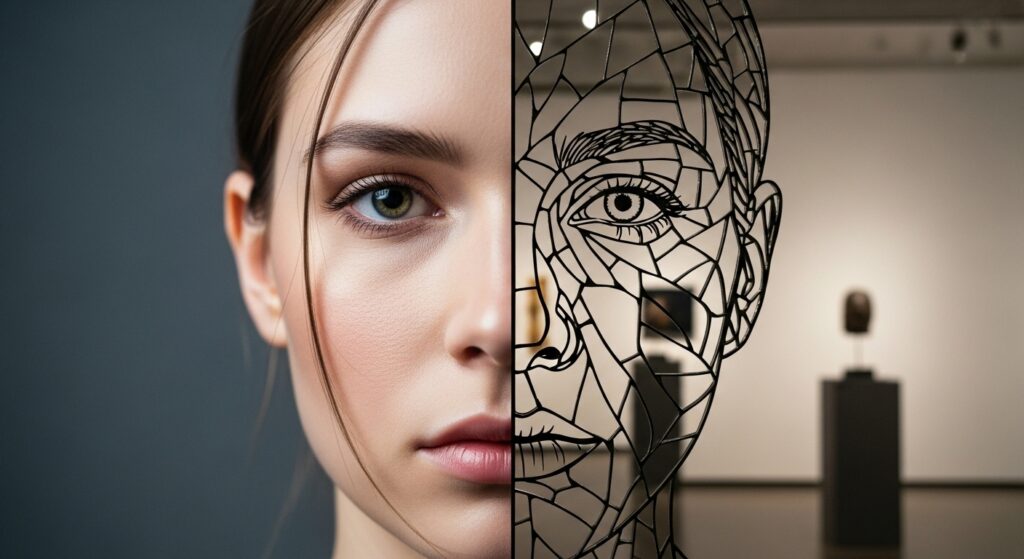
Harnessing the Fragmented for Your Own Projects
Adopting this philosophy requires a shift from a mindset of construction to one of curated deconstruction. Start with a whole—a layout, a design, a space—and ask: Where can I introduce a meaningful break? Can this single block of text be split into three staggered call-outs? Can this uniform grid of images be disrupted by one image bleeding out of its container? Can a material change abruptly, celebrating the seam between wood and plaster?
Remember, the goal is controlled dissonance. Key tips: maintain a cohesive color palette or material family to tie the fragments together. Use alignment sparingly; let some elements float. Play with scale dramatically. Most importantly, ensure the fragmentation serves a purpose—to guide the eye, to create narrative separation, to emphasize a particular element. The break should feel deliberate, not accidental.

Conclusion: The Beauty of the Break
The pursuit of the seamless has dominated design for decades, promising a future of effortless flow. But Shattered Layers: Fragmented Length for Edge proposes a different, more compelling future—one of intelligent interruption. It finds beauty not in the unbroken line, but in the compelling story of its fracture. It understands that edge, in today’s crowded creative landscape, isn’t about being louder or smoother; it’s about being more thoughtful, more provocative, and more willing to let the cracks show.
By embracing fragmented length, we create work that demands attention, rewards engagement, and reflects the complex, pieced-together reality of our time. It’s a bold strategy, but in the space between those shattered pieces lies the perfect opportunity to stand out. So, take your next project, and consider where a strategic break could be your biggest breakthrough.