Softly Structured Haircuts That Hold Their Shape
Have you ever left the salon with a perfect, bouncy, shape-filled haircut, only to find it falls flat or loses its form after the first wash? Or perhaps you’ve avoided precise cuts altogether, fearing they’ll look too stiff or helmet-like. There’s a sweet spot in hair design that solves this exact dilemma: the softly structured haircut. This isn’t about sacrificing shape for softness, or vice versa. It’s the artful fusion of both, creating styles that move with you, feel touchably soft, yet possess an invisible architecture that keeps them looking impeccable day after day. It’s the haircut that works for you, not the other way around.

What Exactly is a “Softly Structured” Haircut?
Let’s break down the terminology. Structure refers to the internal geometry of the cut—the placement of weight, the angles of the layers, and the overall silhouette. It’s what gives a haircut its foundational shape and allows it to hold its form. Softness, in this context, refers to the texture, movement, and the visual finish at the perimeter. A softly structured haircut uses precise cutting techniques to build that supportive foundation, but the ends are meticulously softened, point-cut, or textured to remove any harsh, blunt, or heavy lines.
The result is a cut that has body, memory, and bounce from its structured interior, while the exterior feels airy, natural, and effortlessly chic. It’s the difference between a solid block of clay and one that’s been expertly sculpted with fluid, graceful lines. Both have form, but one is rigid while the other is dynamic.

The Magic Behind the Shape Retention
How does a cut that looks so effortless manage to hold its shape so well? The secret lies in the strategic placement of weight and tension. Skilled stylists use techniques like interior layering, invisible graduation, and cushioning to create support where you need it most—often at the crown, the occipital bone (the back of the head), or within the mid-lengths.
Think of it like building a tent. The poles (the structured layers) provide the fundamental shape and prevent collapse, while the canvas (the soft exterior) flows around that structure. When you style your hair, whether you air-dry or blow-dry, this internal framework guides the hair into the intended shape. The weight isn’t all at the bottom, pulling the style down; it’s distributed, allowing for lift, volume, and resilience against humidity and daily activity.

Top Softly Structured Haircuts to Ask For
Ready to bring this concept to your next salon appointment? Here are specific styles that epitomize the softly structured philosophy. Remember, communication is key—use these names as starting points and describe the balance of shape and softness you desire.
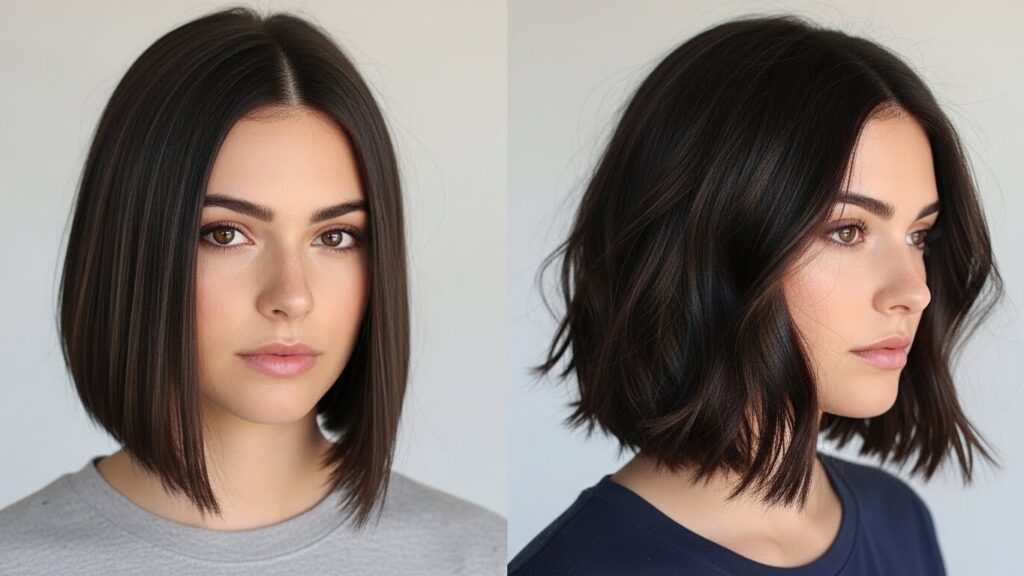
The Blunt-Lob with Softened Ends: The classic blunt lob gets a modern update. The length is clean and strong, but the very ends are subtly point-cut or lightly razored to remove the hard, linear edge. This prevents the “helmet” effect and adds a touch of swingy movement, while the solid interior length maintains incredible shape.
The Layered Shag with Purpose: The shag is the poster child for soft structure, but the key is in the tailoring. A great shag has clearly defined, graduated layers (structure) that are then heavily textured (softness). The shape hugs the head, framing the face with curtain bangs and volume at the crown, yet feels wild and piecey.
The “Collarbone-Clip” Cut: This is a genius cut where the hair appears to be one length when tucked behind the ears, but features invisible layers around the face and through the back. When down, it has body and a slight inward curve (the “clip”). The structure creates that gentle, shape-holding bend, while the single-length appearance offers a soft, healthy look.
Soft Graduated Bob: A bob that is slightly shorter in the back and longer towards the front, with the graduation done subtly. The line isn’t stark; it’s a gentle progression. The interior is layered for lift, while the perimeter is softly melted into the neck for a seamless, hold-its-shape finish.
Communication is Key: Talking to Your Stylist
To get the perfect softly structured cut, you need to partner with your stylist. Avoid vague terms like “just a trim” or “something different.” Instead, use descriptive language. Say: “I want a cut that has a defined shape but doesn’t look heavy or blunt.” or “I’d like lots of internal layers for volume, but I want the ends to feel really soft and textured, not chunky.”
Bring photos that show the balance you like. Point out what you love in the image: “I love how this shape looks full here, but the ends are wispy here.” This tells your stylist you’re interested in the technique, not just the length. A good question to ask is: “Can we build in some structure for hold but keep the overall feeling really effortless?”

Styling Tips to Enhance and Maintain Your Cut
The beauty of a well-executed softly structured cut is its styling versatility. It often looks fantastic air-dried. To enhance your cut’s natural shape, apply a volumizing mousse or light texturizing spray to damp hair. Scrunch gently and let it dry. The internal layers will encourage the hair to bend and lift where it’s designed to.
For a more polished look, use a round brush when blow-drying to amplify the shape. Focus on directing the roots upward at the crown and turning the ends under or out, following the natural line of your cut. The goal isn’t to create a new shape, but to reveal the one already built into your hair. Finish with a flexible-hold hairspray or a dab of texturizing paste on the ends to define the softness without crunch.
Product Recommendations: Look for products that enhance without weighing down. Lightweight sea salt sprays, texturizing mists, and volumizing foams are your best friends. Avoid heavy pomades or waxes on the lengths, as they can collapse the delicate structure you’re trying to highlight.

Is a Softly Structured Cut Right for Your Hair Type?
Absolutely. This technique is adaptable. For fine hair, it’s a game-changer—the structure creates the illusion of density and body that fine hair often lacks, while the softness prevents the cut from looking sparse or over-layered. For thick or curly hair, softening the ends and adding internal layers removes bulk and weight, allowing the hair’s natural shape to spring up with more definition and less triangle-effect. For wavy hair, it’s the ideal approach, as the cut works with your natural pattern, providing guidance without forcing it into an unnatural form.
The principle remains the same: build support where needed, and release weight where it’s not. A master stylist will adjust the degree of structure and softness based on your hair’s density, texture, and natural movement.

Embrace the Freedom of Shape That Lasts
Choosing a softly structured haircut is an investment in effortless daily style. It’s the liberation from the constant battle with flat irons and excessive product, and the frustration of a shape that disappears. This approach to hair design respects the fluidity of modern life, giving you a style that is both intentional and adaptable, polished and personal.
It’s more than just a trend; it’s a fundamentally smarter way to cut hair. By asking for soft structure, you’re not just requesting a length change. You’re asking for a blueprint—a beautiful, wearable, lasting shape that allows you to feel put-together with minimal effort, and truly enjoy the hair you have every single day.