The Chesapeake Shag: Virginia Waterfront
When you hear “shag” in Virginia, your mind might first drift to the upbeat rhythms of beach music. But along the sprawling, serene shores of the Chesapeake Bay, “The Chesapeake Shag” means something entirely different—and infinitely more permanent. It’s not a dance step; it’s an architectural signature, a lifestyle, and a thoughtful response to a unique environment. This distinctive style of waterfront home is as much a part of the Virginia coastal landscape as crabbing piers and sailboat masts. It represents a harmonious blend of practicality, resilience, and relaxed elegance, perfectly tailored to the rhythms of bay life.

Roots in the Tidewater: The Historical Foundation
The Chesapeake Shag didn’t emerge from an architect’s fancy sketchbook; it evolved organically from the needs of the people living and working on the Bay. Its DNA can be traced back to the simple, functional structures of the region’s early watermen, farmers, and fishermen. These were people who needed buildings that were easy to construct with local materials, capable of withstanding nor’easters and humid summers, and that maximized their connection to the water—their source of livelihood and sustenance.
The classic “I-house” form—a two-story, one-room deep structure with a gable roof—common in early American vernacular architecture, provided a starting point. To this, Bay residents added critical adaptations. The steep roof pitch was essential for shedding heavy rain and snow. The raised foundation, often on piers or blocks, protected against flooding and allowed air to circulate, fighting moisture and rot. This pragmatic origin story is key to understanding the Shag’s timeless appeal: every element serves a purpose.

Anatomy of a Shag: Defining Architectural Features
So, what should you look for to identify a true Chesapeake Shag? While modern interpretations have added flourishes, the core features remain remarkably consistent.
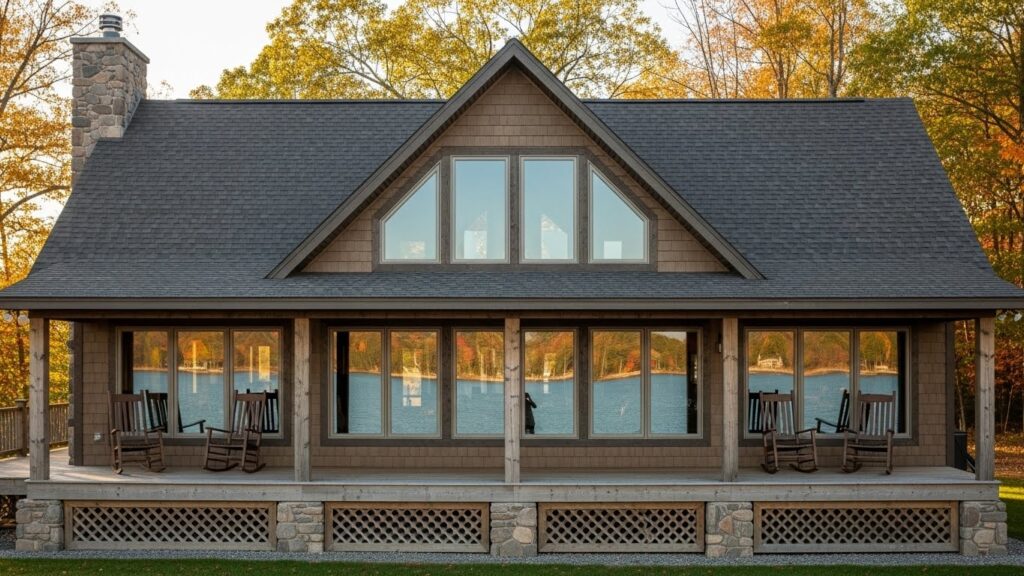
The Steep Gable Roof: This is the Shag’s most recognizable crown. Often clad in metal or durable shingles, these roofs are designed for quick water runoff. They also create potential for additional living space in the form of a loft or expanded second floor.
The Unmistakable Porch: If the roof is the crown, the porch is the welcoming handshake. Wrapping around one or more sides of the house, these are not mere decorative add-ons. They are essential outdoor living rooms, offering a shaded, breezy vantage point to watch the water, socialize with neighbors, and enjoy the sunset. Screened-in versions are common, providing a bug-free sanctuary.
Practical Materials and Raised Foundations: Cedar shingles, hardy plank siding, and brick are traditional material choices, weathering beautifully in the salt air. The raised foundation is non-negotiable, sometimes enclosing a garage or storage area for boats and gear underneath, but always elevating the main living space above flood risk.
Windows for Light and Breeze: Large, operable windows are strategically placed to capture panoramic water views and cross-ventilation, harnessing the Bay’s natural breezes for cooling long before air conditioning was standard.
Modern Interpretations: The Shag Evolves
Today’s Chesapeake Shag homes honor their ancestral blueprint while embracing contemporary comforts and aesthetics. Architects and builders have skillfully updated the form for 21st-century living. Open floor plans have replaced the compartmentalized rooms of the past, creating fluid spaces where the kitchen, dining, and living areas all share the water view. Expansive walls of sliding glass doors seamlessly merge the iconic porch with the interior.
Inside, you’ll find nods to maritime life: exposed beams reminiscent of boat hulls, color palettes drawn from the sand, sea, and sky, and finishes like shiplap that echo the siding outside. Modern materials offer better energy efficiency and lower maintenance, but the soul of the Shag remains. The connection to the outdoors is still paramount, and the design is still dictated by the sun’s path and the prevailing wind direction.

Why the Shag is Perfect for Waterfront Living
The enduring popularity of the Chesapeake Shag style is no accident. It solves the fundamental challenges of building on the Virginia coast with grace and intelligence. Its raised design is a proven, elegant solution to flood zone regulations, a critical consideration for any waterfront property. The wide, overhanging eaves and porches provide necessary shade, reducing cooling costs. The simple, sturdy construction is inherently resilient against the coastal storms that occasionally sweep across the Bay.
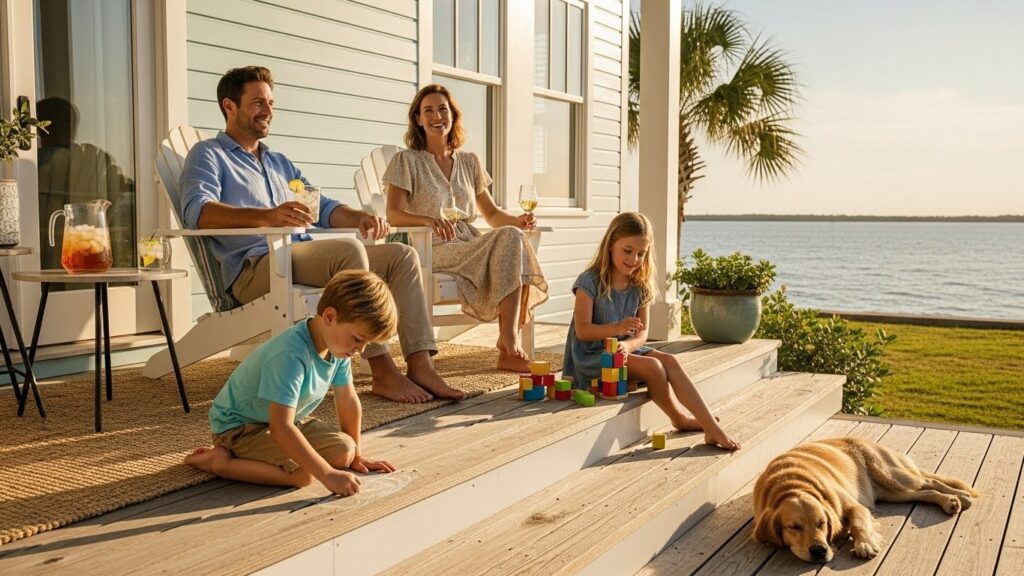
But beyond pure pragmatism, the Shag cultivates a specific lifestyle. It encourages you to slow down, to sit on the porch with a morning coffee, to watch the ospreys dive, and to greet passersby on the water. It frames the ever-changing Bay like a living painting. In a world of overly complex designs, the Chesapeake Shag stands as a testament to the principle that the best architecture grows from place.
Finding Your Own Chesapeake Shag
For those dreaming of a Virginia waterfront home, seeking out a classic or modern Chesapeake Shag is more than a real estate choice—it’s an embrace of a regional heritage. You’ll find these iconic homes dotting the shorelines from the Northern Neck down through the Middle Peninsula and the Hampton Roads area, and throughout the Eastern Shore. Towns like Irvington, Deltaville, Cape Charles, and Poquoson are veritable galleries of this architectural style.
When viewing properties, look beyond surface updates. Pay attention to the orientation of the house, the condition of the foundation and roof, and the flow between indoor and outdoor spaces. A well-built Shag, even an older one, has good bones shaped by generations of experience living with the Chesapeake. Whether you’re restoring a classic or building a new interpretation, you’re participating in a long tradition of building in harmony with one of America’s great estuaries.
The Chesapeake Shag is Virginia’s quiet, confident answer to coastal architecture. It doesn’t shout for attention with ornate details. Instead, it earns its beauty through proportion, practicality, and a deep respect for its setting. It reminds us that the best homes are those that not only shelter us but also connect us—to the landscape, to the climate, and to the timeless appeal of life on the water.