The Copenhagen Cut: Scandinavian Simplicity at Its Best
In the world of hair trends, where styles often shout for attention, a quiet revolution is unfolding from the North. Enter The Copenhagen Cut—a hairstyle that doesn’t demand the spotlight but effortlessly commands it. More than just a haircut, it’s a philosophy, a reflection of the Scandinavian ethos where less is profoundly more, function is beautiful, and elegance is found in effortless simplicity. This isn’t about dramatic transformations or high-maintenance styling; it’s about unlocking a version of yourself that is polished, confident, and refreshingly uncomplicated.
The Philosophy Behind the Cut: “Lagom” Hair
To understand the Copenhagen Cut, you must first understand lagom. This Swedish term, meaning “not too little, not too much—just right,” perfectly encapsulates the heart of this style. There’s no excessive layering, no drastic undercutting, no harsh, geometric lines. Instead, the cut focuses on precision and balance. The goal is to work with your hair’s natural texture and growth patterns, removing only what is necessary to create shape, movement, and ease.
This philosophy results in a cut that grows out gracefully, never losing its form or requiring constant touch-ups. It champions hair health above all else, favoring techniques that preserve the integrity of each strand. The Copenhagen Cut is, in essence, sustainable styling—it reduces product dependency, heat styling, and salon visits, aligning perfectly with a conscious, modern lifestyle. It’s hair that feels as good as it looks.

Key Characteristics of the Copenhagen Cut
While adaptable to different hair types and lengths, the Copenhagen Cut is defined by several signature elements that set it apart from other popular cuts like the shag or the blunt bob.
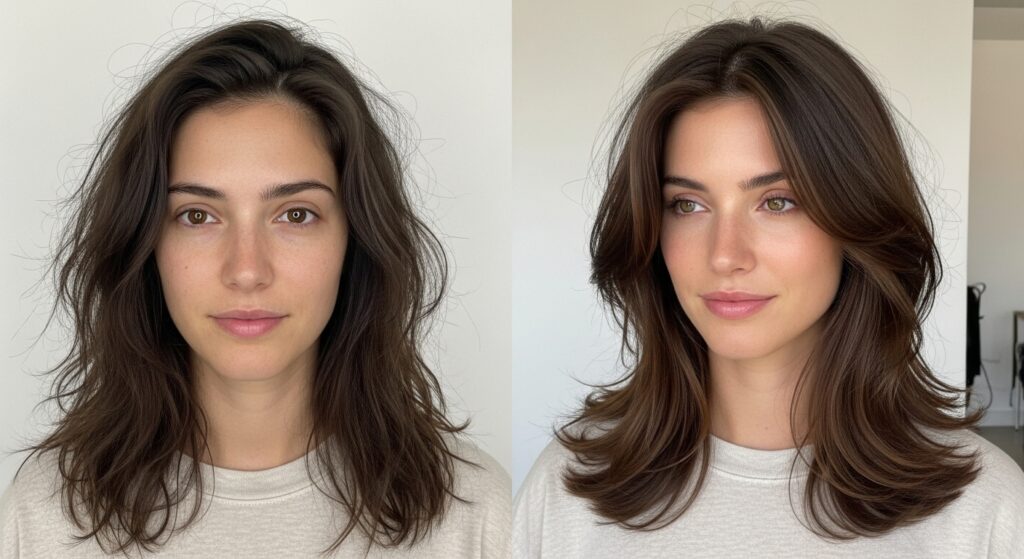
1. The “Invisible” Layer: The magic lies in its subtle layering. Layers are cut sparingly and strategically, often starting below the jawline to maintain weight and fullness at the crown. They are deeply blended, so you see the effect—volume, swing, and texture—but not the line of the layer itself.
2. The Weighted Perimeter: Unlike uniformly thin ends, the Copenhagen Cut often features a gently weighted hemline. This gives the hair a satisfying, healthy swing and prevents the ends from looking wispy or frail. It’s a clean, polished finish that feels substantial and luxurious.
3. Face-Framing, Not Face-Consuming: The framing around the face is soft and considered. It’s designed to highlight your features subtly, not overwhelm them. Think of a few strategic, long pieces that blend seamlessly into the rest of the cut, not a stark, disconnected fringe.
4. Texture Over Volume: The goal isn’t big, 80s-style volume. It’s natural texture and internal movement. The cut creates body from within, so hair looks lived-in and tactile, not “done.” This makes it perfect for air-drying or with minimal product.
Who Is the Copenhagen Cut For? Spoiler: Everyone
The greatest strength of the Copenhagen Cut is its democratic appeal. Its principles can be applied across a spectrum of hair types and personal styles.
For Fine Hair: It’s a revelation. The strategic removal of weight and invisible layers create the illusion of thickness and body without sacrificing length or making hair look sparse.
For Thick or Wavy Hair: It provides control and shape, taming bulk while allowing your natural texture to shine. It reduces frizz by creating a clean line for waves to follow.
For the Low-Maintenance Individual: This is your holy grail. Designed to look perfect with minimal effort, it celebrates your hair’s natural state. A little sea salt spray or texturizing mist is often all you need.
For the Professional: It offers a sleek, polished, and utterly sophisticated look that is appropriate for any environment, conveying confidence and clarity.
Ultimately, it’s for anyone who is tired of fighting their hair and wants to start working with it. It’s a partnership, not a battle.

How to Ask Your Stylist for the Copenhagen Cut
Walking into a salon and simply saying “Copenhagen Cut” might not be enough. Communication is key to achieving this nuanced style. Come prepared with reference photos, but also be ready to describe the feeling you want.
Use this script: “I’m interested in a cut inspired by Scandinavian styles—very low-maintenance and focused on health. I’d like a weighted, clean hemline with just a few deeply blended, invisible layers starting around my chin to add movement. I want to keep as much length as possible while removing bulk and split ends. The goal is to enhance my natural texture for an air-dry friendly style that still looks polished.”
Emphasize that you want a cut that grows out beautifully and doesn’t require a lot of styling. A skilled stylist will understand this language and will likely be excited to execute a cut that showcases technical precision over dramatic flair.

The Copenhagen Cut Lifestyle: Styling and Maintenance
Adopting this cut means adopting a simpler hair routine. Your styling arsenal will shrink, and your time in front of the mirror will shorten.
Styling: Embrace air-drying. After washing, apply a light texturizing or wave-enhancing product to damp hair. Gently scrunch or twist sections to encourage your natural pattern. If you must blow-dry, use a round brush to smooth the perimeter and lift the roots slightly for that “internal body.” The beauty is that a slightly messy, imperfect finish only enhances the look.
Maintenance: Due to its intelligent grow-out pattern, you can stretch the time between trims to 10-12 weeks, sometimes longer. The key is regular at-home care: quality shampoos, occasional deep conditioning, and protecting your hair from excessive heat. This cut rewards healthy habits.
The Products: Think lagom here, too. A good texturizing spray, a flexible-hold mousse for volume, and a lightweight hair oil for shine are often all you need. Avoid heavy, coating products that will weigh down the precise shape.

Beyond the Hair: A Lesson in Scandinavian Aesthetics
The Copenhagen Cut is a microcosm of a broader design philosophy that the world has come to admire. It mirrors the clean lines of Danish furniture, the functional beauty of Swedish architecture, and the curated minimalism of a Norwegian wardrobe. It teaches us that constraint breeds creativity, and that by focusing on quality, precision, and purpose, we achieve a timeless kind of beauty.
In a culture saturated with excess and constant change, this cut offers a sanctuary of calm and clarity. It’s a reminder that the most powerful statement you can make is often the quietest one. It’s not about hiding; it’s about presenting your most authentic, uncluttered self to the world.
So, if you’re yearning for a change that feels less like a chore and more like a liberation, consider the Copenhagen Cut. It’s more than just a new look—it’s an invitation to simplify, to prioritize well-being, and to find elegance in the everyday. It’s Scandinavian simplicity, and it’s truly at its best.