The Fremont Shag: Silicon Valley Suburb
When you think of Silicon Valley, images of gleaming tech campuses, hoodie-clad billionaires, and disruptive startups likely come to mind. But venture just a bit off the major tech thoroughfares, and you’ll find the true bedrock of the valley: its suburbs. And few suburbs encapsulate the modern Silicon Valley experience quite like Fremont, California. Over the past few decades, Fremont has cultivated a distinct identity—a blend of relentless innovation, suburban practicality, and a unique, slightly dated aesthetic that locals might affectionately (or ironically) call the “Fremont Shag.”

From Orchards to Chip Fab: A History of Layers
To understand Fremont today, you must peel back its layers. Incorporated in 1956 from five distinct farming communities—Centerville, Niles, Irvington, Mission San Jose, and Warm Springs—Fremont’s roots are deeply agricultural. The Niles district was once a silent film hub, and the old cannery buildings whisper of a different economy. This pastoral past is the first layer of the shag.
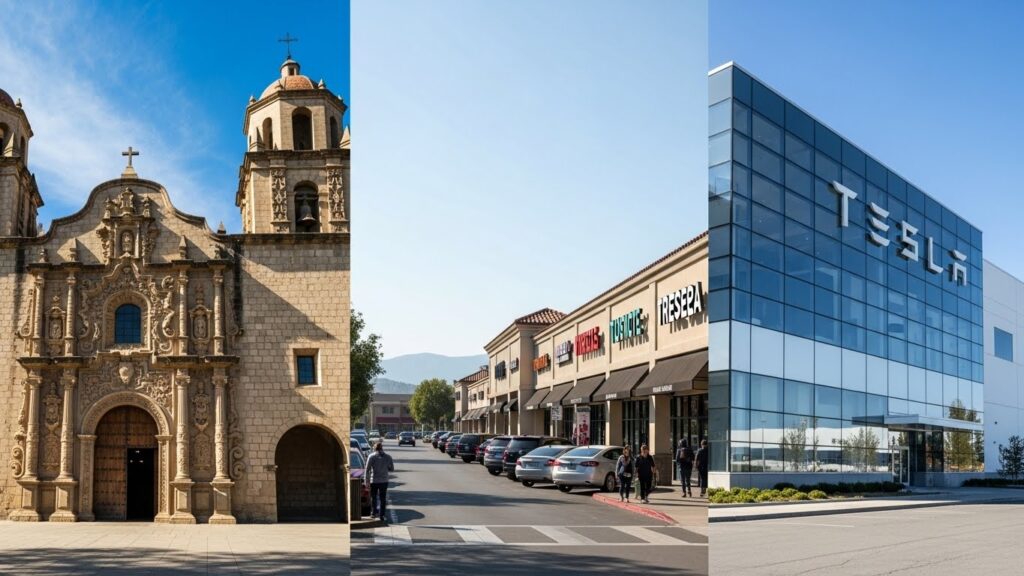
The second layer came with post-war suburban expansion, bringing tracts of single-family homes, shopping centers, and the reliable, if unglamorous, infrastructure of middle-class America. Then, the tech tsunami hit. The opening of the Fremont Auto Plant (later NUMMI and now Tesla) in the 1960s was a precursor. But the real transformation began in the 1980s and 90s as the tech spillover from San Jose and the Peninsula made Fremont a prime location for manufacturing, R&D, and a more affordable home base for engineers and their families.
This historical layering creates the “shag” effect: a city where you can find a historic mission founded in 1797, a 1980s-era strip mall with a legendary boba tea shop, and a cutting-edge biotech lab, all within a few miles of each other. The city doesn’t have a single, polished narrative; it has a composite one, woven together like the fibers of its namesake carpet.
The Aesthetic of Practical Innovation
Architecturally, Fremont is a testament to practicality over pretense. While neighboring cities boast Victorian-era charm or modernist masterpieces, Fremont’s housing stock is largely defined by its era of greatest growth: the late 20th century. This means an abundance of ranch-style homes, split-levels, and stuccoed two-stories with tile roofs. The landscaping is often drought-tolerant, the backyards designed for low maintenance or growing fruit trees—a holdover from its agricultural DNA.
This isn’t to say it’s without beauty. The city is framed by the stunning East Bay hills, with the iconic Mission Peak providing a breathtaking backdrop. The aesthetic charm comes from this juxtaposition: the humble, human-scale suburb set against dramatic natural beauty and interspersed with hyper-modern tech facilities. The “shag” is this comfortable, lived-in, slightly frayed-around-the-edges feel of the homes and streets, which exists in stark contrast to the pristine, minimalist design of the Apple Parks and Googleplexes where many residents work.

The Engine of Diversity and Community
If the physical landscape is the “shag,” the people are the vibrant pattern woven into it. Fremont is one of the most diverse cities in the United States. A walk through its neighborhoods or its spectacular array of grocery stores—from Indian spice markets to Korean supermarkets, from Mexican *carnicerias* to Chinese bakeries—tells the story of global talent drawn to the Silicon Valley dream.
This diversity is Fremont’s greatest strength and the core of its community identity. The tech industry attracts engineers, developers, and scientists from across the globe, who come to Fremont for its schools, its relative space, and its familiar communities. The result is a suburb that feels intensely international. The cultural festivals, places of worship, and restaurant scenes are incredibly rich. The “Fremont Shag,” therefore, is also a cultural texture—a dense, colorful blend of traditions, languages, and cuisines that creates a uniquely global suburban experience.

Silicon Valley’s Pressure and the Future of the Shag
Living in the shadow of Silicon Valley’s economic engine brings immense pressure. Fremont faces the classic Bay Area challenges: astronomical housing costs, traffic congestion on arteries like I-680 and I-880, and the constant tension between preservation and development. The quest for more housing is slowly changing the skyline, with new condo complexes and apartment buildings rising alongside the older, shaggier neighborhoods.
The future of the “Fremont Shag” is uncertain. Will the city succumb to a more homogenized, luxury-upgraded aesthetic as tech wealth continues to reshape it? Or will its essential, practical, and diverse character prove resilient? The likely outcome is another layer. Fremont will continue to adapt, patching new solutions onto old frameworks. The arrival of BART, the growth of a downtown area around the Pacific Commons, and the evolution of the Warm Springs/South Fremont tech corridor next to the Tesla factory are all new threads being woven into the existing fabric.

More Than Just a Carpet: Embracing the Texture
So, what is the “Fremont Shag” ultimately? It’s the acceptance of a certain functional aesthetic. It’s the pride in a community that works hard, values education, and celebrates its global roots. It’s the understanding that innovation doesn’t just happen in glass offices; it happens in garages, in fusion restaurants, and in the efforts of families building a life in a demanding and expensive region.
Fremont may lack the romantic allure of San Francisco or the curated cool of Palo Alto. But in its layered, textured, unpretentious reality, it represents the true heart of Silicon Valley more accurately than any corporate campus. It’s where the code gets written, the families get raised, and the world gets remade—all while walking on a foundation that’s a little bit shaggy, deeply comfortable, and uniquely its own. To know Fremont is to appreciate the complex, durable, and surprisingly cozy tapestry of modern American suburbia, forged in the furnace of technological revolution.