The Lubbock Shag: West Texas Modern
Drive through the wide, gridded streets of Lubbock, Texas, and you might notice a particular breed of home that seems to whisper a stylish secret from the 1960s. Nestled among traditional ranch styles and newer constructions, these houses boast low-slung profiles, expansive windows, and most notably, a peculiar, heavy-textured roof that looks like it’s wearing a shag carpet. This isn’t an architectural accident—it’s a deliberate, regional design movement known locally as the “Lubbock Shag.” A hyper-localized strand of Mid-Century Modern architecture, the Lubbock Shag represents a fascinating and pragmatic adaptation of modernism to the unique demands and spirit of the West Texas High Plains.

Roots in the Prairie: The Architects of a Local Style
To understand the Shag, one must understand the context of its birth. In the post-World War II era, Lubbock was booming. The economy was strong, and a new, optimistic middle class was eager to build. Nationally, the Mid-Century Modern movement was in full swing, championing open floor plans, integration with nature, and clean lines. However, the cookie-cutter versions of these homes from coastal magazines were ill-suited for Lubbock’s extreme environment.
Enter architects like William “Billy” McDonald and his partners. Instead of forcing a foreign ideal onto the landscape, they asked: what does modernism look like here? They drew inspiration from the very plains themselves—the horizontal sweep of the land, the stark beauty of caliche soil, and the massive, ever-present sky. They also looked to the pioneering work of Frank Lloyd Wright and his Prairie School, which emphasized horizontal lines and harmony with the site. The Lubbock Shag became their answer: a modernist house that didn’t fight the High Plains but belonged to it.

Defining Features: The Anatomy of a Shag
So, what exactly makes a house a Lubbock Shag? It’s a combination of signature elements that work together to create a cohesive and functional whole.
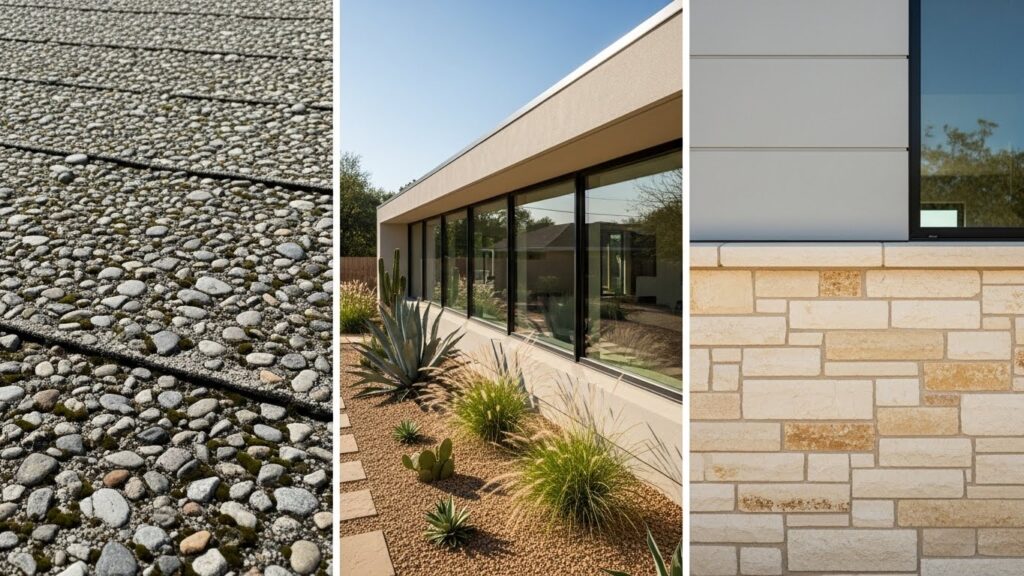
The Iconic Roof: This is the namesake feature. Unlike the flat roofs of many modernist homes, the Shag roof is low-pitched and covered in a thick, heavy, gravel-based roofing material. This “shag” provides crucial weight and durability against the region’s high winds and hail. Visually, it creates a bold, textured crown that contrasts beautifully with the smooth walls.
Strong Horizontal Lines: Emphasizing the flatness of the plains, Shag homes hug the earth. Long, linear compositions, often with extended eaves or fascias, stretch the home visually across the lot. Brick or stone planters and low walls further reinforce this grounded feeling.
Strategic Window Walls: While they embrace openness, Shag windows are strategic. Large panes of glass, often in horizontal bands, are placed to capture optimal views and northern light while frequently avoiding the harsh afternoon sun of the west. Deep overhangs provide shade and protection.
Local and Rugged Materials: This is where West Texas pragmatism shines. Exteriors often combine smooth, painted vertical wood siding (board-and-batten) with native Lueders or limestone, and distinctive, rough-faced “sandstone” bricks. These materials are durable, low-maintenance, and tie the house directly to the regional palette.
Integrated Carports: The attached, open carport is a near-universal feature. More than just a cost-saving measure, it extends the home’s architectural lines and provides a sheltered transitional space.
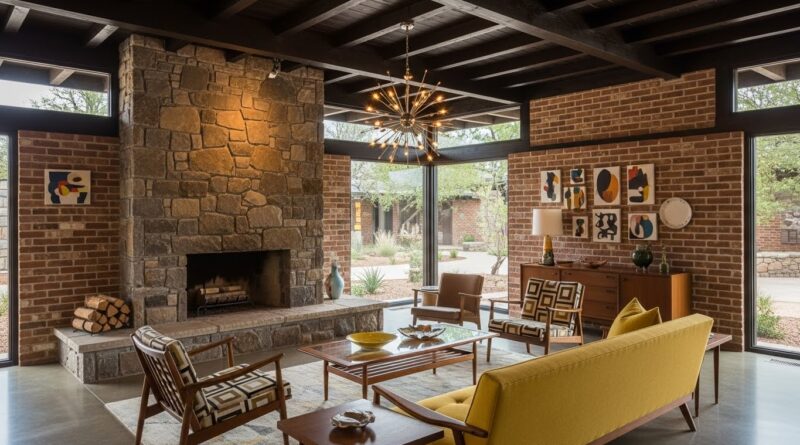
Interior Flow: Inside, the Shag philosophy continues. Floor plans are typically open, with living, dining, and kitchen areas flowing together. Exposed beamed ceilings, brick or stone interior accent walls, and slate or terrazzo flooring are common, blending modern openness with rustic texture.
Modernism with a Texas Accent: Adaptation to Place
The genius of the Lubbock Shag lies in its thoughtful adaptations. This wasn’t just style for style’s sake; every element served a purpose for High Plains living.
The heavy roof wasn’t just trendy—it was anchoring. The strategic window placement wasn’t just dramatic—it managed solar gain. The use of local stone and brick wasn’t just aesthetic—it was economical and thermally efficient. The carport wasn’t just modern—it was a windbreak. Even the iconic open floor plan served a social purpose suited to the friendly, informal West Texas culture, perfect for entertaining and family life.
In this way, the Lubbock Shag transcends being a mere architectural sub-style. It becomes a testament to bioregional design—a philosophy where buildings respond directly to their climate, topography, and available materials. It’s modernism not as an imported dogma, but as a logical, localized solution.

Preservation and Legacy: The Shag Today
For decades, many Shag homes were overlooked, seen as dated. Some were tragically remodeled beyond recognition or demolished. However, a renewed appreciation for Mid-Century Modern design and for unique regional architecture has sparked a preservation movement. A new generation of homeowners, architects, and historians now sees these houses as the cultural treasures they are.
Restoring a Lubbock Shag presents specific challenges—finding craftsmen familiar with the specialized roofing, preserving original materials like terrazzo, and updating systems sensitively. Yet, the reward is immense: a home that is inherently energy-efficient, filled with light, and connected to its environment, with a history baked into its very walls.
The legacy of the Lubbock Shag is profound. It demonstrated that great design is not about imposing a style, but about interpreting it. It inspired later generations of Texas architects to think locally. Today, the Shag stands as a rugged, handsome, and utterly authentic symbol of a time when Lubbock confidently expressed its own modern identity.
Spotting a Shag: Your West Texas Architectural Safari
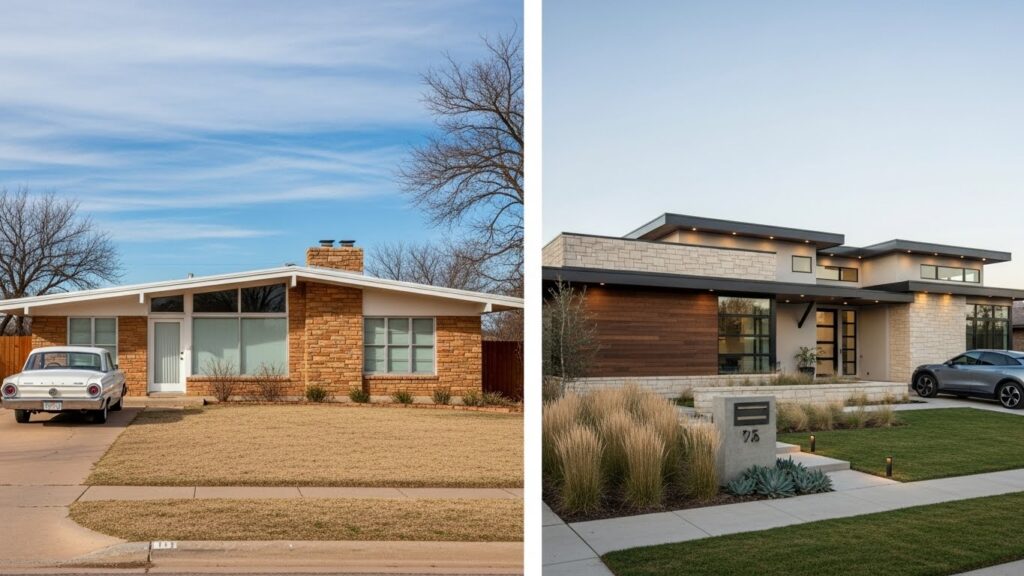
If you find yourself in Lubbock, embark on a Shag safari. Neighborhoods like Tech Terrace, Rushland Heights, and parts of the Melonie Park area are veritable galleries of this style. Look for the low silhouette, the heavy textured roof, and the mix of smooth and rough materials. Notice how each house, while sharing a common language, has its own unique dialect—a different arrangement of brick and stone, a distinctive chimney, or a creative floor plan.
The Lubbock Shag is more than an architectural footnote. It is West Texas Modern—a bold, pragmatic, and beautiful architectural statement born from the marriage of international design ideals and the relentless, inspiring conditions of the Caprock. It reminds us that the most resonant design doesn’t ignore its place; it converses with it, resulting in a home that is truly, and uniquely, of its land.