The Norfolk Shag: Virginia Naval Base Town
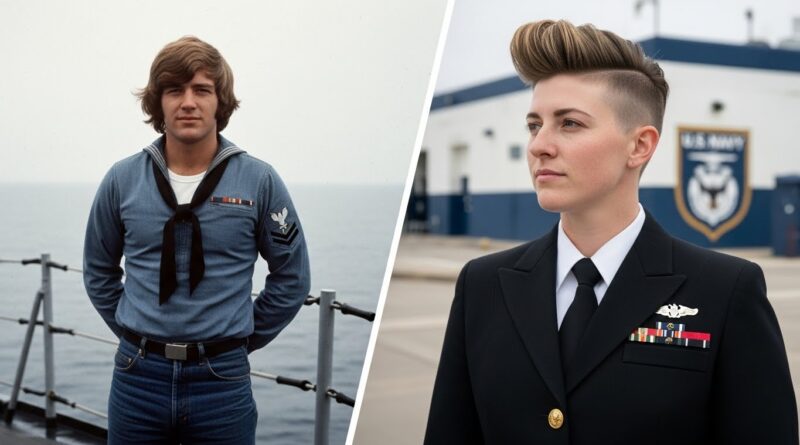
In the tapestry of American military culture, certain symbols emerge that speak volumes about time, place, and community. They aren’t always grand statues or official insignias. Sometimes, they’re as personal as a haircut. Nestled in the heart of Hampton Roads, Virginia, home to the world’s largest naval base, a distinct style took root in the 1970s and 80s. It was sharp, practical, and carried a defiant, working-class edge. It was known, colloquially and with a dose of local pride, as the “Norfolk Shag.” More than just a way to cut hair, the Norfolk Shag is a cultural artifact, a story of a specific town shaped profoundly by the ebb and flow of sailors, shipyards, and saltwater.
Norfolk: A City Defined by the Navy
To understand the haircut, you must first understand the city. Norfolk, Virginia isn’t just a town with a naval base; it is a naval base with a town built around it. Naval Station Norfolk is the epicenter of the U.S. Atlantic Fleet, a sprawling city unto itself of piers, aircraft, and thousands of personnel. For over a century, the rhythm of Norfolk has been set by the ship’s whistle—the comings and goings of carriers, the influx of new recruits, the bittersweet farewells and joyous homecomings.
This created a unique urban environment: a gritty, blue-collar, and transient population mixed with generations of local families. The downtown areas and waterside bars were (and still are) filled with sailors from every corner of the country, bringing their own styles but also adopting a local identity. In this crucible of military precision and waterfront rebellion, aesthetic trends were born not from fashion magazines, but from necessity, regulation, and a desire to assert individuality within a rigid structure.

Anatomy of the Norfolk Shag
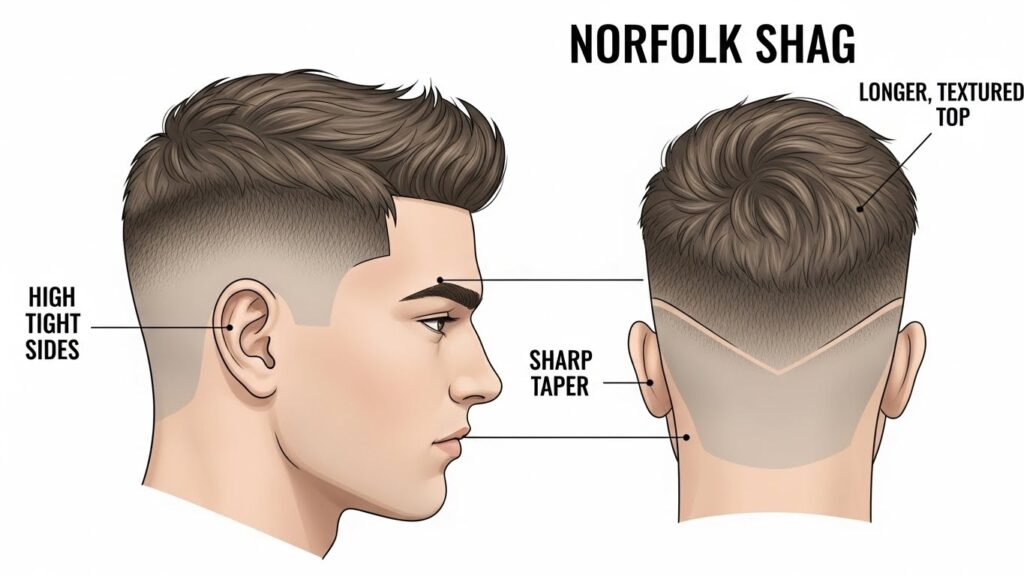
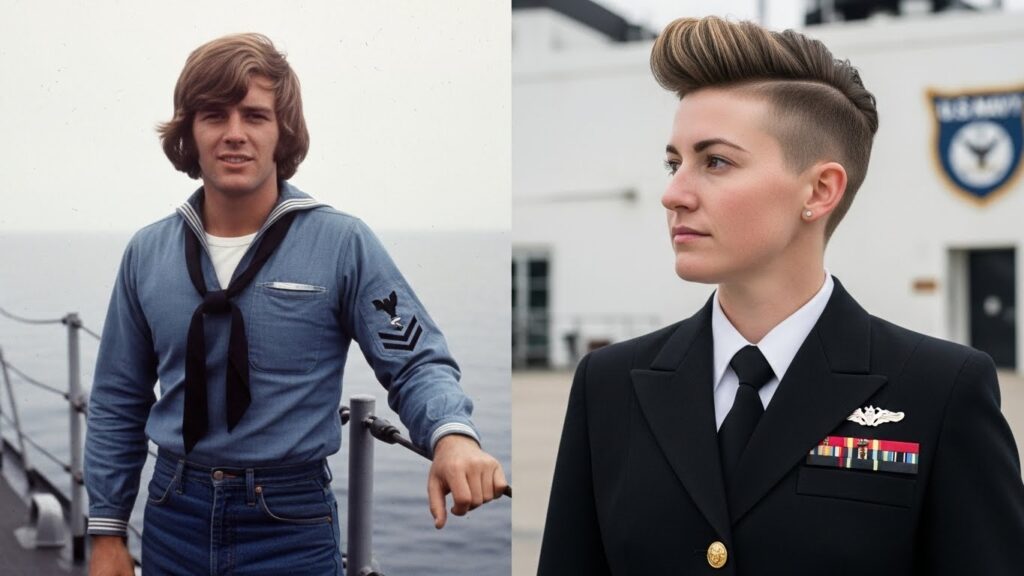
So, what exactly was the Norfolk Shag? It was a specific barbering style that flourished in the local shops catering to sailors and dockworkers. Imagine a cut that had to satisfy two masters: the Navy’s strict grooming standards and the wearer’s desire to look sharp off-duty. The hallmarks were clean, often severe, lines. The back and sides were trimmed very short, high, and tight—sometimes with a distinct, almost vertical wall or a sharp taper. The top, however, was left noticeably longer.
This longer top was the key to its versatility and its “shag” moniker. When not in uniform, it could be styled forward, sometimes with a slight, messy texture, reminiscent of the popular shag cuts of the era, but far more disciplined. It was a haircut that said, “I can stand inspection at 0800 and hit the rock bar on Granby Street at 1900.” It was maintained with frequent trips to the barber, a ritual as common as a coffee run. The style projected a sense of toughness, efficiency, and local identity—a far cry from the more polished, suburban haircuts of the time.
Barbershops as Cultural Hubs
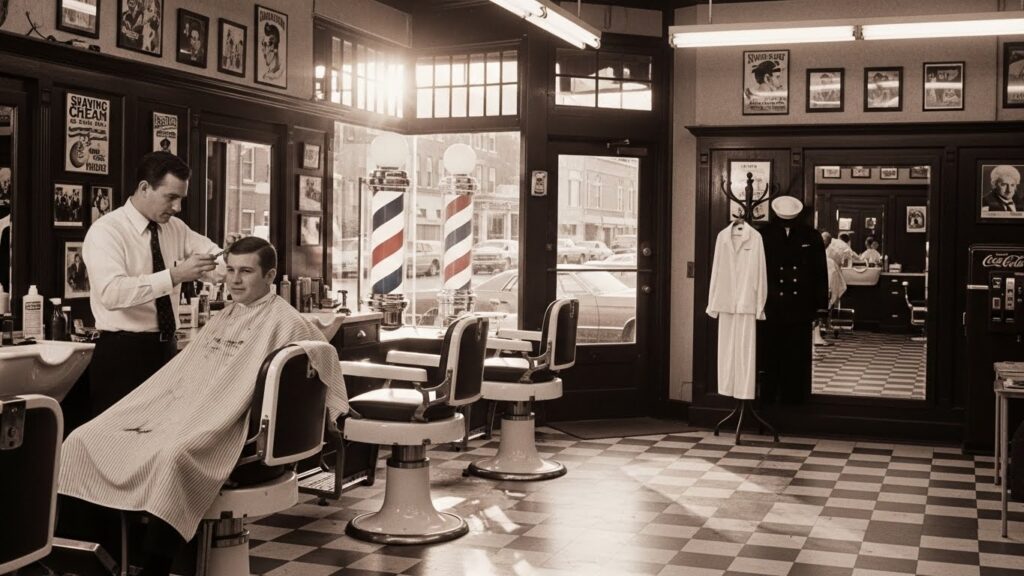
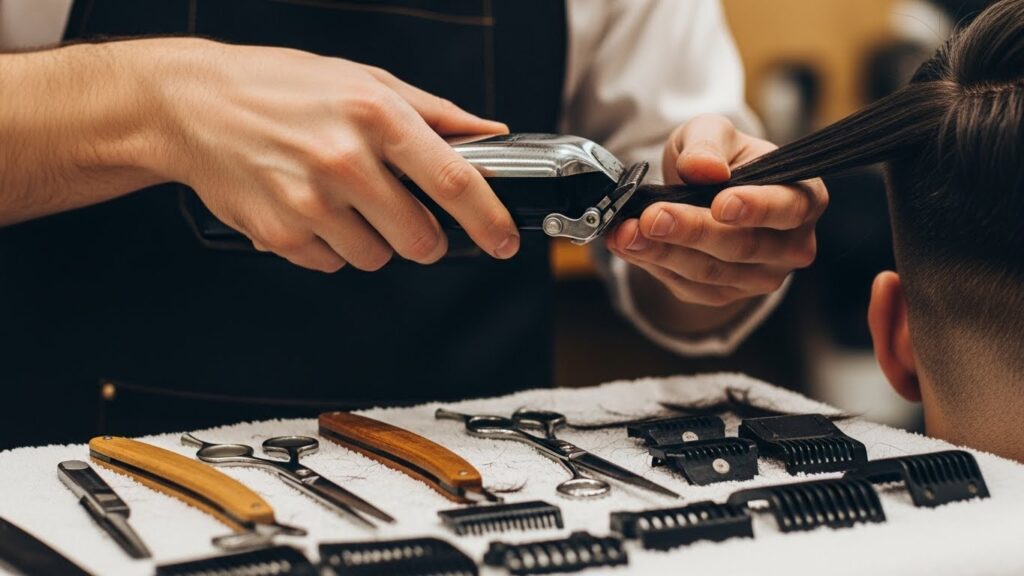
The propagation of the Norfolk Shag happened in specific, hallowed places: the local barbershops. These weren’t spas or salons; they were no-nonsense, often family-run establishments filled with the smell of talcum powder and bay rum. The barbers were craftsmen who knew the regulations inside and out and could execute a high-and-tight in their sleep. They were also confidants, news sources, and anchors in a transient community.
In these shops, sailors fresh from boot camp would get their first “civilian” cut, often requesting the local style they saw on older, seasoned hands. Stories were exchanged about deployments, shipyard gossip, and local lore. The barbershop was a neutral ground where officers and enlisted men might find themselves in adjacent chairs, united by the shared experience of the cut. The continuity of the Norfolk Shag was maintained here, passed down from one generation of barbers and sailors to the next, a silent tradition in a buzzing room.
Evolution and Legacy in the 21st Century
Like all styles, the classic Norfolk Shag has evolved. Hair trends have softened, and military regulations, while still strict, allow for slightly more variety. The precise, stark look of the 1980s has given way to modern iterations like the high fade or the modern crew cut. Yet, the DNA of the Shag remains visible. You can still see its influence in the precise, clean lines favored by many in the military community in Hampton Roads.
Its legacy, however, is more profound than its shape. The Norfolk Shag stands as a testament to adaptive identity. It represents how a community, perpetually influenced by a massive institutional presence, creates its own unique markers. It’s a symbol of practicality meeting personality, of conformity breeding a subtle, stylish rebellion. For those who wore it, it was a badge of belonging—not just to the Navy, but to Norfolk itself. It said you were part of the fabric of this specific, salty, ship-filled town.
More Than Just a Haircut
Today, searching for the “Norfolk Shag” might yield more results about a dance or a bird than the haircut. Its peak as a named style has passed, which makes it an even richer piece of cultural history. It exists now in memories, in old yearbooks from Maury High School, in faded photos from The Raven or The Torch Club, and in the stories of longtime barbers who have sheared the heads of three generations of sailors.
To talk about the Norfolk Shag is to talk about place-making. It’s about how a city, whose identity is so deeply intertwined with a national institution, forged something uniquely its own. It’s a story of American working-class style, born from naval discipline and honed in the vibrant, sometimes rough, port city that services the fleet. The next time you’re in Norfolk, look beyond the ships. Look at the people, especially the older locals and veterans. You might just spot the ghost of the Shag—a clean line, a short side, a hint of texture on top—a living, breathing piece of Virginian naval history, one haircut at a time.