The Omaha Shag: Great Plains Modern
When we think of Midcentury Modern architecture, visions of Palm Springs case study houses or sleek New York skyscrapers often come to mind. But what about the heartland? Tucked away in the neighborhoods of Omaha, Nebraska, and scattered across the Great Plains, exists a distinctive, pragmatic, and wonderfully unpretentious architectural variant: the Omaha Shag. This is the story of a regional modernism, born not from the glamour of the coasts but from the pragmatic, optimistic, and community-focused spirit of the American Midwest in the postwar boom.

Roots in the Prairie: A Style is Born
The Omaha Shag didn’t emerge from a famous architect’s manifesto. Instead, it was a builder’s modernism, a popular style constructed en masse by local development firms between the late 1950s and the early 1970s. Its genesis lies in the confluence of several factors: the national fascination with the clean lines of Midcentury Modern design, the abundant availability of native materials like brick, and the specific needs of growing Midwestern families.
Builders like the influential Leo A. Daly Company and Selzer Associates took the principles of Frank Lloyd Wright’s Prairie School—low horizontal lines, integration with the flat landscape—and fused them with the more contemporary, minimalist ethos of the era. The result was a home that felt both current and grounded, modern yet familiar. It was affordable modernity for the rising professional class, offering a sense of sophistication without the ostentation. This was not a style for custom-built masterpieces; it was for well-designed, livable neighborhoods, making good design accessible.
Anatomy of an Omaha Shag: Key Design Features
So, what exactly defines an Omaha Shag? While variations exist, several signature elements make this style instantly recognizable to those in the know.
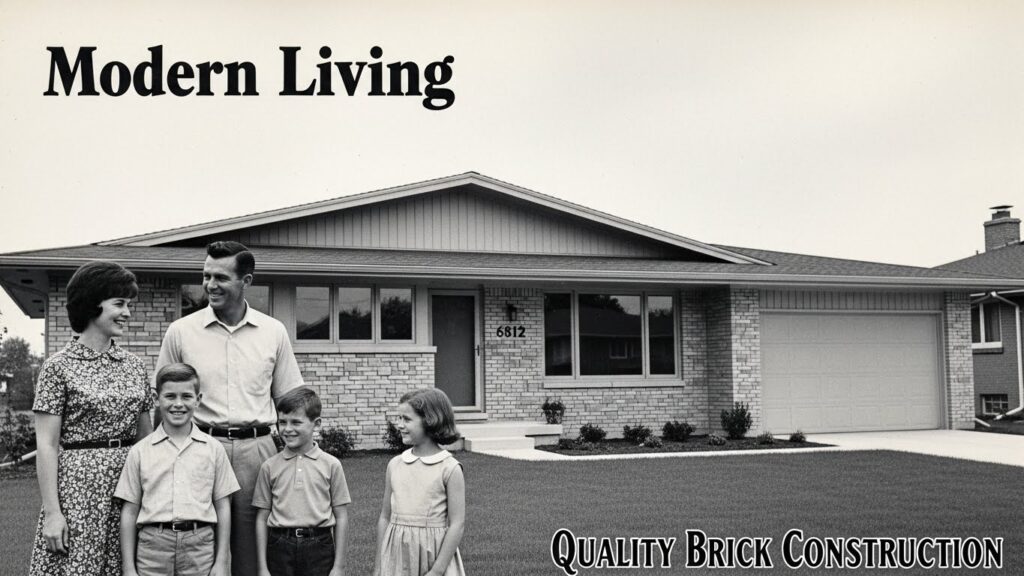
The Low-Slung “Shag” Roof: The most defining feature is the long, low-pitched roof with incredibly wide, enclosed overhangs. These overhangs, often shingled, resemble a shaggy brow shielding the eyes of the house—hence the affectionate nickname “Shag.” This design provided shade, protected the brick walls from the elements, and emphasized the home’s horizontal grip on the land.
Brick, Brick, and More Brick: Typically, the front facade and often the entire exterior are clad in rich, earthy brick. This provided durability against Plains weather and a sense of solid, traditional craftsmanship. The brickwork was often laid in interesting patterns, like stacked bond, adding subtle texture.
Asymmetrical and Expansive Windows: Symmetry was often abandoned for dynamic window placement. You’ll find large, horizontal picture windows, sometimes in groups, and tall, narrow windows placed strategically to capture light. A common feature is a large window set high under the shag overhang, flooding the interior with indirect northern light.
The “Front-Facing” Carport: In a bold move that prioritized the car, many Shags feature an integrated, front-facing carport as part of the main facade’s composition. Supported by simple brick piers, it was a frank acknowledgment of the automobile’s centrality to American life, turning a utilitarian space into a design element.
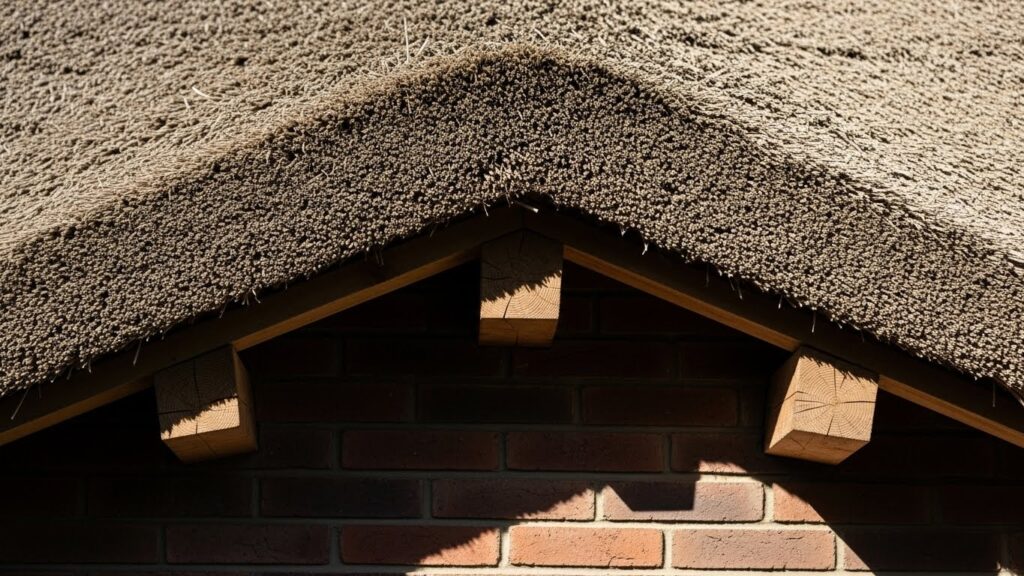
Subdued Ornamentation: Decoration is minimal and structural. Exposed rafters under the deep overhangs, contrasting wood or painted trim around windows, and occasionally a raised, textured brick pattern are the primary decorative touches. The beauty is in the massing and material, not in applied details.
Life Inside the Shag: Form Follows Family Function
The Omaha Shag’s interior layout was a direct response to postwar family life. The floor plan was typically open, yet defined. The living room, often with a fireplace clad in matching brick, flowed into a dining area, creating a sense of spaciousness for entertaining. The kitchen, however, was usually a separate, efficient workspace—a nod to the era’s more private household management.
Bedrooms were relegated to quiet wings, and hallways were minimized to increase livable square footage. A hallmark of many Shags is the use of split-level designs. A few steps down might lead to a cozy, wood-paneled family room or den, while a few steps up led to the sleeping quarters. This simple vertical separation created distinct zones for public and private life within a compact footprint. Built-in shelving and cabinetry were common, emphasizing the efficient, clutter-free ideal of the time.

The Shag in Context: Great Plains Modernism’s Legacy
The Omaha Shag is more than a quirky architectural footnote; it is a prime example of regional modernism. While International Style architects often sought a “one-size-fits-all” approach, the Shag responded specifically to its place. The deep overhangs shielded windows from the high summer sun while allowing for passive solar gain in winter. The brick provided thermal mass, moderating temperature swings. The low profile was a sensible response to the windy, open plains.
Its legacy is twofold. First, it created thousands of comfortable, dignified, and architecturally coherent homes that continue to be desirable places to live. Neighborhoods like Omaha’s Hillsborough or Westside are veritable museums of this style. Second, it demonstrated that modernism could be adapted, softened, and made deeply contextual. It speaks to a Midwestern value system: innovation tempered by practicality, progress rooted in community.

Preservation and Rediscovery in the 21st Century
For decades, the Omaha Shag was simply “the house I grew up in,” its architectural significance overlooked. Today, it is experiencing a well-deserved rediscovery. A new generation of homeowners, architects, and preservationists are championing the style. They appreciate its inherent sustainability, its robust construction, and its timeless, minimalist aesthetic.
Modern renovations respectfully update these homes, often opening up kitchens, refinishing original hardwood floors, and updating mechanical systems while painstakingly preserving the iconic brickwork, windows, and roof lines. The Shag’s flexible floor plan and strong bones make it ideal for contemporary living. This preservation effort is a celebration of local identity, a way of honoring the genius loci—the spirit of the place—that these homes so perfectly embody.
The Omaha Shag stands as a testament to the idea that great design can be democratic, regional, and resilient. It is a style that looks firmly to the future while sitting solidly on the plains. It is not the flashiest chapter in architectural history, but it is a profoundly authentic one—a true Great Plains Modern.