The Providence Bob: New England Historic
In the world of hairstyling, trends come and go with the ferocity of a nor’easter. Yet, nestled along the rocky coast and within the brick-lined streets of New England, one cut has endured, quietly defying the whims of fashion. It’s not a cut you’ll find trending on TikTok with a flashy name; its identity is tied to a place and a sensibility. This is The Providence Bob. More than just a haircut, it is a historic, pragmatic, and enduring symbol of understated elegance—a signature of New England style that speaks volumes through its simplicity.

The Origins: Where History Meets the Hairline
To understand the Providence Bob is to understand New England itself. The region is built on a foundation of Puritan simplicity, Yankee ingenuity, and maritime resilience. In cities like Providence, Salem, and Portsmouth, wealth was often built discreetly, and display was considered gauche. This cultural DNA translated directly into personal style, including hairstyles.
The bob haircut famously entered wider fashion in the 1920s as a symbol of radical female liberation. But in New England, the adoption of the bob was less about flapper rebellion and more about a logical evolution towards efficiency. The Providence Bob likely solidified its identity in the mid-20th century. It was the cut of the educated woman, the professor’s wife at Brown University, the community pillar in Bar Harbor, the artist in Ogunquit. It required minimal fuss—a quick blow-dry with a round brush, or even air-drying into its natural shape. It echoed the clean lines of Federalist architecture and the no-nonsense approach of the region’s ethos.

Defining the Cut: Anatomy of a Classic
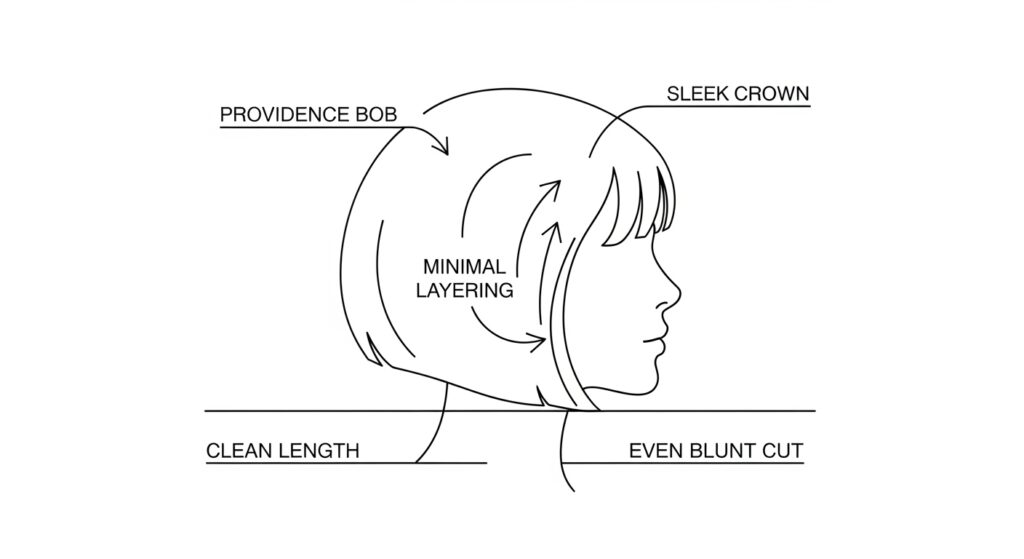
So, what exactly distinguishes a Providence Bob from any other chin-length bob? It’s in the details, or rather, the deliberate lack of overly trendy details.
The Length: Unwavering in its commitment to practicality, it typically lands between the earlobe and the collarbone, with a strong preference for the chin or just below. This length is the sweet spot—it’s out of the way, frames the face beautifully, and avoids the “growing-out” awkwardness of longer styles.
The Shape: Think architecture, not abstraction. The line is clean and definitive. While it may be perfectly blunt, it can also feature invisible layers to remove weight, never to add shaggy texture. The goal is a smooth, solid outline that complements the wearer’s bone structure without drawing excessive attention to itself.
The Texture and Finish: This is a cut that celebrates healthy, natural hair. It is designed to be sleek, but not shellacked. There’s a lived-in, touchable quality to it. On wavy hair, it might show a gentle bend; on straight hair, it is a polished line. The finish is always smooth at the crown and sides, conveying order and composure.

Why It Endures: The Timeless Appeal of Pragmatic Style
In an era of balayage, butterfly cuts, and viral hair trends, the persistence of the Providence Bob is a testament to its profound utility and quiet confidence. Its endurance is built on several pillars.
First, its low-maintenance nature is legendary. It doesn’t require a standing appointment every six weeks for elaborate color work or intricate trimming. It grows out gracefully and remains intelligible as a style throughout the process. For the busy professional, the active mother, the retiree traveling the world, this is a style that works for them, not against them.
Second, it is universally flattering. By framing the jawline and drawing the eye to the face’s center, it highlights the wearer’s features—their eyes, their smile—rather than competing with them. It’s a haircut that makes you look at the person, not just the hair.
Finally, it carries an unmistakable air of intelligence and authenticity. In a world of fast fashion and faster trends, the Providence Bob is a statement of self-assuredness. It says the wearer has more important things to think about than their hair, yet still respects the importance of presenting oneself with care and dignity.

Asking for the Cut: A Guide for the Modern Client
Walking into a salon and asking for a “Providence Bob” might earn you a curious look from a stylist unfamiliar with the term. To communicate this historic style, use its language: the language of precision and understatement.
Say: “I’m looking for a classic, chin-length bob. Blunt or with very subtle layers for movement, but I want to keep a strong, clean line. The goal is something very low-fuss, sleek, and timeless—think more historic New England elegance than downtown edge.”
Bring reference pictures that emphasize the solid shape and practical length. Mention icons like Katherine Hepburn in her later years, or modern embodiments of classic style like Annette Bening. A skilled stylist will understand the assignment: to create a cut that is both precise and liberating in its simplicity.
Beyond Providence: A Legacy of Understated Elegance
The Providence Bob, while named for a city, transcends its geography. It is found in the financial districts of Boston, the art galleries of Portland, and the leafy suburbs of Connecticut. It is a hairstyle that aligns with a lifestyle and a worldview. It represents a choice to invest in a timeless, functional aesthetic over fleeting novelty.
In preserving this historic cut, wearers become custodians of a style philosophy that values substance, longevity, and personal authenticity. It is a quiet rebellion against the constant churn of consumer fashion. In a single, clean line around the head, it carries the weight of history, the practicality of a Yankee, and the confidence of a woman who knows exactly who she is.
The Providence Bob isn’t just a haircut you get; it’s a haircut you inherit and then adapt as your own. It is, in every sense, a New England historic—a living, breathing piece of style history that continues to define elegance on its own, wonderfully pragmatic terms.