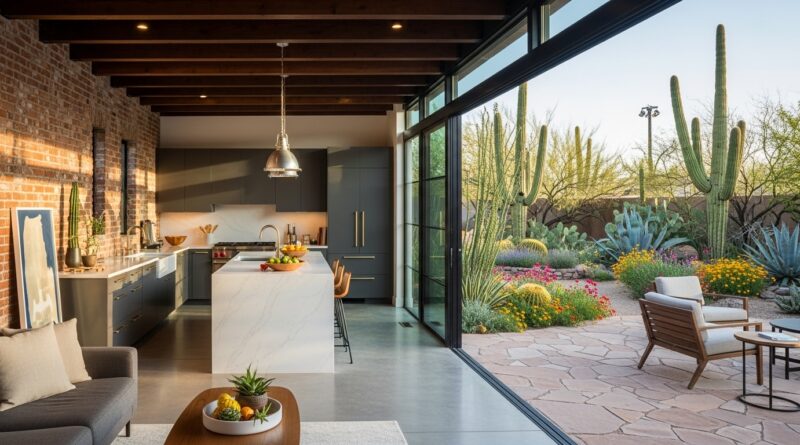
The Tucson Shag: Desert Modern
In the heart of the Sonoran Desert, under a relentless sun and against a backdrop of rugged mountains and saguaro cacti, a distinctive architectural movement took root in the mid-20th century. It wasn’t the sleek, glassy International Style of the coasts, nor the rustic adobe of the past. This was something uniquely Tucson. Locals and architects alike have a name for it: the Tucson Shag. More than just a quirky nickname, the “Shag” represents a profound and beautiful adaptation of modernist principles to an extreme environment, creating a style we can truly call Desert Modern.
Roots in the Sand: The Origins of Desert Modern
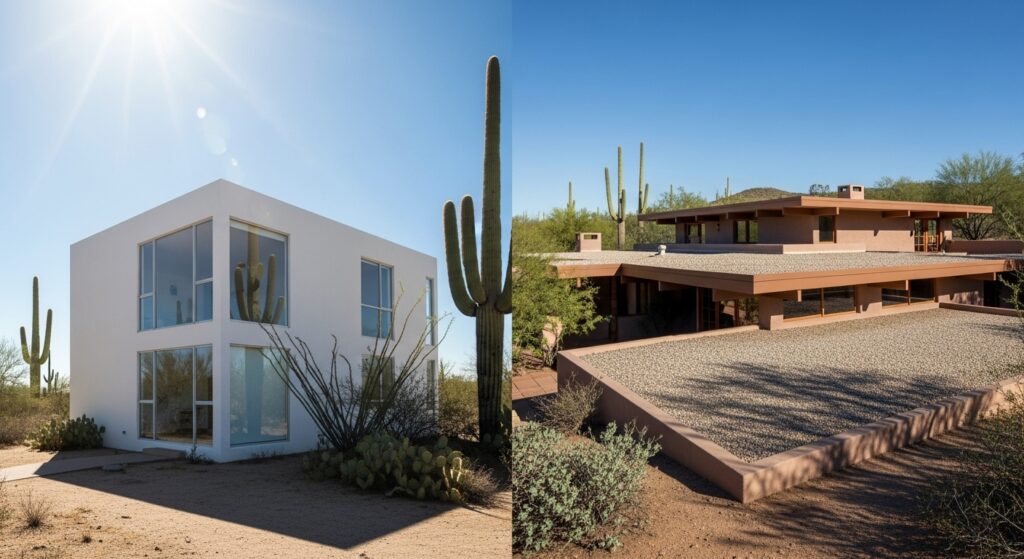
The Tucson Shag didn’t emerge in a vacuum. Its birth in the 1950s and proliferation through the 1970s coincided with a national fascination with modernism and a post-war boom that saw Tucson’s population swell. However, early modernist glass boxes, so elegant in temperate climates, were a recipe for thermal disaster in the desert. The sun was the primary design challenge.
Tucson architects turned to the wisdom of indigenous and Spanish colonial building techniques—thick walls, small windows, deep overhangs—and reinterpreted them through a modernist lens. They were also influenced by the California Case Study Houses and the work of Frank Lloyd Wright, whose organic architecture philosophy urged designs to belong to their site. The result was a hybrid: the clean, open plans and connection to nature of modernism, fused with pragmatic, site-specific solutions for solar gain and heat dissipation. The iconic gravel roof became the crowning symbol of this fusion.
Deconstructing the Shag: Key Architectural Features
You can identify a Tucson Shag home by a set of recurring design elements, each serving a functional purpose while creating a cohesive aesthetic.
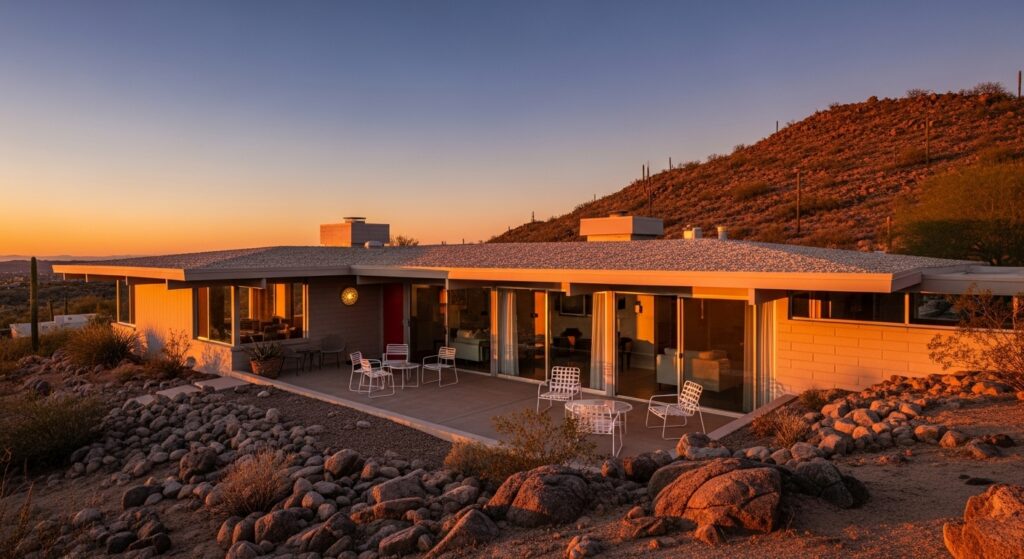
The Signature Roof: This is the namesake. A built-up roof with multiple layers of asphalt and gravel, often 2-3 inches thick. The gravel (typically light-colored “desert gold”) provides crucial thermal mass, reflecting the intense solar radiation and protecting the waterproofing layers underneath. Its textured, “shaggy” appearance breaks up the hard lines of the structure, helping it visually recede into the rocky terrain.
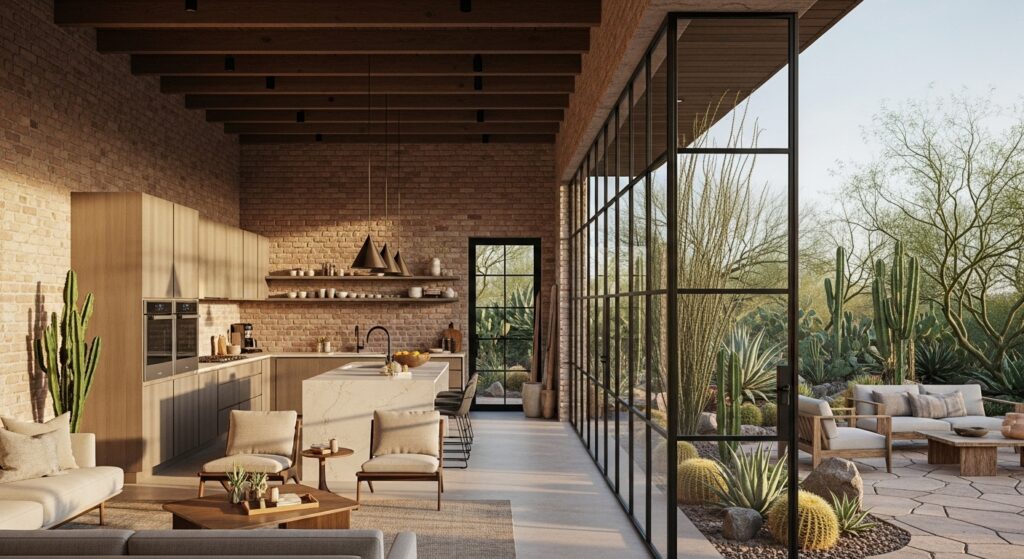
Indoor-Outdoor Integration: Walls of glass, sliding glass doors, and breezeways are essential. The goal was to erase the boundary between the interior living space and the desert outside. Patios, courtyards, and covered porches became outdoor rooms, essential for living in a climate where outdoor life is possible most of the year.
Low-Slung, Horizontal Lines: Tucson Shag homes hug the earth. Their flat or very low-pitched roofs and elongated forms emphasize horizontality, mirroring the vast, flat stretches of the desert valleys and ensuring stability against rare high winds.
Mass and Shade: Strategic use of concrete, brick, and rammed earth provides thermal mass to absorb heat during the day and release it at night. Deep roof overhangs, perforated screen blocks (often called “egg crate” screens), and strategically placed landscaping (like palo verde trees) create essential pockets of shade, controlling light and heat gain.
Material Honesty: Materials are often left in their natural state. Exposed brick, raw concrete (board-formed or block), stained wood, and native stone are common. This palette reflects the colors and textures of the surrounding desert—ochre, rust, tan, and gray.

Desert Icons: Architects of the Tucson Shag
While many contributed, a few visionary architects are synonymous with the movement’s highest expression.
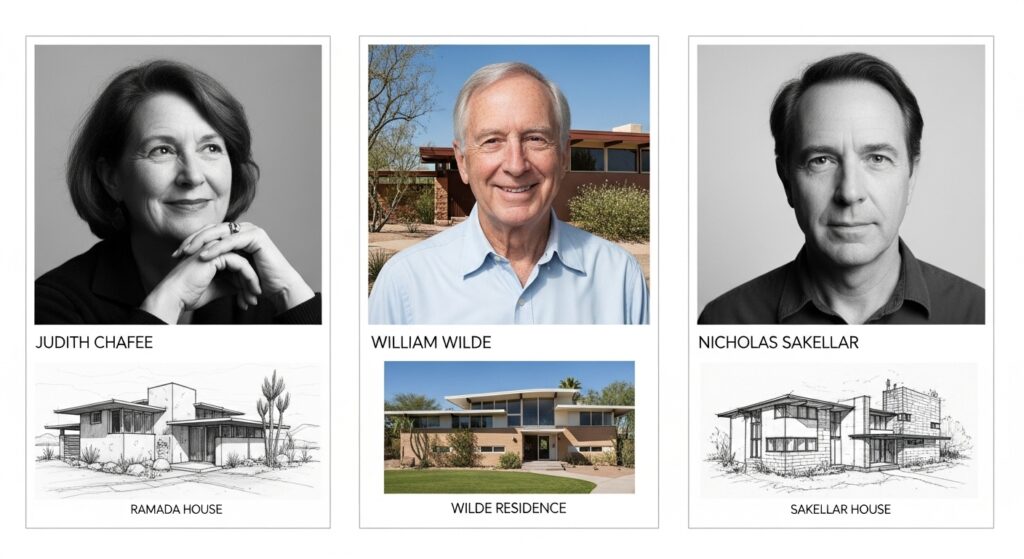
Judith Chafee: Perhaps the most celebrated architect of the genre, Chafee’s work, like the iconic Ramada House, is the epitome of Desert Modern. Her designs were masterclasses in environmental response, using form, mass, and cross-ventilation to create comfortable habitats with minimal mechanical intervention. She famously stated her work was “for the desert,” not just in it.
William Wilde: Wilde produced a prolific body of Shag-style homes throughout Tucson’s foothills. His designs often featured innovative butterfly roofs (V-shaped) that channeled rare rainwater, and he expertly manipulated ceiling heights and spatial volumes to create dynamic, flowing interiors that always focused on the view.
Nicholas Sakellar: Known for his elegant and refined take on the style, Sakellar’s homes often incorporated more formal geometric patterns, custom-designed cabinetry, and a meticulous attention to detail. His work demonstrates how the Shag aesthetic could achieve a level of sophistication and luxury.
The Shag Today: Preservation and Modern Relevance
Today, the Tucson Shag is experiencing a well-deserved renaissance. After decades where many were demolished for larger, more ostentatious homes, a new generation of homeowners, historians, and architects sees their immense value. Preservation efforts are underway, and beautifully restored Shag homes are highly sought-after in the Tucson real estate market.
Their relevance is more than just nostalgic. In an age of climate consciousness, the Tucson Shag offers a blueprint for sustainable desert living. Its passive cooling strategies, use of local materials, and respect for the site are principles that align perfectly with modern green building standards. Contemporary architects in the Southwest continue to draw inspiration from the Shag, adapting its lessons with new technologies like high-performance glazing and photovoltaic systems.
The challenge lies in sensitive restoration—updating mechanical systems and kitchens for modern life while preserving the original intent, materials, and character. It’s a delicate balance between conservation and evolution.
Living with the Land: The Legacy of Desert Modern
The true legacy of the Tucson Shag is philosophical. It represents a moment in architectural history where place was the primary client. It teaches us that good design is not about imposing a style, but about listening to the landscape—its climate, its topography, its light, and its silence.
Driving through Tucson’s historic foothills neighborhoods, these unassuming homes still sit comfortably in their settings, their gravel roofs glowing in the late afternoon sun. They are quiet reminders of a time when desert living meant adaptation and respect. The Tucson Shag is not just a style of the past; it is a timeless dialogue between human shelter and the majestic, unforgiving beauty of the desert. It is, in every sense, Desert Modern perfected.