15 Hairstyles That Work for Transition Hair
If you’re growing out a relaxer, color treatment, or simply embracing your natural texture, the transition phase can feel like a hair purgatory. You’re caught between two worlds: the straight or processed ends and the beautiful new growth coming in. This often means dealing with multiple textures, dryness, and a serious case of “what do I do with my hair today?”
Understanding Your Transition Hair Needs
Before we dive into the styles, it’s crucial to understand what your hair needs during this time. Transition hair is uniquely vulnerable. The line where your natural texture meets your processed hair, called the demarcation line, is a point of weakness. Hairstyles that put tension on this line or require excessive heat can lead to breakage.
Your mission is threefold: protect the delicate line of demarcation, moisturize diligently (as your natural roots and processed ends often have different hydration needs), and embrace styles that make you feel good without fighting against your texture. The following styles are chosen with these exact principles in mind.

1. The Versatile Braid-Out or Twist-Out
This is a cornerstone style for a reason. By braiding or twisting damp, well-moisturized hair, you create a uniform pattern that beautifully blends your two textures as it dries. Once unraveled, you get gorgeous, defined waves or curls that disguise the difference between your new growth and ends. It’s a protective, low-manipulation style that can last for days with proper nighttime care (like a satin bonnet).

2. Chic and Low Buns
You can never go wrong with a bun. A low bun, whether sleek, textured, or a messy ballerina style, is perfect for taming transition hair. It keeps the ends protected and minimizes daily handling. Use a satin scrunchie to prevent breakage. For a sleeker look, apply a light gel or edge control to your roots and nape, but allow your crown to puff naturally for a modern, blended effect.

3. Headscarf or Headwrap Magic
When you’re short on time or just want a break, a headscarf is your best friend. It’s the ultimate protective style that also makes a major fashion statement. You can tuck all your hair away or leave out some curls at the front. It protects your hair from the elements and gives you a zero-effort, high-impact look while your hair gets a rest.

4. Pineapple Puff
This quick and adorable style is perfect for medium to long transition hair. Gather your hair into a very high ponytail on the very top of your head (like a pineapple) but only pull it halfway through on the last loop of your scrunchie. This creates a cute puff that showcases your volume while keeping the ends tucked and protected. It’s a playful, everyday look.

5. Flexi-Rod or Perm Rod Set
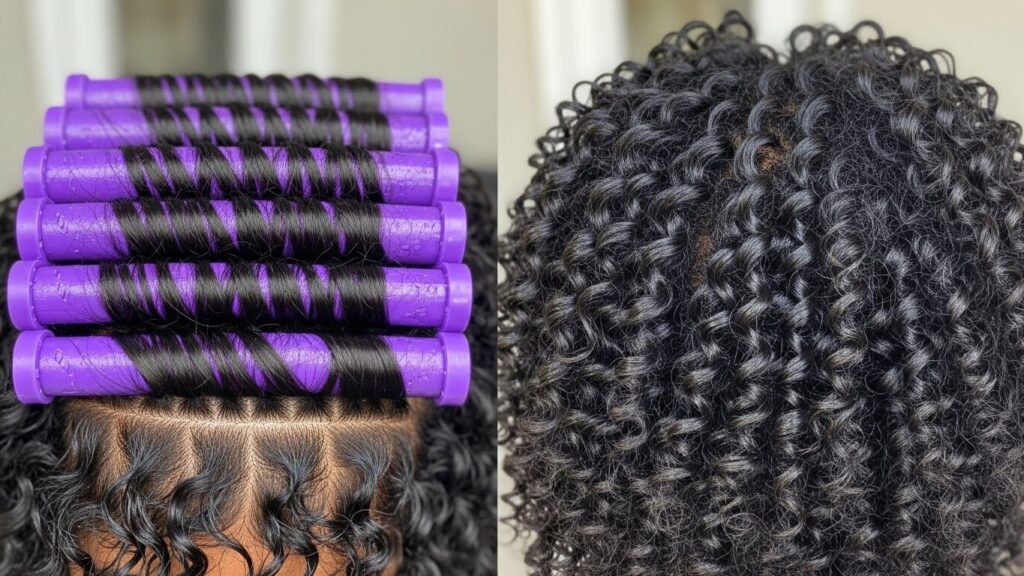
For a more polished curl pattern that lasts, try a rod set. Using flexi-rods or perm rods on damp hair gives you consistent, springy curls from root to tip. This method uses no direct heat and the resulting curls are fantastic for blending textures. You can wear the curls full and bouncy or break them up for a softer, voluminous look.
6. Half-Up, Half-Down Style
This style offers the best of both worlds. Pulling the top section of your hair up relieves tension from the heavier, processed ends and shows off your beautiful new growth at the crown. The bottom half can be worn in its natural textured state from a twist-out or braid-out. It’s a flattering, face-framing style that’s incredibly easy to do.

7. Flat Twists or Cornrows as a Style
Don’t just see flat twists or cornrows as a base for a twist-out; wear them as a standalone style! They are the epitome of low-manipulation and can be styled in endless creative patterns—from simple front-back designs to intricate geometric looks. They keep your hair neatly sectioned, moisturized, and completely protected for days or even weeks.

8. The Power of Accessories: Headbands & Clips
Never underestimate the power of accessories. A wide headband can sleek down and contain your roots while letting the rest of your hair flow. Decorative clips can pin back sections that are behaving differently, creating an intentional, stylish look. They are perfect for bad hair days, instantly turning them into great hair days.

9. Wash-and-Go (With a Twist)
A traditional wash-and-go might highlight texture differences, but you can modify it. Apply a generous amount of a defining curl cream and gel to sopping wet hair, using the “praying hands” and scrunching method. This helps clump your curls together, making the texture contrast less noticeable. Diffuse or air dry for a juicy, defined look that celebrates your unique pattern.

10. Strategic Trims: The Dusting Method
While not a hairstyle per se, regular dusting is a critical practice. Instead of one big chop, you get tiny trims every 8-10 weeks to slowly remove the thinnest, most damaged ends. This allows your hair to retain length while gradually getting healthier. Styling becomes much easier as the bulk of your hair becomes stronger and more uniform.

11. Two-Strand Twists (Medium to Small)
Two-strand twists are a classic protective style for a reason. They are gentle, can be worn for weeks, and when taken down, provide a fantastic twist-out. During the transition, keeping them in for 1-2 weeks gives your hair a break from daily styling and manipulation. You can wear them down, in updos, or even pinned into artistic styles.

12. The Tuck-and-Roll
This is an elegant, quick updo. Simply gather your hair at the nape of your neck, twist it gently, and then roll it upwards, tucking the ends under. Secure with bobby pins or a clip. It looks polished but takes seconds. It’s perfect for hiding ends that are drier or more damaged, while the gentle roll adds volume and shape.

13. High Ponytail with a Scrunchie
A high ponytail can work if done gently. Use a satin or silk scrunchie to avoid creasing and breakage. Don’t pull it too tight—allow some volume at the crown. You can wrap a small section of hair around the base to conceal the scrunchie. This style pulls your hair up and away, protecting the ends and showcasing the texture of your new growth.

14. Braided Crown or Halo Braid
This romantic style distributes hair evenly around your head and is excellent for blending textures. Create a simple braid (or twist) along your hairline, wrapping it around your head like a crown, and pin it in place. It keeps hair off your face and neck, looks intricate, and is surprisingly simple to achieve with a little practice.

15. The “Big Chop” Bob (When You’re Ready)
When you’re ready to fully embrace your natural texture, a big chop into a chic bob or tapered cut can be the ultimate liberating style. This isn’t a style for *during* the transition, but rather the celebratory end of it. It removes all processed hair in one go, leaving you with a head full of healthy, single-textured hair that’s easy to style and manage.

Embracing Your Journey with Confidence
The transition journey is as much about patience and self-care as it is about hair. Each of these 15 hairstyles offers a way to manage your unique texture while protecting your hair’s health. Remember to deep condition regularly, sleep on a satin pillowcase, and listen to what your hair needs.
Your hair is transforming, and so are you. Use this time to experiment, have fun, and fall in love with the versatility of your mane. With these styles in your arsenal, you can navigate your transition with grace, style, and absolutely zero bad hair days.