32 Bob Hairstyles for Fine Hair That Truly Keep Their Shape
Fine hair is not the problem. The cut is. I used to think my thin strands would never hold a bob past breakfast, and then I found the right shapes — and the right stylist notes. In 2026 we are finally past the “cut it short and pray” era.
Below are 32 bob hairstyles for fine hair that actually keep their shape, from the quiet luxury bob to the asymmetrical lob, old money hair, romantic goth hairstyles, glitchy glam hair, the vampire haircut, and even the hime cut.
Each one comes with a quick note on who it works for and what to ask for at the salon. Skim, save, screenshot. These are the cuts I would bring to my own stylist tomorrow.
What “Holds Its Shape” Really Means for Fine Hair
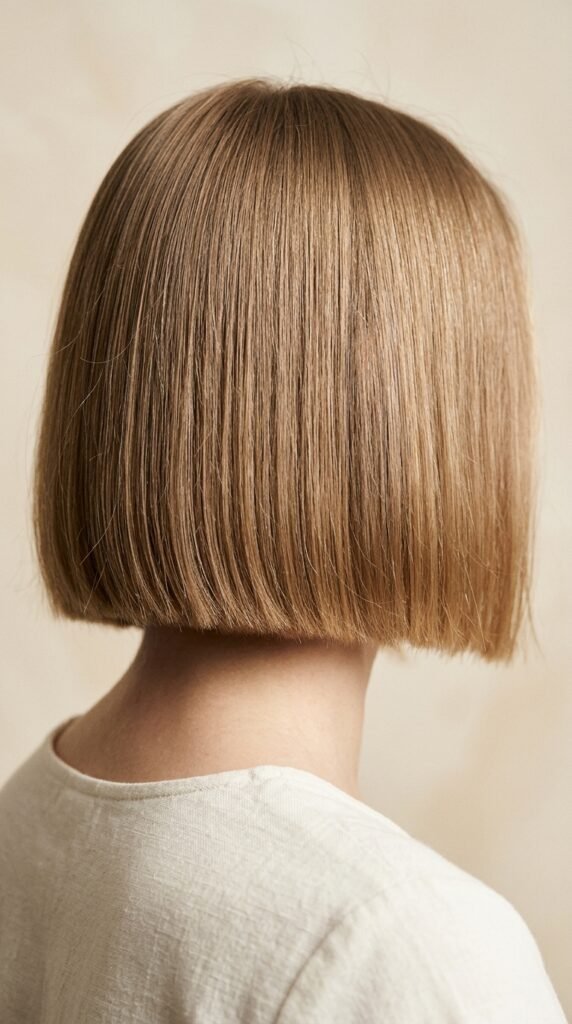
Fine hair does not need more product. It needs a cut with a plan. Before we get to the styles, here is the short version of what actually keeps a bob from collapsing by noon.
- Structure beats layers. Blunt lines and soft graduation create the illusion of density.
- Length matters. Most fine bobs hold best between the jaw and collarbone.
- Texture is your friend. A tiny bend or a light wave spray gives strands something to grip.
- Ask for a shape, not a trend. Bring photos and say, “I need this to hold without styling for 20 minutes.”
1. The Blunt Bob
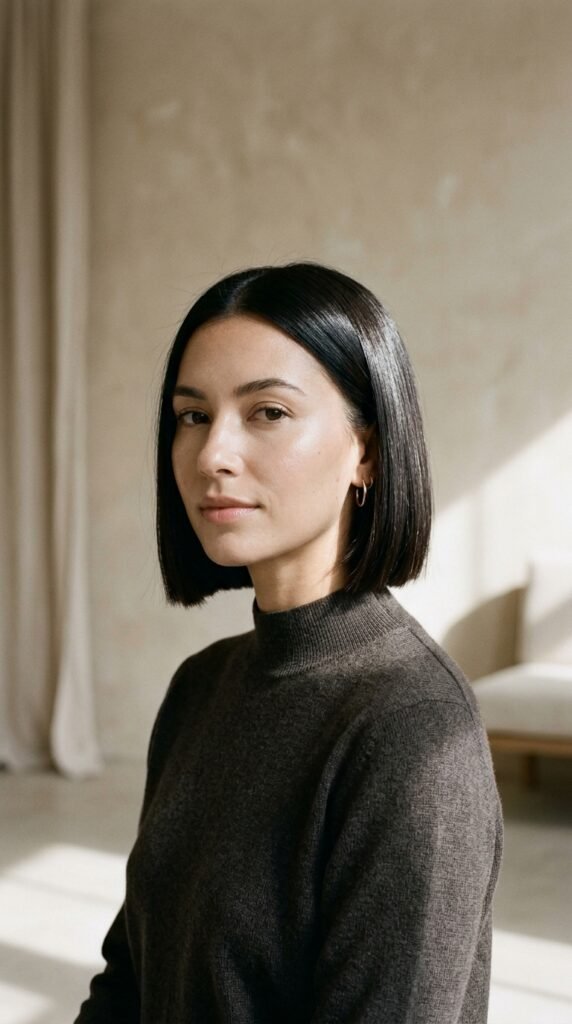
The blunt bob is the gold standard for fine hair, and in 2026 it is still the cut I recommend first. One clean line at the jaw or just below creates instant density.
What to ask for:
- One length with zero visible layers
- Ends cut straight across, not point-cut
- A tiny bit of softness at the corners so it does not look heavy
Style it with a round brush for two minutes, then a light texture spray. This is the cut that makes thin strands look expensive. It is also the easiest bob to grow out, which matters when you are not sure about short hair.
2. The Quiet Luxury Bob
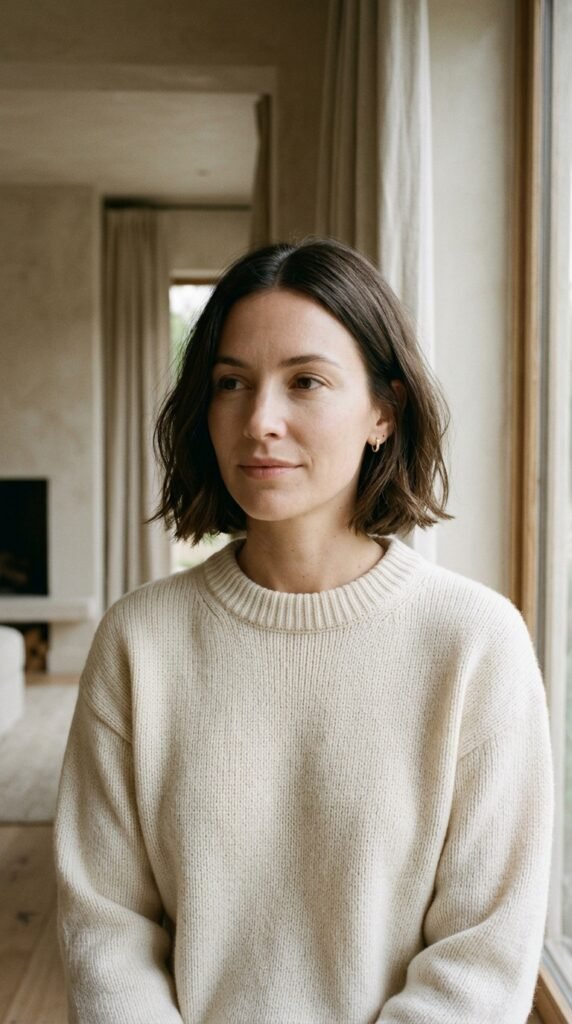
The quiet luxury bob is soft, polished, and almost boring in the best way. Think smooth hair, a middle or slight side part, and ends that graze the jaw with a gentle bend.
Who it works for: fine hair that tends to look flat. The soft shape adds movement without weight.
Ask your stylist for:
- A slightly rounded back for volume
- Minimal face-framing pieces
- Ends that are soft but still thick-looking
Keep styling simple: a light mousse on damp hair and a blow-dry with a round brush. No heavy oils. This is the cut I wear when I want to look like I have my life together.
3. The Old Money Bob

Old money hair is not about looking rich. It is about looking effortless and put-together. The bob version is a smooth, shoulder-grazing shape with a deep side part and a soft bend at the ends.
Why fine hair loves it:
- The side part adds lift at the root
- A smooth surface makes thin strands look thicker
- The length is long enough to feel safe, short enough to hold shape
Ask for a one-length cut with a slight angle. Style with a round brush and a pea-sized drop of serum. Keep it simple. Pair it with a tucked ear and a small gold hoop.
4. The Asymmetrical Lob
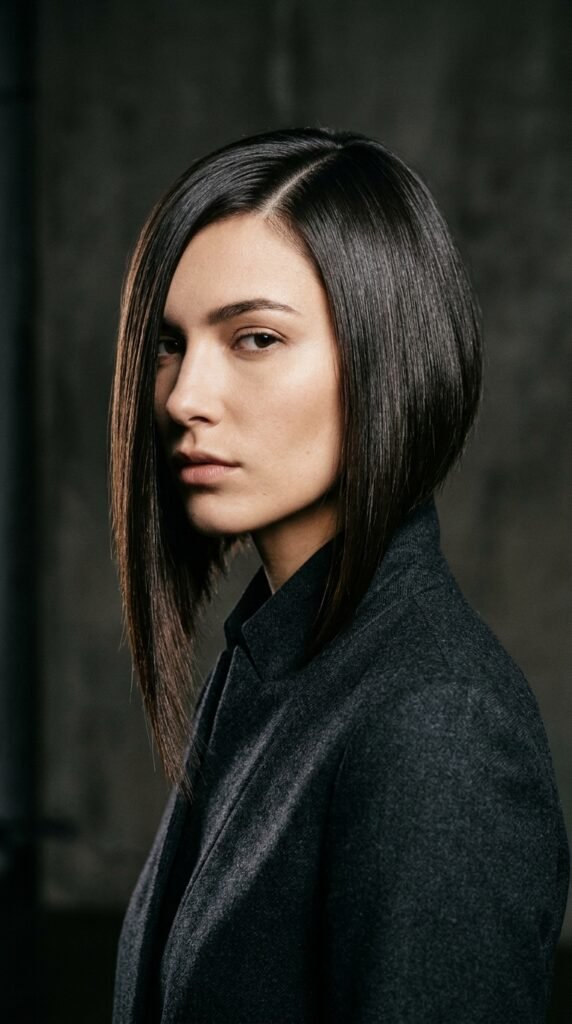
The asymmetrical lob is for the fine-haired woman who wants a little edge without going full pixie. It is longer in the front, slightly shorter in the back, and the angle creates lift at the roots.
What makes it hold: the diagonal line. Your hair falls forward instead of flat against your head.
Ask for:
- A lob that hits just above the collarbone in front
- A gentle angle toward the back
- No heavy layers
Style with a flat iron to emphasize the angle. This is one of the 2026 hairstyles I see everywhere for a reason.
5. The Hime Cut
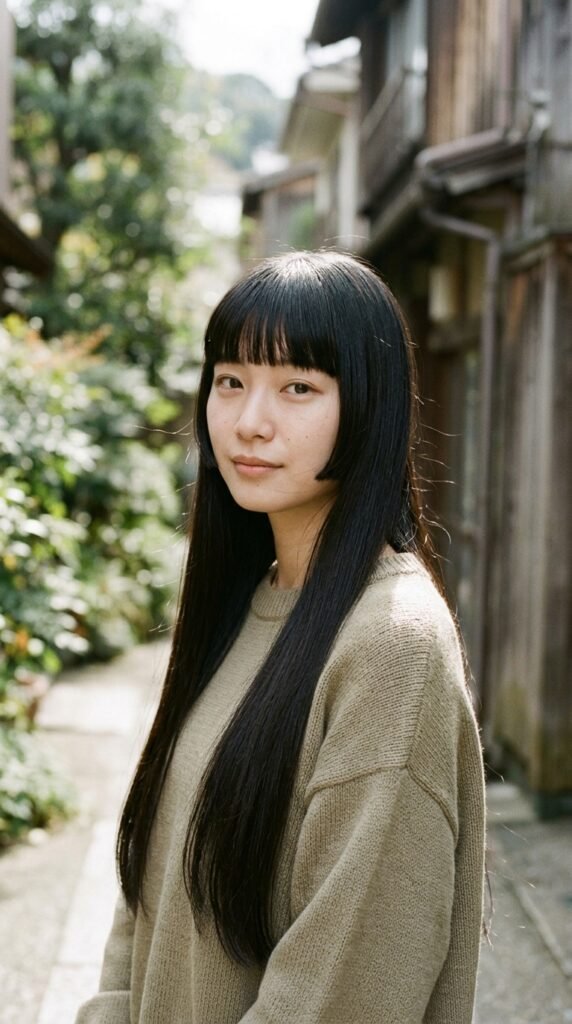
The hime cut is having a moment again, and fine hair wears it beautifully. It is a blunt bob or long cut with two sharp side pieces that frame the cheeks.
Why it works: the blunt side pieces add width and structure right where fine hair needs it.
Ask for:
- Blunt cheek-length side pieces
- The rest of the hair one length
- A clean, sharp line
Keep the side pieces flat-ironed and the back smooth. This is a strong look, so bring a photo and be clear about the length of the side pieces.
6. The Vampire Haircut

The vampire haircut is exactly what it sounds like: sleek, sharp, slightly dramatic. It is a jaw-length bob with a deep side part and a glossy finish.
Fine hair benefits because the sharp shape and side part create instant lift and density.
Ask for:
- A jaw-length or slightly longer bob
- A deep side part
- Ends that are blunt but not chunky
Style with a smoothing cream and a flat iron. This is one of those romantic goth hairstyles that works even if you are not goth. It also photographs like a dream, which is why it keeps popping up on my feed.
7. Romantic Goth Bob
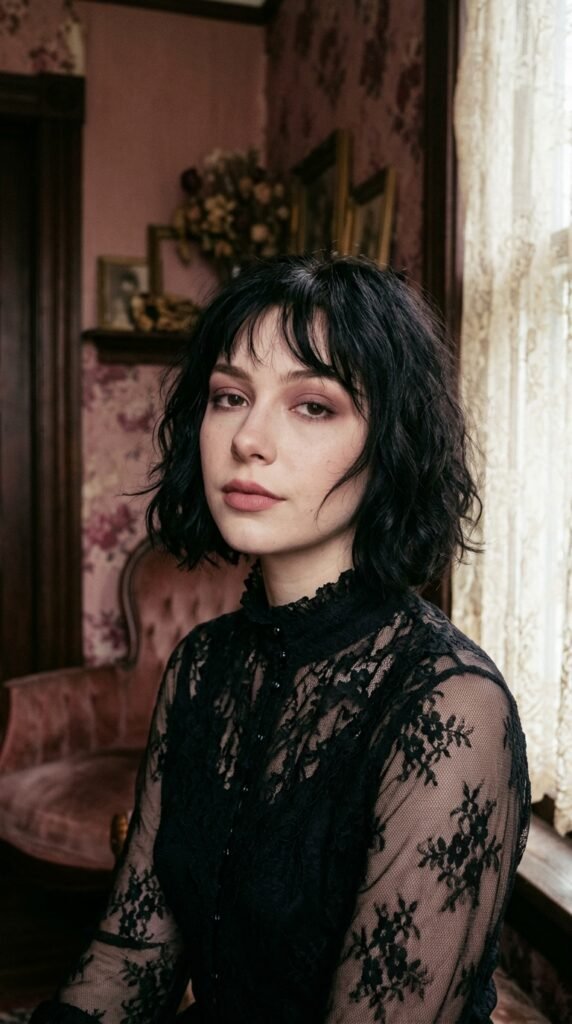
Romantic goth hairstyles are softer than the name suggests. Think black or deep brown hair, a soft bob, and face-framing pieces that look almost Victorian.
Fine hair wins here because the cut is usually one length with gentle texture, not heavy layers.
Ask for:
- A soft jaw-length or chin-length bob
- Slightly textured ends
- Face-framing pieces that start at the cheekbone
Style with a texturizing spray and let it air dry. Add a small clip or velvet ribbon if you want the full mood. The trick is keeping the shape clean so the softness reads as intentional.
8. Glitchy Glam Bob

Glitchy glam hair is the fun one. It is a sleek bob with slightly uneven, sharp ends and a wet-look finish. Think editorial, not messy.
Fine hair can handle this because the cut stays close to the head and the shine does the work.
Ask for:
- A chin-length or jaw-length bob
- Ends that are sharp but not perfectly even
- Minimal layers
Style with a wet-look gel or a shine serum. Keep the rest of your look simple so the hair is the moment. It is the easiest way to make a basic bob feel like 2026 hairstyles instead of 2016.
9 and 10. The French Bob and the Italian Bob
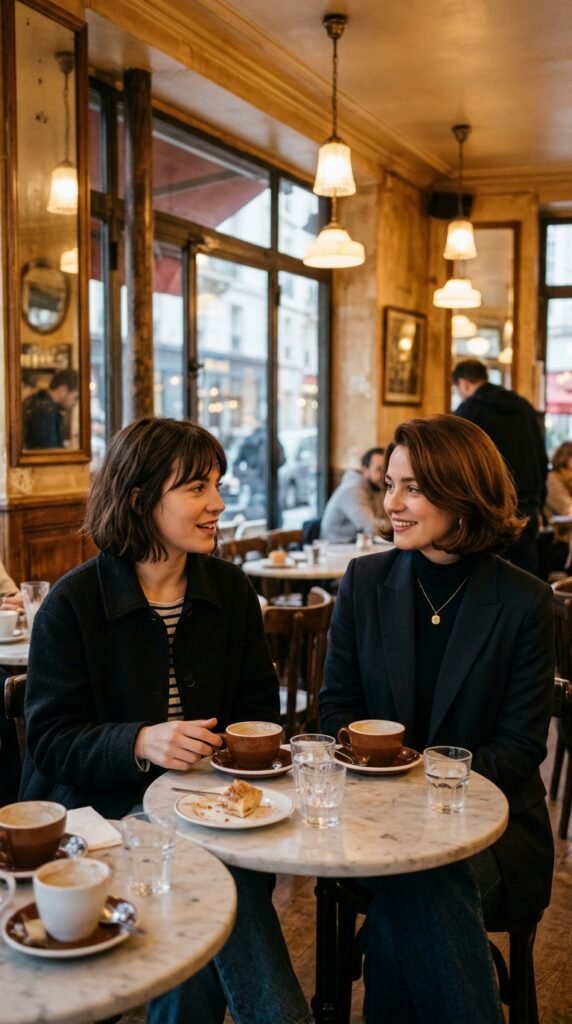
These two are cousins, not twins. The French bob is chin-length, often with bangs, and a little undone. The Italian bob is longer, glossier, and more polished.
For fine hair:
- French bob: the bangs add width and the short length holds shape all day.
- Italian bob: the one-length cut and smooth finish make thin strands look thick.
Ask for a French bob with soft, not heavy, bangs. For the Italian version, ask for a collarbone-grazing cut with a slight bend. Pick the French if you want playful, the Italian if you want polished. Both keep their shape without ten minutes of styling.
11 and 12. The Inverted Bob and the Graduated Bob

These are the volume queens. The inverted bob is shorter in the back and longer in the front. The graduated bob is similar but with soft stacked layers at the back.
Why fine hair loves them: the stacked back creates real lift, and the front stays long enough to frame your face.
Ask for:
- A stacked back that is cut softly, not choppy
- Enough length in front to tuck behind your ears
- No heavy layers through the sides
Style with a round brush at the back and a light spray. These cuts hold shape because the structure is built in.
13 and 14. The Micro Bob and the Chin-Length Bob

The micro bob is short, sharp, and fearless. It sits between the ear and the jaw and works best when the ends are blunt.
The chin-length bob is the safer sister. It hits right at the chin or just below and is the length most fine-haired women can wear without fighting it.
For both:
- Keep the ends clean and blunt
- Skip heavy product
- Use a small round brush for a soft bend
If you want impact, go micro. If you want easy, go chin-length. Both are great first short cuts if you are testing the waters.
15 and 16. The Neck-Length Bob and the Collarbone Lob

These are the in-between lengths, and they are honestly the most forgiving. The neck-length bob sits right at the nape and frames the jaw. The collarbone lob is longer and softer.
Fine hair does well at both lengths because there is enough hair to create a line, but not so much that it weighs down.
Ask for:
- A neck-length bob with a slightly longer front
- A collarbone lob with minimal layers
- Soft, not thinned-out, ends
Style with a light wave spray and let it air dry for a lived-in look. They also grow out beautifully, which is a quiet win.
17. The Textured Bixie
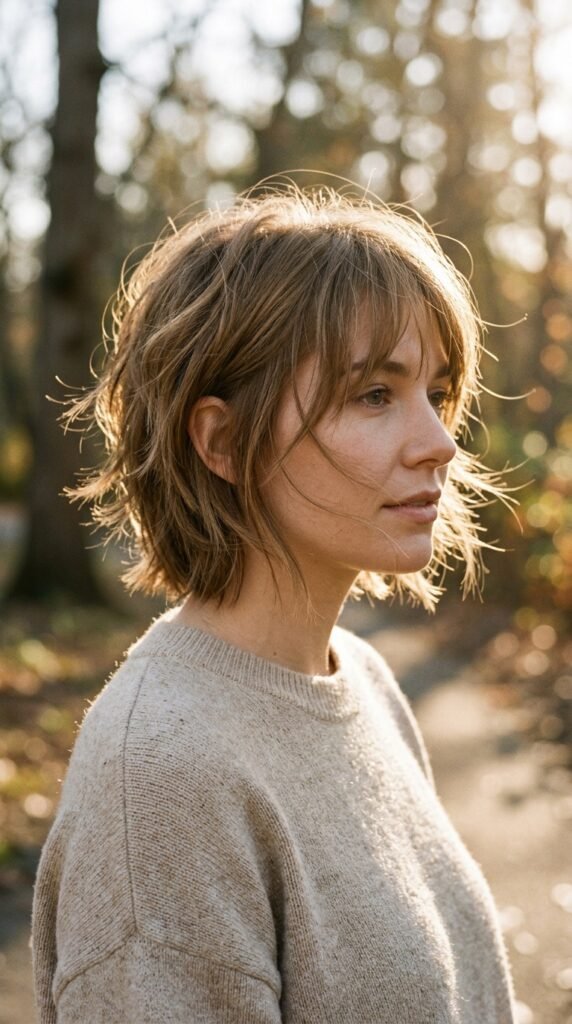
The bixie is a bob-pixie hybrid, and it is one of my favorite 2026 hairstyles for fine hair because it creates texture without weight.
It sits around the ear or jaw, with piecey ends and a little volume on top. Fine hair looks fuller because the cut is not trying to be smooth.
Ask for:
- A soft, textured top
- Ends that are point-cut but not thin
- Enough length at the sides to tuck
Style with a texture paste and your fingers. This one is meant to look a little undone. If you have a cowlick, this cut hides it better than a blunt bob.
18. The Curtain Bang Bob

Curtain bangs are the friendliest bangs for fine hair. They are parted in the middle and sweep to the sides, so they add shape without covering your whole forehead.
Pair them with a jaw-length or chin-length bob and you get a style that holds its shape and looks soft.
Ask for:
- Curtain bangs that start at the cheekbone
- A bob that is one length at the bottom
- Bangs that are blended into the sides, not cut in a block
Style with a round brush on the bangs only. The rest of the hair can air dry.
19 and 20. The Middle Part Bob and the Slick Back Bob

These two are about control. The middle part bob is smooth and symmetrical. The slick back bob is pulled back behind the ears for a clean, modern look.
Both work on fine hair because they use the hair’s natural flatness instead of fighting it.
Ask for:
- A one-length bob that hits the jaw or collarbone
- Ends that are blunt
- No layers near the face
For the middle part, use a tiny bit of oil on the ends. For the slick back, use a flexible gel and a fine-tooth comb. They are also the easiest to style on day three hair.
21 and 22. The Wavy Bob and the Curly Bob

Fine hair can be wavy or curly, and these cuts work with your pattern instead of against it. The wavy bob is cut slightly longer to allow for shrinkage. The curly bob is shaped around the curls.
The key: get the cut dry. Curly and wavy hair should always be cut in its natural state.
Ask for:
- A wavy bob with soft, not thinned, ends
- A curly bob with a rounded shape
- Layers only where you need them
Style with a leave-in conditioner and a diffuser. Keep your hands off until it is dry. A good curly cut holds its shape because it is built around your actual hair.
23 and 24. The Stacked Bob and the Layered Bob
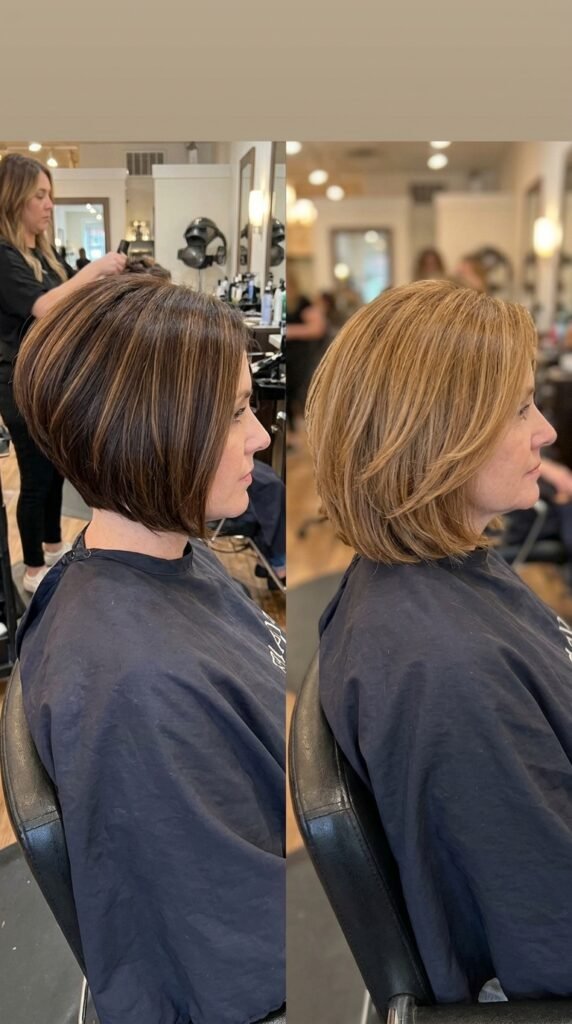
The stacked bob is all about the back. The layers are cut short at the nape to create lift, and the front stays longer.
The layered bob is softer. The layers are placed around the face and ends to add movement, not volume.
For fine hair:
- Stacked bob: great if your hair is flat at the crown
- Layered bob: great if your hair is flat at the sides
Ask for soft layers, not thinning shears. And always bring a photo of the back. Thinning shears are the fastest way to ruin fine hair, so say no thank you.
25 and 26. The One-Length Angled Bob and the Bubble Bob
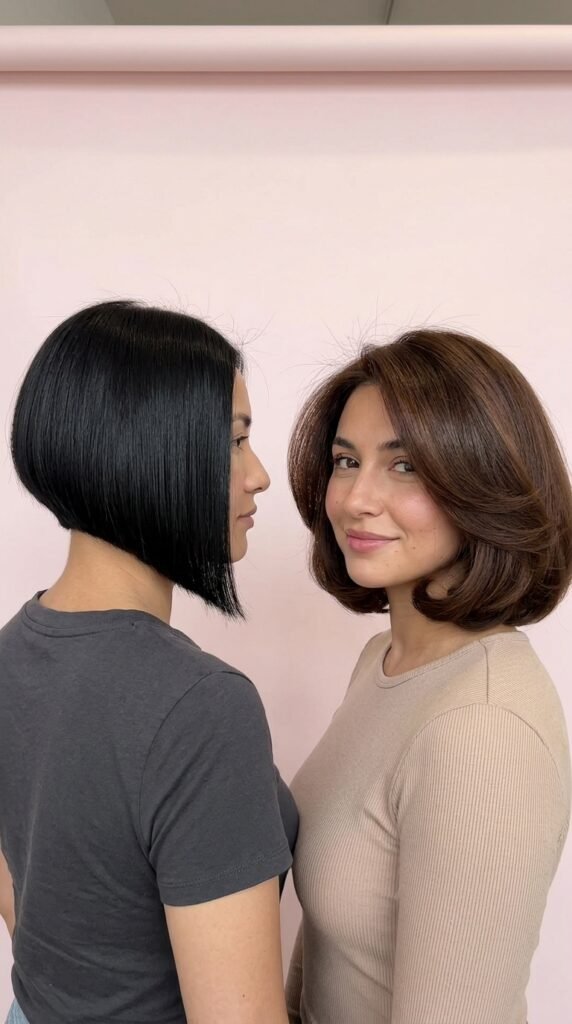
The one-length angled bob is clean and sharp. It is slightly longer in the front, which gives it movement and makes it look intentional.
The bubble bob is rounder and softer. It has a curved shape with ends that turn under slightly, like a little bubble around your jaw.
Fine hair tips:
- For the angled bob, ask for a blunt line with a gentle angle
- For the bubble bob, ask for soft graduation at the ends
- Keep both cuts above the collarbone
Style with a round brush for the bubble bob and a flat iron for the angled version.
27 and 28. The Phantom Bob and the Ribbon Bob

The phantom bob is a newer name for a classic idea: layers so soft you can barely see them. The cut looks one length, but it moves.
The ribbon bob is softer still. It has thin, face-framing pieces that look like ribbons, usually with a middle part.
Fine hair wins with both because neither cut removes weight. They add shape without thinning.
Ask for:
- Phantom bob: invisible layers at the ends only
- Ribbon bob: soft face-framing pieces that start at the cheekbone
Style with a light serum and your fingers. Keep it simple.
29 and 30. The Shaggy Bob and the Sleek Blunt Lob
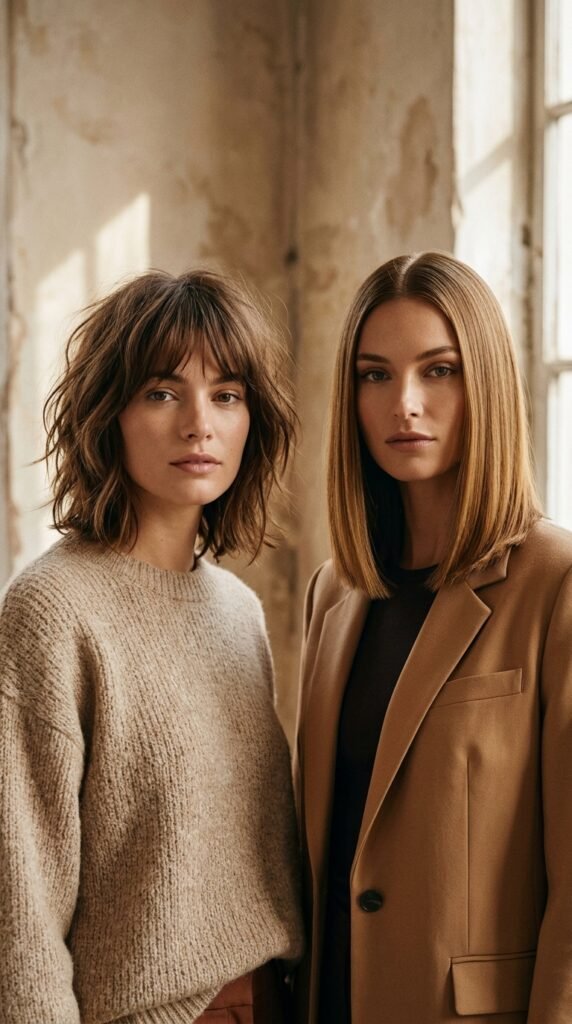
The shaggy bob is the most textured cut on this list. It has soft layers and a fringe that make fine hair look fuller and a little rock and roll.
The sleek blunt lob is the opposite. It is smooth, one length, and hits right at the collarbone.
Both hold their shape, but for different reasons:
- Shaggy bob: the texture creates grip
- Sleek lob: the blunt line creates density
Ask for soft layers on the shaggy bob and zero layers on the sleek lob. Style the shaggy one with sea salt spray and the sleek one with a flat iron.
31 and 32. The Tucked Bob and the Soft Lob

The tucked bob is less a cut and more a styling trick, but it works best with a one-length bob that hits the jaw. You tuck one side behind your ear and leave the other side down.
The soft lob is the last cut on our list. It is a collarbone-grazing lob with soft, blended ends. Fine hair holds this shape beautifully because the length gives it weight without dragging.
Ask for:
- Tucked bob: a blunt jaw-length bob
- Soft lob: a one-length lob with a slight bend
Style both with a light serum. Tuck one side and let the other side do its thing.
One Last Thing From Me
Fine hair is not a problem to fix. It is just hair that needs a cut with a plan. Pick one of these 32 bobs, bring a photo, and tell your stylist what you actually want: a shape that holds without ten minutes of styling.
Start with the quiet luxury bob or the blunt bob if you are nervous. Go for the hime cut or the micro bob if you want a change. Either way, you cannot really lose.
Save this post to Pinterest so you have it at your next appointment, and tell me in the comments: which one are you bringing to your stylist first?