25 Medium Length Hairstyles for Women Over 60 with Thin Fine Hair That Appear Fuller
Thin, fine hair after 60 doesn’t mean you’re stuck with flat. It just means your cut has to do a little more of the heavy lifting. And medium length is honestly the sweet spot — long enough to give you options, short enough that your hair isn’t dragged down by its own weight.
I’ve talked with so many readers in their 60s who want body without a 40-minute routine. The answer is almost never more products. It’s the right shape, the right layers, and two or three small tricks you can do with one hand.
Below are 25 medium length hairstyles and cuts that make fine hair look fuller, including the 2026 hairstyles everyone keeps asking about. Scan for the ones that feel like you, screenshot two or three, and take them to your stylist.
1. Why Medium Length Makes Thin Hair Look Thicker
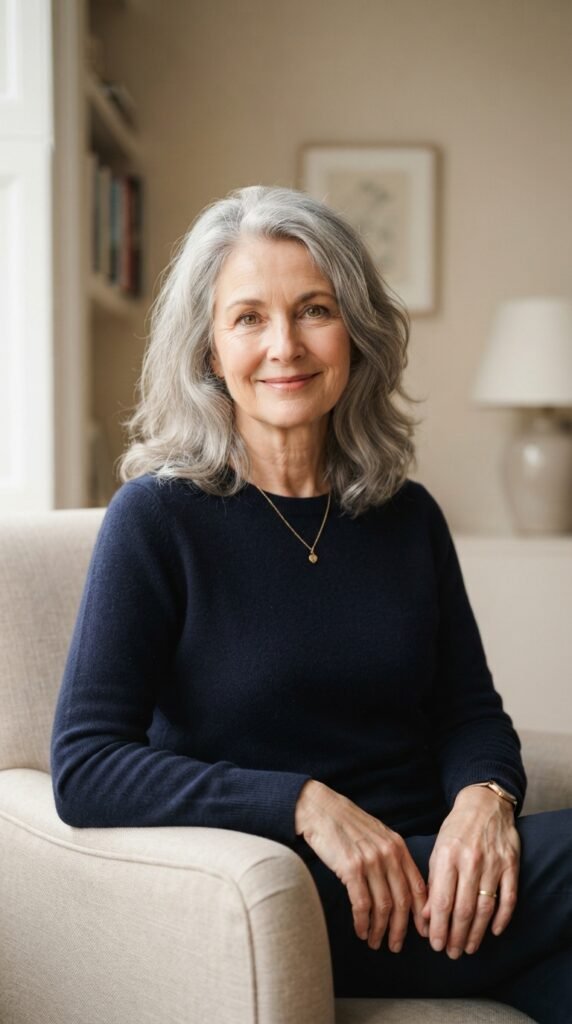
Fine hair doesn’t need to be short. It needs room to move. At medium length — roughly collarbone to just above the shoulder — your hair has enough length to hold a shape and still stays light at the root.
Go much longer and the weight pulls everything flat. Go too short and you lose the softness that makes thin hair read as fuller.
- Collarbone to shoulder is the most flattering zone
- One length or light layers, never heavy chops
- Ends slightly textured so they don’t clump together
2. The Quiet Luxury Bob at Collarbone Length

The quiet luxury bob is the 2026 hairstyle that keeps showing up for a reason. It’s clean, it’s expensive-looking, and it’s the easiest way to fake density because the line is so crisp.
Ask for a collarbone-length cut with a very slight A-line — just a touch shorter in back so the front has swing. Skip choppy layers. Smooth beats busy here.
- Blunt or softly rounded ends
- Minimal layering so the cut stays solid
- Style with a round brush for shine at the ends
3. The Asymmetrical Lob

An asymmetrical lob is a quiet trick. When the two sides don’t match, the eye reads the whole shape as fuller and more interesting. It also shifts weight away from your thinnest area.
Ask for a lob that’s about an inch or two longer on one side, with a deep side part. It works beautifully on fine hair because you’re using geometry instead of layers.
- Great for fine hair that falls flat on one side
- Softens a strong jawline
- Needs a trim every 8 to 10 weeks to keep the line
4. The Blunt Collarbone Cut
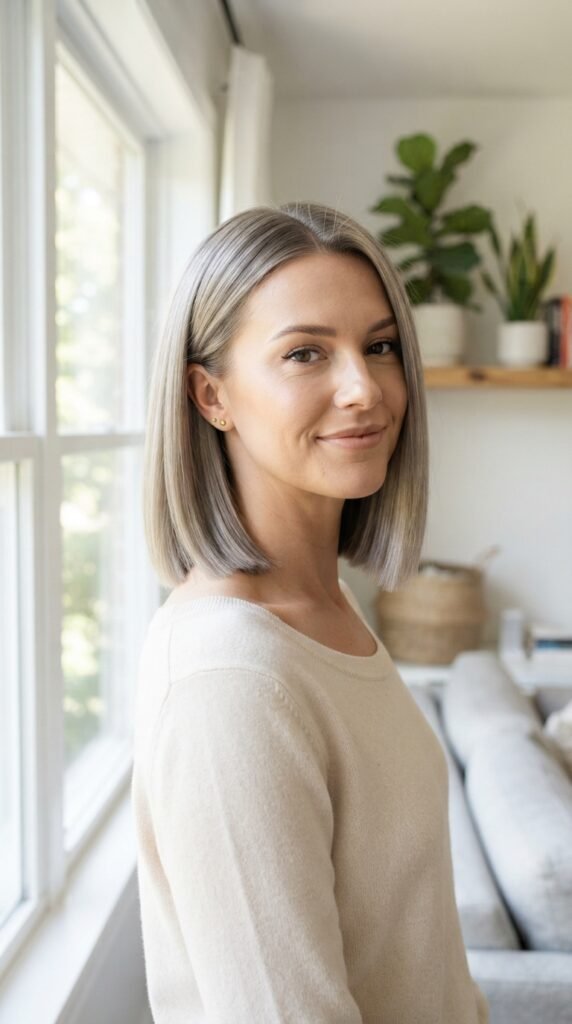
Blunt cuts get a bad reputation, but for fine hair they’re magic. A straight, solid line at the ends makes hair look like it has more weight and density than it does. Thin hair with wispy ends looks thinner. Thin hair with a clean line looks full.
Ask for a blunt cut at the collarbone with no internal layers. Then wear it with a slight bend at the ends so it doesn’t look stiff.
- Best on straight to slightly wavy hair
- Skip if your hair is very curly — it’ll triangle
- Use a small flat iron just on the ends
5. Soft Invisible Layers
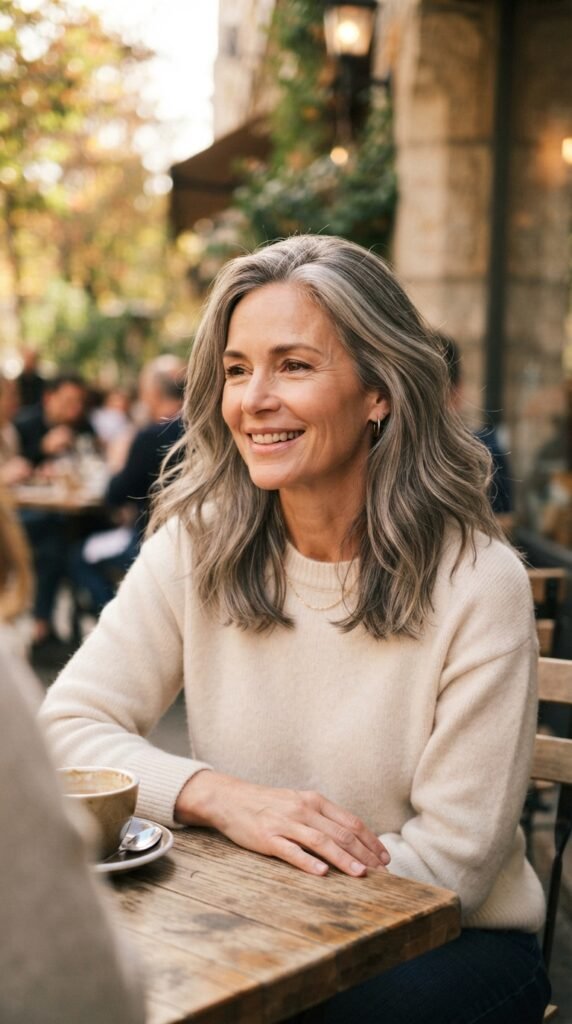
Invisible layers are the ones nobody can point to. They’re cut just enough to remove weight and add movement, but not so much that they thin out your ends. This is the difference between fullness and frizz.
Tell your stylist: “I want light interior layers, nothing that makes my ends look stringy.” That sentence saves a lot of haircuts.
- Layers start below the chin, never at the crown
- Point-cut the ends so they look soft, not thin
- Refresh every 10 to 12 weeks
6. Curtain Bangs on Medium Hair
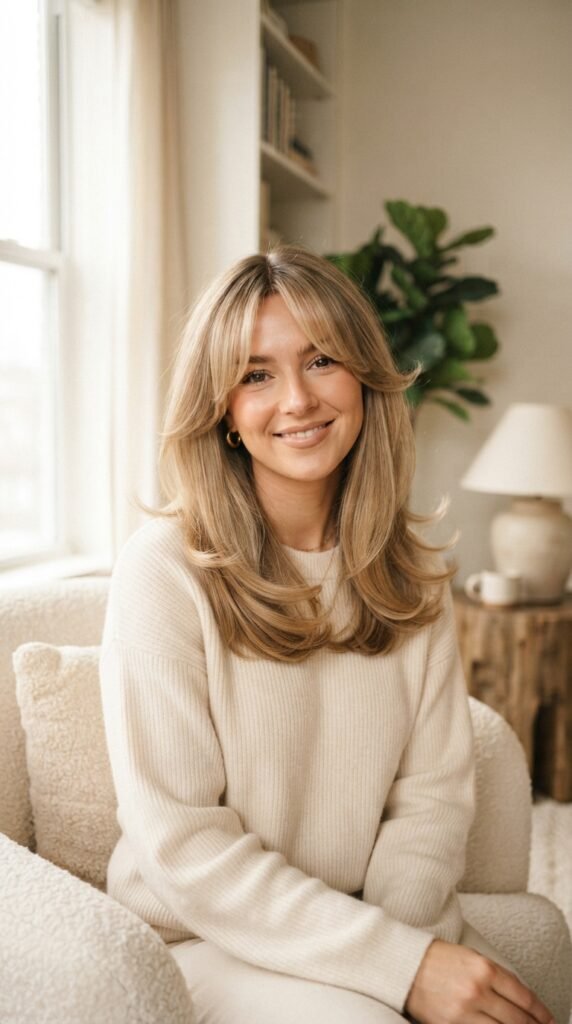
Bangs are the fastest volume trick there is, but thin hair needs the right kind. Curtain bangs that sweep to the sides add fullness at the front without covering your forehead in a heavy block.
Ask for bangs starting at the cheekbone and blending into the sides. That blend is what makes them look intentional instead of like an afterthought.
- Keep them long enough to sweep, not sit flat
- Blow-dry them with a round brush for lift
- Trim every 3 to 4 weeks
7. The Medium Shag With Airy Ends

A shag sounds risky on fine hair, and it can be — but a soft version is one of the best cuts for adding body. The key is texture at the ends, not layers at the root.
Ask for a shag with long, disconnected pieces around the face and a light point-cut throughout. Keep the crown solid. That way you get the movement without exposing your scalp.
- Great for fine hair that’s naturally wavy
- Use a texturizing spray, not a heavy cream
- Let it air dry when you can — it looks better
8. The Hime Cut, Softened for 2026
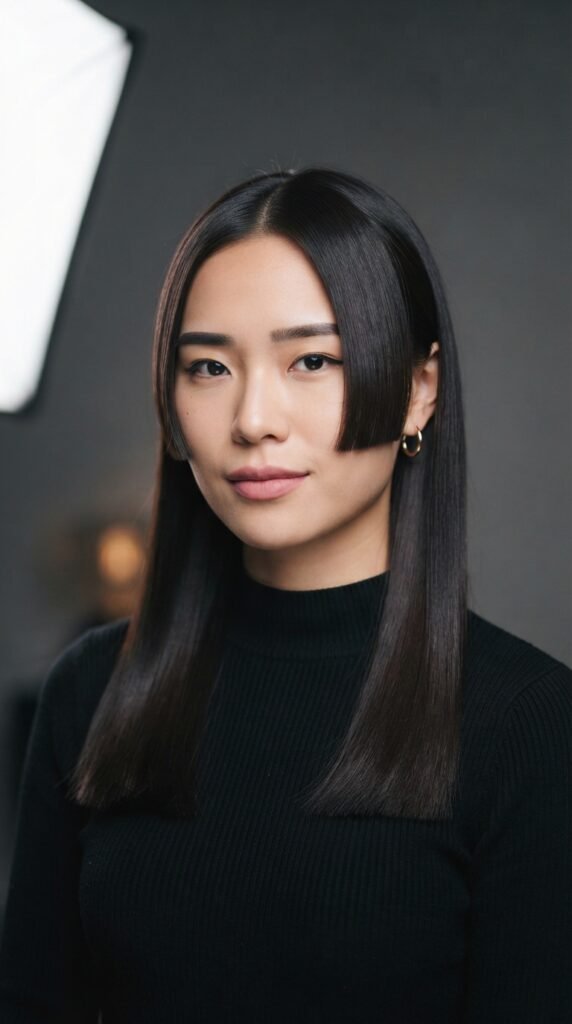
The hime cut is having a real moment, and it’s easier to wear than it looks. Traditionally it’s blunt side pieces at the cheek with the rest longer. On fine hair, soften the edges slightly so the blunt sides read as volume, not weight.
It’s a bold choice, but the payoff is real: those side pieces frame your face and make the rest of your hair look denser by comparison.
- Ask for side pieces at the cheekbone
- Soften the blunt edge just a little
- Pair with a smooth, glossy finish
9. Old Money Hair: Polished Medium Waves
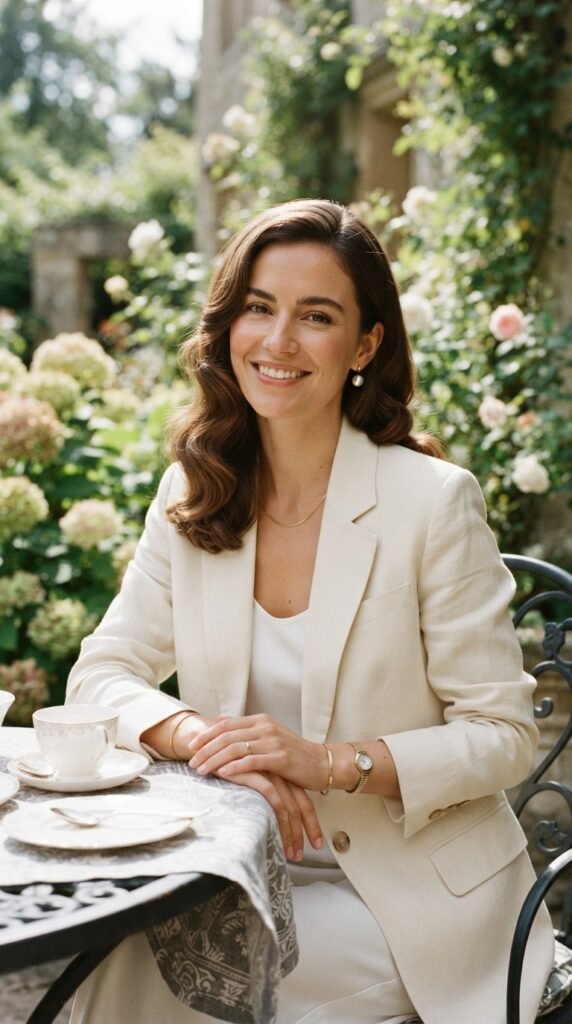
Old money hair isn’t about following trends. It’s about a smooth, healthy, expensive-looking finish. Medium-length hair with soft, uniform waves reads as Fuller and far more intentional than messy texture.
The trick is consistency — same wave pattern all the way through, no frizz, no flyaways.
- Blow-dry with a round brush, section by section
- Set with large velcro rollers for 15 minutes
- Finish with a light shine serum on the ends only
10. The Vampire Haircut, Grown Out

The vampire haircut — long layers with dramatic face-framing pieces and a slightly tapered back — is everywhere in 2026. On fine hair, the trick is to skip the heavy tapering and keep the drama in the front pieces.
Grown out to medium length, it looks less costume and more elegant. The long face-framing layers create shadows that make the hair behind them look thicker.
- Keep face-framing pieces long, starting at the jaw
- Skip the tight back taper
- Style with a center part for balance
11. Romantic Goth Hairstyles With Airy Volume
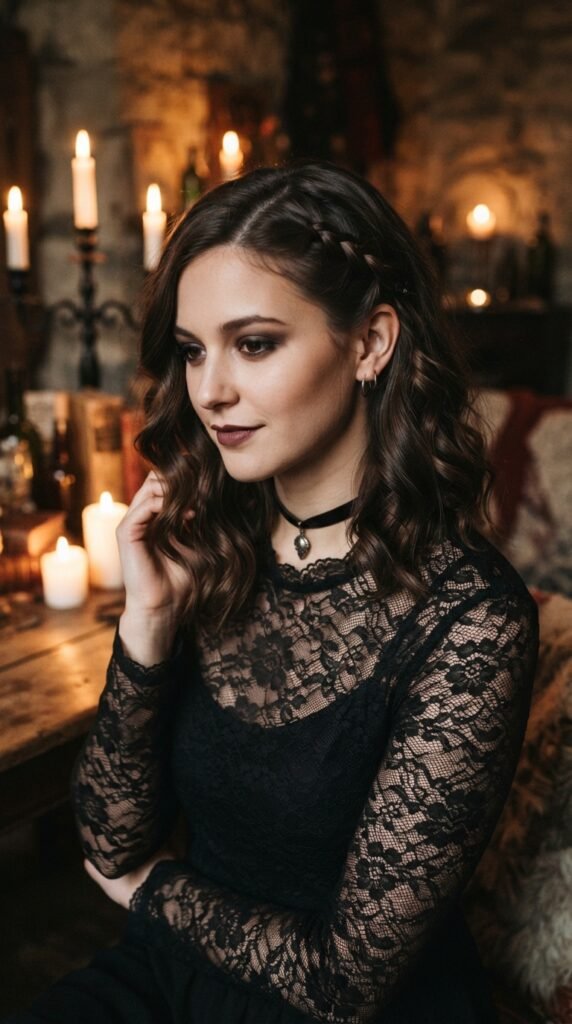
Romantic goth hairstyles work surprisingly well on fine hair because the look relies on softness and texture, not bulk. Think loose waves, a small braid pinned back, a few face-framing pieces left out.
Stick to dark or muted tonal shades and add volume at the root with a dry shampoo or a lift spray. The contrast between soft texture and darker color makes hair look denser.
- Loose waves over tight curls
- Small braids add texture without weight
- Lift at the root, softness at the ends
12. Glitchy Glam Hair, Fine-Hair Edition

Glitchy glam hair is the playful 2026 trend built on asymmetry, sharp sections, and a slightly off-kilter finish. It sounds intimidating, but the concept is simple: one deliberate mismatch that makes the whole look feel modern.
On fine hair, keep the base smooth and add the “glitch” with one flipped section or an angled part. You get the edge without sacrificing volume.
- One flipped section near the face
- An angled or zigzag part
- Sleek finish with shine spray
13. The Bixie at Medium Length
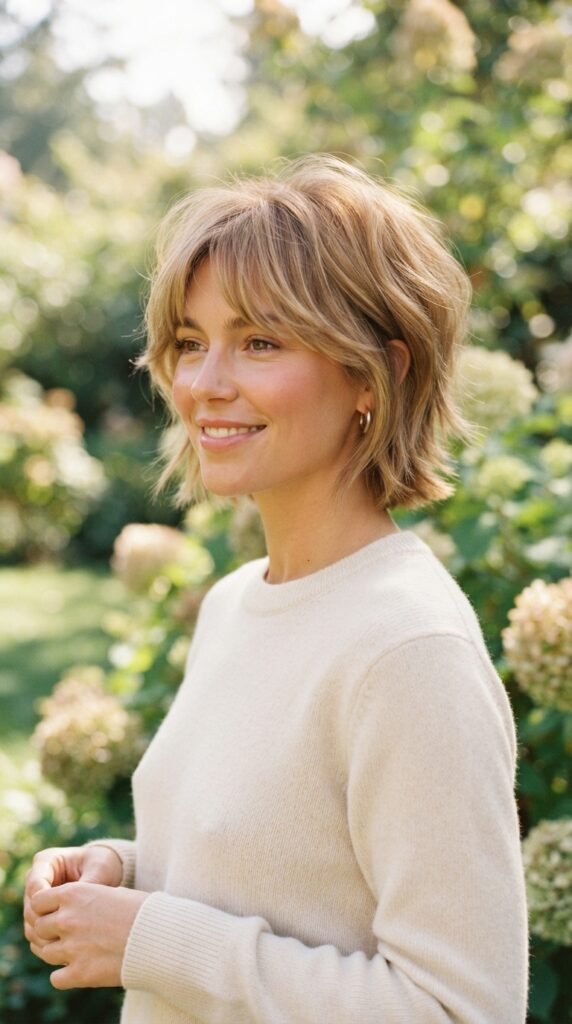
The bixie — bob meets pixie — is one of the most volume-friendly shapes out there. At the longer end of medium, it gives you layers around the crown and enough length at the back to still feel soft.
It’s a great choice if your hair is thinnest at the top and you’re tired of fighting it. Layers up top create lift; the longer back keeps it feminine.
- Ask for soft layers at the crown
- Keep the back just above the shoulder
- Use a texture paste on dry hair
14. Face-Framing Pieces That Lift Everything

Sometimes your whole haircut doesn’t need to change. You just need face-framing pieces that start at the cheekbone and blend down. This one adjustment changes how full your hair looks in photos instantly.
Ask for “face-framing pieces that blend into the length, starting at the cheekbone.” That’s the sentence. Your stylist will know exactly what to do.
- Start at the cheekbone, not the eye
- Blend, don’t chop
- Style them forward for a soft bend
15. The Textured Beachy Lob
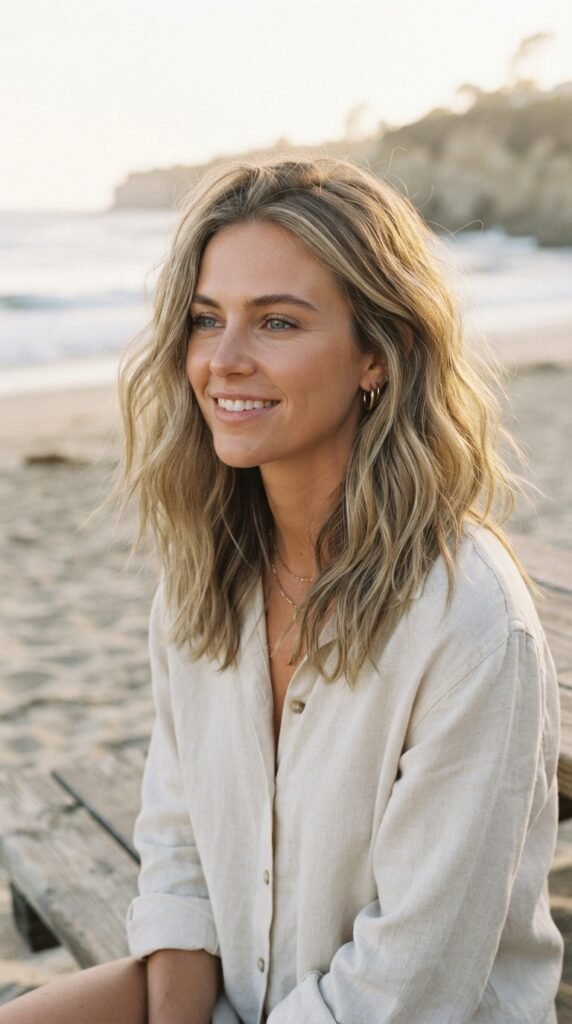
A beachy lob is the relaxed version of the classic lob. Texture is your friend here because fine hair with a little grit looks thicker than fine hair that’s smooth and flat.
Ask for a lob just above the shoulder with light texture throughout. Then use a sea salt spray on damp hair and scrunch. That’s the whole routine.
- Salt spray on damp hair, scrunch and air dry
- Avoid heavy creams that flatten
- Twist small sections for extra wave
16. The Deep Side Part
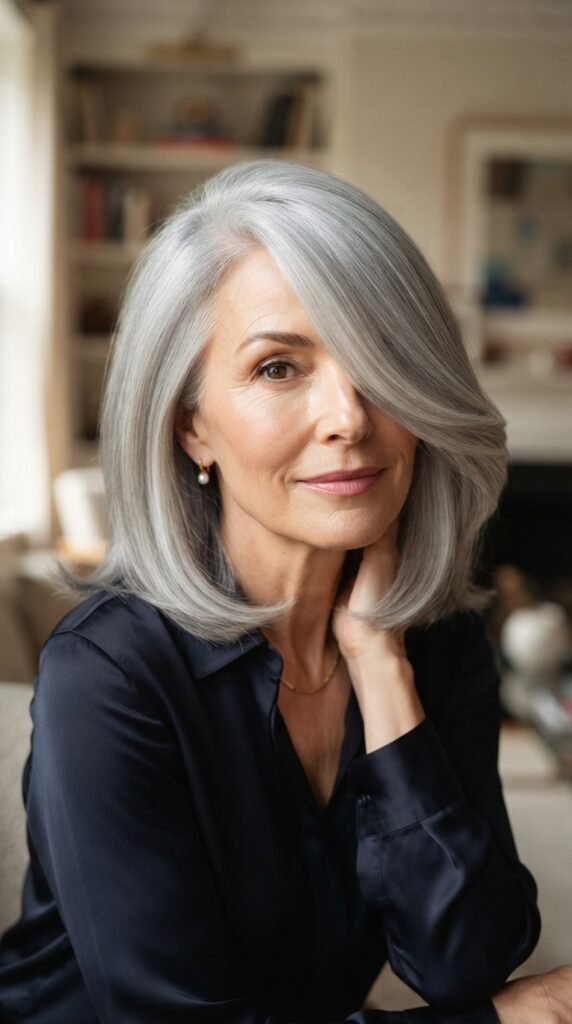
This isn’t a haircut — it’s a free volume upgrade. A deep side part flips the hair over and creates a natural lift at the root that fine hair rarely gets on its own, no products required.
Part it while hair is still damp, then blow-dry the root in the opposite direction. Flip back and you’ve got a whole new shape.
- Part on damp hair for the best lift
- Blow-dry the root away from the part
- Lock it in with a light setting spray
17. The Flipped-Out Ends Look

Flipped-out ends are back, and they’re surprisingly flattering on fine hair. The outward flick at the ends makes hair look wider and more intentional, and it’s a very forgiving style if your ends are a little thin.
Use a small round brush and flick the ends outward as you dry. That’s it — no special products needed.
- Works best on collarbone to shoulder length
- Flick outward, not under
- Set with a light-hold hairspray
18. The Rounded Bob With Soft Corners
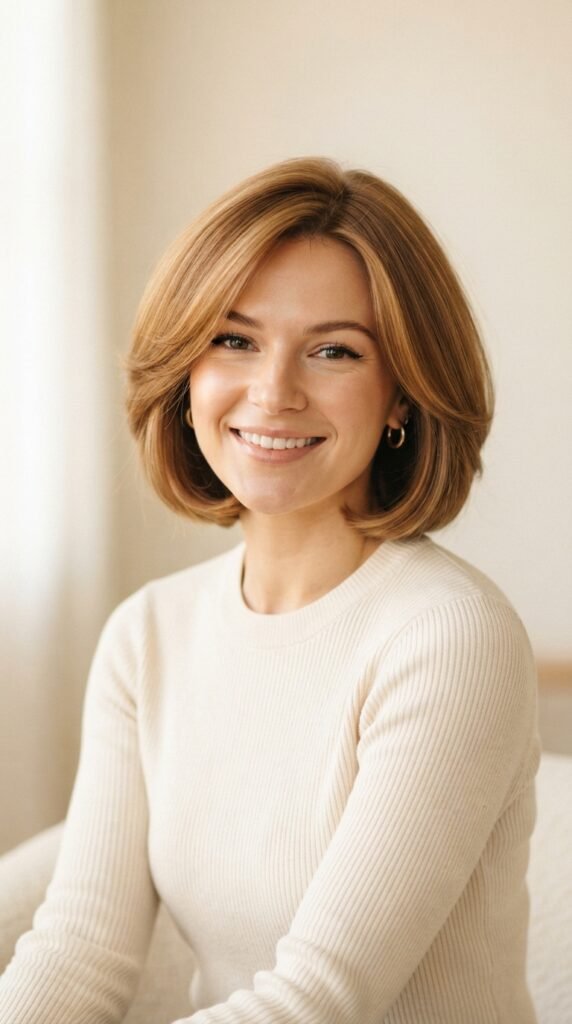
A rounded bob is a classic that never quite leaves. The curve at the ends creates an illusion of width and makes fine hair look like it has more body. Ask for soft corners rather than a hard flat line.
It’s a great choice if you want something polished and easy. It also grows out gracefully, which matters when you’re not in the chair every six weeks.
- Soft corners, not sharp edges
- Length at or just above the collarbone
- Round-brush the ends for the curve
19. The Half-Up Twist for Thinning Crowns
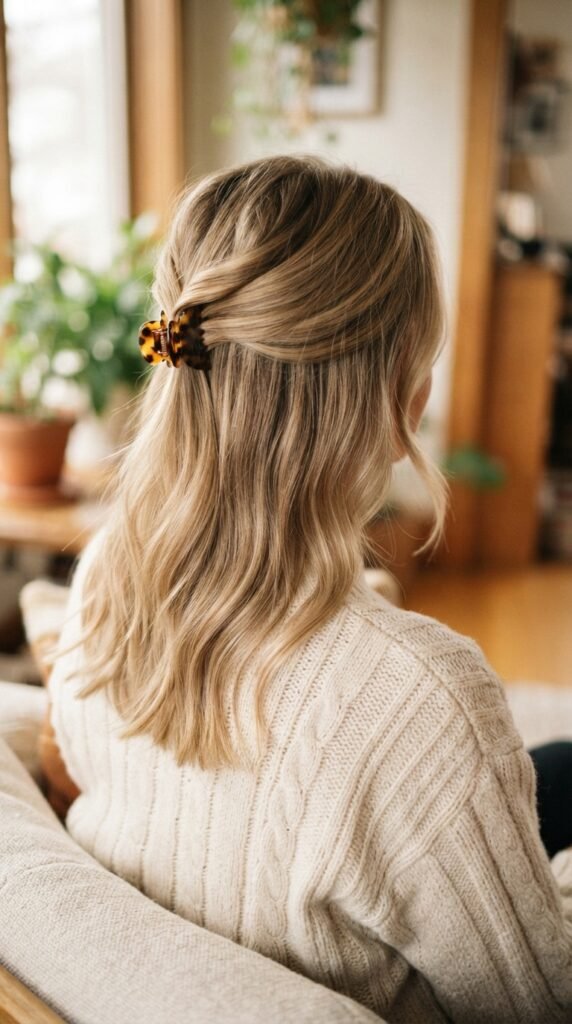
If your thinning is mostly at the crown, this is your style. A half-up twist pulls the top section back, which visually builds volume right where you need it, and leaves the rest of your hair down and soft.
Tease the top section gently first, then twist and pin. A small clip is easier than bobby pins and looks more intentional.
- Tease the crown section first
- Twist loosely, don’t pull tight
- A tortoiseshell clip adds polish
20. The Low Chignon With Loose Pieces
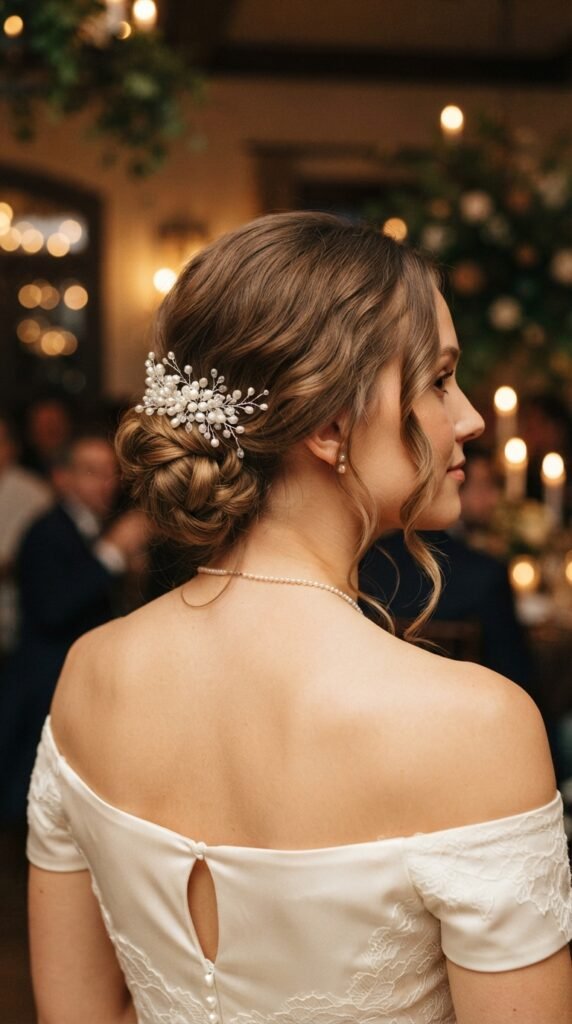
Updos are great for fine hair because you control exactly where the volume goes. A low chignon looks elegant and takes about three minutes, and leaving a few loose pieces out keeps it from looking severe.
Tease the crown and the sides before you pin so you’re not fighting flat hair all night.
- Tease before pinning, not after
- Leave two soft pieces at the front
- Mist with flexible hold spray
21. Root Lift Tricks That Actually Work
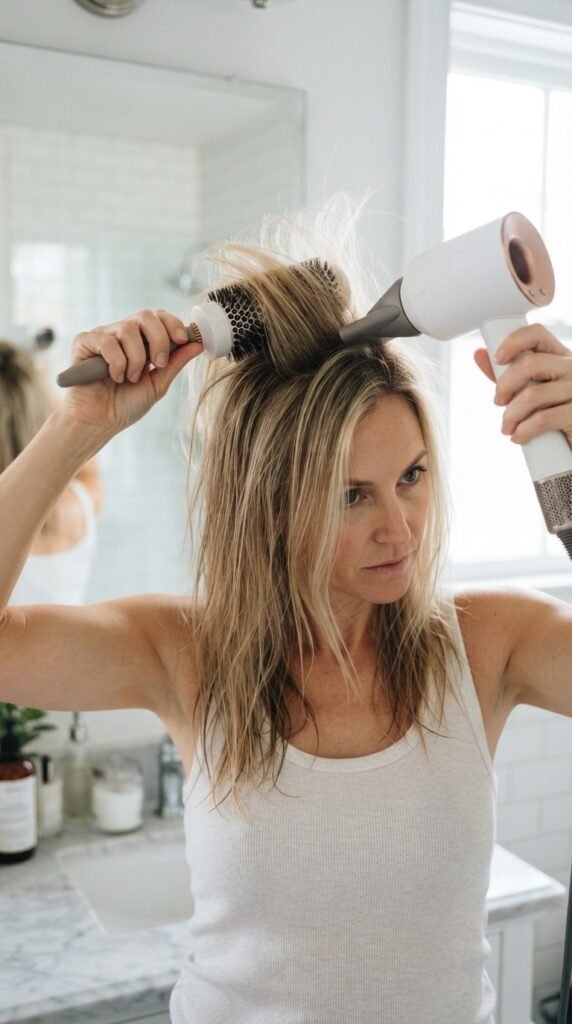
Root lift is most of the battle. If you can get volume at the base, the rest of the cut does its job. These are the tricks that genuinely deliver.
- Apply a root lift spray to damp roots only
- Blow-dry the root in the opposite direction of your part
- Hit it with cool air for ten seconds to set
- Use dry shampoo at night, not in the morning
Dry shampoo overnight is the underrated one. It absorbs oil while you sleep and gives you lift before you even pick up a brush.
22. The Volumizing Blowout on Medium Hair
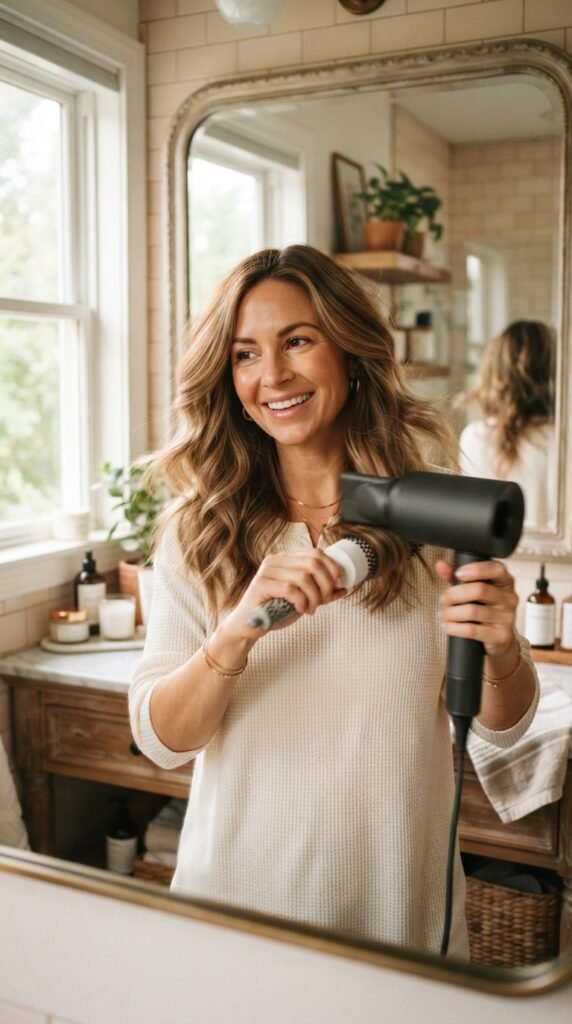
You don’t need a salon blowout every week, but knowing the routine helps. Medium-length fine hair holds a blowout for two or three days if you set it right.
- Start with a light mousse on damp roots
- Rough dry until 80 percent dry
- Section and round-brush, lifting at the root
- Finish each section with cool air
- Sleep on a silk pillowcase to make it last
Cool air is the step most people skip. It’s the one that makes the volume stay.
23. Products That Don’t Weigh Fine Hair Down
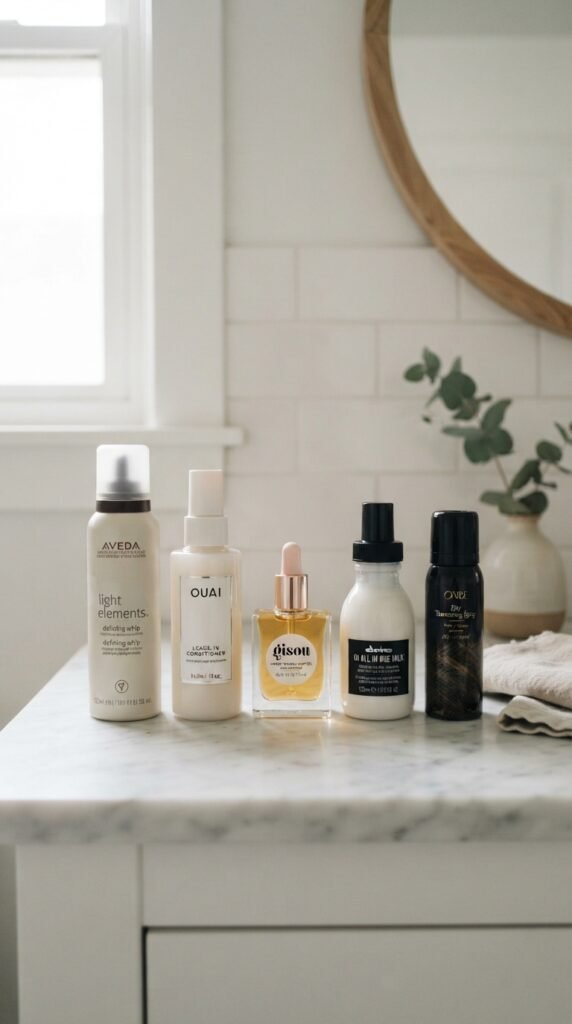
With fine hair, less is genuinely more. Heavy creams and oils pull everything down and make thin hair look thinner by the afternoon. Stick to light formulas and apply them where they matter.
- Mousse or root lift spray on damp roots
- Dry shampoo at night for lift and oil control
- Lightweight texturizing spray for grip
- Shine serum on the ends only — never the root
If a product feels heavy in your hand, it’ll feel heavy in your hair. Trust that instinct.
24. What to Tell Your Stylist
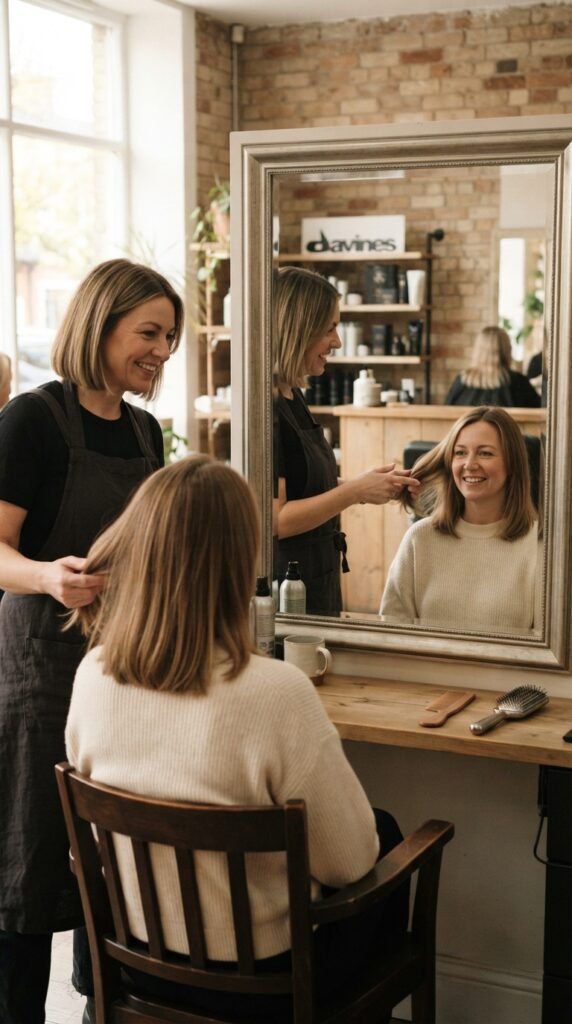
A good cut starts with a clear conversation. Most disappointing haircuts on fine hair come from a stylist going too heavy on layers because they weren’t told otherwise.
Try saying this: “My hair is fine and I want it to look fuller. Please keep the ends solid, keep the crown unlayered, and add only light interior texture.” It takes ten seconds and changes everything.
- Bring two or three photos, not ten
- Say “fuller,” not “thinner”
- Ask how it grows out before you commit
25. A Few 2026 Hairstyles to Skip

Not everything trending in 2026 is built for fine hair. A couple of quick ones to pass on.
- Heavy blunt bangs — they crowd a fine hairline
- Very long, one-length hair — it flattens at the root
- Super-choppy layers — they make ends look stringy
- Tight curls on very fine hair — they expose the scalp
None of these are off-limits forever. They just ask more of your hair than it needs to give right now.
One Last Thing Before You Book
You don’t need thick hair to have a great haircut. You need the right length, the right kind of layers, and a few small habits that keep the root lifted. That’s honestly it.
Pick two styles from this list that feel like you. Screenshot them. Book the appointment. The rest is just a round brush and ten minutes.
Save this post to Pinterest so you have it ready at the salon. And tell me in the comments — which of these 25 medium length hairstyles are you trying first? I read every one.