Butterfly Bob Hairstyles: Is the Viral Layered Bob Right for Your Hair Type?
The butterfly bob is everywhere right now — on social media, in salons, and on every ‘haircut to try next’ list. But is the viral layered bob actually right for your hair type? The honest answer is: it depends on your texture, your face shape, and how much styling you are willing to do.
In this post, you will find 35 butterfly bob hairstyles, from the classic cut to curly, fine-hair, over-40 and low-maintenance versions. First, the guides below explain what a butterfly bob really is, how it differs from a classic bob and a lob, and how to style and maintain it. Then each of the 35 styles tells you who should avoid it, what it costs in time and money, and how to style it at home.
Use the guides to choose your version, then show your stylist the section that matches your hair. That is the fastest way to get the butterfly bob you actually pictured — not just the one from the photo.
What Is a Butterfly Bob, Really? (And How It Differs from the Butterfly Cut)
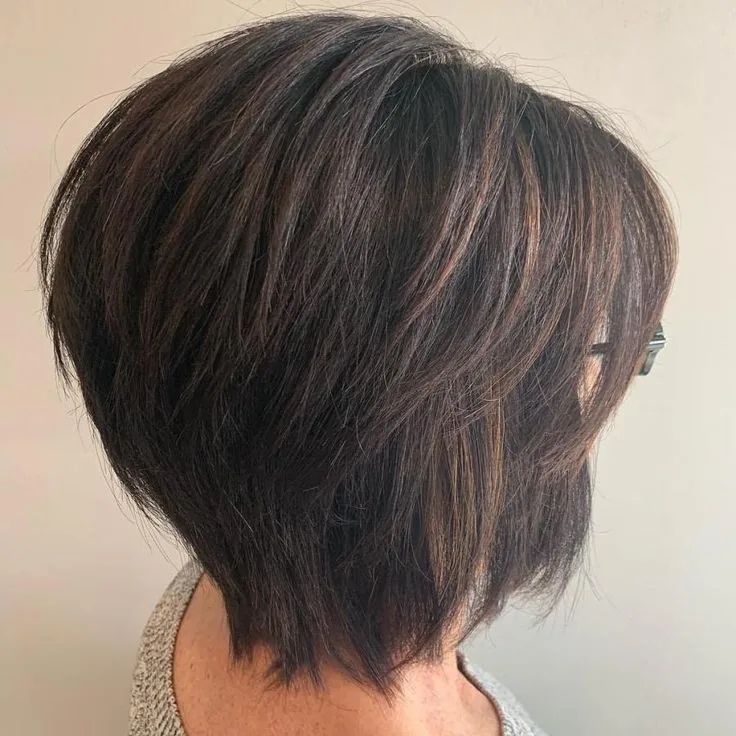
A butterfly bob is a bob haircut with two distinct layer lengths: short, bouncy layers on top and longer layers underneath. When styled, the top layers flick outward like butterfly wings, while the longer base keeps the cut looking like a bob, not a shag.
The butterfly cut, by contrast, is a long-layered cut on medium to long hair. It uses the same wing idea, but there is no bob length. If your hair is at or above the shoulders, you are looking at a butterfly bob; if it falls well past the shoulders, it is a butterfly cut.
- Butterfly bob: chin to shoulder length, winged top layers, longer base.
- Butterfly cut: medium to long hair, short face-framing layers over long lengths.
- The test: if the shortest layer sits around the cheekbone and the longest hits the shoulders or above, it is a bob version.
Butterfly Bob vs Classic Bob vs Lob: Which Length Is It?
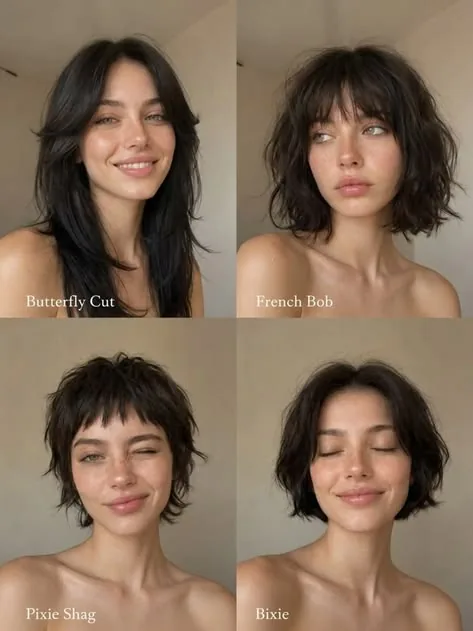
A classic bob is usually one length, or close to it, with a clean outline. A lob is simply a longer bob, sitting around the collarbone. A butterfly bob breaks that clean outline on purpose: it adds short, airy layers on top of a bob or lob base.
Choose a classic bob if you love sharp, polished lines. Choose a butterfly bob if you want movement, volume and a blowout look. Choose the butterfly lob version (section 24) if you want the same effect with more length and an easier grow-out.
- Classic bob: blunt, polished, minimal layering.
- Butterfly bob: layered, bouncy, winged top.
- Lob: longer bob; the butterfly lob adds wings to that length.
Butterfly Bob by Face Shape: Where Should the Layers Fall?

The butterfly bob is not one fixed cut — the layer placement changes with your face shape. The rule is simple: put volume where you want width, and keep length where you want slimming.
Round faces suit longer layers falling below the chin. Square faces suit soft, inward-curving layers at the jaw. Heart faces suit fullness at the jaw to balance a wider forehead. Oval faces can wear almost any placement, so pick the version you like best.
- Round: longest layers below the chin, lift at the roots.
- Square: feathered, inward layers at the jaw.
- Heart: fullness and flicks at jaw level.
- Oval: any placement — go by hair texture instead.
Butterfly Bob by Hair Texture: Straight, Wavy, Curly and Coily
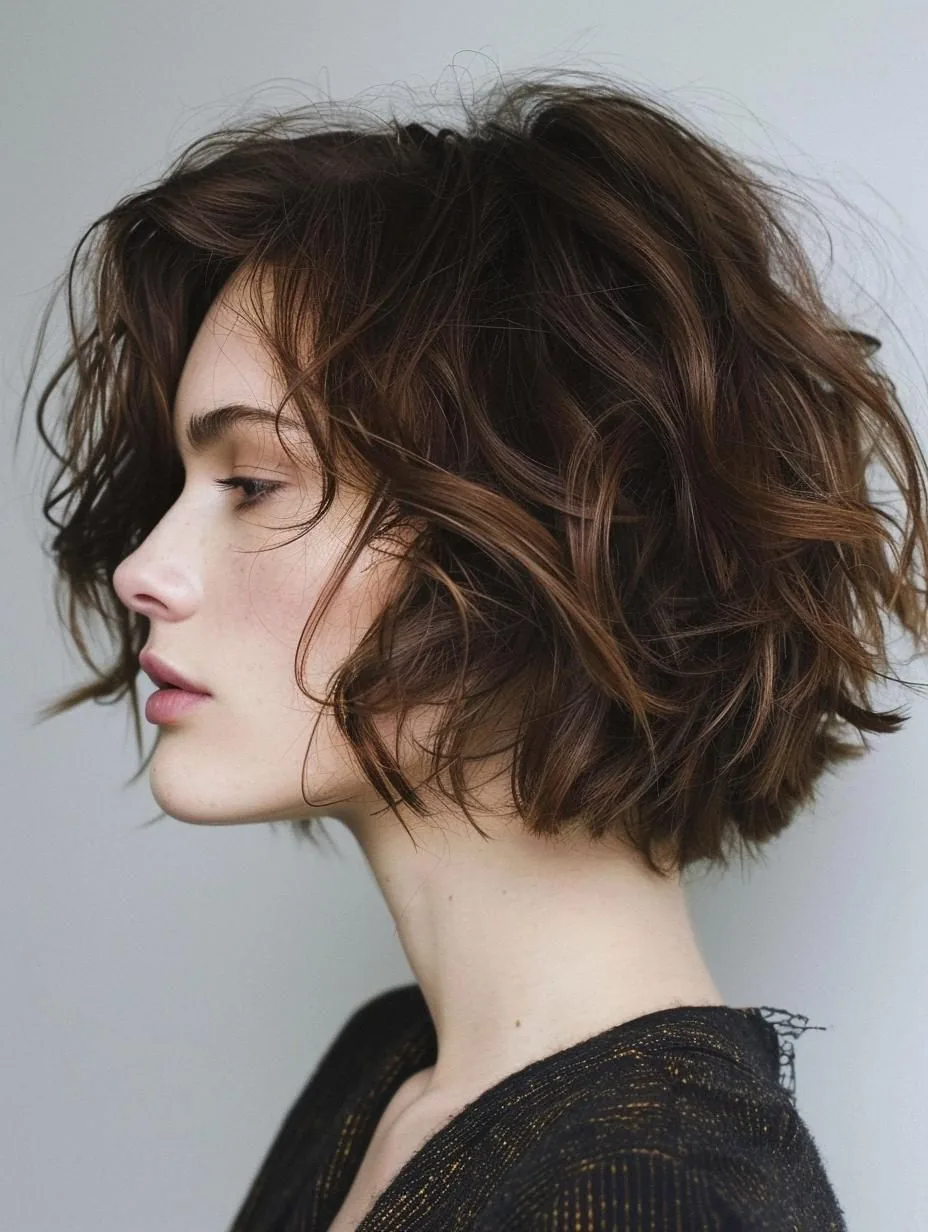
Straight hair shows every layer clearly and needs a blowout to create the wings. Wavy hair gets the wings almost for free, but needs the top layers kept long enough not to spring up too short. Curly and coily hair needs a curl-aware cut, with layers shaped around the curl pattern rather than cut straight across.
Tell your stylist your real routine. If you air-dry most days, the cut must look good air-dried — not only after a salon blowout. That one conversation changes the layer lengths more than any photo you bring.
- Straight: blowout essential, layers very visible.
- Wavy: scrunch and diffuse, keep top layers longer.
- Curly/coily: dry or curl-by-curl cut, style on wet hair.
The Blowout That Makes a Butterfly Bob Work
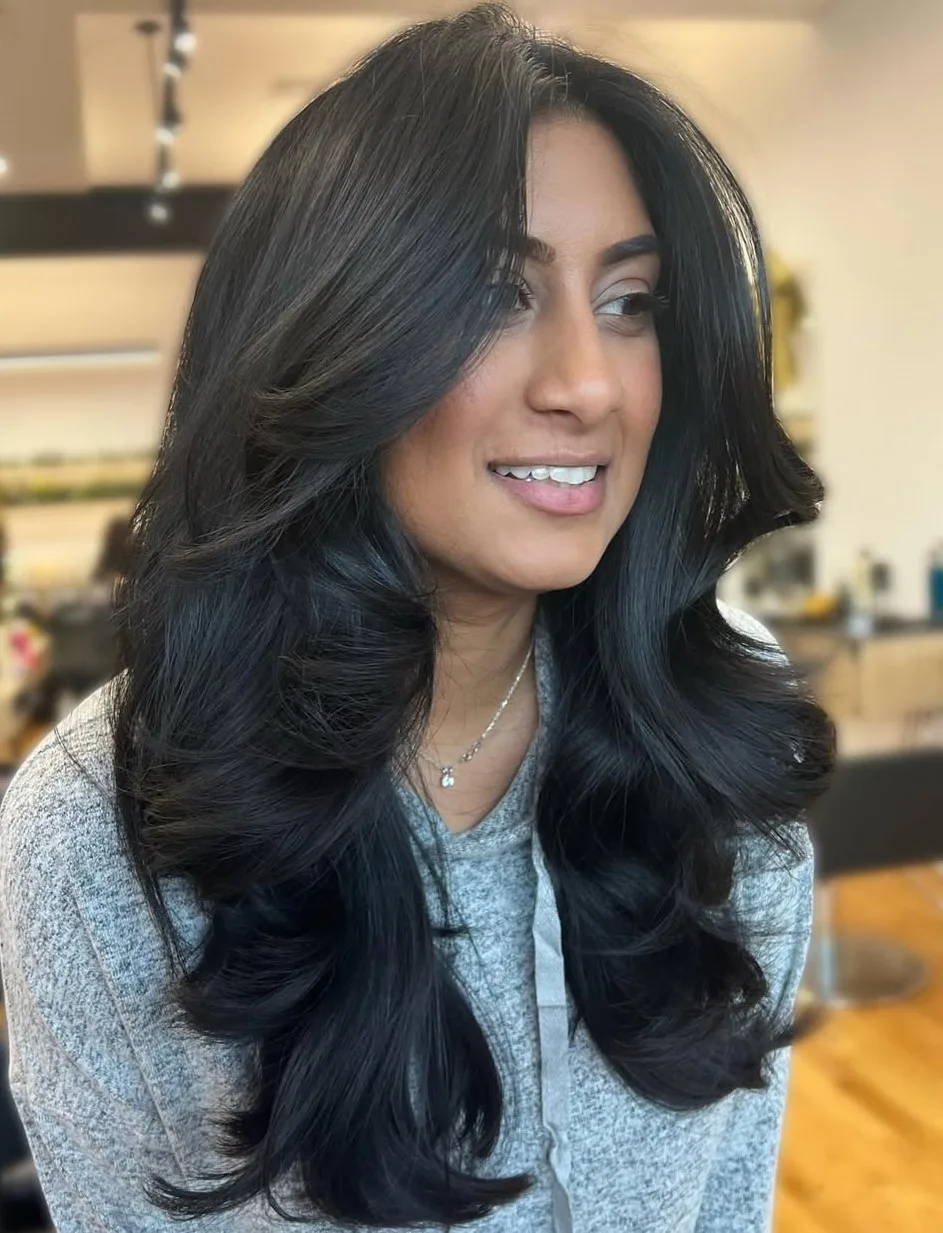
The butterfly bob is really a blowout haircut. Without the blowout, the layers can fall flat and look disconnected. With it, the top layers lift and flick, and the whole cut comes alive.
The trick is direction: dry the top layers outward and the underneath layers inward. That contrast is what creates the wing shape. A large round brush, root mousse and 10–15 minutes are enough — you do not need a salon every time.
- Step 1: mousse at the roots, heat protectant through the lengths.
- Step 2: round brush outward on top layers, inward underneath.
- Step 3: cool shot to set, then shake out with your fingers.
Colour That Shows Off the Layers
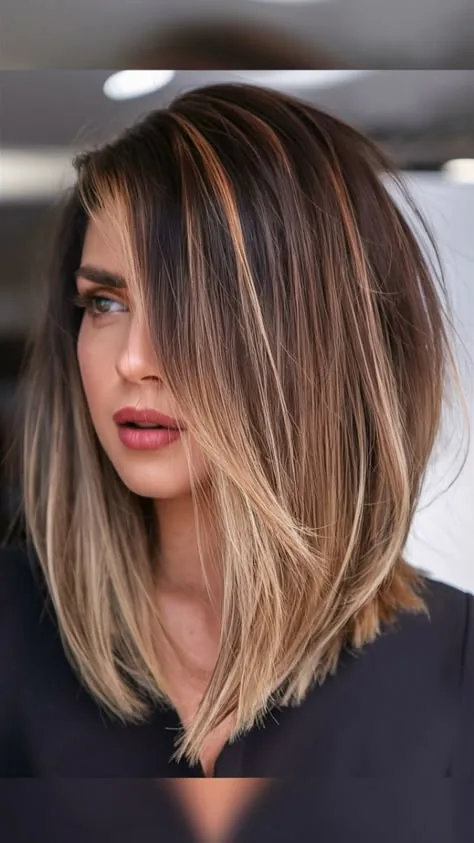
Colour is what makes butterfly layers visible in photos. Balayage, face-framing highlights and soft dimension all catch the light differently on each layer, so the wings stand out.
Keep the lightest pieces on the top layers and around the face, and the depth underneath. That contrast gives the cut its shape even on days when you do not style it perfectly. Ask for blended, feathered colour rather than harsh stripes.
- Balayage: soft, low-maintenance dimension.
- Face-framing highlights: brightness around the face.
- Gloss: shine and tone refresh between colour visits.
Keeping the Shape Between Cuts
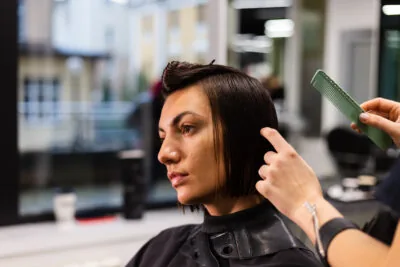
Butterfly bobs grow out from the top first. The short wings get longer, the shape gets heavier, and after about 8 weeks the cut can look like an ordinary layered bob. Regular trims are what keep it a butterfly bob.
Book a trim every 6–8 weeks for short versions, or every 8–10 weeks for longer, grow-out friendly versions. Between visits, a round-brush blowout and root lift will fake the shape for longer than air-drying will.
- Short bob: trim every 6 weeks.
- Classic bob: trim every 6–8 weeks.
- Butterfly lob: trim every 8–10 weeks.
How to Ask Your Stylist for a Butterfly Bob
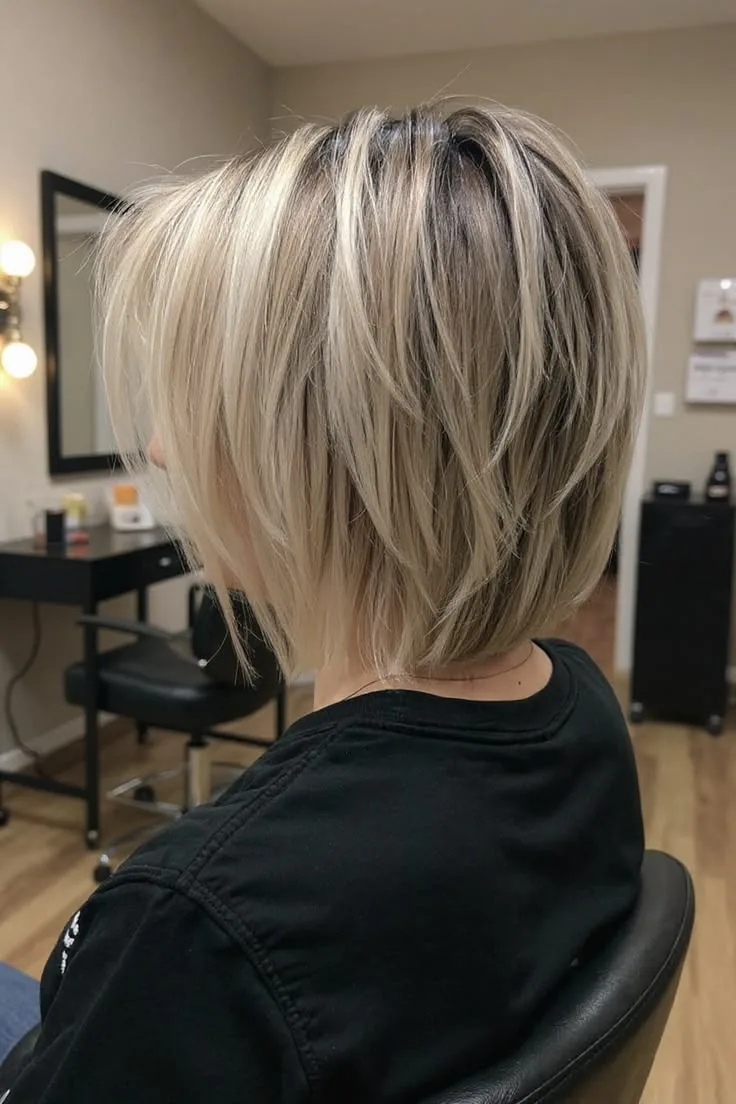
Bring two or three photos of hair like yours — same texture, same thickness, similar face shape — not just the prettiest photo online. Photos of a different hair type can set up a cut that will never behave the same way on you.
Use these words at the appointment: bob length, short layers on top, longer layers underneath, face-framing pieces, and flicked-out styling. Then say how you actually style your hair at home, so the cut is built for your routine.
- Say: ‘A bob with short, bouncy layers on top and longer layers underneath.’
- Show: photos on your own hair type and texture.
- Ask: ‘Will this work air-dried, or does it need a blowout every time?’
1. Classic Butterfly Bob
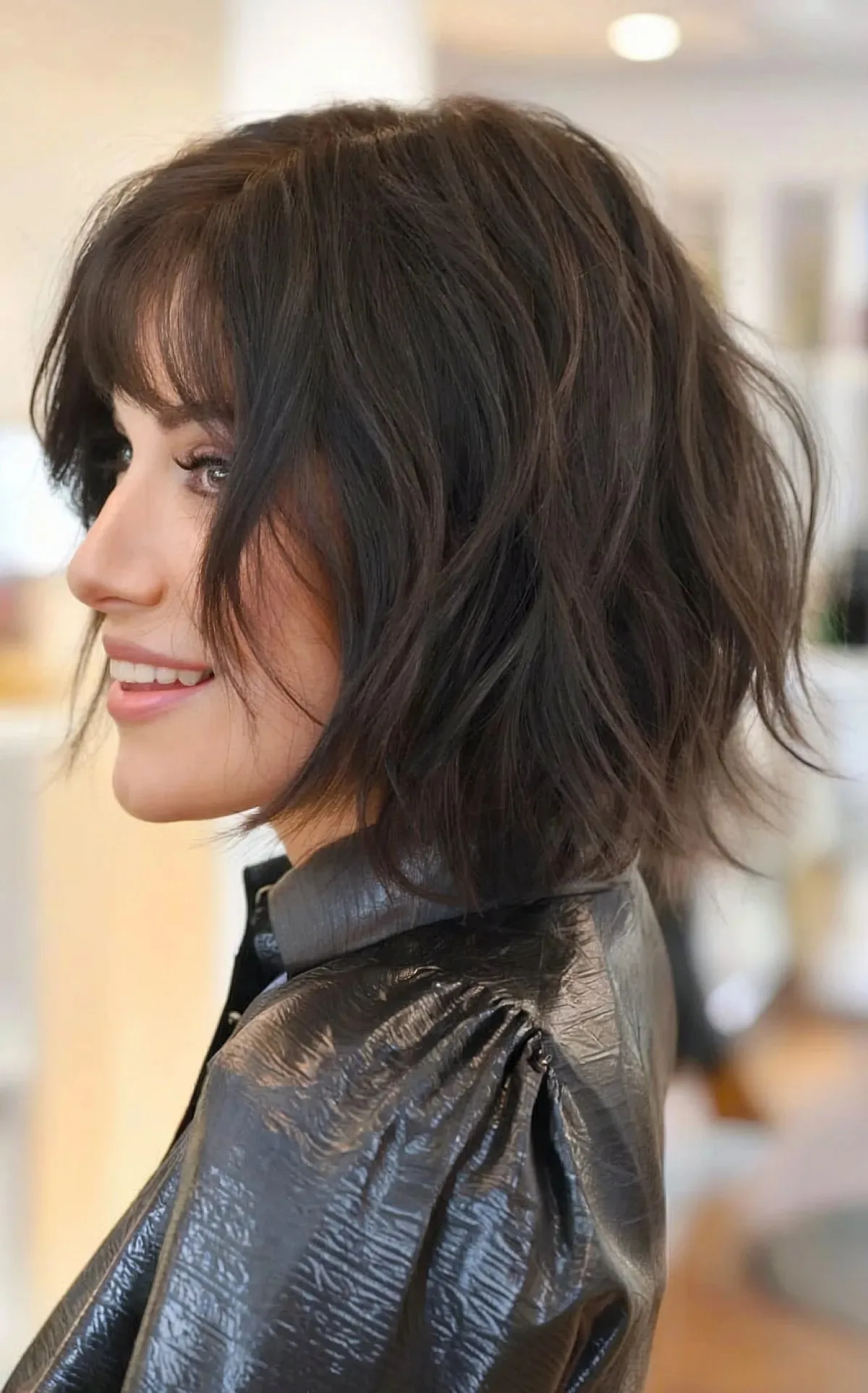
The classic butterfly bob is the version you see all over social media: a chin-to-shoulder bob with short, airy layers on top and longer layers underneath. The top layers flick out like wings, while the longer base keeps the shape soft and wearable.
Who should avoid it: Skip it if your hair is very short already, or if you hate any styling at all — the layers need at least a quick blow-dry to show their shape.
Cost and time: A cut usually costs the same as a standard layered bob, and takes 45–60 minutes. At home, styling takes 10–15 minutes.
How to style it:
- Blow-dry with a round brush, flicking the top layers outward.
- Smooth the longer underneath layers inward for contrast.
- Finish with a light hold spray, not a heavy wax.
2. Butterfly Bob with Curtain Bangs
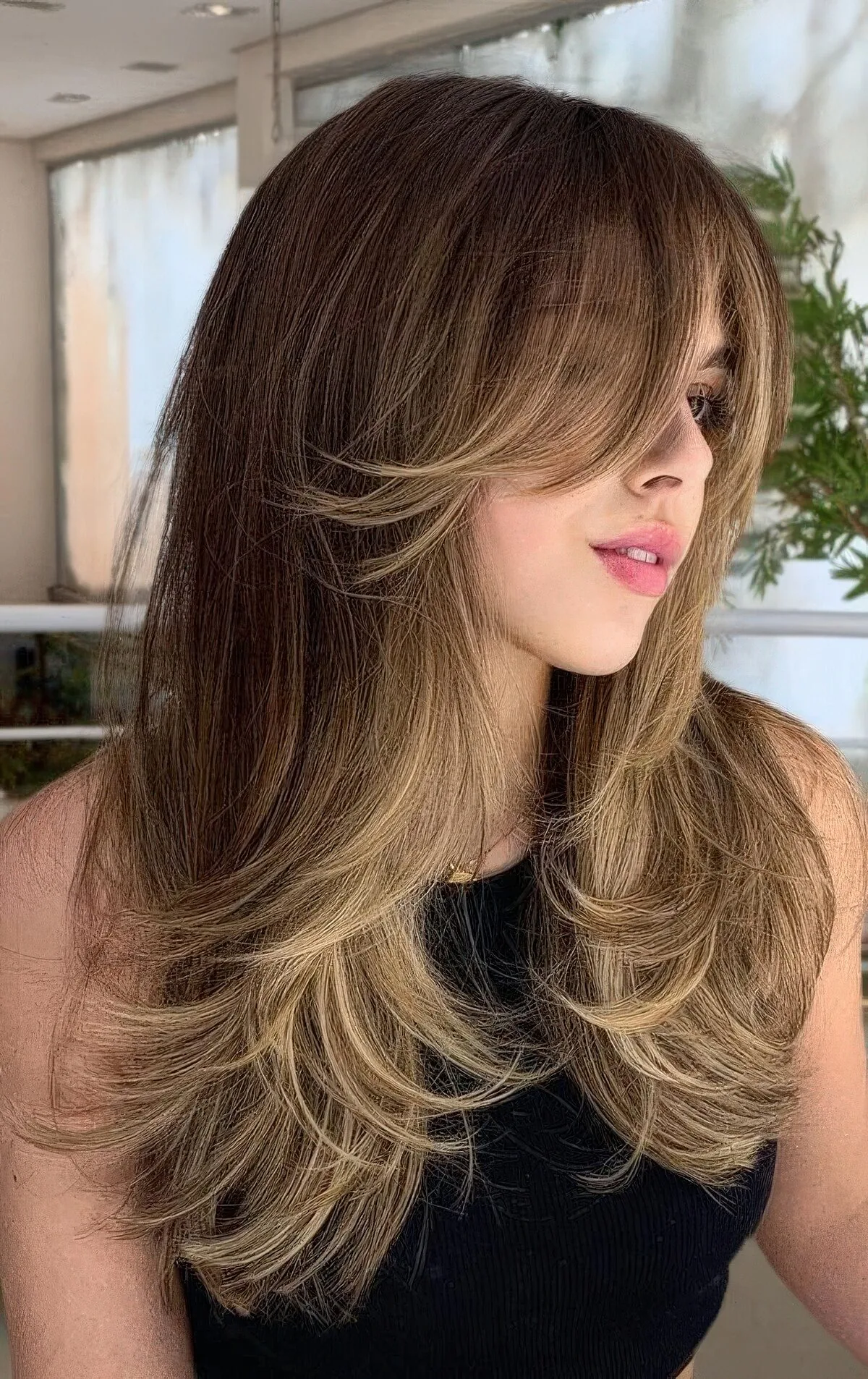
Curtain bangs are the natural partner for a butterfly bob. They open in the middle, frame the cheekbones, and blend straight into the shortest top layers, so the whole cut moves as one.
Who should avoid it: Avoid a very short, blunt curtain bang if you have a wide forehead you want to soften — ask for longer, cheekbone-length pieces instead.
Cost and time: Cut: 45–60 minutes. Bang trims every 4–6 weeks keep the parting neat. Styling: 10 minutes.
How to style it:
- Part hair in the centre, then blow-dry each side of the bang away from the face.
- Use a round brush to bend the ends outward slightly.
- Let the bangs fall naturally — do not flatten them.
3. Butterfly Bob with Face-Framing Layers
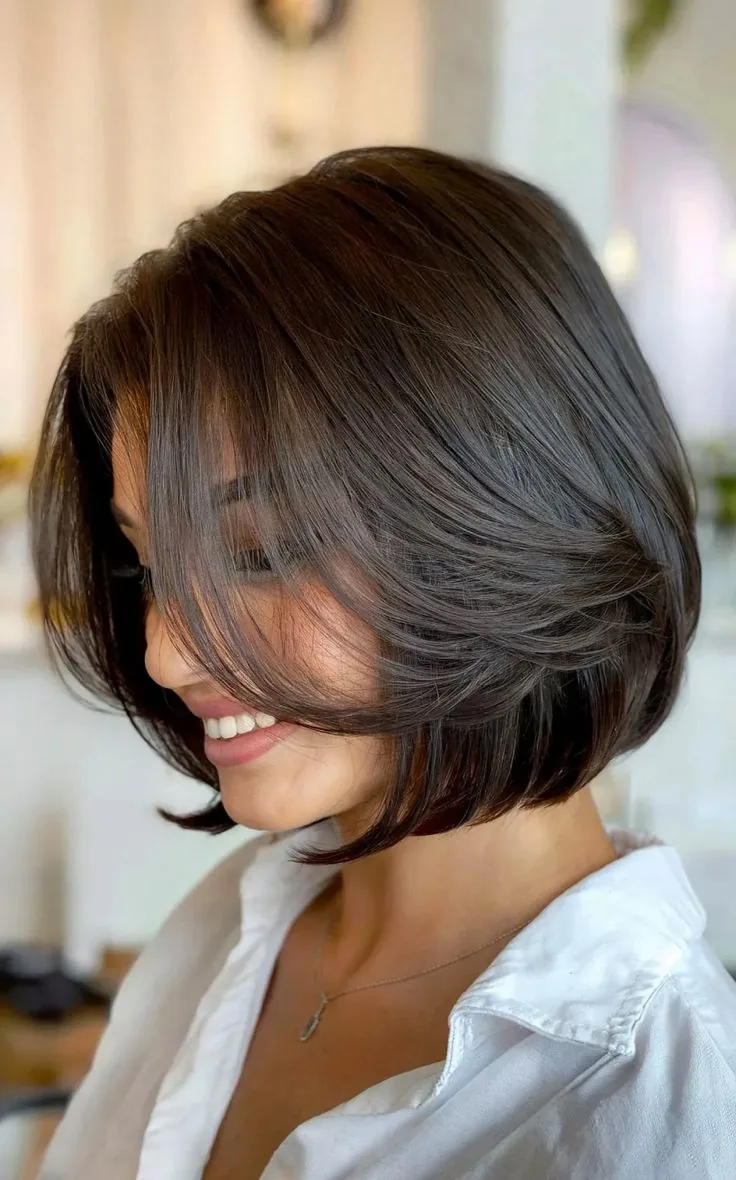
Face-framing layers are cut shorter around the cheeks and jaw, then left longer toward the back. On a butterfly bob, they are what create that lifted, winged outline around the face.
Who should avoid it: Avoid very short face-framing pieces if you have a strong jawline you prefer to soften — longer pieces starting below the chin work better.
Cost and time: Cut: 45–60 minutes. Styling: 10–15 minutes with a round brush or rollers.
How to style it:
- Dry the front pieces forward, then flick them back away from the face.
- Add a pea-sized amount of smoothing cream to the ends only.
- Shake the layers out with your fingers for movement.
4. Textured Butterfly Bob
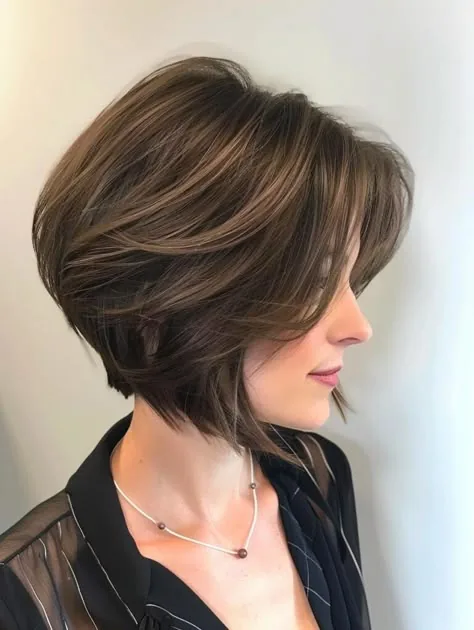
A textured butterfly bob uses point cutting and sliced ends so the layers look piecey rather than polished. It is the best choice if you like an undone, lived-in finish.
Who should avoid it: Avoid heavy texturising if your hair is fine and already thin at the ends — it can make the base look wispy.
Cost and time: Cut: 45–60 minutes. Styling: 5–10 minutes, often air-dried.
How to style it:
- Scrunch in a texture spray or sea-salt mist while damp.
- Diffuse on low heat, or let it air-dry.
- Pinch small sections at the ends to separate them.
5. Wavy Butterfly Bob
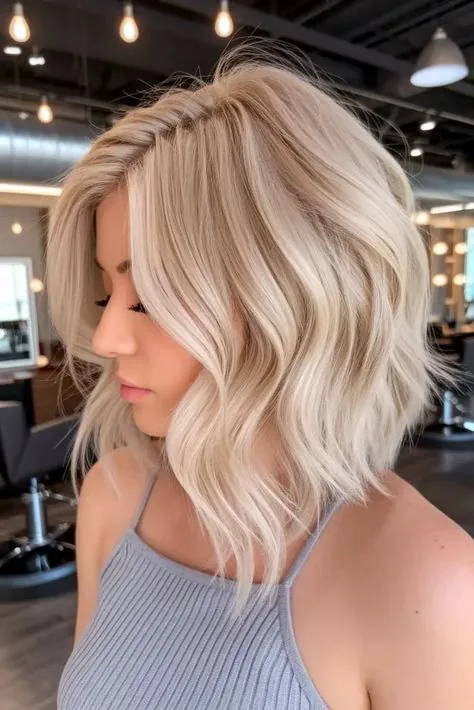
Natural waves and butterfly layers were made for each other. The waves give the short top layers bounce, while the longer layers stop the cut from shrinking up into a triangle.
Who should avoid it: Avoid cutting the top layers too short if your waves are tight — they will spring up much shorter than they look when wet.
Cost and time: Cut: 50–70 minutes, ideally cut dry or part-dry for wavy hair. Styling: 10–15 minutes.
How to style it:
- Apply curl cream to damp hair and scrunch upward.
- Diffuse, or twist two front sections away from the face while drying.
- Break the cast with a drop of oil once fully dry.
6. Curly Butterfly Bob
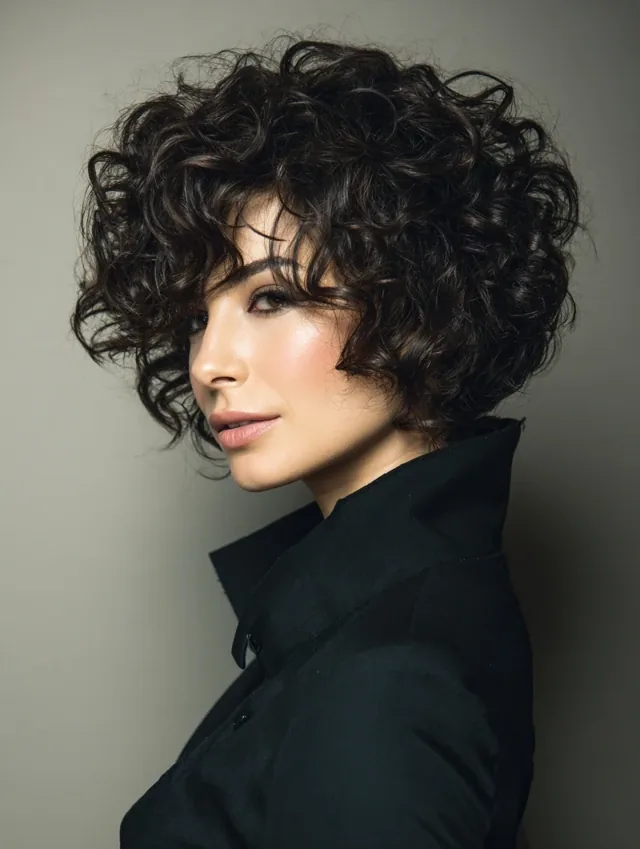
A curly butterfly bob keeps the signature idea — shorter layers on top, longer underneath — but the layers are cut to follow your curl pattern, not fight it. The result is rounded volume on top and a defined, bouncy base.
Who should avoid it: Avoid a wet cut with straight, blunt lines if your curls shrink a lot — ask for a dry or curl-by-curl cut instead.
Cost and time: Cut: 60–90 minutes for a curl-specialist cut. Styling: 15–20 minutes.
How to style it:
- Style on soaking-wet hair with curl cream and gel.
- Diffuse without touching the curls until dry.
- Fluff only at the roots for lift.
7. Straight Butterfly Bob
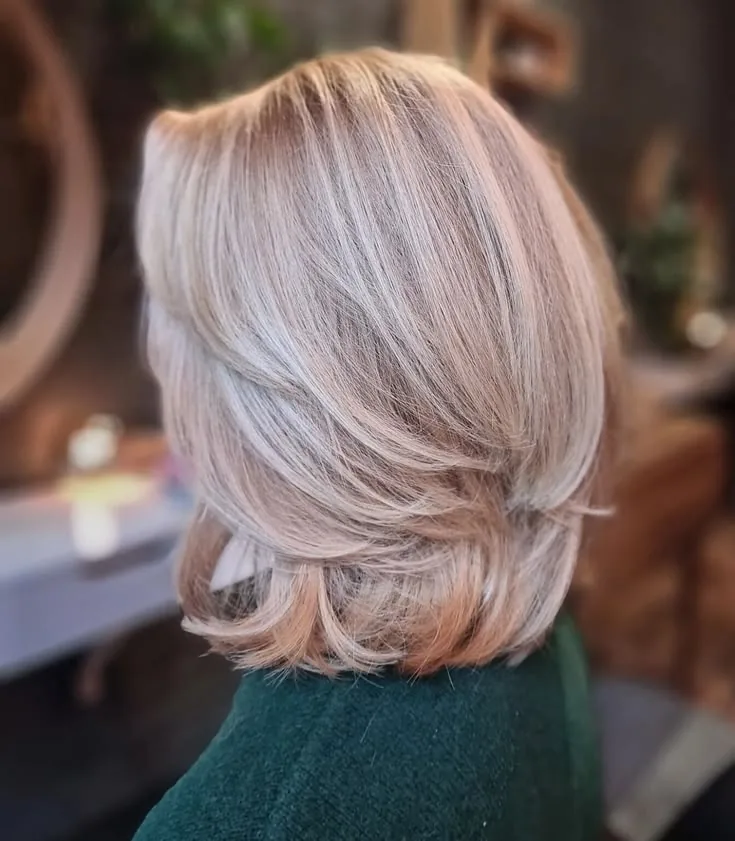
On straight hair, the butterfly bob looks sleek and graphic: you can see every layer clearly. It needs the blowout more than wavy versions do, because straight hair will not create the winged shape on its own.
Who should avoid it: Avoid it if you never blow-dry and your hair is very flat — without heat, the layers can fall limp and look disconnected.
Cost and time: Cut: 45–60 minutes. Styling: 15 minutes with a round brush.
How to style it:
- Blow-dry in sections, lifting at the roots.
- Turn the brush outward on the top layers and inward underneath.
- Finish with a shine spray.
8. Butterfly Bob for Fine Hair
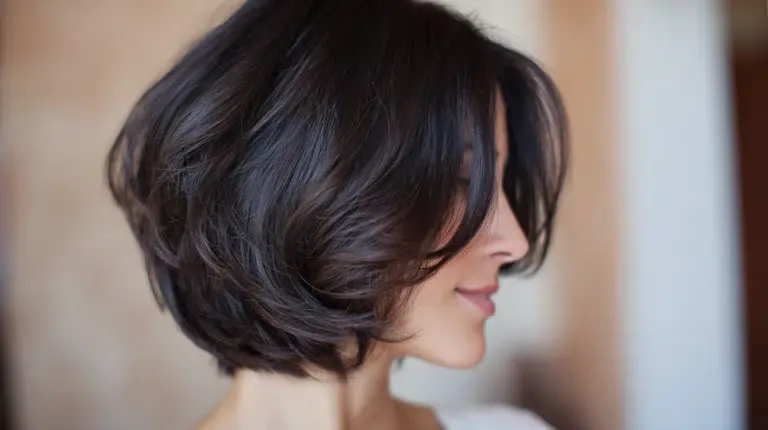
Fine hair benefits from a butterfly bob because the shorter top layers create the illusion of fullness. Keep the base blunt enough to look thick, and let only the top layers do the lifting.
Who should avoid it: Avoid over-thinning or too many short layers through the ends — fine hair can quickly look see-through.
Cost and time: Cut: 45–60 minutes. Styling: 10 minutes.
How to style it:
- Apply volumising mousse at the roots only.
- Blow-dry upside down for lift, then smooth the ends.
- Use dry shampoo on day two instead of washing.
9. Butterfly Bob for Thick Hair
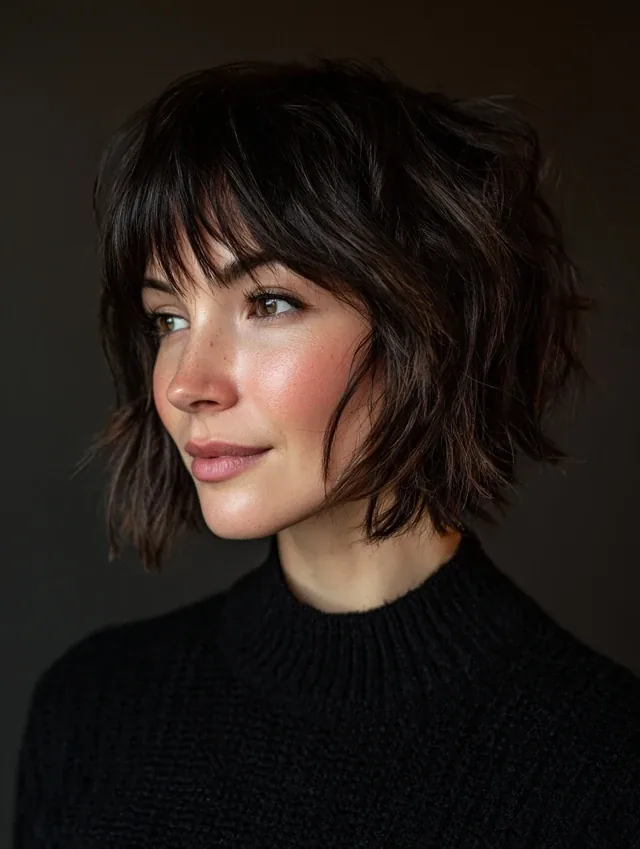
Thick hair needs internal layers and weight removal so a butterfly bob does not turn into a heavy helmet. Done well, it feels lighter, moves freely, and dries faster than a one-length bob.
Who should avoid it: Avoid a blunt, heavy base with no internal texture — thick hair will puff out instead of flicking.
Cost and time: Cut: 60–75 minutes. Styling: 15–20 minutes.
How to style it:
- Use a smoothing cream before blow-drying.
- Dry in sections, keeping the brush moving.
- Tame flyaways with a tiny amount of oil on the surface only.
10. Butterfly Bob with Balayage
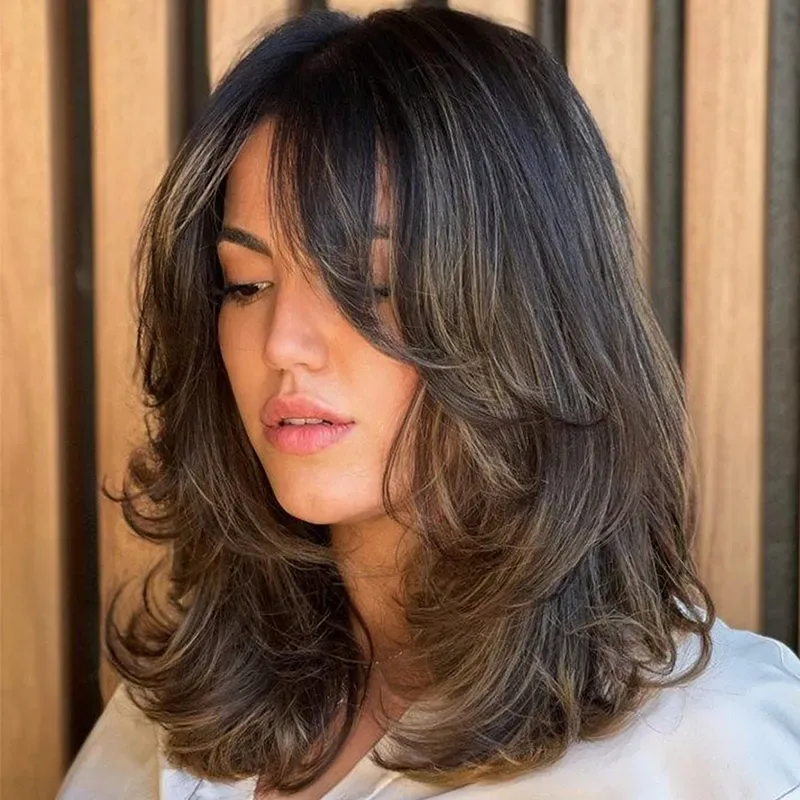
Balayage painted through the layers makes each wing stand out. Lighter pieces on the top layers and around the face give the cut depth without a harsh regrowth line.
Who should avoid it: Avoid very chunky, high-contrast balayage if you want a soft finish — ask for blended, feathered painting instead.
Cost and time: Cut plus colour: 2–3 hours. Balayage refresh every 10–12 weeks. Styling: 10–15 minutes.
How to style it:
- Blow-dry with a round brush to show the dimension.
- Use a colour-safe shampoo and a weekly mask.
- Add gloss at the salon if the tone turns brassy.
11. Butterfly Bob with Highlights
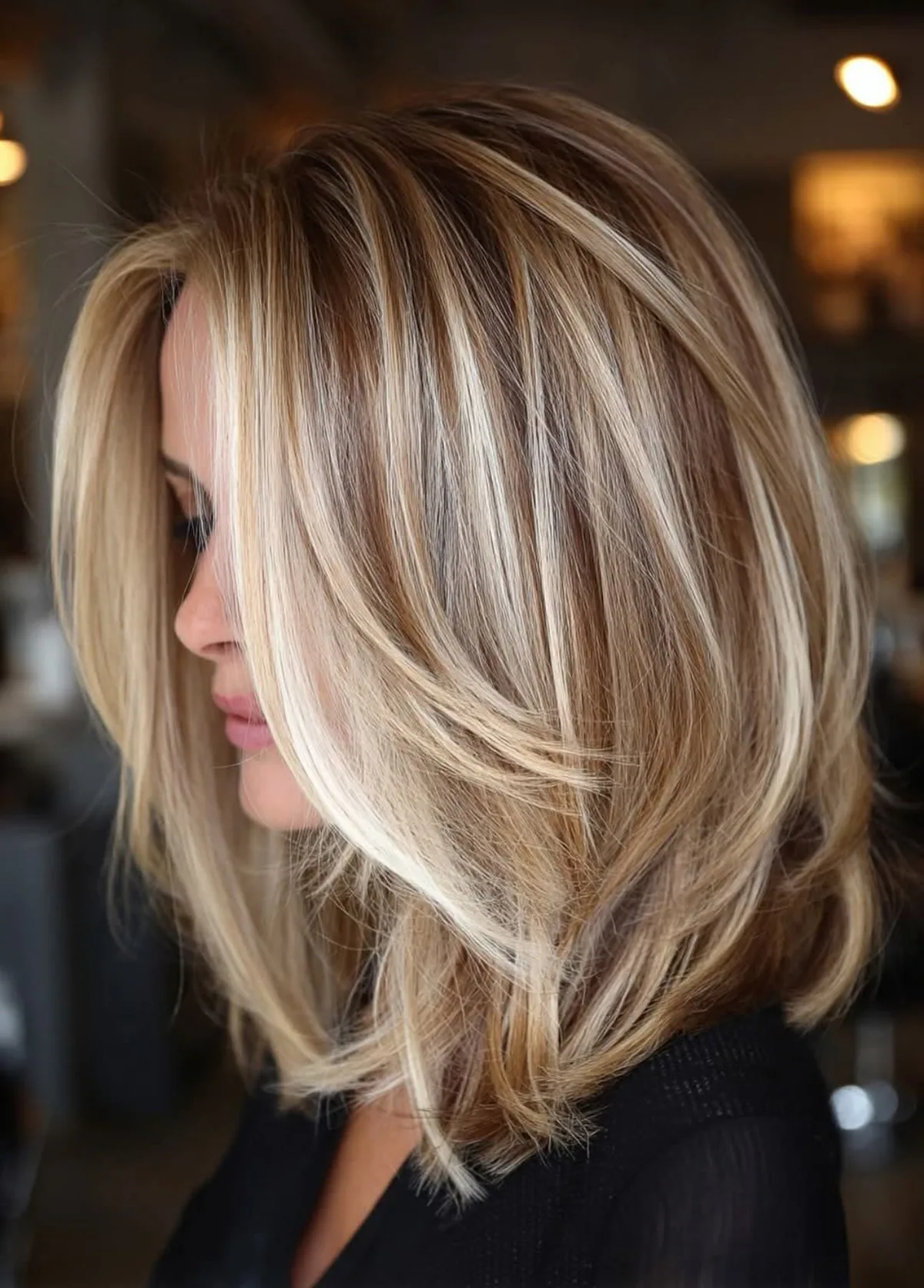
Classic highlights, placed finely through the top layers, brighten the whole bob and make the movement easy to see — especially in photos and sunlight.
Who should avoid it: Avoid thick, stripey highlights that sit only on the surface — they can break up the layered shape.
Cost and time: Cut plus highlights: 2–3 hours. Touch-up every 8–10 weeks. Styling: 10 minutes.
How to style it:
- Style as for the classic bob, flicking top layers outward.
- Use a purple or toning shampoo only if your stylist recommends it.
- Keep heat moderate to protect highlighted ends.
12. Blonde Butterfly Bob
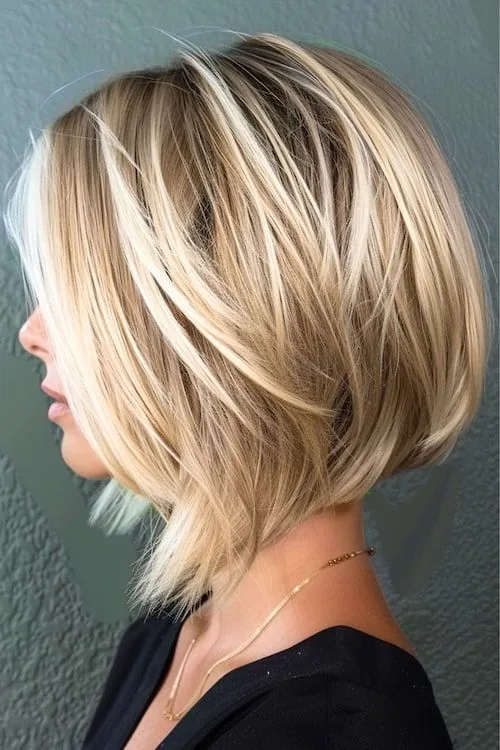
Blonde lifts the butterfly bob beautifully because light hair shows layering more clearly. From soft honey to bright platinum, the key is keeping the ends healthy so the wings look bouncy, not frayed.
Who should avoid it: Avoid going very light in one session if your hair is already fragile — build the blonde gradually.
Cost and time: Cut plus colour: 2–4 hours depending on starting colour. Toner every 6–8 weeks. Styling: 10–15 minutes.
How to style it:
- Blow-dry with heat protectant always.
- Use a bond-building mask weekly.
- Keep the top layers flicked out for that airy blonde movement.
13. Brunette Butterfly Bob
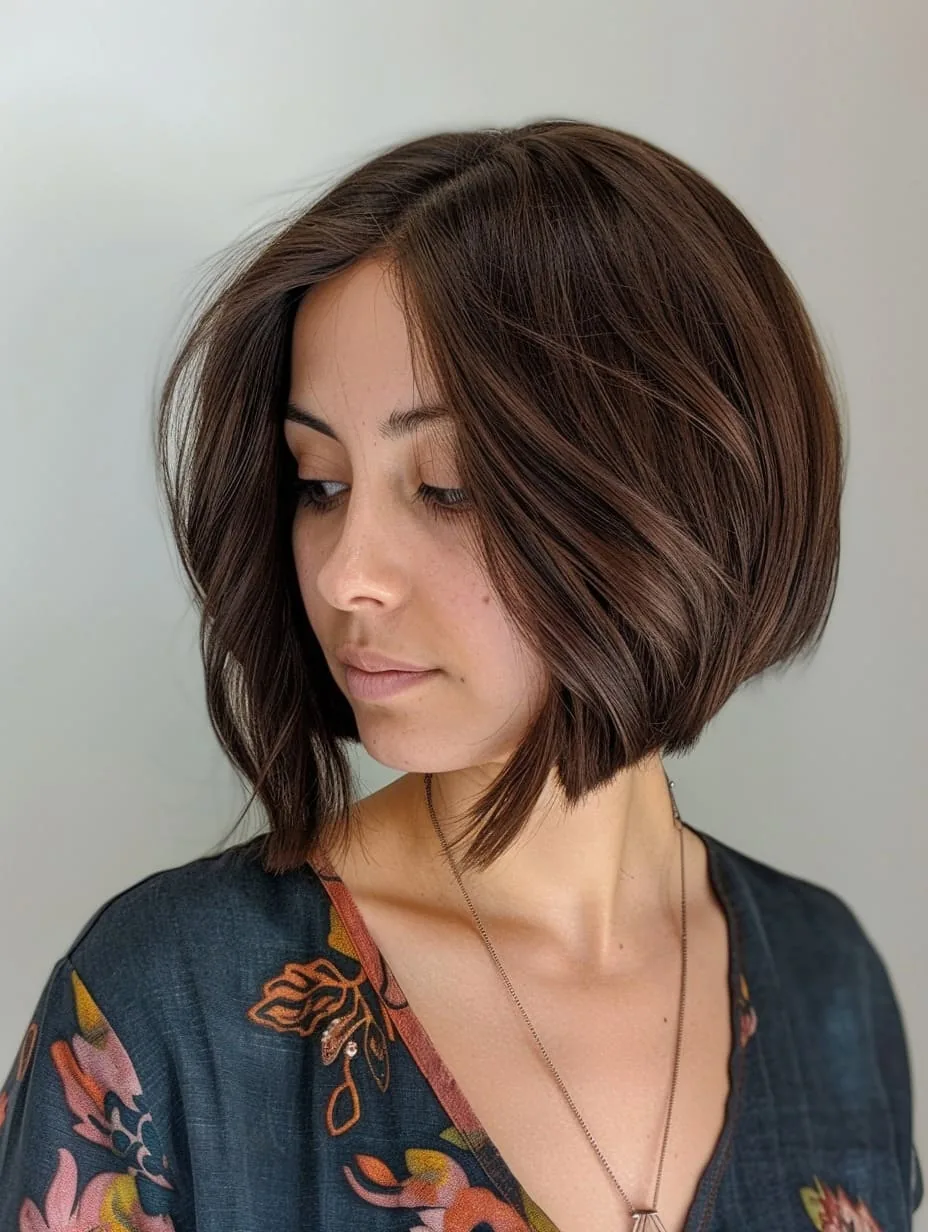
Brunette butterfly bobs look rich and glossy, and the layers add movement that dark, one-length hair can lack. Caramel or chocolate ribbons through the top layers stop it looking flat.
Who should avoid it: Avoid an all-over flat dark colour if your hair is very thick — a little dimension helps the layers read.
Cost and time: Cut plus colour: 2–3 hours if adding dimension. Styling: 10–15 minutes.
How to style it:
- Blow-dry for shine, turning ends outward on top.
- Use a gloss or shine spray to finish.
- Refresh dimension with a salon gloss between colour appointments.
14. Butterfly Bob with a Deep Side Part

A deep side part gives the butterfly bob instant glamour and volume. The heavy side sweeps across the forehead, while the lighter side shows off the layers.
Who should avoid it: Avoid a very deep part if your hair is thin at the crown — it can expose the scalp. A softer side part works better.
Cost and time: Cut: 45–60 minutes. Styling: 10–15 minutes.
How to style it:
- Part hair deeply while damp, on your fuller side.
- Blow-dry the heavy side with a round brush for lift.
- Tuck the lighter side behind the ear if you want a sleeker finish.
15. Butterfly Bob with a Centre Part

The centre part is the classic butterfly-bob styling: it balances the wings on both sides and shows off face-framing layers evenly. It suits oval, heart and long faces especially well.
Who should avoid it: Avoid a harsh centre part if your features are very asymmetrical and that bothers you — a slightly off-centre part is more forgiving.
Cost and time: Cut: 45–60 minutes. Styling: 10 minutes.
How to style it:
- Part in the centre while damp.
- Blow-dry each side away from the face.
- Keep the ends flicked outward, not tucked under.
16. Bouncy Blowout Butterfly Bob
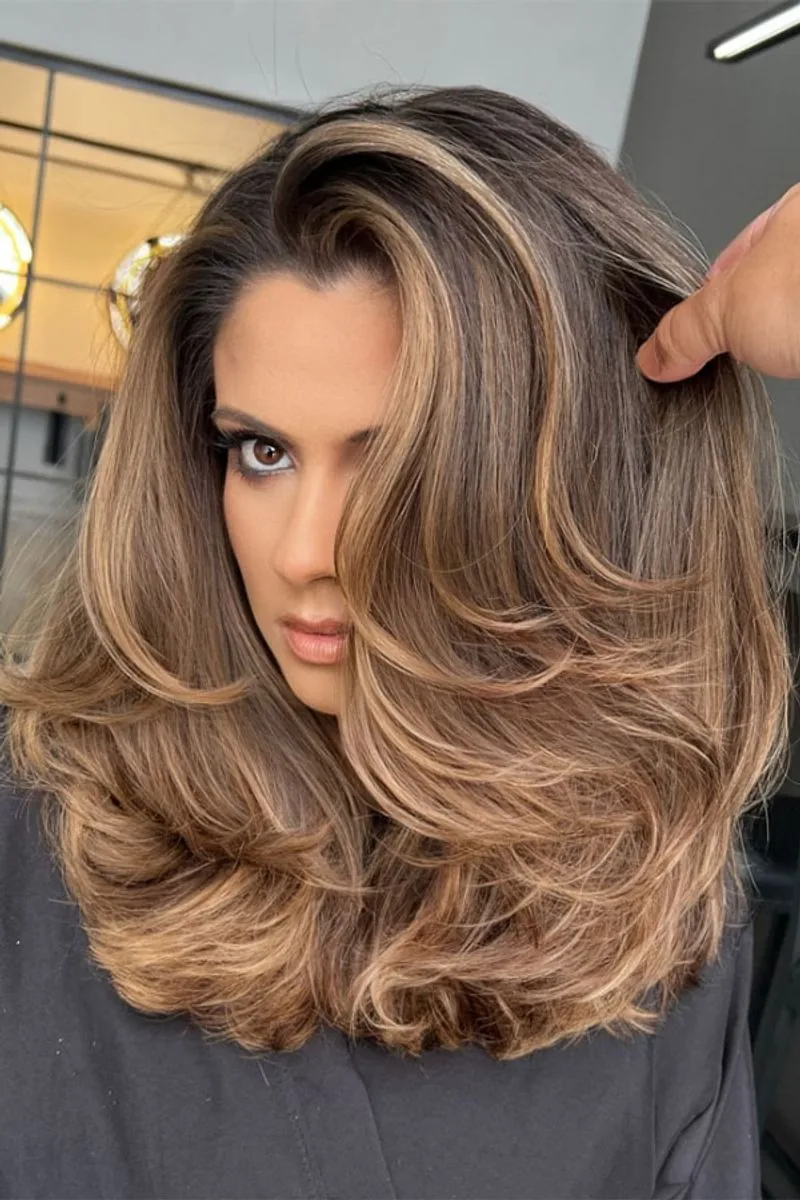
This is the salon blowout version: big roots, curved ends, and layers that bounce as you move. It is the styling that made the butterfly bob go viral.
Who should avoid it: Avoid daily high-heat blowouts if your hair is damaged — alternate with heat-free days.
Cost and time: Blowout: 20–30 minutes at home, or a salon blow-dry appointment. Styling products: mousse, heat protectant, round brush.
How to style it:
- Apply mousse at the roots and heat protectant through the lengths.
- Blow-dry in sections with a large round brush, rolling ends outward on top.
- Set with velcro rollers for 10 minutes, then shake out.
17. Sleek Butterfly Bob
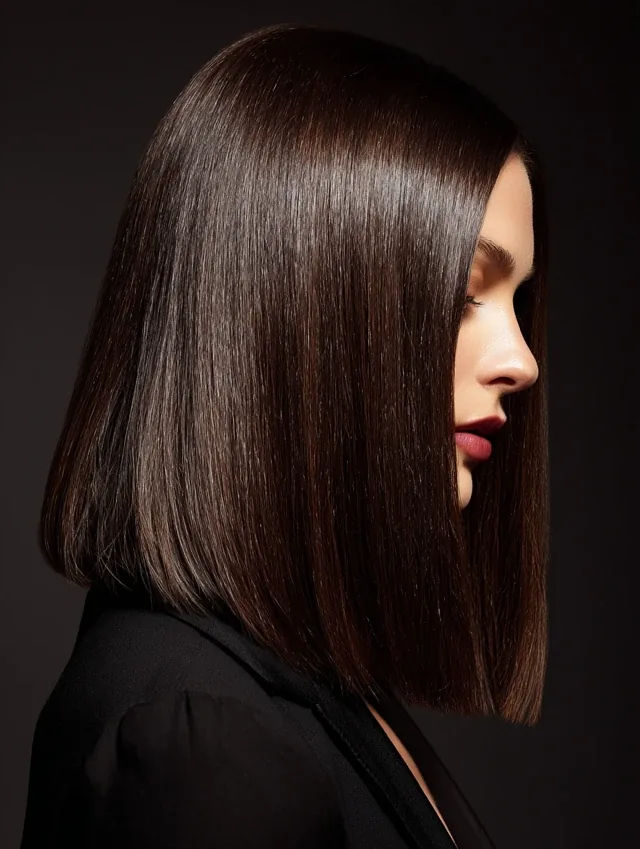
A sleek butterfly bob keeps the layered shape but smooths it down: polished roots, controlled ends, and a glossy finish. It is the office-friendly, evening-ready version.
Who should avoid it: Avoid heavy oils or serums at the roots — they will flatten the layers and make hair look greasy by midday.
Cost and time: Cut: 45–60 minutes. Styling: 15 minutes.
How to style it:
- Blow-dry smooth with a paddle or round brush.
- Run a flat iron lightly over the ends only, flicking outward.
- Finish with shine spray, not wax.
18. Tousled Butterfly Bob
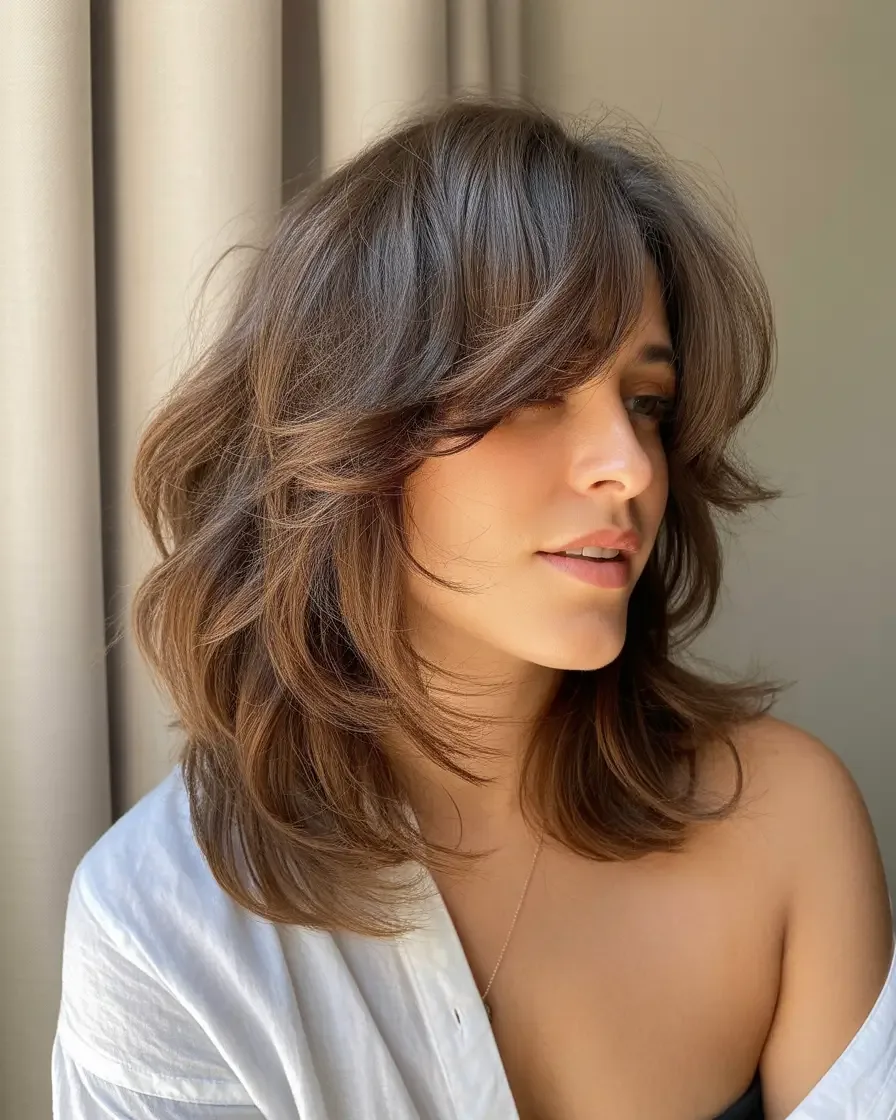
The tousled version is the weekend butterfly bob: soft bends, separated ends, and no perfect finish. It works best on wavy or textured hair, and on second-day hair.
Who should avoid it: Avoid heavy styling creams that weigh the layers down — tousled means light and airy, not piecey-greasy.
Cost and time: Cut: 45–60 minutes. Styling: 5–10 minutes.
How to style it:
- Spray texture mist on dry hair.
- Twist a few random sections around a curling wand, leaving ends out.
- Shake out and pinch the ends apart.
19. Butterfly Bob for Round Faces
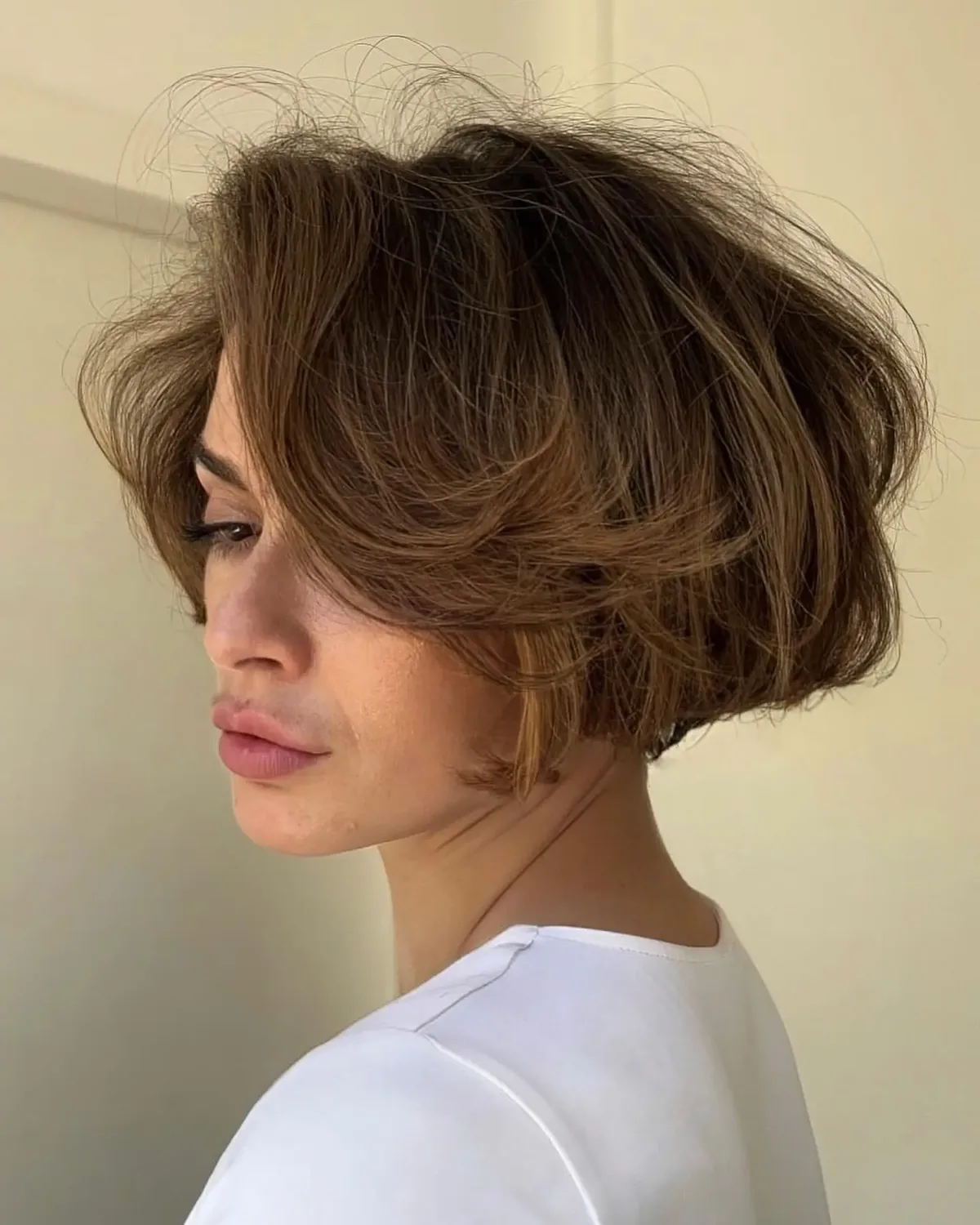
For round faces, the butterfly bob works when the longest layers fall below the chin and the top layers start at the cheekbone or lower. That vertical length slims the face instead of widening it.
Who should avoid it: Avoid a chin-length bob with lots of width at cheek level — it can make a round face look rounder.
Cost and time: Cut: 45–60 minutes. Styling: 10–15 minutes.
How to style it:
- Keep the part slightly off-centre for asymmetry.
- Flick layers outward below the chin, not at the cheeks.
- Add root lift so the shape grows upward, not outward.
20. Butterfly Bob for Oval Faces
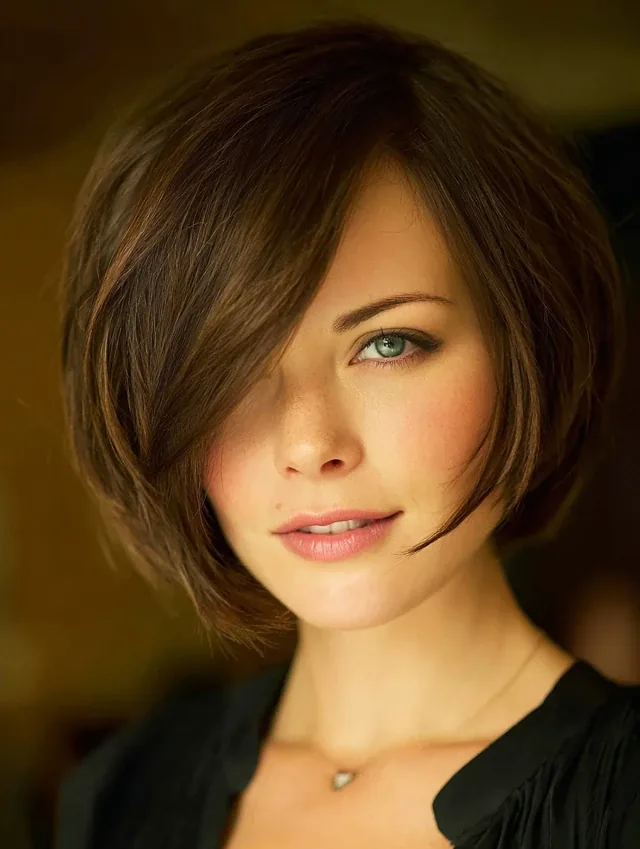
Oval faces can wear almost any butterfly bob, because the proportions are already balanced. This is the face shape where you can go shorter on top and bolder with bangs.
Who should avoid it: Avoid cutting the whole bob too long and flat if you want to show off the layers — oval faces can handle visible, bouncy layers.
Cost and time: Cut: 45–60 minutes. Styling: 10 minutes.
How to style it:
- Choose any parting you like — centre or side both work.
- Blow-dry layers outward for the winged effect.
- Experiment with curtain or wispy bangs.
21. Butterfly Bob for Square Faces
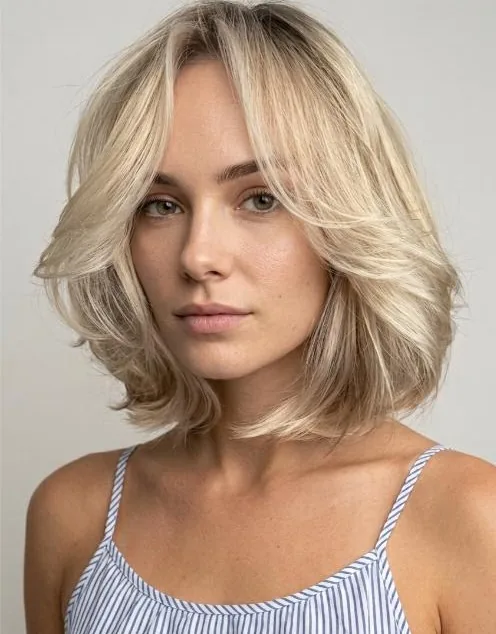
For square faces, softness is the goal: feathered ends, face-framing layers that curve inward at the jaw, and no blunt horizontal line at chin level.
Who should avoid it: Avoid a blunt, jaw-length bob with sharp corners — it emphasises the jaw instead of softening it.
Cost and time: Cut: 45–60 minutes. Styling: 10–15 minutes.
How to style it:
- Blow-dry front layers inward, curving around the jaw.
- Keep ends feathered, not blunt.
- A side part softens the forehead corners.
22. Butterfly Bob for Heart Faces
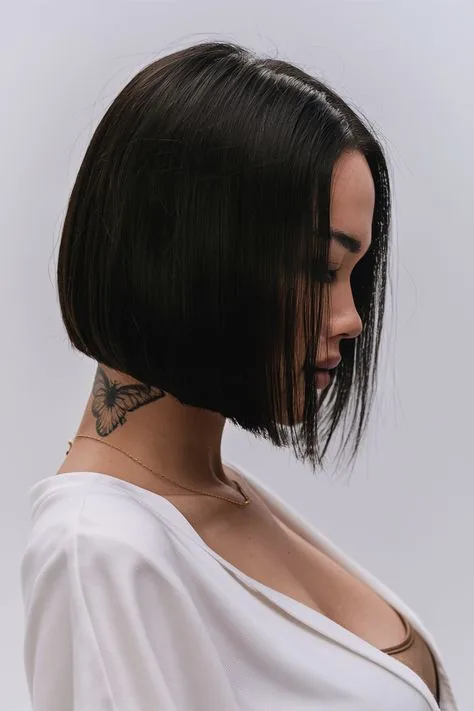
Heart faces have a wider forehead and narrower chin, so the butterfly bob should add fullness lower down — longer layers and flicked ends around the jaw balance the shape.
Who should avoid it: Avoid lots of volume only at the crown with flat, thin ends — it can make the chin look even narrower.
Cost and time: Cut: 45–60 minutes. Styling: 10–15 minutes.
How to style it:
- Add volume at the jaw with outward flicks, not just at the roots.
- Curtain bangs help balance a wider forehead.
- Keep the base full rather than heavily thinned.
23. Short Butterfly Bob
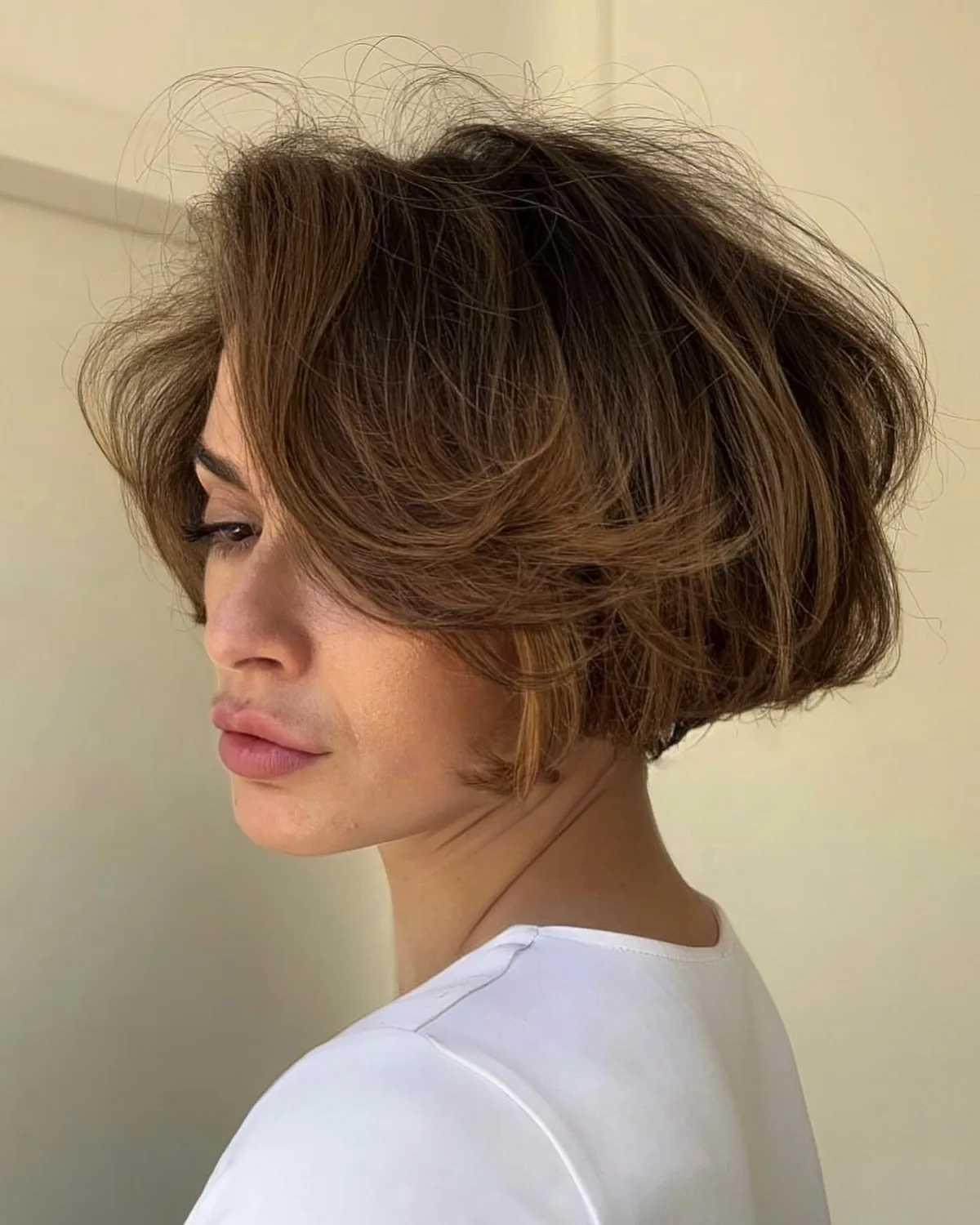
The short butterfly bob sits at or just above the chin, with short wings on top and a neat, swingy base. It is bold, light, and dries fast.
Who should avoid it: Avoid it if you are growing your hair out and dislike frequent trims — short layers need reshaping every 6 weeks.
Cost and time: Cut: 40–55 minutes. Styling: 5–10 minutes.
How to style it:
- Blow-dry quickly with a small round brush.
- Flick the top layers out and tuck the base slightly under.
- A little texture spray stops it looking too neat.
24. Longer Butterfly Bob (Butterfly Lob)

The butterfly lob is the same idea at shoulder length or just past it. The wings sit higher, the base is longer, and the grow-out is far more forgiving.
Who should avoid it: Avoid the lob if you wanted a dramatic short change — at this length the butterfly effect is softer and subtler.
Cost and time: Cut: 50–65 minutes. Styling: 10–15 minutes.
How to style it:
- Blow-dry the top layers outward and the long base with a gentle bend.
- Use rollers on the top sections for extra lift.
- Brush out for soft movement.
25. Butterfly Bob with Wispy Bangs
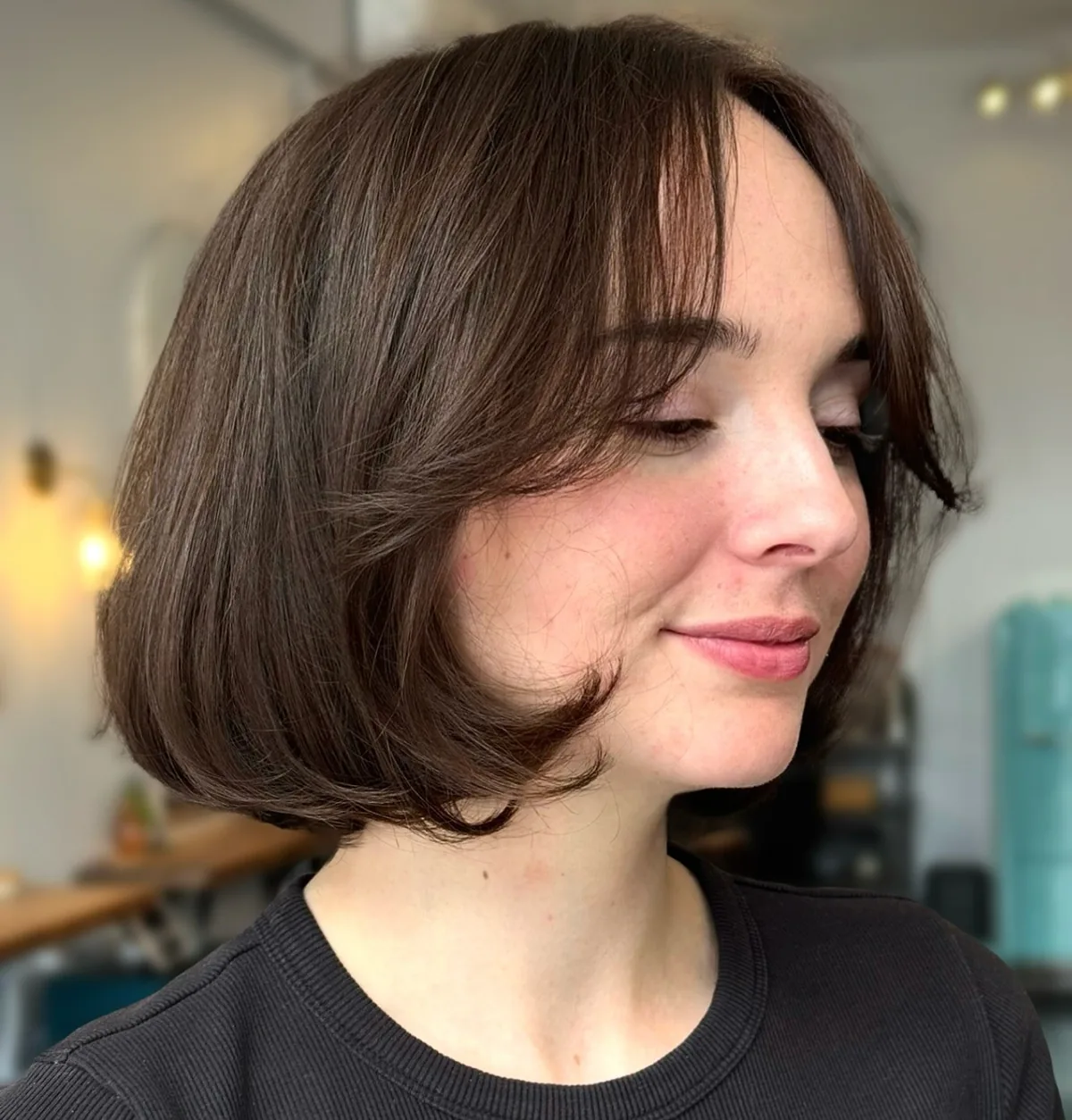
Wispy bangs are light, see-through fringe pieces that soften the forehead without hiding it. They pair beautifully with a butterfly bob because both are airy.
Who should avoid it: Avoid thick, heavy wispy bangs cut too short — they can look like a blunt fringe that fights the layered shape.
Cost and time: Cut: 45–60 minutes. Bang trim every 5–6 weeks. Styling: 5–10 minutes.
How to style it:
- Blow-dry bangs forward with a small round brush.
- Keep them light — no heavy product.
- Trim only the very ends between salon visits.
26. Butterfly Bob with Side-Swept Bangs
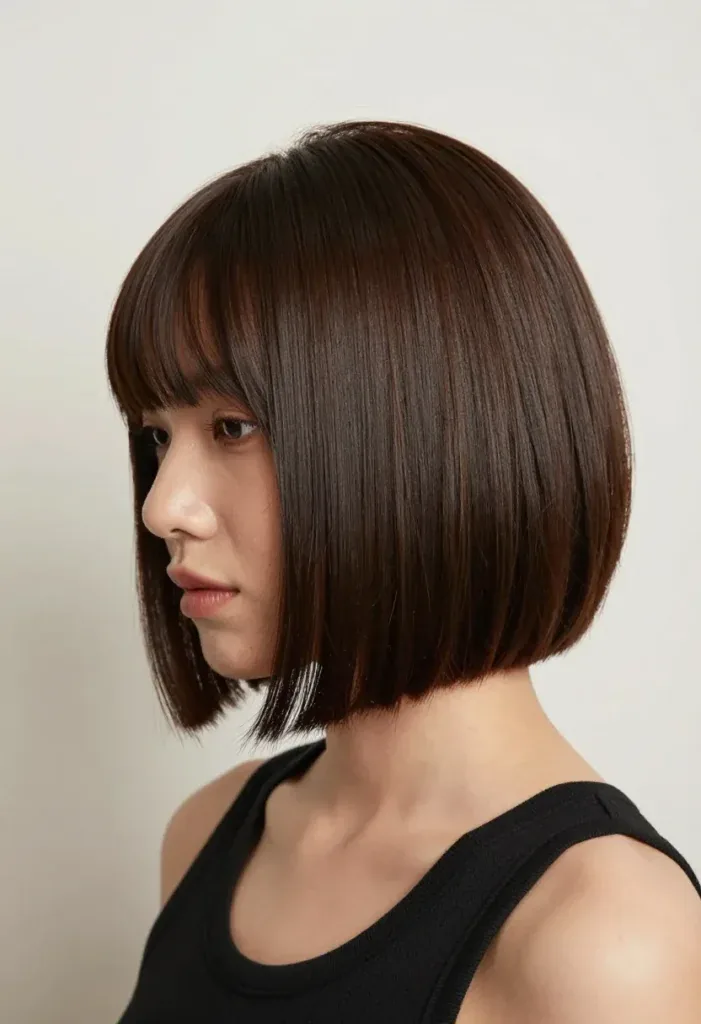
Side-swept bangs sweep diagonally across the forehead and melt into the shortest butterfly layers. They are a great choice if you dislike centre-part bangs.
Who should avoid it: Avoid a very long side bang that constantly falls in your eyes — ask for it to end at or above the cheekbone.
Cost and time: Cut: 45–60 minutes. Styling: 10 minutes.
How to style it:
- Blow-dry the bang across the forehead, away from the part.
- Use a round brush to curve it slightly.
- Pin it loosely if it falls forward during the day.
27. Asymmetrical Butterfly Bob
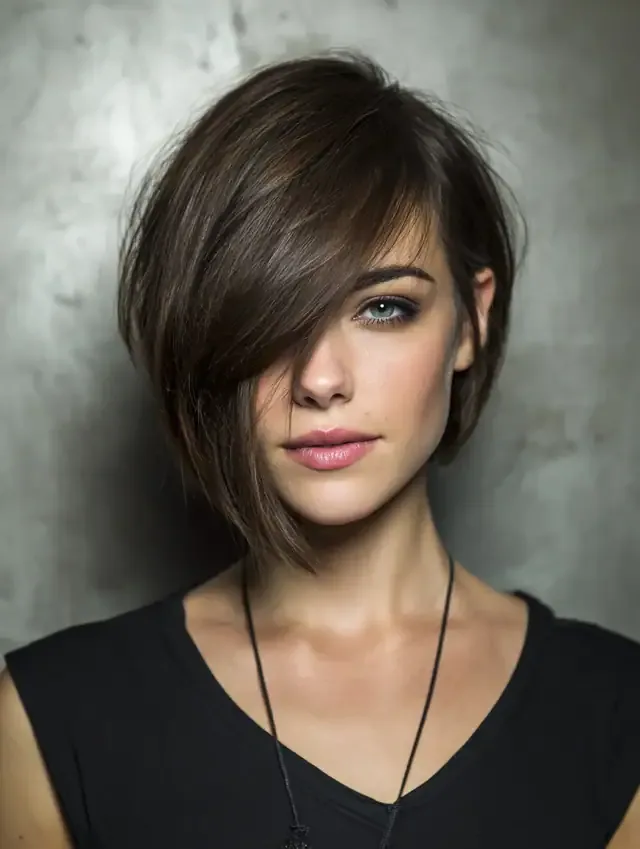
An asymmetrical butterfly bob is longer on one side than the other, with the winged layers still on top. It is modern, edgy, and great for fine hair that needs visual interest.
Who should avoid it: Avoid a dramatic length difference if you often tie your hair up — the short side can slip out.
Cost and time: Cut: 50–65 minutes. Styling: 10–15 minutes.
How to style it:
- Blow-dry the longer side smooth and the shorter side flicked out.
- Use a side part to show the asymmetry.
- Keep the finish polished so the shape reads as intentional.
28. Butterfly Bob for Women Over 40
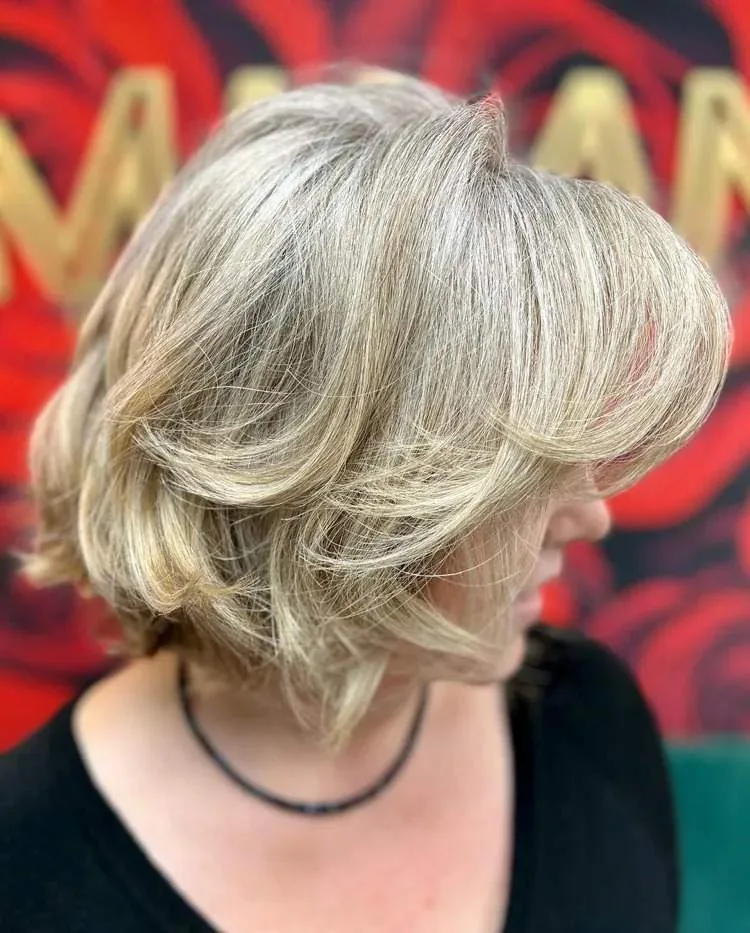
Over 40, the butterfly bob is a fresh, youthful cut that does not try too hard. Soft layers lift the face, and the length is easy to maintain around work and family life.
Who should avoid it: Avoid overly short, choppy top layers if your hair has thinned — softer, longer layers look fuller.
Cost and time: Cut: 45–60 minutes. Styling: 10–15 minutes.
How to style it:
- Blow-dry for root lift and outward flicks.
- Add face-framing highlights for brightness.
- Trim every 6–8 weeks to keep the shape.
29. Butterfly Bob for Women Over 50
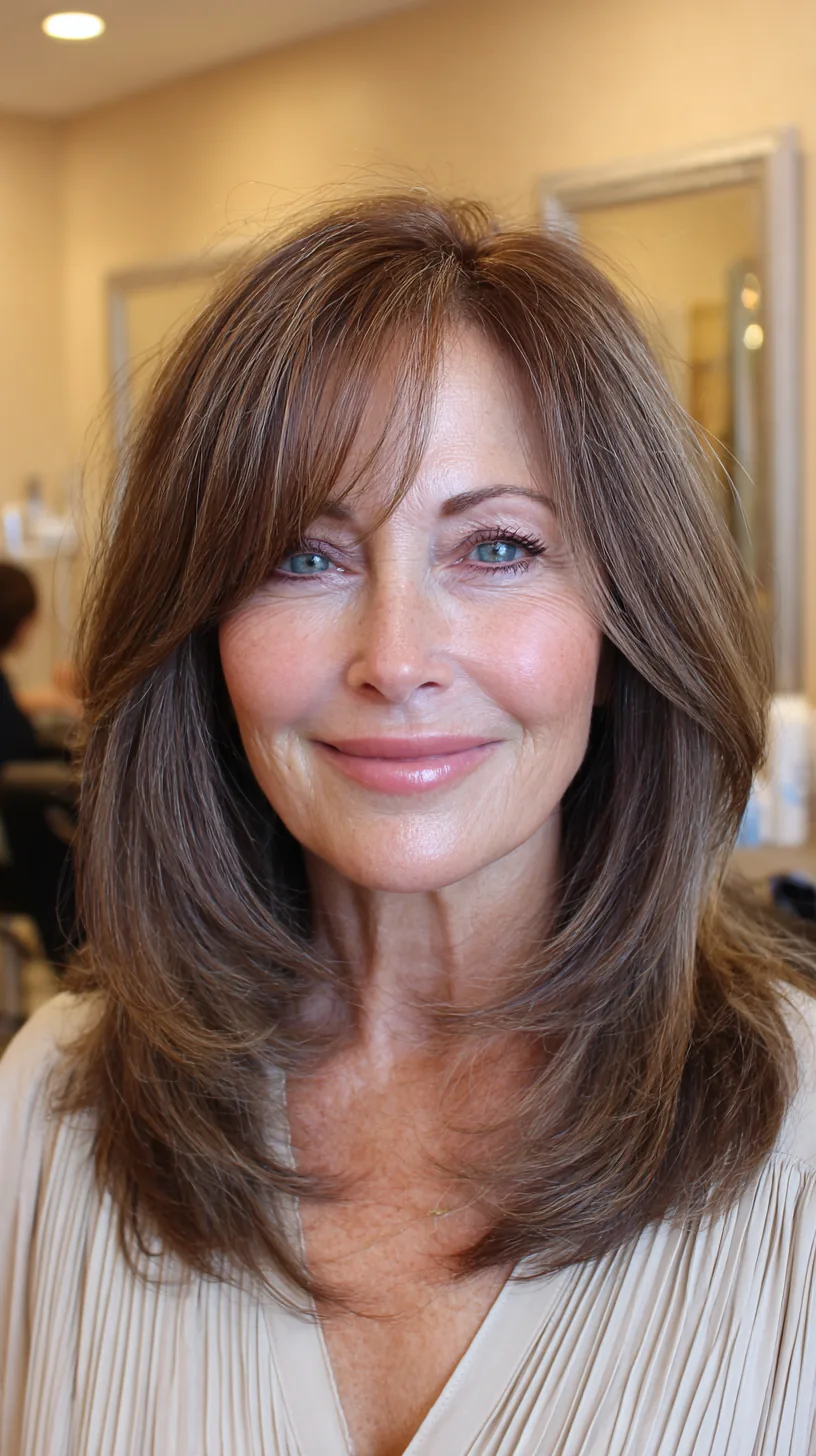
Over 50, the butterfly bob works best with soft, face-framing layers and a length that sits at the jaw or just below. It lifts the face, flatters grey or silver hair, and is easy to style.
Who should avoid it: Avoid very severe, razor-sharp layers on thinning hair — feathered, gentle layers are more flattering.
Cost and time: Cut: 45–60 minutes. Styling: 10 minutes.
How to style it:
- Blow-dry with volumising mousse at the roots.
- Flick layers outward gently — no stiff hold.
- Use a shine spray to keep grey or silver looking bright.
30. Occasion Butterfly Bob
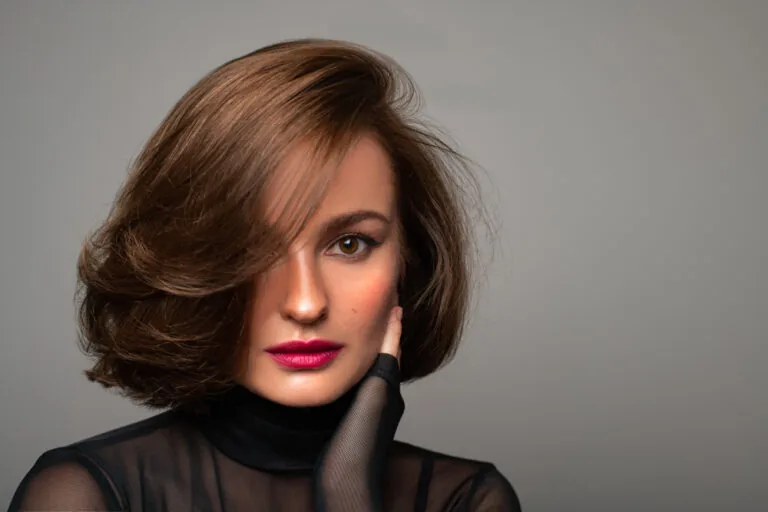
For weddings, parties and evenings out, the butterfly bob can be dressed up with a bouncy blowout, soft curls through the layers, and a little shine. It holds its shape well all evening.
Who should avoid it: Avoid overloading it with product before an event — layers fall flat under heavy spray.
Cost and time: Salon blowout: 30–45 minutes. At home: 20–25 minutes.
How to style it:
- Blow-dry with rollers for bounce.
- Add loose curls through the top layers only.
- Finish with flexible hold spray and a shine mist.
31. Everyday Butterfly Bob
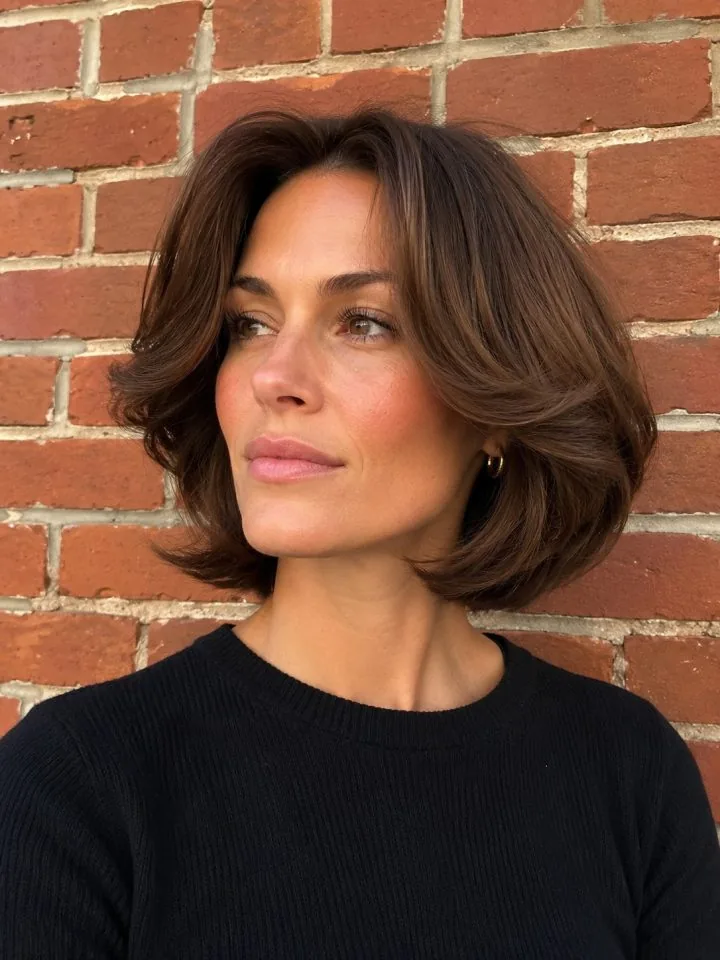
The everyday butterfly bob is the low-effort version: wash, rough-dry, flick, go. It is designed for people who style their hair in under 10 minutes on busy mornings.
Who should avoid it: Avoid a cut that only looks good after a full salon blowout — tell your stylist you need a wash-and-go version.
Cost and time: Cut: 45–60 minutes. Daily styling: 5–10 minutes.
How to style it:
- Rough-dry with your fingers, lifting at the roots.
- Flick the top layers outward with a brush or your hands.
- Refresh with dry shampoo on non-wash days.
32. Butterfly Bob with Feathered Ends
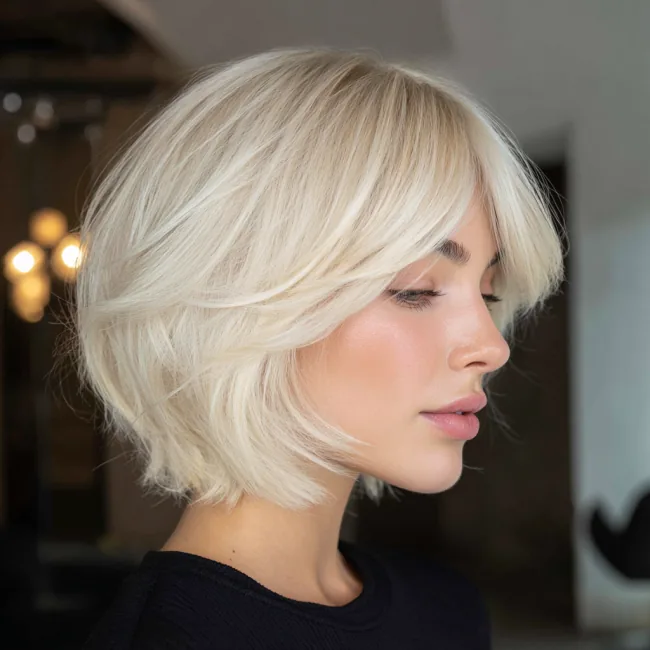
Feathered ends are finely tapered, so the base of the bob looks soft and airy rather than blunt. They are the finishing touch that makes the butterfly shape feel light.
Who should avoid it: Avoid heavy feathering if your ends are already split or very thin — get a healthy trim first.
Cost and time: Cut: 45–60 minutes. Styling: 10 minutes.
How to style it:
- Blow-dry ends outward with a round brush.
- Use a tiny amount of smoothing cream on the very ends.
- Trim every 6–8 weeks to keep the feathering fresh.
33. Butterfly Bob with Volume at the Crown
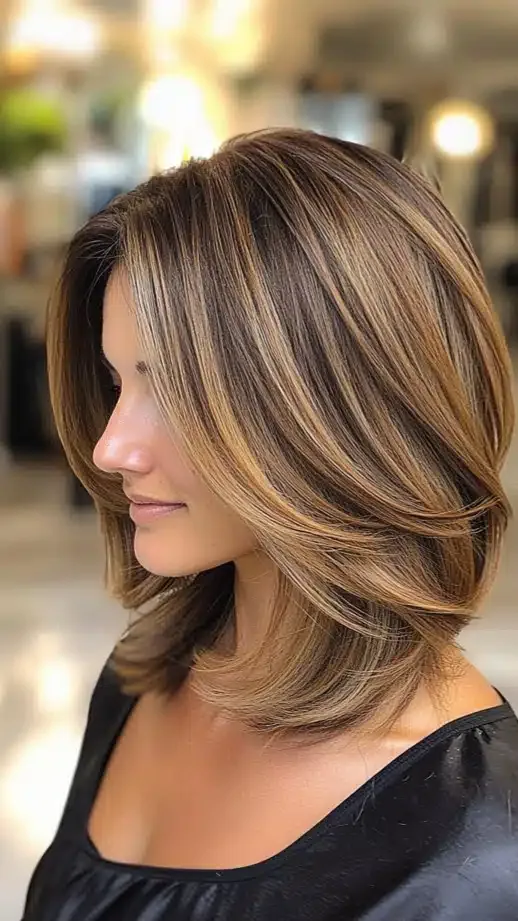
Volume at the crown is what gives the butterfly bob its lift. Short layers on top, plus root lift, stop the cut from sitting flat on the head.
Who should avoid it: Avoid backcombing daily — it damages hair. Use root products and rollers instead.
Cost and time: Cut: 45–60 minutes. Styling: 10–15 minutes.
How to style it:
- Apply root-lifting spray to damp roots.
- Blow-dry the crown sections upward and over a round brush.
- Set the crown with one large roller while you finish the rest.
34. Low-Maintenance Butterfly Bob
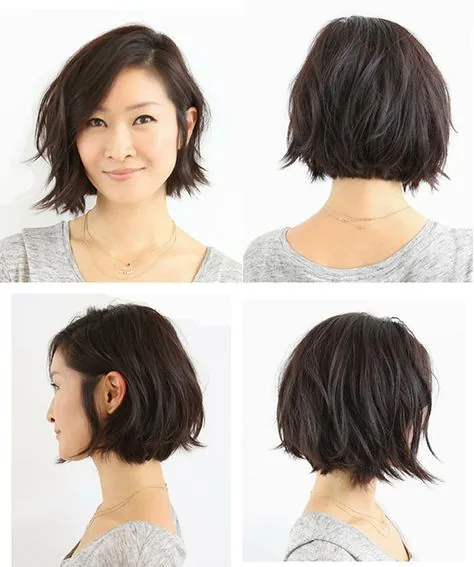
A low-maintenance butterfly bob uses longer top layers, a softer shape, and a length that grows out gracefully. It is the best pick if you only visit the salon every 10–12 weeks.
Who should avoid it: Avoid very short top layers if you want low maintenance — they grow out fastest and lose the shape first.
Cost and time: Cut: 45–60 minutes. Salon visits: every 10–12 weeks. Styling: 5 minutes.
How to style it:
- Air-dry or rough-dry, then flick the ends with your fingers.
- Use a leave-in cream to control frizz.
- Refresh the shape with a quick trim, not a full restyle.
35. Grow-Out Friendly Butterfly Bob
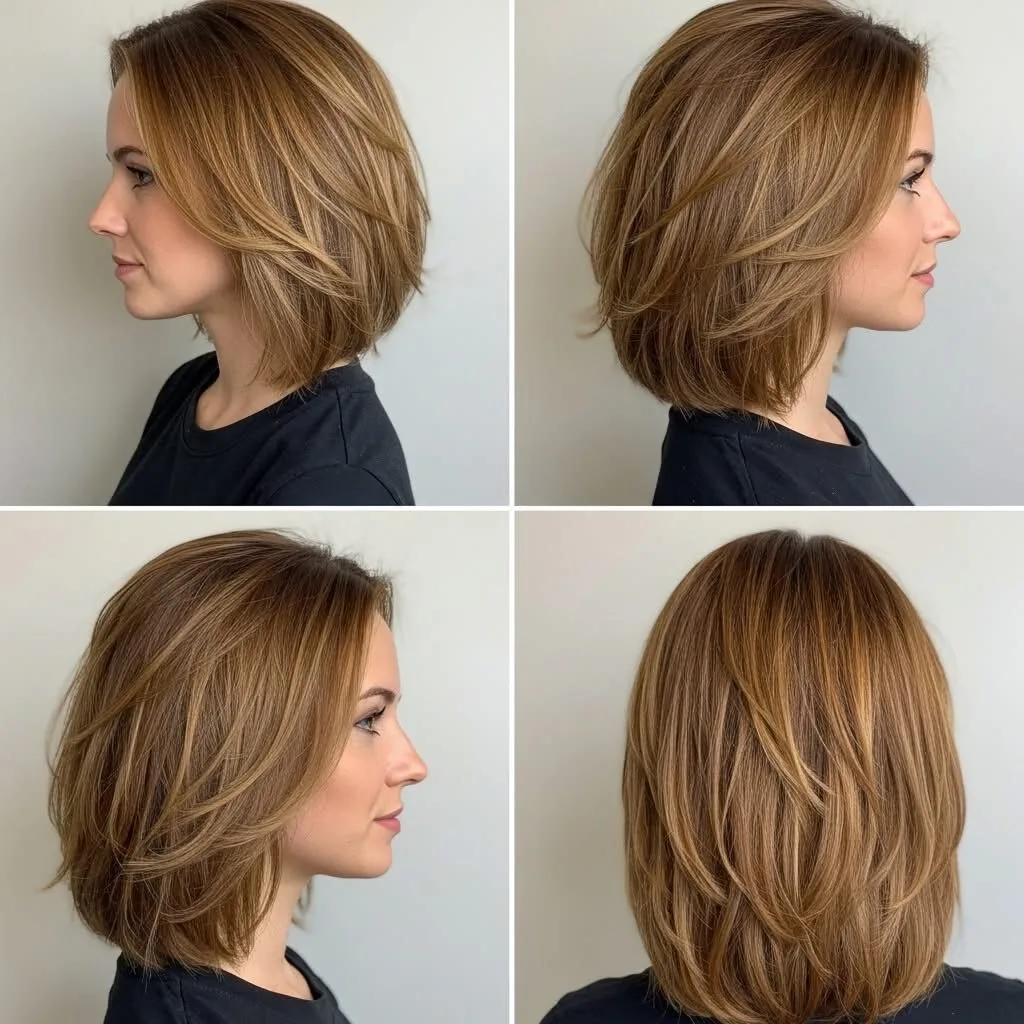
A grow-out friendly butterfly bob is cut so it still looks good at 8, 10 and 12 weeks: longer layers on top, a fuller base, and no harsh lines that grow into a shelf.
Who should avoid it: Avoid a very short, disconnected top layer if you hate frequent cuts — it is the first part to lose its shape.
Cost and time: Cut: 50–65 minutes. Trims: every 8–10 weeks. Styling: 10 minutes.
How to style it:
- As it grows, wear it as a butterfly lob — the layers blend naturally.
- Use a round brush to keep the top layers lifted.
- Book a dusting trim, not a full recut, to keep the length.
Before you book your appointment, here are the questions people ask most about butterfly bob hairstyles.
Is a butterfly bob good for thin hair?
Yes — a butterfly bob can be very good for thin hair, as long as the base stays fairly blunt. The short top layers create lift and the illusion of fullness, while a blunt base stops the ends looking see-through. Avoid over-thinning, which can make thin hair look thinner.
What is the difference between a butterfly bob and a butterfly cut?
A butterfly bob is a bob-length version, sitting at the chin to shoulder level, with short winged layers on top. A butterfly cut is the same layering idea on medium to long hair. The length is the difference — the winged, layered concept is the same.
Does a butterfly bob need a blowout every day?
Not necessarily, but it looks best with one. Wavy and curly versions can be scrunched or diffused instead. Straight hair needs a round-brush blowout to create the winged shape, though a quick 10-minute blow-dry is usually enough.
How often should I trim a butterfly bob?
Every 6–8 weeks for most butterfly bobs, and every 6 weeks for short versions. Longer, grow-out friendly versions can stretch to 8–10 weeks. The top layers grow out first, so waiting too long turns it into an ordinary layered bob.
Can I get a butterfly bob with curly hair?
Yes, but ask for a curl-aware cut — ideally cut dry or curl by curl. The layers must follow your curl pattern, or they will shrink up shorter than expected and lose the intended shape. Style on soaking-wet hair with curl cream and gel.
Is the butterfly bob low maintenance?
It can be, if you choose a longer, softer version with longer top layers (see sections 24, 34 and 35). Short, choppy versions need more frequent trims and daily styling. Tell your stylist you want low maintenance before the cut, not after.
What face shape suits a butterfly bob best?
Most face shapes can wear one, because the layer placement can be adjusted. Oval faces suit almost any version. Round faces suit longer layers below the chin, square faces suit soft inward layers, and heart faces suit fullness at the jaw.
How do I style a butterfly bob at home?
Blow-dry with a round brush, flicking the top layers outward and the underneath layers inward, then finish with a light hold spray. For a faster routine, rough-dry, flick the top layers with your fingers, and refresh with dry shampoo on day two.
Will a butterfly bob work if I never use heat?
It depends on your texture. Wavy and curly hair can work heat-free with scrunching or diffusing. Straight, flat hair will struggle to hold the winged shape without at least a quick blow-dry, so a softer layered bob may suit you better.
How long does a butterfly bob take to grow out?
A butterfly bob grows into a butterfly lob in about 8–12 weeks, and the layers blend naturally as it grows. If you choose a grow-out friendly version with longer top layers, the grow-out phase still looks intentional rather than messy.
Conclusion
So, is the viral layered bob right for your hair type? If you love movement, volume and a bouncy blowout finish, the butterfly bob is a brilliant choice — especially in its wavy, textured and lob versions, which are the most forgiving.
If your hair is very straight and flat, or you never style it, choose a softer, longer version and be honest with your stylist about your routine. The best butterfly bob is not the trendiest photo online. It is the version cut for your texture, your face shape, and the mornings you actually have.
Save your favourite section from this list, take it to your appointment, and ask for the layer placement, parting and styling routine that fits your hair. That is how a viral haircut becomes a haircut you love living with.