Fine Hair That Actually Holds Its Shape: Cuts and Styles That Last Past Lunchtime
You know the feeling. You leave the salon with a cut that swings, holds its shape and looks exactly like the picture you showed your stylist. By lunchtime, it has collapsed. By the afternoon, it looks like a different haircut altogether — flat at the roots, wispy at the ends, and nothing like what you paid for.
That is not your fault, and it is not just about products. Fine hair is light, so gravity, oil and humidity pull it down faster than a style can hold. The difference between a cut that lasts and a cut that collapses is usually structural: a solid perimeter, weight placed where it supports the outline, and layers that lift without thinning the ends. This guide is about those choices.
In this guide, you will find 40 hairstyles for fine hair, chosen for one thing above all: whether the shape survives the day. Each cut is explained in plain terms, with the mistakes that undo it, an honest idea of cost and time, and styling steps you can actually follow at home.
Why Fine Hair Loses Its Shape (and What Actually Helps)

Fine hair loses its shape for a simple reason: each strand is light, so gravity, oil and humidity pull it down faster than a style can hold. A cut that looked full in the salon can collapse by afternoon because there was nothing in the cut itself holding the outline up.
What helps is structure built into the cut — a solid perimeter, weight placed where it supports the shape, and layers that are short enough to lift but not so short they remove the ends. Products and drying then support that structure instead of trying to create it from nothing.
Common mistakes:
- Washing with a heavy conditioner from roots to ends
- Brushing out all texture while the hair is still wet
- Choosing a cut with no solid edge for the shape to sit on
A blunt bob keeps its outline because the ends are all the same length, so they support each other instead of separating into wisps.
Blunt Ends vs Layers: The Shape-Holding Trade-Off
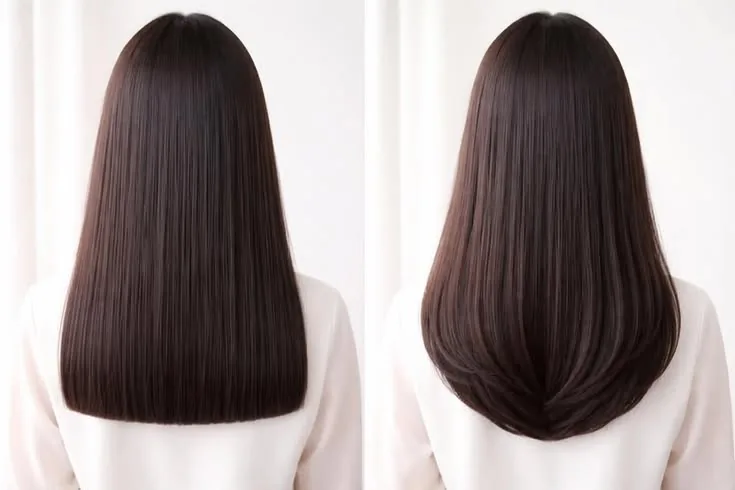
Blunt ends are fine hair’s best friend when the goal is a shape that lasts. When every strand ends at the same line, the perimeter looks thicker and holds its outline through the day. The trade-off is movement: a fully blunt cut can look heavy and swing as one block.
Layers add movement and lift, but every layer removes weight from the ends. On fine hair, too many layers can leave the ends thin and the shape gone by midday. The sweet spot is usually blunt ends with a few long layers, or layers kept high on the crown where they lift without thinning the perimeter.
Common mistakes:
- Adding short layers all through the lengths on fine hair
- Cutting layers into the ends and then wondering why the shape disappears
- Keeping a blunt cut so heavy it never moves at all
Ask your stylist where the weight sits: blunt at the ends, lift at the crown, and as little thinning through the mid-lengths as possible.
How Cutting Technique Changes Hold
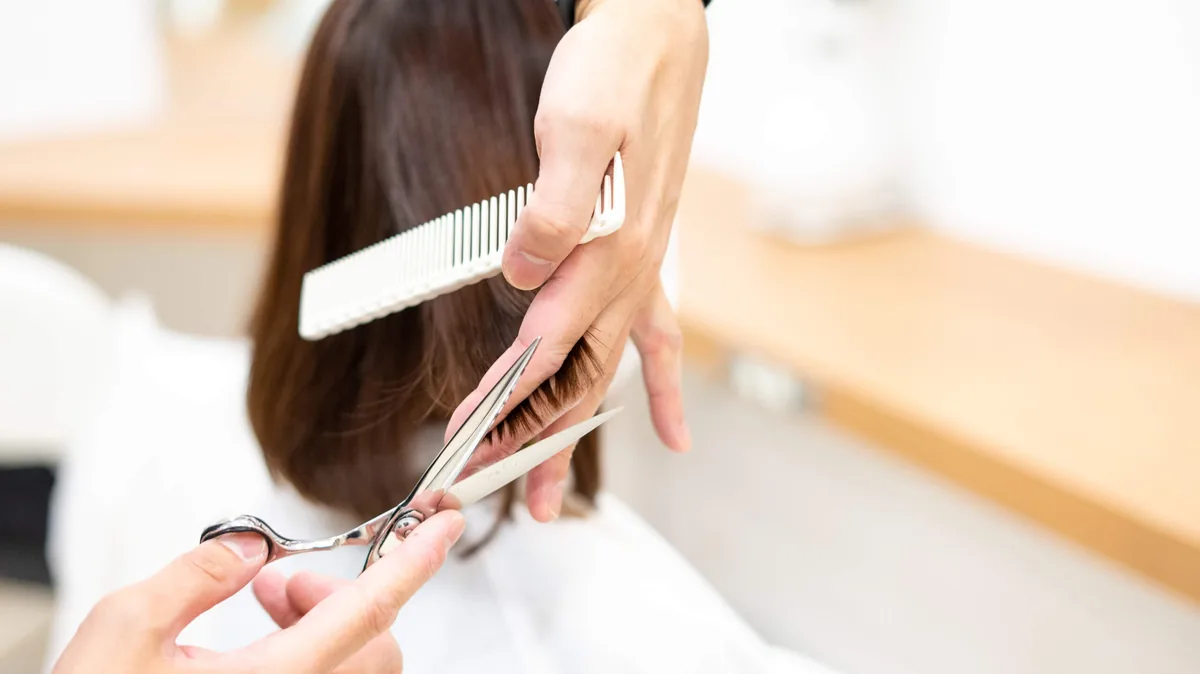
Two cuts can look identical in the chair and behave completely differently by evening, because of how they were cut. Point cutting softens the ends and adds texture, slide cutting removes weight, and a blunt cut with shears leaves a clean, heavy line. On fine hair, the technique decides whether the shape stays or falls apart.
In general, a clean blunt line holds longest, point-cut ends move more but separate sooner, and razored ends are the riskiest on fine hair because they thin the perimeter. Thinning shears used through the lengths can also quietly remove the very weight that was holding the style up.
Common mistakes:
- Asking for texture without asking where it will be placed
- Letting thinning shears run through the ends
- Getting a razor cut on fine hair without discussing the trade-off
If you like texture, ask for it on the top layers only, and keep the perimeter line clean.
Products That Support Shape Without Weighing Hair Down
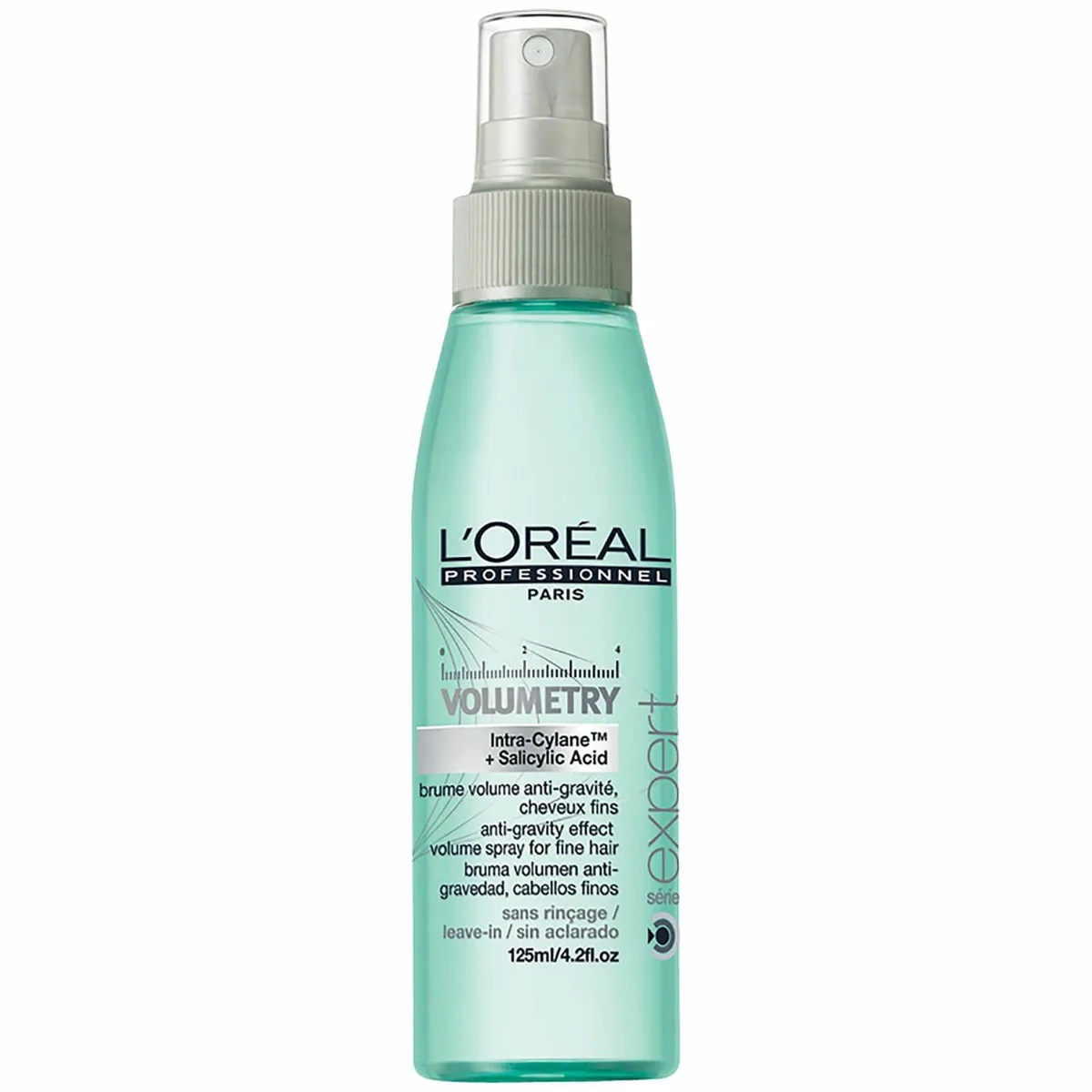
Fine hair needs support, not coating. Heavy oils, thick creams and too much conditioner sit on the strand and pull the shape down. The products that actually help are light: a root lift spray or mousse applied at the roots only, a light volumising spray through the mid-lengths, and a flexible hold spray to finish.
The order matters too. Apply root products to damp hair before drying, not after, so the lift is dried in. Use a pea-sized amount of cream or oil only on the very ends, never near the roots. And wash out styling build-up regularly, because product residue is one of the fastest ways fine hair goes flat.
Common mistakes:
- Applying oil or cream at the roots
- Layering mousse, cream, oil and spray all at once
- Using a strong-hold gel that dries stiff and then collapses
Less product, placed exactly where it is needed, beats a heavy routine every time.
Washing, Drying and the Shape You Wake Up With

The shape you wake up with is mostly decided the night before. Fine hair creases easily, so sleeping on wet hair or tying it tightly overnight usually means a flat, kinked morning. A loose braid or a low, loose bun, dried fully before bed, holds far more shape than wet hair pressed into a pillow.
In the morning, drying is the real styling step. Blow-drying with the roots lifted, in the opposite direction to how the hair will fall, sets lift that lasts. Air-drying flat against the head sets flatness in just as firmly, so if you air-dry, clip the roots up while it dries.
Common mistakes:
- Going to bed with wet hair tied tightly
- Blow-drying straight down with no root lift
- Skipping a refresh and expecting yesterday’s shape to survive
A two-minute root refresh with a blow-dryer and a light spray often restores more shape than restyling the whole head.
Colour and Texture Tricks That Add Structure
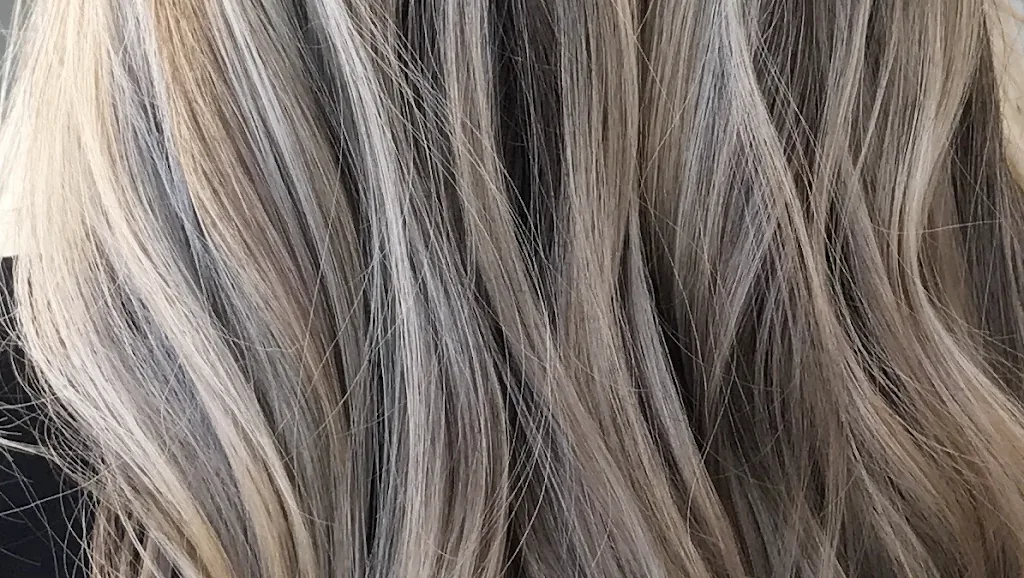
Colour can add structure to fine hair without adding weight. Fine, blended highlights create dimension that makes the shape look deeper and more defined, while a single flat colour can make fine hair look flatter. The key is softness: harsh, high-contrast stripes draw attention to thinness instead of disguising it.
Texture works the same way. A loose bend, a soft wave or a light perm-like texture gives strands something to grip each other with, so the shape holds instead of sliding apart. Keep texture soft and even, though — tight curls on a cut with no weight can shrink the shape and lose the outline.
Common mistakes:
- Choosing harsh, stripey highlights on fine hair
- Adding tight texture to a cut with already thin ends
- Colouring without a trim, so damaged ends undo the shape
Ask for blended, face-framing dimension rather than bold contrast, and trim the ends at the same appointment.
When Fine Hair Needs a Shorter Cut
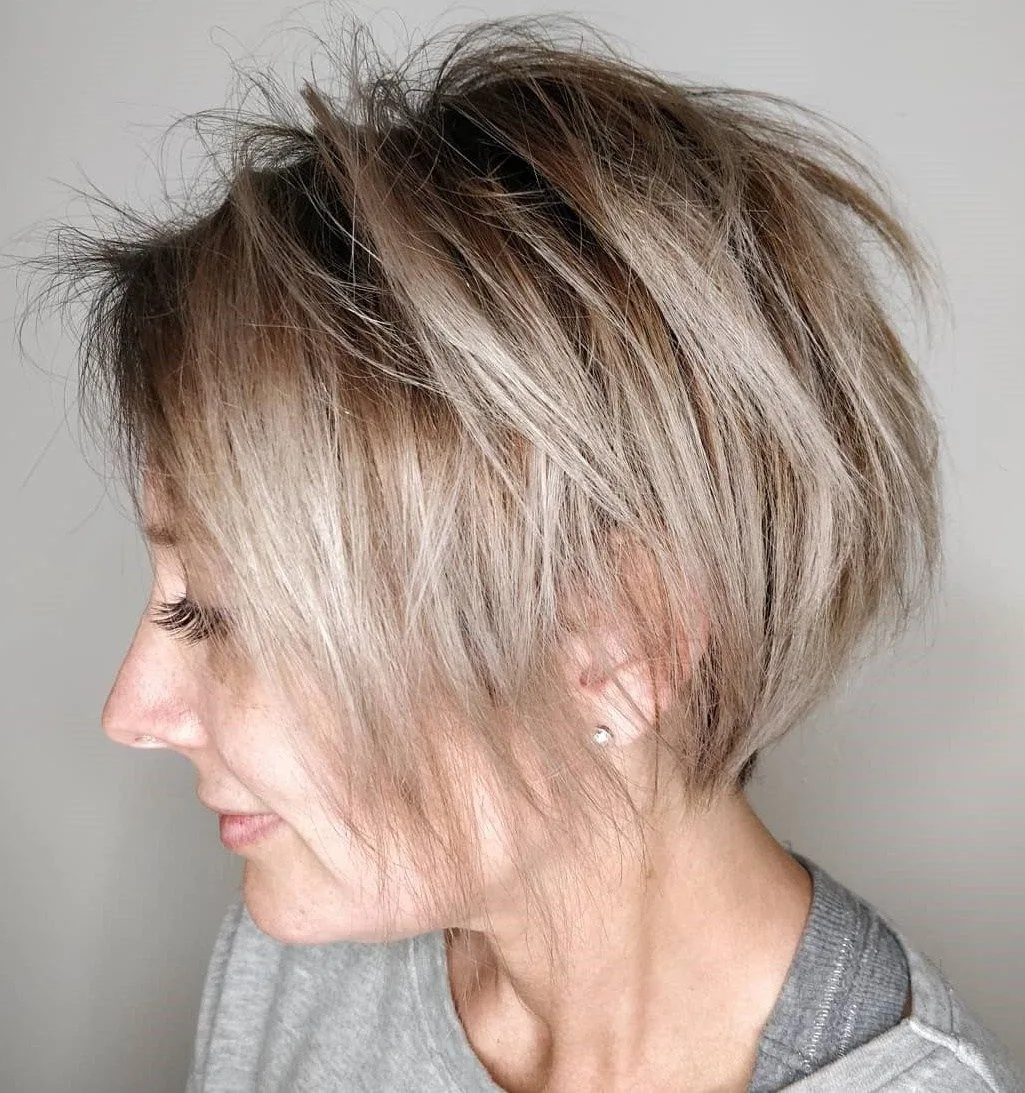
There is a length at which fine hair stops holding its shape, and it is different for everyone. If your lengths are so long that the weight pulls the roots flat, or the ends have thinned to wisps no product can revive, a shorter cut is not a defeat — it is the fastest way back to a shape that lasts.
The signs are consistent: styles that fall flat within an hour, ends that separate no matter what you use, and a cut that only looks good freshly blow-dried. Cutting to a bob, lob or pixie restores a solid perimeter, and the shape often holds for days rather than hours.
Common mistakes:
- Keeping length for its own sake while the shape keeps failing
- Cutting shorter but keeping thin, layered ends
- Expecting a shorter cut to fix damage without a proper trim
Try a collarbone or chin-length cut first if a pixie feels like too big a jump — the perimeter thickens immediately.
A Realistic Salon and Home Routine

A shape-holding routine does not need to be long; it needs to be consistent. In the salon, that means a trim every six to eight weeks to keep the perimeter solid, before the ends thin out and the shape starts to collapse. At home, it means washing with a light routine, drying with root lift, and refreshing rather than restyling every day.
The realistic version looks like this: wash every one to two days or as your scalp needs, condition ends only, blow-dry roots up, finish with a light spray, and sleep with hair loose or loosely braided. Small habits, repeated, hold a shape far better than one dramatic salon visit followed by weeks of neglect.
Common mistakes:
- Waiting three months between trims until the shape is gone
- Restyling from scratch every morning instead of refreshing
- Changing products weekly so nothing gets a fair test
Book the next trim before you leave the salon, so the perimeter never gets a chance to thin out.
1. Blunt Bob at Chin Length

A blunt bob at chin length is the single most reliable shape-holder for fine hair. Every strand ends at the same line, so the perimeter looks solid and the bob keeps its outline all day instead of separating into thin wisps.
Keep the line clean and the part where it naturally falls, and this cut needs almost no styling to look deliberate. It is the cut to choose when you are tired of styles that only work for an hour.
Common mistakes:
- Cutting the bob so short it flips outwards with no weight to hold it down
- Using heavy conditioner or oil at the roots
- Skipping trims until the perimeter thins out
Cost and time: Salon cut roughly $40–$90; trim every 6–8 weeks; daily styling about 10 minutes.
Styling steps:
- Apply root spray to damp roots.
- Blow-dry with a round brush, turning ends under.
- Smooth the surface with a flat brush.
- Set with a light flexible spray.
2. Blunt Lob with a Solid Perimeter

A blunt lob keeps the solid edge of a bob with a little more length to play with. Because the ends are all one length, the lob holds a clean outline past lunchtime, and it still swings instead of sitting stiffly.
This is a good middle ground if a chin bob feels too short but long layers keep falling flat on you. The perimeter does the work, so you do not need heavy products.
Common mistakes:
- Layering through the ends until the lob loses its solid edge
- Skipping trims until the perimeter thins out
- Blow-drying flat against the head with no root lift
Cost and time: Salon cut roughly $40–$95; trim every 7–8 weeks; daily styling about 10–15 minutes.
Styling steps:
- Apply mousse at the roots only.
- Blow-dry smooth, lifting the roots.
- Bend the ends slightly under with a brush.
- Finish with light spray.
3. Textured Bob with Internal Layers Only

This bob hides its layers inside, so the outside still looks blunt and solid while the inside has room to move. Internal layers remove bulk where it is not needed without touching the perimeter line.
The result is a bob that looks thick at the ends but does not swing as one heavy block. It suits fine hair that is slightly wavy or prone to sitting flat.
Common mistakes:
- Cutting visible short layers over the top that thin the outline
- Blow-drying flat against the head with no root lift
- Using heavy conditioner or oil at the roots
Cost and time: Salon cut roughly $45–$95; trim every 6–8 weeks; daily styling about 10 minutes.
Styling steps:
- Apply volumising spray to damp hair.
- Blow-dry with fingers, lifting roots.
- Scrunch lightly for texture.
- Set with flexible spray.
4. Graduated Bob That Stacks at the Back
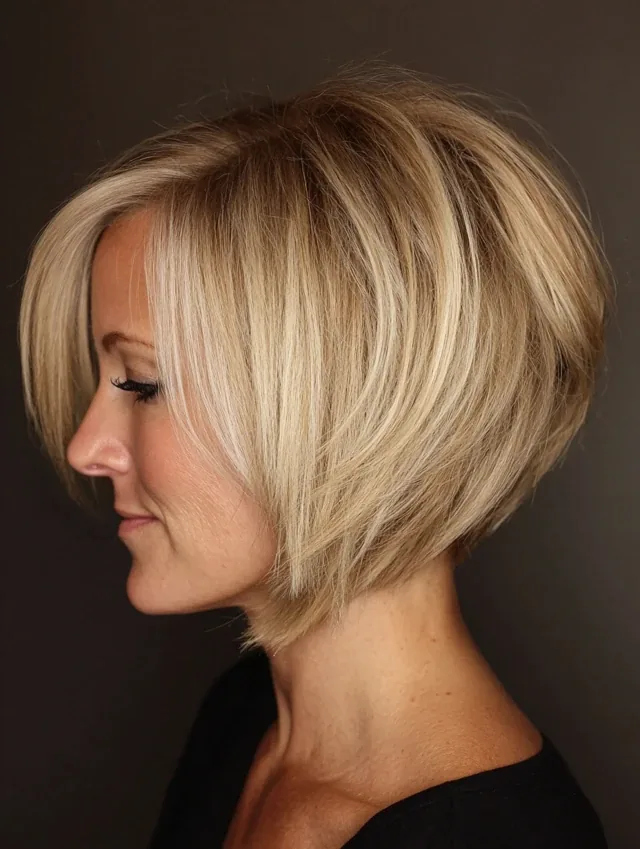
A graduated bob is cut shorter at the back and longer at the front, so weight stacks up at the nape and pushes the shape forward. That stacked weight is what keeps the bob’s outline from collapsing.
It gives fine hair a built-in curve at the back, so the cut looks styled even when you have only blow-dried it smooth. Keep the front long enough to balance the stack.
Common mistakes:
- Stacking the back too high so the front looks disconnected
- Using heavy conditioner or oil at the roots
- Skipping trims until the perimeter thins out
Cost and time: Salon cut roughly $45–$100; trim every 6 weeks; daily styling about 10–15 minutes.
Styling steps:
- Apply root lift at the crown.
- Blow-dry the back smooth and under.
- Smooth the front pieces forward.
- Set with light spray.
5. Classic Pixie with a Longer Structured Top
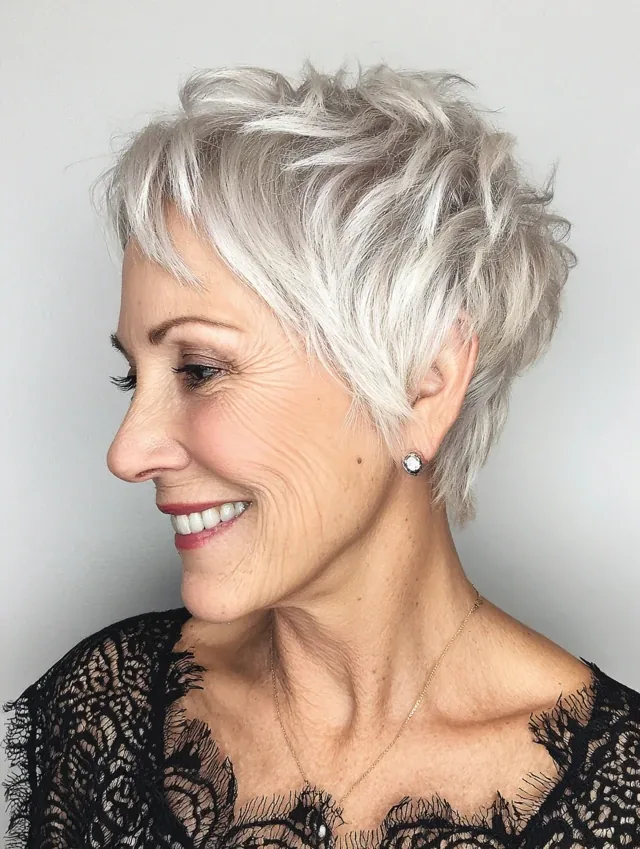
A pixie with a longer, structured top keeps weight where it shapes the head, while the sides and back stay neat. That weight on top is what stops a pixie looking wispy on fine hair.
It holds its shape well because there is very little length for gravity to pull down. A little texture on top is enough to make it look finished.
Common mistakes:
- Cutting the top too short so the pixie loses all structure
- Skipping trims until the perimeter thins out
- Blow-drying flat against the head with no root lift
Cost and time: Salon cut roughly $35–$80; trim every 4–6 weeks; daily styling about 5–10 minutes.
Styling steps:
- Apply a pea-sized matte cream to damp hair.
- Blow-dry the top forward with fingers.
- Piece out the ends lightly.
- Set with flexible spray.
6. Cropped Pixie with a Tapered Nape
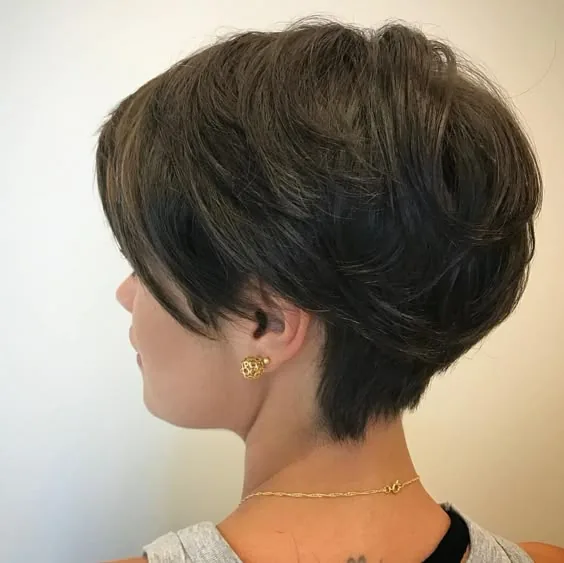
A tapered nape keeps the back of a pixie clean and close, so the shape reads as deliberate rather than grown out. The taper also means the cut keeps its outline longer between appointments.
This is a low-maintenance shape-holder: short at the back, enough length on top to style, and no heavy lengths to fall flat.
Common mistakes:
- Letting the nape grow bulky so the pixie loses its outline
- Blow-drying flat against the head with no root lift
- Using heavy conditioner or oil at the roots
Cost and time: Salon cut roughly $35–$80; trim every 4–5 weeks; daily styling about 5 minutes.
Styling steps:
- Apply light mousse to damp hair.
- Blow-dry the top in the direction you wear it.
- Smooth the nape down.
- Finish with light spray.
7. Short Shag with Choppy Crown Layers

A short shag puts its layers at the crown, where they create lift, and keeps the perimeter stronger than a fully layered cut. The choppy top gives fine hair movement without sacrificing the outline.
Because the cut is short, the layers cannot drag the shape down. It is a good choice if you want texture but are tired of long layers falling flat.
Common mistakes:
- Cutting the shag layers too long so they drag the shape down
- Using heavy conditioner or oil at the roots
- Skipping trims until the perimeter thins out
Cost and time: Salon cut roughly $40–$90; trim every 6 weeks; daily styling about 10 minutes.
Styling steps:
- Apply texturising spray to damp hair.
- Blow-dry with fingers, lifting the crown.
- Scrunch the ends lightly.
- Set with flexible spray.
8. Blunt Midi Cut with Barely-There Layers
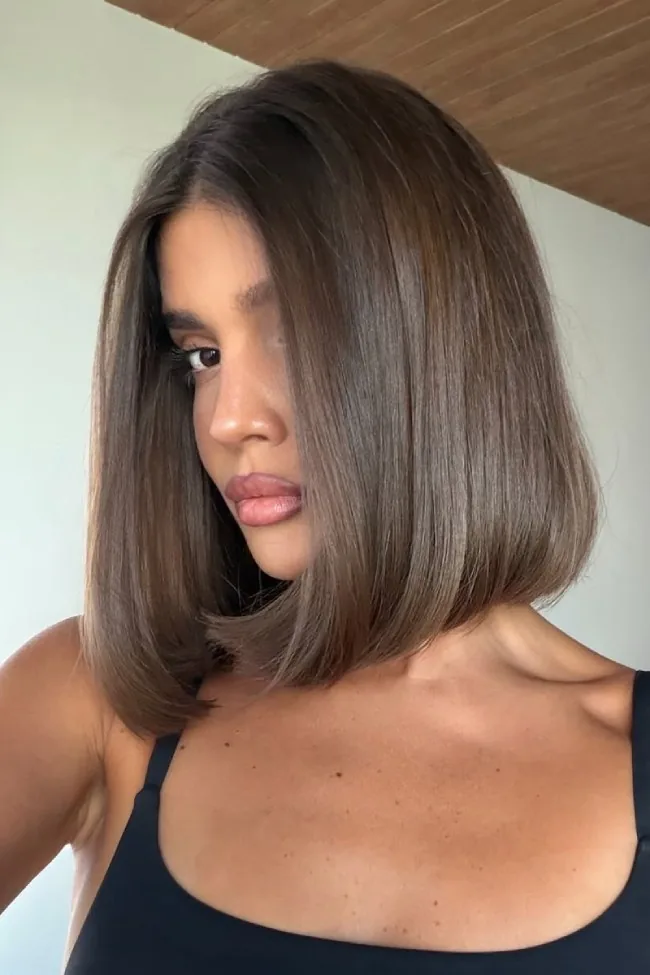
A blunt midi cut sits between shoulder and chest with a solid edge and only the faintest long layers. Those barely-there layers stop the cut looking like a block, without removing the weight that holds the shape.
This is the longest length that still reliably holds a shape on fine hair for most people. Past this point, weight starts working against you.
Common mistakes:
- Adding visible layers that turn the midi into a thin, wispy cut
- Skipping trims until the perimeter thins out
- Blow-drying flat against the head with no root lift
Cost and time: Salon cut roughly $40–$95; trim every 8 weeks; daily styling about 15 minutes.
Styling steps:
- Apply root spray to damp roots.
- Blow-dry smooth with a large brush.
- Bend ends under lightly.
- Finish with light spray.
9. Long Blunt Cut with Face-Framing Only
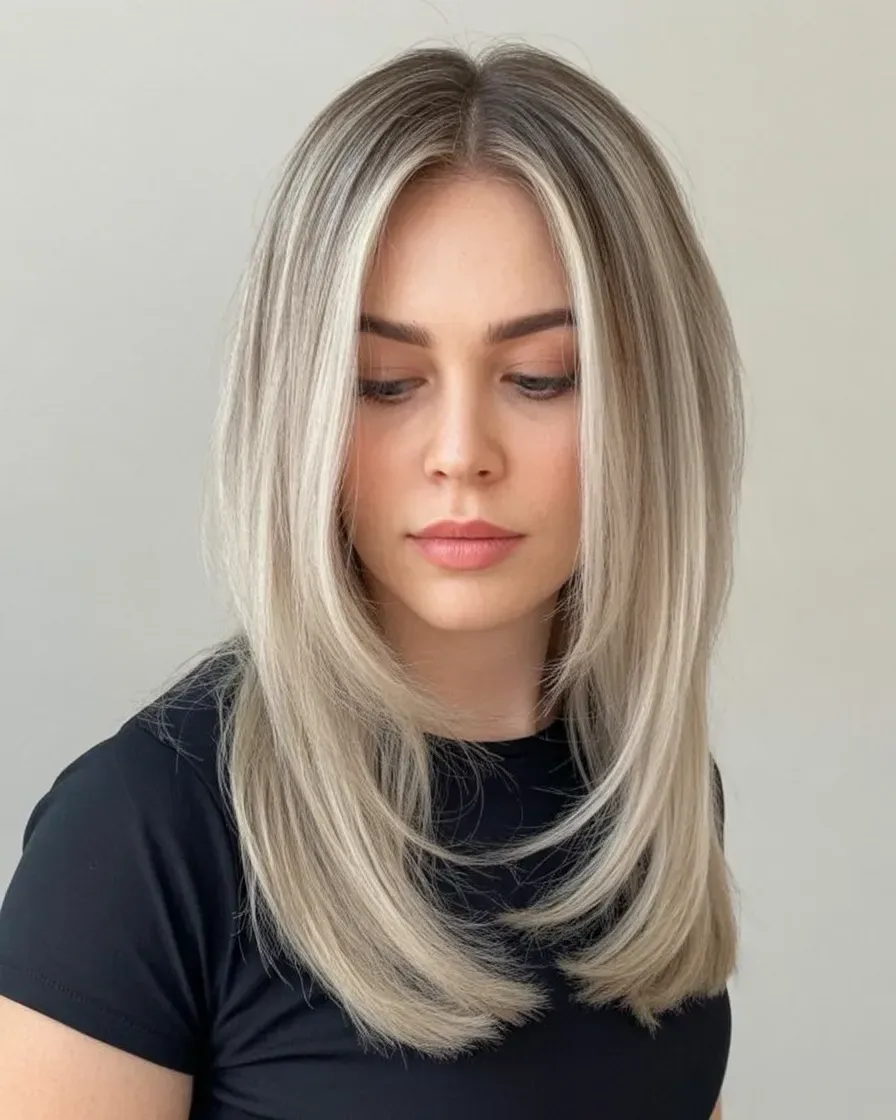
If you want to keep length, this is the safest way: one blunt length, with face-framing pieces as the only layers. The long perimeter stays solid, and the face pieces give movement where it shows most.
The shape holds because the bulk of the hair is still one length. The face pieces soften the front without thinning the ends.
Common mistakes:
- Adding long layers through the back that thin the whole perimeter
- Blow-drying flat against the head with no root lift
- Using heavy conditioner or oil at the roots
Cost and time: Salon cut roughly $40–$95; trim every 8–10 weeks; daily styling about 15 minutes.
Styling steps:
- Apply light cream to damp ends.
- Blow-dry face pieces forward and under.
- Smooth lengths down.
- Set with light spray.
10. Collarbone Cut with a Strong Baseline
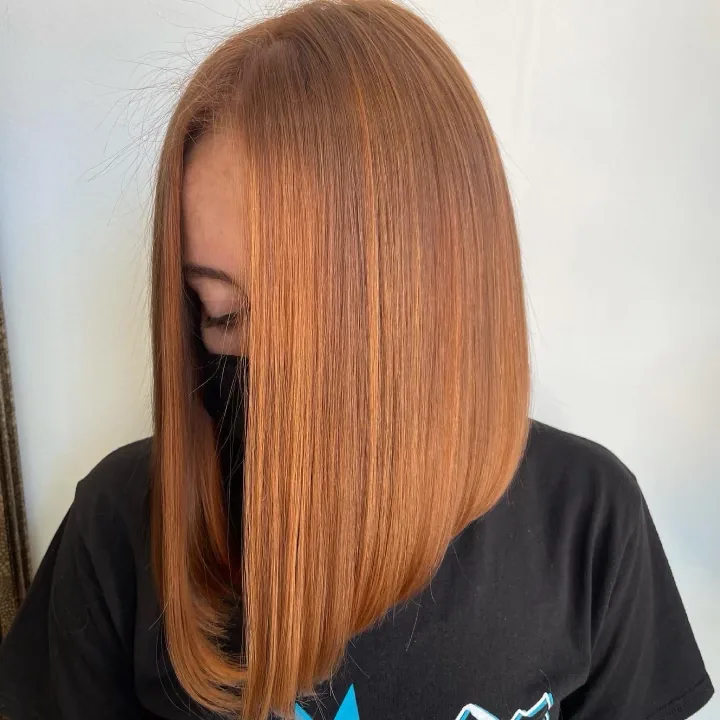
A collarbone cut ends right where the shoulders can support it, and a strong baseline means the ends sit as one clean line. That line is what keeps the cut looking intentional at the end of the day.
It is long enough to tie back but short enough that the weight does not pull the roots flat. For many people with fine hair, this is the sweet spot.
Common mistakes:
- Cutting past the collarbone without a trim plan, so ends thin out
- Using heavy conditioner or oil at the roots
- Skipping trims until the perimeter thins out
Cost and time: Salon cut roughly $40–$95; trim every 8 weeks; daily styling about 15 minutes.
Styling steps:
- Apply mousse at roots.
- Blow-dry with a round brush, ends under.
- Smooth the surface.
- Finish with flexible spray.
11. French Bob with a Clean Edge
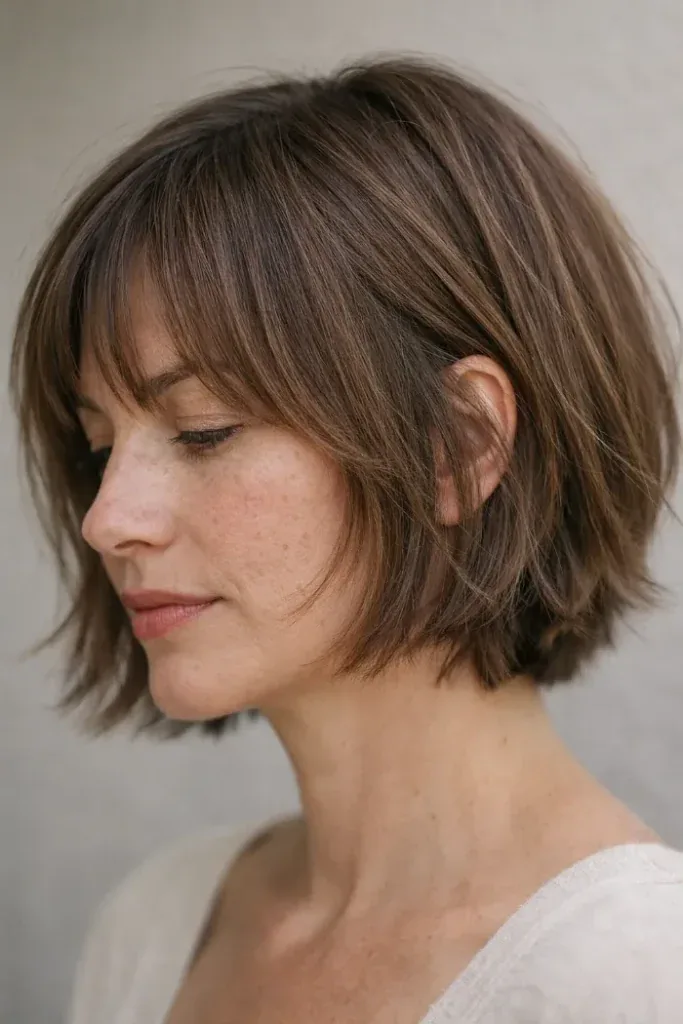
A French bob ends around the jaw with a clean, slightly curved edge and often a soft fringe. The short length and clean edge mean the shape is built into the cut, not styled in each morning.
It suits fine hair because there is nowhere for the shape to fall to. Keep the edge clean rather than heavily textured, or the bob loses its definition.
Common mistakes:
- Texturing the edge so heavily the French bob loses its line
- Skipping trims until the perimeter thins out
- Blow-drying flat against the head with no root lift
Cost and time: Salon cut roughly $45–$100; trim every 5–6 weeks; daily styling about 10 minutes.
Styling steps:
- Apply root spray to damp hair.
- Blow-dry with a small round brush, ends under.
- Smooth the fringe to one side.
- Set with light spray.
12. A-Line Bob with Weighted Fronts
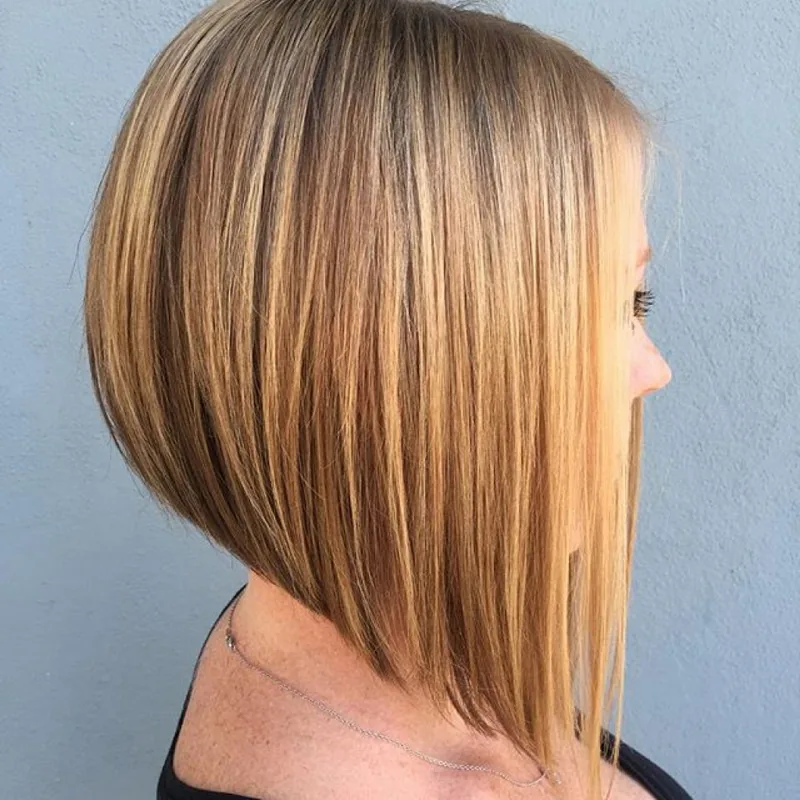
An A-line bob is shorter at the back and longer at the front, so the front pieces carry weight that holds the outline forward. That weight stops the fronts from flicking out or separating.
The angled shape also gives fine hair a clear silhouette, which reads as thicker and more deliberate than a cut with no outline.
Common mistakes:
- Making the angle so steep the back looks disconnected from the front
- Blow-drying flat against the head with no root lift
- Using heavy conditioner or oil at the roots
Cost and time: Salon cut roughly $45–$100; trim every 6 weeks; daily styling about 10–15 minutes.
Styling steps:
- Apply root lift at the crown.
- Blow-dry the back under.
- Smooth front pieces forward and under.
- Set with light spray.
13. Asymmetrical Bob with a Firm Outline

An asymmetrical bob has one side longer than the other, but the outline stays firm on both sides. That firm outline is what keeps the asymmetry looking like a choice rather than a grown-out mistake.
On fine hair, keep the shorter side blunt rather than wispy, so both sides hold their shape through the day.
Common mistakes:
- Letting the shorter side go wispy so the asymmetry looks accidental
- Using heavy conditioner or oil at the roots
- Skipping trims until the perimeter thins out
Cost and time: Salon cut roughly $45–$100; trim every 6 weeks; daily styling about 10 minutes.
Styling steps:
- Apply root spray to damp hair.
- Blow-dry both sides smooth.
- Tuck the shorter side lightly if desired.
- Set with flexible spray.
14. Bixie with a Defined Shape

A bixie sits between a bob and a pixie, with enough length to feel like a bob and enough crop to hold a shape. The key on fine hair is definition: a clear outline, not a shaggy, undefined in-between.
Ask for a strong perimeter and a shaped crown, and the bixie will hold its silhouette far longer than a grown-out pixie.
Common mistakes:
- Leaving the bixie undefined so it grows out into shapelessness
- Skipping trims until the perimeter thins out
- Blow-drying flat against the head with no root lift
Cost and time: Salon cut roughly $40–$90; trim every 5–6 weeks; daily styling about 10 minutes.
Styling steps:
- Apply texturising spray to damp hair.
- Blow-dry the crown with lift.
- Piece out the ends.
- Set with light spray.
15. Soft Undercut Pixie with Weight on Top
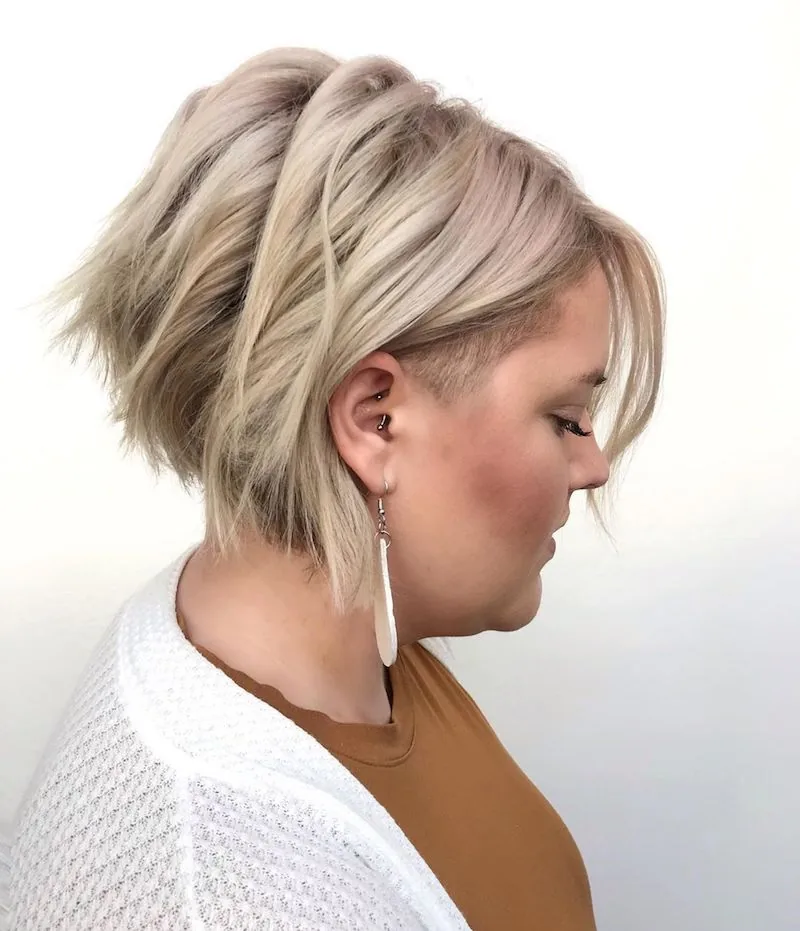
A soft undercut removes bulk underneath while keeping weight on top, so the pixie has a clear shape and the top has something to hold. The undercut is kept soft, not shaved hard, so it grows out gracefully.
This works well for fine hair that is dense at the nape but flat on top: the weight is moved to where it shapes the cut.
Common mistakes:
- Shaving the undercut too hard so regrowth looks stark
- Blow-drying flat against the head with no root lift
- Using heavy conditioner or oil at the roots
Cost and time: Salon cut roughly $40–$90; trim every 4–6 weeks; daily styling about 5–10 minutes.
Styling steps:
- Apply matte cream to damp hair.
- Blow-dry the top forward.
- Smooth the sides down.
- Finish with flexible spray.
16. Jaw-Length Bob with a Deep Side Part
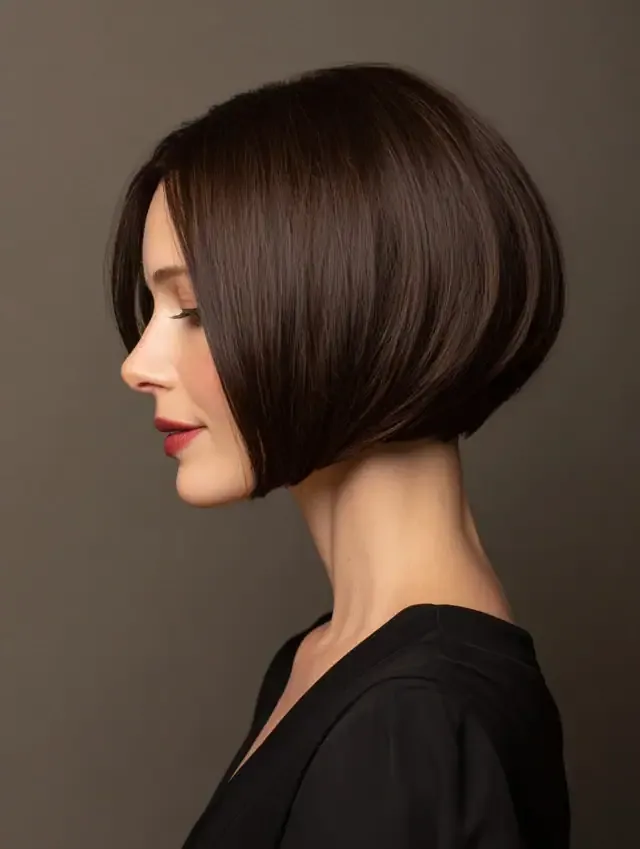
A deep side part gives a jaw-length bob instant structure: the weight falls to one side, the roots lift on the other, and the shape has a clear direction. The bob itself stays blunt so the outline holds.
This is one of the easiest shape-holders to refresh midday — just re-part and smooth, and the structure returns.
Common mistakes:
- Parting in the same flat centre part every day so roots go flat
- Using heavy conditioner or oil at the roots
- Skipping trims until the perimeter thins out
Cost and time: Salon cut roughly $40–$90; trim every 6 weeks; daily styling about 10 minutes.
Styling steps:
- Part deeply to one side while damp.
- Blow-dry roots in the opposite direction for lift.
- Smooth ends under.
- Set with light spray.
17. Shoulder-Length Cut with Blunt Ends and Curtain Pieces

Blunt ends at the shoulder plus curtain pieces at the front give you a solid shape with a soft opening at the face. The curtain pieces are the only layers, so the perimeter stays thick.
The curtain shape also frames the face without needing daily styling — it falls into place when blow-dried forward and swept aside.
Common mistakes:
- Cutting curtain pieces too short so they stick out instead of sweeping
- Skipping trims until the perimeter thins out
- Blow-drying flat against the head with no root lift
Cost and time: Salon cut roughly $40–$95; trim every 8 weeks; daily styling about 15 minutes.
Styling steps:
- Apply root spray to damp hair.
- Blow-dry curtain pieces forward, then sweep aside.
- Smooth lengths.
- Set with light spray.
18. Layered Lob That Keeps Its Ends Thick

This lob has layers, but they stop well above the ends, so the last few inches stay thick. That thick band at the bottom is what holds the lob’s shape through the day.
It is the layered cut most likely to still look like a lob at 5pm, because the ends were never thinned in the first place.
Common mistakes:
- Layering right down into the ends until the lob goes wispy
- Blow-drying flat against the head with no root lift
- Using heavy conditioner or oil at the roots
Cost and time: Salon cut roughly $40–$95; trim every 7–8 weeks; daily styling about 15 minutes.
Styling steps:
- Apply volumising spray to damp hair.
- Blow-dry with a large brush.
- Bend ends under.
- Finish with flexible spray.
19. Wavy Bob Set with a Defined Bend
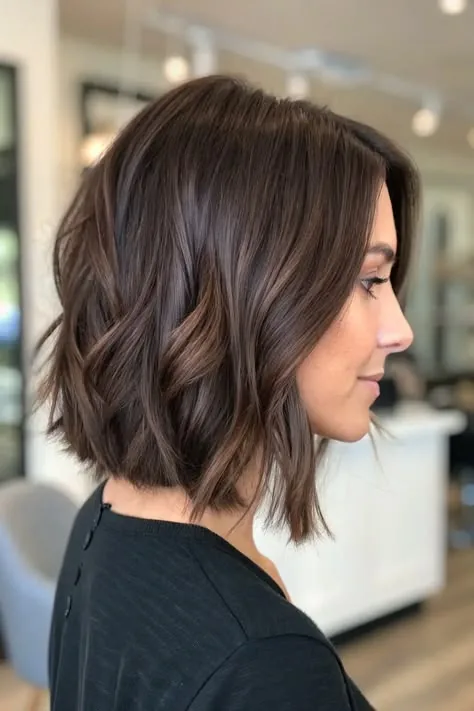
A wavy bob holds its shape better when the wave is a defined bend rather than loose, brushed-out waves. The bend gives each section a set direction, so strands support each other instead of sliding apart.
Use a flat iron or large wand to set one even bend through the lengths, and the bob will keep its silhouette far longer than air-dried waves.
Common mistakes:
- Brushing the bend out completely so the wave disappears by lunch
- Using heavy conditioner or oil at the roots
- Skipping trims until the perimeter thins out
Cost and time: Salon cut roughly $45–$95; trim every 6–8 weeks; daily styling about 15 minutes.
Styling steps:
- Apply heat protectant to damp or dry hair.
- Set one bend per section with a flat iron.
- Let sections cool before touching.
- Set with flexible spray.
20. Sleek Straight Bob with Tucked Ends

A sleek bob with ends tucked under has a closed, finished outline that does not rely on volume to look good. The tuck is the shape, and it stays put because the ends are blunt and even.
This is a good choice for fine, straight hair that goes flat when it is supposed to be voluminous — here, sleek is the point.
Common mistakes:
- Leaving ends to flick outwards so the outline looks unfinished
- Skipping trims until the perimeter thins out
- Blow-drying flat against the head with no root lift
Cost and time: Salon cut roughly $40–$90; trim every 6 weeks; daily styling about 10–15 minutes.
Styling steps:
- Apply smoothing cream to damp hair.
- Blow-dry smooth with a flat brush.
- Tuck ends under with a round brush.
- Finish with shine spray.
21. Curly Bob with a Rounded, Structured Shape
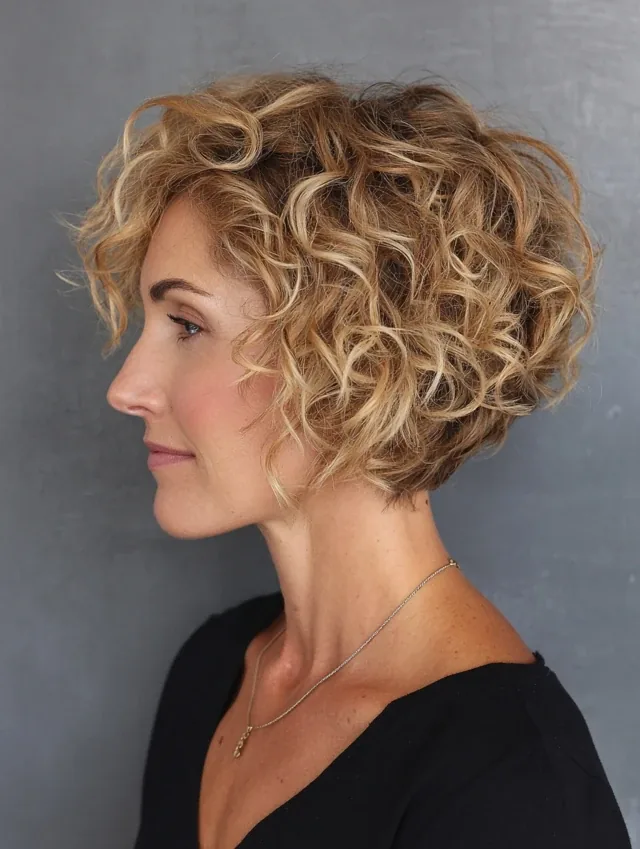
A curly bob for fine hair needs a rounded, structured shape, not layers that remove all the weight. The round outline lets curls stack and support each other, so the shape holds instead of falling into separate strands.
Cut it dry or with curls in their natural fall, so the shape you see in the salon is the shape you get at home.
Common mistakes:
- Cutting fine curls wet and straight, then being surprised by shrinkage
- Blow-drying flat against the head with no root lift
- Using heavy conditioner or oil at the roots
Cost and time: Salon cut roughly $45–$100; trim every 8–10 weeks; daily styling about 15–20 minutes.
Styling steps:
- Apply curl cream to soaking wet hair.
- Scrunch and diffuse on low heat.
- Do not touch curls until fully dry.
- Scrunch out the crunch lightly.
22. Fine-Hair Shag with Short Crown, Long Perimeter
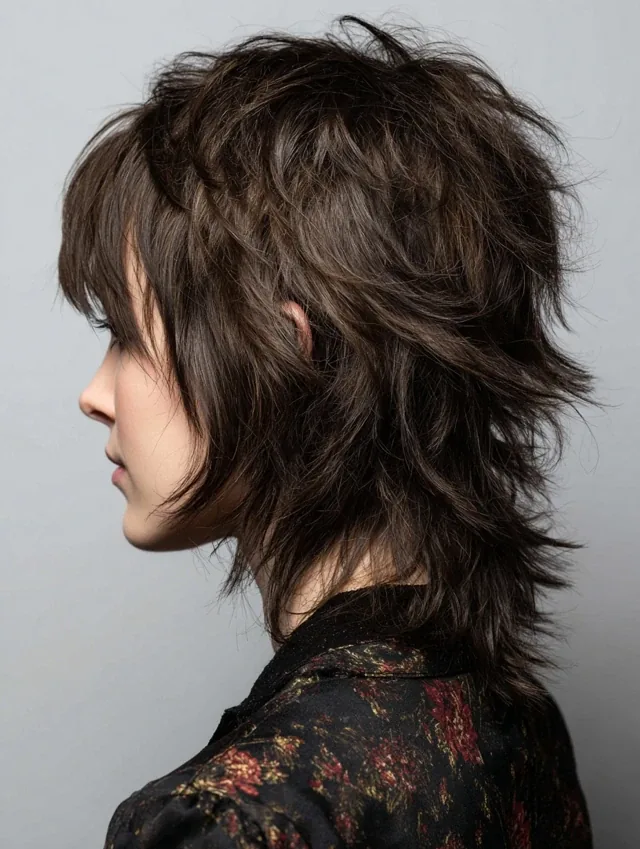
This shag keeps its layers short and high, at the crown, and leaves the perimeter long. The crown layers give lift, the long perimeter keeps the outline, and neither undermines the other.
It is the shag version of the blunt-versus-layers trade-off done right: movement on top, weight at the edges.
Common mistakes:
- Dragging shag layers down through the lengths and thinning the perimeter
- Using heavy conditioner or oil at the roots
- Skipping trims until the perimeter thins out
Cost and time: Salon cut roughly $45–$95; trim every 6–8 weeks; daily styling about 10–15 minutes.
Styling steps:
- Apply texturising spray to damp hair.
- Blow-dry crown with lift.
- Smooth the perimeter down.
- Set with flexible spray.
23. One-Length Long Cut with Hidden Internal Layers

A one-length cut looks blunt from the outside, but hidden internal layers inside give it movement and stop it swinging as a single heavy sheet. The perimeter stays solid, so the shape lasts.
This is the best long option for fine hair that falls flat in layers but looks heavy in a true one-length cut.
Common mistakes:
- Cutting visible layers over the top instead of hiding them inside
- Skipping trims until the perimeter thins out
- Blow-drying flat against the head with no root lift
Cost and time: Salon cut roughly $40–$95; trim every 8–10 weeks; daily styling about 15 minutes.
Styling steps:
- Apply light mousse to damp hair.
- Blow-dry smooth, lifting roots.
- Smooth the surface.
- Finish with light spray.
24. Blunt Bangs with a Bob That Holds Its Line

Blunt bangs only work on fine hair when the bob underneath also holds a line. Together, the fringe and the bob create one strong frame, and each supports the other.
Keep the bangs thick enough to sit as a line, not so thin they separate, and trim them between bob appointments so the frame never goes ragged.
Common mistakes:
- Cutting bangs too thin so they separate into wisps by midday
- Blow-drying flat against the head with no root lift
- Using heavy conditioner or oil at the roots
Cost and time: Salon cut roughly $45–$100; bang trim every 3–4 weeks; daily styling about 10 minutes.
Styling steps:
- Blow-dry bangs forward with a flat brush.
- Smooth the bob ends under.
- Keep bangs off the forehead while drying.
- Set with light spray.
25. Side-Swept Bangs with a Structured Lob

Side-swept bangs give a structured lob a diagonal line across the forehead, which adds direction and lift at the front. The lob stays blunt behind the bangs, so the overall shape holds.
The sweep also means the bangs do not need to be perfect — they are meant to fall to one side, and that is where they stay.
Common mistakes:
- Cutting side bangs too short so they spring up instead of sweeping
- Using heavy conditioner or oil at the roots
- Skipping trims until the perimeter thins out
Cost and time: Salon cut roughly $40–$95; trim every 6–8 weeks; daily styling about 10–15 minutes.
Styling steps:
- Blow-dry bangs to one side with a round brush.
- Blow-dry the lob smooth.
- Bend ends under.
- Set with light spray.
26. Curtain Bangs with a Blunt Midi Cut

Curtain bangs part in the middle and sweep to each side, opening the face while the blunt midi behind them holds the shape. The combination gives softness at the front and structure everywhere else.
Because the midi is blunt, the curtain bangs do not have to do the work of making the cut look thick — they just frame it.
Common mistakes:
- Cutting curtain bangs too short so they cannot sweep to the sides
- Skipping trims until the perimeter thins out
- Blow-drying flat against the head with no root lift
Cost and time: Salon cut roughly $40–$95; trim every 7–8 weeks; daily styling about 15 minutes.
Styling steps:
- Blow-dry bangs forward, then sweep each side out.
- Blow-dry midi smooth.
- Bend ends under lightly.
- Set with light spray.
27. Wispy Bangs with a Chin Bob

Wispy bangs are light and airy, but they pair best with a chin bob that has a firm outline. The bob gives the structure; the bangs just soften the forehead.
Keep the wisps long enough to sit on the forehead rather than springing up, and the pairing will hold all day.
Common mistakes:
- Cutting wispy bangs too short so they curl up by afternoon
- Blow-drying flat against the head with no root lift
- Using heavy conditioner or oil at the roots
Cost and time: Salon cut roughly $40–$90; trim every 6 weeks; daily styling about 10 minutes.
Styling steps:
- Blow-dry bangs down with a flat brush.
- Blow-dry the bob ends under.
- Smooth the surface.
- Set with light spray.
28. Textured Pixie with Piecey, Matte Finish

A textured pixie with a matte, piecey finish holds its shape because the texture is set with a light product, not weighed down with shine creams. The pieces stay separated and visible all day.
Matte finish matters on fine hair: shine products can make a pixie look flat and greasy by afternoon, while matte keeps the texture readable.
Common mistakes:
- Using heavy shine cream that collapses the pixie texture
- Using heavy conditioner or oil at the roots
- Skipping trims until the perimeter thins out
Cost and time: Salon cut roughly $35–$80; trim every 4–6 weeks; daily styling about 5 minutes.
Styling steps:
- Apply matte paste sparingly to dry hair.
- Piece out the top with fingers.
- Keep the sides smooth.
- Set with flexible spray if needed.
29. Bowl-Inspired Modern Crop with a Clean Outline
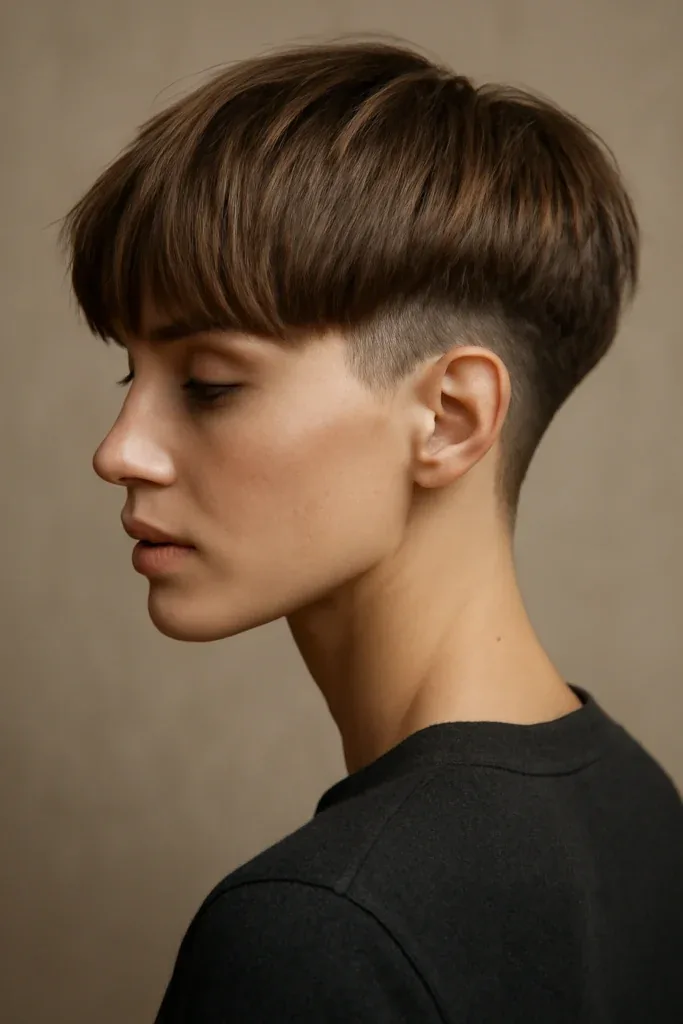
A modern bowl crop has a rounded, clean outline that sits like a cap, and that outline is the whole shape. On fine hair, the clean edge keeps it looking intentional rather than overgrown.
It is a bold choice, but a reliable shape-holder: short, even, and with nowhere to fall flat to.
Common mistakes:
- Letting the outline grow ragged so the crop looks overgrown
- Skipping trims until the perimeter thins out
- Blow-drying flat against the head with no root lift
Cost and time: Salon cut roughly $40–$90; trim every 4–5 weeks; daily styling about 5–10 minutes.
Styling steps:
- Apply light cream to damp hair.
- Blow-dry smooth in the shape of the crop.
- Smooth the edges.
- Finish with light spray.
30. Chin Bob with an Undercut Nape for Lift
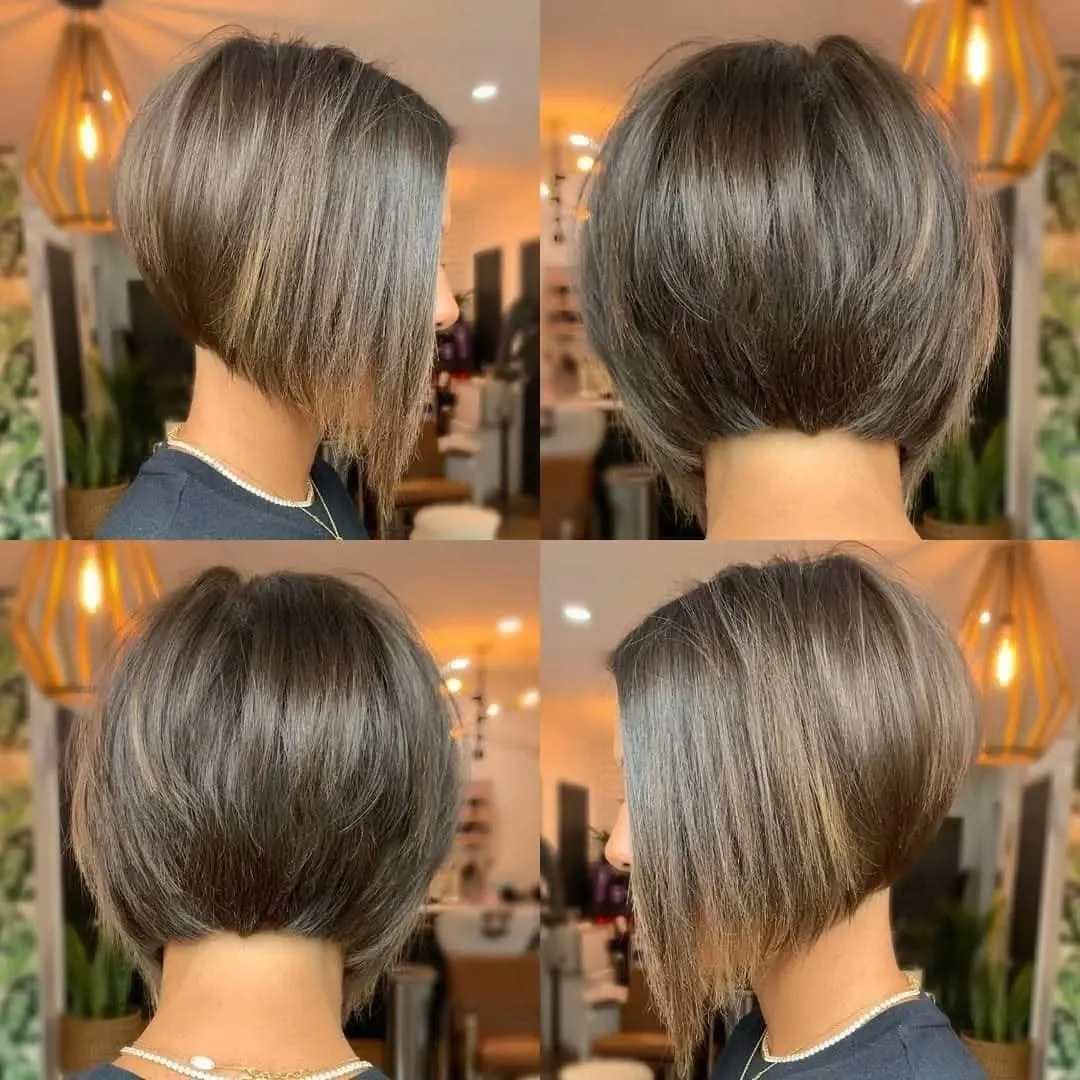
An undercut nape hidden under a chin bob removes bulk at the back, so the bob sits closer to the head and lifts instead of flopping. From the front and sides, it still looks like a plain chin bob.
The hidden undercut is a shape trick: less weight at the nape means the visible bob keeps its outline longer.
Common mistakes:
- Cutting the undercut too high so it shows when hair moves
- Blow-drying flat against the head with no root lift
- Using heavy conditioner or oil at the roots
Cost and time: Salon cut roughly $45–$100; trim every 5–6 weeks; daily styling about 10 minutes.
Styling steps:
- Apply root spray to damp hair.
- Blow-dry the bob smooth, ends under.
- Smooth the nape down.
- Set with light spray.
31. Shoulder Cut with Blunt Ends and Soft Waves
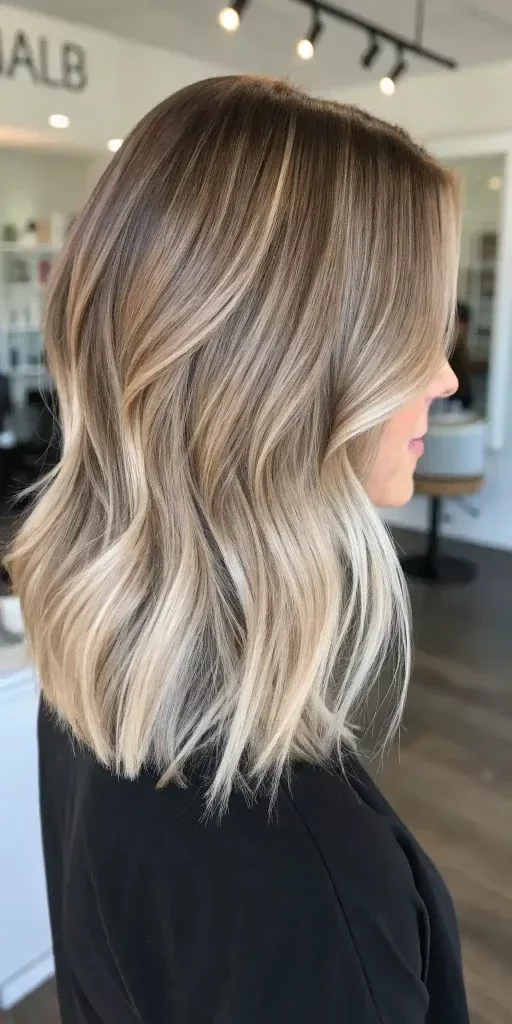
Blunt ends at the shoulder plus soft waves give you a shape with movement that does not depend on volume. The blunt perimeter keeps the outline, and the waves keep it from looking stiff.
Set the waves in large sections and let them cool before brushing out, so the wave pattern holds instead of dropping.
Common mistakes:
- Brushing waves out while hot so they fall flat immediately
- Using heavy conditioner or oil at the roots
- Skipping trims until the perimeter thins out
Cost and time: Salon cut roughly $40–$95; trim every 8 weeks; daily styling about 15–20 minutes.
Styling steps:
- Apply heat protectant.
- Wave large sections with a wand.
- Let waves cool completely.
- Brush out gently and set with spray.
32. Long Layers Cut Short at the Crown Only
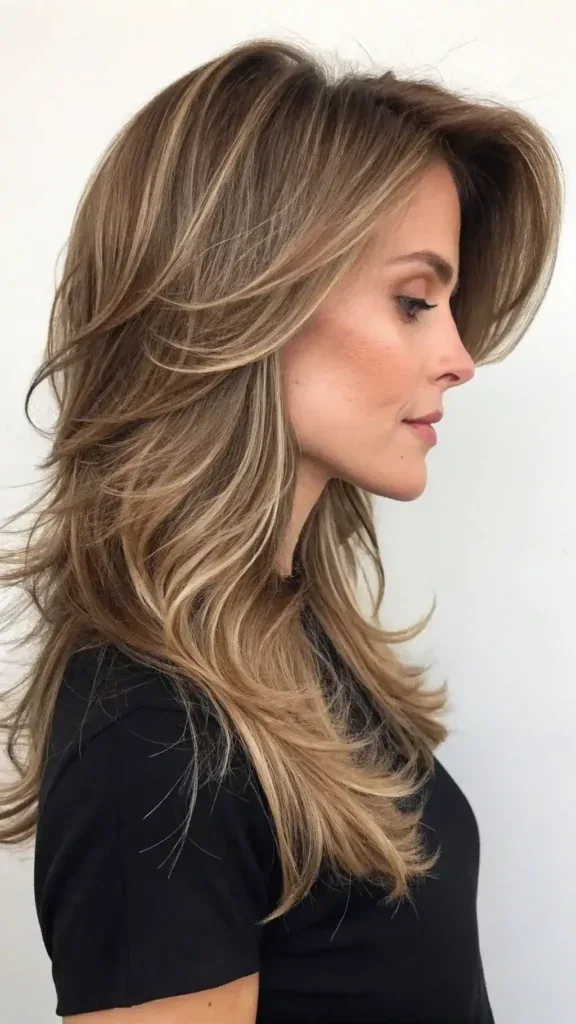
This cut puts its only short layers at the crown, where they lift the roots, and leaves everything else long and blunt. The crown lift supports the shape; the long lengths do not drag it down because they were never layered.
It is a useful compromise if you love long hair but your roots always go flat.
Common mistakes:
- Adding short layers through the lengths as well, undoing the compromise
- Skipping trims until the perimeter thins out
- Blow-drying flat against the head with no root lift
Cost and time: Salon cut roughly $40–$95; trim every 8–10 weeks; daily styling about 15 minutes.
Styling steps:
- Apply root spray at the crown.
- Blow-dry crown with lift.
- Smooth lengths down.
- Set with light spray.
33. Midi Cut with a Rounded, Swingy Shape

A midi cut with a rounded shape swings as one piece, and that swing is the shape. The rounded perimeter means the ends move together instead of separating.
Keep the ends blunt and the shape round rather than layered, and the midi will still swing at the end of the day.
Common mistakes:
- Layering the midi so heavily it stops swinging as one shape
- Blow-drying flat against the head with no root lift
- Using heavy conditioner or oil at the roots
Cost and time: Salon cut roughly $40–$95; trim every 8 weeks; daily styling about 15 minutes.
Styling steps:
- Apply volumising spray to damp hair.
- Blow-dry with a large round brush.
- Bend ends under to round the shape.
- Set with flexible spray.
34. Short Bob with Side-Swept Fringe and Weight at the Front

Weight at the front of a short bob keeps the fringe and face pieces sitting where they were cut, instead of flicking away. The side-swept fringe adds direction, and the front weight holds it.
This pairing suits fine hair that tends to separate at the face: the weight keeps the front pieces together.
Common mistakes:
- Thinning the front pieces so they separate and flick out
- Using heavy conditioner or oil at the roots
- Skipping trims until the perimeter thins out
Cost and time: Salon cut roughly $40–$90; trim every 6 weeks; daily styling about 10 minutes.
Styling steps:
- Blow-dry fringe to one side.
- Blow-dry bob ends under.
- Smooth front pieces forward.
- Set with light spray.
35. Fine-Hair Wolf Cut with a Strong Perimeter

A wolf cut for fine hair only works if the perimeter stays strong. Keep the outline solid, put the shaggy layers high, and the wolf shape holds instead of collapsing into wisps.
The strong perimeter is the difference between a wolf cut that looks styled and one that looks grown out by lunchtime.
Common mistakes:
- Cutting wolf layers through the perimeter until the outline disappears
- Skipping trims until the perimeter thins out
- Blow-drying flat against the head with no root lift
Cost and time: Salon cut roughly $45–$95; trim every 6–8 weeks; daily styling about 10–15 minutes.
Styling steps:
- Apply texturising spray to damp hair.
- Blow-dry crown with lift.
- Smooth the perimeter.
- Piece out the top layers.
36. Blunt Ends with Subtle Face-Framing Layers

Subtle face-framing layers are the lightest possible change to a blunt cut: two or three pieces at the front, nothing through the back. The blunt ends do all the shape-holding, and the face pieces just soften the front.
This is the safest first step if you want layers but have been burned by cuts that fell flat.
Common mistakes:
- Turning subtle face-framing into full layers through the whole cut
- Blow-drying flat against the head with no root lift
- Using heavy conditioner or oil at the roots
Cost and time: Salon cut roughly $40–$90; trim every 8 weeks; daily styling about 10–15 minutes.
Styling steps:
- Blow-dry face pieces forward and under.
- Smooth lengths down.
- Bend ends under lightly.
- Set with light spray.
37. Tucked-Behind-Ear Bob with a Firm Baseline
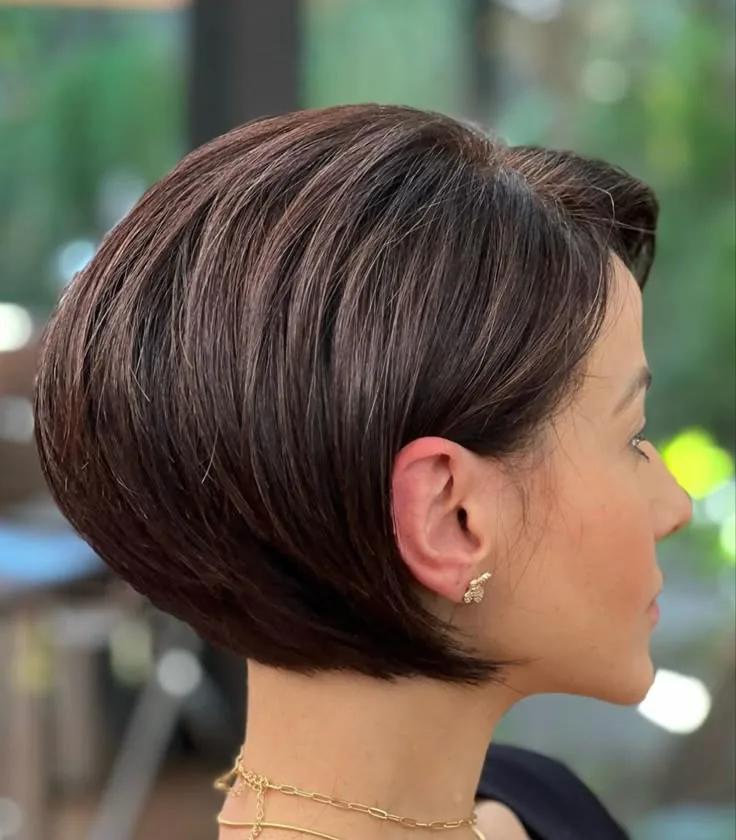
A bob worn tucked behind the ear only looks neat if the baseline is firm. The tuck shows off the clean line, and the line holds the shape even when the hair is tucked and untucked through the day.
Keep the bob blunt and the tuck light — tucking should not require pins or product to stay put.
Common mistakes:
- Cutting the bob so layered it will not stay tucked
- Using heavy conditioner or oil at the roots
- Skipping trims until the perimeter thins out
Cost and time: Salon cut roughly $40–$90; trim every 6 weeks; daily styling about 10 minutes.
Styling steps:
- Blow-dry the bob smooth, ends under.
- Tuck one or both sides behind the ears.
- Smooth the surface.
- Set with light spray.
38. Short Layered Cut with a Defined Part Line

A defined part line gives a short layered cut a clear structure to hang from. The part directs the weight, the layers sit on either side of it, and the shape has a centre to return to when it is refreshed.
Re-parting precisely in the morning is a two-second reset that restores the whole cut’s outline.
Common mistakes:
- Letting the part drift so the layers fall in no clear direction
- Skipping trims until the perimeter thins out
- Blow-drying flat against the head with no root lift
Cost and time: Salon cut roughly $40–$90; trim every 5–6 weeks; daily styling about 10 minutes.
Styling steps:
- Part precisely while damp.
- Blow-dry each side away from the part.
- Smooth the surface.
- Set with light spray.
39. Long Bob with Blunt Ends and a Centre Part
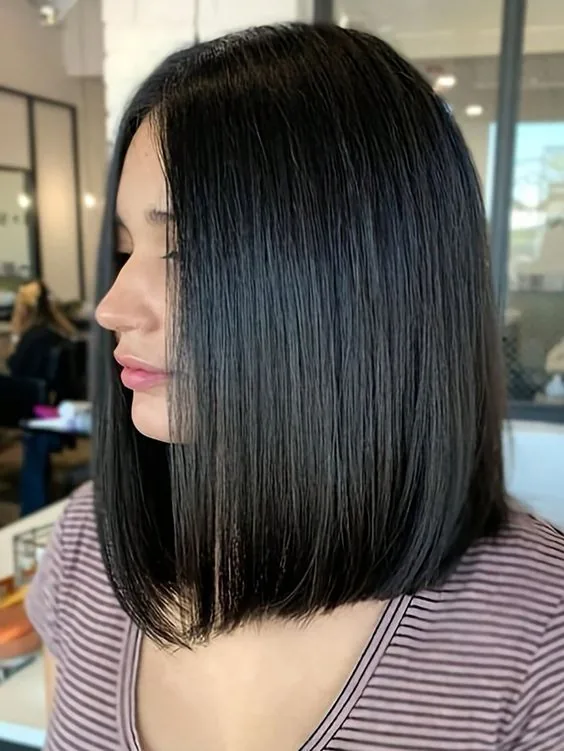
A centre-parted long bob with blunt ends is symmetrical, clean and honest about its shape: the outline is the style. Because both sides are even and blunt, the bob holds its silhouette without styling tricks.
It suits fine, straight hair especially well, where a centre part and a clean line look deliberate rather than flat.
Common mistakes:
- Cutting the ends unevenly so the centre part looks lopsided
- Blow-drying flat against the head with no root lift
- Using heavy conditioner or oil at the roots
Cost and time: Salon cut roughly $40–$95; trim every 7–8 weeks; daily styling about 10–15 minutes.
Styling steps:
- Part in the centre while damp.
- Blow-dry smooth with a flat brush.
- Tuck ends under evenly.
- Finish with light spray.
40. Occasion Updo Anchored on a Blunt Base Cut
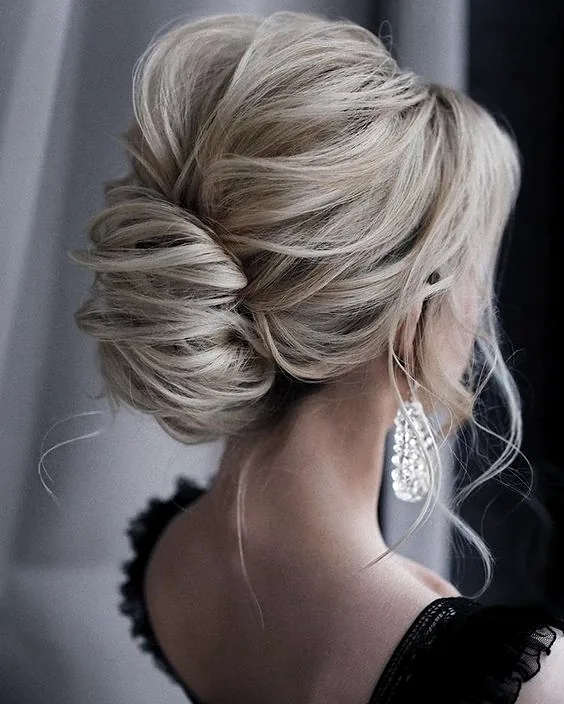
An updo holds on fine hair only if the base cut underneath it is solid. A blunt bob or lob gives pins and twists something to grip, while a thin, layered base lets an updo slide apart within the hour.
Start with a freshly trimmed blunt base, add texture spray for grip, and anchor the updo at the nape and crown rather than relying on pins alone.
Common mistakes:
- Building an updo on an overgrown, thinned-out base cut
- Using heavy conditioner or oil at the roots
- Skipping trims until the perimeter thins out
Cost and time: Salon updo roughly $50–$120 plus the base cut; daily styling about 20–30 minutes for the occasion.
Styling steps:
- Apply texture spray to dry hair.
- Backcomb lightly at the crown for grip.
- Pin the updo at nape and crown.
- Set firmly with strong-hold spray.
Can fine hair hold a style all day?
Yes, if the shape is built into the cut. A blunt perimeter, weight placed where it supports the outline, and a trim every six to eight weeks matter more than any product. Products then support a shape that already exists, instead of trying to create one.
Is a blunt cut or layers better for fine hair that falls flat?
A blunt cut holds its shape longer, because the ends support each other at one line. Layers add movement but remove weight from the ends. The best compromise for most fine hair is blunt ends with a few long layers, or layers kept high at the crown only.
How often should fine hair be trimmed to keep its shape?
Every six to eight weeks for bobs and lobs, and every four to six weeks for pixies. Once the ends thin out, the shape starts to collapse, and no styling product will restore a perimeter that is no longer there.
Does fine hair need mousse, or will it weigh hair down?
A light mousse at the roots only usually helps, because it is dried in where lift is needed. What weighs fine hair down is heavy cream, oil or mousse applied through the lengths and at the roots together. Use less product, placed precisely.
Why does my haircut look great in the salon and flat by afternoon?
In the salon, the hair is freshly cut, fully blow-dried with root lift, and finished with product. By afternoon, oil, humidity and gravity have pulled the shape down — especially if the cut has no solid perimeter to hold it. A blunt edge, root lift dried in, and a midday refresh usually fix most of the gap.
Should fine hair be blow-dried or air-dried to hold its shape?
Blow-drying with the roots lifted sets a shape that lasts, because heat sets the lift in place. Air-drying sets whatever direction the hair dries in, so if you air-dry, clip the roots up while drying and avoid letting wet hair dry flat against the head.
Can long hair hold a shape on fine hair?
Yes, but only with a solid perimeter and minimal layering. A long blunt cut with face-framing pieces only, or hidden internal layers, holds far better than long hair with layers through the lengths, which thins the ends and lets the shape fall apart.
Do highlights help fine hair hold its shape?
Highlights do not hold a shape by themselves, but blended dimension makes a shape look deeper and more defined, so it reads as structured for longer. Harsh, stripey highlights have the opposite effect and draw attention to thinness.
What is the best short cut for fine hair that will not go flat?
A blunt bob or a pixie with a structured, longer top are the most reliable. Both keep weight where it shapes the cut and leave very little length for gravity to pull down, so the outline survives the day.
How do I refresh fine hair midday without restyling it?
Re-part it, lift the roots with your fingers or a quick blast from a blow-dryer, and add a light spray. Two minutes of root refresh restores more shape than restyling the lengths, because most collapse on fine hair starts at the roots.
Conclusion
Fine hair does not need more volume tricks. It needs a shape that is built into the cut: a solid perimeter, weight in the right place, and a trim schedule that keeps the outline intact. Choose a cut from this guide that matches your length and your patience for styling, keep the ends blunt, lift the roots when you dry, and use light products placed exactly where they help.
That is the whole secret to a cut that still looks like itself at the end of the day. Start with structure, and the style will follow — past lunchtime, and into the evening too.