Hairstyles for Thick Hair That Take the Weight Out and Keep the Wow
Thick hair is a gift — it looks full in photos, holds styles for hours, and rarely needs help with volume. The challenge is not a lack of hair. It is the weight of it: the heaviness at the neck, the drying time, the puffiness on humid days, and the way a simple cut can turn into a wide, shapeless block.
The good news is that you do not have to fight your thick hair, or thin it into something it is not. The best hairstyles for thick hair work with its density. They remove weight from the inside, shape the outline, and let the hair move — so you keep the volume you love without carrying the bulk.
In this guide, you will find eight practical guides on bulk, drying, products, and salon visits, followed by 33 cuts and styles for thick hair of every texture — straight, wavy, curly, and coily. Each one includes pros, cons, and maintenance, so you can choose with confidence.
Understanding Where Your Bulk Actually Comes From
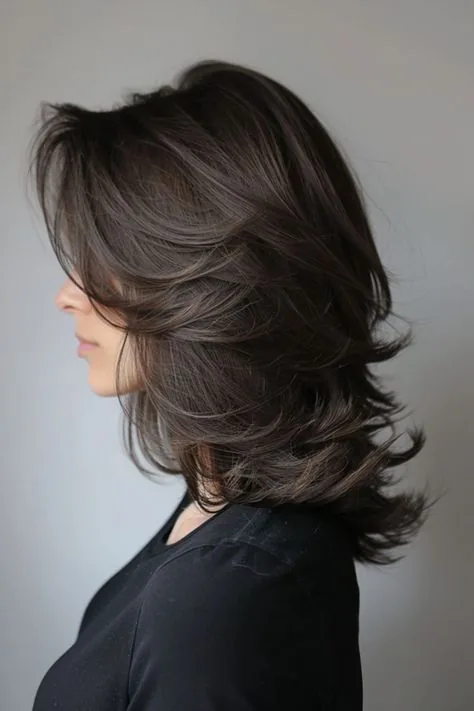
Thick hair can feel heavy for very different reasons, and the fix depends on which one you have. Sometimes it is density — simply a lot of strands. Sometimes it is coarse texture, where each strand is wide and stiff. And sometimes it is length piling on top of density, so the weight sits in the ends and pulls everything down.
A quick test helps. Gather your hair into a ponytail and feel its thickness. Then look at how it behaves when it air-dries: does it puff out sideways, fall flat at the roots and wide at the ends, or hold its shape well but take forever to dry? Each pattern points to a different solution, which is why one friend’s miracle cut can be another person’s triangle disaster.
This matters because bulk is not one problem. A cut that removes weight from the inside helps dense hair, while a cut that adds movement helps coarse, stiff hair. Knowing your bulk type before you book saves you from a cut that thins the wrong place.
Weight Removal Explained: Thinning Shears, Razors and Internal Layers
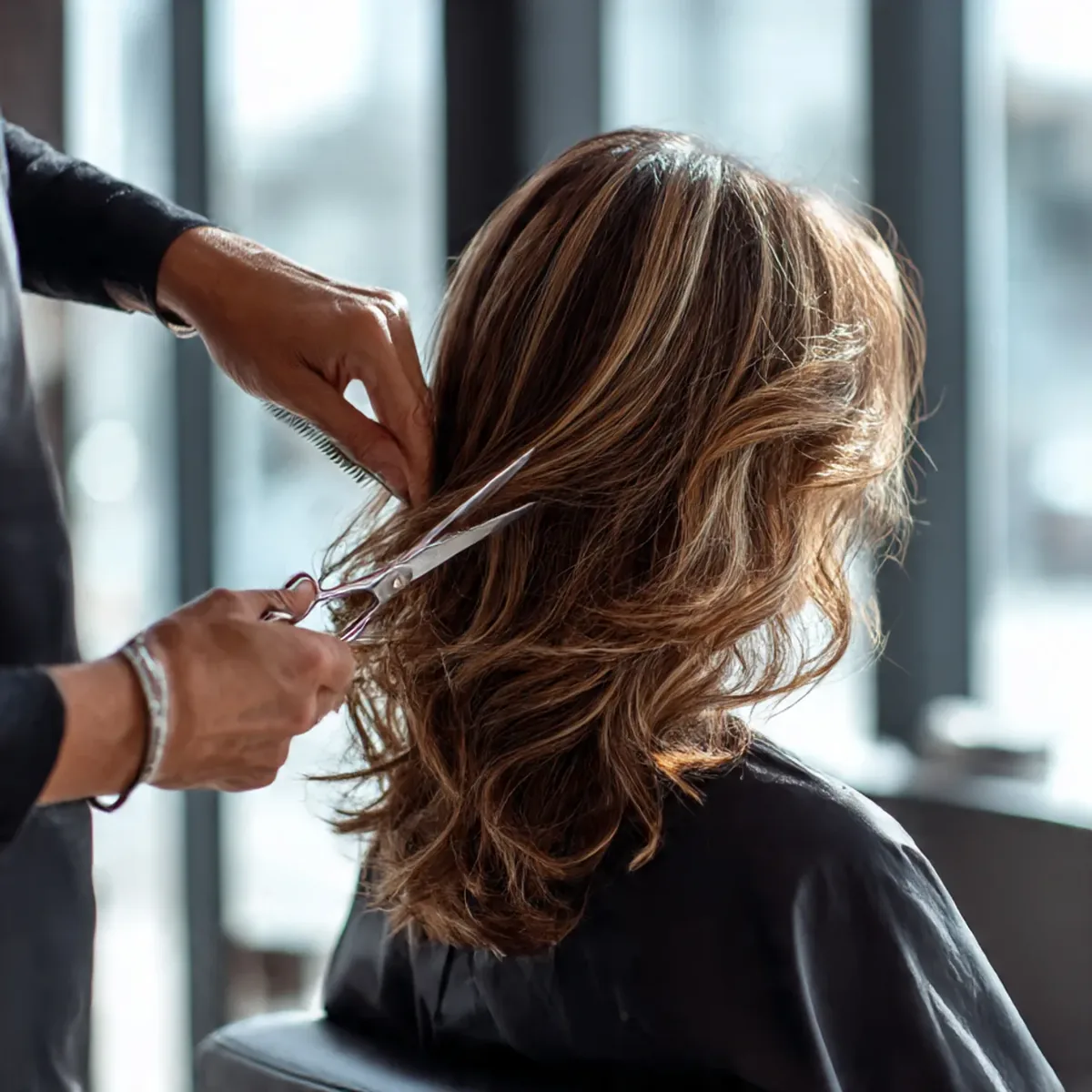
Weight removal sounds dramatic, but a good version is invisible. Thinning shears take out small amounts of hair in the mid-lengths so the outside still looks full. A razor softens hard ends so they move instead of sitting in a solid block. Internal layers — short layers hidden under longer top layers — remove bulk without changing the outline you see in the mirror.
The method should match your texture. Thinning shears work well on straight and wavy thick hair but can rough up very curly or coily hair if used too close to the ends. A razor suits straight, coarse hair that needs softness. Internal layers are the safest all-rounder because they keep length and surface smoothness.
Ask your stylist to show you where the weight is coming from, not just to thin everywhere. Targeted removal at the sides, underneath, or in the heaviest section beats all-over thinning, which can leave hair wispy at the ends and still bulky at the roots.
Beating the Triangle Shape for Good
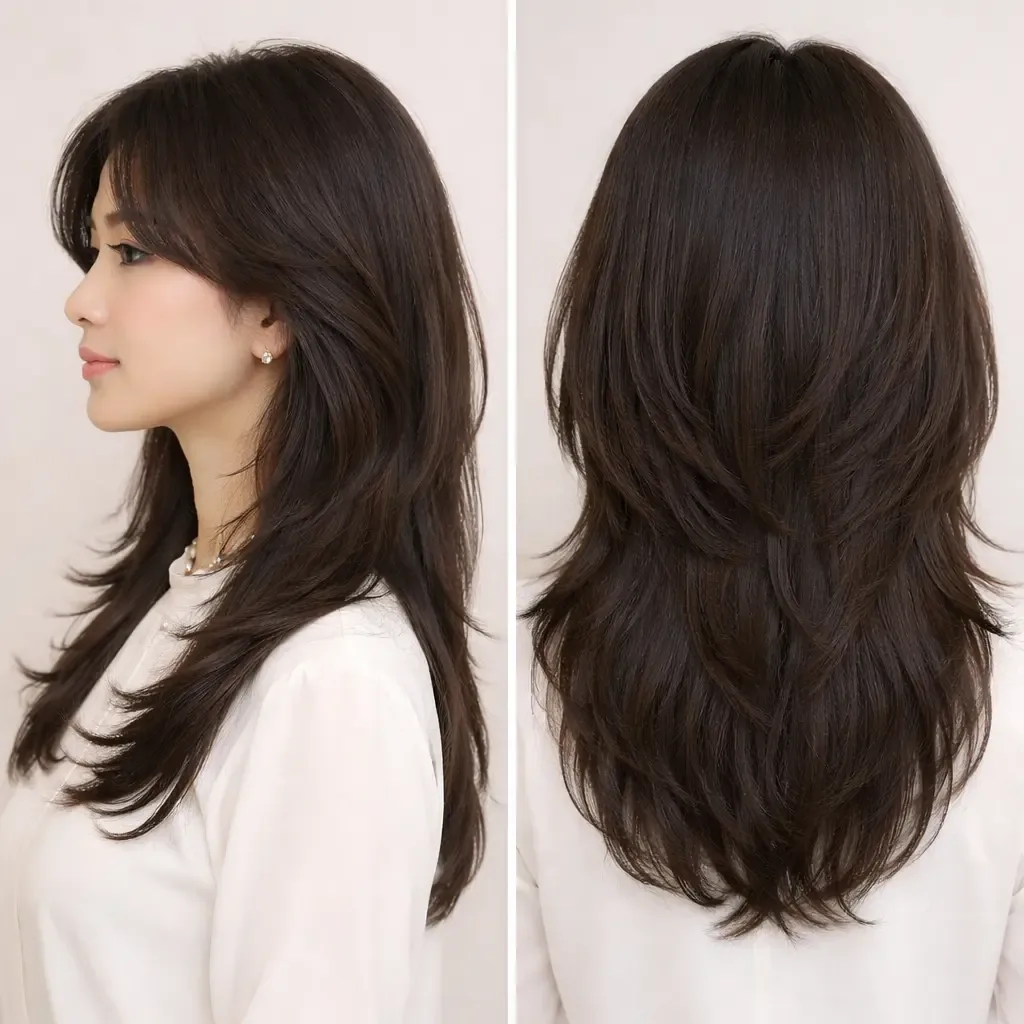
The triangle shape — flat on top, wide and puffy at the bottom — is the classic thick-hair complaint. It happens when the top layers are too long to lift the hair, while the ends carry all the weight and spread outward. Humidity, a blunt cut with no internal movement, or growing out layers unevenly can all make it worse.
The fix is shape, not just length. Layers that start higher up give the top movement, internal thinning takes weight out of the wide zone, and a slightly rounded or tapered outline stops the ends from flaring. For curly hair, cutting dry or in its natural curl pattern helps the stylist see exactly where the width builds up.
At home, avoid drying upside down if your ends already flare, and use a round brush or diffuser to direct the mid-lengths inward rather than outward. A small change in drying direction often does more than another inch off the length.
Drying Thick Hair Faster Without the Frizz
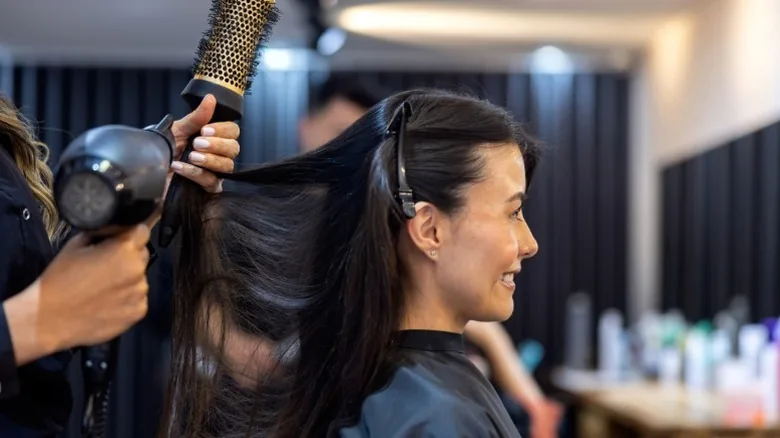
Drying thick hair can feel like a second job, and rushing it usually adds frizz. The trick is to remove water in stages. Start by squeezing, not rubbing, with a microfibre towel or cotton T-shirt, then let it air-dry for ten to fifteen minutes while you get ready. Hair that is already partly dry needs far less heat.
Sectioning is the real time-saver. Dry in four to six sections, starting underneath, and do not revisit a section once it is dry. A concentrator nozzle directs air down the hair shaft and smooths the cuticle, while a diffuser does the same job for curls without breaking the curl pattern apart.
Finish with cool air to seal the style and reduce puffiness. If your hair still takes over an hour, talk to your stylist: a debulked cut can genuinely cut drying time, because there is simply less hair holding water in the heaviest areas.
Choosing Products That Do Not Add Weight

Thick hair does not need heavy products just because there is a lot of it. Rich butters and thick creams can coat the hair, attract dust, and make freshly washed hair look flat and dull by lunchtime. Lightweight leave-ins, milky serums, and water-based creams usually give better movement.
Think in thin layers. A small amount of leave-in on damp hair, then a light oil only on the ends, beats one large blob of a heavy mask. For straight hair, a heat protectant spray is often enough. For curls and coils, a light curl cream plus a gel cast that you scrunch out once dry gives hold without the crunch of heavy product.
Watch for build-up. If your hair feels coated, heavy, or harder to dry than usual, a clarifying wash once every few weeks can reset it. Product weight is easy to fix, which makes it a good first step before you blame your cut.
Salon Visit Playbook: What to Say and Show
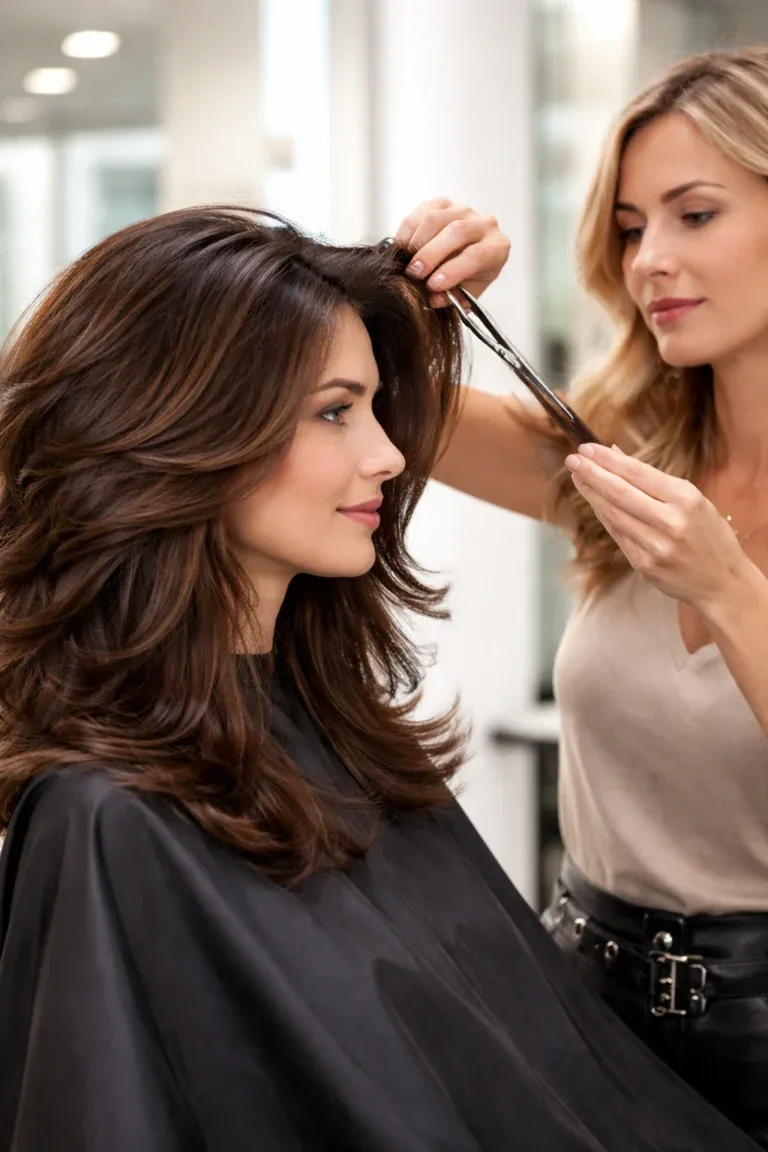
The words you use at the salon decide the cut you get. Saying just ‘thin it out’ can mean anything from a light internal trim to aggressive thinning that leaves ends wispy. Instead, describe the problem in plain terms: where it feels heavy, where it puffs, how long drying takes, and what you want to keep.
Bring photos of hair with a similar texture and density to yours, not just a celebrity with fine hair and a thick-looking blowout. Show the front, the side, and the back if you can. Tell your stylist how you actually style it at home — air-dry, blow-dry, or wash-and-go — because a cut that only looks good after a salon blowout is not a practical cut.
Ask three questions before they start: where will weight come out, will the outline stay the same length, and how will this grow out in eight to twelve weeks? Clear answers mean you are both picturing the same result, and they give you something to refer back to at your next visit.
Thick Hair Through the Seasons: Humidity, Winter Static and Sweat

Thick hair reacts to the weather more than fine hair does, simply because there is more of it to react. Humidity swells the hair shaft and turns smooth layers puffy. Winter dry air brings static and flyaways. Summer sweat at the nape can make the underlayer damp, heavy, and uncomfortable.
In humid weather, anti-humidity serums, a light gel, and styles that keep the underlayer off the neck help. In winter, a leave-in conditioner and a silk or satin pillowcase reduce static and breakage. In hot weather, braids, twists, and claw-clip updos keep thick hair controlled without a full wash and restyle.
Seasonal trims matter too. A debulking refresh before the most humid months, and an ends trim before winter dryness sets in, keeps the shape working all year rather than fighting the weather with extra product.
Growing Out Thick Hair Without Losing Control
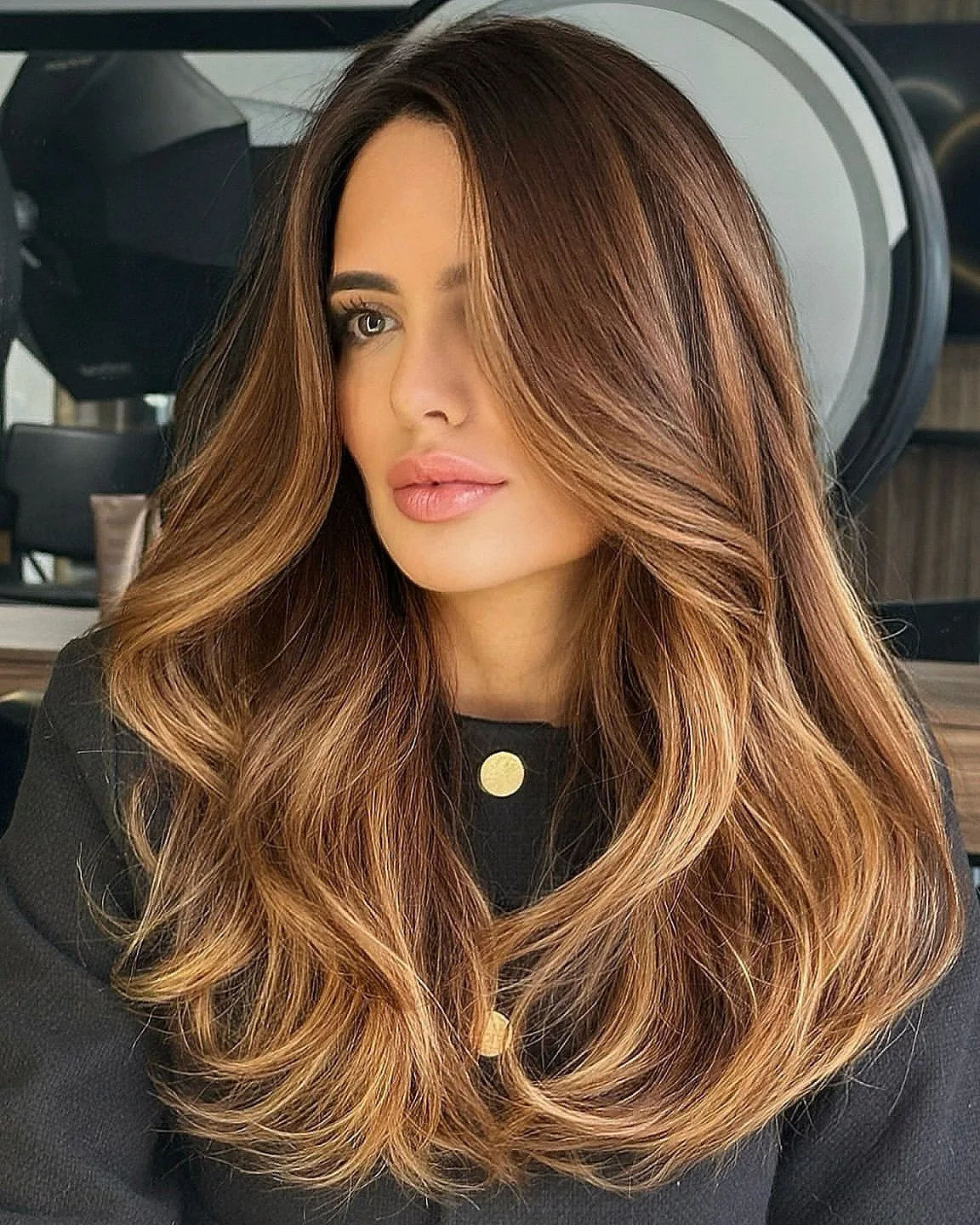
Growing out thick hair is a long game, and the awkward stages are usually about shape, not length. As layers grow, the heaviest part shifts downward, ends get wider, and the style can lose its outline. Regular small trims — every ten to twelve weeks — keep the shape while the length builds.
Ask for maintenance trims that refresh internal layers and tidy the ends without taking length off the top. This keeps weight controlled as it grows. Protective styles, loose braids, and silk scrunchies reduce breakage at the ends, which is what actually slows growth for many people with thick hair.
Be patient with the in-between lengths. A midi cut, a lob, or a long shag can be a planned stopping point rather than an accident, and each one gives you a wearable shape while you wait for the next milestone length.
1. Long Debulked Layers

Long debulked layers are the workhorse cut for thick hair. The outline stays long, but hidden layers underneath take out the heaviness that makes long thick hair feel like a curtain. You keep the length you love, without the neck ache and the endless drying time.
This cut suits straight, wavy, and loosely curly hair best, and it works at almost any length past the shoulders. It is especially good if you like wearing your hair down but find it sits in one heavy block. The layers add movement, so the hair swings instead of thudding.
Pros: Reduces bulk and weight while keeping the fullness thick hair is loved for; easier drying and styling; works as a practical everyday style for long layers that remove weight from the inside while keeping full length.
Cons: Needs a stylist who understands thick hair and weight removal; may need regular trims to hold its shape; can look uneven if thinned too aggressively or in the wrong place.
Maintenance: Trim every 8–12 weeks (6–8 weeks for shorter cuts), use lightweight products on the mid-lengths and ends, and dry in sections for the smoothest result.
2. Invisible Internal Layers
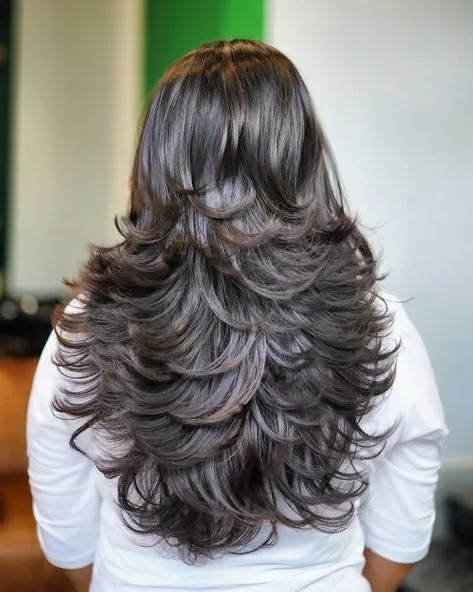
Invisible internal layers do their work where nobody can see it. Shorter layers are cut underneath, while the top layer stays longer and smooth. From the outside, your hair looks like one clean length. Inside, there is far less bulk pushing it outward.
This is a great choice if you love a sleek or blunt look but hate the weight. It also helps thick hair sit closer to the head at the roots, which makes ponytails, buns, and braids easier to secure. Ask for the internal layers to be kept away from the very ends, so you do not lose thickness where you want it.
Pros: Reduces bulk and weight while keeping the fullness thick hair is loved for; easier drying and styling; works as a practical everyday style for internal layers hidden under the top layer for weight removal.
Cons: Needs a stylist who understands thick hair and weight removal; may need regular trims to hold its shape; can look uneven if thinned too aggressively or in the wrong place.
Maintenance: Trim every 8–12 weeks (6–8 weeks for shorter cuts), use lightweight products on the mid-lengths and ends, and dry in sections for the smoothest result.
3. Razor-Softened Long Ends
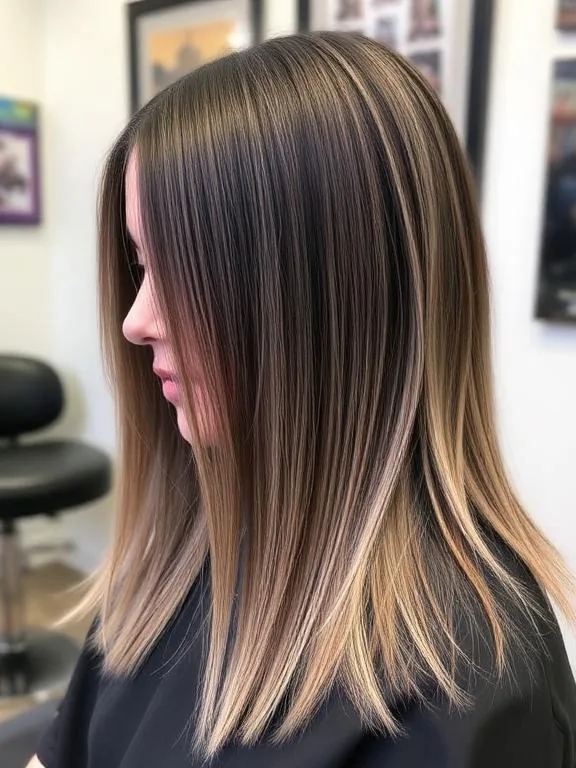
A razor cut does not mean a choppy punk cut. Used lightly on thick, straight or coarse hair, a razor softens the ends so they taper and move. The result is long hair that feels lighter at the bottom and does not form a heavy, solid shelf.
This works best on straight and slightly wavy hair that is coarse or very dense. It is less ideal for very curly hair, where a razor can disturb the curl pattern and encourage frizz. If your stylist suggests a razor, ask them to work on dry or lightly damp hair so they can see the natural fall.
Pros: Reduces bulk and weight while keeping the fullness thick hair is loved for; easier drying and styling; works as a practical everyday style for razor cut ends that soften thick hair.
Cons: Needs a stylist who understands thick hair and weight removal; may need regular trims to hold its shape; can look uneven if thinned too aggressively or in the wrong place.
Maintenance: Trim every 8–12 weeks (6–8 weeks for shorter cuts), use lightweight products on the mid-lengths and ends, and dry in sections for the smoothest result.
4. Textured Midi Cut
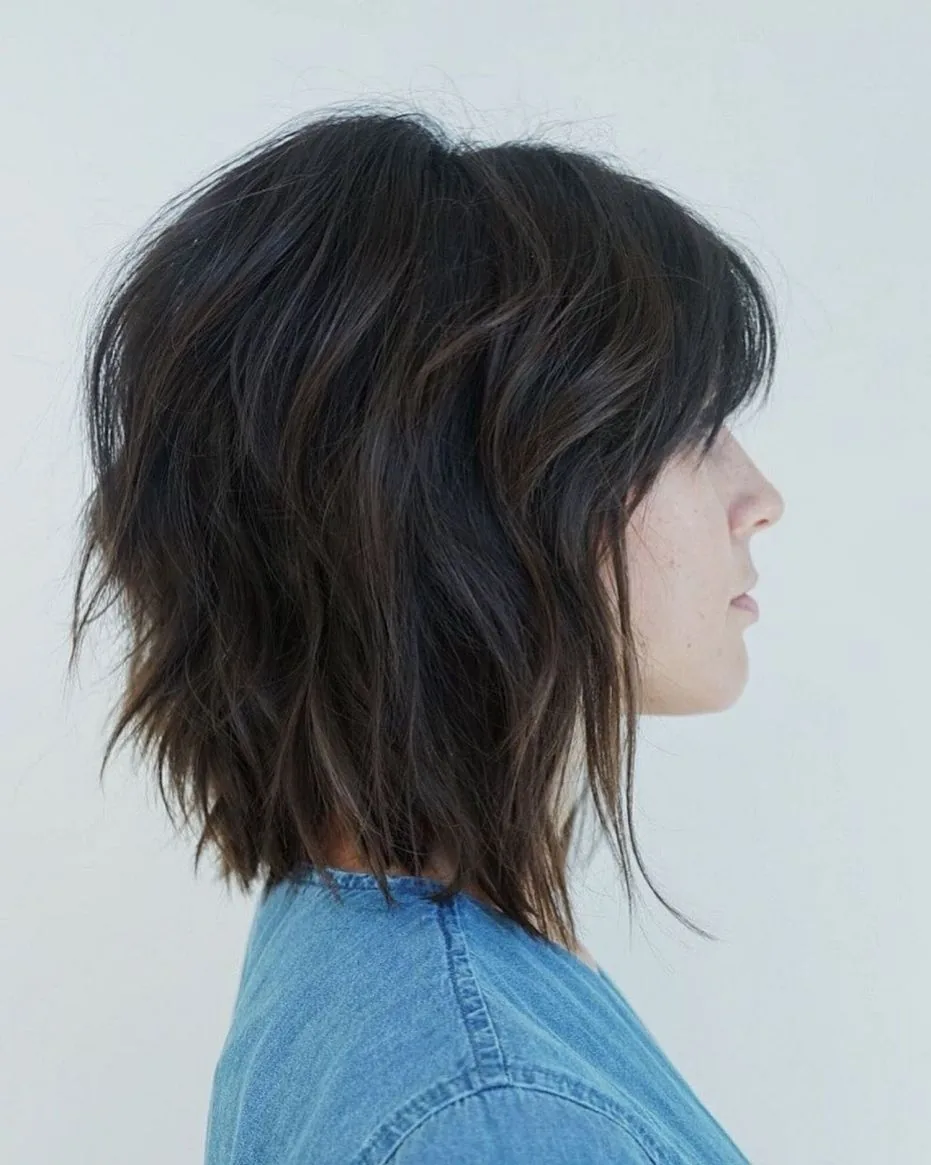
The midi cut — falling between the shoulders and the collarbone — is a sweet spot for thick hair. It is long enough to tie up, short enough to dry faster, and textured layers stop it from turning into a wide block at the ends.
Texture here means soft, broken-up ends and layers that let air through the hair. It suits busy routines because it looks finished with a quick blow-dry or even a rough air-dry. Add face-framing pieces if you want softness around the cheeks without a full fringe.
Pros: Reduces bulk and weight while keeping the fullness thick hair is loved for; easier drying and styling; works as a practical everyday style for textured midi haircut for thick hair.
Cons: Needs a stylist who understands thick hair and weight removal; may need regular trims to hold its shape; can look uneven if thinned too aggressively or in the wrong place.
Maintenance: Trim every 8–12 weeks (6–8 weeks for shorter cuts), use lightweight products on the mid-lengths and ends, and dry in sections for the smoothest result.
5. Blunt Cut With Thinned Ends

A blunt cut gives thick hair a strong, polished outline, but on its own it can feel very heavy. Thinning just the last inch or two of the ends keeps the blunt shape while removing the weight that makes it swing like a sheet.
This is ideal for straight thick hair and for anyone who loves a sharp, clean finish. Keep the thinning subtle and only at the ends, so the cut still reads as blunt. Pair it with a smoothing serum on the ends for a salon finish at home.
Pros: Reduces bulk and weight while keeping the fullness thick hair is loved for; easier drying and styling; works as a practical everyday style for blunt cut with thinned ends for thick hair.
Cons: Needs a stylist who understands thick hair and weight removal; may need regular trims to hold its shape; can look uneven if thinned too aggressively or in the wrong place.
Maintenance: Trim every 8–12 weeks (6–8 weeks for shorter cuts), use lightweight products on the mid-lengths and ends, and dry in sections for the smoothest result.
6. Airy Long Shag

An airy long shag breaks thick hair into light, face-framing layers with lots of movement. Unlike a heavy one-length cut, it lets the hair separate naturally, so volume sits where you want it — around the face and crown — instead of spreading sideways.
This suits wavy and curly thick hair especially well, because the layers work with natural texture rather than fighting it. It also grows out gracefully, which makes it a good choice if you stretch the time between salon visits.
Pros: Reduces bulk and weight while keeping the fullness thick hair is loved for; easier drying and styling; works as a practical everyday style for airy long shag haircut for thick hair.
Cons: Needs a stylist who understands thick hair and weight removal; may need regular trims to hold its shape; can look uneven if thinned too aggressively or in the wrong place.
Maintenance: Trim every 8–12 weeks (6–8 weeks for shorter cuts), use lightweight products on the mid-lengths and ends, and dry in sections for the smoothest result.
7. Layered Lob With Flat Roots

A lob can go wrong on thick hair when the roots puff up and the ends flare out. This version keeps the roots flatter with internal layering near the crown, while the lengths get movement from longer layers. The result is a lob that lies neatly instead of expanding.
It is a strong everyday cut: short enough to wash and dry quickly, long enough to tie back on busy days. A side part helps it fall naturally, and a round brush on the ends stops the dreaded outward flip.
Pros: Reduces bulk and weight while keeping the fullness thick hair is loved for; easier drying and styling; works as a practical everyday style for layered lob with flat roots for thick hair.
Cons: Needs a stylist who understands thick hair and weight removal; may need regular trims to hold its shape; can look uneven if thinned too aggressively or in the wrong place.
Maintenance: Trim every 8–12 weeks (6–8 weeks for shorter cuts), use lightweight products on the mid-lengths and ends, and dry in sections for the smoothest result.
8. Thinned A-Line Lob

An A-line lob is shorter at the back and longer at the front, which gives thick hair a flattering shape without bulk at the nape. Thinning the underlayer stops the back from stacking up and pushing the front pieces outward.
This cut works well for straight and wavy hair and looks polished with very little styling. Keep the front pieces long enough to tuck behind the ears, and ask for soft, not sharp, ends so the shape stays wearable as it grows.
Pros: Reduces bulk and weight while keeping the fullness thick hair is loved for; easier drying and styling; works as a practical everyday style for a-line lob with thinned underlayer for thick hair.
Cons: Needs a stylist who understands thick hair and weight removal; may need regular trims to hold its shape; can look uneven if thinned too aggressively or in the wrong place.
Maintenance: Trim every 8–12 weeks (6–8 weeks for shorter cuts), use lightweight products on the mid-lengths and ends, and dry in sections for the smoothest result.
9. Sleek Straight Lob
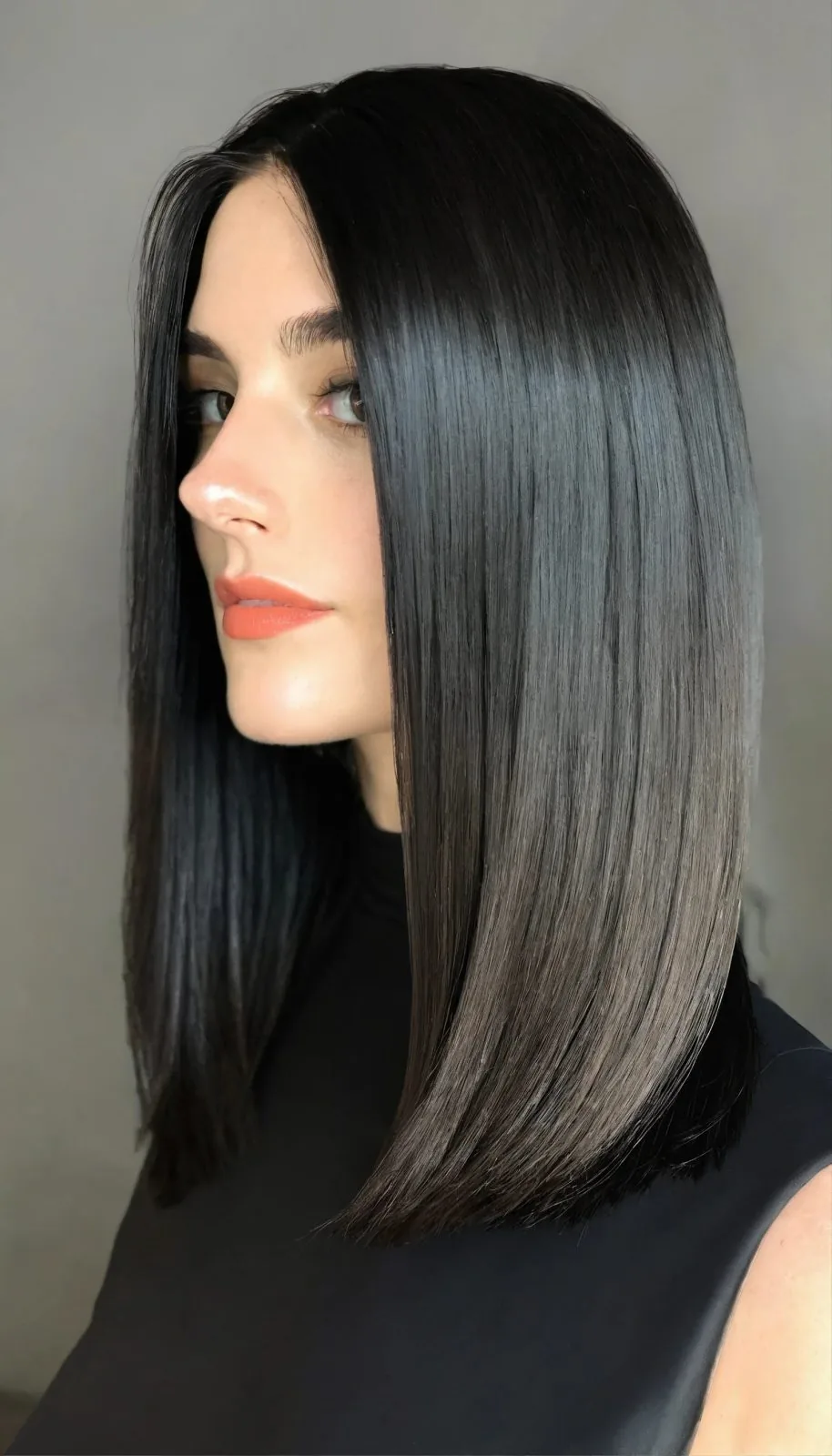
A sleek straight lob proves thick hair can look smooth and controlled without being flat. Internal weight removal lets the hair fall straight, while a light smoothing product and a flat brush finish keep flyaways down.
This style suits work, formal events, and anyone who prefers a tidy look. It needs a little heat styling to stay sleek, but because the bulk is already removed, the blow-dry is faster and the result lasts longer between washes.
Pros: Reduces bulk and weight while keeping the fullness thick hair is loved for; easier drying and styling; works as a practical everyday style for sleek straight lob for thick hair.
Cons: Needs a stylist who understands thick hair and weight removal; may need regular trims to hold its shape; can look uneven if thinned too aggressively or in the wrong place.
Maintenance: Trim every 8–12 weeks (6–8 weeks for shorter cuts), use lightweight products on the mid-lengths and ends, and dry in sections for the smoothest result.
10. Rounded Bob With Hidden Thinning
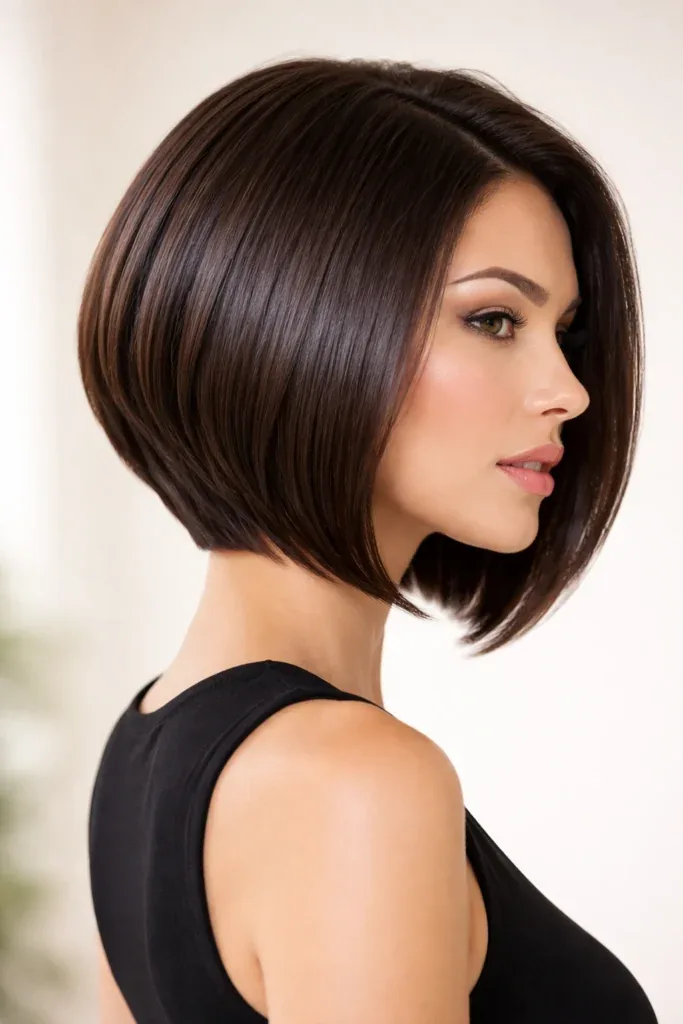
A rounded bob gives thick hair a soft, curved shape that hugs the jaw instead of widening below it. Hidden thinning inside the bob removes the bulk that would otherwise push the curve outward into a mushroom shape.
This is a chic, low-fuss short cut for straight and wavy thick hair. It needs a trim every six to eight weeks to hold its curve, but daily styling can be as simple as a quick blow-dry with a round brush or a smoothing cream on damp hair.
Pros: Reduces bulk and weight while keeping the fullness thick hair is loved for; easier drying and styling; works as a practical everyday style for rounded bob with hidden thinning for thick hair.
Cons: Needs a stylist who understands thick hair and weight removal; may need regular trims to hold its shape; can look uneven if thinned too aggressively or in the wrong place.
Maintenance: Trim every 8–12 weeks (6–8 weeks for shorter cuts), use lightweight products on the mid-lengths and ends, and dry in sections for the smoothest result.
11. Short Textured Crop
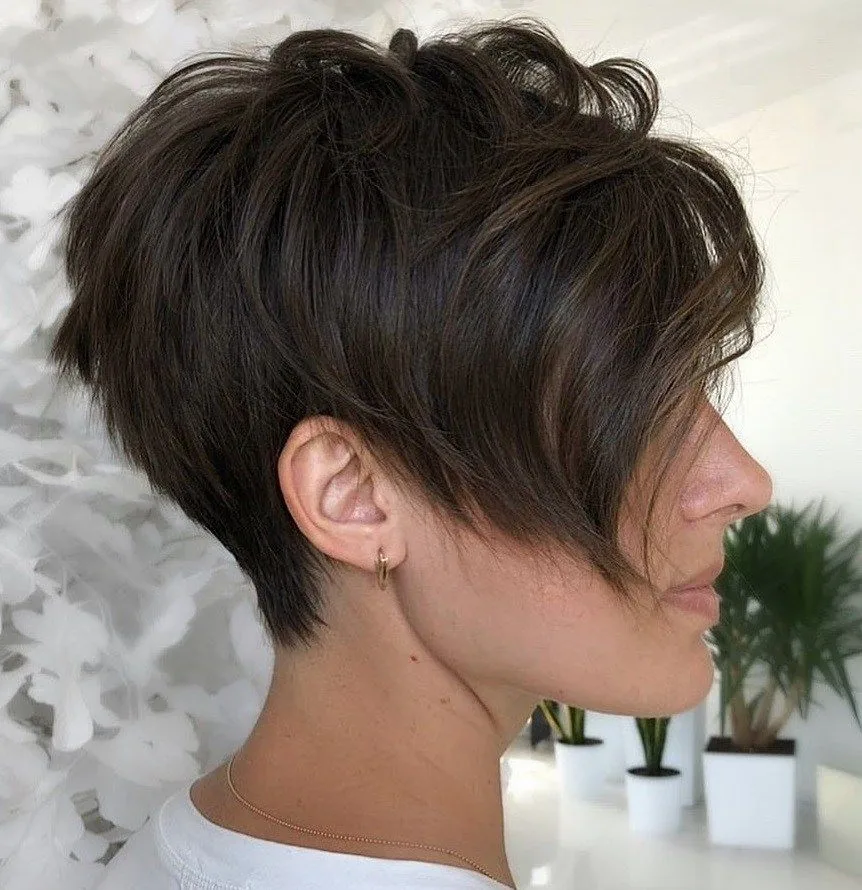
A short textured crop takes thick hair from heavy to light in one cut. Short, choppy layers on top give movement, while a tapered nape and sides remove the weight that makes short thick hair puff up.
It is bold, wash-and-go friendly, and surprisingly versatile: wear it tousled, sleek, or with a little texture paste for definition. It does need regular trims to keep the taper neat, so factor in a salon visit every four to six weeks.
Pros: Reduces bulk and weight while keeping the fullness thick hair is loved for; easier drying and styling; works as a practical everyday style for short textured crop for thick hair.
Cons: Needs a stylist who understands thick hair and weight removal; may need regular trims to hold its shape; can look uneven if thinned too aggressively or in the wrong place.
Maintenance: Trim every 8–12 weeks (6–8 weeks for shorter cuts), use lightweight products on the mid-lengths and ends, and dry in sections for the smoothest result.
12. Undercut Nape for Instant Lightness
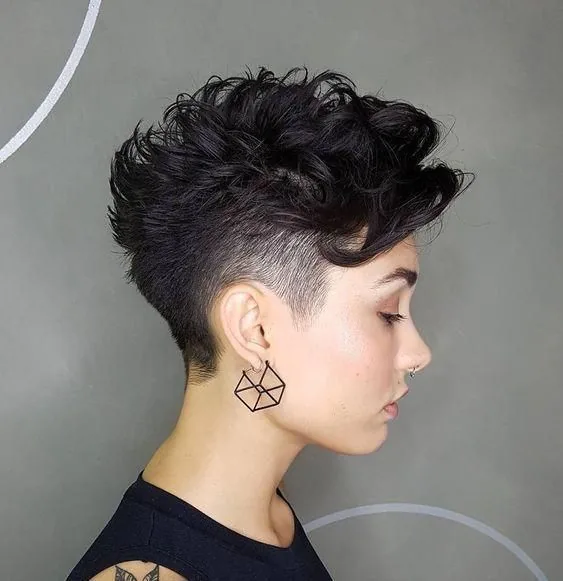
An undercut nape is the secret weapon for very thick hair. A small section at the nape is cut much shorter and hidden under the longer top layers. Nobody sees it when your hair is down, but you feel the difference immediately — less heat, less weight, and faster drying.
This works for all textures and is ideal if you get hot and sweaty at the neck, wear your hair up often, or want lightness without changing your visible length. You can grow it out gradually, or keep it trimmed for a permanent lightness boost.
Pros: Reduces bulk and weight while keeping the fullness thick hair is loved for; easier drying and styling; works as a practical everyday style for undercut nape haircut for thick hair.
Cons: Needs a stylist who understands thick hair and weight removal; may need regular trims to hold its shape; can look uneven if thinned too aggressively or in the wrong place.
Maintenance: Trim every 8–12 weeks (6–8 weeks for shorter cuts), use lightweight products on the mid-lengths and ends, and dry in sections for the smoothest result.
13. Tapered Nape Bob
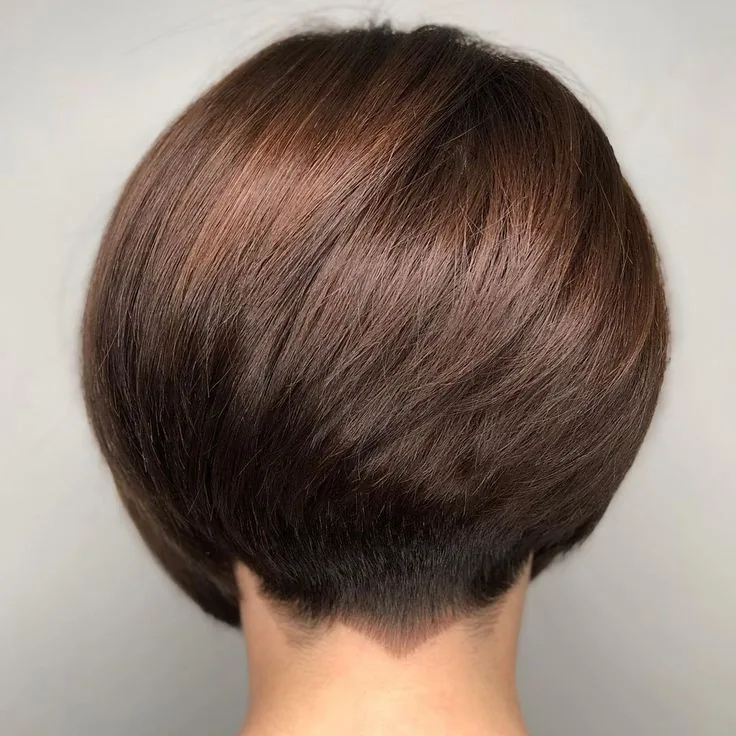
A tapered nape bob is graduated at the back so it hugs the neck instead of stacking outward. The taper removes bulk exactly where thick hair tends to pile up, while the front stays long enough to frame the face.
It suits straight and wavy hair and looks smart with minimal styling. A little smoothing cream and a quick pass with a brush is usually enough. Keep the nape trimmed regularly, because this shape loses its neatness fastest at the back.
Pros: Reduces bulk and weight while keeping the fullness thick hair is loved for; easier drying and styling; works as a practical everyday style for tapered nape bob for thick hair.
Cons: Needs a stylist who understands thick hair and weight removal; may need regular trims to hold its shape; can look uneven if thinned too aggressively or in the wrong place.
Maintenance: Trim every 8–12 weeks (6–8 weeks for shorter cuts), use lightweight products on the mid-lengths and ends, and dry in sections for the smoothest result.
14. Face-Framing Debulking
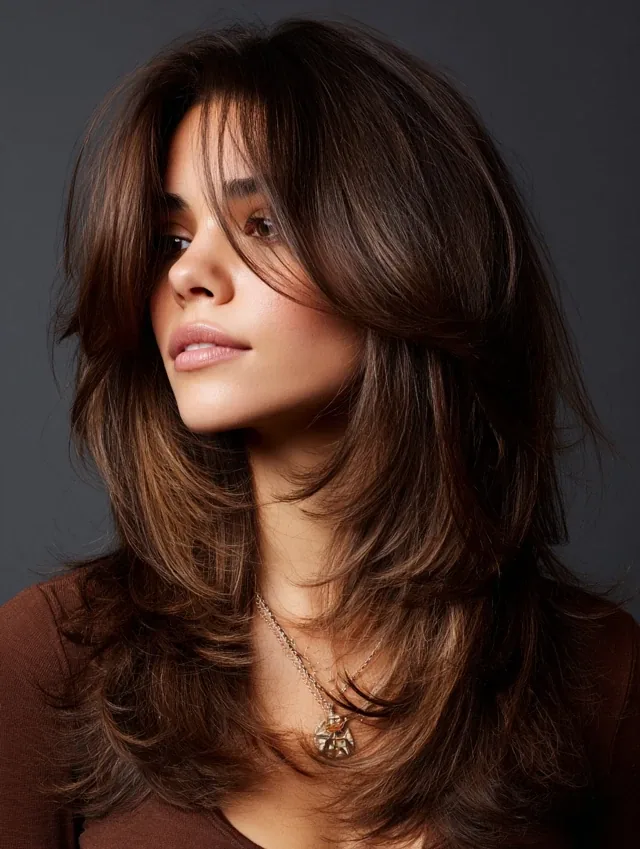
Face-framing debulking targets the heavy sections beside the cheeks and jaw. Shorter, soft layers there open up the face, lighten the front, and stop thick hair from closing in around your features.
This is not a full haircut on its own — it is a technique your stylist adds to a long, midi, or lob cut. It suits almost everyone with thick hair, especially if you wear glasses, like your hair off your face, or find the front sections always feel heaviest.
Pros: Reduces bulk and weight while keeping the fullness thick hair is loved for; easier drying and styling; works as a practical everyday style for face framing layers that remove bulk around the face for thick hair.
Cons: Needs a stylist who understands thick hair and weight removal; may need regular trims to hold its shape; can look uneven if thinned too aggressively or in the wrong place.
Maintenance: Trim every 8–12 weeks (6–8 weeks for shorter cuts), use lightweight products on the mid-lengths and ends, and dry in sections for the smoothest result.
15. Curtain Layers That Remove Cheek Bulk

Curtain layers part in the middle and sweep away from the face, which naturally lifts bulk off the cheeks. For thick hair, the key is to keep them soft and layered underneath, so they do not add a new puffy section on each side.
They pair beautifully with long layers, a midi cut, or a lob, and they grow out into face-framing layers without an awkward stage. Style them with a round brush swept outward, or let them air-dry for a softer, lived-in look.
Pros: Reduces bulk and weight while keeping the fullness thick hair is loved for; easier drying and styling; works as a practical everyday style for curtain layers for thick hair.
Cons: Needs a stylist who understands thick hair and weight removal; may need regular trims to hold its shape; can look uneven if thinned too aggressively or in the wrong place.
Maintenance: Trim every 8–12 weeks (6–8 weeks for shorter cuts), use lightweight products on the mid-lengths and ends, and dry in sections for the smoothest result.
16. Side-Part Cut That Balances Volume
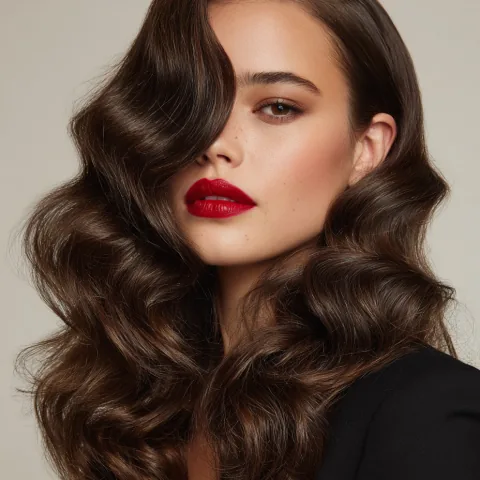
A deep side part is a simple styling trick with a big effect on thick hair. It shifts volume to one side, creates a natural lift at the roots on the heavier side, and stops the hair from sitting in a symmetrical, heavy block.
Ask your stylist to cut with your usual part in mind, because layers fall differently on each side. This approach suits straight, wavy, and curly hair, and it is an easy refresh if you are not ready for a big cut but want a different shape.
Pros: Reduces bulk and weight while keeping the fullness thick hair is loved for; easier drying and styling; works as a practical everyday style for side part haircut that balances thick hair volume.
Cons: Needs a stylist who understands thick hair and weight removal; may need regular trims to hold its shape; can look uneven if thinned too aggressively or in the wrong place.
Maintenance: Trim every 8–12 weeks (6–8 weeks for shorter cuts), use lightweight products on the mid-lengths and ends, and dry in sections for the smoothest result.
17. Deep Side Part Blowout
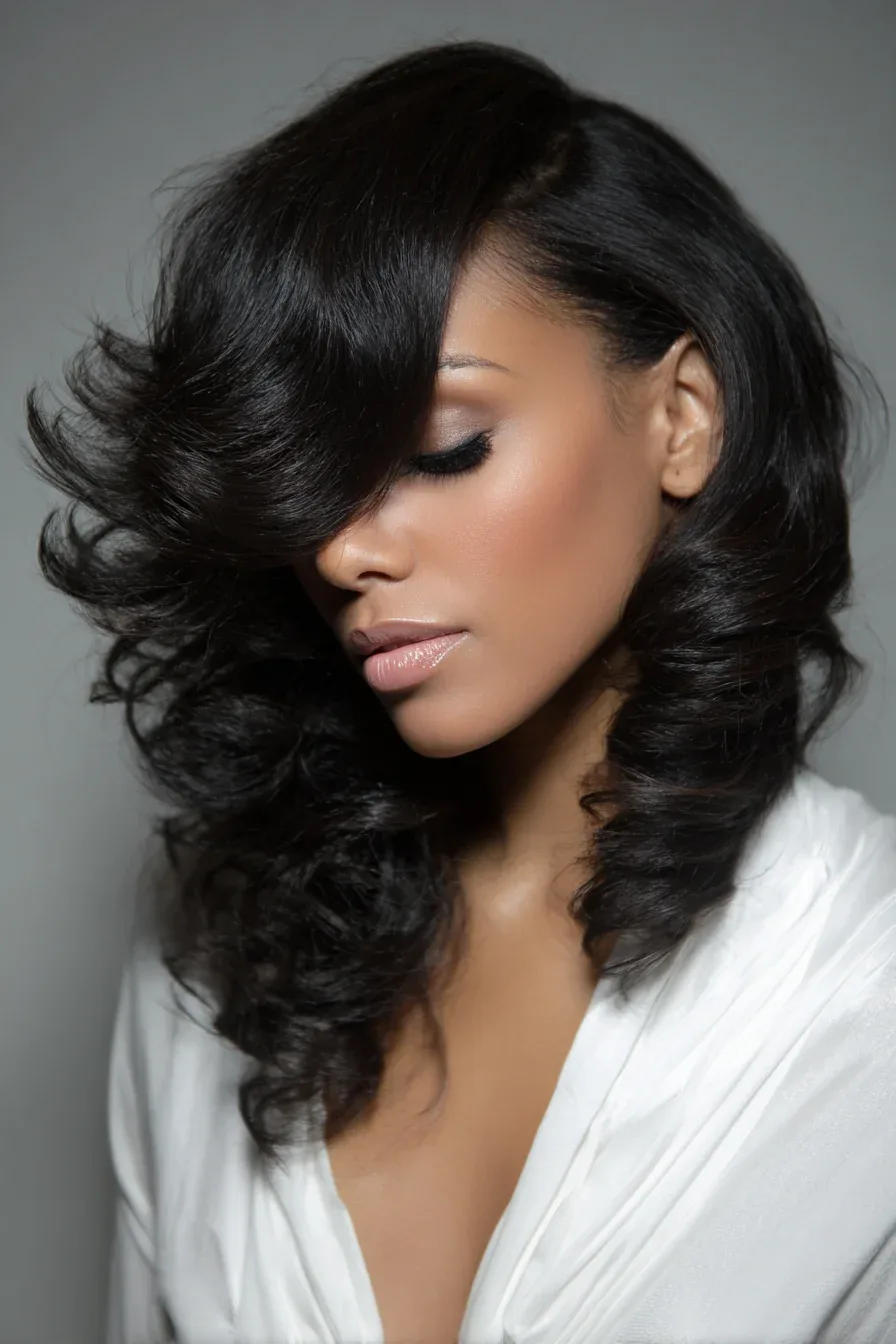
A deep side part blowout turns thick hair into a smooth, glamorous style with controlled volume. The trick is to dry the roots on the heavier side with lift, then smooth the lengths downward so the volume stays at the crown, not in the ends.
Use a round brush and a concentrator nozzle, working in sections from underneath. A light smoothing serum before drying and a cool shot at the end keeps the style sleek for longer, even in humidity.
Pros: Reduces bulk and weight while keeping the fullness thick hair is loved for; easier drying and styling; works as a practical everyday style for deep side part blowout for thick hair.
Cons: Needs a stylist who understands thick hair and weight removal; may need regular trims to hold its shape; can look uneven if thinned too aggressively or in the wrong place.
Maintenance: Trim every 8–12 weeks (6–8 weeks for shorter cuts), use lightweight products on the mid-lengths and ends, and dry in sections for the smoothest result.
18. Smooth Blow-Dry Cut
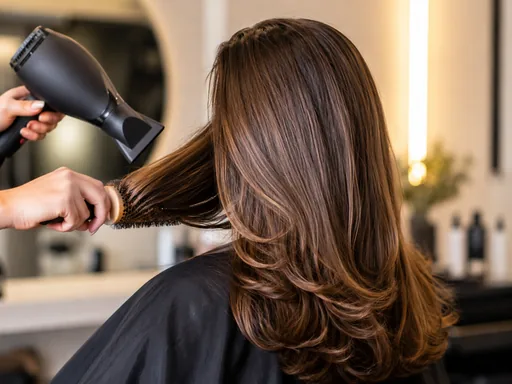
A smooth blow-dry cut is designed to make home blow-drying easier. Layers are placed so a brush glides through without catching on bulk, and the ends are thinned just enough to sit smoothly instead of flipping out.
This is the cut to ask for if you blow-dry most days. It saves time, reduces heat damage because you need fewer passes, and keeps the style looking salon-finished. A heat protectant and a paddle brush are all you need for the everyday version.
Pros: Reduces bulk and weight while keeping the fullness thick hair is loved for; easier drying and styling; works as a practical everyday style for smooth blow dry haircut for thick hair.
Cons: Needs a stylist who understands thick hair and weight removal; may need regular trims to hold its shape; can look uneven if thinned too aggressively or in the wrong place.
Maintenance: Trim every 8–12 weeks (6–8 weeks for shorter cuts), use lightweight products on the mid-lengths and ends, and dry in sections for the smoothest result.
19. Braided Crown That Controls Bulk
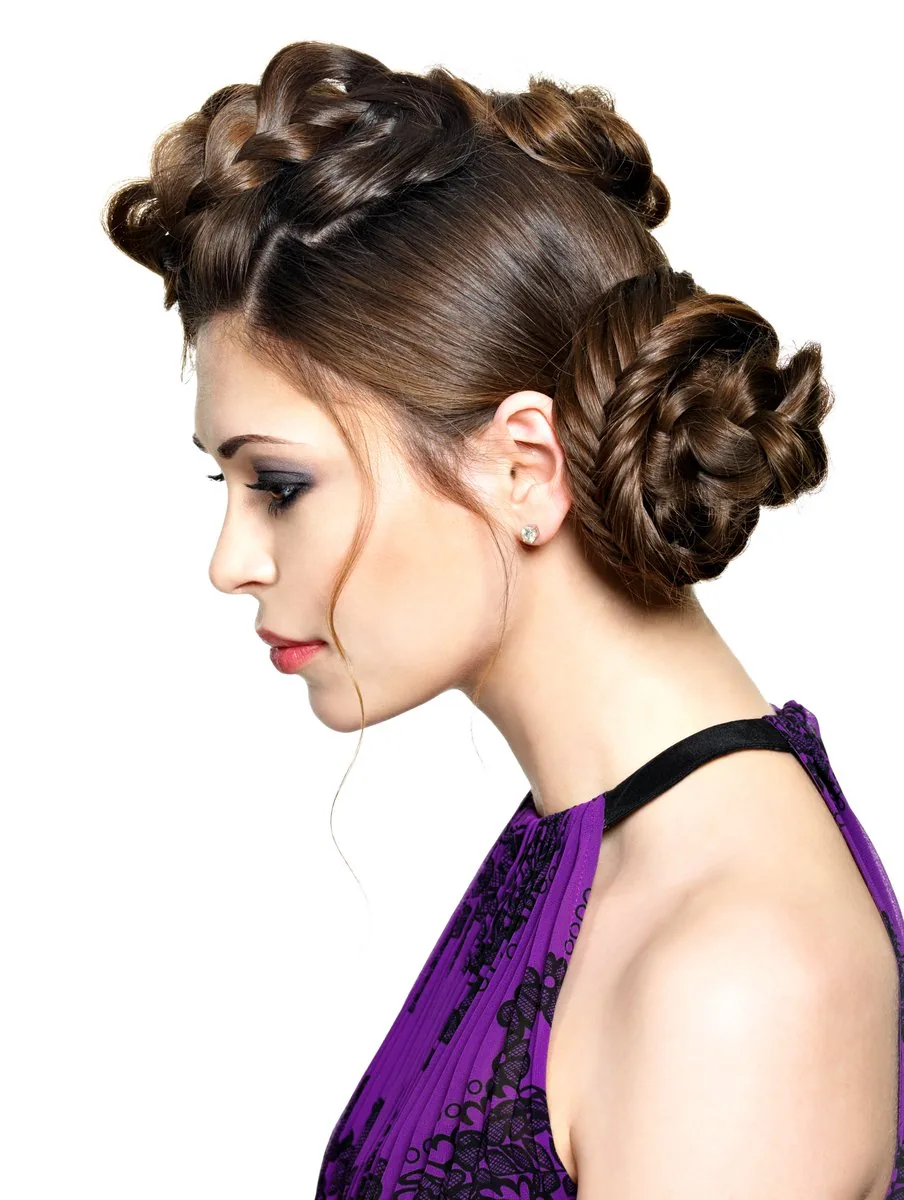
A braided crown wraps thick hair around the head, which distributes its weight evenly instead of letting it hang heavy from one point. It keeps hair off the face and neck, lasts all day, and looks far more complicated than it is.
Start with two loose braids, cross them over the top, and pin securely — thick hair holds pins well, so you need fewer than you think. Loosen the braids slightly for softness, and leave a few face-framing pieces out for a relaxed finish.
Pros: Reduces bulk and weight while keeping the fullness thick hair is loved for; easier drying and styling; works as a practical everyday style for braided crown hairstyle for thick hair.
Cons: Needs a stylist who understands thick hair and weight removal; may need regular trims to hold its shape; can look uneven if thinned too aggressively or in the wrong place.
Maintenance: Trim every 8–12 weeks (6–8 weeks for shorter cuts), use lightweight products on the mid-lengths and ends, and dry in sections for the smoothest result.
20. High Ponytail That Actually Holds
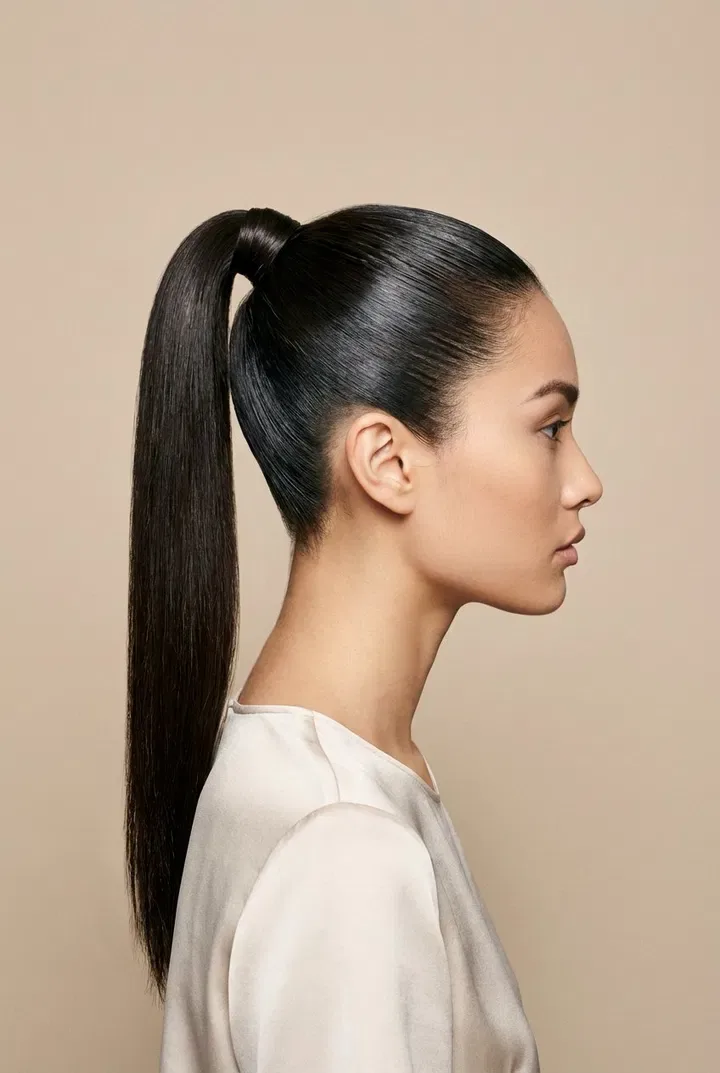
A high ponytail on thick hair often slips, sags, or gives you a headache. The fix is placement and support: gather the hair high on the crown, use a strong elastic or two, and anchor with pins at the base so the weight is shared.
Wrap a small section around the elastic to hide it and add polish. For extra hold, backcomb lightly at the crown before gathering, or use a ponytail hook elastic that grips better than a standard band on dense hair.
Pros: Reduces bulk and weight while keeping the fullness thick hair is loved for; easier drying and styling; works as a practical everyday style for high ponytail for thick hair.
Cons: Needs a stylist who understands thick hair and weight removal; may need regular trims to hold its shape; can look uneven if thinned too aggressively or in the wrong place.
Maintenance: Trim every 8–12 weeks (6–8 weeks for shorter cuts), use lightweight products on the mid-lengths and ends, and dry in sections for the smoothest result.
21. Low Sleek Bun for Heavy Hair
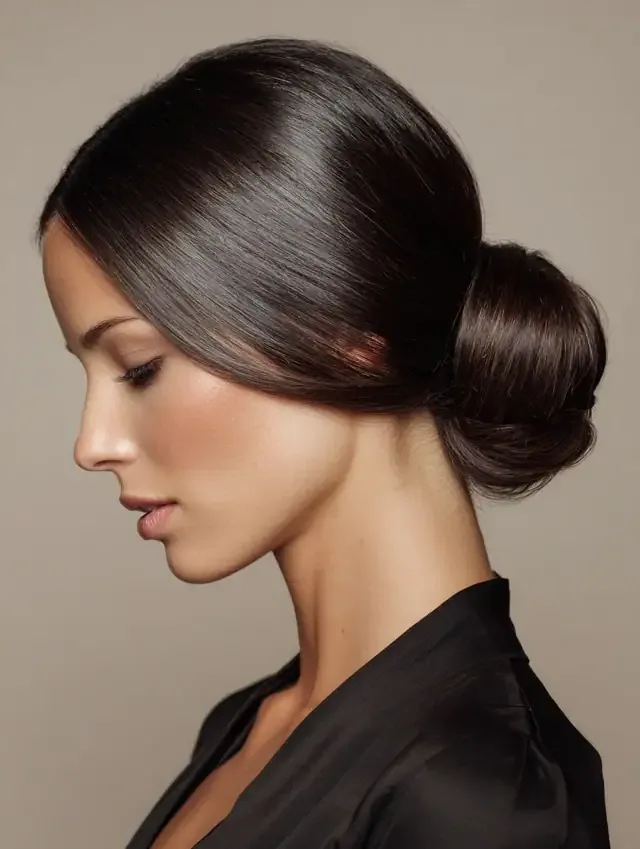
A low sleek bun is the most reliable updo for heavy hair because the weight sits low and close to the head. It looks elegant, stays put, and works for work, weddings, and everything in between.
Smooth the hair back with a brush and a light gel or cream, twist into a bun at the nape, and pin in sections rather than trying to hold the whole bun with one pin. Thick hair fills a bun beautifully, so you rarely need padding or a donut.
Pros: Reduces bulk and weight while keeping the fullness thick hair is loved for; easier drying and styling; works as a practical everyday style for low sleek bun for thick hair.
Cons: Needs a stylist who understands thick hair and weight removal; may need regular trims to hold its shape; can look uneven if thinned too aggressively or in the wrong place.
Maintenance: Trim every 8–12 weeks (6–8 weeks for shorter cuts), use lightweight products on the mid-lengths and ends, and dry in sections for the smoothest result.
22. Claw-Clip Twist for Thick Hair
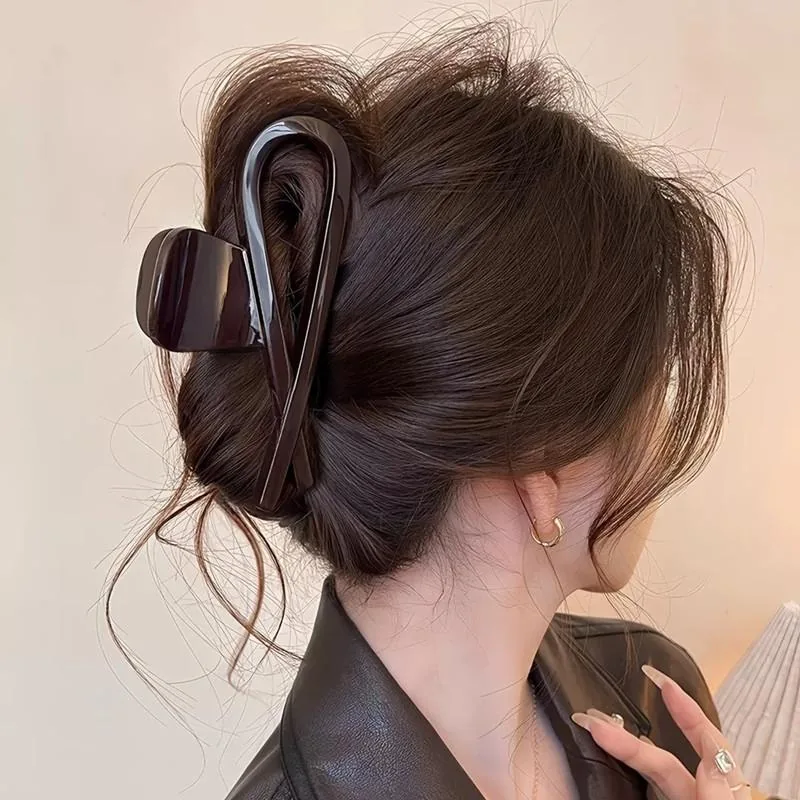
A claw-clip twist is the fastest way to get thick hair up and off your neck. Twist the hair upward, fold it over, and clip it in place. A large, strong claw clip is essential — small clips will snap or slip on dense hair.
This style works best on second-day hair with a bit of grip. Leave the ends out for a casual look, or tuck them in for something tidier. It is ideal for hot days, workouts, and working from home without a full restyle.
Pros: Reduces bulk and weight while keeping the fullness thick hair is loved for; easier drying and styling; works as a practical everyday style for claw clip twist hairstyle for thick hair.
Cons: Needs a stylist who understands thick hair and weight removal; may need regular trims to hold its shape; can look uneven if thinned too aggressively or in the wrong place.
Maintenance: Trim every 8–12 weeks (6–8 weeks for shorter cuts), use lightweight products on the mid-lengths and ends, and dry in sections for the smoothest result.
23. Half-Up Volume-Control Style
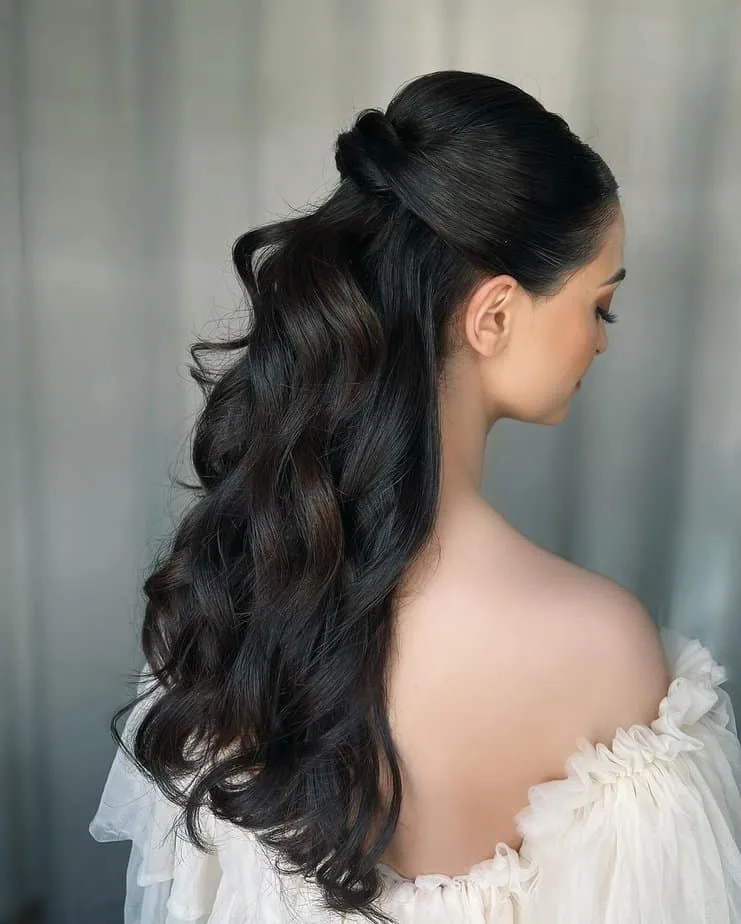
A half-up style lets you enjoy thick hair down while taking weight off the face. Gathering just the top section — from the temples upward — lifts the crown, shows off the length, and stops the front from feeling heavy.
Secure the top section with a small clip or elastic, then loosen it slightly for softness. This works on straight, wavy, and curly hair, and it is a great second-day style because the top section is the part that usually needs refreshing first.
Pros: Reduces bulk and weight while keeping the fullness thick hair is loved for; easier drying and styling; works as a practical everyday style for half up hairstyle for thick hair.
Cons: Needs a stylist who understands thick hair and weight removal; may need regular trims to hold its shape; can look uneven if thinned too aggressively or in the wrong place.
Maintenance: Trim every 8–12 weeks (6–8 weeks for shorter cuts), use lightweight products on the mid-lengths and ends, and dry in sections for the smoothest result.
24. Loose Fishtail Braid for Heavy Hair

A loose fishtail braid handles heavy hair better than a tight braid because it spreads the weight across many small sections. It looks full and textured, holds well, and softens as the day goes on rather than falling apart.
Braid loosely from the nape, pancake the braid gently by pulling the edges outward, and secure with a silk scrunchie to avoid breakage. It is a beautiful everyday style and a practical one for keeping thick hair tidy in wind or humidity.
Pros: Reduces bulk and weight while keeping the fullness thick hair is loved for; easier drying and styling; works as a practical everyday style for loose fishtail braid for thick hair.
Cons: Needs a stylist who understands thick hair and weight removal; may need regular trims to hold its shape; can look uneven if thinned too aggressively or in the wrong place.
Maintenance: Trim every 8–12 weeks (6–8 weeks for shorter cuts), use lightweight products on the mid-lengths and ends, and dry in sections for the smoothest result.
25. Heatless Overnight Waves Without Puff

Heatless waves can go puffy on thick hair if the hair is braided while too wet or in sections that are too large. The fix is to start with hair that is about eighty percent dry, divide it into four to six braids or twists, and leave them overnight.
In the morning, undo the braids, shake gently, and smooth the ends with a drop of oil. You get soft waves with movement, without heat damage and without the triangle puff that comes from one big overnight braid.
Pros: Reduces bulk and weight while keeping the fullness thick hair is loved for; easier drying and styling; works as a practical everyday style for heatless overnight waves for thick hair.
Cons: Needs a stylist who understands thick hair and weight removal; may need regular trims to hold its shape; can look uneven if thinned too aggressively or in the wrong place.
Maintenance: Trim every 8–12 weeks (6–8 weeks for shorter cuts), use lightweight products on the mid-lengths and ends, and dry in sections for the smoothest result.
26. Diffuser Cut for Thick Curly Hair
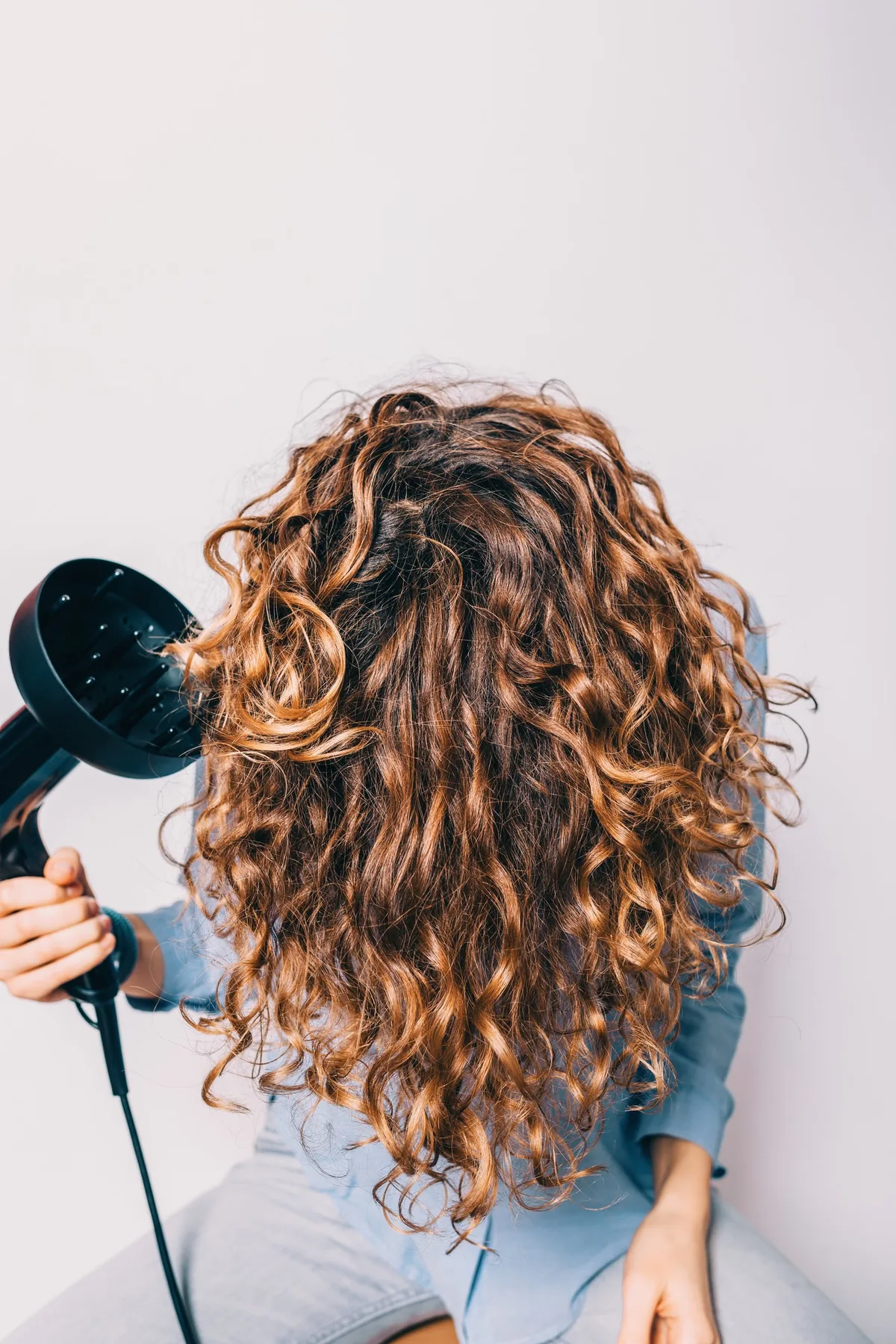
A diffuser-friendly cut for thick curly hair is layered to let curls form in their natural pattern, with weight removed from the inside so curls spring up instead of being pulled straight by their own weight. Cutting curls dry, or in their natural state, helps the stylist see the true shape.
Diffuse on low heat and low speed, cupping sections upward and holding still rather than moving the dryer around. Once dry, scrunch out any gel cast for soft, defined curls that are not weighed down.
Pros: Reduces bulk and weight while keeping the fullness thick hair is loved for; easier drying and styling; works as a practical everyday style for diffuser friendly haircut for thick curly hair.
Cons: Needs a stylist who understands thick hair and weight removal; may need regular trims to hold its shape; can look uneven if thinned too aggressively or in the wrong place.
Maintenance: Trim every 8–12 weeks (6–8 weeks for shorter cuts), use lightweight products on the mid-lengths and ends, and dry in sections for the smoothest result.
27. Wash-and-Go Layers for Thick Curls
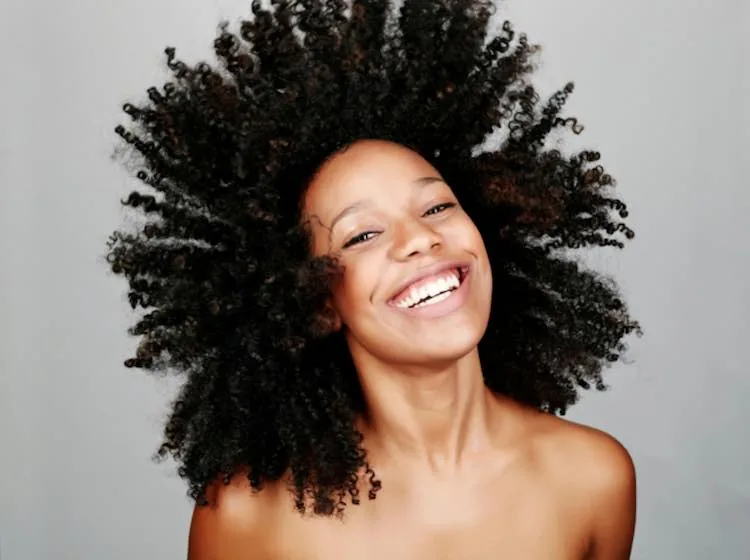
Wash-and-go layers make thick curly hair easier on non-wash days too. Layers remove bulk so curls do not stack into a heavy shape, and a good curl cream applied to soaking-wet hair helps curls clump and dry with definition.
The routine is simple: wash, apply leave-in and curl cream in sections, scrunch, and either air-dry or diffuse. Refresh on later days with a light water mist and a little cream, rather than rewetting the whole head.
Pros: Reduces bulk and weight while keeping the fullness thick hair is loved for; easier drying and styling; works as a practical everyday style for wash and go layers for thick curly hair.
Cons: Needs a stylist who understands thick hair and weight removal; may need regular trims to hold its shape; can look uneven if thinned too aggressively or in the wrong place.
Maintenance: Trim every 8–12 weeks (6–8 weeks for shorter cuts), use lightweight products on the mid-lengths and ends, and dry in sections for the smoothest result.
28. Silk Press-Friendly Cut for Thick Hair
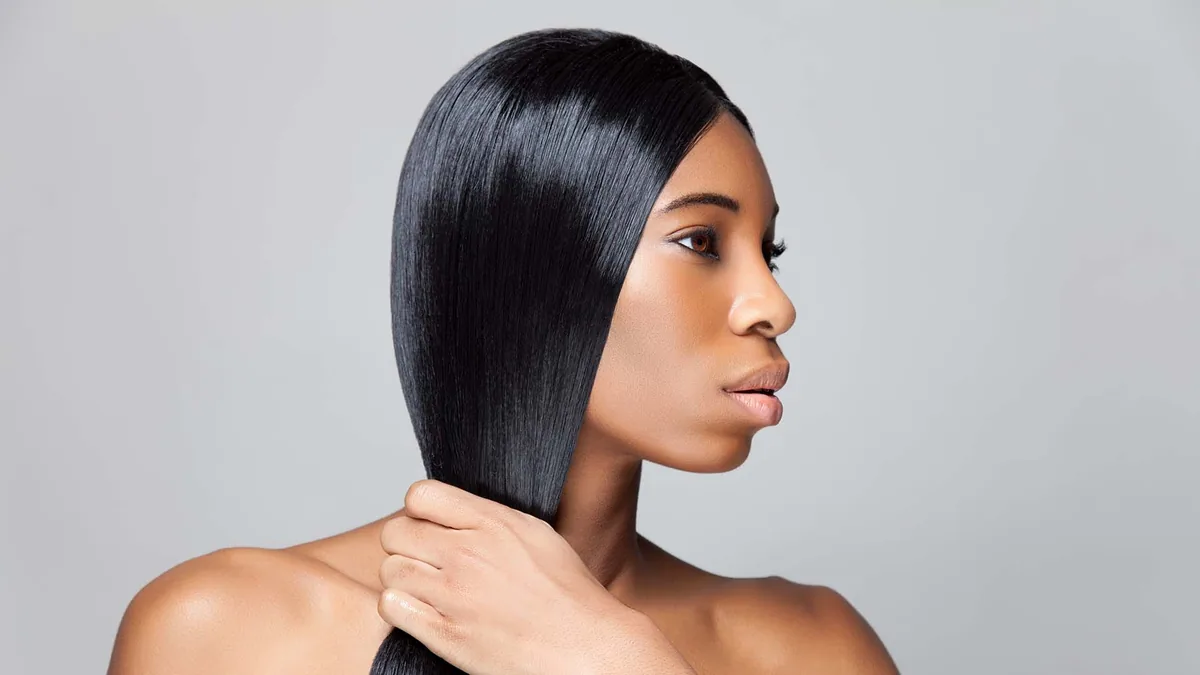
A silk press-friendly cut keeps thick hair healthy under heat. Ends are kept blunt enough to look polished when straightened, but internal layers remove the bulk that makes a silk press take forever and fall flat.
Protect the hair with a heat protectant, work in small sections, and avoid passing the flat iron over the same section repeatedly. Between presses, wrap hair at night in silk or satin to keep it smooth and reduce the need for daily heat.
Pros: Reduces bulk and weight while keeping the fullness thick hair is loved for; easier drying and styling; works as a practical everyday style for silk press friendly haircut for thick hair.
Cons: Needs a stylist who understands thick hair and weight removal; may need regular trims to hold its shape; can look uneven if thinned too aggressively or in the wrong place.
Maintenance: Trim every 8–12 weeks (6–8 weeks for shorter cuts), use lightweight products on the mid-lengths and ends, and dry in sections for the smoothest result.
29. Layered Cut for Thick Coily Hair
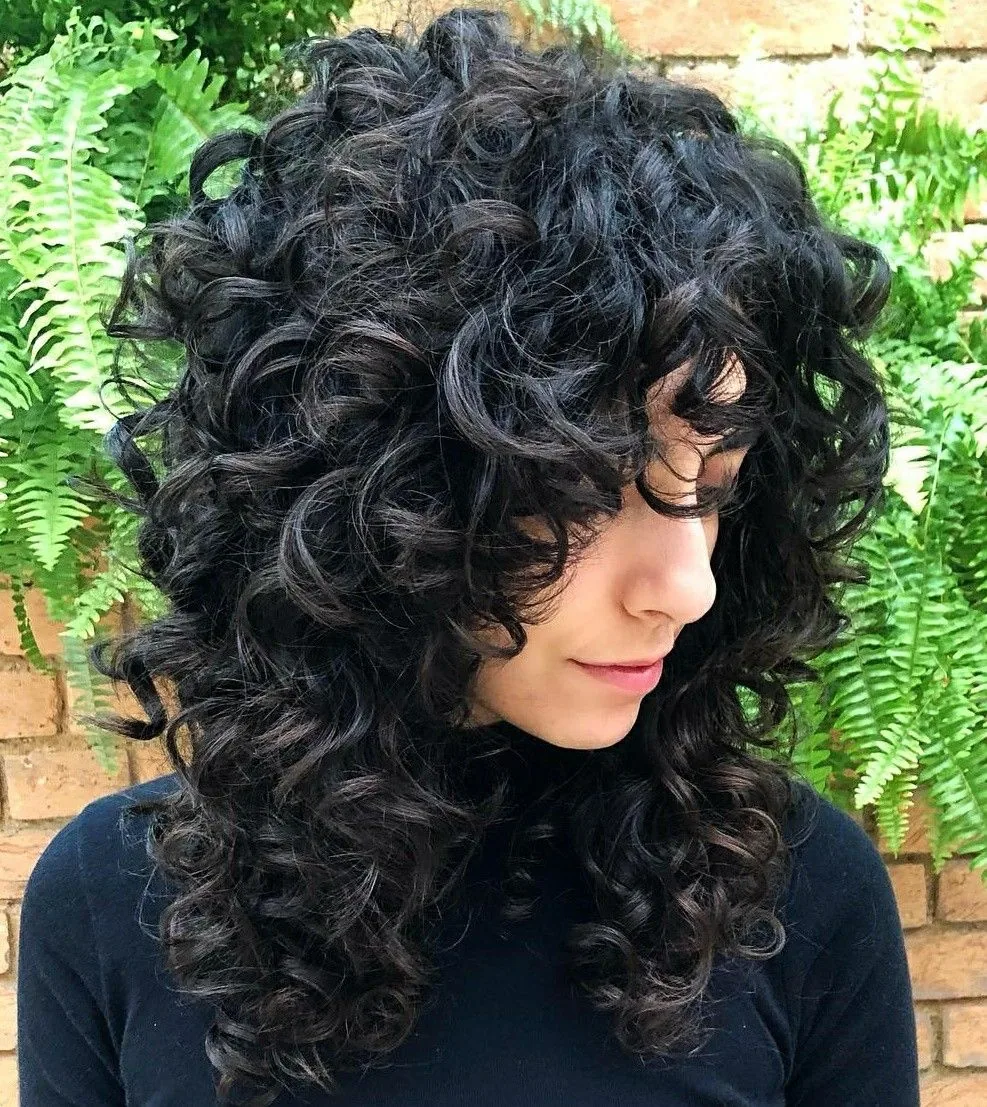
For thick coily hair, layers create shape and prevent the hair from growing into one heavy, rounded block. A stylist experienced with coily textures will cut with the natural shrinkage in mind, so the shape holds when the hair dries and coils up.
Shape is everything here: rounded, tapered, or asymmetrical outlines all work, as long as the weight is balanced. Moisture is the styling partner — a leave-in and a butter or cream on the ends keeps coils soft, defined, and less prone to breakage.
Pros: Reduces bulk and weight while keeping the fullness thick hair is loved for; easier drying and styling; works as a practical everyday style for layered haircut for thick coily hair.
Cons: Needs a stylist who understands thick hair and weight removal; may need regular trims to hold its shape; can look uneven if thinned too aggressively or in the wrong place.
Maintenance: Trim every 8–12 weeks (6–8 weeks for shorter cuts), use lightweight products on the mid-lengths and ends, and dry in sections for the smoothest result.
30. Protective Braid-Ready Base Cut
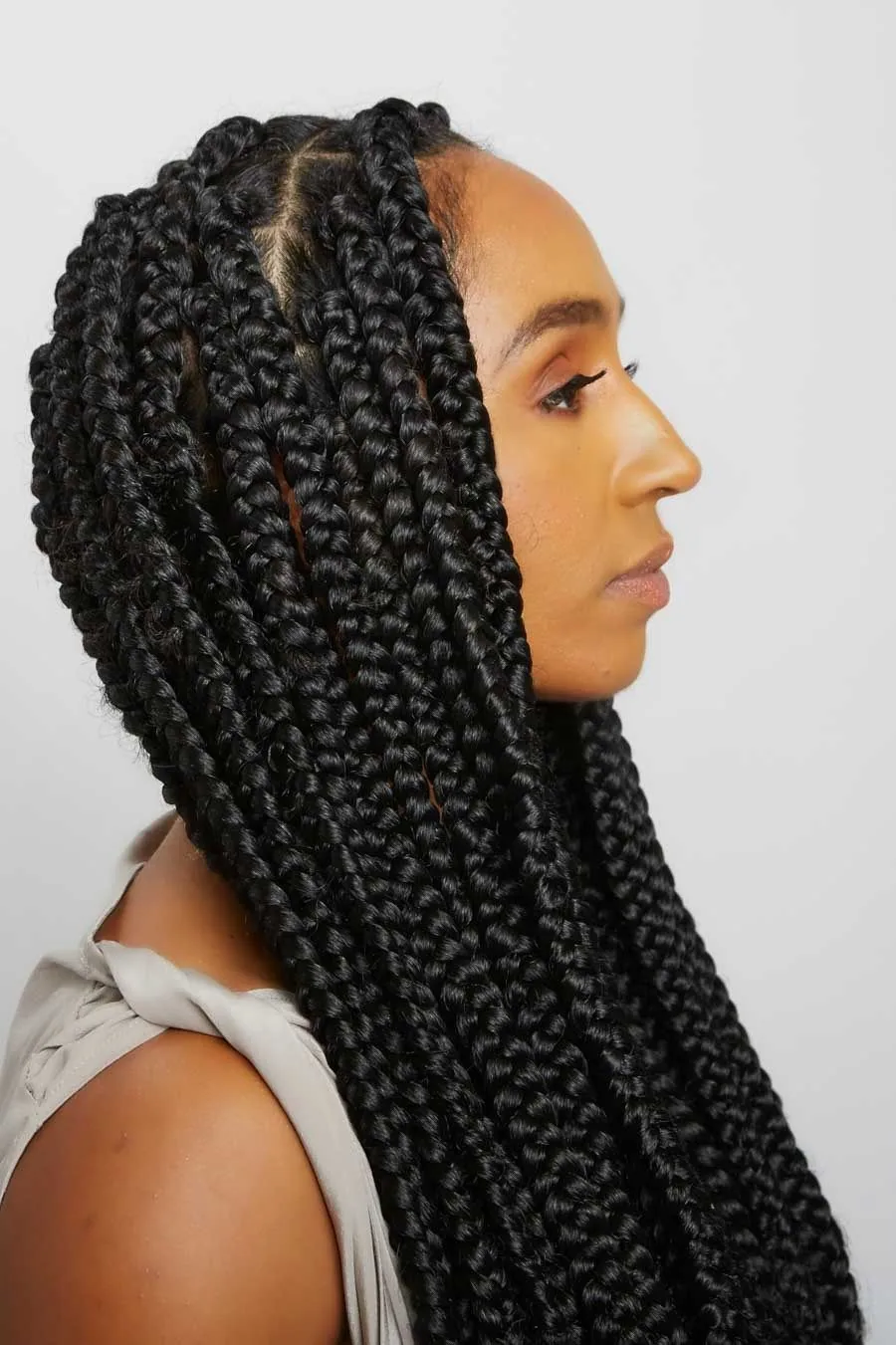
A protective braid-ready base cut tidies thick hair before braids, twists, or a weave go in. It evens the ends, removes split ends that would tangle under braids, and shapes the hair so the protective style sits neatly and lasts longer.
This is a maintenance cut, not a style change: it keeps length while making the base healthy. Tell your stylist you plan to braid it, so they keep enough length and avoid thinning the ends too much, which can make braids slip.
Pros: Reduces bulk and weight while keeping the fullness thick hair is loved for; easier drying and styling; works as a practical everyday style for protective braid ready base haircut for thick hair.
Cons: Needs a stylist who understands thick hair and weight removal; may need regular trims to hold its shape; can look uneven if thinned too aggressively or in the wrong place.
Maintenance: Trim every 8–12 weeks (6–8 weeks for shorter cuts), use lightweight products on the mid-lengths and ends, and dry in sections for the smoothest result.
31. Grow-Out Debulked Cut
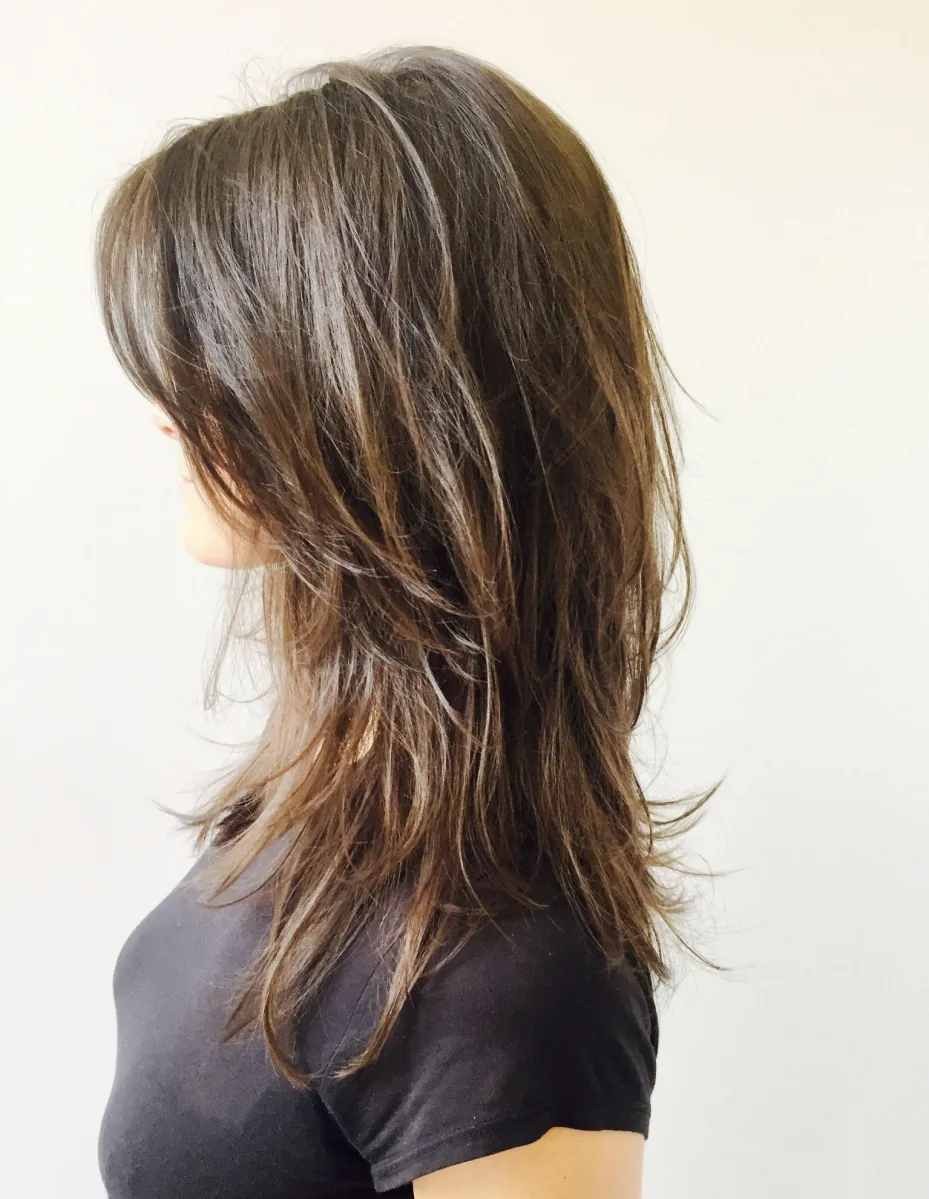
A grow-out debulked cut is planned for the months ahead. Internal layers and soft ends keep the shape wearable as it lengthens, so you do not hit a heavy, shapeless stage halfway to your goal length.
Book maintenance trims every ten to twelve weeks to refresh the internal layers without losing length. Between visits, protective styles and regular conditioning keep the ends healthy, which is what lets you actually keep the length you grow.
Pros: Reduces bulk and weight while keeping the fullness thick hair is loved for; easier drying and styling; works as a practical everyday style for grow out debulked haircut for thick hair.
Cons: Needs a stylist who understands thick hair and weight removal; may need regular trims to hold its shape; can look uneven if thinned too aggressively or in the wrong place.
Maintenance: Trim every 8–12 weeks (6–8 weeks for shorter cuts), use lightweight products on the mid-lengths and ends, and dry in sections for the smoothest result.
32. Bouncy Blowout Layers
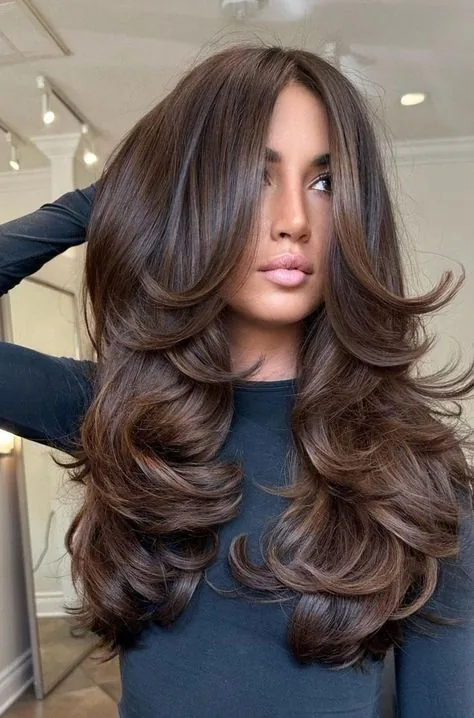
Bouncy blowout layers give thick hair movement and lift without the weight. Layers that start around the cheekbones and continue down let a round brush create bounce, while internal thinning stops the blowout from turning into a big, stiff shape.
Dry in sections with a large round brush, rolling the ends under or outward for bounce. A light volumising mousse at the roots — and nowhere else — gives lift without adding weight to the lengths.
Pros: Reduces bulk and weight while keeping the fullness thick hair is loved for; easier drying and styling; works as a practical everyday style for bouncy blowout layers for thick hair.
Cons: Needs a stylist who understands thick hair and weight removal; may need regular trims to hold its shape; can look uneven if thinned too aggressively or in the wrong place.
Maintenance: Trim every 8–12 weeks (6–8 weeks for shorter cuts), use lightweight products on the mid-lengths and ends, and dry in sections for the smoothest result.
33. Occasion Updo That Distributes Weight
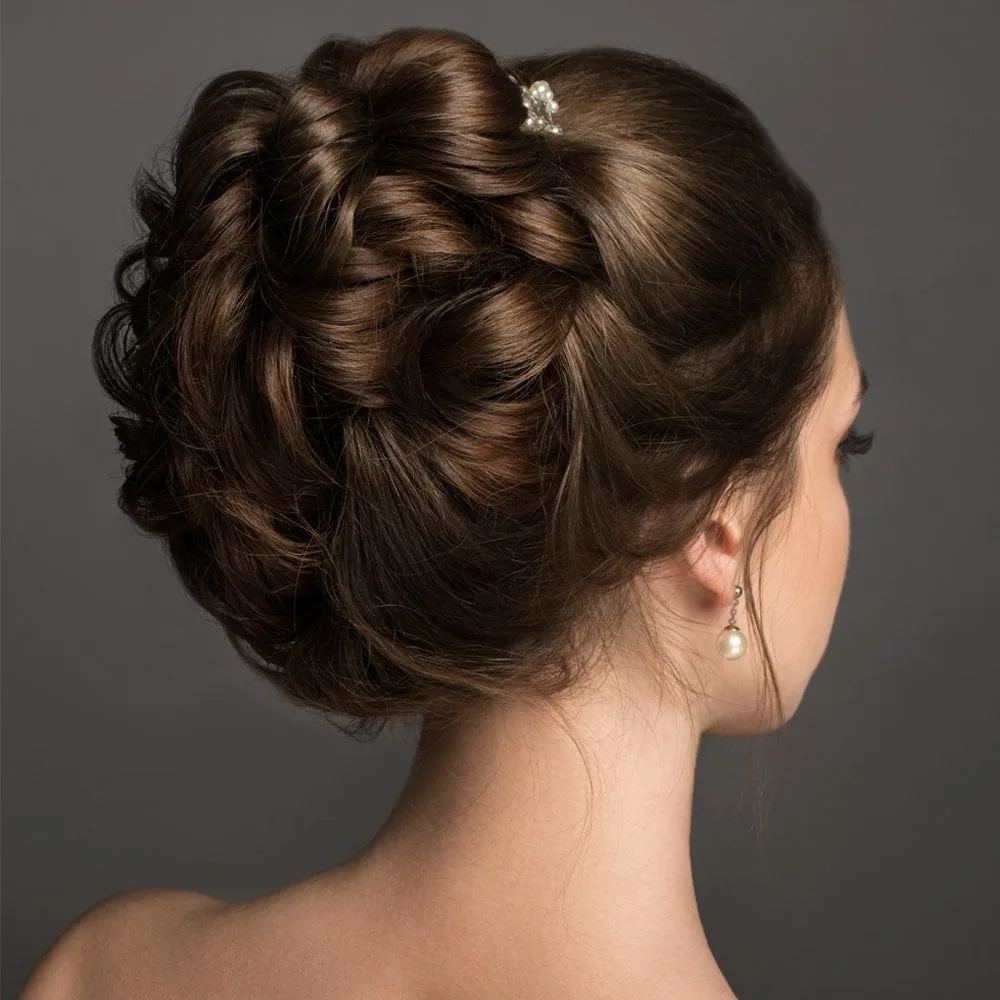
An occasion updo for thick hair should distribute weight across several anchor points, not hang from one tight spot. Low chignons, braided updos, and pinned twists all share the load, so the style lasts through a long event without pulling or slipping.
Prep with a little texture spray for grip, pin in sections, and finish with a flexible-hold spray rather than a stiff one. Thick hair already has volume, so the goal is control and polish, not extra height.
Pros: Reduces bulk and weight while keeping the fullness thick hair is loved for; easier drying and styling; works as a practical everyday style for occasion updo for thick hair.
Cons: Needs a stylist who understands thick hair and weight removal; may need regular trims to hold its shape; can look uneven if thinned too aggressively or in the wrong place.
Maintenance: Trim every 8–12 weeks (6–8 weeks for shorter cuts), use lightweight products on the mid-lengths and ends, and dry in sections for the smoothest result.
Can thinning thick hair make it look thin?
No, not when it is done well. Targeted internal thinning removes weight from inside the hair while the top layer stays full, so your hair looks lighter and moves better without looking thin. Problems only happen when thinning is done all over, too close to the ends, or too aggressively.
How often should thick hair be cut?
Every eight to twelve weeks for long hair, and every six to eight weeks for bobs and short cuts. Thick hair loses its shape faster as it grows because weight builds up, so regular maintenance trims keep debulking working instead of letting bulk return all at once.
Is a razor cut good for thick hair?
A razor cut can be excellent for straight, coarse thick hair because it softens hard ends and adds movement. It is less suitable for very curly or coily hair, where it can disturb the curl pattern. Always ask your stylist which tool they plan to use and why.
What is the best haircut for thick hair that is also frizzy?
Long debulked layers or an airy shag, paired with internal weight removal, usually work best. They reduce the bulk that pushes hair outward, while layers give frizz-prone hair a shape to fall into instead of a puffy block. A smoothing serum and sectioned drying help too.
How can I dry thick hair faster?
Remove water with a microfibre towel first, let it partly air-dry, then dry in sections from underneath with a concentrator or diffuser. A debulked cut also helps, because less hair in the heaviest areas means less water to dry.
Does thick hair need conditioner every wash?
Yes, but the amount and weight matter. Use a lightweight conditioner on the mid-lengths and ends, not the roots, and save heavier masks for once a week or less. Too much heavy conditioner can make thick hair feel coated and flat.
Can I wear a pixie or short crop with thick hair?
Yes, absolutely. Short cuts work beautifully on thick hair when the nape and sides are tapered and the top has texture. The key is a stylist who thins and shapes for density, rather than cutting a short style designed for fine hair.
Why does my thick hair go triangular?
The triangle shape happens when the top is too heavy to lift and the ends spread outward. Higher layers, internal thinning, and a tapered or rounded outline fix it. Drying the mid-lengths inward rather than outward also helps.
What products should I avoid for thick hair?
Very heavy butters, thick waxes, and large amounts of oil on the roots tend to weigh thick hair down and cause build-up. Lighter leave-ins, milky serums, and water-based creams usually give better movement and shine.
Will layers make my thick hair look thinner?
Good layers make thick hair look shaped, not thinner. Internal and long layers remove weight from inside while keeping the outline full. If layers are cut too short on top, they can look thin, so ask for long layers and hidden weight removal if you want to keep fullness.
Conclusion
Thick hair does not need to be tamed into submission — it needs to be shaped. The right cut removes weight where it hurts, keeps fullness where it flatters, and makes everyday styling faster and easier. Whether you choose long debulked layers, a thinned lob, a diffuser-friendly curly cut, or a simple claw-clip twist, the principle is the same: control the bulk, keep the volume.
Take this guide to your next salon visit, point to the sections that match your texture and routine, and ask your stylist where the weight will come out. With the right layers and a little maintenance, thick hair stops feeling heavy — and starts feeling like the gift it is.