Winter Hairstyles for Women — Cosy, Static-Free Looks for Cold Days and Hat Season
Cold air, dry indoor heat, wool hats and static can turn even healthy hair into a tangled, flyaway mess by February. Winter hairstyles for women need to do more than look good in a photo: they need to survive a commute, a beanie, a scarf and the shock of stepping from freezing air into a heated room.
The good news is that the most protective winter styles are also the prettiest. Low buns keep ends safe, braids stop tangling before it starts, and twists hold their shape under hats in a way that loose, heat-styled hair never will. You do not need to give up style for warmth; you just need styles built for the season.
In this guide, you will find 34 winter hairstyles for women, from cosy updos and protective braids to hat-friendly buns and evening twists. Each style comes with its pros, cons and maintenance tips, plus simple winter hair care advice, so you can pick a look that works for your hair type, your hat and your day.
Winter Hair at a Glance

Winter is hard on hair in a very specific way: cold air outside, dry heated air inside, wool hats and scarves rubbing all day, and static that makes every strand stand on end. The styles in this guide are chosen to solve those problems, not just to look pretty. Low buns, braids and twists protect ends, sit flat under hats, and survive a commute without constant fixing.
Use this guide to pick a style for the day you actually have. Hat day? Choose a low chignon, double Dutch braids or cornrows. Snow day? Go for low pigtail braids or a braided ponytail. Evening out? Try a French twist, a twisted crown or a side-swept updo. The best winter hairstyle is the one that still looks good when you take your hat off.
Why Winter Dries Hair Out
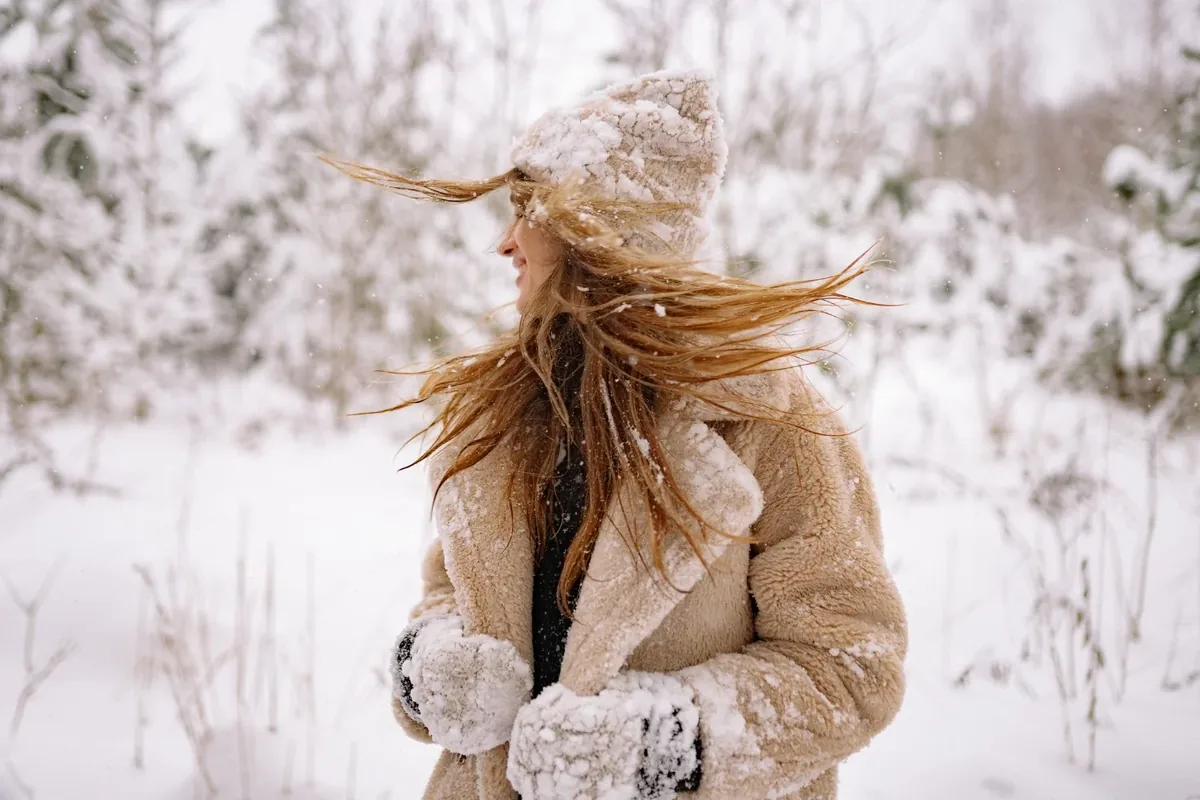
Cold air holds less moisture than warm air, so winter air literally pulls moisture out of your hair. Then you step indoors into heated, dry air, which pulls out even more. Add hot showers, frequent washing and wool friction, and hair becomes dry, brittle and prone to breakage, especially at the ends.
That is why winter care is mostly about sealing moisture in and reducing friction. Wash less often, use a richer conditioner, seal ends with a drop of oil, and choose styles that keep ends tucked away. A protective braid or bun does more for winter hair than any single product.
Static, Hats and Dry Air: Fixes That Work
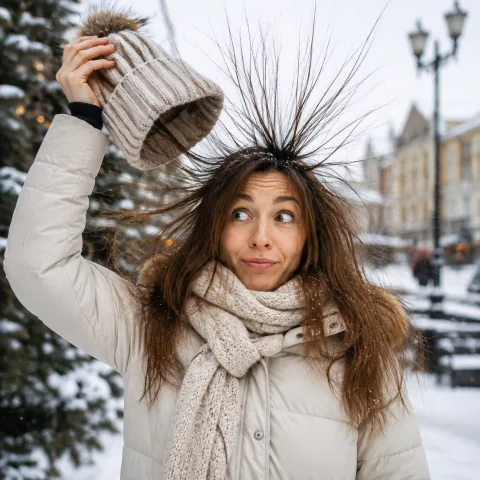
Static happens when dry hair rubs against wool, synthetic hats and scarves, building up an electric charge that makes strands repel each other. The fix is moisture plus smoothness: well-conditioned hair, a little leave-in cream or serum, and satin or silk linings where hair meets a hat. A satin-lined beanie, or a silk scarf under a wool hat, can transform hat season.
For hat hair, choose styles that are meant to be flat: low buns, braids and twists bounce back far better than blowouts. If you do wear a blowout, lift the roots with dry shampoo after removing your hat and shake the lengths out gently instead of brushing hard, which creates more static.
Quick Picks by Hair Type in Winter

- Straight hair: French braid, low chignon, silk-scarf low ponytail, sleek centre-part bun.
- Wavy hair: Beret-friendly side waves, pinned-back waves with a headband, loose fishtail braid.
- Curly hair: Twist-out, halo twist with loose curls, soft curls pinned away from the face, Bantu knots.
- Protective styles: Knotless box braids, cornrows, two low pigtail braids, tucked ends under a hood.
- Hat days: Low chignon, double Dutch braids, cornrows, knotted low bun, side braid into a low bun.
- Evenings: French twist, twisted crown updo, side-swept updo, textured low chignon with tendrils.
1. Low Chignon for Beanie Days
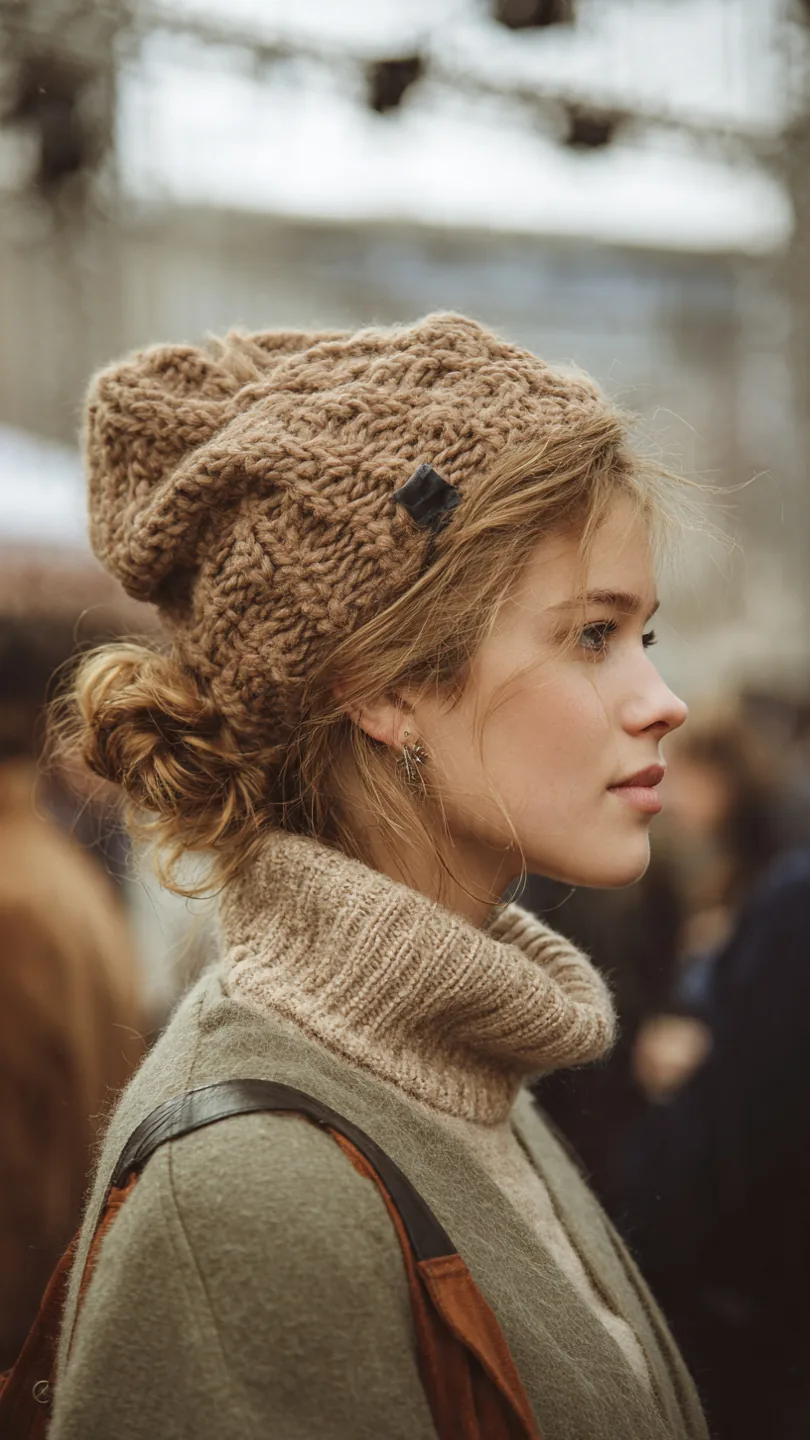
A low chignon sits at the nape, so a beanie can slide on and off without crushing the shape. It keeps ends tucked away from cold wind and coat collars, and it looks polished even after a long day indoors. Twist, coil and pin loosely for a soft finish rather than a tight, scraped-back bun.
Pros:
- Hat-friendly: a beanie fits neatly over it.
- Protects ends from wind, friction and dry air.
- Works for straight, wavy and curly hair.
Cons:
- Needs pins to stay put in strong wind.
- Can look flat if pulled too tight.
Maintenance: Wash every 2 to 3 days, or refresh with dry shampoo at the roots. Re-pin loose pieces in the morning and add a drop of hair oil to the ends. Trim every 8 to 10 weeks to keep the shape tidy.
2. Classic French Braid Under a Coat
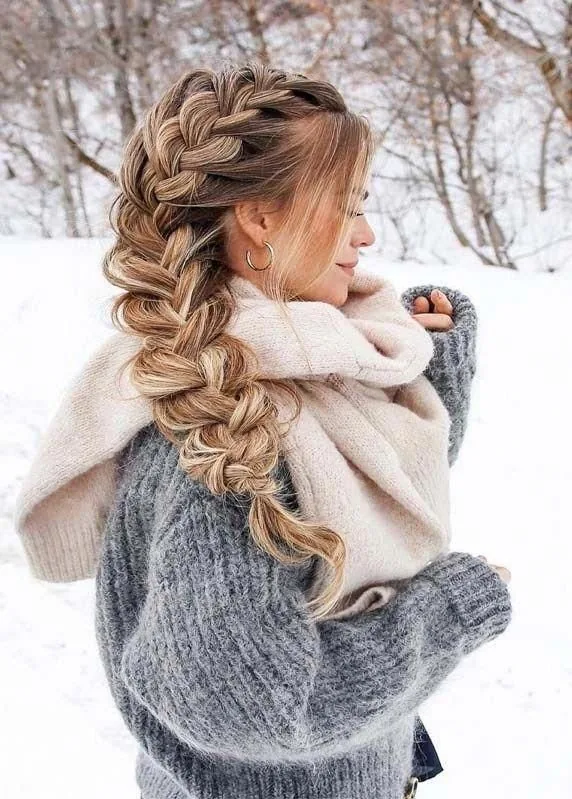
A classic French braid keeps every strand contained from the hairline to the ends, which is exactly what cold, windy days demand. It sits flat under a coat collar and a hood, so it does not tangle or frizz as you move between indoors and outdoors. Finish with a soft, slightly loosened braid for a cosy, lived-in look.
Pros:
- Keeps hair tangle-free under coats and scarves.
- Lasts all day with very little fixing.
- Distributes tension evenly, so it is comfortable for hours.
Cons:
- Takes practice if you are new to braiding.
- Tight braiding can strain fine or fragile hair.
Maintenance: Wash every 2 to 4 days and re-braid every morning for a neat result, or sleep in it for soft waves the next day. Use a light leave-in conditioner on the lengths and trim every 8 to 12 weeks.
3. Double Dutch Braids for Hat Days
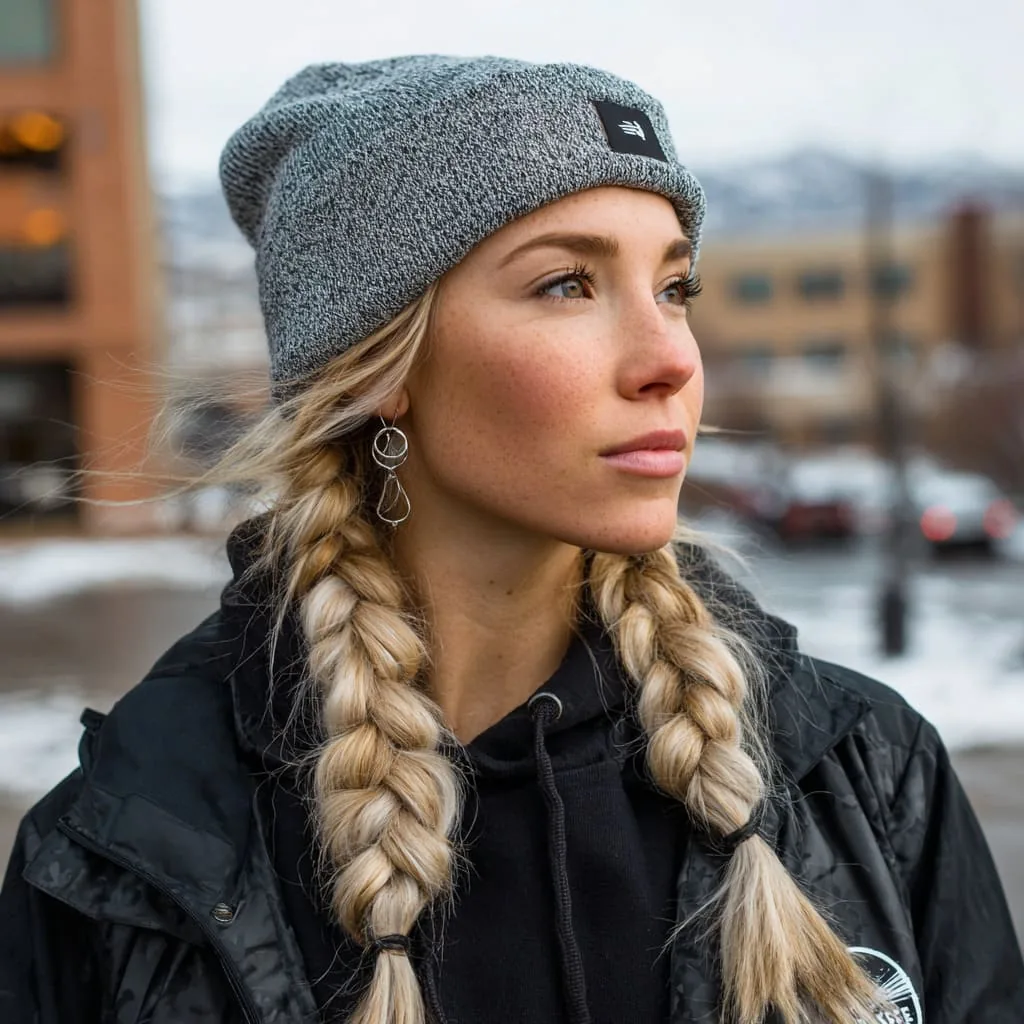
Double Dutch braids are a winter workhorse: two neat braids that stay put under a beanie, a hood or a headband. Because the hair is divided and secured, there is far less rubbing against wool and coat fabric, which means less static and fewer tangles. They also make a great base for waves once you take them out.
Pros:
- Excellent under hats, with no bulky shape to squash.
- Reduces friction, static and tangling.
- Doubles as an overnight wave-setting style.
Cons:
- Can feel tight if braided too close to the scalp.
- Takes longer than a single braid.
Maintenance: Wash every 3 to 4 days and re-braid as needed. Apply a small amount of oil or braid balm to the lengths before braiding. Keep braids loose at the hairline and refresh edges with a soft brush.
4. Loose Fishtail Braid Over the Shoulder
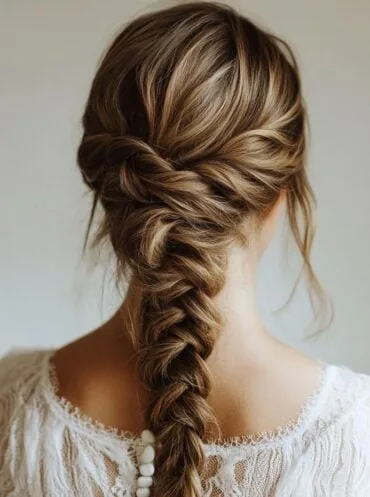
A loose fishtail braid draped over one shoulder looks intricate but is surprisingly forgiving in winter. The relaxed weave hides flyaways and dry ends, and wearing it in front keeps it away from coat collars and backpack straps. Pull a few pieces loose at the face for softness.
Pros:
- Hides flyaways and dry ends beautifully.
- Stays clear of collars and straps when worn in front.
- Looks detailed with minimal effort.
Cons:
- Can unravel if not secured well.
- Thinner hair may need texturising spray for grip.
Maintenance: Wash every 2 to 3 days and re-braid daily, or refresh with a light mist of leave-in spray. Trim split ends every 8 to 10 weeks so the fishtail pattern stays clean.
5. Milkmaid Braid Crown
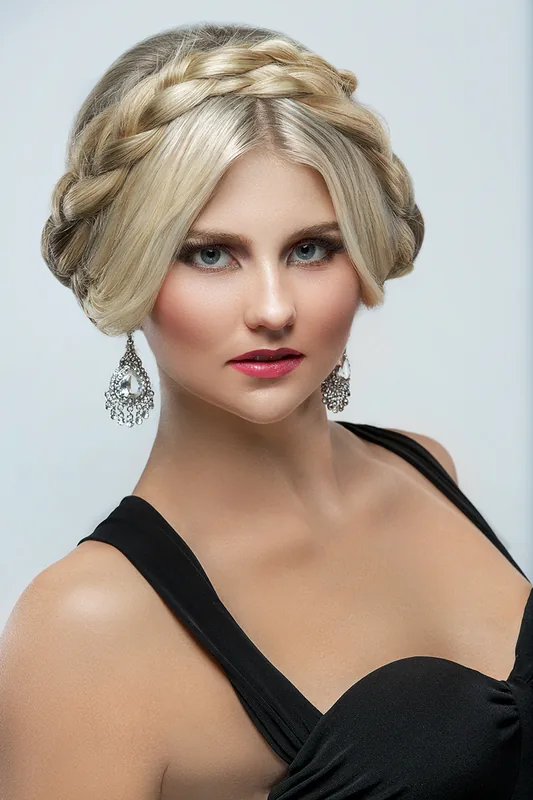
A milkmaid braid crown wraps two braids around the head, keeping every strand off the neck and away from scarves. It is warm-weather-proof in reverse: nothing hangs down to catch wind, and a hat can sit on top without ruining the shape. It suits cold mornings when you want hair fully out of the way but still pretty.
Pros:
- Keeps all hair off the neck and out of scarves.
- Holds its shape under a loose hat.
- Looks elegant without heat styling.
Cons:
- Needs medium to long hair to wrap fully.
- Requires several pins for security.
Maintenance: Wash every 2 to 3 days and style on second-day hair for better grip. Pin securely, mist with flexible hold spray, and re-pin any slipped sections during the day.
6. Rope Twist Low Ponytail
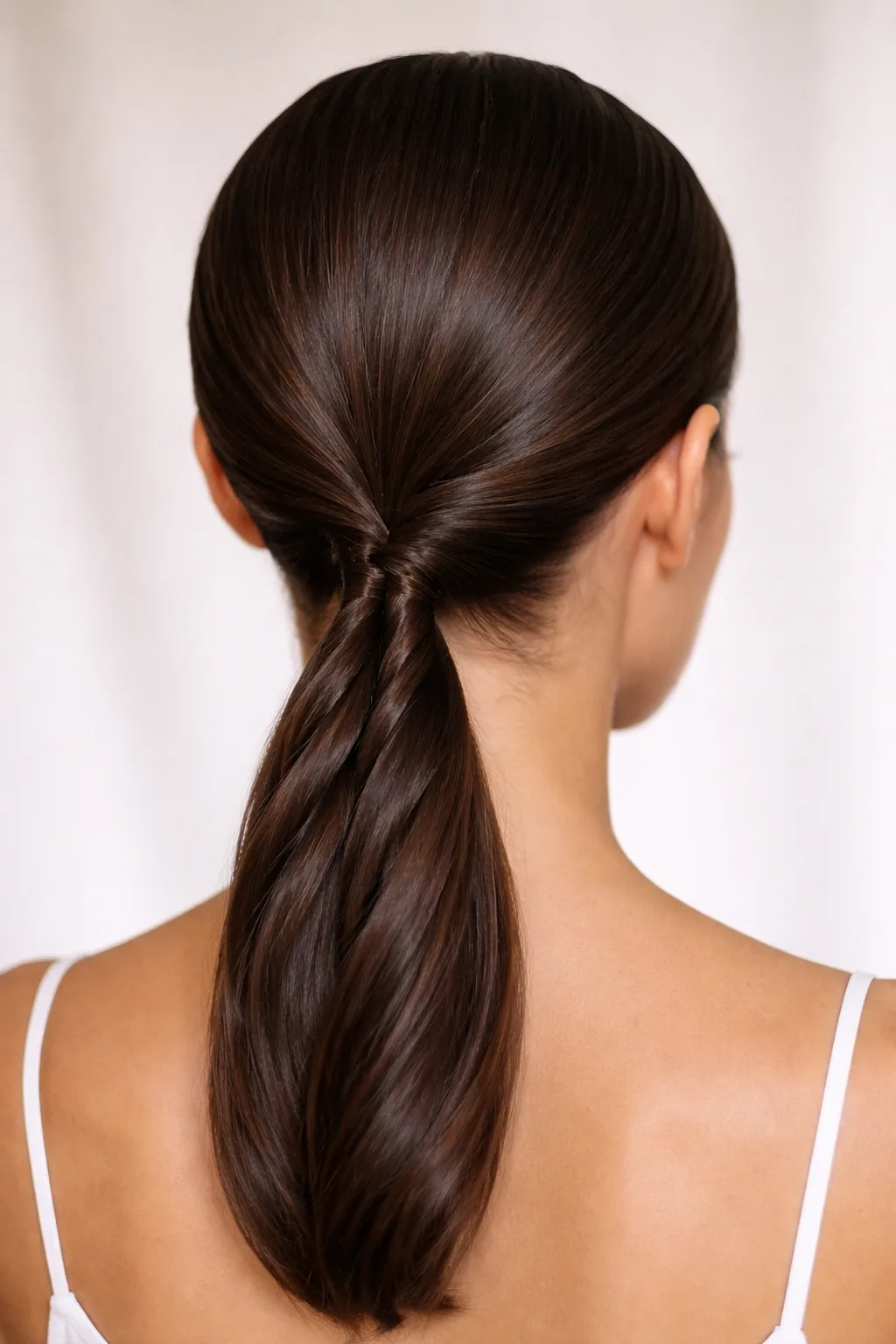
A rope twist low ponytail twists two sections around each other into a neat, rope-like tail at the nape. It is quicker than a braid, holds well in wind, and keeps ends together instead of whipping around in cold air. It works beautifully with a scarf or a high coat collar.
Pros:
- Faster to create than a three-strand braid.
- Holds well in wind and under a hood.
- Keeps ends contained and protected.
Cons:
- Can untwist if the ends are not secured.
- Works best on hair past shoulder length.
Maintenance: Wash every 2 to 3 days and re-twist each morning. Secure the ends with a snag-free band and a touch of cream. Trim every 8 to 10 weeks.
7. Silk-Scarf Low Ponytail
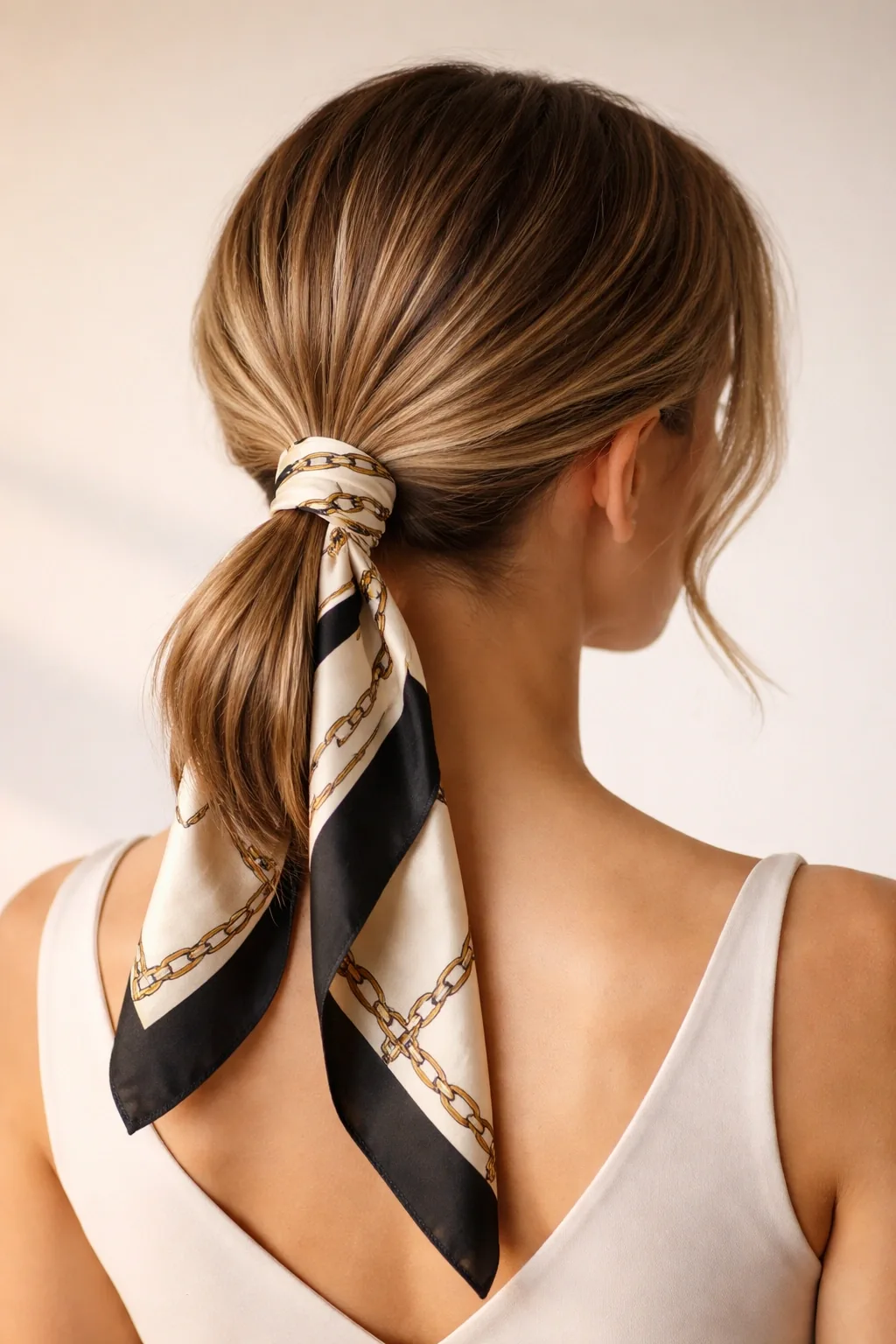
Wrapping a silk scarf around a low ponytail does two jobs at once: it looks chic, and it cuts friction between hair and wool coats. Silk is smoother than wool or cotton, so it helps reduce static and breakage where the ponytail meets your collar. Choose a scarf colour that lifts a dark winter coat.
Pros:
- Reduces friction and static at the collar line.
- Instantly dresses up a simple ponytail.
- Protects the hair tie area from rubbing.
Cons:
- The scarf can slip if not tied firmly.
- Adds a step to a quick morning style.
Maintenance: Wash every 2 to 3 days and re-wrap the scarf daily. Use a silk or satin scrunchie underneath and smooth the lengths with a drop of serum. Wash the scarf regularly to avoid product build-up.
8. Cosy Top Knot with a Knit Headband
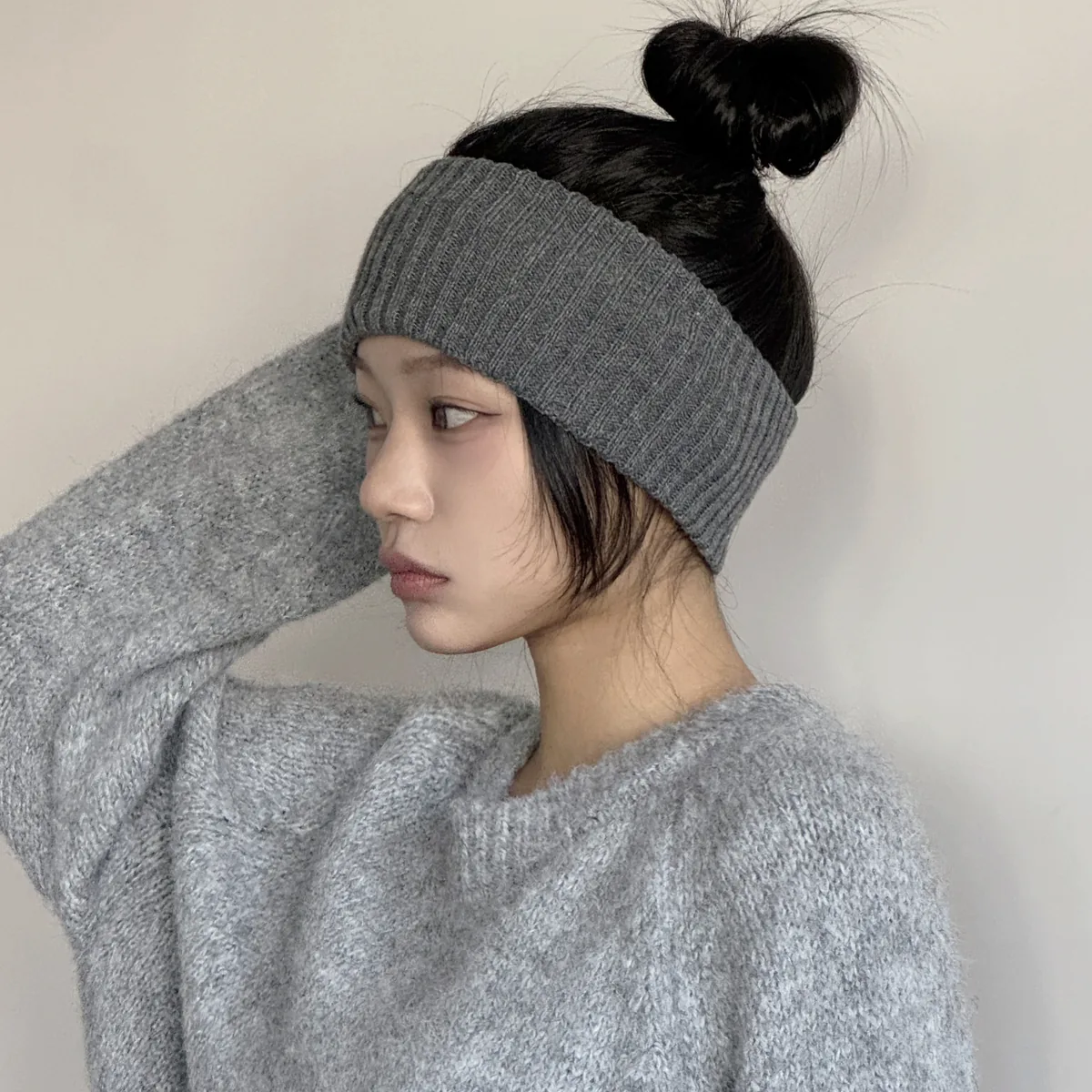
A cosy top knot paired with a knit headband keeps ears warm and hair off the face without a full hat. The headband covers the hairline and flyaways, while the knot sits high enough to stay clear of scarves. It is the easiest winter style for busy mornings and weekend errands.
Pros:
- Keeps ears warm and hair off the face.
- Hides a less-than-perfect hairline on busy days.
- No heat styling needed.
Cons:
- A very high knot can feel heavy by evening.
- Headbands can leave a dent in fine hair.
Maintenance: Wash every 2 to 3 days, or use dry shampoo and re-knot daily. Keep the knot loose to avoid tension headaches and smooth flyaways with a little cream. Trim every 8 to 10 weeks.
9. Half-Up Claw Clip Twist
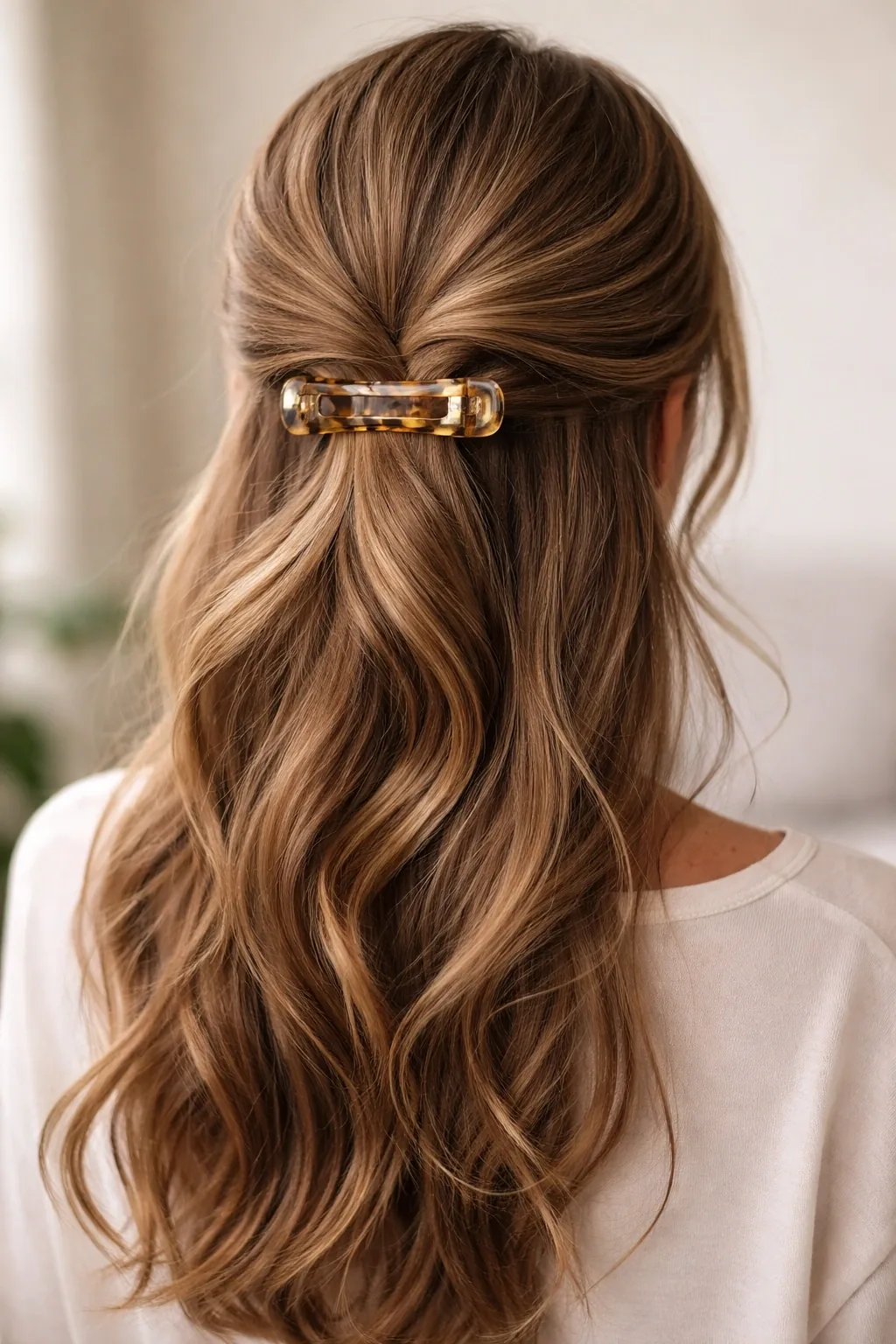
A half-up claw clip twist lifts the front sections away from the face while leaving the lengths down for warmth around the neck. It is ideal under a hat because the clip sits flat enough not to dig in, and it takes under a minute. Twist, fold and clip, then pull a few soft pieces loose.
Pros:
- Takes less than a minute to create.
- Keeps face-framing hair out of the way.
- Hat-friendly, with a low, flat profile.
Cons:
- Heavy clips can slip on very fine hair.
- Not as secure as a braid in strong wind.
Maintenance: Wash every 2 to 3 days and re-clip each morning. Use a medium clip for fine hair and a large one for thick hair. Refresh the lengths with leave-in spray rather than re-washing daily.
10. Beret-Friendly Side Waves
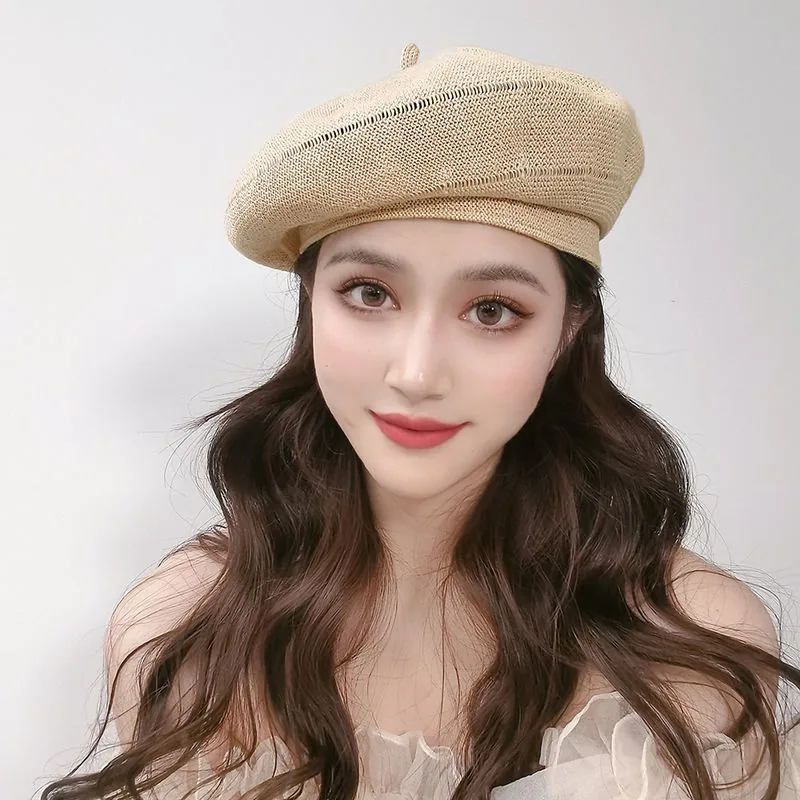
Side waves worn to one side pair perfectly with a beret, which sits tilted on top without flattening the whole style. The waves add soft movement that survives a hat far better than a straight, sleek finish. Part deeply to one side so the beret has a clear place to sit.
Pros:
- A beret flattens far less hair than a beanie.
- Waves bounce back after the hat comes off.
- Soft and romantic for winter evenings.
Cons:
- Needs some styling time for defined waves.
- Wind can loosen waves outdoors.
Maintenance: Wash every 2 to 3 days and refresh waves with a light curl spray on day two. Use anti-static serum on the ends and trim every 8 to 10 weeks to keep waves defined.
11. Knotless Box Braids for Winter Protection
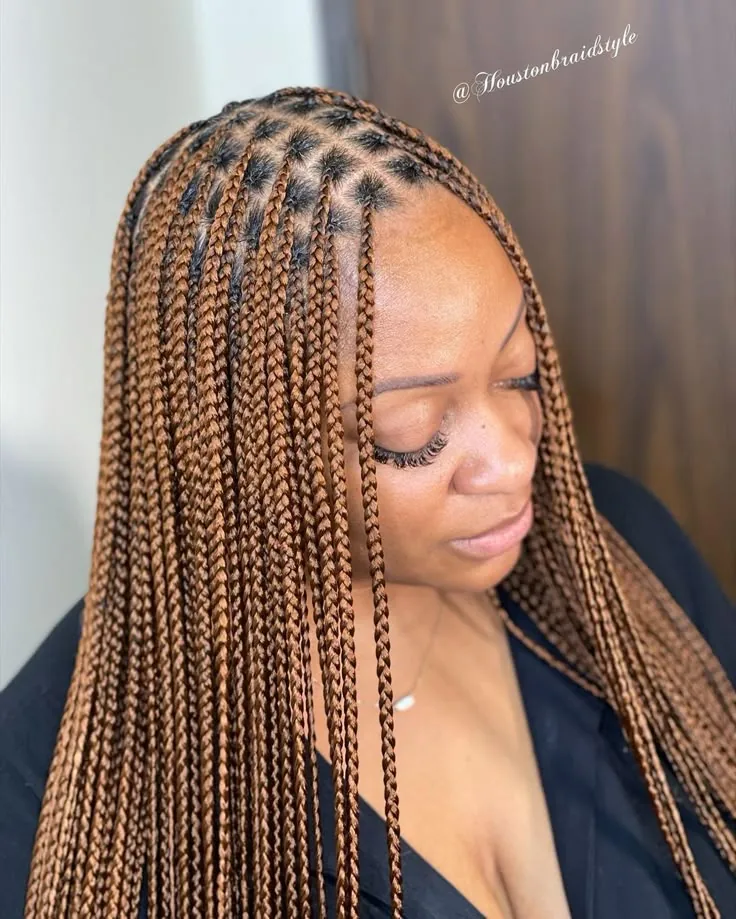
Knotless box braids start with your natural hair and feed in extensions gradually, so there is less tension at the scalp than traditional box braids. For winter, they are a true protective style: ends are tucked away for weeks, shielding them from cold air, wool friction and constant washing. Wear them loose, in a low bun, or under a satin-lined hat.
Pros:
- Protects ends for weeks at a time.
- Low tension at the scalp compared with knotted braids.
- Versatile: wear loose, braided up, or under a hat.
Cons:
- Installation takes several hours.
- Needs regular scalp care to stay healthy.
Maintenance: Wash the scalp every 1 to 2 weeks with diluted shampoo and keep it moisturised with a light oil. Do not keep braids in beyond 6 to 8 weeks, and give hair a rest between installs.
12. Cornrows Under a Beanie
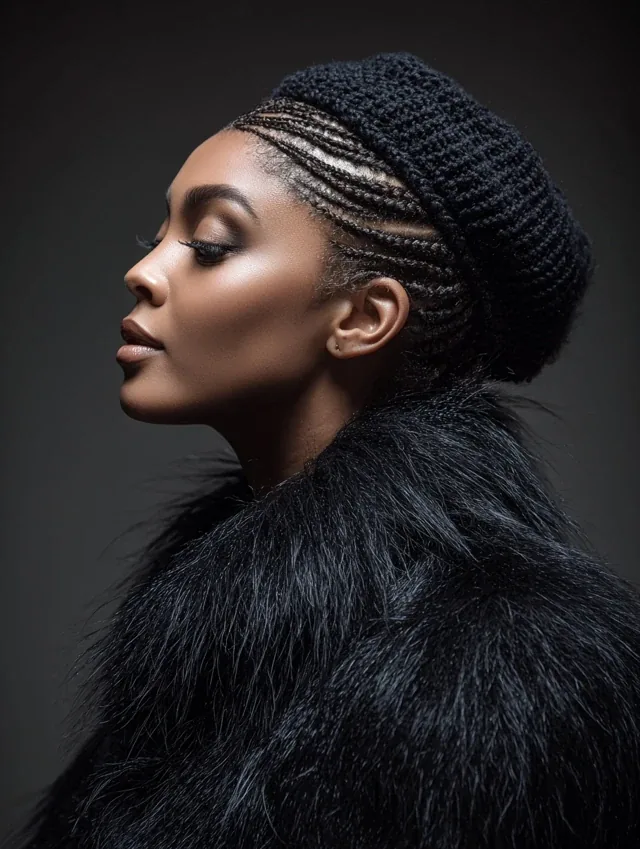
Cornrows lie flat against the scalp, making them one of the best styles to wear under a beanie all winter. Nothing bunches up, nothing gets squashed, and the scalp stays accessible for moisturising. They also protect natural hair from daily manipulation and harsh weather.
Pros:
- Perfectly flat under any hat.
- Protects hair from daily handling and weather.
- Scalp stays easy to moisturise.
Cons:
- Needs a skilled braider for neat, even rows.
- Tight rows can cause tension if done too firmly.
Maintenance: Wash every 1 to 2 weeks and moisturise the scalp every few days. Keep cornrows in for 2 to 4 weeks, then rest the hair before re-braiding.
13. Twisted Crown Updo for Winter Evenings
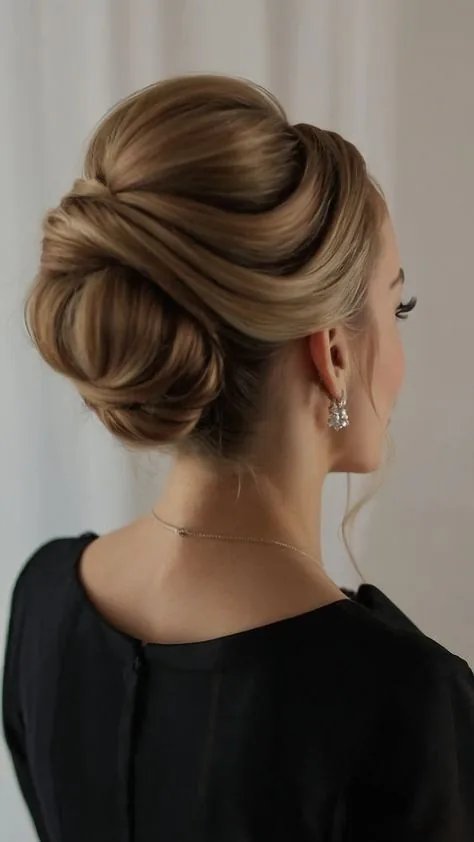
A twisted crown updo wraps twisted sections around the head into a soft halo, giving an evening look that does not rely on heat or a curling wand. It keeps hair fully up and away from coat collars, and it pairs beautifully with a wool coat and simple earrings. Pin as you go for a secure, romantic finish.
Pros:
- Elegant without heat styling.
- Keeps hair up and away from collars.
- Suits medium to long hair.
Cons:
- Takes patience and plenty of pins.
- Short layers may slip out.
Maintenance: Wash the day before styling for better grip, then style on second-day hair. Mist with flexible spray and re-pin loose twists before going out. Trim every 8 to 10 weeks.
14. Low Bubble Ponytail
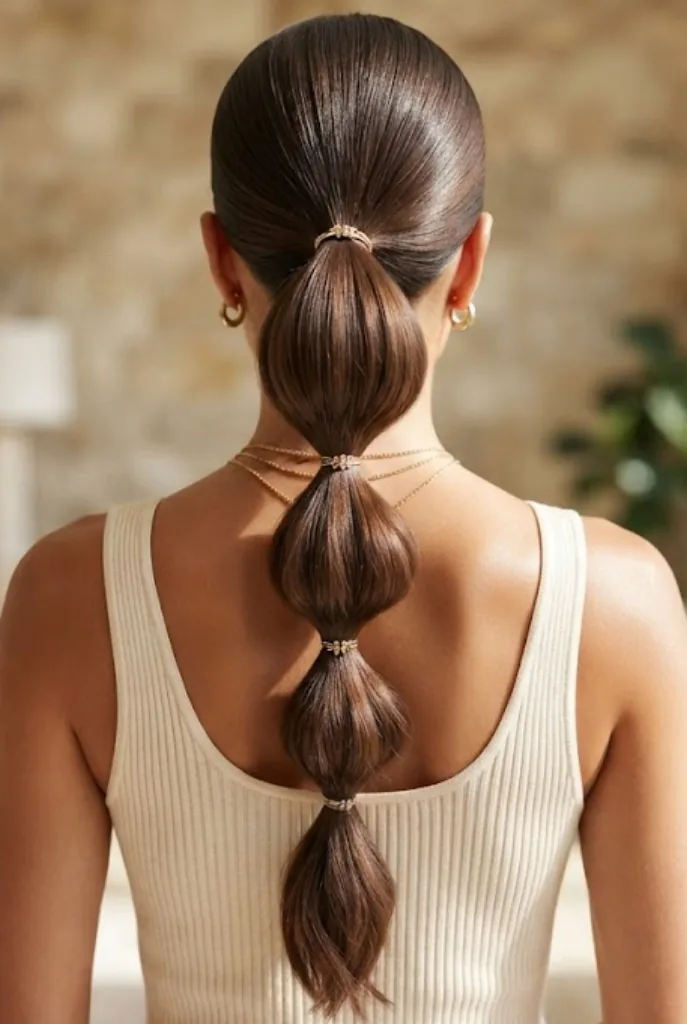
A low bubble ponytail sections a low tail with bands spaced down its length, then gently pulls each section out into a soft bubble. It looks playful and polished, holds its shape in wind, and keeps the lengths together instead of tangling. It is a fun fix for hat hair, too, because the bubbles disguise any flattening.
Pros:
- Holds its shape in wind.
- Disguises hat-flattened hair.
- Easy to create with just extra hair bands.
Cons:
- Needs length to show the bubbles well.
- Bands can snag if removed carelessly.
Maintenance: Wash every 2 to 3 days and re-create daily. Use snag-free bands and smooth the sections with a little cream. Remove bands gently to avoid breakage.
15. Knotted Low Bun
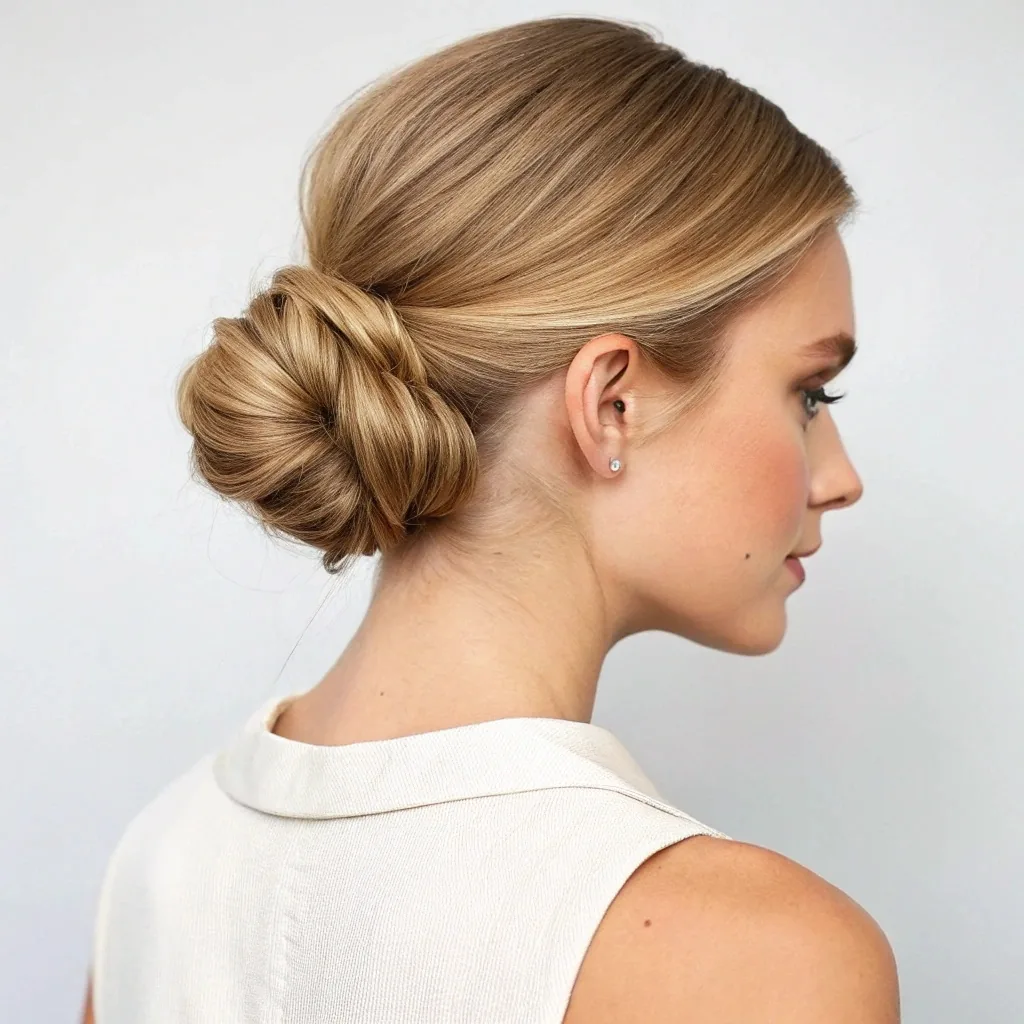
A knotted low bun is made by tying sections of hair into a loose knot at the nape, then tucking the ends underneath. It looks more interesting than a plain bun, sits flat under a hat, and keeps ends fully hidden from cold air. It is a lovely choice for workdays and winter dinners alike.
Pros:
- Sits flat under hats and hoods.
- Hides ends completely from cold air.
- Looks more detailed than a plain bun.
Cons:
- Needs enough length to tie a knot.
- Can loosen if not pinned well.
Maintenance: Wash every 2 to 3 days and re-knot each morning. Pin the knot securely and smooth flyaways with serum. Trim every 8 to 10 weeks.
16. Side Braid into a Low Bun
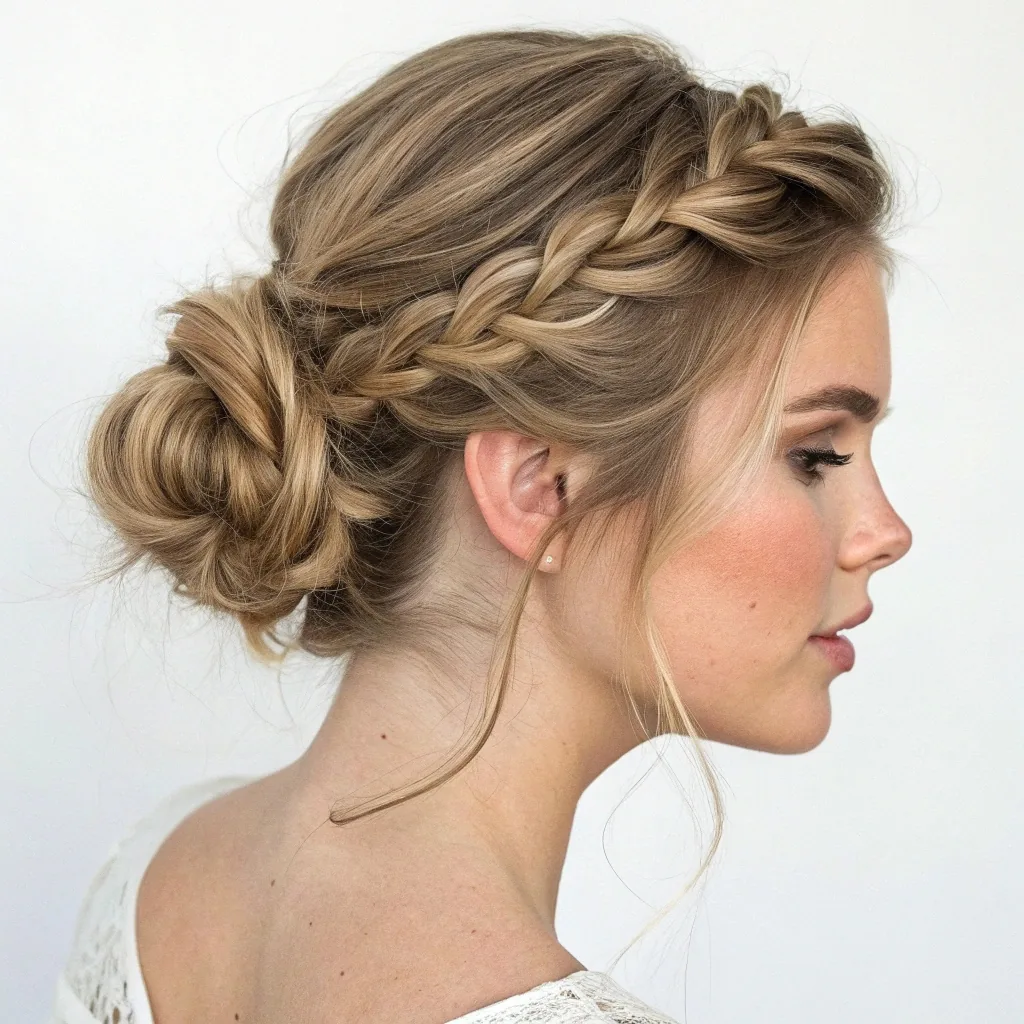
A side braid that feeds into a low bun combines two winter favourites: a braid that controls the front, and a bun that protects the ends. It stays neat under a scarf, survives a hat, and looks thoughtful rather than thrown together. Braid loosely from one temple, then coil the rest into a low bun.
Pros:
- Controls front layers and protects ends.
- Neat under scarves and hats.
- Works for work, weddings and everyday winter days.
Cons:
- Takes a little longer than a plain bun.
- Uneven braiding shows on the side.
Maintenance: Wash every 2 to 3 days and style on second-day hair for grip. Secure the bun with pins and mist with light hold spray. Refresh the braid with a little cream if flyaways appear.
17. Braided Mohawk for Hat-Free Days
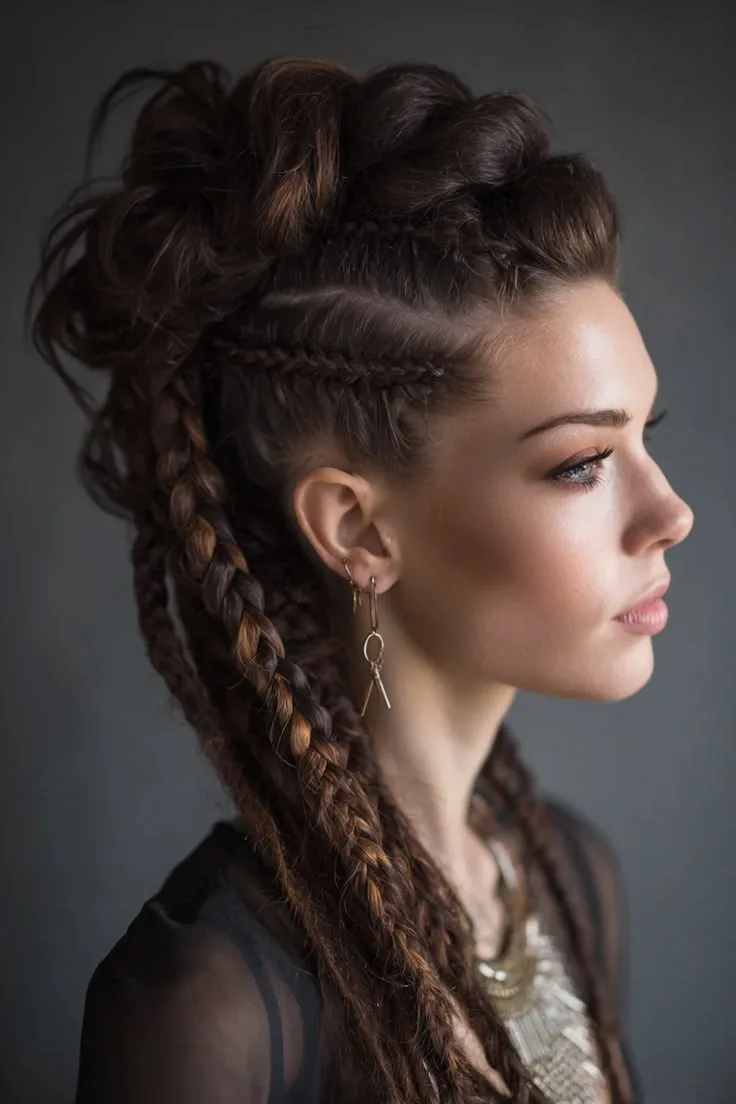
A braided mohawk runs a French or Dutch braid down the centre of the head, with the sides smoothed back or lightly braided in. It is bold, keeps hair completely off the face, and needs no hat to look finished. Save it for hat-free days, since a beanie would flatten the central braid.
Pros:
- Keeps hair fully off the face.
- Bold, statement look without heat.
- Stays secure all day.
Cons:
- Not hat-friendly: a beanie flattens it.
- Needs medium to long hair.
Maintenance: Wash every 2 to 3 days and re-braid daily for a crisp centre. Smooth the sides with gel or cream and trim every 8 to 10 weeks.
18. Halo Twist with Loose Curls
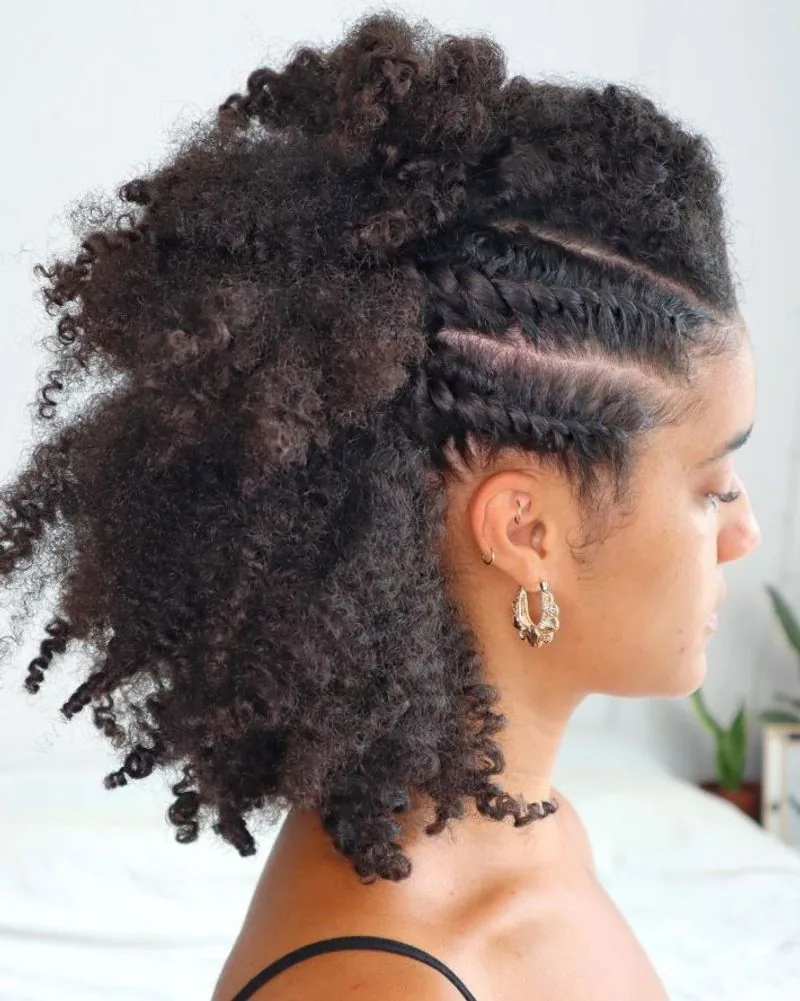
A halo twist pulls the front sections back into two twists that meet at the back, while the rest of the hair falls in loose curls. It keeps the face clear, adds a soft frame, and lets curls stay down for warmth. It is a gentle way to wear curls in winter without constant re-styling.
Pros:
- Keeps the face clear while curls stay down.
- Soft, romantic winter look.
- Works well on naturally wavy or curly hair.
Cons:
- Curls can frizz in damp winter air.
- Twists may loosen on very fine hair.
Maintenance: Wash every 2 to 3 days and refresh curls with a curl cream on day two. Twist on damp hair for better hold and trim every 8 to 10 weeks.
19. Low Side Ponytail with a Satin Lining
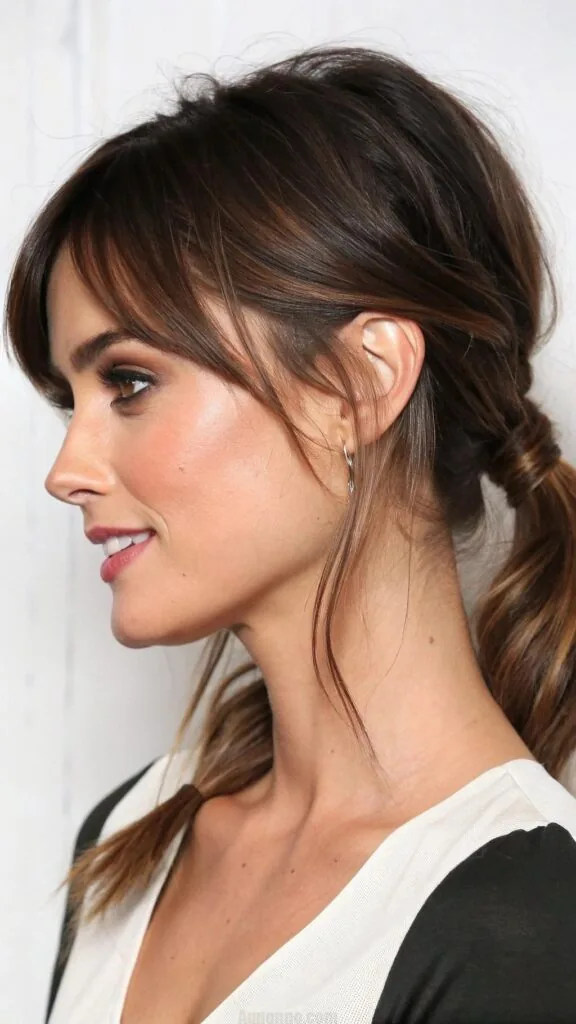
A low side ponytail worn over one shoulder keeps hair in front, away from backpack straps and coat collars. Adding a satin scrunchie, or wrapping a small satin strip at the base, reduces friction where hair meets wool. It is simple, soft and surprisingly protective for such an easy style.
Pros:
- Keeps hair clear of straps and collars.
- Satin reduces friction and breakage.
- Soft, relaxed look for everyday winter.
Cons:
- Can swing forward in strong wind.
- Less secure than a braid for active days.
Maintenance: Wash every 2 to 3 days and re-tie daily. Use a satin or silk scrunchie and smooth the lengths with serum. Trim every 8 to 10 weeks.
20. Pinned-Back Waves with a Headband
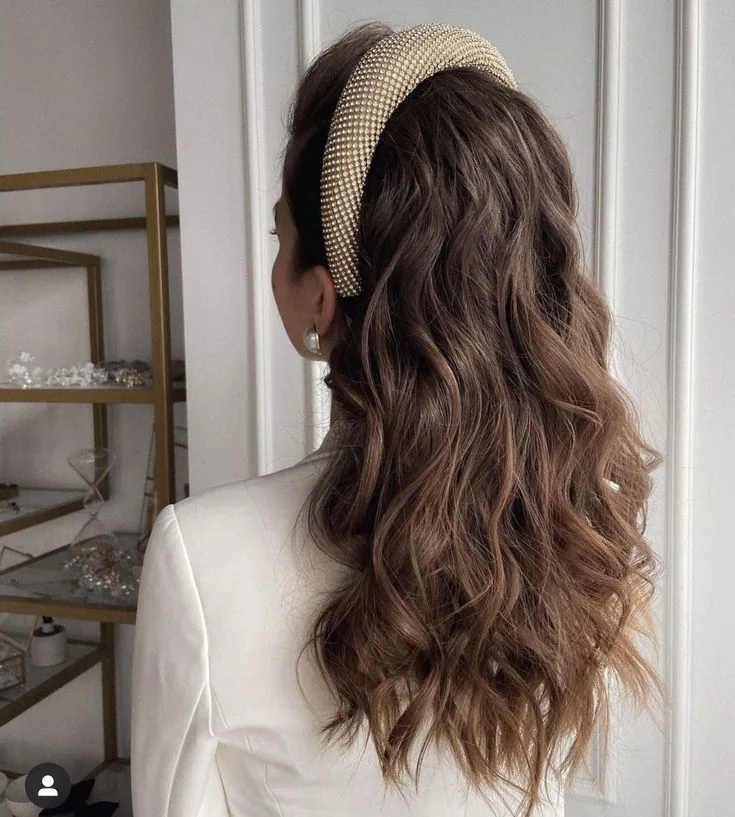
Pinning the front waves back and adding a wide headband gives winter waves a tidy frame. The headband holds flyaways down, keeps ears a little warmer, and stops the front from blowing across the face. It is a quick rescue for second-day waves that have lost their shape.
Pros:
- Tames flyaways and second-day waves.
- Adds a little warmth around the ears.
- Quick to do, with no heat needed.
Cons:
- Headbands can dent waves if worn all day.
- Needs pins to keep the front secure.
Maintenance: Wash every 2 to 3 days and refresh waves with a light spray. Choose a soft, wide headband and remove it periodically to avoid dents. Trim every 8 to 10 weeks.
21. Two Low Pigtail Braids for Snow Days
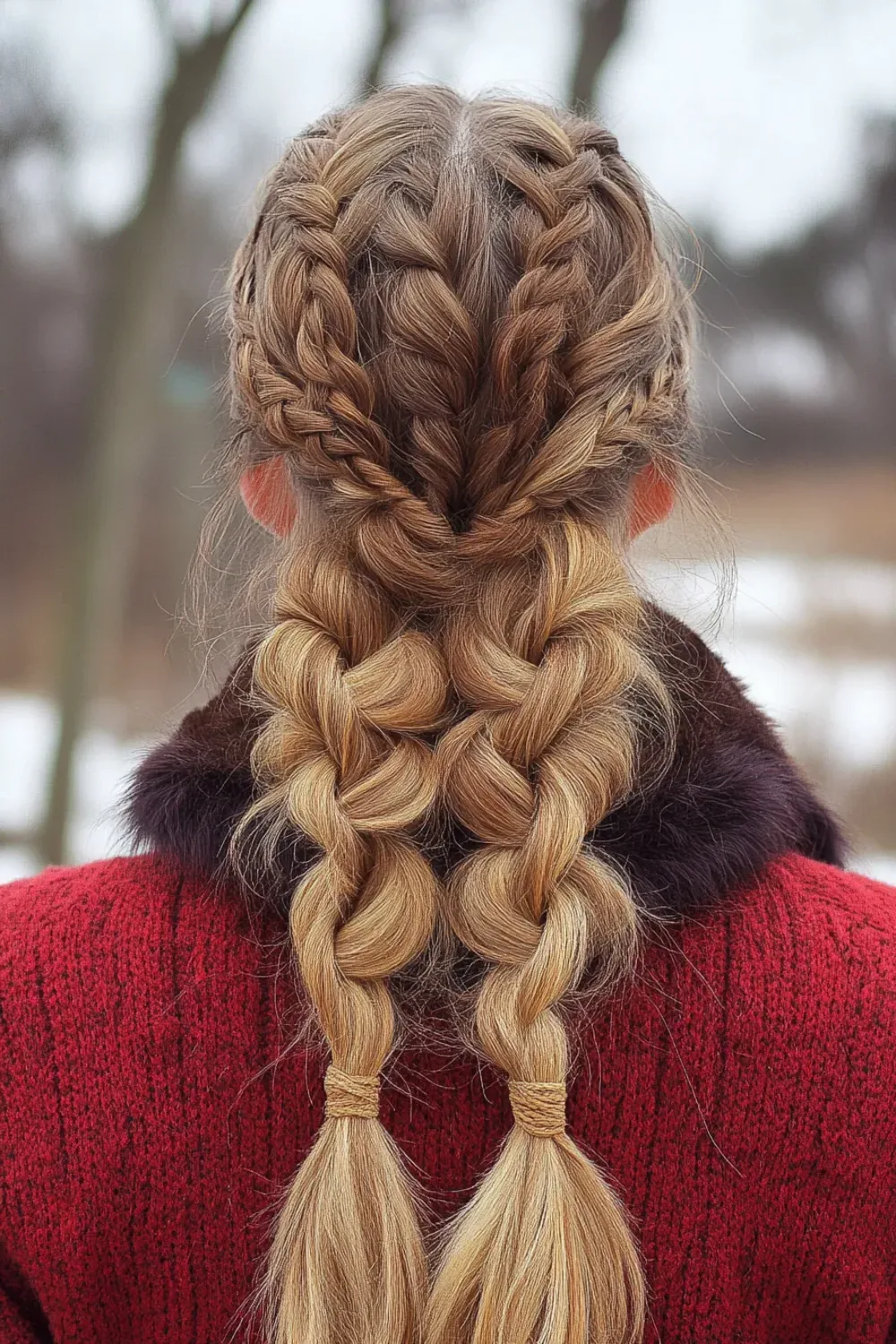
Two low pigtail braids are a snow-day classic for a reason: they keep hair divided, contained and out of the way, even under a hood and a scarf. They also survive snowfall far better than loose hair, which can freeze, tangle and frizz in wet snow. Wear them in front for easy access and a playful winter look.
Pros:
- Survives snow, hoods and scarves.
- Keeps hair divided and tangle-free.
- Easy to re-do outdoors if needed.
Cons:
- Can look young if worn very high; keep them low.
- Takes a few minutes longer than one braid.
Maintenance: Wash every 2 to 3 days and re-braid daily in snowy weather. Dry braids fully indoors before bed and apply a little oil to the ends. Trim every 8 to 10 weeks.
22. Wrapped Low Bun with a Silk Scarf

Wrapping a silk scarf around a low bun protects the bun from wool friction and adds a pop of colour to a dark winter outfit. The scarf also helps hold flyaways in place on windy days. Tie it under the bun or to one side, and keep the bun itself loose and soft.
Pros:
- Protects the bun from wool friction.
- Adds colour to dark winter outfits.
- Helps hold flyaways on windy days.
Cons:
- The scarf needs re-tying if it slips.
- Can feel bulky under a tight hood.
Maintenance: Wash every 2 to 3 days and re-wrap daily. Use a silk scarf and a satin scrunchie underneath. Smooth the bun with a drop of oil before wrapping.
23. Sleek Centre-Part Bun for Office Winter Days
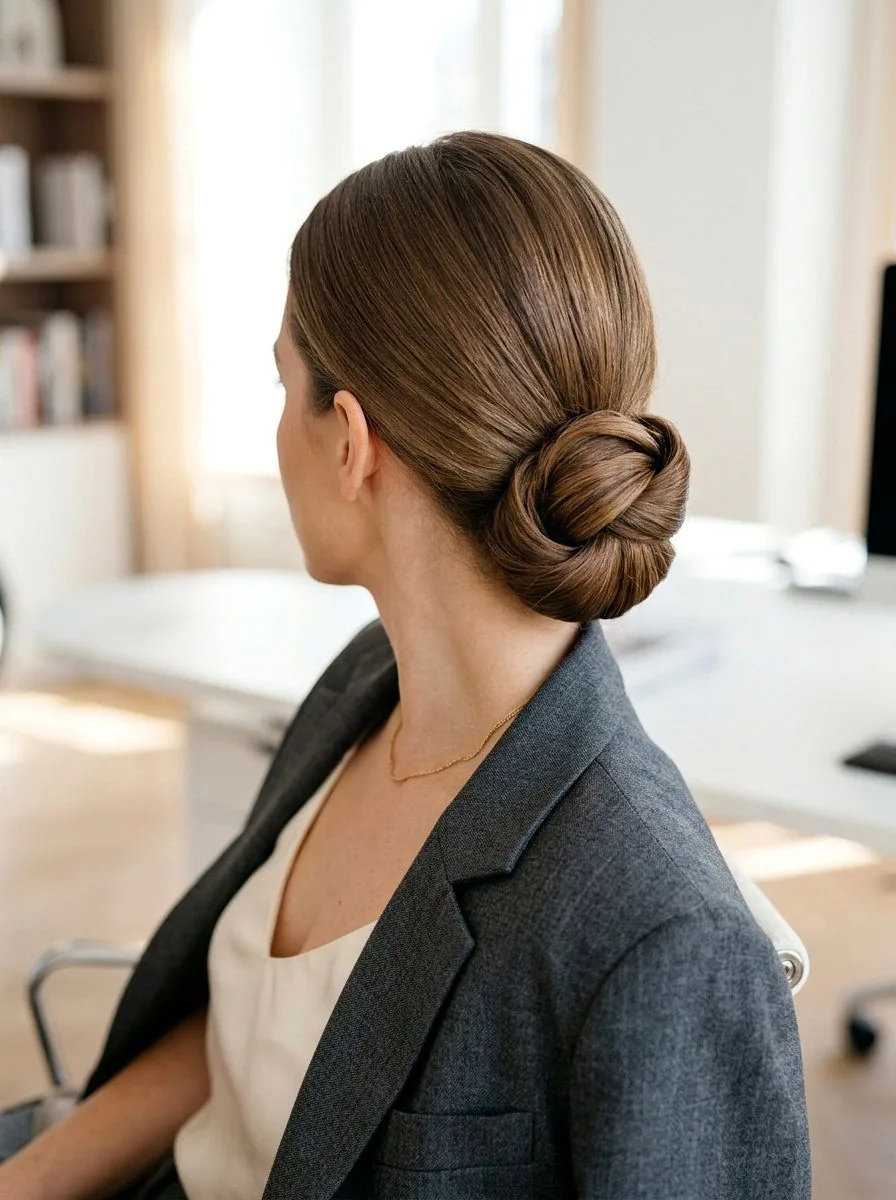
A sleek centre-part bun is the polished winter office style: smooth, low, and completely out of the way of scarves and coat collars. A centre part gives it a clean, intentional look, and a little gel keeps flyaways flat in dry, heated offices. It also survives a commute far better than loose hair.
Pros:
- Polished and professional for work.
- Survives commutes, scarves and coats.
- Controls flyaways in heated offices.
Cons:
- A very sleek finish can emphasise dryness.
- Needs gel or cream for a smooth result.
Maintenance: Wash every 2 to 3 days and re-create daily. Apply a smoothing cream to damp hair, brush back, and secure low at the nape. Trim every 8 to 10 weeks.
24. Voluminous Blowout with Anti-Static Serum
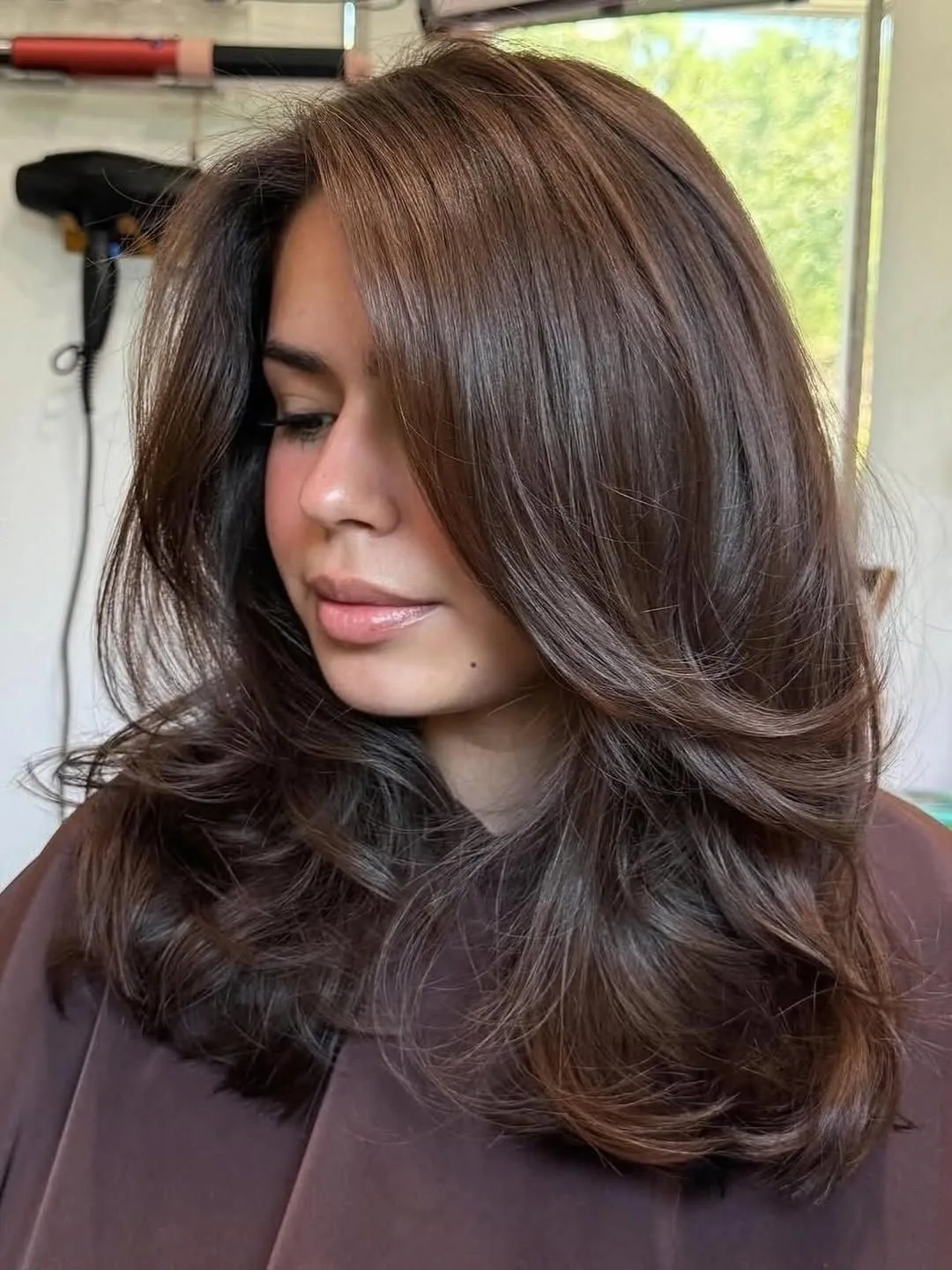
A voluminous blowout can still work in winter if you build in anti-static protection from the start. Use a heat protectant, dry with a round brush for lift, and finish with a pea-sized amount of anti-static serum on the ends. The result is bouncy, smooth hair that resists the flat, flyaway look of hat season.
Pros:
- Bouncy, polished finish for special days.
- Anti-static serum fights winter flyaways.
- Lifts roots flattened by hats.
Cons:
- Heat styling can worsen winter dryness.
- Volume fades under a tight hat.
Maintenance: Wash every 2 to 3 days and blow-dry on a medium heat setting with protectant. Refresh roots with dry shampoo rather than re-blowing daily. Trim every 6 to 8 weeks and deep-condition weekly.
25. Soft Curls Pinned Away from the Face for Scarf Weather
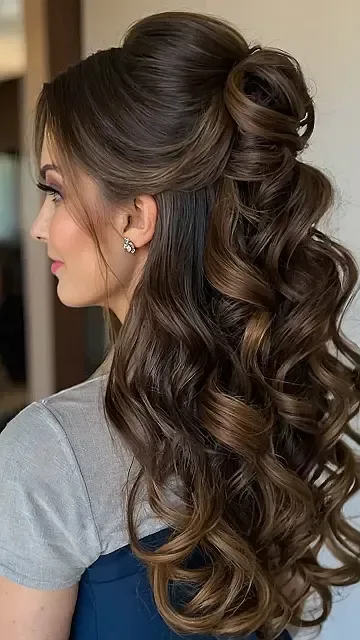
Soft curls pinned back from the face stay clear of scarves, which otherwise catch and frizz the front sections. Pin just the face-framing curls back loosely, leaving the rest to fall naturally. It keeps the softness of curls while solving the most annoying part of scarf weather.
Pros:
- Stops scarves catching front curls.
- Keeps curl softness without full updos.
- Quick fix for curly hair in winter.
Cons:
- Pins can disrupt the curl pattern if placed tightly.
- Needs refreshing in damp weather.
Maintenance: Wash every 2 to 3 days and refresh curls with curl cream on day two. Pin loosely with flat clips and avoid brushing curls dry. Trim every 8 to 10 weeks.
26. Textured Low Chignon with Tendrils
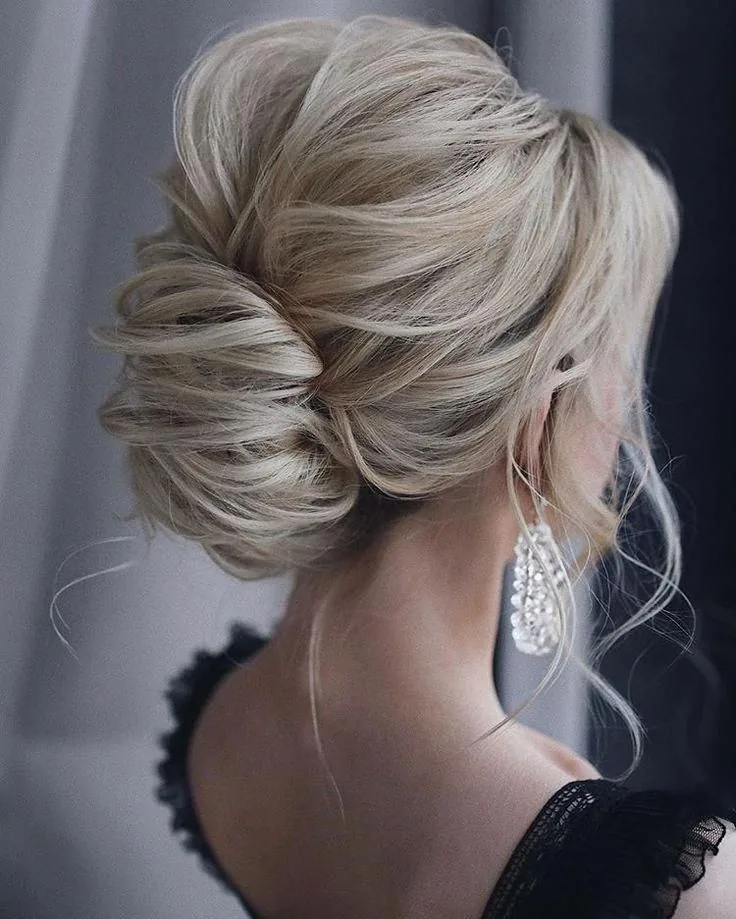
A textured low chignon with a few soft tendrils left out at the face is a softer, more romantic version of the classic low bun. The texture hides hat dents and dry ends, while the tendrils keep the look from feeling severe. It is ideal for winter evenings when you want something pretty but not fussy.
Pros:
- Texture hides hat dents and dry ends.
- Tendrils soften the face beautifully.
- Elegant for evenings, easy for daytime.
Cons:
- Tendrils can frizz in damp air.
- Needs pins and texture spray for hold.
Maintenance: Wash every 2 to 3 days and style on second-day hair for texture. Add texturising spray, pin loosely, and smooth tendrils with a tiny amount of cream. Trim every 8 to 10 weeks.
27. French Twist for Cold-Weather Evenings
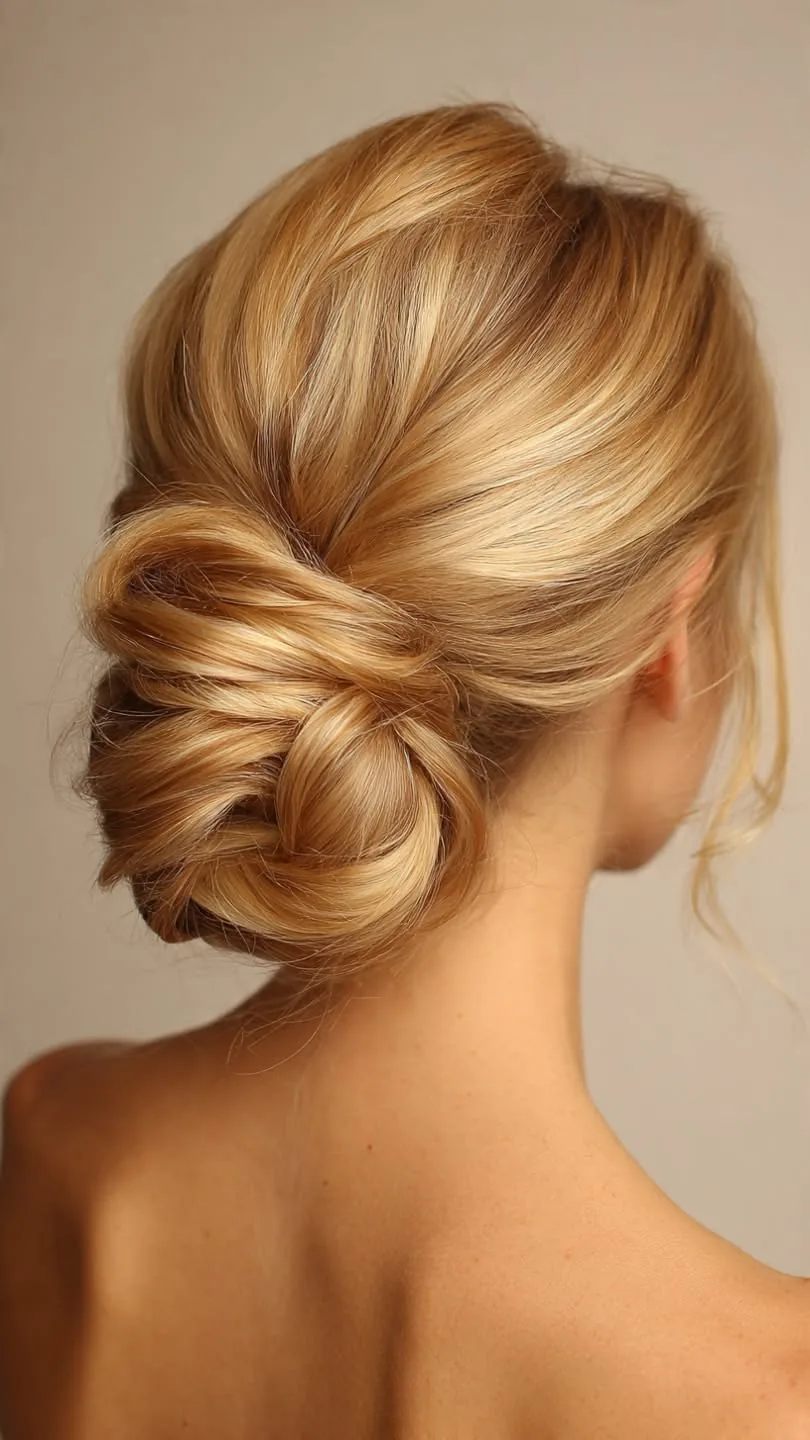
A French twist rolls the hair up vertically at the back of the head into a sleek, classic shape. It keeps every strand up and protected, looks instantly formal, and works beautifully with a high coat collar and statement earrings. It is a timeless winter evening style that needs no heat.
Pros:
- Timeless, formal evening look.
- Keeps all hair up and protected.
- Needs no heat styling.
Cons:
- Takes practice to roll neatly.
- Short layers may slip out of the twist.
Maintenance: Wash the day before for better grip and style on second-day hair. Pin along the twist, mist with flexible spray, and carry extra pins for touch-ups. Trim every 8 to 10 weeks.
28. Crown Braid with a Wool Beret
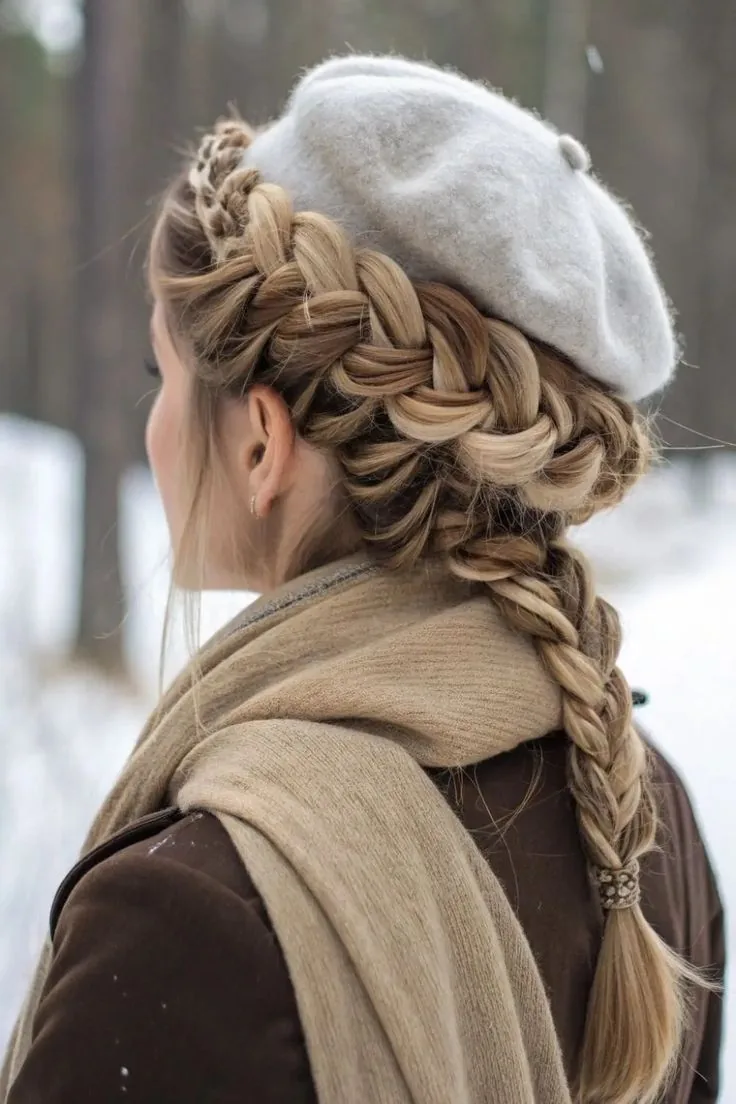
A crown braid worn with a wool beret is a match made for winter: the braid sits flat around the head, so the beret perches neatly on top without squashing anything. The braid also keeps hair fully contained on cold, windy days. Tilt the beret slightly to one side for a classic, effortless finish.
Pros:
- Beret sits neatly over a flat braid.
- Keeps all hair contained in wind.
- Chic, classic winter pairing.
Cons:
- Needs length to braid around the head.
- Beret can slip if not pinned.
Maintenance: Wash every 2 to 3 days and braid on second-day hair for grip. Pin the beret lightly to the braid if it slips. Trim every 8 to 10 weeks.
29. Twist-Out Protective Style for Natural Curls in Winter
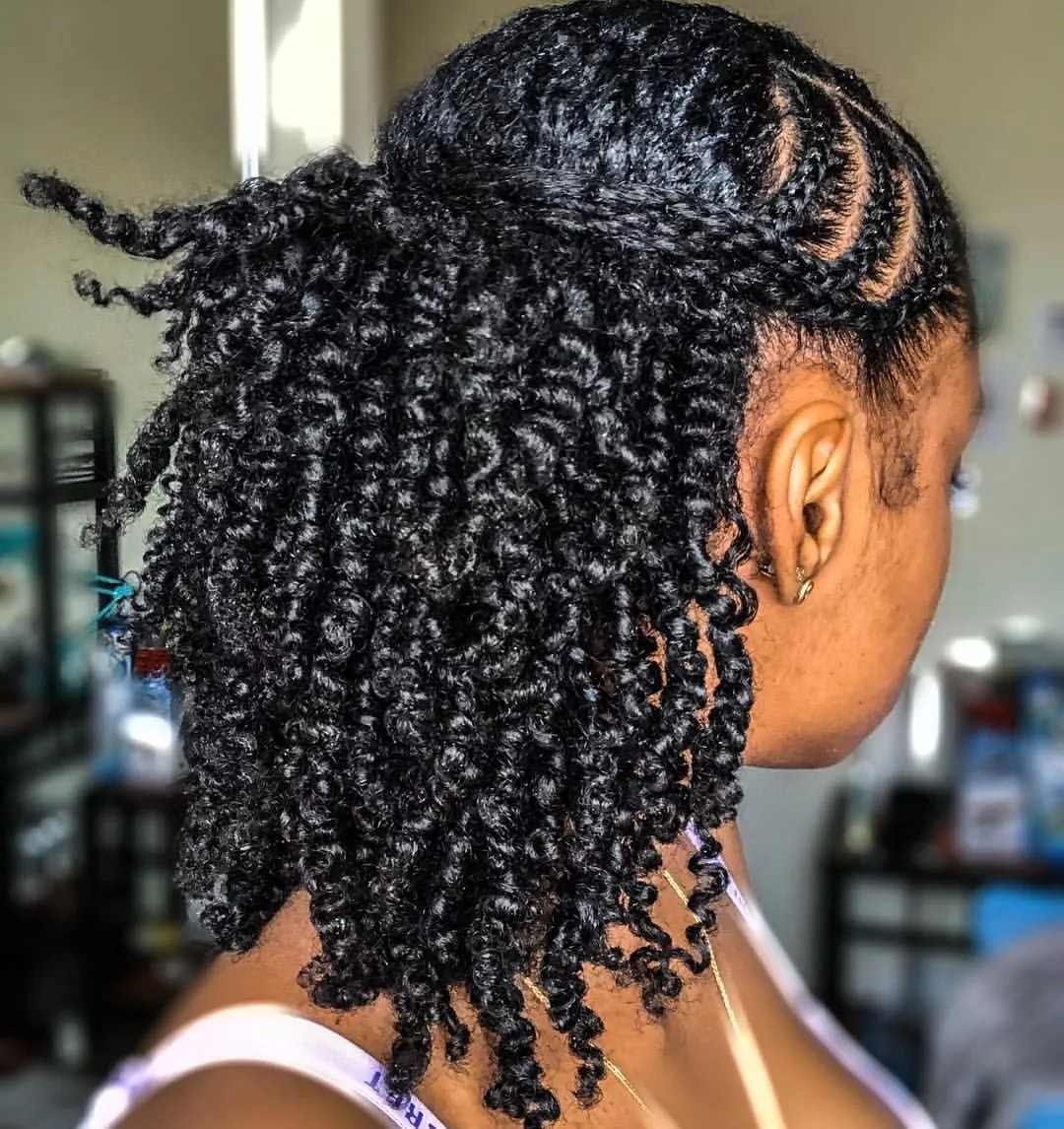
A twist-out starts with two-strand twists worn overnight or for a day, then unravelled into defined, stretched curls. For natural curls in winter, it is a gentler alternative to daily heat: twists protect the hair while it dries, and the unravelled result has stretch and definition. Seal with a butter or oil to lock in moisture against dry air.
Pros:
- Defines curls without daily heat.
- Twists protect hair while it sets.
- Stretch reduces shrinkage and tangling.
Cons:
- Takes time to twist and set.
- Definition fades in damp or snowy weather.
Maintenance: Wash weekly, twist on damp, moisturised hair, and unravel with oiled fingers. Refresh with a light mist and re-twist sections at night. Trim every 8 to 12 weeks.
30. Bantu Knots Under a Hat
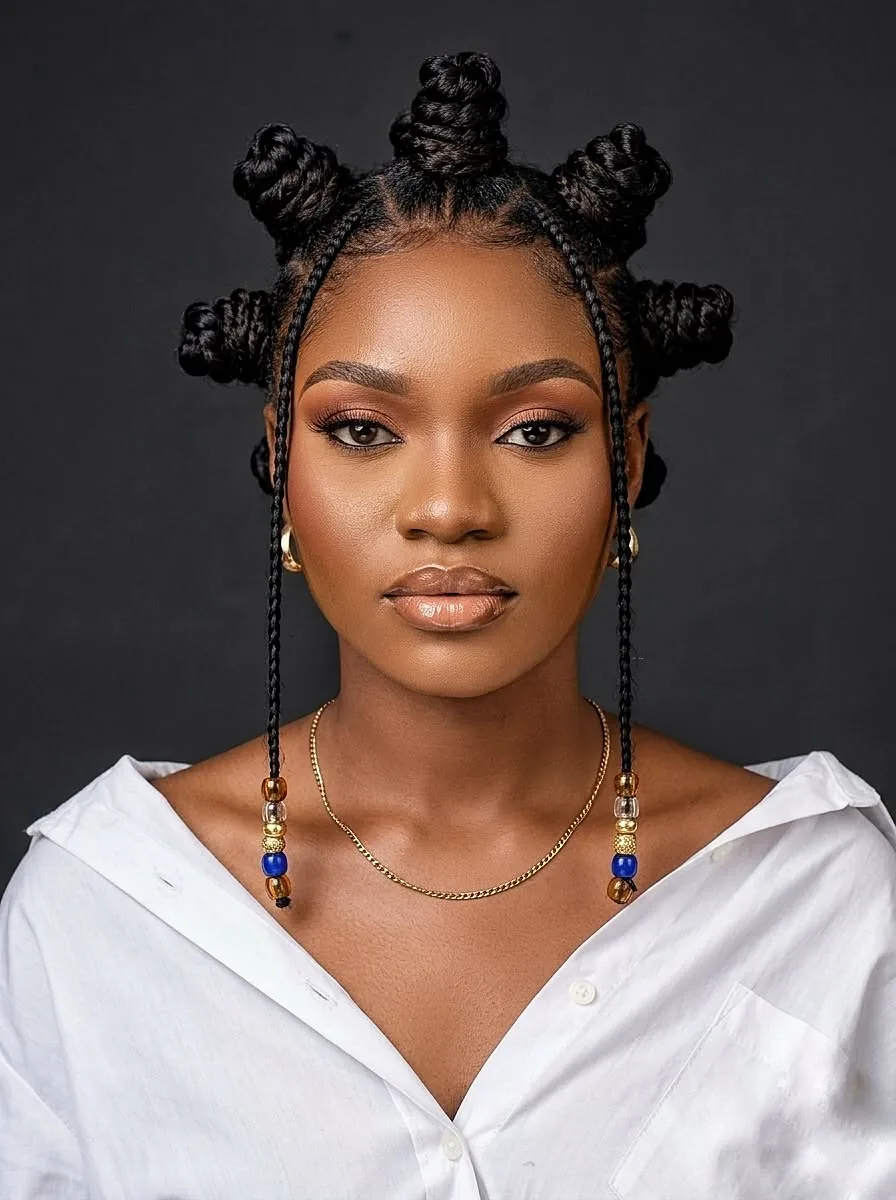
Bantu knots section the hair into small coiled knots across the head, creating a protective style that sits low and flat enough for a loose hat. They protect ends, stretch natural hair, and unravel into beautiful curls when you are ready for a change. They are a fun, bold winter style that is also genuinely practical.
Pros:
- Protective and low-profile under loose hats.
- Unravels into defined curls later.
- Bold, distinctive look.
Cons:
- Takes time to section and coil evenly.
- Tight knots can strain the scalp if done too firmly.
Maintenance: Wash weekly and moisturise the scalp between washes. Keep knots in for a few days to a week, then unravel with oiled fingers for a knot-out. Rest hair before re-knotting.
31. Low Ponytail with a Braided Wrap
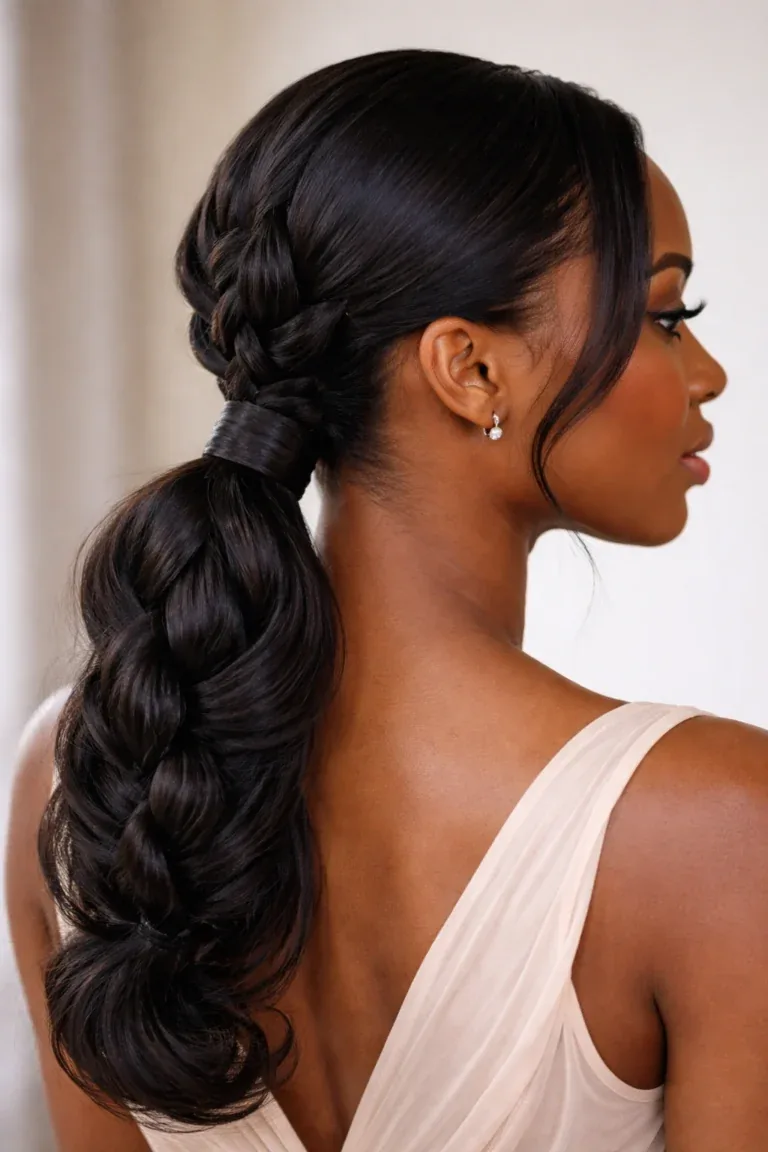
A low ponytail with a braided wrap hides the hair tie with a small braid wound around the base, giving a simple ponytail a finished, intentional look. It keeps hair low and out of coat collars, and the wrap adds grip so the ponytail slips less in winter wind. It is a small detail that makes a big difference.
Pros:
- Hides the hair tie for a polished finish.
- Extra grip helps the ponytail stay put.
- Keeps hair low and collar-friendly.
Cons:
- The wrap can unravel if not pinned.
- Needs a little extra length for the wrap.
Maintenance: Wash every 2 to 3 days and re-create daily. Wrap a thin braid around the base and pin underneath. Smooth the tail with serum and trim every 8 to 10 weeks.
32. Side-Swept Updo for Holiday Parties
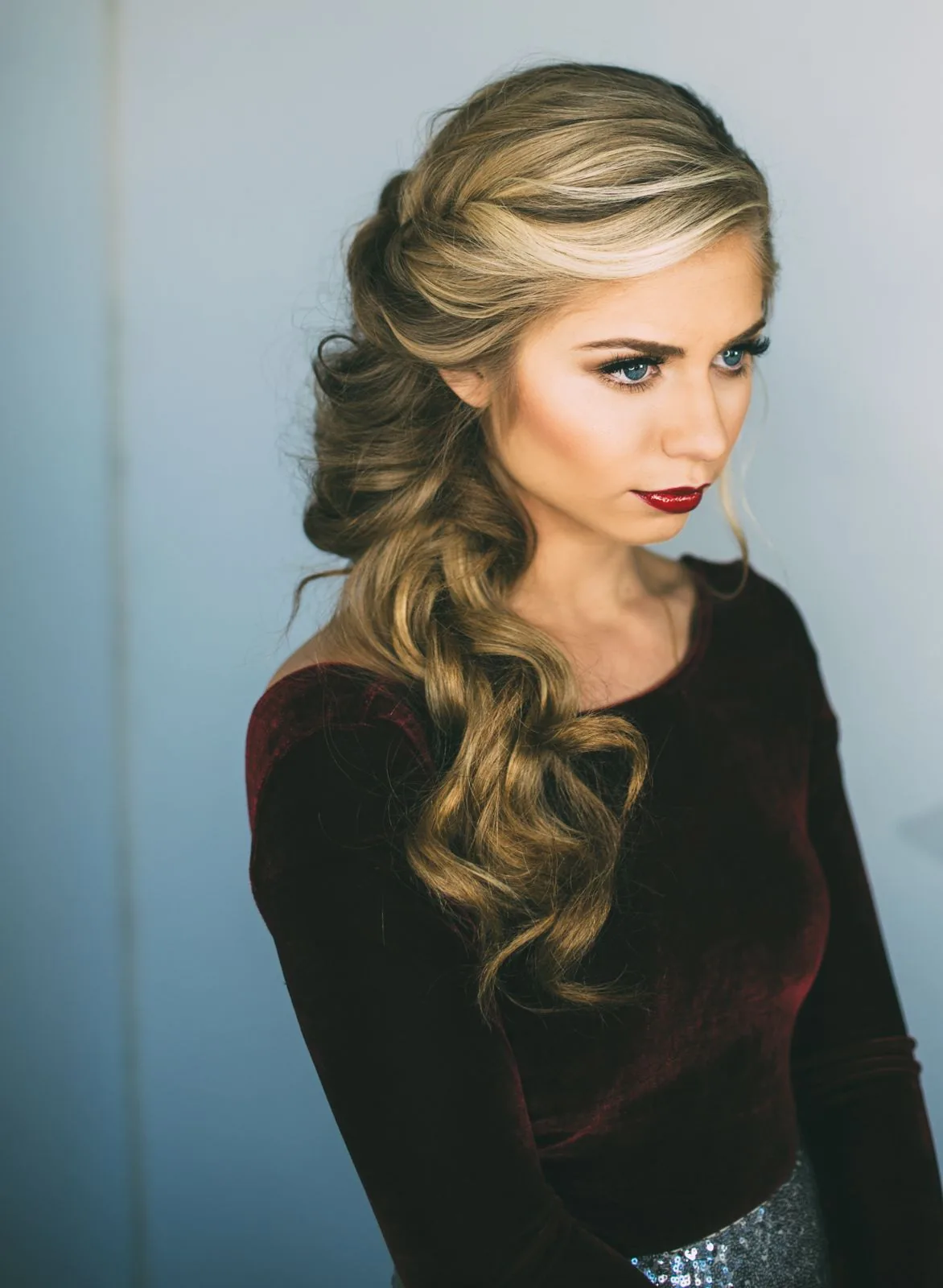
A side-swept updo gathers the hair to one side at the nape, with soft volume swept across the crown. It is festive without being fussy, keeps hair off the shoulders of a party dress or coat, and photographs beautifully in winter light. Add a simple clip or pin for a holiday touch.
Pros:
- Festive and elegant for parties.
- Keeps hair off shoulders and coats.
- Photographs beautifully.
Cons:
- Needs pins to hold the side sweep.
- Asymmetry can feel unfamiliar at first.
Maintenance: Wash the day before for grip and style on second-day hair. Pin the sweep securely and mist with flexible spray. Trim every 8 to 10 weeks and deep-condition before party season.
33. Loose Braided Ponytail for Windy Days
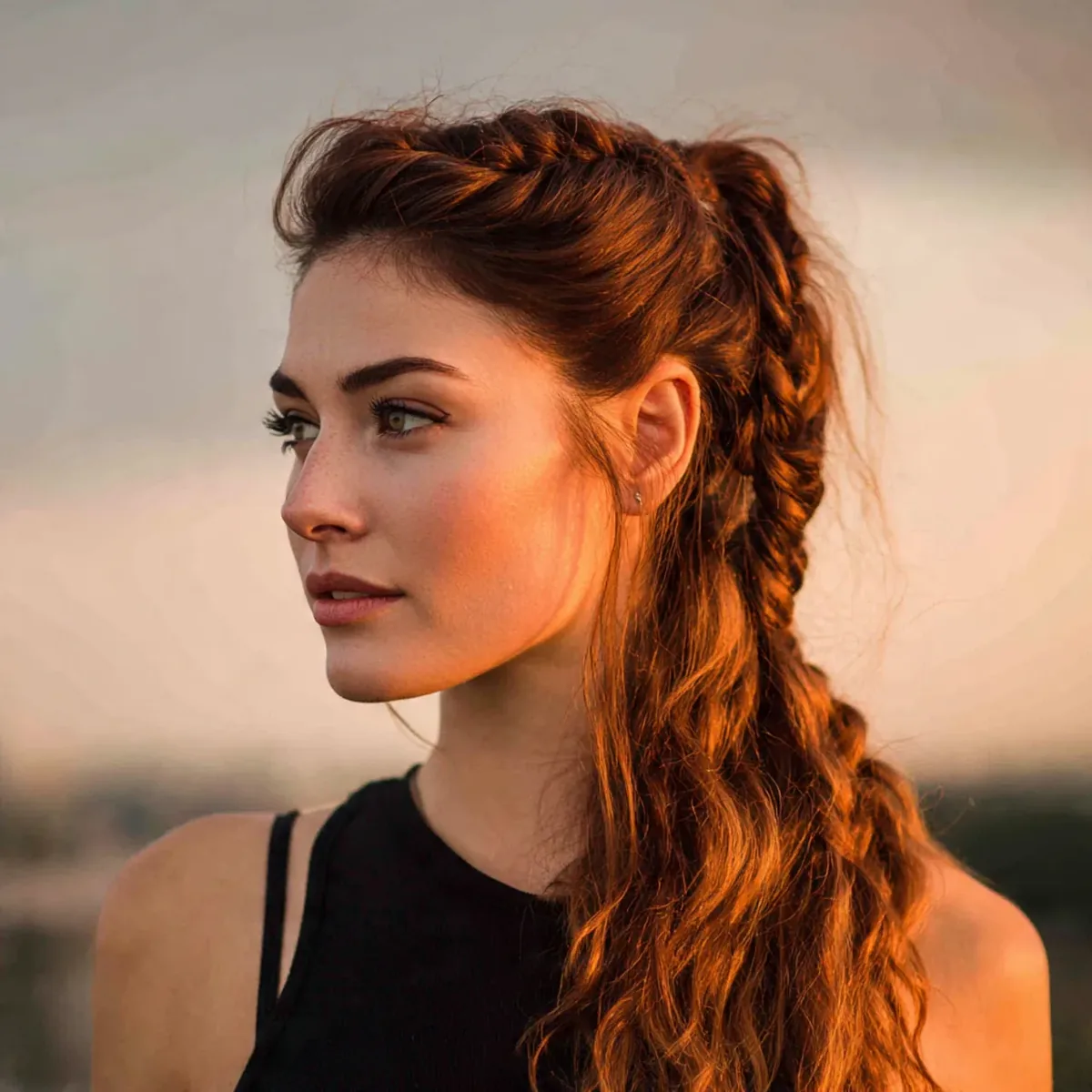
A loose braided ponytail starts as a low ponytail, then braids the tail loosely to the ends. It is the best windy-day compromise: the ponytail keeps hair together, and the braid stops the tail from whipping, tangling and frizzing. Loosen the braid slightly for a soft, winter-ready finish.
Pros:
- Stops the tail whipping and tangling in wind.
- Easy to create in under five minutes.
- Soft, relaxed winter look.
Cons:
- Can look messy if braided too loosely.
- Needs a secure band at the ends.
Maintenance: Wash every 2 to 3 days and re-braid daily on windy days. Apply leave-in conditioner before braiding and secure ends with a snag-free band. Trim every 8 to 10 weeks.
34. Tucked Ends Under a Hood
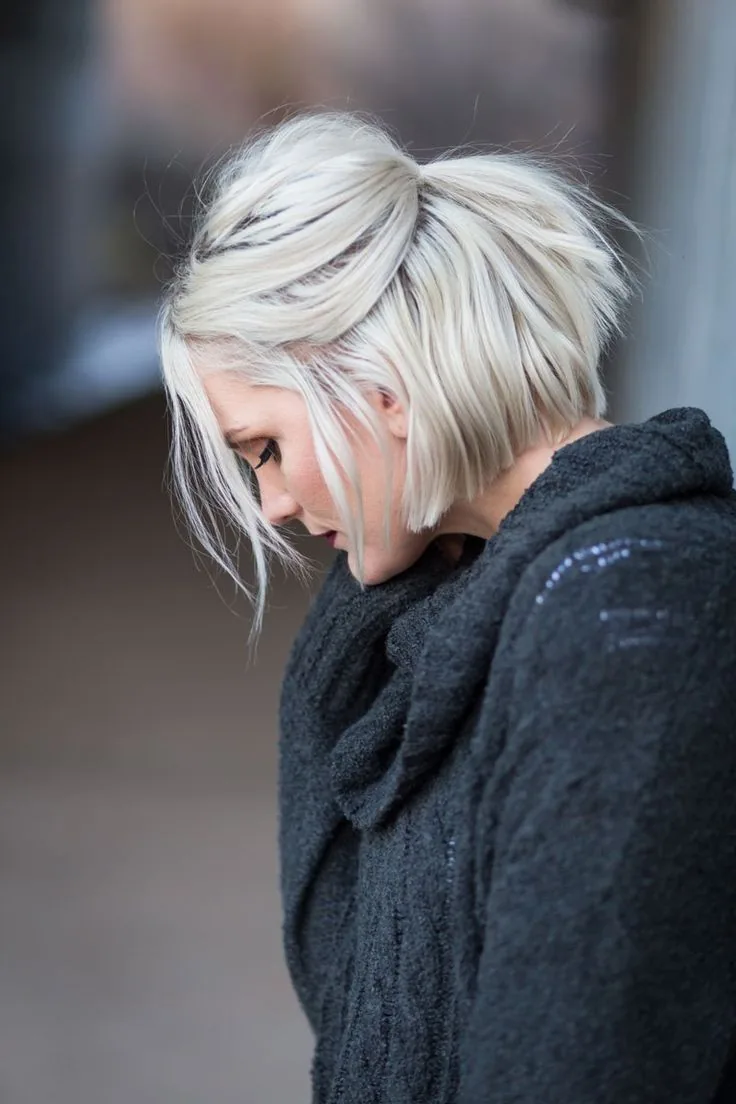
Tucked ends under a hood is less a hairstyle and more a winter survival trick: tuck the ends of your hair inside your coat, hood or scarf so they are shielded from wind, snow and wool friction. Pair it with a low bun, a braid or a low ponytail underneath. It is the simplest way to protect fragile ends on the coldest days.
Pros:
- Simplest protection for fragile ends.
- Works over any low style underneath.
- Shields ends from wind, snow and friction.
Cons:
- Can look bulky if too much hair is tucked.
- Ends may need re-tucking after removing the hood.
Maintenance: Wash every 2 to 3 days and always tuck ends on the coldest, windiest days. Oil the ends lightly before tucking and check for tangles when you untuck indoors. Trim every 8 to 10 weeks.
Protective Styles for the Cold Months
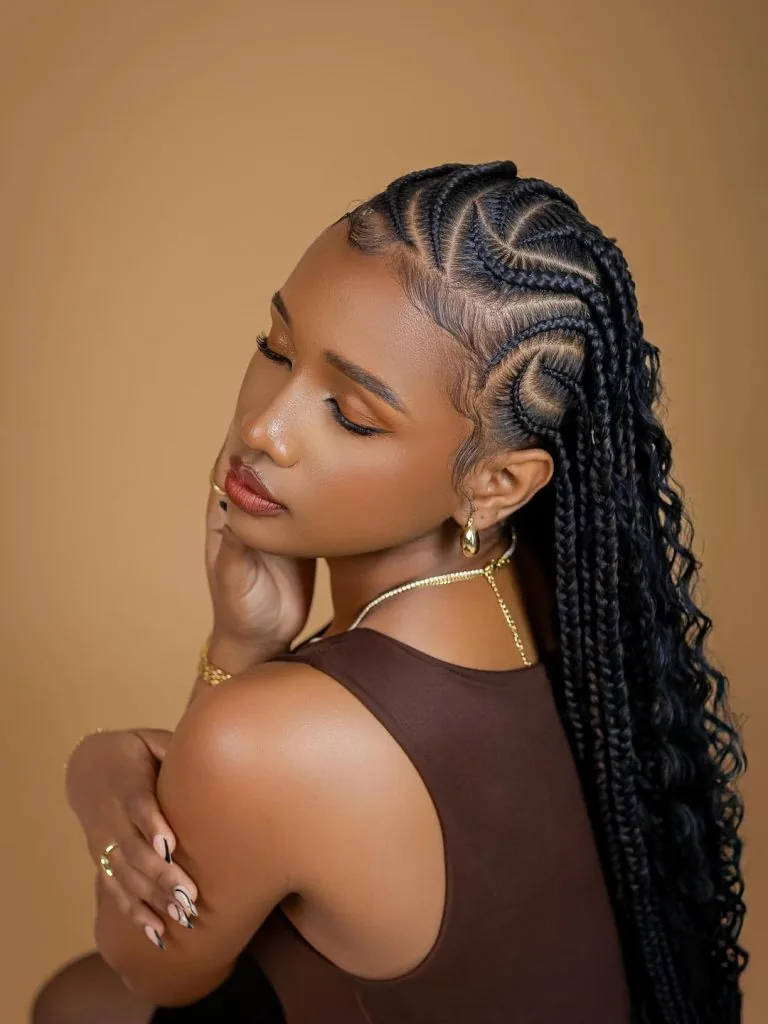
A protective style keeps your ends tucked away and reduces how often you manipulate, brush, heat-style and wash your hair. In winter, that matters even more, because cold air and wool friction attack exposed ends first. Braids, twists, buns and knots all count, as long as they are not pulled too tight and you still moisturise the scalp.
The key rule is low tension. A protective style should never hurt, pull at the hairline, or cause bumps and soreness. Keep braids and twists in for a few weeks at most, moisturise regularly, and give your hair a rest between installs. Protection should feel comfortable, not punishing.
A Simple Winter Hair Care Routine
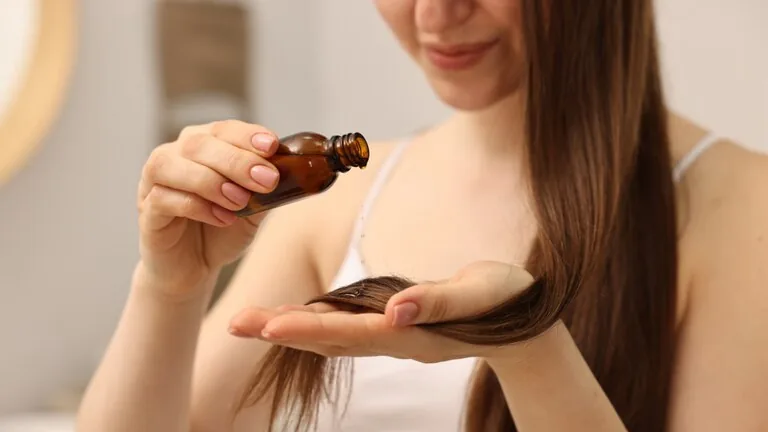
Keep winter hair care simple so you actually stick to it. Wash every 2 to 4 days instead of daily, use lukewarm water, and follow every wash with conditioner focused on the lengths and ends. Once a week, swap conditioner for a deep-conditioning mask and leave it on for 10 to 15 minutes.
Between washes, seal ends with a drop of oil, sleep on a satin pillowcase or in a satin bonnet, and line wool hats with silk or satin where possible. Trim every 8 to 10 weeks, even in winter, because split ends travel upward and make dryness worse. Small, consistent habits beat occasional expensive treatments.
Hat-Friendly Styles That Survive Being Covered

The best hat-friendly styles share three traits: they sit low, they sit flat, and they do not rely on root volume. Low chignons, knotted buns, braids, twists and cornrows all pass that test. High ponytails, big blowouts and top knots under a tight beanie do not, because the hat crushes exactly what makes them look good.
If you love volume, save it for hat-free days, or wear a looser hat like a beret or a slouchy beanie that leaves room on top. When you take a hat off, flip your head upside down, shake the roots gently, and add a little dry shampoo at the crown. Never brush hat hair aggressively, as that creates frizz and static.
What to Ask Before a Winter Cut
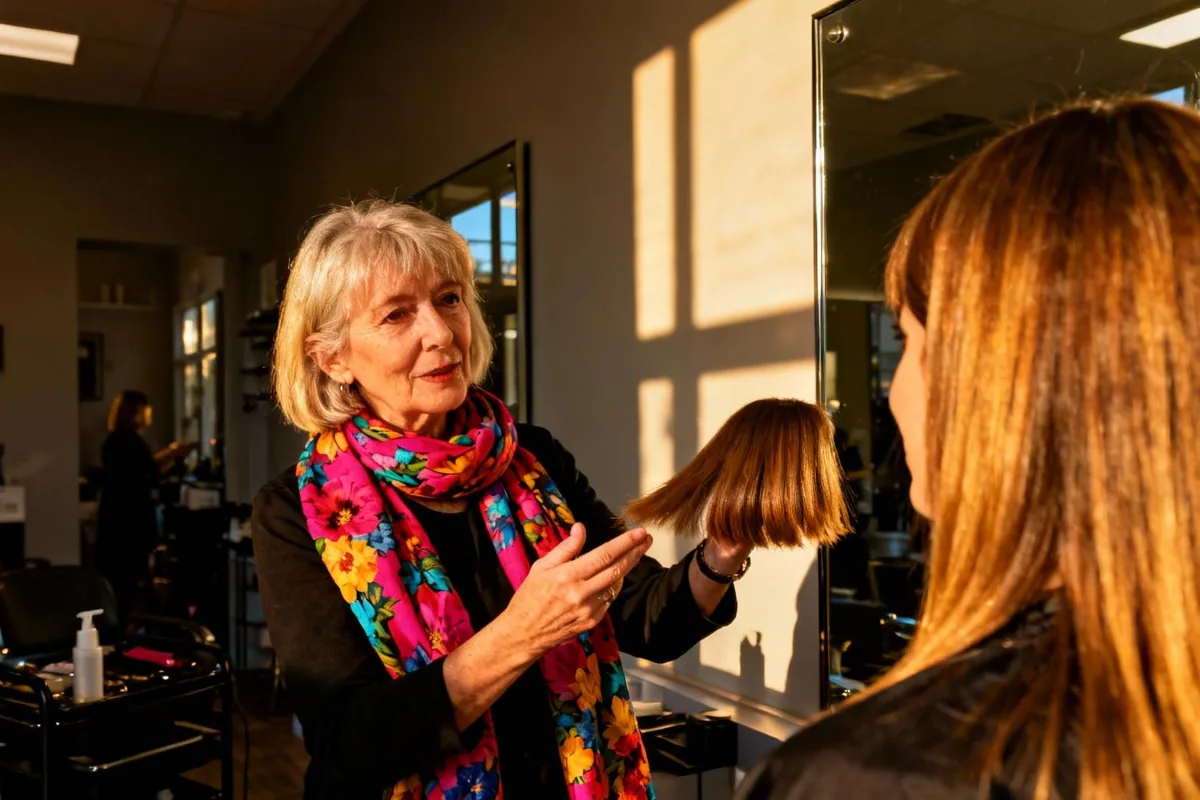
Before a winter cut, tell your stylist how you actually wear your hair in cold weather: how often you wear a hat, whether you braid it, and whether you heat-style it. A cut that looks perfect loose in the salon may behave very differently under a beanie. Ask how the cut will sit under a hat and whether layers will poke out of braids.
Also ask about length and ends. Keeping a little extra length through winter gives you more options for buns and braids, and blunt, healthy ends tangle less than thin, wispy ones. Ask for a trim that removes split ends without losing the length you need for protective styles.
What are the best winter hairstyles for women?
The best winter hairstyles are low buns, braids and twists that protect ends and sit flat under hats.
Low chignons, French braids, double Dutch braids, cornrows and knotted buns all survive cold wind, hats and scarves far better than loose, heat-styled hair. Choose a style that still looks good when you take your hat off.
How do I stop static in winter hair?
Use moisture and smoothness to stop static: condition well, add a little leave-in cream or serum, and reduce friction with satin or silk.
A satin-lined hat, a silk scarf under a wool hat, and a satin pillowcase all help. Avoid brushing dry hair aggressively, which builds up more static.
What hairstyles work best under a beanie?
Low, flat styles work best under a beanie, such as a low chignon, double Dutch braids, cornrows, a knotted low bun or a side braid into a low bun.
High ponytails and voluminous blowouts get crushed by a beanie, so save those for hat-free days or wear a looser, slouchy hat.
How often should I wash my hair in winter?
Most people can wash every 2 to 4 days in winter, rather than daily.
Washing less often preserves natural oils that protect hair from cold, dry air. On non-wash days, refresh roots with dry shampoo and smooth ends with a drop of oil or leave-in conditioner.
Are braids good protective styles for winter?
Yes, braids are excellent winter protective styles because they keep ends tucked away and reduce daily manipulation, friction and tangling.
French braids, Dutch braids, box braids and cornrows all protect hair, as long as they are not braided too tightly. Keep tension low and moisturise the scalp regularly.
How can I protect my hair from cold wind and snow?
Tuck your ends away in a bun, braid or twist, and cover them with a hood, scarf or coat collar on the coldest days.
Apply a little oil to the ends before going out, and dry hair fully indoors before bed if it gets wet in snow. Wet hair is more fragile and more likely to break in cold air.
Why does my hair get so dry in winter?
Winter air holds less moisture, and indoor heating dries the air even further, so hair loses moisture from both sides.
Hot showers, frequent washing and wool friction make dryness worse. Richer conditioner, weekly deep-conditioning masks, less frequent washing and protective styles all help restore moisture.
What is the best hat for hair in winter?
A satin- or silk-lined hat is best for winter hair, because the smooth lining reduces friction, static and breakage.
If your favourite wool hat is unlined, wear a thin silk scarf underneath it. Looser hats, such as slouchy beanies and berets, also flatten hair less than tight beanies.
Should I still trim my hair in winter?
Yes, trim every 8 to 10 weeks even in winter.
Split ends travel upward and make dry, brittle winter hair worse, and healthy blunt ends tangle less and hold braids and buns better. A small trim removes damage without losing the length you need for protective winter styles.
Can I wear my hair down in winter?
Yes, you can wear hair down in winter, especially indoors, but protect it outdoors with a scarf, hood or loose braid.
If you wear it down outside, apply serum to the ends first and avoid letting it rub against wool coats for hours. On very cold or windy days, a low braid or bun is kinder to your ends.
Conclusion
Winter hair does not need complicated routines or constant heat styling. It needs protection: ends tucked away, friction reduced, moisture sealed in, and styles that work with hats instead of fighting them. A low bun, a braid or a twist on a cold morning will do more for your hair by spring than any single expensive product.
Start with one style from this guide that fits your hair and your day, and build from there. Try a low chignon for beanie days, double Dutch braids for snow days, and a French twist when you want to feel polished. With the right winter hairstyle, cold days and hat season can actually be good hair days.