Styles That Draw the Eye Up: Lovely Hairstyles for a Double Chin, Whatever Your Length
First, something worth saying plainly: a double chin is completely normal. Weight, age, posture, genetics and even camera angles all play a part, and none of them says anything about how you look overall. This guide is not about hiding or fixing anything. It is about hairstyles that draw the eye upward, to your eyes, your cheekbones and your smile, because that is where the most interesting parts of your face already are.
Here you will find 32 hairstyles for a double chin, from long layers and face-framing cuts to bobs, pixies, curls and updos. For each style, this guide notes who might want to skip it, what it costs in time and money, and simple styling steps, so you can choose honestly and kindly, without any pressure to look a particular way.
Drawing the Eye Up: The Gentle Principle
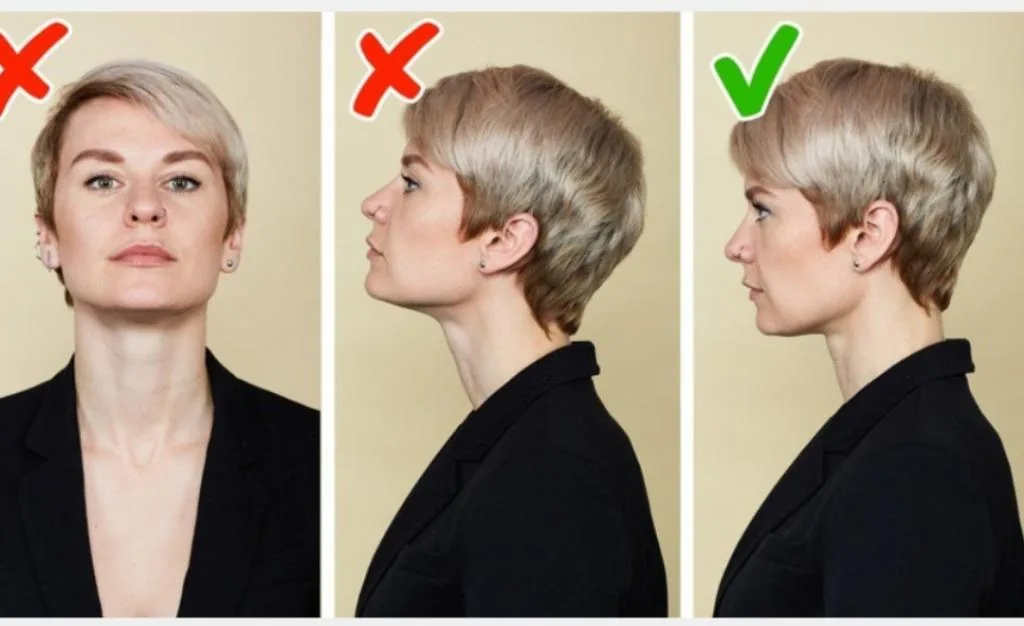
Every style in this guide works on one gentle principle: put the interest higher up. Layers that start at the cheekbone, bangs that frame the eyes, volume at the crown and colour that brightens the face all pull attention upward. Nothing here is about covering the chin, because covering rarely works and usually just draws more attention to the area.
The opposite also helps to know: styles that end in a hard line exactly at the chin, or that add a lot of bulk right at jaw level, tend to emphasise the chin area simply by framing it. Softening that line, or moving the weight higher or lower, is usually all it takes to change the effect completely.
Length Matters More Than You Think
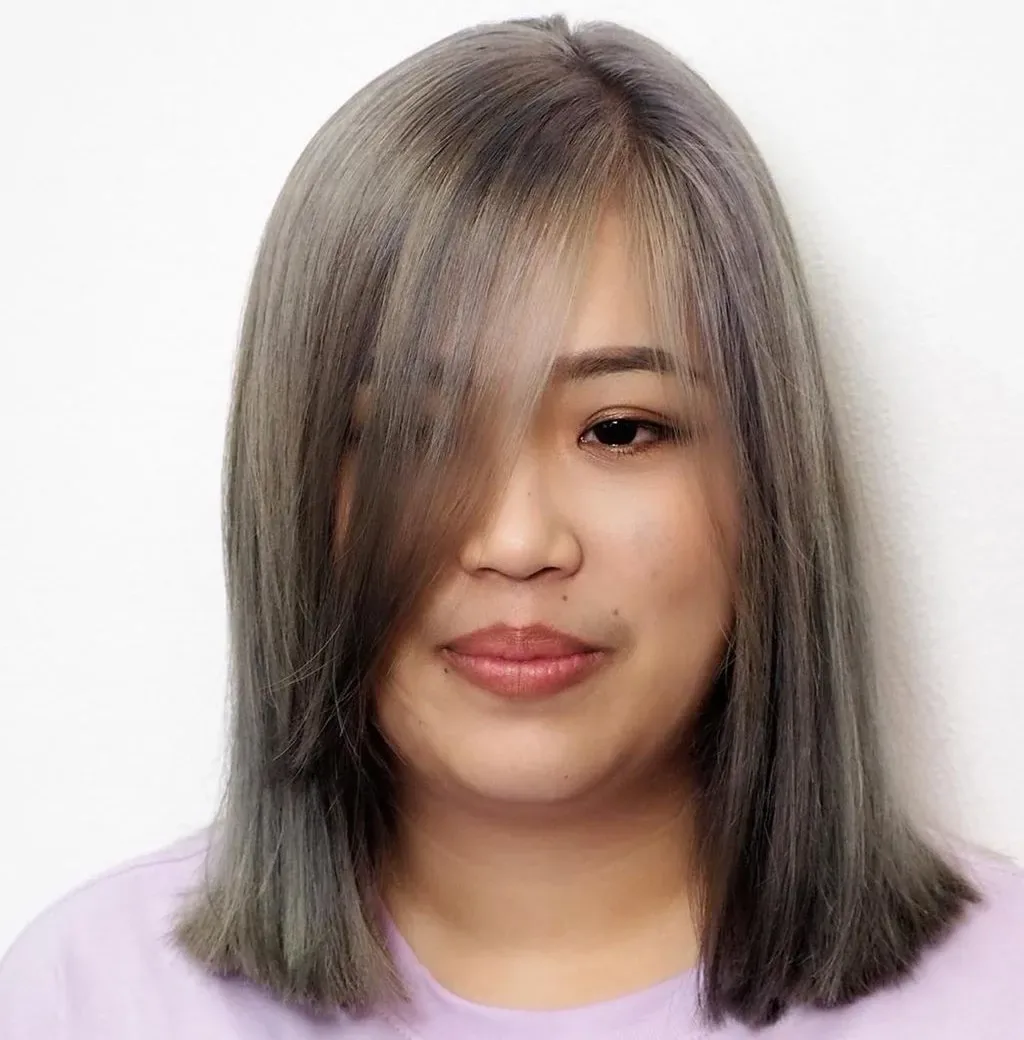
Length is the single biggest lever for a double chin, and the sweet spot is usually either clearly above the chin or clearly below it. A bob that ends at the cheekbone, a pixie with a long fringe, or long layers that fall past the shoulders all keep the eye away from the chin line. A cut that ends exactly at the chin, with a blunt edge, is the one length to be careful with.
That does not mean chin-length hair is forbidden. A chin-length cut with soft, textured ends, waves, or a side part can look wonderful, because the softness breaks the line. It is the combination of chin length plus a hard, blunt edge that tends to frame the chin most strongly.
Layers, Angles and Where They Fall
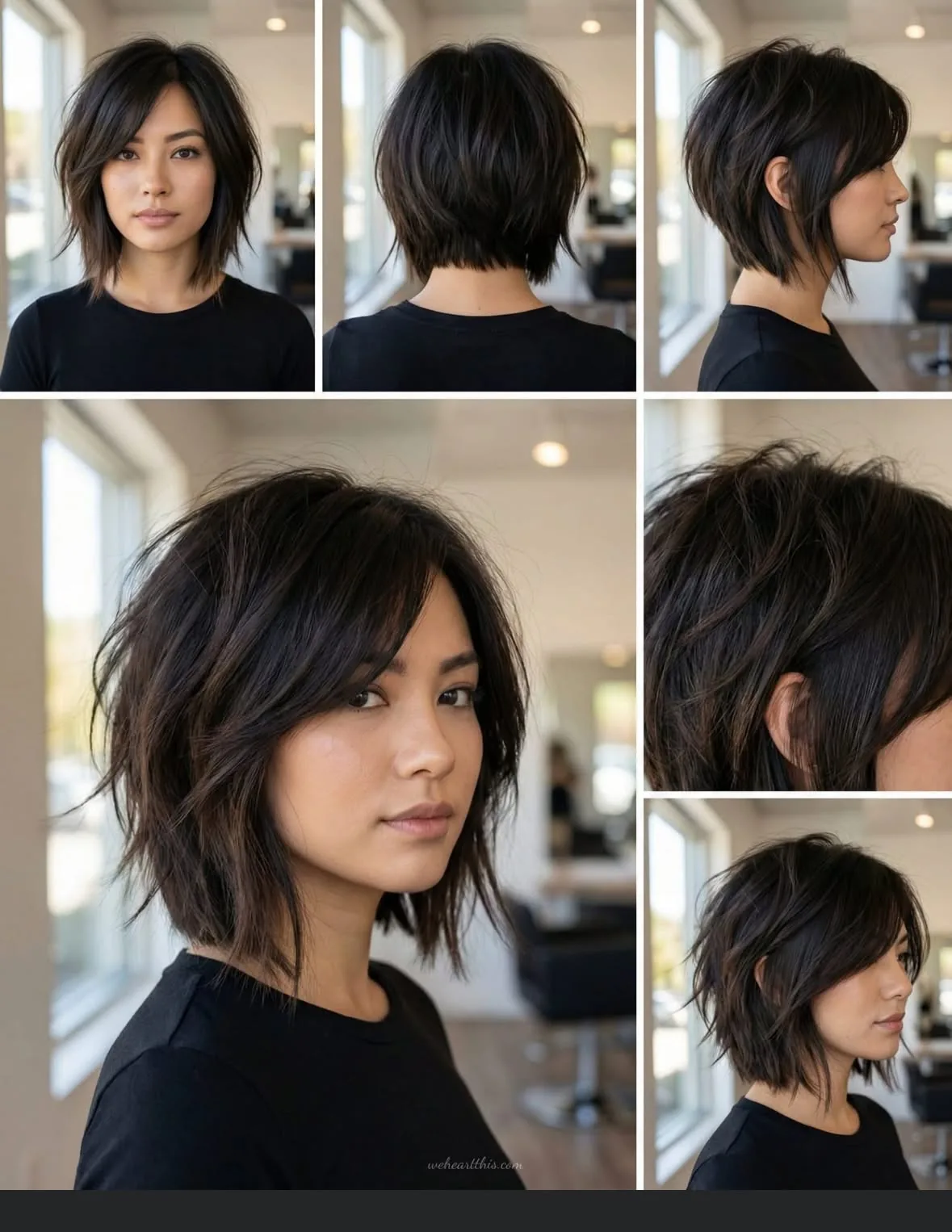
Layers are your best friend here, because they break up outlines. Long layers starting at the cheekbone create a diagonal that leads the eye up and out. Face-framing layers that curve away from the face do the same thing more softly. The key detail is where the shortest layer falls: at the cheekbone or above is flattering, while a shortest layer that stops right at the chin can frame it.
Angles work the same way. A side part, a diagonal fringe, an asymmetrical lob or a side-swept bang all add a line that is not horizontal, and horizontal lines are what emphasise width at any level of the face. One good diagonal in a cut is often enough to change the whole balance.
Bangs and Face-Framing That Lift

Bangs lift the whole face visually, because they put the focus on the eyes and forehead. Curtain bangs, side-swept bangs and wispy fringes all do this kindly, and they pair with almost any length. A full, heavy blunt fringe can also work, but it needs to suit your face shape, or it can add weight where you least want it.
Face-framing pieces are the softer cousin of bangs. Long pieces that start at the cheekbone and curve outward draw the eye to the cheekbones, while shorter pieces that curl inward at the chin can do the opposite. Ask your stylist to cut framing pieces that flick out or fall straight, not ones that tuck in at chin level.
1. Long Layers Starting at the Cheekbone
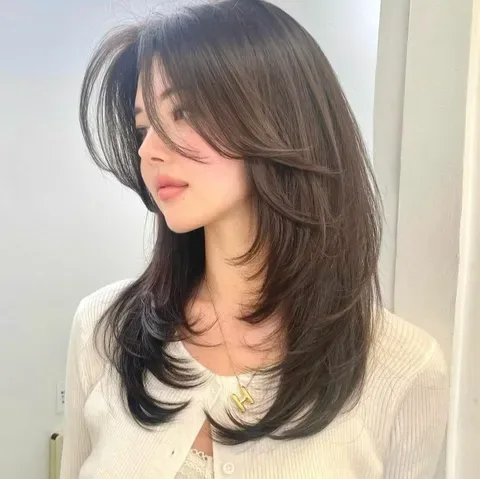
Long layers that start at the cheekbone create a diagonal line that leads the eye up and out, away from the chin. The lengths fall well past the chin, so nothing frames it, and the whole face looks lifted and soft.
Who should skip it: Skip if you want a blunt, one-length look with no layers at all.
Cost and time: Cut: standard salon price. Daily styling: 10 to 15 minutes with a blow-dry, or air-dry for a softer finish.
Styling steps: Blow-dry the face layers forward and outward, smooth the lengths, and finish with a drop of serum.
2. Curtain Bangs With Long Hair
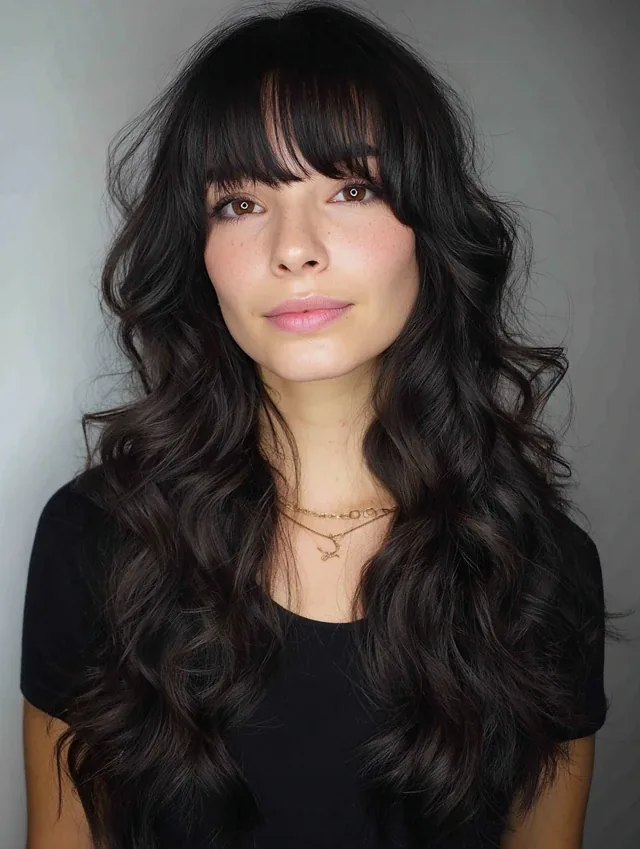
Curtain bangs frame the eyes and cheekbones, putting the focus high on the face. With long hair underneath, the eye travels from the bangs down the long lengths, passing the chin without stopping there.
Who should skip it: Skip if you dislike any fringe maintenance or regular bang trims.
Cost and time: Cut: standard price. Bang trims every 3 to 4 weeks, often free or low-cost. Daily styling: 5 minutes.
Styling steps: Blow-dry the bangs forward, then sweep each side out with a round brush.
3. Side-Swept Bangs With a Midi Cut
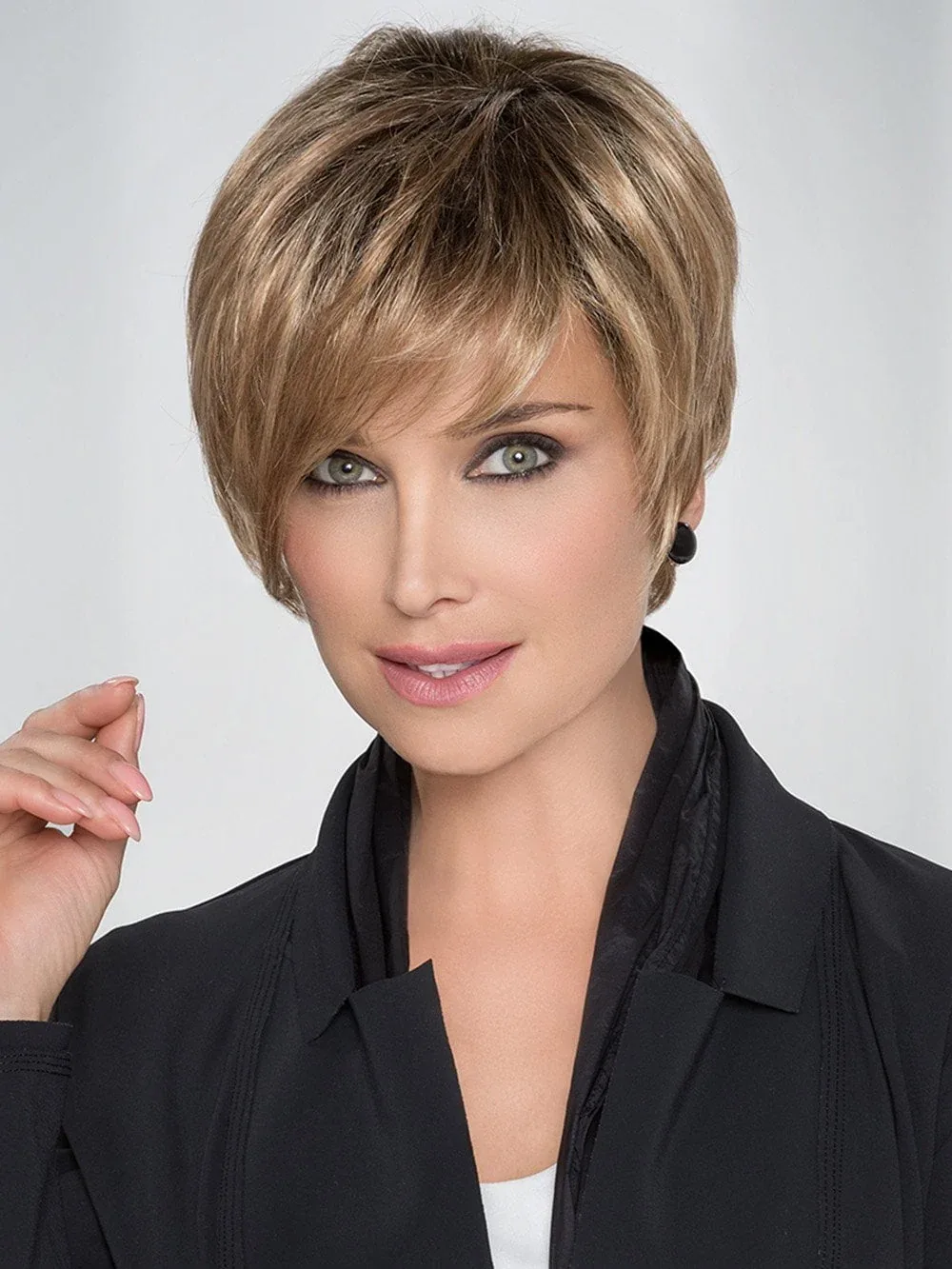
Side-swept bangs add a diagonal across the forehead, and a midi cut keeps length below the chin. Together they give the face a gentle upward sweep that is very flattering.
Who should skip it: Skip if your hair is very curly and the sweep will not stay in place without a lot of heat.
Cost and time: Cut: standard price. Daily styling: 5 to 10 minutes.
Styling steps: Blow-dry the fringe to one side with a round brush, bend the midi ends slightly inward, and set lightly.
4. Textured Lob Below the Jaw
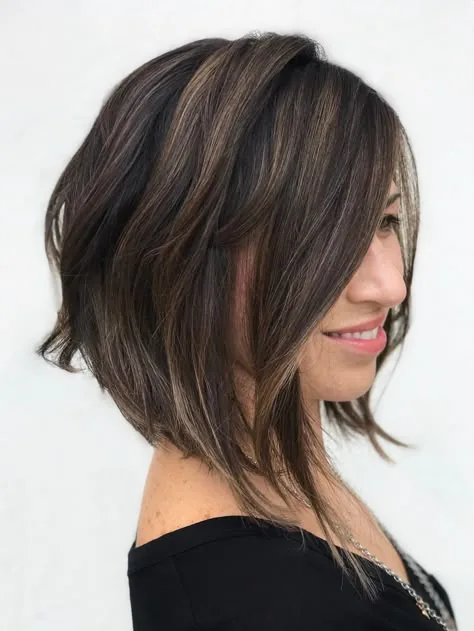
A textured lob that ends clearly below the jaw avoids the chin line altogether. The texture breaks up the ends, so there is no hard line to frame the chin, and the length is easy to wear every day.
Who should skip it: Skip if you specifically want a short bob; this lob is deliberately longer.
Cost and time: Cut: standard price, trim every 6 to 8 weeks. Daily styling: 5 to 10 minutes.
Styling steps: Blow-dry with a side part, add texturising spray, and shake out for soft texture.
5. Wavy Bob Above the Chin
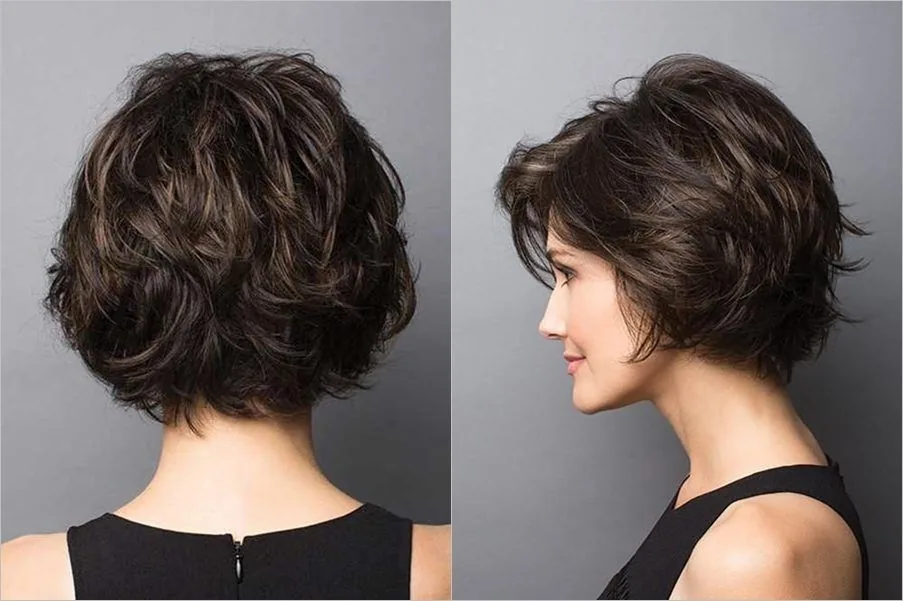
A wavy bob that ends above the chin, at the cheekbone, draws the eye to the cheekbones instead. The waves add softness, and because the cut ends well above the chin, it never frames it.
Who should skip it: Skip if you want to keep your hair long, or if very short bobs feel too bold.
Cost and time: Cut: standard price, trim every 6 weeks. Daily styling: 10 minutes with a wand.
Styling steps: Twist sections around a wand, shake out into soft waves, and set with flexible spray.
6. Pixie With a Long Side Fringe
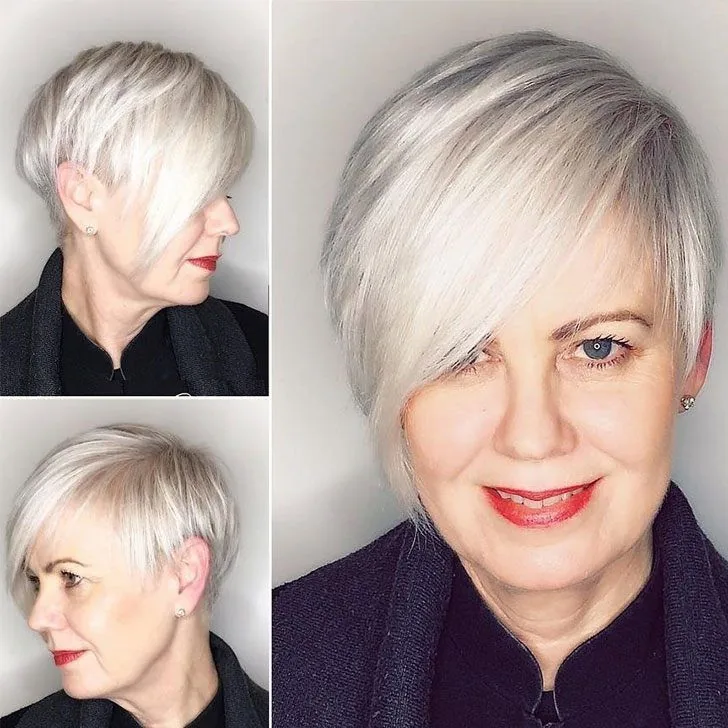
A pixie with a long side fringe puts all the interest at the eyes and forehead. The short back and sides keep the neck area clean, and the long fringe sweeps diagonally for a lifted look.
Who should skip it: Skip if you are not ready for frequent trims or a short back.
Cost and time: Cut: standard price, trim every 4 to 5 weeks. Daily styling: 5 minutes.
Styling steps: Blow-dry the fringe to one side, keep the sides smooth, and set with light wax.
7. Shoulder-Length Layers With Volume at the Crown
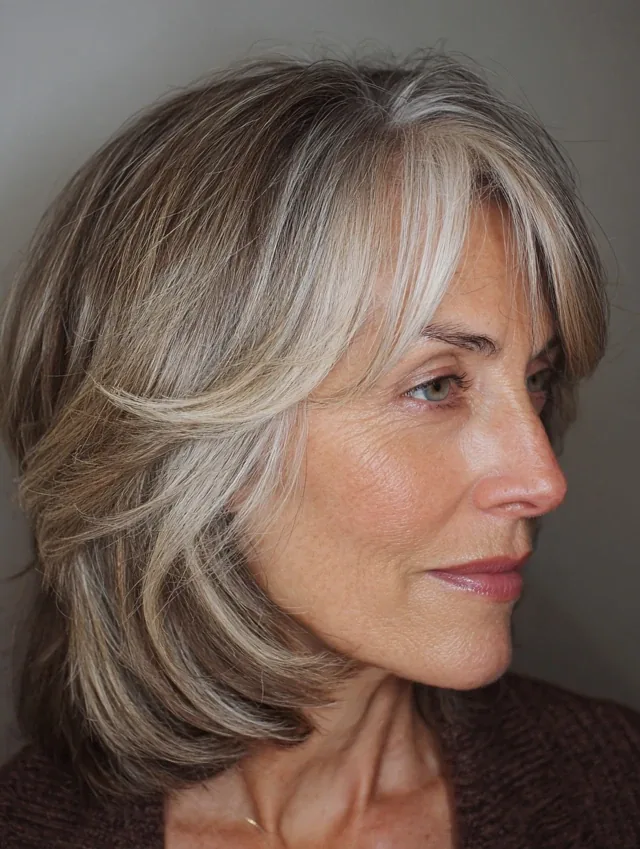
Shoulder-length layers with volume at the crown lengthen the face visually. The crown lift draws the eye up, and the layers fall past the chin without framing it.
Who should skip it: Skip if you prefer completely flat, sleek hair with no root lift.
Cost and time: Cut: standard price. Daily styling: 10 minutes with mousse and a round brush.
Styling steps: Apply mousse at the roots, blow-dry with lift at the crown, and let the layers fall.
8. Feathered Layers With a Side Part
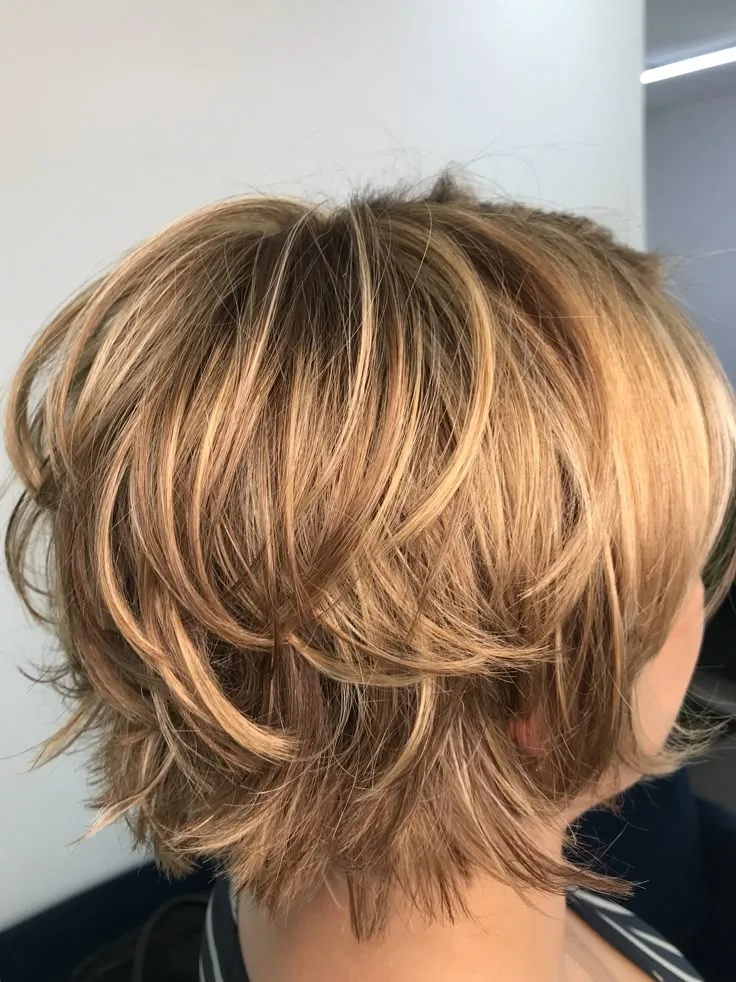
Feathered layers taper softly and never form a hard line at the chin. A side part adds a diagonal, and the feathering keeps the whole outline gentle and moving.
Who should skip it: Skip if you want a sharp, geometric cut.
Cost and time: Cut: standard price, trim every 8 weeks. Daily styling: 5 to 10 minutes.
Styling steps: Blow-dry or air-dry, wrap a few sections around a wand, and brush out lightly.
9. Beach Waves on Long Hair
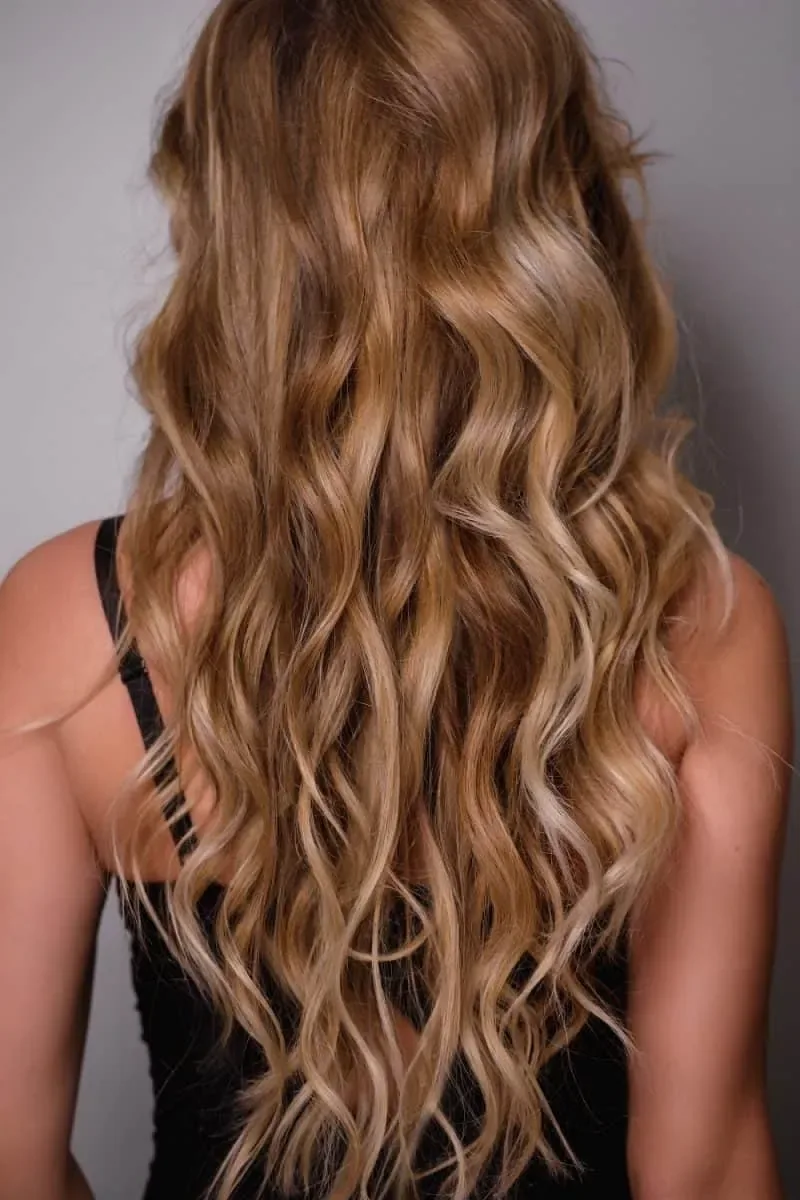
Beach waves on long hair add texture and movement that keeps the eye travelling down the lengths. The waves start below the chin, so the chin area itself is never the focus.
Who should skip it: Skip if your hair is very fine and will not hold waves without a lot of product.
Cost and time: Cut: standard price. Daily styling: 10 minutes, or braid overnight for no-heat waves.
Styling steps: Apply sea salt spray, braid loosely overnight or twist sections around a wand, and shake out.
10. Loose Curls With Long Layers
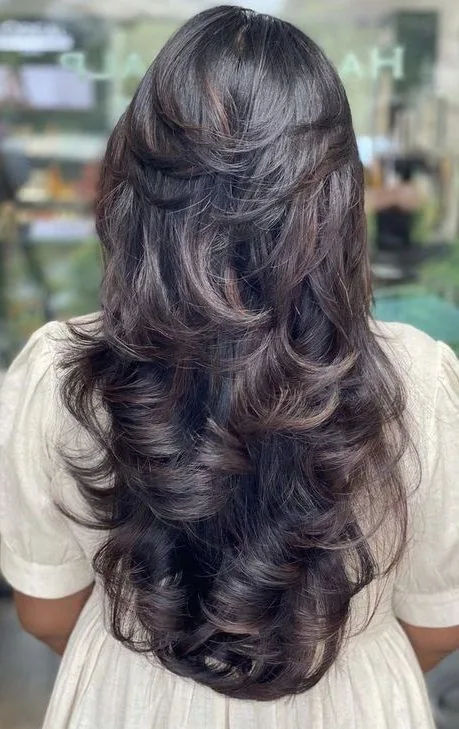
Loose curls with long layers give the face curves and volume that sit below the chin. The curls draw attention to the hair itself, and the long layers keep the shape soft.
Who should skip it: Skip if you dislike the drying time curly hair needs.
Cost and time: Cut: standard price, ideally a curly cut. Daily styling: 15 minutes to diffuse.
Styling steps: Apply curl cream, scrunch and diffuse on low heat, and avoid brushing dry curls.
11. Deep Side Part With Glam Waves
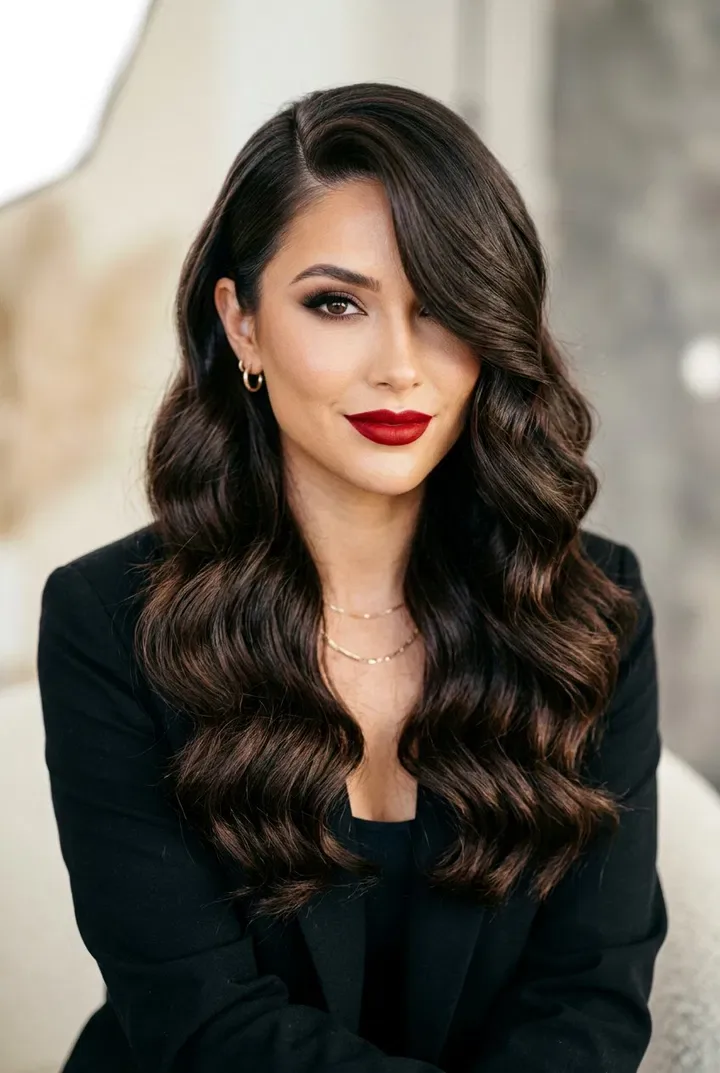
A deep side part with glam waves is a beautiful evening style that lifts the whole face. The diagonal part and the sweeping waves both draw the eye up and across, never down to the chin.
Who should skip it: Skip for everyday wear if you do not have time for heat styling.
Cost and time: Cut: standard price. Styling: 20 to 30 minutes, best for occasions.
Styling steps: Part deeply to one side, curl large sections in one direction, brush out into waves, and set with spray.
12. Half-Up Style With Crown Volume
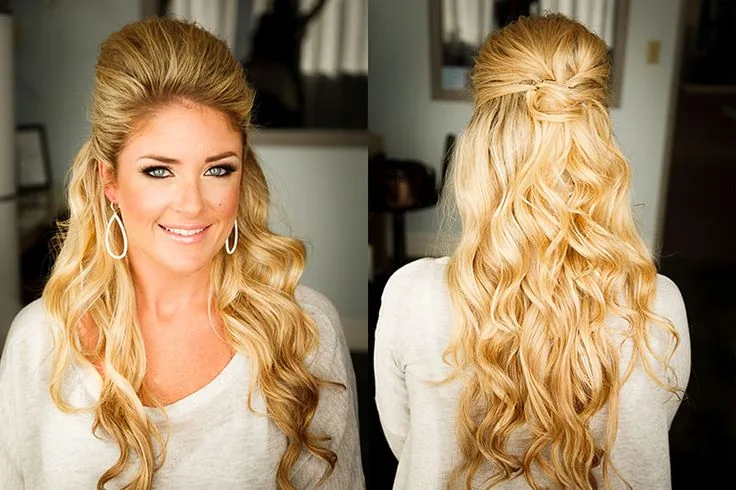
A half-up style with crown volume lifts the face and keeps the hairline soft. The top section is pulled back, the crown has height, and the lengths fall past the chin.
Who should skip it: Skip if you prefer all your hair down.
Cost and time: No extra cost. Styling: 5 to 10 minutes.
Styling steps: Pull the top section back loosely, add crown lift, pin softly, and pull out temple pieces.
13. Low Loose Bun With Soft Temple Pieces
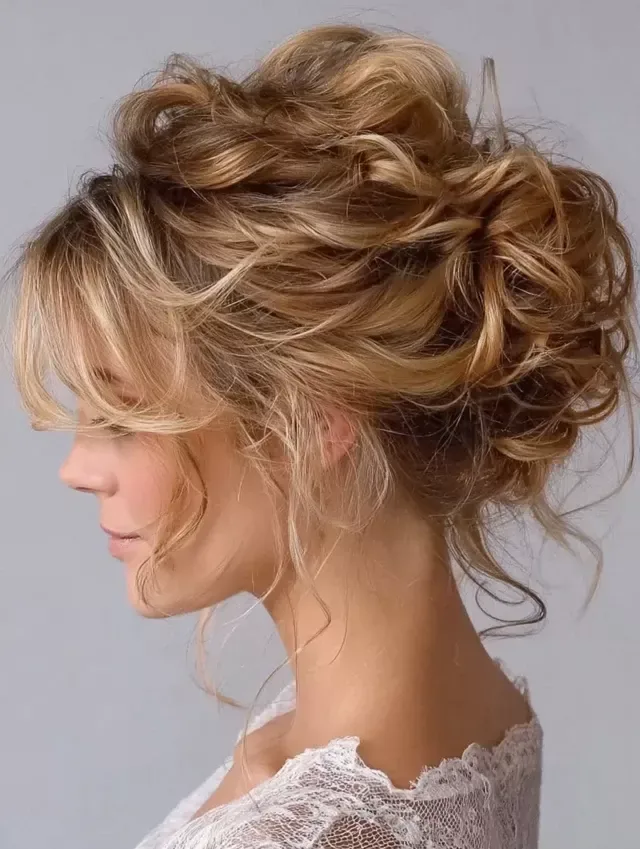
A low, loose bun with soft temple pieces is elegant and flattering. The looseness is essential: it keeps the face soft, while the bun itself shows off the neck and shoulders.
Who should skip it: Skip if you only like tight, sleek buns.
Cost and time: No extra cost. Styling: 5 minutes.
Styling steps: Gather loosely at the nape, pin softly, and pull out soft pieces at the temples.
14. High Ponytail With Soft Face Pieces
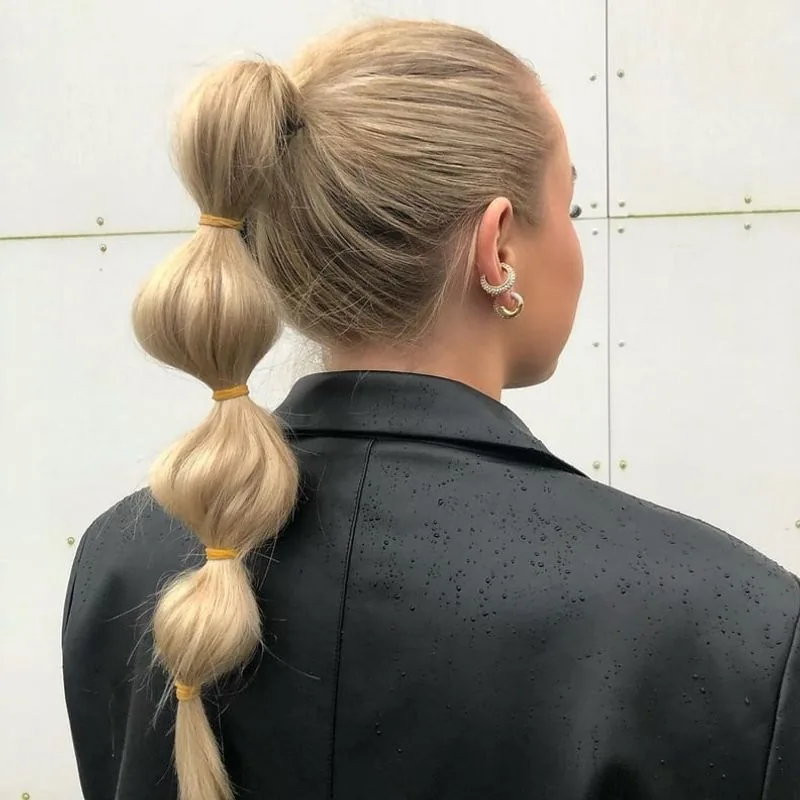
A high ponytail with soft face pieces lifts the whole face upward. The height is the point, and the soft pieces stop it looking pulled-back or severe.
Who should skip it: Skip if a high ponytail feels uncomfortable or pulls your hairline.
Cost and time: No extra cost. Styling: 5 minutes.
Styling steps: Keep the ponytail slightly loose, leave two soft face pieces out, and add a little crown lift.
15. Loose Side Braid Over One Shoulder
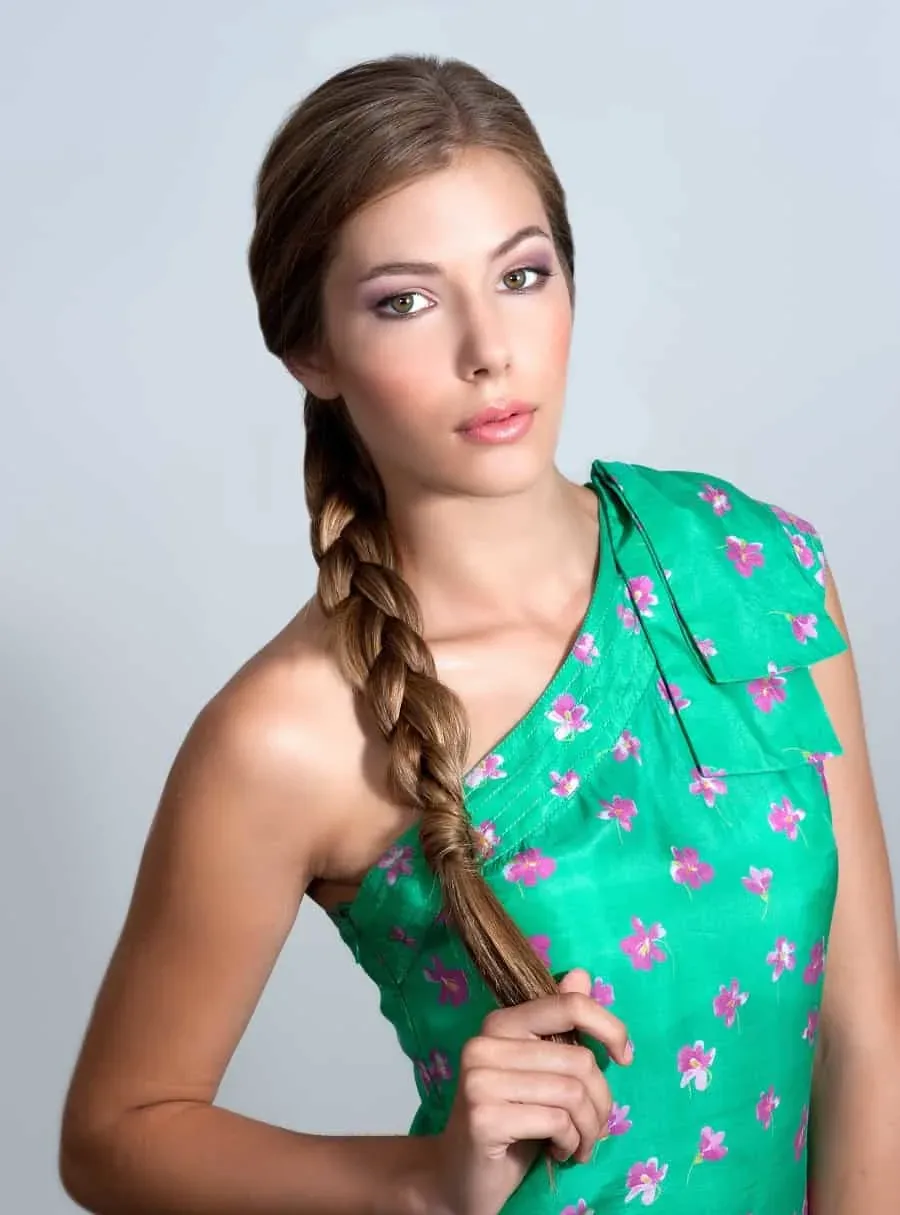
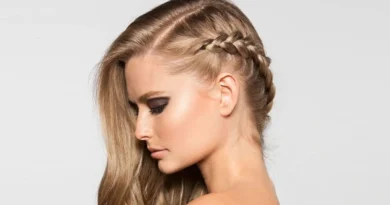
A loose side braid sweeps hair to one side and adds a soft diagonal across the shoulder. The eye follows the braid, not the chin line, and the style is comfortable all day.
Who should skip it: Skip if braids feel too casual for your occasion.
Cost and time: No extra cost. Styling: 5 to 10 minutes.
Styling steps: Braid loosely over one shoulder, pull a few pieces out, and secure with a soft band.
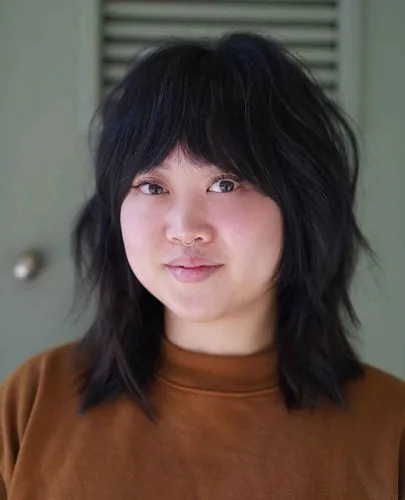
16. Layered Shag With Curtain Bangs
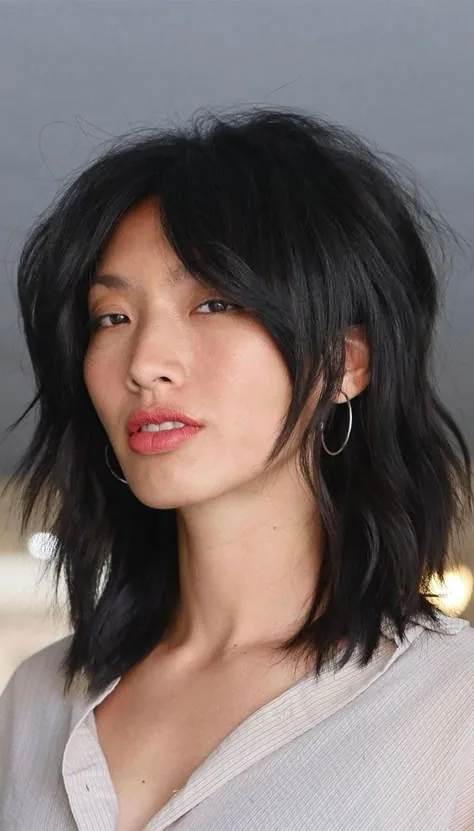
A layered shag with curtain bangs puts texture and interest high on the face. The curtain bangs frame the eyes, and the shaggy layers add movement that never sits heavily at the chin.
Who should skip it: Skip if you prefer neat, polished hair over texture.
Cost and time: Cut: standard price, trim every 8 weeks. Daily styling: 10 minutes.
Styling steps: Scrunch texturising cream into damp hair, diffuse, and keep the bangs swept out.
17. Wolf Cut With Rounded Layers
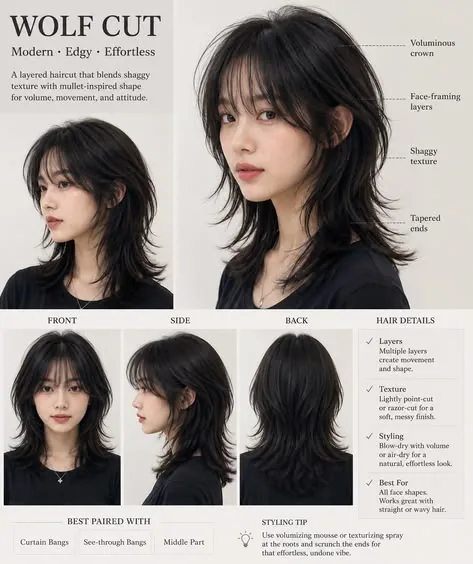
A wolf cut with rounded layers gives movement and height at the top, with long lengths below. The rounded layers never form a hard line at the chin, and the texture keeps the eye moving.
Who should skip it: Skip if you dislike trendy, textured cuts.
Cost and time: Cut: standard price, trim every 8 weeks. Daily styling: 10 minutes.
Styling steps: Diffuse with cream, scrunch the lengths, and ask for rounded, not stair-step, layers.
18. A-Line Lob, Softened
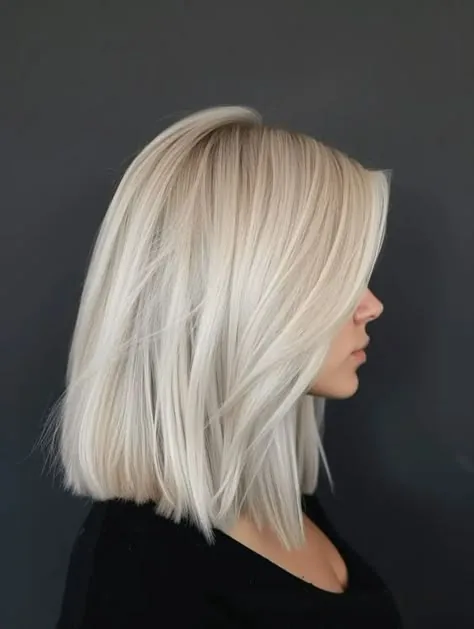
A softened A-line lob, longer in front, gives a defined shape without a hard chin line. The front pieces fall past the chin, and soft, textured ends stop the cut looking blunt.
Who should skip it: Skip if you want a sharp, geometric A-line; this version is deliberately soft.
Cost and time: Cut: standard price, trim every 6 to 8 weeks. Daily styling: 10 minutes.
Styling steps: Blow-dry the front pieces forward and down, round the ends under, and add texture spray.
19. Asymmetrical Lob With a Side Part
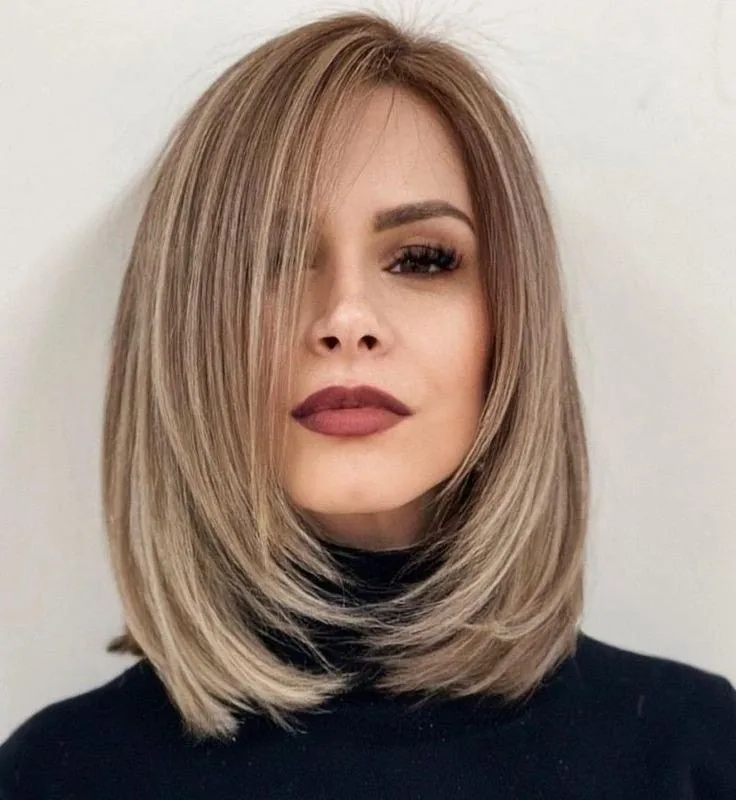
An asymmetrical lob with a side part adds two diagonals at once: the uneven lengths and the part. Both draw the eye across the face rather than down to the chin.
Who should skip it: Skip if uneven lengths bother you.
Cost and time: Cut: standard price, trim every 6 to 8 weeks. Daily styling: 10 minutes.
Styling steps: Blow-dry smooth, add loose waves, and smooth the longer side forward.
20. Fine Hair: Light Layers and Root Lift
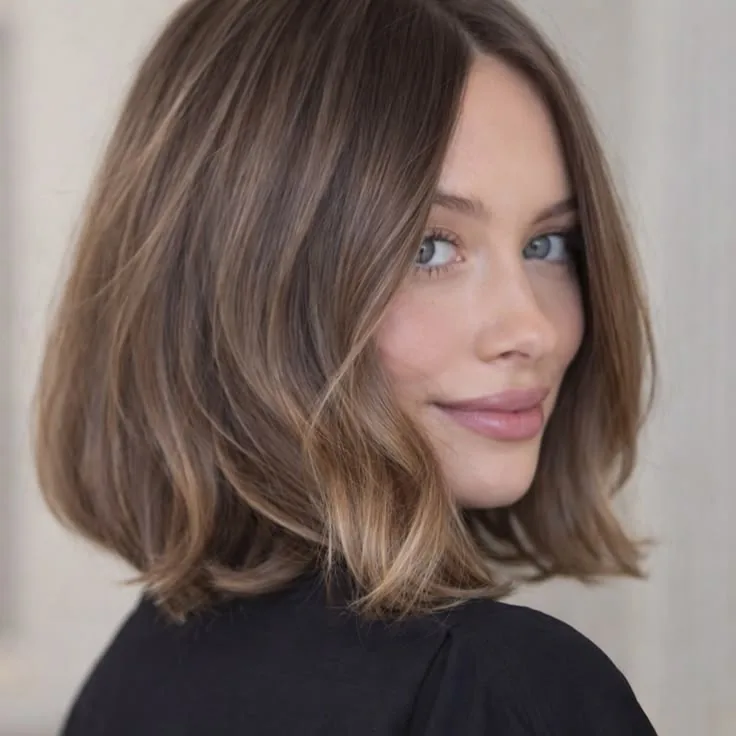
Fine hair benefits from light layers and root lift, which add height at the crown and movement through the lengths. Height at the top is exactly what draws the eye up.
Who should skip it: Skip heavy, one-length cuts that fall flat at the crown.
Cost and time: Cut: standard price, trim every 8 weeks. Daily styling: 10 minutes.
Styling steps: Use volumising mousse at the roots, blow-dry with lift, and keep layers light.
21. Thick Hair: Internal Layers to Remove Jaw Bulk
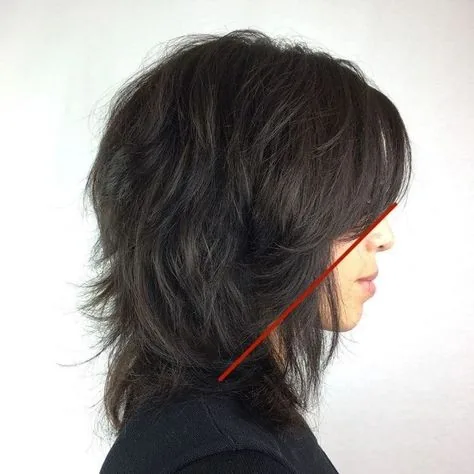
Thick hair can sit heavily at jaw level, so internal layers remove bulk from inside the cut without shortening it. The result is full hair that does not add width at the chin.
Who should skip it: Skip if your stylist is not experienced with internal layering.
Cost and time: Cut: standard price, trim every 8 to 10 weeks. Daily styling: 10 to 15 minutes.
Styling steps: Ask for internal layers at the jaw, blow-dry smooth, and finish with serum.
22. Curly Hair: Defined Layers Below the Chin
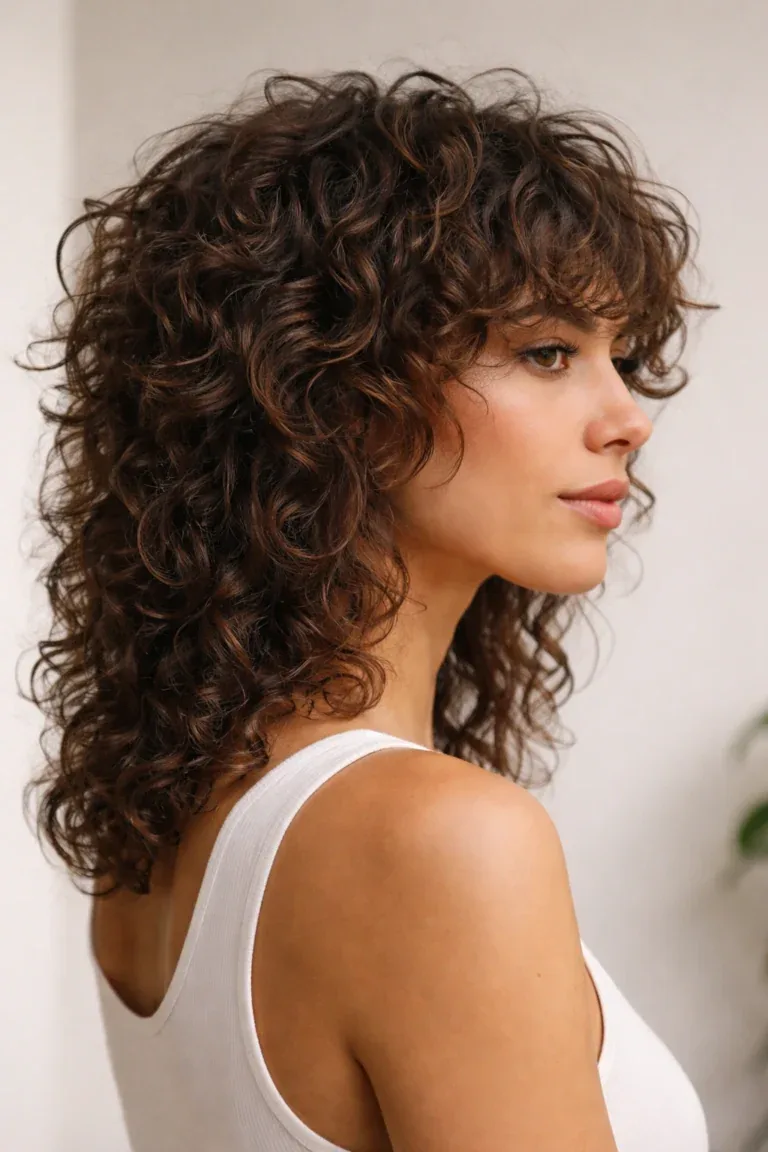
Curly hair with layers that fall below the chin keeps curls from springing up into width at jaw level. Defined, long layers let curls fall softly past the chin.
Who should skip it: Skip short, round curly cuts that add width at the jaw.
Cost and time: Cut: standard price, ideally a curly cut. Daily styling: 15 minutes.
Styling steps: Apply curl cream, scrunch and diffuse on low, and never brush dry curls.
23. Straight Hair: Face-Framing Layers That Flick Out
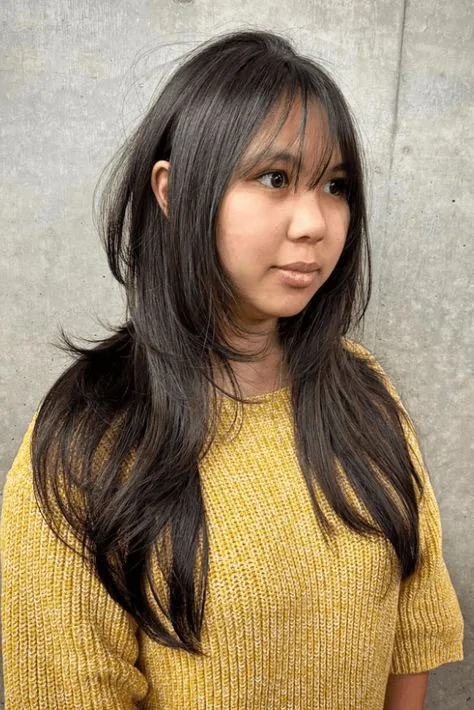
Straight hair with face-framing layers that flick outward draws the eye to the cheekbones and away from the chin. The outward flick is the detail that matters: inward flicks at chin level do the opposite.
Who should skip it: Skip framing pieces that curl inward at the chin.
Cost and time: Cut: standard price, trim every 8 weeks. Daily styling: 10 minutes.
Styling steps: Blow-dry the framing pieces outward with a round brush, and smooth the lengths.
24. Face-Framing Highlights
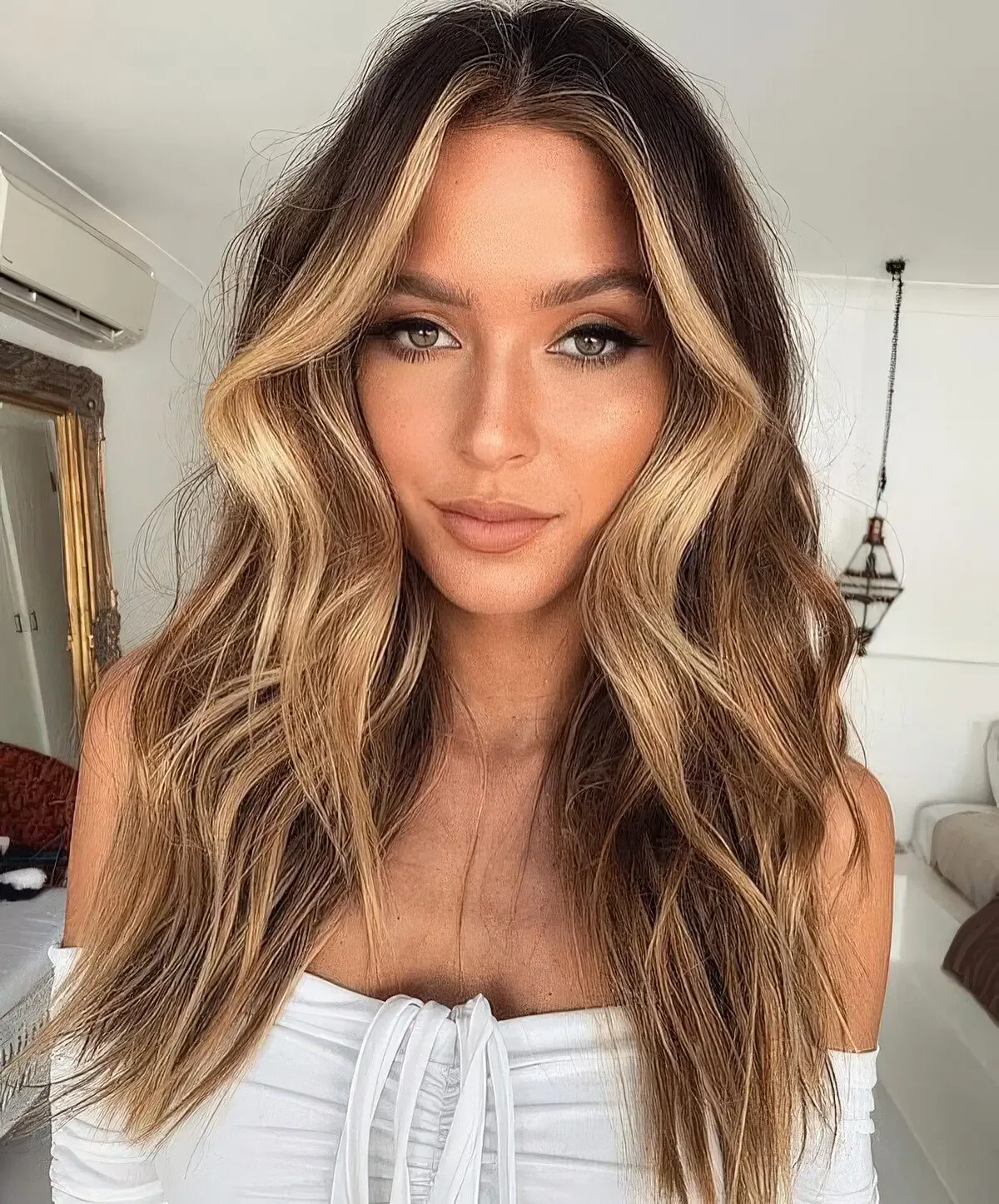
Face-framing highlights brighten the cheekbones and eyes, putting the brightest part of the hair high on the face. The eye goes to the light, which is exactly where you want it.
Who should skip it: Skip if you prefer no colour maintenance.
Cost and time: Colour: salon highlight price, refresh every 8 to 12 weeks. Daily styling: as usual.
Styling steps: Style as usual and use purple shampoo occasionally to keep highlights fresh.
25. Balayage Lighter Around the Face
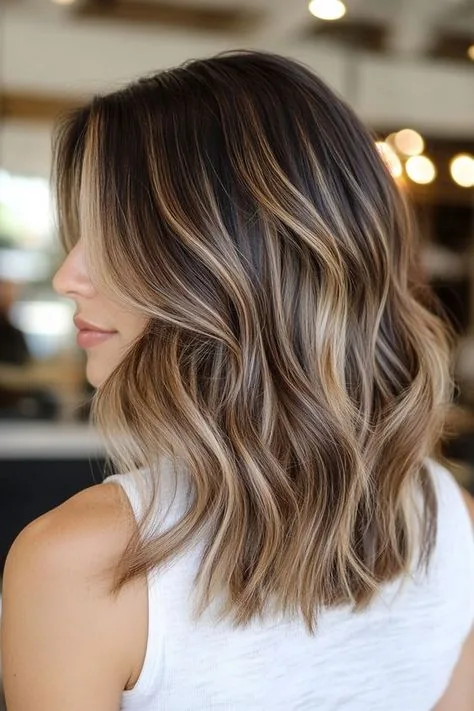
A balayage that is lighter around the face and softer at the ends draws attention upward. The blended roots keep it low-maintenance, and the brightness sits where it flatters most.
Who should skip it: Skip if you want a single, flat colour.
Cost and time: Colour: salon balayage price, tone every 6 to 8 weeks.
Styling steps: Style as usual; tone regularly and use colour-safe shampoo.
26. Warm Caramel Dimension
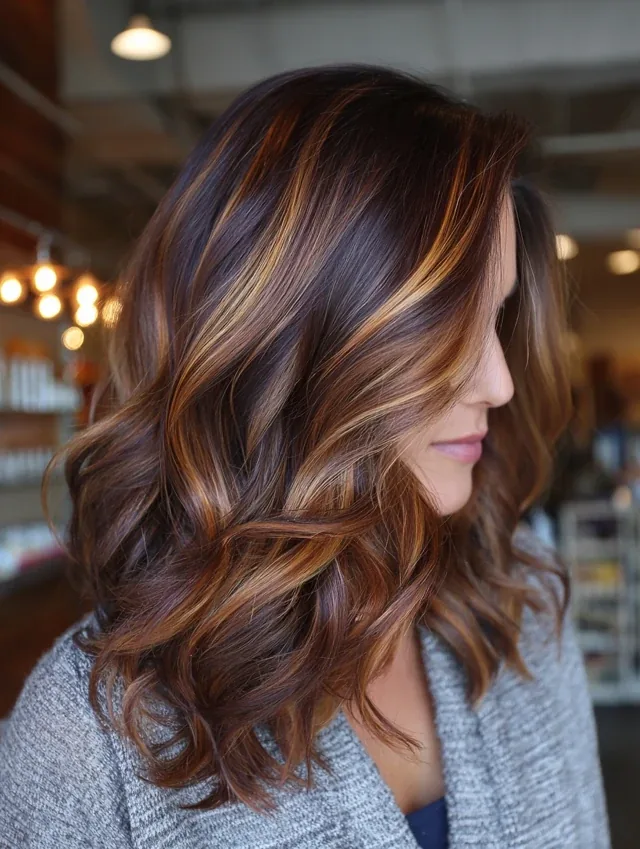
Warm caramel dimension adds richness and warmth around the face, which brightens the eyes and cheekbones. Warmth at the top of the face is flattering and inviting.
Who should skip it: Skip if you prefer cool, ashy tones.
Cost and time: Colour: salon price, gloss refresh every 8 weeks.
Styling steps: Use colour-safe shampoo and protect from sun to keep warmth fresh.
27. Espresso Brown With Gloss
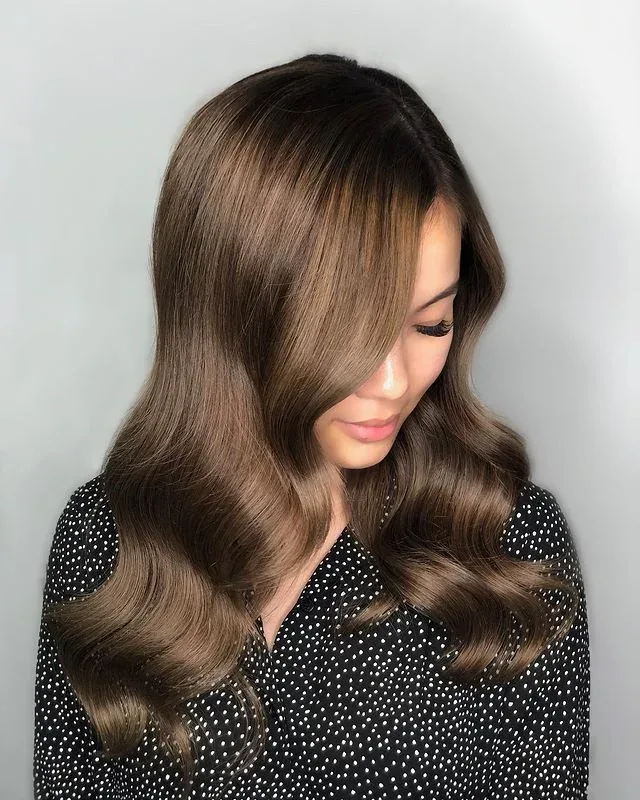
Espresso brown with a gloss finish is rich and polished, and the shine itself draws the eye to healthy, glossy hair rather than to any one feature. The deep tone is elegant with any length.
Who should skip it: Skip if you dislike gloss maintenance.
Cost and time: Colour: salon price, gloss every 6 weeks.
Styling steps: Refresh with a gloss treatment and rinse with cool water.
28. Vintage Waves for Evenings
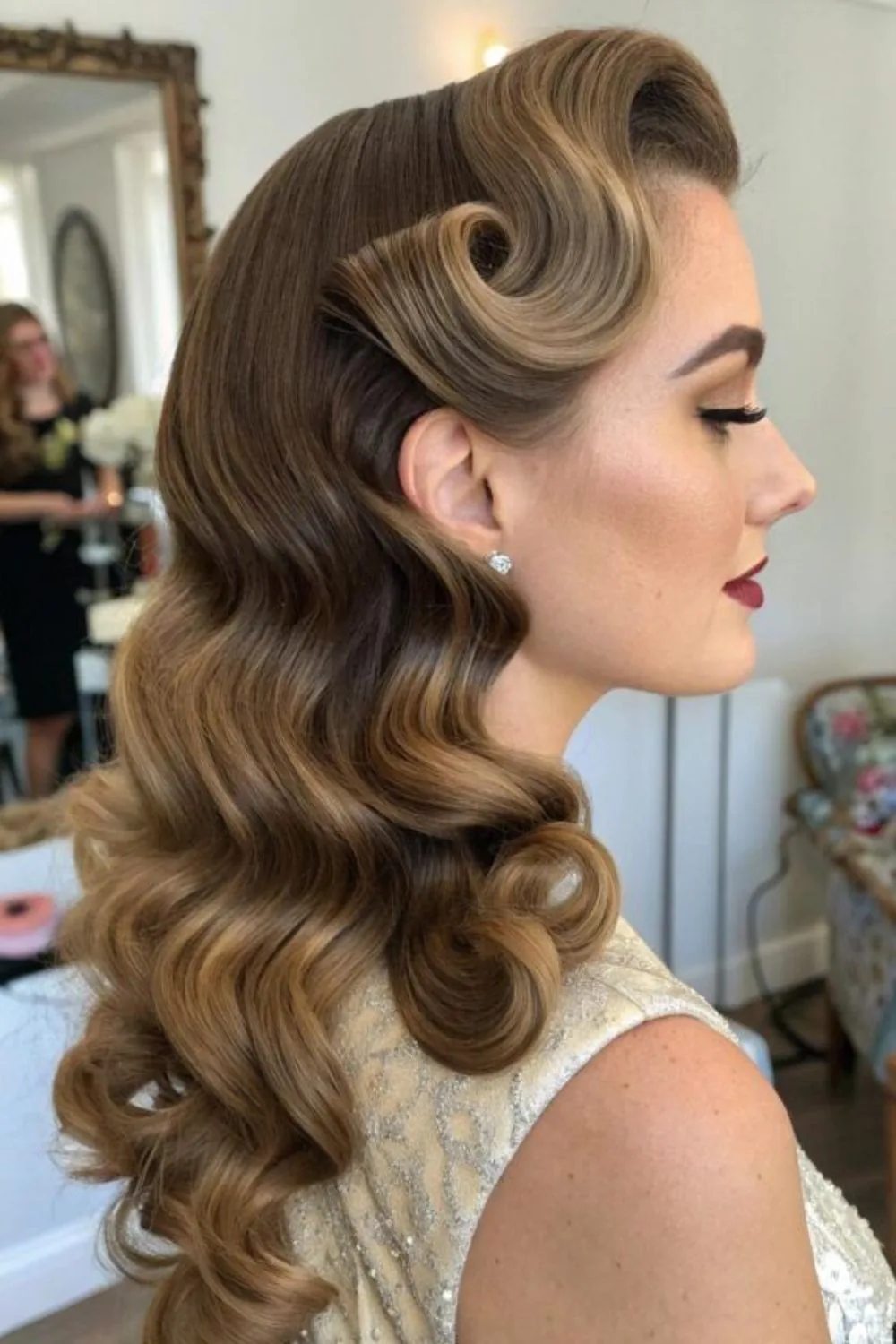
Vintage waves with a side part are glamorous and uplifting. The waves add curves, the side part adds a diagonal, and the whole look draws the eye to the eyes and cheekbones.
Who should skip it: Skip for everyday wear; this is an occasion style.
Cost and time: Styling: 20 to 30 minutes, or a salon blow-dry price for events.
Styling steps: Curl large sections in one direction, brush out into waves, and set with spray.
29. Tousled Midi With a Side Part
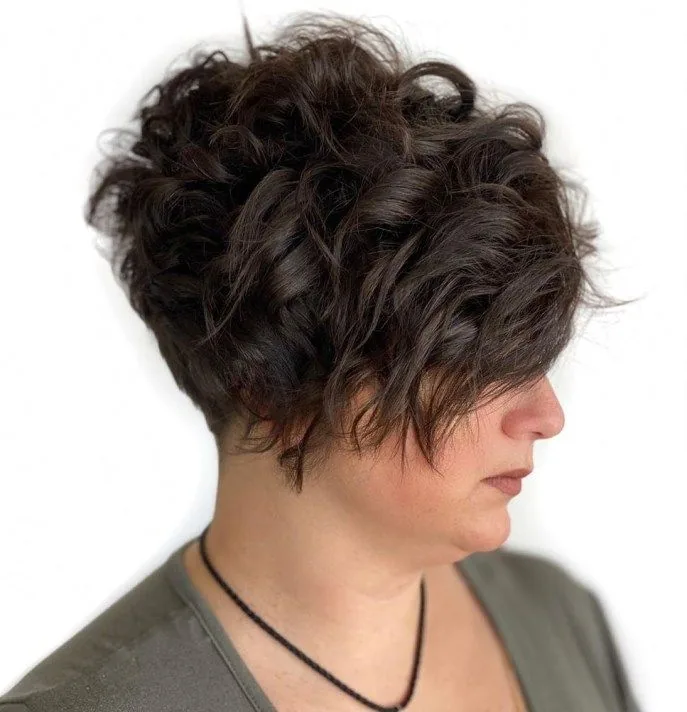
A tousled midi with a side part is relaxed, textured and flattering. The tousle adds width higher up, the side part adds a diagonal, and the midi length falls past the chin.
Who should skip it: Skip if you prefer sleek, polished hair.
Cost and time: Cut: standard price, trim every 8 weeks. Daily styling: 5 to 10 minutes.
Styling steps: Scrunch texturising spray into damp hair, air-dry, and keep the side part soft.
30. French Bob With Soft Waves, Above the Jaw
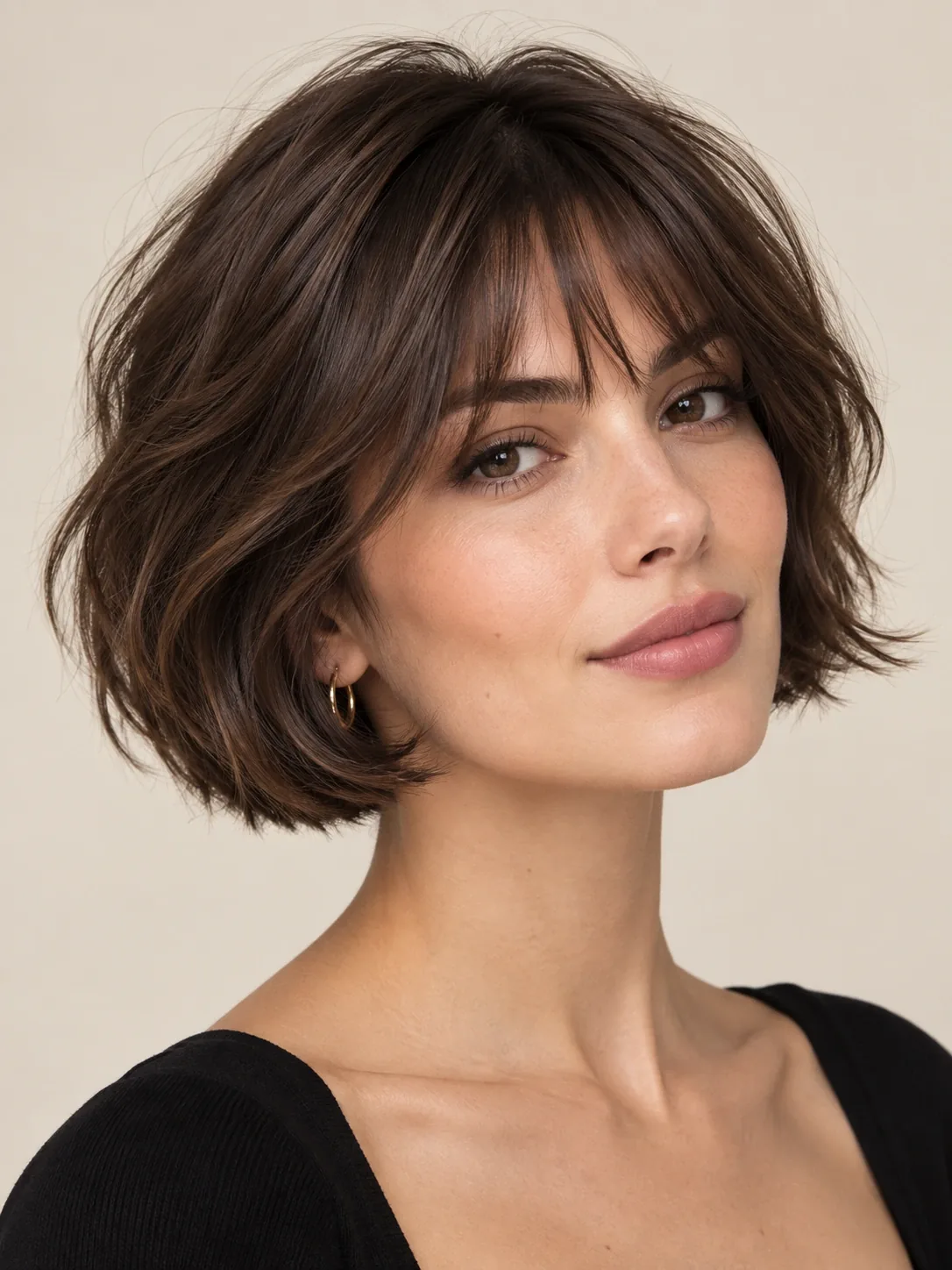
A French bob with soft waves, ending above the jaw, is chic and chin-friendly because it ends well above the chin line. The waves soften the bob, and the short length shows off the cheekbones.
Who should skip it: Skip if you want to keep length.
Cost and time: Cut: standard price, trim every 6 weeks. Daily styling: 10 minutes.
Styling steps: Twist small sections around a wand, shake out into waves, and trim regularly.
31. Long Hair With Layers and a Centre Part
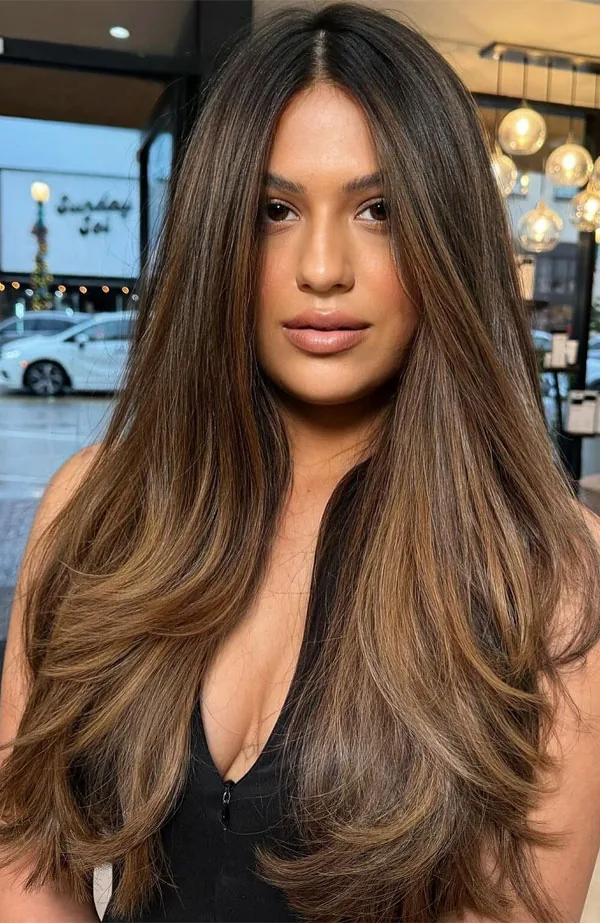
Long hair with layers and a centre part is simple, elegant and flattering. The centre part shows the face symmetrically, the layers add shape, and the length falls well past the chin.
Who should skip it: Skip if you want a fringe; this style is intentionally open.
Cost and time: Cut: standard price, trim every 10 weeks. Daily styling: 10 minutes.
Styling steps: Part in the centre, blow-dry the layers smoothly, and finish with serum.
32. Soft Updo With Height at the Crown
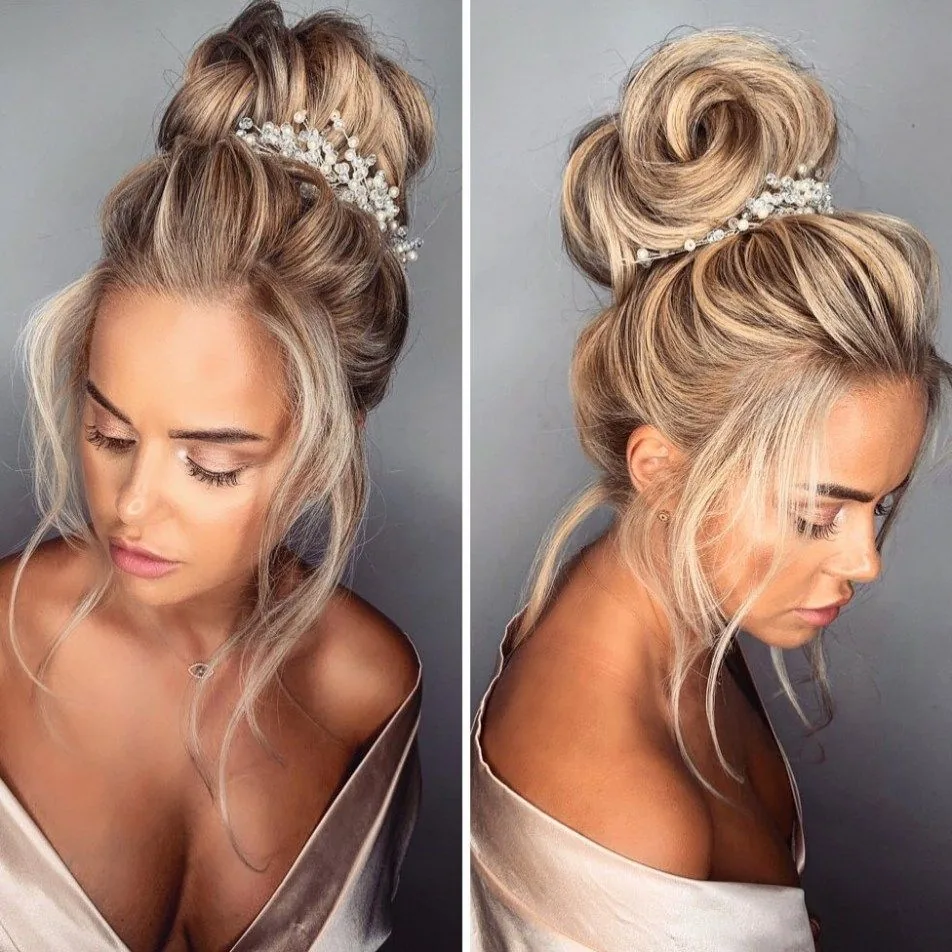
A soft updo with height at the crown is the most flattering occasion style for a double chin. The height lengthens the face, the softness keeps it gentle, and nothing about it is tight or severe.
Who should skip it: Skip tight, flat updos with no crown height.
Cost and time: Styling: 10 to 15 minutes, or a salon updo price for events.
Styling steps: Gather loosely, add crown lift before pinning, pull out soft pieces, and set lightly.
Updos That Flatter Without Pulling Tight
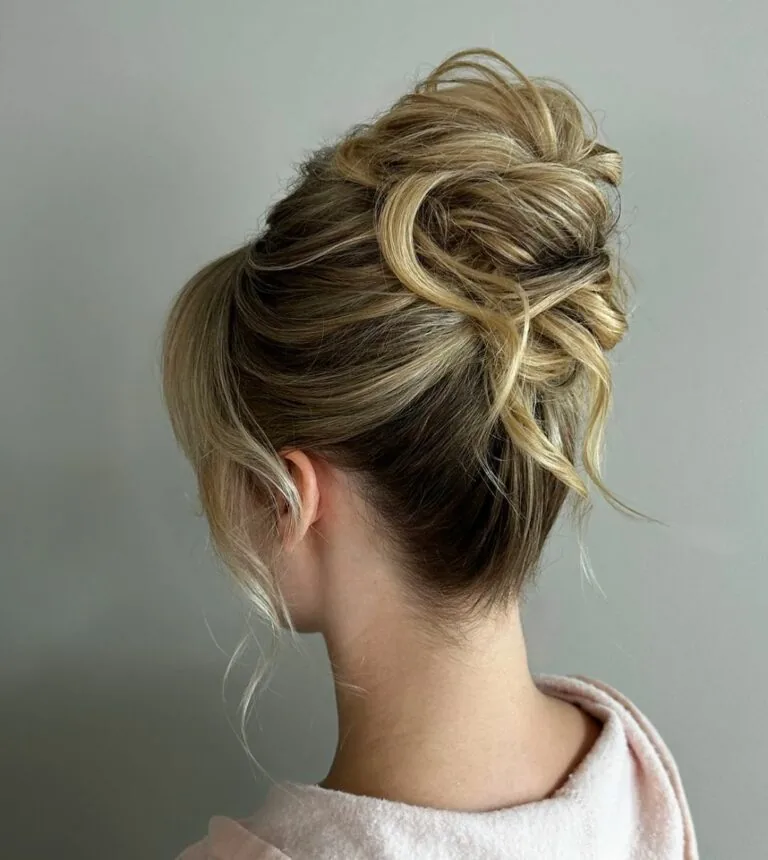
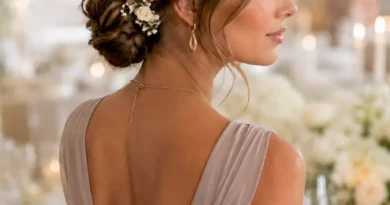
Updos can be wonderfully flattering, as long as they are loose. A low, loose bun with soft temple pieces, a half-up style with crown volume, or a soft twist all lift the face without pulling it tight. Height at the crown is the secret ingredient: it lengthens the face visually and draws the eye up.
Tight, scraped-back styles are the ones to be careful with, because they remove all softness around the face and leave the chin and jaw as the only outline. If you love a sleek ponytail, leave two soft pieces out at the front and add a little crown lift, and the same style becomes much more flattering.
Colour That Draws Attention Upward
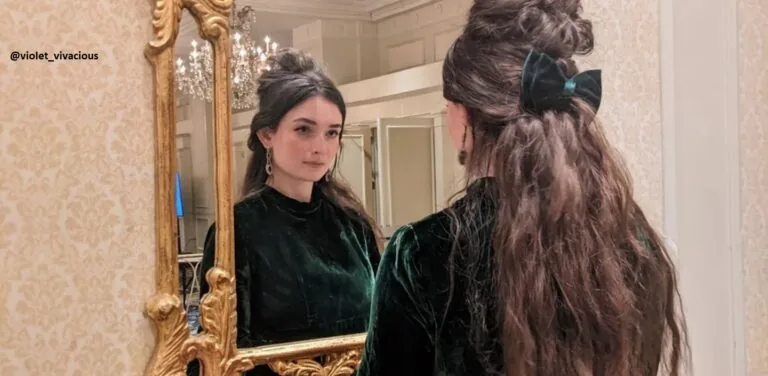
Colour can draw the eye up just as a cut can. Face-framing highlights brighten the cheekbones and eyes, and a balayage that is lighter around the face does the same thing more softly. Both put the brightest, most eye-catching part of the hair where you want attention: up high, around the eyes.
Darker colour at the ends and lighter colour at the face is a useful pattern to remember. It reverses the usual instinct to go darker on top, and it works because the eye follows lightness. Keep the contrast soft and blended, and the effect looks natural rather than obvious.
What to Avoid, Without Any Shame
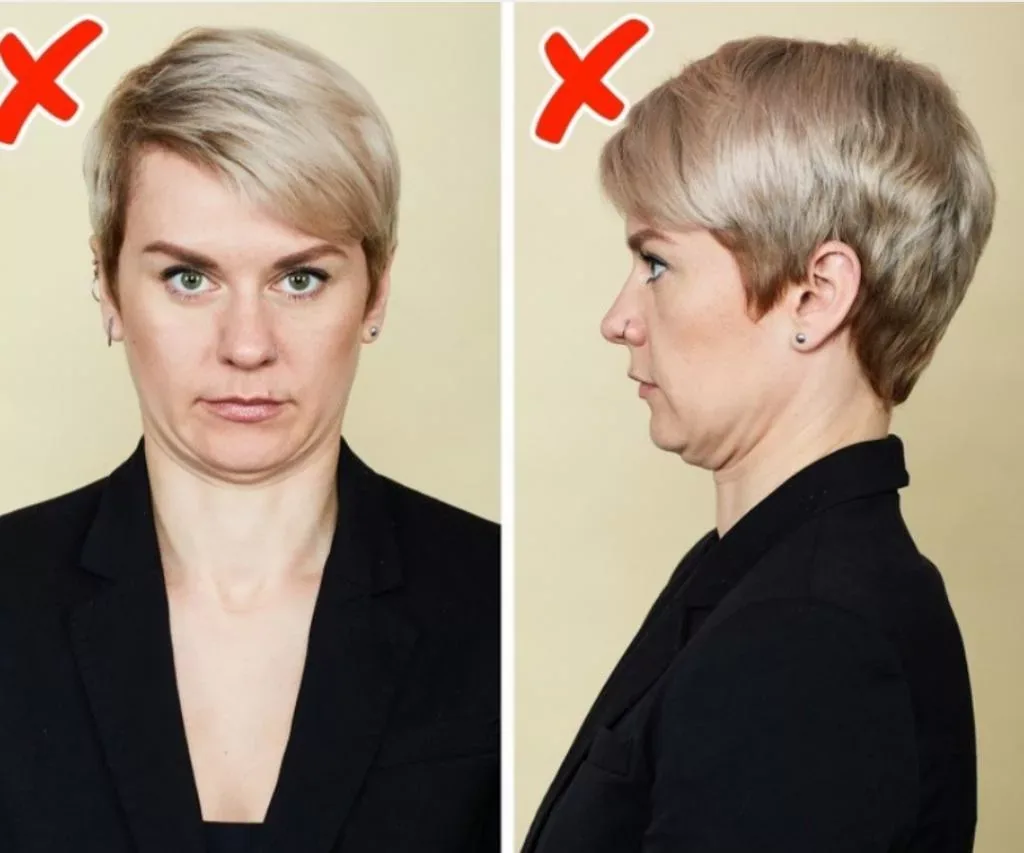
There is nothing wrong with any hairstyle, and nothing here is a rule you must follow. But if drawing the eye up is your goal, the styles to be careful with are: blunt cuts ending exactly at the chin, very short, boxy bobs with no layers, heavy bulk sitting right at jaw level, and tight, scraped-back updos with no softness at the temples.
Each of those can be softened rather than abandoned. Add texture to a blunt bob, add layers to a boxy cut, move bulk higher or lower, or loosen a tight updo with soft pieces. A small tweak usually changes the whole effect, and you get to keep the style you actually like.
Talking to Your Stylist With Confidence
You do not need to use the words double chin with your stylist if you would rather not. Saying I would like styles that draw the eye up, or I like length that falls past my chin, or I prefer soft ends rather than a blunt line at my jaw gives your stylist exactly the information they need, without any awkwardness.
Bring photos of styles you like, and photos of styles you do not, because both are useful. Tell your stylist how much time you have each morning and how often you are happy to come back for trims. A cut that fits your real life will always look better than a perfect cut you cannot maintain.
What is the best hairstyle for a double chin?
The best hairstyle for a double chin is one that draws the eye up to your eyes and cheekbones. Long layers starting at the cheekbone, curtain bangs, a textured lob below the jaw, and updos with crown height all do this kindly and effectively.
What hairstyles should I avoid with a double chin?
Be careful with blunt cuts that end exactly at the chin, very boxy bobs with no layers, heavy bulk sitting right at jaw level, and tight, scraped-back updos. Each can be softened with texture, layers or looseness rather than abandoned completely.
Does short hair suit a double chin?
Yes, short hair can suit a double chin very well, especially a pixie with a long side fringe or a wavy bob that ends above the chin at the cheekbone. Both put the focus high on the face and avoid framing the chin.
Does long hair suit a double chin?
Yes, long hair suits a double chin beautifully, because long lengths fall well past the chin and never frame it. Long layers starting at the cheekbone and face-framing pieces that flick outward are especially flattering.
Do bangs help with a double chin?
Yes, bangs help by putting the focus on your eyes and forehead. Curtain bangs, side-swept bangs and wispy fringes all lift the face visually and draw attention upward.
What is the best parting for a double chin?
A side part or a deep side part is usually very flattering, because the diagonal breaks up horizontal lines. A centre part also works well with long layers, as long as the layers add shape around the face.
Can I wear my hair up with a double chin?
Yes, you can wear your hair up. Choose loose updos with height at the crown and soft pieces at the temples, rather than tight, scraped-back styles, and the updo will lift your whole face.
Does hair colour make a difference for a double chin?
Yes, colour can help. Face-framing highlights and a balayage that is lighter around the face both draw the eye to your eyes and cheekbones, which is exactly where you want attention.
How do I ask my stylist for a double-chin-friendly cut?
You do not need to mention a double chin at all. Say you would like styles that draw the eye up, length that falls past your chin, or soft ends rather than a blunt line at your jaw, and your stylist will understand exactly what you mean.
How often should I trim a cut that flatters a double chin?
Trim bangs every 3 to 4 weeks, bobs and lobs every 6 to 8 weeks, and long layers every 8 to 10 weeks. Regular trims keep the layers and ends soft, which is what keeps the style flattering.
Conclusion
Nothing in this guide asks you to hide, fix or apologise for anything. A double chin is normal, and the styles here simply use the same trick good styling always uses: put the interest where you want the eye to go, which is your eyes, your cheekbones and your smile.
Choose the length that fits your life, add one upward detail, whether that is a fringe, a side part, crown lift or face-framing highlights, and soften any hard line that sits exactly at chin level. That is all it takes. The best hairstyle is the one you feel comfortable and confident wearing, every single day.