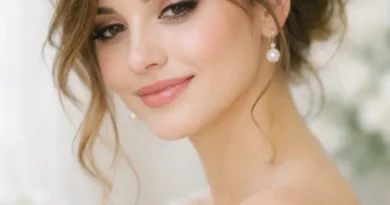
The French Twist, Demystified: 34 Classic and Modern Twists for Weddings, Work and Everything Between
The French twist has a reputation for being the hardest classic updo — the one that belongs to ballerinas, brides and women who seem to have been born knowing how to use a bobby pin. That reputation is mostly a myth. At its heart, the French twist is a single technique: gather the hair low, fold it up the back of the head, and pin it into a vertical roll. Everything else — the sleekness, the messiness, the braids, the accessories, the height — is a variation on that one fold. Once you understand the fold, the style stops being intimidating and starts being the most versatile updo you own.
This guide breaks the French twist down so anyone can wear it, from a five-minute work twist you can do in the office bathroom to a sculpted bridal twist that holds through a whole wedding day. You will find 34 French twist hairstyles for women, grouped by family: the classic sleek twists, the modern loose ones, braided and twisted variations, half-up twists, twists for every hair length, and twists for every occasion. Eight guides cover the core technique, the tools that actually hold a twist, how to work with fine or thick hair, the modern messy twist versus the classic sleek one, and what to do with your hair the day after. Every style notes how long it takes, what you need, and who it suits best — so you can stop admiring the French twist from a distance and start wearing it.
The French Twist in 5 Steps — the Core Technique
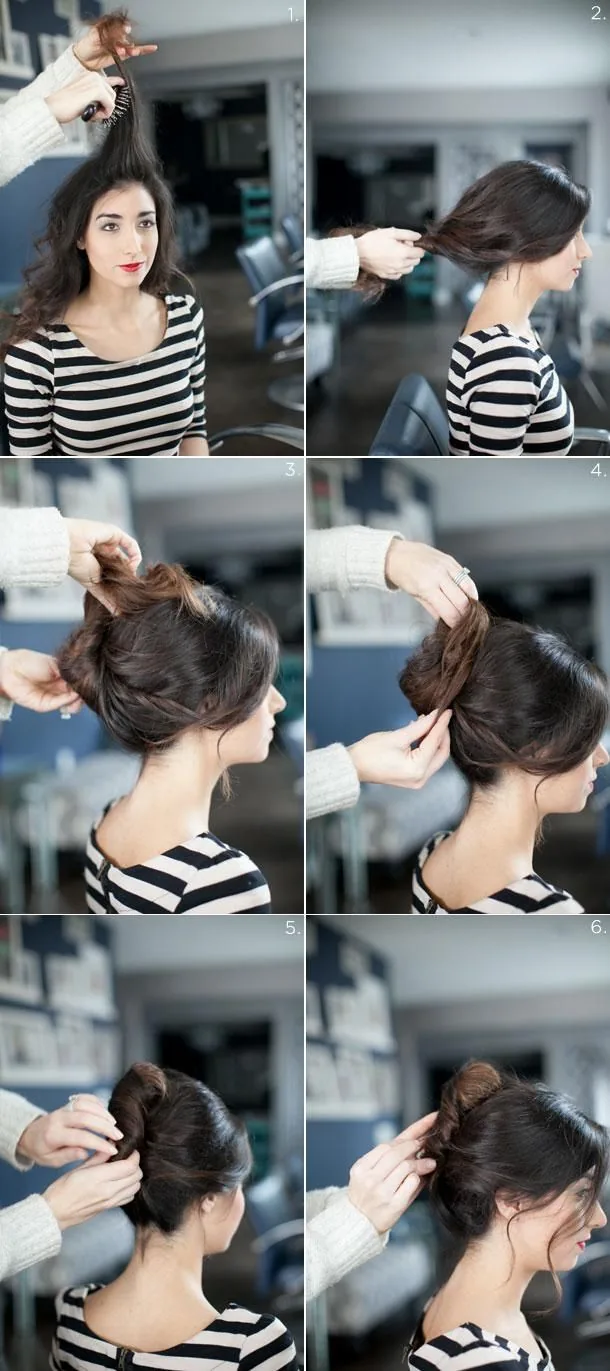
The French twist is one technique with endless variations, and it starts with five simple steps. First, brush all the hair back and gather it low at the nape, as if you were making a low ponytail — but do not tie it. Second, lift the gathered hair upward and begin to fold it against the back of your head, rolling it inward so the ends tuck inside the roll. Third, hold the roll in place with one hand and slide bobby pins vertically along the seam where the fold meets the head, weaving each pin through the roll and the hair beneath it. Fourth, tuck any loose ends into the top of the roll and smooth the surface with a fine-tooth comb. Fifth, set it with hairspray and pull out a face-framing piece or two if you like. That is the whole technique — every twist in this guide is a variation on those five steps.
The most common beginner mistake is trying to twist the hair like a rope before folding it, which makes the roll lumpy and hard to pin. Instead, think of it as a fold, not a twist: the hair goes up, folds over on itself, and the roll forms naturally. Practise on day-old hair first, because it has more grip than freshly washed hair, and use a little texturising spray or dry shampoo at the roots before you start. If the roll feels wobbly, add more pins along the seam rather than forcing the ones you have — a twist held by six pins is steadier than one held by two pins jammed in too hard. Do it three times and your hands will know the motion; by the fifth time, it will take under five minutes.
Pins, Combs and Clips — the Tools That Actually Hold a Twist
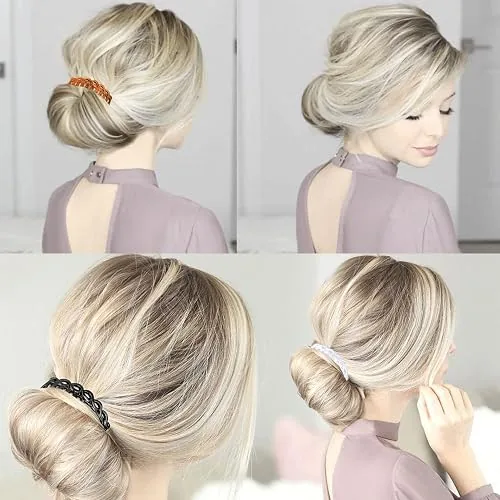
A French twist lives or dies on its tools, and the good news is that you need very little. Bobby pins are the workhorse: use pins that match your hair colour, open them slightly, and slide them in with the wavy side down, pushing them against the scalp so they weave through two layers of hair rather than sitting on the surface. French hair pins — the long, U-shaped ones — are even better for thick hair, because one U-pin can hold as much as three bobby pins and disappears completely into the roll. A French twist comb, the long, curved comb that slides in along the seam, is the professional secret for a twist that lasts all day without a single pin showing.
For the finishing touches, a decorative comb or a jaw clip can sit at the top or the side of the twist, both holding the roll and acting as jewellery. A banana clip works beautifully for a looser, longer twist, and a velvet scrunchie or a ribbon wrapped around the base softens the whole look. What to avoid: elastics inside the roll, which create a bump and a weak point, and cheap, shiny pins that slide out of smooth hair. Buy one good set of U-pins and one French twist comb, and keep them in the same small pouch as your hairspray — a twist is only ever as good as the pins holding it, and the right pins make the difference between a twist that lasts an hour and one that lasts all night.
French Twists for Fine Hair That Slips
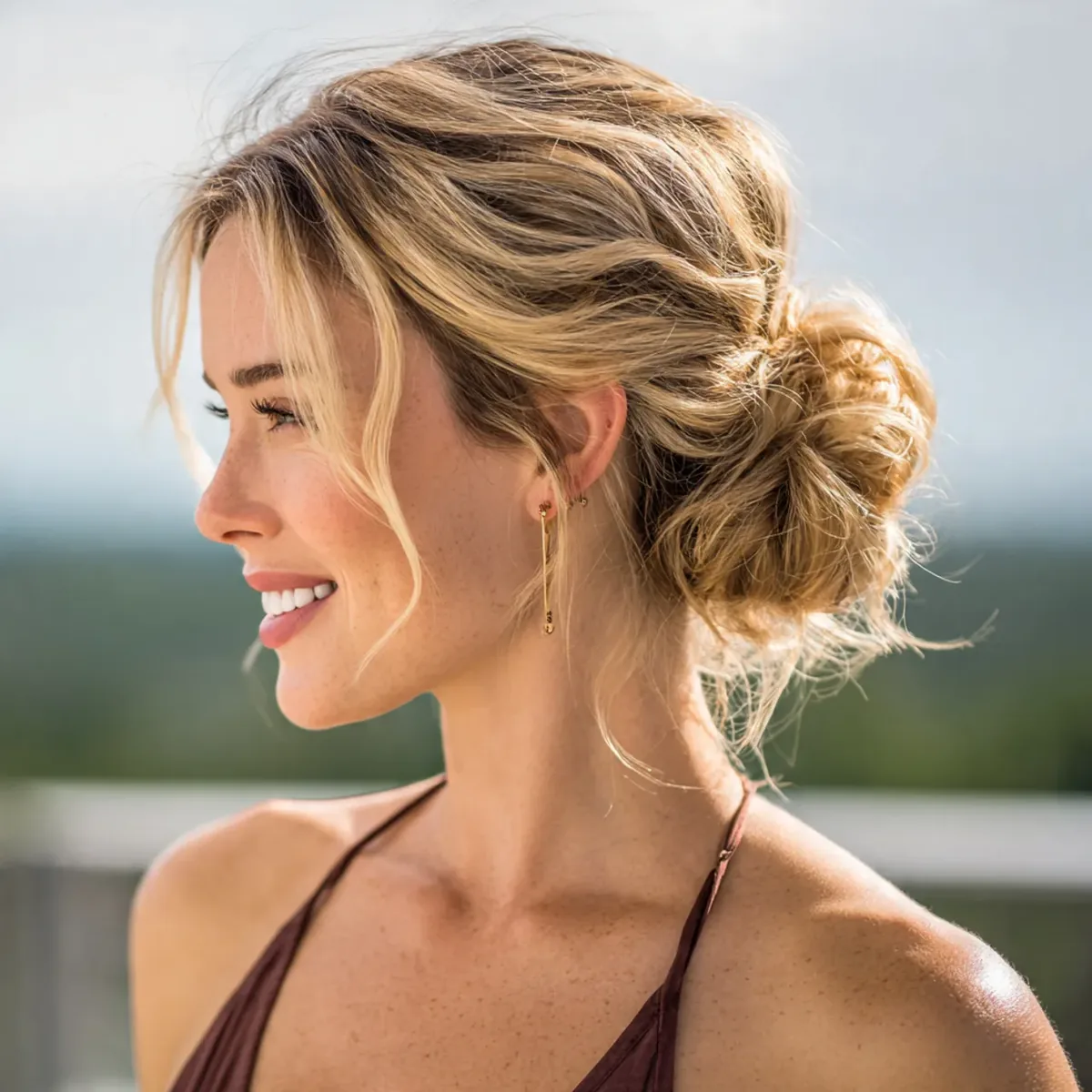
Fine hair is the French twist’s hardest customer, because the style needs grip and fine hair is naturally slippery — but with the right prep, fine hair can hold a twist beautifully. The secret is texture before structure: wash your hair the day before, not the morning of, and work a volumising mousse or a texturising spray through the roots and lengths while the hair is still damp. Dry shampoo at the roots adds even more grip, and a light backcomb at the crown gives the pins something to bite into. Skip the smoothing serum, which makes fine hair even silkier and harder to pin, and use a flexible-hold spray as you build the roll rather than one blast at the end.
Choose the right variation for fine hair, too. A slightly looser, textured twist holds better than a super-sleek one, because the texture creates friction between the layers of hair. A French twist comb or U-pins will hold fine hair far more reliably than bobby pins alone, and a small hair doughnut or a padding insert at the base gives the roll a shape to wrap around instead of collapsing flat. The common mistake is pulling the twist too tight in the hope that tightness equals hold — it does not; a tight twist on fine hair slides out in one piece, while a soft, textured twist with plenty of pins stays put. Start with texture, pin generously, and your fine hair will surprise you.
French Twists for Thick, Heavy Hair
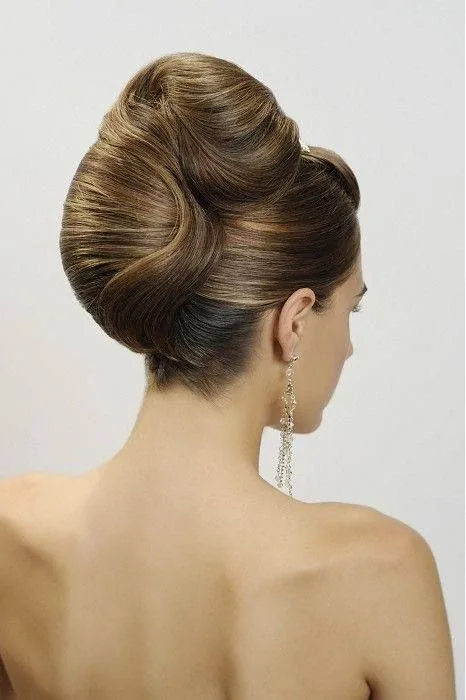
Thick hair makes a magnificent French twist — full, tall, and sculpted — but it also fights back, because the weight of the hair pulls the roll downward all day. The fix is to build the twist in layers rather than trying to fold all the hair at once. Divide the hair into two or three horizontal sections, pin the lower section into a loose base first, then fold the upper section over it, so no single pin is carrying the weight of all your hair. Use U-shaped French pins instead of bobby pins for the main anchoring, and place them vertically along the seam in pairs, crossing them slightly so they lock against each other. A strong-hold hairspray, applied section by section as you build, is far more effective than one heavy coat at the end.
Thick hair also benefits from a little advance work: blow-dry the hair smooth first, or the roll will be lumpy, and if your hair is very long, braid the last few inches of the gathered hair before you fold it — the braid tucks neatly into the roll and stops the ends from poking out. The mistake to avoid is starting the fold too high: on thick hair, a twist that starts at the crown will slide down by lunchtime, while one that starts low at the nape and is built upward has gravity working with it, not against it. Time it generously — a thick-hair twist takes 20 to 30 minutes, not five — and do a trial run before any big event. When it holds, it holds all day, and the fullness is worth every pin.
The Modern Messy French Twist vs the Classic Sleek One
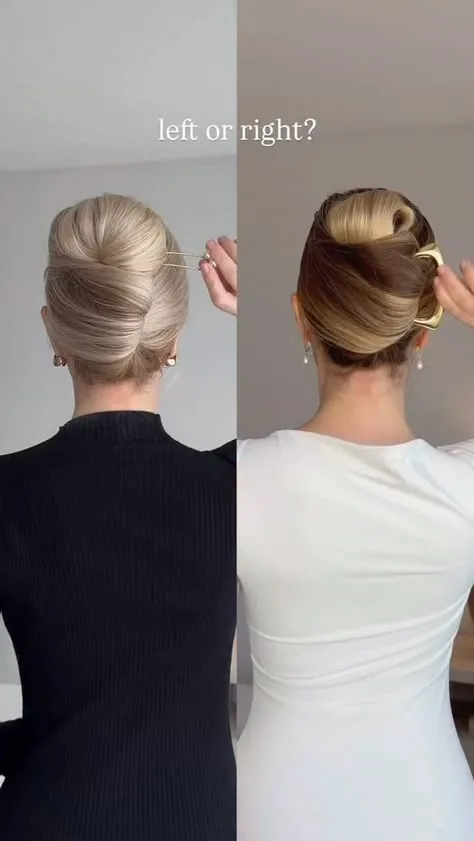
The classic sleek French twist and the modern messy French twist are the same fold with two completely different personalities, and choosing between them is really about choosing the mood of your day. The classic twist is smooth, sculpted and controlled: every strand brushed into place, the surface polished like glass, the silhouette tall and clean. It suits formal occasions, structured outfits and anyone who wants to look like they stepped out of another era. The modern messy twist is looser, softer and deliberately undone: the roll is pulled apart a little for fullness, pieces are left out around the face, and the finish is textured rather than glossy. It suits everyday elegance, casual weddings and anyone who wants an updo that looks effortless.
The techniques differ in only a few small ways. For the classic twist, blow-dry the hair smooth, use a pomade or a smoothing serum, brush the surface with a fine-tooth comb, and pin the roll tightly along the seam. For the messy twist, add texture first with a salt spray or a texturising powder, fold the roll loosely, pull it apart gently once it is pinned to create fullness, and finish with a flexible-hold spray rather than a strong one. The pros of the classic: it photographs beautifully and lasts for hours. The cons: it takes longer and shows every mistake. The pros of the messy twist: it is faster, more forgiving and more comfortable. The cons: it can look unfinished if you pull too much out. Try both on the same day and you will know within minutes which one feels like you.
French Twists for Weddings — Bridal, Bridesmaid and Guest Versions
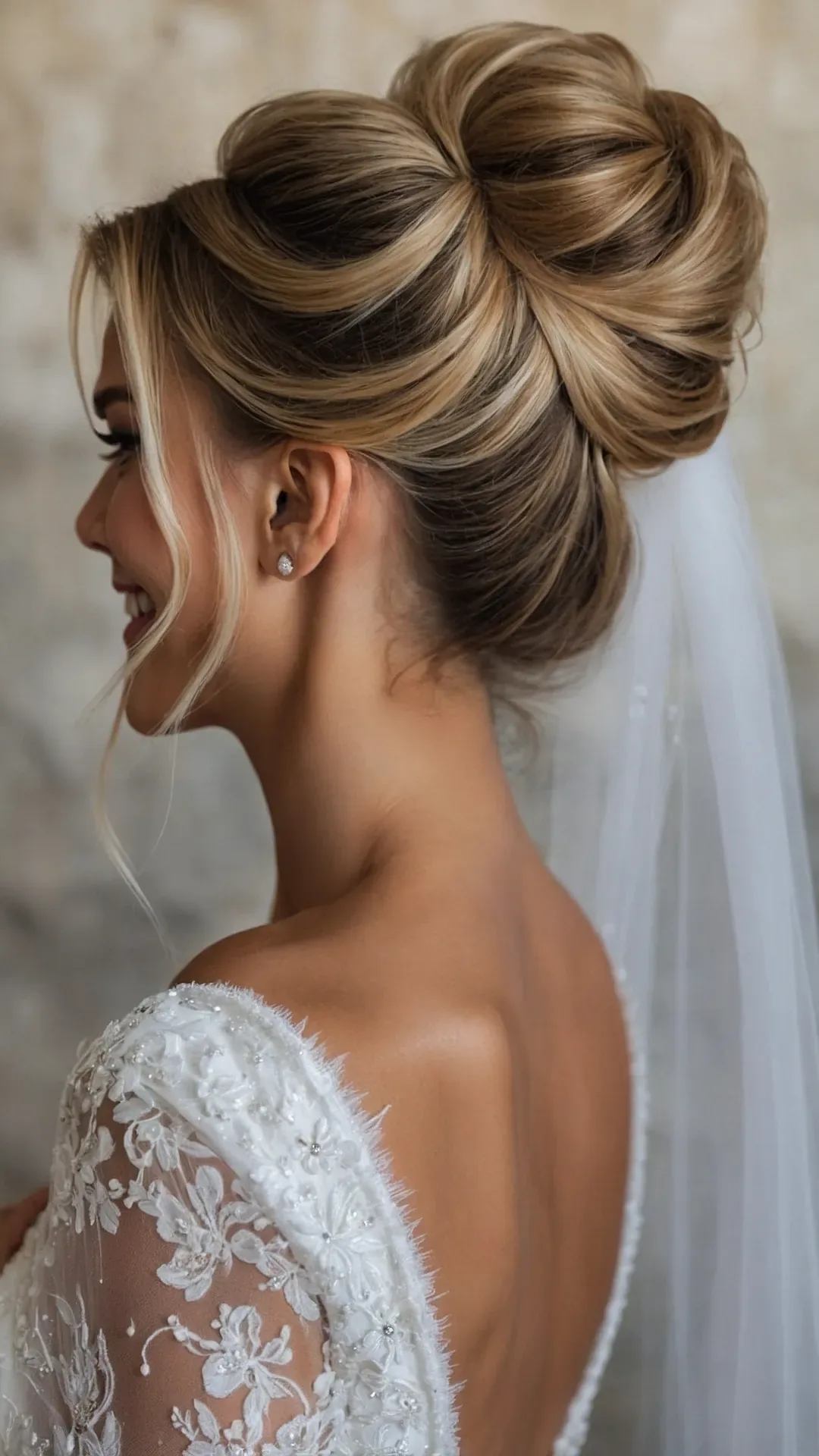
The French twist is one of the most requested wedding hairstyles in the world, because it does three things a wedding day needs: it shows off the neckline and the back of the dress, it stays put through a ceremony, a dinner and a dance floor, and it photographs beautifully from every angle. For the bride, the twist is usually the most sculpted version — a tall, smooth roll, often with a veil attached at the top or the base, and sometimes with fresh flowers or pearl pins woven into the seam. For bridesmaids, the twist is softer and a little lower, so it complements the bride without competing with her, and it works with matching dresses in a way that loose hair rarely does. For guests, a modern messy twist is the sweet spot: elegant enough for a wedding, relaxed enough not to upstage anyone.
If you are the bride, book a trial at least a month before the wedding, bring your veil and your accessories to the trial, and wear the twist for a full day to test how it holds. Ask your stylist how the veil will be attached — a veil comb slides neatly into the top of the roll — and decide whether you want face-framing pieces, because they will frame your face in every photograph. For bridesmaids, agree on a shared version of the twist so the group looks coordinated without being identical; a low, soft twist with the same accessory works for every hair length. For guests, keep it simple: a mid-height twist, a few loose pieces, and one pretty pin. And whatever your role, do the twist on day-old hair with texture spray — wedding-day nerves and freshly washed hair are a bad combination.
French Twists for Work and Formal Events

The French twist is the ultimate work hairstyle, because it is the only updo that is simultaneously polished, fast, comfortable and completely out of your way. A low, neat twist takes five minutes once you know the fold, it keeps the hair off your collar and out of your face through a long day of meetings, and it reads as deliberate and professional in a way a ponytail never quite does. For a normal office day, a soft, low twist with a few loose pieces is perfect; for a presentation, a job interview or a client dinner, a sleeker, taller twist with a smooth finish adds authority. The same twist that gets you through a Tuesday can be dressed up for a Friday evening event with a single decorative comb.
The work-twist rules are simple: keep it low and neat rather than high and dramatic, keep the finish smooth rather than messy, and keep the accessories minimal — one tortoiseshell comb or a plain metal pin, not a crystal cluster. Time it honestly: a five-minute twist is realistic once you have practised, but give yourself fifteen minutes the first few times, and keep a small kit in your desk drawer — four bobby pins, a travel hairspray and a comb — for the days when the twist needs a midday rescue. The common mistake is making the twist too tight in the morning in the hope that it will last longer; a twist that pulls will give you a headache by lunchtime and you will take it down. Comfortable and secure beats tight every time, and a twist that feels good at 9 a.m. will still feel good at 6 p.m.
Taking It Down and Second-Day Hair
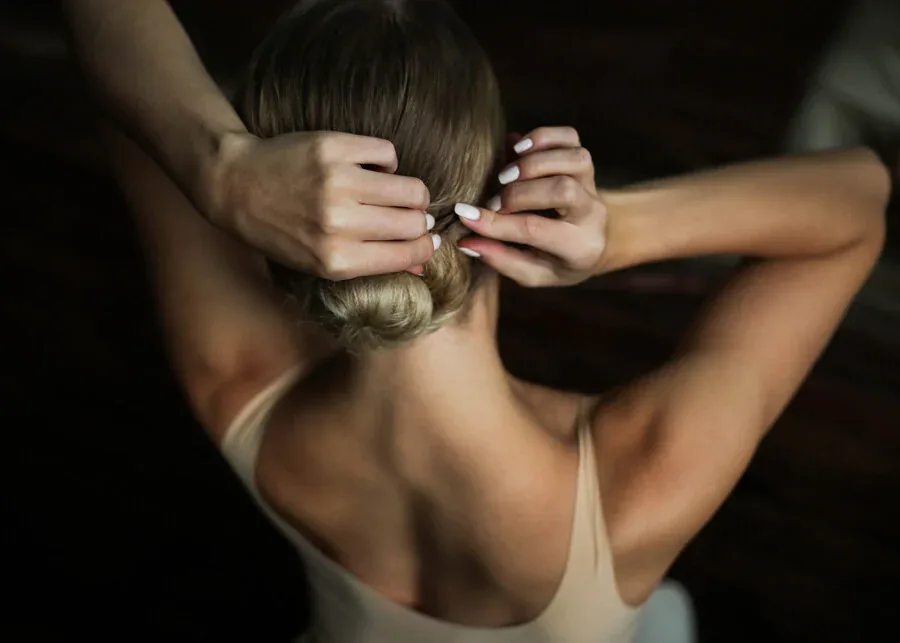
Taking a French twist down is half the pleasure of wearing one, because the hair that comes out of a twist is never the same hair that went in. After a few hours pinned up, the hair has soft, natural bends and waves exactly where the roll held it — and that is the starting point for second-day hair. Remove the pins one by one, starting from the bottom of the seam and working upward, and let the hair fall naturally rather than pulling the roll apart. Run your fingers through it gently, add a little dry shampoo at the roots if it needs refreshing, and you have soft, lived-in waves that would have taken twenty minutes with a curling iron. If the twist was sleek, the waves will be smooth and polished; if it was messy, the waves will be textured and tousled.
For the morning after, the trick is not to wash the hair straight away. Brush it out gently with a soft-bristle brush, work a little texturising spray through the lengths, and either wear the waves down or gather them into a low, loose twist again — a second-day twist is often easier than a first-day one, because the hair already has grip and memory from the day before. The mistake to avoid is brushing the waves out too aggressively, which turns them into frizz, and washing the hair just to remove the hairspray, which wastes the best waves the twist gave you. A French twist is two hairstyles for the price of one: the updo today, and the waves tomorrow — and the second-day hair is the reason so many women keep coming back to this style.
1. The Classic French Twist
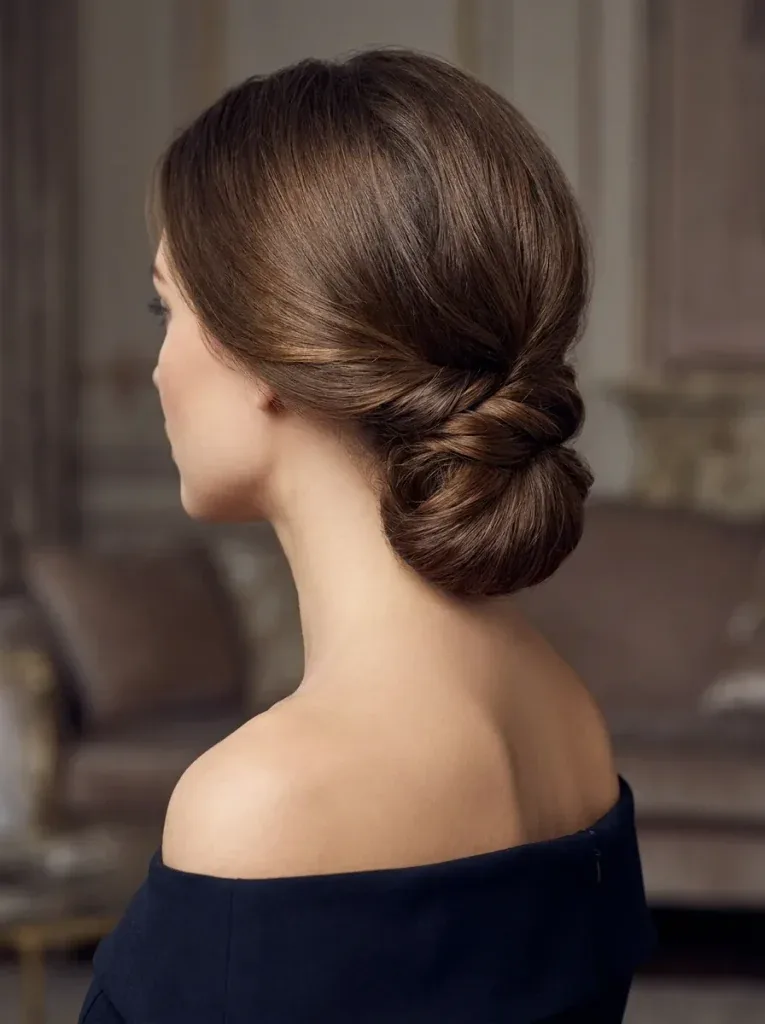
The classic French twist is the original — the sleek, vertical roll that has been the definition of elegance since the 1950s, worn by everyone from Audrey Hepburn to the bride at the next table. The hair is smoothed back without a single flyaway, folded up the back of the head, and pinned into a tall, clean roll with a perfectly smooth surface. There is nothing fussy about it and nothing to hide behind: the beauty of the classic twist is in its control, its symmetry, and the long, graceful line it creates from the crown to the nape. It shows off the neck and the shoulders, pairs beautifully with a high neckline or an open back, and has a timeless quality that no trend can touch.
Best for: formal events, weddings, black-tie evenings, and anyone with medium to long hair who wants the most polished updo there is. How to style: blow-dry the hair smooth, work a smoothing serum through the lengths, gather low, fold upward, and pin vertically along the seam — then smooth the surface with a fine-tooth comb and set with a strong-hold spray. What to ask a stylist: for a twist that sits high and tall, with the ends fully tucked, and a finish so smooth it looks sculpted. Time: 25 to 35 minutes. Quick verdict: the most elegant updo you can wear — and the one every other twist is measured against.
2. The Sleek Sculpted French Twist
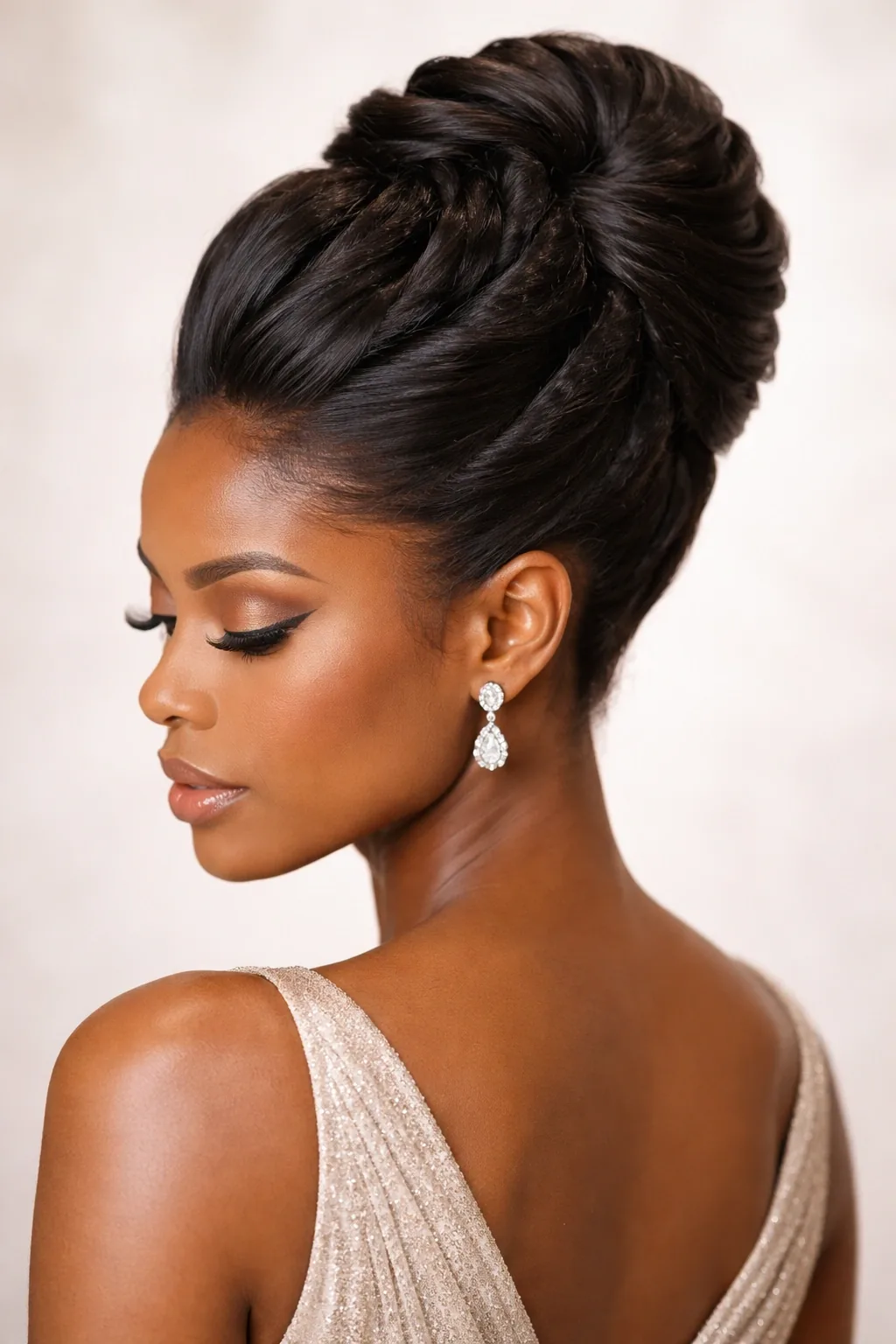
The sleek sculpted French twist is the classic twist turned up a notch: taller, smoother, and more architectural, with a roll so polished it looks carved rather than styled. The difference is in the finish — the hair is blow-dried dead straight, a pomade is worked through the lengths for shine, and the surface is brushed until it reflects the light. This is the twist for a red-carpet moment, a gala, or a wedding where the photographs matter as much as the day itself, because the sculpted silhouette reads beautifully on camera from every angle. It is also the most demanding twist to wear: the smoothness shows every stray strand, so the prep has to be perfect.
Pros: unmatched elegance, incredible hold, and a silhouette that makes any outfit look more expensive. Cons: it takes 30 to 45 minutes, it needs a stylist or a very steady hand, and it is unforgiving of flyaways. Common mistake: skipping the blow-dry and trying to smooth the hair with a brush alone — the roll will look lumpy and the surface will frizz within the hour. Maintenance: keep a small brush and a travel hairspray in your bag, and smooth the surface once or twice during the evening. Who should avoid it: anyone with very fine, flyaway hair that will not stay smooth, or anyone who wants a relaxed, low-effort look. If you want maximum glamour and you have the time, this is the twist to choose.
3. French Twist with a Deep Side Part
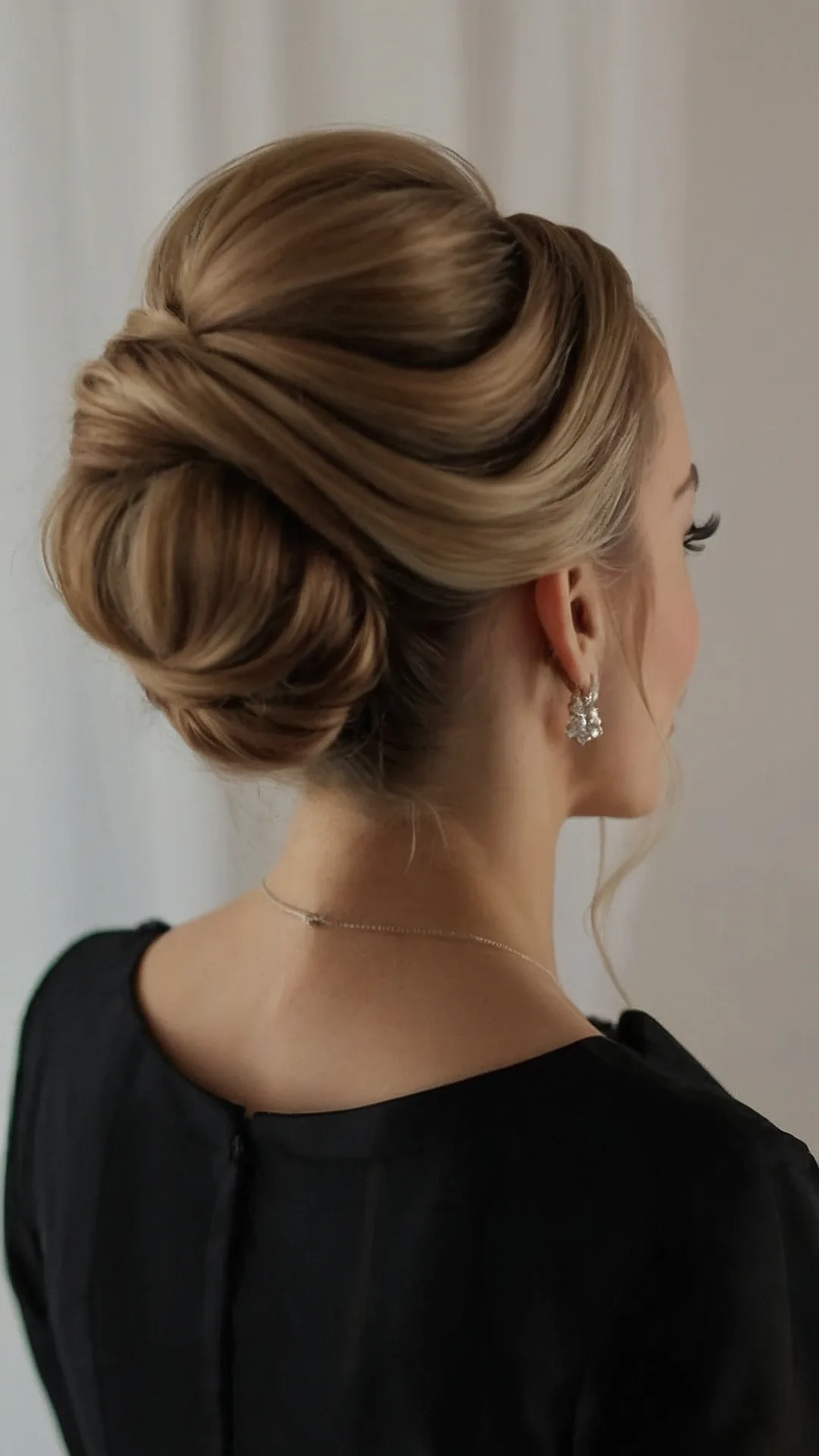
A French twist with a deep side part is the classic twist with a dash of old-Hollywood drama: the hair is parted deeply on one side, swept across the forehead in a heavy, glossy wave, and then folded into the twist at the back. The deep part changes everything — it creates a sweeping line across the face, it adds volume on one side, and it gives the twist a glamorous, film-star quality that a centre part never quite achieves. This is the twist for a long gown, a dramatic neckline, or any evening when you want to look like you stepped out of a different era. It also flatters round and square faces beautifully, because the diagonal sweep breaks up the symmetry of the face.
Best for: formal evenings, vintage-inspired outfits, and medium to long hair. How to style: part the hair deeply while it is damp, blow-dry the front section over to the heavy side, then gather the rest low and fold it into the twist — the swept section should flow into the roll, not fight it. What to ask a stylist: for the part to sit two or three inches off centre, and for the sweep to be set with a clip while it cools so it holds its curve. Time: 30 to 40 minutes. Quick verdict: the most glamorous version of the classic twist — a small change that makes a big difference.
4. The Low French Twist
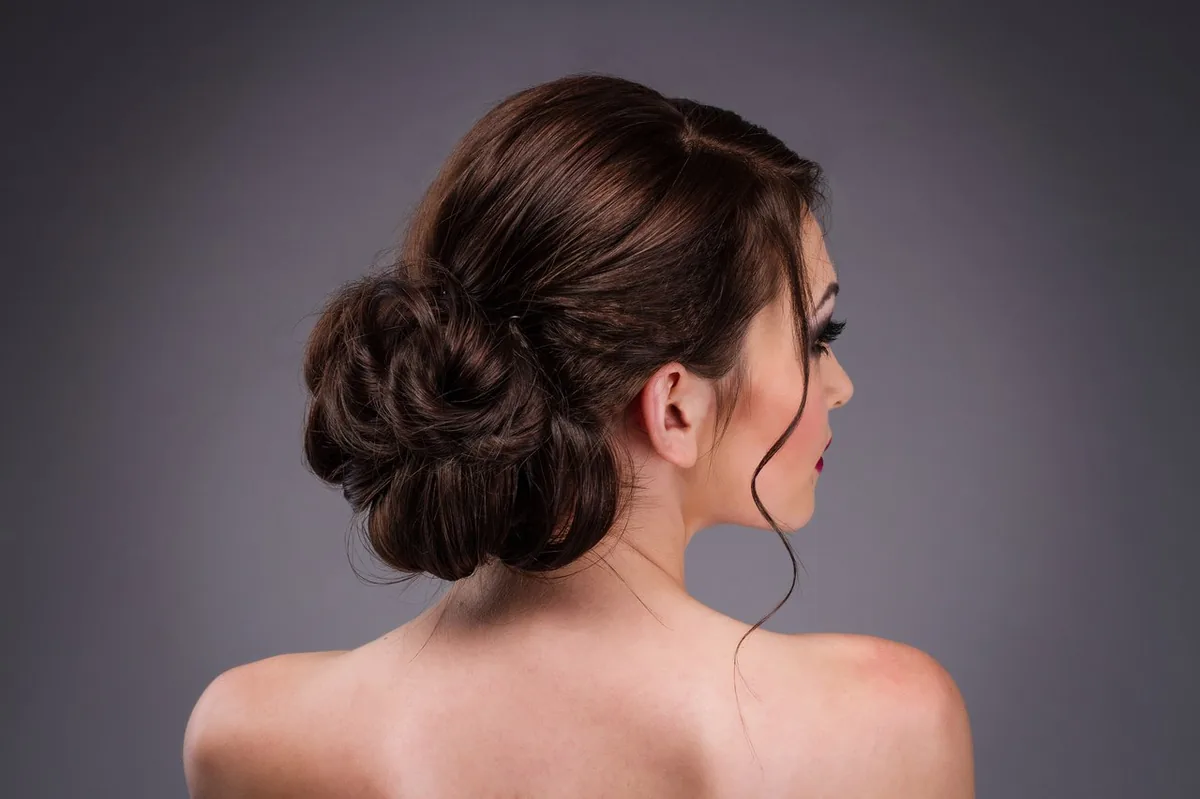
The low French twist sits at the nape of the neck rather than running up the back of the head, and that small shift changes the whole feeling of the style. Where the classic twist is tall and dramatic, the low twist is soft, understated and quietly expensive — the kind of updo that looks like it belongs in a Parisian office or at a garden wedding rather than on a red carpet. It is also the most comfortable twist to wear all day, because the weight of the hair sits low and the pins are not pulling at the crown. The low twist is the best first twist to learn, because the fold is shorter, the roll is easier to control, and any small imperfections are hidden at the nape rather than on display.
Best for: work, daytime weddings, and anyone learning the technique for the first time. How to style: gather the hair at the nape, fold it upward only a few inches, and pin along the seam — the roll should sit like a soft shell at the base of the head. What to ask a stylist: for a low, relaxed roll with a few face-framing pieces, rather than a tall, sculpted one. Time: 10 to 15 minutes once you know the fold. Quick verdict: the easiest, most wearable French twist — start here, and the taller versions will follow naturally.
5. The High French Twist
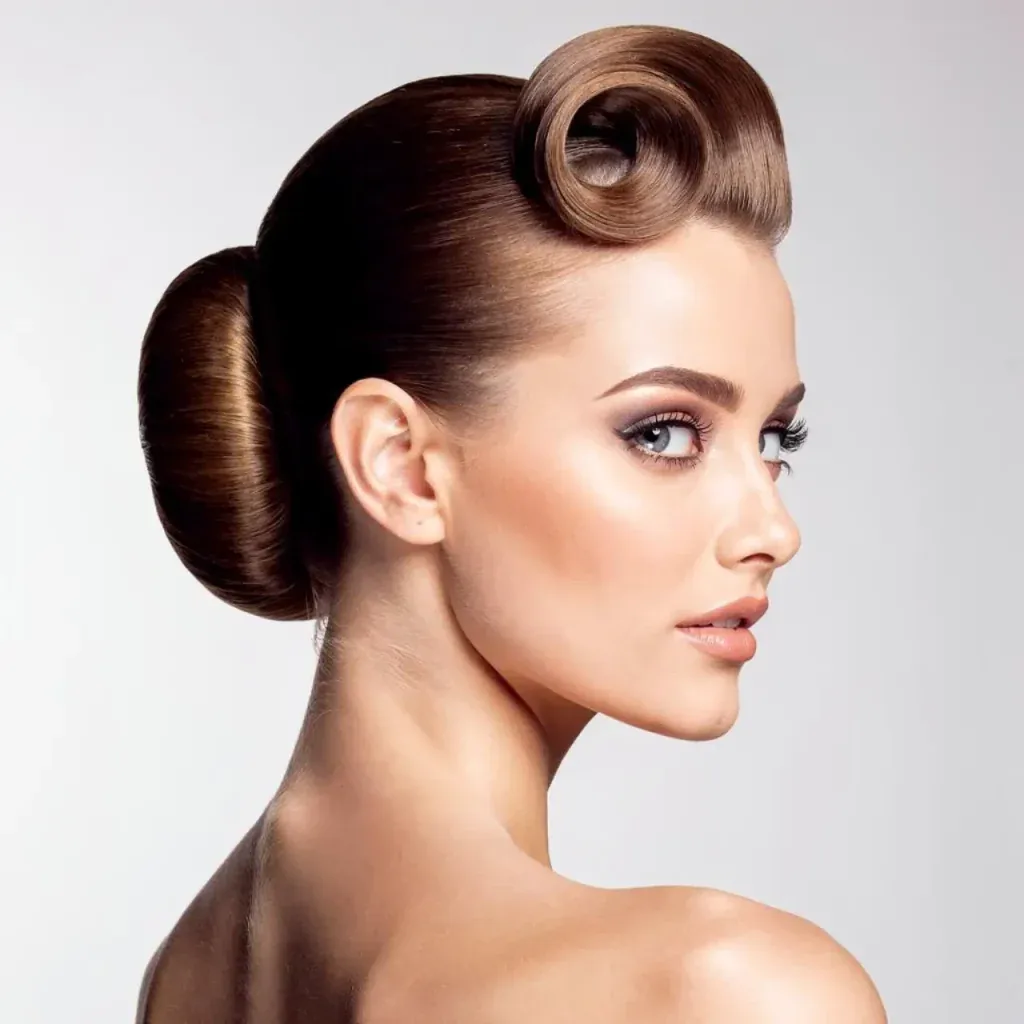
The high French twist is the dramatic sister of the classic: the roll starts at the crown and runs the full length of the back of the head, creating a tall, sculpted silhouette that lengthens the neck and makes the whole outfit look more formal. It is the twist for a ballgown, a gala, or a bride who wants maximum height and presence — and it is the version that photographs most strikingly, because the tall roll creates a beautiful line from the front, the side and the back. The height comes from starting the fold high and building the roll upward, layer by layer, rather than gathering low and folding up in one motion.
Pros: maximum elegance and height, a silhouette that elongates the neck, and a style that looks extraordinary in photographs. Cons: it is the hardest twist to do on yourself, it needs the most pins, and it can feel heavy by the end of a long night. Common mistake: building the roll in one big fold instead of in sections — on most hair, a single fold that tall will collapse. Maintenance: check the seam once during the evening and add a pin if anything has shifted. Who should avoid it: anyone with very short or very fine hair, where the roll will not have enough length to build height. Time: 35 to 45 minutes, ideally with a stylist. Quick verdict: the showstopper — save it for the nights that deserve one.
6. French Twist with Smooth Top and Volume
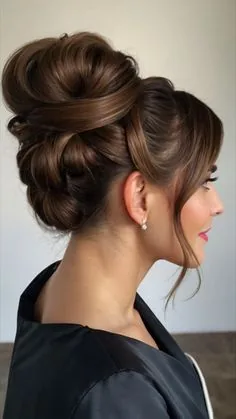
A French twist with a smooth top and volume is the polished middle ground between the classic twist and the modern messy one: the top of the head is sleek and glossy, but the crown has a soft lift, and the roll itself has a gentle fullness rather than a flat, tight surface. The volume at the crown is what makes it flattering — it lengthens the face, balances the height of the roll, and stops the style from looking severe. This is the twist for women who love the classic look but find a completely flat top too harsh, and it is one of the most forgiving sleek twists, because the lift at the crown hides any unevenness in the smoothing.
Best for: weddings, formal dinners, and anyone with a round or square face who wants a little height. How to style: backcomb the crown section lightly before you gather the hair, smooth the top layer over the teasing with a soft brush, then fold the twist as usual — the lift should look soft, not like a beehive. What to ask a stylist: for gentle volume at the crown, not a dramatic pouf, and a smooth, glossy finish on the roll. Time: 25 to 35 minutes. Quick verdict: the classic twist, softened — elegant without being severe, and flattering on almost everyone.
7. The Modern Messy French Twist
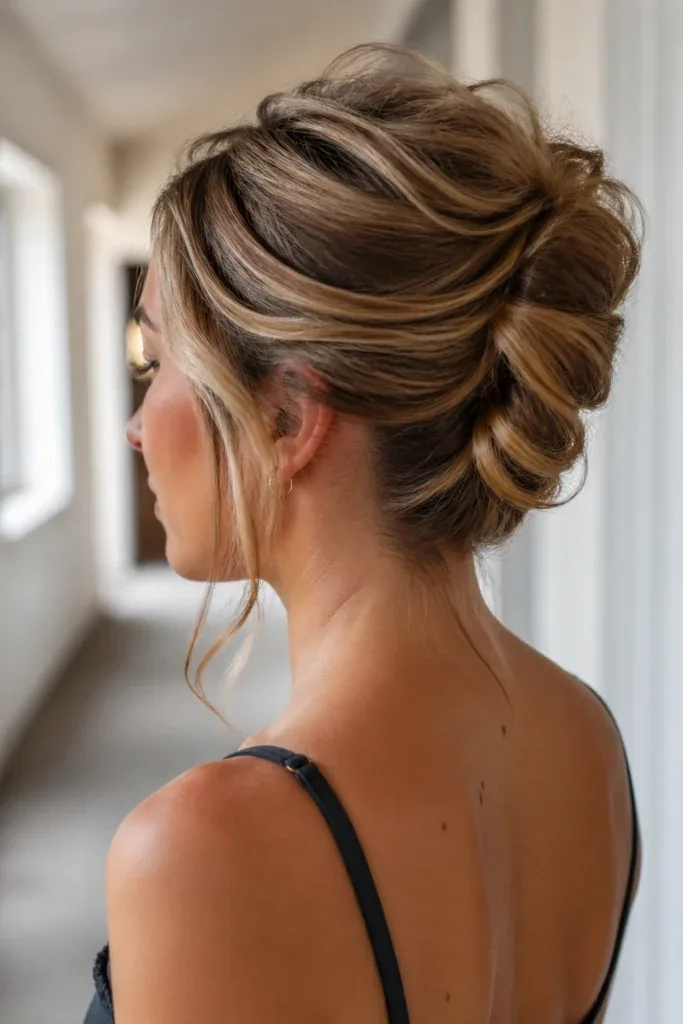
The modern messy French twist is the twist for right now: the same fold as the classic, but looser, softer, and deliberately undone. The roll is pulled apart gently once it is pinned, so it looks full and textured rather than flat and tight, and a few pieces are left out around the face and at the nape to soften the whole look. The result is an updo that looks effortless — the kind of hairstyle that suggests you did it in five minutes and it just happened to look perfect. It is the twist for everyday elegance, for casual weddings, for date nights, and for anyone who loves the idea of a French twist but finds the classic version too formal.
Pros: fast, forgiving, comfortable, and flattering on every face shape. Cons: it can look unfinished if you pull out too much, and it will not survive a very long formal evening as well as a sleek twist. Common mistake: making the roll too loose from the start — a messy twist still needs a firm fold, and the messiness comes from pulling it apart after pinning, not from a weak fold. Maintenance: almost none; the style is supposed to look a little undone. Time: 10 to 15 minutes. Quick verdict: the French twist you will actually wear every week — learn the classic fold, then loosen it, and this is what you get.
8. Loose French Twist with Face-Framing Pieces
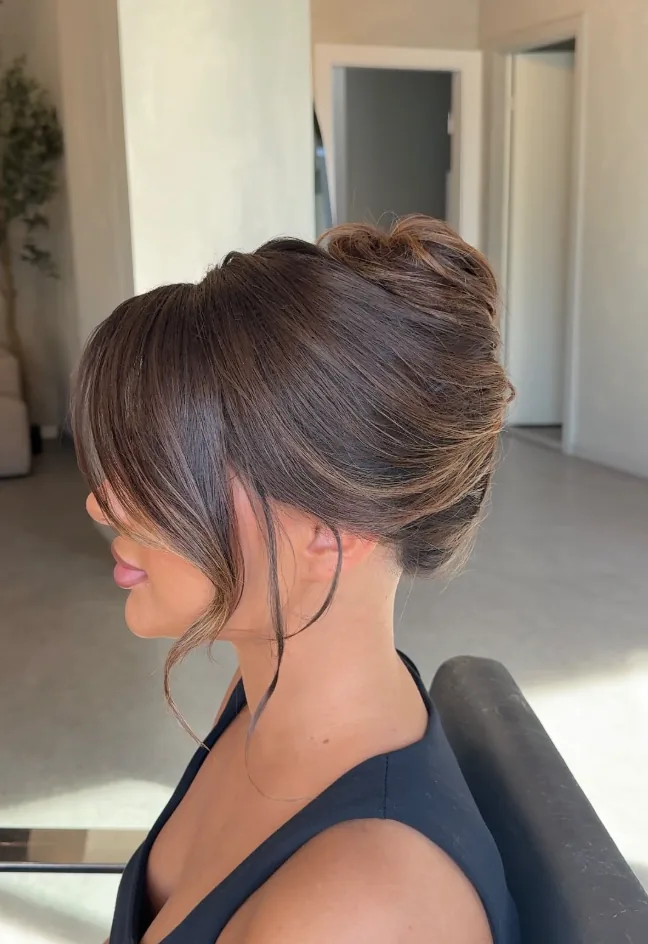
A loose French twist with face-framing pieces is the most flattering twist for most faces, because the pieces do the softening that a tight roll cannot. Two soft strands are left out at the front before the twist is folded — one on each side, or a longer sweep on one side — and they are curled lightly so they fall along the cheekbones and jawline. The twist itself sits mid-height and a little loose, and the overall effect is romantic rather than severe: the updo is there, but the face is framed, not exposed. This is the twist for women who have always thought an updo makes them look harsh, because the face-framing pieces change the whole feeling of the style.
Best for: round, square and heart-shaped faces, weddings, and photographs. How to style: leave the front pieces out before you gather the hair, fold the twist loosely, then curl the loose pieces with a large-barrel iron and set them with a light spray. What to ask a stylist: for the pieces to start at the temple and fall to the cheekbone, not shorter. Time: 15 to 20 minutes. Quick verdict: if you only learn one twist, make it this one — the face-framing pieces make it wearable for everyone.
9. French Twist with Soft Curls
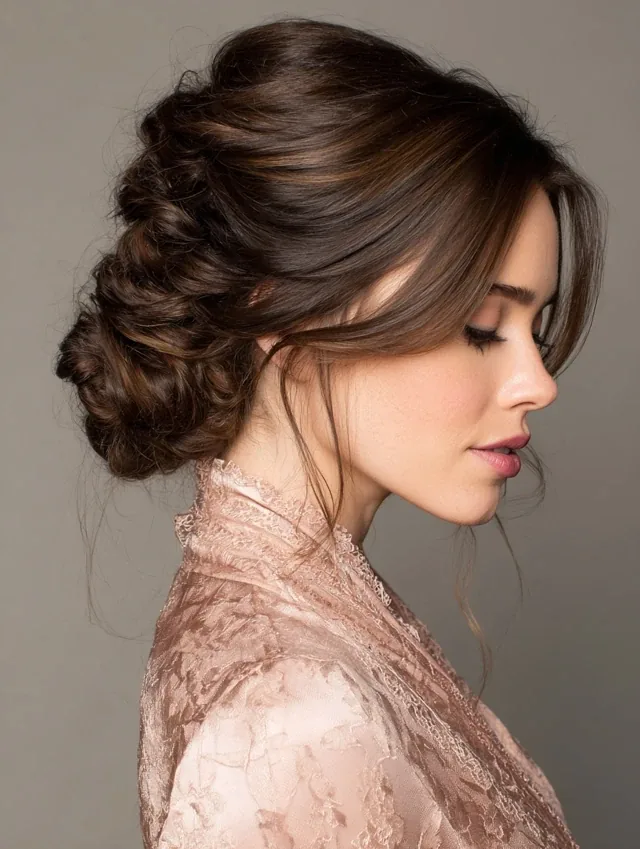
A French twist with soft curls takes the structured roll and gives it a romantic finish: the hair is curled before it is folded, so the roll itself has a soft, textured surface and the ends that peek out at the top curl gently instead of lying flat. A few curls are left out around the face, and the whole style has a softness that the sleek classic never has. This is the twist for a romantic wedding, a Valentine’s dinner, or any evening when the dress is soft and flowing and the hair should match. It is also a wonderful twist for naturally curly or wavy hair, because the curls are already there — the twist just organises them.
Best for: romantic occasions, naturally curly or wavy hair, and medium to long lengths. How to style: curl the hair in large sections first, let the curls cool completely, then gather and fold loosely — do not brush the curls out, or you will lose the texture that makes this twist special. What to ask a stylist: for a soft, textured roll with curled ends showing at the top, and a few loose curls at the face. Time: 30 to 40 minutes including curling. Quick verdict: the romantic twist — structured enough to last, soft enough to feel like you.
10. The Textured French Twist
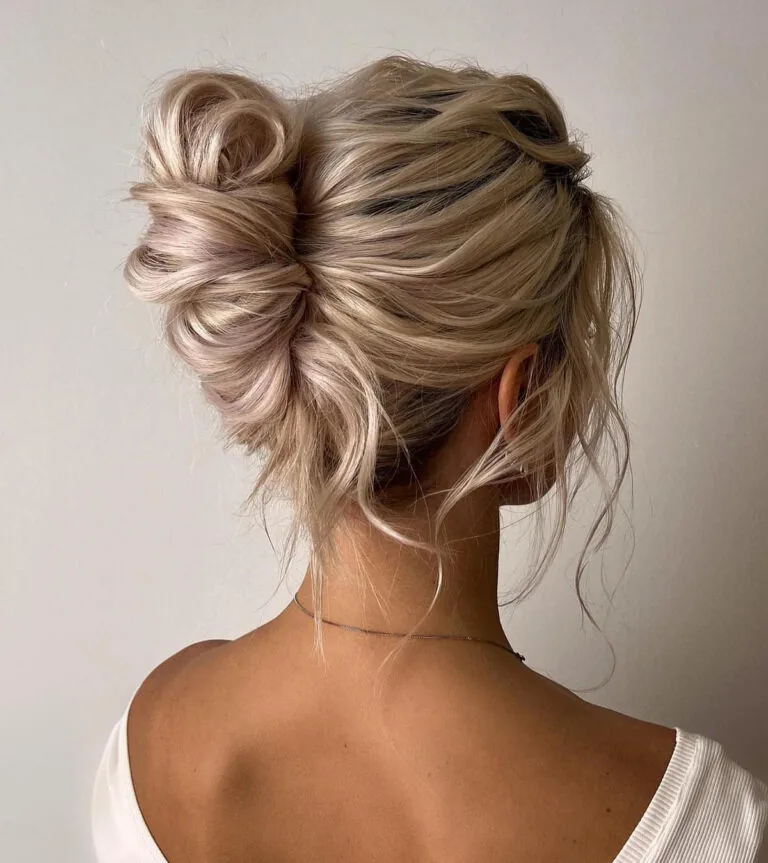
The textured French twist is the modern twist for women who hate the feeling of hairspray and the look of a too-perfect updo. The hair is given texture first — a salt spray, a texturising powder at the roots, or a quick backcomb through the lengths — and then folded into a roll that is deliberately a little rough around the edges. The surface is not smooth; it has movement, pieces, and a lived-in feel, and that is exactly the point. This is the twist for a festival, a casual party, or a day when you want to look put-together without looking like you tried too hard. It also happens to be the easiest twist to do on second-day hair, because the hair already has the grip and the texture it needs.
Pros: quick, comfortable, and very forgiving of mistakes. Cons: it will not hold as long as a sleek twist, and it is not the right choice for a black-tie event. Common mistake: adding too much texturising product, which makes the hair sticky and hard to fold — a little goes a long way. Maintenance: carry a few extra pins, because a textured twist can loosen faster than a smooth one. Time: 10 to 15 minutes. Quick verdict: the lazy-day twist that still looks intentional — texture first, fold second, done.
11. French Twist with a Pouf
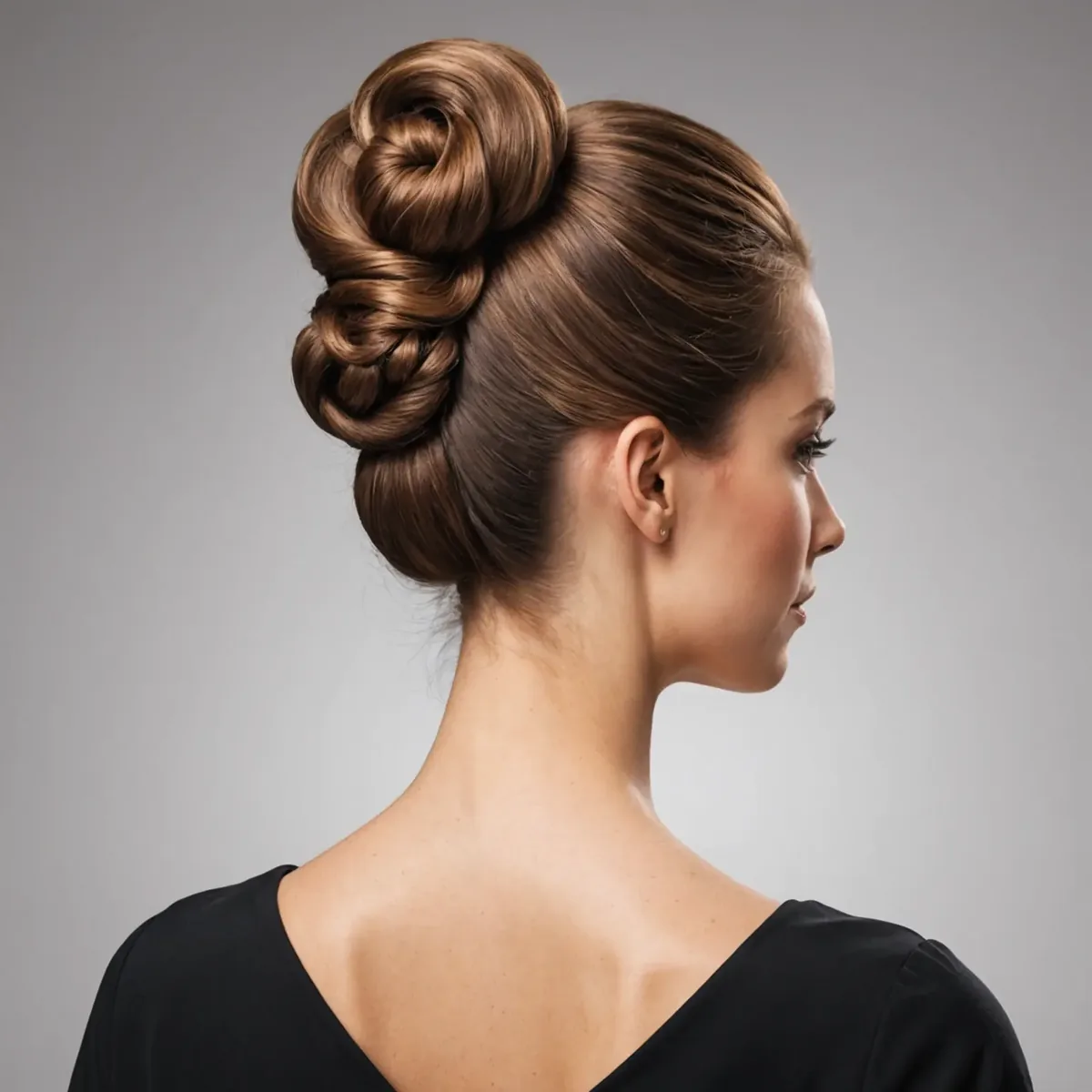
A French twist with a pouf adds a soft, lifted crown to the classic roll — a gentle volume at the front that gives the style height, softens the forehead, and makes the whole silhouette more dramatic. The pouf is created by backcombing the front section lightly before the hair is gathered, then smoothing the top layer over it so the lift looks soft rather than teased. It is a small change with a big effect: the pouf lengthens the face, balances a long roll, and gives the twist a vintage, 1960s feel without going full beehive. This is the twist for women with a smaller forehead or a round face, where a little height at the crown is flattering, and for anyone who wants their twist to have a bit more presence.
Best for: formal events, vintage-inspired looks, and round or square faces. How to style: section off the front hair, backcomb the roots lightly, smooth the top layer over with a soft brush, then fold the twist as usual — the pouf should sit just behind the hairline, not on top of the head. What to ask a stylist: for a soft pouf, not a dramatic one, and for the sides to stay smooth so the lift is the focal point. Time: 25 to 30 minutes. Quick verdict: a little lift, a lot of difference — the pouf turns a neat twist into a statement.
12. The Boho French Twist
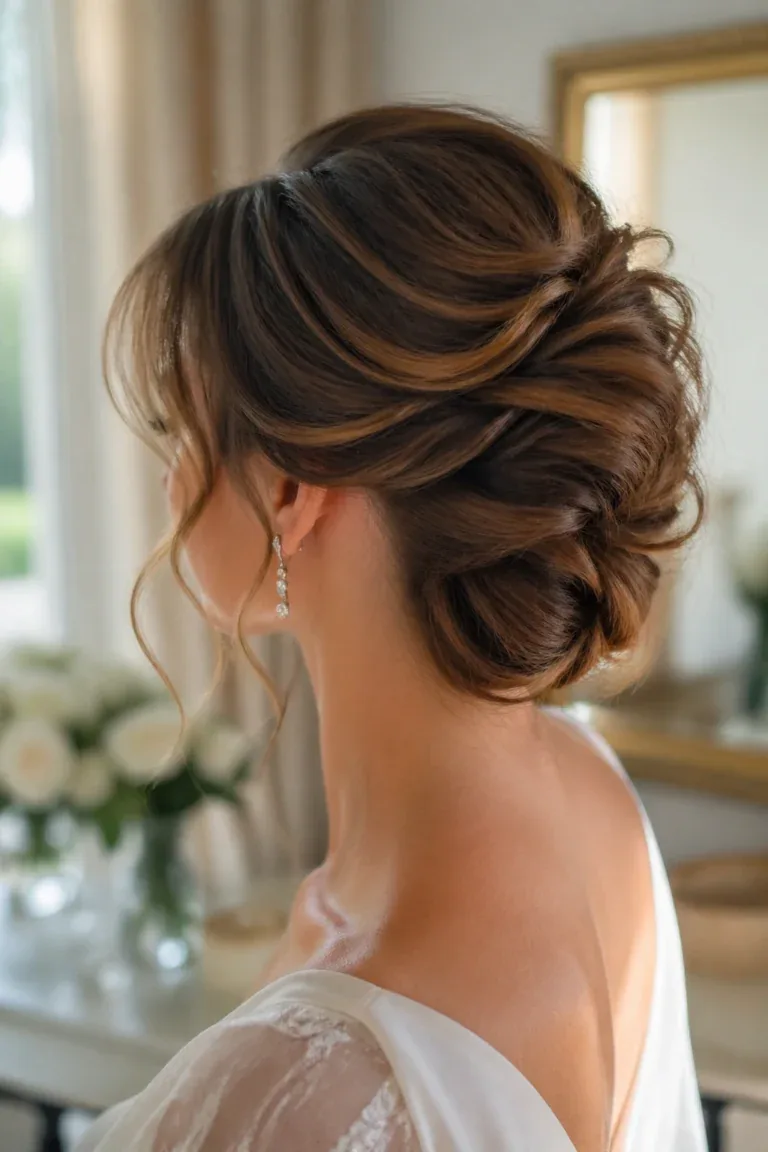
The boho French twist is the relaxed, free-spirited cousin of the classic: a loose roll with soft, wavy texture, a few pieces falling free around the face, and often a small braid or a flower woven into the seam. The hair is not blow-dried smooth — it is left with its natural wave, or given a few loose bends with a curling wand — and the twist is folded loosely so the roll has a soft, organic shape. This is the twist for a garden wedding, a festival, a beach ceremony, or any occasion where the dress is flowy and the mood is relaxed. It is also the most forgiving twist of all, because boho hair is supposed to look a little undone, and a piece that falls out just adds to the charm.
Best for: outdoor weddings, boho dresses, and naturally wavy hair. How to style: add loose waves first, fold the twist gently without pulling it tight, and leave two or three pieces out around the face — then tuck a small sprig of baby’s breath or a tiny flower into the seam if the occasion calls for it. What to ask a stylist: for a soft, low roll with natural texture, and for the flowers to be secured with a hidden pin. Time: 15 to 20 minutes. Quick verdict: the twist for women who want elegance without the formality — loose, lovely, and a little bit wild.
13. French Braid into a Twist
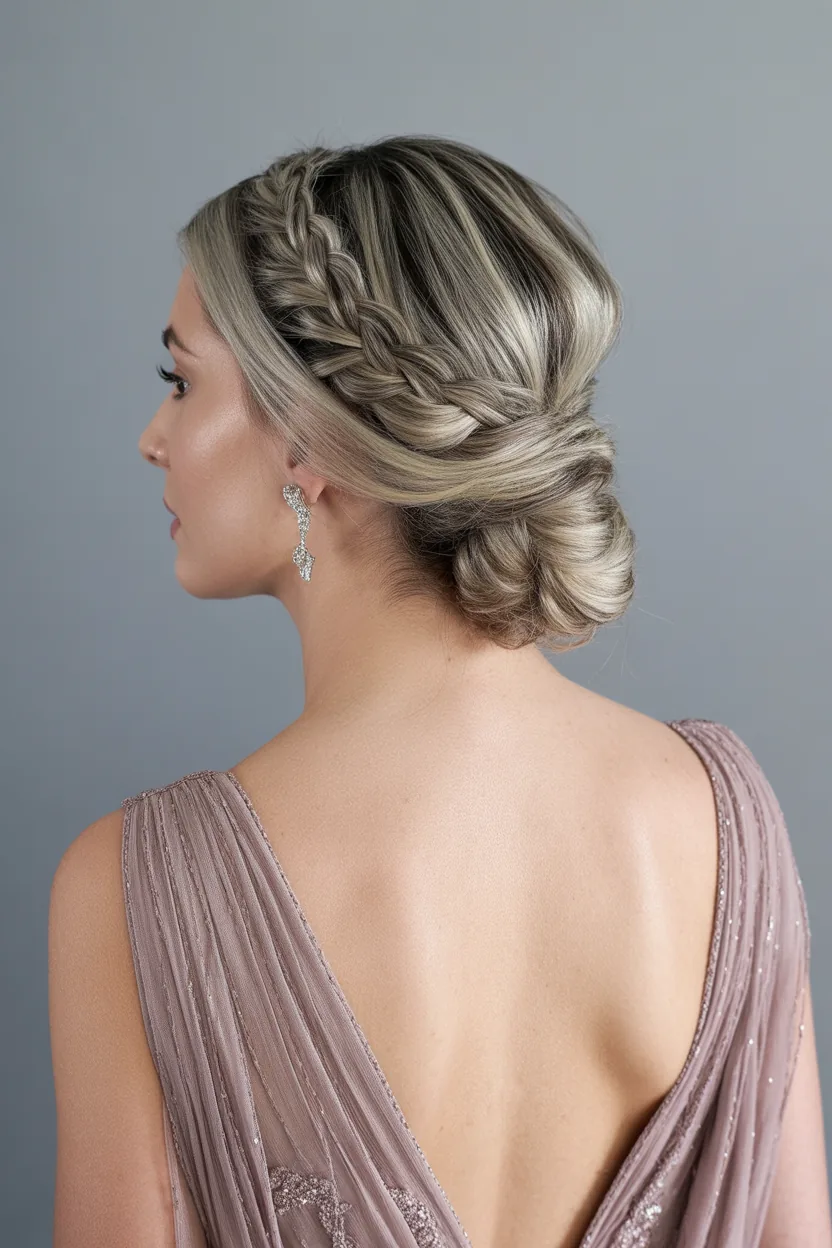
A French braid into a twist is two classic techniques in one hairstyle: a French braid worked from the front hairline down the back of the head, which then flows into a French twist at the nape. The braid gives the style a beautiful, detailed texture across the crown, and the twist gives it the elegant, sculpted finish at the back — so the hairstyle looks intricate from the front and polished from behind. This is the twist for a bride who wants something more detailed than a plain roll, or for anyone who loves braids but wants an updo rather than a braid worn down. It is also one of the most secure twists, because the braid anchors the hair section by section before the twist even begins.
Best for: weddings, formal events, and long hair. How to style: French-braid the top section from the hairline to the crown, gather the remaining hair with the braid’s tail, and fold the whole lot into a twist — the braid should sit on top of the roll like a crown. What to ask a stylist: for the braid to be soft and full, pulled apart slightly for texture, and for the twist to sit low so the braid is the star. Time: 35 to 45 minutes. Quick verdict: the most detailed twist in this guide — a braid and a twist, each making the other look better.
14. The Fishtail French Twist
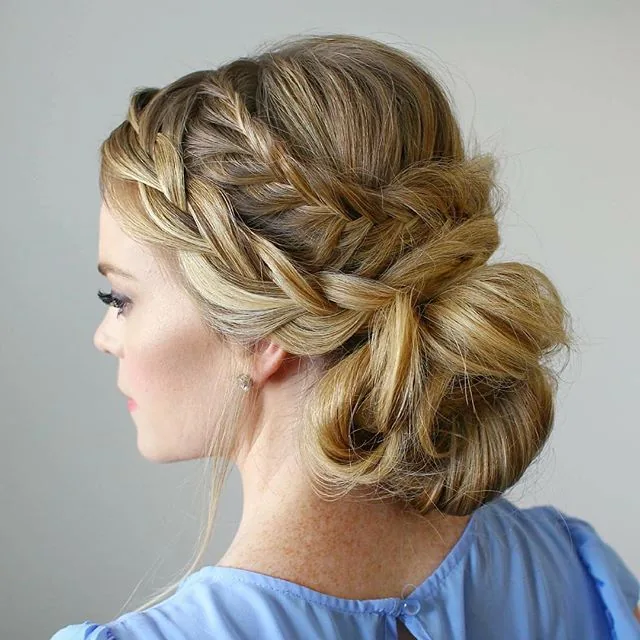
The fishtail French twist weaves a fishtail braid into the side of the roll, giving the classic twist a delicate, intricate detail that catches the eye in photographs. The fishtail — woven from two sections instead of three, so it looks finer and more detailed than an ordinary braid — runs along one side of the twist or across the crown, and the rest of the hair folds into the roll as usual. The contrast is lovely: the smooth, sculpted roll on one side and the fine, textured fishtail on the other. This is the twist for a woman who wants her updo to have a talking point, and for anyone who loves the look of braids but finds a full braided updo too much.
Pros: a beautiful, unusual detail that photographs wonderfully. Cons: it takes time and a steady hand, and the fishtail needs to be secured well or it will loosen. Common mistake: making the fishtail too tight — a fishtail that is pulled apart gently looks full and textured, while a tight one looks thin and severe. Maintenance: check the fishtail’s end during the evening, and carry a small clear elastic just in case. Time: 30 to 40 minutes. Quick verdict: a small braid, a big effect — the fishtail turns a classic twist into a conversation piece.
15. The Rope Twist French Twist
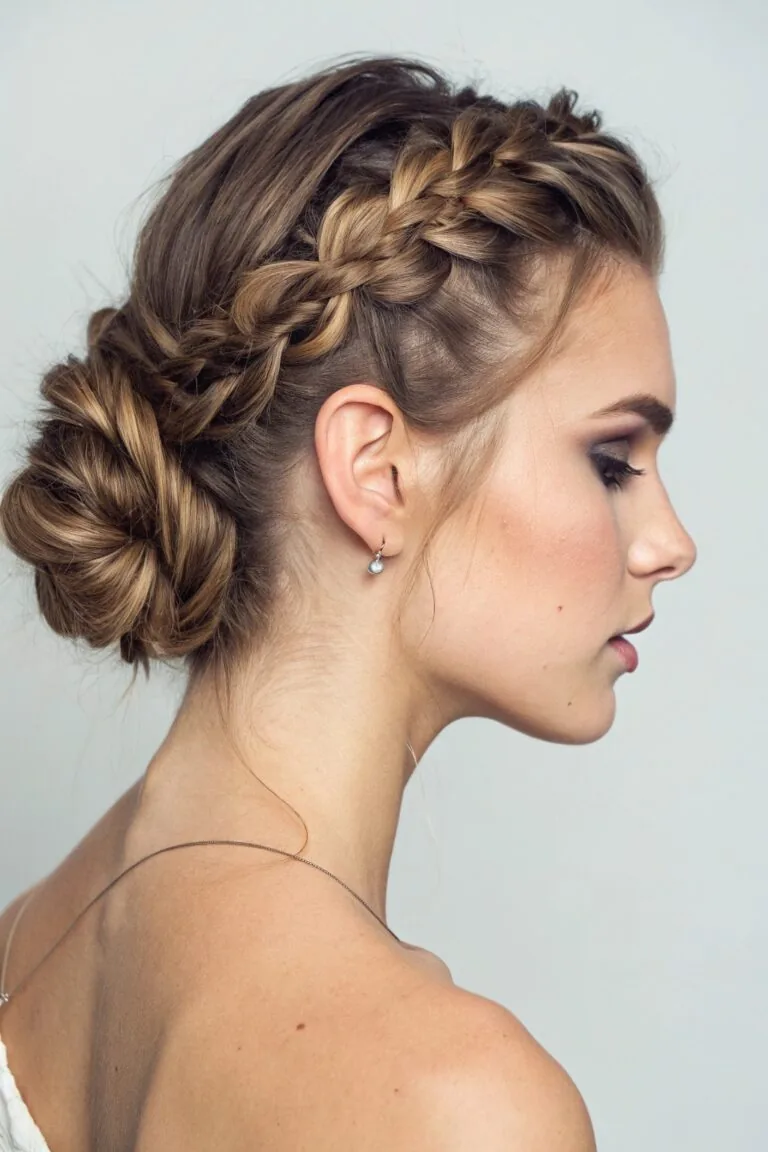
The rope twist French twist is the simplest braided variation, and one of the prettiest: two sections of hair are twisted around each other like a rope, and the rope is then folded into the French twist roll. The rope texture gives the roll a beautiful, twisted surface — like a cord running up the back of the head — and it is far easier to do than a braid, because it only needs two sections and a simple twisting motion. This is the twist for women who want the look of a braided updo without learning to braid, and for anyone whose hair is too slippery for a French braid but holds a rope twist perfectly.
Best for: medium to long hair, weddings, and anyone who wants a textured twist without braiding. How to style: divide the gathered hair into two sections, twist each section in the same direction, then twist the two sections around each other in the opposite direction — the rope will hold itself together — then fold the rope into the roll and pin along the seam. What to ask a stylist: for the rope to run visibly up the outside of the roll, not hidden inside it. Time: 20 to 30 minutes. Quick verdict: the easiest braided twist — two sections, one motion, and a roll that looks far more complicated than it was.
16. The Double French Twist
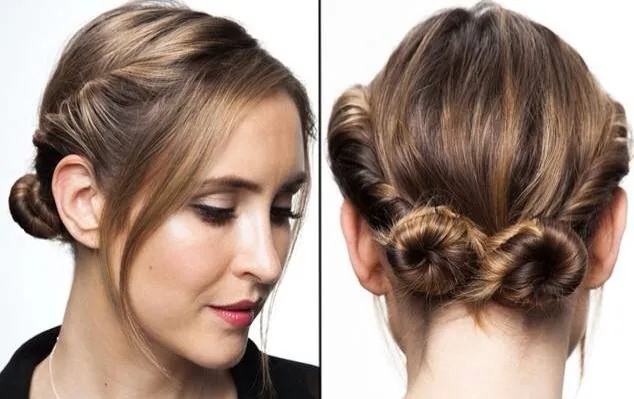
The double French twist is exactly what it sounds like: two smaller twists side by side, running up the back of the head in parallel, instead of one large roll. The result is a sculpted, architectural look that is twice as interesting as a single twist — two clean lines, a subtle groove between them, and a symmetry that photographs beautifully from behind. This is the twist for a woman who wants to stand out, for a bride who wants an updo nobody else will have, or for anyone with very thick hair, where two smaller rolls are actually easier to pin securely than one enormous one. It is the most advanced twist in this guide, and the one most worth booking a stylist for.
Pros: a striking, unusual silhouette, and excellent hold on thick hair. Cons: it is the hardest twist to do on yourself, it needs the most pins, and it takes 40 to 50 minutes even for a professional. Common mistake: making the two rolls different sizes — measure the sections carefully, because asymmetry is very visible in a double twist. Maintenance: check the centre groove during the evening; if one roll shifts, the other will follow. Who should avoid it: anyone with fine or short hair, where there is not enough hair for two full rolls. Quick verdict: the showpiece twist — dramatic, sculptural, and unforgettable when it is done well.
17. French Twist with a Braided Accent
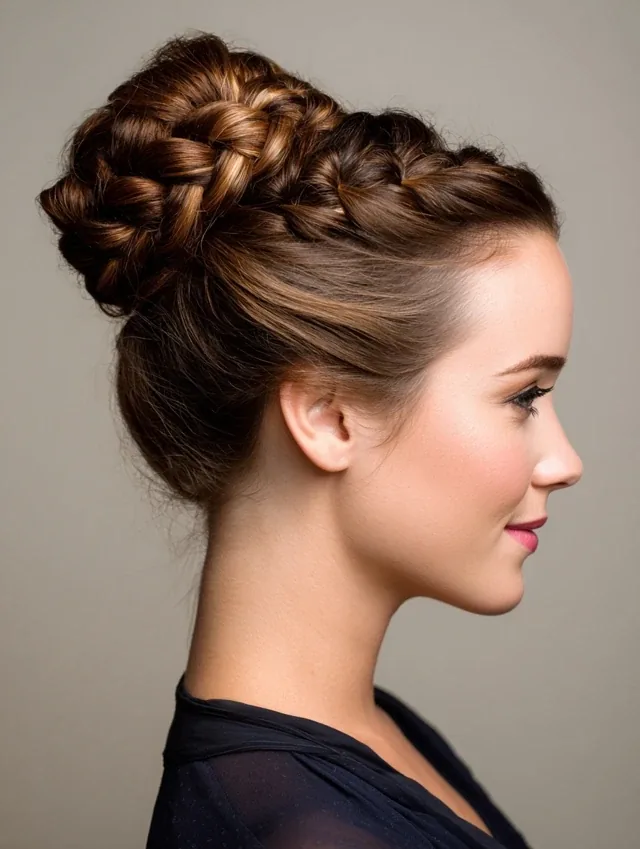
A French twist with a braided accent keeps the classic roll as the star and adds a single small braid as jewellery: a thin braid worked from one side of the head and laid across the top of the twist, or a small braid running along the seam like a cord. The braid is the detail that makes people look twice — it adds texture, it adds craft, and it turns a smooth, simple roll into something that looks considered and personal. This is the twist for a bridesmaid who wants her updo to feel special without upstaging the bride, or for any formal occasion where the classic twist feels a little too plain on its own.
Best for: weddings, bridesmaids, and formal dinners. How to style: braid a small section from one side before you gather the hair, fold the twist as usual, then lay the braid across the top of the roll and pin both ends into the seam so it looks like it grew there. What to ask a stylist: for the braid to be thin and neat, and for it to sit on the roll rather than disappearing into it. Time: 25 to 35 minutes. Quick verdict: one small braid, one big upgrade — the accent makes the classic twist feel made for you.
18. The Twisted French Roll
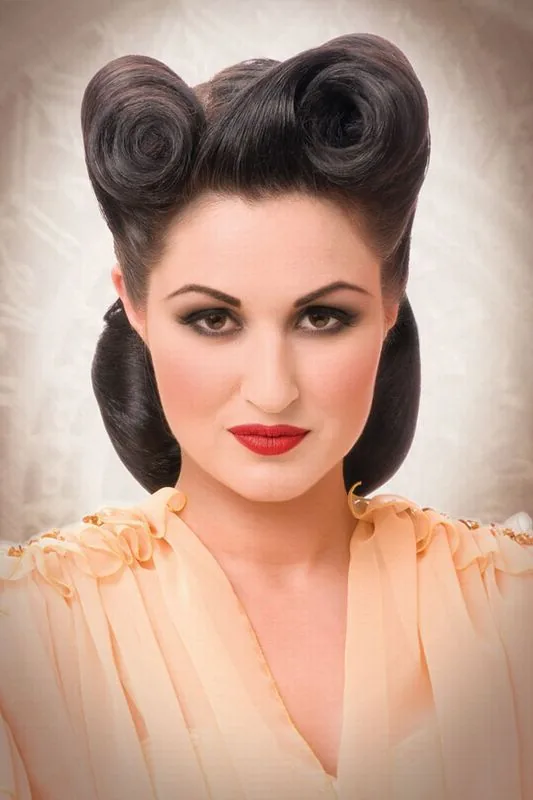
The twisted French roll is the vintage cousin of the French twist: instead of a smooth, folded roll, the hair is twisted into a soft rope and then coiled upward, so the roll has a visible spiral texture running through it. The result is a little softer and a little more romantic than the classic twist, with a beautiful, sculpted surface that catches the light. This is the twist for a vintage-inspired outfit, a 1940s or 1950s themed event, or any evening when the classic twist feels too severe and the messy twist feels too casual. It sits right in the middle: structured enough to be elegant, textured enough to be interesting.
Pros: a beautiful spiral texture, a vintage feel, and a roll that holds well because the twisting creates natural grip. Cons: it takes a little practice to get the spiral even, and it is not the best choice for very fine hair. Common mistake: twisting the hair in the wrong direction, which makes the roll unwind as you pin it — twist consistently in one direction and the roll will hold itself. Maintenance: a light spray is usually enough; the twisted surface hides small imperfections. Time: 25 to 35 minutes. Quick verdict: the vintage twist — a spiral instead of a fold, and a roll with real character.
19. The Half-Up French Twist
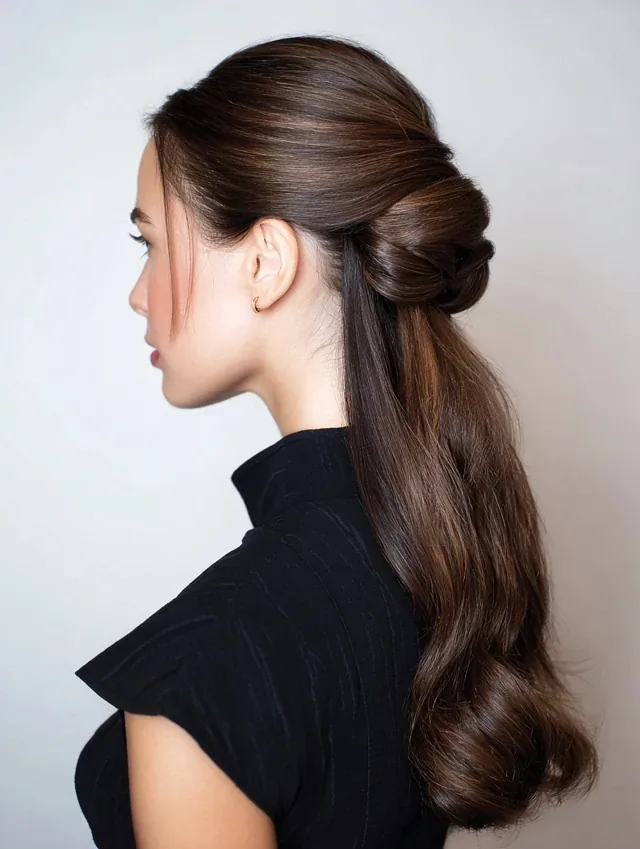
The half-up French twist is the best of both worlds: the top half of the hair is folded into a small, neat twist at the back of the head, while the rest falls loose in waves or curls down the back. It gives you the elegance of an updo and the softness of wearing your hair down, and it is the twist for women who love the French twist but are not ready to put all their hair up. The half-up twist keeps the hair off your face, shows off your earrings, and gives the back of the head a pretty detail — while the loose lengths keep the look romantic and relaxed. It also photographs beautifully, because the twist gives the back view something to look at.
Best for: weddings, date nights, and medium to long hair. How to style: section off the top half of the hair, fold it into a small twist at the crown, and pin it securely — then curl the loose lengths in large, soft waves. What to ask a stylist: for the twist to sit at the crown, not at the nape, and for the loose hair to be curled, not straight, so the two halves of the style feel connected. Time: 20 to 25 minutes. Quick verdict: the twist for women who cannot decide between up and down — you do not have to choose.
20. Half-Up Twist with Loose Waves
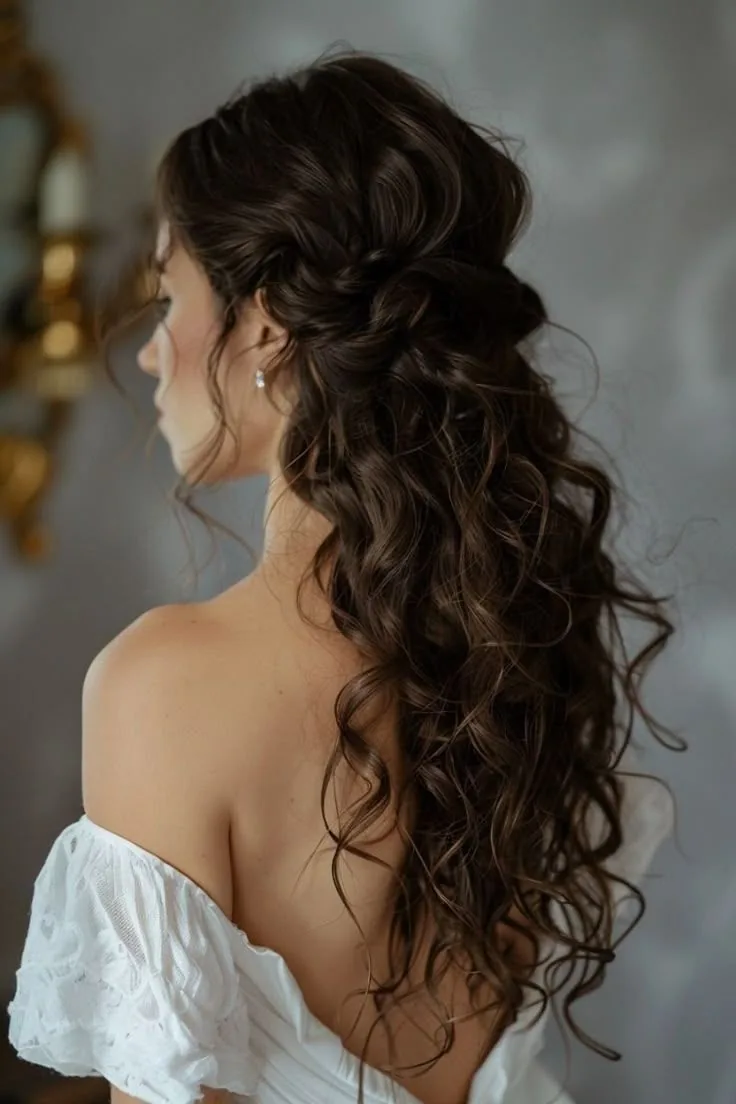
A half-up twist with loose waves is the romantic version of the half-up twist: the top section is folded into a soft, loose roll, and the hair underneath falls in big, tousled waves that move when you do. The waves are the whole point — they are loose, touchable, and a little bit undone, which keeps the twist from looking formal and makes the whole style feel like a summer evening. This is the twist for a beach wedding, a garden party, or a date night, and it is one of the easiest twists to do yourself, because the loose waves hide any unevenness in the twist and the pins disappear into the texture.
Pros: romantic, relaxed, and very forgiving to style. Cons: the loose waves will drop over a long evening, so it is not the best choice for an all-night formal event. Common mistake: making the twist too tight, which fights the relaxed feeling of the waves — keep the roll soft and pull it apart a little once it is pinned. Maintenance: carry a travel hairspray and re-spray the waves once during the evening. Time: 20 to 30 minutes including curling. Quick verdict: the romantic half-up — soft on top, softer underneath, and lovely from every angle.
21. Half-Up French Twist with a Clip
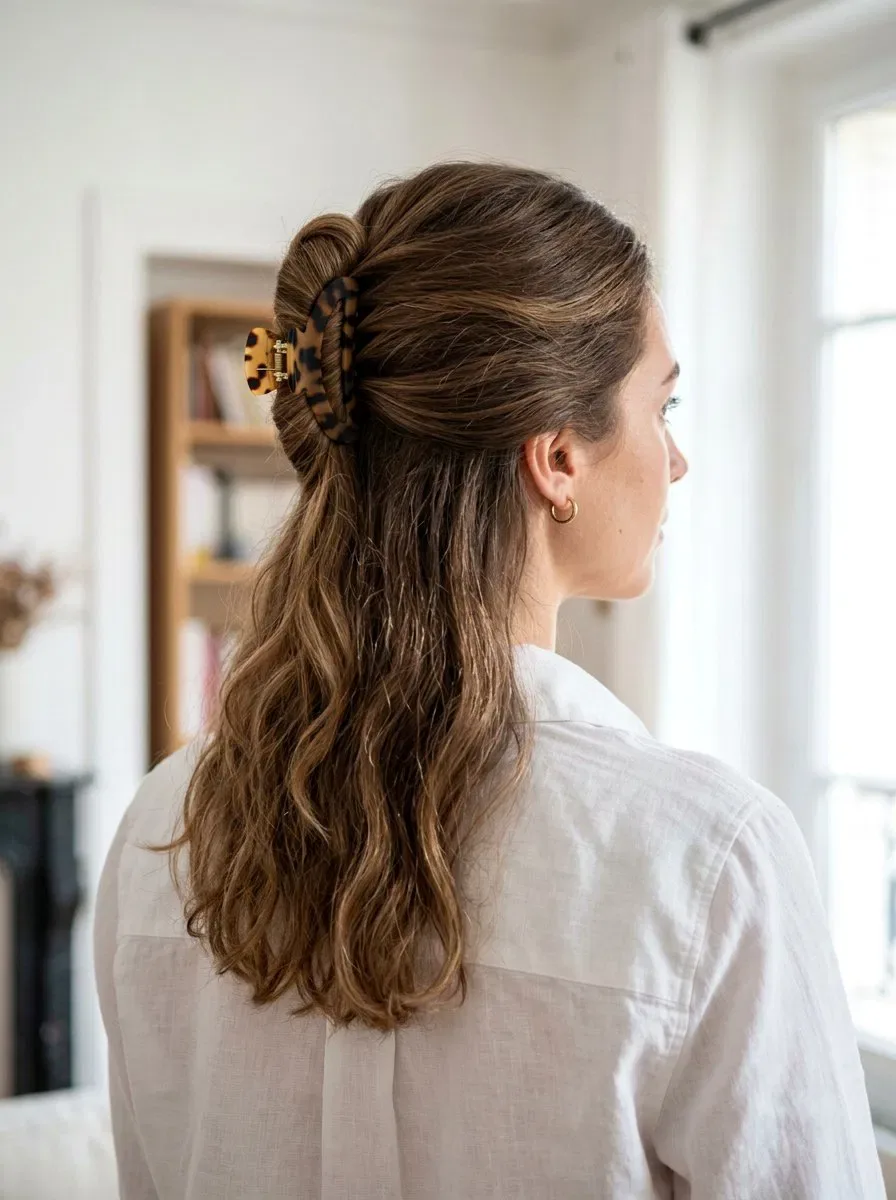
A half-up French twist with a clip is the fastest way to make a half-up twist feel finished: the top section is folded into a small twist, and a decorative clip — a pearl barrette, a crystal comb, or a tortoiseshell claw — sits at the base of the twist, both holding it in place and acting as jewellery. The clip is the hero of this style, so choose it well: pearls for a classic look, crystals for an evening out, tortoiseshell for everyday elegance. This is the twist for a workday that turns into dinner, for a wedding guest who wants to look polished without a trip to the salon, and for anyone who loves hair accessories and wants them to do the work.
Best for: work, weddings, and anyone who loves a good hair clip. How to style: fold a small twist from the top section, pin it lightly, then slide the clip in at the base of the roll — the clip should sit on top of the finished twist, not buried in it. What to ask a stylist: for the twist to be small and neat, so the clip is the focal point. Time: 10 to 15 minutes. Quick verdict: the five-minute upgrade — a small twist, one beautiful clip, and a hairstyle that looks like it took far longer.
22. The French Twist Ponytail Hybrid
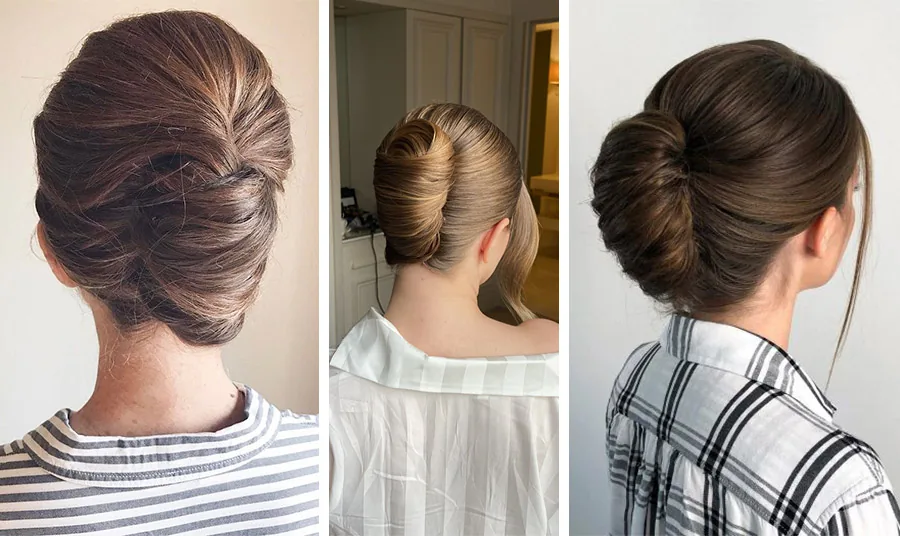
The French twist ponytail hybrid is the clever twist for women who love the look of a French twist but also love the movement of a ponytail: the top and sides of the hair are folded into a twist at the back of the head, and the remaining length falls out of the bottom of the roll as a ponytail. The twist gives the style its elegance and its structure, and the ponytail gives it life — it swings, it bounces, and it keeps the style feeling youthful rather than formal. This is the twist for a party, a night out, or a wedding where you want to dance without worrying about your hair, because the ponytail is free to move while the twist holds everything in place.
Pros: elegant and practical, with real movement and excellent hold. Cons: it needs enough length for both the twist and the ponytail, so it is not for short hair. Common mistake: making the twist too small, which leaves the ponytail heavy and pulls the whole style downward — the twist should be substantial enough to anchor the weight. Maintenance: re-tie the ponytail elastic once during a long evening if it loosens. Time: 20 to 25 minutes. Quick verdict: the twist that moves — all the elegance of a French twist, with the energy of a ponytail.
23. Half-Up Twist for Short Hair
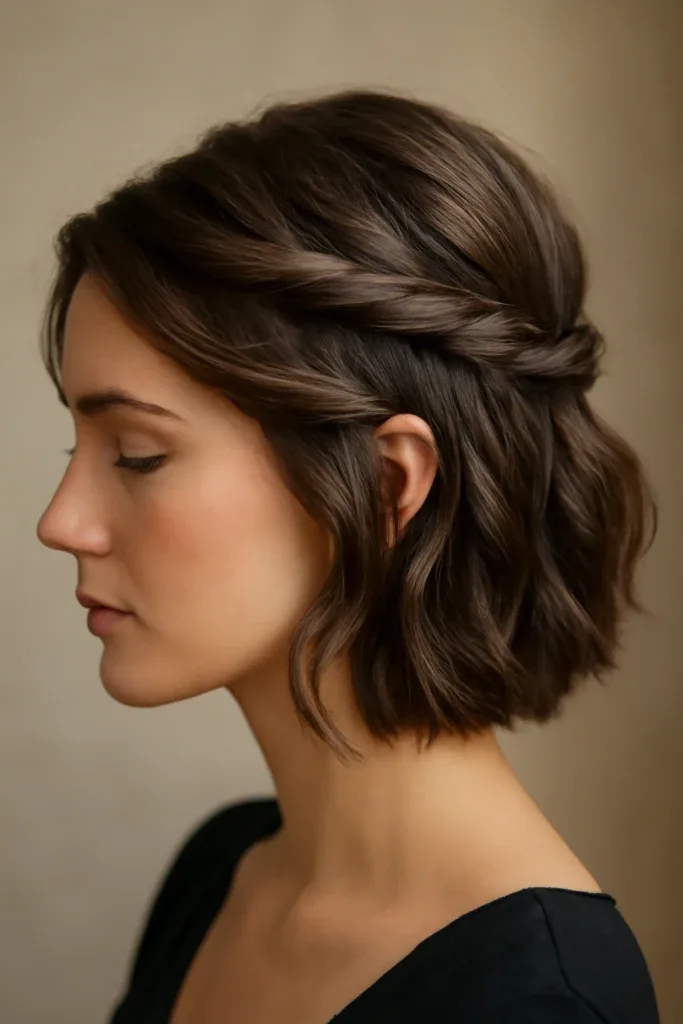
A half-up twist for short hair is proof that you do not need long hair to wear a French twist: the top section of a bob or a lob is folded into a small, neat roll at the crown, and the rest of the cut falls free below it. The twist adds height, structure and a focal point to a short cut, and it turns an everyday bob into a hairstyle that is ready for a wedding or a night out. The key is keeping the twist small — a short-hair twist is a detail, not a full updo — and using the texture of the cut to your advantage, because a bob with a little wave or a little texture holds a small twist far better than dead-straight hair.
Best for: bobs, lobs, and anyone with shoulder-length hair. How to style: take the top section from temple to temple, twist it loosely, and pin it at the crown — then style the rest of the hair as usual, with a little wave or a smooth blow-dry. What to ask a stylist: for the twist to be small and soft, and for a few pieces to be left out around the face. Time: 10 to 15 minutes. Quick verdict: the short-hair twist — small, chic, and proof that a French twist is not just for long hair.
24. French Twist for Long Hair
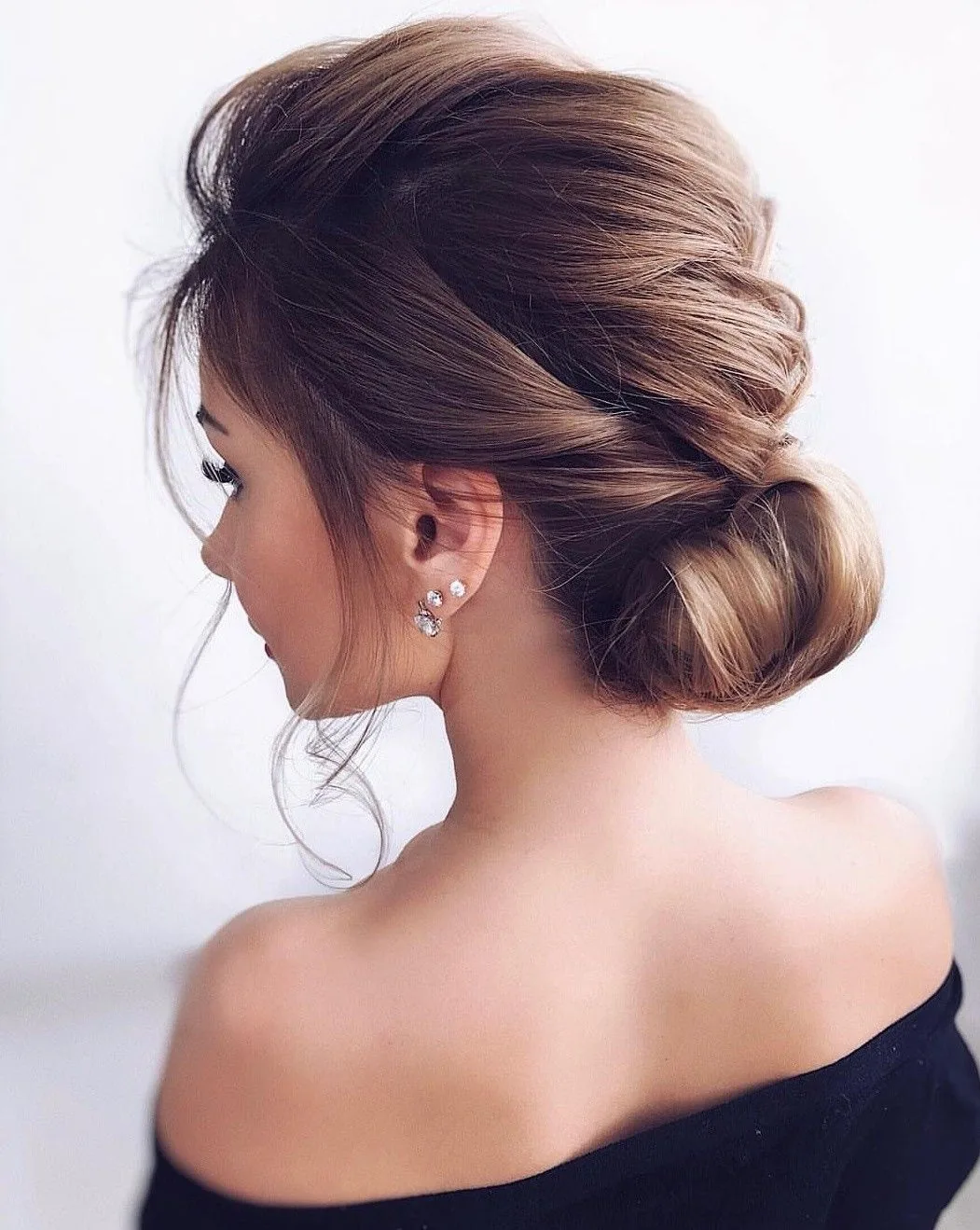
Long hair makes the most dramatic French twist, because there is enough length for a tall, full roll — but it also needs the most care, because the weight of the hair is always pulling the twist downward. The secret for long hair is to braid the last few inches before you fold, or to divide the hair into two sections and build the twist in layers, so no single pin is carrying the full weight. A long-hair twist is the most sculptural version of the style: the roll runs the full length of the back of the head, the silhouette is long and elegant, and the result is the twist that stops a room. It is also the version that most rewards a stylist, because a professional can build the structure in layers far more easily than you can on your own head.
Best for: formal events, weddings, and anyone with hair past the shoulders. How to style: gather the hair low, braid the ends loosely, fold upward in two stages, and pin along the seam in pairs, crossing the pins slightly so they lock. What to ask a stylist: for a layered build with the ends fully tucked, and for U-pins rather than bobby pins for the main anchoring. Time: 30 to 40 minutes. Quick verdict: the most dramatic twist — long hair was made for this roll, as long as you build it in layers.
25. French Twist for Medium Hair
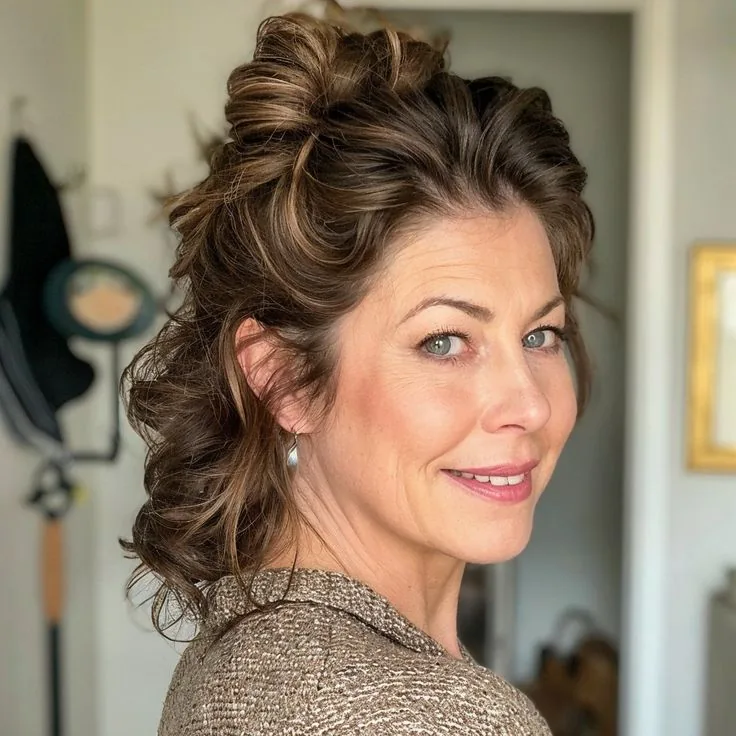
Medium hair — shoulder-length to just past the shoulders — is the sweet spot for a French twist, because there is enough length for a full, satisfying roll and not so much weight that the twist pulls itself down. The fold is straightforward, the roll sits naturally at mid-height, and the pins hold without a struggle. This is the twist for women who cut their hair to a practical length and still want an updo that feels special, and it is the easiest length to learn the technique on, because the hair is long enough to fold and short enough to control. If your hair is medium-length, the French twist is your updo — it was made for you.
Pros: the easiest length to twist, excellent hold, and a roll that looks full without any padding. Cons: very little — medium hair is the twist’s natural home. Common mistake: trying to make the roll taller than the hair allows — a medium-hair twist should sit at mid-height, and forcing it higher will leave the ends poking out of the top. Maintenance: almost none; a medium twist holds all day with a handful of pins. Time: 15 to 20 minutes. Quick verdict: the easiest twist to learn and the easiest to wear — if your hair is medium-length, start here.
26. French Twist for Shoulder-Length Hair
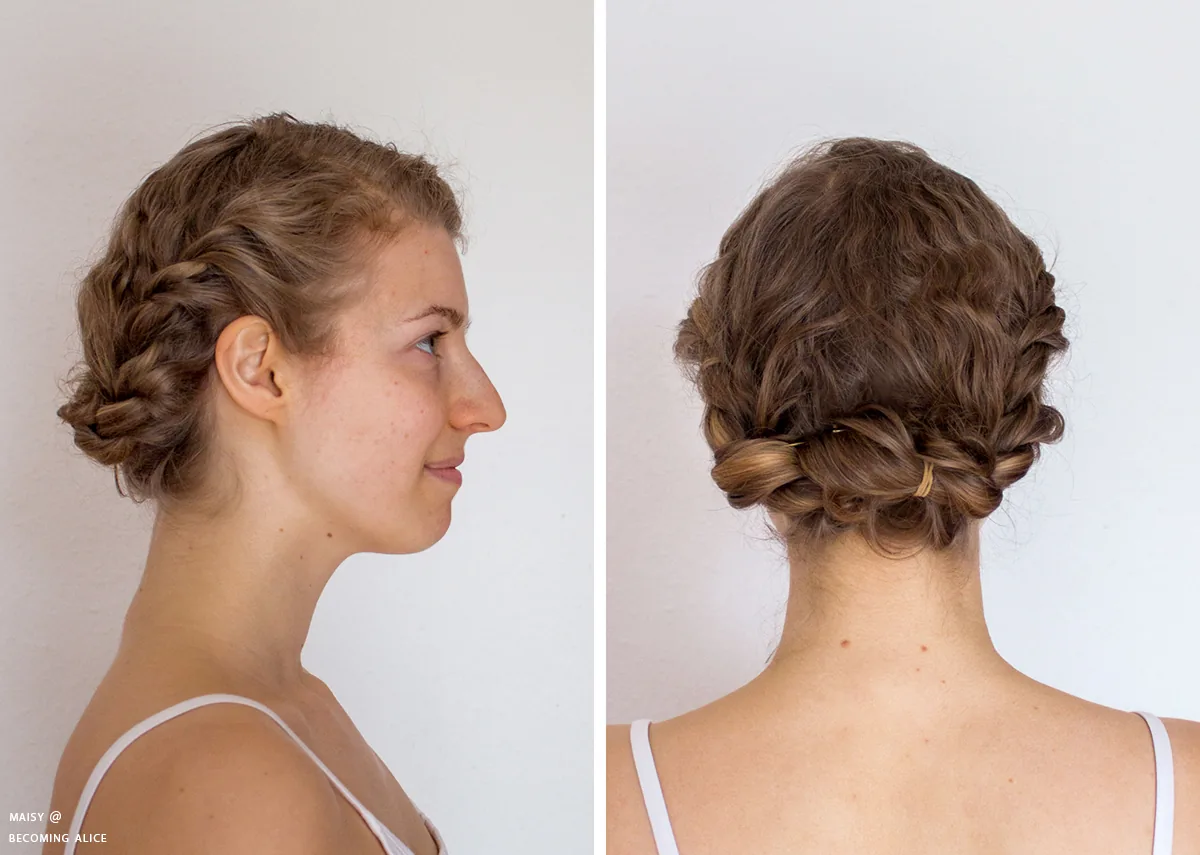
Shoulder-length hair is the shortest length that can hold a true French twist, and it makes a neat, compact roll that sits low at the nape and looks quietly chic. The twist is smaller than a long-hair version, but that is part of its charm: it is understated, it is comfortable, and it looks deliberate rather than like a compromise. The trick for shoulder-length hair is texture — a little texturising spray or dry shampoo before you fold gives the pins something to grip, and a slightly looser roll hides the shorter ends better than a tight one. A decorative comb or a small clip at the top of the roll also helps, because it covers the seam where the shorter ends are tucked.
Best for: work, daytime events, and anyone with a lob or a shoulder-length cut. How to style: add texture first, gather the hair at the nape, fold it up a short distance, and pin generously along the seam — then finish with a decorative comb at the top. What to ask a stylist: for a low, compact roll with a soft finish, and for the ends to be tucked with U-pins rather than bobby pins. Time: 10 to 15 minutes. Quick verdict: the compact twist — proof that shoulder-length hair can wear a French twist beautifully, as long as you add texture first.
27. French Twist for Short Hair and Bobs
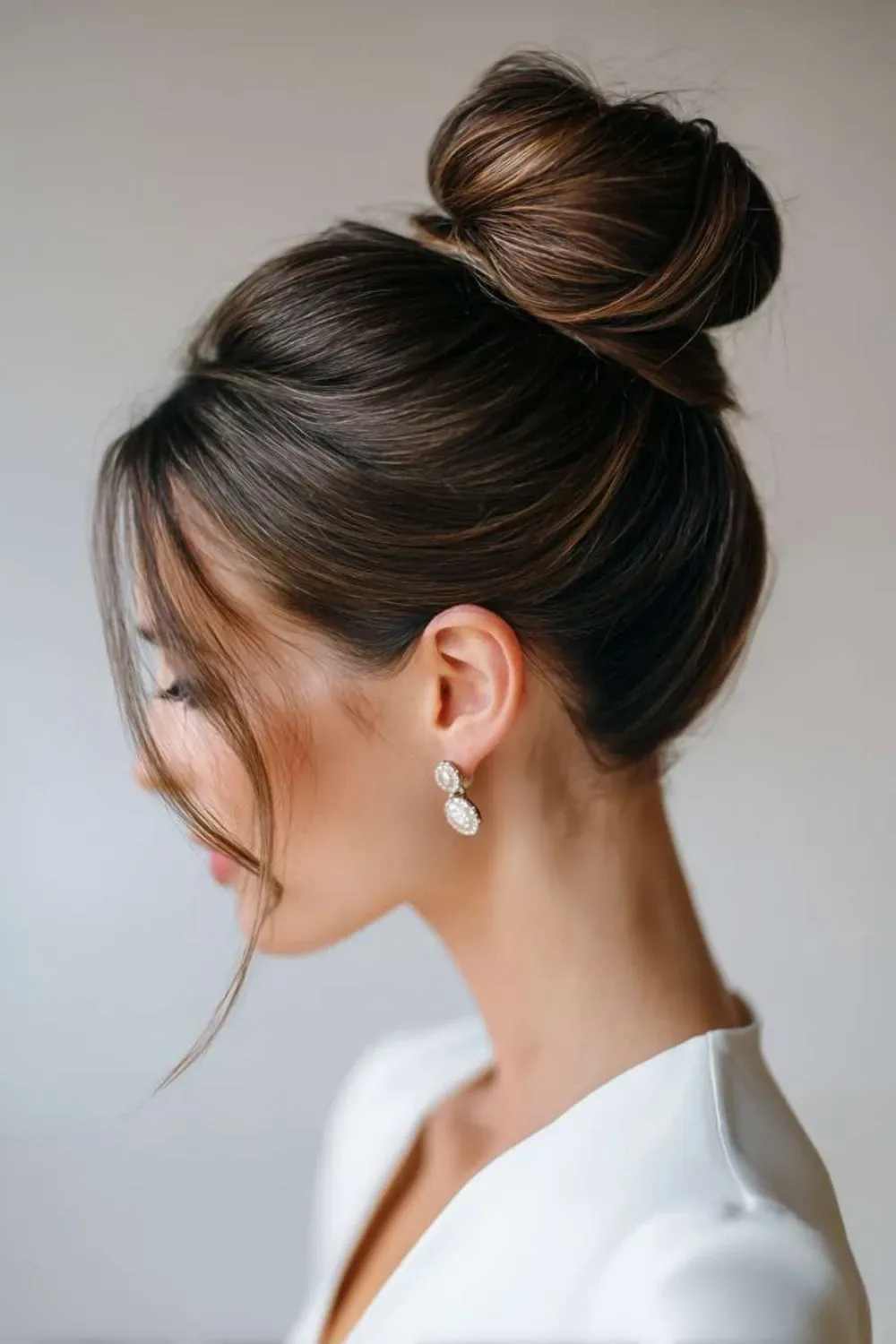
A French twist for short hair and bobs is a smaller, softer version of the classic: the hair is gathered low, folded into a compact roll at the nape, and pinned with the ends tucked in — and the result is a neat, chic updo that most people assume requires long hair. The secret is a little padding: a small hair doughnut or a rolled-up section of hair at the base gives the roll something to wrap around, so it looks full instead of flat. This is the twist for a bob-length bride, for a woman with a chic short cut who wants an updo for one special night, and for anyone who has been told that a French twist is not for them. It is for you — it just needs a little help.
Pros: a real updo on short hair, and a style that looks intentional and chic. Cons: it needs padding and plenty of pins, and it will not be as tall as a long-hair twist. Common mistake: trying to fold the hair too high — a short-hair twist should sit low at the nape, where the hair has enough length to fold. Maintenance: check the seam once during the evening, because short ends can work their way out. Time: 15 to 20 minutes. Quick verdict: the short-hair twist — smaller, softer, and just as elegant as the long version.
28. French Twist for Curly Hair
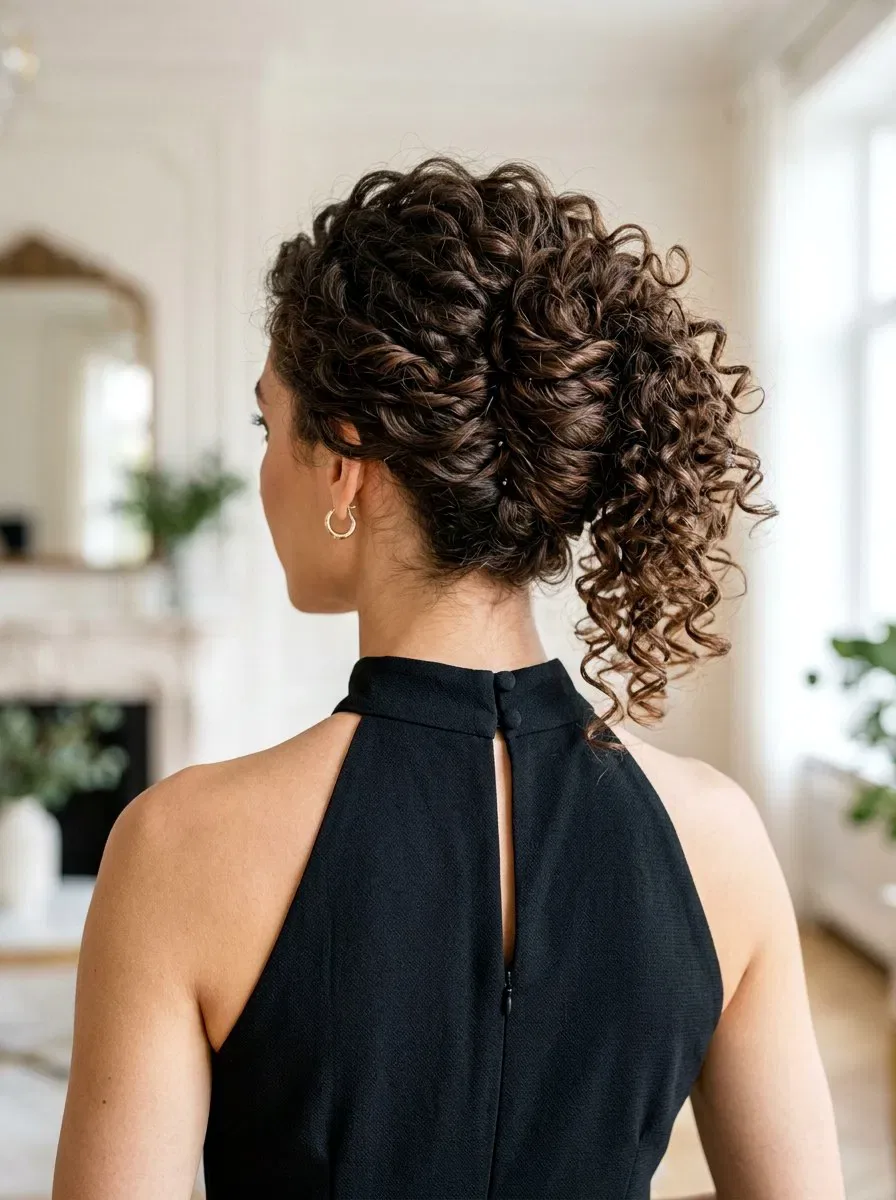
Curly hair makes a beautiful French twist, because the curls give the roll natural volume, texture and grip — the three things that make a twist hold. The trick is to work with the curls rather than fighting them: do not blow-dry the hair straight first, or you will lose the very texture that makes the twist work. Instead, gather the curls loosely, fold them into a soft roll, and let the curl pattern show on the surface of the twist — the result is a roll with a gorgeous, organic texture that no amount of backcombing can fake. A few curls left out around the face soften the whole look, and the twist will hold all day, because curly hair grips pins far better than straight hair does.
Best for: naturally curly or wavy hair, weddings, and anyone who wants a twist with built-in texture. How to style: apply a curl cream or a light gel, let the curls dry naturally or diffuse them, then gather and fold loosely — do not brush the curls out. What to ask a stylist: for a soft, textured roll that shows the curl pattern, and for the face-framing curls to be left long. Time: 15 to 20 minutes. Quick verdict: the twist that curly hair was born for — the curls do half the work, and the roll looks better for it.
29. The Bridal French Twist
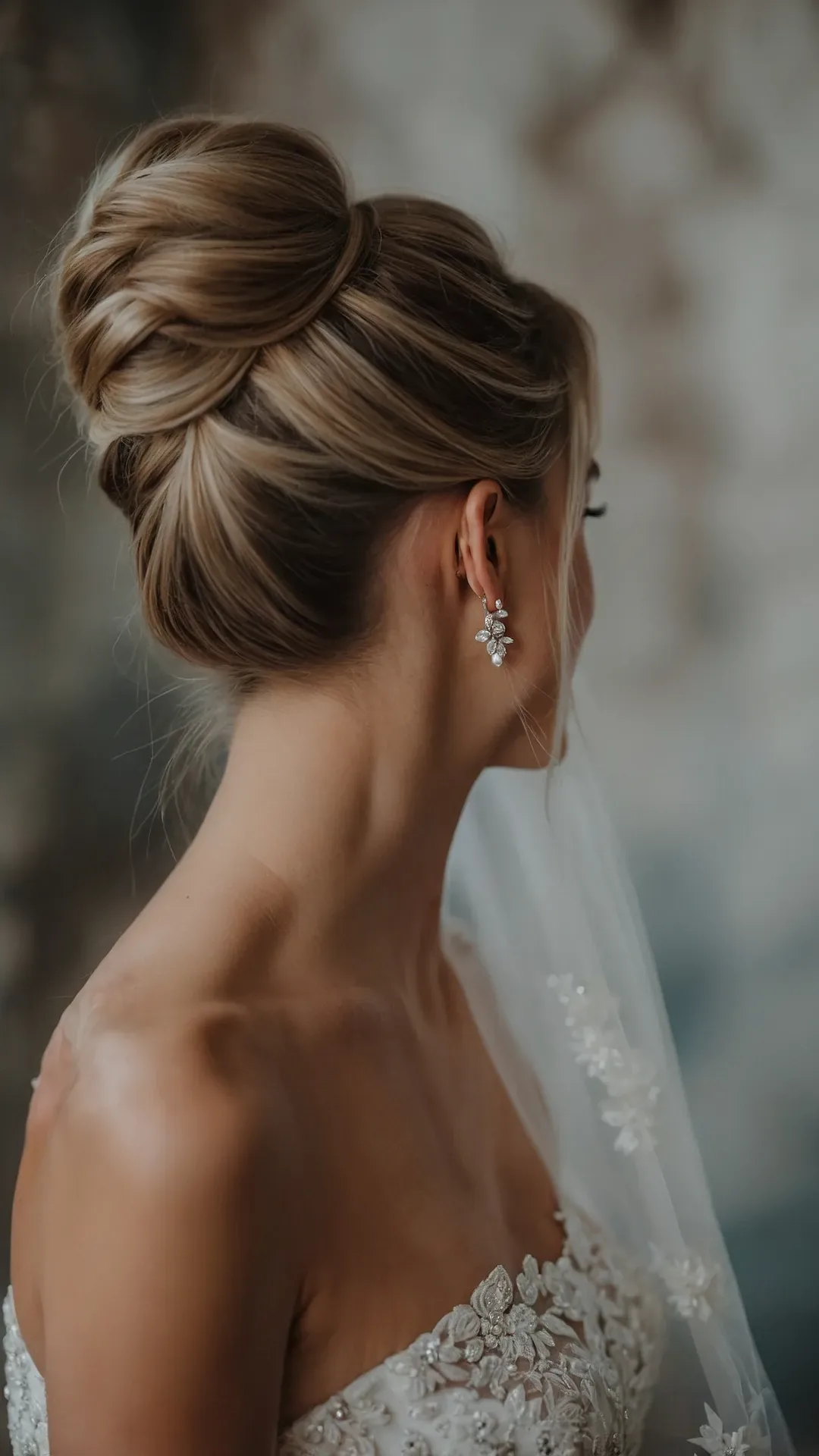
The bridal French twist is the most sculpted twist in this guide, and for good reason: it has to look perfect in photographs, hold through a ceremony, a dinner and a dance floor, and carry a veil. The twist is usually tall and smooth, with a polished surface, and the veil is attached at the top or the base of the roll with a comb that slides neatly into the seam. Fresh flowers, pearl pins or a crystal comb are often woven into the twist, and a few soft pieces are left out around the face to frame the bride in every photograph. This is the twist that generations of brides have chosen, because it is timeless, it shows off the dress, and it never looks dated in the wedding album.
Best for: brides, formal weddings, and anyone who wants the most polished twist there is. How to style: book a trial, bring your veil and your accessories, and ask for a tall, smooth roll with the veil attached at the top of the twist. What to ask a stylist: how the veil will be secured, whether the twist can be loosened for the reception, and how long the style will hold. Time: 45 to 60 minutes with a stylist. Cost: a bridal updo typically costs more than a regular twist, so ask for the full price including the trial. Quick verdict: the bridal classic — timeless, photogenic, and worth every minute of the trial.
30. The Bridesmaid French Twist
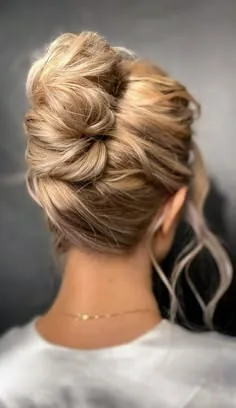
The bridesmaid French twist is the bridal twist’s softer, kinder sister: a little lower, a little looser, and designed to complement the bride rather than compete with her. The whole bridal party usually wears the same version — a low or mid-height twist, soft and relaxed, with the same accessory for everyone — so the group looks coordinated in photographs without being identical. The bridesmaid twist is also practical: it has to survive a long day of standing, dancing and posing, and it has to work on every bridesmaid’s hair, from fine to thick, from long to shoulder-length. A soft, low twist with a few loose pieces is the version that suits almost everyone, and it is the one most stylists recommend for a group.
Best for: bridesmaids, wedding parties, and group photographs. How to style: agree on a shared version with the bride — usually a low, soft twist with the same pin or flower for everyone — and do a group trial if you can. What to ask a stylist: for a twist that works on different hair lengths, and for a version that can be done quickly, because there are usually several bridesmaids to style. Time: 20 to 30 minutes each. Quick verdict: the team twist — soft, coordinated, and designed to make the bride shine.
31. French Twist for a Wedding Guest
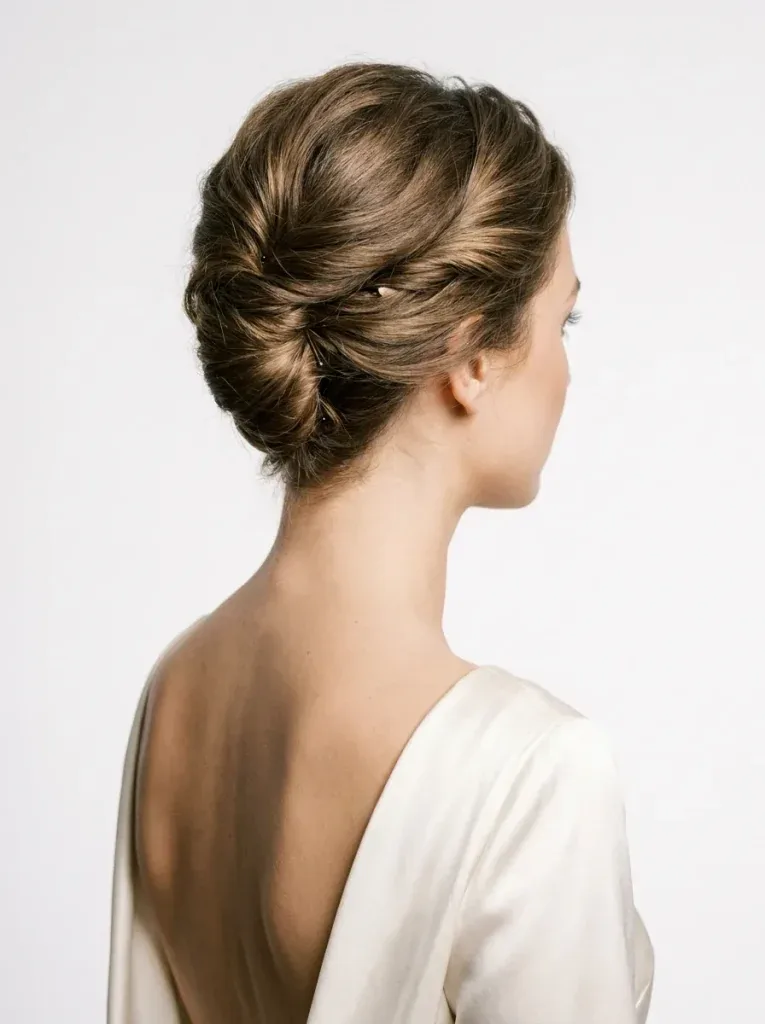
A French twist for a wedding guest is the perfect middle ground: elegant enough for a wedding, relaxed enough not to upstage the bride, and easy enough to do yourself on the morning of the day. The guest twist is usually a modern messy twist or a loose twist with face-framing pieces, worn at mid-height with one pretty pin or a small flower — never a veil, never a tiara, and never the tall, sculpted bridal version. The unwritten rule is simple: look beautiful, but do not look like the bride. A soft twist with loose pieces and a simple accessory does exactly that, and it will survive the ceremony, the dinner and the dancing without a trip to the bathroom mirror.
Best for: wedding guests, daytime weddings, and anyone who wants to look polished without a salon visit. How to style: fold a loose, mid-height twist, leave two soft pieces out around the face, and finish with one simple pin — pearls for a classic wedding, a small flower for a garden wedding. What to ask a stylist: only if you want it done professionally — ask for a soft, modern twist, not a bridal one. Time: 15 to 20 minutes. Quick verdict: the guest twist — elegant, respectful, and easy enough to do yourself.
32. French Twist for Work

The French twist for work is the low, neat, five-minute twist that gets you through a long day looking polished: the hair is gathered low, folded into a compact roll at the nape, and pinned securely — no pouf, no loose pieces, no sparkle, just a clean, professional silhouette. It keeps the hair off your collar, out of your face, and away from your keyboard, and it reads as deliberate and put-together in a way a ponytail never quite does. This is the twist for a Monday morning, a client meeting, a presentation, or any day when you want your hair to be the last thing you think about. Once you know the fold, it takes five minutes, and it is the single most useful hairstyle a working woman can learn.
Pros: fast, professional, comfortable, and completely out of the way. Cons: a work twist is deliberately plain, so it is not the version for a special occasion. Common mistake: making it too tight in the morning so it will last — a tight twist gives you a headache by lunchtime, and a comfortable twist with enough pins will last just as long. Maintenance: keep four bobby pins and a travel hairspray in your desk drawer for a midday rescue. Time: 5 to 10 minutes once you know the fold. Quick verdict: the working twist — five minutes, all day, every day.
33. French Twist for a Black Tie Event
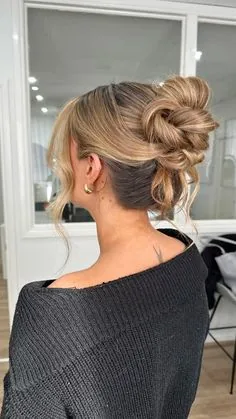
A French twist for a black tie event is the most formal twist you can wear: tall, sleek, and sculpted, with a mirror-smooth surface, a polished finish, and a single piece of jewellery — a crystal comb, a diamond pin, or a pearl cluster — sitting at the top of the roll. The black tie twist is the classic twist at its most dramatic, and it is the updo that pairs with a long gown, a high neckline, and an evening that calls for glamour. The finish has to be flawless, because black tie lighting is unforgiving and the photographs will be close — so this is the twist to book a stylist for, with a trial, and with enough time to get the smoothing exactly right.
Best for: galas, operas, black tie weddings, and formal dinners. How to style: blow-dry the hair smooth, work a pomade through the lengths, fold a tall twist, and finish with a strong-hold spray and a single statement accessory. What to ask a stylist: for a tall, sculpted roll with a glass-smooth finish, and for the accessory to be secured with a hidden pin as well as its own clip. Time: 35 to 45 minutes. Cost: a formal updo with a trial is an investment, so ask for the full price in advance. Quick verdict: the black tie twist — the most glamorous version of the most elegant updo, saved for the nights that deserve it.
34. French Twist for Everyday Elegance
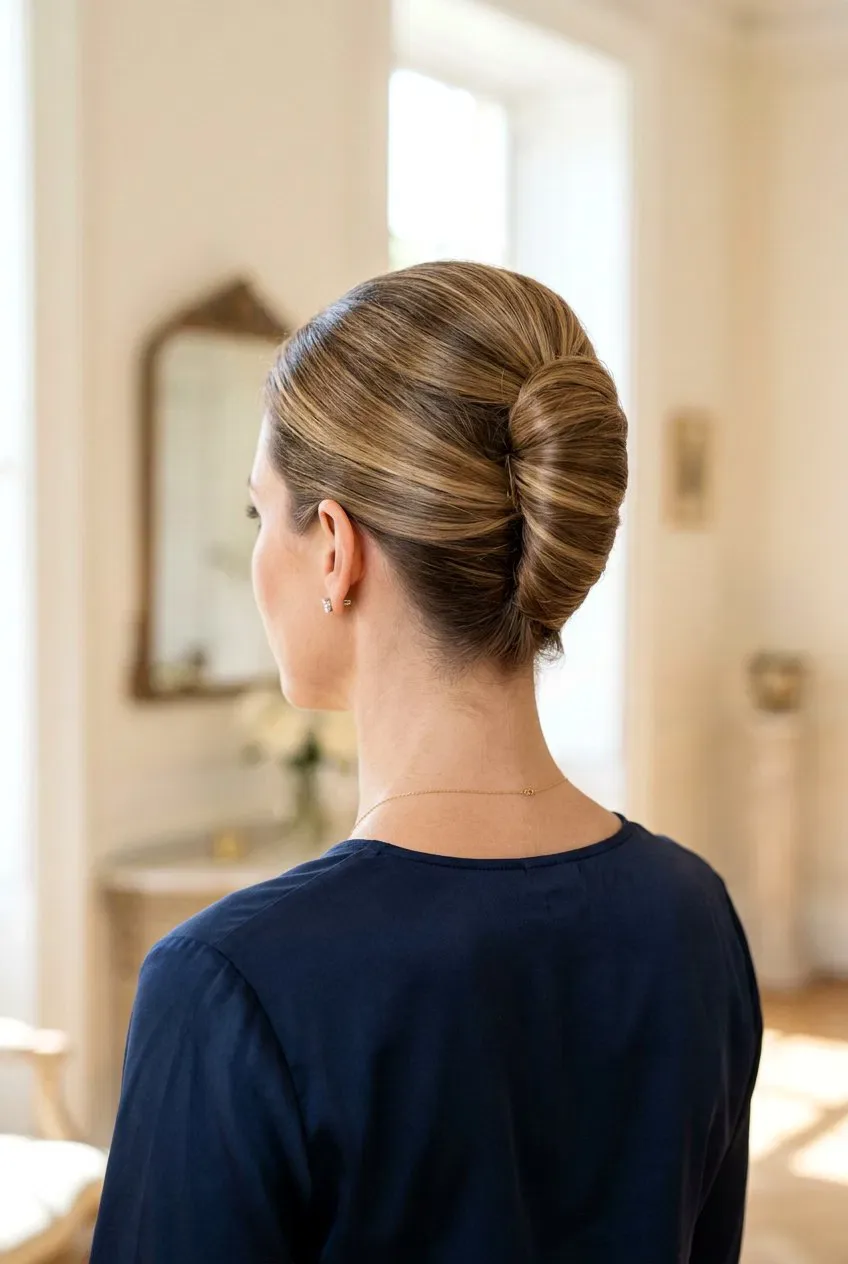
The French twist for everyday elegance is the twist you wear when there is no occasion at all — just a day when you want to look like yourself, only a little more polished. It is a soft, low twist, a little loose, with a few pieces left out around the face, done in five minutes on second-day hair and held with a handful of pins. There is no blow-dry, no pomade, no trial run — just the fold, a quick smooth with your hands, and a light spray. This is the twist for a school run, a coffee with a friend, a day of errands, or any ordinary day that feels a little better with your hair up and your face open. It is also the twist that proves the French twist is not a special-occasion style at all — it is an everyday one, once you know the fold.
Pros: five minutes, no tools beyond pins and spray, and a style that works with whatever your hair is doing that day. Cons: it will not survive a formal evening, and it is not the version for photographs. Common mistake: overthinking it — an everyday twist should be a little imperfect, and the imperfections are what make it look effortless. Maintenance: none; if a piece falls out, tuck it back in and carry on. Time: 5 minutes. Quick verdict: the everyday twist — the French twist, demystified at last, and the one you will wear most of all.
What is a French twist hairstyle?
A French twist is a classic updo in which the hair is gathered low, folded up the back of the head, and pinned into a vertical roll. It is one technique with many variations — sleek or messy, high or low, braided or plain — and it suits weddings, work, formal events and everyday wear. The basic fold takes about five minutes once you have practised it.
How do you do a French twist step by step?
To do a French twist, brush the hair back and gather it low at the nape, lift it upward and fold it against the back of your head so the ends tuck inside the roll, hold the roll with one hand and slide bobby pins vertically along the seam, tuck in any loose ends, smooth the surface with a comb, and set it with hairspray. Practise on day-old hair with a little texturising spray for extra grip.
Is a French twist hard to do on yourself?
A French twist is not hard once you know the fold, but it does take a little practice — most women get it on the third or fourth try. Start with a low twist, which is the easiest version, use day-old hair with texturising spray for grip, and use more pins than you think you need. A messy twist is more forgiving than a sleek one, so start there and work your way up to the classic.
Can you do a French twist with short hair?
Yes, you can do a French twist with short hair, as long as it reaches at least shoulder length — a bob or a lob works well. Use a little texturising spray for grip, keep the roll low and compact at the nape, and add a small hair doughnut or padding at the base so the roll looks full. A half-up twist is an even easier option for short hair.
How do I keep my French twist from falling out?
To keep a French twist from falling out, start with day-old hair rather than freshly washed hair, add texture with a texturising spray or dry shampoo, and pin along the seam with bobby pins or U-shaped French pins pushed against the scalp — weaving each pin through two layers of hair. Use more pins than you think you need, set each section with hairspray as you build, and choose a French twist comb or U-pins for thick or heavy hair.
What is the difference between a French twist and a chignon?
A French twist is a vertical roll that runs up the back of the head, while a chignon is a bun that sits low at the nape. The twist is folded upward and pinned along a vertical seam; the chignon is gathered and coiled into a knot. Both are classic updos, but the twist is taller and more sculpted, while the chignon is softer and rounder.
Is a French twist good for a wedding?
Yes, a French twist is one of the best wedding hairstyles, because it shows off the neckline and the back of the dress, stays put through a ceremony and a dance floor, and photographs beautifully from every angle. Brides usually wear a tall, sculpted twist with a veil, bridesmaids wear a softer, lower version, and guests wear a modern messy twist with a simple pin.
Can I wear a French twist to work?
Yes, a French twist is an excellent work hairstyle — a low, neat twist takes five minutes once you know the fold, keeps your hair off your collar and out of your face all day, and looks polished and professional. Keep it low and smooth, use minimal accessories, and keep a few bobby pins and a travel hairspray in your desk drawer for a midday touch-up.
What hair length do you need for a French twist?
You need at least shoulder-length hair for a full French twist, because the hair has to be long enough to fold up the back of the head and tuck the ends inside the roll. Medium and long hair make the tallest, fullest twists, while shoulder-length hair makes a neat, compact roll. If your hair is shorter than shoulder length, a half-up twist is the best alternative.
How do you take a French twist down?
To take a French twist down, remove the pins one by one, starting from the bottom of the seam and working upward, and let the hair fall naturally rather than pulling the roll apart. The hair will have soft, natural waves from being pinned up — run your fingers through it gently, add a little dry shampoo at the roots if needed, and wear the waves down or gather them into a loose second-day twist.
Conclusion
The French twist is not the hardest classic updo — it is the most misunderstood one. Behind the reputation is a single fold, five steps, and a handful of pins, and everything else in this guide is a variation on that fold: sleek or messy, high or low, braided or plain, half-up or fully up, for long hair or short, for a wedding or a Tuesday. The twist that suits you is the one that fits your hair, your day, and the way you want to feel — and the only way to find it is to try the fold, wear it for a day, and see how it holds.
Start with the low twist, on day-old hair, with texture spray and plenty of pins. Wear it to work, to a wedding, or nowhere at all — and when you take it down at the end of the day, enjoy the second gift the twist gives you: soft, natural waves, ready for tomorrow. The French twist has survived seventy years of trends for a reason. It is elegant, it is practical, and once you know the fold, it is yours.