Tie It Up: 36 Scarf Hairstyles for Women That Turn One Silk Square Into a Whole Lookbook
A silk scarf might be the cheapest hairstyle upgrade you will ever buy. One square of fabric — folded, twisted, knotted or wrapped — can turn a plain ponytail into a polished look, rescue second-day hair in two minutes, add colour to a neutral outfit, and protect your hair from sun and friction at the same time. No appointment, no heat, no commitment: if you do not like how a scarf looks, you simply untie it and try another knot. That is why scarf hairstyles for women keep coming back, from 1950s headscarves and 1970s boho wraps to the silk-scarf ponytails all over runways and street style right now.
This guide gathers 36 scarf hairstyles for women, from the classic headscarf wrap and the silk scarf low bun to scarf braids, bandana top knots, turban-style wraps and wedding-ready chignons — plus versions for short, curly and long hair, beach days and bad hair days. Eight guides first explain how to choose the right scarf, tie it so it stays put, protect your hair underneath, match prints to outfits, and avoid the mistakes that make a scarf look messy. Pick one scarf you love, try one style a day, and by the end of the month you will have a whole lookbook from a single accessory.
Choosing the Right Scarf: Fabric, Size and Print
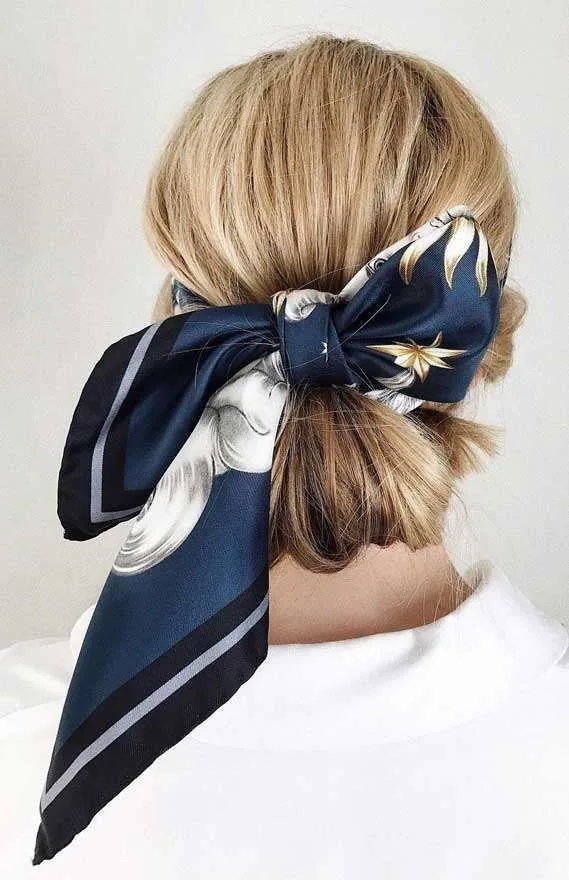
The fabric decides how a scarf behaves in your hair. Silk and satin are the smoothest choice: they glide, hold a knot without bulk, and are gentle on hair, so they are the best pick for buns, ponytails and anything that sits against the hair for hours. Cotton bandanas grip better and stay put on their own, which makes them ideal for head wraps and bad-hair-day fixes, while chiffon and lightweight viscose drape beautifully but slip more, so they need a pin or two. Avoid stiff, heavy fabrics for hair — they create bulk, slide off, and fight every knot you tie.
Size matters just as much. A large square, around 90 cm, wraps a full head, ties into a turban, or folds into a wide headband; a 50–70 cm square is the sweet spot for ponytails, buns and braids; and a long, narrow scarf — a twilly or skinny scarf — is made for weaving through braids and wrapping ponytail bases. For prints, start with one you love wearing near your face: small florals and polka dots are easy and flattering, bold geometrics make a statement, and a solid colour in a shade that suits your skin is the most versatile buy of all. Quick verdict: if you buy only one scarf, make it a medium silk square in a print you would happily wear every week.
How to Tie a Scarf So It Stays Put All Day
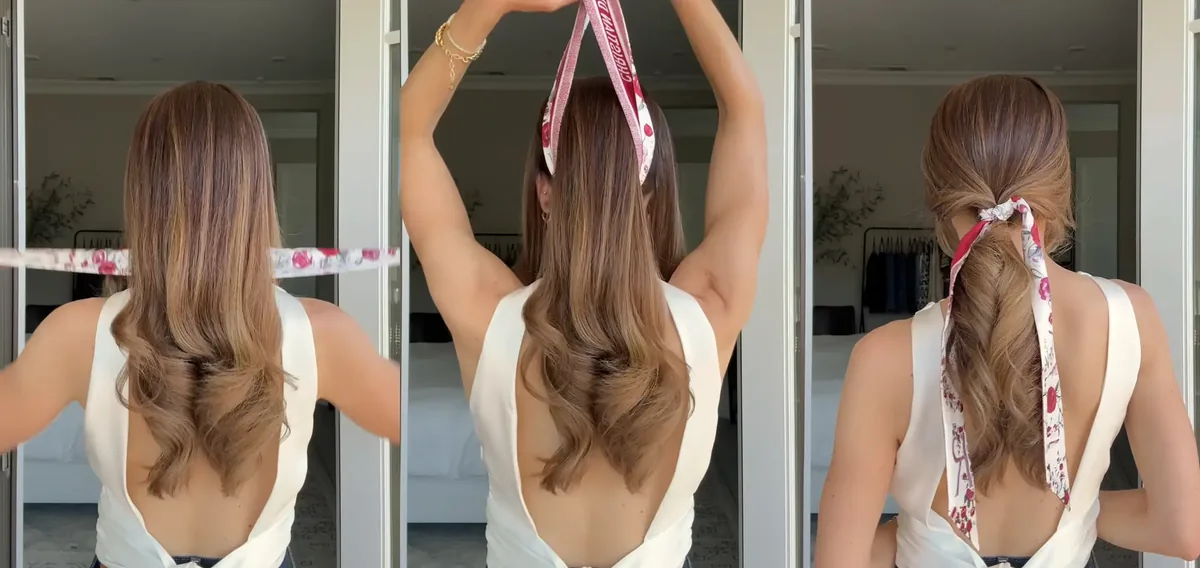
A scarf that slips is the number-one reason women give up on scarf hairstyles, and it is almost always a tying problem, not a scarf problem. Start with hair that has a little grip: freshly washed, silky hair is the slipperiest, so add a little texture spray or dry shampoo at the roots, or work with second-day hair. Anchor the style first — a ponytail, bun or braid held with a proper elastic — and then add the scarf as decoration, rather than asking the scarf to hold the hair itself. Tie knots snugly against the anchor point, and tuck the ends in or wrap them around the base so they cannot work loose.
Two small tricks make the biggest difference. First, cross the ends and pull them tight before you make the bow or knot — a loose first cross is what unravels by lunchtime. Second, hide a bobby pin or two where the scarf meets the hair, sliding them in flat against the scalp so they disappear under the fabric; on silk scarves, a pin through the folded edge holds far better than a pin through a single thin layer. Pros and cons: cotton and textured scarves grip on their own and rarely need pins, while silk looks more polished but almost always needs one hidden pin. Common mistake: tying the scarf over loose, unanchored hair and expecting it to stay — anchor the hair, then dress it.
Scarf Care and Hair Protection: Keeping Hair Healthy Underneath
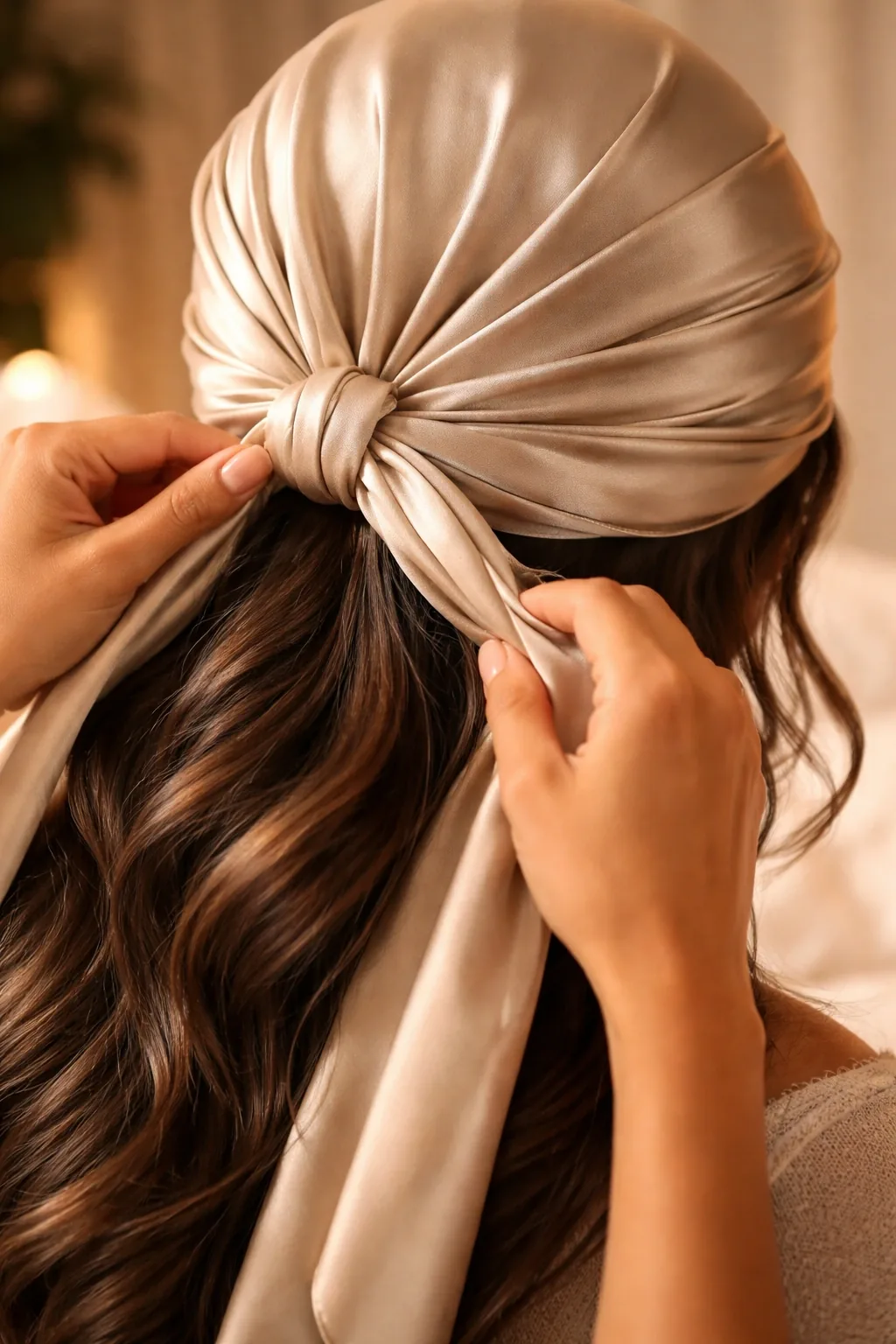
A scarf can be genuinely good for your hair — silk and satin reduce friction, which means less frizz, fewer broken ends and smoother curls, especially overnight or on windy days. That is why silk scarves are a favourite for protecting curls and for wrapping hair at night: the hair slides instead of snagging, and the style you set in the evening is still there in the morning. A scarf also shields hair from sun, which fades colour and dries out ends, and from wind, which tangles long hair into knots.
Care for the scarf and it will care for your hair. Hand-wash silk scarves in cool water with a gentle detergent, roll them in a towel to remove water, and air-dry them flat — never wring a silk scarf, and never put it in a hot dryer. Store scarves folded or rolled, not knotted, so the fabric stays smooth. Maintenance: if a scarf starts to feel stiff or rough, it has probably been washed too harshly — a gentle wash usually restores the drape. Who should avoid tight wraps: anyone with a sensitive scalp or traction-prone hairline should keep wraps loose and vary where the knot sits, because the same tight knot in the same place every day can stress the hairline.
Matching Scarves to Outfits and Occasions
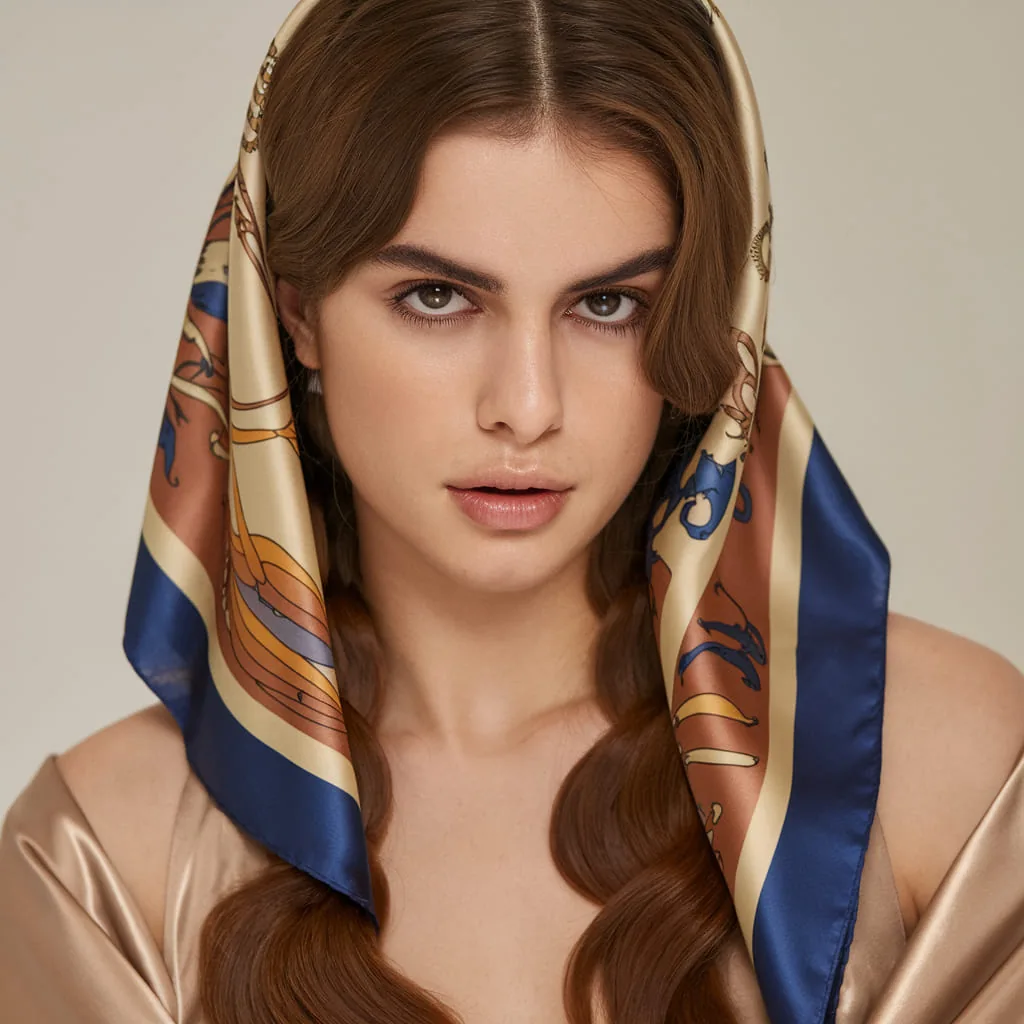
The easiest way to match a scarf to an outfit is to pick up one colour that is already in what you are wearing — a navy scarf with navy in a dress, a red print that echoes your lipstick, a cream scarf against a camel coat. The scarf does not need to match exactly; it needs to belong. With a busy outfit, choose a solid or quietly patterned scarf so the two do not fight; with a plain outfit, let a bold print do the talking. That one rule — busy outfit, quiet scarf; quiet outfit, bold scarf — will carry you through almost every choice.
Occasion matters too. For work, a small silk scarf at a ponytail base or a neat low bun reads polished and intentional; for a wedding or evening event, a silk chignon wrap in a rich colour or a soft metallic looks dressed-up without trying too hard; for the beach or a holiday, a bright cotton bandana or a big printed wrap is practical and fun. Cost and time: you do not need a drawer full of scarves — three well-chosen ones (one neutral, one colourful print, one dark solid) will cover work, weekends and evenings. Quick verdict: buy scarves you would wear as an outfit accessory first, and the hair styling will follow naturally.
Scarf Styles by Hair Length: Short, Medium and Long
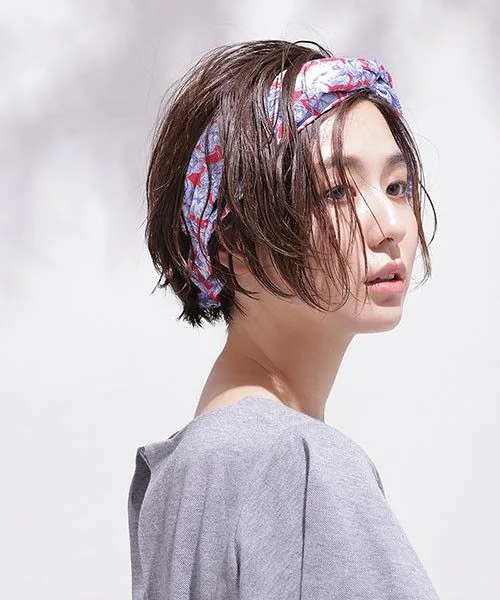
Short hair and scarves are a natural pair: a bandana or a folded scarf worn as a headband adds instant style to a pixie or bob, and a turban-style wrap turns a grow-out phase into a look. With short hair, keep the scarf as the feature — a wide band across the forehead, a knot on top, or a full wrap — because there is not much hair to anchor a ponytail wrap to. Medium hair is the most versatile length: it holds ponytails, buns and braids well, so almost every scarf style in this guide works, and the scarf can wrap the base, weave through the braid, or sit as a headband.
Long hair gives you the most options and the most weight to manage. A scarf woven through a long braid looks stunning, and a scarf-wrapped bun stays put because there is plenty of hair to wrap around — but a heavy scarf on very long, thick hair can slip, so anchor with a strong elastic and a pin or two. What to ask your stylist: if you are growing your hair out, ask which scarf styles will flatter the in-between length — a headband scarf or a low wrap usually flatters better than a high ponytail wrap at that stage. Common mistake: choosing a style made for long hair and forcing it onto a bob — pick the length’s strengths instead.
Head Wraps vs Hair Scarves: What Is the Difference?
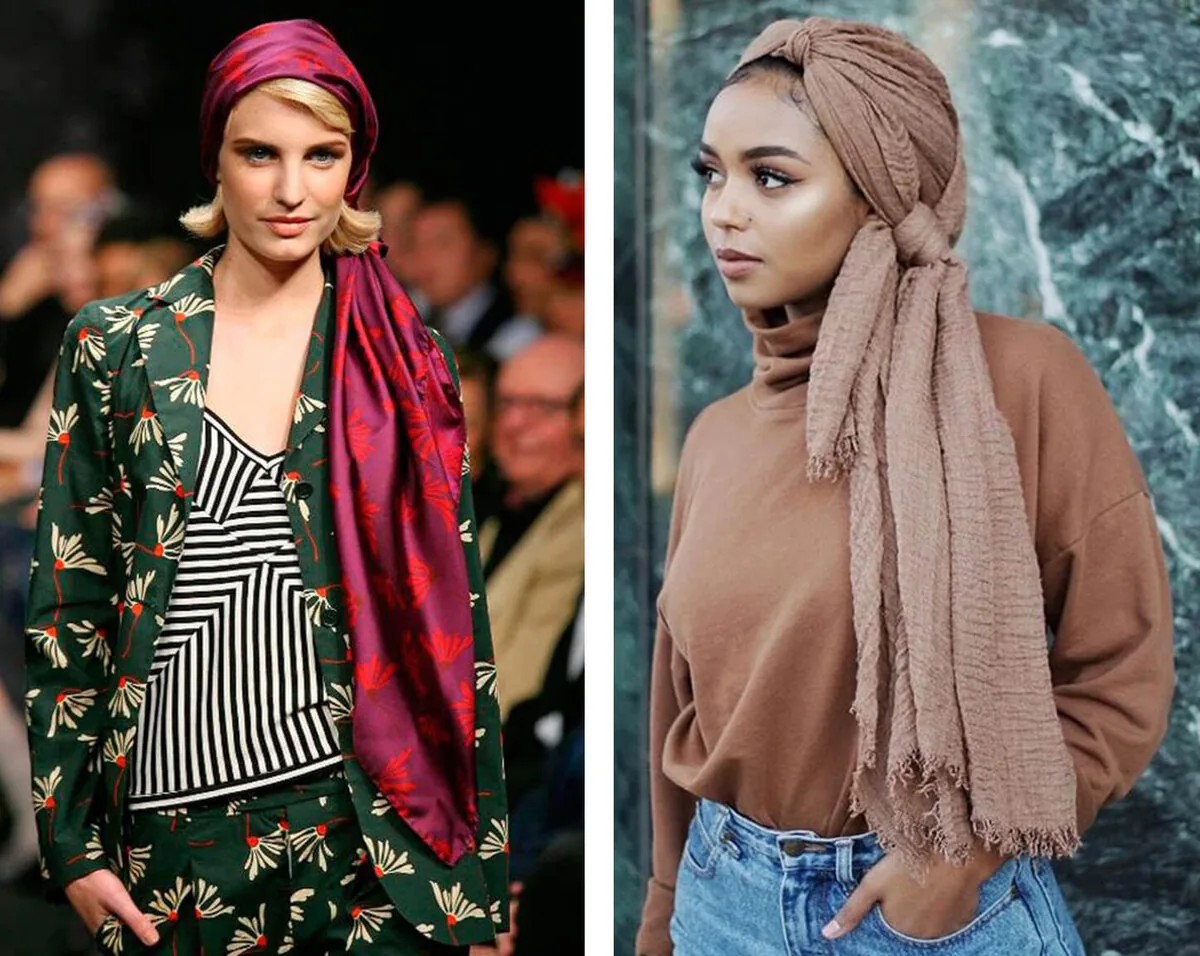
People use the terms interchangeably, but a head wrap and a hair scarf are not quite the same thing — and knowing the difference helps you pick the right one. A hair scarf is usually a square or rectangular scarf worn as an accessory with the hair: tied around a ponytail, woven into a braid, folded as a headband, or wrapped around a bun, with most of the hair still visible. A head wrap covers more of the head — often the whole crown — and is the style itself, whether that is a turban-style wrap, a full coverage wrap, or a bandana tied over the whole head.
Which you choose depends on the day. Want to show off your hair with a little extra polish? A hair scarf is the answer — it decorates the style you already have. Want full coverage for a bad hair day, a protective style, or a bold statement? A head wrap does the work, and it needs a bigger scarf and a more secure knot. Pros and cons: hair scarves are quicker and easier, and they suit more occasions, while head wraps are bolder and more protective but take a little practice to tie neatly. Quick verdict: own at least one of each — a medium silk square for hair scarves, and a large cotton or silk square for wraps.
Scarves for Bad Hair Days and Second-Day Hair
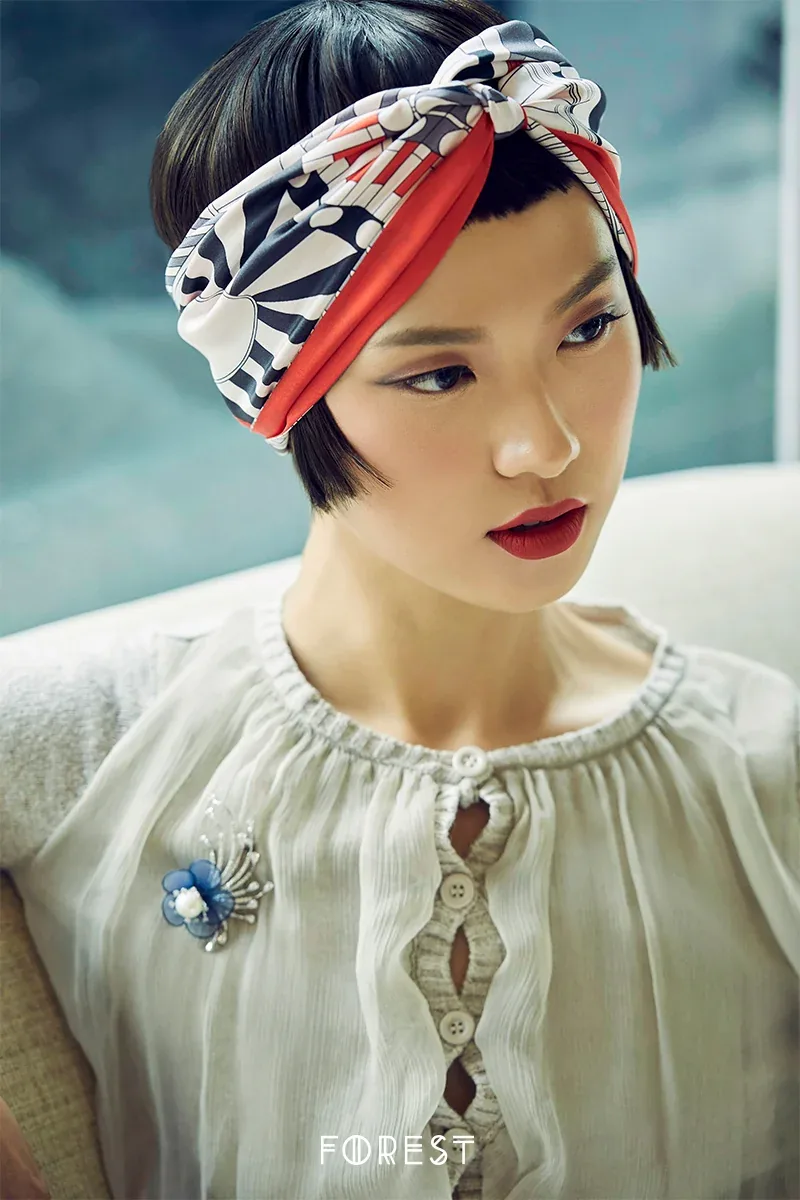
Second-day hair is where a scarf earns its keep. The roots are a little flat, the ends are a little bent, and washing and restyling would take half an hour you do not have — a scarf fixes all of it in two minutes. The trick is to work with the texture you have, not against it: gather the hair into a low bun, a messy ponytail or a loose braid, tie a scarf around the base or over the crown, and let the scarf do the talking. Nobody sees flat roots under a well-tied wrap, and the slight messiness of second-day hair actually helps the scarf grip.
The fastest fixes are the most useful ones to learn by heart. A wide folded scarf worn as a headband hides greasy roots and frames the face; a bandana tied over the whole crown covers everything and looks deliberate; a scarf wrapped around a low bun turns bed-head into a polished updo. Best for: mornings when you hit snooze, travel days, gym-to-errands days, and the day before wash day. Common mistake: trying to make second-day hair look freshly washed before adding the scarf — you do not need to. A little dry shampoo at the roots, a scarf on top, and you are out the door.
Mistakes That Make a Scarf Look Messy — And How to Fix Them
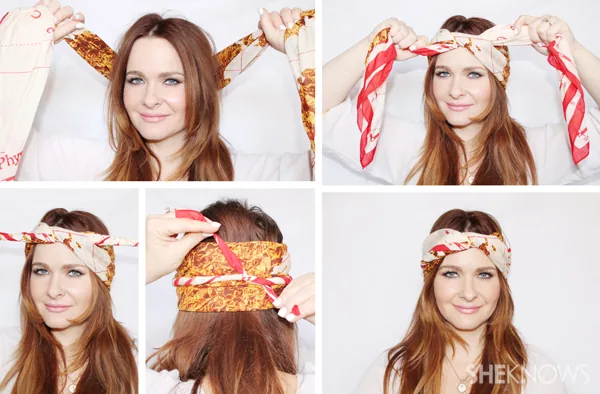
The difference between a scarf that looks chic and one that looks messy is usually small: a knot that sits off-centre, ends that stick out at odd angles, a scarf that is too wide for the style, or a print that clashes with the outfit. The most common mistake is scale — a huge scarf folded into a tiny headband creates a bulky lump, while a tiny scarf stretched over a full head wrap looks strained and slips. Match the scarf’s size to the job, fold it to the width you actually want before you tie it, and check the back in a mirror: most scarf disasters happen where you cannot see them.
Other easy fixes: if the knot keeps sliding, you tied it over silky, product-free hair — add texture spray or a pin. If the ends flap in the wind, tuck them under the knot or wrap them once more around the base. If the whole thing looks lopsided, centre the knot and even out the two ends before you finish — a minute of adjusting at the start saves a day of fiddling. Who should avoid it: nobody, honestly — a scarf is the most forgiving accessory there is, because a bad tie takes ten seconds to undo. Quick verdict: if it looks messy, it is almost never the scarf’s fault — refold, re-centre, re-tie, and it will look intentional.
1. The Classic Headscarf Wrap
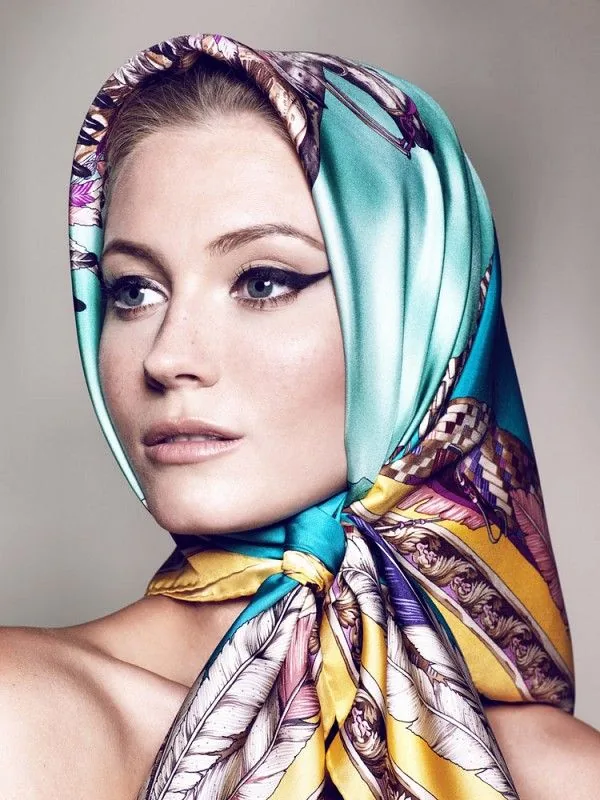
The classic headscarf wrap is the style that started it all: a large square scarf folded into a triangle, draped over the head, tied neatly under the chin or at the nape, with the hair tucked underneath or left loose at the back. It is elegant, practical and instantly recognisable — the look of 1950s film stars, Mediterranean summers and women who know that a scarf is the fastest way to look put-together. It also protects the hair from sun and wind, which is why it survives every trend cycle.
Best for: sunny days, travel, and anyone who wants full coverage with polish. How to style it: fold a large square into a triangle, centre the long edge across your forehead, bring the ends under your chin or to the nape, and tie once — then tuck the point at the back. Cost and time: one large scarf, two minutes, no pins needed if the fabric has a little grip. Quick verdict: the most timeless scarf hairstyle there is — learn this one first and the rest come easily.
2. The Silk Scarf Low Bun
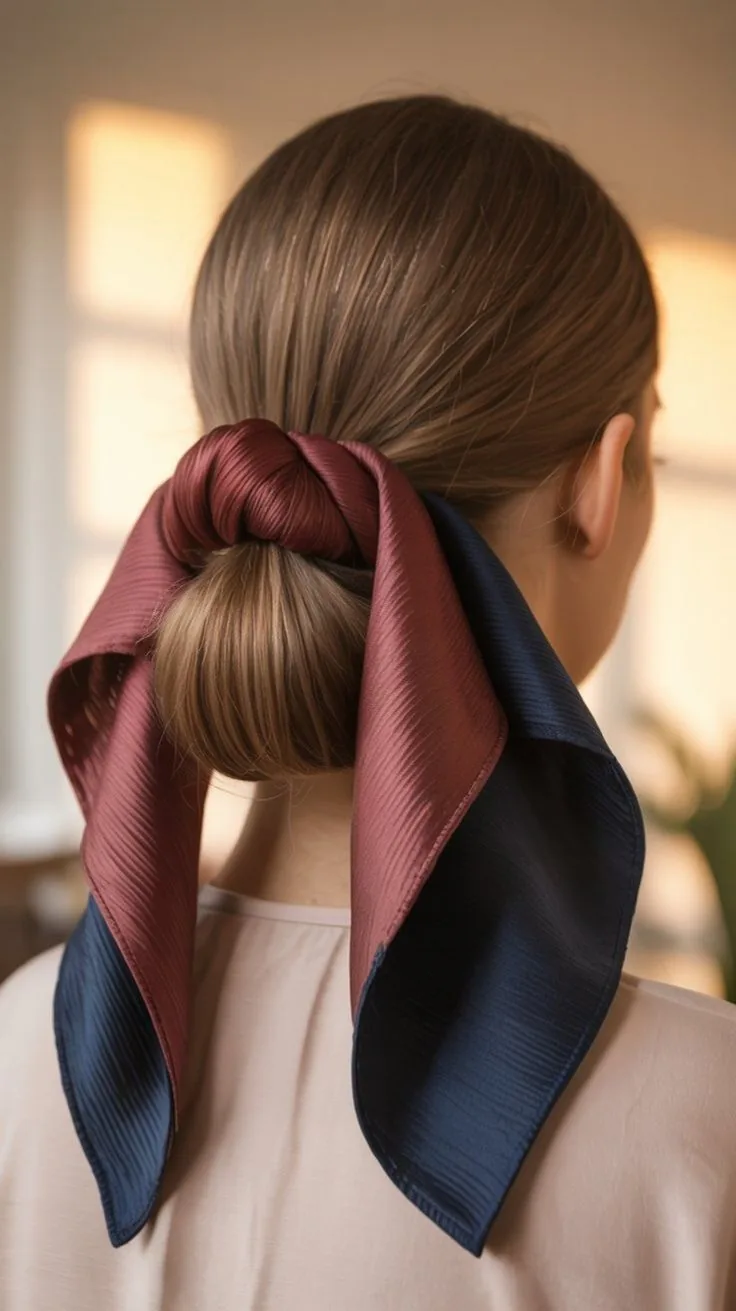
A low bun is already the most polished everyday updo; a silk scarf wrapped around its base makes it look like you tried much harder than you did. Gather the hair into a low bun at the nape, secure it with an elastic, then wrap a folded scarf around the base, knot it underneath, and let the ends fall or tuck them in. The silk adds colour, shine and a soft sheen that a plain elastic never will, and it turns a work bun into an evening bun with no extra effort.
Best for: work, weddings and any day you want to look polished. How to style it: keep the bun smooth for a formal look, or pull out a few face-framing pieces for softness. Pros and cons: it is quick, secure and endlessly versatile, but silk slips on very smooth hair — one hidden bobby pin through the scarf’s folded edge solves that. Maintenance: nothing — the scarf comes off at night and the bun takes ten seconds to redo in the morning. Quick verdict: the single best return on effort in this whole guide.
3. The Scarf Ponytail Wrap
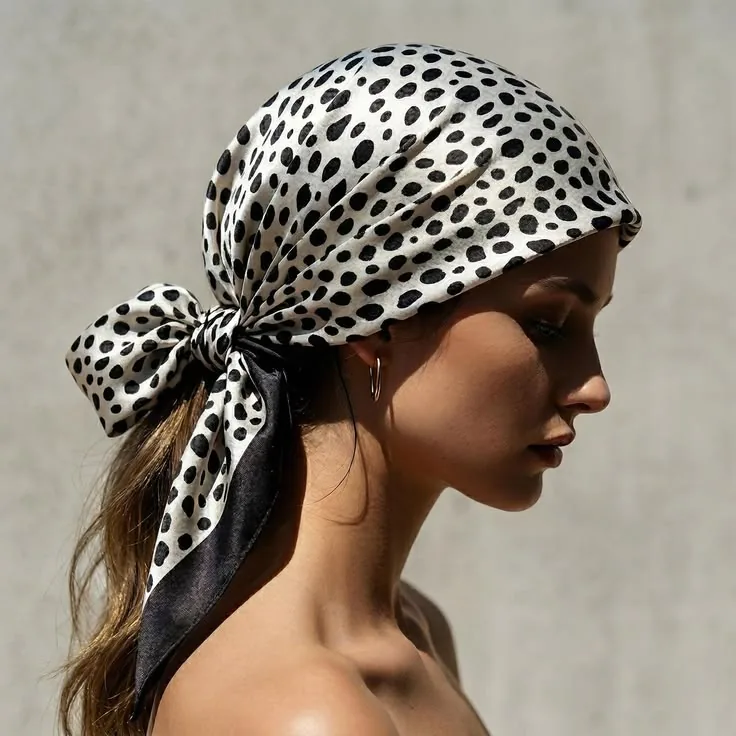
The scarf ponytail wrap is the most-worn scarf hairstyle for a reason: take your usual ponytail, high or low, and wrap a scarf around the elastic, tying it in a bow or a knot with the ends left loose. The scarf hides the elastic, adds a pop of colour, and makes a five-second ponytail look styled. It works on straight, wavy and curly hair, on high ponytails and low ones, and it is the style to reach for when you want to look done without doing anything complicated.
Best for: every day, the gym-to-lunch dash, and second-day hair. How to style it: wrap the scarf twice around the ponytail base for a neater finish, and let the ends hang to about the same length as the ponytail for balance. Common mistake: using a scarf so long that the ends tangle in the ponytail — fold a large square down first, or choose a narrow scarf. Cost and time: one elastic, one scarf, under a minute. Quick verdict: if you only learn one scarf style, learn this one.
4. The Scarf Braid Weave
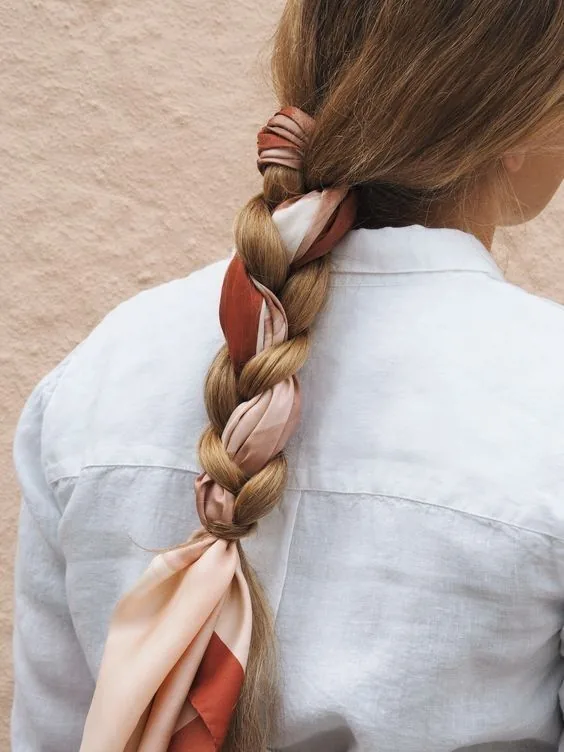
Weaving a scarf through a braid is the prettiest way to wear one: the fabric threads through the plait like a ribbon, adding colour to every twist and turning an ordinary braid into something people ask about. Tie the scarf to the top of the braid — or use it as one of the three strands — and braid normally, letting the scarf appear and disappear along the length. A narrow scarf works best; a wide one will overwhelm the braid and hide the hair entirely.
Best for: festivals, holidays, and long hair that needs a little excitement. How to style it: secure the scarf at the crown with a small elastic before you start braiding, and finish with a knot that holds both hair and scarf. Pros and cons: it looks spectacular and holds all day, but it takes a few minutes longer than a plain braid and needs a mirror the first couple of times. Who should avoid it: very short hair — the braid needs enough length for the weave to show. Quick verdict: the most complimented braid in this guide.
5. The Bandana Top Knot
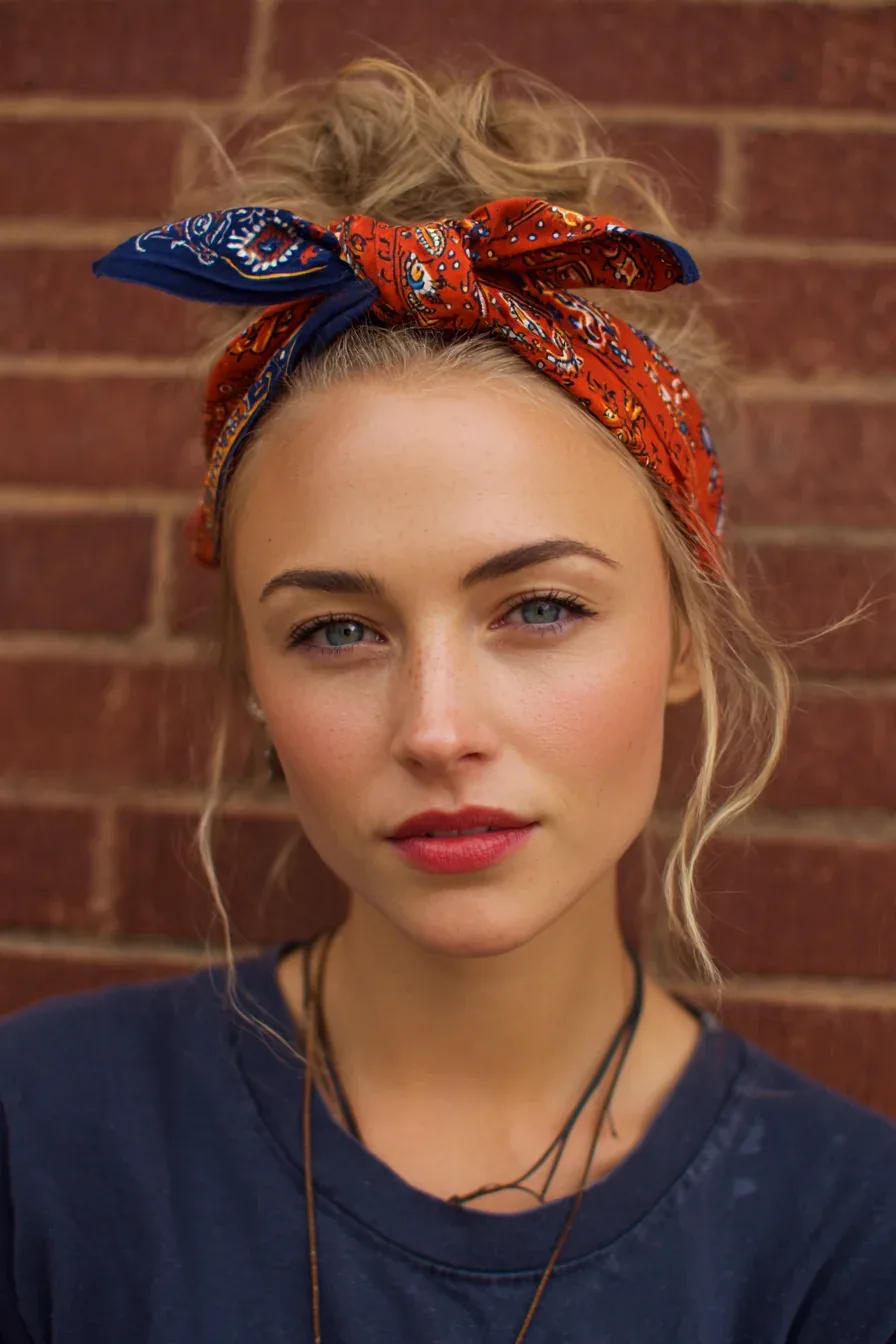
A bandana top knot is the casual cousin of the silk bun: pile the hair into a high top knot, then tie a folded bandana around its base, knotted at the front or the side with the ends standing up like a little bow. Cotton bandanas grip well, so this one stays put without pins, and the look is fun, relaxed and a little bit retro — perfect for weekends, festivals and days when you want your hair completely out of the way.
Best for: casual days, hot weather, and workouts. How to style it: keep the knot messy for a relaxed look, or smooth it for something neater; the bandana does the styling either way. Maintenance: a cotton bandana can be tossed in the wash with your laundry, so this is the lowest-maintenance scarf style here. Common mistake: tying the bandana too tightly — it should sit snugly, not pull at your hairline. Quick verdict: the scarf style for days when you want to look fun, not formal.
6. The Turban-Style Head Wrap
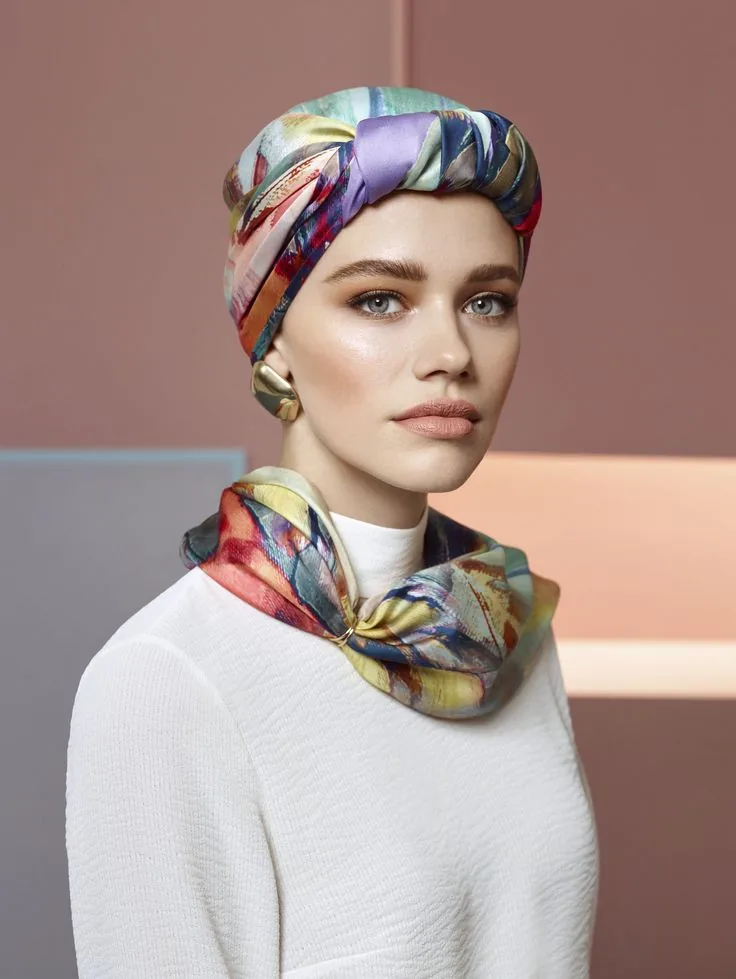
The turban-style head wrap is the boldest look in this guide: a large scarf wrapped around the whole head, twisted at the front into a knot or a rosette, with the ends tucked in. It is dramatic, elegant and deeply practical — full coverage, full sun protection, and a look that needs no hair at all underneath, which makes it a favourite for bad hair days, protective styling and anyone growing their hair out. The twist at the front is the signature detail, so take a moment to get it neat.
Best for: statement days, protective styling, and full coverage. How to style it: use a large square scarf, at least 90 cm, and wrap it snugly but not tightly, twisting the ends together at the front before tucking them in. Pros and cons: it is the most protective and most striking wrap here, but it takes practice — your first attempt will take five minutes, your tenth will take one. Who should avoid it: nobody, but keep the knot loose enough that it never pulls at your temples. Quick verdict: the scarf style that turns a bad hair day into a fashion moment.
7. The Scarf Headband Twist
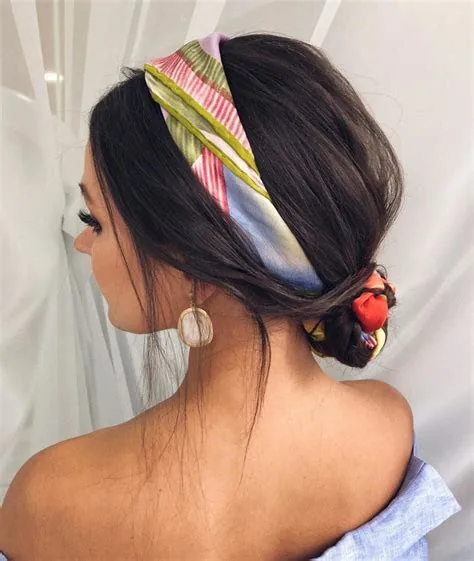
Fold a scarf into a narrow band, twist it once in the middle, and wear it as a headband — that is the scarf headband twist, and it is the easiest scarf style of all. It keeps hair off your face, adds a stripe of colour, and works with hair down, in a ponytail, or in a bun. The twist at the front adds just enough detail to make it look deliberate rather than accidental, and a silk scarf gives it a polished finish while a cotton one gives it a casual one.
Best for: beginners, work, and days when you want your hair down but out of your face. How to style it: fold the scarf to about 5 cm wide, tie it at the nape underneath your hair, and position the twist at the front or slightly to one side. Cost and time: one scarf, thirty seconds, no pins. Common mistake: making the band too wide — a wide band reads as a head wrap, while a narrow twisted band reads as a headband. Quick verdict: the gateway scarf style — start here if you have never tied a scarf in your hair before.
8. The Scarf Low Chignon
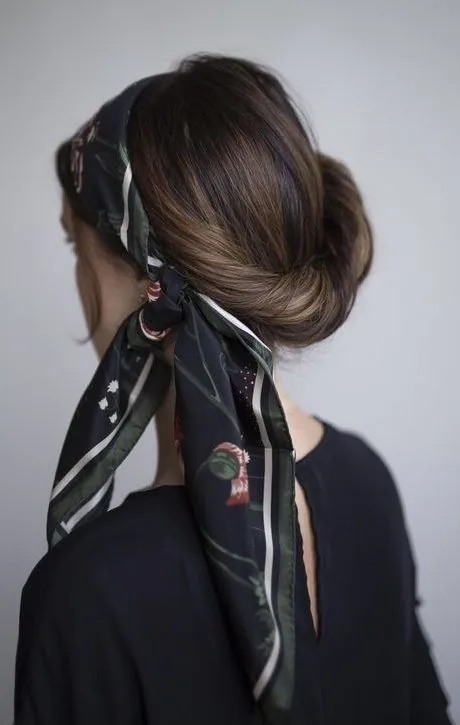
A chignon is a low, rolled bun at the nape, and wrapping it in a scarf makes it look like a vintage portrait. Roll the hair into a chignon, pin it, then drape a silk scarf over the top, bringing the ends underneath and tying them in a small knot at the nape. The scarf softens the whole shape and adds a layer of colour, and the result is formal enough for a wedding guest and simple enough for a Sunday lunch.
Best for: formal occasions, weddings, and vintage-inspired looks. How to style it: keep the chignon smooth and low, and choose a silk scarf in a colour that complements your outfit rather than matching it exactly. What to ask your stylist: if your hair is fine, ask for a little backcombing at the crown before the chignon is pinned — it gives the scarf something to sit on. Pros and cons: it looks expensive and holds for hours, but it needs pins, so keep a few spares in your bag. Quick verdict: old-Hollywood polish, tied in two minutes.
9. The Retro Pin-Up Scarf
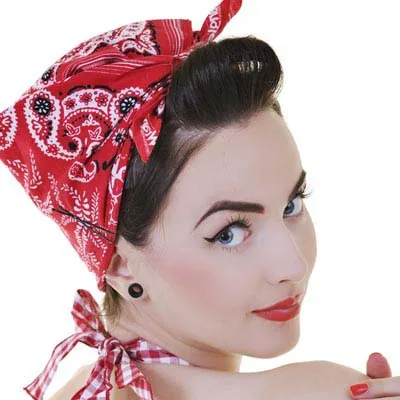
The retro pin-up scarf is pure 1950s: a bandana or small scarf folded into a band, tied at the top of the head with the knot and ends standing up, worn with victory rolls, curls or a high ponytail. It is playful, flattering and instantly recognisable, and it suits a bold lip and a winged eyeliner like nothing else. The knot sits high on the head, so it frames the face and draws the eye upward — which is why it photographs so well.
Best for: themed parties, vintage looks, and anyone who loves retro style. How to style it: pair it with curled hair or a high ponytail, and tie the knot at the front-top of the head, not at the back. Maintenance: cotton holds this knot best — silk will slide and the bow will droop. Common mistake: tying the knot too far back, which makes it look like a headband instead of a pin-up. Quick verdict: the most fun scarf style in this guide — wear it when you want to be noticed.
10. The Scarf Bubble Ponytail
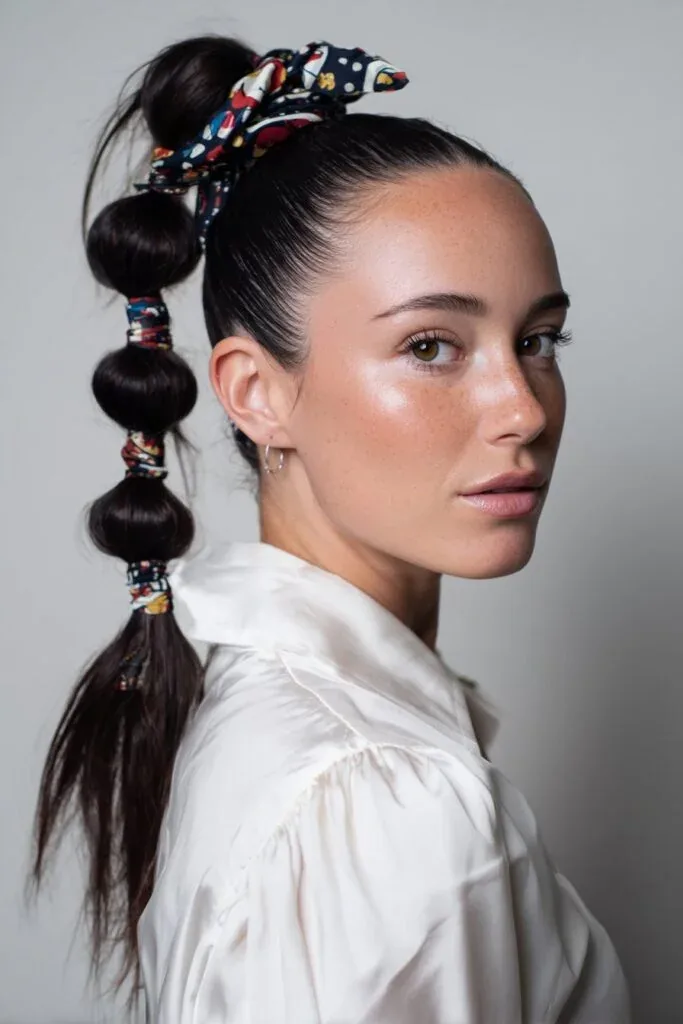
A bubble ponytail is a ponytail divided into puffed sections with elastics, and adding a scarf turns it from playful to polished. Tie the scarf around the base of the ponytail, then use small pieces of scarf — or matching ribbon — at each bubble, or simply let one long scarf end trail down alongside the bubbles. The result is fun, youthful and surprisingly wearable, and it works best on medium to long hair where the bubbles have room to form.
Best for: festivals, parties, and playful weekend looks. How to style it: space the elastics evenly, gently pull each section out to make the bubbles full, and keep the scarf at the base as the anchor. Pros and cons: it is a head-turner and it holds well, but it takes a few minutes and a mirror to get the bubbles even. Who should avoid it: very fine hair — the bubbles need volume to hold their shape, so add a little texture spray first. Quick verdict: the most playful scarf style here, and the one most likely to get photographed.
11. The Scarf-Wrapped French Braid
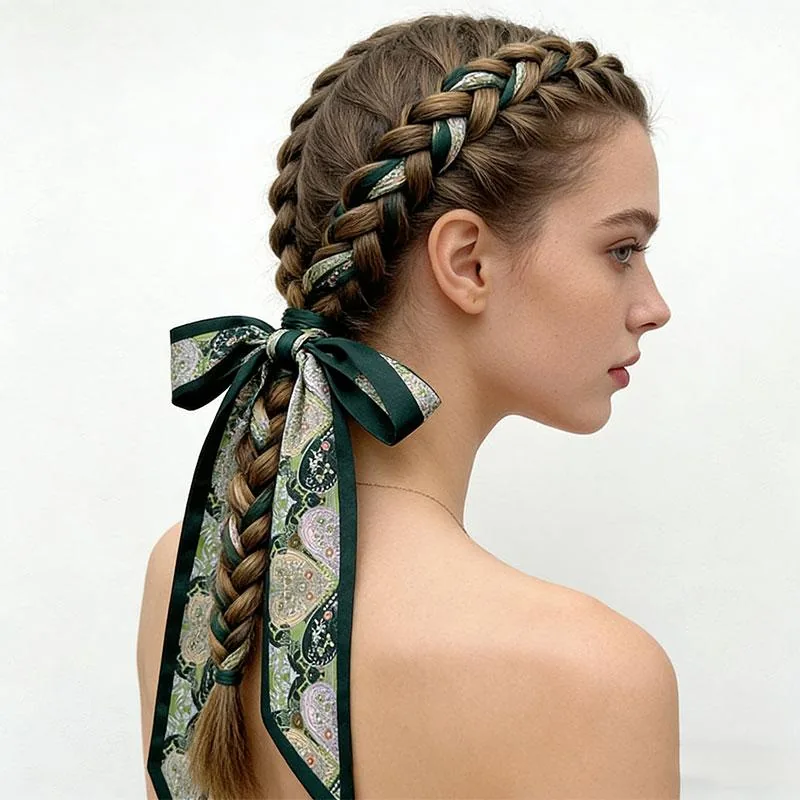
A French braid already looks polished; wrapping a scarf around its base — or weaving one through it — makes it look finished. Start the braid at the crown, work down, and secure it with an elastic; then wrap a folded scarf around the base of the braid, knot it, and let the ends fall along the braid’s length. The scarf adds colour to a style that can otherwise look plain, and it hides the elastic completely.
Best for: school runs, work, and days when you want your hair fully out of the way. How to style it: keep the braid neat for a formal look, or pull out a few pieces at the front for softness. What to ask your stylist: if your layers keep escaping the braid, ask for the scarf to be woven in as a strand — it grips the shorter pieces and holds them in. Cost and time: a French braid plus one scarf, about five minutes once you have practised. Quick verdict: the neat, grown-up way to wear a scarf braid.
12. The Bohemian Scarf Crown
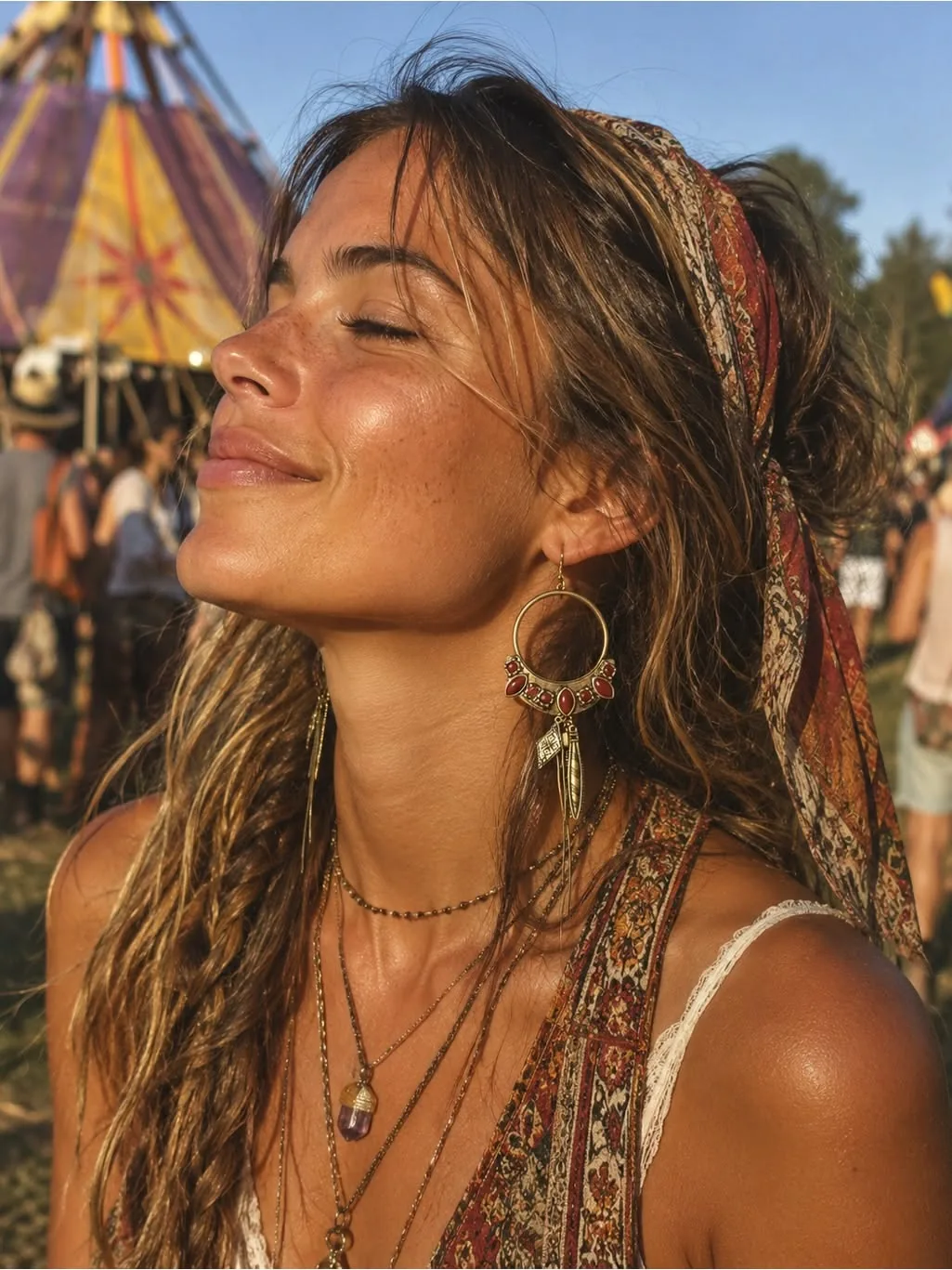
The bohemian scarf crown is a scarf worn like a halo: folded into a band and tied around the head, sitting across the forehead or just above it, with loose waves or curls falling underneath. It is the festival look, the holiday look, the barefoot-on-a-beach look — soft, romantic and effortless. A lightweight, slightly sheer scarf works best, because it drapes rather than sitting stiffly, and a floral or paisley print sells the boho mood instantly.
Best for: festivals, holidays, and summer evenings. How to style it: leave the hair loose and wavy underneath, and let the scarf sit low across the forehead for the true boho feel. Pros and cons: it is beautiful and comfortable, but a sheer scarf slips easily — a pin behind each ear keeps it in place. Common mistake: pulling it too tight, which turns a relaxed crown into a headband. Quick verdict: the scarf style for days that feel like a holiday.
13. The Scarf Messy Bun
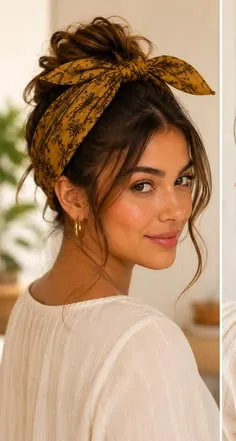
The messy bun is the hairstyle everyone actually wears, and a scarf is what makes it look intentional. Twist the hair into a loose, imperfect bun, pin it loosely, then wrap a scarf around the base and knot it, leaving the ends loose or tucked in. The scarf covers the pins and the elastic, adds colour, and turns a bun you threw up in ten seconds into a style that looks planned. It is the best friend of second-day hair and busy mornings.
Best for: errands, coffee runs, and every ordinary day. How to style it: pull out a few strands around the face for softness, and do not aim for perfect — the messiness is the point. Maintenance: none — take it down, shake it out, and the scarf is ready to reuse. Cost and time: one elastic, two pins, one scarf, under two minutes. Quick verdict: the scarf style you will actually wear most often, because it asks the least of you.
14. The Scarf Half-Up Twist
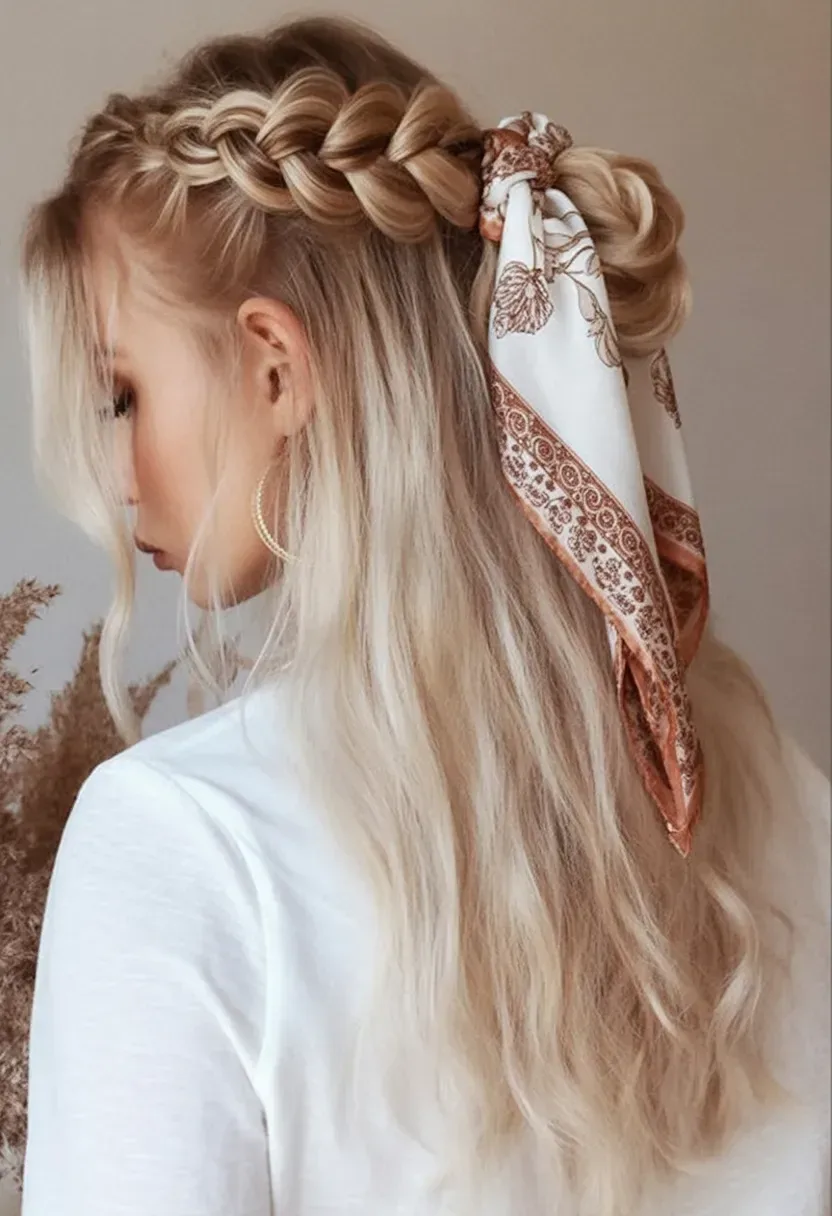
The half-up twist keeps the top half of your hair up and the rest down, and a scarf tied at the twist makes it look romantic rather than plain. Gather the top section, twist it once, secure it, then tie a small scarf around the twist in a bow. The bow sits at the back of the head like a decoration, the loose hair falls underneath, and the whole thing looks soft, feminine and a little bit vintage — perfect for dates, parties and spring days.
Best for: dates, parties, and medium to long hair. How to style it: curl the loose lengths lightly first, so the contrast between the neat twist and the soft waves shows. Pros and cons: it is quick and flattering, but the bow can slide on very smooth hair — pin it through the folded edge. Who should avoid it: very short hair, which cannot gather enough for a half-up twist. Quick verdict: the prettiest half-up style you can do in three minutes.
15. The Vintage Rosie the Riveter Bandana
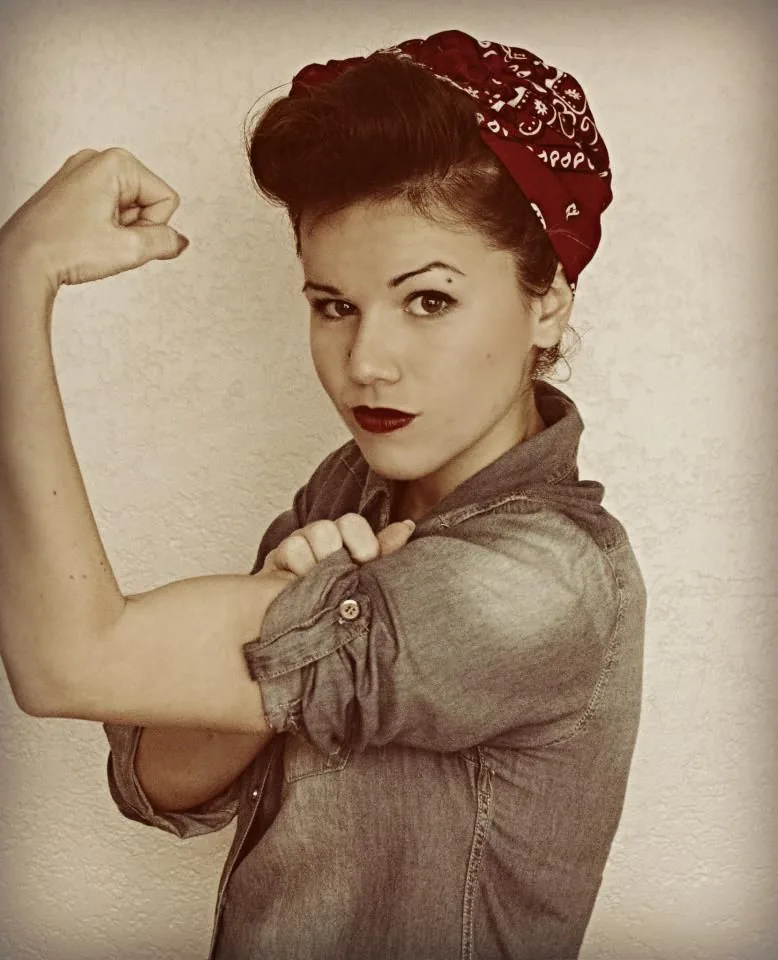
The Rosie the Riveter bandana — a red polka-dot bandana tied at the top of the head, knot up, hair rolled or tucked underneath — is one of the most recognisable hairstyles in the world. It is bold, cheerful and unmistakably vintage, and it works as a costume, a statement, or simply a fun way to keep your hair back on a hot day. The red polka-dot print is the classic, but any bright bandana tied the same way gives the same energy.
Best for: themed events, vintage lovers, and bold statement days. How to style it: roll the hair at the front or sweep it back, tie the bandana with the knot on top, and let the ends stand up. Common mistake: tying the knot at the back — the Rosie knot sits on top, and that is what makes it Rosie. Maintenance: cotton bandanas wash easily, so this is a style you can wear again and again. Quick verdict: a piece of history you can tie in thirty seconds.
16. The Scarf Fishtail Braid
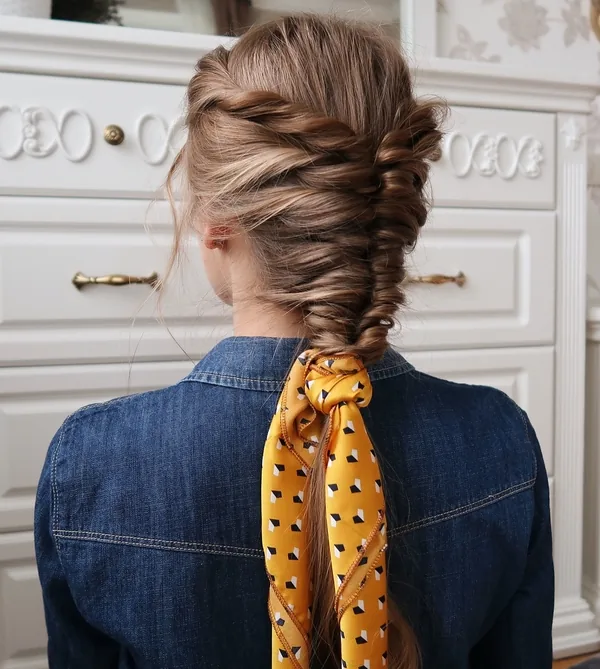
A fishtail braid is already intricate; a scarf woven through it makes it unforgettable. The fishtail’s fine, overlapping pieces show off a narrow scarf beautifully, because the fabric appears in thin stripes along the whole length. Use a skinny scarf or a folded narrow strip, braid it in as one of the strands, and finish with a knot. The result looks far more complicated than it is — the braid does the work, and the scarf does the showing off.
Best for: long hair, special occasions, and anyone who loves braids. How to style it: keep the fishtail loose and pull the edges out gently for fullness, so the scarf shows between the pieces. Pros and cons: it is stunning and holds all day, but a fishtail takes practice — learn the braid first, then add the scarf. Cost and time: about ten minutes once you know the braid. Quick verdict: the most intricate-looking scarf braid in this guide, and the most rewarding to master.
17. The Silk Scarf Top Knot With a Bow
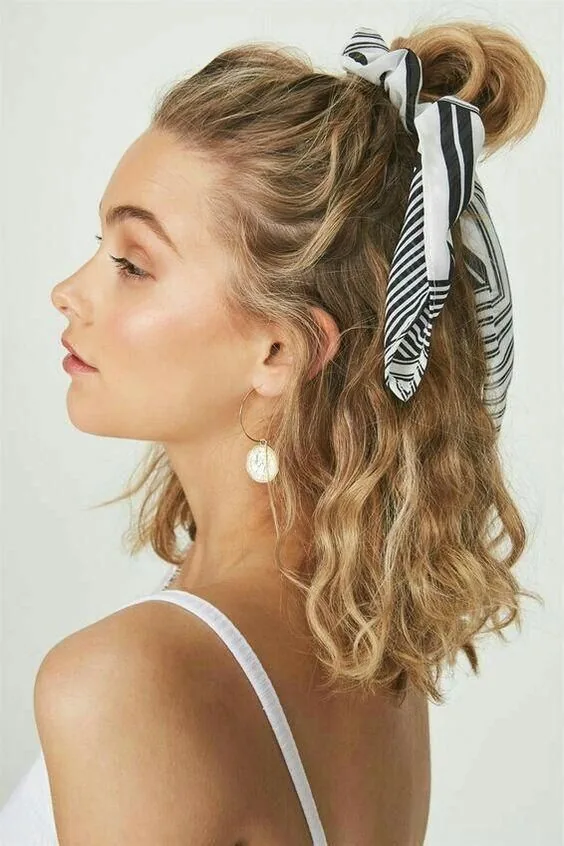
Take a high top knot, wrap a silk scarf around its base, and finish with a neat bow on top — that is the silk scarf top knot with a bow, and it is the dressier version of the bandana top knot. The silk makes it look polished rather than casual, the bow adds a playful touch, and the high placement lifts the whole face. It is a favourite for parties, evenings out, and days when you want your hair up and your outfit to have a focal point.
Best for: parties, evenings, and anyone who wants a high, polished updo. How to style it: smooth the hair back into the knot for a sleek look, and make the bow’s loops even — a lopsided bow is the one thing that can spoil this style. What to ask your stylist: if your hair is heavy, ask for the knot to be pinned in two places, not one, so the scarf is not doing the holding. Common mistake: using a scarf so wide that the bow becomes a bulky lump — fold it narrow first. Quick verdict: a top knot that looks like you dressed up on purpose.
18. The Scarf-Wrapped Low Ponytail
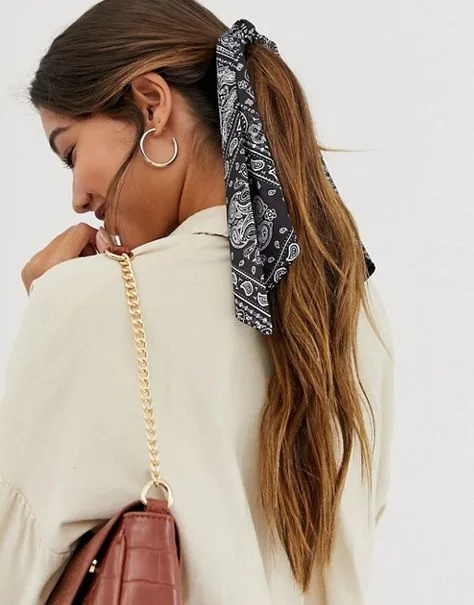
The low ponytail is the quiet, elegant sister of the high ponytail, and a scarf wrapped around its base makes it look like a deliberate style rather than a lazy one. Gather the hair low at the nape, secure it, wrap a silk scarf around the elastic two or three times, and tie a small knot underneath. The scarf adds a band of colour at the nape, the ponytail swings freely, and the whole look is calm, polished and grown-up.
Best for: work, formal days, and anyone who prefers low, sleek styles. How to style it: smooth the top with a brush and a little serum for a sleek finish, or leave it soft for a relaxed one. Pros and cons: it is the easiest elegant scarf style and it suits almost everyone, but a very long scarf end can tangle in the ponytail — keep the ends short or tuck them in. Maintenance: nothing beyond re-tying the knot if it loosens. Quick verdict: proof that a low ponytail is not a boring ponytail.
19. The Scarf Braided Headband
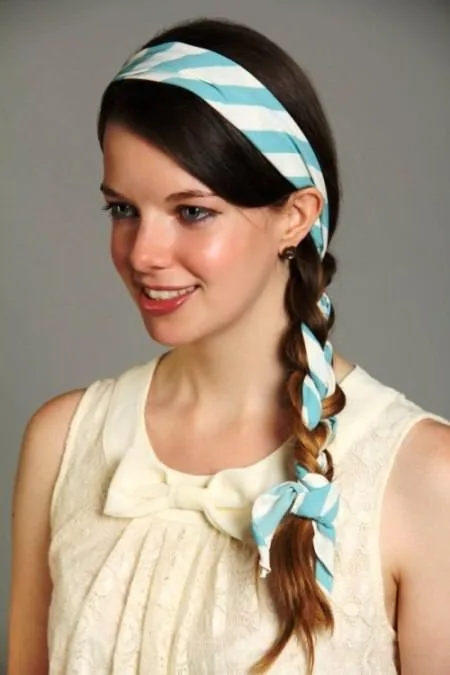
Braid a narrow scarf into a thin plait, then wear the plait as a headband across the top of your head — that is the scarf braided headband, and it is a lovely way to use a scarf you love but never wear. The braided texture looks like a real hair braid, the scarf adds colour, and it keeps the front hair neatly back. It works with hair down, in a ponytail, or in a bun, and it is a good choice when you want the scarf to be subtle rather than the star of the show.
Best for: work, school, and days when you want a neat, pretty detail. How to style it: braid the scarf tightly so it holds its shape, tie the ends at the nape, and pin them under your hair. Pros and cons: it looks intricate and stays put, but it takes a few minutes to braid the scarf first. Who should avoid it: anyone in a rush — this is a five-minute style, not a thirty-second one. Quick verdict: the most delicate scarf detail in this guide.
20. Scarf Space Buns
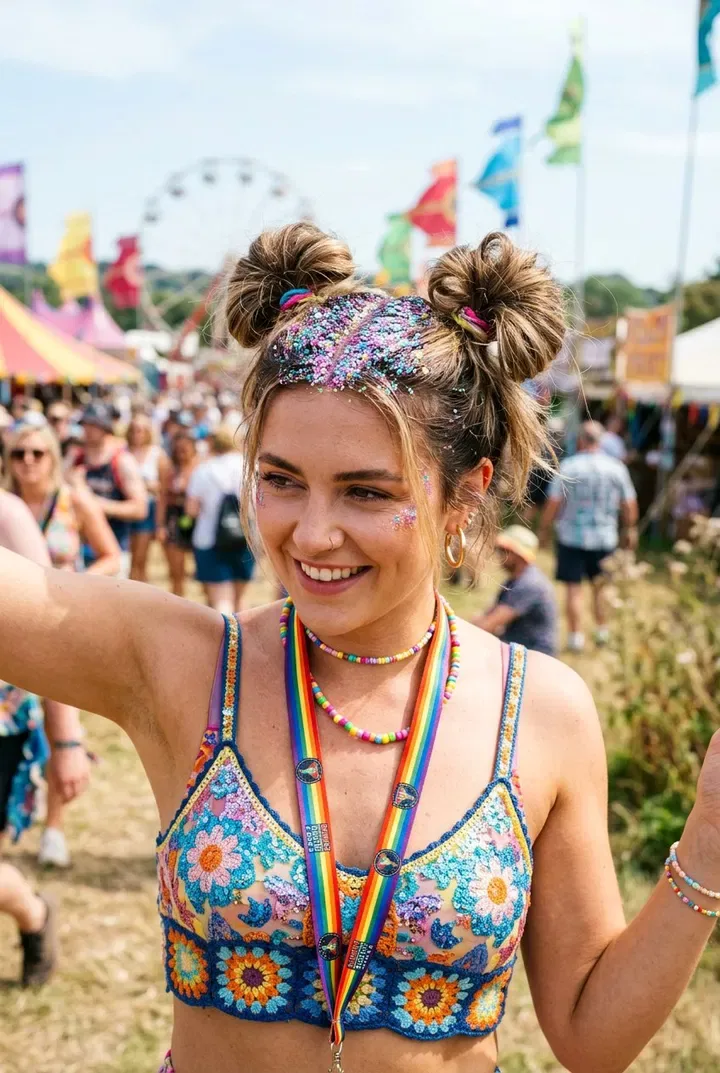
Space buns are two high buns, one on each side of the head, and wrapping a scarf around each one makes them look festival-ready. Divide the hair in two, make a bun on each side, wrap a folded scarf around each base, and tie small knots or bows. The look is playful, youthful and fun — a festival favourite — and it keeps the hair completely out of the way on hot days. Use two matching scarves, or two different prints for a bolder look.
Best for: festivals, parties, and fun weekend looks. How to style it: keep the buns high and even, and use the same scarf colour on both sides so the look stays balanced. Common mistake: making the buns uneven — check them in the mirror from the front, because one higher than the other is very noticeable. Maintenance: space buns hold well, but carry a spare elastic — if one bun drops, the whole look goes with it. Quick verdict: the most fun you can have with two scarves.
21. The Scarf Side Braid
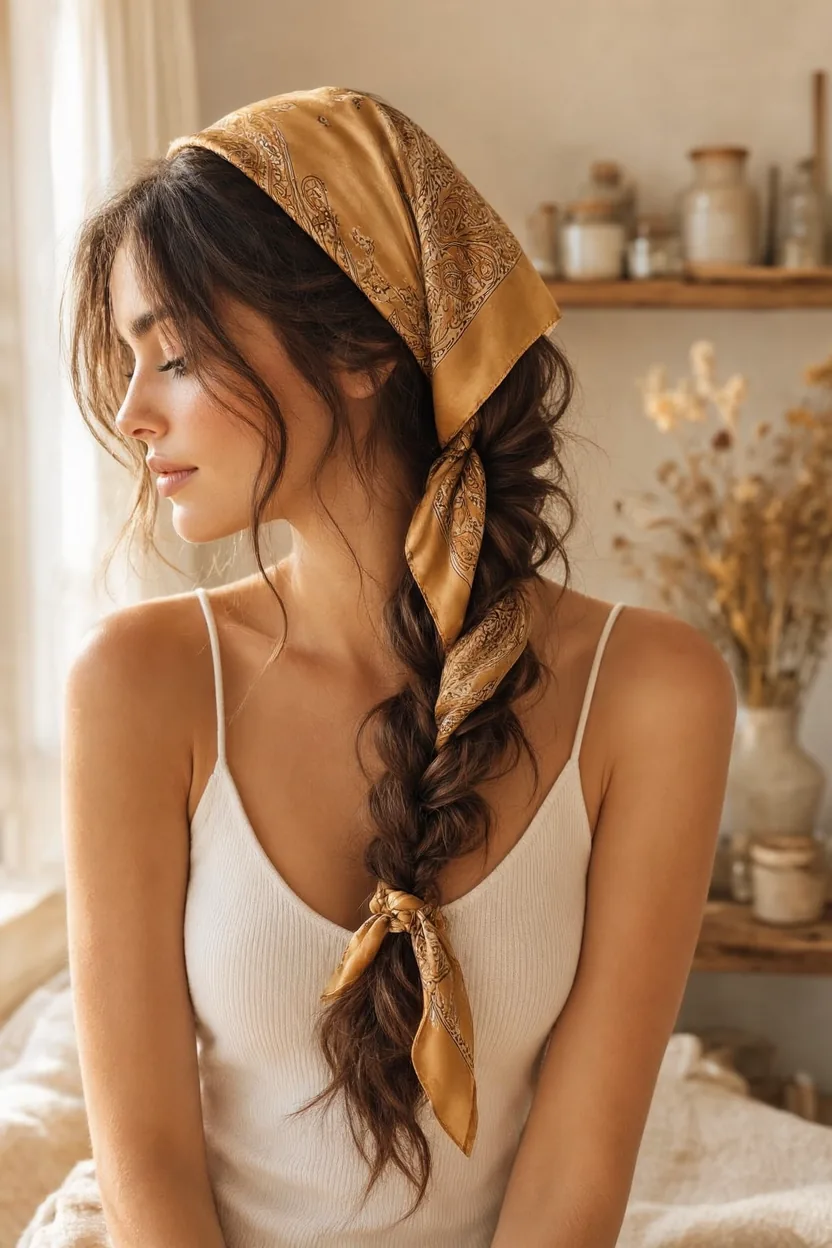
A side braid swept over one shoulder is soft, romantic and flattering, and a scarf woven through it or tied at its end adds the finishing touch. Braid the hair to one side, weave a narrow scarf through the plait as you go, and tie the ends together at the bottom with a small bow. The braid sits over the shoulder where everyone can see it, and the scarf makes it look like you spent far longer on it than you did.
Best for: dates, weddings as a guest, and romantic everyday looks. How to style it: pull the braid gently apart for fullness, and let a few face-framing pieces fall free. Pros and cons: it is flattering on almost everyone and it photographs beautifully, but a side braid can slip forward and need repositioning during the day. Cost and time: about five minutes, one narrow scarf. Quick verdict: the scarf braid for people who love soft, romantic hair.
22. The Elegant Scarf Chignon for Weddings
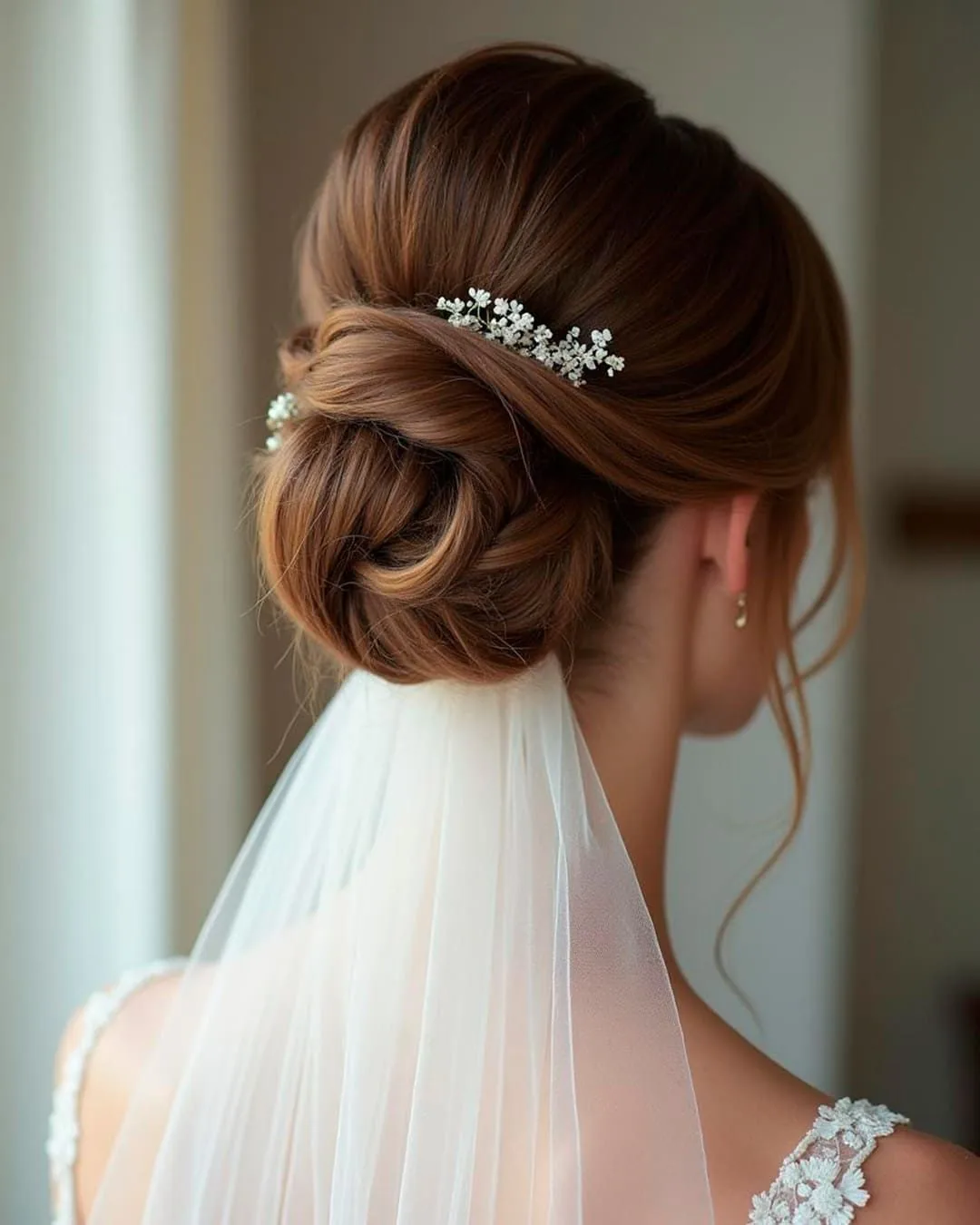
A wedding chignon wrapped in silk is the most formal scarf style in this guide, and it is beautiful enough for a bride, a bridesmaid or a wedding guest. The hair is swept into a low, smooth chignon, and a silk scarf — in ivory, blush, champagne or a colour that matches the outfit — is draped over it and tied in a small, neat knot at the nape. The silk catches the light in photos, the chignon holds for hours, and the whole look is timeless rather than trendy.
Best for: weddings, formal events, and anyone who wants a classic updo with a twist. How to style it: keep the chignon smooth and low, and choose a silk scarf, not cotton, for the sheen. What to ask your stylist: ask for a trial run before the day, so you know the scarf will hold through a long ceremony and a longer dance floor. Maintenance: pin the scarf in two hidden places, and carry a spare pin. Quick verdict: the scarf style for the most important days.
23. The Scarf Beach Waves Wrap
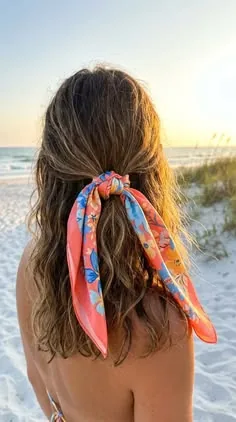
Beach waves and a scarf are a natural holiday pairing: the waves are loose and textured, the scarf is bright and practical, and together they look like a postcard. Wear the scarf as a headband over loose beach waves, or wrap it around a low, messy ponytail, and let the ends flutter. The scarf keeps the hair out of your face in the sea breeze, protects it from the sun, and adds the colour that a plain beach look needs.
Best for: holidays, beach days, and summer. How to style it: use a cotton bandana or a lightweight scarf that can handle sun, salt and sand, and do not worry about neatness — the beach look is supposed to be relaxed. Pros and cons: it is practical, pretty and very forgiving, but a silk scarf will not survive a beach day happily — save the silk for the evening. Common mistake: tying it too tightly, which flattens the waves you worked to create. Quick verdict: the holiday scarf style, made for salt air and sunshine.
24. The Scarf Pixie Wrap
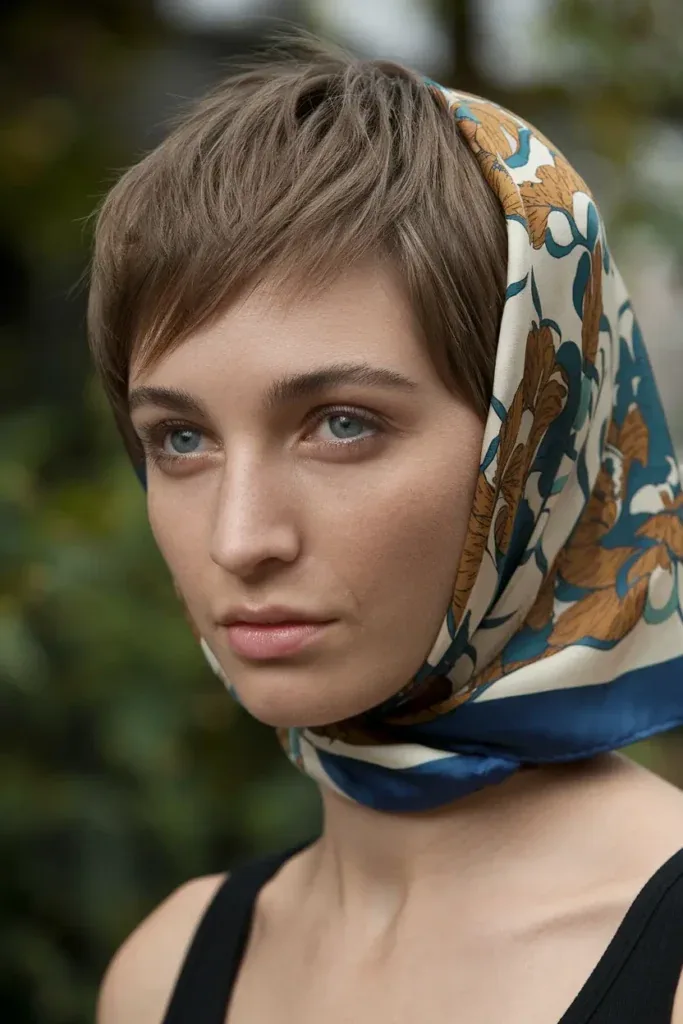
Short pixie hair and a scarf are a perfect match, because the scarf adds the length, colour and drama that short hair cannot. Fold a scarf into a band and wear it across the forehead, or wrap a larger scarf turban-style over the whole head, leaving the pixie’s texture showing at the front. Either way, the scarf turns a simple pixie into a styled look in seconds, and it is a lifesaver during the awkward grow-out stage, when a scarf covers the in-between lengths beautifully.
Best for: pixies, bobs, and anyone growing their hair out. How to style it: keep the scarf as the feature — a wide band or a full wrap — and let the pixie’s texture show at the front. Maintenance: a cotton scarf grips short hair best, because there is less hair to anchor it to. Who should avoid it: nobody, but a very narrow scarf can disappear on a pixie — go wide enough to be seen. Quick verdict: the scarf style that makes short hair feel like a choice, not a compromise.
25. The Scarf Curly Hair Pineapple Wrap
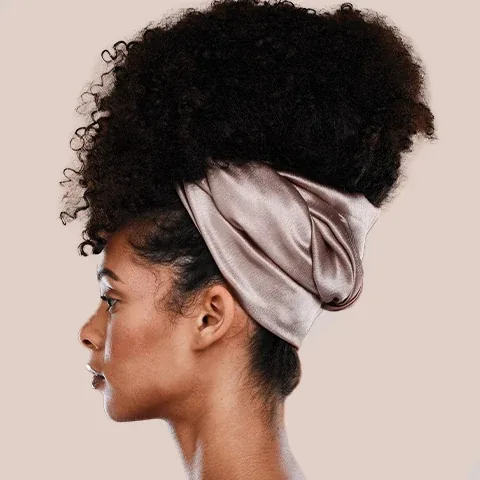
Curly hair and silk scarves were made for each other: the silk protects the curls from friction and frizz, and the pineapple — a loose, high ponytail on top of the head — keeps the curls’ shape overnight or all day. Gather the curls loosely on top, secure them with a soft scrunchie, then wrap a silk scarf around the base, tying it in a bow. The curls cascade around the scarf, the silk keeps them smooth, and the style looks intentional rather than thrown together.
Best for: curly and coily hair, and protecting curls overnight. How to style it: keep the pineapple loose — a tight ponytail will stretch the curls out and cause breakage. Pros and cons: it protects curls better than any other style here, and it looks great, but it needs a silk or satin scarf — cotton will absorb moisture and create frizz. Maintenance: sleep in it with the scarf on, and your curls will still be defined in the morning. Quick verdict: the most useful scarf style for curly hair, day and night.
26. The Scarf-Wrapped High Ponytail
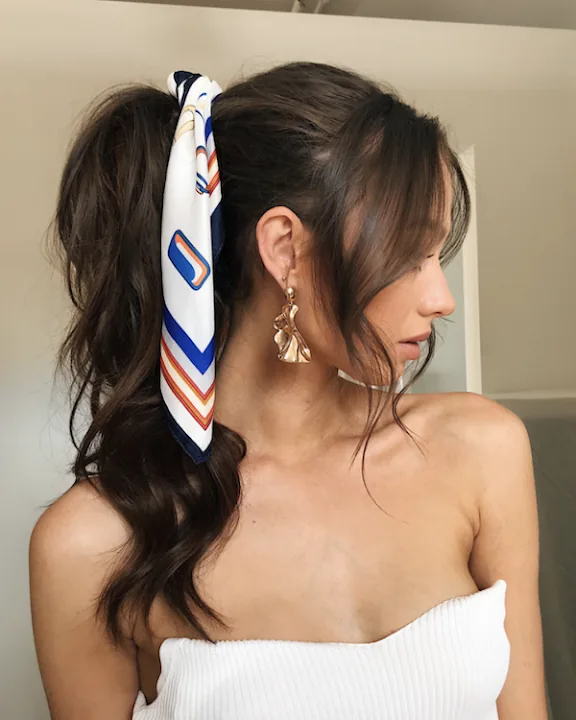
A high ponytail is bold, energetic and youthful, and a scarf wrapped around its base makes it look polished instead of sporty. Pull the hair high, secure it tightly, wrap a scarf around the base two or three times, and knot it, letting the ends hang down alongside the ponytail. The scarf adds colour and movement, the high placement lifts the face, and the whole look is confident and fun — the ponytail, grown up.
Best for: nights out, workouts that turn into dinners, and anyone who loves a high ponytail. How to style it: smooth the top with a brush and a little gel for a sleek finish, and keep the scarf ends about the same length as the ponytail for balance. Common mistake: wrapping the scarf so loosely that it slides down the ponytail — wrap it snugly against the elastic. Cost and time: one strong elastic, one scarf, two minutes. Quick verdict: the high ponytail, with a silk upgrade.
27. The Scarf Head Wrap for Short Hair
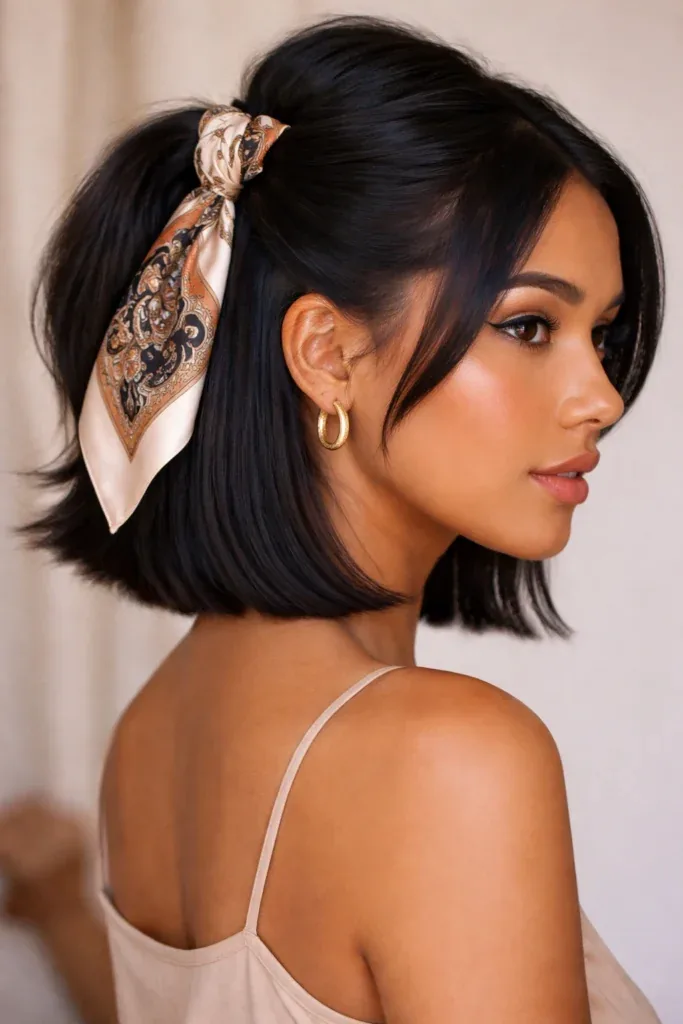
Short hair does not need to miss out on head wraps: a large scarf wrapped turban-style over a bob or a pixie looks chic, covers a bad hair day completely, and adds a whole new silhouette. The key is proportion — a wrap that is too big will swallow a short style, so fold the scarf down to a manageable size and keep the knot neat and centred. The result is a look that is bold, elegant and completely different from your usual hair.
Best for: bad hair days, grow-out phases, and statement looks on short hair. How to style it: leave a few pieces of hair showing at the front, so the wrap looks like a style choice rather than a cover-up. Pros and cons: it is the fastest full-coverage fix for short hair, but it needs a large scarf and a little practice to tie neatly. Who should avoid it: anyone who wants their hair to be the star — this style makes the scarf the star. Quick verdict: short hair, big statement.
28. The Scarf Twisted Crown Braid
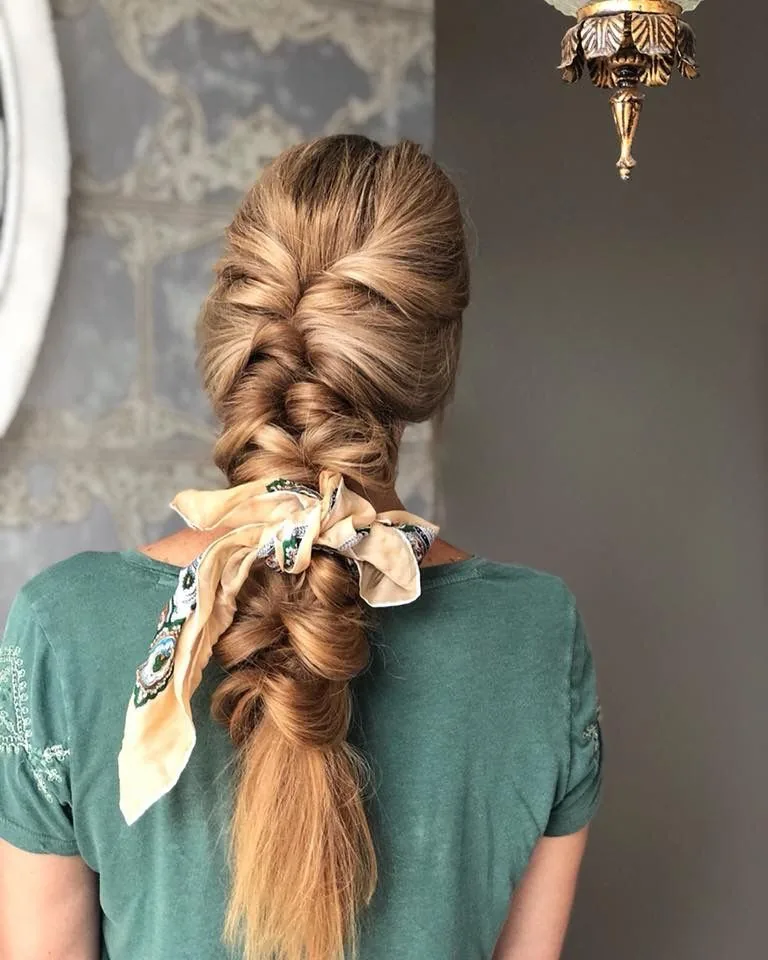
A crown braid circles the head like a halo, and weaving a scarf through it makes the halo colourful. Braid around the head, weaving a narrow scarf in as you go, and pin the end under the start. The scarf shows between the braid’s twists, the crown shape frames the face, and the style holds for hours — it is a favourite for weddings, festivals and anyone who wants their hair completely up and completely beautiful.
Best for: weddings, festivals, and formal occasions. How to style it: keep the braid loose and pull the edges out for fullness, so the scarf shows. What to ask your stylist: if you cannot crown-braid your own hair, ask for a Dutch braid around the head instead — the scarf weaves through it just as well. Maintenance: pin the braid in several places, because a crown braid is heavy and gravity is not your friend. Quick verdict: the most regal scarf style in this guide.
29. The Scarf Low Side Bun
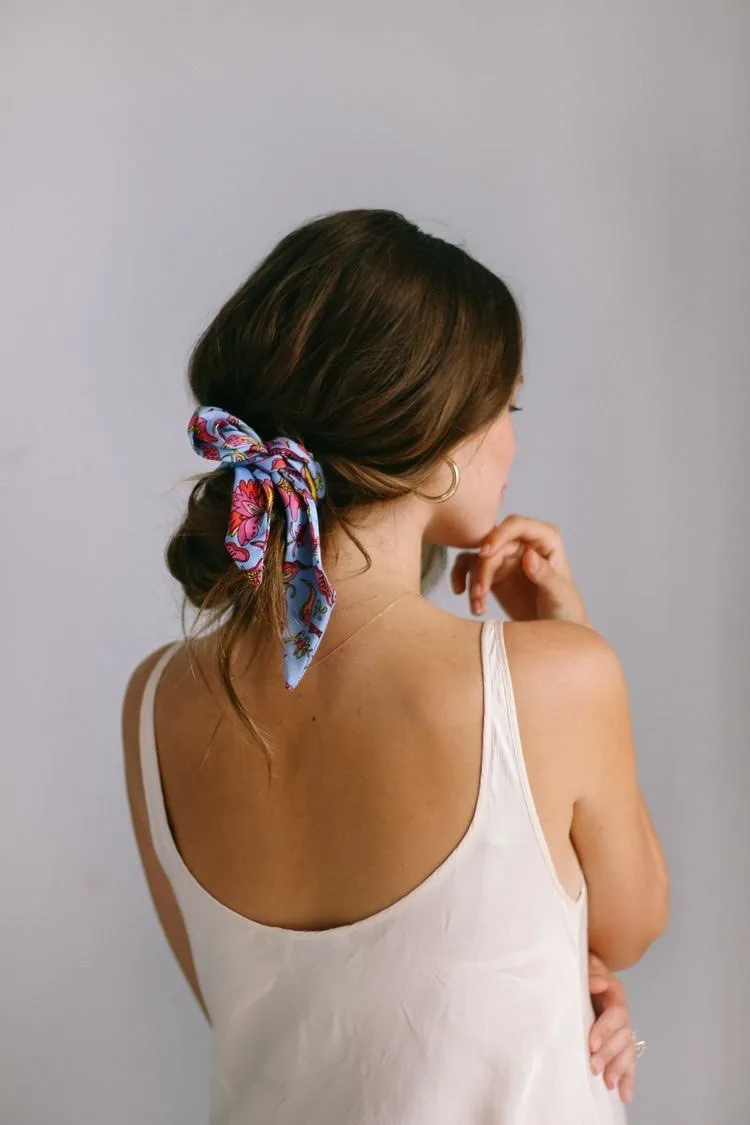
A low side bun sits at one side of the nape, and a scarf wrapped around it makes it look soft, romantic and a little bit vintage. Sweep the hair to one side, twist it into a bun, pin it, then wrap a silk scarf around the base and tie a small knot. The asymmetry flatters the face, the scarf adds colour, and the style works for work, weddings and evenings out — it is the side bun, dressed up.
Best for: weddings as a guest, evenings, and anyone who likes asymmetric styles. How to style it: leave a few face-framing pieces loose on the opposite side, for balance. Pros and cons: it is elegant and easy, but a side bun can feel heavy on one side — pin it well and it will stay. Common mistake: placing the bun too high, which makes it look like a side ponytail rather than a bun. Quick verdict: the romantic’s scarf bun.
30. The Two-Minute Bad-Hair-Day Scarf
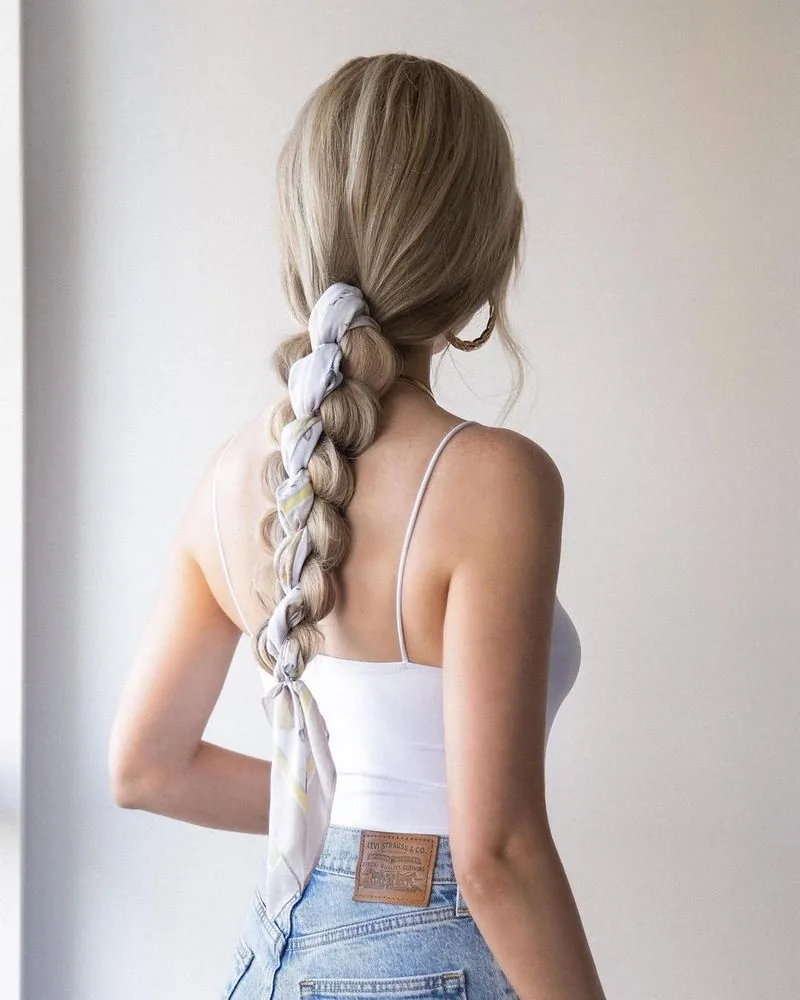
This is the style to learn by heart: a wide folded scarf worn as a headband, tied at the nape, over hair that has not been washed, brushed or styled. It hides greasy roots, frames the face, and takes two minutes — which is exactly how long you have on a bad hair morning. Add a little dry shampoo at the roots first, gather the hair into a low ponytail or leave it down, and tie the scarf on. Nobody will know, and you will look like you planned it.
Best for: rushed mornings, travel days, and the day before wash day. How to style it: choose a scarf wide enough to cover the roots properly — a narrow band will not hide anything. Cost and time: one scarf, two minutes, zero skill required. Maintenance: none — this is the style you wear when maintenance is not happening. Common mistake: trying to fix the hair first — the scarf is the fix, so skip the straighteners and just tie it on. Quick verdict: the most useful two minutes in this whole guide.
31. The Printed Scarf Statement Wrap
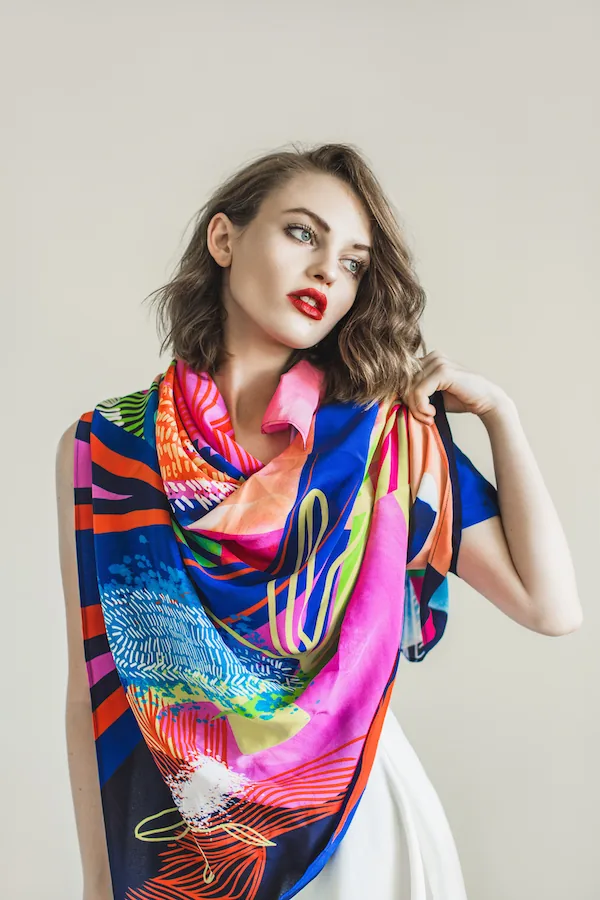
Sometimes the scarf is not an accessory — it is the outfit. A big, bold printed scarf wrapped turban-style or worn as a full head wrap, in a print you love, becomes the whole look, and the rest of the outfit can stay simple. Animal print, bold florals, bright geometrics — the print does the talking, and the hair underneath just needs to be tucked away neatly. This is the style for days when you want to be remembered.
Best for: statement days, photos, and anyone who loves bold prints. How to style it: keep the rest of the outfit plain, so the scarf has room to shine, and keep the wrap neat — a bold print in a messy tie looks chaotic. Pros and cons: it is unforgettable and it needs no other accessory, but it is a lot of look — save it for days when you feel like being noticed. Who should avoid it: nobody, but start with a print you genuinely love, not one you think you should love. Quick verdict: the scarf as the star of the show.
32. The Scarf-Wrapped Dutch Braid
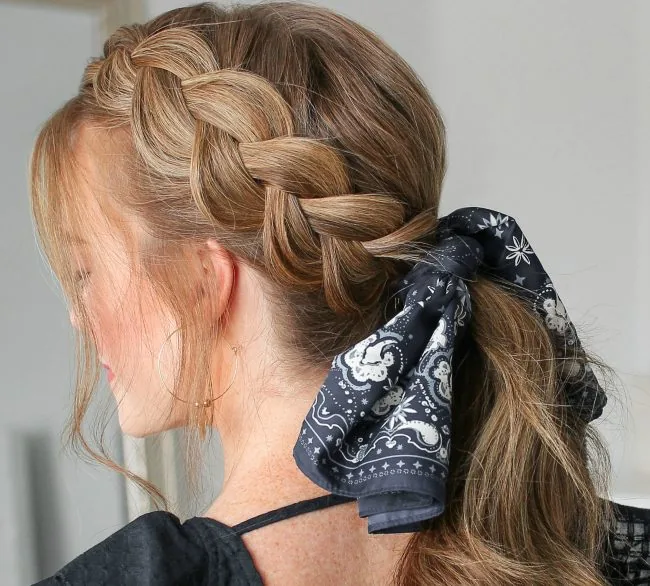
A Dutch braid — the inside-out braid that sits on top of the hair — already looks bold, and a scarf woven through it makes it look even bolder. The braid’s raised shape shows off the scarf beautifully, because the fabric sits on the surface rather than disappearing inside the plait. Weave a narrow scarf through as you braid, or wrap one around the base at the end, and finish with a knot. The result is sporty, pretty and very secure.
Best for: active days, festivals, and long hair that needs to stay put. How to style it: braid tightly for a neat look, or pull the edges out for a fuller, softer braid. What to ask your stylist: if your hair is slippery, ask for the scarf to be tied in at the top with a small elastic before braiding — it stops the scarf from sliding out. Maintenance: a Dutch braid with a scarf holds for a full day, even through a workout. Quick verdict: the most secure scarf braid in this guide.
33. The Scarf Sleek Low Bun
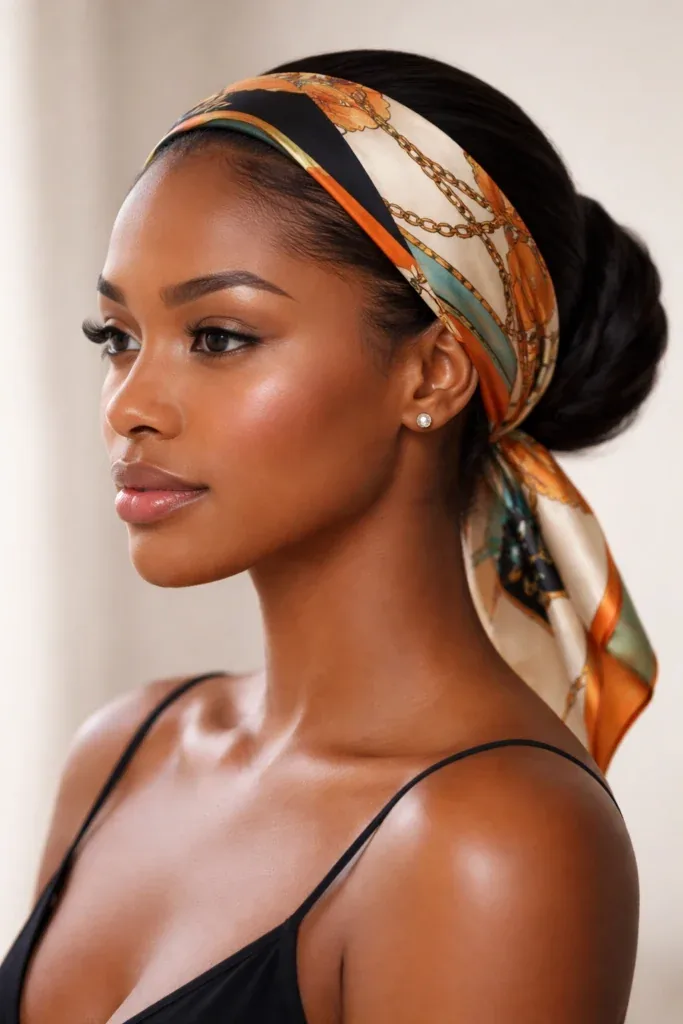
The sleek low bun is the most professional scarf style here: hair brushed smooth, gathered low, wrapped in a silk scarf in a solid, muted colour, with not a strand out of place. It is the look for job interviews, important meetings and formal events — the scarf adds a quiet band of colour, the sleekness says you mean business, and the whole thing takes five minutes. Choose a scarf in navy, black, burgundy or forest green for the most professional effect.
Best for: work, interviews, and formal occasions. How to style it: use a brush and a little smoothing serum, and keep the scarf narrow and neat — this is not the style for a big, floppy bow. Pros and cons: it is the most polished look in the guide and it holds all day, but it needs smooth hair to work — frizzy hair will fight it. Common mistake: choosing a bright, busy print, which turns a professional look into a party look. Quick verdict: the boardroom scarf style.
34. The Scarf Knot Headband
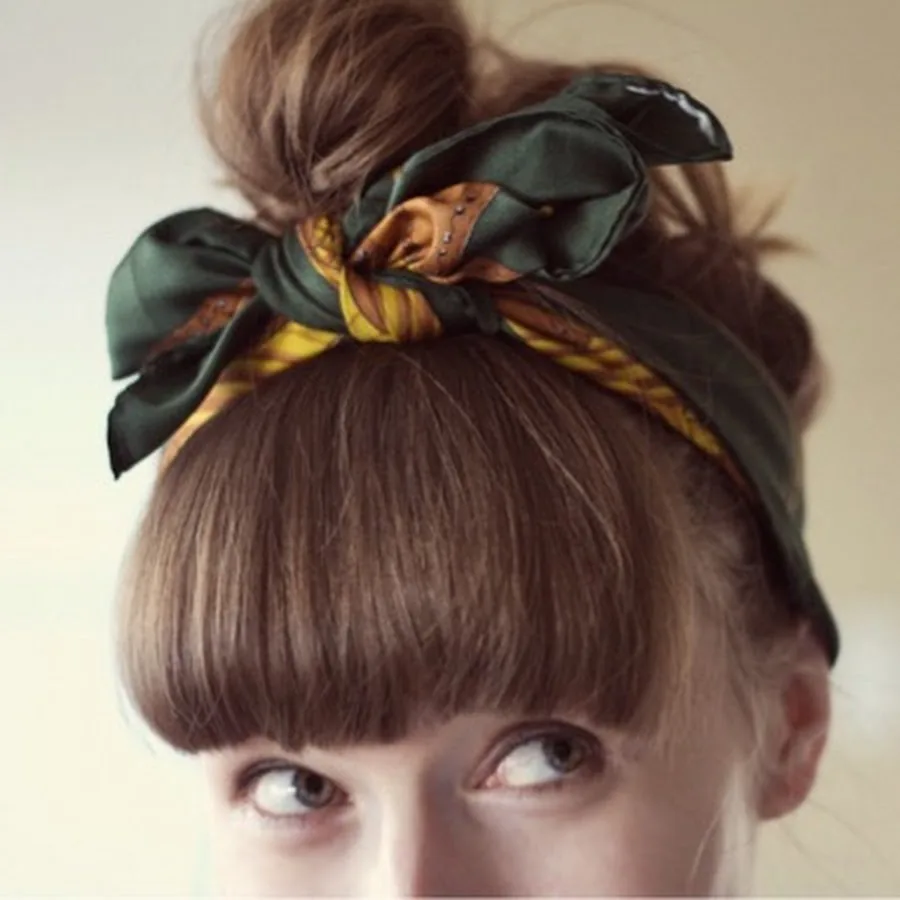
Fold a scarf into a band, tie a knot at the top of your head, and leave the ends standing up like little ears — that is the scarf knot headband, and it is cheerful, cute and very easy. It keeps the hair off your face, adds a playful detail, and works with hair down, in a ponytail or in a bun. A cotton bandana holds the knot best, while silk gives it a softer, more elegant feel. It is a favourite for summer, for holidays, and for days when you want to look happy.
Best for: summer, casual days, and playful looks. How to style it: position the knot slightly to one side for a modern feel, or dead centre for a retro one. Cost and time: one scarf, one minute. Maintenance: none — retie the knot if it loosens, and you are done. Who should avoid it: anyone who wants a formal look — this one is firmly fun. Quick verdict: the happiest scarf style in this guide.
35. The Scarf-Wrapped Pigtails
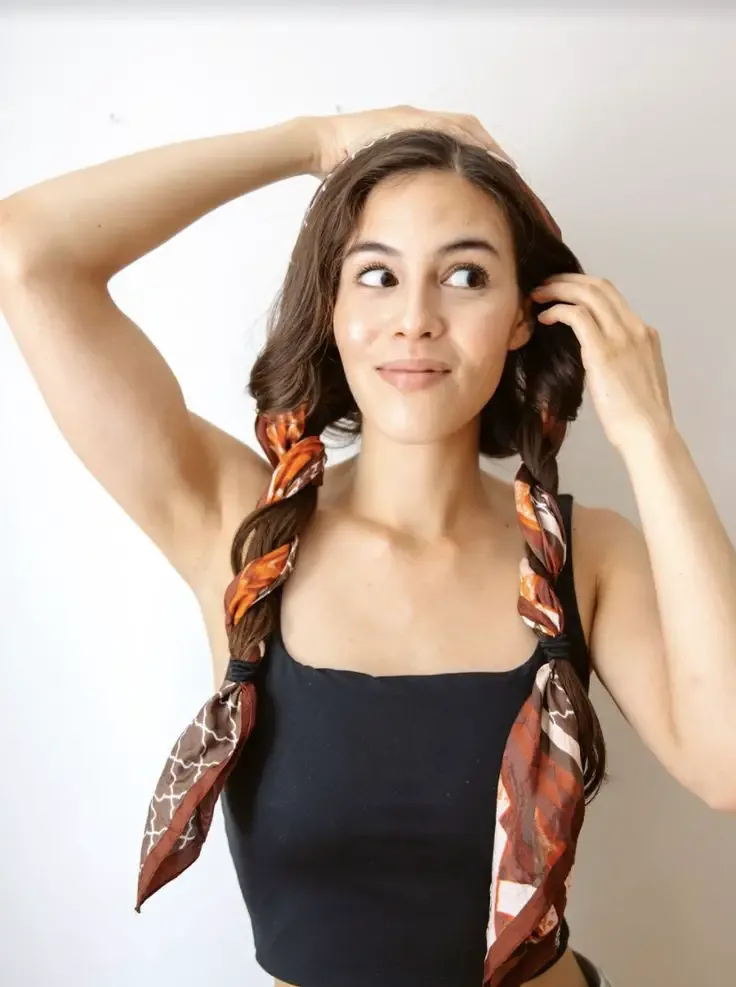
Pigtails are not just for children: two low, loose pigtails with a scarf wrapped around each base look playful, youthful and surprisingly chic on adults, especially with soft waves and a casual outfit. Divide the hair in two, tie each side low, wrap a small scarf around each elastic, and tie a little bow on each side. The look is fun without being childish, as long as the pigtails sit low and loose rather than high and tight.
Best for: festivals, casual weekends, and playful looks. How to style it: keep the pigtails low and a little messy, and use the same scarf on both sides for balance. Pros and cons: it is fun, quick and very photogenic, but high, tight pigtails will look childish — low and loose is the grown-up version. Common mistake: making the bows too big, which tips the look from playful into costume. Quick verdict: pigtails, all grown up.
36. The Scarf Evening Glam Wrap
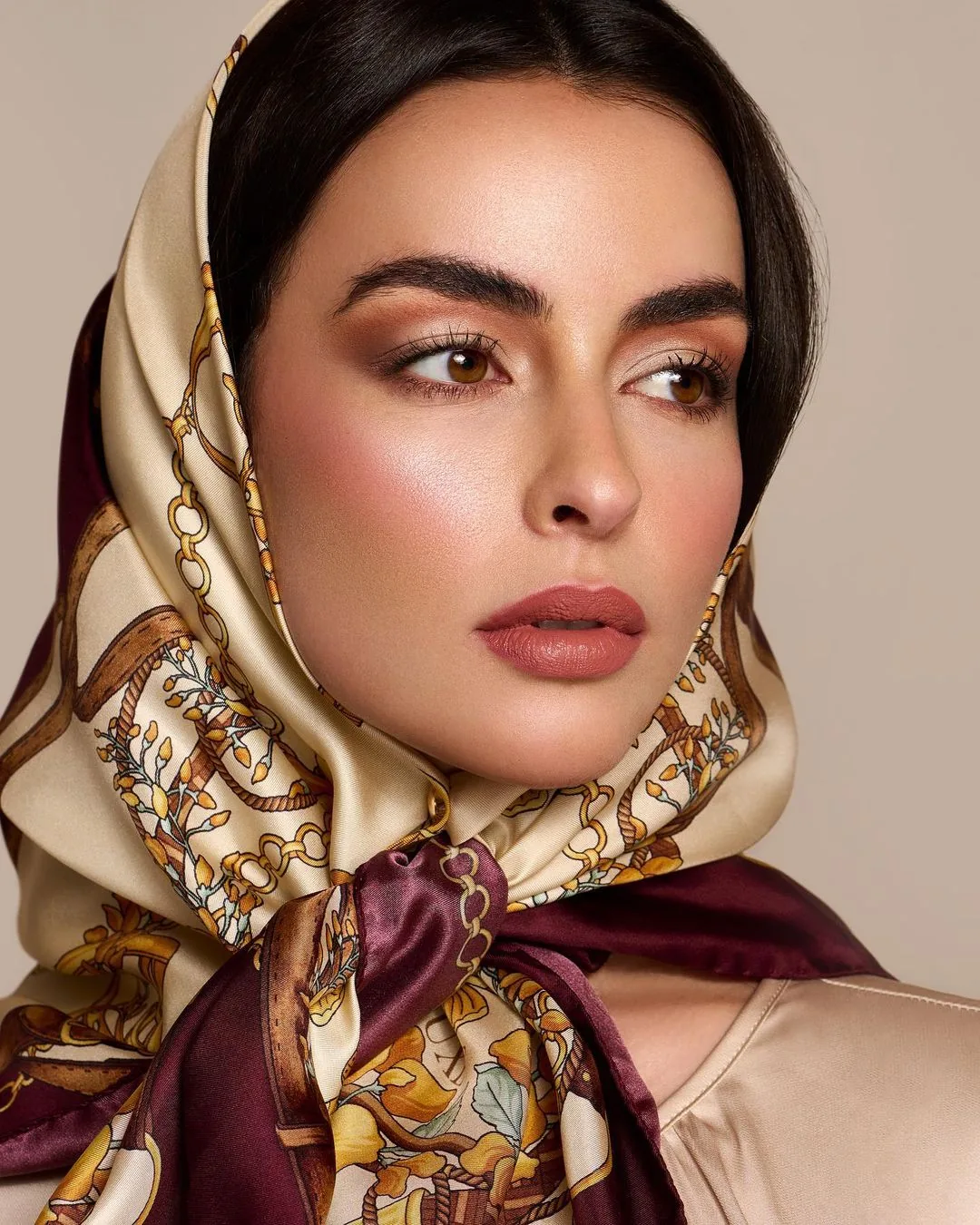
The evening glam wrap is the scarf style for a night out: a large silk scarf in a rich colour — deep red, emerald, gold or black — wrapped turban-style or draped over a sleek low bun, with the ends arranged neatly and the whole look finished with earrings and a bold lip. The silk catches the light, the wrap adds drama, and the hair underneath can be as simple as a smooth bun, because the scarf is doing the glamorous work. It is the closest a scarf gets to jewellery.
Best for: evenings out, parties, and formal events. How to style it: choose silk, not cotton, for the sheen, and keep the wrap neat — evening glam is about polish, not messiness. What to ask your stylist: if the event is long, ask for the wrap to be pinned in two hidden places, so it survives dancing. Cost and time: one good silk scarf, five minutes, and the confidence to wear it. Quick verdict: the scarf style for the night you want to remember.
How do you tie a scarf in your hair so it stays?
Anchor the hair first with an elastic, then add the scarf — never ask the scarf to hold the hair on its own. Cross the ends tightly before knotting, tuck the ends in or wrap them around the base, and hide one or two bobby pins where the scarf meets the hair. A little texture spray or dry shampoo on silky hair gives the scarf grip, and cotton scarves hold better than silk without pins.
What size scarf is best for hairstyles?
A medium square of 50–70 cm is the most versatile size: it wraps ponytails and buns, weaves through braids, and folds into a headband. A large square of around 90 cm is best for full head wraps and turban styles, while a long, narrow scarf is made for braids and ponytail bases. If you buy only one, choose a medium silk square.
Are silk scarves good for your hair?
Yes — silk and satin are among the kindest fabrics for hair, because they reduce friction, which means less frizz, fewer broken ends and smoother curls. That is why silk scarves are recommended for protecting curly hair and for wrapping hair overnight. Cotton scarves grip better and stay put more easily, but they absorb more moisture, so silk is the better choice for hair health.
How do you wear a scarf with short hair?
Short hair suits scarves worn as a wide headband, a band across the forehead, or a full turban-style wrap, with the pixie or bob texture showing at the front. Keep the scarf as the feature, since there is not much hair to anchor a ponytail wrap to, and choose a wide enough band that it is clearly visible. A scarf is also ideal for covering the awkward grow-out stage.
Can you wear a scarf hairstyle to work?
Yes — a silk scarf wrapped around a low bun or low ponytail, or folded as a neat headband, looks polished and professional. Choose a solid or quietly patterned scarf in a muted colour, keep knots small and neat, and avoid big bows or very bright prints in formal workplaces. The sleek low bun with a silk scarf is the most work-appropriate style in this guide.
How do you stop a silk scarf from slipping out of your hair?
Silk slips because it is smooth, so give it something to grip: add texture spray or dry shampoo to the hair first, tie the knot snugly against an elastic or a bun, and slide a bobby pin flat against the scalp through the scarf’s folded edge. Wrapping the scarf twice around the base also helps, and a cotton-blend scarf will slip far less if you prefer not to use pins.
What is the difference between a head wrap and a hair scarf?
A hair scarf is worn as an accessory with the hair — around a ponytail, woven into a braid, or folded as a headband — with most of the hair still visible. A head wrap covers more of the head, often the whole crown, and is the style itself, such as a turban-style wrap or a full-coverage bandana. Hair scarves are quicker and easier; head wraps are bolder and more protective.
How do you wash a silk scarf?
Hand-wash a silk scarf in cool water with a gentle detergent, roll it in a towel to remove the water, and air-dry it flat. Never wring a silk scarf and never put it in a hot dryer, as both damage the fibres and the drape. Cotton bandanas can usually be machine-washed with your laundry. Store scarves folded or rolled, not knotted.
Which scarf hairstyles are best for bad hair days?
The fastest fixes are a wide folded scarf worn as a headband over unwashed roots, a bandana tied over the whole crown, or a scarf wrapped around a low messy bun. All three hide flat or greasy roots, take about two minutes, and look deliberate rather than like a cover-up. Add a little dry shampoo at the roots first for the best result.
Can you wear a scarf hairstyle with curly hair?
Yes — curly hair and silk scarves are a natural pair. A silk scarf protects curls from friction and frizz, and styles like the pineapple wrap, the scarf headband, and the scarf-wrapped ponytail all work beautifully on curls. Keep the styles loose rather than tight, use silk or satin rather than cotton, and let the curls fall naturally around the scarf.
Conclusion
A scarf is the smallest, cheapest and most versatile tool in hairstyling — and this guide proves it. One square of silk can be a headband, a ponytail wrap, a braid woven with colour, a turban, a chignon, or a two-minute rescue for a bad hair day, and none of it needs heat, an appointment or a commitment. The 36 styles here are not 36 different purchases; they are 36 ways to wear the same few scarves you already own, or the one beautiful scarf you buy next.
Start with the easiest win: tomorrow morning, wrap a scarf around your usual ponytail or bun and see how different it feels. Then try a headband twist, a scarf braid, and a head wrap on a day when you have five minutes to practise. Keep the scarf that makes you feel good near your mirror, not buried in a drawer, and remember the only real rule — if it slips, anchor the hair first, pin the scarf, and try again. The scarf is forgiving, the styles are quick, and the lookbook is yours.