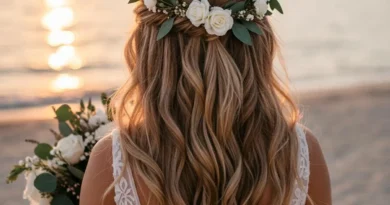
Rain-Proof and Still Pretty: 33 Hairstyles for a Rainy Day That Won’t Fall Flat
Rain has a talent for undoing a hairstyle in minutes. You step out with a smooth blowout and by the time you reach the bus stop, the humidity has turned it into a halo of frizz, the ends have gone limp, and the volume you worked so hard for has quietly collapsed. It feels unfair — but the truth is that rain is not the enemy of good hair, it is just the enemy of the wrong hairstyle. A blowout is a fair-weather friend. A braid, a low bun or a slicked-back ponytail, on the other hand, only gets better when the weather turns.
This guide gathers 33 hairstyles for a rainy day, chosen because they hold their shape in drizzle and humidity instead of fighting it. There are braids that lock the hair away from the weather, buns that sit low and tight, slicked styles that use dampness as a styling aid, and textured cuts that look deliberately undone when the rain touches them. Eight guides first explain the ideas that matter: why humidity frizzes hair, which products genuinely waterproof a style, what to carry in your bag, and how to dry your hair afterwards without damage. Whether your hair is fine or thick, straight or curly, long or short, there is a rain-proof style here that will still look pretty when you arrive — not just when you leave the house.
Why Rain Ruins a Hairstyle — And Which Styles It Can’t Touch
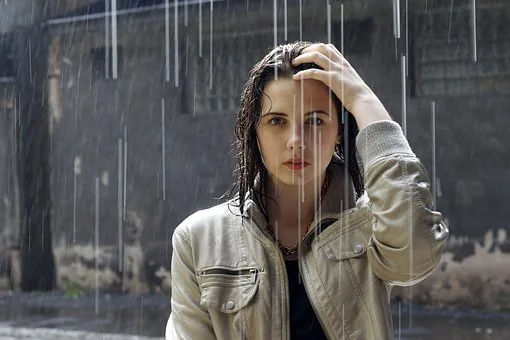
Rain ruins hairstyles through humidity, not just through water falling on your head. Hair is hygroscopic — it absorbs moisture from the air — and when a strand absorbs water it swells, its hydrogen bonds temporarily rearrange, and any shape you heat-styled into it relaxes back toward its natural texture. That is why a straight blowout goes wavy, why curls drop, and why fine hair goes limp while coarse hair goes frizzy. The drier and more heat-styled your hair is when you step out, the more dramatically it changes.
The styles rain cannot touch are the ones that work with this physics instead of against it. A braid holds hair in a structure, so even if individual strands swell, the shape stays. A low bun keeps the ends tucked away, which is where frizz starts. A slicked-back style already uses moisture as its finish, so a little extra dampness only deepens the look. Quick verdict: on a rainy day, choose a style whose shape comes from its structure — braiding, twisting, pinning — not from heat or volume that humidity can undo.
Humidity-Proofing Your Hair Before You Step Out
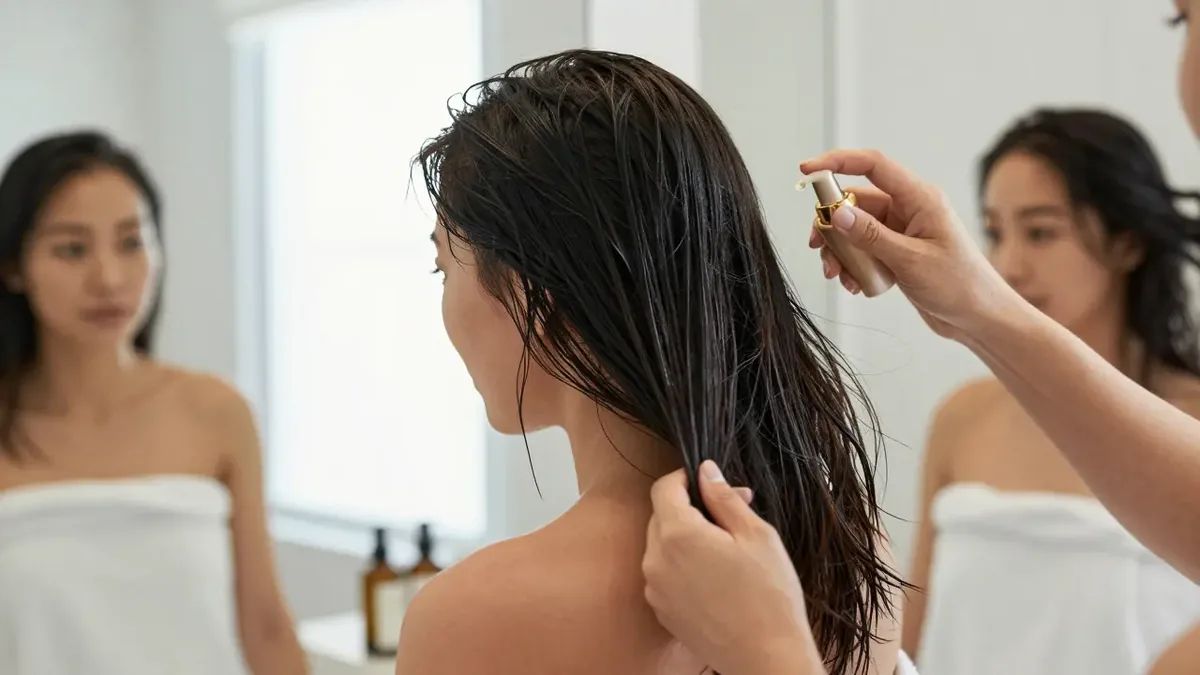
Humidity-proofing starts before you style, not after. Wash with a smoothing or anti-frizz shampoo, and always use conditioner — dry, porous hair absorbs moisture from the air far faster than well-conditioned hair. On damp hair, work a pea-sized amount of anti-humidity serum or a light leave-in cream through the mid-lengths and ends, where frizz begins. If you are blow-drying, dry the hair completely: hair that is even slightly damp when you leave the house will keep absorbing moisture and changing shape for the rest of the morning.
Finish with a light hold hairspray or a humidity-resistant finishing spray, holding the can at arm’s length so the mist settles evenly rather than wetting one patch. Best for: anyone whose hair frizzes the moment the air turns damp. Common mistake: layering heavy oils and creams in an attempt to seal the hair — too much product weighs fine hair down and makes it look greasy once it meets rain. Quick verdict: condition well, use one good serum, dry fully, and seal lightly — that order matters more than any single product.
Frizz Control: What Actually Works When the Air Is Wet
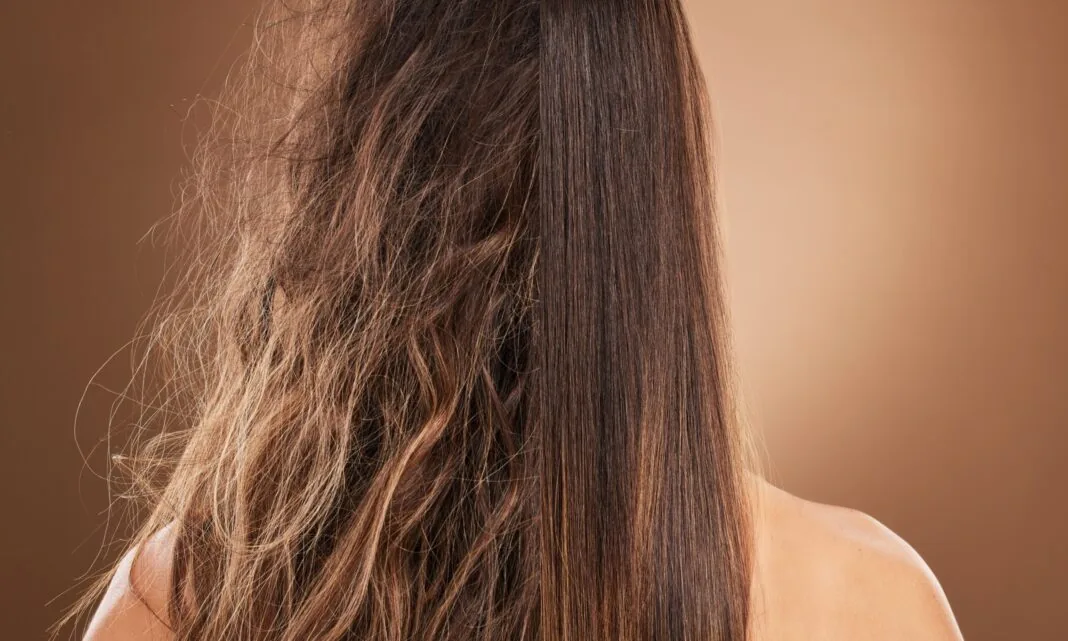
Frizz is not one problem, it is two: short flyaway hairs that stick up, and a general halo of swelling along the lengths. They need different fixes. Flyaways respond to a tiny amount of product — a drop of serum or a swipe of a clean mascara wand sprayed with hairspray, brushed gently over the surface. The halo responds to structure: once hair is braided, twisted or smoothed into a bun, the strands cannot lift away from each other, so the halo never forms in the first place.
What does not work is brushing dry hair in the rain, which breaks up the strands and creates more frizz, or re-straightening damp hair, which damages it and lasts about ten minutes. Pros and cons: anti-frizz serums are the most reliable single fix, but they only work on hair that is already smooth underneath — they cannot rescue a style that has already collapsed. Maintenance: keep a travel-size serum in your bag and re-smooth the surface once, mid-day, rather than touching your hair constantly. Quick verdict: control frizz by containing the hair, not by fighting each strand.
Waterproof Styling Products Worth Carrying
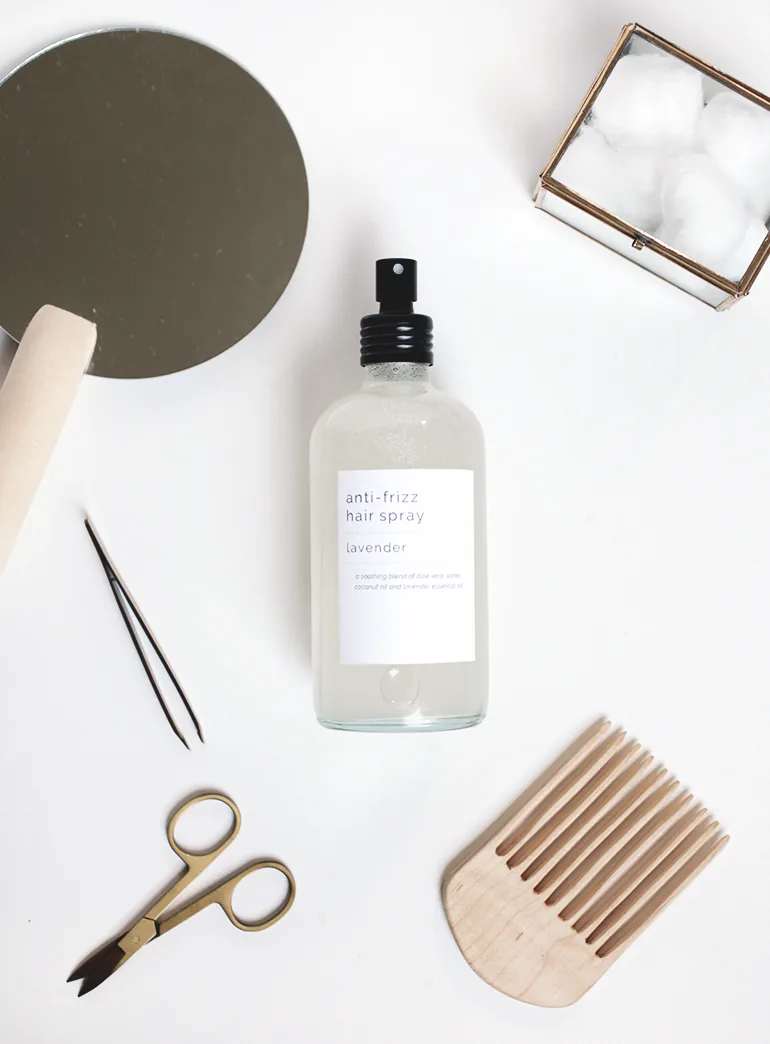
Not every product earns its place in a rainy-day kit. The ones that do are anti-humidity serums with silicones or light oils, which coat the strand and slow moisture absorption; strong-hold gels and pomades, which keep slicked styles locked in place even when wet; and dry shampoo, which revives roots that have gone flat without adding more moisture. A water-resistant hairspray is worth carrying too, but only a flexible-hold one — a stiff spray cracks and flakes when rain hits it, while a flexible one moves with the hair.
Skip heavy waxes on fine hair, skip anything labelled “volumizing” on a rainy day — volume and humidity are enemies — and skip leave-in conditioners that are mostly water, since they add the very moisture you are trying to keep out. Time and cost: a travel-size serum and a mini hairspray cost less than one salon blowout and last a whole rainy season. Who should avoid it: anyone with very fine hair should use half the serum they think they need. Quick verdict: serum, gel, dry shampoo, flexible spray — four products, one small pouch, and you are covered.
What to Carry in Your Bag on a Rainy Day
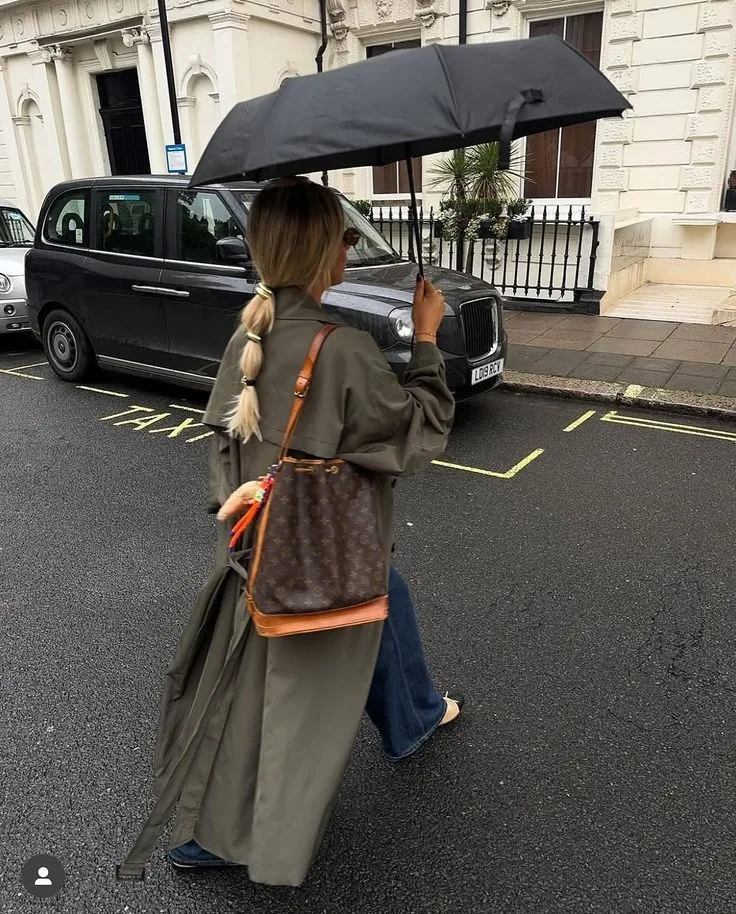
A small rainy-day kit turns a downpour from a disaster into a minor inconvenience. Pack a folding umbrella, obviously — but also two snag-free hair ties, three bobby pins, a mini anti-frizz serum, and a silk scarf or a small shower cap if you are walking far. The scarf is the most underrated item on the list: draped over a bun or a braid, it keeps direct rain off the style while looking completely deliberate, like a fashion choice rather than a rain shield.
The trick is to pack for the style you are wearing, not for a generic emergency. A braid wearer needs pins and a tie; a slicked-back wearer needs a dab of gel; a curly-haired person needs a little leave-in to re-define curls after the rain. Best for: commuters, students and anyone who walks more than ten minutes in the rain. Common mistake: carrying a full-size brush — it takes up space, and brushing wet or damp hair only makes frizz worse. A wide-tooth comb, or just your fingers, does the job better. Quick verdict: ties, pins, serum, scarf — four small things that save the whole day.
Drying Your Hair After the Rain Without Damage

Wet hair is fragile hair. When a strand is wet it stretches more easily and breaks more easily, so the first rule after getting caught in the rain is to be gentle. Blot — do not rub — with a soft cotton t-shirt or a microfibre towel, pressing the lengths in sections instead of scrubbing the top of your head. Rubbing roughs up the cuticle, which is exactly what creates the frizz you are trying to avoid, and it tangles the hair at the same time.
Once the worst of the water is out, let the hair air-dry if you can, or use a dryer on its lowest heat with a diffuser, pointing the airflow down the strand rather than up into it. Never brush wet hair with a fine brush; a wide-tooth comb, worked from the ends upward, is the safe option. Pros and cons: air-drying is the gentlest choice but takes time, while a cool dryer is faster and still safe if you keep the heat low. Quick verdict: blot, don’t rub; comb, don’t brush; and let the hair dry before you restyle it.
Styles That Look Better Slightly Damp
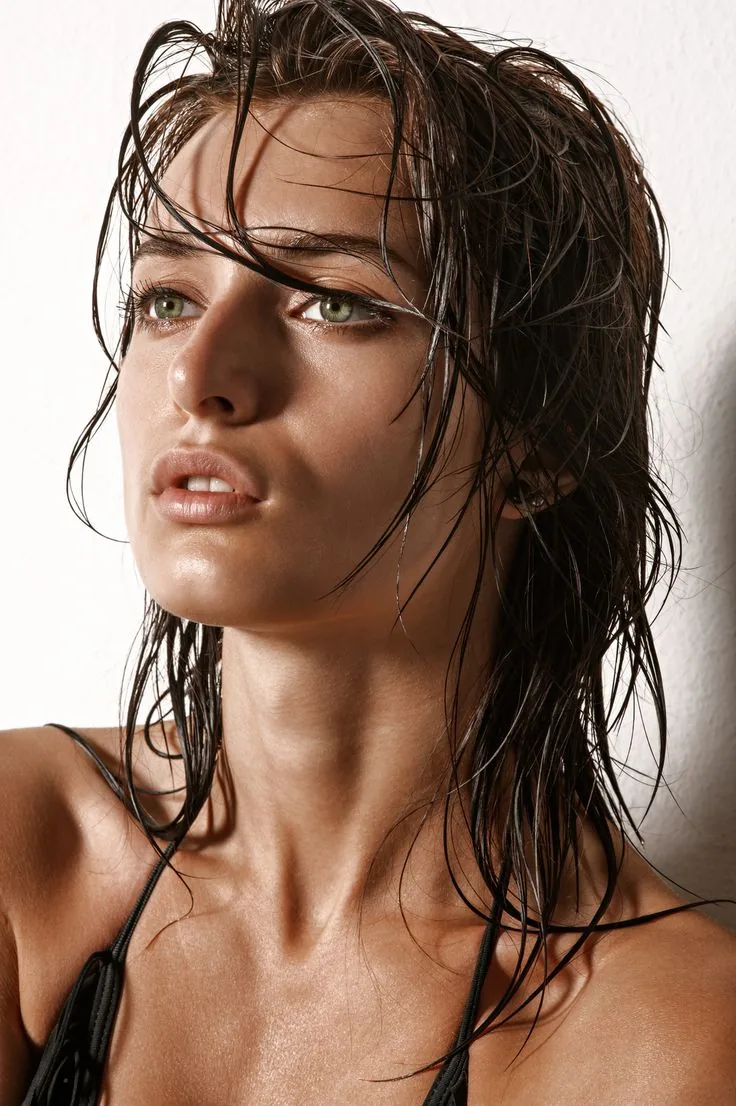
Some hairstyles do not merely survive dampness — they need it. A slicked-back bun or ponytail looks sharper with a little moisture, because damp hair lies flatter and shinier than dry hair. Wet-look waves, the kind seen on red carpets, are built on damp hair and gel, so a light drizzle actually refreshes them. And textured, tousled styles — a messy bun, a lived-in shag, beachy waves — look more natural with a little rain in them, because the dampness adds the piecey separation that styling products try to imitate.
The common thread is that these styles do not depend on volume or on a perfectly smooth surface. They depend on shape, shine or texture, and rain adds to all three. Best for: anyone who wants to stop fighting the weather and start using it. Who should avoid it: if your hair goes very frizzy when damp rather than wavy, choose a contained style like a braid instead — dampness only helps when the hair is smoothed or braided into a shape first. Quick verdict: if the rain is going to touch your hair anyway, pick a style that treats dampness as an ingredient.
What to Ask Your Stylist for Rain-Proof Hair
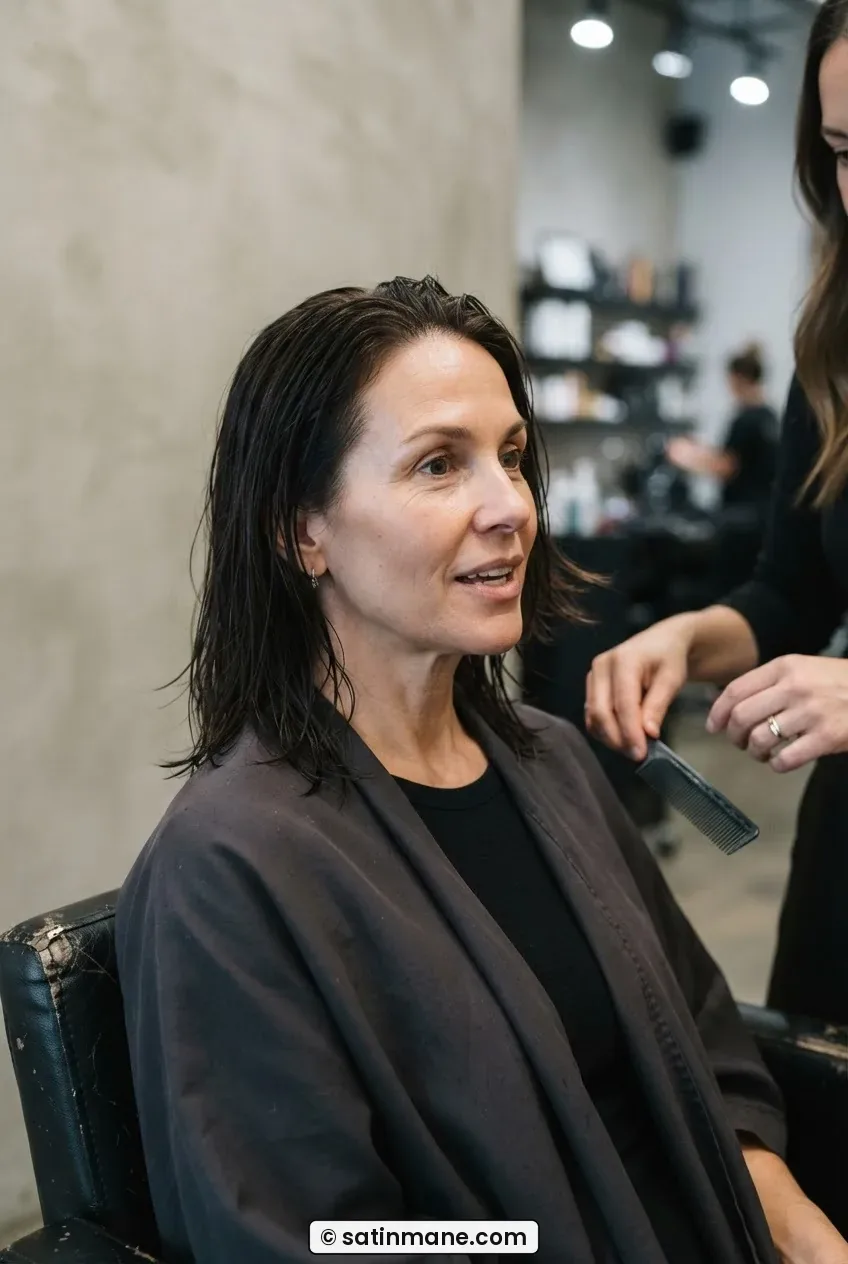
A rain-proof cut starts with a conversation, and the words that matter are different from the usual ones. Tell your stylist that your hair frizzes in humidity, that you walk or commute in the rain, and that you want a cut that still looks good when it gets damp. Ask for layers that are long enough to braid or tie back, because a cut that is too short to contain is a cut that frizzes freely. Ask about a smoothing treatment or a keratin treatment if your hair is very porous — it reduces how much moisture the hair absorbs and can cut frizz dramatically for months.
Bring photos of styles you like in wet or humid conditions, not just studio shots, and be honest about how much time you spend styling each morning. What to ask for: “a cut I can braid, bun or slick back on a rainy day” is a single sentence that tells a good stylist everything they need. Common mistake: asking for a cut that only looks good freshly blow-dried, then being disappointed every time it rains. Quick verdict: the best rain-proof haircut is one designed around your real weather, not an ideal one.
1. The Sleek Low Bun That Rain Can’t Undo
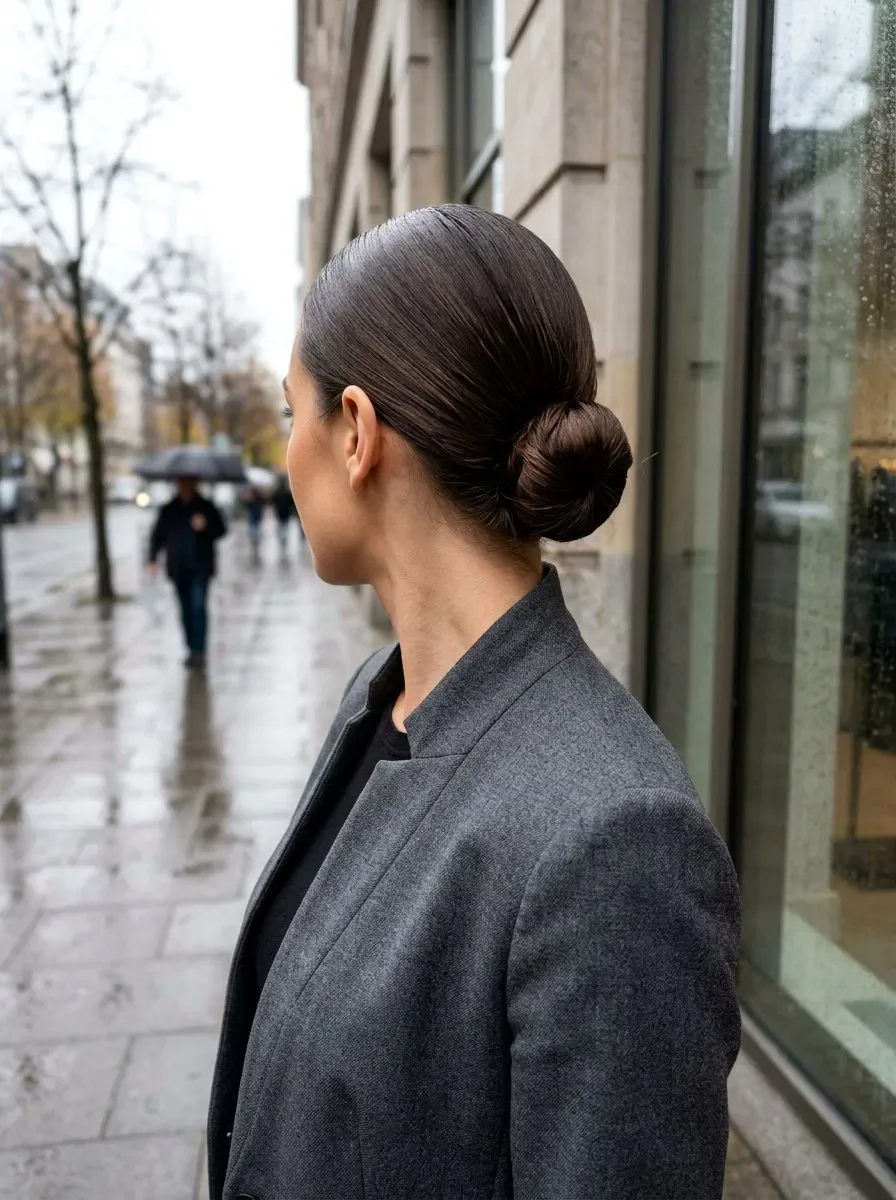
The sleek low bun is the rainy day’s greatest classic, and it earns that title because rain has nothing to undo. The hair is brushed back, smoothed with a little gel or serum, twisted at the nape and pinned — every strand is contained, every end is tucked away, and humidity has nowhere to start. A drizzle that would destroy a blowout simply deepens the shine on a sleek bun, and by the time you arrive, it looks even more polished than when you left.
How to style: brush the hair back with a boar-bristle brush, smooth a pea-sized amount of gel over the surface, gather at the nape, twist and pin into a low bun, and finish with a light mist of flexible hairspray. Best for: every hair type, every hair length past the shoulders, and every occasion from the office to a wedding. Common mistake: placing the bun too high — a high bun catches the rain and loosens, while a low one sits protected under an umbrella and stays put. Quick verdict: if you only learn one rainy-day style, make it this one.
2. Textured Low Ponytail With a Wrapped Base
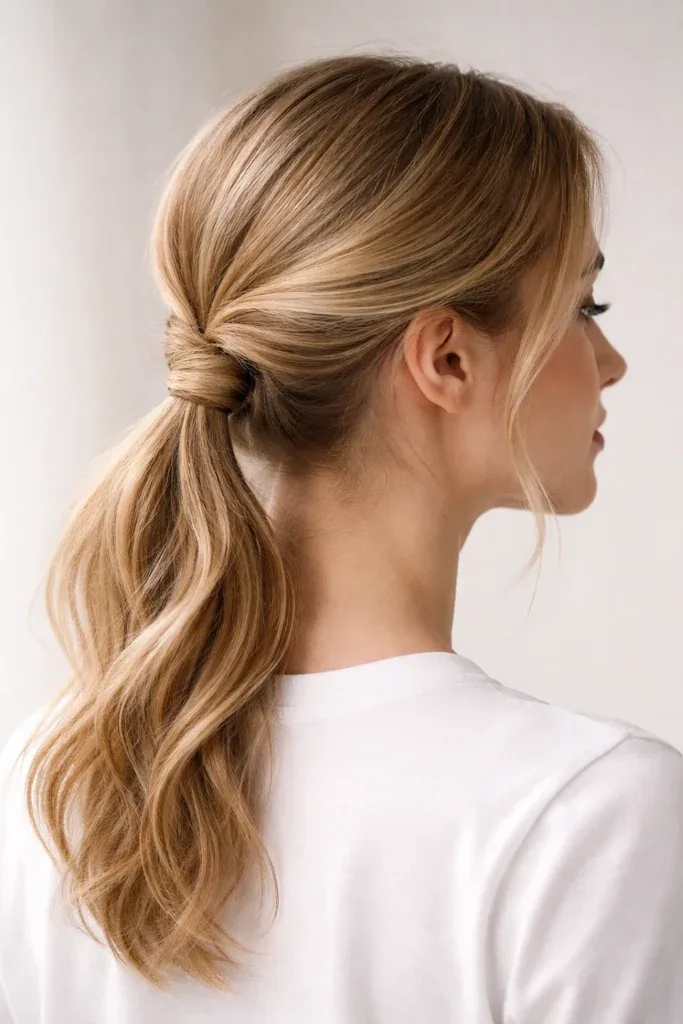
A low ponytail is the quickest rain-proof style there is, and wrapping the base with a strand of your own hair turns it from a gym look into something genuinely elegant. The low placement keeps the ponytail out of the rain’s direct path, the texture hides any frizz that does appear, and the wrapped base gives it a finished, deliberate feel that survives a whole wet commute.
How to style: add a little texturising spray to the lengths, gather the hair low at the nape, secure it with a snag-free tie, then take a thin strand from underneath, wrap it around the tie and pin it in place. Pros and cons: it takes two minutes and works on almost any length, but on very fine hair it can look thin — a gentle backcomb at the crown before gathering fixes that. Maintenance: re-smooth the surface once mid-day with a drop of serum on your palms. Quick verdict: the fastest good-looking rainy-day style in this whole guide.
3. Classic French Braid, Rain-Proof by Design
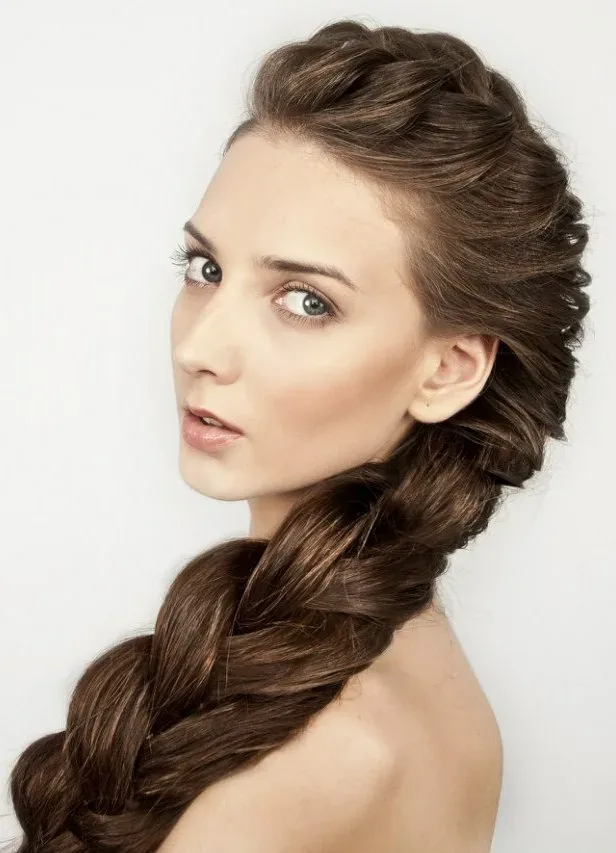
The French braid is rain-proof by design. Every strand is woven into a structure, so even when humidity swells the hair, the braid’s shape holds — the plait simply gets a little softer and more romantic, which suits it. It keeps the hair off the face and off the neck, it survives umbrellas and hoods and scarves, and it still looks intentional hours later, when a blowout would be long gone.
Best for: long and medium hair, straight or wavy, and anyone who wants a style that lasts from morning to evening without a single touch-up. What to ask your stylist: if your layers are too short to braid cleanly, ask for longer face-framing pieces next time, so the braid can catch them. Common mistake: braiding too tightly — a braid pulled drum-tight hurts by lunchtime and looks severe; a braid with a little give, gently pulled apart at the edges, looks softer and holds just as well. Quick verdict: the French braid is the rainy day’s most reliable workhorse.
4. Dutch Braid Crown That Holds Through a Downpour
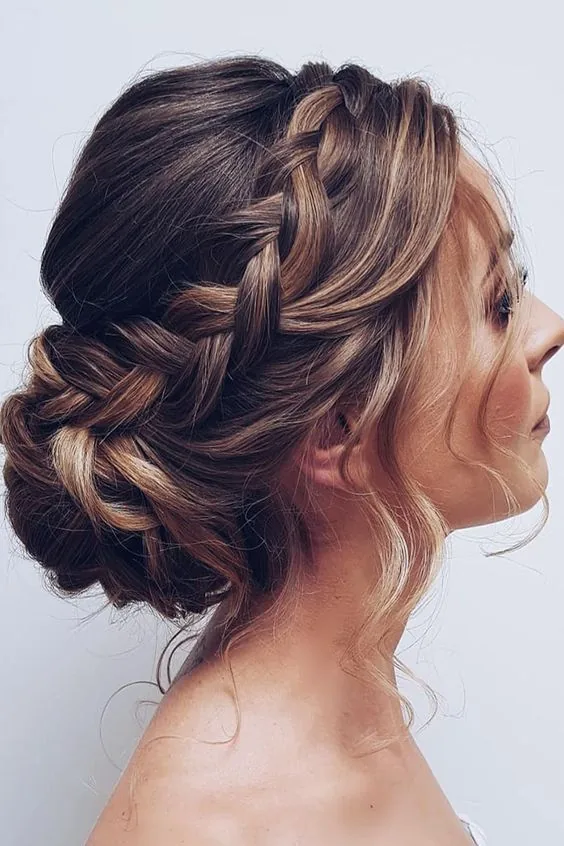
A Dutch braid crown — two Dutch braids wrapped around the head like a halo — is one of the most weather-proof styles you can wear, because there is simply no loose hair left for the rain to attack. It looks elaborate and special, which makes it perfect for rainy-day weddings, parties and occasions when you need to look polished despite the weather, yet it is just two braids and a few pins.
How to style: part the hair down the middle, Dutch-braid each side from the front hairline toward the back, cross the ends over the top of the head and pin them flat. Time and cost: about ten minutes once you have practised it, and zero products beyond a couple of pins and a tie. Who should avoid it: very short hair, which cannot reach around the crown — try a single braided headband section instead. Quick verdict: the most occasion-ready rain-proof style here, and it only gets softer and prettier as the day goes on.
5. Fishtail Braid for Long Hair in Wet Weather
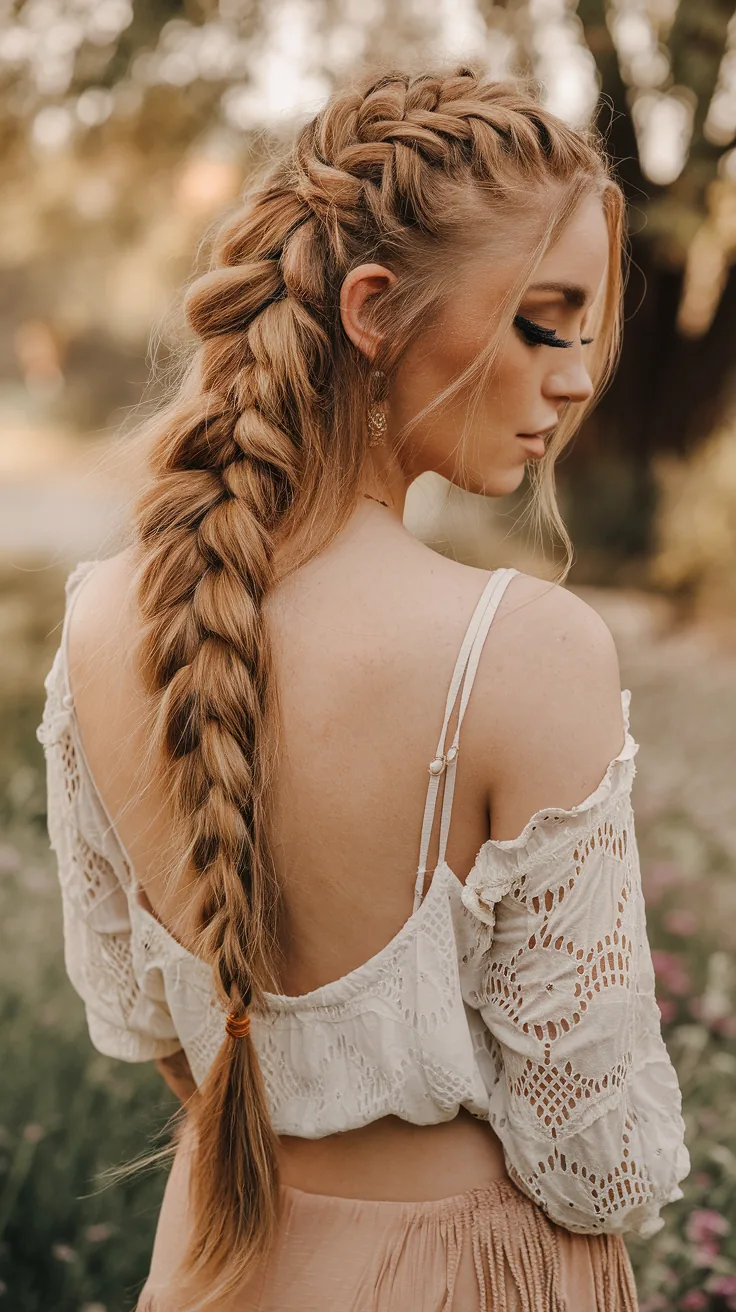
The fishtail braid looks intricate, but it is only two sections of hair crossed over each other again and again — and that simple structure is exactly what makes it so good in the rain. The fine, woven texture grips the hair and keeps it contained, the braid’s weight holds it down against the wind, and any frizz that appears just blends into the braid’s deliberately textured finish.
Pros and cons: it suits long hair best, it looks more expensive than the effort it takes, and it survives a whole day of drizzle — but it does take a few minutes longer than a three-strand braid, so it is a style to do before you leave, not in a rush at the door. Maintenance: if the ends start to fuzz, smooth a drop of serum over the braid’s surface. Quick verdict: for long hair in wet weather, the fishtail is the prettiest braid you can wear.
6. Messy Top Knot That Welcomes the Rain
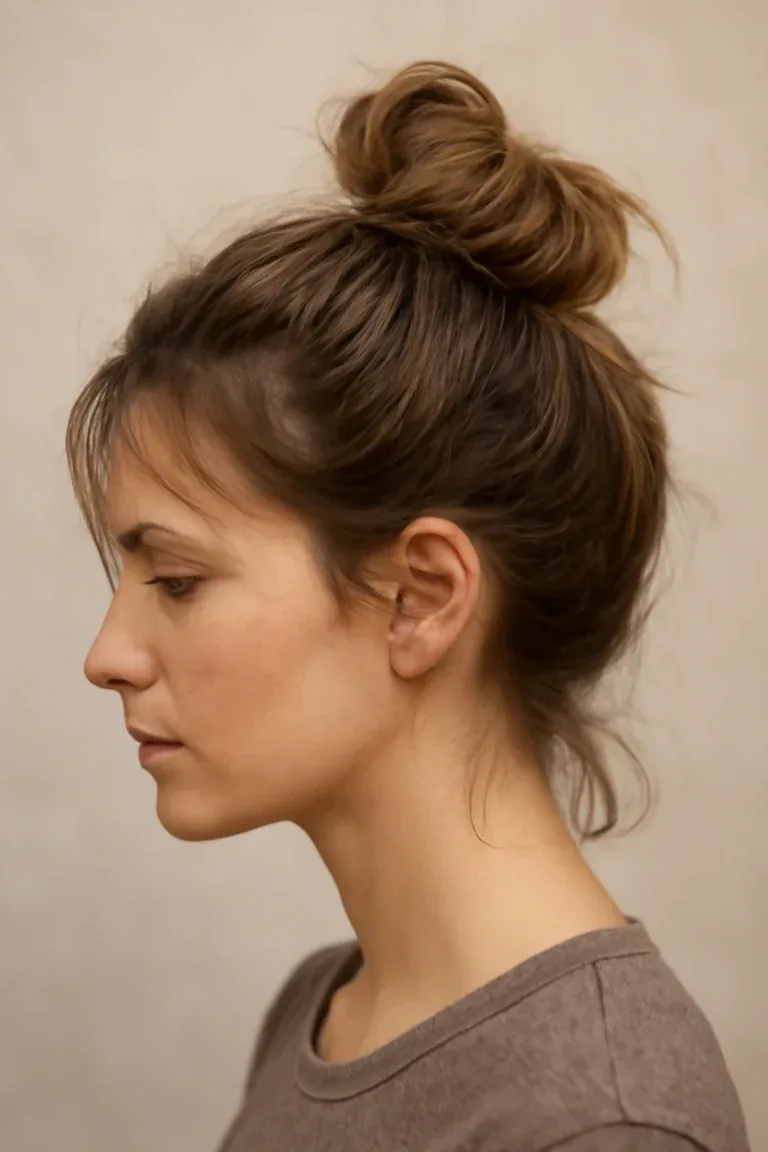
A messy top knot is the one style in this guide that actually improves when the rain touches it. It is meant to look undone, so the dampness and the loose pieces that humidity creates only add to the effect — what would be a flaw in a sleek style is a feature here. It takes ninety seconds, it keeps every strand off your face and neck, and it works with the weather instead of against it.
Best for: casual days, errands, the school run, and anyone whose hair is already textured or wavy. How to style: gather the hair high, twist it loosely, wrap it around itself and pin — then pull out two small pieces at the front for softness. Common mistake: making it too neat. A top knot that is too tidy looks like a failed sleek bun; the charm is in the looseness, so stop fussing after thirty seconds. Quick verdict: the easiest style here, and the most forgiving when the weather turns.
7. Low Chignon With the Ends Tucked Away
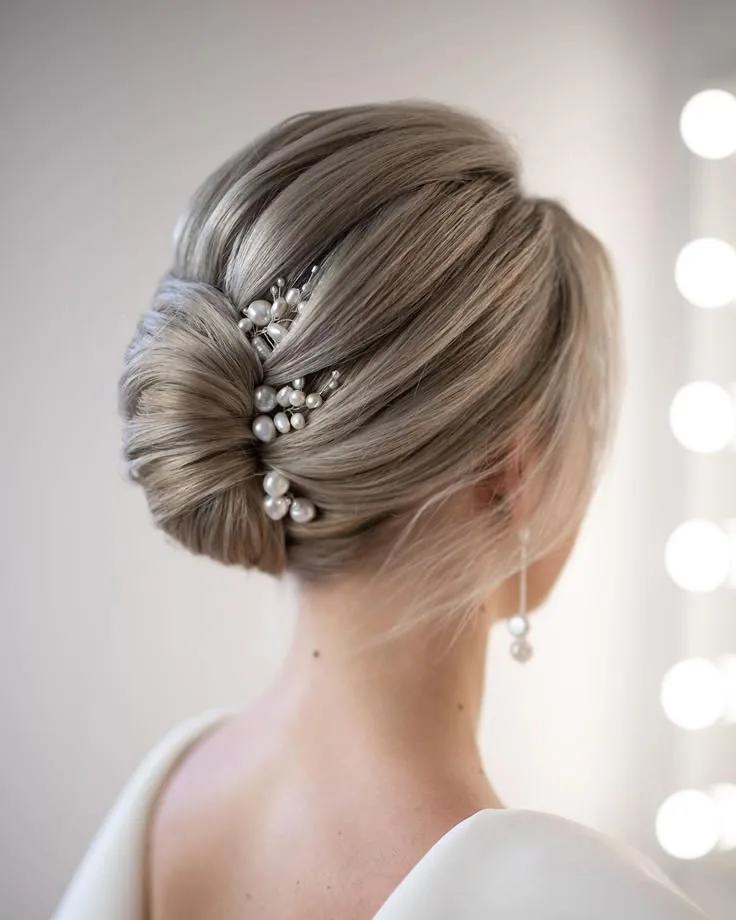
The low chignon is the sleek low bun’s more elegant sister, and its secret on a rainy day is that the ends are tucked away completely. Frizz starts at the ends — they are the oldest, driest part of the hair — so a style that hides them removes the problem at its source. The result is a soft, polished shape at the nape that looks expensive, survives an umbrella, and pairs beautifully with a coat and a scarf.
How to style: gather the hair low, twist it upward into a roll, fold the ends underneath and pin. Pros and cons: it is genuinely elegant and it lasts all day, but it needs enough length to fold — shoulder-length hair and longer works best. What to ask your stylist: ask for a chignon-friendly cut with no very short layers at the nape, so nothing escapes. Quick verdict: when the rain meets an occasion, the low chignon is the answer.
8. Bubble Braid Ponytail That Stays Put in the Wind
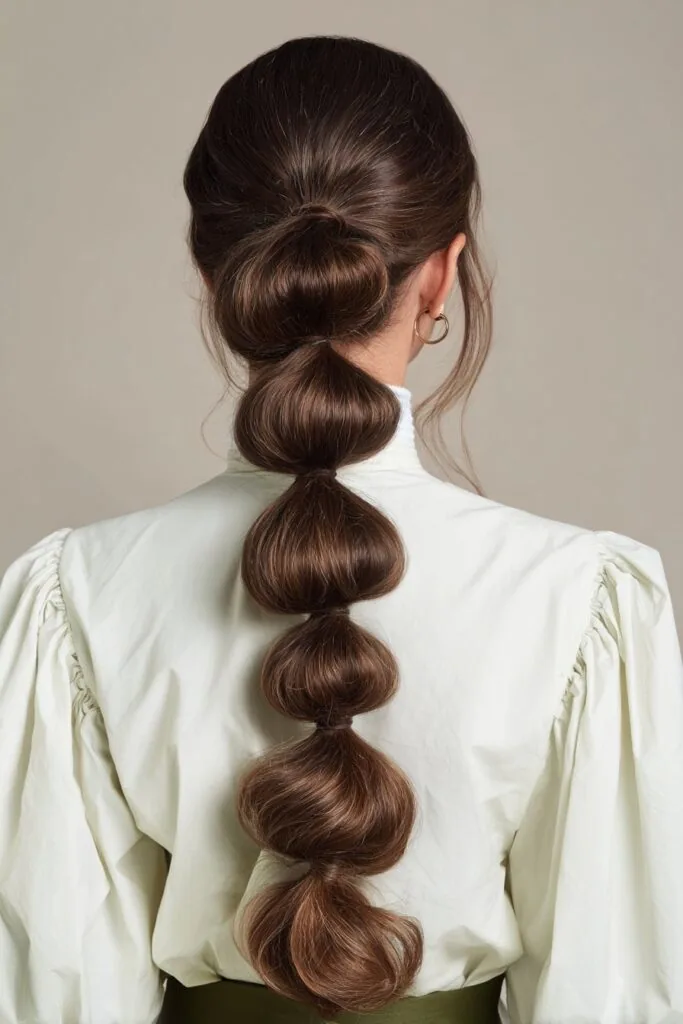
The bubble braid ponytail is the most playful rain-proof style here, and one of the most practical. The hair is tied at intervals down the ponytail, so each section is contained separately — wind and rain cannot pull the whole thing apart, because there is no loose length to pull. It looks fun and modern, it photographs beautifully, and it takes five minutes with nothing but a handful of small elastics.
Best for: long hair, younger looks, festivals, casual days out, and anyone who wants a style that survives wind as well as rain. How to style: make a low or mid ponytail, tie small elastics every few inches down the length, and gently pull each section out to form the bubbles. Common mistake: using elastics that are too tight, which crease the hair — use snag-free bands and slide them off gently at the end of the day. Quick verdict: a style that treats rain and wind as a reason to have fun, not a reason to hide.
9. Half-Up Claw Clip Twist for Medium Hair
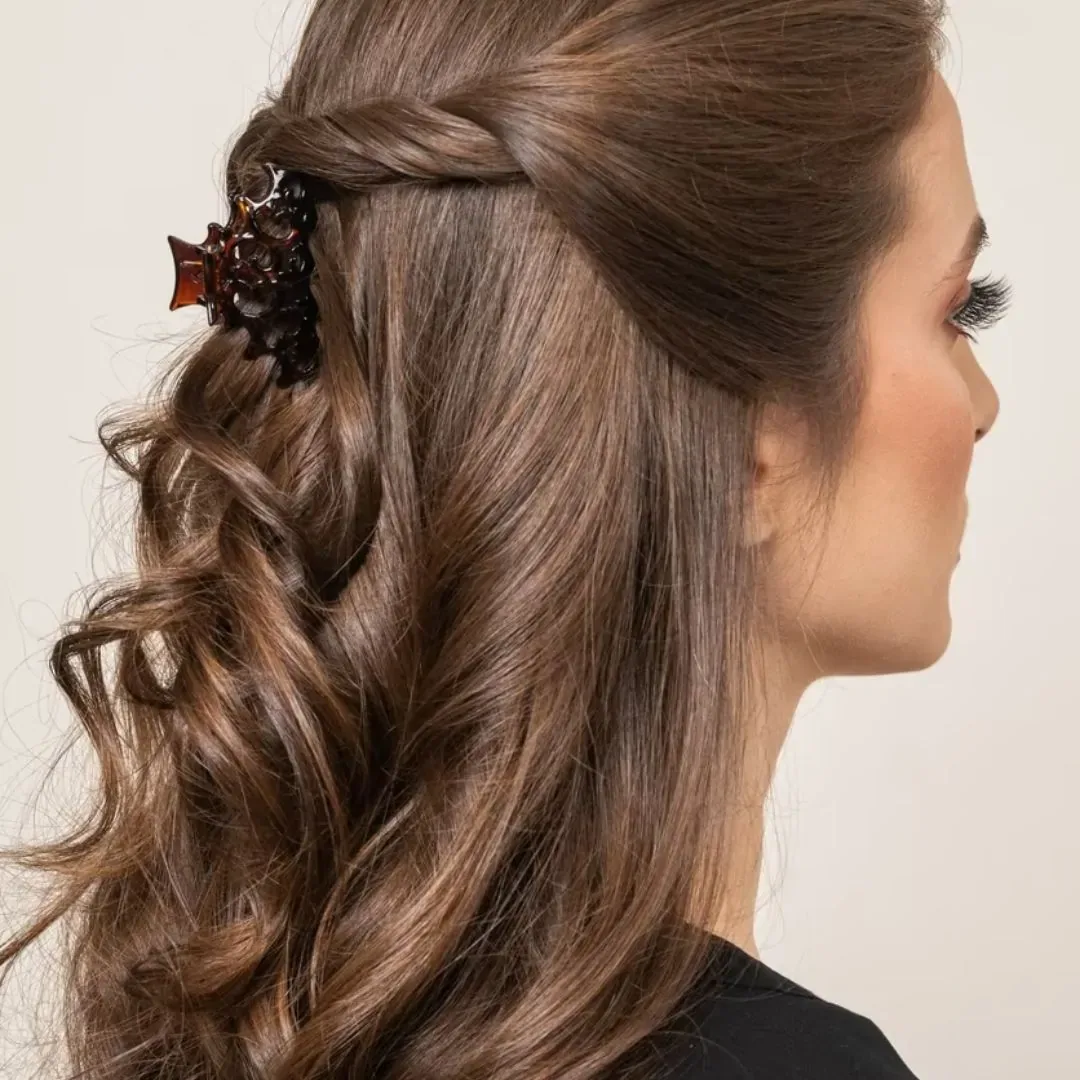
The half-up claw clip twist is the rainy-day answer for anyone who wants to wear their hair down but still have it under control. The top half is twisted and clipped up, which keeps the hair off the face and stops the front sections from frizzing into your eyes, while the bottom half falls free — and because the top is contained, the whole style reads as intentional rather than weather-beaten.
Time and cost: thirty seconds, one claw clip, no products required. Pros and cons: it is the fastest style in this guide and it suits almost every length, but on very fine hair a large clip can slip — choose a smaller clip and twist the hair a little tighter. Maintenance: if the lower half starts to frizz, a drop of serum smoothed over the surface is all it needs. Quick verdict: the best compromise between wearing your hair down and keeping it out of the rain.
10. Side Braid Over One Shoulder
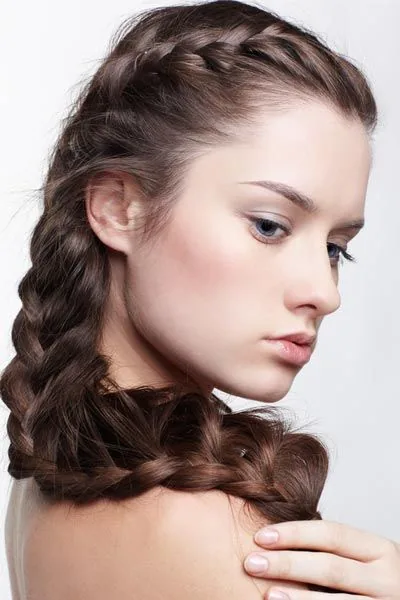
A side braid over one shoulder keeps the hair contained and out of the way, and it has one advantage no other braid has: you can see it. When the braid sits over your shoulder, you can check it in a mirror, smooth a flyaway, and re-tie the end in seconds — no reaching behind your head in the rain. It also keeps the hair off the back of a wet coat, which is where most rainy-day tangles begin.
Best for: long and medium hair, and anyone who walks in the rain and wants a style they can maintain on the move. How to style: sweep all the hair to one side, braid loosely from behind the ear down over the shoulder, and secure with a small tie. Who should avoid it: anyone with very short layers at the front, which will escape the braid — pin those pieces back first. Quick verdict: simple, pretty, and the easiest braid to fix without a mirror.
11. Waterproof Slicked-Back Ponytail
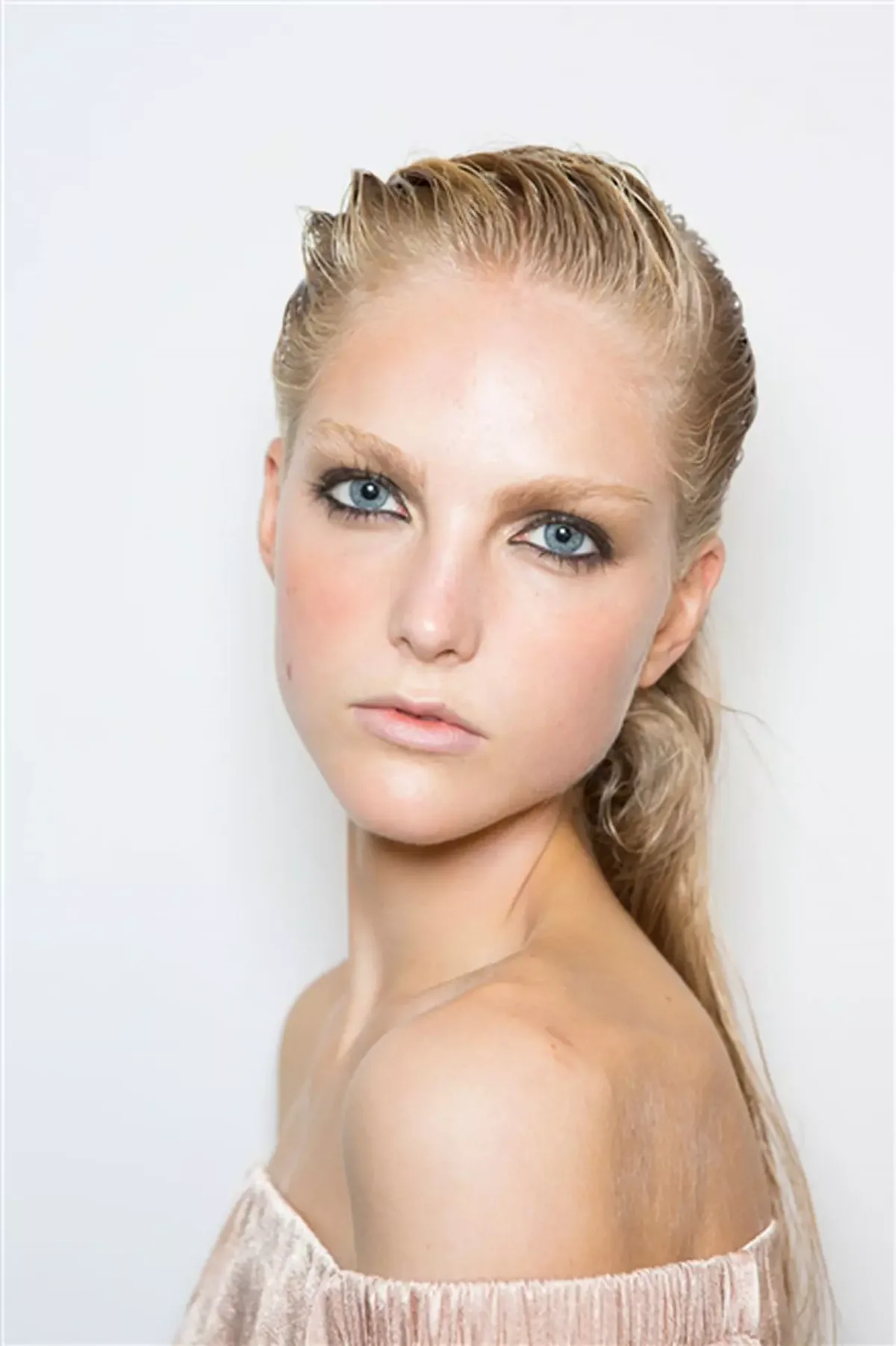
The slicked-back ponytail is the style that treats rain as a styling product. It is built on gel and dampness, so a drizzle does not ruin it — it refreshes it. The hair is smoothed flat to the head, the ponytail sits low and tight, and the whole look is sharp, modern and completely unbothered by humidity, because there is no volume and no loose texture for the humidity to attack.
How to style: on damp hair, work a strong-hold gel through the top and sides, brush everything back smoothly, secure low at the nape, and smooth the ponytail itself with a drop of serum. Pros and cons: it is strikingly chic and genuinely waterproof, but it is an unforgiving style — it shows every bump, so take the time to brush it smooth. Common mistake: using too little gel and expecting hairspray to do the work — on a rainy day, gel is the product that holds. Quick verdict: the most fashion-forward rain-proof style in this guide.
12. Braided Low Bun for the Wettest Days
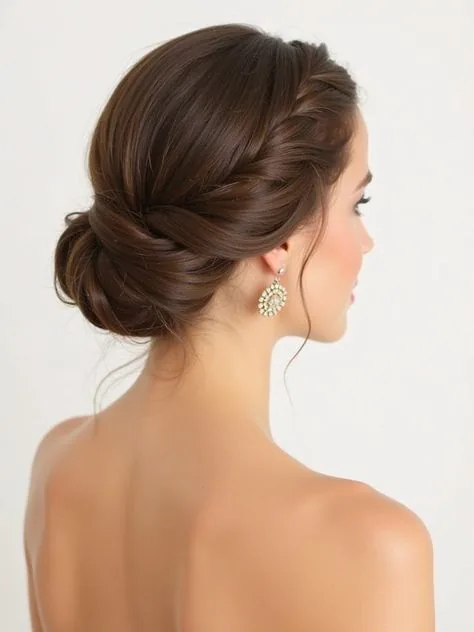
When the forecast is not drizzle but a proper downpour, the braided low bun is the style to reach for. It combines the two most weather-proof ideas in this guide — a braid and a low bun — into one: the hair is braided first, which contains every strand, and then the braid is coiled into a bun, which protects the ends as well. Nothing is left loose, nothing can frizz, and the style will look the same at six in the evening as it did at eight in the morning.
Best for: the wettest days, long commutes, and occasions when you cannot touch up your hair at all. How to style: braid the hair into a low ponytail braid, coil it flat against the nape and pin it securely. Maintenance: none, genuinely — this is a set-it-and-forget-it style. Quick verdict: if the rain is heavy and the day is long, braid it, bun it, and stop worrying about it.
13. Twisted Rope Braid, Two Minutes Flat
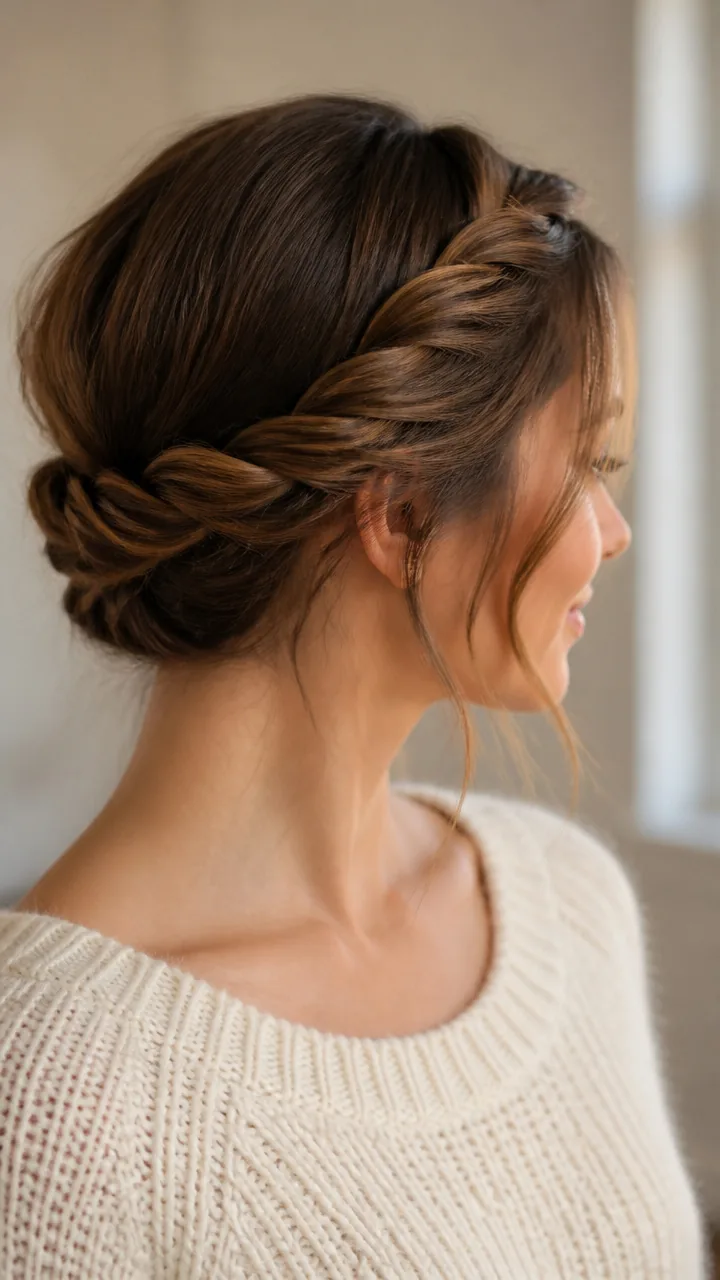
The rope braid — two sections twisted around each other — is the simplest braid there is, and it is surprisingly good in the rain. The twisting motion locks the strands together, so the braid holds its shape without pins or products, and the rope texture hides frizz completely. It is also the easiest braid to do on yourself, because there is no over-under pattern to remember — just twist, twist, twist.
Time and cost: two minutes, one hair tie. Best for: beginners, children, and anyone who wants a braid but has never learned to French braid. Common mistake: twisting both sections in the same direction, which makes the braid unravel — twist each section one way, then wrap them around each other the other way, and it will hold. Quick verdict: the easiest braid in this guide, and one of the most rain-proof.
14. Curly Pineapple Updo for Natural Curls
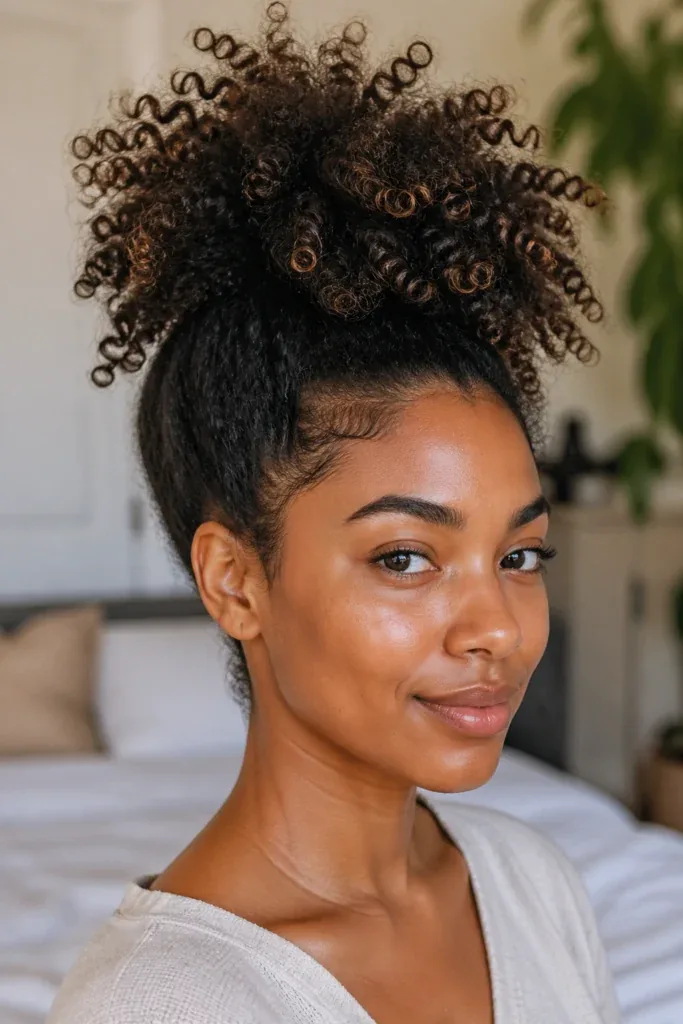
Curly hair and rain have a complicated relationship — humidity can make curls springier and more defined, or it can turn them into frizz, and the difference is usually whether the curls are contained or left loose. The pineapple updo contains them beautifully: the curls are gathered high and loosely, so they keep their shape and their volume, while the nape and sides stay smooth and protected.
How to style: flip the head forward, gather the curls loosely at the crown with a silk scrunchie, and let them fall forward like a pineapple top. Best for: curly and coily hair of medium to long length. Pros and cons: it protects the curl pattern and looks joyful and full, but it is a casual style — for a formal rainy day, a low curly bun is the better choice. Maintenance: refresh the curls afterwards with a little water and leave-in, scrunched in by hand. Quick verdict: for curly hair in the rain, gather it up and let the curls do what they do best.
15. Wet-Look Sleek Bob
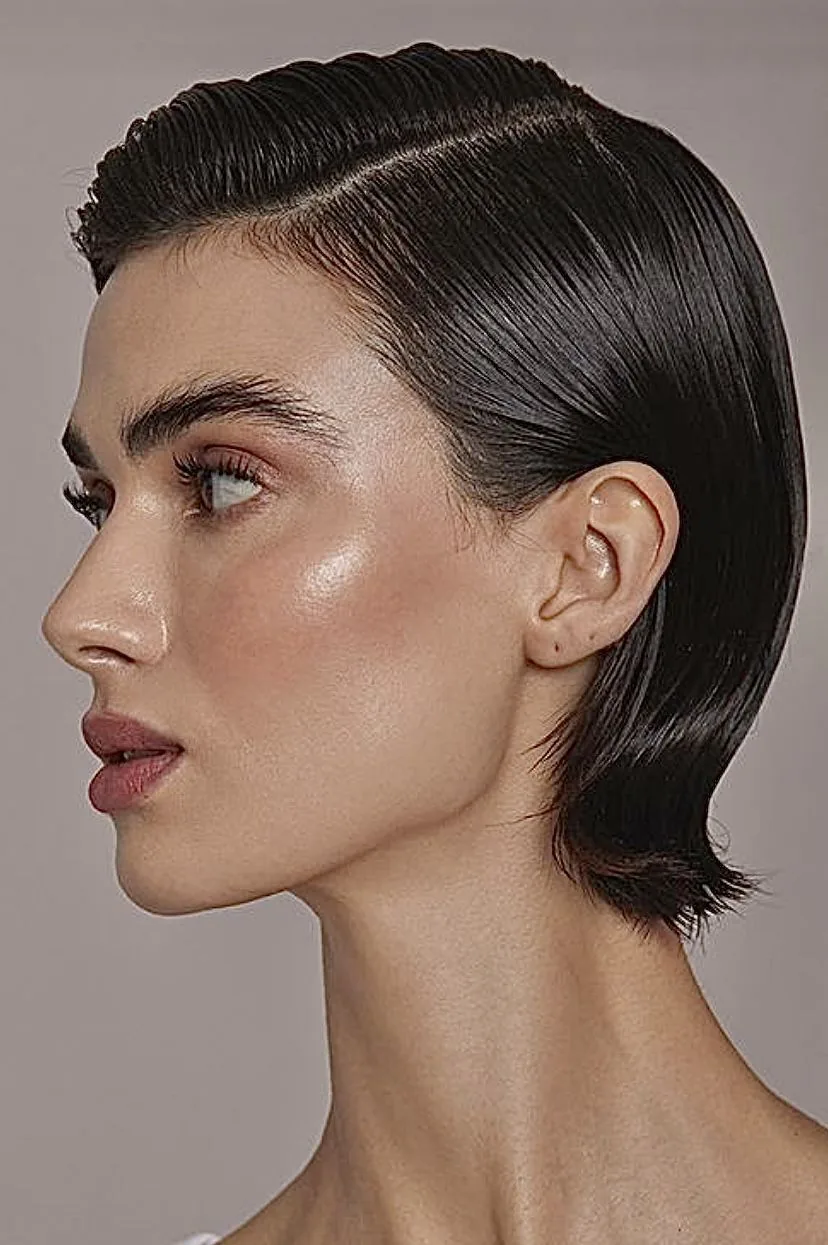
The wet-look bob is a red-carpet style that rainy weather actually helps. It is built on damp hair and gel, combed smooth and left to shine, so a light drizzle keeps the finish fresh instead of destroying it. On a bob it is especially flattering: the short length means there is no heavy, wet hair clinging to your neck, and the shine makes the cut’s clean lines stand out.
Best for: short to medium bobs, straight or wavy hair, and evenings out in the rain. How to style: on damp hair, work a strong-hold gel from roots to ends, comb it smooth, tuck one side behind the ear, and let it set. Who should avoid it: very fine hair, which can look flat and stringy when wet — a textured bob is a better rainy-day choice for fine hair. Quick verdict: the rare style where the rain is genuinely part of the look.
16. Wavy Lob With an Anti-Frizz Finish
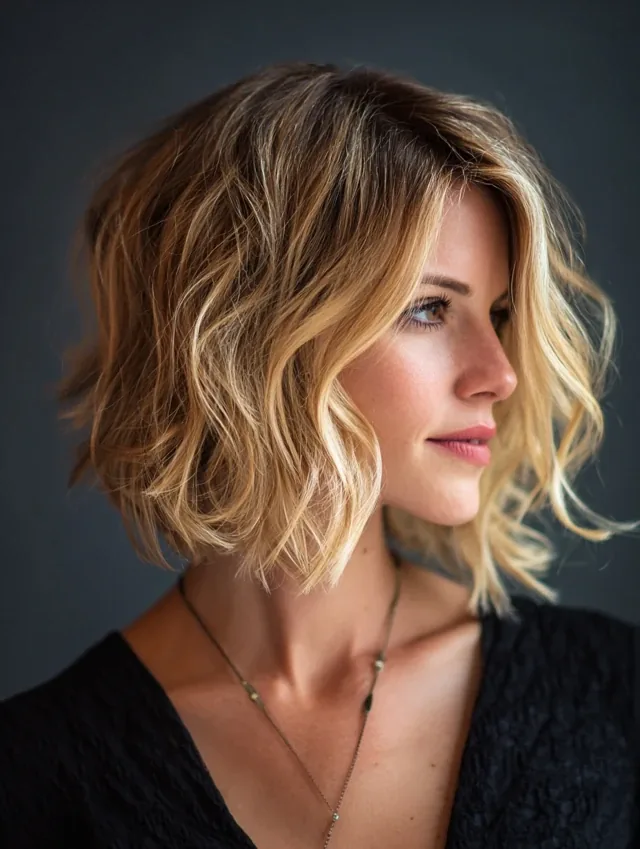
The wavy lob — a long bob with soft, lived-in waves — is a good rainy-day choice for one reason: it is already a little undone. Humidity adds wave and texture to a lob rather than destroying a smooth finish, because there is no smooth finish to destroy. With a good anti-frizz serum worked through the ends before you leave, the waves stay defined and the surface stays smooth, and the whole style looks like you planned it that way.
Pros and cons: it is flattering, modern and easy to wear, and it suits most face shapes — but it needs that serum, because without it the waves can turn fluffy in heavy humidity. What to ask your stylist: ask for long layers that encourage wave rather than volume, and for a cut that air-dries well, so you are not dependent on a blow-dryer. Maintenance: smooth the surface once mid-day with serum on your palms. Quick verdict: a lob that works with the rain, not against it.
17. Scarf-Wrapped Low Bun
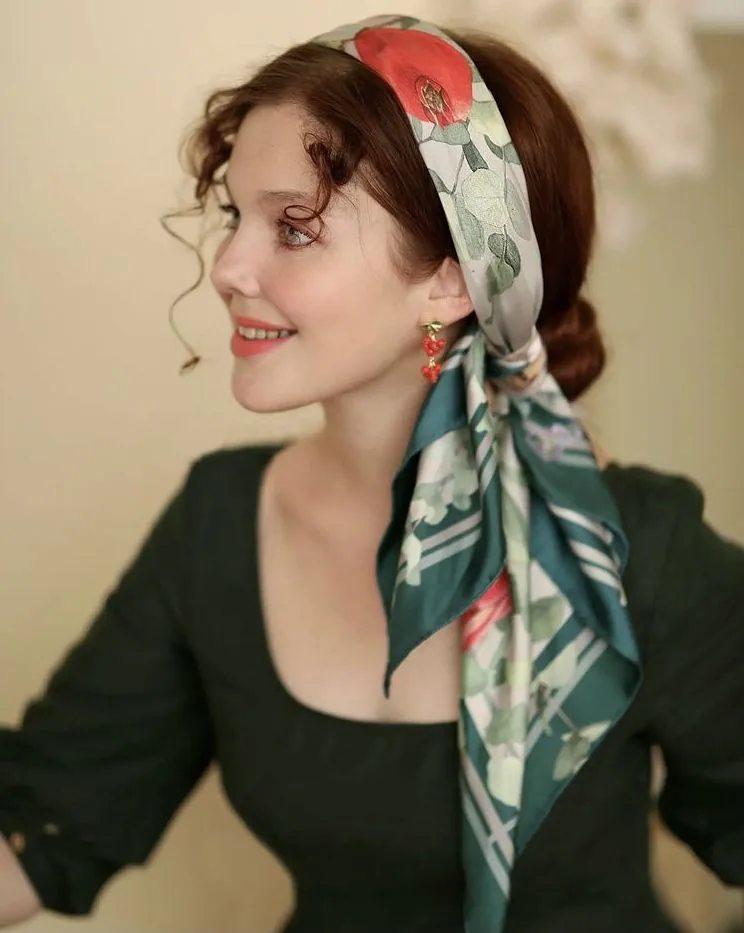
The scarf-wrapped low bun is the most practical and the most stylish idea in this guide at the same time. A silk scarf wrapped around a low bun does two jobs: it keeps direct rain off the hair, acting as a tiny umbrella for your style, and it looks completely deliberate — like a fashion choice, not a rain shield. It also solves the umbrella problem entirely, because the scarf protects the style even when the wind blows the rain sideways under your umbrella.
How to style: make a low bun, then fold a silk scarf into a band, wrap it around the bun and tie it underneath. Best for: anyone who walks in the rain, and anyone who wants their rainy-day hair to look styled rather than merely survived. Time and cost: one minute, one scarf you already own. Common mistake: using a cotton scarf, which absorbs water and gets heavy — silk or a smooth synthetic sheds the rain instead. Quick verdict: the cleverest rainy-day trick here, and the prettiest one too.
18. Double Dutch Braids for All-Day Hold
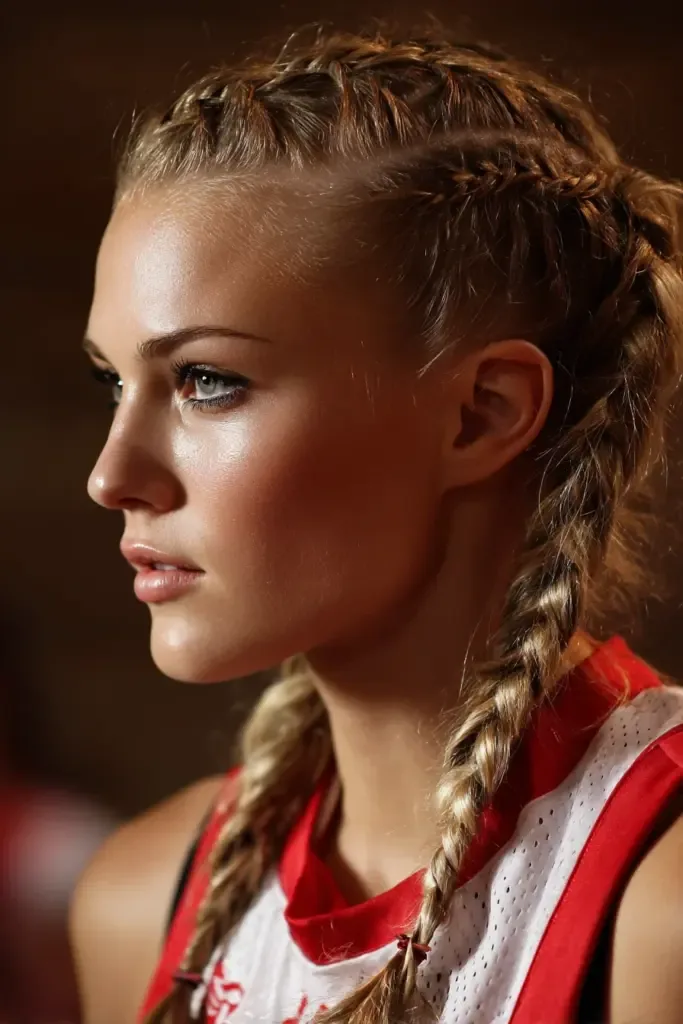
Double Dutch braids — one down each side of the head — are the sportiest style in this guide, and one of the toughest. Every strand is woven in, the braids sit flat against the head so wind cannot catch them, and the style survives rain, hoods, helmets and umbrellas without a single touch-up. It is the style to choose when the day involves a lot of moving around in bad weather and you need your hair to simply stay out of the way.
Best for: active days, long hair, and anyone who wants a style that lasts from morning to night. How to style: part down the middle, Dutch-braid each side from the hairline to the nape, and secure with small ties. Who should avoid it: very short hair, which cannot complete the braids — try two small front braids pinned back instead. Quick verdict: the most durable style here, and it looks good with everything from a raincoat to a party dress.
19. Braided Crown Updo for Rainy Occasions
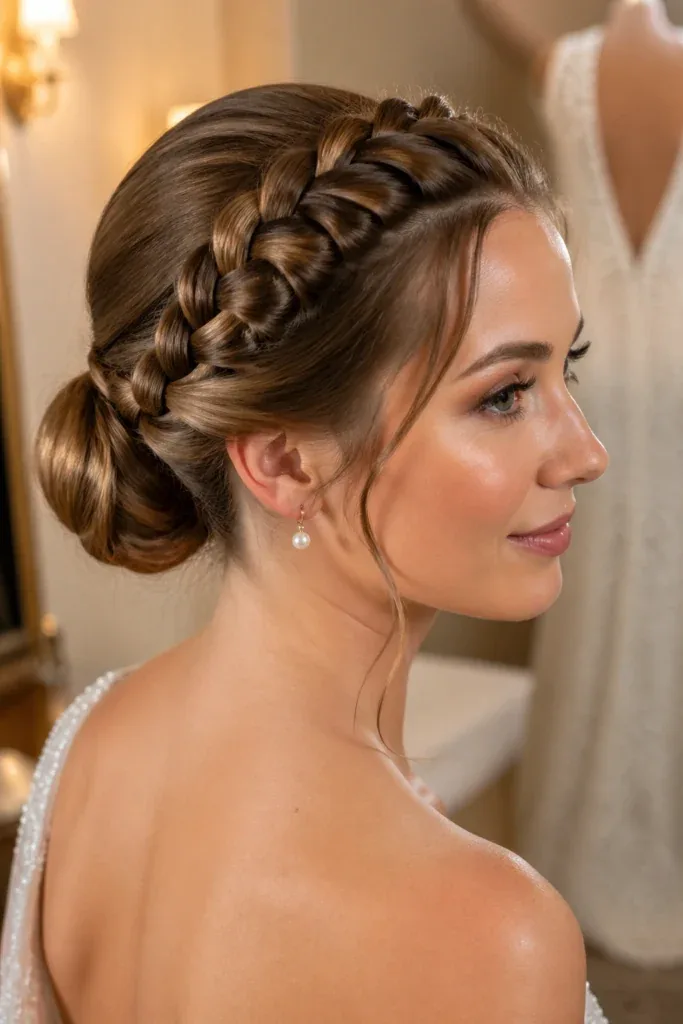
A braided crown updo — a braid wrapped around the head and pinned into place — is the rainy-day answer for a wedding, a party or any occasion when the weather is bad and the photographs still matter. It is fully contained, so rain cannot frizz it; it is elegant enough for formal dress; and it actually looks better as the day goes on, because the braid softens into a romantic, lived-in shape.
Time and cost: fifteen minutes, or a quick salon visit if you want it perfect. Pros and cons: it is beautiful and genuinely weather-proof, but it is not a two-minute style — practise it once on a dry day before you rely on it in the rain. What to ask your stylist: ask them to show you the pin placement, because a crown that is pinned well will not budge, and one that is pinned badly will slip within the hour. Quick verdict: the formal rainy-day style that photographs as well at midnight as it did at noon.
20. Low Side Ponytail With Soft Waves
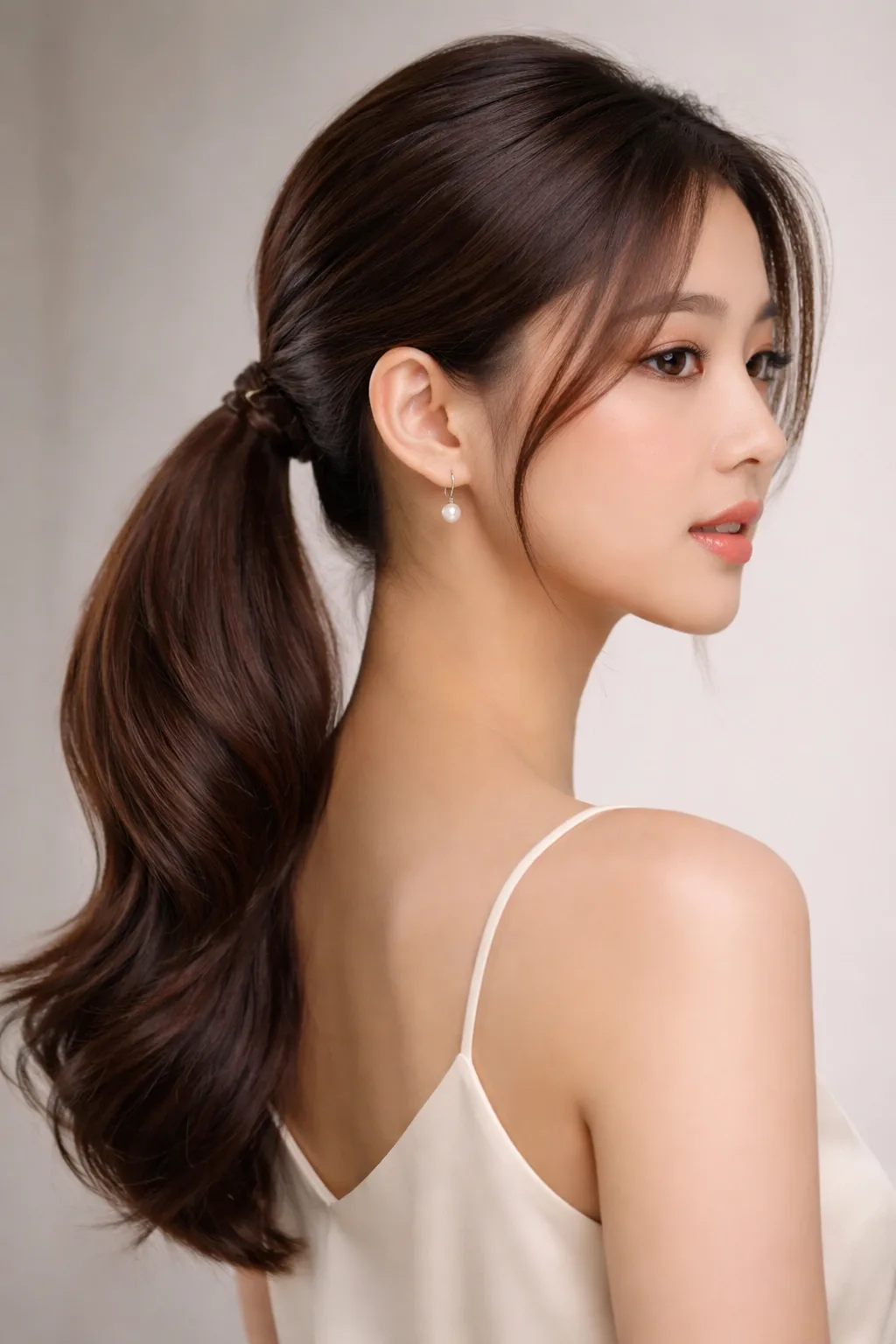
A low side ponytail is softer than a centre ponytail and more forgiving in the rain. The hair falls over one shoulder, so it stays off a wet coat collar; the low placement keeps it out of the wind; and the soft waves hide any frizz that appears. It is a gentle, romantic style that looks like you chose it for the occasion, not like a compromise with the weather.
How to style: create a deep side part, add a few soft waves to the lengths with a curling iron or overnight braids, then gather the hair low over one shoulder and secure it loosely. Best for: medium to long hair, dates, dinners, and days when you want to look soft rather than severe. Common mistake: pulling it too tight, which removes the softness — keep it loose and let a few pieces fall free. Quick verdict: the prettiest low-effort rainy-day ponytail there is.
21. Textured Pixie With Matte Wax
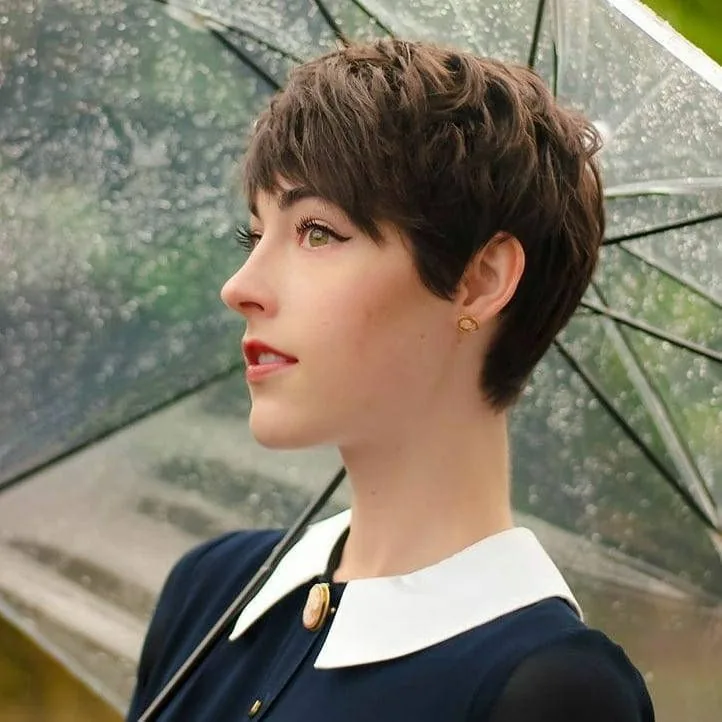
Short hair has a secret advantage in the rain: there is less of it to go wrong. A textured pixie, styled with a little matte wax, is one of the best rainy-day cuts of all — the wax holds the texture in place, the rain adds a little extra piecey definition, and the whole style can be fixed in ten seconds with your fingers. No blowout to lose, no lengths to frizz, no ends to tuck away.
Pros and cons: it dries fast, it needs almost no products, and it looks intentionally tousled when damp — but it does need that wax, because without it the rain can flatten a pixie completely. Maintenance: carry a tiny tin of wax in your bag and re-texture with your fingertips after coming inside. Who should avoid it: anyone who wants to wear their hair up on rainy days — a pixie cannot be tied back, so the wax is doing all the work. Quick verdict: for short hair, the pixie plus wax is the whole rainy-day strategy.
22. Curly Bob With Leave-In Cream
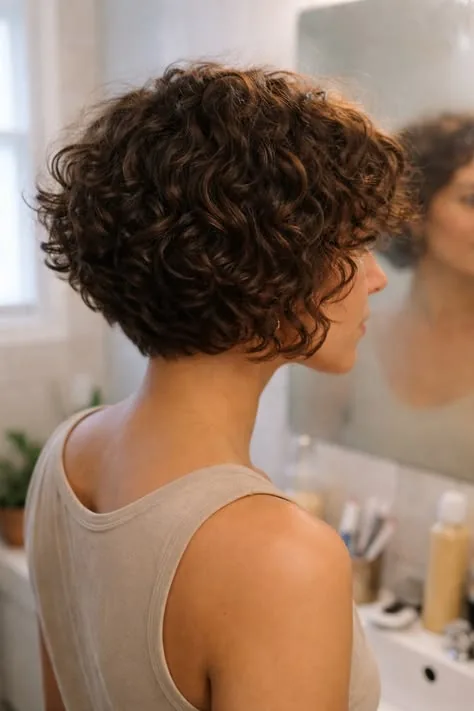
A curly bob is a wonderful rainy-day cut, because curls and humidity are old friends when the curls are properly moisturised. The trick is a good leave-in cream, worked through damp curls before you leave: it defines the curl pattern, weighs down the frizz, and lets the humidity enhance the curls instead of exploding them. The bob length keeps the curls bouncy and light, and the whole style gets better, not worse, as the air gets damper.
Best for: naturally curly and wavy hair, short to medium length. How to style: on damp hair, work leave-in cream through the curls, scrunch gently, and let the hair air-dry or diffuse on low heat. Common mistake: brushing the curls out when they frizz — brushing breaks the curl pattern and creates a halo; instead, smooth a little cream over the surface with your palms. Quick verdict: for curly hair, the rain is not a problem to solve — it is a curl enhancer, once the hair is moisturised.
23. Milkmaid Braids for a Romantic Rainy Day
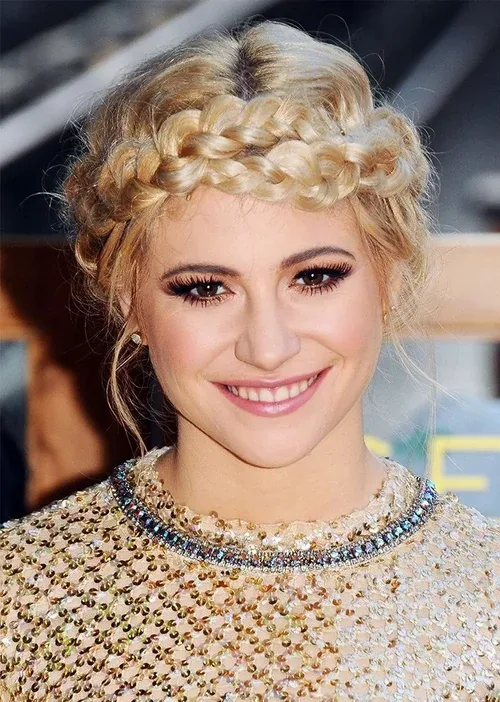
Milkmaid braids — two braids pinned across the top of the head — are the romantic cousin of the Dutch braid crown, and just as rain-proof. Every strand is braided and pinned, so there is nothing loose for the weather to attack, and the style has a soft, vintage charm that suits rainy days perfectly: it looks like something from a storybook, and it holds up through a whole wet afternoon.
How to style: part down the middle, braid each side, cross the braids over the top of the head and pin them flat, tucking the ends underneath. Pros and cons: it is beautiful, it lasts all day, and it works on medium to long hair — but it does take a little practice, so try it once at home first. Best for: parties, dates, photos, and anyone who wants a rainy-day style with real romance in it. Quick verdict: the prettiest braided updo here, and one of the most weather-proof.
24. Half-Up Braided Crown for Long Hair
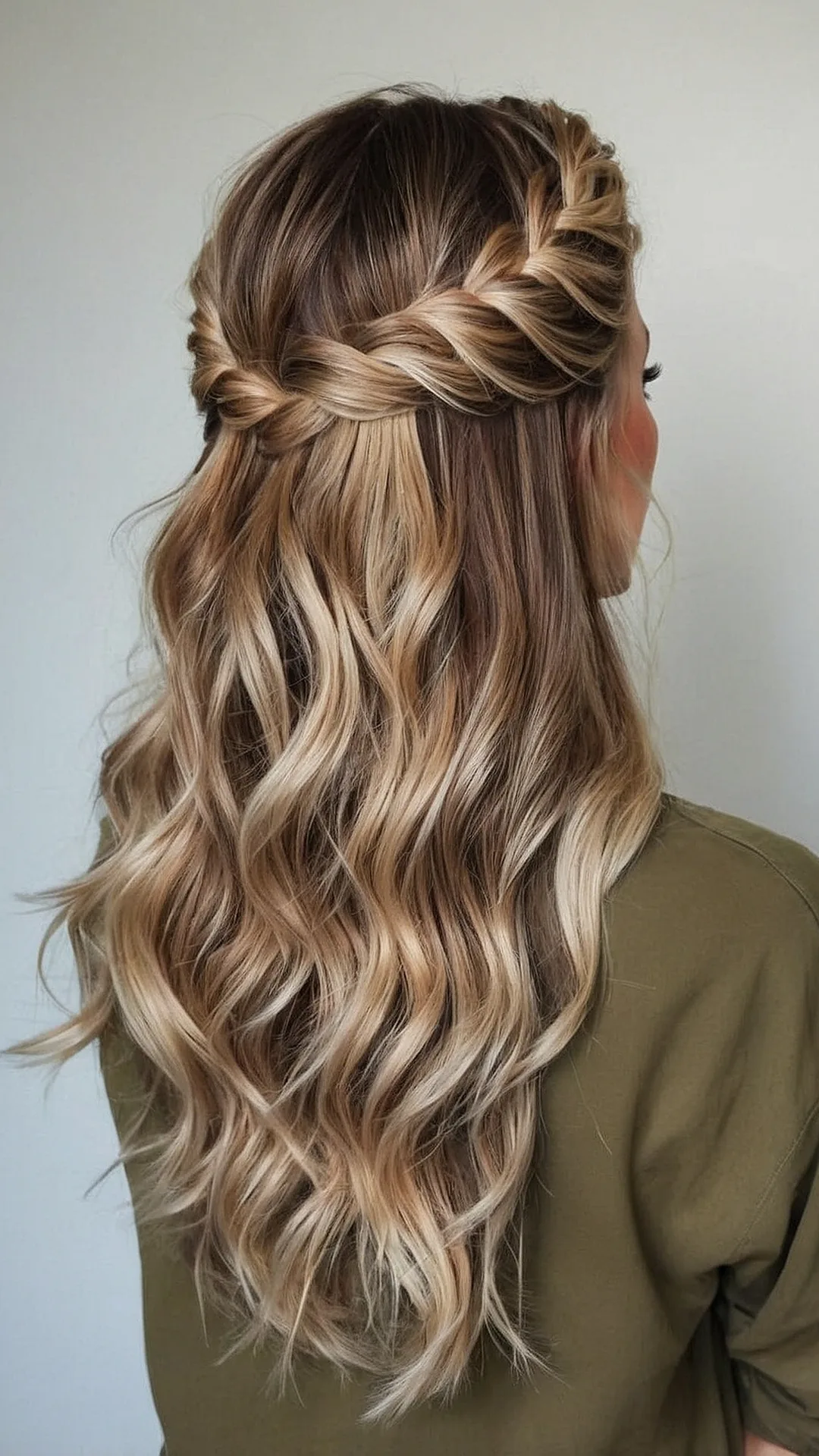
The half-up braided crown takes the best of two ideas: a small braid across the crown keeps the front hair contained and out of your face, while the rest of the hair falls free down the back. It is the rainy-day style for people who love wearing their hair down but hate the way the front sections frizz into their eyes the moment the air turns damp.
Best for: long hair, and anyone who wants to look styled without putting all their hair up. How to style: take a section from each temple, braid them toward the back, join them with a small tie or pins, and leave the rest loose. Maintenance: if the loose lengths start to frizz, smooth serum over the surface — the braided crown will still look perfect. Common mistake: braiding the crown too tightly, which pulls and hurts — keep it loose and soft. Quick verdict: the best half-up style for a rainy day, because the part that matters is the part that is braided.
25. Slicked Low Knot With a Centre Part
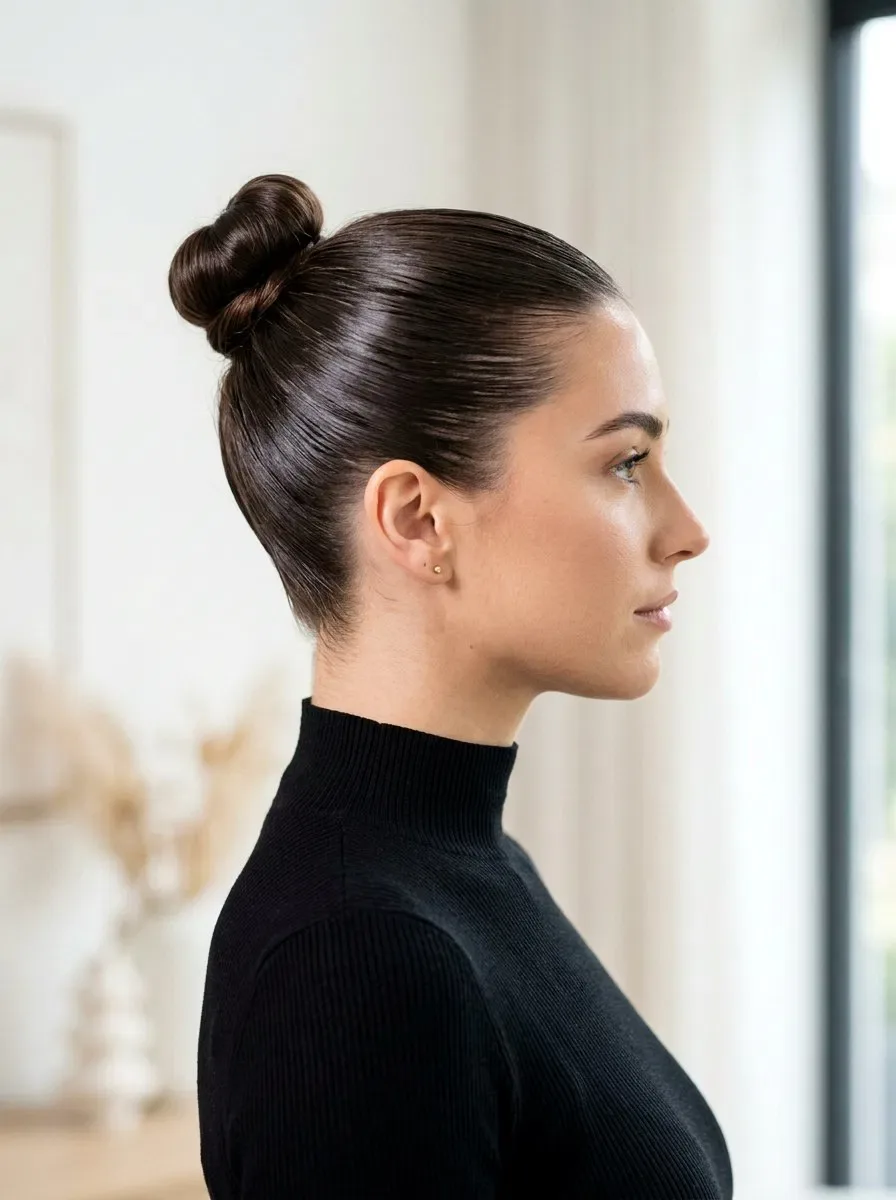
The slicked low knot with a centre part is the most minimal style in this guide, and minimal is exactly what survives rain. There is no volume to collapse, no texture to frizz, and no loose hair to escape — just smooth, gleaming hair pulled back into a small knot at the nape. It is severe in the best way: clean, modern, and completely unbothered by the weather.
How to style: part the hair in the centre, smooth gel through the top and sides with a fine-tooth comb, gather low, twist into a small knot and pin. Pros and cons: it is strikingly elegant and genuinely rain-proof, but it is also unforgiving — it suits oval and heart-shaped faces best, and it shows every unevenness, so take your time smoothing it. Who should avoid it: anyone who prefers softness around the face — pull out two tiny pieces at the temples if the strictness feels too much. Quick verdict: the chicest minimal rainy-day style there is.
26. Boxer Braids That Survive Anything
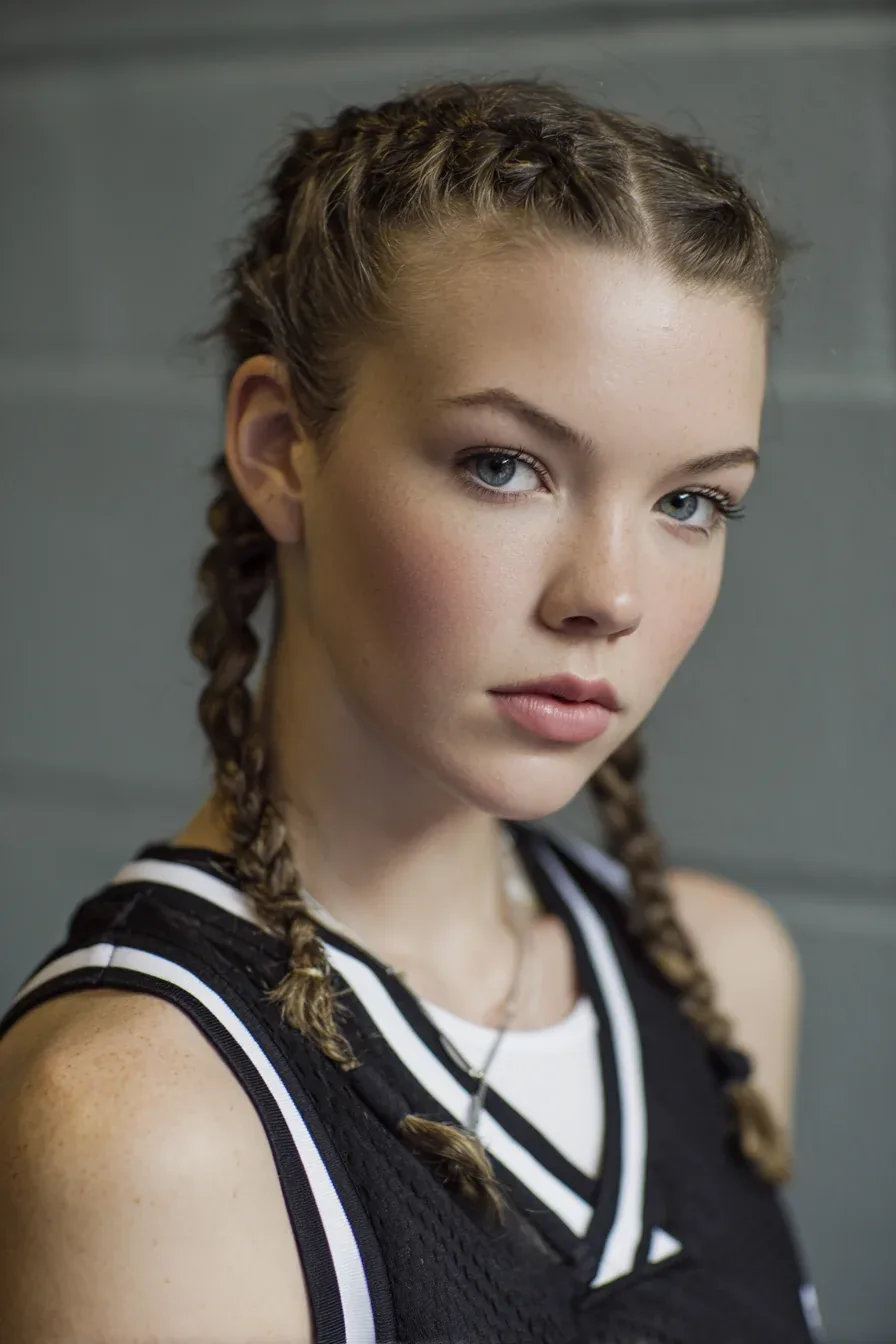
Boxer braids — tight Dutch braids worn close to the head — are the style athletes wear for a reason: nothing moves. They are the tightest, flattest braids in this guide, which makes them the most wind-proof and rain-proof as well. A hood, a helmet, an umbrella, a scarf — nothing disturbs them, and they still look neat and intentional at the end of a long, wet day.
Best for: the gym, the commute, very long days, and anyone who needs their hair completely out of the way. Time and cost: ten minutes, a few elastics, no products. Common mistake: braiding them too tightly at the hairline, which pulls and can cause breakage over time — snug is enough, drum-tight is not necessary. Maintenance: none. Quick verdict: if you need a style that will survive absolutely anything the weather does, this is it.
27. Tousled Waves That Welcome a Little Damp
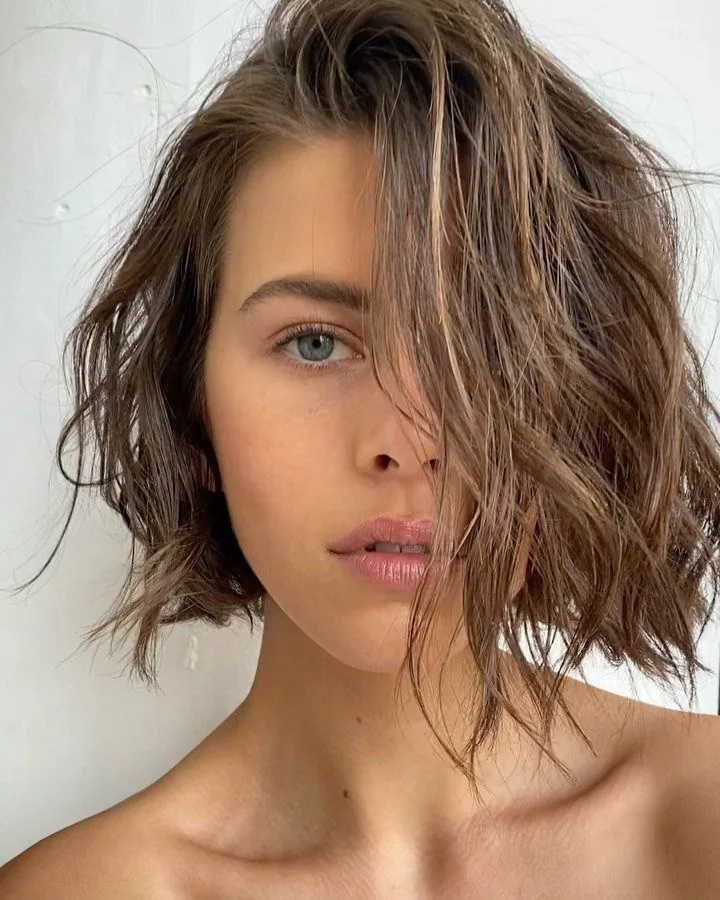
Tousled waves are a style that already looks like it has been out in the weather, which is why a little rain only improves them. The waves are loose, the texture is piecey, and the finish is deliberately imperfect — so when humidity adds a little extra wave and a little extra texture, it reads as part of the look, not as a failure of it. The key is a salt spray or texturising spray applied before you leave, which gives the waves something to hold onto.
Best for: medium to long hair, wavy or straight hair that holds a wave, and casual days. Pros and cons: it is easy, it looks effortless, and it forgives the weather — but it does not suit formal occasions, and on very fine hair it can fall flat once it gets truly wet. What to ask your stylist: ask for long layers that encourage natural wave. Quick verdict: the most relaxed style in this guide, and the one that asks the least of you on a rainy day.
28. French Twist, the Rain-Proof Classic
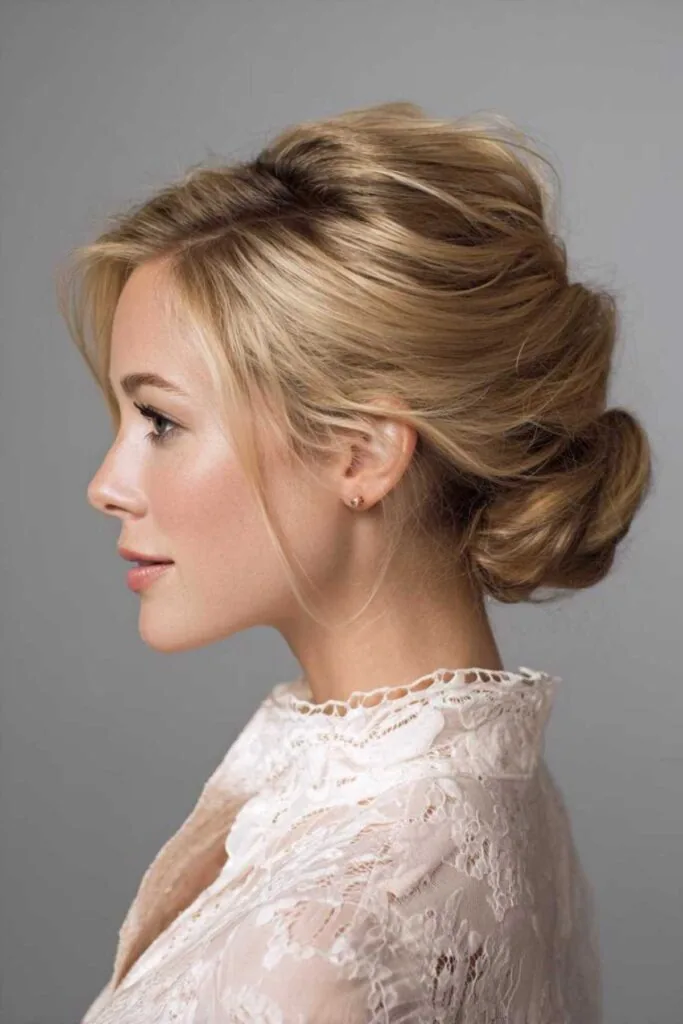
The French twist is a classic for a reason, and on a rainy day it has a hidden advantage: the entire style is one smooth roll of hair, pinned vertically, with no loose lengths and no ends showing. Humidity cannot frizz what it cannot reach, and the twist’s smooth surface sheds rain rather than absorbing it. It is the most formal style in this guide, and it earns its place at rainy-day weddings and evening events.
How to style: gather the hair to one side, twist it upward, fold it into a vertical roll and pin it securely from top to bottom. Time and cost: five minutes with practice, a handful of bobby pins, and a little hairspray. Who should avoid it: very short hair, which cannot form the roll — a low chignon is the shorter-hair equivalent. Common mistake: not using enough pins; a French twist needs more pins than you think, placed in a criss-cross pattern. Quick verdict: timeless, elegant, and far more rain-proof than it looks.
29. Braided Ponytail With a Wrapped Base
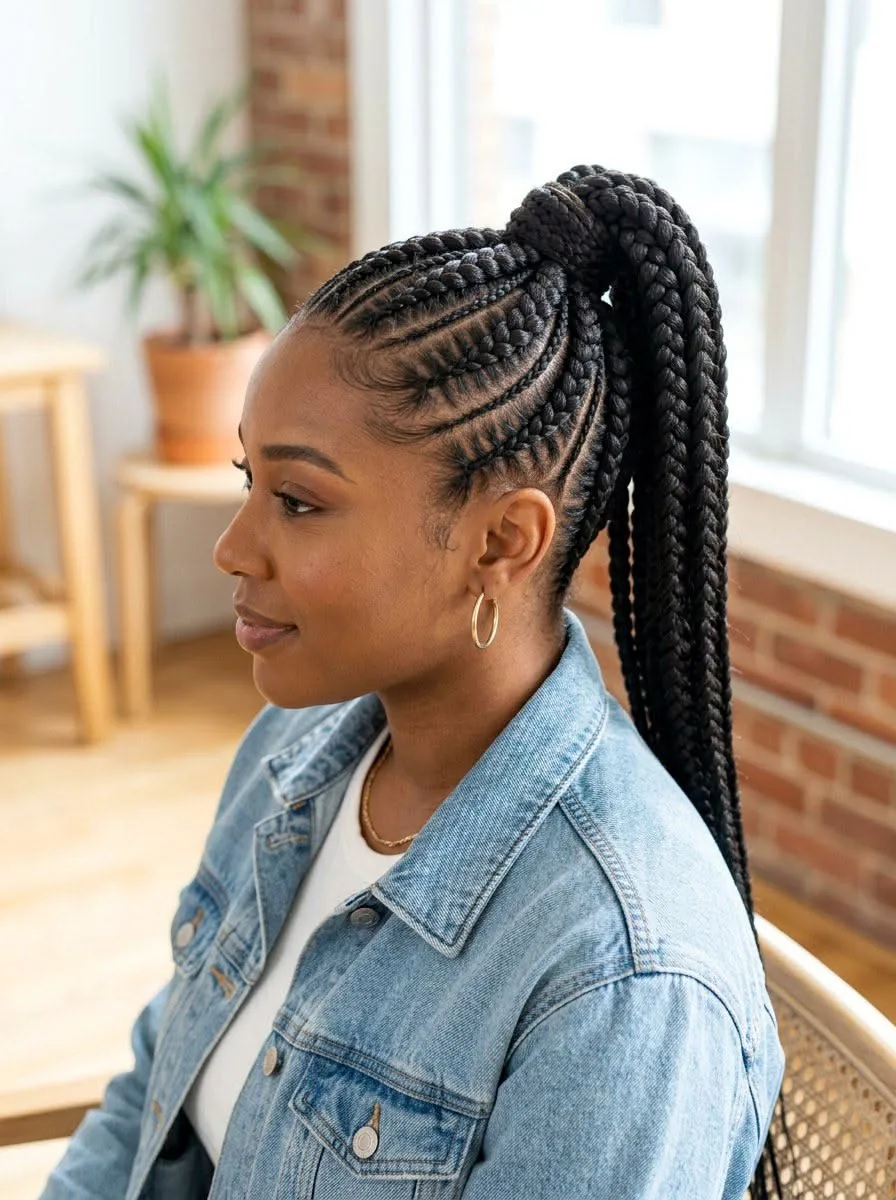
The braided ponytail combines two rain-proof ideas into one style that is both practical and pretty: the ponytail keeps the hair together and off the neck, and the braid contains the lengths so they cannot frizz or tangle in the wind. Wrapping the base with a strand of hair finishes it off, turning a practical style into one that looks deliberate and polished.
Best for: long hair, work days, and anyone who wants a ponytail that still looks good at five in the afternoon. How to style: gather into a ponytail, braid the lengths, secure the end, then wrap a strand around the base and pin it. Pros and cons: it lasts all day and it looks more effortful than it is — but it does take a few minutes longer than a plain ponytail, so it is a morning style rather than a last-minute one. Quick verdict: a ponytail that the rain cannot spoil, because the braid is doing all the work.
30. Short Shag With Matte Texture
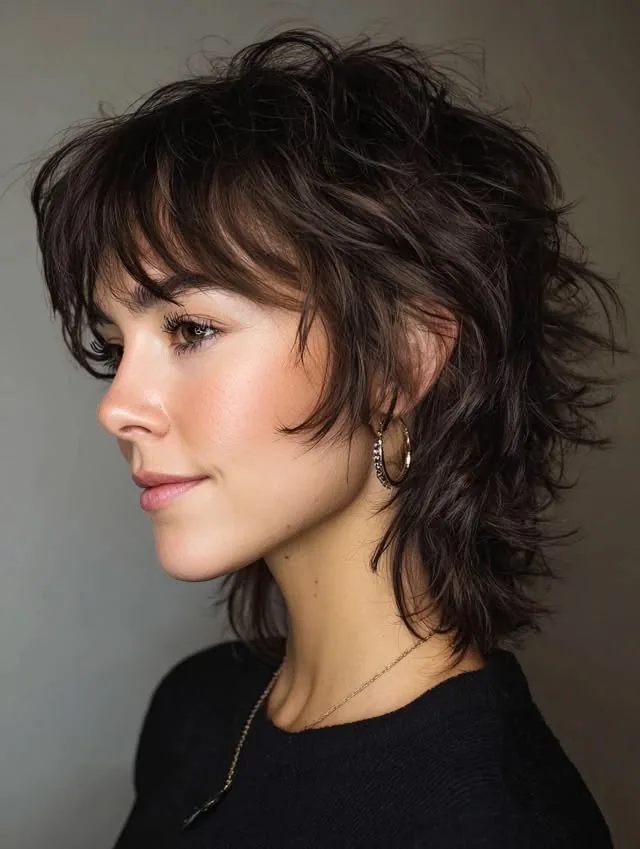
A short shag is a rainy-day gift for short hair. The cut is all layers and texture, so it is meant to look piecey and undone — and a little rain only adds to that. A dab of matte texture paste worked through the layers gives the style its shape, and the shape survives drizzle because it does not depend on smoothness or volume, the two things humidity destroys first.
Best for: short to medium hair, straight or wavy, and anyone who likes a modern, effortless look. Maintenance: re-scrunch with a little paste after coming inside, and the style is back. Who should avoid it: very curly hair, which needs its own approach — a curly shag with leave-in cream is the curly equivalent. Common mistake: over-styling it; the shag’s charm is that it looks unstyled, so stop after thirty seconds. Quick verdict: the short-hair style that treats rain as a texturising spray.
31. Double Space Buns for a Fun Rainy Day

Double space buns are the most fun style in this guide, and they are surprisingly practical in the rain. All the hair is contained in two buns, so nothing can frizz or fly into your face; the buns sit high and tight, so they stay out of a wet collar; and the style looks cheerful and youthful, which is a welcome thing on a grey, rainy day.
How to style: part down the middle, gather each side into a high ponytail, twist each one into a bun and pin. Best for: casual days, festivals, younger looks, and anyone who wants their rainy-day hair to make them smile. Time and cost: five minutes, four pins, two hair ties. Who should avoid it: formal occasions — this is a playful style, and it knows it. Quick verdict: proof that a rain-proof style can be fun as well as practical.
32. Silk Headband Tuck for Instant Polish
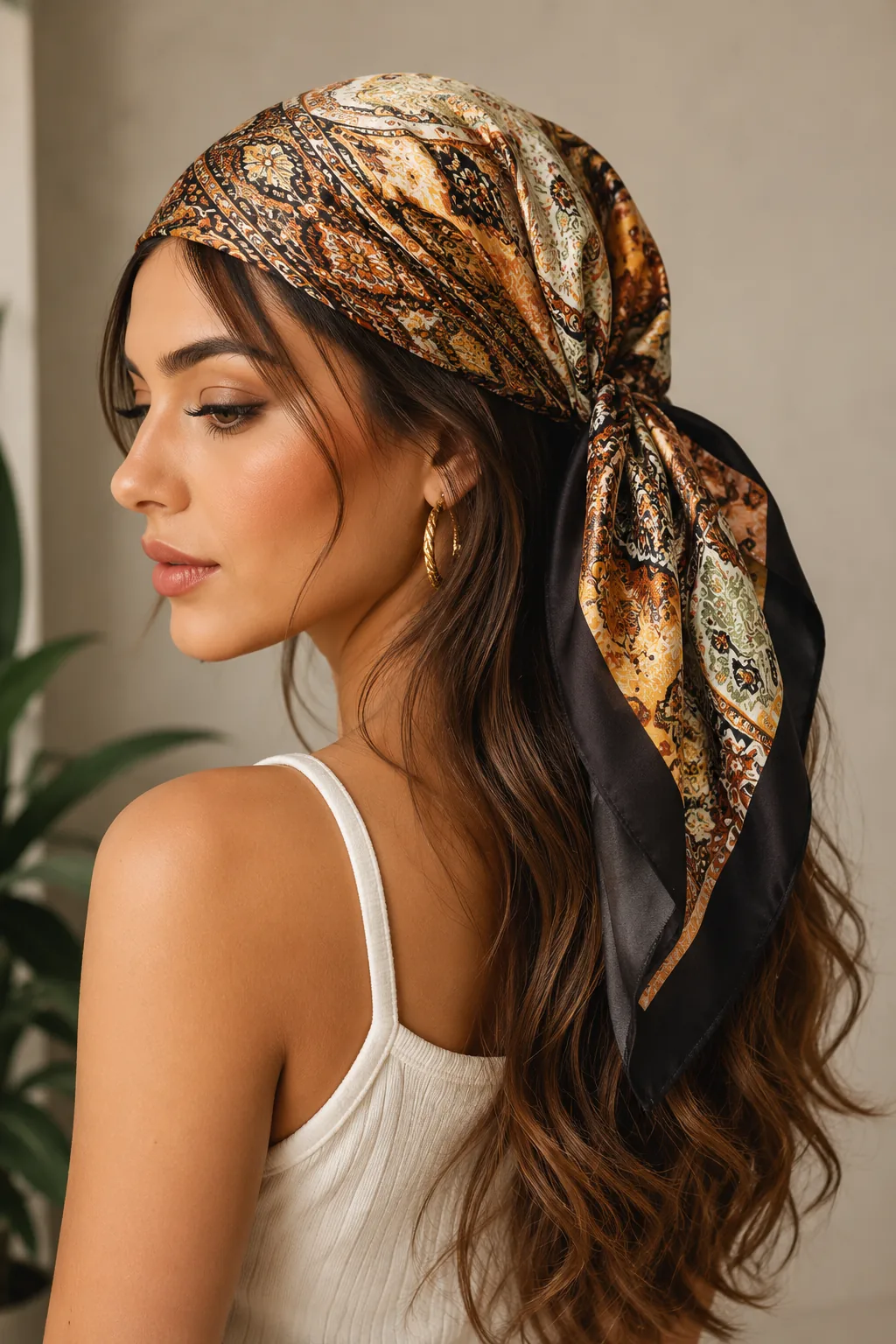
The silk headband tuck is the quickest transformation in this guide. A wide silk headband or scarf is placed over the head, and the hair is tucked up into it at the nape — in thirty seconds, loose hair becomes a polished, contained style, and the silk itself acts as a rain shield for the hair underneath. It is the style to keep in mind for the moment you step out of a building and realise it is raining harder than you thought.
Best for: emergencies, medium to long hair, and anyone who keeps a scarf in their bag. Pros and cons: it takes seconds, it needs no products, and it looks elegant — but it works best on hair that is at least shoulder-length, so there is enough to tuck. Maintenance: if the tuck loosens, re-tuck it in the lift — it takes five seconds. Quick verdict: the fastest rescue style here, and one of the most elegant.
33. Overnight Braid Waves, Set Before the Rain

Overnight braid waves are the rainy-day style you make the night before. Two or three loose braids, slept in overnight, unravel in the morning into soft, defined waves — and because those waves are set by a braid rather than by heat, humidity cannot undo them. The rain simply adds a little extra texture to waves that are already there, and the style lasts all day without a single tool or product in the morning.
How to style: on slightly damp hair at night, work a little leave-in cream through the lengths, braid loosely into two or three braids, and sleep on them. In the morning, undo the braids, shake the waves out gently with your fingers, and smooth the surface with a drop of serum. Best for: anyone who wants to do nothing at all in the morning and still look styled. Common mistake: braiding too tightly, which makes crimps instead of waves — loose is the word. Quick verdict: the laziest style in this guide, and one of the most rain-proof, because the rain cannot undo a wave that heat never made.
What is the best hairstyle for a rainy day?
The best hairstyles for a rainy day are braids, low buns and slicked-back styles, because their shape comes from structure rather than heat or volume. A French braid, a sleek low bun or a braided low bun will hold through drizzle and humidity, while a blowout will collapse within minutes of stepping outside.
How do I stop my hair from frizzing in the rain?
Contain the hair and seal it before you leave. Use a smoothing conditioner and a pea-sized amount of anti-frizz serum on damp hair, dry the hair completely, and choose a braided or pinned style. If frizz appears during the day, smooth a drop of serum over the surface with your palms — do not brush dry, frizzy hair.
Can I straighten my hair before going out in the rain?
You can, but it will not last. Heat-styled straight hair reverts toward its natural texture as soon as it absorbs moisture from the air, so a straightened style usually goes wavy or frizzy within minutes in rain or heavy humidity. A braided or slicked style is a far better choice for a wet day.
Does rain damage your hair?
Rainwater itself is not very damaging, but getting soaked repeatedly and then brushing or heat-styling wet hair can cause breakage, because wet hair is more fragile. Blot wet hair gently with a soft towel, let it dry before brushing, and use a wide-tooth comb rather than a fine brush.
What is the best product for humidity-proof hair?
An anti-humidity serum is the most reliable single product, because it coats the hair strand and slows down moisture absorption. For slicked styles, a strong-hold gel works best; for curls, a leave-in cream defines the pattern and controls frizz. One good product, used correctly, beats layering five.
How do I keep my curls in the rain?
Moisturise and contain them. Work a leave-in cream through damp curls before you leave, and gather the curls into a pineapple updo or a low curly bun so the pattern is protected. Do not brush the curls when they frizz — smooth cream over the surface with your palms instead.
What hairstyle is best for long hair in the rain?
A French braid, a fishtail braid, a braided low bun or a braided ponytail are the best choices for long hair in the rain. They keep the lengths contained, protect the ends where frizz starts, and survive wind, umbrellas and hoods without needing a touch-up.
What hairstyle is best for short hair on a rainy day?
A textured pixie with matte wax, a wet-look sleek bob, or a short shag with texture paste are the best rainy-day styles for short hair. Short hair dries fast and has less length to frizz, and a little wax or gel is usually all it needs to hold its shape through drizzle.
How should I dry my hair after getting caught in the rain?
Blot gently with a soft cotton t-shirt or microfibre towel — never rub, because rubbing roughs up the cuticle and creates frizz. Then let the hair air-dry, or use a dryer on low heat with a diffuser. Comb wet hair only with a wide-tooth comb, working from the ends upward.
Can I wear my hair down in the rain?
Yes, but choose a down style that works with dampness rather than against it — tousled waves, a wavy lob with anti-frizz serum, or overnight braid waves. A smooth blowout worn down will lose its shape quickly in rain, while a textured down style will simply look a little more lived-in.
Conclusion: Let the Rain Be Part of the Style
Rain does not have to mean a bad hair day. It only means a different kind of hair day — one where structure beats volume, where a braid beats a blowout, and where a little dampness can be an ingredient rather than a disaster. The 33 hairstyles in this guide all share that idea: they are chosen because they hold their shape when the weather turns, and several of them — the slicked-back ponytail, the wet-look bob, the tousled waves — actually look better with a little rain in them.
Start with the simplest change: pick one contained style, a French braid or a sleek low bun, and keep a small kit in your bag — two hair ties, a few pins, a travel serum and a silk scarf. That is all it takes to stop checking the forecast before you check the mirror. The rain will keep coming, and your hair will keep looking good anyway — which, on a grey, wet morning, is a small victory worth having.