Camera-On Confidence: 31 Video Call Hairstyles That Look Polished on Screen
On a video call, nobody sees your whole outfit, your shoes, or how tall you stand — they see a small rectangle, shoulders up, with your face and hair filling most of it. That changes the rules of hairstyling completely. A style that looks effortless in a full-length mirror can look flat, frizzy or distracting in a webcam frame, while a simple low bun or a well-placed side part can make you look instantly polished, confident and ready. The camera flattens depth, washes out detail and magnifies anything loose or uneven around the face — which is why the best video call hairstyles are the ones that frame the face cleanly, stay put for an hour, and need almost no attention once the call starts.
This guide gathers 31 hairstyles for video calls, from sleek low buns and polished bobs to soft waves, headset-friendly ponytails and two-minute fixes for the days you only have a moment before the meeting starts. Eight guides first walk you through what the camera actually sees, how lighting and colour read on screen, how to tame flyaways, and which styles work with headphones and which ones fight them. Whether you work from home every day, present to clients on Zoom, or have a job interview on video, there is a style here that will suit your hair — and every one of them is chosen to look good on a small screen, not just in a salon mirror.
What the Camera Actually Sees — And Why It Changes Everything
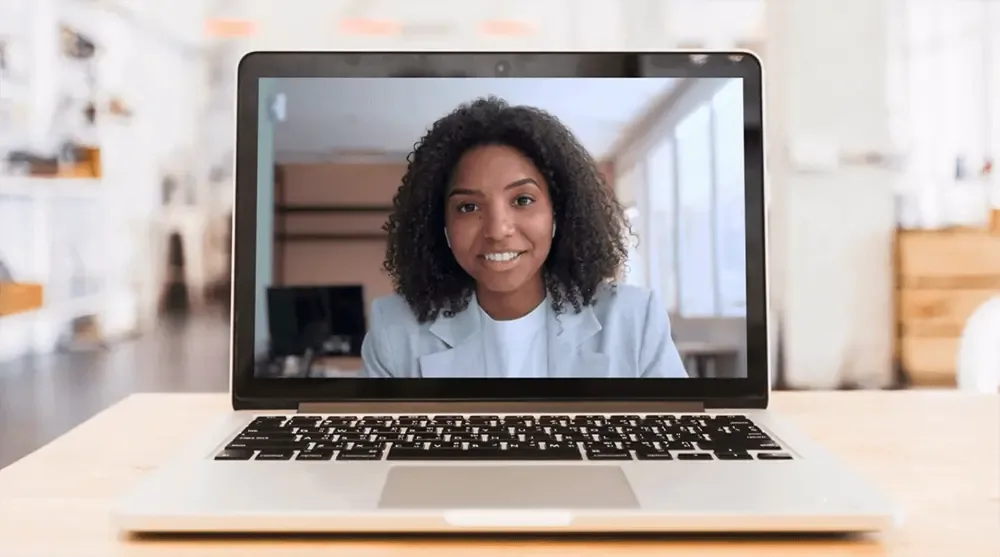
A webcam sees far less of you than a person in the room does, and that is the first thing to understand about video call hair. The frame cuts off at the shoulders, the lens sits slightly below or level with your eyes, and the image is small — on a laptop screen, your whole head may be only a few inches tall. Anything below the shoulders is invisible, anything behind you is a blur, and the only hair that matters is the hair around your face and the top of your head. A dramatic long style that looks stunning in person can read as a dark curtain on camera, while a simple, neat shape around the face reads as polished and professional.
The camera also flattens depth, so layers and texture that look dimensional in real life can disappear on screen, and flyaways that you would never notice in a mirror catch the light and flicker at the edges of the frame. That is why the styles in this guide favour clean lines near the face, a little width or movement at the sides, and nothing that needs constant tucking or pushing back. Quick verdict: style for the small rectangle, not the whole room — if it looks neat in a selfie-sized frame, it will look neat on the call.
Lighting, Colour and Contrast: How Your Hair Reads on Screen
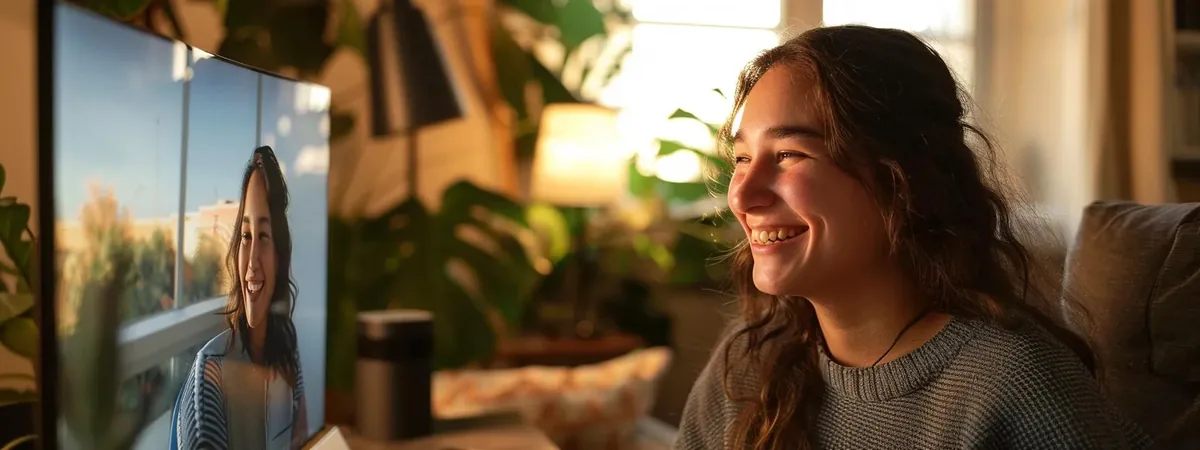
Lighting does more to your hair on a video call than any product, and it is worth two minutes of thought before an important meeting. Light coming from a window in front of you is the most flattering: it lights your face evenly, shows your hair colour truly, and softens the edges of your style. Light from above — a ceiling light — casts shadows under the fringe and the chin, and can make even a neat style look tired. Light from behind turns your hair into a dark silhouette, and no hairstyle can rescue that, so sit facing the light whenever you can.
Colour matters too, because the camera compresses contrast. Very dark hair against a dark background can merge into one shape, so a little shine or a few lighter face-framing pieces help the outline of your hair read on screen. Very blonde hair in bright light can blow out and lose detail, so a slightly deeper tone at the roots or a soft wave gives the camera something to hold on to. Best for: anyone who presents on camera regularly. Common mistake: blaming the hairstyle when the problem is sitting with a window behind you. Quick verdict: face the light, and let your hair’s shine and framing do the rest.
Framing the Face in a Small Window
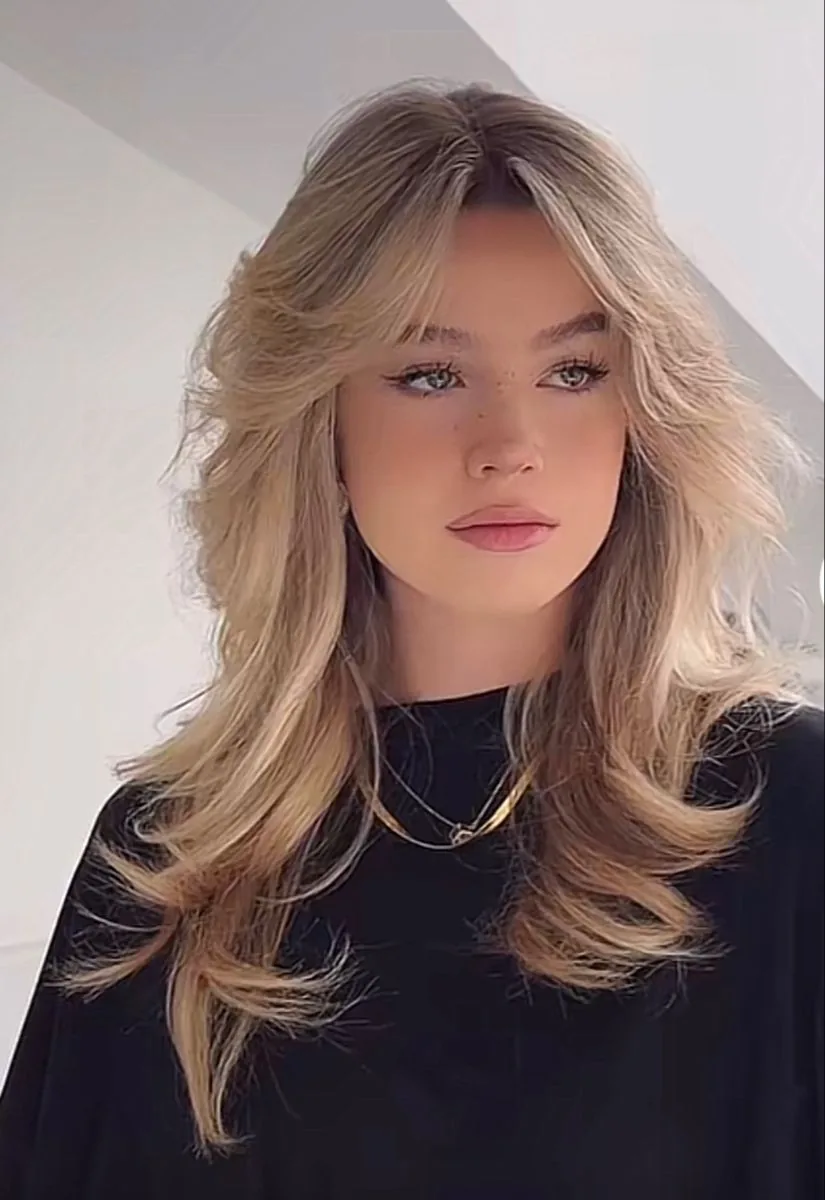
In a small video window, your face is the whole picture, so the hair around it is doing the most important job in the room. Face-framing layers, curtain bangs, a deep side part or two soft tendrils all do the same thing: they give the eye a border, they soften the jawline, and they keep the face from looking bare or severe in a tight crop. Without any framing, even a beautiful face can look washed out on camera, because the hairline is a hard edge and the background presses in from both sides.
The framing does not need to be dramatic. Two short pieces that start at the cheekbones and curve toward the chin are enough, and they work on every length, from a bob to waist-length hair. A side part adds asymmetry, which is flattering in a flat image because it breaks up the straight lines. What to ask your stylist: ask for framing pieces that fall forward naturally, so they stay in place without pins — on a call you cannot keep pushing them back. Quick verdict: if your hair looks good framing your face in a phone selfie, it will frame your face on the call.
Taming Flyaways, Frizz and Shine on Camera
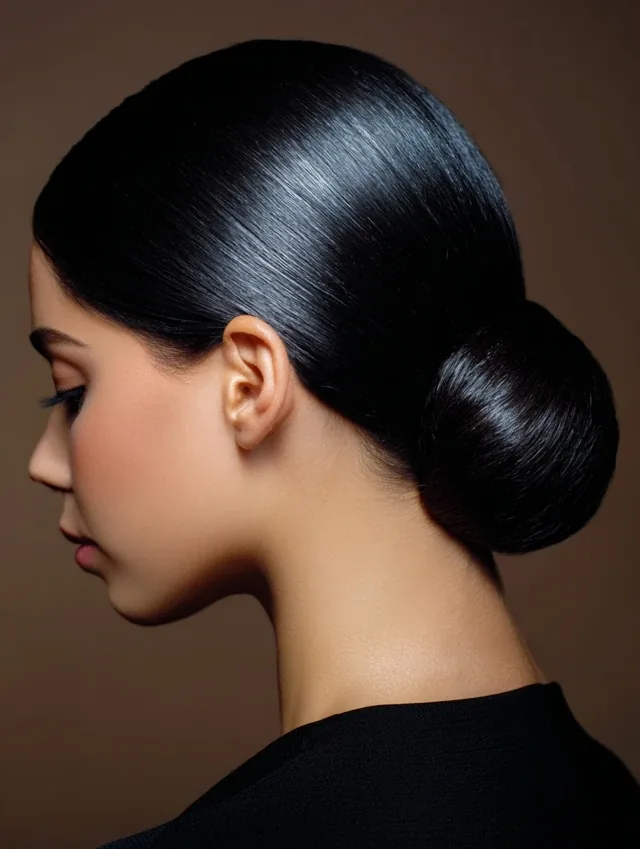
Flyaways are the number one hair complaint on video calls, and the reason is simple: a webcam catches light at the edges of your head, and every loose strand shows up as a halo. Frizz does the same thing on a larger scale, turning a neat outline into a fuzzy one. The fix is not a complicated routine — it is a little smoothing product on the top layer, a light-hold spray, and a style that keeps the hairline controlled, like a bun, a tucked bob or a half-up style with the front smoothed back.
Shine is the other side of the same coin. A healthy shine looks great on camera, but a greasy-looking shine at the roots does not, so dry shampoo on the roots before a call is a better fix than washing your hair in a hurry. Keep a small brush and a travel-size smoothing serum at your desk — a thirty-second tidy-up between meetings is worth more than a fresh blowout at 8 a.m. Pros and cons: smoothing products are quick and effective, but too much makes hair look flat and heavy on camera. Quick verdict: smooth the outline, not the whole head, and the camera will reward you.
The 2-Minute Pre-Call Fix

You do not need a fresh blowout before every call — you need a two-minute routine that works on second-day hair. Start with the front: smooth the hairline with a brush and a drop of serum, fix the part, and deal with any flyaways at the crown. Then decide the shape: if the lengths look tired, gather them into a low bun or a low ponytail; if they still have life, add a wave to the front pieces only, because those are the only pieces the camera really sees. That is the whole routine, and it is enough.
Keep the tools in one place: a brush, a few bobby pins, a hair tie, dry shampoo and a travel-size smoothing spray, all in a drawer or a pouch by your desk. Dry shampoo at the roots takes ten seconds and removes the shine that reads as grease on camera. A low bun takes thirty seconds and hides every problem at once. Common mistake: re-washing your hair in a panic before a call — damp hair looks darker and flatter on camera, and it frizzes as it dries. Quick verdict: fix the front, choose a shape, and join the call.
Headset-Friendly Styles That Still Look Polished
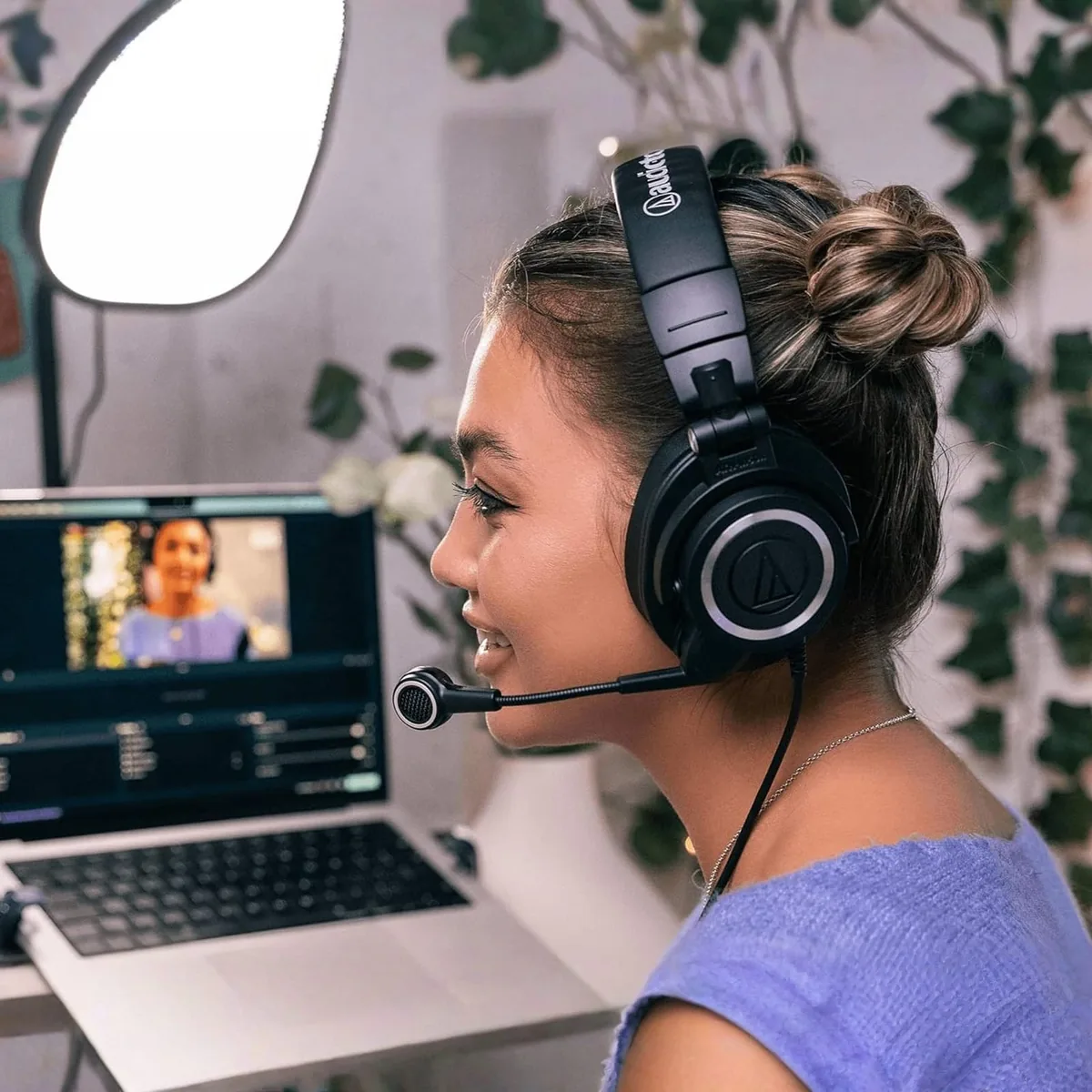
Headphones are the hidden enemy of video call hair: the band flattens the crown, the ear cups squash the sides, and a high bun or a top knot gets pushed into a strange shape. The styles that survive headphones are the ones that keep the crown and the sides low and smooth — a low bun, a low ponytail, a bob tucked behind the ears, or hair worn down with a low side part. Anything that sits below the headphone band will still look the same when the call ends and the headphones come off.
If you wear a headset all day, choose your style in the morning with the headset in mind. A low bun at the nape is the safest bet, because the band passes over the top of the head and never touches it. A low ponytail works the same way. What to avoid is volume at the crown that the band will crush, and any style that depends on height at the top. Best for: anyone on calls all day. Quick verdict: style below the band, not above it, and your hair will survive the headphones.
Hair for Job Interviews on Video

A job interview on video is the one call where your hair should be the most boring thing about you — in the best way. The interviewer should remember what you said, not your hairstyle, so the goal is neat, controlled and professional: a sleek low bun, a polished bob, a low ponytail, or smooth hair with a side part. Nothing should move, fall in your face, or need pushing back while you answer a question, because every time you touch your hair, the interviewer notices.
Do a camera test the day before, not five minutes before the call. Sit where you will sit, turn the camera on, and look at the frame the way the interviewer will see it. Is the hairline neat? Is anything casting a shadow on your face? Does the style hold when you lean forward to read a question? Fix whatever you see, and then leave it alone. Pros and cons: a conservative style is never the reason you get the job, but a distracting one can be the reason you do not. Quick verdict: neat, still, and forgotten — that is the interview standard.
What to Avoid on Camera — And What to Do Instead

The most common mistake on video calls is also the most understandable: leaving your hair exactly as it was when you woke up. Bed head, flat roots and a tangled fringe all read much worse on a small screen than in a mirror, because the camera has no depth to soften them. The fix is not a salon visit — it is a brush, a part, and a decision: down and smooth, or up and neat. Either one takes two minutes, and either one looks ten times better than untouched hair.
Other mistakes are easy to avoid once you know them. A very high, very tight ponytail pulls the face upward and looks severe in a flat frame — lower it to the nape. A centre part with flat, straight hair can look stark — add a soft wave or switch to a side part. And hair that falls forward over the shoulders can block your face when you lean in — sweep it back or pin one side. Last-minute fixes: if a style looks too severe, pull out two soft tendrils. If the roots look flat, flip the part to the other side for instant volume. Quick verdict: almost every on-camera hair problem has a two-minute fix.
1. Sleek Low Bun With a Centre Part

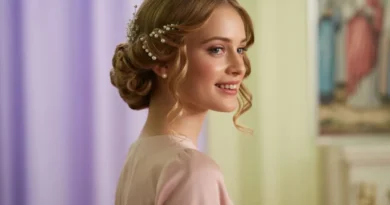
The sleek low bun with a centre part is the most reliable hairstyle for video calls, and it earns that title on every kind of call — a team stand-up, a client presentation, a job interview. The centre part keeps the face symmetrical in a flat image, the smooth hair shows off the cheekbones, and the low bun sits neatly inside the frame without pulling the eye upward. Nothing moves, nothing needs fixing, and you can wear headphones over it without the style collapsing.
Best for: formal calls, interviews, and anyone who wants to look polished with zero mid-call maintenance. How to style it: part the hair in the centre, smooth it back with a brush and a little gel, gather it low at the nape, twist it into a bun and pin it in three places. What to ask your stylist: nothing — this is a styling choice, not a cut, so it works on almost any length past the chin. Quick verdict: the safest, most professional video call style in this guide — start here if you are unsure.
2. Polished Shoulder-Length Bob

A polished shoulder-length bob is the video call workhorse: it ends right where the frame ends, so the whole cut is visible on screen, and its clean line around the jaw gives the face a neat border in a small window. Blow-dried smooth with the ends turned under slightly, it looks deliberate and put-together without looking overdone, and it holds its shape through a long day of back-to-back meetings far better than loose, long hair.
Pros and cons: it is easy to style in ten minutes, suits most face shapes, and looks good with or without headphones — but it does need a trim every six to eight weeks to keep the line clean, because a grown-out bob starts to look heavy at the ends on camera. How to style it: blow-dry with a round brush, turning the ends under, and finish with a drop of smoothing serum for shine. Maintenance: a quick brush and a spritz of spray between calls. Quick verdict: the easiest polished cut for daily video calls.
3. Soft Waves With a Middle Part

Soft waves with a middle part are a calm, symmetrical look that photographs beautifully on a webcam, because the waves fall evenly on both sides of the face and add gentle width exactly where the frame is tightest. The middle part keeps the look balanced, and the movement in the waves stops the flatness of the camera from making your hair look lifeless. It is a style that works on almost everyone, which is why it never really goes out of fashion — and on a video call it reads as friendly, approachable and relaxed.
Best for: long and medium hair, everyday calls, and women who want an easy style that still looks intentional. How to style it: curl in large sections with a wide-barrel iron, alternating directions, then brush the curls out into soft waves and finish with a light texture spray. Common mistake: making the waves too tight, which reads as frizz in a small window. Cost and time: about fifteen minutes with an iron, or five if your hair holds a wave overnight. Quick verdict: the most effortless balanced look here — waves, parted in the middle, done.
4. Low Ponytail With a Wrapped Base
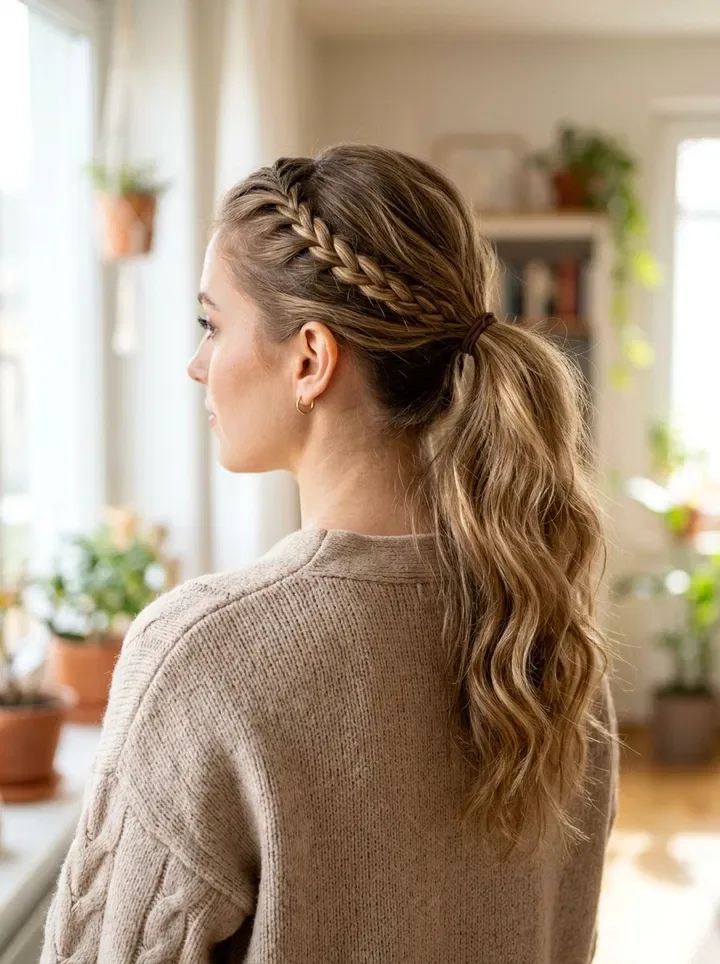
A low ponytail with a wrapped base is the two-minute video call fix that looks like you tried much harder than you did. It sits low at the nape, so it stays inside the frame and does not pull the face upward the way a high ponytail can, and wrapping a section of hair around the elastic turns gym hair into a polished style in seconds. Add a soft wave through the lengths or pull out two face-framing pieces and the whole look softens into something genuinely elegant.
How to style it: smooth the hair with a brush and a little serum, gather it low at the nape, secure it, and wrap a strand around the base, pinning it underneath. Pros and cons: it takes two minutes, holds all day, and suits every hair type — but a very sleek, very tight low ponytail with nothing at the sides can look severe on camera, so keep the front soft. Cost and time: free, and two minutes. Who should avoid it: nobody, as long as the front pieces stay loose. Quick verdict: the everyday hero of this guide.
5. Curtain Bangs With a Shoulder-Length Cut
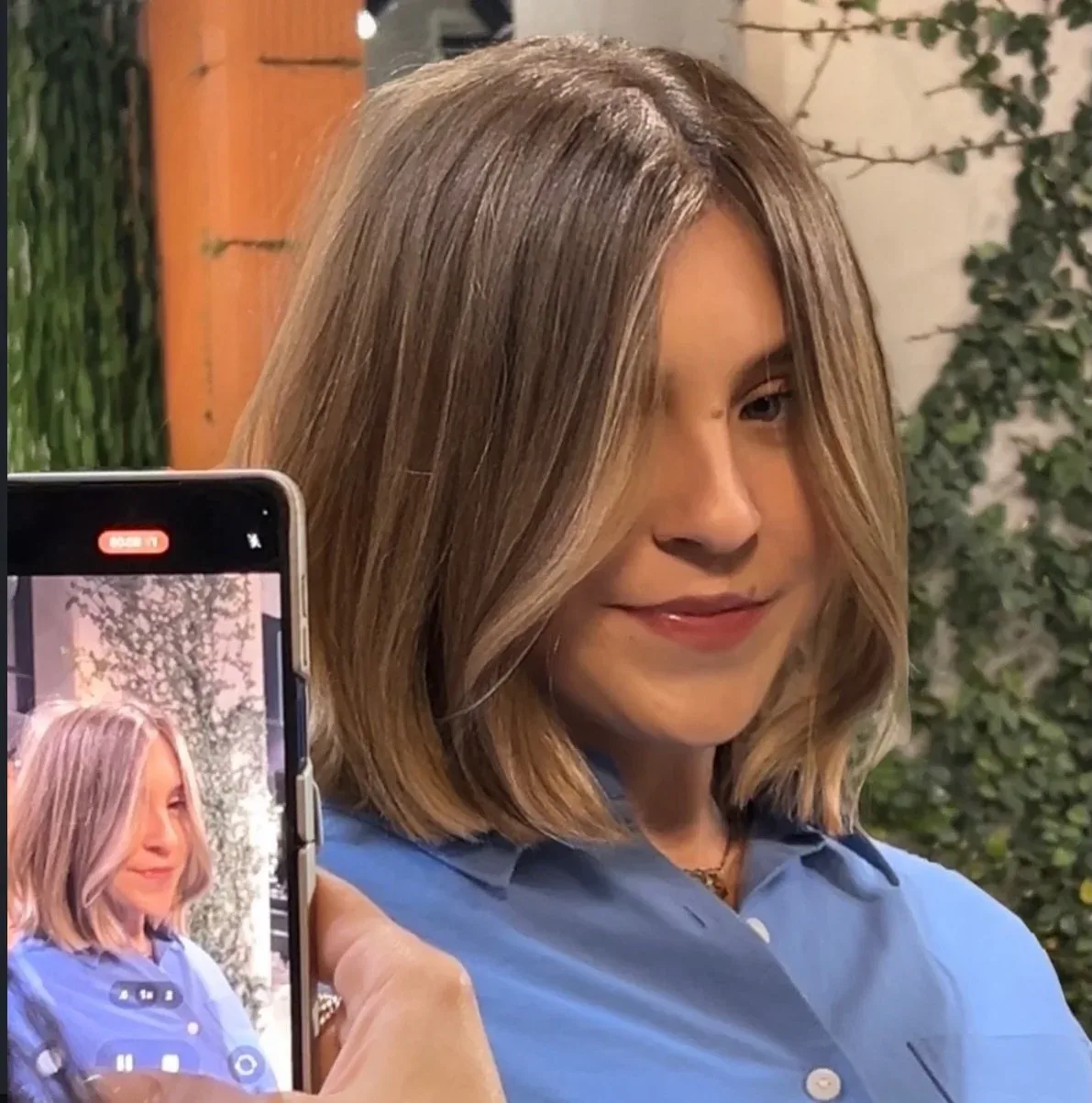
Curtain bangs with a shoulder-length cut are the lowest-effort way to look framed and finished on a video call. The bangs part in the middle and fall to either side of the face, adding width at the cheekbones and pulling the focus up to the eyes — exactly where you want it in a small window — while the shoulder-length cut gives the frame a clean, neat border. It is a soft, feminine look that suits almost every face shape, and it grows out gracefully, so you can go weeks between bang trims.
Best for: women trying bangs for the first time, and anyone whose hair tends to look flat on camera. How to style it: blow-dry the bangs with a round brush, curving them away from the face on each side, and add a loose wave through the lengths. Maintenance: a trim every four to six weeks if you want the bangs to stay at cheekbone length. Common mistake: cutting curtain bangs too short, which makes them look like a blunt fringe on camera. Quick verdict: bangs without the commitment — the easiest win in this guide.
6. Half-Up Half-Down With Soft Waves
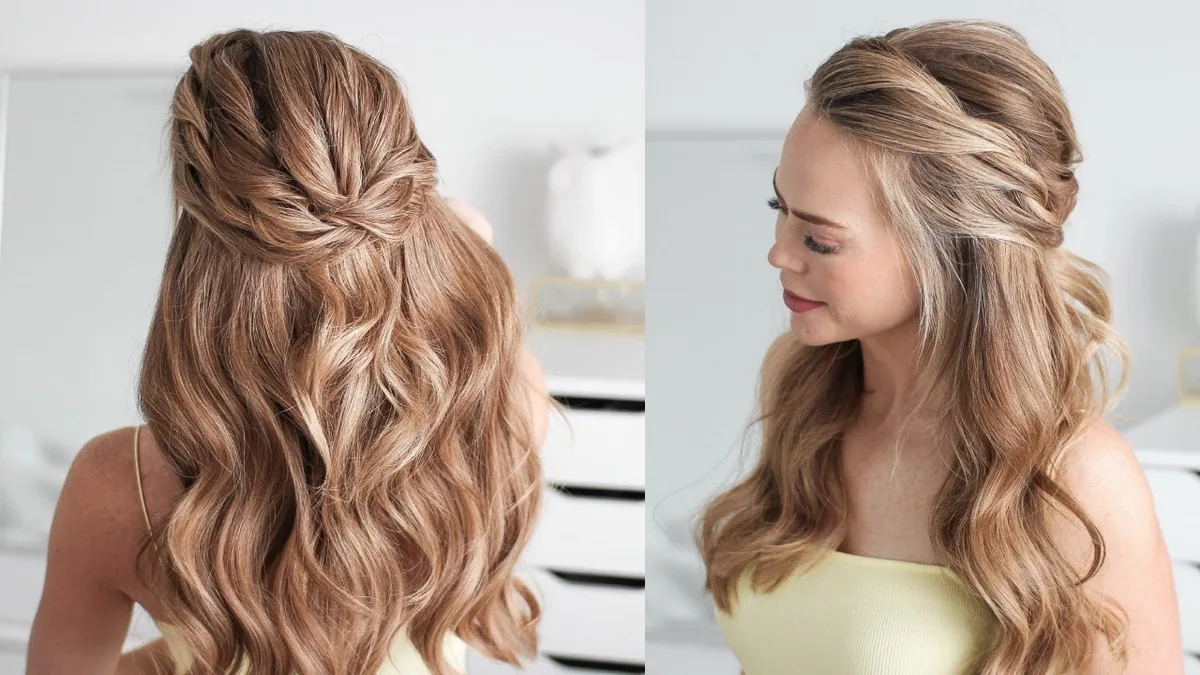
Half-up half-down is the best of both worlds for a video call: the top half is lifted and pinned, which shows off the face and keeps hair out of your eyes while you talk, while the bottom half falls in soft waves that add width beside the shoulders and fill the frame beautifully. The key is to keep the lifted section soft and low — a gentle half-up at the crown, not a tight high pull — so the style adds polish without adding a tall column of height that the camera exaggerates.
Best for: medium to long hair, everyday calls and presentations alike. How to style it: curl the lengths first, then gather the top section from temple to temple, twist it once, and secure it with crossed bobby pins or a small clip. What to ask your stylist: nothing special — this is a styling choice, not a cut. Common mistake: pulling the top section too tight and too high, which stretches the face upward on camera. Quick verdict: the most versatile style here — five minutes, and you look perfectly put together.
7. Sleek Straight Hair With a Side Part
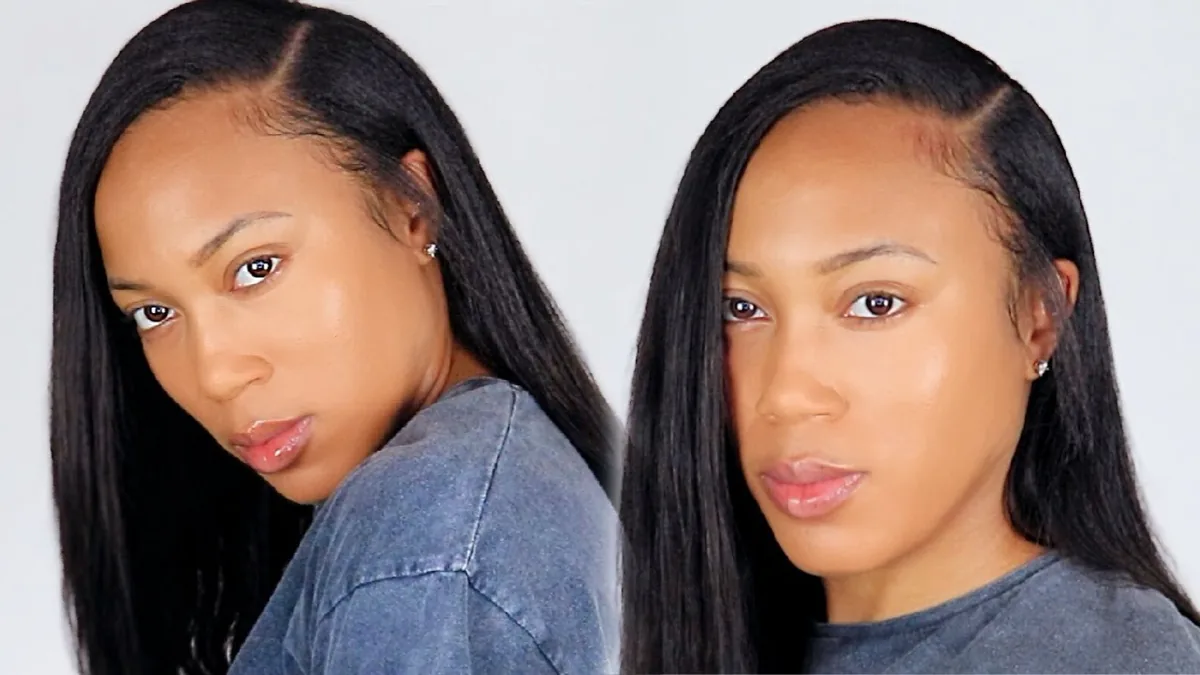
Sleek straight hair with a side part is the minimalist video call look, and it works because the camera loves a clean line. The deep side part sweeps a heavy section of hair across the forehead and down one side of the face, which adds instant width and asymmetry — and asymmetry is one of the best tools in a flat image, because it breaks up straight lines and gives the eye something to follow. The rest of the hair falls smooth and shiny, which reads as polished and expensive on screen.
Best for: straight hair, oval and long faces, and formal or client-facing calls. How to style it: part the hair deeply on one side while it is damp, blow-dry smooth with a paddle brush, and run a flat iron lightly over the lengths. Pros and cons: it is striking and very low maintenance once cut, but it shows every flyaway, so keep a smoothing serum at your desk. Who should avoid it: very curly hair, which will not hold the sleek line without daily straightening. Quick verdict: the simplest way to look expensive on a webcam.
8. Textured Lob That Holds Its Shape
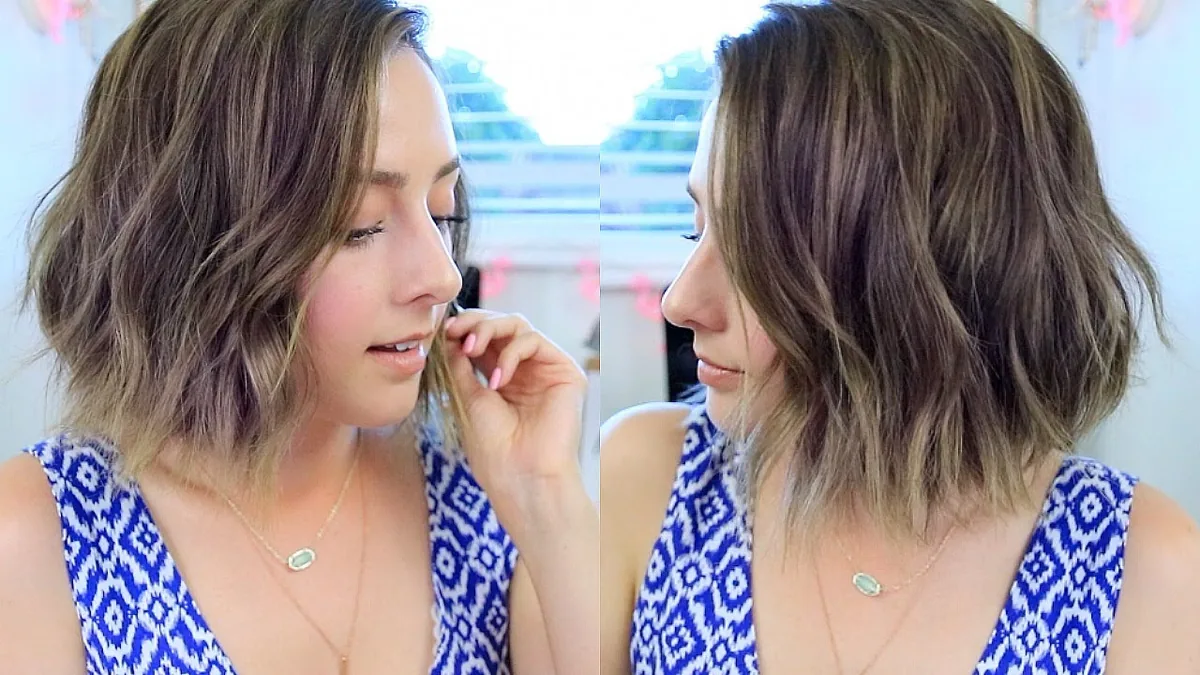
A textured lob — a long bob with soft, piecey layers through the ends — is one of the most forgiving cuts for video calls, because it holds its shape through a whole day of meetings. The layers are cut so the hair kicks out gently at the jaw instead of falling flat, which widens the lower half of the face and stops the camera from flattening everything into one shape. It is a modern, lived-in cut that looks good air-dried or blow-dried, and it grows out gracefully, so you are not in the salon every four weeks.
Pros and cons: it is versatile, easy to style, and flattering on fine and thick hair alike, but the texture can look messy in a small window if the layers are cut too short, so ask for long, soft layers rather than choppy ones. How to style it: work a little texture cream through damp hair, scrunch the ends, and let it dry naturally. Maintenance: a trim every eight weeks keeps the shape. Quick verdict: the easiest wide-at-the-jaw cut here, and a great choice if you like your hair to look a little undone.
9. Low Chignon With Face-Framing Tendrils
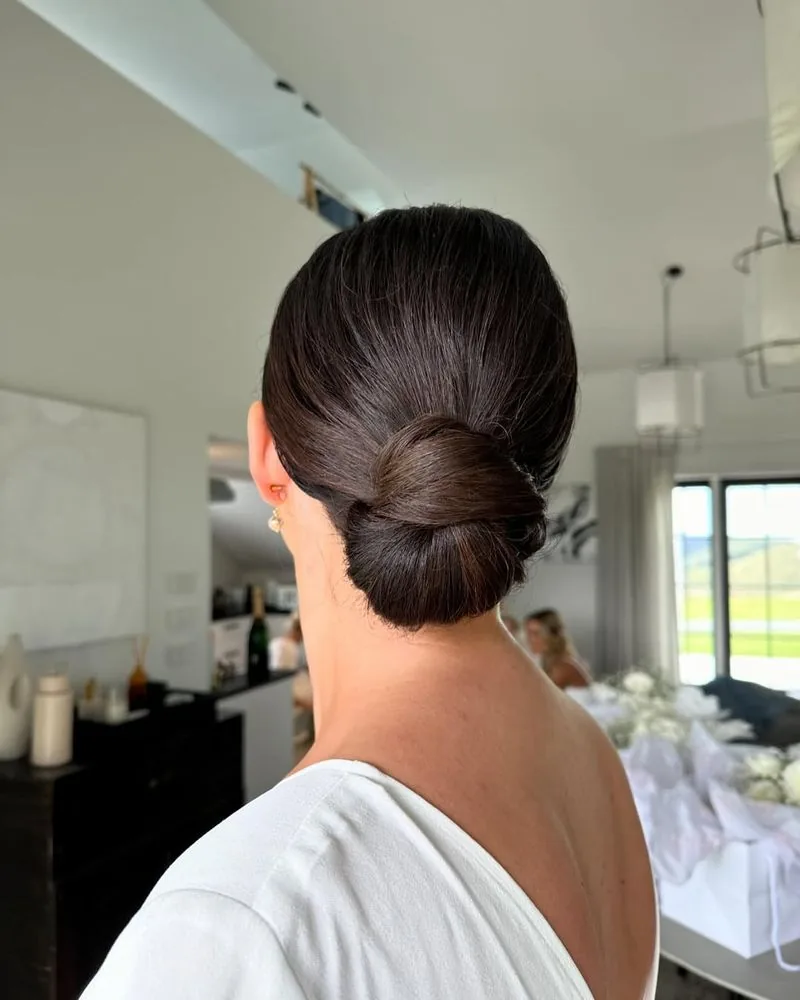
A low chignon with tendrils is the updo that was made for a video call. The bun sits low at the nape, which keeps it inside the frame, and the soft tendrils left out around the face add width at the cheeks and jaw — the two things that make a small video window flattering. It is graceful, timeless and perfect for the calls that matter most: a client pitch, a board meeting, a job interview. And on camera it looks more statuesque than in person, because the frame crops away everything but the elegance.
Best for: medium to long hair, formal calls, and presentations. How to style it: gather the hair low, twist it into a soft roll, pin it in three places, and pull out two thin tendrils at the front, curling them lightly. Pros and cons: it holds all evening and looks expensive, but it needs a few pins and a little practice — do a trial run before the big call. Maintenance: none during the call, beyond one spare pin. Quick verdict: the most elegant video call updo, full stop.
10. Side-Swept Pixie With Soft Volume
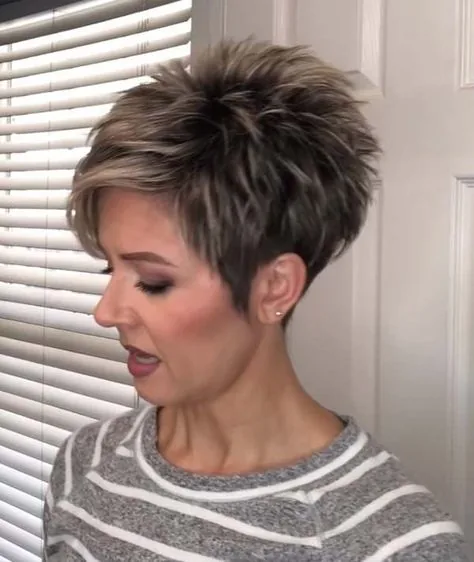
A pixie can absolutely shine on a video call — the trick is to keep the volume at the sides rather than piled on top, where the webcam exaggerates it. A side-swept pixie with soft, longer pieces at the temples and a sweep across the forehead adds width where it matters and leaves the face open and readable on screen. It is a confident, modern cut that shows off earrings beautifully, and it is surprisingly easy to style once you know the trick: a little cream, a sweep to one side, done.
What to ask your stylist: ask for the sides to be left a little longer and textured, not buzzed short, and for the top to stay soft rather than spiky. How to style it: work a pea-sized amount of styling cream through damp hair, sweep the front to one side with your fingers, and let it dry naturally. Pros and cons: it is wash-and-go easy and grows out softly, but it needs a trim every four to five weeks to keep its shape. Who should avoid it: a pixie with a very tall, spiky top — that adds height the camera will magnify. Quick verdict: short hair, done right, is one of the most flattering choices on camera.
11. Chin-Length Bob With a Deep Side Part
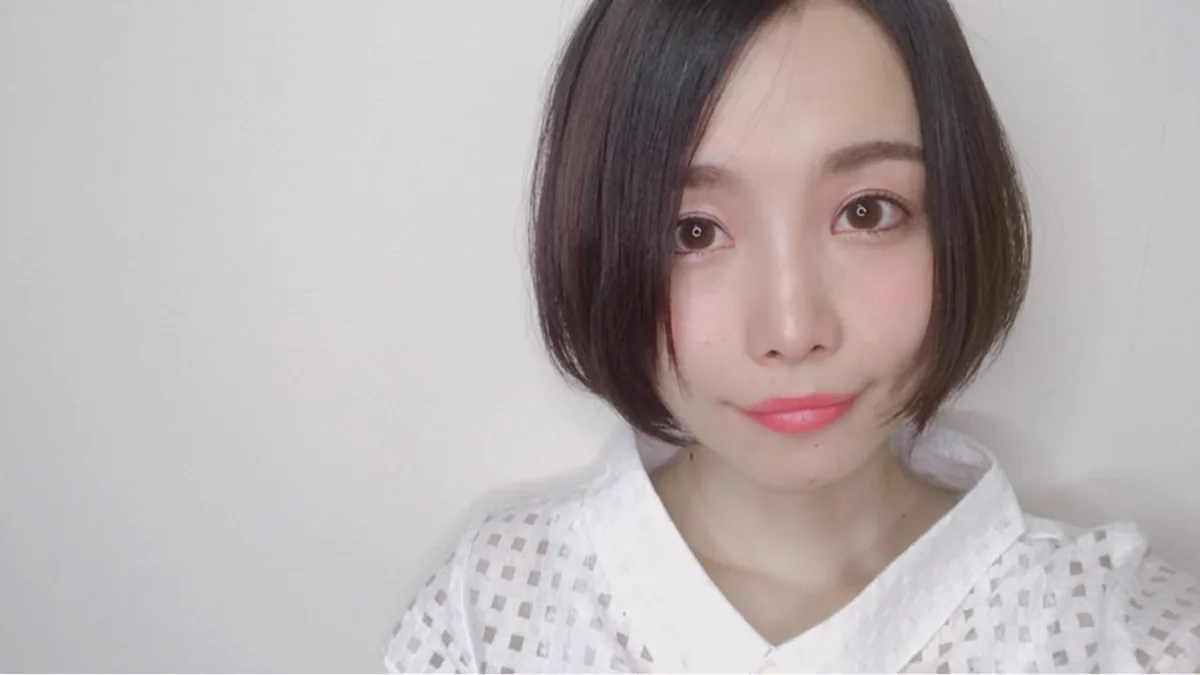
A chin-length bob with a deep side part is a small change that makes a big difference on camera. The deep part sweeps a heavy section of hair across the forehead and down one side of the face, which adds instant width and asymmetry — and asymmetry is one of the best tools for a flat webcam image, because it breaks up the straight vertical line. The bob itself ends at the chin, framing the jaw, and the whole look is polished, grown-up and a little bit glamorous.
Best for: straight and wavy hair, oval and long faces, and women who want a classic cut with a modern twist. How to style it: part the hair deeply on one side while it is damp, blow-dry the heavier side with a round brush for a soft sweep, and tuck the lighter side behind the ear. Cost and time: a quick salon cut and about ten minutes of styling a day. Common mistake: parting too shallowly, which turns a dramatic sweep into an ordinary side part. Quick verdict: the simplest way to add width to a bob — one deep part changes everything.
12. Loose Romantic Updo for Important Calls
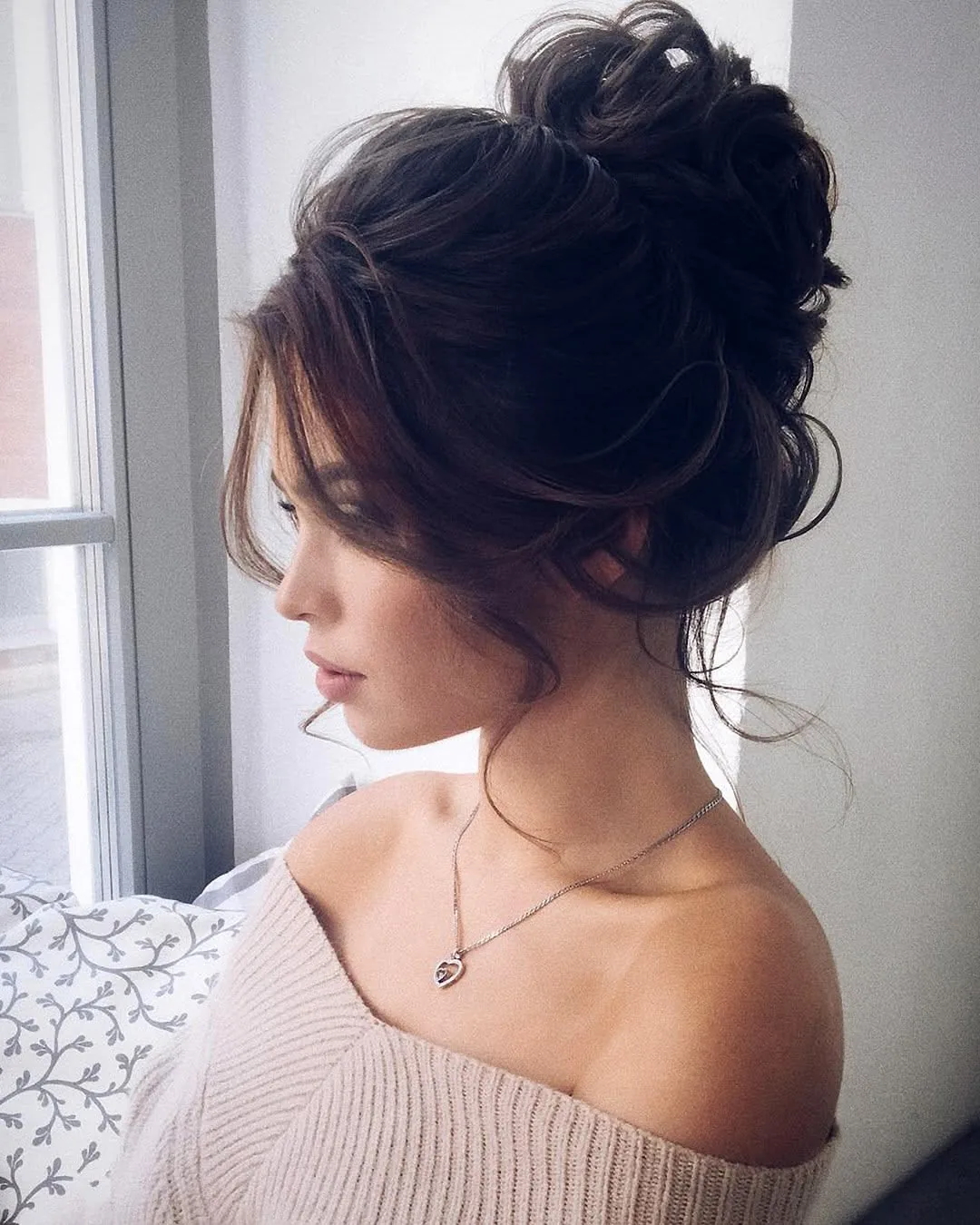
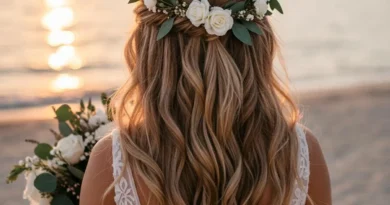
The loose romantic updo is the softer sister of the formal chignon, and it works beautifully on a video call when the occasion calls for warmth rather than severity. The hair is gathered up loosely, pinned with plenty of texture, and finished with soft pieces left out around the face and at the nape. On camera it reads as friendly and approachable, because the looseness adds width and the low placement keeps the frame soft, while the pieces keep the whole look from feeling stiff. It is dreamy, forgiving, and wonderfully easy to wear.
Best for: a warm, personal call, a celebration, or a presentation where you want to look approachable. How to style it: curl the hair first, gather it loosely at the back, pin it in soft sections, and pull out pieces around the face. What to ask your stylist: ask for the pieces to be curled, not left straight, so they frame the face instead of hanging limply. Maintenance: re-curl one piece if it drops, and otherwise leave it alone. Quick verdict: the most forgiving updo here — it gets prettier as the call goes on.
13. Classic French Bob

The French bob — chin-length, slightly curved under, often with a soft fringe — is a Parisian classic that happens to be wonderful on a video call. Because it ends at the jaw, it creates a strong horizontal line right where width is needed in a small frame, and the curved-under ends hug the cheeks, which softens the whole lower face. It is chic, confident and unmistakably stylish, and it makes the webcam frame look deliberate, like a portrait, rather than an accident.
Best for: straight or slightly wavy hair, and women who like a bold, graphic look. How to style it: blow-dry with a small round brush, tucking the ends under, and add a drop of smoothing serum for shine. Pros and cons: it is striking and very low maintenance once cut, but it is a commitment — growing it out takes patience, and it needs a stylist who can cut a precise line. Who should avoid it: very curly hair, which will not hold the curved-under shape without daily straightening. Quick verdict: the chicest short cut in this guide.
14. Long Layers With Face-Framing Pieces
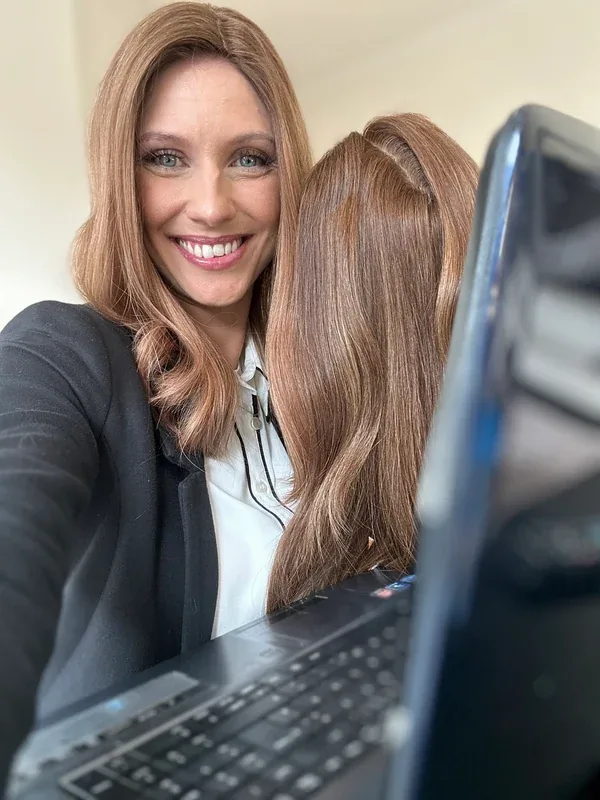
If you love your long hair and do not want to cut it short, long layers with face-framing pieces are the answer for video calls too. The length stays, but two shorter pieces at the front — starting at the cheekbones and curving down past the chin — add width and movement beside the face, so the hair no longer runs in one long straight line that the camera flattens into a curtain. The layers through the back keep the hair from looking heavy, and the whole cut moves when you do, which is far more flattering on screen than a flat sheet of hair.
Best for: long hair, all textures, and women who want to keep their length while gaining polish. How to style it: blow-dry the front pieces with a round brush, curving them away from the face, and add a loose wave through the lengths with a large-barrel iron. Common mistake: layers that start at the chin or lower, which do almost nothing for the face — they need to start at the cheekbones to work. Cost and time: a standard salon cut, about an hour, and easy to maintain at home. Quick verdict: the best way to keep long hair and still look framed on camera.
15. Soft Curls at Shoulder Length
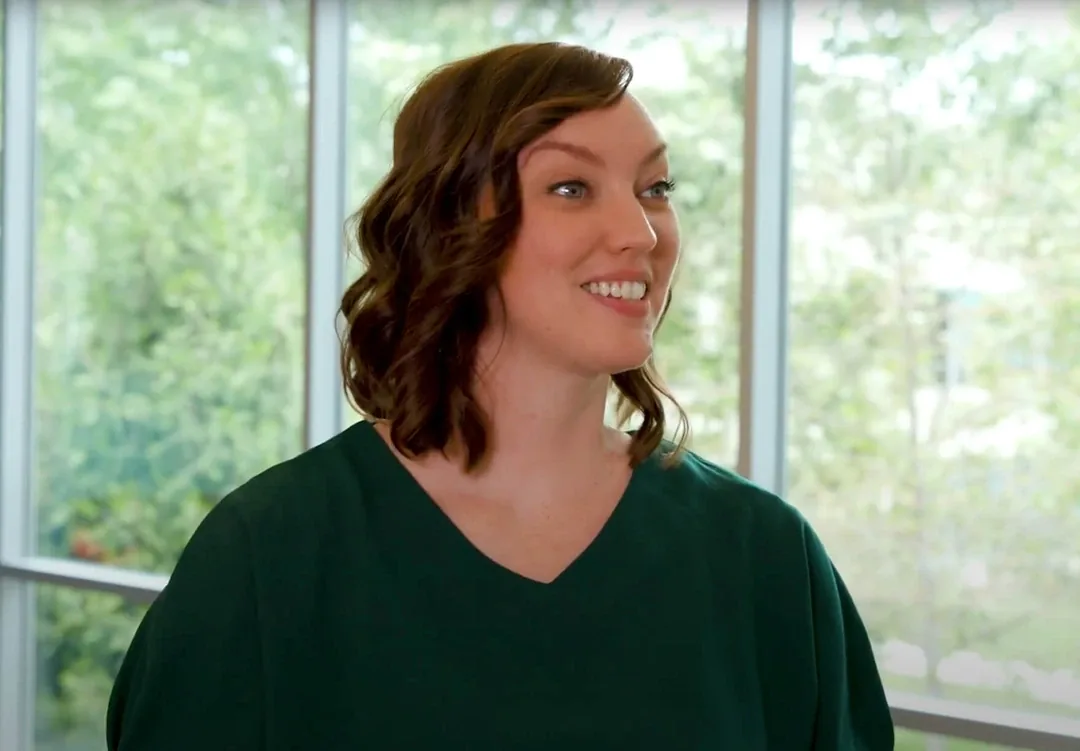
Soft curls at shoulder length are one of the most forgiving styles on a video call, because curls add width naturally — they fall out to the sides instead of hanging straight down, and they fill the small frame with soft, moving texture. A shoulder-length cut keeps the curls bouncy rather than weighed down, and the shape frames the jawline in a way that feels warm and relaxed. It works whether your curls are natural or created with an iron, and it looks just as good on a Monday stand-up as it does on a Friday social call.
Best for: naturally wavy or curly hair, and anyone who wants volume without teasing or backcombing. How to style it: curl in large sections with a wide-barrel iron, let the curls cool, then brush them out gently into soft waves and finish with a light-hold spray. Maintenance: a curl cream on damp hair keeps the shape between washes. Common mistake: brushing curls out too aggressively, which turns soft waves into frizz that the camera magnifies. Quick verdict: the most naturally flattering texture on a webcam — let the width do the work.
16. Effortless Low Bun With Loose Pieces

An effortless low bun with loose pieces is the everyday version of the elegant chignon, and it is just as useful on a video call. The bun sits low at the nape, which keeps it inside the frame, and the loose pieces around the face add the width and softness that make a small window flattering. It is the style you reach for on a busy morning between meetings, and it looks intentional rather than thrown together because the looseness is the point, not an accident.
How to style it: gather the hair loosely at the nape, twist it into a bun, pin it in two or three places, and pull out a few pieces at the front — do not smooth anything. Cost and time: three minutes, no tools beyond a few pins. Pros and cons: it is the fastest style in this guide and suits every hair type, but it will not hold through a long day of leaning forward and back — save it for short calls or tidy it up between meetings. Common mistake: making it too neat, which turns effortless into formal. Quick verdict: three minutes to a polished, camera-ready look — the best return on effort in this guide.
17. Side Braid Over One Shoulder
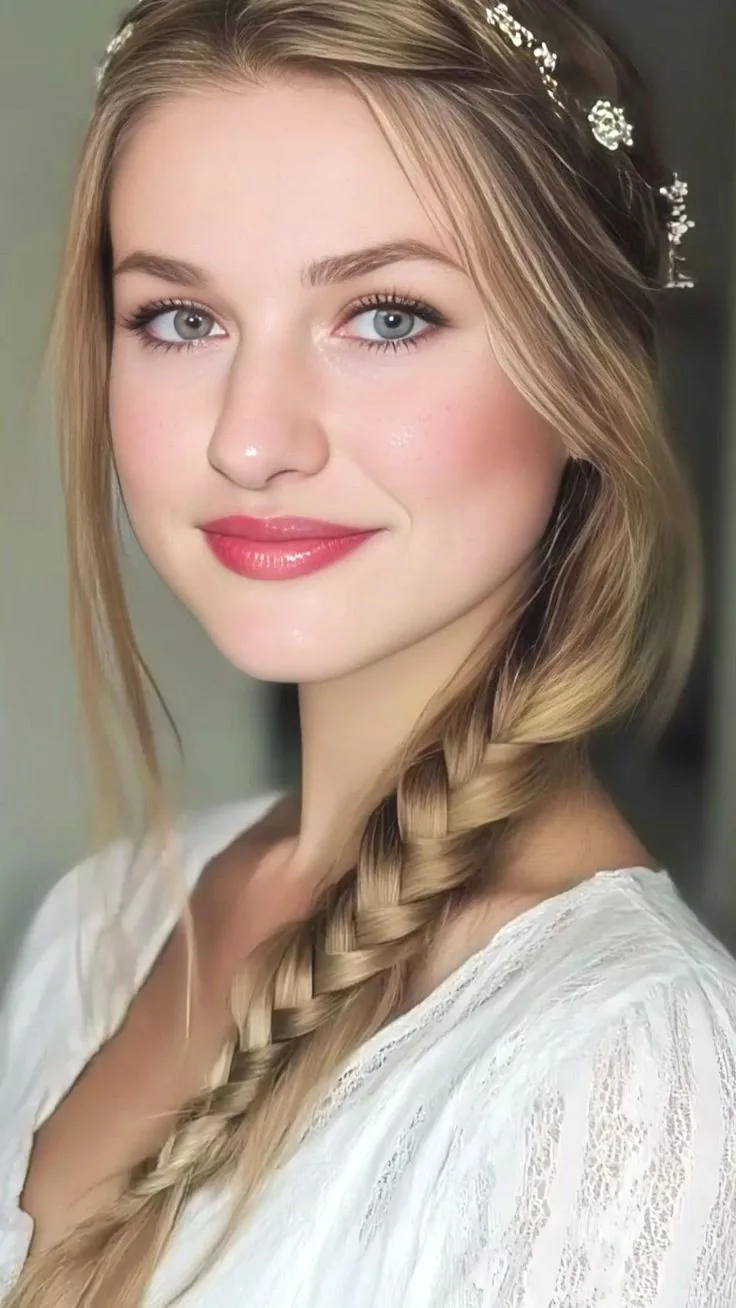
A braid worn over one shoulder does two flattering things at once on a video call: it brings the hair forward, where it fills the frame beside your face and adds width at the collarbone, and it breaks the straight vertical line of the shoulders with a soft, diagonal shape. A loose, pulled-out braid looks best — a tight, thin braid can look severe in a small window, while a soft, chunky one looks warm and adds real presence. It is also one of the most practical styles here, because it keeps long hair out of the way without pulling it up.
Best for: long hair, casual calls and friendly team meetings. How to style it: sweep the hair to one side, braid loosely, and gently pull the edges of the braid out to make it fuller, then tie with a soft elastic or ribbon. Maintenance: almost none — if it loosens, just pull it out a little more. Who should avoid it: very short hair, which cannot reach over the shoulder. Quick verdict: the simplest way to use long hair on camera — bring it forward, not back.
18. Butterfly Cut With Flowing Layers
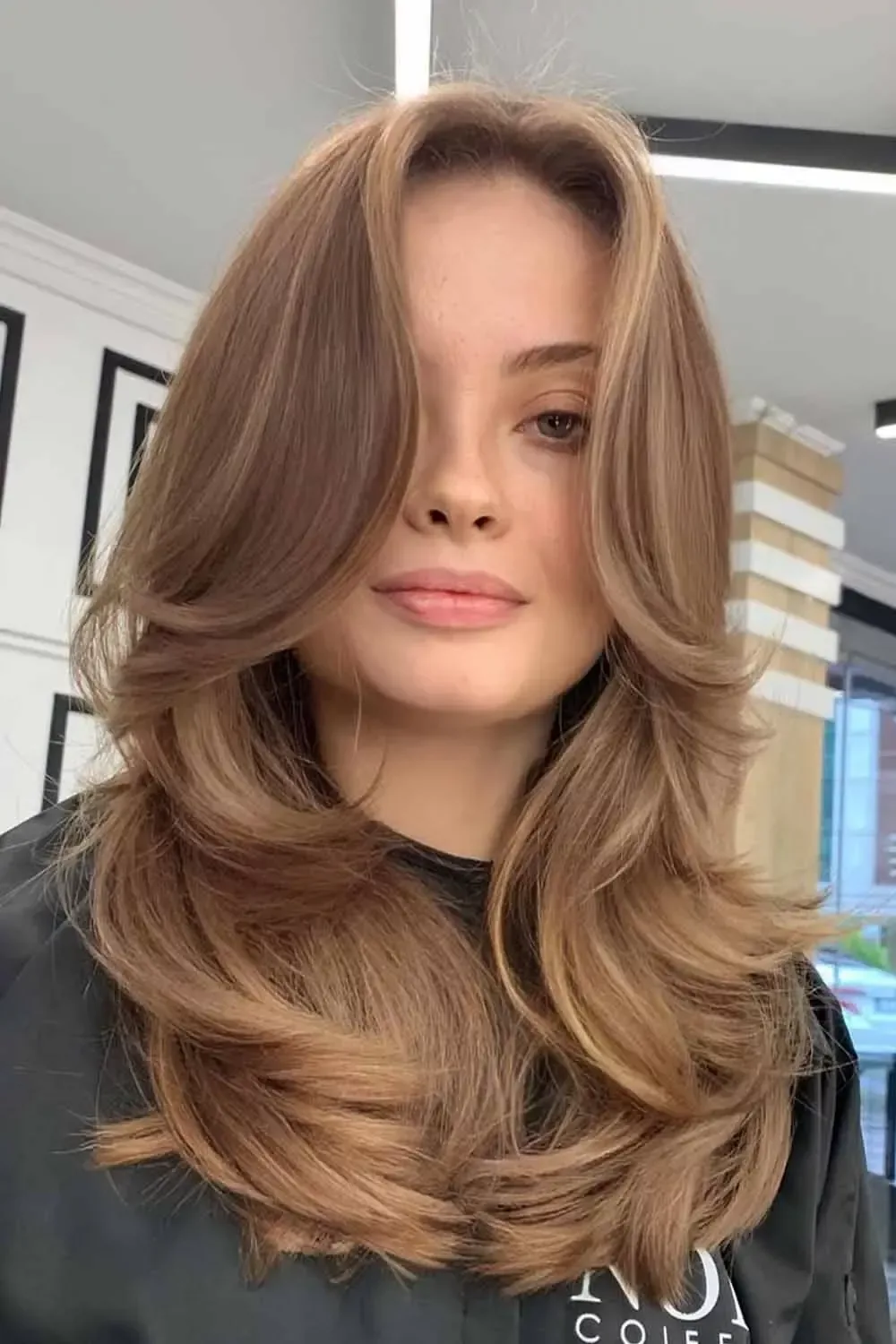
The butterfly cut — short layers on top that blend into long layers underneath — is a modern favourite that happens to suit a video call beautifully. The shorter top layers add width and movement around the face and cheeks, while the long layers underneath keep the length and give the hair a soft, wing-like shape when it moves. It is a cut that looks good with a bouncy blowout or left natural, and it suits women who want their hair to look full and alive on screen rather than flat and heavy.
Best for: medium to long hair, and women who want volume without losing length. How to style it: blow-dry with a large round brush, lifting the top layers at the roots and flicking the ends out, or curl the top layers away from the face for a soft wing. Pros and cons: it is flattering and full of movement, but the top layers need regular trims to keep their shape, and very fine hair can look thin on top if the layers are cut too short. Maintenance: a trim every six to eight weeks. Quick verdict: the most on-trend cut here — and the trend reads well on camera.
19. Bouncy Blowout With Volume at the Sides
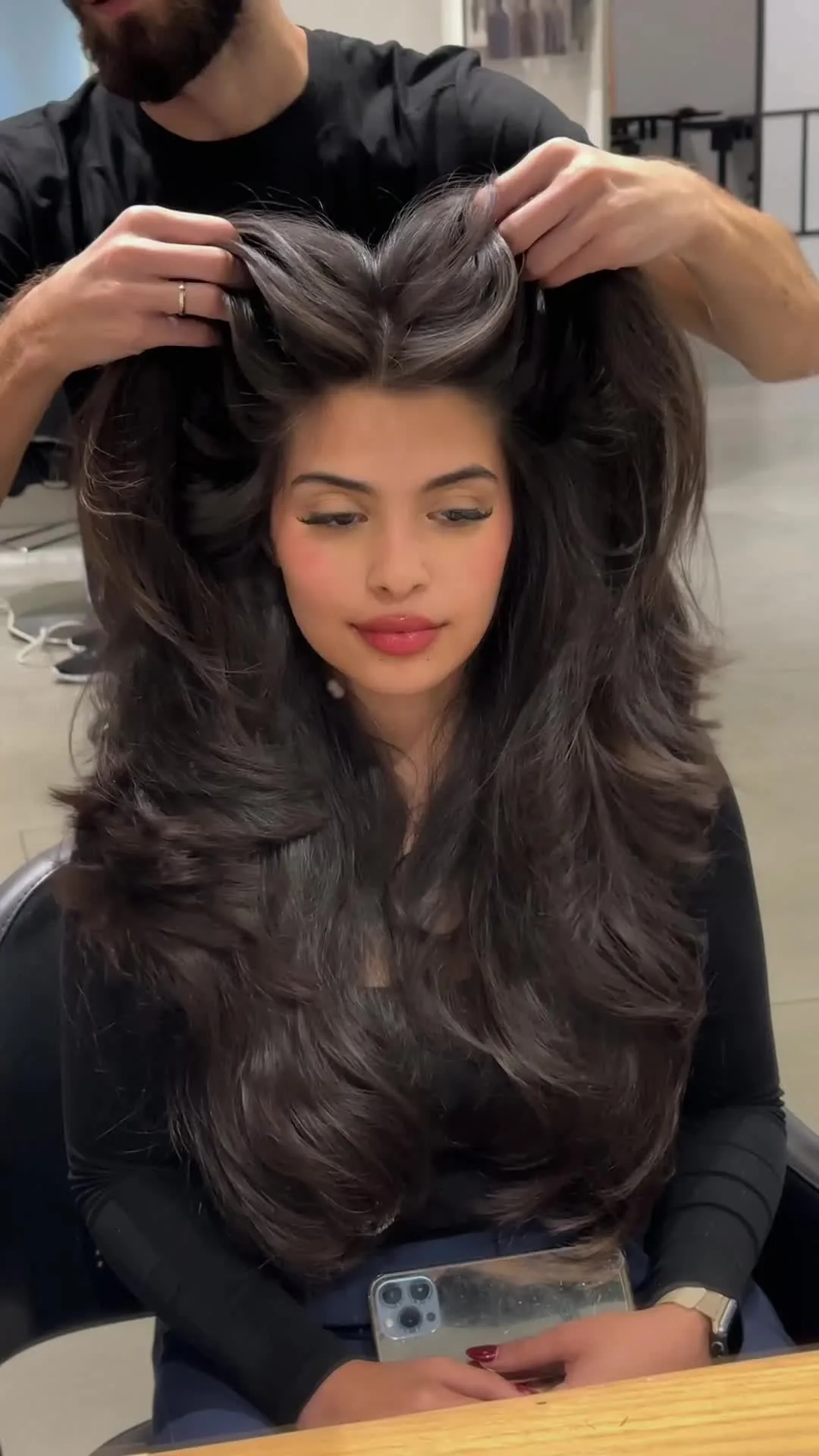
A bouncy blowout with the volume placed at the sides — not on top — is one of the most glamorous ways to look good on a video call. The hair is blow-dried with a round brush so the roots lift gently and the lengths curve out to the sides, creating a wide, soft silhouette that frames the face beautifully in a small window. It looks like you just stepped out of a salon, and on camera it reads as polished and confident rather than overdone.
Best for: medium to long hair, important presentations, and anyone who loves a salon finish. How to style it: blow-dry in sections with a large round brush, lifting at the roots and curving the ends out, then set with a flexible-hold spray. Pros and cons: it is gorgeous and photographs beautifully, but it takes twenty to thirty minutes and will drop in humidity, so it is not an everyday choice for everyone. Maintenance: a volumising mousse on damp hair helps it last. Quick verdict: the glamour option — save it for the calls where you want to look your best.
20. Wispy Bixie With Soft Sides
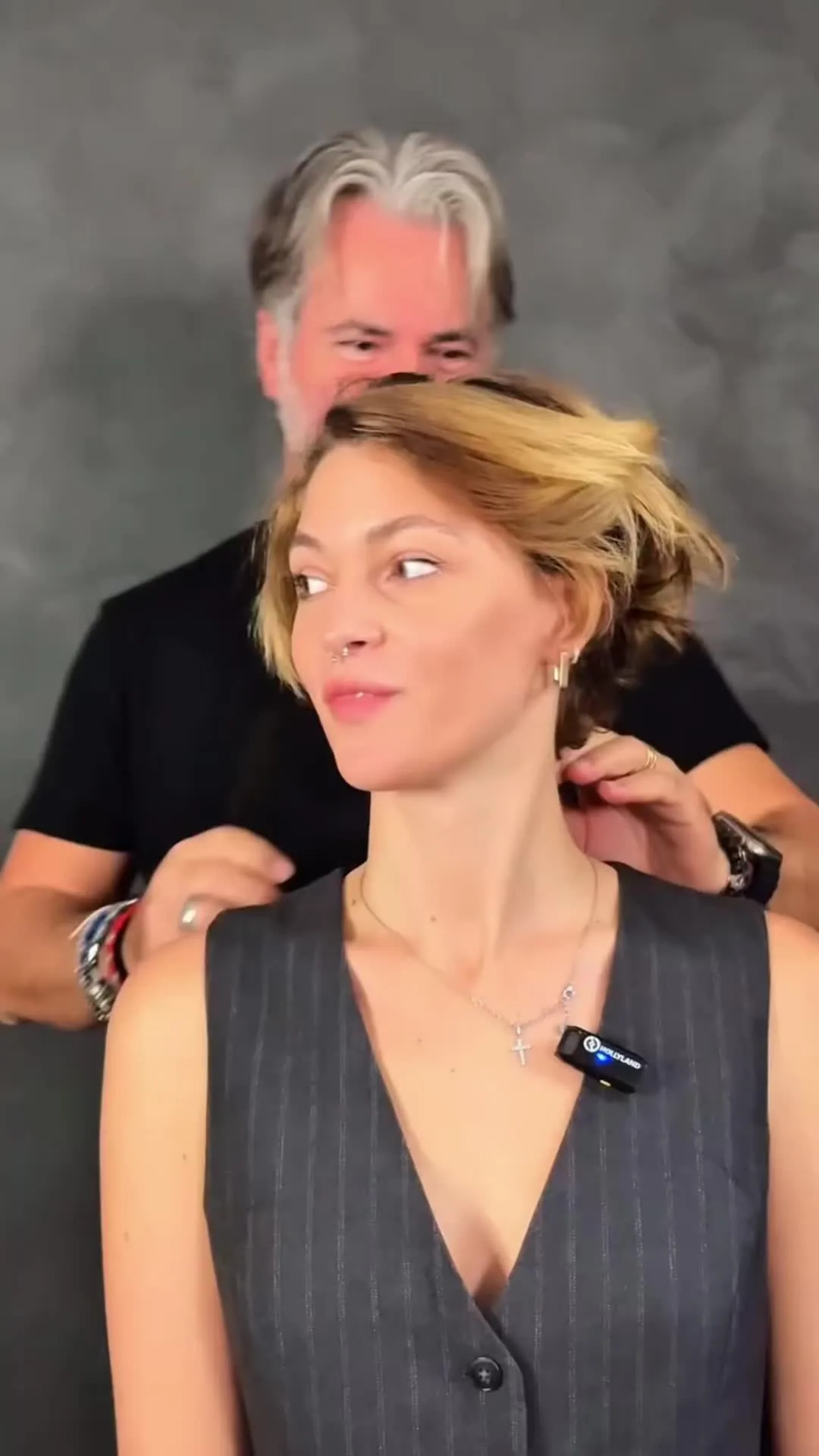
The bixie — a cross between a bob and a pixie — is the short cut for women who find a pixie too short and a bob too long, and with soft sides it is a lovely choice for video calls. The cut sits between the ear and the chin, with wispy, textured ends and longer pieces at the sides that add width at the cheeks, which is exactly what a small window needs. It is playful, modern and easy to wear, and it keeps the face open and readable on screen.
Best for: fine to medium hair, and women who want a short cut with more softness than a pixie. How to style it: work a little styling cream through damp hair, tousle the ends with your fingers, and let it dry naturally. Pros and cons: it is wash-and-go easy and grows out softly, but it needs a trim every five weeks to keep the wispy shape. Who should avoid it: a bixie with a very tall, spiky top — that adds height the camera will magnify. Quick verdict: short, soft and confident — the bixie earns its place here.
21. Bottleneck Bangs With a Shoulder Cut

Bottleneck bangs — narrow at the top, wider at the cheekbones, like the neck of a bottle — are the softer, more forgiving cousin of the blunt fringe, and they are wonderful on a video call. They shorten the face gently, add width at the cheeks where they flare out, and blend into the rest of the hair so there is no harsh line for the camera to catch. Paired with a shoulder-length cut, they create a balanced frame around the whole face, and they are easy to sweep to the side on the days you do not want bangs at all.
Best for: most face shapes, especially long and oval faces, and women who want bangs without the commitment of a blunt fringe. How to style it: blow-dry the bangs with a small round brush, curving them slightly outward at the ends. Maintenance: a trim every four to six weeks to keep the shape. Common mistake: cutting bottleneck bangs too wide at the top, which turns them into a blunt fringe. Quick verdict: the gentlest fringe in this guide — and one of the most flattering on screen.
22. High Ponytail That Clears Your Headphones

A high ponytail sounds like the enemy of a video call, but it has one secret advantage: it clears your headphones completely. With the hair gathered high, the headphone band and ear cups sit on smooth hair instead of squashing a style, and the ponytail falls behind the shoulders, out of the frame. The trick is to soften it — leave two front pieces loose, add a wave through the ponytail, or wear it slightly lower, at the crown rather than the very top of the head, so it does not pull the face upward.
Best for: long days of back-to-back calls with a headset, and women with thick hair that a low bun cannot hold. How to style it: gather the hair high, secure it, wrap a strand around the base, and pull out two soft pieces at the front. Pros and cons: it keeps headphones comfortable and the hair out of the way, but a very tight, very high ponytail can look severe on camera — keep the front soft. Cost and time: two minutes and one hair tie. Quick verdict: the headset-day hero — high, but soft.
23. Voluminous Curls That Fill the Frame
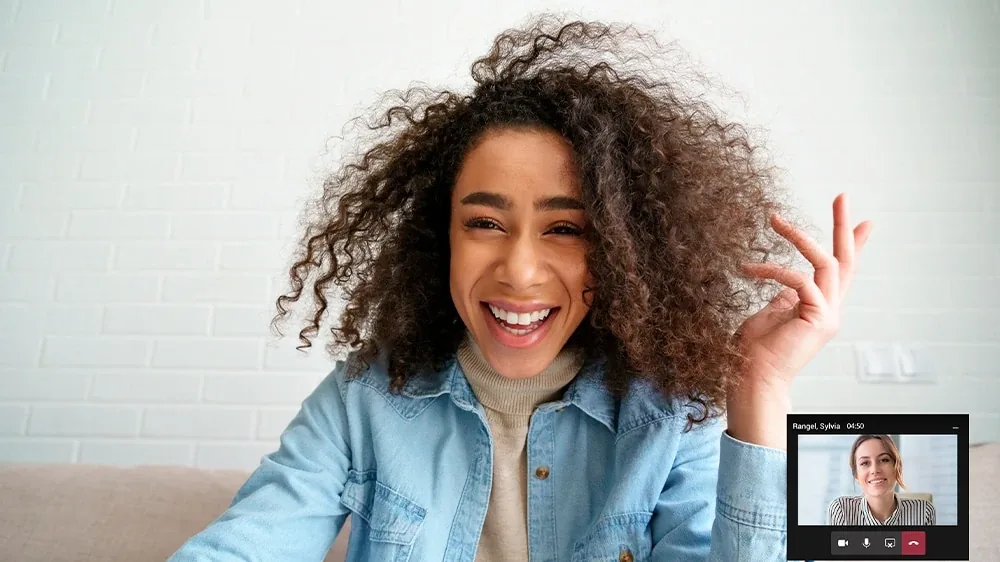
If you have naturally curly hair, you already have the best tool for a video call — volume at the sides. Voluminous curls fall out to the sides instead of hanging straight down, they fill the small frame with soft texture, and they frame the jawline in a way no straight style can match. A cut that keeps the curls at shoulder length or longer lets them reach their full width, and a few layers through the shape keep the volume balanced instead of triangular.
Best for: naturally curly and coily hair, and anyone who wants their texture to do the work. How to style it: apply curl cream to damp hair, diffuse on a low heat, and pick the roots gently for volume — never brush dry curls. What to ask your stylist: ask for a dry cut or a curl-by-curl cut, so the layers fall where your curls actually sit. Common mistake: cutting curly hair wet and straight, which shrinks up shorter than expected. Quick verdict: your curls are the width — let them be the star of the frame.
24. Feathered Cut With Layers at the Cheeks
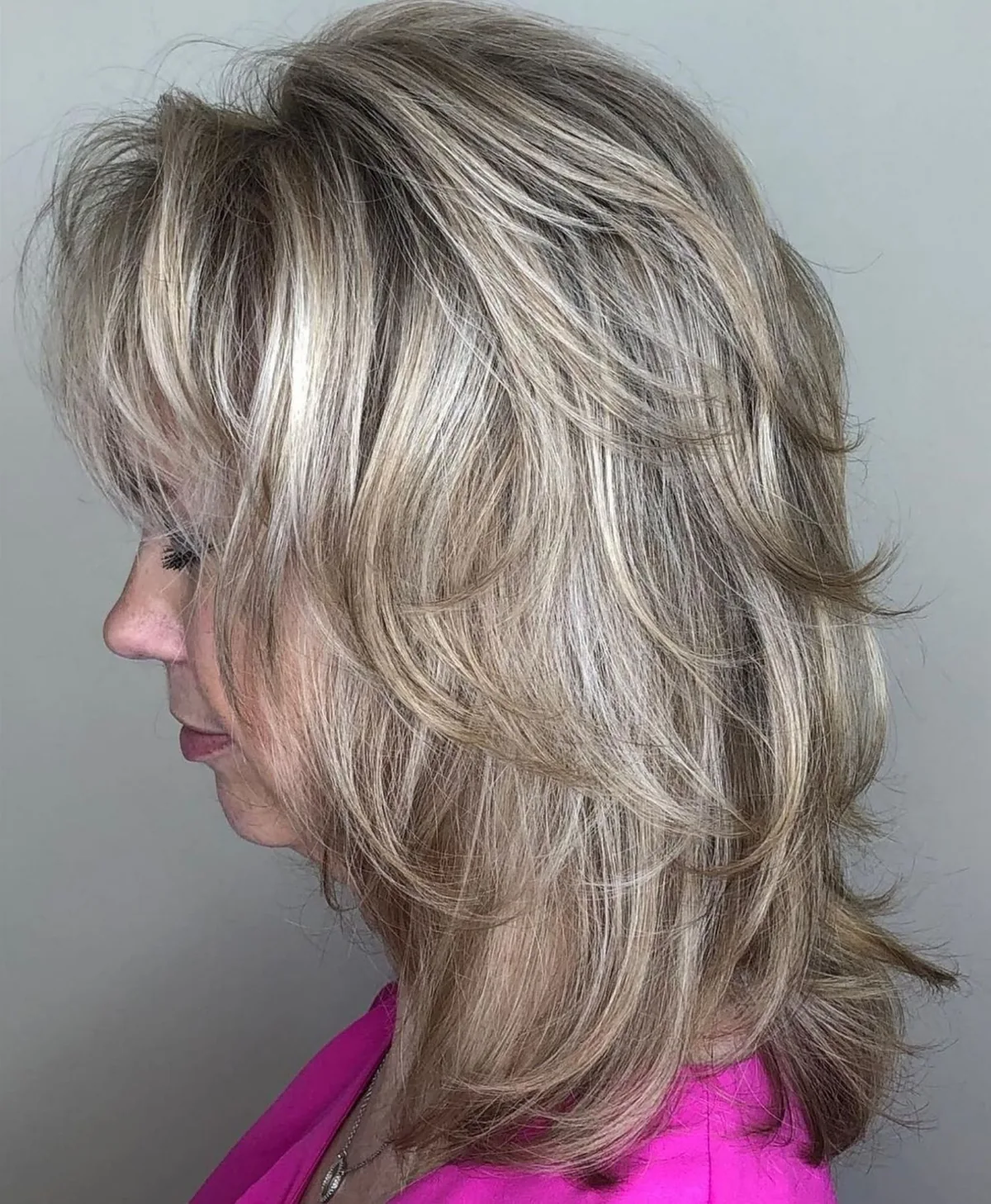
The feathered cut — layers that are thinned and flicked outward so they look like feathers — is a 1970s classic that is perfect for a video call, because the layers at the cheeks add width exactly where a small window needs it. The feathering softens the edges of the cut, so there is no hard line anywhere for the camera to catch, and the hair moves with a light, airy quality that reads as fresh and friendly on screen. It works at shoulder length and longer, and it is one of the easiest cuts to style with just a brush and a hairdryer.
Best for: medium to thick hair, and women who like movement in their cut. How to style it: blow-dry with a round brush, flicking the cheek layers outward and the ends under, and finish with a light serum. Pros and cons: it is light, moving and flattering, but the feathering needs a stylist who knows the technique — badly feathered hair can look thin. Maintenance: a trim every six to eight weeks. Quick verdict: the lightest, airiest cut here — feathers at the cheeks, polish everywhere else.
25. Soft A-Line Bob
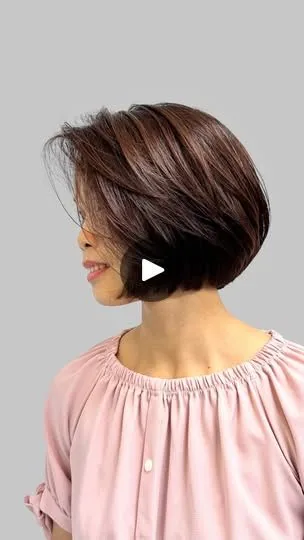
The A-line bob — shorter at the back, longer at the front — is a flattering shape for a video call because the longer front pieces frame the jaw and fall beside the face, adding width and softness where a straight bob might look boxy in a small window. The soft version, with textured ends and a gentle curve rather than a sharp angle, is the one to ask for: it keeps the flattering shape without the severity. It is polished, modern and easy to style, and it suits straight and wavy hair equally well.
Best for: straight and wavy hair, oval and long faces, and women who want a bob with a little more shape. How to style it: blow-dry with a round brush, curving the front pieces under slightly, and add a drop of shine serum. What to ask your stylist: ask for a soft A-line, not a sharp one, with the front pieces ending at the jaw or just below. Maintenance: a trim every six weeks keeps the angle. Who should avoid it: very curly hair, which will not hold the angled line. Quick verdict: the bob with a built-in frame for your jaw.
26. Long Hair With Blunt Ends and Cheek Layers
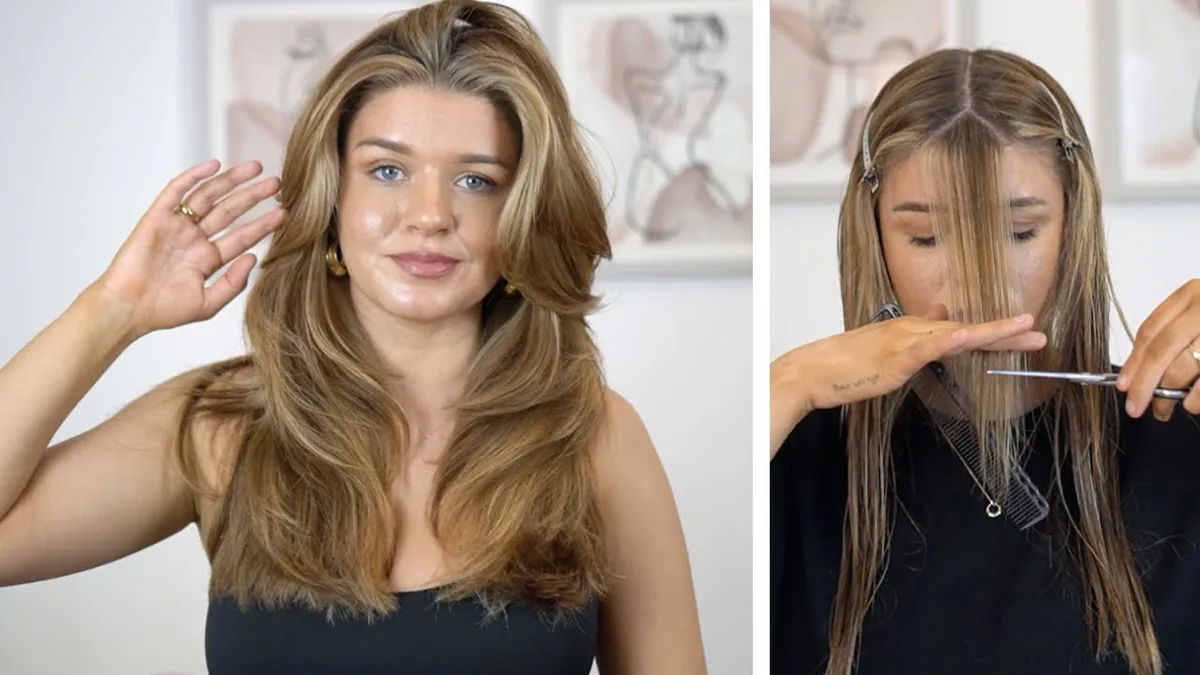
Long hair with blunt ends and layers only at the cheeks is the perfect compromise for women who love long hair but want to look framed on a video call. The blunt ends keep the hair looking thick and healthy, while the two short layers at the front — starting at the cheekbones — add the width and framing that a long, straight curtain of hair lacks on camera. It is a subtle change that makes a real difference, and it is one of the easiest cuts to maintain, because only the front layers need regular attention.
Best for: long, straight or wavy hair, and women who do not want to lose length. How to style it: blow-dry the front layers with a round brush, curving them toward the face, and leave the lengths to fall naturally or add a loose wave. Pros and cons: it keeps your length and looks thick and healthy, but the front layers need a trim every six weeks or they grow past the chin and stop framing the face. Cost and time: a standard cut, about an hour. Quick verdict: keep the length, add the framing — the best of both.
27. Textured Crop With Side Volume
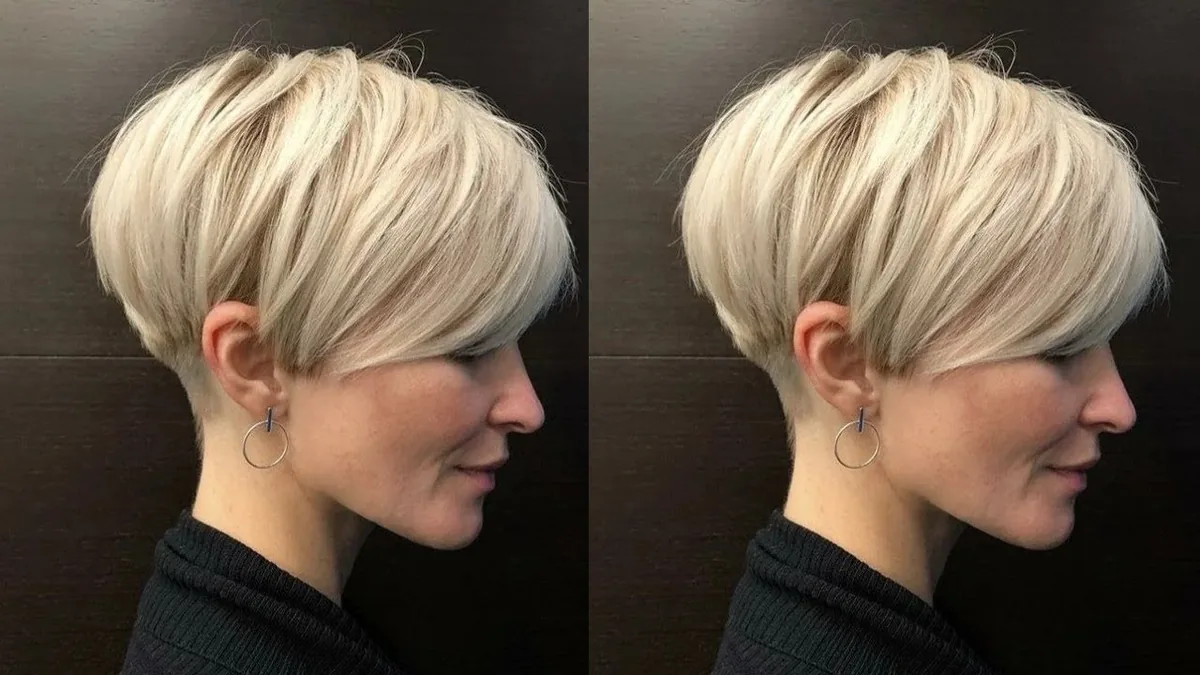
A textured crop with volume at the sides is the short, confident cut for a video call. The top is kept soft and textured rather than tall, while the sides are left a little longer and piecey, which adds width at the temples and cheeks — the exact opposite of the spiky, top-heavy crop that a webcam would exaggerate. It is a modern, low-maintenance cut that keeps the face open and readable on screen and pairs beautifully with statement earrings.
Best for: fine to medium hair, and women who want a short cut that is soft, not severe. How to style it: work a little texture paste through damp hair with your fingers, push the sides forward slightly, and let it dry naturally. What to ask your stylist: ask for the sides to stay soft and textured, not faded or buzzed. Maintenance: a trim every four to five weeks. Common mistake: adding height on top with too much product — keep the top flat and the sides full. Quick verdict: short hair, wide at the sides — the formula that works on camera.
28. Half-Up Top Knot With Soft Front Pieces
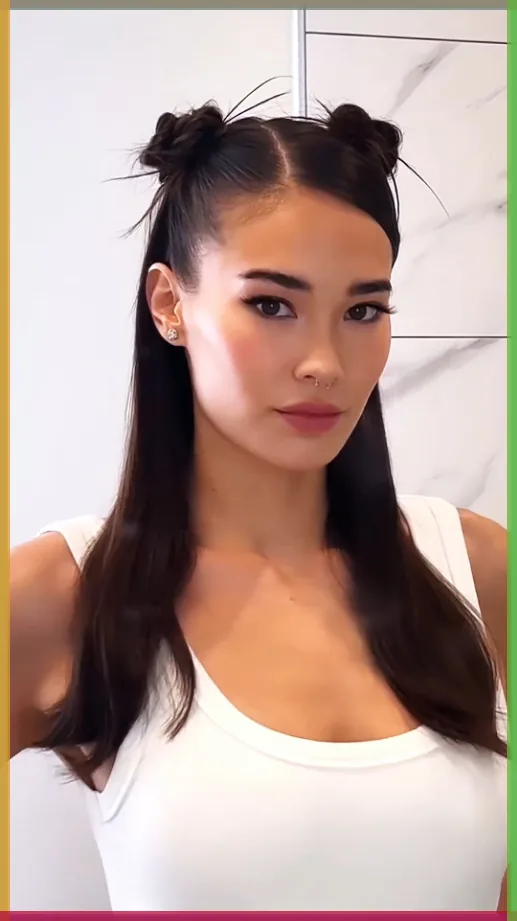
A half-up top knot sounds like it would add height, and it can — but with soft front pieces left out, it becomes one of the most flattering styles for a video call. The knot itself is small and low, sitting at the crown rather than piled high, while the front pieces fall softly beside the face and add the width that balances the style. The rest of the hair falls loose, which keeps the look relaxed and young. It is a five-minute style that looks like you tried much harder than you did.
How to style it: gather the top section, twist it into a small knot, pin it, and pull out two soft pieces at the front, curling them lightly. Best for: medium to long hair, casual calls and team socials. Pros and cons: it is quick, fun and flattering, but the knot can slip on very silky hair — use a textured spray first for grip. Common mistake: making the knot too big and too high, which adds the height the camera exaggerates. Quick verdict: a top knot, done softly — the exception that proves the rule.
29. Elegant Low French Twist
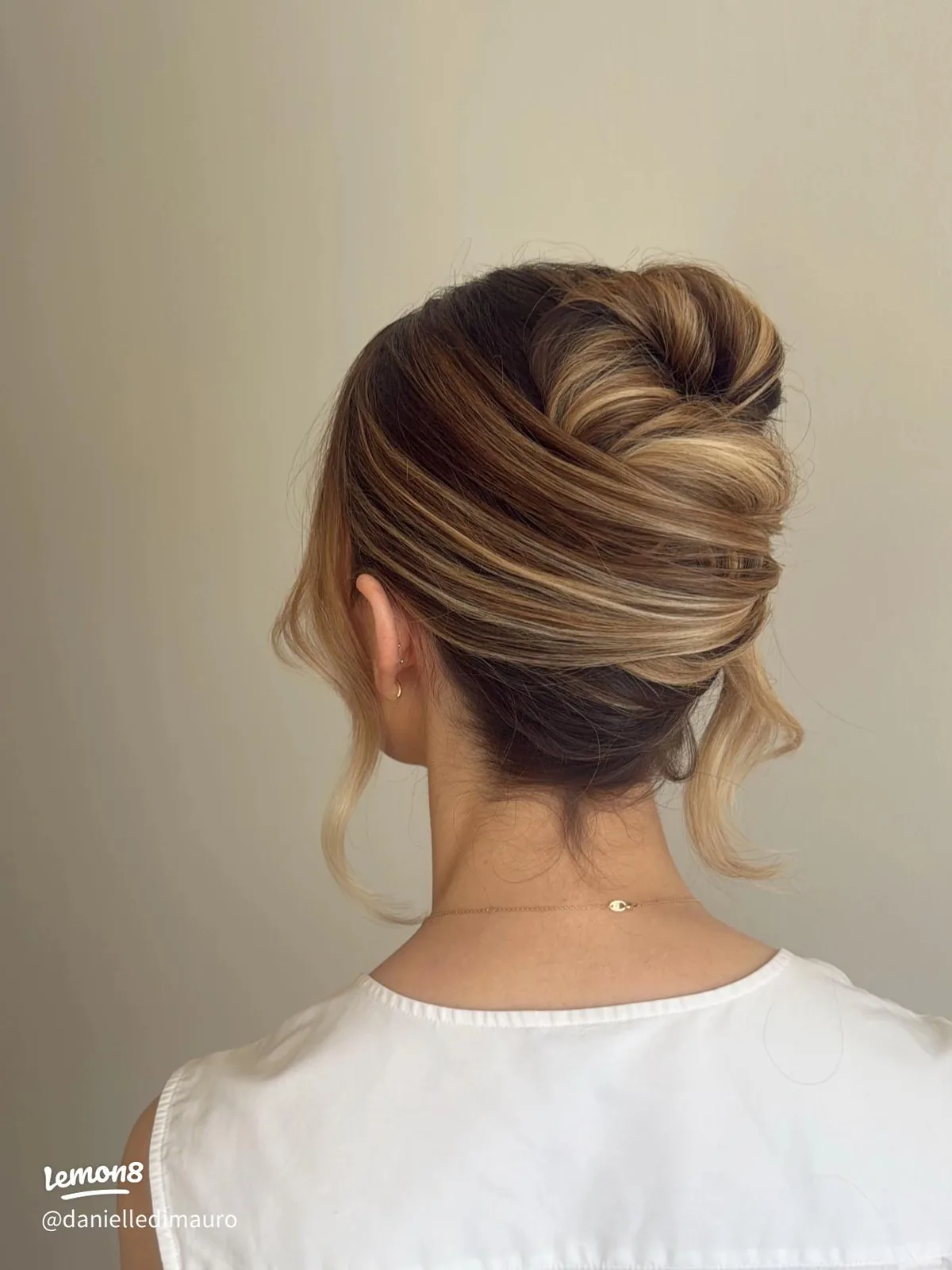
The low French twist is the most classic updo in existence, and on a video call it looks like it was designed for the frame. The hair is swept up and twisted into a sleek vertical roll, but the low placement — at the nape rather than high on the head — keeps it inside the frame and creates a clean, elegant silhouette. A few soft pieces left out at the front keep it from looking severe, and the whole style is timeless, grown-up and unmistakably chic.
Best for: formal calls, client presentations, and women who want a timeless updo. How to style it: gather the hair to one side, twist it upwards against the head, pin it in a vertical line with large bobby pins, and pull out two soft front pieces. Pros and cons: it is stunning and holds well, but it needs a skilled stylist — a French twist done badly is very visible on camera. Cost and time: about thirty minutes in the chair. Who should avoid it: very short or very layered hair, which will escape the twist. Quick verdict: the most timeless updo here — and the one that looks most at home in a video frame.
30. Tucked-Behind-the-Ears Sleek Bob
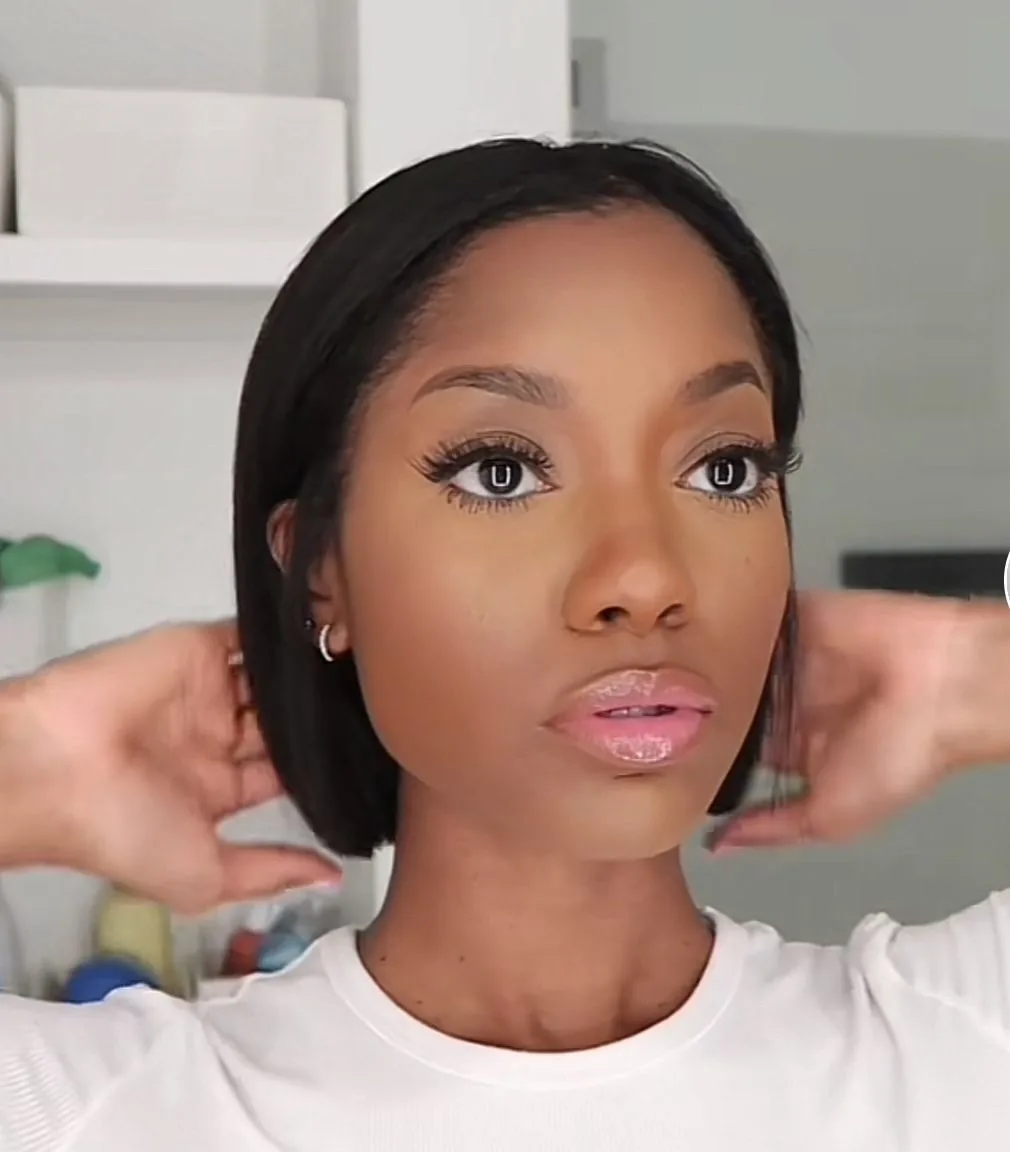
Tucking a sleek bob behind the ears is the smallest change with the biggest payoff on a video call: it opens up the face completely, shows the cheekbones and earrings, and stops the hair from falling forward and blocking the frame when you lean in to read a question. The bob itself gives the jaw a clean border, and the tuck adds a neat, deliberate finish that reads as polished and confident. It is also the most headset-friendly bob there is, because the ear cups sit on smooth hair.
Best for: chin- to shoulder-length bobs, and anyone who wears headphones or earbuds all day. How to style it: blow-dry smooth, tuck both sides behind the ears, and smooth the top with a drop of serum. Pros and cons: it takes ten seconds and needs no pins, but it does need a bob that is long enough to stay tucked — very short bobs will spring out. Maintenance: re-tuck once between calls. Quick verdict: ten seconds, and your whole face is in the frame.
31. Wavy Shag With Curtain Bangs
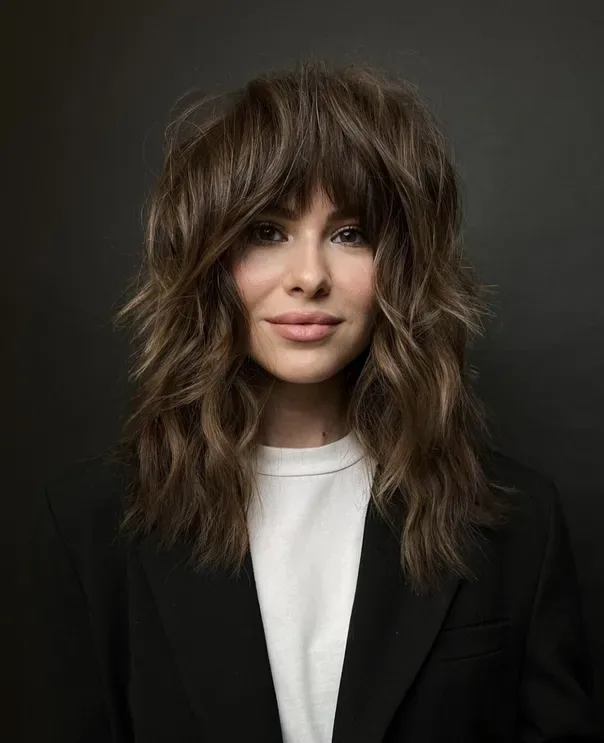
The wavy shag is a rock-and-roll cut that turns out to be perfect for a video call, because it is all width. Layers are cut through the whole head, the ends flick out in every direction, and the curtain bangs add softness at the forehead — the result is a shape that is wider than it is tall, which is exactly the proportion that reads well in a small, flat video window. It is a fun, modern cut that looks better slightly messy, so it suits women who do not want to spend twenty minutes with a hairdryer every morning.
Best for: wavy and curly hair, and anyone who likes a relaxed, lived-in look. How to style it: scrunch a little mousse into damp hair, diffuse on a low heat, and shake the layers out with your fingers. What to ask your stylist: ask for the layers to start at the cheekbones and for the ends to be textured, not blunt. Common mistake: cutting the shag too short on top, which adds height and makes the shape top-heavy on camera. Quick verdict: the most fun cut in this guide — width, movement and personality in one.
What is the best hairstyle for video calls?
The best hairstyle for a video call is one that frames your face cleanly, stays put for an hour, and needs no fixing mid-call. A sleek low bun with a centre part is the safest all-round choice. A polished shoulder-length bob or a textured lob is the easiest everyday option. And a low ponytail with a wrapped base is the fastest fix when you only have two minutes. Start with the shape that suits your hair, then add the framing around your face.
How should I wear my hair for a Zoom job interview?
Wear your hair neat, controlled and out of your face for a video job interview — a sleek low bun, a polished bob, a low ponytail, or smooth hair with a side part. Nothing should move, fall in your face, or need pushing back while you answer questions, because every time you touch your hair the interviewer notices. Do a camera test the day before, check the frame the way the interviewer will see it, and then leave your hair alone.
What hairstyles work best with headphones on video calls?
The best headset-friendly hairstyles keep the crown and sides low and smooth, so the headphone band never crushes the style. A low bun at the nape, a low ponytail, a bob tucked behind the ears, or hair worn down with a low side part all survive headphones. A high ponytail also works, because the band sits on smooth hair above the ponytail. Avoid volume at the crown that the band will flatten, and any style that depends on height at the top.
How do I stop flyaways showing on camera?
Flyaways show on camera because the webcam catches light at the edges of your head, so smooth the top layer before the call. A drop of smoothing serum or a light-hold spray on a brush, run over the hairline, is usually enough. Styles that keep the hairline controlled — a bun, a tucked bob, or a half-up style with the front smoothed back — hide flyaways completely. Keep a small brush and a travel-size smoothing spray at your desk for a thirty-second tidy-up between meetings.
Should I wear my hair up or down for video calls?
Either can look great on a video call, as long as it is a deliberate choice. Hair up — a low bun, a low ponytail, a chignon — looks polished, stays out of your face, and works best with headphones. Hair down — a polished bob, soft waves, or sleek straight hair — looks friendly and approachable, but needs the front pieces controlled so they do not fall forward when you lean in. If you are unsure, go up for formal calls and down for friendly ones.
What hairstyles look bad on a webcam?
No hairstyle looks bad on a webcam by itself, but a few read worse on camera than in person. Very high, very tight styles add height the flat image exaggerates. Very flat, centre-parted straight hair can look stark without any framing. Bed head and untouched second-day hair read much worse on a small screen than in a mirror, because the camera has no depth to soften them. And hair that falls forward over the shoulders can block your face when you lean in. Every one of these has a two-minute fix.
How can I make my hair look good on camera without washing it?
Dry shampoo at the roots is the fastest fix for second-day hair on camera — it removes the shine that reads as grease in a small window and adds a little lift. Then smooth the hairline with a brush and a drop of serum, fix the part, and choose a shape: gather the lengths into a low bun or a low ponytail, or add a wave to the front pieces only, because those are the only pieces the camera really sees. Do not re-wash in a hurry — damp hair looks darker and flatter on camera.
Does hair colour matter on video calls?
Yes, a little. The camera compresses contrast, so very dark hair against a dark background can merge into one shape — a little shine or a few lighter face-framing pieces help the outline of your hair read on screen. Very blonde hair in bright light can blow out and lose detail, so a slightly deeper tone at the roots or a soft wave gives the camera something to hold on to. Lighting matters more than colour, though: sit facing a window and your hair colour will read truly whatever it is.
What is the quickest hairstyle for a last-minute video call?
The quickest video call hairstyle is a low ponytail with a wrapped base — two minutes, one hair tie, and it looks polished. A low bun is just as fast and hides even more. If your hair is short, tuck a bob behind the ears and smooth the top with a drop of serum — ten seconds. And if you have thirty seconds more, add a wave to the two front pieces, because those are the pieces the camera sees. Keep a brush, pins and a hair tie in a drawer by your desk so you are never caught out.
How do I keep my hairstyle looking good through a long day of video calls?
Choose a style that holds, not one that needs attention. A low bun, a low ponytail or a polished bob will look the same at 5 p.m. as they did at 9 a.m., while loose curls and high volume will drop by lunchtime. Between calls, do a thirty-second check: smooth the hairline, re-tuck the sides, and re-pin anything that has slipped. Keep a brush, a few bobby pins and a travel-size smoothing spray at your desk. And if a style has completely fallen apart, switch to a low bun — it is the reset button for video call hair.
Conclusion
On a video call, your hair is doing more work than it ever does in a room — it fills the frame, frames your face, and tells everyone in the meeting how polished and prepared you are, all before you say a word. The 31 hairstyles in this guide are all chosen for that small rectangle: sleek low buns and polished bobs for the formal calls, soft waves and textured lobs for the everyday ones, headset-friendly ponytails for the long days, and two-minute fixes for the mornings when the meeting starts before you are ready.
Start with the guides, not the gallery. Think about how you sit, where your light comes from, whether you wear headphones, and what kind of calls fill your day — then pick the style family that fits. Do a camera test before the important calls, keep a brush and a few pins by your desk, and remember the rule that runs through this whole guide: style for the small rectangle, frame the face, and keep it still. Your hair will do the rest.