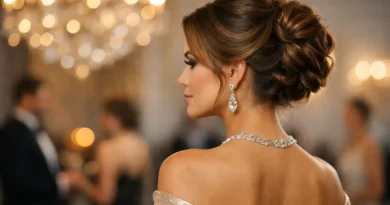
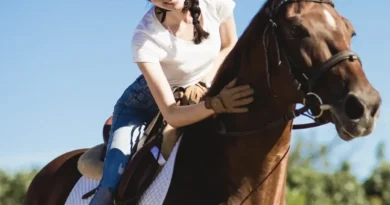
Breathe In, Hair Out of the Way: 40 Yoga Class Hairstyles That Stay Put Through Every Pose
There is a special kind of frustration reserved for the middle of a yoga class. You are folded into downward dog, breathing steadily, finally feeling calm — and then a loose strand of hair slides across your face, tickles your nose, and lands right in your mouth. You shake your head, it falls back, and two breaths later it is there again. Or worse: you lie back for savasana, the final rest that is supposed to feel like floating, and the hard clip at the back of your head digs into the mat and straight into your skull. Hair should never be the hardest part of yoga, but the wrong style can turn a peaceful hour into an hour of tucking, shaking, and re-tying.
This guide gathers 40 yoga class hairstyles for women that actually stay put through every pose — from a slow yin class where you lie still for minutes at a time, to a sweaty vinyasa flow, to a 40-degree hot yoga room where everything slides. Every style here is judged on the things that matter on a mat: does it lie flat when you lie down, does it survive inversions without falling apart, does it keep hair out of your face in downward dog, and can you take it out afterwards without a knot the size of a walnut? Eight guides first walk you through what makes a style yoga-proof, which hair ties will not dig in, how to care for a sweaty scalp, and how to refresh your hair after class without a full wash.
Whether your hair is long, short, curly, coily, fine, or thick, there is a style here for you — and most of them take under five minutes. Pick one, try it in your next class, and notice how much easier it is to breathe when your hair is simply out of the way.
What Makes a Hairstyle Yoga-Proof
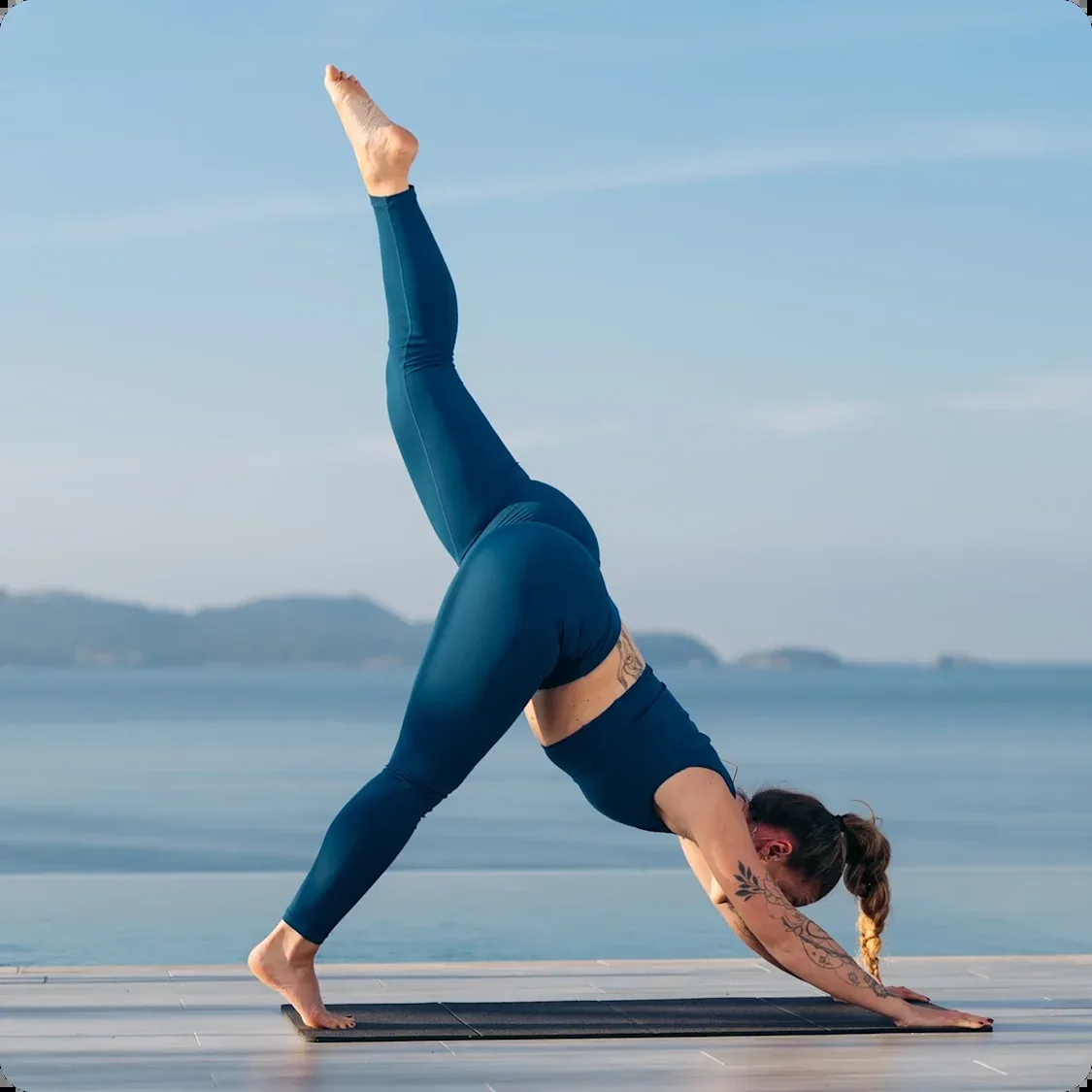
A yoga-proof hairstyle passes four tests, and most everyday styles only pass one or two. First, it must lie flat: anything with bulk at the back of the head — a high bun, a big clip, a knot sitting right on the crown — will press into the mat the moment you lie on your back, and it will hurt within a minute. Second, it must survive gravity in reverse: in downward dog and inversions, your head hangs down, so a style held only by gravity or a loose tie will slide forward and fall apart. Third, it must keep every strand out of your face, because even one loose wisp becomes a distraction when you are trying to breathe and focus. And fourth, it must come out easily, without ripping or tangling, because a style that survives class but costs you ten minutes of detangling afterwards is not a win.
Pros of building for these four tests: you stop thinking about your hair entirely, which is the whole point of yoga. Cons: the flattest, most secure styles are rarely the prettiest ones, and that is a trade worth making for one hour. Common mistake: choosing a style because it looks good in the studio mirror before class, instead of testing it lying down on your mat at home first. Quick verdict: if it lies flat, stays put upside down, and comes out without a fight, it is yoga-proof — everything else is a bonus.
Hair Ties and Accessories That Do Not Dig In
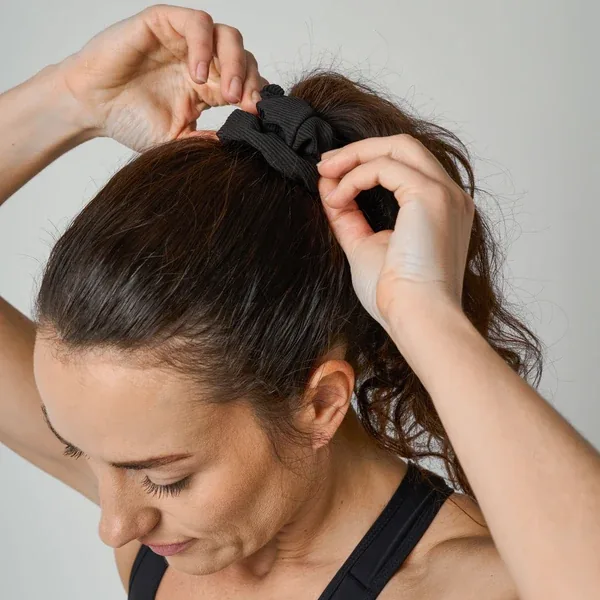
The single most important yoga accessory is not a mat or a block — it is the thing holding your hair. Thin elastic bands with a metal join will dent your hair, snag strands, and press a sore spot into your scalp by the end of class. A soft fabric scrunchie, a spiral telephone-cord tie, or a seamless elastic spreads the pressure and lets you tie firmly without a crease. Flat claw clips are the other trap: a chunky clip at the back of the head is a rock under your skull in savasana, while a small flat clip at the side or a low twist held with two bobby pins disappears completely.
How to choose: pick ties you can wrap three times without them feeling tight, and test them lying down — if you can feel the tie through your hair when your head is on the mat, swap it. Best for everyone: keep two ties in your bag, one fabric and one spiral, so a snapped elastic never ends your class early. What to avoid: metal-join elastics, heavy decorative clips, hard headbands with teeth, and anything beaded or jewelled at the back of the head. Quick verdict: soft, flat, and forgettable is the goal — if you cannot feel it, it is the right accessory.
Sweat and Scalp Care Before and After Class
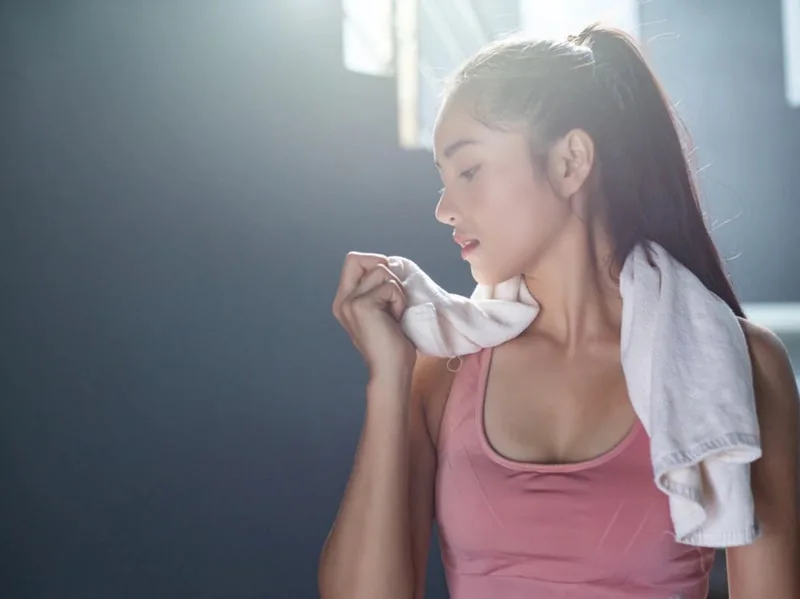
Sweat is not the enemy of your hair — trapped sweat is. When sweat dries at the roots it leaves salt behind, which can make the scalp itchy and the hair feel gritty, especially if you wash it away with a harsh shampoo every single day. The gentlest routine is also the simplest: before class, brush your hair so sweat can travel down the strands instead of pooling at the roots, and tie it loosely enough that air can reach the scalp. After class, let your hair down as soon as you can, shake it out, and let it air-dry for ten minutes before you brush it — brushing wet, sweaty hair is when most breakage happens.
Best for frequent yogis: a sulphate-free shampoo two or three times a week, and a scalp rinse or a spritz of water with a drop of tea tree oil on the other days. Common mistake: piling on dry shampoo before class, which mixes with sweat into a paste that clogs the roots. What to avoid: washing with very hot water straight after a hot class, which strips the scalp just when it is most sensitive. Quick verdict: brush before, air out after, wash gently — your scalp will stay calm even if you practise every day.
Hair by Yoga Style: Hot Yoga vs Yin vs Vinyasa
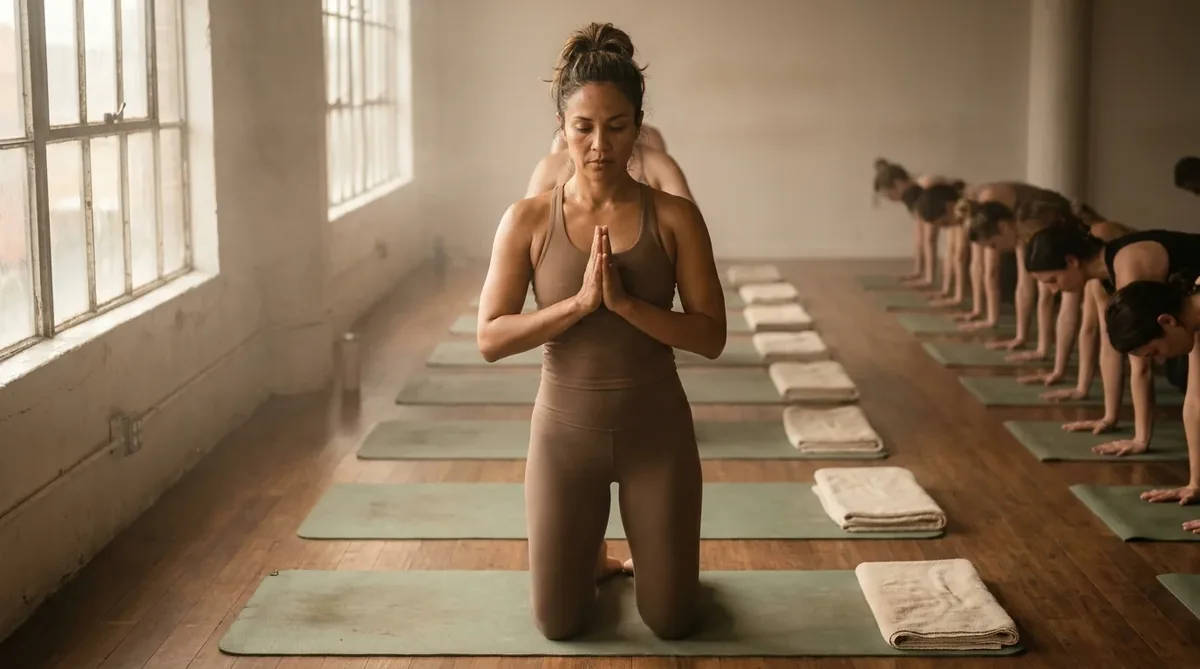
Different classes ask different things of your hair, and the best style changes with the room. In hot yoga, the room is 35 to 40 degrees and you will sweat from the first sun salutation, so you need the tightest, highest hold you can get that still lies flat — a low braided bun, a French braid, or a braided ponytail, secured with a spiral tie that will not slip when it gets wet. In vinyasa, you are moving constantly between poses, so you need a style that survives momentum: braids and low buns win, while half-up styles and loose ponytails tend to loosen by the third flow. In yin and restorative classes, you barely move at all — you lie still for minutes — so comfort matters more than hold, and a loose low braid or a soft low bun is perfect because nothing digs in.
How to decide: hot room, braid it; fast flow, bun it low; slow class, keep it soft and loose. Best for all three: a French braid that ends in a low bun, which is secure enough for hot yoga, flat enough for yin, and neat enough for vinyasa. What to avoid: a high ponytail in hot yoga, which whips around and soaks through, and a tight top knot in yin, which will ache before the class ends. Quick verdict: match the hold to the heat and the movement, not to the mirror.
Short Hair vs Long Hair in Class
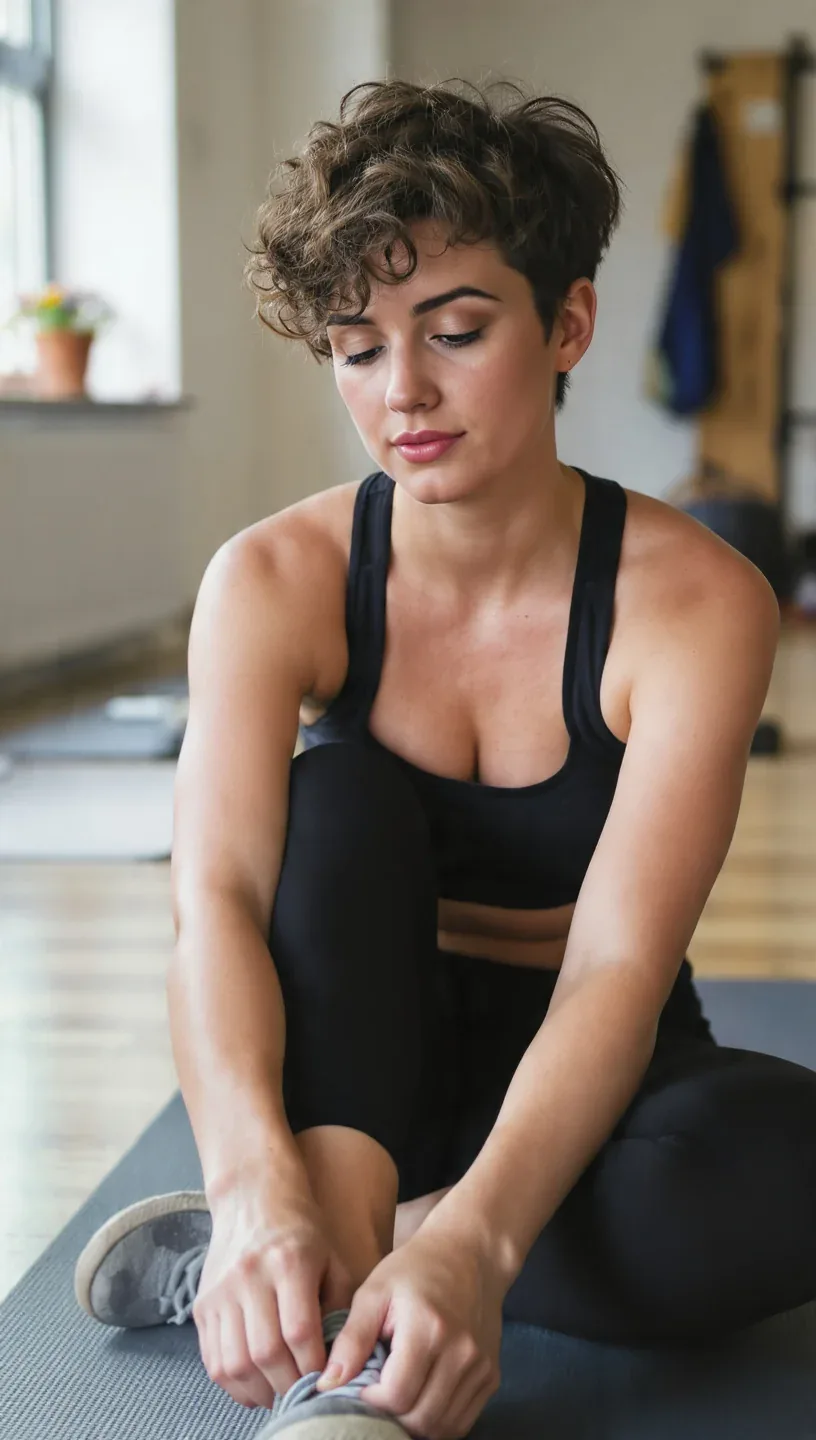
Short hair has one big advantage in yoga and one real problem. The advantage: there is nothing to fall in your face during downward dog, nothing to lie on in savasana, and nothing to come loose. The problem: the pieces that do exist — the fringe, the side layers, the nape hairs — are exactly the pieces that fall forward, because they are too short to tie back. The fix is small and cheap: two flat bobby pins crossed at each temple, a soft fabric headband worn low across the forehead, or a half-up twist that catches the front layers. Long hair is the opposite: it can be tied, braided, and bunned into total security, but every style has to be planned, because a loose long ponytail becomes a rope that swings into your face in every inversion.
Best for short hair: a stretchy fabric headband plus pins, which takes thirty seconds and holds all class. Best for long hair: a braid or a low bun, which keeps every inch contained. Common mistake: short-haired yogis doing nothing and spending the class pushing hair back, and long-haired yogis wearing a high ponytail that swings and pulls. Quick verdict: short hair needs pinning, long hair needs containing — both are easy once you stop fighting your length.
Protecting Curls and Coils on the Mat
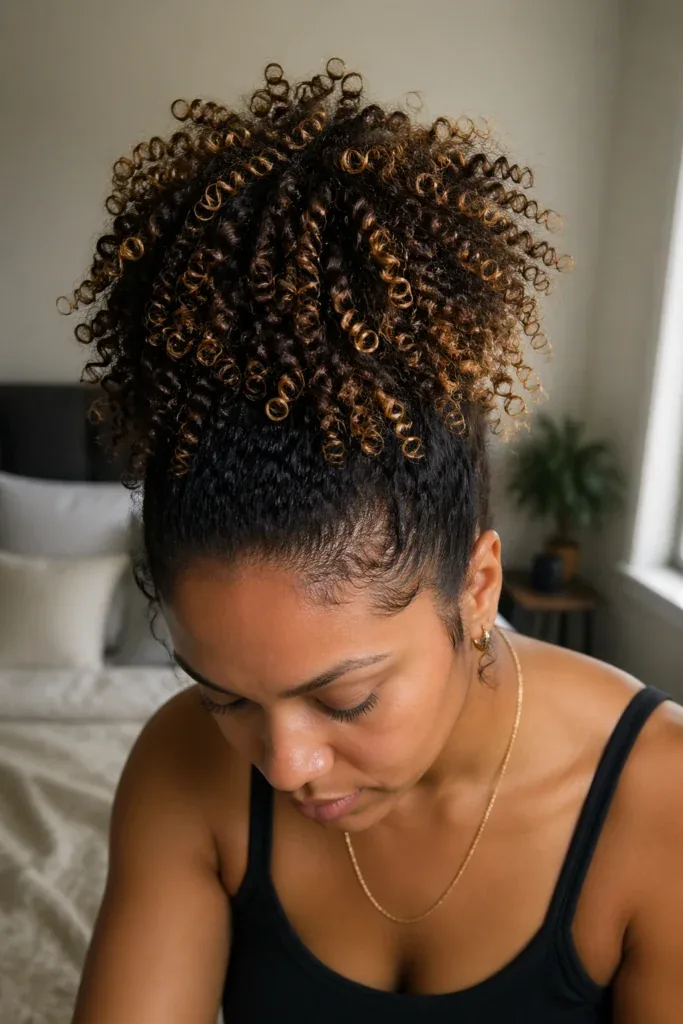
Curly and coily hair faces a double challenge in yoga: sweat and friction. Sweat dries the curl pattern out and leaves the roots feeling tight, while the mat itself is rough — every time you roll, twist, or lie back, the back of your head rubs against the mat and frizzes the curls that touch it. The best defence is a style that lifts the curls off the mat entirely: a high pineapple puff, a high puff, or a low bun made from twists, all secured with a satin scrunchie that will not snag. A satin-lined head wrap or a silk scarf tied low also works beautifully, because it creates a smooth layer between your curls and the mat.
How to protect the pattern: moisturise lightly before class with a leave-in cream, tie with satin or silk only, and refresh after class with water and a little curl cream instead of brushing dry curls out. What to avoid: tight elastics that dent the curl pattern, cotton headbands that absorb moisture and dry curls out, and brushing curls after class — that turns definition into frizz in seconds. Common mistake: wearing curls completely loose in hot yoga, where sweat and friction together can take days to recover from. Quick verdict: lift it, wrap it in satin, refresh with water — your curls will survive class intact.
Post-Class Refresh Without a Full Wash
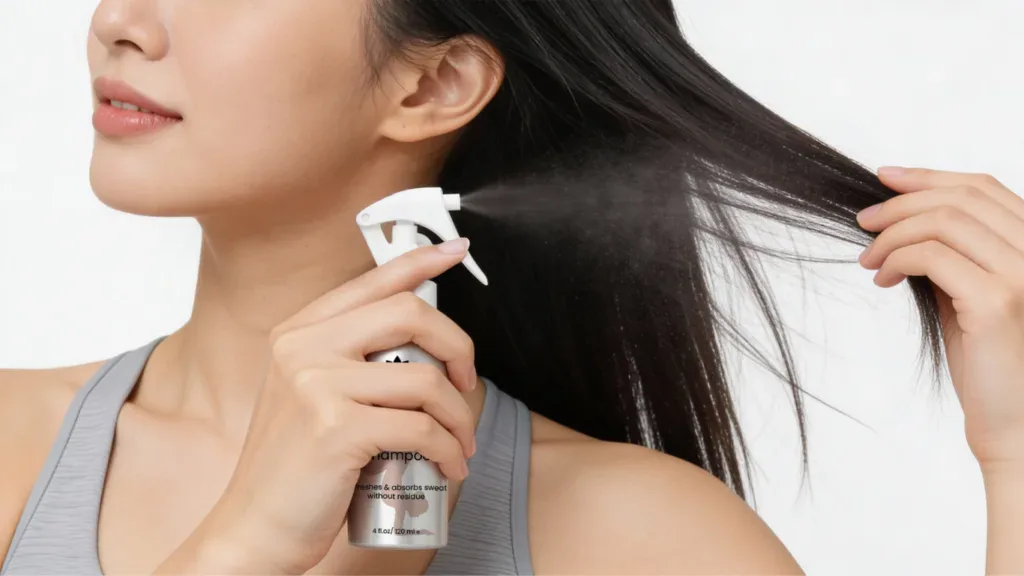
Most yogis do not want to wash their hair after every class, and they do not have to. A good post-class refresh takes three minutes and starts with air: take your hair down, shake it out at the roots, and let it breathe for a few minutes before you touch it. Then deal with the sweat at the roots — a little dry shampoo or a pinch of arrowroot powder massaged into the parting absorbs the dampness, and a blast of cool air from a hairdryer finishes the job. If the lengths feel limp, a drop of hair oil smoothed over the ends brings back shine, and a quick re-braid or low bun keeps it tidy for the rest of the day.
Best for second-day hair: the refresh works best when you do it right after class, before the sweat dries and sets. Common mistake: piling dry shampoo onto damp roots, which makes a paste — wait until the hair is mostly dry first. What to avoid: brushing sweaty hair from root to tip, which spreads the salt and oil down every strand. Quick verdict: air, absorb, oil the ends — you can easily stretch a wash by two more days, even practising daily.
Common Mistakes That Pull Hair Out
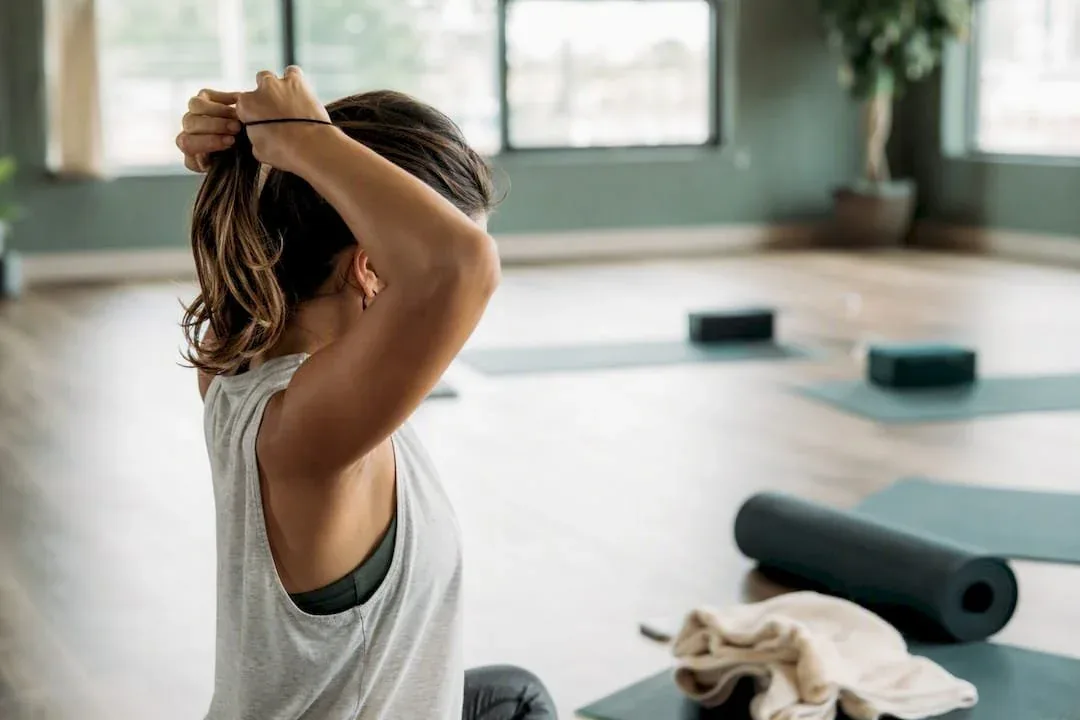
The most common yoga hair mistake is also the most damaging: tying the same tight ponytail, in the same spot, every single day. The constant tension in one place causes traction alopecia — gradual thinning around the hairline and the parting — and it creeps up slowly, so you do not notice it until the baby hairs at your temples are gone. The other big mistakes are all cousins of the same problem: yanking a tie out instead of unwinding it, brushing wet sweaty hair aggressively, and wearing a heavy bun that pulls the roots all through class. None of these feel dramatic in the moment, which is exactly why they do so much damage over months.
How to avoid them: vary the position of your tie — high one day, low the next, braided the third — and never tie wet hair tightly. Best habit: unwind ties gently, finger-detangle before brushing, and give your hair one loose day a week. What to avoid: metal-join elastics, tight top knots every class, and ripping a clip out of a knot. Quick verdict: the best yoga hairstyle is one your hairline never notices — vary it, loosen it, and be gentle taking it out.
The Classic High Ponytail
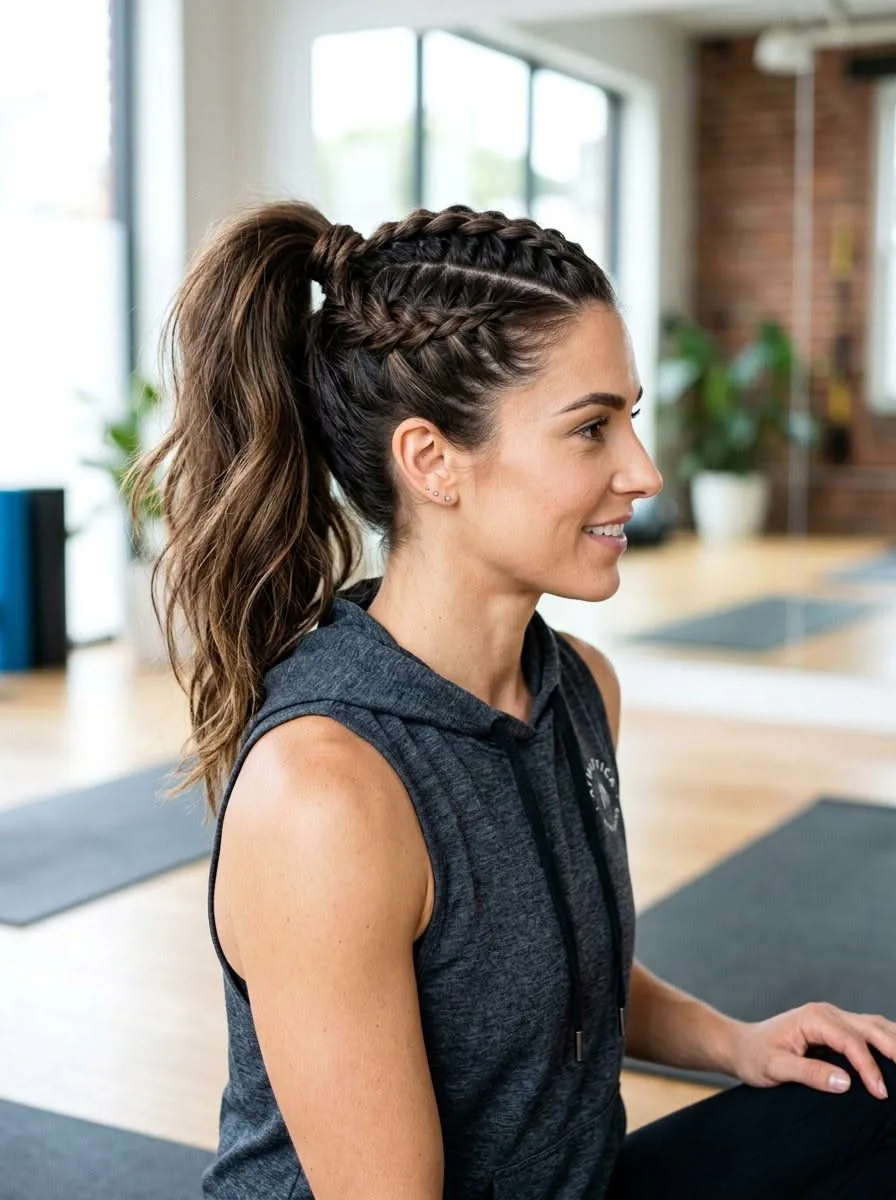
The classic high ponytail is the first style most women reach for before yoga, and for good reason: it takes ten seconds, it keeps every strand off your neck, and it survives a sweaty flow better than almost anything loose. Hold rating: 8 out of 10 — it will not fall apart, though it can loosen a little in a long hot class. The trick is placement: tie it at the crown, not at the very top, so it sits flat enough when you lie back and does not swing into your face in downward dog.
How to secure it: brush the hair up smoothly, wrap a spiral tie around three times, and then pull the ponytail gently at the sides to tighten the base without making it painful. Best for medium to long straight or wavy hair, and for vinyasa classes where you need hair completely out of the way. What to avoid: tying it so tight that your temples ache by the second sun salutation, and using a thin elastic with a metal join, which will snag and snap strands.
Comfort on the mat: a high ponytail is comfortable in standing and seated poses, but it can feel like a lump under your head in savasana, so lower it slightly or switch to a low ponytail on yin days. Quick verdict: the dependable default — fast, secure, and good for most classes, just not the most comfortable for lying down.
The Low Ponytail at the Nape
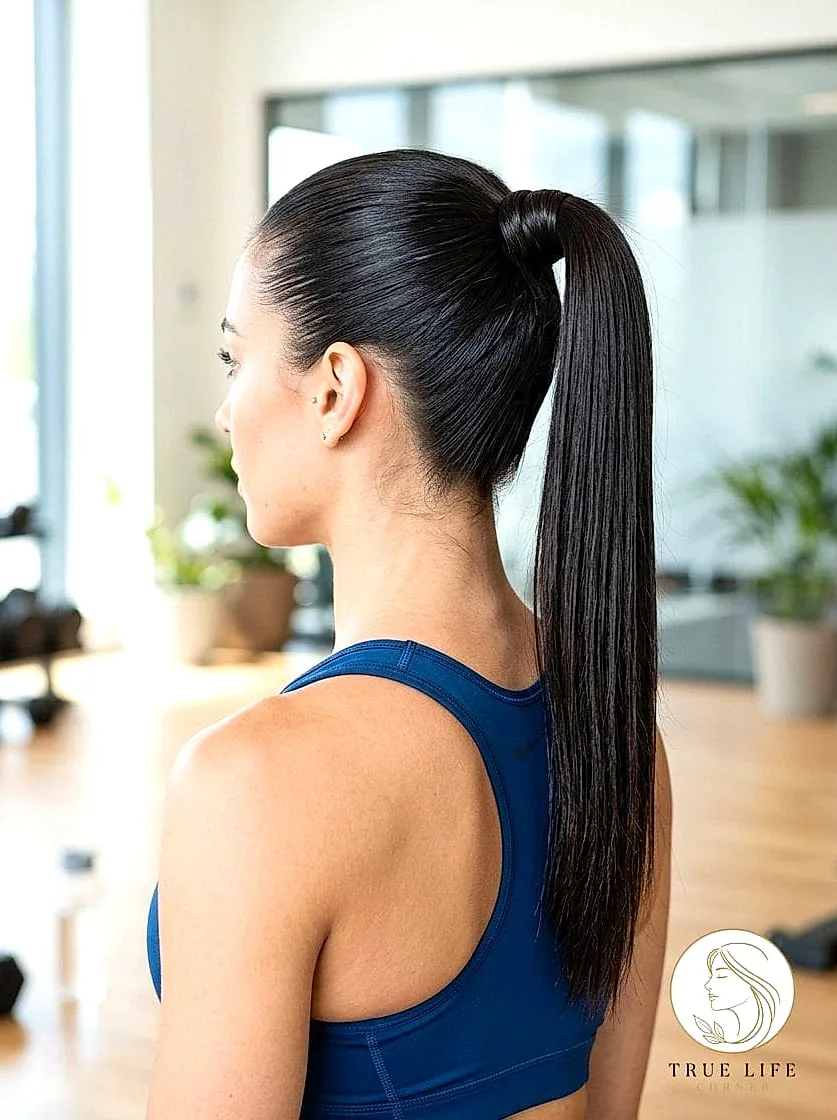
If the high ponytail is the default, the low ponytail is the smarter one — and it is the style yoga teachers themselves wear most. Tied at the nape, it lies completely flat when you lie on your back, it never swings into your face in inversions, and it does not pull at your hairline the way a high tie does. Hold rating: 9 out of 10, because gravity works with it instead of against it: in downward dog, a low ponytail hangs neatly down your back instead of flopping forward over your head.
How to secure it: part the hair in the middle or on the side, smooth it back with your hands, and tie it low with a soft fabric scrunchie. Best for every hair length from shoulder-length up, every hair type, and every class from yin to hot yoga — it is genuinely the most versatile yoga style there is. What to avoid: tying it too loosely, because a low ponytail that slips will slide down and need re-tying mid-flow.
Comfort on the mat: perfect — nothing digs in, nothing presses, and you can lie on your back for ten minutes without feeling it at all. Quick verdict: if you only learn one yoga hairstyle, learn this one. It is the flattest, kindest, most reliable style in this whole list.
The Messy Top Knot
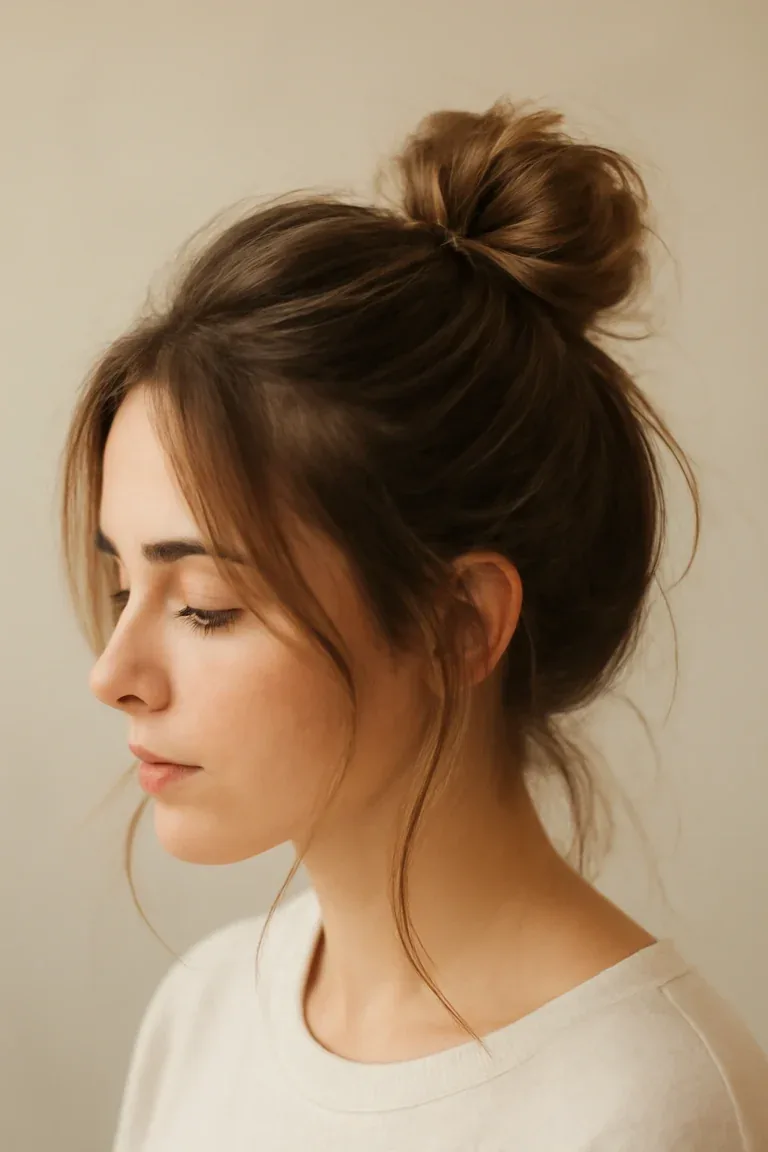
The messy top knot is the style you wear when you have three minutes before class and zero patience — and it works better in yoga than it has any right to. Twisted up high and pinned loosely, it keeps hair completely off your neck, which matters enormously in a hot room. Hold rating: 6 out of 10 — it will survive a gentle class, but a fast vinyasa flow or a headstand will loosen it, so keep a spare tie in your bag.
How to secure it: gather the hair high, twist it into a loose rope, coil it around itself, and pin it with two bobby pins crossed at the base. Best for thick or long hair that holds a twist, and for slow classes like yin and restorative yoga where you move gently. What to avoid: wrapping the tie around too many times — a top knot that is too tight will give you a headache before the warm-up ends.
Comfort on the mat: poor in savasana, because a knot on top of your head becomes a hard lump when you lie back, so take it down before the final rest. Quick verdict: great for getting to class and for gentle flows, but loosen it or re-tie it low before you lie down.
The Sleek Ballerina Bun

The sleek ballerina bun is the most polished style on this list, and also one of the most practical: every hair is smoothed back, twisted tight, and pinned flat, so nothing moves, nothing falls, and nothing tickles. Hold rating: 9 out of 10 — it survives hot yoga, inversions, and a full ninety-minute class without a single strand escaping. The secret is the smoothing: a little gel or cream on the surface before you twist keeps the flyaways down even when you sweat.
How to secure it: brush the hair into a high ponytail, twist the length into a rope, coil it flat against the head, and pin it at four points with bobby pins. Best for straight and wavy hair, for women who like a neat look, and for classes where you will be photographed or filmed. What to avoid: pinning it directly on the crown — place it slightly higher and forward so it does not press into the mat in savasana, or take it down for the final rest.
Comfort on the mat: good in every pose except lying flat on your back, where a high bun always presses. Quick verdict: the neatest, most secure bun you can wear — just remember to lower it or undo it before savasana.
The Low Twisted Bun
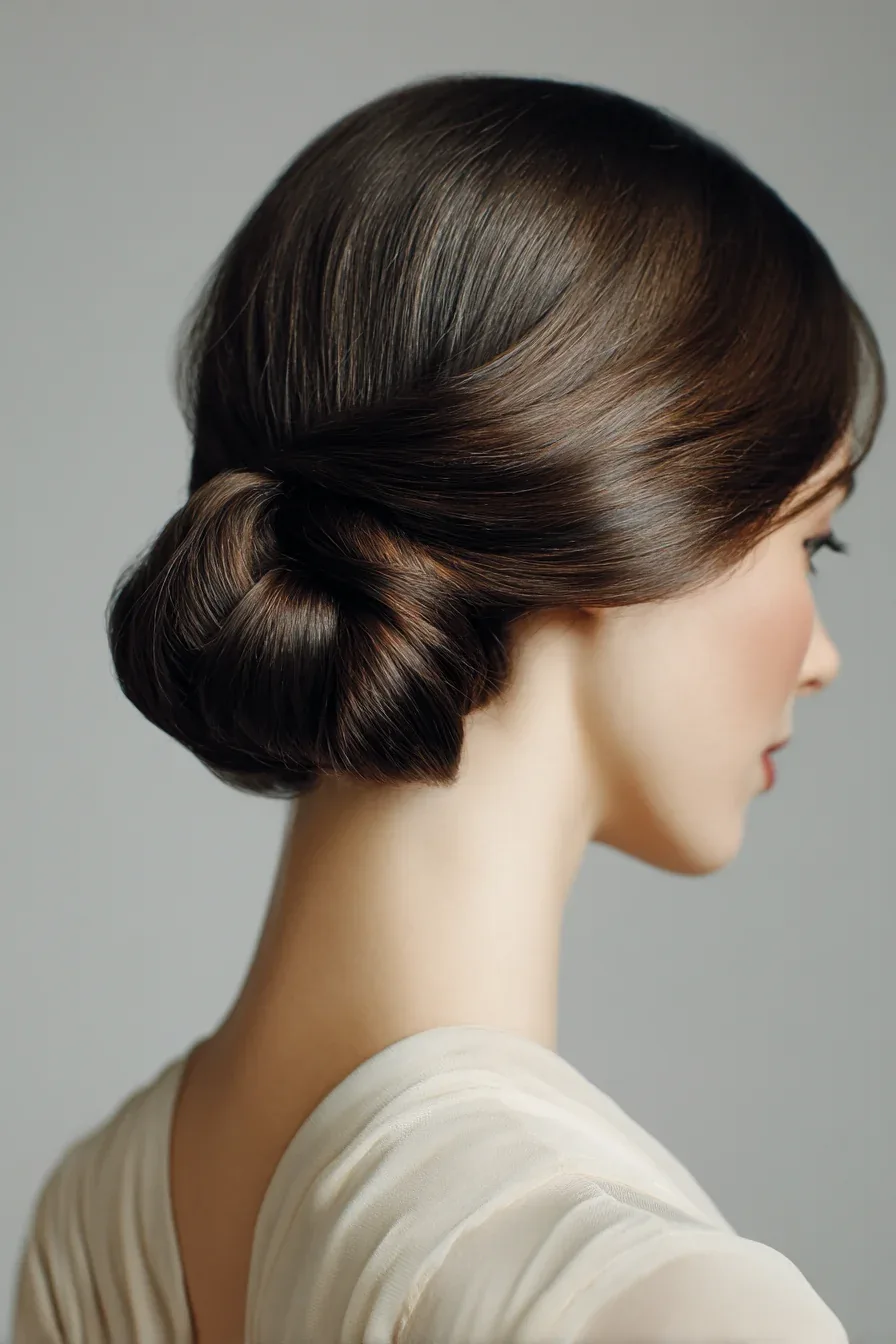
The low twisted bun takes everything good about the ballerina bun and moves it to the nape, which makes it the best bun in this whole guide for actual yoga. It lies flat, it never digs in, it survives inversions, and it looks effortlessly elegant walking out of the studio afterwards. Hold rating: 9 out of 10, and the twist itself is the reason — a twisted bun grips itself, so it needs fewer pins and less tension than a coiled bun.
How to secure it: gather the hair low, divide it into two sections, twist each one, then twist the two together and coil the rope into a small bun at the nape, pinning at the base. Best for medium to long hair, for yin and restorative classes, and for anyone whose scalp gets sore from tight high styles. What to avoid: twisting too tightly, which creates tension at the hairline — a gentle twist holds just as well and feels far better.
Comfort on the mat: excellent — this is the bun to wear for a long savasana, because you will forget it is there. Quick verdict: the low twisted bun is the bun this guide would choose if it could only choose one.
The French Braid
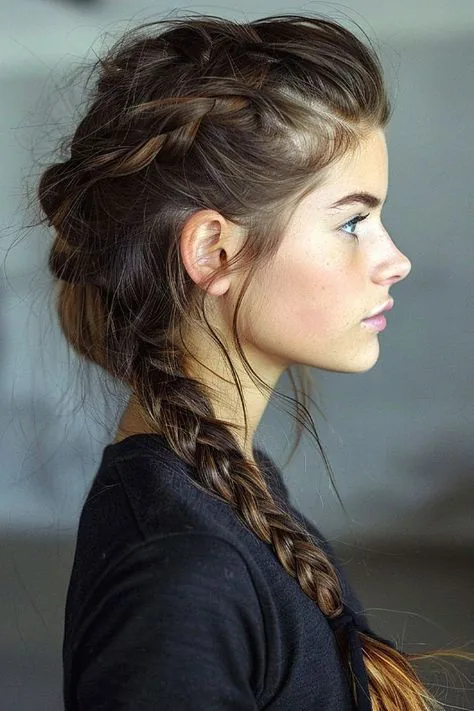
The French braid is, quite simply, the best yoga hairstyle ever invented. It starts at the hairline, so it catches every short layer and wisp before it can fall into your face; it lies flat against the head, so nothing digs in when you lie down; and it tightens rather than loosens as you move, which means it actually gets more secure during class. Hold rating: 10 out of 10 — the only style on this list that survives hot yoga, inversions, and a headstand without a single adjustment.
How to secure it: start braiding at the crown, adding small sections as you go, and finish with a small tie at the nape or continue into a low bun. Best for long and medium hair, for layered cuts, and for anyone whose front layers always escape other styles. What to avoid: braiding too tightly at the hairline, which can ache — a medium tension braid holds just as well and is far kinder to your scalp.
Comfort on the mat: perfect in every pose, including savasana, because a French braid is essentially flat. Quick verdict: if you can French braid, this is your yoga style. Learn it once and you will never go back.
The Dutch Braid
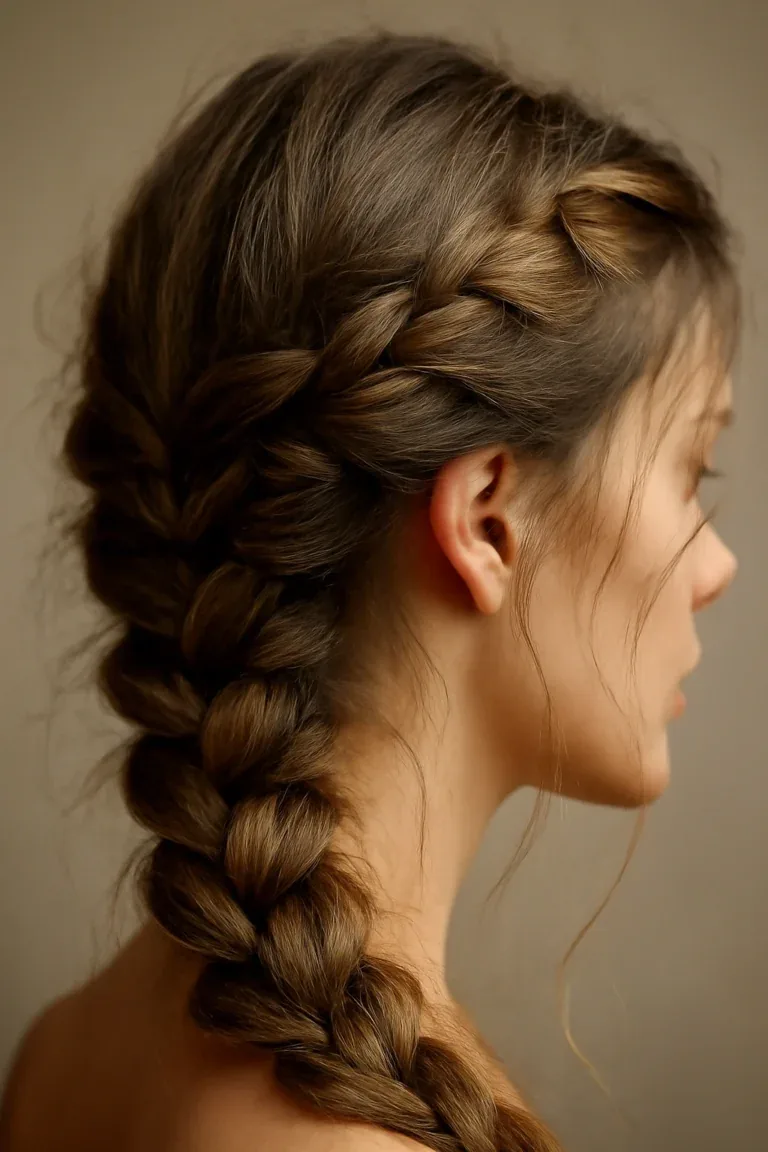
The Dutch braid is the French braid’s bolder sister — braided under instead of over, so the plait sits on top of the hair like a rope. It holds just as well as a French braid, it looks more dramatic, and it has one practical advantage: because the braid stands proud of the head, it is easier to grip and re-tighten if it loosens. Hold rating: 10 out of 10, matching the French braid for security, with a little more volume and presence.
How to secure it: cross the outer sections under the middle instead of over it, adding hair as you go, and tie off low with a soft tie. Best for thick hair, which shows the raised braid beautifully, and for hot yoga, where the braid keeps every strand locked away from a sweaty neck. What to avoid: making it too tight at the temples — the raised braid already looks full, so you do not need tension to make it impressive.
Comfort on the mat: excellent, because the braid lies flat along the head even though it looks raised. Quick verdict: the French braid’s showier twin — just as secure, a little more statement.
Two French Braids (Boxer Braids)
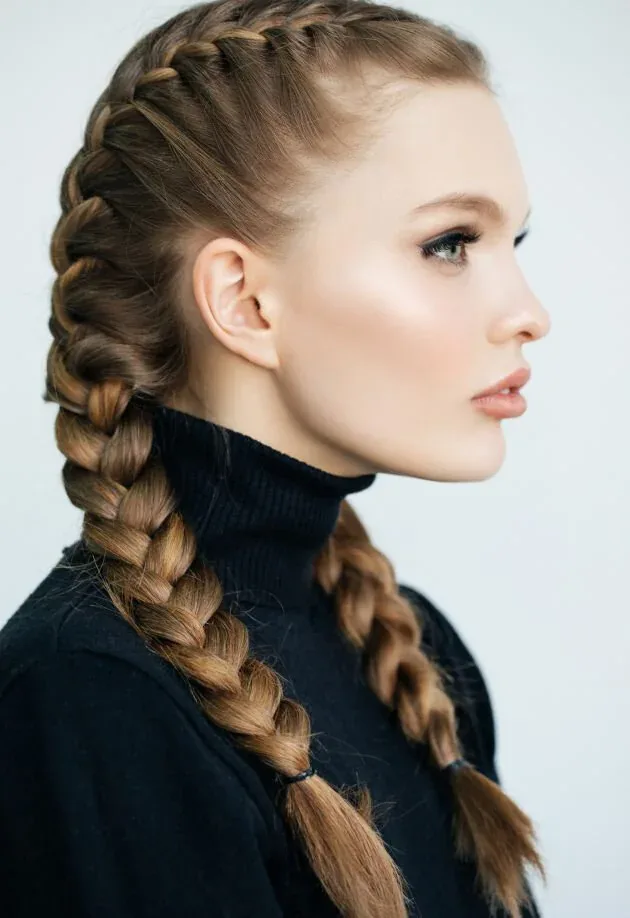
Two French braids — boxer braids — are the French braid doubled, and they are the most secure style in this entire guide. With the hair split down the middle and each side braided from the hairline, there is nowhere for a strand to escape, nothing to swing, and nothing to come loose, no matter how hard the class gets. Hold rating: 10 out of 10, and the only style here that will survive a hot yoga class, a headstand, and a sweaty vinyasa flow without a single touch-up.
How to secure it: part the hair cleanly down the middle, braid each side from the front hairline to the nape, and tie both ends low. Best for very long or very thick hair, for hot yoga, and for anyone whose hair always escapes a single braid. What to avoid: braiding one side tighter than the other — uneven tension is the one thing that will ache by the end of class.
Comfort on the mat: perfect — two flat braids disappear completely when you lie down. Quick verdict: maximum security, zero fuss, and you will look like you mean business. The most reliable style on this list.
The Single Side Braid
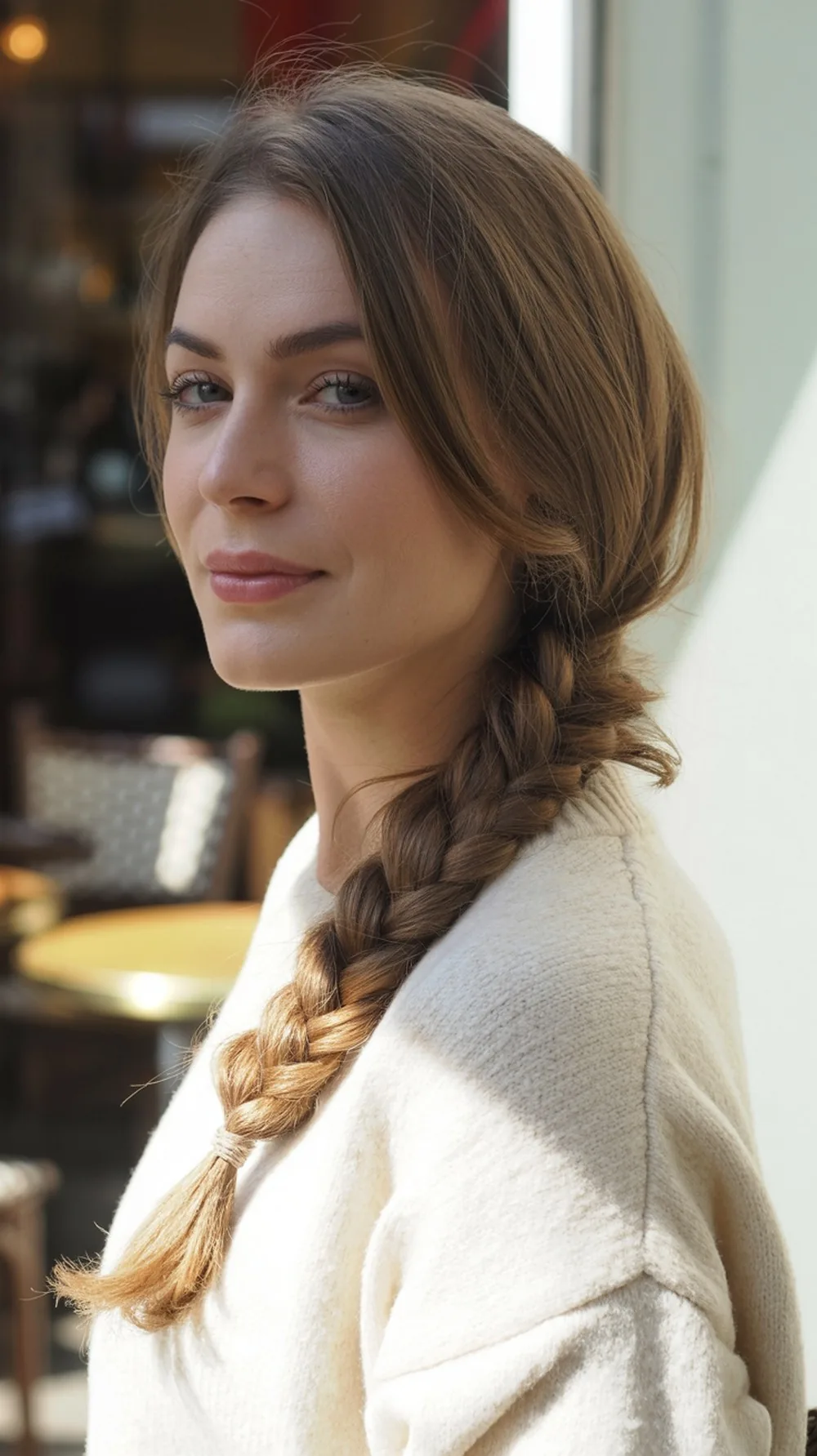
The single side braid is the relaxed cousin of the French braid: a simple three-strand plait swept over one shoulder, loose and soft, that keeps hair contained without any tension at all. Hold rating: 7 out of 10 — it will hold through a gentle class, but it can loosen in a fast flow, so it suits yin, restorative, and slow hatha best. Its great advantage is comfort: there is no pulling, no tightness, and nothing pressing anywhere.
How to secure it: sweep all the hair over one shoulder, braid loosely from the nape down, and tie the end with a soft scrunchie. Best for long hair, for sensitive scalps, and for slow classes where comfort matters more than hold. What to avoid: wearing it in hot yoga, where a braid over the shoulder will soak through and stick to your skin.
Comfort on the mat: excellent — a side braid lies beside you, not under you, in savasana. Quick verdict: the gentlest braid on this list — choose it when you want comfort first and security second.
The Fishtail Braid
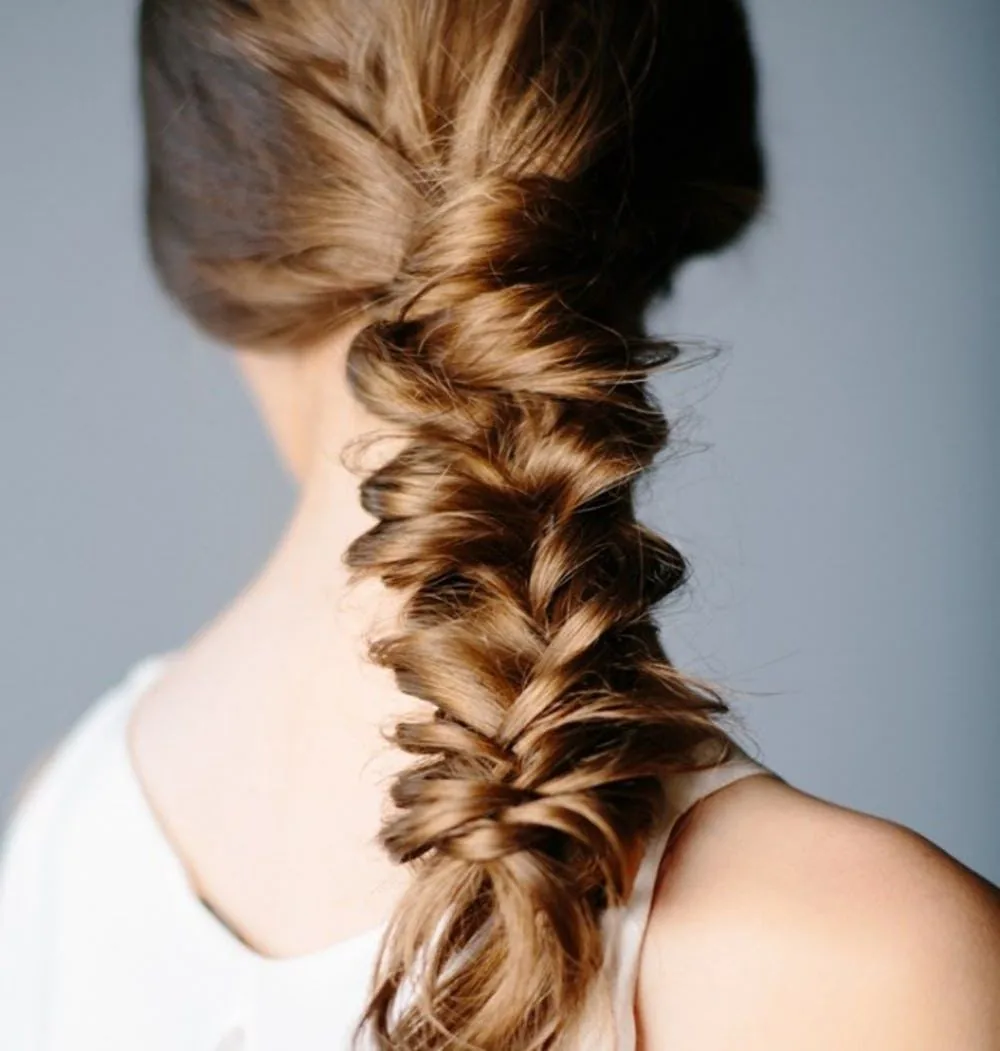
The fishtail braid looks far more complicated than it is — two sections, small pieces crossed over, and a plait that looks like it took an hour but takes five minutes. In yoga it behaves like a French braid: it lies flat, it holds its shape, and it keeps the hair contained from nape to ends. Hold rating: 8 out of 10, because the fine weave grips itself and loosens slowly rather than falling apart all at once.
How to secure it: divide the ponytail into two sections, take a thin piece from the outside of one and cross it to the inside of the other, and repeat all the way down. Best for long, straight or wavy hair, and for medium-intensity classes. What to avoid: pulling the braid too tight while you weave it — a fishtail should be slightly loose and textured, and over-tightening makes it stiff and uncomfortable.
Comfort on the mat: very good, because the braid is flat and sits to one side or down the back. Quick verdict: beautiful, secure, and easier than it looks — a lovely middle ground between a plain braid and a full French braid.
The Bubble Braid Ponytail
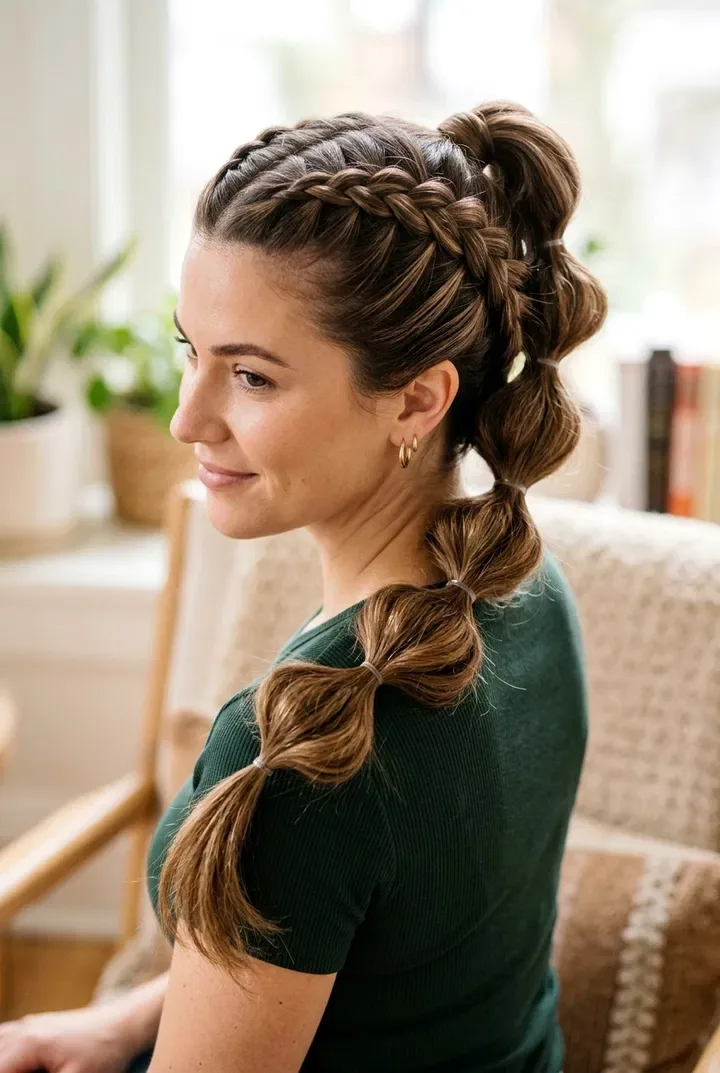
The bubble braid ponytail is the most fun style on this list, and it is surprisingly practical for yoga: a high ponytail divided into sections with small ties, each section puffed out into a bubble, so the hair is contained in segments that cannot slide or tangle. Hold rating: 8 out of 10 — the ties at every bubble stop the hair from slipping, even when you sweat. It also has a secret advantage: each bubble keeps the hair from whipping around in inversions.
How to secure it: tie a high or mid ponytail, add a tie every few inches down the length, and gently pull each section wider to form the bubbles. Best for long hair, for playful yogis, and for classes where you want a style with personality. What to avoid: using too many ties on fine hair, which can leave dents — four or five bubbles are plenty.
Comfort on the mat: good in standing poses, but take the ponytail down or lower it before savasana, because the bubbles add bulk under your head. Quick verdict: fun, secure, and genuinely functional — just re-tie it low before the final rest.
The Braided Crown
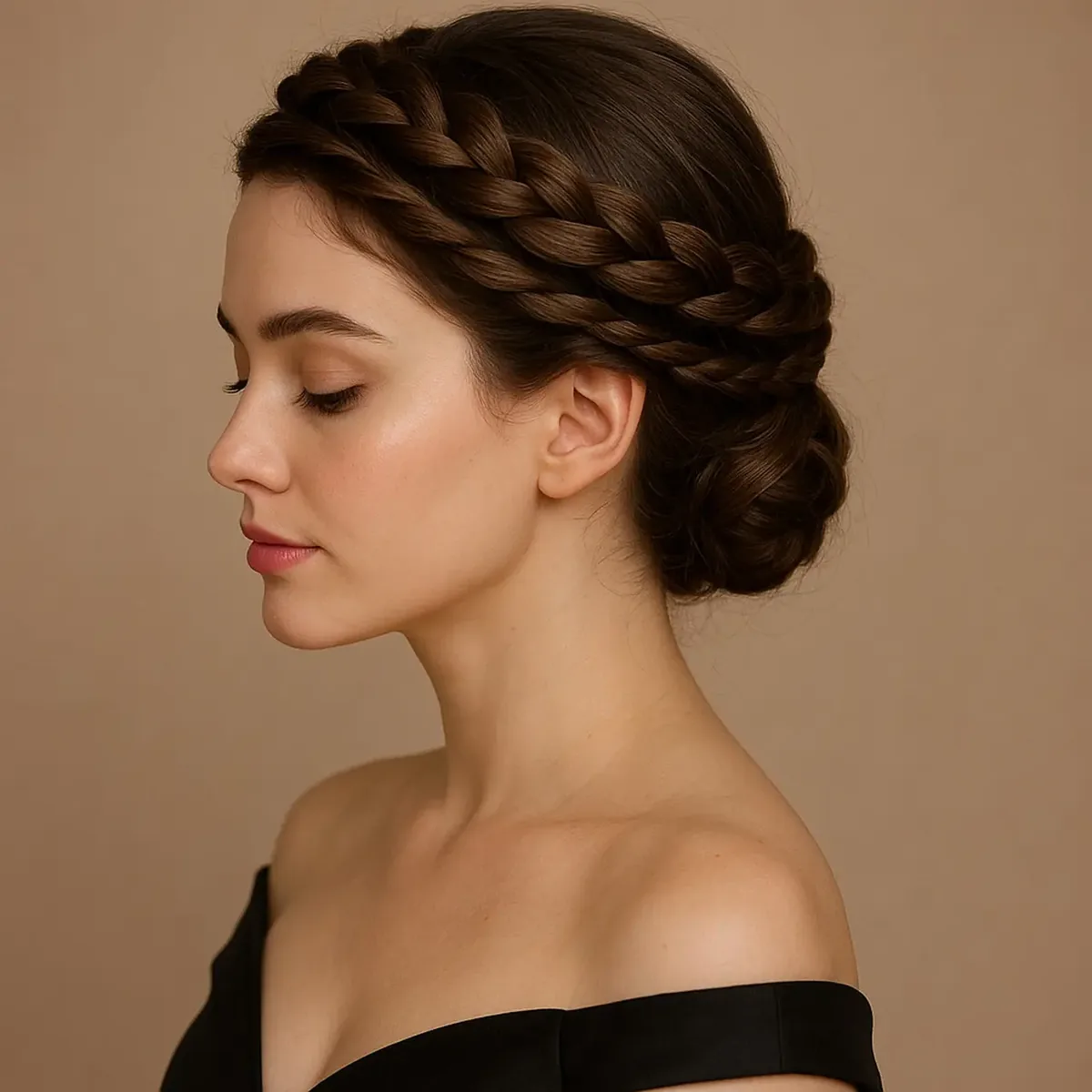
The braided crown wraps a braid around the head like a headband, catching every front layer and keeping it off your face for the whole class. Hold rating: 8 out of 10 — it is very secure at the front, where most styles fail, though the ends need pinning well at the back. It is also one of the prettiest styles here, and it survives a whole class without a single strand falling forward in downward dog.
How to secure it: braid a section from behind one ear, bring it across the hairline to the other side, and pin the end flat behind the opposite ear. Best for medium to long hair, for layered cuts with short front pieces, and for gentle and medium classes. What to avoid: braiding it too tightly across the forehead, which can give you a headache — keep the tension even and comfortable.
Comfort on the mat: very good, because the braid is flat against the head all the way around. Quick verdict: the best style in this list for taming front layers, and beautiful enough to wear straight out of the studio.
The Half-Up Top Knot
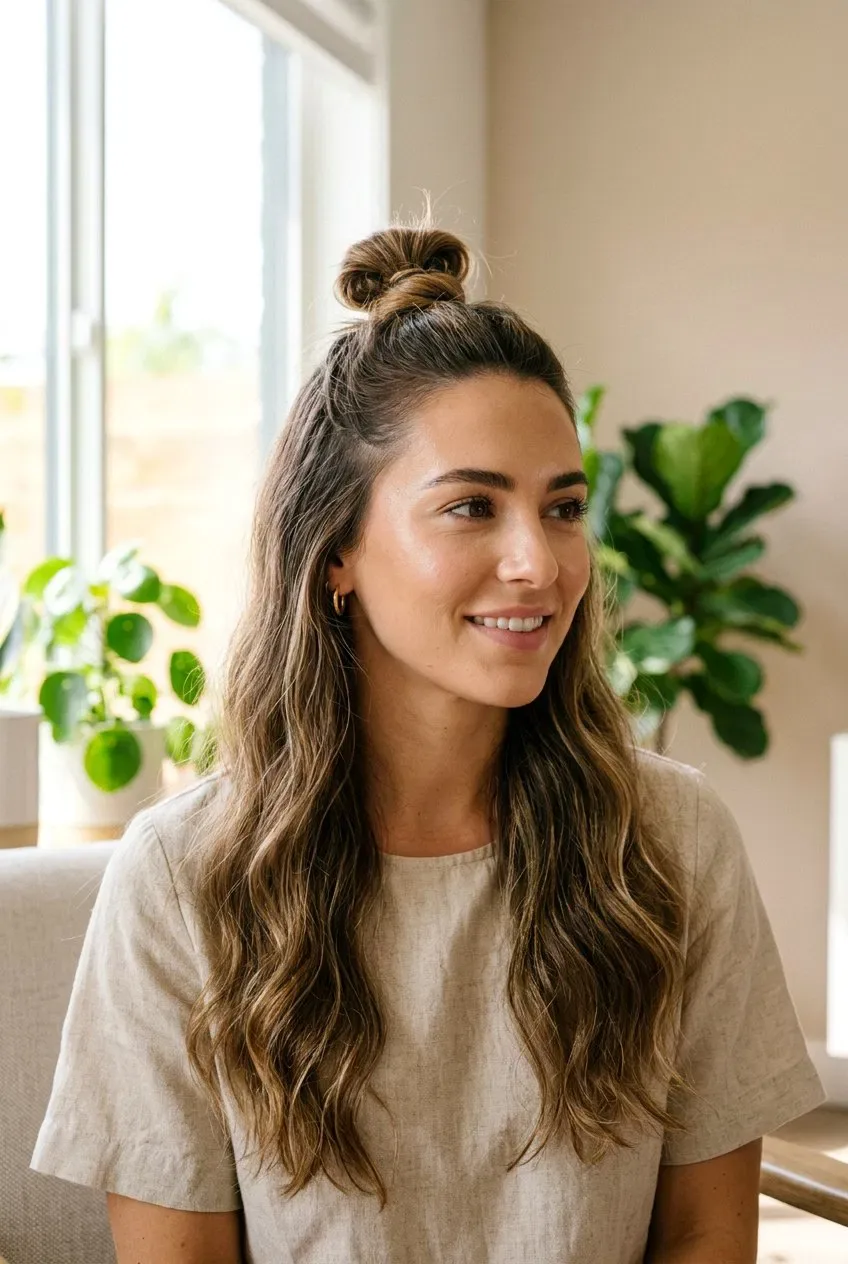
The half-up top knot takes the top half of your hair — the half that falls in your face — and twists it into a small knot, leaving the rest down. Hold rating: 6 out of 10 — it keeps your face clear, which is the main job, but the loose half underneath will move, swing, and eventually need attention in a fast class. It is best for slow classes, and for women who hate the feeling of all their hair tied up.
How to secure it: gather the top section from temple to temple, twist it into a small knot, and pin it with two bobby pins. Best for long hair, for yin and restorative yoga, and for anyone who finds full updos uncomfortable. What to avoid: making the knot too big — a small knot holds better and lies flatter than a large one.
Comfort on the mat: good, because the knot sits high and forward, away from the back of the head. Quick verdict: a gentle compromise — your face stays clear, your hair stays mostly free, and you stay comfortable.
The Half-Up Ponytail
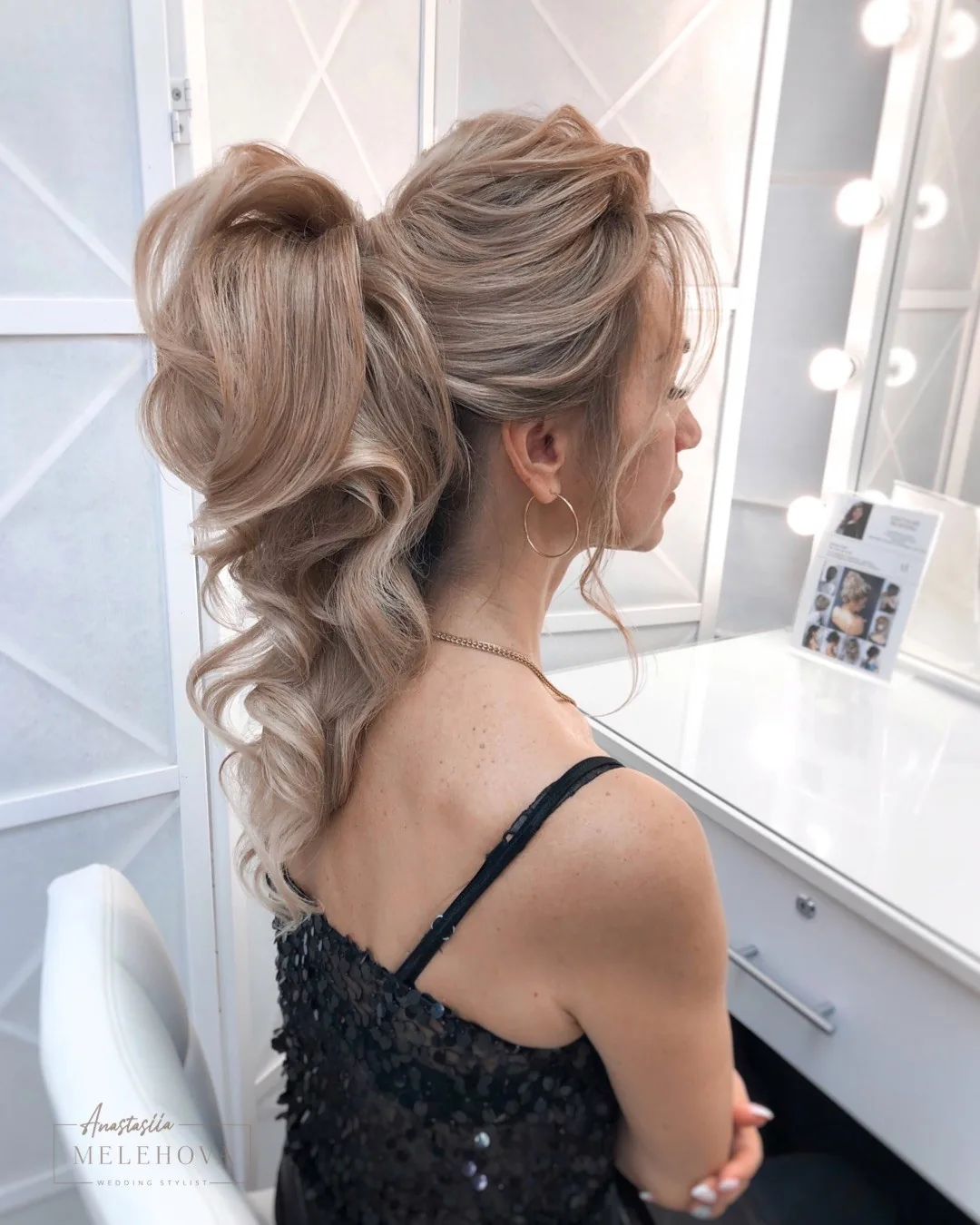
The half-up ponytail is the half-up top knot’s more secure sister: the top half gathered into a small ponytail instead of a knot, which holds better and is easier to re-tie mid-class if it loosens. Hold rating: 7 out of 10 — the ponytail grips well, and the loose hair underneath stays out of the way in most poses. It is a lovely choice for women growing their hair out, because it catches the shorter top layers while the longer lengths hang free.
How to secure it: gather the top section, tie it with a small spiral tie, and gently tug the hair above the tie for a little volume. Best for medium to long hair, for slow and medium classes, and for anyone who likes the feeling of hair down but needs their face clear. What to avoid: tying it too high, where it can flop forward in downward dog — a mid-height tie sits better.
Comfort on the mat: very good in every pose, including savasana, because nothing sits at the back of the head. Quick verdict: the friendliest half-up style here — secure where it matters, free where it feels good.
The Low Braided Ponytail
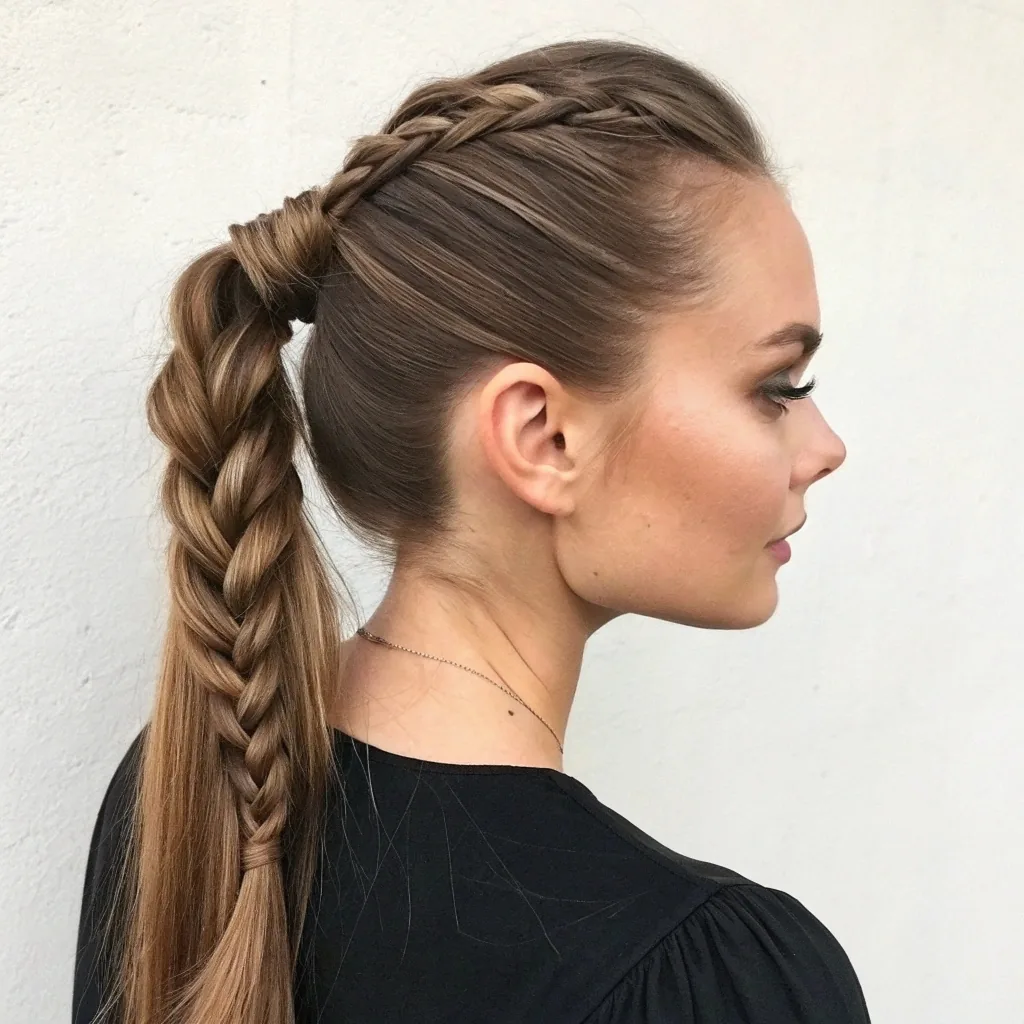
The low braided ponytail combines the two most reliable yoga ideas — low and braided — into one style that is almost impossible to defeat. A low ponytail, braided all the way down, lies flat on the mat, never swings into your face, and cannot unravel in sections the way a loose ponytail can. Hold rating: 9 out of 10, and the braid is the reason: even if the tie loosens slightly, the plait keeps the hair contained.
How to secure it: tie a low ponytail at the nape, braid the length in a simple three-strand plait, and tie the end with a soft tie. Best for long hair, for hot yoga, and for vinyasa, where the combination of low placement and braiding survives everything. What to avoid: braiding so tightly that the ponytail pulls at the nape — a relaxed braid holds just as well.
Comfort on the mat: perfect — flat, soft, and completely forgettable when you lie down. Quick verdict: simple, strong, and nearly foolproof. One of the best all-round yoga styles on this list.
Space Buns (Double Buns)
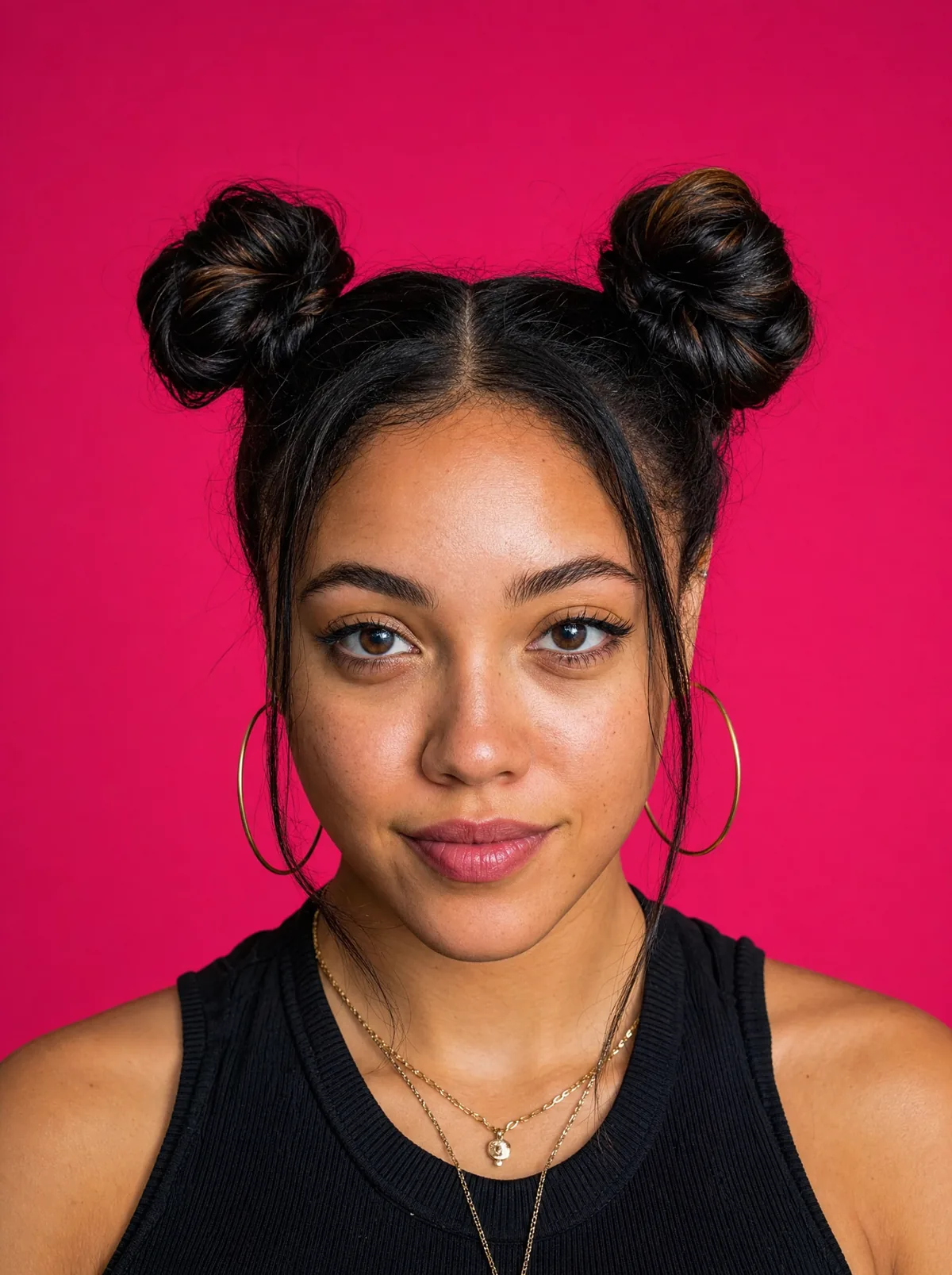
Space buns — two high buns, one on each side — are the most playful style on this list, and they have a real practical advantage: the hair is split evenly, so each bun is small, light, and balanced, and nothing hangs down to fall in your face. Hold rating: 7 out of 10 — they survive a medium class well, but they sit high, so they are not the best choice for lying down. Wear them for a fun flow class, and take them down before savasana.
How to secure it: part the hair down the middle, twist each side into a small bun, and pin each one at the base. Best for medium to long hair, for younger yogis, and for festival-style or themed classes. What to avoid: making the buns too big — small, tight buns hold better and look better than large loose ones.
Comfort on the mat: poor in savasana, because two buns at the back of the head are two lumps to lie on — undo them for the final rest. Quick verdict: joyful, balanced, and secure in motion — just not a lying-down style.
Low Double Buns
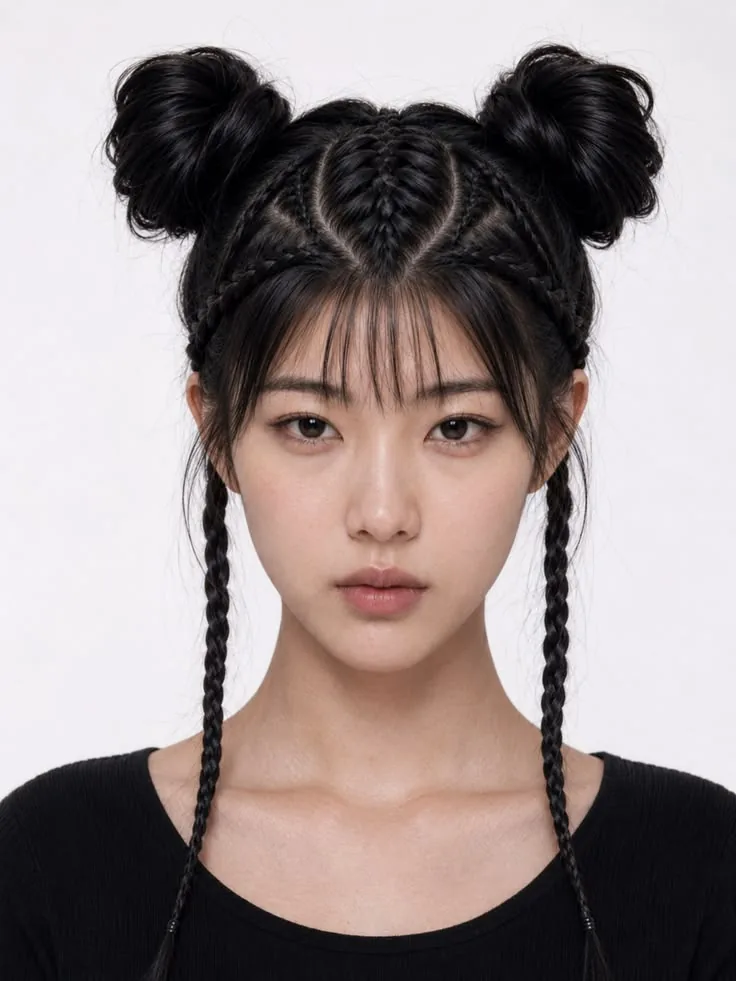
Low double buns take the fun of space buns and move it down to the nape, which fixes the one problem space buns have: now you can lie down comfortably, because the buns sit low and flat at the back of the head. Hold rating: 8 out of 10 — the split hair is lighter on each side, so each bun holds well, and the low placement means gravity helps rather than fights. They are also wonderfully secure in inversions, because there is nothing hanging to fall forward.
How to secure it: part the hair down the middle, twist each side into a small bun at the nape, and pin both flat. Best for medium to long hair, for yin and restorative classes, and for anyone who finds a single bun too heavy. What to avoid: placing the buns too close together, which makes them merge into one lumpy shape — keep a clear parting between them.
Comfort on the mat: excellent — low, flat, and balanced. Quick verdict: space buns, grown up and mat-friendly. A sweet, secure style that works in every pose.
The Twisted Low Ponytail
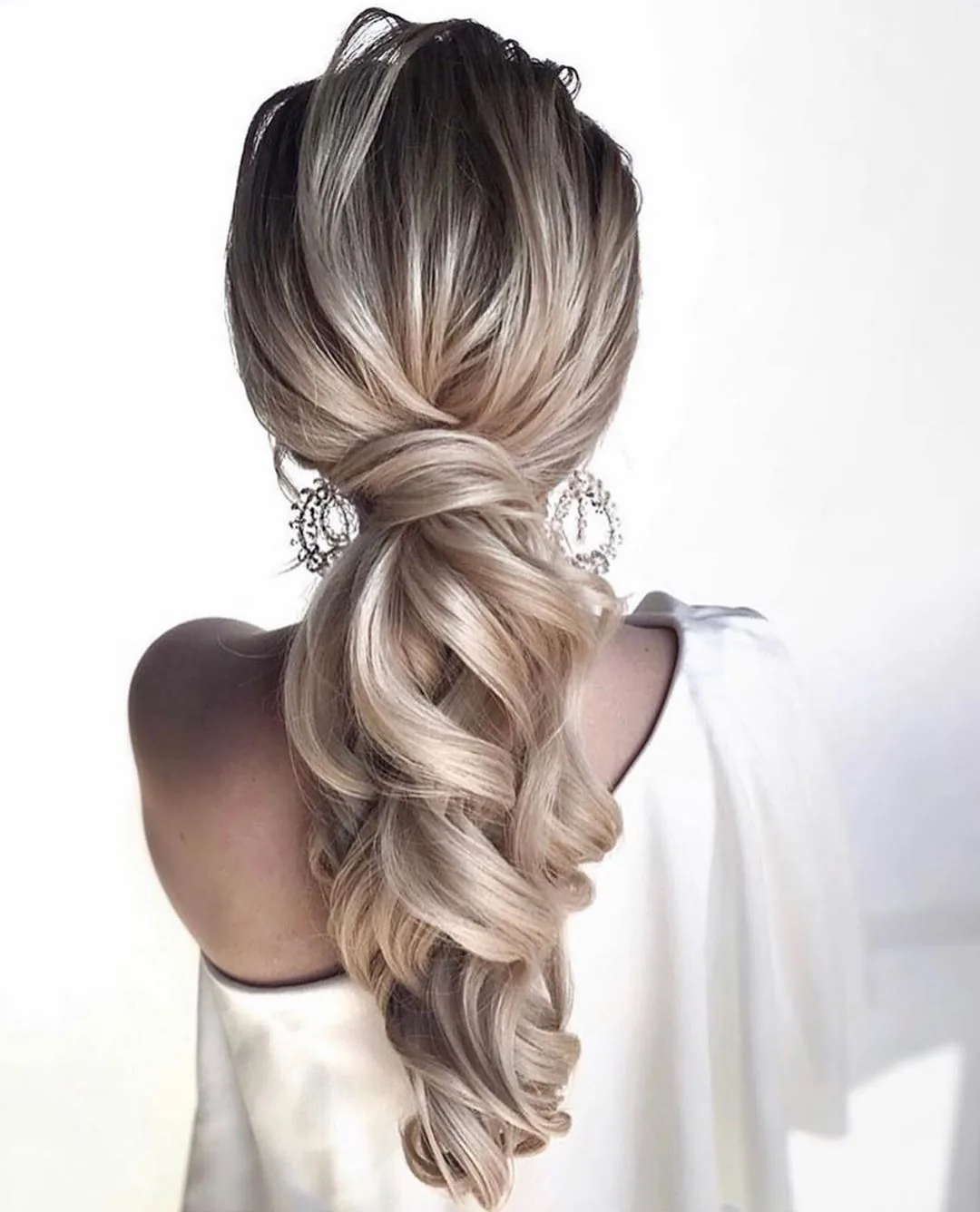
The twisted low ponytail looks like a salon style but takes about a minute: a low ponytail with the hair twisted on each side and pulled through, which creates a rope effect that grips the ponytail and stops it from loosening. Hold rating: 8 out of 10 — the twists act like a second tie, holding the base firm even when you sweat. It is also one of the most elegant low styles here, and it walks out of the studio looking deliberate rather than thrown together.
How to secure it: part the hair in the middle, twist a section from each side back towards the nape, join them into a low ponytail, and wrap a small piece of hair around the tie. Best for medium to long hair, for women who like a polished look, and for medium classes. What to avoid: twisting the sides too tightly, which pulls at the temples — gentle twists hold just as well.
Comfort on the mat: excellent, because everything sits low and flat. Quick verdict: a minute of effort for a style that looks like ten — secure, flat, and lovely.
The Rope Braid Ponytail
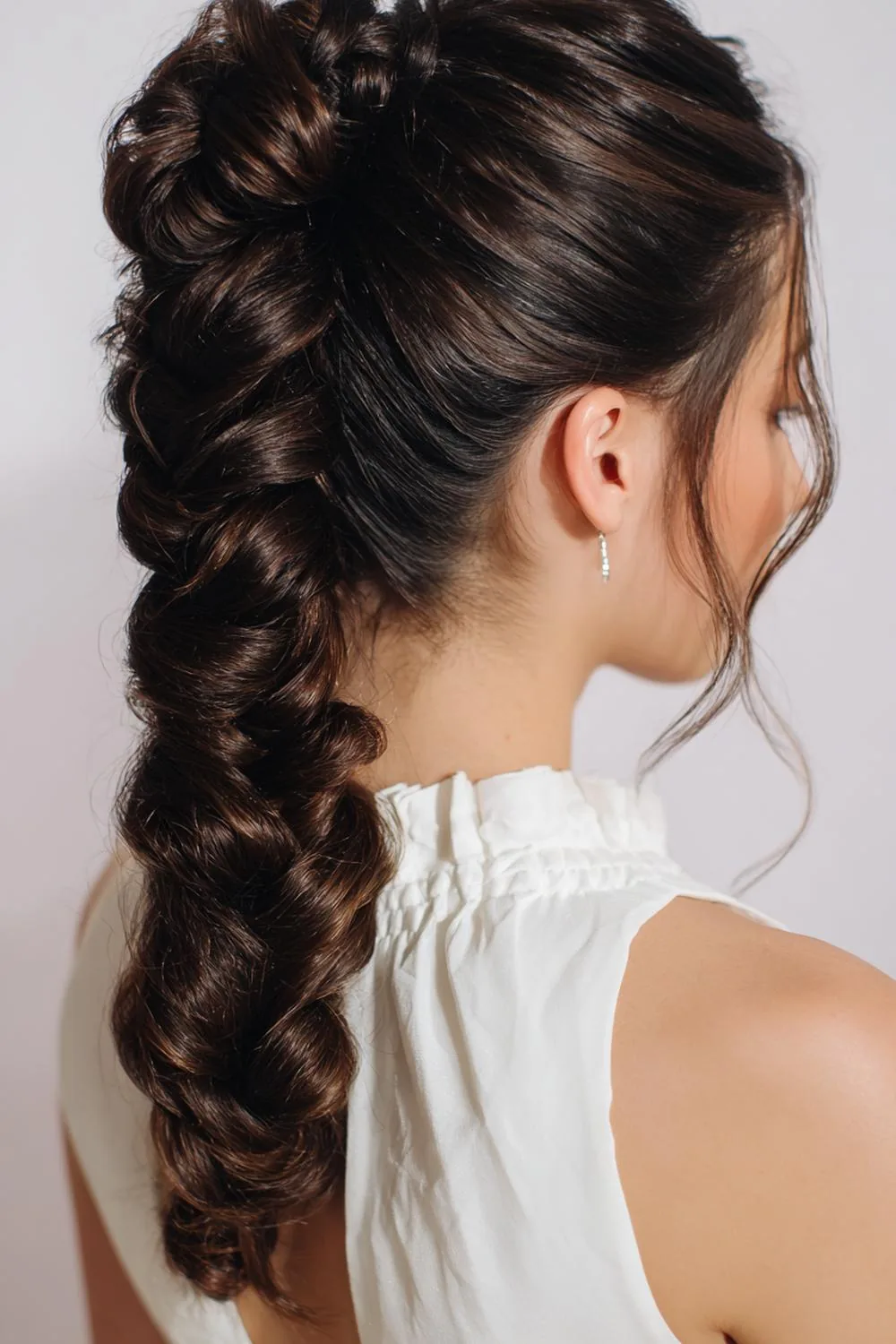
The rope braid ponytail is the simplest braid there is — two sections twisted around each other — and it is a brilliant yoga style, because the twisting action locks the hair in place and stops it from sliding. Hold rating: 8 out of 10, and it holds its shape better than a plain ponytail because the rope cannot loosen in sections. It is also very kind to fine hair, which often slips out of ordinary braids.
How to secure it: tie a ponytail, split it into two sections, twist each section the same way, then twist the two together in the opposite direction and tie the end. Best for fine and medium hair, for long hair, and for vinyasa classes. What to avoid: twisting both sections in opposite directions, which makes the rope unravel — keep the twist consistent and it will lock itself.
Comfort on the mat: good — a rope braid ponytail lies flat down the back. Quick verdict: the easiest braid to learn and one of the most reliable in class.
The Sleek Middle-Part Low Bun
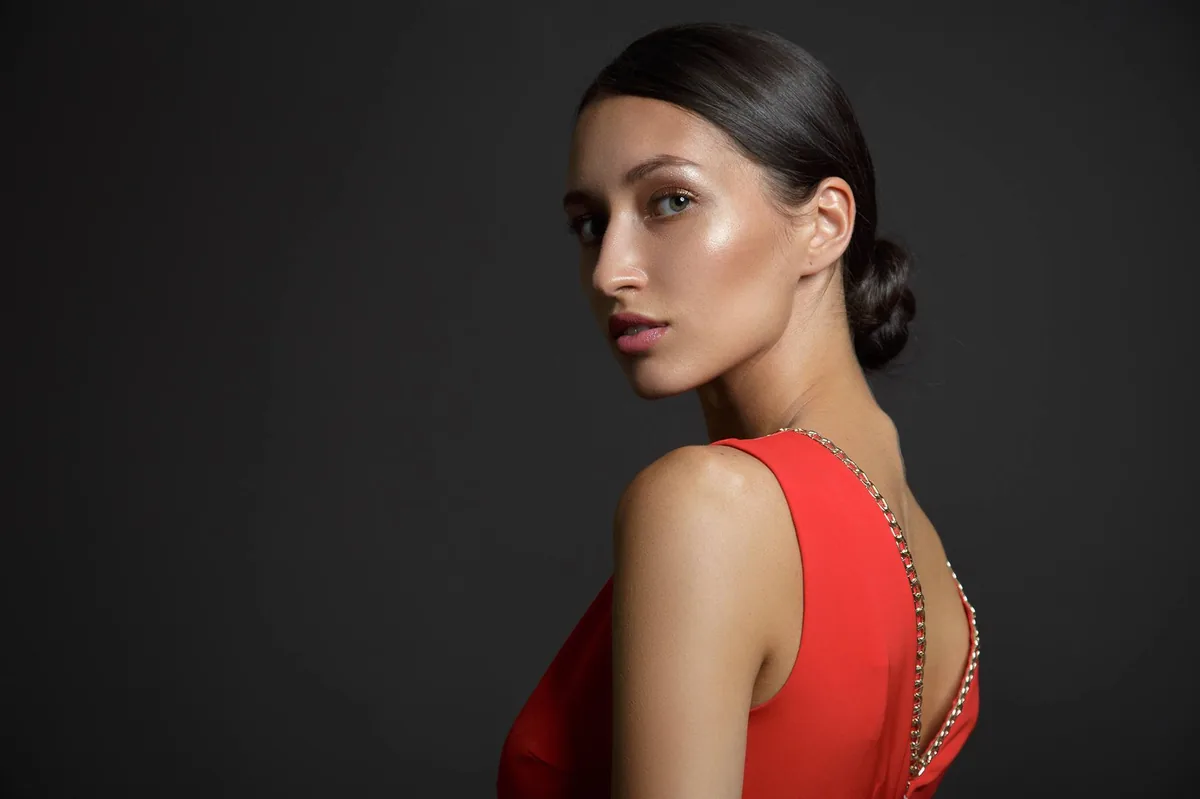
The sleek middle-part low bun is the minimalist’s yoga style: hair parted cleanly down the middle, smoothed back, and gathered into a small, flat bun at the nape. Hold rating: 9 out of 10 — the middle part distributes tension evenly across the scalp, so nothing pulls, and the low bun lies perfectly flat. A little smoothing cream keeps the surface glossy even as you sweat, and the symmetry photographs beautifully.
How to secure it: part the hair down the middle, smooth both sides back with a brush and a little cream, and twist the length into a small bun at the nape. Best for straight and wavy hair, for women who like a clean look, and for every class type. What to avoid: pulling the hair back too tightly from the parting, which can cause a headache — smooth, do not yank.
Comfort on the mat: perfect — this is one of the flattest styles on the list. Quick verdict: clean, calm, and completely reliable. The minimalist’s best friend.
The Side-Swept Low Bun
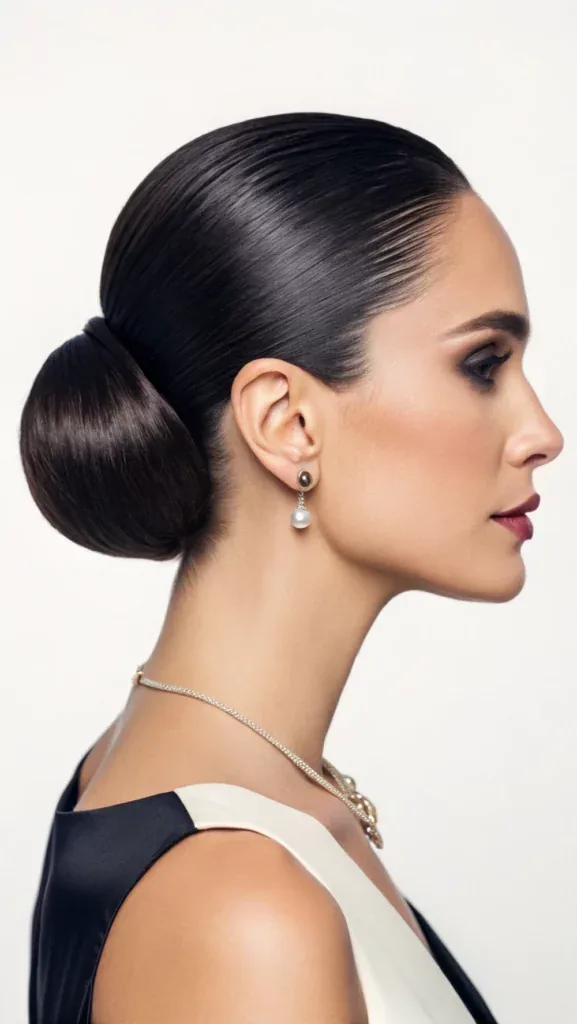
The side-swept low bun sits just behind one ear instead of at the centre of the nape, which makes it a lovely choice for women who find a centred bun uncomfortable to lie on. Hold rating: 8 out of 10 — the bun is small and low, so it holds well, and the side placement means you can lie on the opposite side of your head in savasana without feeling it at all. It is also quietly elegant, and it suits women with a side parting beautifully.
How to secure it: sweep the hair to one side, twist it loosely, and coil it into a small bun behind the ear, pinning at the base. Best for medium to long hair, for side-part wearers, and for slow and medium classes. What to avoid: placing the bun too far forward, where it can press against your ear when you lie down.
Comfort on the mat: very good — just lie with the bun on the upper side. Quick verdict: a small shift in placement, a big gain in comfort. An elegant, mat-friendly bun.
The Claw Clip Twist (Flat and Mat-Friendly)
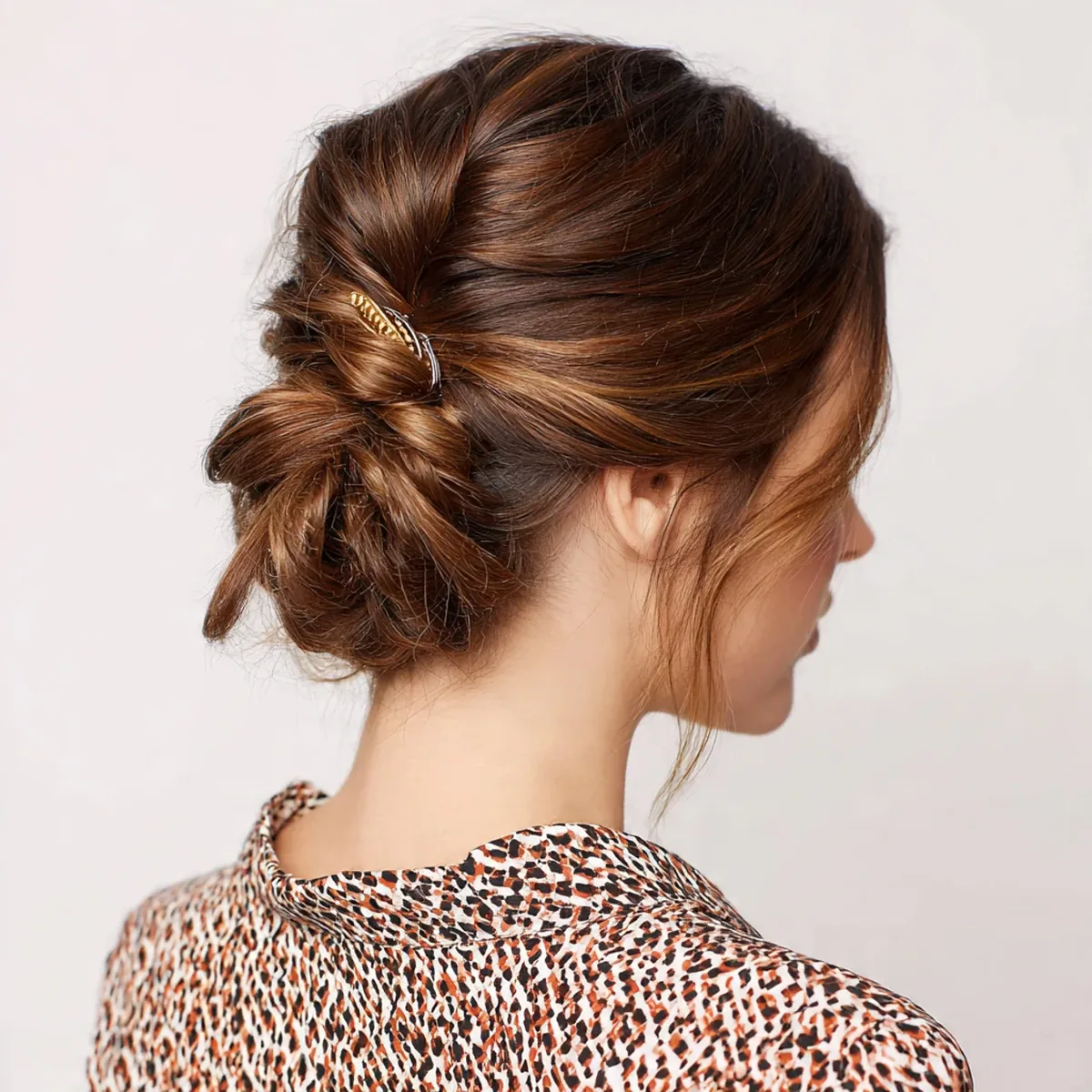
A claw clip twist can be a yoga disaster or a yoga triumph, and the difference is entirely in the clip. A big, chunky clip at the back of the head is a rock in savasana — but a small, flat clip holding a low twist at the nape lies almost completely flat and holds beautifully. Hold rating: 7 out of 10 with a flat clip, and the twist itself does most of the work. Choose a clip no bigger than two inches, with a flat profile, and keep it low.
How to secure it: gather the hair low, twist it up against the head, fold the ends in, and clip flat at the nape. Best for medium to long hair, for women who hate elastics, and for gentle classes. What to avoid: large, domed, or decorative clips, metal clips that pinch, and placing any clip at the crown or the centre of the back of the head.
Comfort on the mat: good with a flat low clip, terrible with a big one — the clip choice is the whole style. Quick verdict: yes to claw clips in yoga, but only small, flat, and low.
The Scrunchie Low Ponytail
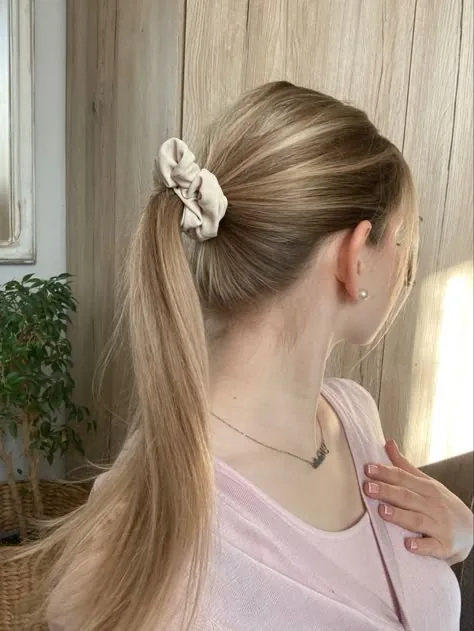
The scrunchie low ponytail is the low ponytail with one upgrade: a soft fabric scrunchie instead of a plain elastic. That single change matters more than it sounds — the fabric spreads the pressure, prevents the dent that a thin elastic leaves, and grips better when the hair gets sweaty, because the fabric absorbs a little moisture instead of sliding on it. Hold rating: 9 out of 10, and the gentlest 9 on this list.
How to secure it: tie a low ponytail with a fabric scrunchie, wrapping it three times, and leave a little softness at the base rather than pulling it drum-tight. Best for every hair type, for daily yogis, and for anyone whose hair dents easily. What to avoid: a scrunchie that is too loose — it should grip firmly without pulling.
Comfort on the mat: perfect — soft, flat, and invisible when you lie down. Quick verdict: the low ponytail, but kinder. If you buy one thing for yoga hair, buy a pack of fabric scrunchies.
The Headband Tuck
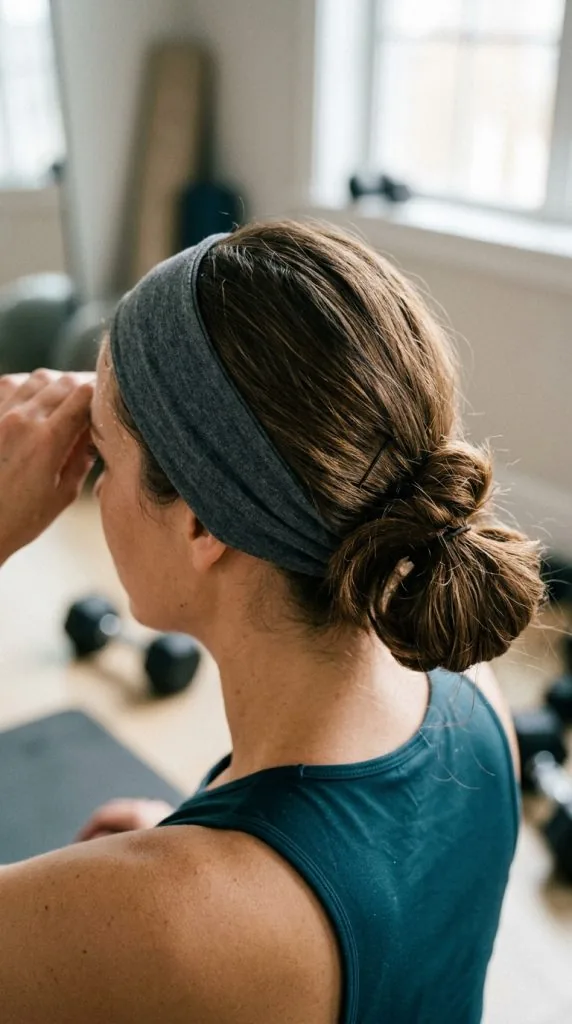
The headband tuck is the style for women whose hair is too short to tie up but too long to leave alone: a soft, wide fabric headband worn low across the forehead, with the front layers tucked behind it. Hold rating: 6 out of 10 — it will not survive a headstand, but it keeps the fringe and side layers out of your face through a gentle or medium class, and it absorbs sweat at the hairline, which is a genuine bonus in hot yoga.
How to secure it: put the headband on first, low across the forehead, then tuck the front sections behind your ears and under the band. Best for short and medium hair, for fringe wearers, and for hot yoga, where the sweat-absorbing band earns its place. What to avoid: hard headbands with teeth, which dig in and leave dents, and narrow bands, which roll up and slip off when you sweat.
Comfort on the mat: excellent — a fabric band is soft in every pose. Quick verdict: the best solution for hair that is too short to tie, and a useful sweatband for everyone else.
The Braided Headband
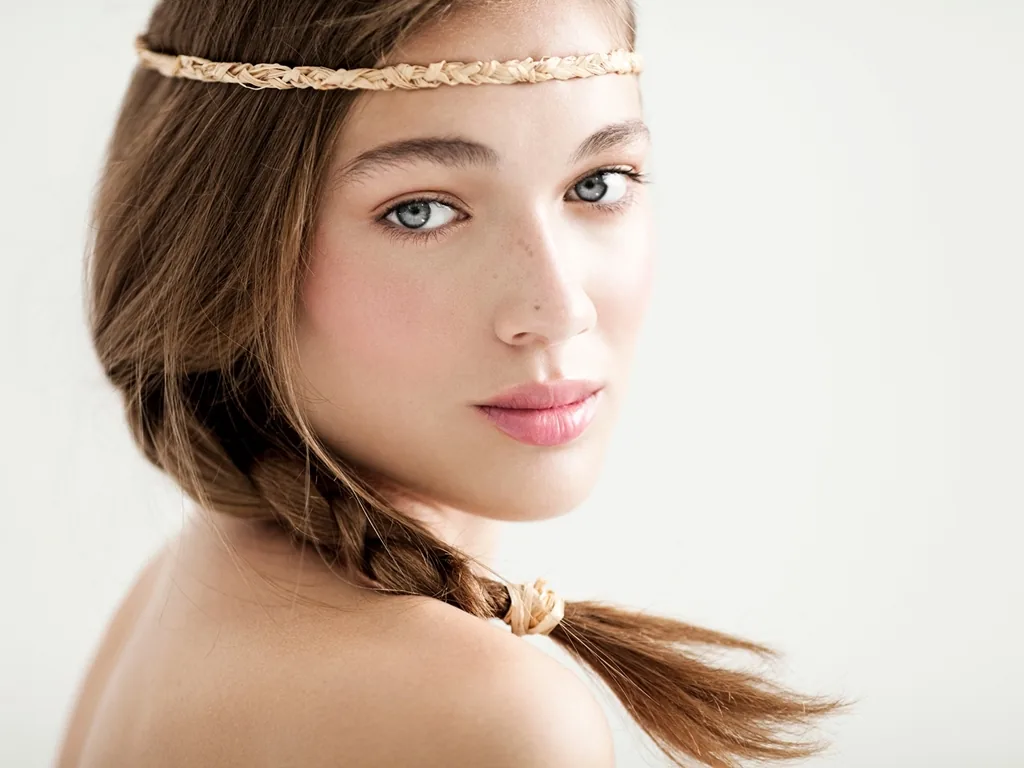
The braided headband uses your own hair as the headband: a small braid worked across the hairline from one temple to the other, holding back every front layer without any accessory at all. Hold rating: 8 out of 10 — it is very secure at the front, where most yoga styles fail, and it stays put because it is anchored at both ends. It takes a little practice, but once you can do it, it is one of the most reliable front-hair solutions there is.
How to secure it: take a section behind one ear, braid it across the hairline, and pin the end behind the opposite ear, then style the rest of the hair as you like. Best for medium to long hair, for fringe growers, and for women who lose headbands mid-class. What to avoid: braiding it too tightly across the forehead — it should feel like a headband, not a vice.
Comfort on the mat: excellent, because the braid is flat against the head. Quick verdict: your own hair, doing the job of a headband, better than a headband does.
The Short Bob Tucked Behind the Ears
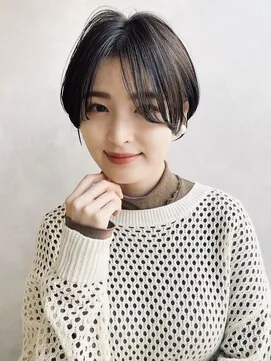
A short bob is almost a yoga-proof haircut by itself — there is nothing to tie, nothing to fall, and nothing to lie on. The only problem is the front pieces, which fall forward in downward dog and tickle the cheeks. The fix is almost embarrassingly simple: tuck both sides behind the ears and pin them there with two flat bobby pins. Hold rating: 7 out of 10 — the pins hold well through a medium class, and the bob itself needs no help at all.
How to secure it: tuck each side behind the ear, cross two bobby pins over each tuck, and smooth the fringe back with a little cream. Best for bob and lob lengths, for fine hair, and for every class type. What to avoid: using bulky clips on a short bob, which look heavy and press when you lie down — flat pins are the answer.
Comfort on the mat: perfect — a bob is the most comfortable length in savasana. Quick verdict: short hair wins at yoga, and two pins finish the job.
The Pixie with a Sweatband
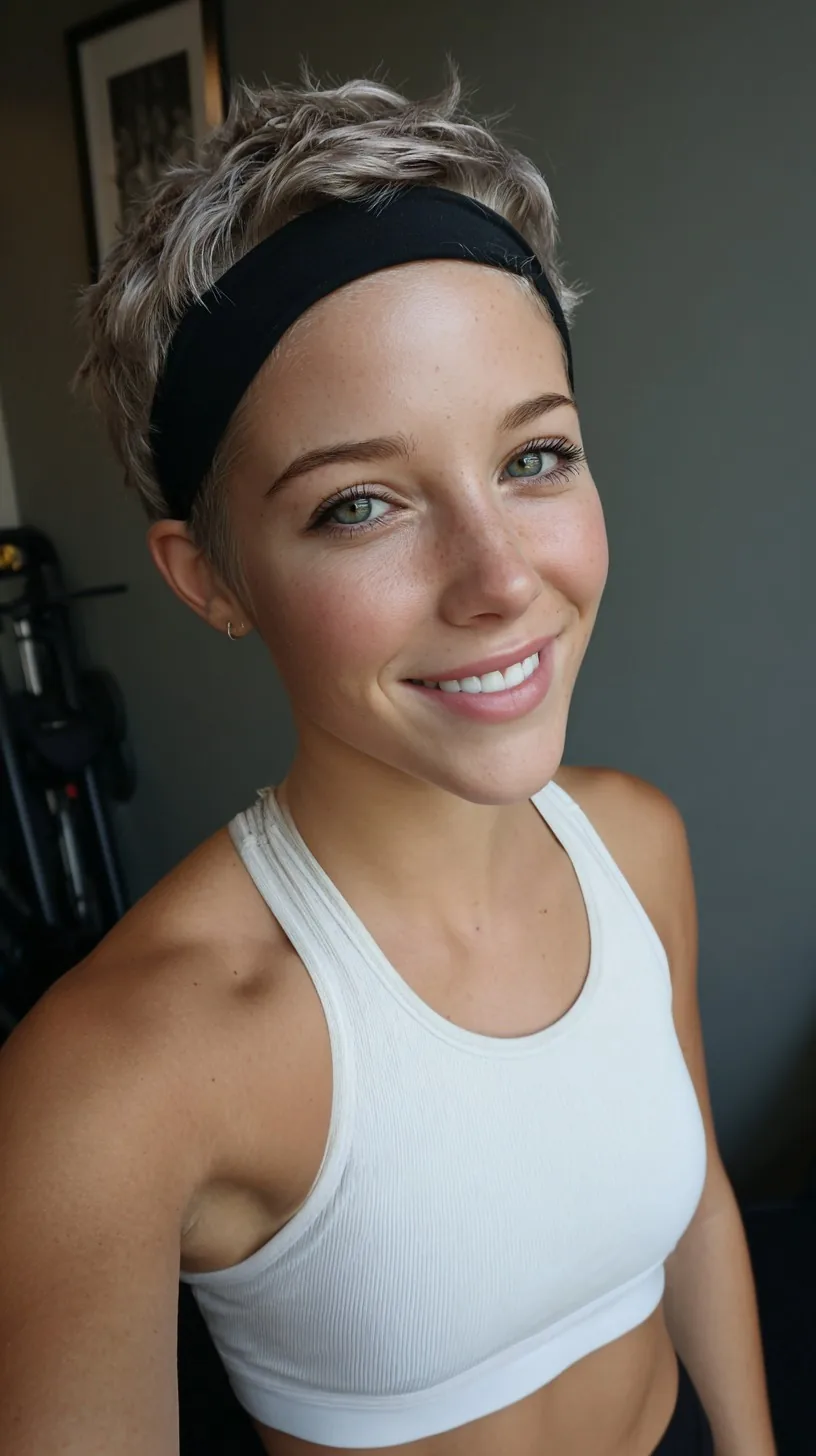
A pixie cut is the easiest hair in yoga — there is nothing to tie, nothing to fall, and nothing to manage — with exactly one enemy: sweat running down the forehead into the eyes. A soft, wide fabric sweatband solves it completely, absorbing the sweat before it reaches your eyes and keeping the short fringe in place. Hold rating: 9 out of 10 for comfort and practicality, because there is simply nothing to come undone.
How to secure it: wear a wide fabric sweatband low across the forehead, and smooth the fringe back or to the side with a little cream. Best for pixie and very short cuts, for hot yoga, and for high-intensity flows. What to avoid: hard or narrow headbands, which slip on short hair, and any band with a knot or seam at the back that presses in savasana.
Comfort on the mat: perfect — nothing to lie on, nothing to feel. Quick verdict: the lowest-maintenance style on this list. Pixie wearers, you have already won.
The Curly Pineapple Puff
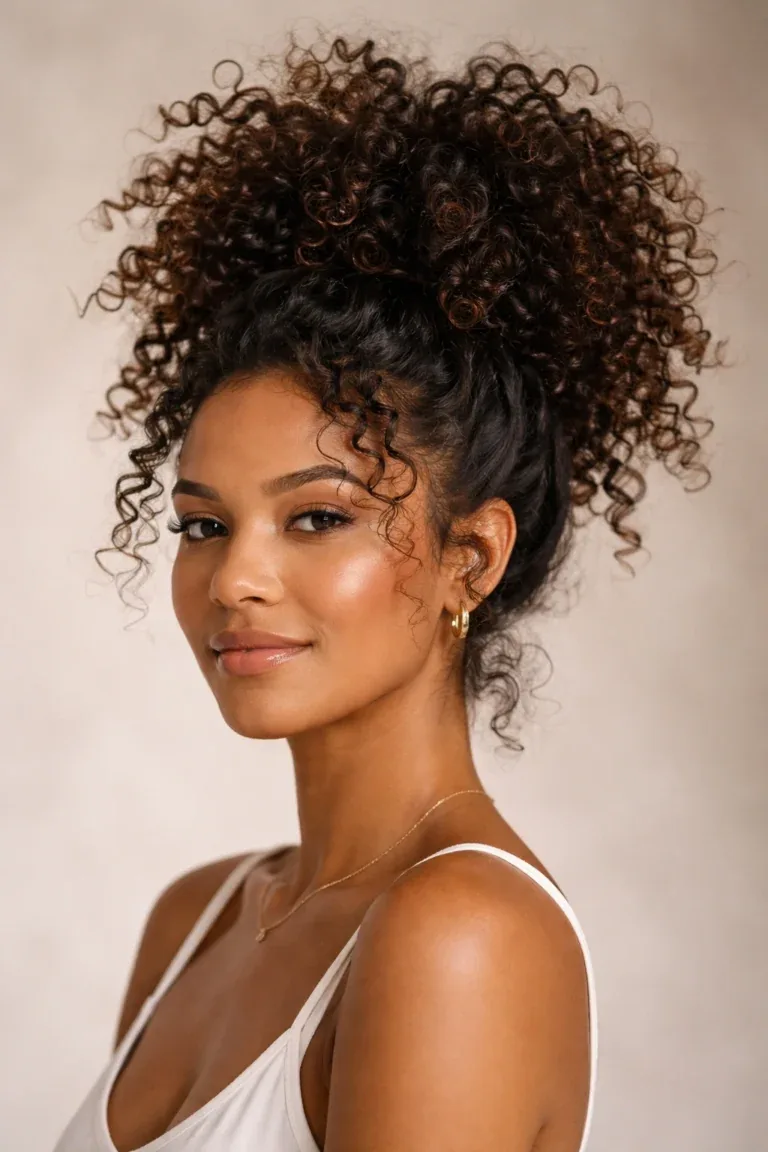
The pineapple puff is the curly-haired yogi’s best friend: all the curls gathered loosely on top of the head with a satin scrunchie, like a pineapple, so the curl pattern stays intact and the curls stay off the neck. Hold rating: 7 out of 10 — it holds well through a medium class, though the puff can loosen in a fast flow, so a second scrunchie at the base helps. The real benefit is curl protection: the curls are lifted off the mat entirely, so they never rub and frizz.
How to secure it: flip the head forward, gather the curls loosely at the crown, and tie once with a satin scrunchie — do not pull it tight. Best for curly and wavy hair, for medium lengths, and for gentle and medium classes. What to avoid: tight elastics, which dent the curl pattern, and brushing the curls out afterwards — refresh with water instead.
Comfort on the mat: poor in savasana, because the puff sits on top of the head — take it down and re-tie it low before the final rest. Quick verdict: brilliant for curls in motion, but lower it before you lie down.
The High Puff for Coils
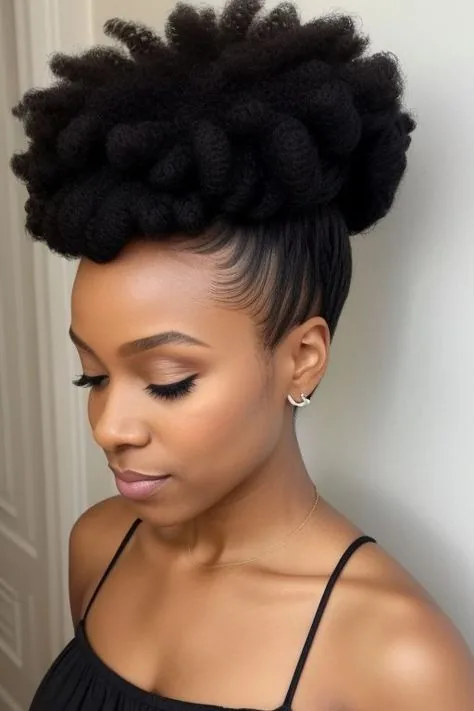
The high puff is the coily-haired version of the pineapple: the hair gathered high and full, shaped into a round puff that keeps every coil up, off the neck, and away from the mat. Hold rating: 8 out of 10 — coily hair grips itself, so a puff holds its shape well, especially with a satin scrunchie and a little edge control at the hairline. It is also a beautiful style, full and proud, and it needs no heat, no tension, and no tools beyond a scrunchie.
How to secure it: moisturise lightly, gather the hair up with your hands, tie once with a satin scrunchie, and shape the puff by gently pulling the coils outward. Best for coily and tight-curled hair, for medium and long lengths, and for every class type except a long lying-down rest. What to avoid: tying it too tightly, which pulls the hairline, and using a cotton tie, which dries coils out.
Comfort on the mat: good in motion, but lower the puff before savasana. Quick verdict: a proud, practical, protective style — just remember to take it down for the final rest.
Two-Strand Twists Pulled Back
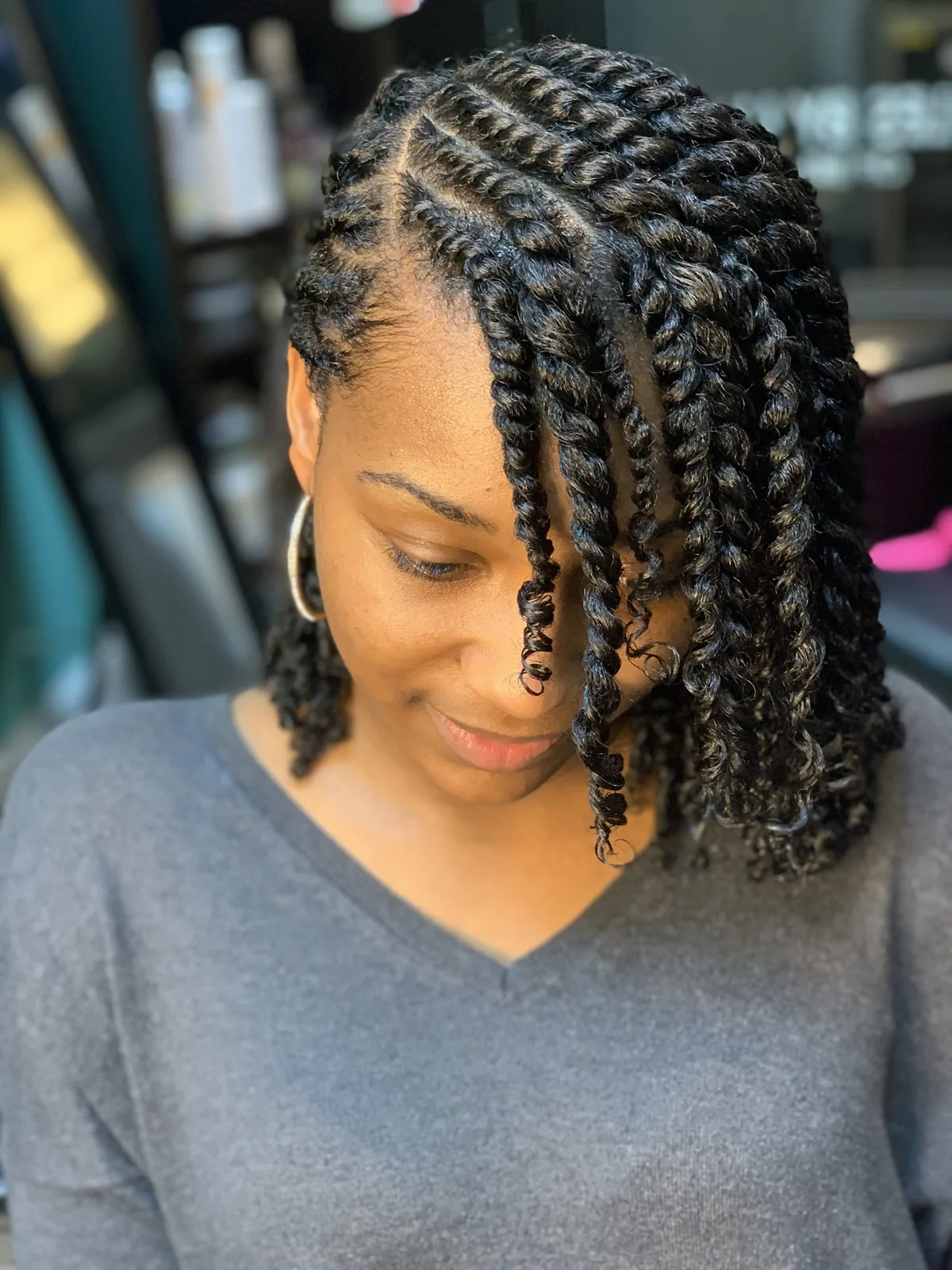
Two-strand twists are a protective style that doubles as a yoga style: the hair twisted into sections, then the twists gathered back into a low ponytail or bun, so nothing moves, nothing frizzes, and nothing needs attention for the whole class. Hold rating: 9 out of 10 — the twists themselves are secure, and gathering them back adds a second layer of hold. They also protect the hair from sweat and friction, which is exactly what a protective style is for.
How to secure it: gather the twists low at the nape with a satin scrunchie, or twist them into a low bun and pin at the base. Best for natural, coily, and curly hair, for hot yoga, and for women who wear twists as a long-term style. What to avoid: gathering the twists too tightly, which pulls the edges — keep the base soft and comfortable.
Comfort on the mat: excellent — low, flat, and gentle. Quick verdict: protection and practicality in one style. The twists do the work before class even starts.
Cornrows into a Low Bun
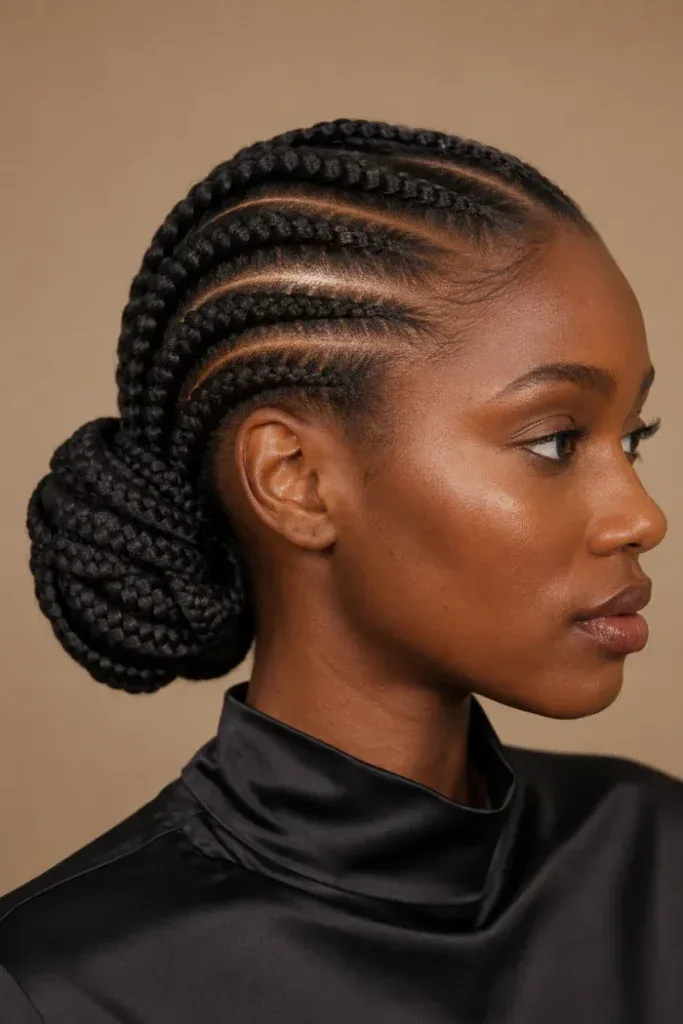
Cornrows braided back into a low bun are one of the most secure styles in this entire guide, because the braiding itself anchors the hair to the scalp — there is nothing to slip, nothing to loosen, and nothing to fall in your face. Hold rating: 10 out of 10, matching the French braid for sheer reliability. The low bun at the end keeps everything flat for savasana, and the style lasts for days, so you can wear it to class all week.
How to secure it: cornrow the hair back from the hairline, gather the ends at the nape, and coil them into a small flat bun, pinning at the base. Best for natural and coily hair, for hot yoga, and for anyone who wants a style that survives a whole week of classes. What to avoid: cornrows braided too tightly, which can cause tension and breakage — comfortable tension is secure enough.
Comfort on the mat: perfect — flat braids and a low bun disappear when you lie down. Quick verdict: maximum security, minimum daily effort. A week of yoga hair, done in one sitting.
Box Braids in a Low Ponytail
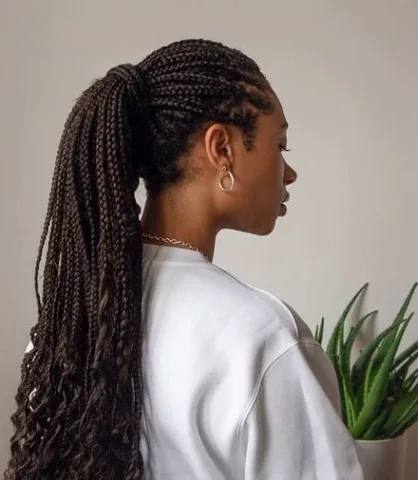
Box braids are heavy — that is their one drawback in yoga — but gathered into a low ponytail, they become a superb class style: the weight hangs down the back instead of pulling at the scalp, the braids cannot tangle, and nothing falls in your face. Hold rating: 9 out of 10, and the low placement is the key: a high ponytail of box braids pulls and swings, while a low one sits calmly and comfortably. Use a large, soft scrunchie that can hold the weight without digging in.
How to secure it: gather the braids low at the nape with a fabric scrunchie, wrapping it enough times to hold the weight, and let the braids fall down the back. Best for box braids, knotless braids, and other long braided styles, for medium and gentle classes. What to avoid: a high ponytail, which pulls the hairline, and thin elastics, which snap under the weight.
Comfort on the mat: very good — the braids lie beside you in savasana rather than under you. Quick verdict: heavy hair, handled lightly. Low is the only way to wear braids in class.
The Silk Scarf Low Bun
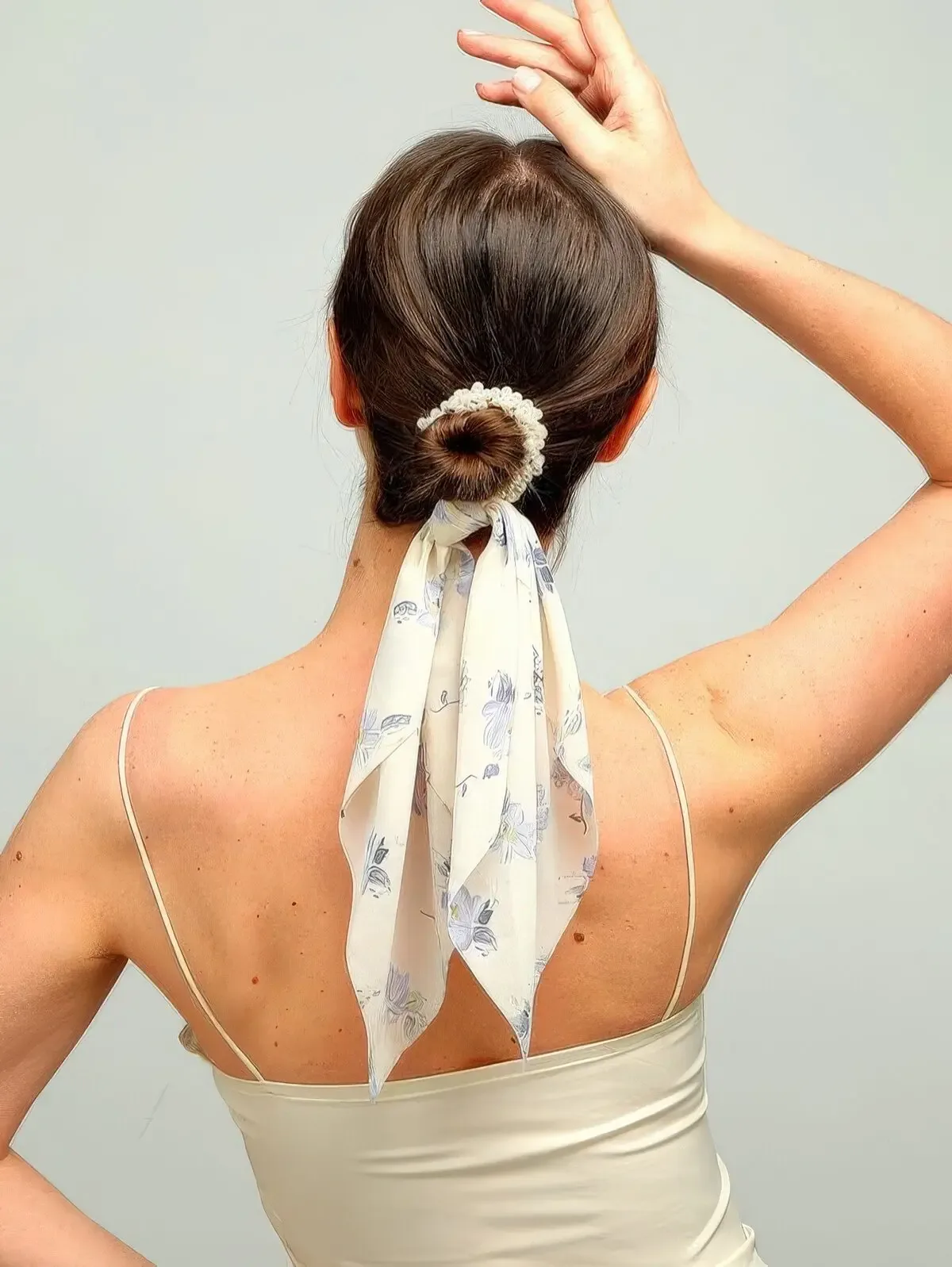
The silk scarf low bun is the most elegant protective style on this list: the hair gathered into a low bun, then a silk scarf wrapped around the base and tied low, which protects the hair from friction, absorbs sweat at the hairline, and looks beautiful. Hold rating: 8 out of 10 — the scarf adds grip and stops the bun from loosening, and the silk is kind to every hair type. It is also the best style here for second-day hair, because the scarf hides any flatness at the roots.
How to secure it: make a low bun, fold a silk scarf into a band, wrap it around the hairline and the bun, and tie it low at the nape. Best for curly, coily, and textured hair, for hot yoga, and for women who want protection with polish. What to avoid: tying the scarf too tightly, which can cause a headache, and using a slippery scarf that slides off when you sweat — a matte silk holds better than a shiny one.
Comfort on the mat: excellent — the scarf is soft and flat in every pose. Quick verdict: protection, polish, and practicality in one wrap.
The Satin-Lined Head Wrap Bun
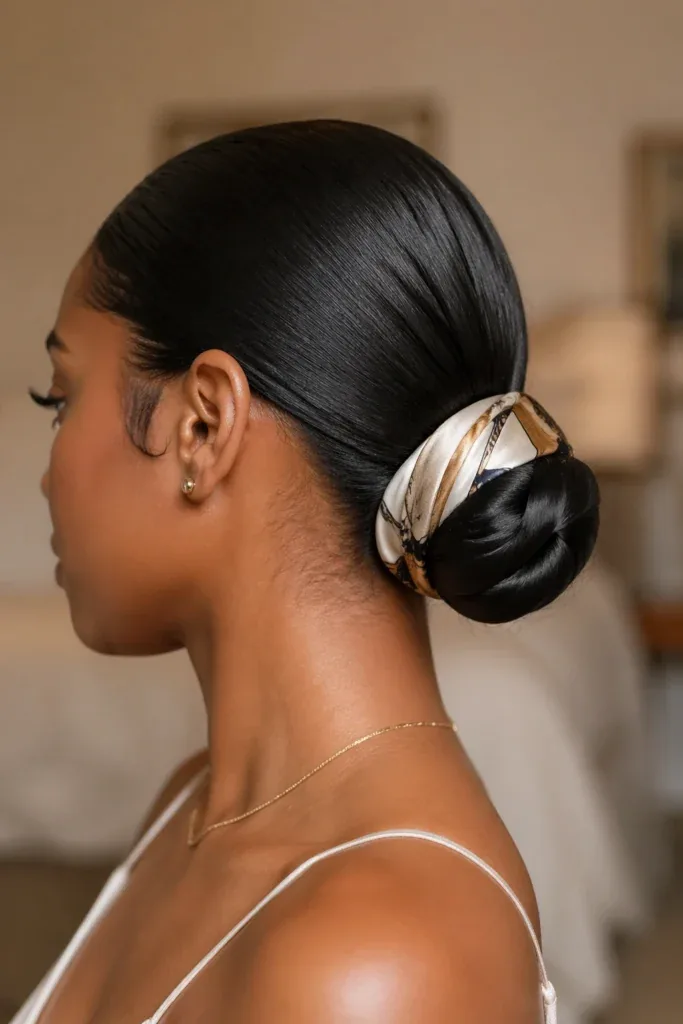
The satin-lined head wrap bun is the silk scarf’s more protective cousin: a head wrap with a satin lining that covers the hair completely, keeping curls and coils safe from the mat, from sweat, and from friction all at once. Hold rating: 9 out of 10 — the wrap itself is the hold, and nothing underneath can move, fall, or frizz. It is the best choice in this guide for women who want total protection, and it takes less than a minute to put on.
How to secure it: gather the hair into a low bun, place the wrap over the head, and tie it low at the nape, tucking the ends in flat. Best for curly, coily, and natural hair, for hot yoga, and for anyone recovering from damage or growing their hair out. What to avoid: a wrap tied at the crown, which presses in savasana, and cotton wraps, which absorb moisture and dry the hair out.
Comfort on the mat: excellent — soft, flat, and smooth against the mat. Quick verdict: total protection, zero effort. The wrap does everything.
The Low Chignon with a Soft Scrunchie
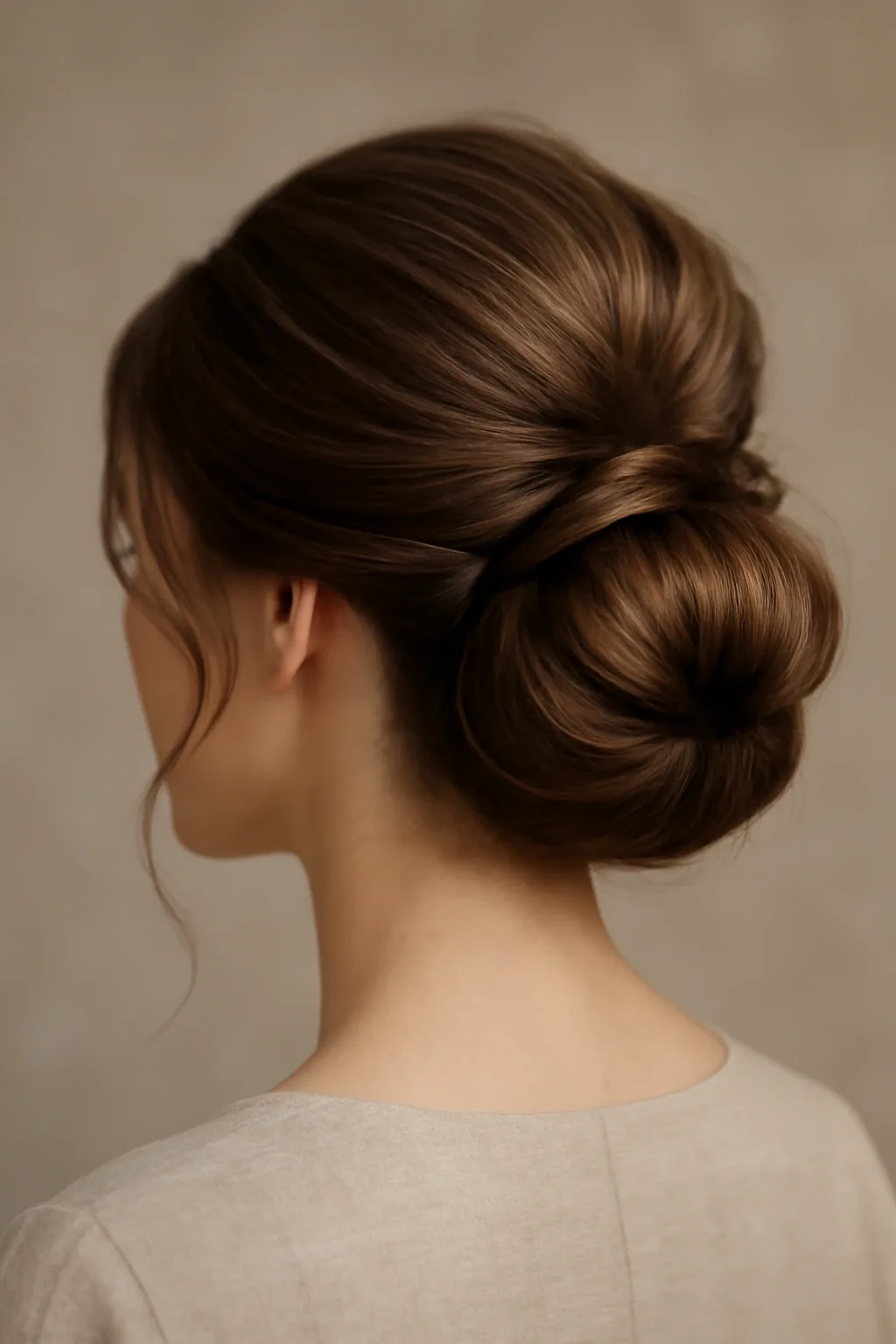
The low chignon is the ballerina bun’s softer, kinder sister: the hair twisted loosely and pinned low at the nape, held with a soft scrunchie instead of pins and tension. Hold rating: 8 out of 10 — the loose twist grips itself, and the scrunchie holds it without denting or pulling. It looks effortless and a little French, and it is comfortable enough to wear through a two-hour workshop without a second thought.
How to secure it: gather the hair low, twist it loosely, coil it into a small chignon, and hold it with a fabric scrunchie and one or two pins. Best for medium to long hair, for fine hair that dents easily, and for slow and medium classes. What to avoid: over-pinning it — a chignon should look soft, and too many pins make it stiff and uncomfortable.
Comfort on the mat: perfect — low, soft, and flat. Quick verdict: the chignon, without the fuss. Soft, secure, and lovely.
The Side Braid into a Low Bun
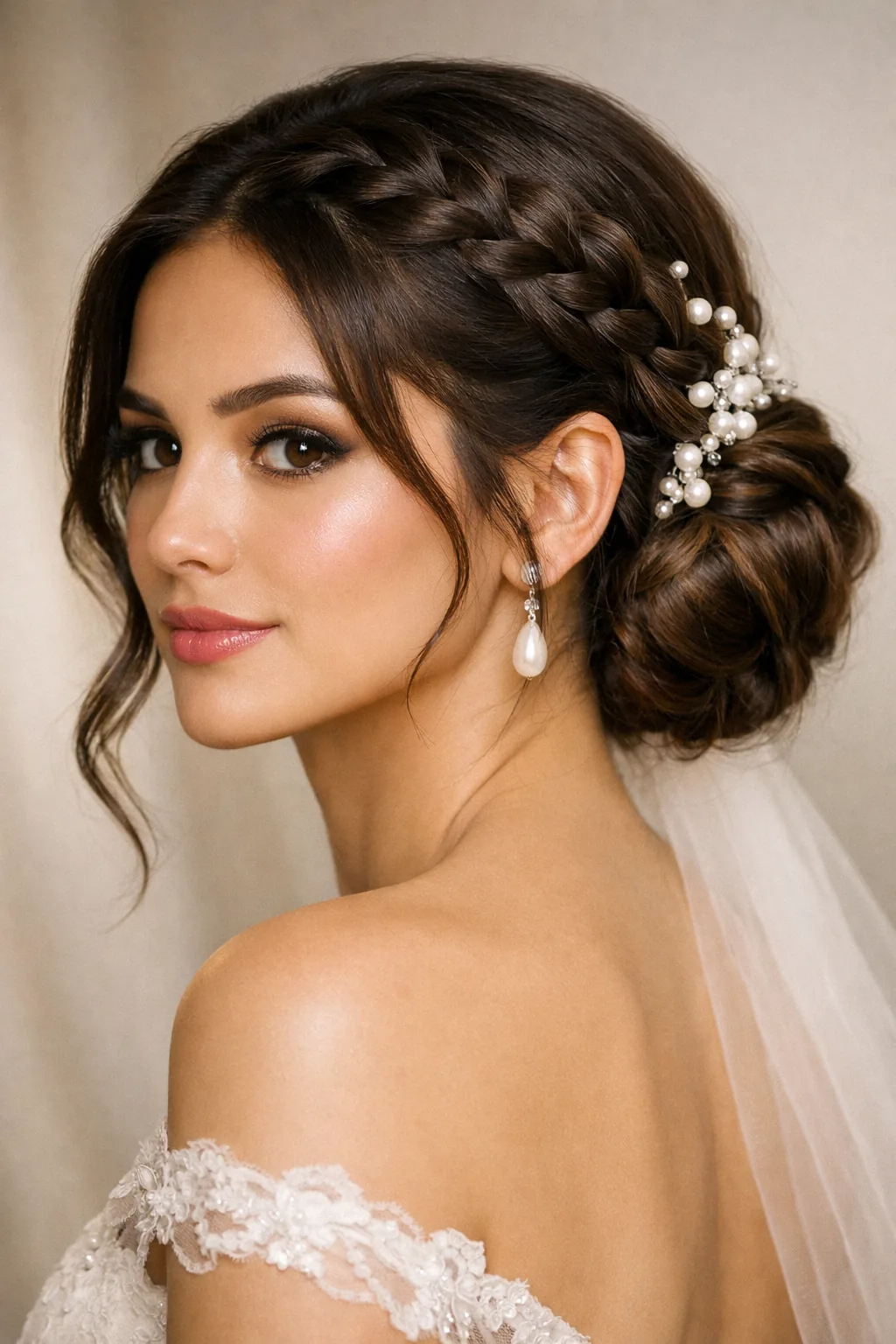
The side braid into a low bun combines two secure ideas into one style: a braid worked along one side of the head, which catches the front layers, ending in a low bun, which lies flat for savasana. Hold rating: 9 out of 10 — the braid anchors the front, the bun anchors the back, and there is nowhere left for a strand to escape. It is also one of the prettiest styles here, with the braid giving it texture and interest.
How to secure it: braid from the temple along one side to the nape, then gather the rest of the hair and coil it into a low bun, pinning at the base. Best for long hair, for layered cuts, and for medium and hot classes. What to avoid: braiding only the surface hair, which loosens — take proper sections so the braid grips.
Comfort on the mat: excellent — flat at the front, flat at the back. Quick verdict: two secure styles in one, and beautiful with it.
The Twisted Crown for Long Hair
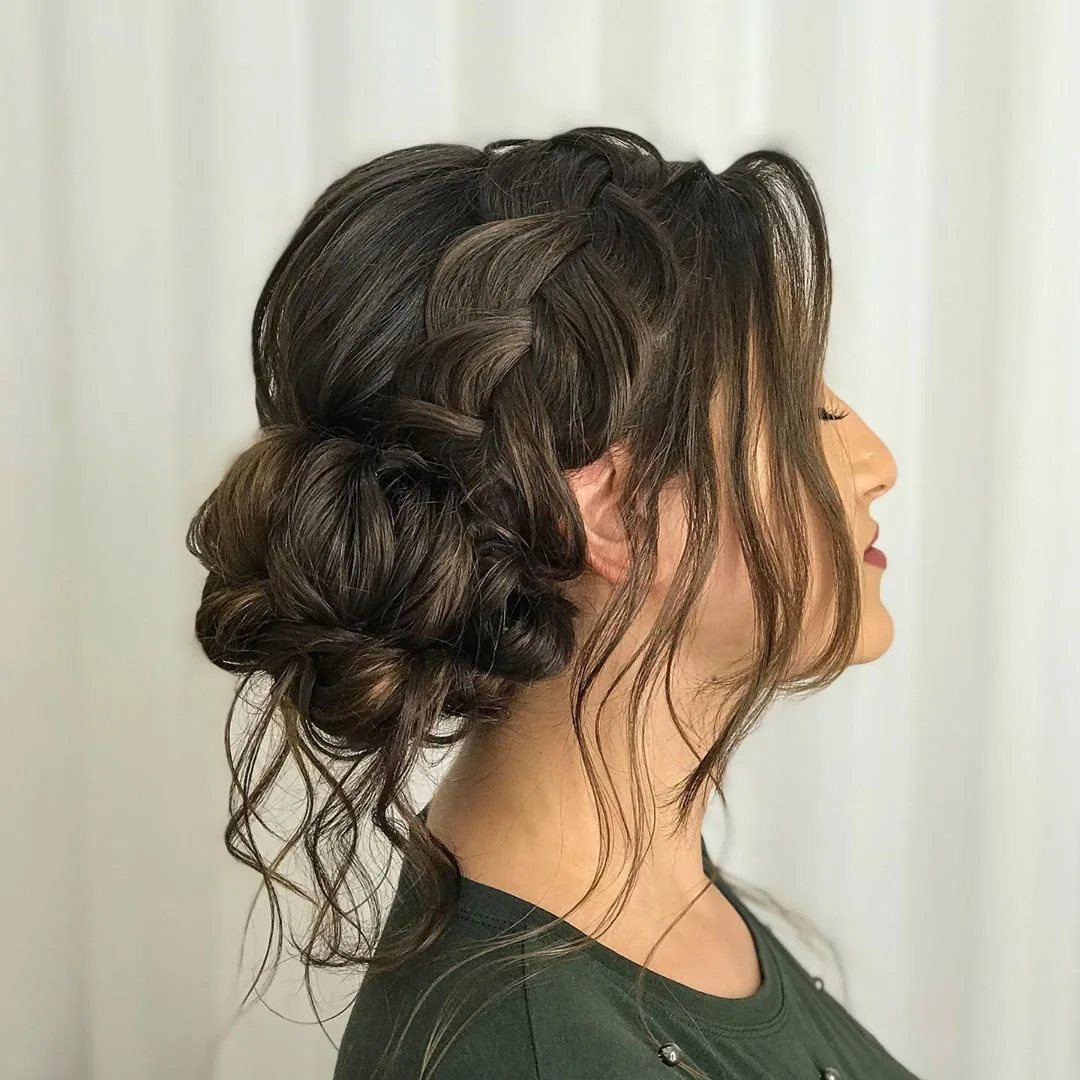
The twisted crown takes two sections of hair, twists each one back from the temples, and pins them together at the back, creating a crown of twists that holds the front hair away from the face. Hold rating: 7 out of 10 — it is very secure at the front, though the loose hair underneath will move in a fast class, so it suits slow and medium flows best. It is also one of the most romantic styles here, and it works on hair too short to braid fully.
How to secure it: take a section from each temple, twist both back, cross them at the back of the head, and pin them flat. Best for medium to long hair, for wavy and curly hair, and for gentle classes. What to avoid: twisting too tightly, which pulls the temples, and using too few pins — two crossed pins at each side hold far better than one.
Comfort on the mat: very good, because the twists are flat against the head. Quick verdict: a crown that actually works — pretty, practical, and kind to your hair.
Short Hair Half-Up Clips
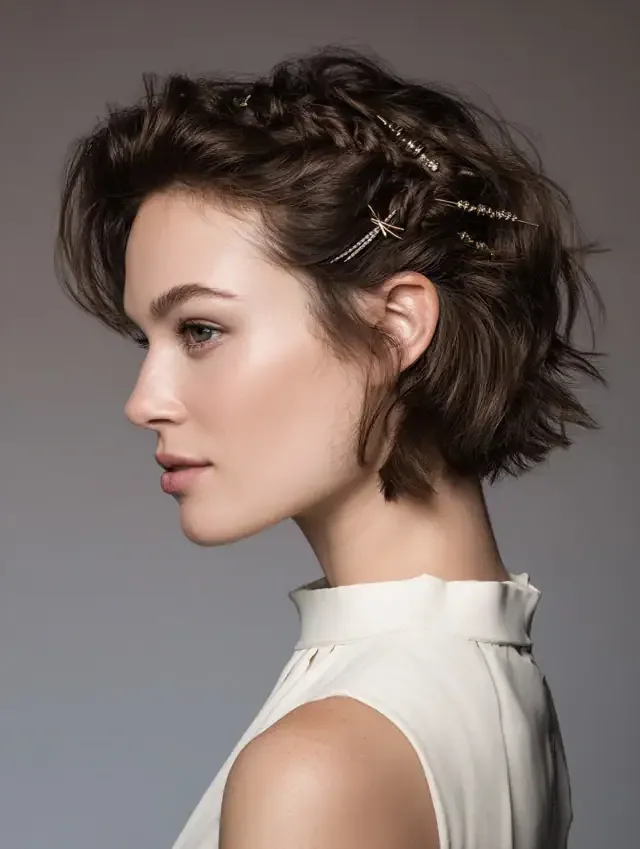
Short hair half-up clips are the short-haired yogi’s secret weapon: the front layers gathered into a tiny half-up section and held with two small flat clips, which takes twenty seconds and keeps the face clear for the whole class. Hold rating: 7 out of 10 — the clips hold well through a medium class, and the rest of the short hair needs no help at all. Flat clips are essential: anything bulky will press when you lie down.
How to secure it: gather the top front sections, twist them back slightly, and clip them flat with two small metal-free clips. Best for short bobs, lobs, and growing-out pixies, for every class type. What to avoid: large or domed clips, and clipping the hair too tightly, which creates a dent in short hair that takes hours to fall out.
Comfort on the mat: perfect — flat clips disappear when you lie down. Quick verdict: twenty seconds, two clips, a clear face all class. Short hair, solved.
The Layered Lob Low Ponytail

The layered lob — a long bob — is a tricky length for yoga: too long to leave alone, too short to tie up easily, with layers that escape every style. The low ponytail solves it, but only if you work with the layers: gather the hair low, let the shortest layers fall where they want, and pin the escapees flat at the nape. Hold rating: 7 out of 10 — the ponytail holds, and the pins catch the layers that would otherwise fall forward in downward dog.
How to secure it: tie a low ponytail with a soft tie, then pin any loose layers flat at the sides with bobby pins. Best for lobs and layered medium cuts, for medium classes, and for women growing out a bob. What to avoid: tying the ponytail high, which the layers will not reach, and fighting the layers — pin them instead of forcing them.
Comfort on the mat: excellent — low and flat. Quick verdict: the lob is the hardest length for yoga, and the low ponytail with pins is the answer.
The Savasana-Proof Loose Low Braid

The savasana-proof loose low braid is the last style on this list and the one this guide would wear to a yin class: a simple, loose, low braid, tied softly at the nape, that lies completely flat, pulls at nothing, and feels like wearing your hair down. Hold rating: 7 out of 10 — it is not the most secure style here, but it does not need to be: in a slow class, a loose braid is all the hold you need, and the comfort is unmatched.
How to secure it: gather the hair low, braid it loosely in three strands, and tie the end with a fabric scrunchie. Best for long hair, for yin and restorative yoga, and for sensitive scalps that cannot take tension. What to avoid: braiding it tightly, which defeats the entire purpose — this braid should feel like almost nothing at all.
Comfort on the mat: perfect — the flattest, softest braid on this list. Quick verdict: the most comfortable style here. For slow classes, this is the one.
What is the best hairstyle for a yoga class?
Yes — the best all-round yoga hairstyle is a French braid or a low ponytail at the nape. Both lie flat when you lie down, survive inversions, and keep every strand out of your face. If you can French braid, choose the braid; if you cannot, the low ponytail is just as reliable and takes ten seconds.
Can I wear my hair down to yoga?
You can, but it is not a good idea — loose hair falls in your face in downward dog, sticks to a sweaty neck in hot yoga, and gets trapped under your back in savasana. If you love the feeling of hair down, a half-up style or a loose low braid gives you most of that freedom while keeping your face clear.
How do I keep my hair from falling out in downward dog?
Use a style that anchors at the hairline, like a French braid, Dutch braid, or braided crown, because these catch the front layers before they can fall forward. A low ponytail also works, because gravity pulls it down your back rather than over your face. Avoid high ponytails and loose buns, which flop forward in inversions.
What hairstyle is best for hot yoga?
The best hot yoga hairstyles are French braids, boxer braids, and low braided ponytails, because they lock every strand away and do not loosen when they get wet with sweat. Use a spiral tie or a fabric scrunchie, which grip better than a plain elastic on sweaty hair, and avoid high ponytails, which soak through and whip around.
Will tying my hair up for yoga damage it?
Not if you vary the style and keep it gentle — damage comes from tying the same tight ponytail in the same spot every day, which causes traction alopecia around the hairline. Vary the position, use soft fabric ties, never tie wet hair tightly, and unwind ties gently instead of yanking them out.
How do I stop my hair getting sweaty and smelly after yoga?
Let your hair down as soon as class ends, shake it out, and let it air-dry for ten minutes before brushing. A little dry shampoo or arrowroot powder at the roots absorbs dampness, and a cool blast from a hairdryer finishes the job. You do not need to wash your hair after every class — a good refresh stretches a wash by two days.
What should I do with curly hair in yoga class?
Gather curls into a pineapple puff, a high puff, or a low bun made from twists, using a satin scrunchie, so the curls stay off the mat and keep their pattern. Avoid tight elastics and cotton headbands, which dry curls out, and refresh after class with water and a little curl cream instead of brushing dry curls.
Can I wear a claw clip to yoga?
Yes, but only a small, flat clip worn low at the nape — a big chunky clip at the back of your head will dig into the mat and into your skull during savasana. A flat clip holding a low twist is comfortable and secure, while a large or domed clip should stay at home.
How do I keep short hair out of my face in yoga?
Pin the front layers back with two flat bobby pins crossed at each temple, or wear a soft fabric headband low across the forehead. For a bob, tucking both sides behind the ears and pinning them is enough, and for a pixie, a wide fabric sweatband keeps the fringe in place and absorbs sweat.
Should I wash my hair after every yoga class?
No — washing every day strips the scalp and dries the hair out, especially after hot yoga. Most yogis wash two or three times a week and refresh in between with air-drying, dry shampoo at the roots, and a little oil on the ends. Wash after a very sweaty hot class, but a gentle yin class rarely needs a wash at all.
Conclusion: Breathe In, Hair Out of the Way
The best yoga hairstyle is not the prettiest one, or the trendiest one, or the one you saw on someone else’s mat. It is the one you forget about the moment class starts — the one that lies flat in savasana, stays put in downward dog, survives the sweat, and comes out without a fight. For most women, that will be a French braid, a low ponytail, or a low bun, and there is no shame in wearing the same reliable style to every class. Yoga is a practice, not a performance, and your hair should practise with you, quietly, in the background.
Try one style from this list in your next class. Notice how it feels when you lie down, how it holds when you turn upside down, and how your hair feels when you take it out afterwards. Then try another one next week, and another the week after, until you find the one that feels like yours. And when you do, keep a spare tie in your bag, vary the position now and then, and let your hair rest. Breathe in, hair out of the way — that is all a yoga hairstyle ever needs to do.