Chlorine-Proof and Cute: 38 Swimming Hairstyles for Women That Stay Put in the Pool
There is a particular joy in swimming — the cool water, the quiet rhythm of laps, the feeling of your whole body moving through something weightless — and then there is the hair. A style that looks lovely on dry land can unravel in the first length, slide into your face on a turn, or come out of the pool as a tangled, chlorine-smelling knot. The best swimming hairstyles for women are the ones that solve all of that before you even get in the water: styles that stay put underwater, keep every strand out of your eyes, survive a dive, and still look cute when you climb out and wrap yourself in a towel.
This guide gathers 38 swimming hairstyles for women, chosen for the pool, the beach, and open water alike: braids that do not unravel when wet, buns that survive flip turns, cap-friendly styles that fit neatly under a swim cap, and short-hair options that need no fuss at all. Eight guides first walk you through what actually matters: protecting your hair from chlorine, keeping it out of your face while you swim laps, styles that survive diving, fitting your hair under a cap, braids that hold when wet, the difference between beach and pool hair, caring for wet hair after the pool, and drying and detangling without damage. Whether you swim laps every morning, dive in on holiday, or just want to look good at the poolside, there is a style here that will stay put — lap after lap, dive after dive.
Chlorine Protection: Prep Your Hair Before You Get In
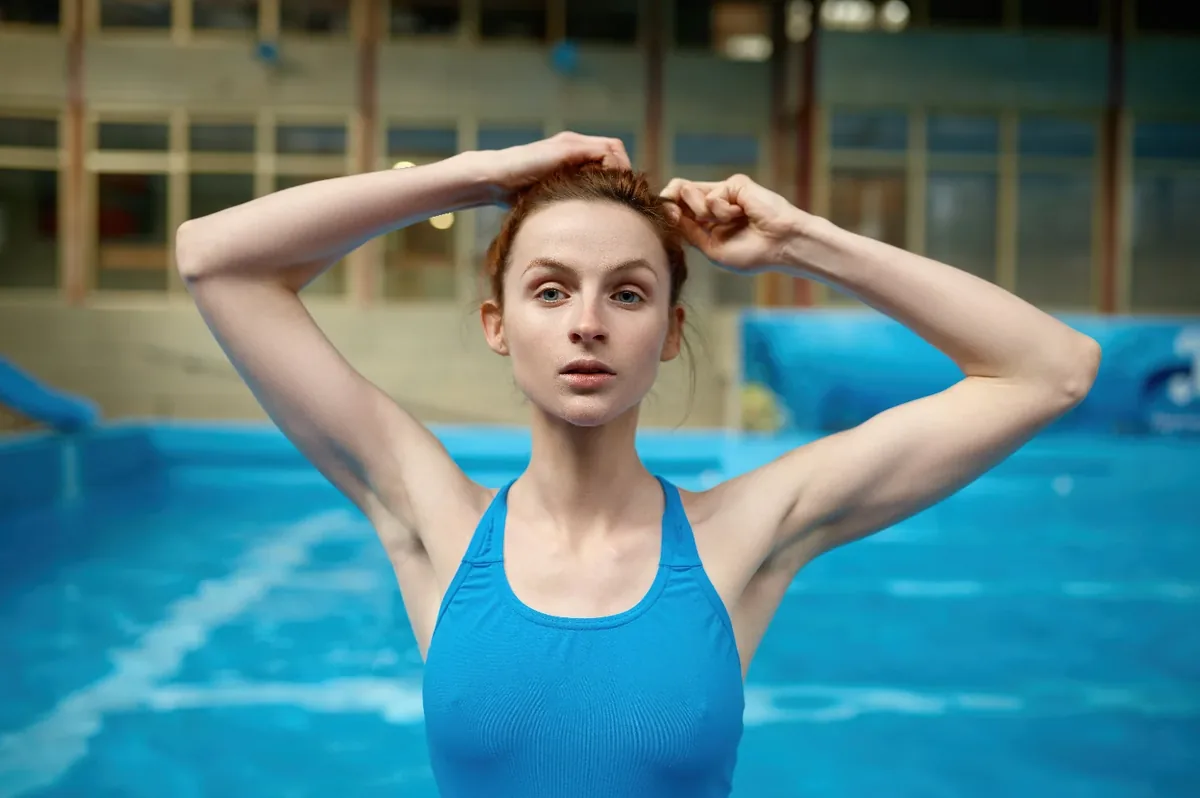
Chlorine is the part of swimming nobody photographs. It strips the natural oils from your hair, dries out the ends, fades colour, and leaves that unmistakable pool smell in your strands long after you have showered. The damage is not dramatic after one swim, but it adds up — week after week, lap after lap — until hair that was soft and shiny starts to feel straw-like. The good news is that most of the damage is preventable, and the fix takes about thirty seconds before you get in. Wet your hair thoroughly with clean water first, so it soaks up fresh water instead of chlorinated water, and smooth a little leave-in conditioner or a few drops of oil through the lengths. Wet, coated hair absorbs far less chlorine than dry hair does.
Best for: every swimmer, but especially anyone with coloured, bleached, or already-dry hair — chlorine fades colour fast and dries out fragile ends first. Pros: a thirty-second prep step saves hours of repair later, and it costs almost nothing. Cons: oil on your hair can make a swim cap slip, so use a light conditioner rather than a heavy oil if you wear a cap. Common mistake: jumping straight into the pool with dry hair, which is when your hair absorbs the most chlorine. Maintenance: rinse with clean water the moment you get out, before you even reach the showers, and wash with a gentle shampoo when you get home.
Keeping Hair Out of Your Face While You Swim Laps
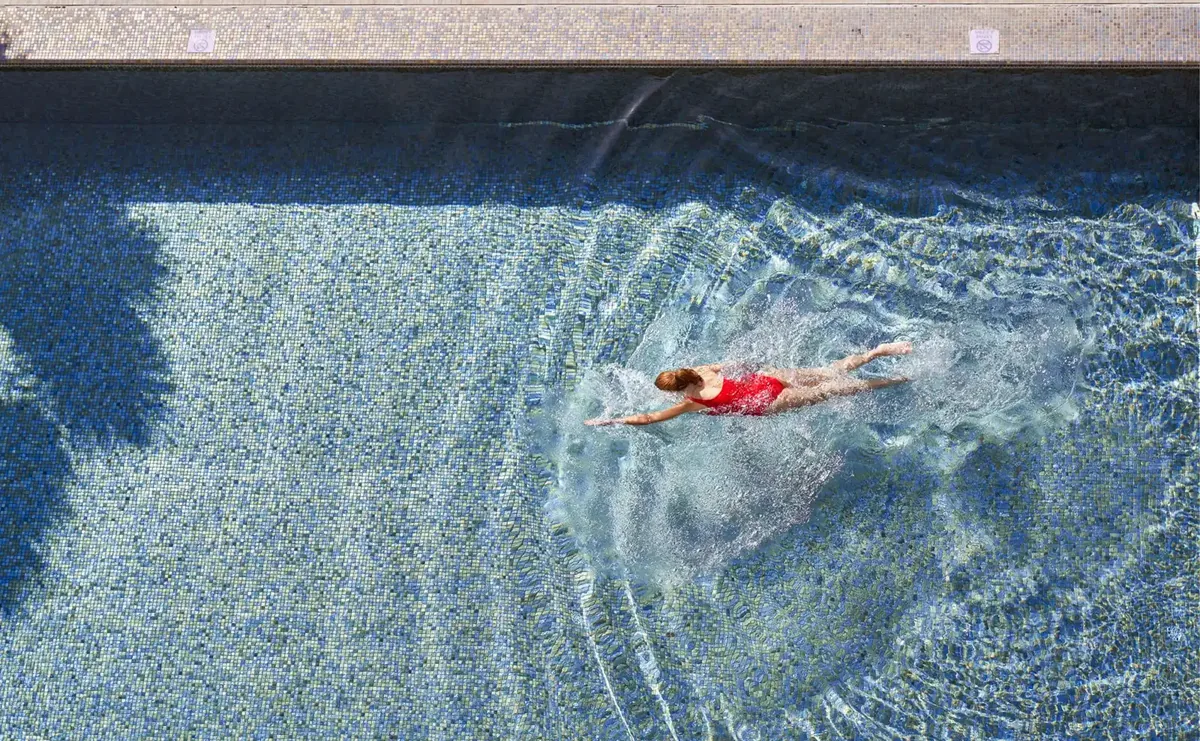
Nothing ruins a lap faster than hair in your face. You are mid-stroke, breathing to the side, and a strand comes loose and sticks across your goggles, your mouth, or your eyes — and suddenly your rhythm is gone, your breathing is off, and you are stopping at the wall to fix what should never have come loose. The styles that work for laps are the ones with nothing left loose at the front: every strand gathered, braided, or pinned back, and the whole style anchored low or tight so the water cannot pull at it. A French braid, a low bun, or a tight ponytail will all do it — but only if the front is properly secured, because the front is where laps undo a style first.
How to style it: part the hair where you want it, then braid or gather from the very front hairline, not from the crown — a style that starts at the hairline holds the front pieces. Best for: anyone who swims laps regularly, and especially freestyle and backstroke swimmers, whose strokes pull water over the front of the head. Pros: a face-free style means you never break your rhythm to push hair away. Cons: a style that is pulled too tight at the front can give you a headache by the tenth lap, so keep it firm but not painful. Quick verdict: if you can shake your head hard and nothing moves, the style will survive your laps.
Styles That Survive Diving and Flip Turns
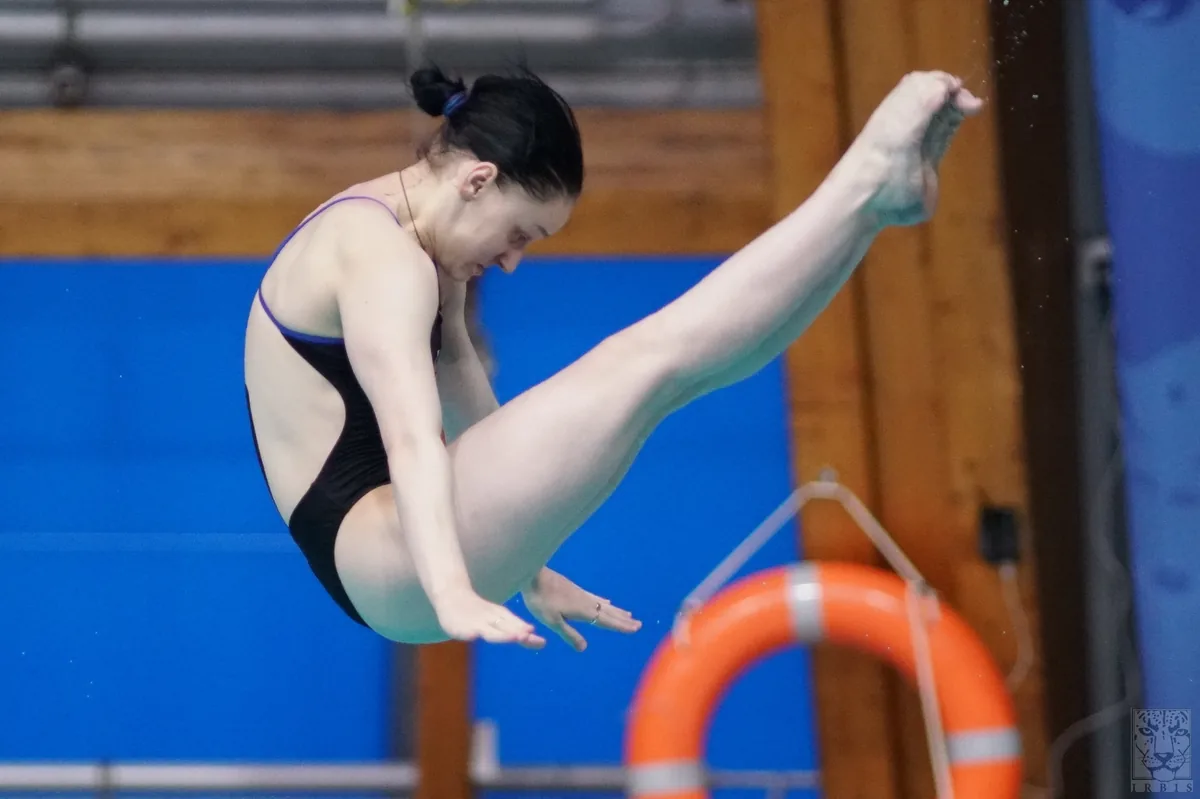
A dive is the hardest test a swimming hairstyle will ever face. You hit the water at speed, the water rushes over your head, and anything loose is pulled backwards in an instant. Flip turns do the same thing from the other direction, with a push-off that sends a wave of water straight over the crown. The styles that survive are the ones with no loose ends and no single point of failure: a braid pinned at the end, a bun held with three pins and a strong elastic, a style where every piece is tucked into another piece. A ponytail with a loose end will whip around in a dive; a braid with its end pinned under will not move at all.
Why it works: water pulls at anything sticking out, so a style with a smooth, compact shape gives the water nothing to grab. How to style it: finish any dive-proof style by tucking the ends under and pinning them flat, and use a fabric-covered elastic rather than a thin one — thin elastics snap under the force of a dive. Pros: a style that survives a dive will survive anything else in the pool. Cons: dive-proof styles tend to be tight, so take the pins out gently afterwards rather than yanking them through wet, tangled hair. Who should avoid it: nobody, but if you only swim gently and never dive, you do not need this level of security — a softer style will do.
Cap-Friendly Styles: Hair That Fits Neatly Under a Swim Cap
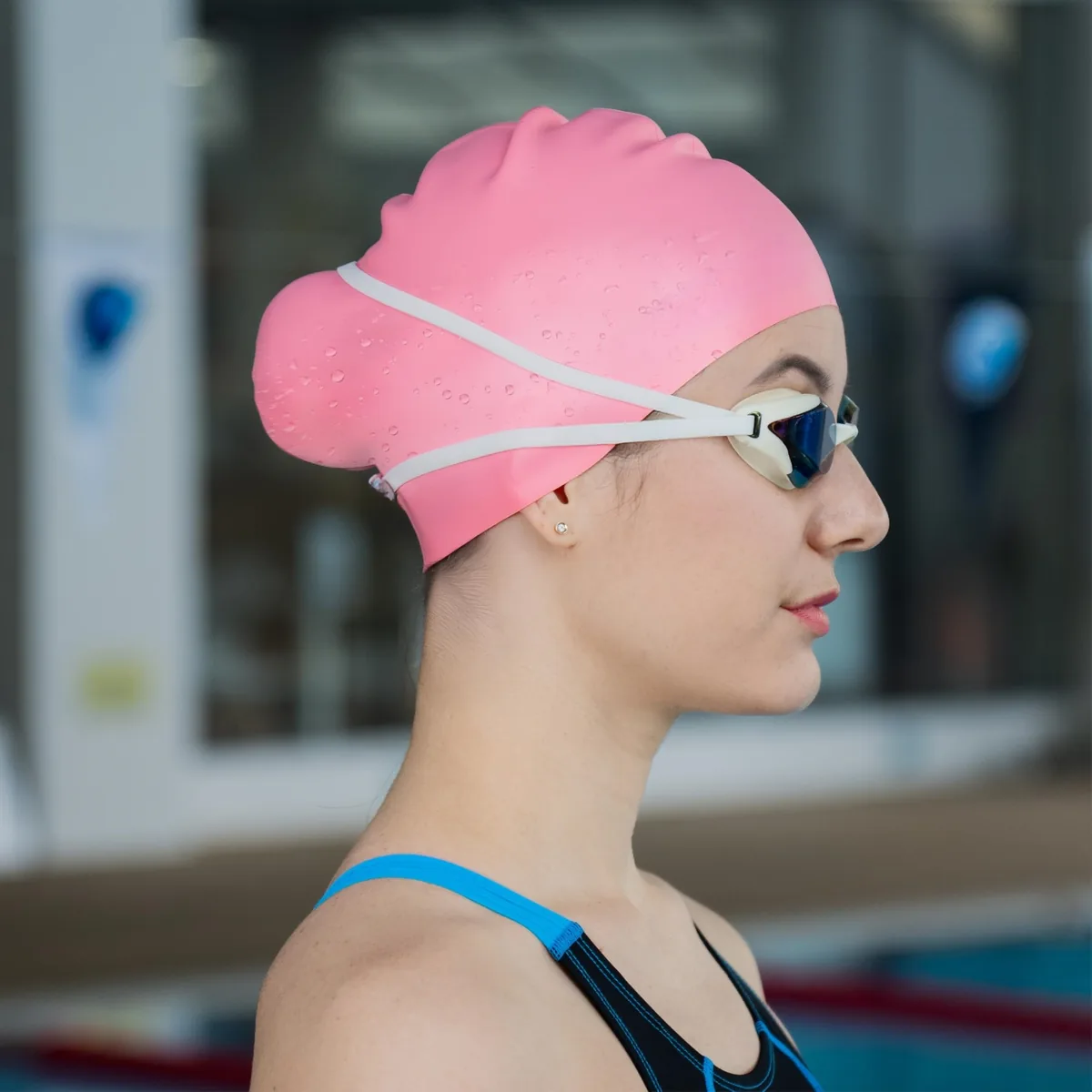
A swim cap is the simplest chlorine protection there is, but only if your hair fits under it. The cap-friendly styles are the flat ones: a low bun at the nape, a single braid coiled flat against the head, a low ponytail folded up, or hair simply smoothed back and tucked. A high bun or a top knot will fight the cap — the cap pulls up over the bump, the bump pushes the cap off, and by the second lap the cap is sliding and your hair is escaping. A low, flat style lets the cap sit smoothly, and a smooth cap stays on.
Best for: regular lap swimmers, anyone with long hair who wears a cap, and swimmers with coloured hair who want the extra chlorine barrier. How to style it: build the style low and flat — a low bun, a low braid, or a ponytail folded and pinned flat — then put the cap on from the front, pulling it back over the style rather than pushing it down from the top. Pros: a cap plus a good style is the best chlorine protection you can get, and it keeps your hair completely dry. Cons: a cap can flatten your hair and leave a mark across the forehead, so wear it over a thin headband if that bothers you. Maintenance: none — just take the cap off carefully, from the back, so you do not pull hair out with it.
Braids That Don’t Unravel When Wet
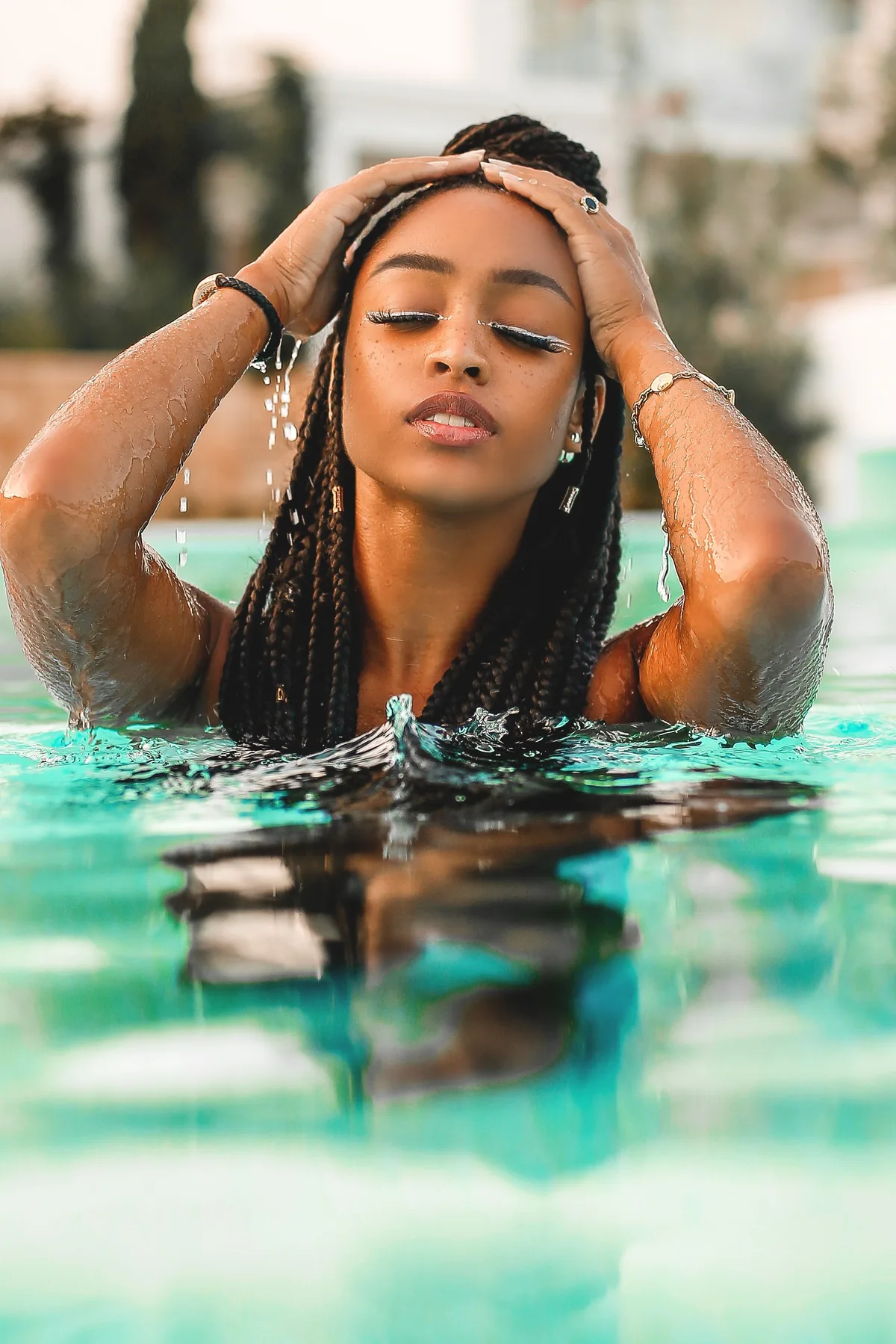
Wet hair behaves differently from dry hair — it is heavier, slipperier, and it stretches — and that is why a braid that holds perfectly on dry land can unravel in the pool. The braids that survive water are the tight, anchored ones: a French or Dutch braid that starts at the hairline and picks up hair all the way down, a fishtail braid with small sections, or any braid finished with a strong elastic and its end tucked under. A loose, soft braid will loosen further the moment it gets wet, because wet hair slides against itself. A tight braid, on the other hand, actually gets stronger when wet — the hair swells slightly and grips itself.
How to style it: braid on slightly damp hair, keep the sections small and the tension even, and finish with a fabric elastic plus a tiny clear elastic a centimetre above it as a backup. Best for: long hair, thick hair, and anyone who swims without a cap. Pros: a wet braid is the most reliable swimming style there is, and it doubles as a beautiful poolside look when you get out. Cons: a braid that is too tight when wet can feel uncomfortable as it dries and shrinks, so braid firmly but not painfully. Common mistake: braiding dry hair loosely and hoping for the best — braid it tight, braid it damp, and pin the end under.
Beach vs Pool: Salt Water and Chlorine Are Not the Same
Pool hair and beach hair are two different problems, and the styles that solve one do not always solve the other. Chlorine dries hair out and fades colour; salt water dries hair out too, but it also adds texture and volume, and the wind at the beach will undo a style faster than any pool ever could. At the beach, you need a style that holds against wind as well as water — a braid, a bun with pins, or a scarf-wrapped style. In the pool, you need a style that holds against water alone, and a cap is an option the beach rarely offers. The care after is different too: chlorine needs a proper wash, while salt water just needs a good rinse and some moisture.
Why it works: matching the style to the water means you are solving the right problem. Best for: holiday swimmers who move between the pool and the sea, and anyone who swims in both. Pros: a braid works brilliantly in both places, so if you only learn one swimming style, make it a braid. Cons: a style that is perfect for the pool can look too neat for the beach, and a beachy loose style will fall apart in the pool. Quick verdict: braid for the beach, braid for the pool — and rinse your hair the moment you get out of either.
Wet-Hair Care After the Pool: Rinse, Detangle, Wash
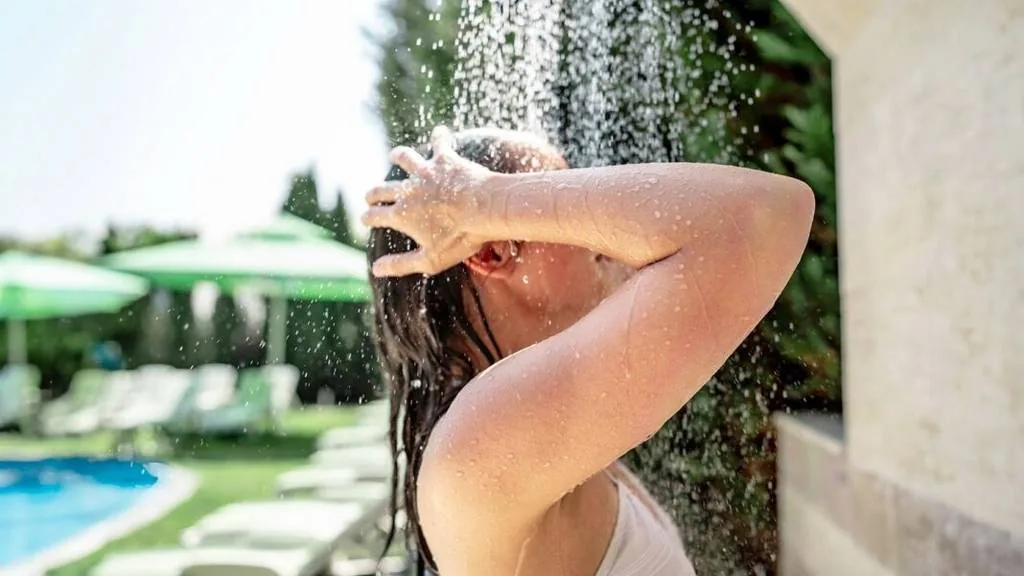
What you do in the five minutes after you get out of the pool matters as much as the style you wore in it. Chlorine keeps working on your hair after you leave the water, so the first step is always a rinse with clean, fresh water — before you get dressed, before you check your phone, before anything else. Then detangle gently, from the ends upward, with a wide-tooth comb, while the hair is still wet and soft. Wet hair is at its most fragile, so never rip a brush through it. Finally, wash with a gentle shampoo, or a swimmer’s shampoo if you swim often, and finish with conditioner on the lengths and ends. That three-step routine — rinse, detangle, wash — is the whole secret of healthy swimmer’s hair.
How to do it: keep a small kit in your swim bag — a wide-tooth comb, a travel shampoo, a leave-in conditioner, and a spare elastic. Pros: five minutes of care after every swim prevents the dryness and tangling that take weeks to repair. Cons: none, except that you have to actually do it — skipping the rinse is the single most common swimming hair mistake. Maintenance: if you swim daily, use a deep-conditioning mask once a week to replace the moisture chlorine takes out. Who should avoid it: nobody — this routine suits every hair type, from fine to thick, straight to curly.
Drying and Detangling Without Damage
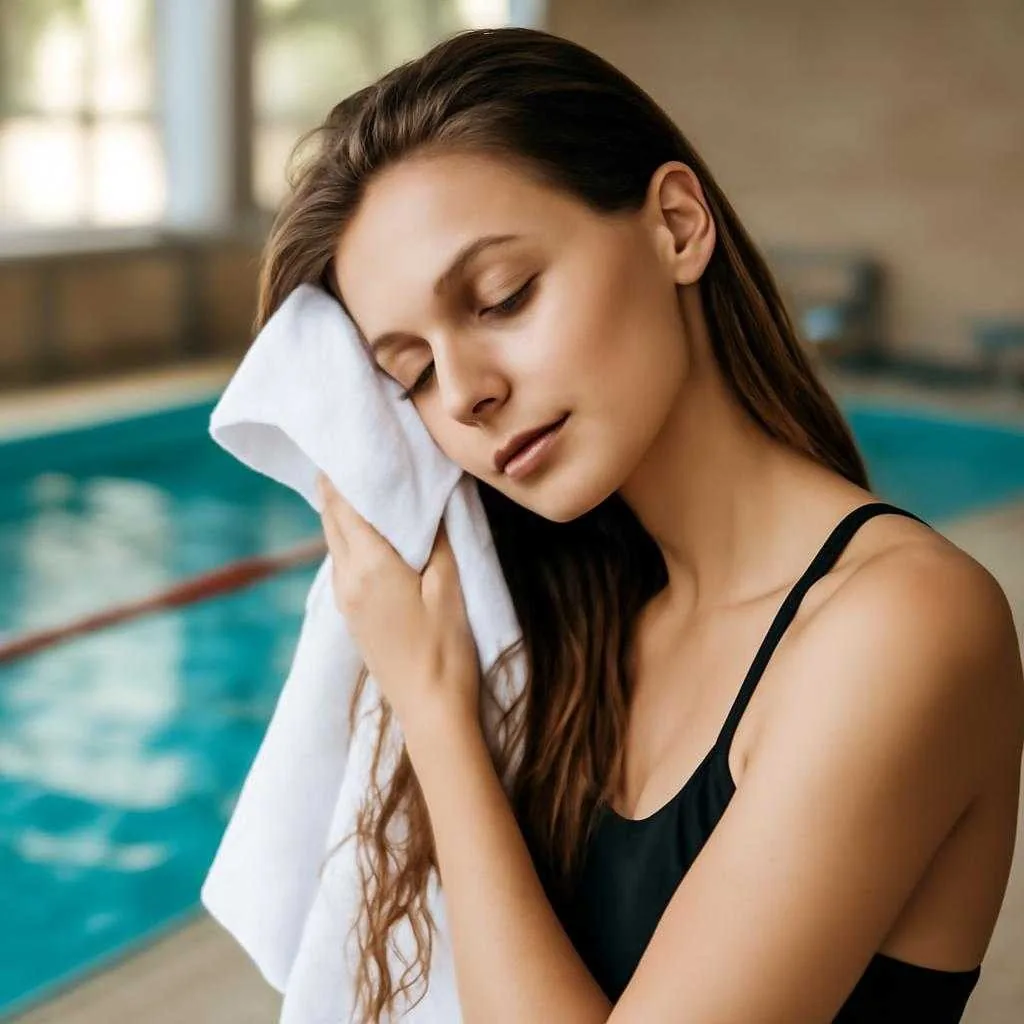
Wet hair stretches, and stretched hair breaks — which is why the way you dry your hair after swimming matters just as much as the style you wore in the pool. The worst thing you can do is rub your hair hard with a towel, which roughs up the cuticle and creates the frizz and tangles that make swimmers dread wash day. The right way is to squeeze the water out gently with a towel or a microfibre wrap, let the hair air-dry as much as you can, and only then detangle with a wide-tooth comb, starting at the ends and working upward in short, patient strokes. If you must use a hairdryer, use it on cool or low heat, and never on soaking-wet hair.
Best for: everyone, but especially long hair and curly hair, which tangle most when wet. Pros: gentle drying keeps your hair smooth, shiny, and tangle-free, and it takes no longer than rough drying — just a different touch. Cons: air-drying takes time, so if you are in a hurry, a microfibre towel will speed it up without the damage. Common mistake: tying wet hair up tightly in a bun for the drive home — wet hair tied tight will dry with kinks and can snap at the elastic. Let it dry loose, then style it. Cost and time: a microfibre towel costs very little and lasts for years.
1. The Classic Swim Bun
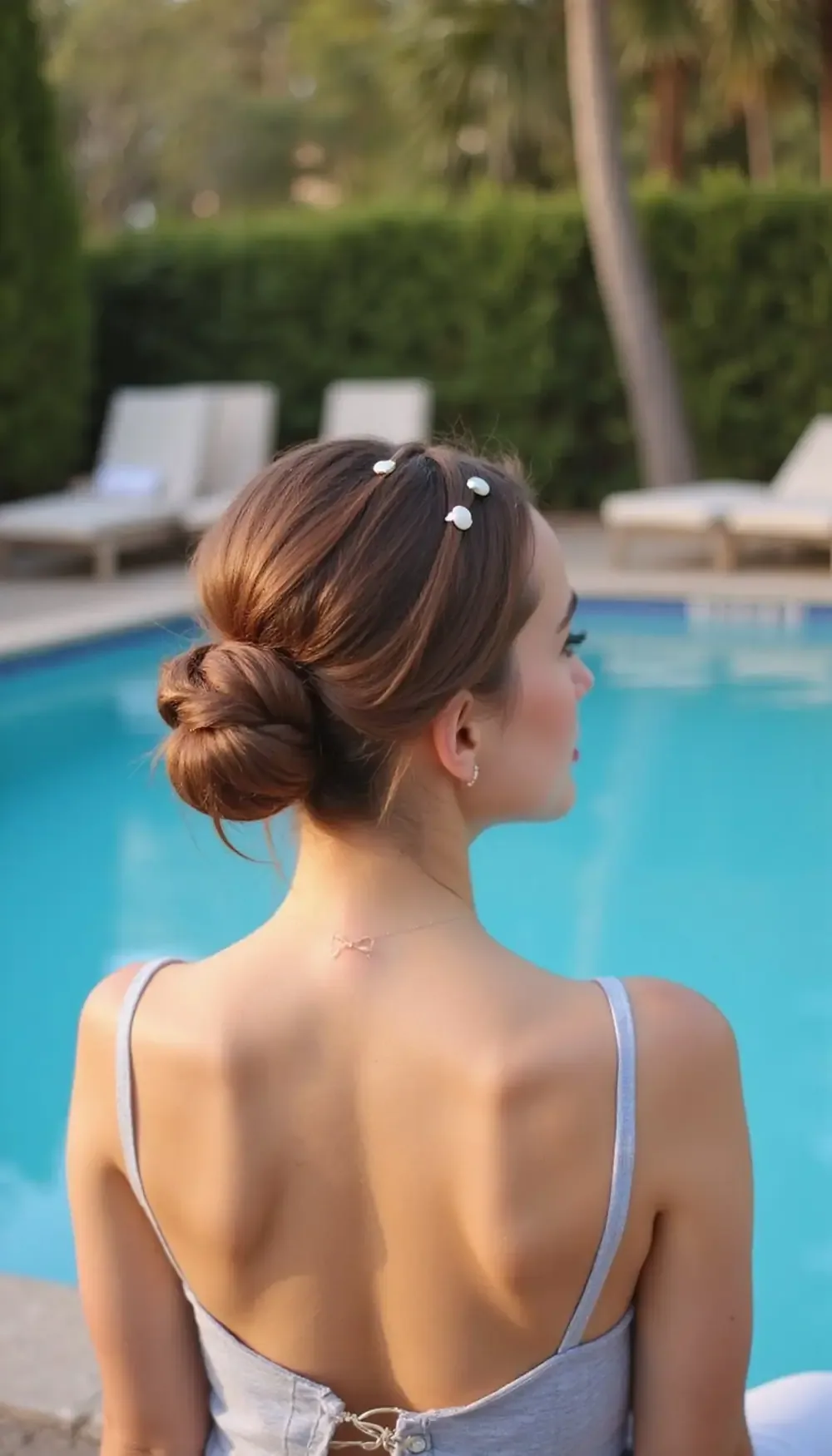
The classic swim bun is the first style every swimmer learns, and it has stayed first for a reason. The hair is gathered low at the nape, twisted into a coil, and pinned flat — a compact, smooth shape with nothing loose for the water to grab. It fits under a swim cap, it stays put through laps and dives, and it takes about a minute to build. It is not the most glamorous style in this guide, but it is the most reliable, and reliability is what you want when you are about to put your head underwater.
Best for: every hair length from shoulder-length up, and every kind of swimmer. How to style it: gather the hair low, twist it into a coil, and pin it with three bobby pins — one at the base and one on each side — then wrap a strong fabric elastic around the whole bun for extra security. What to ask your stylist for: nothing — this is a do-it-yourself style. Pros: it fits under a cap, it holds through dives, and it keeps every strand out of your face. Cons: a bun worn tight every day can pull at the hairline, so vary your styles through the week. Maintenance: one re-pin after your swim if you are heading to lunch.
2. The French Braid for Laps
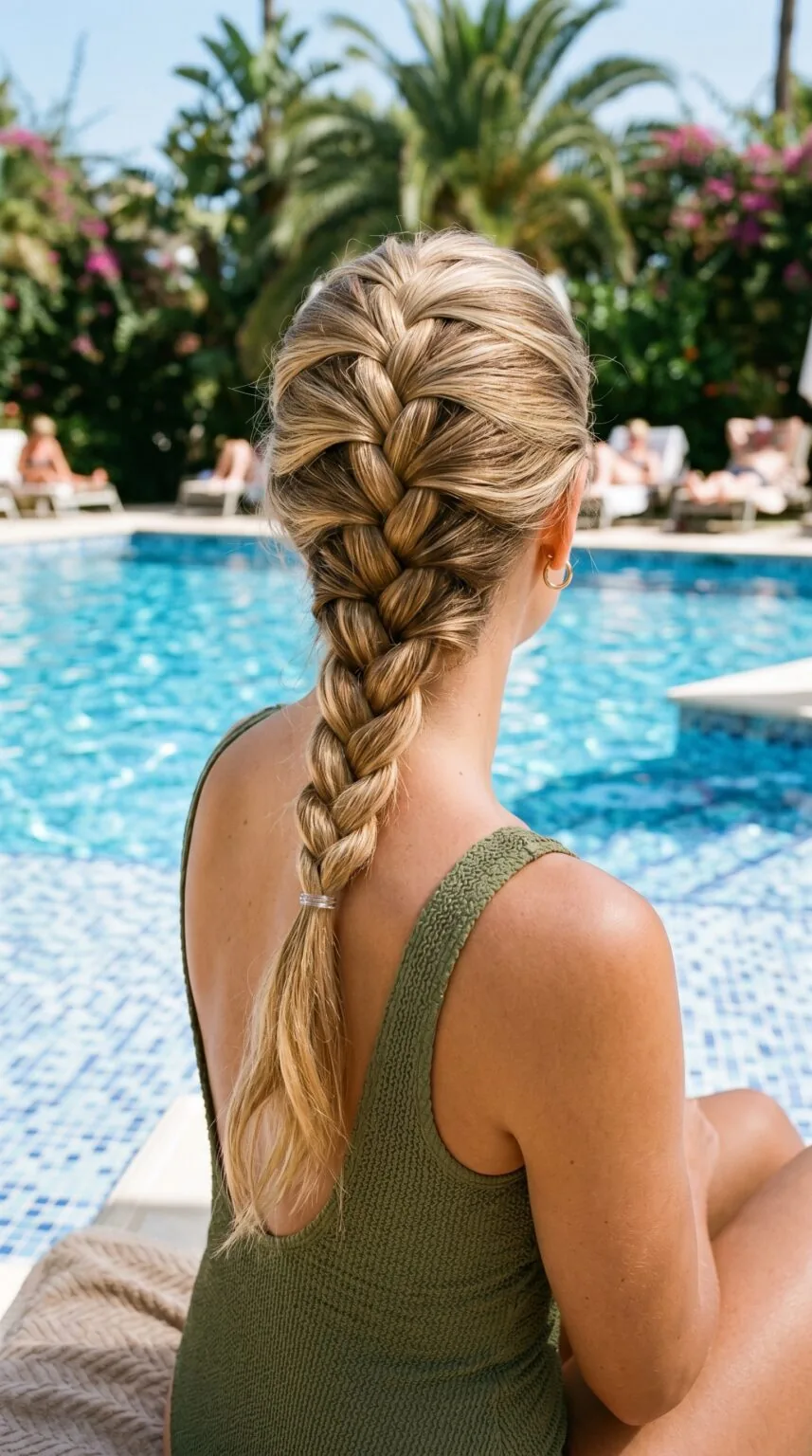
The French braid is the lap swimmer’s best friend. It starts at the hairline, picks up hair all the way down the head, and finishes in a single braid down the back — which means there is not one loose strand anywhere, front or back, and the water has nothing to pull at. It is the style competitive swimmers have worn for decades, because it works lap after lap, turn after turn, without a single touch-up. It also looks lovely out of the water, which is a bonus when you climb out and the braid is still perfect.
Why it works: the braid is anchored to the head at every step, so it cannot slide or loosen the way a ponytail can. How to style it: braid on slightly damp hair, keep the sections even and the tension firm, and finish with a strong elastic — then tuck the end under and pin it flat so it does not whip around in the water. Pros: the most secure lap style there is, and it keeps your hair completely out of your goggles. Cons: a French braid takes practice, so try it a few times on dry land before your first swim in it. Quick verdict: if you swim laps, learn this braid first.
3. Dutch Braid Pigtails
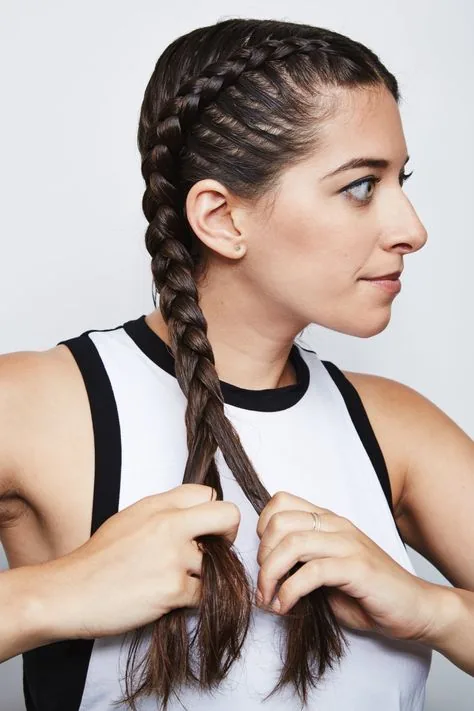
Dutch braid pigtails are the sporty, playful answer to a long swim. Two Dutch braids — braided under, so they sit on top of the hair like raised cords — run down each side of the head, holding every piece of hair in place and splitting the weight evenly so nothing pulls. They look fun, they feel light, and they survive dives, laps, and underwater somersaults without moving. They are also the style that photographs best at the pool, because the two braids frame the face so cleanly.
Best for: long and thick hair, and anyone who wants a style with personality. How to style it: part the hair down the middle, braid each side as a Dutch braid from the hairline to the nape, then continue as a regular braid and secure with elastics. Pros: the weight is split between two braids, so the style feels lighter than one big braid, and it holds brilliantly. Cons: two braids take twice as long to build, so allow ten minutes. Maintenance: none in the water — just take the elastics out gently afterwards. Who should avoid it: women with very short hair, which will not reach into two full braids.
4. The Low Braided Ponytail
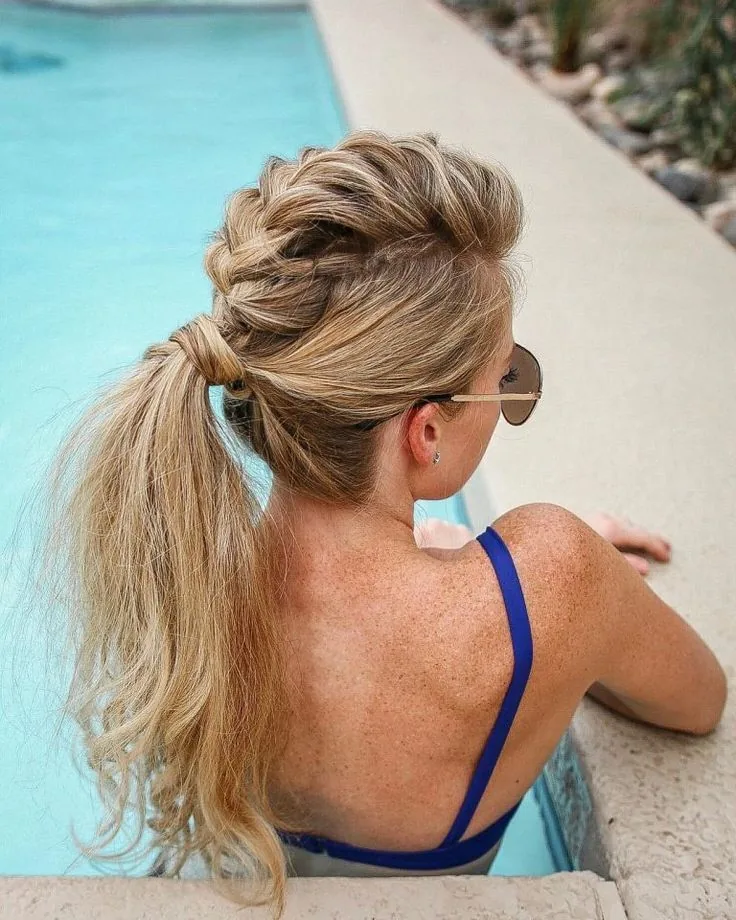
The low braided ponytail is the style for the swimmer who loves a ponytail but hates how a ponytail behaves in water. A regular ponytail swings, tangles, and whips around when you dive; a braided ponytail does none of that. The hair is gathered low at the nape, tied, and then braided all the way down, so the tail is a neat, compact braid instead of a loose rope of hair. It stays in one place, it does not tangle, and it looks polished and sporty at the same time.
How to style it: gather the hair low, secure it with a strong elastic, then braid the tail and finish with a second elastic — and wrap a small piece of hair around the top elastic to hide it. Pros: quick to build, comfortable to swim in, and the braid stops the tail from tangling in the water. Cons: the tail can still swing a little on a dive, so tuck the end into your swimsuit strap if you are diving a lot. Cost and time: five minutes, no stylist needed. Quick verdict: the easiest upgrade from a regular ponytail to a proper swimming style.
5. The High Ponytail That Stays Put
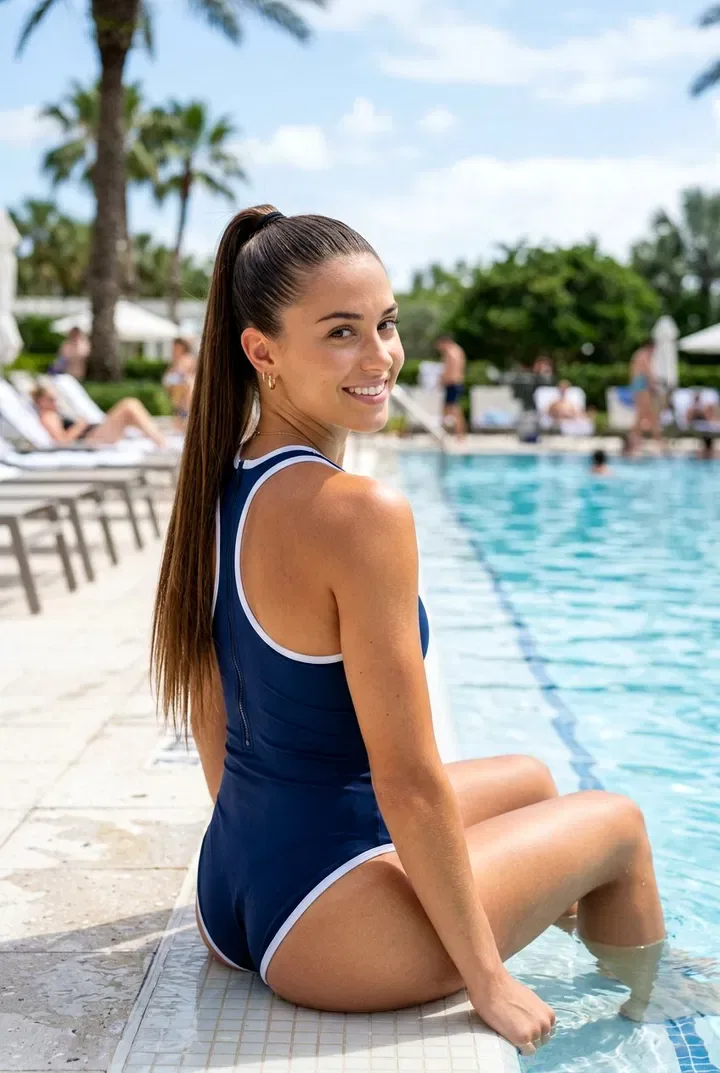
A high ponytail is the most comfortable swimming style for many women — it keeps the hair completely off the neck, which matters when you are working hard in a warm pool — but a high ponytail that is not secured properly will slide down within a lap or two. The trick is the double anchor: a strong elastic at the base, plus two bobby pins crossed underneath the ponytail to hold it up, and a second elastic a few centimetres down the tail to stop it whipping. Built that way, a high ponytail will stay high through laps, dives, and a whole afternoon at the pool.
Best for: warm pools, long swims, and anyone who hates the feeling of wet hair on the back of the neck. How to style it: gather the hair high at the crown, secure it with a fabric-covered elastic, slide two crossed bobby pins underneath the base for lift, and add a second elastic down the tail. Pros: cool, comfortable, and it keeps your neck free. Cons: a high ponytail can pull at the hairline over a long swim, so keep it firm but not tight. Common mistake: using one thin elastic and hoping for the best — always double-anchor a high ponytail for the pool.
6. Double French Braids (Boxer Braids)
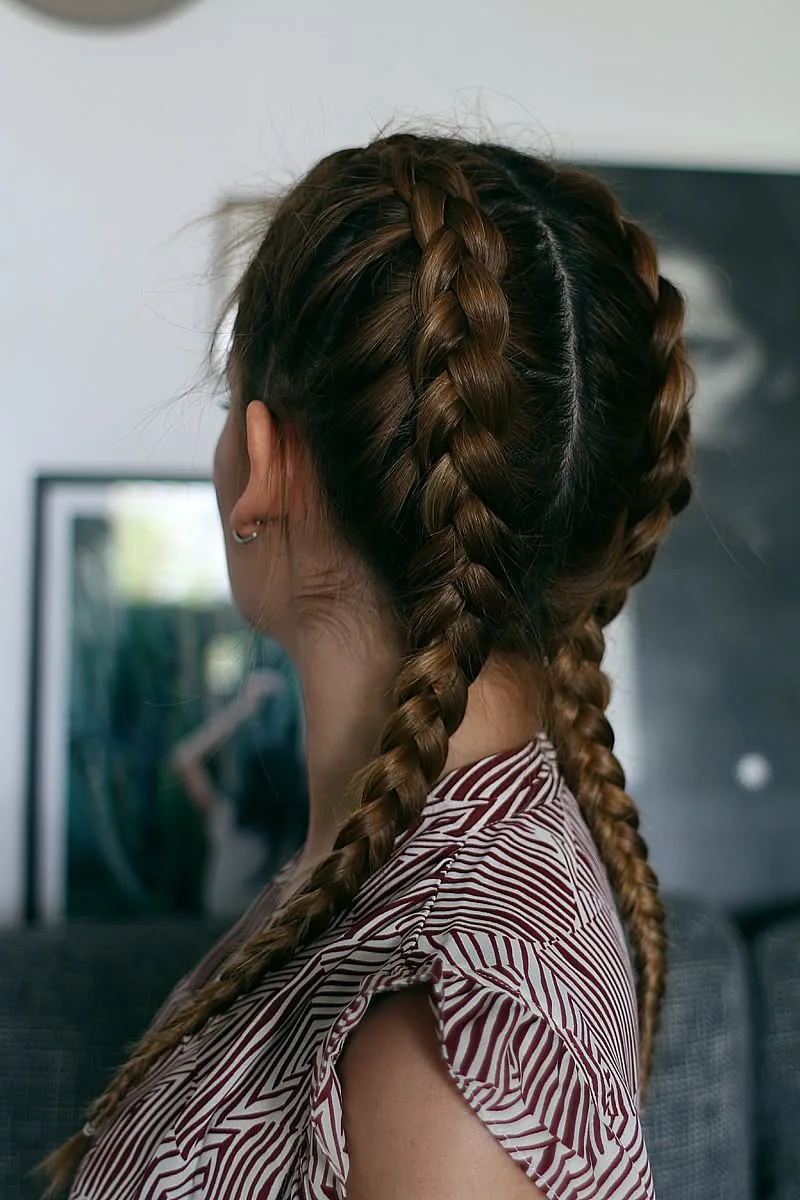
Double French braids — the boxer braids you see on athletes in every sport — are one of the most secure swimming styles ever invented. Two braids run from the hairline to the nape on each side, holding every strand tight against the head, and the style is so flat and compact that it fits perfectly under a swim cap. It is the style to choose when you want zero distractions: no loose pieces, no sliding, no re-tying at the wall. It also gives you beautiful waves when you take it out after your swim, which is a lovely bonus.
Why it works: the braids are anchored to the scalp along their whole length, so water cannot get underneath them and lift them loose. How to style it: part the hair down the middle, French-braid each side from the front hairline to the nape, and secure the ends with strong elastics — then tuck the ends under and pin them if you are diving. Pros: fits under a cap, survives dives, and leaves gorgeous waves afterwards. Cons: it takes ten minutes and a bit of practice to braid both sides evenly. Maintenance: none in the water. Cost and time: free at home, or a stylist will do it in fifteen minutes.
7. The Swim Cap Bun
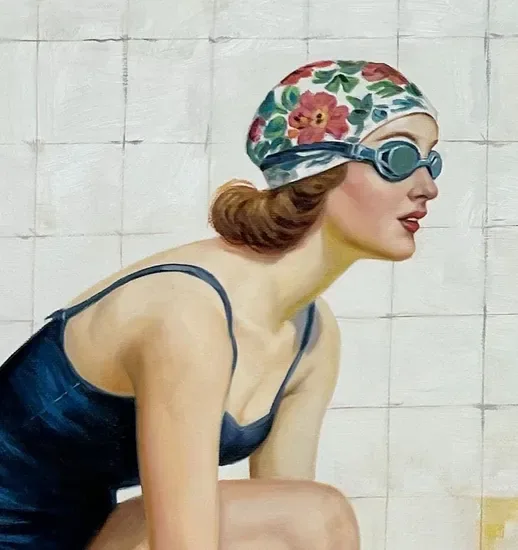
The swim cap bun is a style designed around the cap, not in spite of it. Instead of fighting a high bun against a tight cap, you build the bun low and flat at the nape, spread it wide rather than tall, and pin it so it sits almost flush against the head. The cap then slides on smoothly, stays put, and does its job — keeping your hair dry and chlorine-free — while the bun underneath holds its shape. It is the practical swimmer’s style, and the one that makes a cap feel like an advantage rather than a battle.
Best for: anyone who wears a swim cap every swim, and especially long-haired swimmers. How to style it: gather the hair low, twist it into a flat, wide coil at the nape, pin it with four bobby pins around the edge, and smooth the surface with a little water or leave-in conditioner before putting the cap on from the front. Pros: the cap stays on, the hair stays dry, and the bun holds its shape underneath. Cons: a flat bun can feel less secure than a round one, so use enough pins. Quick verdict: if you wear a cap, build your bun for the cap.
8. The Fishtail Braid for the Pool
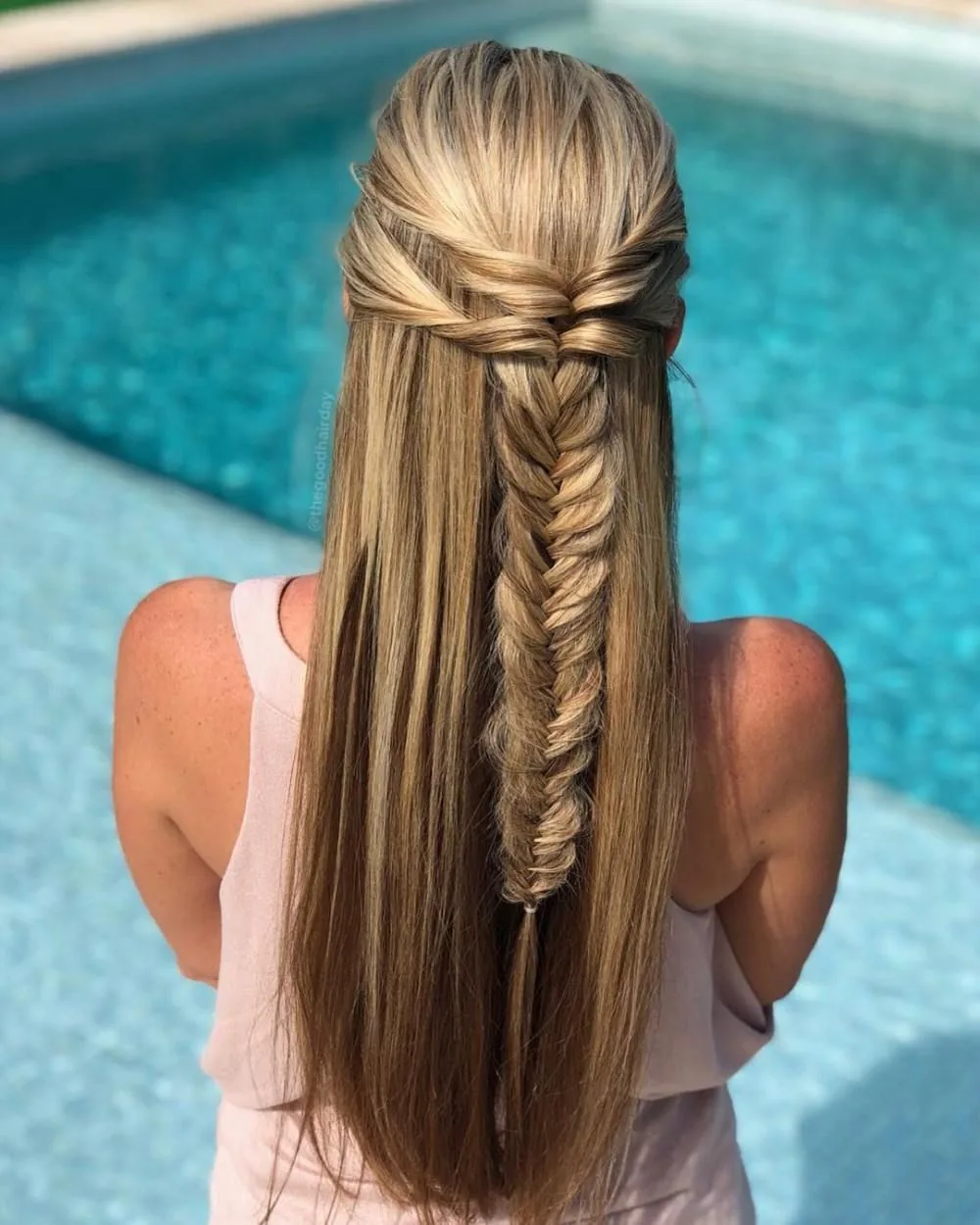
The fishtail braid looks delicate, but it is one of the toughest swimming braids there is. Because it is built from many small sections crossing over each other, it grips itself all the way down — and when it gets wet, the hair swells slightly and grips even harder. It is also one of the prettiest pool styles: the fine, herringbone pattern looks intricate and elegant, whether you wear it down your back or over one shoulder. It takes a little longer to build than a regular braid, but it rewards you by staying perfect in the water.
How to style it: split the hair into two sections, take a small piece from the outside of one section and cross it to the other, and keep the pieces small and the tension even all the way down. Pros: it holds brilliantly when wet, it looks far more complicated than it is, and it gives you beautiful waves when you take it out. Cons: it takes longer than a regular braid — allow fifteen minutes the first few times. Who should avoid it: nobody, but if you are in a hurry before a swim, a French braid is faster. Maintenance: a single elastic at the end, and nothing else.
9. The Bubble Ponytail for Swimming
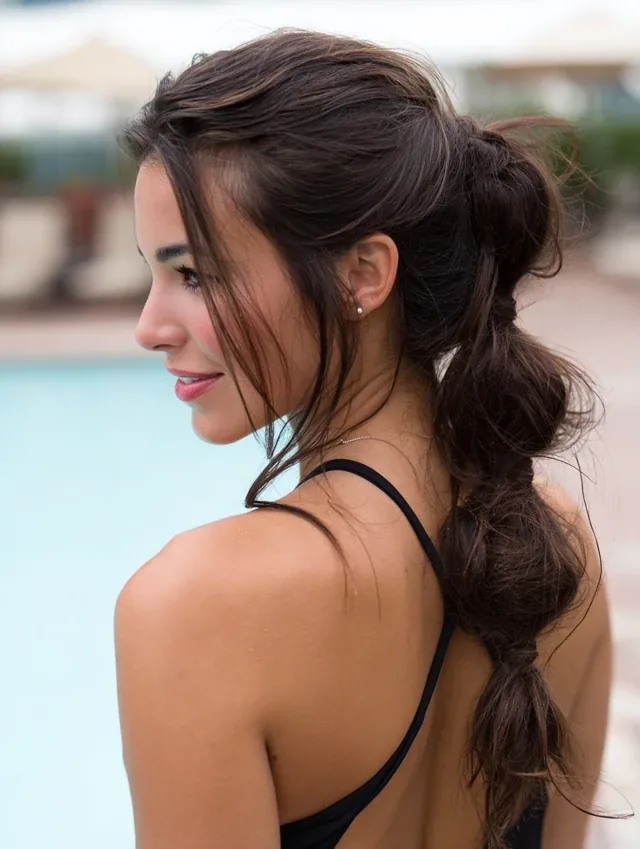
The bubble ponytail is the fun one — a ponytail divided into sections by elastics, with each section puffed out into a bubble — and it turns out to be a surprisingly good swimming style. The elastics divide the hair into short, controlled sections, so no long length can tangle or whip around, and each bubble is held in place by its own elastic. It looks playful and modern at the pool, it photographs wonderfully, and it is one of the easiest styles to build: just a ponytail and a few extra elastics.
Best for: long hair, and anyone who wants a swimming style with personality. How to style it: make a ponytail, add elastics every few centimetres down the tail, and gently pull each section out into a bubble — then use strong, fabric-covered elastics, because thin ones can snap in the water. Pros: playful, secure, and the sections stop the tail from tangling. Cons: the bubbles can flatten when they get very wet, so build them a little bigger than you think you need. Common mistake: using thin elastics that snap — use thick, fabric-covered ones for the pool. Cost and time: five minutes and a handful of elastics.
10. The Twisted Low Bun
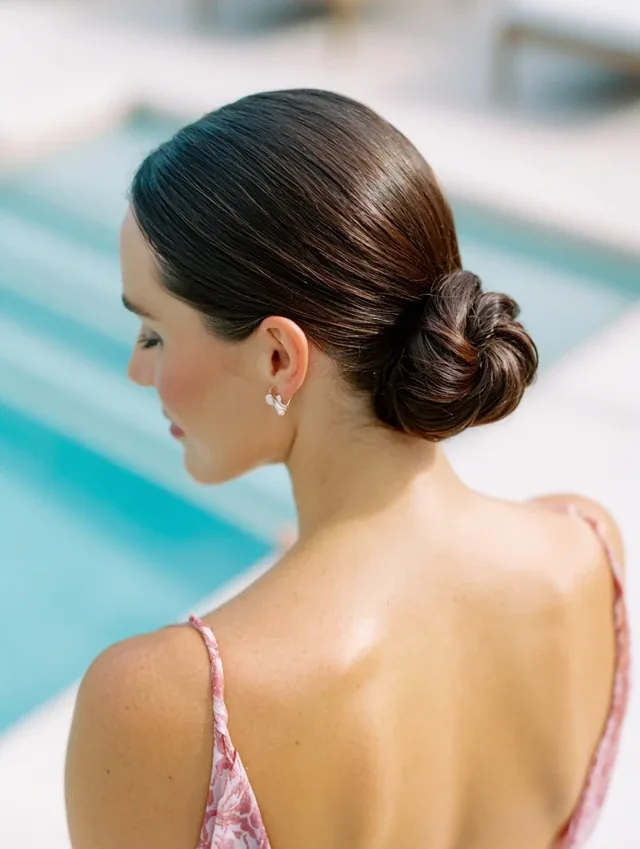
The twisted low bun is the elegant cousin of the classic swim bun. Instead of coiling the hair, you twist it — two sections twisted around each other, or one long twist coiled at the nape — and the twist gives the bun a beautiful, rope-like texture that looks deliberate and polished. It is the style for the swimmer who wants to look put-together at the poolside as well as in the water, and it holds just as securely as a regular bun, because the twist locks the hair into itself.
Why it works: a twist tightens when it gets wet, so the style actually gets more secure in the pool. How to style it: split the hair into two sections, twist each one, twist them around each other, coil the result at the nape, and pin it with three bobby pins. Pros: elegant, secure, and it looks lovely out of the water too. Cons: a twist can be hard to build on very fine hair, which may need a little texture spray first. Maintenance: one re-pin after your swim. Quick verdict: the prettiest low bun for a swimmer who likes a little polish.
11. The Crown Braid That Holds Underwater
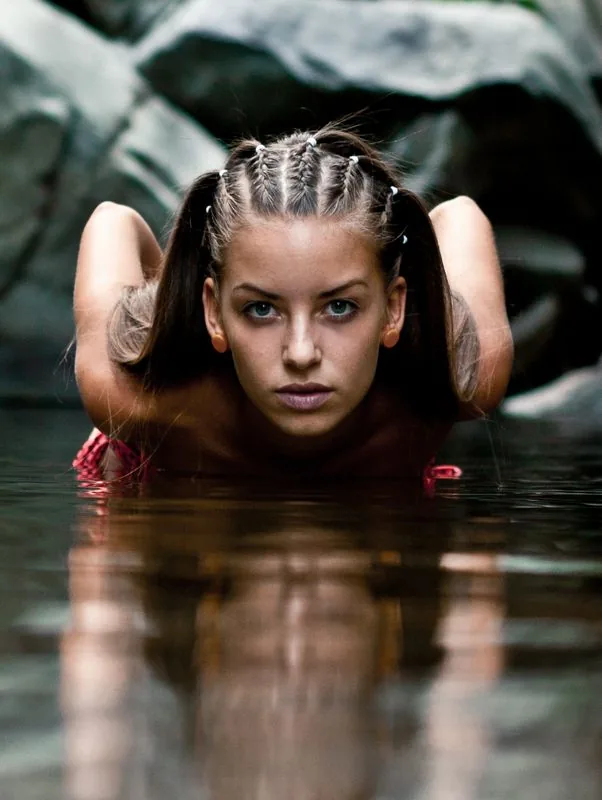
The crown braid is a braid that runs all the way around the head, like a halo, holding every single strand up and out of the way — and it is one of the few styles that genuinely holds underwater. Because the braid circles the whole head and its end is tucked under its start, there is no loose end anywhere for the water to catch, and the style stays exactly where you put it through dives, somersaults, and underwater swimming. It is also a beautiful style, romantic and a little regal, which is a lovely bonus for something so practical.
Best for: long hair, underwater swimming, and anyone who loves a romantic style. How to style it: start the braid at one ear, braid around the back of the head to the other ear, and pin the end underneath the start of the braid so the circle is complete. Pros: holds underwater, keeps every strand out of your face, and looks beautiful. Cons: it takes practice to braid all the way around your own head — try it a few times on dry land first. Maintenance: none in the water. Who should avoid it: women with short hair, which will not reach around the head.
12. The Slicked-Back Wet Look
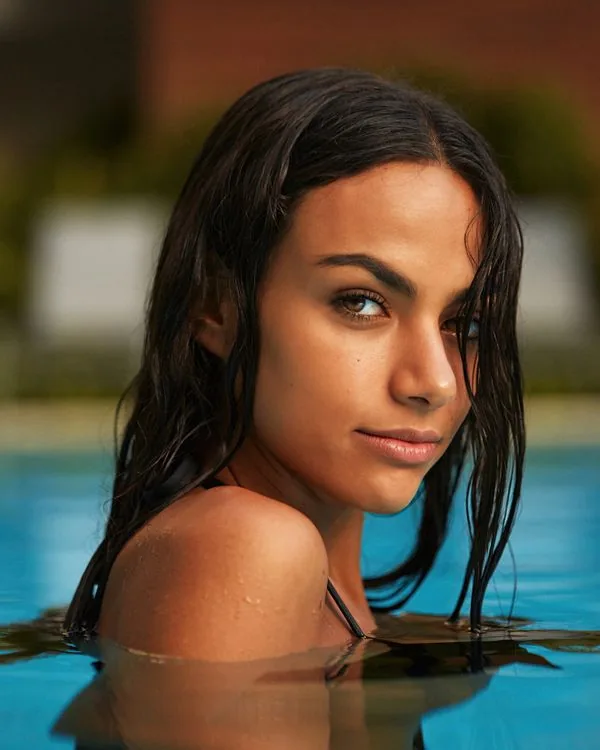
The slicked-back wet look is the style that turns the problem into the solution. Instead of fighting wet hair, you lean into it: smooth the hair back from the face with a little gel or leave-in conditioner, let it fall straight back, and wear the wet look as the look. It is chic, modern, and completely unbothered by the pool, because there is nothing to come loose — the hair is already wet, already back, already exactly where it should be. It is the style for the confident swimmer who wants to look like she meant it.
How to style it: apply a little gel or leave-in conditioner to damp hair, comb it straight back from the hairline, and let it dry naturally — the product holds the shape while the hair dries. Pros: effortless, chic, and it actually looks better wet than dry. Cons: it only works if your hair is long enough to sweep back, and it needs a little product to hold. Common mistake: using too much gel, which looks stiff rather than sleek — a small amount, smoothed through, is enough. Cost and time: two minutes and a dab of product. Quick verdict: the lowest-effort swimming style that still looks intentional.
13. Short Hair: The Slicked Pixie for the Pool
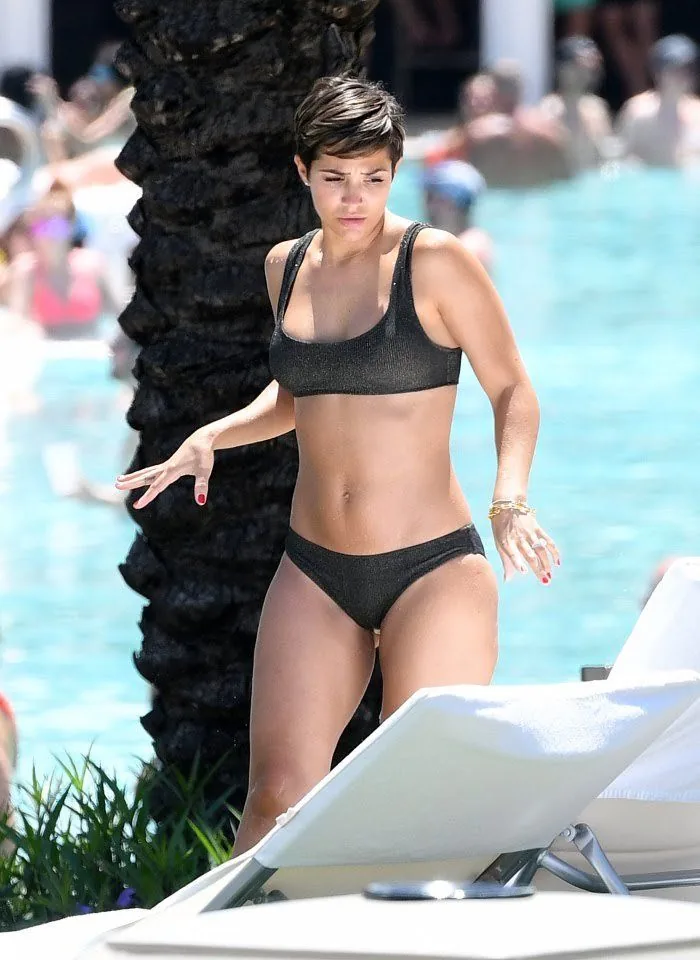
Short hair is a gift at the pool, and the slicked pixie is how you make the most of it. A pixie cut has no length to tangle, no weight to pull, and nothing to come loose — so the only job is to keep it out of your eyes, and a little gel or water does that in seconds. Slick it back from the forehead, smooth the sides, and you are done: a style that survives every dive, every lap, and every somersault, and that looks sharp and modern when you climb out. Short-haired swimmers have the easiest hair in the pool, and this is the style that proves it.
Best for: pixie cuts and very short hair of every texture. How to style it: wet the hair, smooth a small amount of gel through it, and comb it back from the hairline — then forget about it. Pros: nothing to come loose, nothing to tangle, and it dries in minutes. Cons: a pixie can flatten under a swim cap, so skip the cap or wear it loosely if that bothers you. Maintenance: none at all. Who should avoid it: nobody with short hair — but if your pixie is growing out and the front pieces are long enough to fall into your eyes, pin them back with two small clips.
14. The Bob Under a Cap
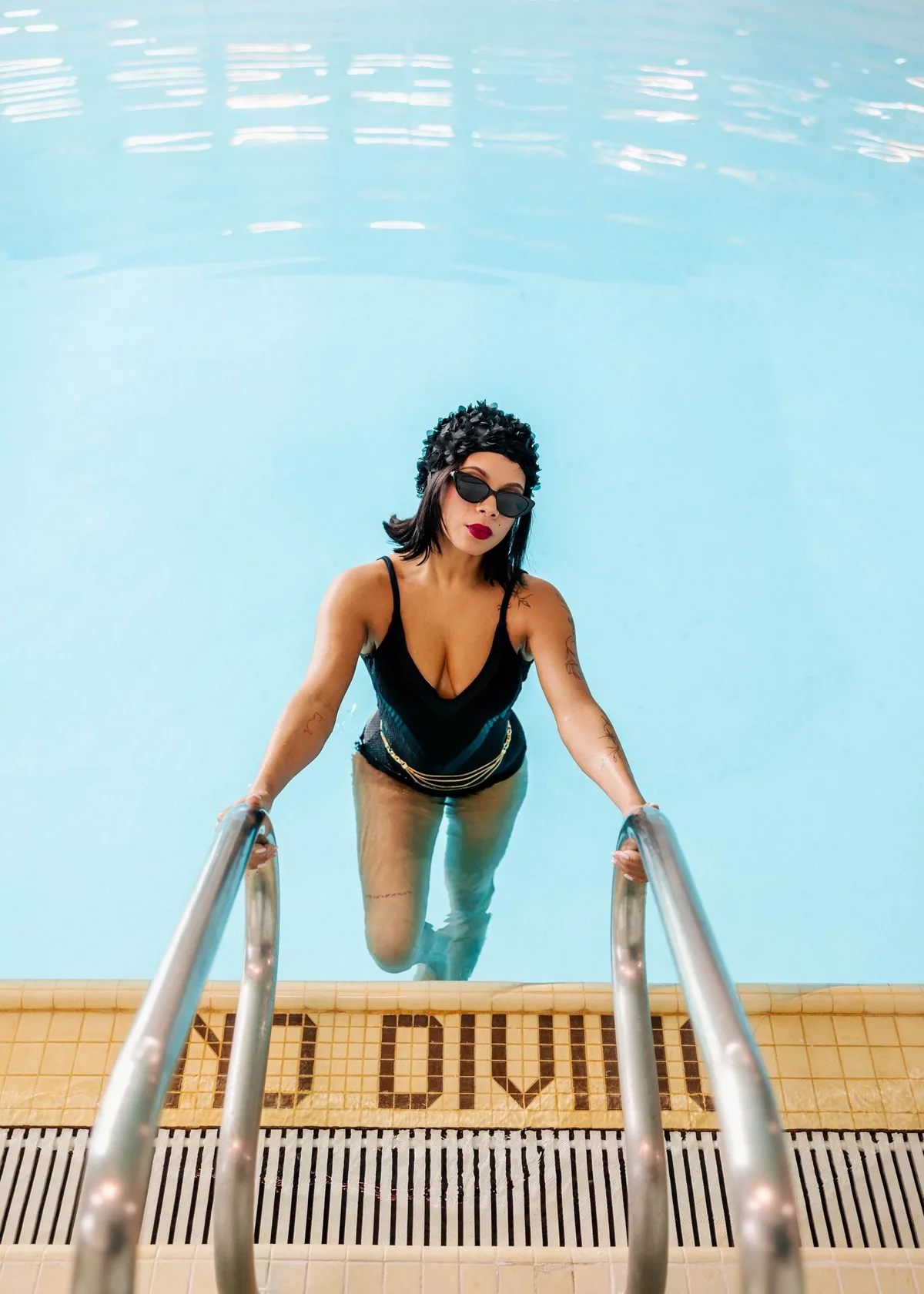
A bob is the perfect length for a swim cap — long enough to look like a style, short enough to tuck away completely — and the bob under a cap is the simplest swimming style in this guide. You smooth the hair back, tuck the ends under, and pull the cap on from the front, and the whole bob disappears neatly underneath. No pins, no elastics, no fuss. When you take the cap off, the bob falls back into place with a shake, and a little texture spray brings it back to life in seconds.
Why it works: a bob has no long lengths to escape, so the cap can do all the work. How to style it: smooth the hair back with wet hands, tuck the ends under at the nape, and put the cap on from the front, pulling it back over the hair. Pros: the easiest cap style there is, and the hair stays completely dry. Cons: a cap can flatten a bob’s shape, so a quick tousle with your fingers after your swim brings the volume back. Common mistake: putting the cap on from the top and pushing it down, which pushes the hair forward — always pull it on from the front. Cost and time: thirty seconds.
15. Two Low Buns (Space Buns) for Swimming

Two low buns — the space buns of the swimming world, worn low at the nape rather than high on the head — are a playful, practical style that splits your hair into two compact, secure knots. Each bun is small enough to hold firmly, the weight is balanced on both sides, and there is nothing long left to tangle. They look fun, they feel light, and they survive dives and laps without a single strand escaping. They are also the style that works brilliantly for younger swimmers and for anyone who wants a swimming style with a bit of joy in it.
Best for: medium to long hair, and anyone who wants a light, balanced style. How to style it: part the hair down the middle, gather each side into a low bun at the nape, and pin each bun with two bobby pins — then wrap a small elastic around each bun for extra security. Pros: balanced, secure, and the small buns hold better than one big one. Cons: two buns take a little longer to build than one, so allow a few extra minutes. Maintenance: none in the water. Quick verdict: the most fun secure style in the pool.
16. The Braided Top Knot
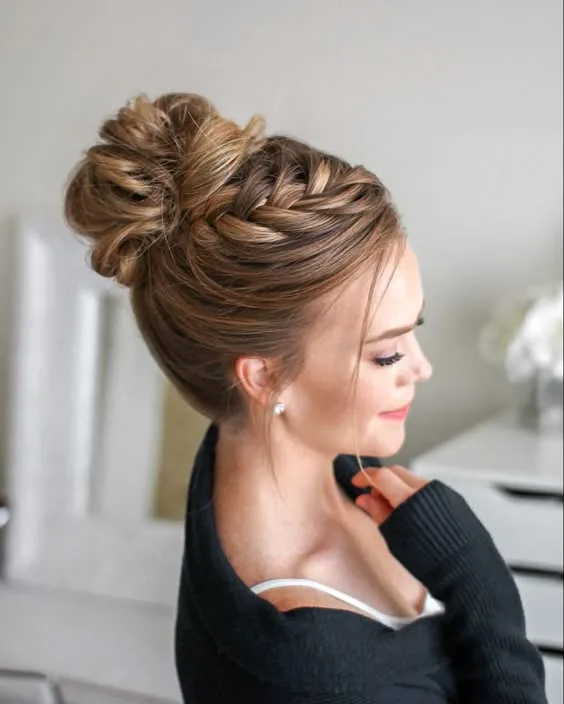
The braided top knot is the style for the swimmer who wants height and security in one. The hair is braided first — a French braid from the hairline, or a simple braid from a high ponytail — and then the braid is coiled into a knot at the crown and pinned. Because the hair is braided before it is knotted, it cannot slip or loosen the way a plain top knot can, and the knot sits high and clear of the water line when you swim. It is elegant, it is secure, and it looks wonderful at the poolside afterwards.
How to style it: make a high ponytail, braid the tail, coil the braid into a knot at the crown, and pin it with three bobby pins — then tuck the end of the braid under the knot. Pros: very secure, keeps the hair completely off the neck, and looks polished. Cons: a top knot can pull at the hairline, so keep it firm but comfortable, and take it down gently after your swim. Who should avoid it: women with very fine hair, which can look thin in a top knot — a low bun will suit them better. Cost and time: ten minutes, no stylist needed.
17. The Side Braid for Open Water
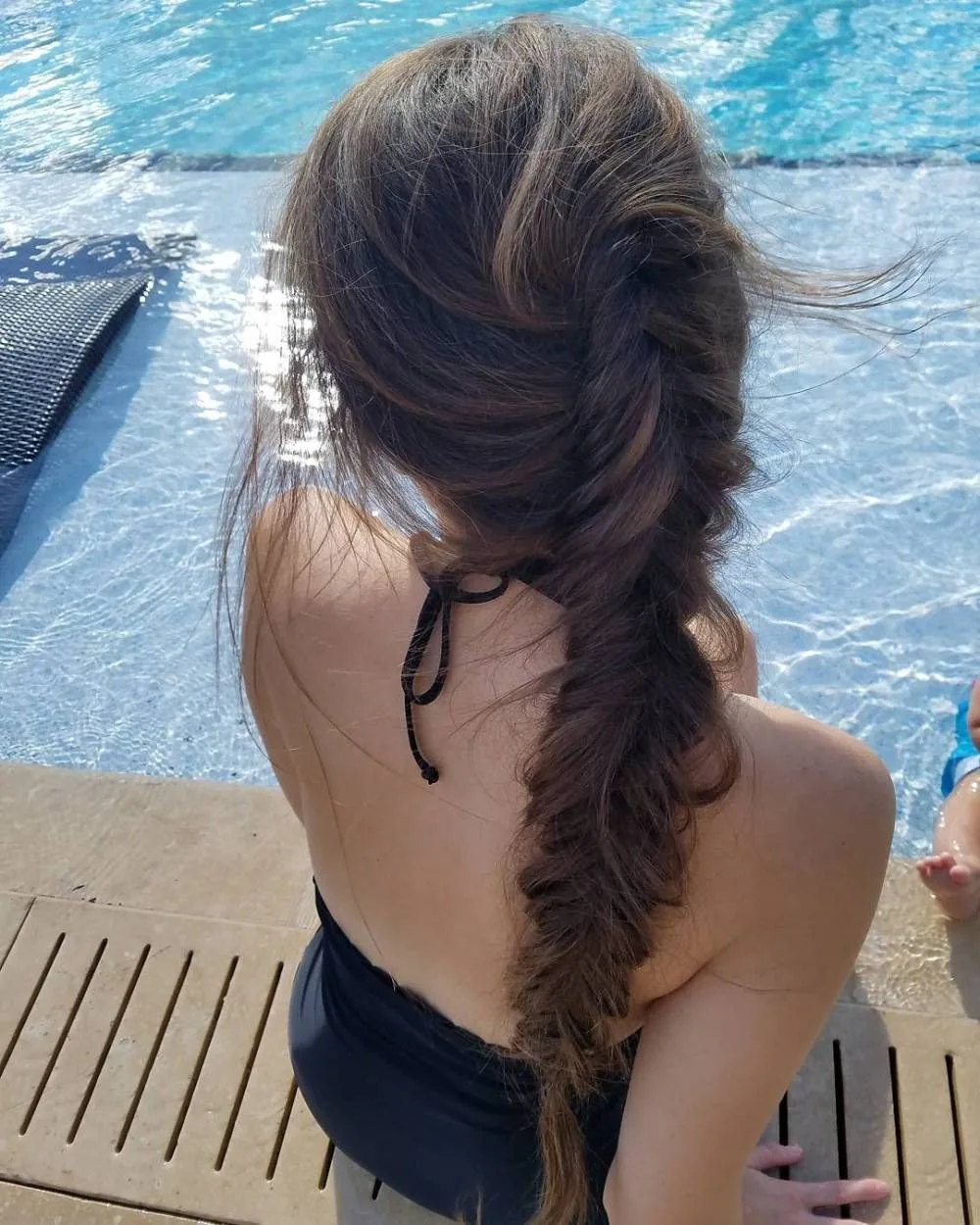
Open water swimming — the sea, a lake, a river — is different from the pool, because there is current, there are waves, and there is no wall to stop at when your hair comes loose. The side braid is the open-water style: a single braid swept over one shoulder, where you can see it, feel it, and check it without stopping. If it loosens, you know immediately; if it is fine, you can forget about it. It also keeps the hair on one side, which matters when you are breathing to one side in open water and do not want hair in your mouth with every breath.
Best for: sea swimmers, lake swimmers, and anyone swimming without a cap in open water. How to style it: sweep all the hair to one side, braid it loosely from the nape down, and secure it with a strong elastic — then drape the braid over your shoulder where you can see it. Pros: you can check it without stopping, and it keeps hair out of your breathing side. Cons: a side braid can swing in a strong current, so make it tight if the water is rough. Maintenance: a quick check at each sighting break. Quick verdict: the open-water braid you can trust.
18. The Rope Twist Ponytail
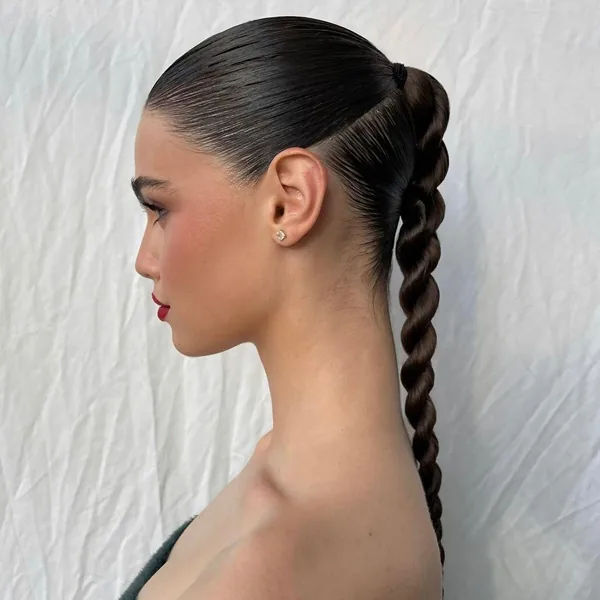
The rope twist ponytail is the quickest secure style in this guide, and the one to learn if you are always in a hurry before a swim. The hair is gathered into a ponytail, split into two sections, and each section is twisted — then the two twists are twisted around each other, like a rope, and secured with an elastic. The rope twist locks the hair into itself, so it cannot unravel the way a loose ponytail can, and it looks like a proper style rather than a rushed one. Two minutes, and you are in the water.
Why it works: a twist tightens when it gets wet, so the style gets more secure in the pool, not less. How to style it: make a ponytail, split it in two, twist each section in the same direction, then twist the two sections around each other in the opposite direction and secure with a strong elastic. Pros: the fastest secure style there is, and it looks far more polished than a plain ponytail. Cons: a rope twist can kink the hair as it dries, so take it out gently and let the waves fall naturally. Common mistake: twisting both sections in opposite directions, which makes the rope unravel — twist them the same way, then wrap them the opposite way. Cost and time: two minutes.
19. The Half-Up Braid for the Beach
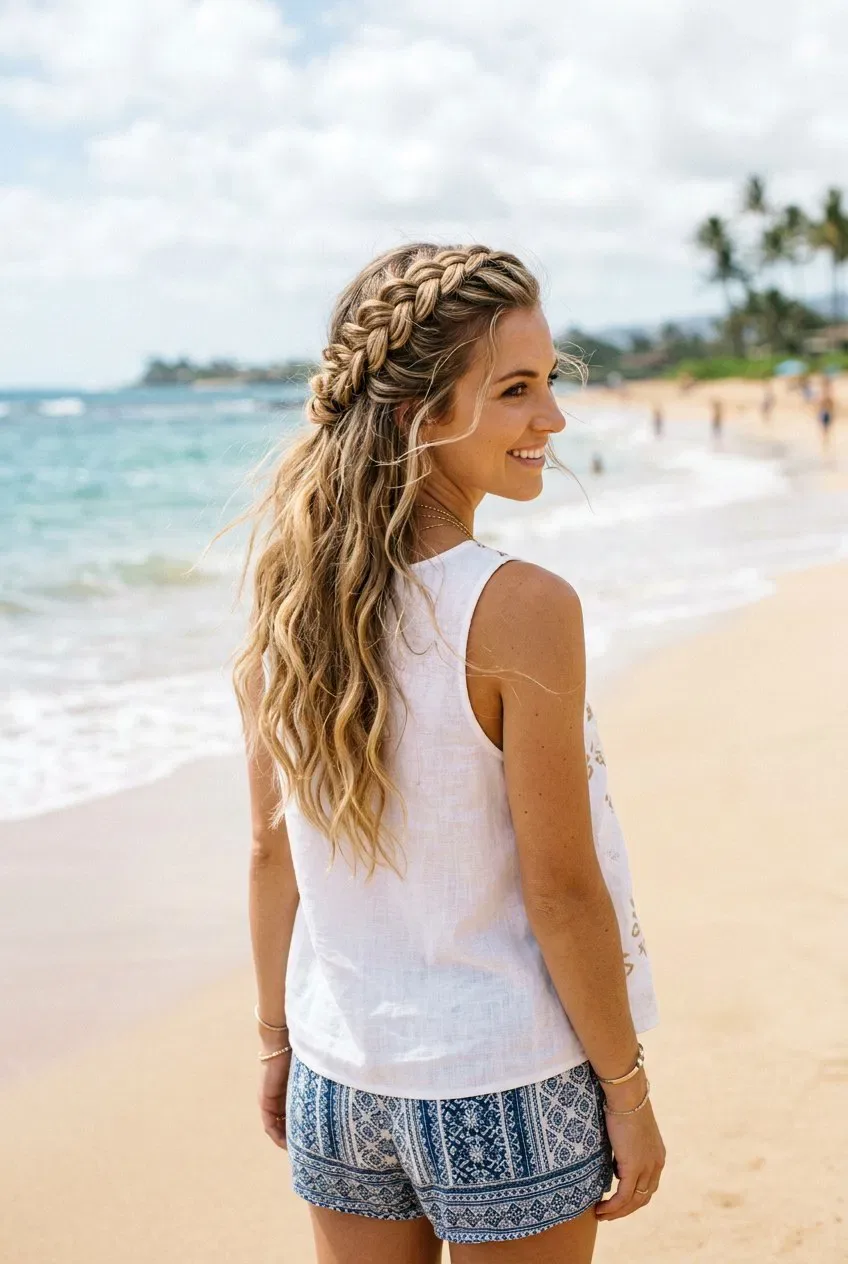
The half-up braid is the beach swimmer’s style — the one for the woman who wants to swim but also wants her hair down. The top sections are braided back from each side and pinned at the crown, keeping the front pieces out of your face and your goggles clear, while the rest of the hair falls loose and dries into beautiful beach waves. It is not a lap-swimming style — loose hair and laps do not mix — but for a gentle swim in the sea, a dip at the beach, or a float in a calm pool, it is perfect.
Best for: beach days, gentle swims, and anyone who loves wearing her hair down. How to style it: braid the top sections from each side, cross them at the back of the crown, and pin them — then leave the rest of the hair loose. Pros: romantic, flattering, and the loose lengths dry into gorgeous beach waves. Cons: not secure enough for laps or diving, so save it for gentle swimming. Who should avoid it: lap swimmers — a full braid or bun will serve you better. Maintenance: a quick re-pin after your swim, and a little leave-in conditioner on the loose lengths.
20. The Low Chignon for Lap Swimming
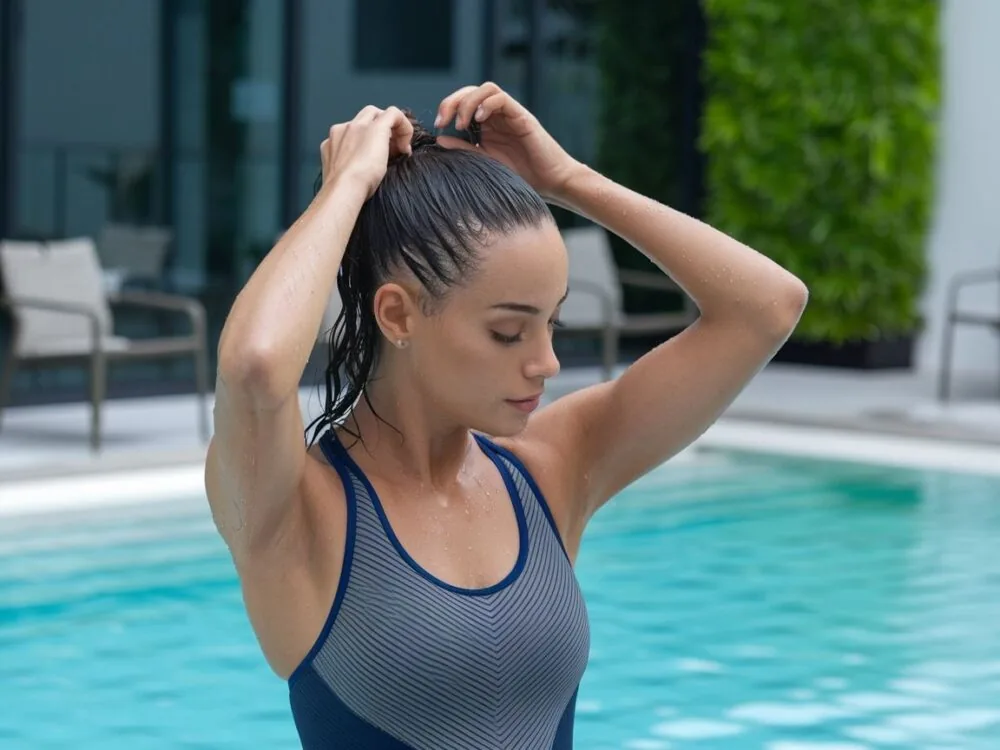
The low chignon is the elegant lap swimmer’s style — a neat, polished knot at the nape that looks like it belongs at a dinner party but holds like it belongs in a pool. The hair is smoothed back, gathered low, and rolled into a chignon, then pinned flat with crossed bobby pins. It is compact, it is smooth, and it gives the water nothing to grab. It is also the style that transitions best from the pool to lunch afterwards, because a chignon looks intentional in a way a wet ponytail never does.
How to style it: smooth the hair back with a little leave-in conditioner, gather it low at the nape, roll it into a chignon, and pin it with crossed bobby pins at the base and both sides. Pros: elegant, secure, and it looks wonderful out of the water. Cons: a chignon can be hard to build on very thick hair, which may need a stronger elastic underneath. Maintenance: one re-pin after your swim. Cost and time: five minutes at home, or a stylist will do it in ten. Quick verdict: the most elegant style that still survives laps.
21. Cornrows for the Pool
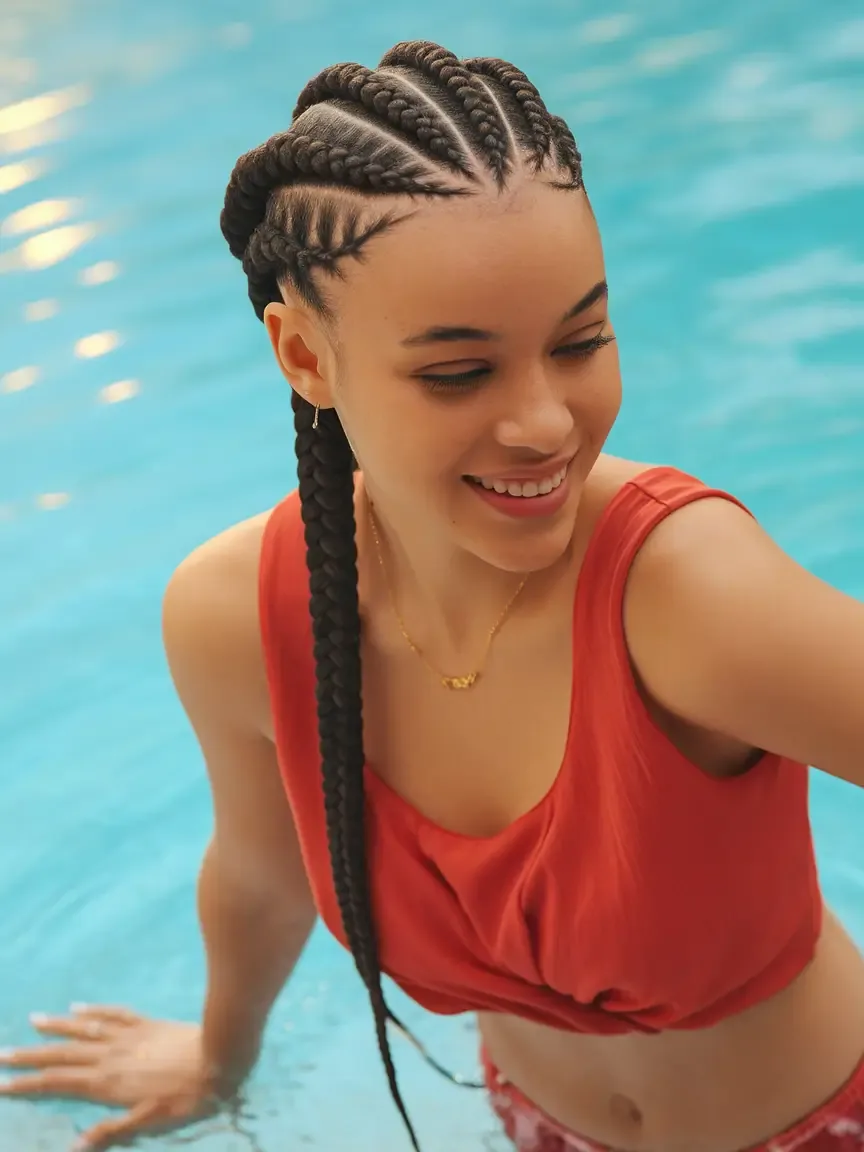
Cornrows are the ultimate protective swimming style. The hair is braided tight against the scalp in neat rows, from the hairline to the nape, and the style is so flat and so secure that water simply flows over it. Nothing moves, nothing tangles, and the hair underneath is protected from chlorine and sun at the same time. Cornrows last for days or weeks, which means you can swim every day without restyling, and they are one of the few styles that genuinely protect the hair while you swim rather than just holding it.
Best for: textured and curly hair, frequent swimmers, and anyone who wants a style that lasts. How to style it: cornrows are best done by a braider, who will braid the hair in neat rows from the front hairline to the nape and secure the ends. Pros: the most protective swimming style there is, it lasts for weeks, and it needs no daily restyling. Cons: it takes time and skill to install, so it is not a last-minute style. Maintenance: rinse with clean water after every swim, and moisturise the scalp between swims. Who should avoid it: nobody — but if you have never had cornrows, have them done by a professional the first time.
22. The Waterfall Braid for Poolside
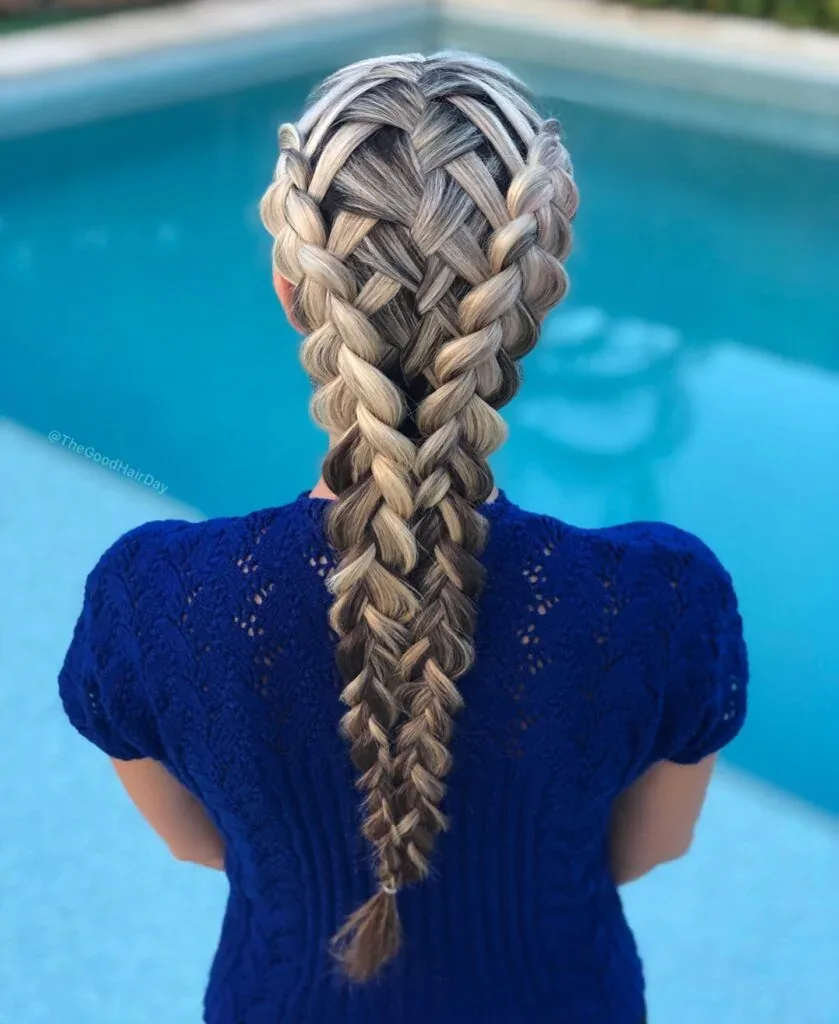
The waterfall braid is the poolside showpiece — a braid that runs across the back of the head, dropping strands down like a waterfall as it goes, and leaving the rest of the hair loose in soft waves. It is not a style for laps or diving — the loose lengths would tangle in seconds — but for sitting by the pool, dipping your feet in, or taking a gentle float, it is beautiful. It is the style for the woman who is at the pool to relax, not to train, and who wants her hair to look as lovely as the afternoon feels.
Why it works: the braid holds the front pieces back while the loose lengths stay soft and romantic. How to style it: start a French braid at one side, and with each step, drop the bottom strand and pick up a new one — that is the waterfall — then pin the braid at the other side. Pros: beautiful, romantic, and it photographs wonderfully by the pool. Cons: not secure enough for real swimming, so save it for poolside and gentle dips. Common mistake: trying to swim laps in it — the loose hair will tangle, and the braid will loosen. Cost and time: fifteen minutes, or a stylist will do it in ten.
23. The Messy Bun That Survives a Dive
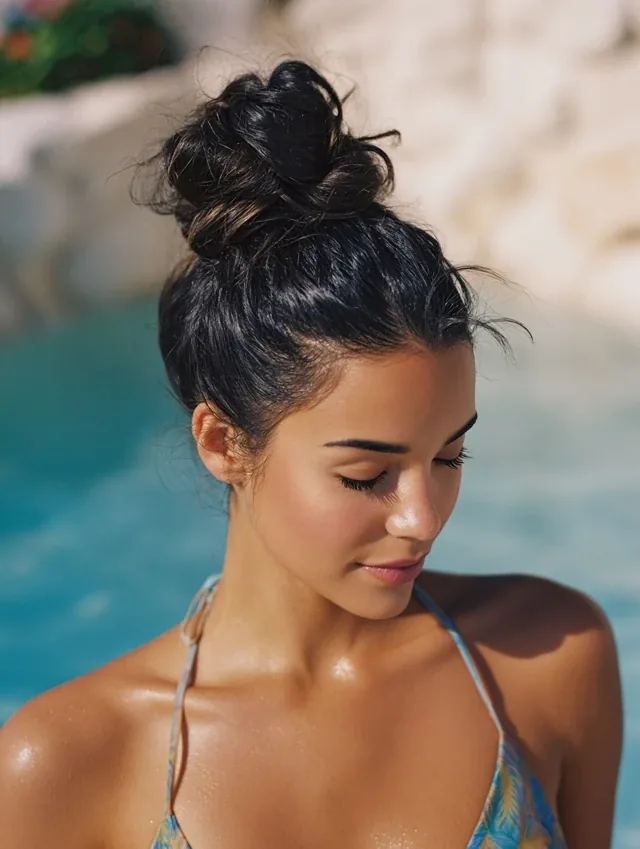
A messy bun sounds like the worst swimming style — loose, casual, and held together by hope — but built the right way, it is one of the best. The secret is that a messy bun for the pool is not actually messy: it is a bun built on a strong elastic, pinned at three points, with the messiness only in the texture on top. The water cannot tell the difference between a messy bun and a neat one, because both are anchored the same way. The result is a style that looks relaxed and effortless, but holds through a dive like a proper swim bun.
Best for: anyone who loves a messy bun and wants to wear it in the pool. How to style it: gather the hair into a bun, secure it with a strong fabric elastic, pin it at three points, and then gently pull a few pieces loose on top for texture — but keep the front pieces pinned back. Pros: relaxed, effortless-looking, and just as secure as a neat bun when it is pinned properly. Cons: if you skip the pins, it will fall apart on the first dive — the pins are not optional. Maintenance: a quick re-pin after your swim. Quick verdict: messy on top, serious underneath.
24. The Sleek Low Ponytail with a Wrap
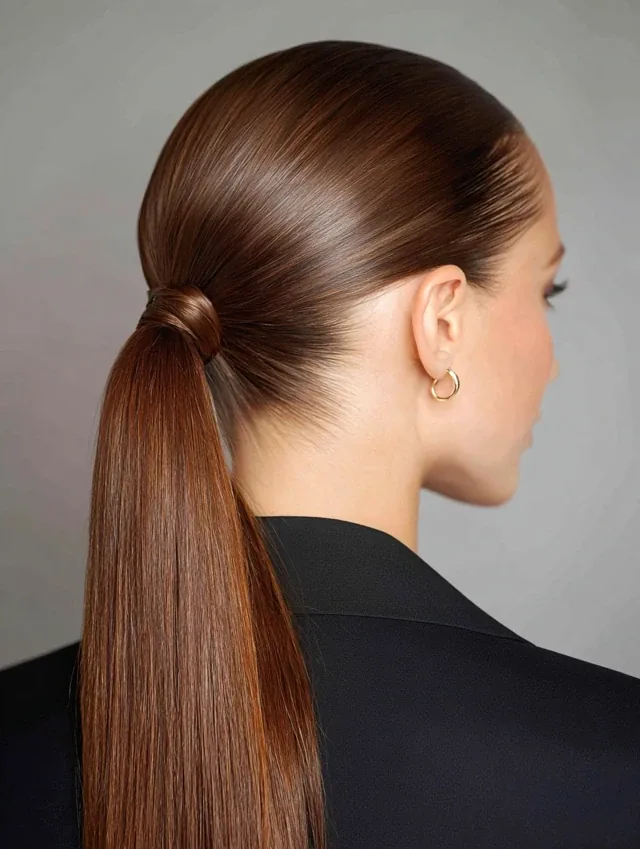
The sleek low ponytail with a wrap is the polished swimmer’s ponytail. The hair is smoothed back, gathered low at the nape, and secured — and then a small piece of hair is wrapped around the elastic and pinned underneath, hiding it completely. The wrap is a tiny detail, but it transforms a gym ponytail into a style that looks deliberate and elegant, and it has a practical benefit too: the wrapped hair protects the elastic from the water and keeps it from slipping. It is the style for the swimmer who wants to look polished without spending ten minutes on her hair.
How to style it: smooth the hair back with a little gel or leave-in conditioner, secure it low with a strong elastic, take a thin piece of hair from underneath the ponytail, wrap it around the elastic, and pin the end underneath. Pros: polished, secure, and the wrap stops the elastic from slipping in the water. Cons: the tail can still swing on a dive, so braid the tail or tuck it in if you are diving. Cost and time: five minutes. Who should avoid it: nobody — this is a style that suits every hair type and every face shape.
25. The French Twist for Swimming
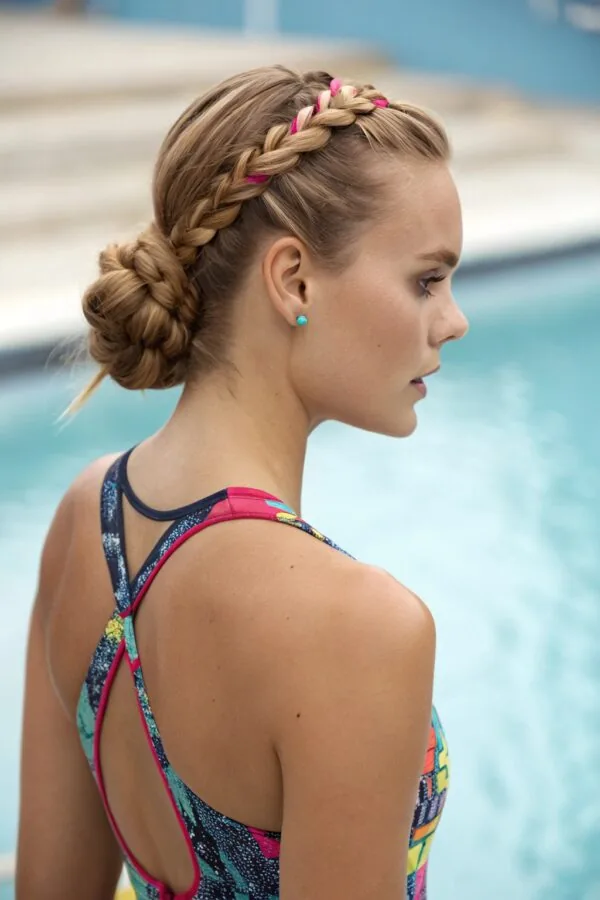
The French twist is one of the most elegant hairstyles ever invented, and it turns out to be a surprisingly good swimming style — if you build it for the pool. The hair is swept up the back of the head and twisted into a vertical roll, pinned neatly along the spine of the twist, and the result is a long, clean line with nothing loose anywhere. Built with enough pins and a strong hold, it survives laps and gentle dives, and it looks extraordinary when you climb out — a style that belongs at a poolside lunch as much as in the water.
Best for: medium to long hair, and swimmers who love classic elegance. How to style it: gather the hair low, twist it upwards along the back of the head, tuck the ends in, and pin the twist at three points — the top, the middle, and the base — using strong bobby pins. Pros: elegant, secure, and it looks wonderful out of the water. Cons: it takes a stylist to do well, and it is not a do-it-yourself style for most women. Maintenance: none in the water, but check the pins after a dive. Quick verdict: the most elegant swimming style in this guide.
26. Curly Hair: The Pineapple Updo for the Pool
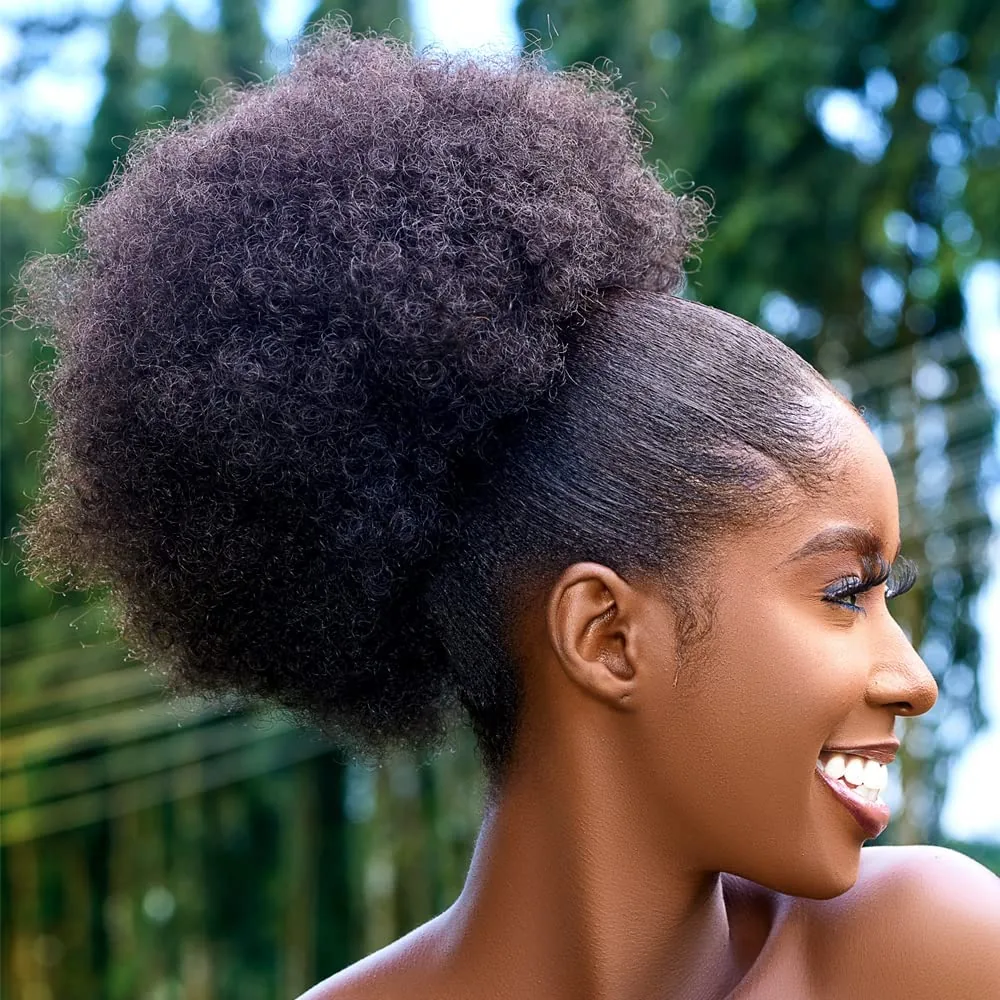
Curly hair and swimming can be a difficult combination — curls tangle, frizz, and soak up chlorine — but the pineapple updo is the curly swimmer’s answer. The curls are gathered loosely at the very top of the head, like a pineapple, and secured with a soft, fabric-covered elastic. The curls stay up and out of the water, the curl pattern is protected, and when you take it down afterwards, the curls fall back into shape with a shake. It is the style that lets curly hair swim without becoming a tangled, frizzy mess.
Why it works: gathering the curls high keeps them out of the water and stops them from tangling around each other. How to style it: flip your head forward, gather the curls loosely at the crown, and secure them with a soft scrunchie or fabric elastic — never a thin elastic, which can snap curls. Pros: protects the curl pattern, keeps the hair out of the water, and takes thirty seconds. Cons: the curls at the nape can still get wet, so smooth a little leave-in conditioner through them first. Maintenance: after your swim, rinse, add leave-in conditioner, and let the curls air-dry. Who should avoid it: nobody with curly hair — this is the curly swimmer’s essential style.
27. Curly Hair: Two-Strand Twists
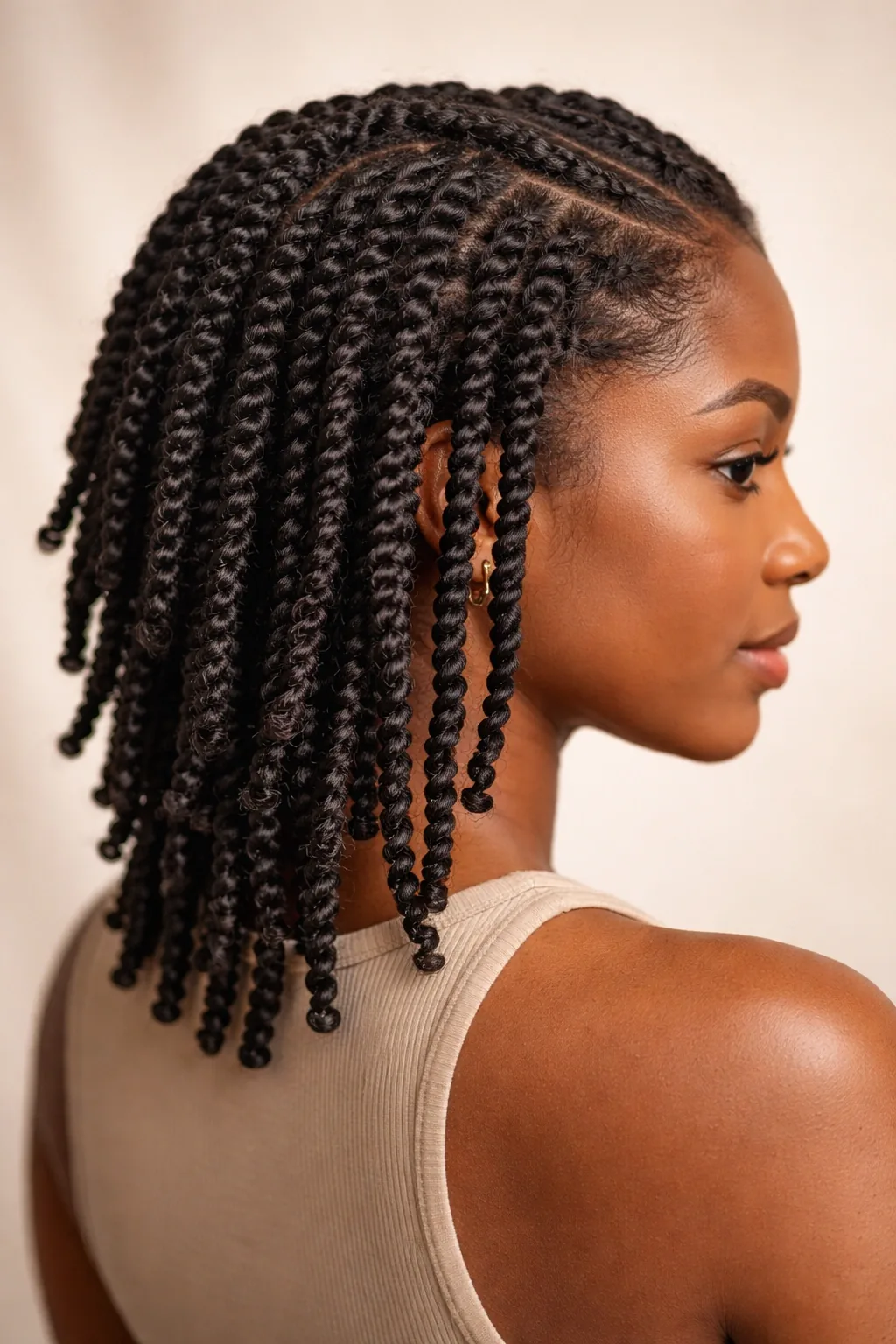
Two-strand twists are the protective style that curly and textured hair was made for. The hair is divided into sections, and each section is twisted into a two-strand twist — a simple, beautiful style that holds the curls in neat, defined twists, protects them from chlorine and tangling, and lasts for days. In the pool, the twists stay put, the water flows over them, and the hair underneath stays protected. Out of the pool, the twists look lovely on their own, and when you take them out, they leave beautiful twist-out waves.
Best for: curly, coily, and textured hair, and frequent swimmers. How to style it: divide damp, conditioned hair into sections, and twist each section into a two-strand twist, securing the ends with a tiny elastic or by twirling the end around your finger. Pros: protective, long-lasting, and the twists hold brilliantly in water. Cons: it takes time to install — allow an hour for a full head — so it is a style you plan, not one you build at the poolside. Maintenance: rinse after every swim, and moisturise the twists between swims. Cost and time: free at home with practice, or a stylist will do it in about an hour.
28. The Braided Headband Style
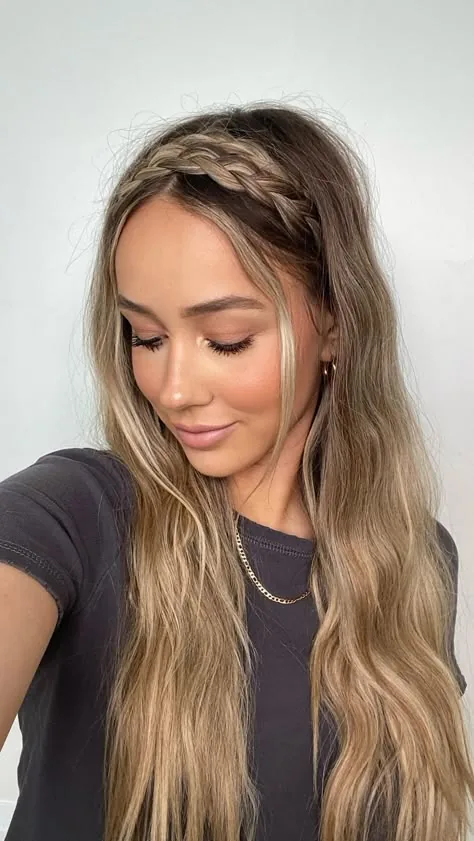
The braided headband is a small braid with a big job: it runs across the front of the head, from one ear to the other, holding every front piece back and out of your face — and then the rest of the hair can be worn however you like, in a bun, a ponytail, or loose for a gentle swim. It is the style for the swimmer whose front pieces are always escaping, because the braid anchors them from the very hairline. It looks pretty, it feels light, and it solves the single most annoying swimming hair problem there is.
How to style it: take a section of hair from behind one ear, braid it across the front of the head, and pin it behind the other ear — then style the rest of the hair as you like. Pros: it holds the front pieces back better than any clip or headband, and it looks beautiful. Cons: it only solves the front — the rest of the hair still needs its own style for laps. Common mistake: braiding it too loosely, so it slips — braid it firmly, and pin it at both ends. Quick verdict: the best fix for escaping front pieces, paired with any bun or ponytail you like.
29. Knotless Braids for Swimmers
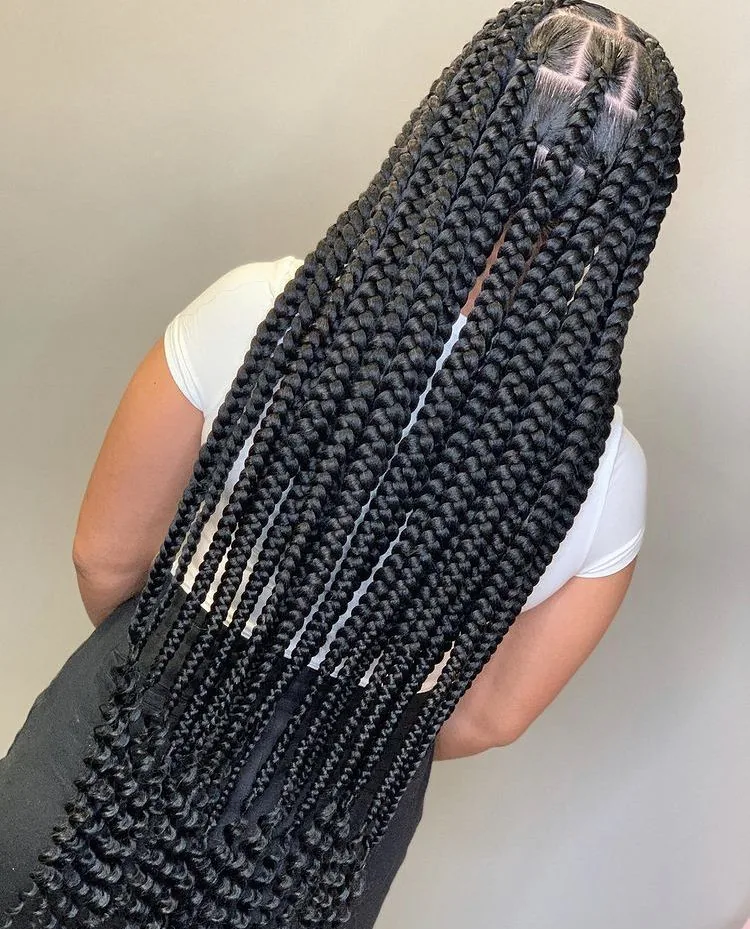
Knotless braids are the gentler, more comfortable version of box braids — and they are one of the best long-term styles for a swimmer. Instead of starting each braid with a tight knot at the scalp, the braid is fed in gradually, so there is no tension at the roots and no pulling at the hairline. The result is a style that feels light, looks natural, and lasts for weeks — and in the pool, the braids stay put, the water flows over them, and you can swim every day without restyling. They are also easy to gather into a bun or a ponytail for laps, which makes them doubly useful.
Best for: anyone who swims often and wants a style that lasts for weeks. How to style it: knotless braids are best installed by a braider, who will feed the extensions in gradually from the scalp. Pros: comfortable, long-lasting, protective, and easy to tie up for swimming. Cons: installation takes several hours and costs more than a simple style — but it lasts for weeks, so the cost per swim is tiny. Maintenance: rinse with clean water after every swim, and keep the scalp moisturised. Who should avoid it: nobody — but if you have never had braids, talk to your braider about the right length and weight for swimming.
30. The Pinned-Back Pixie
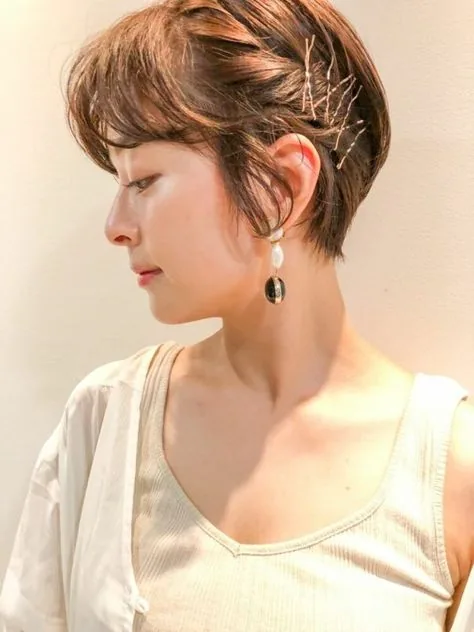
The pinned-back pixie is for the woman whose pixie is growing out, or whose pixie has longer pieces at the front that fall into her eyes when she swims. Two small clips — or two bobby pins crossed flat against the head — pin the front pieces back, and the rest of the pixie is left to do what a pixie does best: stay put, dry fast, and look sharp. It is a thirty-second fix that turns a growing-out pixie into a proper swimming style, and it looks deliberate and chic rather than improvised.
How to style it: wet the hair, smooth the front pieces back with your fingers, and pin them with two small clips or crossed bobby pins — flat against the head, so they do not catch the water. Pros: the quickest fix for a growing-out pixie, and it looks intentional. Cons: clips can slip in very wet hair, so use bobby pins with a little grip, or a small amount of gel underneath. Maintenance: none. Cost and time: thirty seconds and two pins. Quick verdict: the smallest fix in this guide, and one of the most useful.
31. The Wrapped Low Bun
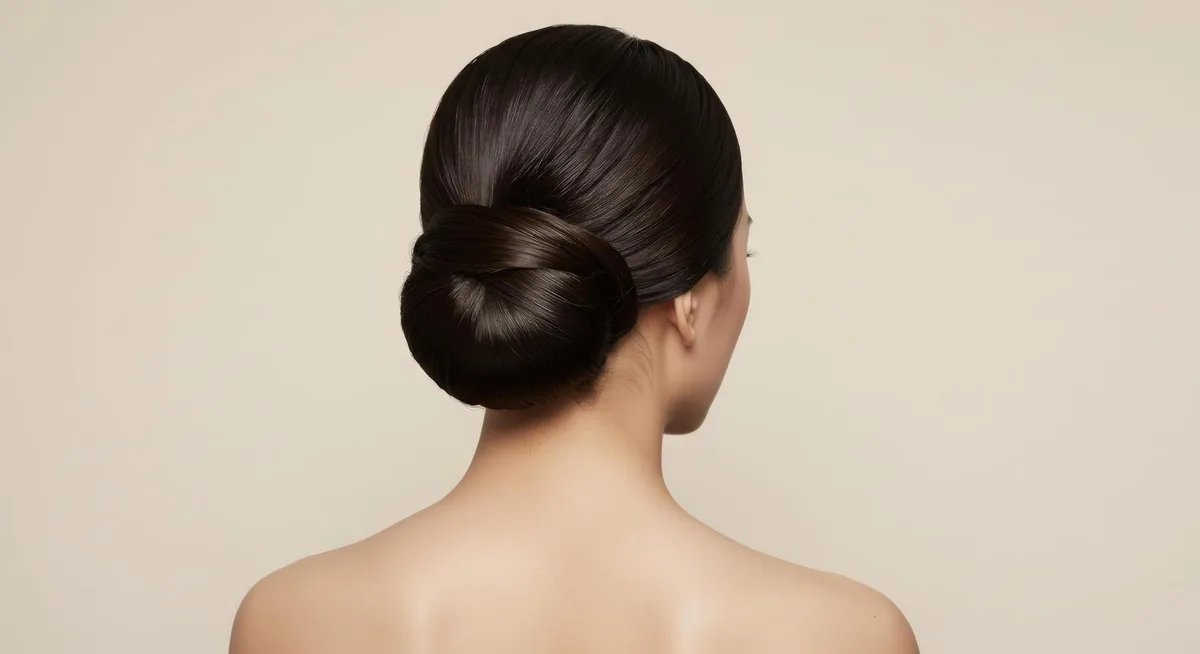
The wrapped low bun is the long-haired swimmer’s answer to a bun that keeps coming loose. Instead of simply coiling the hair, you wrap it — the hair is gathered low, wrapped around the base of the ponytail, and then wrapped again, so the bun is built in layers that lock each other in place. It is the style for very long hair, which can be too heavy for a simple bun, and for thick hair, which needs more than one pin to hold. Built this way, a bun will hold through a whole morning of laps without a single re-pin.
Best for: very long hair and very thick hair. How to style it: gather the hair low, wrap it around the base in layers, pin each layer as you go, and finish with a strong elastic around the whole bun. Pros: the layered wrap locks the bun in place, and it distributes the weight so the bun does not pull. Cons: it takes a little longer to build than a simple bun — allow five minutes. Maintenance: none in the water. Who should avoid it: women with short hair, which will not wrap — a simple low bun will serve them better. Cost and time: five minutes, no stylist needed.
32. The Side-Swept Braid
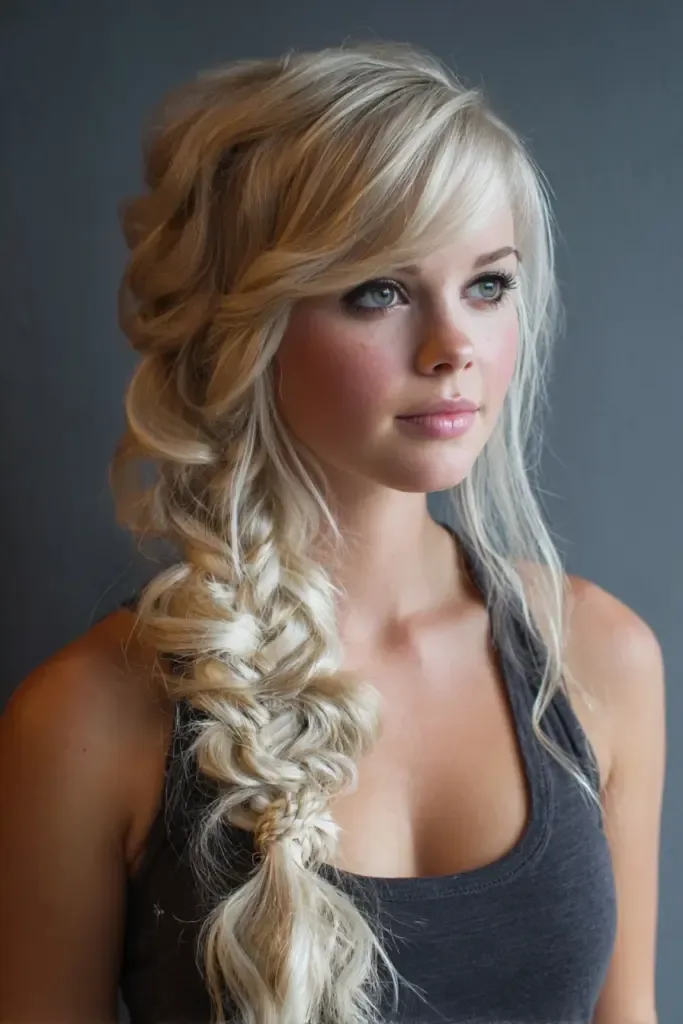
The side-swept braid is the romantic swimmer’s style — a single braid swept over one shoulder, loose and soft at the front, with the braid itself tight enough to survive the water. It is the style for the woman who wants to look like herself in the pool, not like an athlete, and who is swimming gently rather than training hard. It keeps the hair on one side, out of the way of your stroke, and it looks lovely when you climb out — a braid over one shoulder, a towel around the other, and the whole afternoon ahead of you.
Why it works: a braid on one side is easy to check and easy to fix, and it keeps the hair out of your breathing side. How to style it: sweep all the hair to one side, braid it from the nape down, and secure it with a strong elastic — then pull a few fine pieces loose at the front for softness. Pros: romantic, flattering, and easy to maintain in the water. Cons: not secure enough for hard laps or diving, so save it for gentle swimming. Common mistake: braiding it too loosely, so it unravels — braid it firmly, and pin the end under if you are diving. Maintenance: a quick check after your swim.
33. Double Buns with Braids

Double buns with braids are the style that combines two of the most secure swimming ideas in this guide — braids and buns — into one. Each side of the head is braided from the hairline to the nape, and then each braid is coiled into a bun, so the hair is braided and then bunned, with no loose end anywhere. It is one of the most secure styles there is, it looks playful and fun, and it is the style to choose when you want your hair to stay put through the wildest pool session — diving, somersaults, underwater swimming, all of it.
Best for: long hair, and anyone who wants maximum security with a playful look. How to style it: part the hair down the middle, braid each side from the hairline to the nape, coil each braid into a bun, and pin each bun with two bobby pins. Pros: the most secure style in this guide, and it looks fun. Cons: it takes fifteen minutes to build, so it is not a last-minute style. Maintenance: none in the water. Cost and time: fifteen minutes at home, or a stylist will do it in ten. Quick verdict: braids plus buns — twice the security, twice the fun.
34. The Scarf-Wrapped Swim Bun
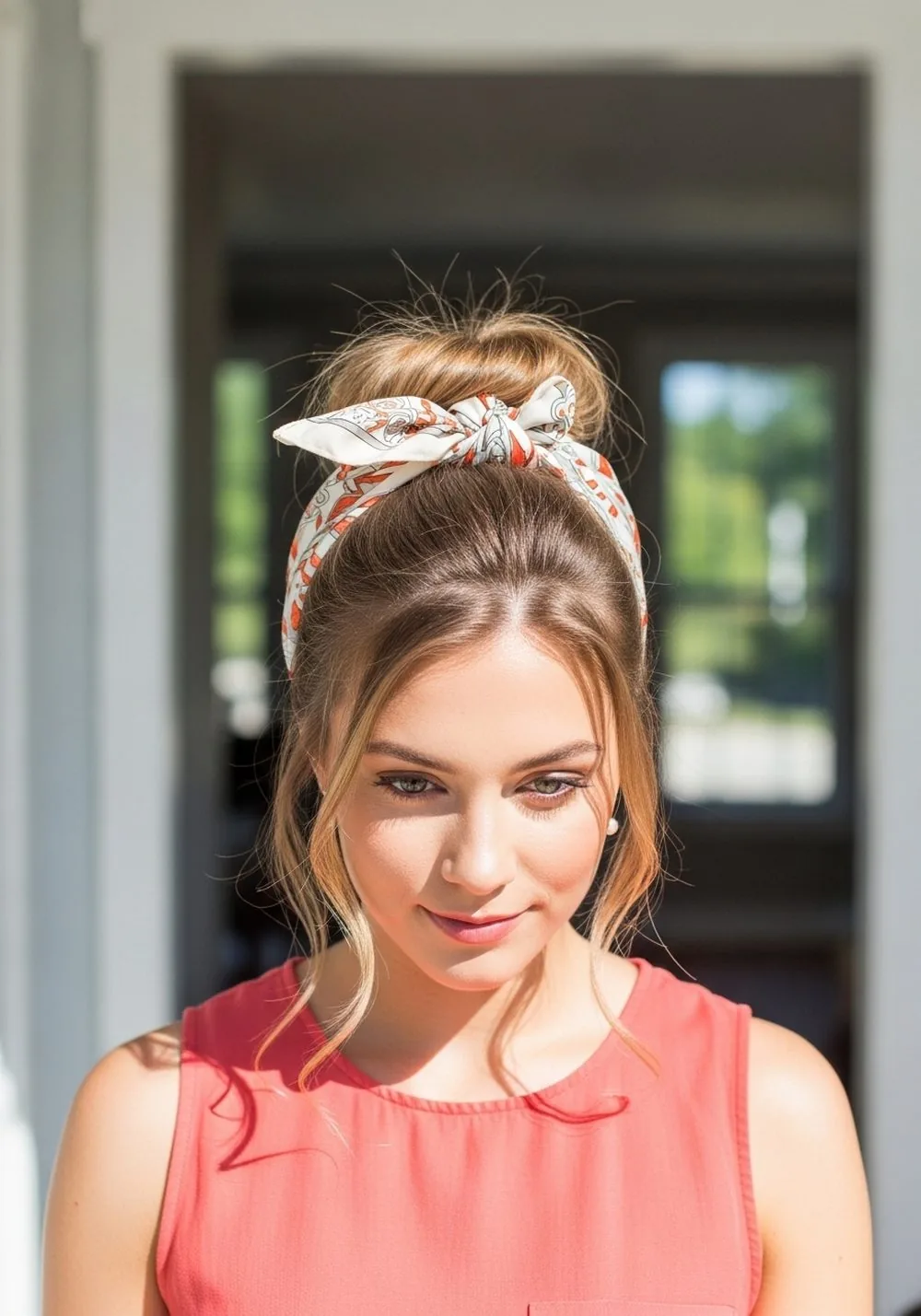
The scarf-wrapped swim bun is the style for the swimmer who wants protection and polish in one. The hair is gathered into a low bun, and a lightweight scarf is wrapped around the bun and tied underneath — covering the bun, protecting it from sun and chlorine, and adding a beautiful pop of colour. It is the style for the beach in particular, where the scarf protects the hair from the sun as well as the water, and for the poolside, where it looks like a deliberate, elegant choice rather than a practical one.
How to style it: build a low bun, fold a lightweight scarf into a band, wrap it around the bun, and tie it underneath with a small knot — then tuck the ends of the scarf under the bun so they do not flap in the water. Pros: protects the hair from sun and chlorine, looks elegant, and adds colour. Cons: a scarf can come loose in the water if it is not tied well, so tie it firmly and tuck the ends in. Common mistake: using a heavy scarf that gets waterlogged — use a lightweight one, and take it off before a serious swim. Cost and time: five minutes and a scarf you already own.
35. Short Curly Hair: The Wash-and-Go Pool Style
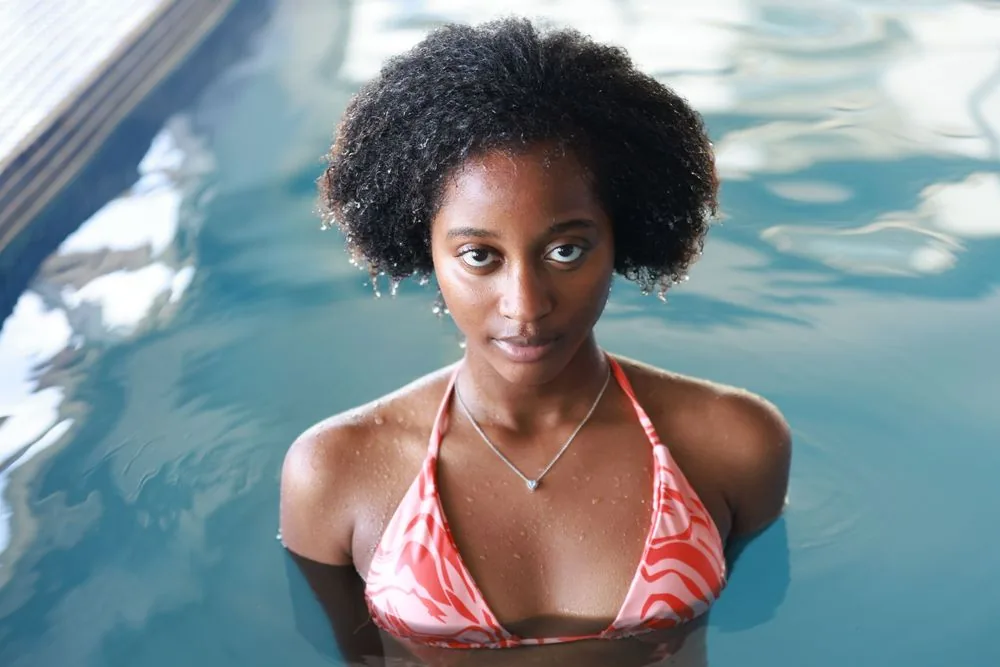
Short curly hair is one of the easiest hair types to swim with, and the wash-and-go pool style is how you make the most of it. The curls are short enough that they cannot tangle badly, and they dry quickly — so the only job is to protect them from chlorine and keep them defined. Wet the curls with clean water before you get in, smooth a little leave-in conditioner through them, and swim. When you get out, rinse, add a little more leave-in conditioner, and let the curls air-dry. That is the whole style — and the curls will look better after a swim than they did before, because the water and the conditioner bring out their natural definition.
Best for: short curly and coily hair of every texture. How to style it: wet the curls, smooth leave-in conditioner through them, and swim — then rinse and re-apply conditioner afterwards. Pros: the easiest curly swimming style there is, and the curls dry beautifully. Cons: chlorine can dry out curls, so the pre-swim wetting and conditioning are not optional. Maintenance: a weekly deep-conditioning mask if you swim often. Who should avoid it: nobody with short curly hair — but if your curls are longer, a pineapple updo or twists will protect them better. Cost and time: two minutes.
36. The Fishtail Ponytail
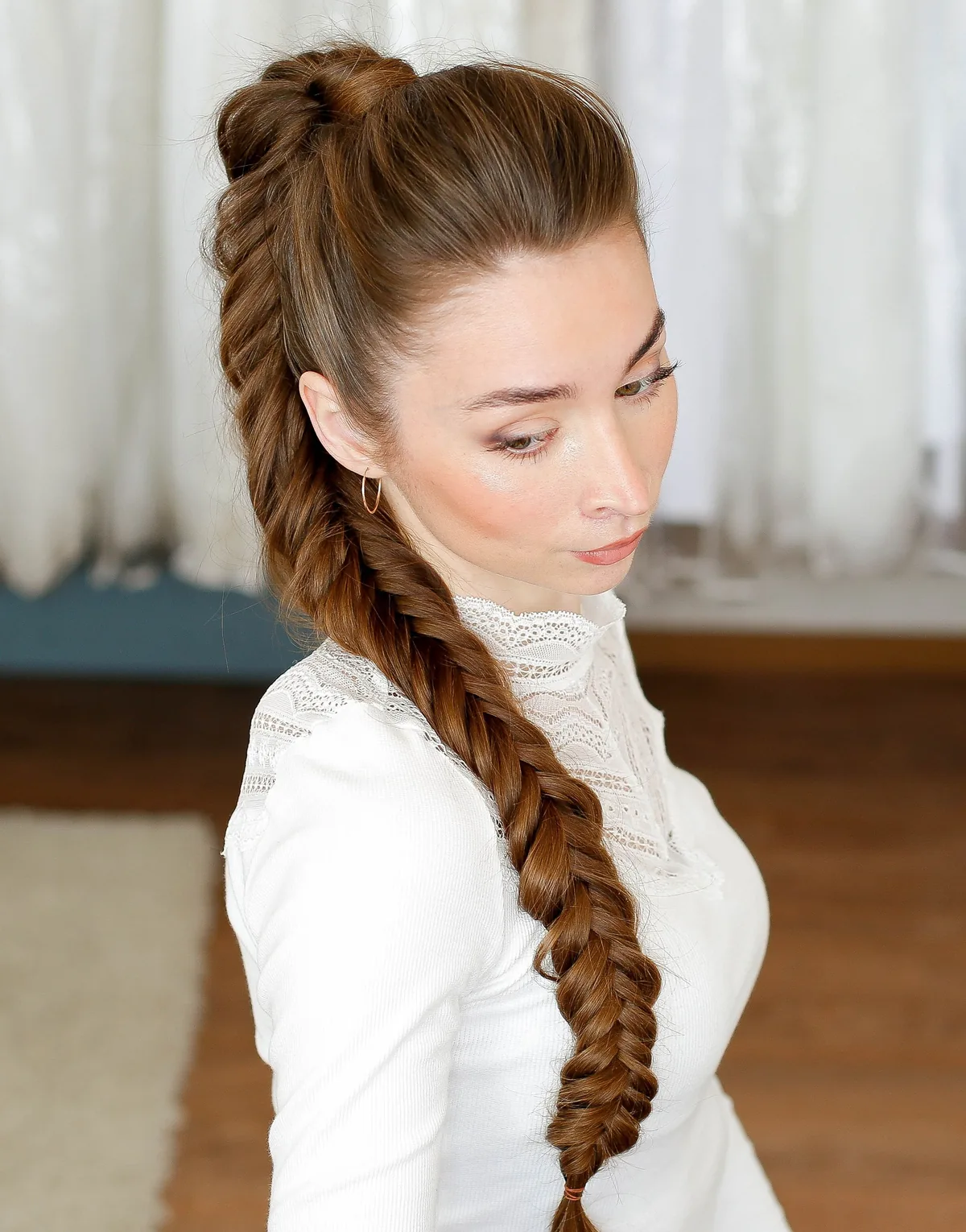
The fishtail ponytail is the hybrid style — a ponytail and a fishtail braid in one — and it is one of the most practical swimming styles for long hair. The hair is gathered into a ponytail, and then the tail is fishtail-braided all the way down, so the tail is a neat, compact braid instead of a loose rope. It keeps the hair off the neck, it stops the tail from tangling, and it looks like a proper style rather than a rushed ponytail. It is the style for the long-haired swimmer who loves a ponytail but is tired of untangling it afterwards.
Why it works: the fishtail braid grips itself, so the tail cannot tangle or unravel in the water. How to style it: make a ponytail, split the tail into two sections, and fishtail-braid it down, crossing small pieces from one side to the other — then secure it with a strong elastic. Pros: keeps the hair off the neck, stops the tail from tangling, and looks polished. Cons: it takes a few minutes longer than a plain ponytail, so allow ten minutes. Maintenance: none in the water. Quick verdict: the ponytail, upgraded for the pool.
37. The Milkmaid Braid for Swimming
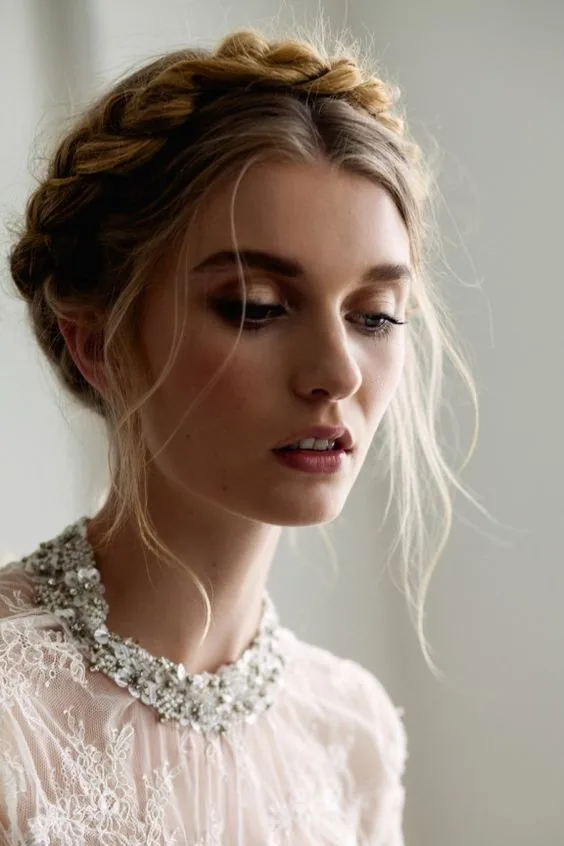
The milkmaid braid is the romantic swimming style — two braids crossed over the top of the head and pinned, like a crown made of braids — and it is one of the most secure styles in this guide. Because the braids cross over the head and pin to each other, there is no loose end anywhere, and the style holds through laps, dives, and underwater swimming without moving. It is also a beautiful style, intricate and a little old-fashioned, which is a lovely contrast to the sporty feel of most swimming hair. It is the style for the swimmer who wants to look romantic in the pool.
Best for: medium to long hair, and anyone who loves a romantic, held-up style. How to style it: braid the hair into two braids, cross them over the top of the head, and pin them — then pull a few fine pieces loose at the front for softness. Pros: holds brilliantly, keeps every piece out of your face, and looks far more complicated than it is. Cons: it takes practice — try it once on dry land before your first swim in it. Maintenance: a single re-pin after your swim. Cost and time: a stylist will do it in twenty minutes, or you can do it at home in thirty. Quick verdict: the most romantic braided style for a swimmer.
38. The Poolside Top Knot with a Scrunchie
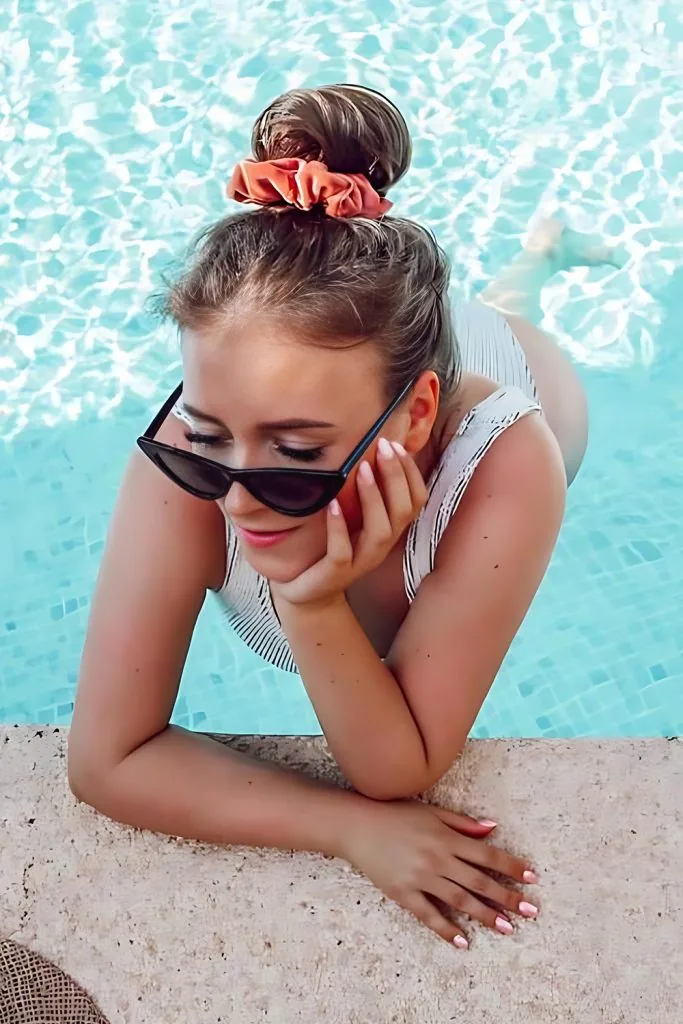
The poolside top knot with a scrunchie is the style that ends this guide the way a good pool day ends — relaxed, easy, and a little bit fun. The hair is gathered high at the crown, coiled into a top knot, and secured with a soft scrunchie, which is gentler on wet hair than a thin elastic and adds a pop of colour. It is the style for the poolside rather than the pool itself — for lounging, for dipping your feet in, for a gentle float — and it is the easiest style in this guide to build and to take down. When the day is done, you pull the scrunchie out, shake your hair loose, and the pool day is over.
How to style it: gather the hair high at the crown, twist it into a coil, secure it with a soft scrunchie, and pin it with one bobby pin if you want extra security. Pros: comfortable, gentle on wet hair, and it takes a minute to build. Cons: not secure enough for laps or diving — save it for the poolside. Common mistake: using a thin elastic instead of a scrunchie, which can snap wet hair — a soft scrunchie is always kinder. Cost and time: one minute and a scrunchie. Quick verdict: the easiest, most relaxed style in this guide — the perfect way to end a pool day.
What is the best hairstyle for swimming?
The best hairstyle for swimming is one that stays put underwater, keeps your hair out of your face, and protects it from chlorine — a French braid, a low bun, double French braids, or cornrows. A French braid is the best all-round choice for laps, a low bun is the best choice if you wear a swim cap, and cornrows are the best choice if you swim every day. The right style depends on how you swim: laps need a tight, anchored style, while a gentle dip at the beach only needs a braid or a bun.
How do I keep my hair from getting damaged by chlorine?
Keep your hair from getting damaged by chlorine by wetting it thoroughly with clean water before you get in, smoothing leave-in conditioner or a little oil through the lengths, and wearing a swim cap if you swim often. Wet, coated hair absorbs far less chlorine than dry hair. After your swim, rinse with clean water straight away, wash with a gentle shampoo, and condition the lengths and ends. If you swim daily, use a deep-conditioning mask once a week to replace the moisture chlorine takes out.
What hairstyle stays in place when diving?
The hairstyles that stay in place when diving are the ones with no loose ends and no single point of failure — a French braid with its end pinned under, a low bun held with three pins and a strong elastic, double French braids, or a crown braid. A ponytail with a loose end will whip around when you hit the water, but a braid pinned at the end or a bun pinned at three points will not move at all. Always tuck the ends under and pin them flat before you dive.
Can I wear my hair down when swimming?
You can wear your hair down when swimming, but only for a gentle dip or a float — not for laps or diving. Loose hair tangles in the water, gets in your face and your goggles, and comes out as a knotted mess. If you want to wear your hair down at the beach or the pool, choose a half-up braid, which keeps the front pieces back while the rest falls loose, and save the full down style for the poolside. For any real swimming, a braid or a bun is always the better choice.
What is the best swimming hairstyle for long hair?
The best swimming hairstyles for long hair are the French braid, double French braids, the low braided ponytail, and the wrapped low bun. Long hair needs a style that controls its length, because a loose tail will tangle and whip around in the water. A French braid anchors the hair to the head along its whole length, a braided ponytail keeps the tail compact, and a wrapped low bun locks long hair into layers. Avoid a plain ponytail, which is the style most likely to tangle on long hair.
What is the best swimming hairstyle for short hair?
The best swimming hairstyles for short hair are the slicked pixie, the bob under a swim cap, the pinned-back pixie, and the wash-and-go style for short curly hair. Short hair is the easiest hair to swim with, because there is nothing long to tangle or come loose. A little gel keeps a pixie out of your eyes, a swim cap covers a bob completely, and short curls just need leave-in conditioner and a rinse afterwards. Short-haired swimmers have the easiest hair in the pool.
How do I fit long hair under a swim cap?
Fit long hair under a swim cap by building a low, flat style first — a low bun at the nape, a single braid coiled flat against the head, or a low ponytail folded up and pinned. A high bun or a top knot will fight the cap, because the cap pulls up over the bump and slides off. Put the cap on from the front, pulling it back over the style rather than pushing it down from the top, and smooth the cap over the hair as you go. A low, flat style lets the cap sit smoothly, and a smooth cap stays on.
Do braids get ruined by chlorine?
Braids do not get ruined by chlorine, but the hair inside them can dry out if you do not protect it. Wet the braids with clean water before you swim, smooth a little leave-in conditioner through them, and rinse them with clean water as soon as you get out. Braids actually protect your hair from chlorine better than loose hair does, because the hair is packed together and less of it is exposed to the water. Rinse, detangle gently, and condition after every swim, and your braids will be fine.
How do I detangle my hair after swimming?
Detangle your hair after swimming by rinsing it with clean water first, then combing it gently with a wide-tooth comb, starting at the ends and working upward in short, patient strokes. Never rip a brush through wet hair — wet hair stretches and breaks. If the tangles are bad, add a little leave-in conditioner before you comb, and work through the worst knots with your fingers first. Let the hair air-dry as much as you can before you style it, and never tie wet hair up tightly for the drive home.
What should I do with my hair after swimming every day?
If you swim every day, build a simple routine: wet your hair with clean water and add leave-in conditioner before every swim, rinse with clean water the moment you get out, wash with a gentle shampoo, and condition the lengths and ends. Once a week, use a deep-conditioning mask to replace the moisture chlorine takes out. Choose a protective style for the week — cornrows, knotless braids, or two-strand twists — so you are not restyling every day, and keep a wide-tooth comb and a travel shampoo in your swim bag.
Conclusion
Swimming is one of the simplest pleasures there is — cool water, quiet laps, the feeling of moving through something weightless — and your hair should never be the thing that gets in the way of it. The 38 hairstyles in this guide are all chosen with that in mind: styles that stay put underwater, keep every strand out of your face, survive a dive, fit under a cap, and still look cute when you climb out and wrap yourself in a towel. The right swimming hairstyle does not demand your attention in the water — it lets you forget about your hair and enjoy the swim.
Start with the guides, not the gallery. Think about how you actually swim — laps every morning or a gentle dip on holiday, a cap or no cap, diving or floating — and pick the style family that fits it. Wet your hair before you get in, protect it from chlorine, and rinse it the moment you get out. Build your style on pins and braids, not hope, and choose the version that feels like you on your best pool day. Your hair should be the least of your worries in the water. Now it can be.